There is plenty of data about the birds of the world on the internet. This site is not competing with them, but just trying to use the pages here to introduce the birds and have links to our articles and links to great pages about them on the internet.
Our emphasis is “Birdwatching from a Christian Perspective”, so, we may see things a little different from time to time. When I read so many of the articles, they tell of the birds evolving, whereas, I believe God created them and told them to go multiply and cover the earth. There has been lots of variation going on, but no “evolution” from one kind to another. So, I just read around their remarks about evolution and enjoy the information about the actual birds.
Here are some links for information on the birds of the world.
Last week, Dan and I went to Lake Hollingsworth in Lakeland, our favorite place to go birding when we don’t have a lot of time, my legs aren’t working well, or Dan has a new, used camera to check out. That was the case, I was just checking out the normal birds for this time of the year and photographed this female mallard and her chick. In other words, there aren’t many. Most of them have gone back north to do what God commanded them to do when they came off the ark.
Then God spoke to Noah, saying, “Go out of the ark, you and your wife, and your sons and your sons’ wives with you. Bring out with you every living thing of all flesh that is with you: birds and cattle and every creeping thing that creeps on the earth, so that they may abound on the earth, and be fruitful and multiply on the earth.” So Noah went out, and his sons and his wife and his sons’ wives with him. Every animal, every creeping thing, every bird, and whatever creeps on the earth, according to their families, went out of the ark. (Genesis 8:15-19 NKJV)
So, the birds have been reproducing and reproducing and reproducing. I have been working on a project for this blog behind the scenes and it has to do with the bird families of the world. The numbers keep changing, but the count is over 10,000 species (living) worldwide. All the Birding committees work hard on putting them into Order, Families, Genus, and then giving them a Scientific name and an English name. As I have been working on this project, I couldn’t help but think about how well the birds have obeyed.
What amazes me, is how they (Birding committees) decide how to classify them. I have a hard enough time, getting some birds just into the right family, let alone figuring them all out. Warblers being the hardest for me. Here is my idea of this whole process, from a human classification.
Smith Family:
Dad – Black hair, blue eyes, normal ears, round eyes
Mom – blond hair, green eyes, normal ears, slant eyes
Child #1 – Black hair, green eyes, ears stick out, round eyes
Child #2 – Blond hair, blue eyes, long ear lobes, slant eyes
Child #3 – Brown hair, blue eyes, normal ears, beady eyes
Child #4 – Red hair, black eyes, pointed ears, bushy eyebrows
The children grow up and each find a mate with similar characteristics, they move away and continue to have children with their same characteristics and some more variations show up. Etc, etc.
Now along come the classifying committees! Can you imagine how they would try to classify the human race?
I’ll leave that to your imagination.
I couldn’t resist posting this devotional from the Institute For Creation Research for Aug 3, 2009.
“And Can It Be!” is my most favorite hymn and I have told Dan, that it is to be sung when I go “home to glory.” This does not have all the stanzas, but here is the full hymn.
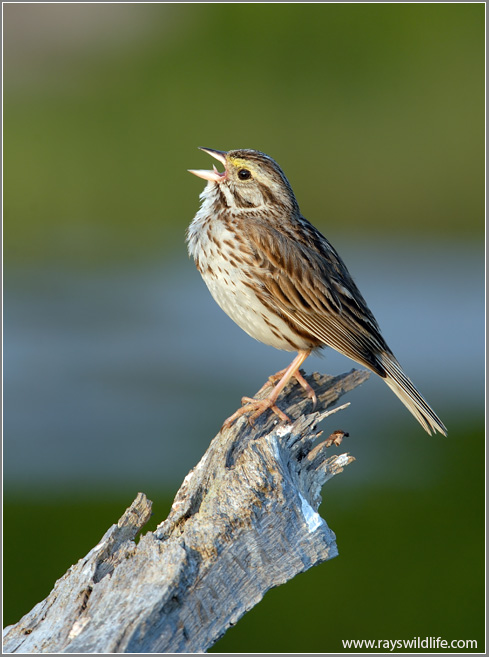
Savannah Sparrow singing by Ray
And can it be that I should gain,
An interest in the Savior’s blood?
Died He for me, who caused His pain?
For me, who Him, to death pursued?
Amazing love! How can it be,
That thou, my God, should’st die for me?
He left His Father’s throne above,
So free, so infinite His Grace!
Emptied Himself of all but love,
And bled for Adam’s helpless race.
No condemnation now I dread,
I am my Lord’s and He is mine;
Alive in Him, my living Head,
And clothed in righteous divine.
What a powerful message that song has. How could God, so love us, (me, Lee) so much that He would come and die for me? A sinner, saved only by the grace of God, by the death of the Lord Jesus Christ on the cross. Amazing Love! How Can It Be?
Can It Be?
by John D. Morris, Ph.D.
“Christ also suffered for us. . . . Who his own self bare our sins in his own body on the tree, that we, being dead to sins, should live unto righteousness: by whose stripes ye were healed.” (1 Peter 2:21-24)
Those who love good church music have come to love Charles Wesley’s commitment to and knowledge of his Savior and the Scriptures, for he wove into his music and poetry deep insights which challenge and thrill us even today. One of his hymns, “And Can It Be That I Should Gain?,” has unfortunately been abridged in modern hymnals. The original five verses are expressed:
And can it be that I should gain,
An interest in the Savior’s blood?
Died He for me, who caused His pain?
For me, who Him, to death pursued?
Amazing love! How can it be,
That thou, my God, should’st die for me?
Even the Old Testament saints wondered why God loves man so. “What is man, that thou shouldest magnify him? and that thou shouldest set thine heart upon him?” (Job 7:17). The New Testament contains many similar expressions of wonder. “Behold, what manner of love |literally ‘what a different kind of love’| the Father hath bestowed upon us, that we should be called the sons of God” (1 John 3:1). “God commendeth his love toward us, in that, while we were yet sinners, Christ died for us. . . . And not only so, but we also joy in God through our Lord Jesus Christ, by whom we have now received the atonement” (Romans 5:8-11).
The point is we were desperate sinners deserving His wrath. “But God, who is rich in mercy, for his great love |i.e., ‘amazing love’| wherewith he loved us, Even when we were dead in sins, hath quickened us together with Christ, (by grace ye are saved)” (Ephesians 2:4-5). JDM
This year I have been reading through the Bible in chronological order. In Jeremiah this week, the eagle showed up in three of the verses I was reading. If you know me by now, that calls for a blog about one of my favorite “Birds of the Bible” birds.
Jeremiah, the prophet, has been warning the people of Judah and Jerusalem that they were going to be punished by God because of their worship of other gods and turning from Him. Jeremiah was always in problems because; 1) few if any believed him, 2) the false prophets were telling the people that “all was well and that they would not be punished.” 3) they tried to kill him several times, 4) when confronted with the truth, knowing they would be killed or taken captive, they still refused to give up their false religions or turn to the LORD. So by chapter 48:28 he warns them – “You who dwell in Moab, Leave the cities and dwell in the rock, And be like the dove which makes her nest In the sides of the cave’s mouth.” (NKJV) (oops! the dove is for another blog) He is telling them to “leave town.”
Jeremiah 48:40-42 says:
For thus says the LORD: “Behold, one shall fly like an eagle, And spread his wings over Moab. Kerioth is taken, And the strongholds are surprised; The mighty men’s hearts in Moab on that day shall be Like the heart of a woman in birth pangs. And Moab shall be destroyed as a people, Because he exalted himself against the LORD.
Watch the following video and decide whether you think the fish was surprised.
In Jeremiah 49:16 and 22, the eagle is mentioned again. Eagles are known to make their nest as high up as they can and these people thought by being high up in the hills, that the enemy would not get them. Then in verse 22, it refers to flying like an eagle and spreads its wings. So the enemy (Nebuchadnezzar king of Babylon and his army) was going to come over them. Now the people are finally afraid.
Your fierceness has deceived you, The pride of your heart, O you who dwell in the clefts of the rock, Who hold the height of the hill! Though you make your nest as high as the eagle, I will bring you down from there,” says the LORD. (Jeremiah 49:16 NKJV)
Behold, He shall come up and fly like the eagle, And spread His wings over Bozrah; The heart of the mighty men of Edom in that day shall be Like the heart of a woman in birth pangs. (Jeremiah 49:22 NKJV)
Another of my favorite eagle videos of the eagles wings being spread:
Even though I used my favorite videos, this was not a enjoyable experience for these people. I trust we will heed the warnings of the Bible. God loves his chosen people, Israel (and all of us), but God cannot tolerate sin or denial of Himself.
He who is often rebuked, and hardens his neck, Will suddenly be destroyed, and that without remedy. (Proverbs 29:1 NKJV)
“Come now, and let us reason together,” Says the LORD, “Though your sins are like scarlet, They shall be as white as snow; Though they are red like crimson, They shall be as wool. If you are willing and obedient, You shall eat the good of the land; But if you refuse and rebel, You shall be devoured by the sword”; For the mouth of the LORD has spoken. (Isaiah 1:18-20 NKJV)
The people of Noah’s day had over 100 years of warning, but also refused to accept God, and were devoured, not by sword, but by a flood.
“One of the fascinating and unique creatures of all creation is the common hummingbird. What is the probability that all of the unique characteristics of the Ruby-throated Hummingbird, each of which are needed for its survival, developed by some step-by-step process? A few of the hummingbird’s incredible abilities are listed below:
The unique ability to fly forward, backward, upside-down, and straight up like a helicopter as no other bird can.
The use of a special fringed tongue to sweep insects out from the inside of flowers. It cannot survive on nectar alone, but also needs the protein from eating insects. Without its special tongue it could never catch the insects.
The ability to fly 500 miles nonstop over the gulf waters to Mexico. The hummingbird can conserve its strength for long flights by taking a prolonged rest just prior to the flight and making every motion count in flight.
The ability to go into a “torpid” condition at night by almost shutting down its metabolism. Because of its incredibly high energy activity, gram for gram the hummingbird has the greatest energy output of any warm-blooded animal. Yet at night it uses only about one fifth of its normal energy.
Ruby-throated Hummingbird by Ray’s Wildlife
The hummingbird is truly a marvel of God’s creativity.
Character Sketches, Vol.II, p.42-48″
Seek the LORD and his strength; seek his presence continually! Remember the wondrous works that he has done, his miracles, and the judgments he uttered, (Psalms 105:4-5 ESV)
A Closer Look at the Evidence, July 13, by Richard and Tina Kleiss
The cheetah is truly a remarkable creature. It is the world’s fastest land animal, capable of accelerating from 0 to 40 miles per hour in 2 seconds. The cheetah can reach a speed of 70 miles per hour. How does the cheetah reach these phenomenal speeds? It is designed with a high-performance body containing a uniquely powerful heart, strong large-diameter arteries, and extra-large nostrils for breathing large volumes of air. The cheeta also has hip and shoulder girdles that swivel on its spine. As it runs, the cheetah’s spine curves up and down as its legs contract and extend. When moving at high speeds, the cheetah may only touch the ground once every 23 feet.
Cheetah
Evolutionist would claim that some unknown pre-cheetah creature turned into the cheetah by chance mutations of its heart, liver, arteries, nostrils, hips, shoulders, spinal column, and muscles. Yet the oldest known cheetah fossils reveal an animal that is essentially identical to the cheetahs alive today. Once again, the actual physical evidence supports creation, rather than evolution. The cheetah’s unique characteristics are a result of design. All of the information necessary for the cheetah’s speed was programmed into the first large “cat-type” creature. No series of random modifications could have produced this fast, sleek animal.
The LORD is righteous in all His ways, Gracious in all His works. (Psalms 145:17 NKJV)
“Evidence From Biology”, July 27, from A Closer Look at the Evidence, Richard and Tina Kleiss – Taken from Letting God Create Your Day, Vol.4, p.19
From Creation Wiki:
“The word Cheetah actually originates from a Hindi word, which means “spotted one.” Cheetahs are carnivorous cats that are best know for their spots and their speed. They are found mainly in Southern Africa. They rely on speed for hunting, and not stealth, unlike most cats. Females tend to be solitary, while the males spend their whole lives together. They have smaller teeth than most cats, which helps improve the cat’s respiratory system. A cheetah’s life span in the wild is about 12 years. Ancient Egyptians sometimes kept cheetahs as pets, and used them for hunting.”
Cheethah have small teeth which help it get air in while running at those high speeds mentioned above. They weigh between 80-140 lbs. and are about 32 tall and 48-56 inches long. “Almost every part of a cheetah’s body is built, in some way, to help it run faster. They have semi-retractable claws, as well as special paw pads on their feet to give the cat good traction. As mentioned before, large nostril and a clear intake help get air in and out quickly and smoothly. The cheetah’s spine acts as a spring for its back legs. Their tail is much like a rudder, it gives the cat added agility, enabling it to turn quickly. The cheetah’s top speed is an amazing 71 miles per hour. This speed can only be held out for about 200-300 yards. The cheetah can accelerate from 0-60 mph in 3.5 seconds, faster than many sports cars.”
Today, Dan and I are celebrating our 46th anniversary. It is hard to believe that it has been that long. We are very thankful for all the blessings the Lord has bestowed on us over the years. Are we perfect, no, but we love each other and have made a commitment to “hang in there” through good times or bad, ups or downs. The Bible tells us:
And the LORD God said, It is not good that the man should be alone; I will make him an help meet for him. (Genesis 2:18 KJV)
Me Feeding The Beggars!
We have become a good team over the years. Even now as we go birdwatching. I love to do the birdwatching and he likes to take the photos. And that is only one of the ways we blend our personalities into one “togetherness.” Most important of all, we together and individually have “togetherness” with our Saviour, the Lord Jesus Christ.
Since this blog is about birdwatching, what can we learn from them about staying together. We find throughout the birding world and other critters, that many of the mates stick together for life.
But now ask the beasts, and they will teach you; And the birds of the air, and they will tell you; (Job 12:7 NKJV)
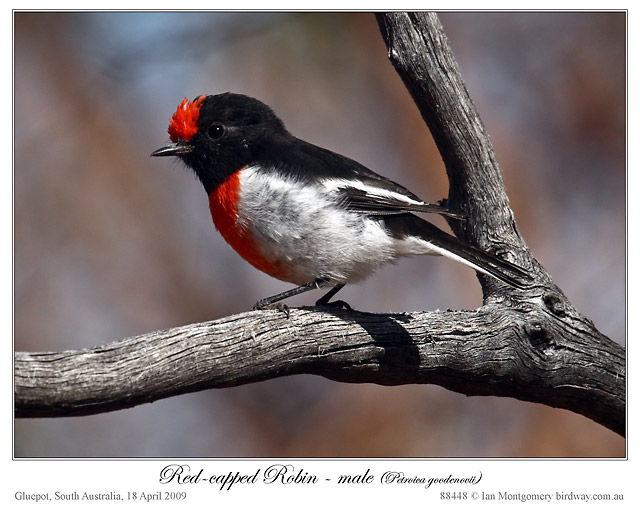
Ian Montgomery of Birdway’s Birds of the World Website, who has been one of the photographers used throughout this blog, has given me permission for a new series of articles. Ian lives in Australia and is a fantastic photographer. On his website he “invites you to enjoy the beauty and fascination of wild birds with his photos of more than 1,200 species from Australia and around the World.” As of a few days ago, the “site contains more than 4,600 photos of 1,218 bird species in the wild; 581 of these are on the main Australian list of Christidis & Boles, 2008.” There is much to discover on the Birdway Website.
Every week Birdway sends out a newsletter with a Bird of the Week. The newsletters have interesting information about the bird being featured and several photos of that bird. With his permission, the Bird of the Week will be featured here, with some additions of my own at the bottom. We trust you will enjoy learning about and seeing some birds that many of us here in America do not have the privilege to see.
But now ask the beasts, and let them teach you; And the birds of the heavens, and let them tell you. (Job 12:7 NASB)
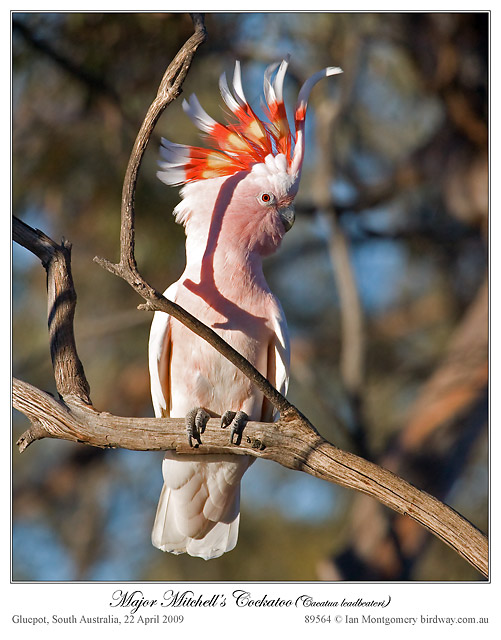
Major Mitchell's Cockatoo by Ian
That is one of my favorite “bird verses.” I enjoy learning about the wonderful birds and critters that have been created. When I see their beauty and behavior, and their bad sides also, there are lessons to learn. Let’s see what we can learn through observing the different “Birds of the Week.”
I can’t say that I will only do one a week, because he has been producing the newsletter for some time. I will have a hard time picking from the past ones. I just may have to double-up.
And Jesus went about all Galilee, teaching in their synagogues, and preaching the gospel of the kingdom, and healing all manner of sickness and all manner of disease among the people. (Matthew 4:23)
Words: Robert Morris, 1874.
Music: Horatio R. Palmer
Robert Morris (1818-1888)
Memories of Galilee
Each cooing dove and sighing bough,
That makes the eve so blessed to me,
Has something far diviner now,
It bears me back to Galilee.
Refrain
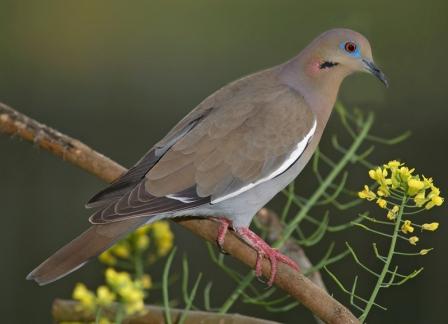
White-winged Dove by Reinier
O Galilee, sweet Galilee,
Where Jesus loved so much to be,
O Galilee, blue Galilee,
Come sing thy song again to me.
Each flowery glen and mossy dell, Where happy birds in song agree,
Through sunny morn the praises tell
Of sights and sounds in Galilee.
Refrain
And when I read the thrilling lore
Of Him Who walked upon the sea,
I long, oh, how I long once more
To follow Him in Galilee.
I made the following observation in the first Partridge article:
“The Partridge is only mentioned twice in Scripture. In Jeremiah, the fact is that other birds put their eggs in the nest of a partridge and then expect the nesting bird to do all the work, sitting, feeding, and fledging the chicks.”
I, the LORD, search the heart, I test the mind, Even to give every man according to his ways, According to the fruit of his doings. “As a partridge that broods but does not hatch, So is he who gets riches, but not by right; It will leave him in the midst of his days, And at his end he will be a fool.” (Jer 17:10-11)
Looking into this verse further, I would like to share some more information about it.
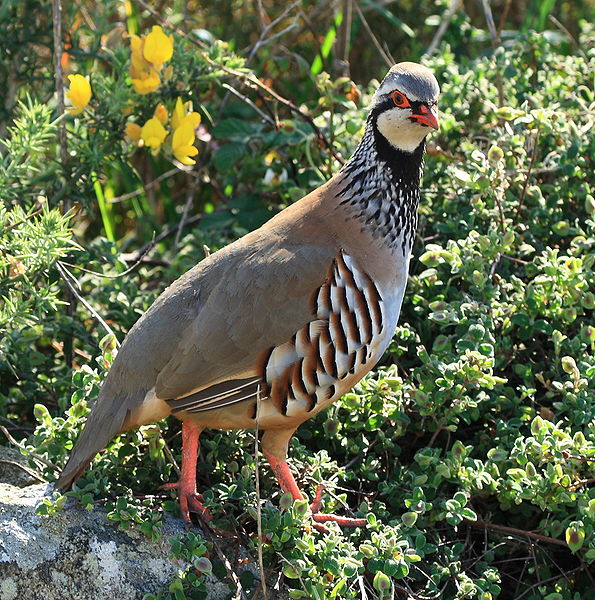
“3. RLP(Red-legged Partridge) will lay their own nest, but will also dump odd eggs in other species nests. Where this is a pheasant, the pheasant (as found in the UK), being probably the stupidest of all birds bar none, will hatch and “rear” the young quite happily. A grey partridge, on the other hand, will abandon the nest. Terminated. And … almost certainly does not attempt to lay again that season.”, A quote from a “Bird Forum”
“Curiosities: while brooding the female is very sensitive, and, if disturbed, may abandon the nest.”, about a Rock Partridge from Parco Nazionale…
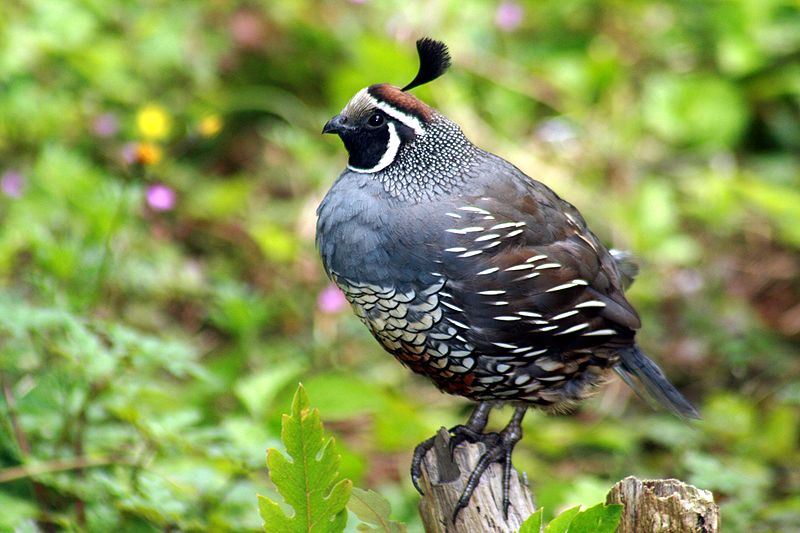
California Quail sometimes called California Partridge
“In the deep woods where the California partridge nests, it is not unusual to find the eggs of that game bird in the nest of the Oregon Towhee. Mr. Cohen, of Ala- meda, records one Towhee nest four feet from the ground on a live-oak stub and containing four Towhee eggs and fifteen eggs of the partridge. Another recorded by him was on the ground, and contained three eggs of the Towhee and eighteen of the partridge. The Towhee abandoned the nest after six partridge eggs were laid, leaving the partridge to rear the brood. Inasmuch as the Towhee eggs hatch in two weeks, the young being very dark colored and naked, while the partridge eggs require three weeks and the young are lively little balls of down able to run about as soon as dry, the sacrifice of the Towhee’s brood is inevitable whenever the two are deposited in the same nest.” from Birds of California
I could give more examples, but it is obvious that the Partridges are leaving their eggs in other nests. “They are brooding but not hatching.” She is trying to raise her chicks, but not in the proper way. That is what the verse is saying, that the Lord searches the heart and tests a person’s thinking. It is then applied to making money the wrong way (crooked) and then having it disappear and then he is a “fool’ in the end.
The verses in Jeremiah 17:10-11 are in the middle of a great passage about trusting in the LORD.
(5) Thus says the LORD: “Cursed is the man who trusts in man And makes flesh his strength, Whose heart departs from the LORD.
(6) For he shall be like a shrub in the desert, And shall not see when good comes, But shall inhabit the parched places in the wilderness, In a salt land which is not inhabited.
(7) “Blessed is the man who trusts in the LORD, And whose hope is the LORD.
(8) For he shall be like a tree planted by the waters, Which spreads out its roots by the river, And will not fear when heat comes; But its leaf will be green, And will not be anxious in the year of drought, Nor will cease from yielding fruit.
(9) “The heart is deceitful above all things, And desperately wicked; Who can know it?
(10) I, the LORD, search the heart, I test the mind, Even to give every man according to his ways, According to the fruit of his doings.
(11) “As a partridge that broods but does not hatch, So is he who gets riches, but not by right; It will leave him in the midst of his days, And at his end he will be a fool.”
(12) A glorious high throne from the beginning Is the place of our sanctuary.
(13) O LORD, the hope of Israel, All who forsake You shall be ashamed. “Those who depart from Me Shall be written in the earth, Because they have forsaken the LORD, The fountain of living waters.”
(14) Heal me, O LORD, and I shall be healed; Save me, and I shall be saved, For You are my praise. (Jeremiah 17:5-14 NKJV)
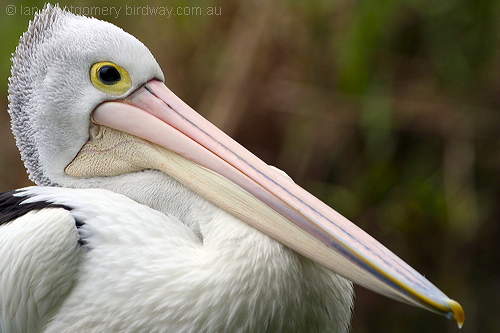
In Previous articles about the Pelicans; Birds of the Bible – Pelicans and Pelicans II they were introduced as being in the Pelecanidae family. Here in the U.S. we have the American White Pelican and the Brown Pelican. They are listed as “unclean” in the Scriptures (Levitucus 11:18 and Deuteronomy 14:17), meaning they were not to be eaten by the Israelites.
Depending on which version of the Bible you use, “Pelican” is not always used in one, but shows up in another. That is what makes “birdwatching the Scriptures” so interesting. Take for instance Isaiah 34:11:
But the pelican and the porcupine shall possess it, Also the owl and the raven shall dwell in it. And He shall stretch out over it The line of confusion and the stones of emptiness. (NKJV)
Using e-Sword Free Bible Program’s” compare feature, observe these differences.
Pelican and porcupine – ASV, NKJV, RV
Pelican and hedgehog – NASB, NAS77, YLT
Pelican and bittern – Darby, JPS
Pelican and herons – GW
Cormorant and bittern – KJV, MKJV, Webster
Hawk and porcupine – ESV
Owls and ravens only mentioned – GNB
Owls, hawks, and wild animals – CEV
Birds of the waste land – BBE
Another interesting verse:
Flocks will lie down in her midst, All beasts which range in herds; Both the pelican and the hedgehog Will lodge in the tops of her pillars; Birds will sing in the window, Desolation will be on the threshold; For He has laid bare the cedar work. (Zephaniah 2:14 NASB)
This verse uses pelican, raven, hedgehog, owl, cormorant depending on the version.
All of that said to help you realize as you study the Bible, looking for birds, be aware that just because it’s not found on the first search, try another version and the bird may appear. I personally prefer to use the KJV, NKJV, NASB, and ESV as my main versions. The others are fine, some better than others, but those mentioned, in my opinion, are closer to the originals. Why they vary, I am not sure. The Strong’s Hebrew and Greek Dictionaries in the KJV and NASB use H6893, which is kaw-ath’ , which means “probably the pelican (from vomiting): – cormorant.”
I also love to watch the pelicans skim over the water and also fly in formation like a squadron of bombers. I have included two videos of them skimming. Visit the Pelican Videos and Photos for more. See the Sidebar.
*All photos used with permission.
Pelican in flight in Cuba
*
*
Another by arlens47 that “Follows the flight of a pelican as he starts to go out to sea, then reverses course and lands in the water off the coast of Santa Cruz, California. Background music is Thorn Birds Theme by the Joe Reisman Orchestra.
Interesting Things – Dragonfly gave a lot of detail about the Dragonflies. Now the researchers have produced some very interesting details about their migration. According to the “Mail Online”, they have longest migration by insects. They “fly 11,000 mile round-trip over ocean.” and the “BCC-Earth News” also has an article about their incredible journey.
From the BBC Earth News: “Every year, millions of dragonflies fly thousands of kilometres (11,000 miles) across the sea from southern India to Africa.
So says a biologist in the Maldives, who claims to have discovered the longest migration of any insect.
If confirmed, the mass exodus would be the first known insect migration across open ocean water.”
They go on to mention the Monarch Butterfly’s migration is much less lengthy, only traveling around 8,600 miles round-trip.
Round-trip of Dragonfly from Mail Online
What an amazing feat these dragonflies perform. Below are the links to the articles, but what a fantastic Creator we have. As you read the articles, you cannot but be amazed by the way they were programmed to sense the weather patterns, knowing when the rains would be there, etc. There is no way this just happened without a designer.
O LORD, how many are Your works! In wisdom You have made them all; The earth is full of Your possessions. (Psalms 104:24 NASB)








 Lee's Birdwatching Adventures Plus