Bufflehead Ducks’ Dependable Migration Timing

BUFFLEHEAD DUCKS’ DEPENDABLE MIGRATION TIMING

Dr. James J. S. Johnson

Seest thou a man diligent in his business? he shall stand before kings; he shall not stand before mean men.  (Proverbs 22:29)

BUFFLEHEAD IN FLIGHT
Sacramento Audubon Society / Ray Rozema photo credit

When I think of Bufflehead ducks (Bucephala albeola), I am reminded of the authoritative advice (“words of the wise”) of Proverbs 22:29, regarding reputations for dependable “diligence”.  Why?

BUFFLEHEADS in migration
Jonathan Maher Kresge / Chesapeake bay Foundation photo credit

The first time that this author observed a Bufflehead, in the wild, was on March 11th of A.D.1996, while visiting the Texas Gulf Coast’s Aransas Bay (which is protected as Aransas Bay National Wildlife Refuge), as part of ornithological research (eventually) leading to a doctoral degree in creation science (applied to wildlife ecology). [See “Bufflehead Duck, One of Diverse Divers at Aransas Bay” (posted at https://leesbird.com/2018/01/26/bufflehead-duck-one-of-diverse-divers-at-aransas-bay/ .]
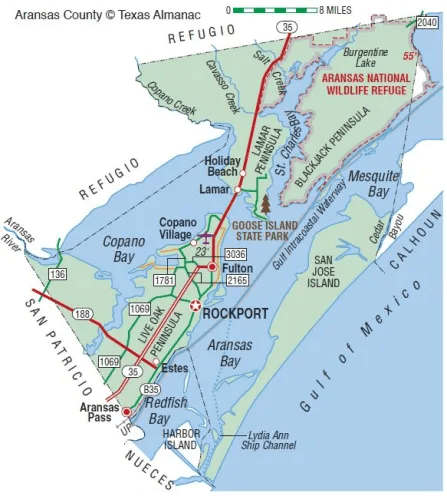
ARANSAS BAY MAP
Aransas County in TEXAS ALMANAC image credit

What conspicuously beautiful ducks those Buffleheads were (and are)!

BUFFLEHEAD DUCK in flight
Bill Bouton photo credit

Consider the reputation that the Bufflehead duck has, for dependability punctuality, as was recently observed by Alonso Abugattas, the Chesapeake Bay area’s “Capital Naturalist”:

The bufflehead is nothing if not punctual.  Few other ducks are known to arrive in our neighborhood every winter within a few delays of the date they arrived the previous year.  The smallest of North America’s diving ducks, the bufflehead … [can] nest in the tree cavities of woodpeckers, most commonly northern flickers, according to Canadian zoologist Gilles Gauthier. . . . .

After forming their pair bonds over the winter, the birds head back to their breeding grounds in early April and early May, migrating at night. They’re among the last ducks to leave their winter territory.  The greatest concentration of breeding grounds, according to abundance maps maintained by the Cornell Lab of Ornithology, are in northwestern Canada, in a wide swath crossing through Saskatchewan, Alberta and Northwest Territory… petering out in Alaska. . . .

Buffleheads start leaving [their breeding grounds] for the wintering grounds in October, settling mostly across [the U.S.A.’s Lower 48] but sometimes going as far [south] as Central America.

[Quoting CHESAPEAKE BAY JOURNAL, 34(8): 39 (November 2024).]
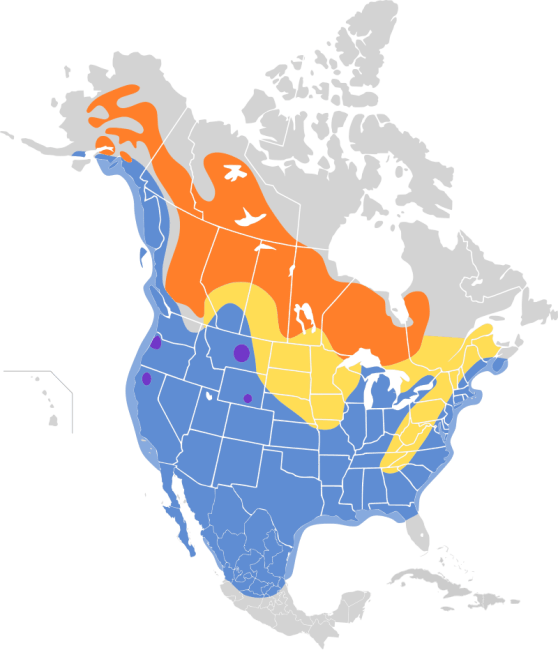
BUFFLEHEAD RANGE MAP
(Cephas / BirdLife Internat’l / Wikipedia image credit)

So much for the Bufflehead’s predictable-because-dependable migration movements. 

Yet is there a lesson for us humans, as we consider the Bufflehead’s phenological reliability?  Yes, there is – especially if we look at the details of Proverbs 22:29.
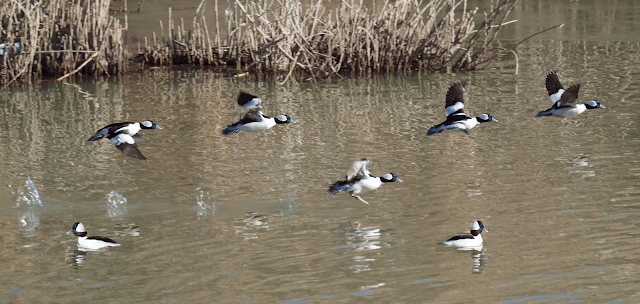
BUFFLEHEADS in wetland habitat
Robert Mortensen / BirdingIsFun.com composite photo credit

Of course, it is good to earn a reputation for dependable punctuality. In fact, that is similar to having a reputation for quickly fulfilling one’s responsibility — as opposed to having a reputation for dilatory procrastination.  Some folks can be expected to do sloppy work – who needs that kind of “help”?

Yet other folks are famous for delivering extremely careful (almost perfectionist) work, but only in an all-too-often impractically slow response time, so slow that the perfectionist work is of diminished practical value (because the need for timely results was compromised and disappointed).

How is all that relevant to understanding Proverbs 22:29?  That proverb is translated into English as follows:

Seest thou a man diligent in his business? he shall stand before kings; he shall not stand before mean men.  (Proverbs 22:29)

In that sentence the phrase “man diligent” is a translation of ’îš mâhîr, with ’îš being a generic word for “man”—but what does the Hebrew word mâhîr (translated as “diligent” in the KJV) mean?

Consider that the masculine singular adjective mâhîr is translated by several English words in our English Bible.  For example, mâhîr is translated “ready” in Ezra 7:6 and also in Psalm 45:1 (which is Psalm 45:2 in Hebrew verse numbering]). Also, mâhîr is translated “hasting” in Isaiah 16:5.  But there is more to consider, because Hebrew adjectives are routinely related in meaning to similarly spelled nouns, verbs, and/or adverbs. 

Therefore, to better understand what the Hebrew adjective mâhîr means, in Proverbs 22:29, consider also the following (non-exhaustive) listing of illustrative (etymologically related) verbs and adverbs:

ROOT VERB mâhar

“hasten”, “haste”, “make haste”, etc. (Genesis 18:6-7 & 19:22 & 24:18,20,46 & 41:32 & 43:30 & 45:9,13; Exodus 34:8; Joshua 4:10 & 8:14,19; Judges 9:48 & 13:10; 1st Samuel 9:12 & 17:48 & 23:27 & 25:18,23,34,42 & 28:24; 1st Kings 20:41 & 22:9;  2nd Kings 9:13; 2nd Chronicles 24:5; Esther 5:5 & 6:10; Psalm 16:4; Proverbs 1:16 & 7:23; Isaiah 49:17 & 51:14 & 59:7)

“make ready quickly” (Genesis 18:6)

“make speed” (2nd Samuel 15:14)

“fetch quickly” (2nd Chronicles 18:8)

RELATED MASCULINE ADVERB mahêr

“quickly” (Exodus 32:8; Deuteronomy 9:3,12[twice],16 & 26:20; Joshua 2:5; Judges 2:17,23)

“speedily” (Psalm 69:17 [69:81 in Hebrew verse numbering] & 79:8 & 102:2 [102:3 in Hebrew verse numbering]; 143:7)

“hastily” (Judges 2:23; Proverbs 25:8)

“suddenly” (Deuteronomy 7:4)

RELATED FEMININE ADVERB mehêrâh

“quickly” (Numbers 16:46 [17:11 in Hebrew verse numbering]; Deuteronomy 11:17; Joshua 8:19 & 10:6 & 23:16; 2nd Samuel 17:16,18,21; 2nd Kings 1:11; Ecclesiastes 4:12)

“hastily” (Judges 9:54)

“speedily” (Psalm 31:2 [31:3 in Hebrew verse numbering]; Ecclesiastes 8:11; Isaiah 58:8)

“swiftly” (Psalm 147:15)

[See generally George V. Wigram’s ENGLISHMAN’S HEBREW CONCORDANCE OF THE OLD TESTAMENT (Hendrickson’s 2001 reprint of the 1874 London-published 3rd edition), page 669.]

The listing above is incomplete—but the pattern is already clear—the adjective mâhîr denotes the trait of being speedy, swift, quick!  

RAPIDLY RUNNING A RACE!
Scottish Gov’t / Parent Club photo credit

In other words, a person who consistently and dependably does his or her work fastly is appreciated—and (eventually) will “stand before kings” (i.e., not be limited to serving before low-ranking individuals).

So, just as the phenological punctuality of the returning-from-winter Bufflehead duck is dependably predictable (as is also the migratory return of Israel’s faithful stork—see www.icr.org/article/lesson-from-stork — which is noted in Jeremiah 8:7), a truly diligent human will be prompt (i.e., give quick turnaround) in his or her work responsibilities. 

Careful work is appreciated, yes, but only if it is contextually timely. Promptness is really appreciated! 

><> JJSJ  profjjsj@aol.com  😊
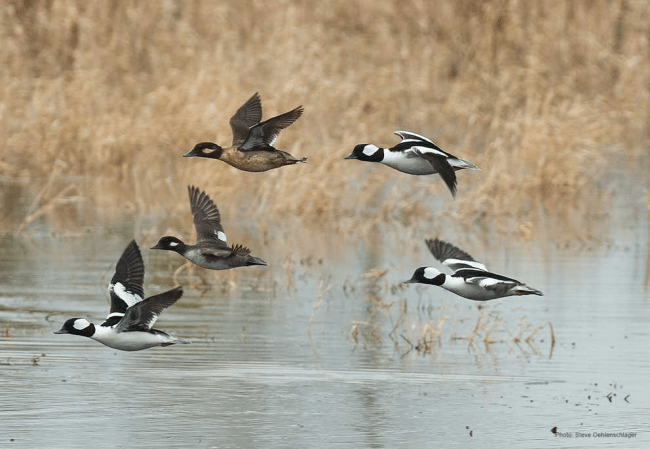
BUFFLEHEADS in flight
Ducks Unlimited photo credit

Birdwatching Thru the Bible – Without Trying

Bald Eagle on Old Bartow Road – cropped

As we read through our Bible, many times we end up birdwatching without even trying. In a passage your reading, you find a type of bird mentioned. Do you make a mental note or write down the bird’s name? Many of us “birdwatchers” have our eyes and ears perk up, and we become curious. Well, at least I do.

Looking back through previous post, I spotted this one: Birdwatching Without Birdwatching. We were just out driving and spotted four Eagles. That is what happens while reading scripture. Stay curious. Whether it’s birds, animals, truths about any topic, especially scriptural truths. Many times, using a concordance will help you find other references to that same topic. Compare scripture with scripture.

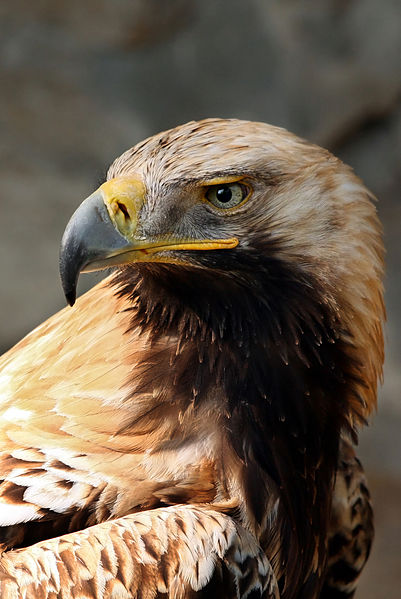
Eastern Imperial Eagle (Aquila heliaca) ©WikiC

For instance: Eagle/Eagles are mentioned 34 times in the KJV version. Plus, there are numerous online resources and books to check out.

Dr. Johnson, (Dr. Jim) told us in Birdwatching is the right thing to do!

Appreciating including, but not) is the right thing to do!

This was an unexpected view out our back door while eating breakfast. Two Bald Eagles sitting in that tree. Thankfully my camera was handy.

Birds of the Bible – Eagles

Birdwatching is the right thing to do!

Birdwatching Without Birdwatching

Birdwatching Thru the Bible – Introduction

Birdwatching Thru the Bible – Introduction

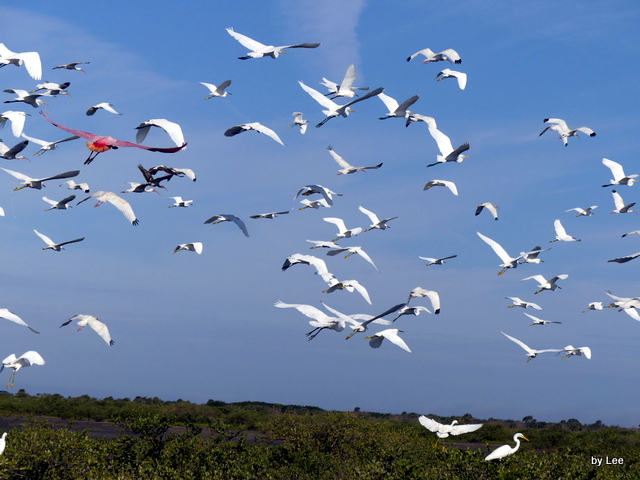
Mixed Flock Flyiing 122717 Merritt Is NWR by Lee

When this blog began in 2008 its purpose was to introduce the Birds of the Bible. Now, it’s time to look at these verses and birds again. New birdwatchers and Christians may wonder about God’s avian wonders mentioned in scripture. Or we may like to review. I personally have seen and learned more about birds since back then and am still amazed by their behavior and beauty.

So, come along as we look at the Birdwatching Thru the Bible now. This new series will have us looking at the Birds of the Bible again, but from a little different perspective.

***

“In the beginning God created the heavens and the earth. (Genesis 1:1)

On day one of creation, God created light and darkness which were called Day and Night (Gen 1:5)

On day two the heavens were created and the firmament in the midst of the waters divided. (Gen 1:7)

On day three the waters were gathered together and the dry land appeared. Then the grass, herbs that has seeds, fruit trees were created. (Gen 1:8-13)

On day four the stars, moon, etc. were added for signs, seasons, day and night with the sun and moon. (Gen 1:14-19)

Then on day five:

 (20)  Then God said, “Let the waters abound with an abundance of living creatures, and let birds fly above the earth across the face of the firmament of the heavens.”  (21)  So God created great sea creatures and every living thing that moves, with which the waters abounded, according to their kind, and every winged bird according to its kind. And God saw that it was good.  (22)  And God blessed them, saying, “Be fruitful and multiply, and fill the waters in the seas, and let birds multiply on the earth.”  (23)  So the evening and the morning were the fifth day.” (Genesis 1:20-23 NKJV)

Mixed Flock of birds flying in a V Formation- Put together- ©Creative Commons

Mixed Flock of birds flying in a V Formation- Put together- ©Creative Commons

WOW! What a Creator!! Did you notice how God had everything planned out? Each day provided more to make the earth livable for the creatures, and then us on the sixth day.

A few Birds of the Bible post about the beginning:

Lee’s Seven-Word Sunday – 1/24/16 (Repost)

***

House Sparrow nest in Sign

Yea, the sparrow hath found an house

***


Yea, the sparrow hath found an house, and the swallow a nest for herself, where she may lay her young, even thine altars, O LORD of hosts, my King, and my God. (Psalms 84:3 KJV)

*

Sandra’s New Kooky Challenge

(This is a repost of (Lee’s Seven-Word Sunday – 1/24/16)

*

This was actually the first post I did in the Challenge that Sandra gave us bloggers. In the coming days I’ll say more about that challenge.

Good News


Lee’s Two-Word Tuesday – Birds Fly

***

American White Pelican (Pelecanus erythrorhynchos) by Lee


Birds Fly

***


Then God said, “Let the waters abound with an abundance of living creatures, and let birds fly above the earth across the face of the firmament of the heavens.” (Genesis 1:20 NKJV)

American White Pelican (Pelecanus erythrorhynchos) by Lee at Circle B Bar Reserve

(This is a repost of Two Word Tuesday -1/26/16)

*

Sandra’s New Kooky Challenge

*

When I Consider – Wednesdays – Intro

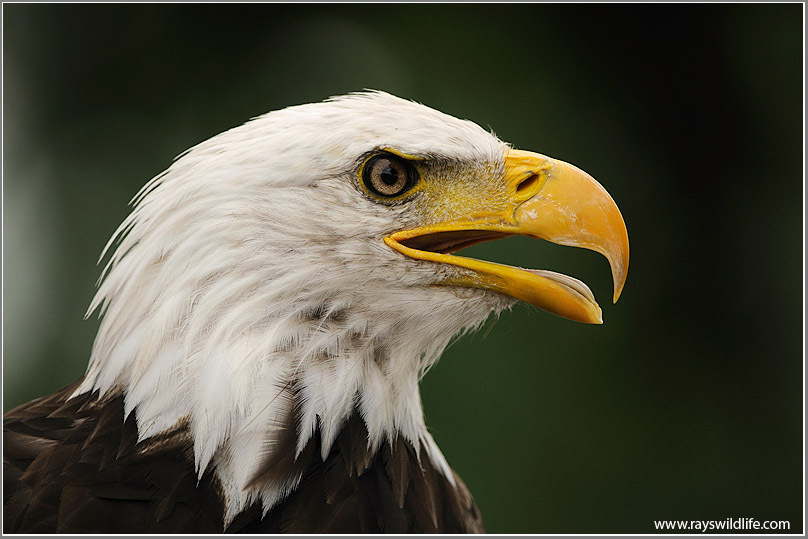
Bald Eagle – San Diego Zoo

When I Consider – Wednesdays will be reposts/updates to a series of articles that were posted back in the early days of this blog.

A Closer Look at the Evidence by Richard & Tina Kleiss is a devotional book that has bite size information about incredible evidence about creation.

Here is a part of the review of the book written by the Richard & Tina Kleis.

We have never seen such a unique and fascinating devotional book. It is one of a very few that we have used that tempts us to read on ahead! A Closer Look at the Evidence presents straightforward evidence, primarily scientific, for the existence of our Creator.

This book is organized into twenty-six different subject areas and draws from over fifty expert sources. Each of the 400+ pages highlights knowledge from a Biblical perspective. Each day’s devotion is a full page of concise, well-researched, factual information with reference material noted if you desire more specifics.

The authors, Rich and Tina Kleiss, former public school science teachers, discovered that scientific evidence overwhelmingly supports creation. But evolution continues to be presented as fact in the media and textbooks, even as the evidence for creation is being systematically excluded.

By daily using and discussing A Closer Look at the Evidence, your family should not only learn the credible reasons for your belief in the Creator but also be equipped to share this truth with others. Each page ends with a related Bible verse…..

magnify_2748cDan and I used it daily after our regular devotions. I have been wanting to share these articles for some time and have decided to do so in a series called, “When I Consider!” A quote from the book’s Dedication has encouraged me decide to do this.

God’s desire is that the knowledge of what He has done through both the cross and creation is for everyone. We must not keep this knowledge to ourselves. The evidence that He is our Creator is so overwhelming and encouraging that it is desperately needs to be shared in the world today. A Closer Look at the Evidence is designed to be an affordable resource to both reinforce our individual faith and facilitate sharing the reasons for this faith. Consider praying about how God could use you to utilize the truths found in these pages.

The book is available at (Christianbook.com)

Here is the first in the “When I Consider!” Series:

This was the first in the series called, “When I Consider! Please see the above article, “A Closer Look at the Evidence – Kleiss“, by Richard and Tina Kleiss, for an explanation of this new series. Not only will I use information from the Kleiss’ book, but other articles also. Since our main blog is about Bird’s, this seems like a good starting place.

“Evidence From Biology”

The eagle’s diving speed can exceed 100 miles per hour. At this speed, the eagle’s eyesight must be perfect in order to know exactly when to pull out of a dive. Its eyes are designed to spot a rabbit or fish up to one mile away. The eagle also has remarkably designed wings, each covered by over 12,000 feathers. Aircraft designers are still trying to copy this engineering marvel.

Besides the ability to climb to 10,000 feet withing minutes, the parent eagle also assists its young in flight. As it flies alongside the eaglet, whirlpools of air formed by its primary feathers provide the eaglet with additional lift.

In speaking of His protective care over the nation of Israel, God states, ‘..I bare you on eagle’s wings…’ (Exodus 19:4 KJV). The Hebrew word for ‘bare’ is nacah, and its primary rood means ‘to lift.’ This is exactly what the parent eagle does to help its young in flight.

The precise selection and meaning of words used in the Bible is a testimony to the accuracy and precision of the remarkable book.

Character Sketches, Vol.III, p171-174″

The above quote is from January 28, “A Closer Look at the Evidence,” by Richard and Tina Kleiss

This series will be based on:

Psalms 8:3-9 NKJV
“When I consider Your heavens, the work of Your fingers, The moon and the stars, which You have ordained, What is man that You are mindful of him, And the son of man that You visit him? For You have made him a little lower than the angels, And You have crowned him with glory and honor. You have made him to have dominion over the works of Your hands; You have put all things under his feet, All sheep and oxen– Even the beasts of the field, The birds of the air, And the fish of the sea That pass through the paths of the seas. O LORD, our Lord, How excellent is Your name in all the earth!


Heaven’s New Jerusalem and Birds – Sapphire II

This is a repost of Heaven’s New Jerusalem and Birds – Sapphire. This series originally appeared in 2019. (With a little dusting and updating they will all be reposted in the coming days. Stay tuned.)

Sapphire Gem ©WikiC

“And the foundations of the wall of the city were garnished with all manner of precious stones. The first foundation was jasper; the second, sapphire; the third, a chalcedony; the fourth, an emerald;” (Revelation 21:19 KJV)

For now, the first stone – “Jasper,” is being skipped. I am still researching what is the color or colors of the Jasper stone. Some have it all over the color spectrum. Also, there is no bird with the name “Jasper” in it. (Heaven’s New Jerusalem and Birds – Jasper II)

The Sapphire is beautiful and is typically blue but varies. Sapphire is also the stone used to represent those born in September. Yeah, my birth month. “Sapphire is the birthstone for September and the gem of the 45th anniversary. A sapphire jubilee occurs after 65 years.” [Wikipedia]

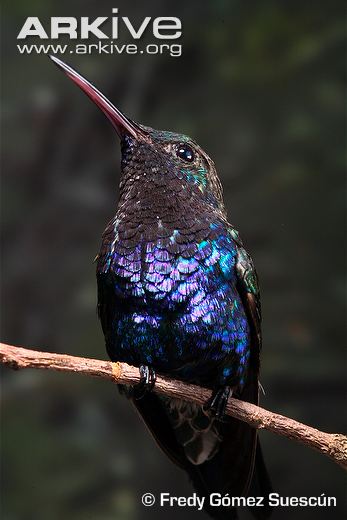
Sapphire-bellied-hummingbird-perched-on-branch ©ARKive

A rare variety of natural sapphire, known as color-change sapphire, exhibits different colors in different light. Color change sapphires are blue in outdoor light and purple under incandescent indoor light, or green to gray-green in daylight and pink to reddish-violet in incandescent light. Color change sapphires come from a variety of locations, including Thailand and Tanzania. The color-change effect is caused by the interaction of the sapphire, which absorbs specific wavelengths of light, and the light-source, whose spectral output varies depending upon the illuminant. Transition-metal impurities in the sapphire, such as chromium and vanadium, are responsible for the color change. [Wikipedia]

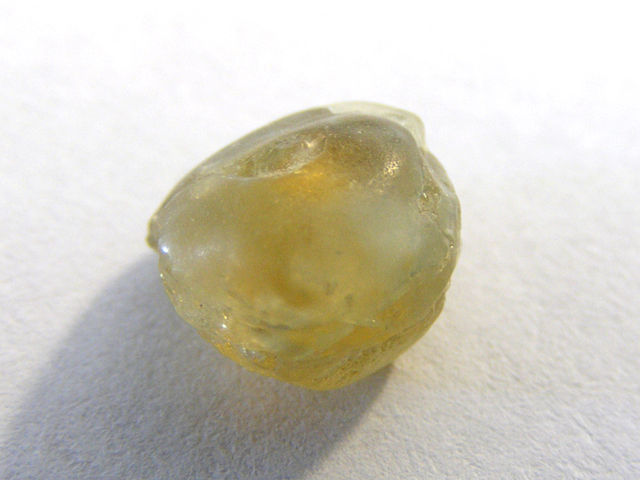
Uncut Yellow Sapphire ©Wikipedia

The sapphire is mentioned in nine verses in the King James version of the Bible.

“And they saw the God of Israel: and there was under his feet as it were a paved work of a sapphire stone, and as it were the body of heaven in his clearness.” (Exodus 24:10 KJV)

Sapphire Flycatcher (Ficedula sapphira) ©WikiC

“And the second row shall be an emerald, a sapphire, and a diamond.” [The breastplate of judgment] (Exodus 28:18 and 39:11 KJV)

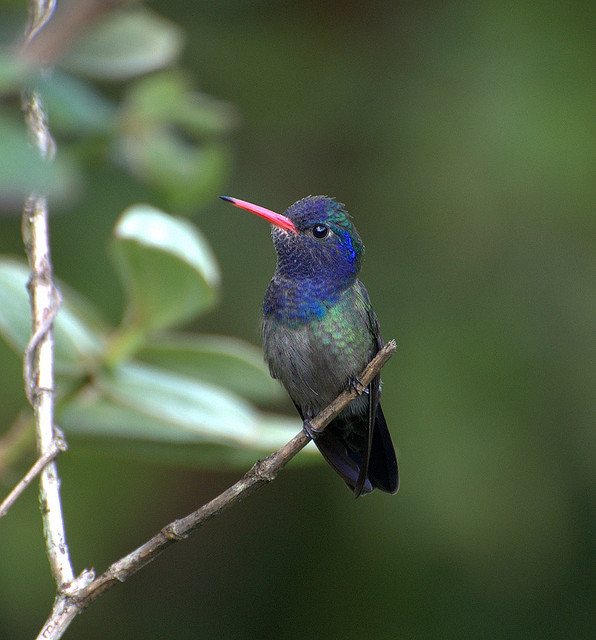
White-chinned Sapphire (Hylocharis cyanus) by Dario Sanches

“But where shall wisdom be found? and where is the place of understanding? Man knoweth not the price thereof; neither is it found in the land of the living. The depth saith, It is not in me: and the sea saith, It is not with me. It cannot be gotten for gold, neither shall silver be weighed for the price thereof. It cannot be valued with the gold of Ophir, with the precious onyx, or the sapphire.” (Job 28:12-16 KJV)
Unchanged:

Sapphire-spangled Emerald (Amazilia lactea) by Dario Sanches

“And above the firmament that was over their heads was the likeness of a throne, as the appearance of a sapphire stone: and upon the likeness of the throne was the likeness as the appearance of a man above upon it.” (Ezekiel 1:26 KJV)

Sapphire-bellied Hummingbird ©LauraLFel

“Then I looked, and, behold, in the firmament that was above the head of the cherubims there appeared over them as it were a sapphire stone, as the appearance of the likeness of a throne.” (Ezekiel 10:1 KJV)

Blue-chinned Sapphire (Chlorestes notata) ©WikiC

“Thou hast been in Eden the garden of God; every precious stone was thy covering, the sardius, topaz, and the diamond, the beryl, the onyx, and the jasper, the sapphire, the emerald, and the carbuncle, and gold: the workmanship of thy tabrets and of thy pipes was prepared in thee in the day that thou wast created.” (Ezekiel 28:13 KJV)

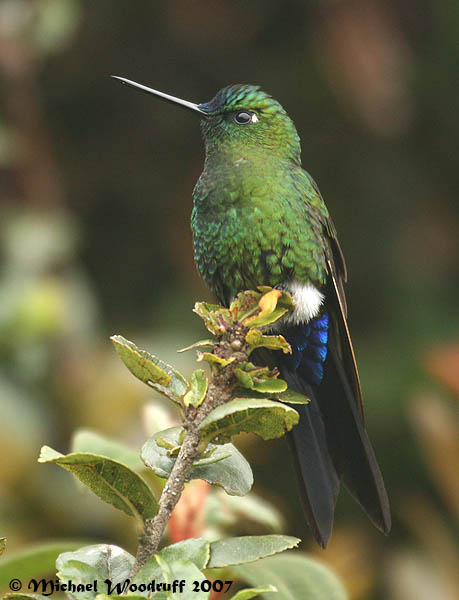
Sapphire-vented Puffleg (Eriocnemis luciani) by Michael Woodruff

Sapphire-vented Puffleg (Eriocnemis luciani) by Michael Woodruff

I trust you enjoyed seeing some of the birds with Sapphire in their name as the various verses about sapphires were given.

Previous Blogs that used Verses with Sapphires in them:

*** Articles in this Repost Series II so far:

Wordless Birds – With Hummingbirds

Heaven’s New Jerusalem and Birds – Introduction II

This is a repost of Introduction to the Heaven’s New Jerusalem and Birds. This series originally appeared in 2019. (With a little dusting and updating they will all be reposted in the coming days. Stay tuned.)

Sapphire Flycatcher (Ficedula sapphira) ©WikiC

I am currently attending a ladies Bible study class on Heaven. It is very interesting, and of course, when the mention of the various precious stones, with their beautiful colors came up, birds fluttered to mind. I have been accused of having a “bird brain.” [Always thinking about things in relation to birds.]

A huge question came to mind. Wonder if I could find birds whose names or colors closely reflected the names of those stones? Sounds like a simple premise. Right? Not so fast, as I am finding out.

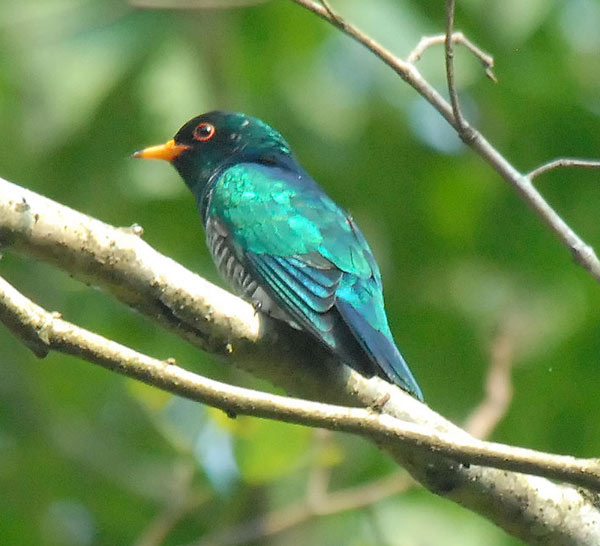
Asian Emerald Cuckoo (Chrysococcyx maculatus) by Nikhil Devasar

Asian Emerald Cuckoo (Chrysococcyx maculatus) by Nikhil Devasar

First some of the verses that we were reading from Revelation Chapter 21:

“10 And he carried me away in the spirit to a great and high mountain, and shewed me that great city, the holy Jerusalem, descending out of heaven from God,
18 And the building of the wall of it was of jasper: and the city was pure gold, like unto clear glass.
19 And the foundations of the wall of the city were garnished with all manner of precious stones. The first foundation was jasper; the second, sapphire; the third, a chalcedony; the fourth, an emerald;
20 The fifth, sardonyx; the sixth, sardius; the seventh, chrysolyte; the eighth, beryl; the ninth, a topaz; the tenth, a chrysoprasus; the eleventh, a jacinth; the twelfth, an amethyst.
21 And the twelve gates were twelve pearls: every several gate was of one pearl: and the street of the city was pure gold, as it were transparent glass. (KJV)  [Yes, pearls are not stones]

Things go well with Gold, Jasper, Sapphire, Emerald, Topaz, Jacinth?, and Amethyst. What about chalcedony, sardonyx, sardius, chrysolyte, beryl [maybe], and chrysoprasus?

Ruby-topaz Hummingbird (Chrysolampis mosquitus) ©WikiC

King James Study Bible 21:9–21. These verses describe the beauty and glory of the holy Jerusalem. It is called Christ’s bride (cf. v. 2), a reference perhaps to the church as the city’s principal inhabitant. It is an expression of the glory of God. The wall shows its security and protection. Its gates show accessibility. Saved Israel is also present. It has dimensions of approximately 1,500 miles cubed. The gold and precious stones may be earthly materials glorified (cf. 1 Cor. 15:50–54). They depict the glory, beauty, and eternal quality of the city. Jasper is green, sapphire is blue, chalcedonyis green, emerald is green, sardonyx is red and white, sardius is bloodred, chrysolyte is yellow or gold, beryl is green, topaz is greenish gold or yellow, chrysoprasus is green, jacinth is bluish purple, and amethyst is purple quartz. The effect is a magnificent city of brilliant gold adorned with gems of every color. There appears to be only one street (cf. 22:2), also made of pure, radiant gold.

Amethyst-throated Sunangel (Heliangelus_amethysticollis) ©WikiC

Stones, Precious
“Precious stones are frequently alluded to in Scriptures; they were known and very highly valued in the earliest times. The Tyrians traded in precious stones supplied by Syria. Eze_27:16. The merchants of Sheba and Raamah in south Arabia, and , doubtless, India and Ceylon, supplied the markets of Tyre with various precious stones. The art of engraving on precious stones was known from the very earliest times. Gen_38:18.
The twelve stones of the breastplate were engraved, each one, with the name of one of the tribes. Exo_28:17-21. It is an undecided question whether the diamond was known to the early nations of antiquity. The Authorized Version gives it as the rendering of the Hebrew word, yahalom, but it is probable that the jasper is intended.
Precious stones are used in Scripture, in a figurative sense, to signify value, beauty durability, etc., in those objects with which they are compared. See Son_5:14; Isa_54:11-12; Lam_4:7; Rev_4:3; Rev_21:10; Rev_21:21. [Smith’s Bible Dictionary]

Golden Tanager (Tangara arthus) ©WikiC

The Bible Knowledge Commentary says this of Revelation 21:19-21″

“The decorations of the foundations (with the apostles’ names inscribed on them) include 12 stones involving different colors. The color of the jasper is not indicated. The sapphire was probably blue; the chalcedony comes from Chalcedon, Turkey and is basically blue with stripes of other colors. The emerald is a bright green; the sardonyx is red and white; and the carnelian, called a “sardius” in the NASB, is usually ruby-red in color, though it sometimes has an amber or honey color. In Rev_4:3 the carnelian stone is coupled with the jasper to reflect the glory of God. The chrysolyte is a golden color, probably different from the modern chrysolyte stone which is pale green. The beryl is a sea green; the topaz is a transparent yellow-green; the chrysoprase is also green; the jacinth is violet in color; and the amethyst is purple. The stones together provide a brilliant array of beautiful colors. The gates resemble huge, single pearls, and the street of the city was of pure gold, like transparent glass (cf. Rev_21:18).
While the beauty of the city may have symbolic meaning, no clue is given as to the precise interpretation. Since it is reasonable to assume that the saints will dwell in the city, it is best to take the city as a literal future dwelling place of the saints and angels.”

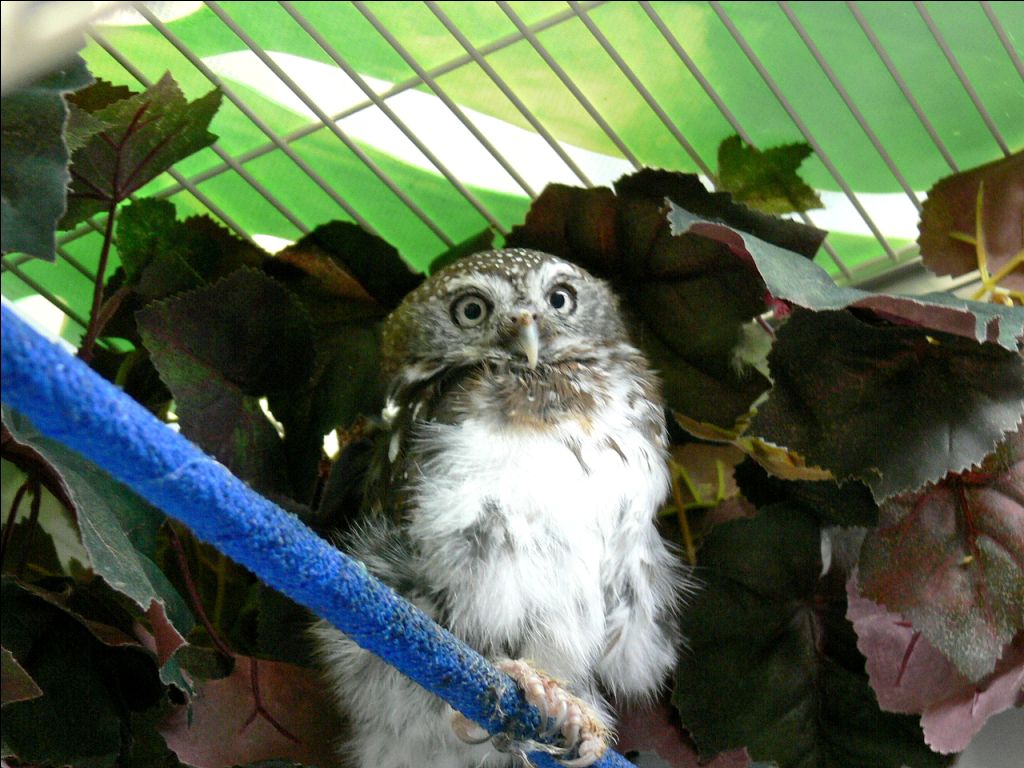
Pearl-spotted Owlet (Glaucidium perlatum) Breeding Room by Lee

Pearl-spotted Owlet (Glaucidium perlatum) Breeding Room by Lee

As you can see, it is going to take a while to figure out some of these colors to find possible matching bird colors and names. A friend mentioned that the colors were maybe the same as the ones in the rainbow. Sounds reasonable. When the Lord created the birds, He knew about the rainbow that was going to be given as a promise after the flood. He also knew the colors of the foundations of the New Jerusalem. So, why would he not use those colors in birds when He created them?

“In the beginning was the Word, and the Word was with God, and the Word was God. The same was in the beginning with God. All things were made by him; and without him was not any thing made that was made.” (John 1:1-3 KJV)

Stay Tuned!

See:

What’s It’s Name? – “Coronata”

Blue-crowned Manakin (Lepidothrix coronata) ©WikiC

“For You meet him with the blessings of goodness; You set a crown of pure gold upon his head.” (Psalms 21:3 NKJV)

Coronata is our Scientific/Latin word today. When I saw this name for birds, without looking up the word, I thought it had to have something to with a coronation, a king, or maybe a crown.

Crested Treeswift (Hemiprocne coronata)

Crested treeswift (Hemiprocne  coronata) Male and Female Photographs by Shantanu Kuveskar – Wikipedia

Blue-capped Manakin (Lepidothrix coronata)

Blue-crowned Manakin (Lepidothrix coronata) ©WikiC

Wrenthrush (Zeledonia coronata)

Wrenthrush (Zeledonia coronata) – Anthony Batista (Wikipedia)

Yellow-rumped Warbler (Setophaga coronata)

Myrtle (Yellow-rumped) Warbler (Setophaga coronata) breeding ©WikiC

Russet-crowned Warbler (Myiothlypis cornata)

Russet-crowned Warbler (Myiothlypis cornata)

Yellow-rumped Warbler (Setophaga coronata)

Myrtle Warbler (Setophaga coronata) by Anthony747

Myrtle Warbler (Setophaga coronata) by Anthony747

This Myrtle Warbler seems to have the “crown” a little misplaced. Just an observation :)

I trust you are enjoying the Avian Wonders from the Lord from their Scientific/Latin names. We are just beginning. There are so many varieties of words that I doubt we will ever discover/introduce all of them. Also, the naming of birds keep changing from time to time. See The I.O.C World Bird List 14.1

Previous articles that have mentioned some of the birds:

Wages Or A Gift?

Doves Rest in their Nest

Doves Rest in their Nest

Dr. James J. S. Johnson

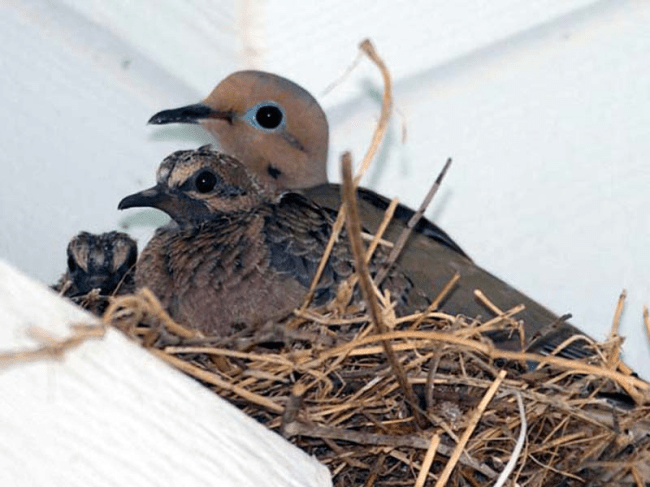
MOURNING DOVES in nest
(Photo credit: DFWurbanWildlife.com)

And I said, Oh that I had wings like a dove! for then would I fly away, and be at rest.

(Psalm 55:6)

Doves are known for their fluttering flight (Psalm 55:6a), and their peaceful disposition (Matthew 10:16); yet they are also known for resting upon their nests (Psalm 55:6b & Jeremiah 48:28).

As recently noted (see my previous Leesbird.com blogpost, “Bird Nests are Important — the Bible Says So”, posted https://leesbird.com/2023/09/15/bird-nests-are-important-the-bible-says-so/ ), bird nests are very important–to nesting birds, and even to God Himself, because God chose to refer to bird nests several times in Scripture.

And, to human birdwatchers–such as Dr. Bill Boothe–nesting birds are worth watching, and nesting birds are worth photographing, too, so that other birdwatchers can appreciate these precious winged wonders that God chose to create.

For a recent example, see the nesting Mourning Doves at the residence of Dr. William (“Bill”) Boothe. Now that’s a precious Mourning Dove family! (No “gutter-man” jokes here.)

MOURNING DOVE family in nest on gutter
(photograph by Dr. Bill Boothe, used by permission)

Dr. Boothe reports that his Mourning Dove family now includes 2 babies—-how wonderful! Hidden in plain view are so many of God’s “wonders without number” (Job 9:10).

Mourning Doves have a habit of building their nests in sheltered areas, according to nest-building wisdom that God has programmed into them (see Jeremiah 48:28).

Of course, even when Mourning Doves are not seen, by humans, their mourning voices are often heard, which is how they got to be called “mourning” doves. Regarding how doves “mourn” (or “moan”), see Isaiah 38:14 & 59:11 (as well as Nahum 2:7 & Ezekiel 7:16). Providentially speaking, the doves’ mourning noises somewhat resemble the low hooting of owls, i.e., owls that prey on rodents—-rodents who are potential predators of doves—-so owl-like noises are an advantage to doves who benefit from scaring away hungry rodents. (See JJSJ, “The Ghost Army”, posted at http://www.icr.org/article/ghost-army .)

So, there you have it, hidden in plain view: Mourning Doves, in their own peaceful ways, just by being themselves, honor the Lord Jesus Christ, their Creator.

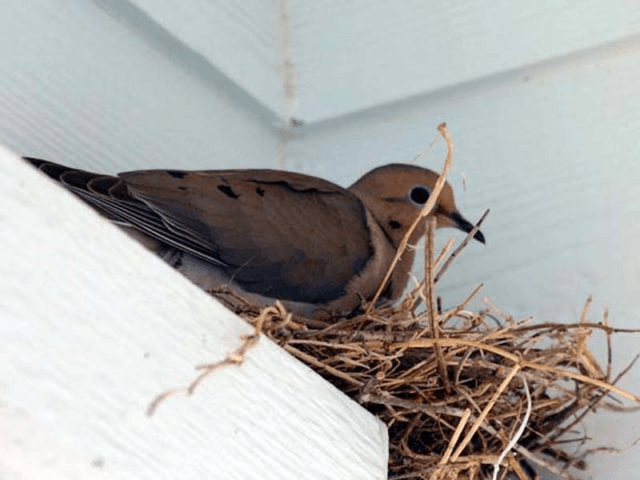
MOURNING DOVE on nest
(photo credit: DFWurbanWildlife.com)

Nottingham Sheriff’s Two Swans Reappear

After Being Buried for 350 Years, Nottingham Sheriff’s Two Swans Reappear

Dr. James J. S. Johnson

            And the swan [הַתִּנְשֶׁ֥מֶת], and the pelican, ….

(Leviticus 11:18)

Recently (today being June 26th of AD2023), an ancient (about 350 years old!) gold signet ring of interest to birdwatchers –– was found by a man in Nottingham (England), using a metal detector. 

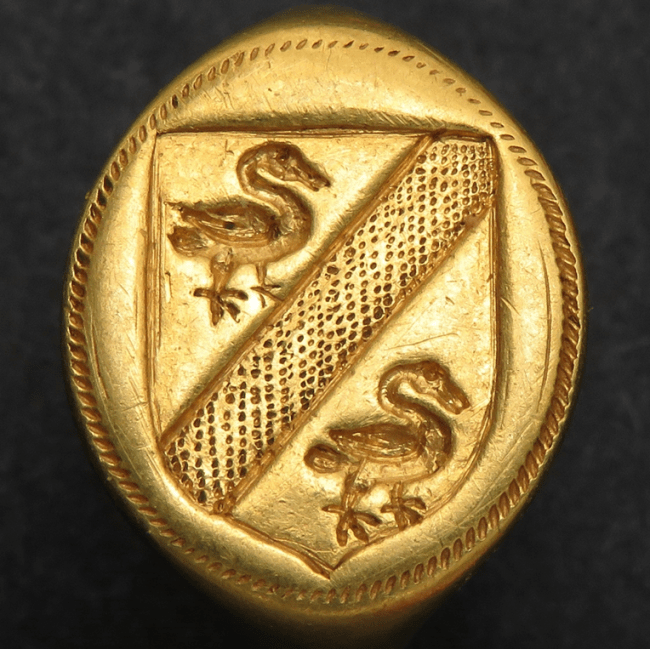
But why would this ancient ring be of interest to birdwatchers?  Because the signet ring displayed an armorial coat of arms that features 2 birds that look like swans or geese. In fact, the 2 birds are swans.  

Nottingham sheriff’s old signet ring (public domain image)

It was found by Graham Harrison, a retired British Merchant Navy engineer, according to a news report (that was recently brought to my attention by my good wife):

“Graham Harrison spends his time searching the hills in his town with a metal detector, in hopes of finding something special. The former merchant navy engineer struck gold, quite literally, in the form of a 350-year-old gold signet ring that was owned by Nottingham’s most famous sheriff. The ring belonged to Sir Matthew Jenison who was the Sheriff of Nottingham from 1683 and 1684, looking after the famous Sherwood Forest. Harrison found the ring on farmland about 26 miles from the forest. After finding the ring, he sent it to the British Museum’s Portable Antiquities Scheme where it was authenticated. …. 

[An auctioneer’s expert] consultant valuer Adam Staples said, ‘The ring has survived in near perfect condition and the front face bears a detailed engraving of the Jenison family arms, two swans separated by a diagonal bend. This would have been pressed into melted wax in order to seal the family crest on important letters and documents’. … Jennison [who served as Nottingham’s Sheriff, guarding England’s Sherwood Forest, once home to the original Robin Hood] was born in 1654 and became a knight in 1683. As sheriff, his job was to keep watch on the trees in the Sherwood Forest. Despite starting his life defending the law, and being elected to British parliament, Jenison got himself jailed for refusing to pay legal costs from a lawsuit he was involved in … [eventually dying] in prison in 1734.”

Quoting Christina Williams, “Retiree Unearths 350-year-old Ring”, THE DAILY ACORN (May 23rd AD2023)
Whooper Swans of Great Britain
(photo image credits: from The Royal Society for the Protection of Birds)

The Hebrew word translated “swan” in Leviticus 11:18 (and also in Deuteronomy 14:16) is tinšemeh, meaning breath/wind-blower, derived from the Hebrew root verb nâšam, denoting the noise of wind blowing or someone breathing. Swans are like avian woodwind instruments, famous for their vocalized nasal-sounding noises—honking, trumpeting, whooping, etc.

Since the typical swan having winter range in England is the Whooper Swan (Cygnus cygnus), it’s most likely that the signet ring displays a pair of Whooper Swans. In fact, even today there are whooper swans in England, according to Nottinghamshire Wildlife Trust ( www.nottinghamshirewildlife.org/wildlife-explorer/birds/waterfowl/whooper-swan ); these huge (and noisy) waterfowl have been protected in England since AD1981, pursuant to the Wildlife and Countryside Act.

And, thanks to conservation efforts, the United Kingdom is now seeing more swans–especially whooper swans–in places like Northern Ireland, Scotland, and England (especially East Anglia and northern England, not far from the Sherwood Forest that Nottingham’s Sheriff was famous for guarding).

Flag of Nottinghamshire, England (public domain image)

One may wonder, looking at the ring’s engraved impression, how many times those 2 swan molds were used to squish and shape melted wax into a 3-dimensional seal, leaving a wax-hardened bas-relief image of 2 swans upon the wax seal of some legal document that recorded official business of England’s Sheriff of Nottingham.

Of course, signet rings have been around–being used by government officials to solemnify and authenticate legal documents for many centuries. For example, the Persian king’s signet ring played an important role in the political drama recorded in the Old Testament’s book of ESTHER.

And the king took his ring from his hand, and he gave it unto Haman the son of Hammedatha the Agagite, the Jews’ enemy.

(Esther 3:10)

Notice that the Persian king’s ring was a signet ring that was used to seal official documents.

Then were the king’s scribes called on the thirteenth day of the first month, and there was written according to all that Haman had commanded unto the king’s lieutenants, and to the governors that were over every province, and to the rulers of every people of every province according to the writing thereof, and to every people after their language; in the name of king Ahasuerus was it written, and sealed with the king’s ring.

(Esther 3:12)

In the above-quoted verses the king’s signet ring was used by a wicked government official, Haman.

Esther 8:2 (public domain image)

However, later–thanks to God’s providence (in answer to fervent prayers of God’s people)–the king’s signet ring was used by Haman’s adversary, Mordecai, to secure a work-around solution that overcame the evils done by Haman.

And the king took off his ring, which he had taken from Haman, and gave it unto Mordecai. And Esther set Mordecai over the house of Haman. … Write ye also for the Jews, as it liketh you, in the king’s name, and seal it with the king’s ring: for the writing which is written in the king’s name, and sealed with the king’s ring, may no man reverse. … And he [i.e., Mordecai] wrote in the king Ahasuerus’ name, and sealed it with the king’s ring, and sent letters by posts on horseback, and riders on mules, camels, and young dromedaries ….

(Esther 8:2 & 8: & 8:10)

Thank God for His kind and caring providences! Without God’s providential care we have no hope!

Meanwhile, most signet rings–although important–are not used for such Earth-shaking intrigues. And, in the case of the Nottingham Sheriff’s signet ring, obscurity lasted 350 years, buried underground.

So, there you have it—a gold signet rings bearing 2 swans, within the sheriff’s armorial coat of arms.  Those 2 engraved swans had to wait 350 years to see the life of day (so to speak), again, after being buried.  Wow! That almost makes me want to buy a metal detector!—who knows what I might find?

WHOOPER SWAN in Great Britain (BBC photo credit)

ABOUT THE AUTHOR:  Dr. James J. S. Johnson has been a birdwatcher since 2nd grade, thanks to Mrs. Thelma Bumgardner, who gave him his 1st bird-book (which he still has). Jim has taught ornithology and ecology at Dallas Christian College, for ACSI, for ICR-SOBA, and has served as a naturalist-historian guest lecturer aboard 9 different international cruise ships, for a half-century observing many birds in many places, including in Great Britain.  profjjsj@aol.com   ><> JJSJ

Fly-thru “Althing” of Migratory Cedar Waxwings

Dr. James J. S. Johnson

“Praise the LORD from the earth … fruitful trees and all cedars … and flying fowl.” (from Psalm 148:7-10)

CEDAR WAXWINGS EATING BERRIES [photo credit: Wild Birds Unlimited]

Each spring gregarious flocks of Cedar Waxwings pass through my part of Texas, as they migrate northward toward their breeding grounds. No “lone rangers” here! Cedar Waxwings travel in flocks of many dozens–sometimes even hundreds–synchronizing their fast-food stopovers along the way, to refuel for the next aerial leg of their migratory trek. And trees or bushes with red berries are a particular favorite of Cedar Waxwings. Although the nutritional details are a bit technical — as noted below* — waxwings need to balance their sour berry intake with protein-rich pollen, both of which are available during mid-April in my part of Texas, as the flocks of Cedar Waxwings pass through in their flights northward.

So, when these large flocks of colorful waxwings make a “pit stop” for fast-food they often fill the branches of trees as they hastily consume red berries (and other edible nutrients), just before resuming their northbound flights to their spring-through-summer breeding ranges.

On April 7th A.D.2023, a Friday morning, as I observed this hastily convened arboreal assembly of avian migrants, I thought of the traditional assemblies (“things”) of the Vikings — such as those Nordic congregants convened annually in Iceland (Thingvellir’s “Althing”) and on the Isle of Man (at the Manx “Tynwald”), to conduct the serious business of life. Could it be that these Cedar Waxwings were having their own version of an Althing assembly, as they refueled (and rested briefly) during their stopover in the branches of my trees and bushes? Since I cannot understand the language of Cedar Waxwings I cannot know what they conversed about — but I knew that they would vacate northward soon enough, so I would not see them again until the next seasonal migratory pass-through, as they live out the providential phenology of their migratory lifestyle.

What a privilege it was to see God’s Cedar Waxwings–scores of them (perhaps more than a hundred!) as a flock in transit–quickly visiting the trees and bushes on the south side of my home. Surely God’s birds will remind us of His care for us, if we take the time to think about it–and have eyes to see (Matthew 6:26; Luke 12:24).

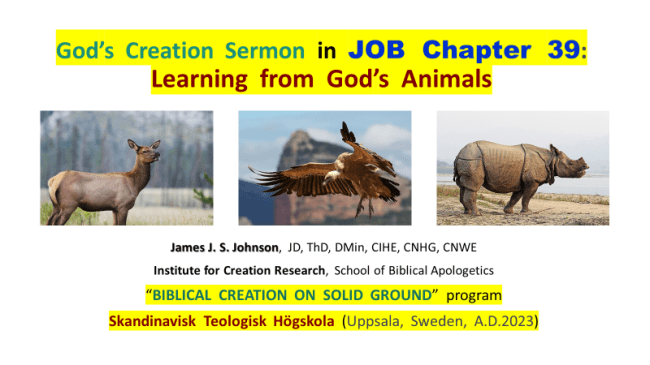
In fact, that faith lesson (which is was taught, in ancient times, to the patriarch Job, by God Himself (in Job 38:41), as is noted in the first of the 3 apologetics lectures (shown below) that I gave recently, to a Swedish theology school (Skandinavisk Teologisk Högskola):

God’s Creation Sermon in Job 39: Learning from God’s Animals: https://youtu.be/_ydP8vCTBAY

Viking Skeletons Embarrass Carbon 14 Radiometric Dating: https://youtu.be/Bx40cjdodRM

Why Study Grass and Flowers? Learning from God’s Plants: https://youtu.be/-4SMgqq2waU

CEDAR WAXWINGS [photo credit: Museum of Life & Science, Durham, N.C.]

So, now for a limerick, that memorializes my observations of the flock of Cedar Waxwings that briefly visited my frontyard earlier this month:

FAST-FOOD/FLY-THRU ALTHING OF MIGRATORY CEDAR WAXWINGS

A flock-full of birds, in my trees,

Gulped down every berry they’d seize;

This arboreal Althing

of the Cedar Waxwing

Soon adjourned—dispersed with the breeze!

CEDAR WAXWINGS photo credit: Mary Anne Borge / The Natural Web

[*For technical information, befitting Cornell University, about the diet of Cedar Waxwings, see Mark C. Witmer’s “Nutritional Interactions and Fruit Removal: Cedar Waxwing Consumption of Viburnum opulus Fruits in Spring”, ECOLOGY, 82(11):3120-3130 (November 2001).]