Updating Lee’s Birdwatching Site

Under Construction Check Back Later

Not to worry, I’m doing a major reconstruction on Lee’s Birdwatching site. To accomplish this, there will be, hopefully, a lot of post coming up. I am in the process of closing down the Birds of the Bible for Kids blog. I am moving everything back over here for the last time.

Due to health, age, and the new editor that WordPress is forcing on us, my plans are to put everything into this blog.

Beware of possible broken links for awhile, but will clear them up as soon as I become aware of them. There are around 800 plus pages over there, and some of those are already here. Might take me some time to sort it all out.

Besides that, many of these were produced years ago and will give you a chance to read them again, or maybe find some you missed.

“Turn us back to You, O LORD, and we will be restored; Renew our days as of old,” (Lamentations 5:21 NKJV)

I don’t mean to be disrespectful of God’s Word, but while looking at this verse in other translations, the MSG caused me to chuckle a bit.

So why do you keep forgetting us? Why dump us and leave us like this? Bring us back to you, GOD—we’re ready to come back. Give us a fresh start.”

(Lamentations 5:20-21 MSG)

STAY TUNED!!

Golden Eagle Comes Home To Rest

Originally posted Jan 24, 2016 on Bibleworld Adventures:

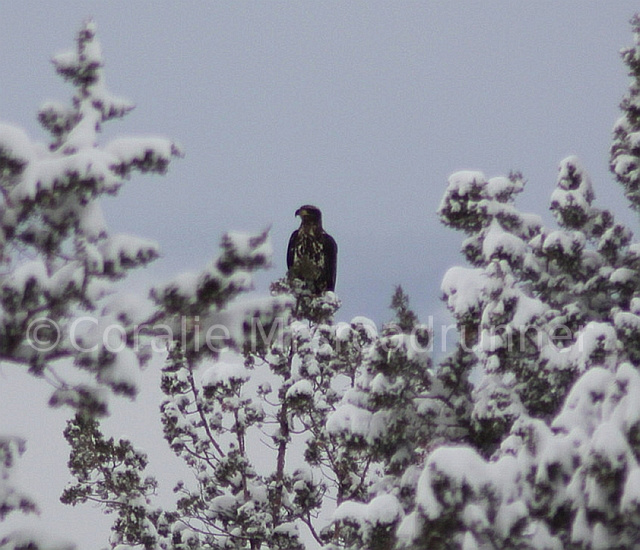
Golden Eagle in Snow ©@Flickr Coralle

Golden Eagle in Snow ©@Flickr Coralle

Hey you all! I have just landed because as you know, in the eastern part of the United States it is COLD out there. I remember my Dad reading me a Bible verse from Genesis 8:22. It says that “while the earth remaineth, seedtime and harvest, and cold and heat, and summer and winter, and day and night shall not cease.” So we do not need to be concerned about Global Warming. The present ice and snow has assured me of that fact!

Snow and Winter

Snow and Winter

Mammals are part of God’s creation. God wants us to enjoy the birds, the creeping things, and the insects that He created. Contrary to the teaching of evolution: these creatures did not evolve by pure chance. Even a pencil is made by somebody with intelligence. “And God said, Let the earth bring forth the living creature after his kind, cattle, and creeping thing, and beast of the earth after his kind: and it was so.” Genesis 1:24

Squirrel in the Snow ©Pixaby

Squirrel in the Snow ©Pixaby

There is absolutely no evidence for evolution at all! The Laws of Thermodynamics all point to the fact that the Universe had a “beginning.” The Laws also point in a downward direction. People get old, cars get rust, and the barn needs painting. Evolution teaches that things get better! The reality is that things are getting worse and running down! There are missing links in the fossil record. Evolution (according to the evolutionists) takes millions of years of time, so no one today sees evolution taking place. Animals are extinct or on the endangered species list. If evolution was true: we should be having more and more different species of animals, not less and less. Again, no evidence for evolution what-so-ever!!!

Rusting Plymouth Special Deluxe

Rusting Plymouth Special Deluxe

Job 12:7-8 says “But asks now the beasts, and they shall teach thee; and the fowls of the air, and they shall tell thee: Or speak to the earth, and it shall teach thee: and the fishes of the sea shall declare unto thee.” What are these creatures going to teach and tell and declare to us? “…that the hand of the Lord hath wrought this? The Lord Jesus Christ has created all these things for His honour and glory and for our learning. The Adventure will be greatly expanded when we get to God’s Heaven, if we are SAVED. However, right now on this planet: we can learn about God and ourselves from studying the creatures that He has created. Even the ants can teach us something!!! Proverbs 6:6, “Go to the ant, thou sluggard (lazy person); consider her ways, and be wise: which having no guide, overseer, or ruler, provideth her meat in the summer, and gathereth her food in the harvest.” By studying God’s creatures we can have a better understanding of God and ourselves and what the Lord Jesus Christ expects from all of us.

Honeypot ants at the Cincinnati Zoo, United States ©©

Honeypot ants at the Cincinnati Zoo, United States ©©

This is an ETERNAL ADVENTURE if you have placed your faith in the precious blood of Jesus Christ. He has paid for all of our sins on the cross of Calvary. It is all God, all Grace, and all you have to do is TRUST JESUS CHRIST as your personal Saviour. Will you accept Him now? “For whosoever shall call upon the name of the Lord shall be saved.” Romans 10:13

I will be flying around when it warms up with some interesting facts about God’s amazing creatures. Did you know that one type of ant can run over one-hundred miles an hour? I didn’t either… See yah!!! Golden Eagle shaking off the snow and ice….

See all the Bibleworld Adventures by Golden Eagle (Baron)

Back On Course

James 1:16-18 The Message “So, my very dear friends, don’t get thrown off course.”

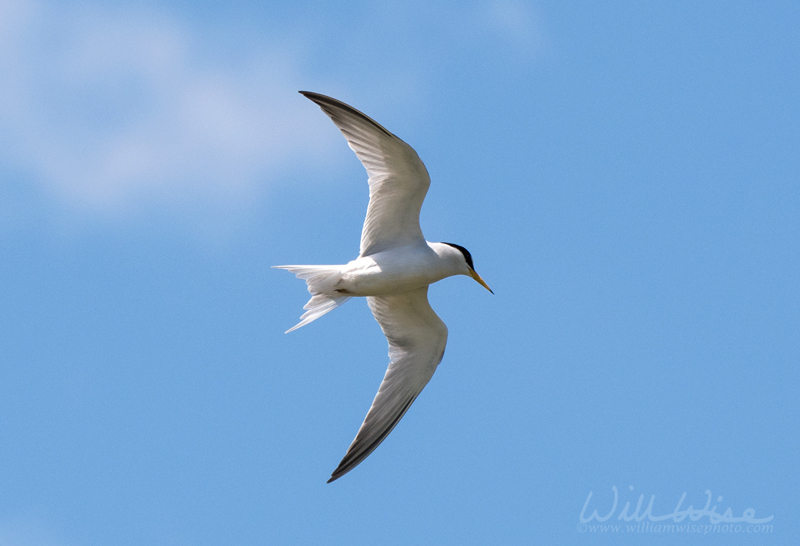
Normally along the coast, this Least Tern (Sternula antillarum) was a bit off course when spotted in Walton County, Georgia. June 11, 2020. Photo by William Wise.

As the fall migrations progress, there are often birds that go off course and show up in odd areas where they are not normally observed. Even  though they may be a common bird elsewhere, birders often delight in seeing these vagrants and will travel miles and miles to add them to their checklists. These birds may have drifted off course from storms or strong weather patterns, or by following the wrong flock (“abmigration”).

Earlier this summer I was delighted when I found a Least Tern flapping in graceful circles over the retention pond behind my office in Walton County, Georgia…  about 260 miles from the coast! What a delight to have the first and only eBird sighting for my county! Yes, I could have simply driven four hours east and seen as many Least Terns as I wanted. But this drifter was a delight to be seen so far off course.

In our Christian walk, we too can become spiritual “vagrants”. We might neglect Bible reading or prayer, or prolonged absence from in-person church attendance might leave us a tad off course. But when a Christian strays, there is no joy… except with Satan! He’s just waiting to add another drifting Christian to his list.

Hebrews 3:12-14  The Message  So watch your step, friends. Make sure there’s no evil unbelief lying around that will trip you up and throw you off course, diverting you from the living God.

But thank God we have a Divine Navigator that can direct our feet and put us back on course. His Word casts a beam of light and makes it simple to find the correct course. The Holy Spirit’s guidance is a gift that keeps us from becoming a checkmark on the devil’s eBird list!

John 12:46 I have come as a Light to shine in this dark world, so that all who put their trust in me will no longer wander in the darkness.


Hi, I’m wildlife photographer and nature writer William Wise. I was saved under a campus ministry while studying wildlife biology at the University of Georgia. My love of the outdoors quickly turned into a love for the Creator and His works. I’m currently an animal shelter director and live in Athens, Georgia with my wife and two teenage daughters, who are all also actively involved in ministry. Creation Speaks is my teaching ministry that glorifies our Creator and teaches the truth of creation.  — “What a wildly wonderful world, God! You made it all, with Wisdom at Your side, made earth overflow with your wonderful creations.” Psalms 104, The Message.

Isaiah’s Eagle – A Promise For Us

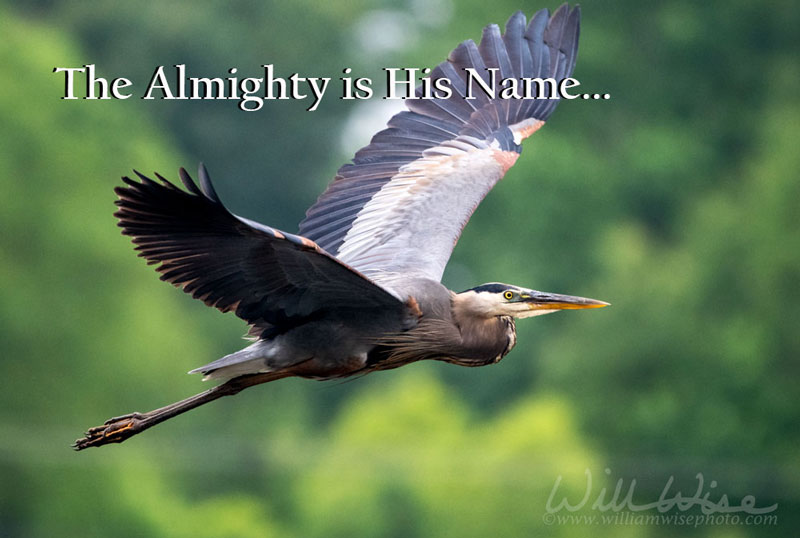
Great Blue Heron; Walton County, Georgia birding photogaphy blog by williamwisephoto.com

Last week, William Wise posted his great photo and post, Almighty Is His Name. And all week, I desired to post the scripture verses in Isaiah 40, that we read the next day. Somehow lately, time seems to get away from me. Not going birding, or having but few birds visiting the back yard, . . . . . .

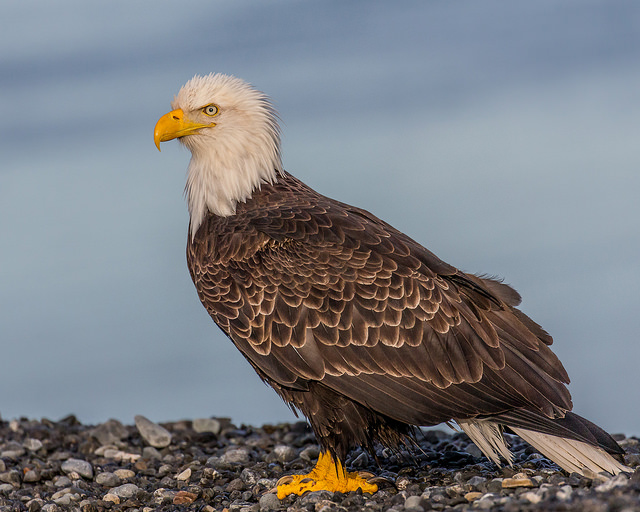
Bald Eagle (Haliaeetus leucocephalus) Resting ©Flickr Andy Morffew

“Have you not known? Have you not heard?”

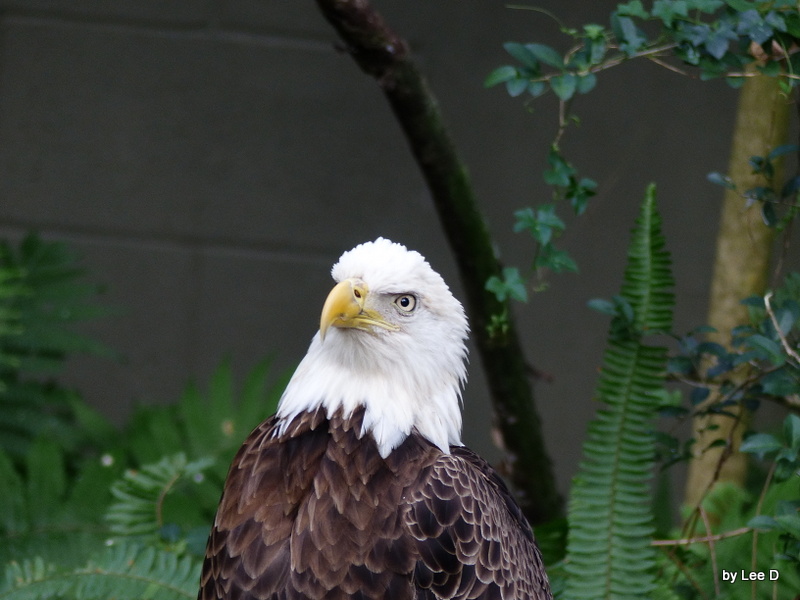
Bald Eagle Lowry Park Zoo 12-31-15 by Lee

The everlasting God, the LORD, The Creator of the ends of the earth, Neither faints nor is weary. His understanding is unsearchable.

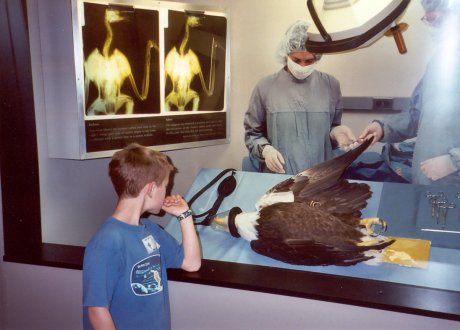
Eye Surgery on an Eagle ©phillipdthomas

He gives power to the weak, And to those who have no might He increases strength.

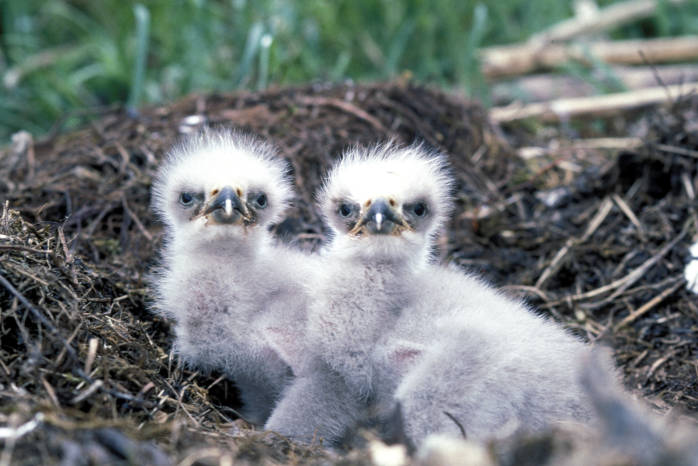
Bald Eagle (Haliaeetus leucocephalus) chicks ©USFWS

Even the youths shall faint and be weary, And the young men shall utterly fall,”

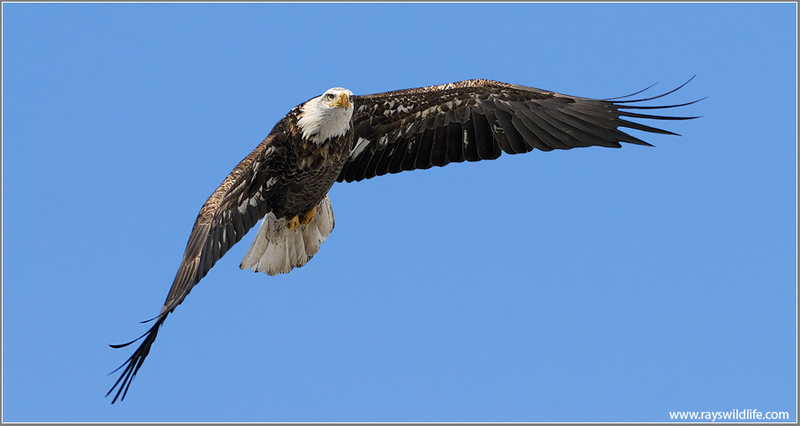
Bald Eagle (Haliaeetus leucocephalus) by Ray

Bald Eagle (Haliaeetus leucocephalus) by Ray

But those who wait on the LORD Shall renew their strength; They shall mount up with wings like eagles, They shall run and not be weary, They shall walk and not faint.” (Isaiah 40:28-31 NKJV)

Fighting the Reflection

Like a bird fighting its reflection in a window, we too can fight our true reflection as revealed by the Word of God…

“But be ye doers of the word, and not hearers only, deceiving your own selves. For if any be a hearer of the word, and not a doer, he is like unto a man beholding his natural face in a glass: for he beholdeth himself, and goeth his way, and straightway forgetteth what manner of man he was.” James 1:23-24

Tufted Titmouse; Walton County, Georgia. September 2, 2020. ©www.williamwisephoto.com. Please don’t steal my images. Legally download this image here.

As I sit listening to the Sunday morning sermon, I’m distracted by a feisty little Tufted Titmouse flying up to the window attacking his reflection. He believes the image in the glass to be a rival interloper invading his territory. Because the bird doesn’t like what he sees, he decides to fight the reflection.

While I watched this aggravated avian, my pastor continued to preach from the book of James. In the letter, James describes the Word of God as a mirror that reflects what manner of men we are. We have our own self-image, but our image of ourselves is always quite different than how God sees us. And the Bible has a way of revealing who we really are; a true reflection, as in a mirror.

Tufted Titmouse fighting its reflection; Athens, Georgia. www.williamwisephoto.com.

Often, as the mirror’s image comes into clear focus, we don’t like the image that we see, and like the Titmouse, we fight against that reflection.

  • When the mirror of the Word reflects our true, impatient self (James 1:4), we fight against the reflection and declare ourselves to have “the patience of Job.”
  • When the mirror reflects our poor decisions and “lack of wisdom” (James 1:5), we fight the reflection and declare the Bible outdated.
  • When the mirror of the Word reflects our true, double-minded nature (James 1:8), we fight the reflection and posit our focused faithfulness to God alone.
  • When the mirror of the Word reflects our own sinful nature as the fault of our falling to temptation (James 1:13), we fight the reflection declaring “this is how God created me.”
  • When the mirror of the Word of God reflects our hot temper (James 1:19), we fight the reflection, take up a rock and smash the mirror!

When we see our true reflection in the mirror of the Word of God, let us not fight against it as the church Titmouse. Let us not walk away and “forget what manner of men we are.” But let us be doers of the Word, and as Today’s English Version translates, let us “submit to God and accept the Word that He plants in our hearts” (James 1:21 TEV). Another lesson learned if we will listen to what creation speaks!


Hi, I’m wildlife photographer and nature writer William Wise. I was saved under a campus ministry while studying wildlife biology at the University of Georgia. My love of the outdoors quickly turned into a love for the Creator and His works. I’m currently an animal shelter director and live in Athens, Georgia with my wife and two teenage daughters, who are all also actively involved in ministry. Creation Speaks is my teaching ministry that glorifies our Creator and teaches the truth of creation.  — “What a wildly wonderful world, God! You made it all, with Wisdom at Your side, made earth overflow with your wonderful creations.” Psalms 104, The Message.

Millions of Years Old DNA? – Creation Moments

 Timothy 6:20
“O Timothy, keep that which is committed to thy trust, avoiding profane and vain babblings, and oppositions of science falsely so called…”

While even many Christians feel obligated to accept millions of evolutionary years, evidence continues to build for a young creation. The evidence has mounted to the point that even many evolutionists feel they must find some explanation for it.

In a previous Creation Moments program, we talked about DNA and other cell material found unfossilized in what was otherwise a fossilized T. rex. Since then, a hadrosaur leg bone with intact blood cells has also been found. Then there is the mummified hadrosaur that was the subject of a television special. Even its internal organs were intact. According to evolutionists, we are supposed to believe that this mummy had not crumbled to dust in 77 million years. That claim is not credible, given our experience with the best preserved Egyptian mummies that are only a few thousand years old. Segments of DNA have also been found from Neanderthals, supposedly prehistoric mammals, plants and even bacteria. According to evolutionary dating, these samples range in age from 40,000 to 250 million years. Yet, we know that DNA is totally decayed in 10,000 years. Enough color pigment cells remain in a fossilized feather that you can still see the color pattern. Yet, it is supposedly more than 100 million years old.

While evolutionists have tried some explanations for this evidence, the simplest explanation is that they are young.

Prayer: Father, fill me with a greater hunger for Your Word so that, taught by You, I will not be misled by falsehood. Amen.

 Author: Paul A. Bartz

Ref: Acts & Facts, 6/09, p. 17, Brian Thomas, “Fossilized Biomaterials Must Be Young.” Photo: Corythosaurus casuarius skeleton a type of hadrosaur. (PD)

© 2020 Creation Moments.  All rights reserved.

Other articles about DNA

Catching Crayfish, a Lesson in Over-Reacting

Originally posted Nov 13, 2015 on Bibleworld Adventures:

by James J. S. Johnson

Large Tropical Blue Crayfish - Captive ©Dave Wilson

Tropical Blue Crayfish – Captive ©Dave Wilson

During my junior high years, living in a rural part of Maryland, I learned and enjoyed the art of catching crayfish.   (Nowadays I just eat them at restaurants!)   As a teenager, I was neither an astacologist (crayfish scientist) nor a serious catcher of crayfish (which is the same crustacean known to some as “mudbug” and in Louisiana as “crawfish”), so I did not use a “crayfish trap”.  Rather, as described below, I used a homemade dipping net, to catch those greenish critters that looked like lobsters.

Crayfish like drainage ditches and slow-moving streams, especially those with banks that are shaped in ways that provide hiding places for crayfish (and habitat for what crayfish eat), including underwater rocks or logs or roots.

After a heavy rainfall the velocity of stream currents may increase, as it drains, but crayfish can act to maintain their position at the edge of such drainage:  “Crayfish … help maintain position [in face of faster current flow] by altering body posture to counteract the effect of drag when exposed to an increase in current velocity.”  [Quoting from Paul S. Giller & Björn Malmqvist, THE BIOLOGY OF STREAMS AND RIVERS (Oxford University Press, 2008), page 122.]  Crayfish care about staying and defending their “home turf”  –  i.e., they are territorial, and some will fight to defend a favorite streambank crevice.  [Giller & Malmqvist, pages 131-132.]

Crayfish

Crayfish

Crayfish are omnivores – they emerge from their hiding places, especially when it is dark (from “dusk to dawn”, to borrow an old TNT expression from Chaplain Bob Webel – or on days when it is cloudy), to find and feed on freshwater snails, fish eggs, tadpoles, worms, algae, grains, and other plant material. The dominating influence of crayfish, as “keystone predators” in the food webs of drainage ditches and sluggish stream-waters (where they live), is produced directly, as predators, and indirectly, by eating riparian plant cover used by aquatic invertebrates.  [Giller & Malmqvist, page 204.]

Drainage ditches are a favorite habitat of crayfish, not just in Maryland.  “Ditches are of course just man-made sloughs [pooled streamwater that only moves slowly], but they are important to the survival of many species of life in the state.  Ditches are necessary for allowing rain runoff much of the year, and wherever water is present for half the year or more there are likely to be populations of crawfishes  and other invertebrates, as well as their predators such as frogs, snakes, and turtles.  Even shallow ditches may be home to several species of crawfish, some quite uncommon and localized in distribution.”  [Quoting Jerry G. Walls, CRAWFISH OF LOUISIANA (Louisiana State University Press, 2009), pages 35-36.]

Where I (then) lived, in rural Baltimore County,  there was a bridge with a huge drainage pipe that allowed streamwater to flow in irregular patterns, around large and small rocks, so that the stream bank had indentations and crevices where the waterflow was somewhat shielded, providing places for small creatures (like baby fish and insect larvae) to avoid being swept downstream, though crayfish lurked nearby, always hungry for something small to eat, whether it be plant material or aquatic invertebrates.

When moving on land crayfish crawl, using their legs.  But, when underwater, they  “swim” or “paddle”, using their legs and when needed, the tail fan.  Rapid flipping of the crayfish tail enables the crayfish to suddenly propel itself backward  — it appears to “jump backwards” in the water.  This can provide a quick exit from anything facially threatening the crayfish.

Of course, the crayfish themselves were shy about large disturbances in the water, so wading into the stream (which might be ankle-deep to knee-deep) would scare crayfish into hiding places, some of which were located under the bridge or in underwater burrows nearby.

If you splash a stone into the water directly in front of a crayfish it would jet backwards to escape.  The escape maneuver was so reflexive and quick that the crayfish never looked before it “jumped” backward in the water, to escape whatever the perceived danger was in front of it.  After learning this crayfish habit it became apparent that crayfish could be easily caught, by taking advantage of this “knee-jerk” reaction, with a home-made “net”.  So how did we catch crayfish, down by the drainage pipe that conveyed streamwater under the bridge?

Shasta Crayfish

Shasta Crayfish

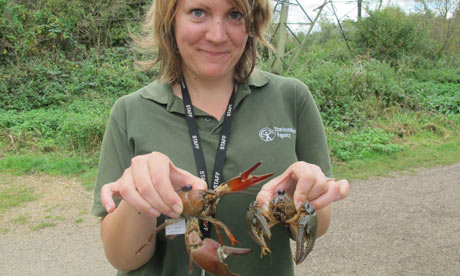
First, make a “net” to catch the crayfish with.  Reshape (by bending) a coat hanger into the shape of a lollipop profile, i.e., a straight line (for a handle) that is curved into a circle.  The resulting shape of the coat hanger resembles a somewhat small version of the frame of a tennis racquet (or badminton racquet), with the “loop” (circle or oval) part being about the size (circumference) of a soccer ball, easily enough room for catching a large or small crayfish.  The largest crayfishes that I caught were about the size of lobsters that you can eat at a Red Lobster restaurant.   But the metal frame needs a net  –  so you tear apart an expendable T-shirt, then you thread it onto the circular “loop” part of the reshaped coat hanger.  Ideally the result is somewhat like a dipping net for an aquarium.

The coat-hanger “dipping net” is the tool to be used for catching (netting) the crayfish, but keep in mind that a crayfish will try to exit if caught, so you need a bucket of water to “land” your catch if and when you catch one.  So you need to bring a bucket (or a pail will do!) that is half-filled with water, and it must be positioned near the spot where you expect to net your crayfish.

The next trick is to get a crayfish to “jump” into your net, in the streamwater, just before you jerk the net up and out of the water (so the crayfish can’t exit your net, upon realizing that he or she is caught!).

But how do you entice a shy crayfish to “jump” into your net?  Actually, it’s not very difficult, although it requires sequenced (and quick) timing as you perform two rapid movements.  With your net ready to “stab” the water just behind the crayfish (i.e., where his or her tail is located), drop a clod of dirt (or a small rock) about 6 inches in front of the crayfish’s head and front claws.  Instantly plunge your net behind the crayfish – which is now “jumping” backward to avoid whatever you dropped into the water.  Then quickly jerk the net up out of the water – you should have the crayfish secured inside your net, for a moment at least, so now you quickly dump the net into your bucket of water, and shake the crayfish loose from the net.

Catching in a Net

Catching in a Net

[ Fair Use image credit: https://i.ytimg.com/vi/fHaQJN4LmGM/hqdefault.jpg ]

If your bucket is deep enough the crayfish is now covered in water, yet the water level needs to be low enough that the crayfish cannot swim to the top and then crawl out over the brim, to escape involuntary confinement.  Ironically, it was the crayfish’s reflex habit  —  the automatic “jump-back” reaction  —  that got the crayfish captured!

Captured!

Captured!

[ Fair Use image credit: http://static.guim.co.uk/sys-images/Guardian/About/General/2011/12/29/1325169553221/A-virile-right-and-a-sign-007.jpg ]

Now that you have a captive crayfish you need to feed it, to keep it alive, or else eat it (!) as you might a lobster, or just release it.  “Catch and release” is what I recommend.

But what does catching a crayfish have to do with the adventure of living the Christian life? 

The crayfish illustrates the danger of carelessly over-reacting to a perceived danger.  Because the crayfish is startled by the rock dropped (into water facing the crayfish), it automatically reacts by “jumping” backward  –  without checking to see if a net is waiting there, to capture it! Since the Christian life involves a lot of balancing, we need to be careful about over-reacting to this or that.  Regarding the need to avoid over-reacting, as a Christian who strives to honor God in this life, see Charles C. Ryrie’s indispensable guidebook, BALANCING THE CHRISTIAN LIFE (Chicago: Moody Press, 1994), 252 pages.  [Thankfully, this book was provided to me, when I was a teenager, by my youth/college pastor, Chaplain Bob Webel.]

Over-reacting involves moving recklessly from one extreme to its opposite.  For an example of such over-reacting  —  “jumping” from one imbalanced extreme to another — consider how to teach children to inculcate a responsible “work ethic”.

In one Christian family, that I know, the parents were very concerned about raising children who might be lazy, unfocused, and/ or unresourceful.  (So far, so good.)   In other words, the parents wanted their children to have a “good work ethic”  –  self-initiative, goal-oriented diligence, and an entrepreneurial spirit,   —  to learn and practice practical life skills, so that they could be self-starters, as adults, who economically support themselves.

Of course, who would oppose teaching children a “good work ethic”?  Shouldn’t children learn to take the initiative, to recognize (and acquire) useful opportunities, to have productive ambitions, to focus on practical successes?

Yet promoting an entrepreneurial spirit, with an inner drive to ambitiously succeed in profitable work, can swing to an extreme that neglects altruistic service.  Without the balance of some commitment to altruistic service, however, the profit-motive-based ethic selfishly degrades to:  “If I don’t get paid money to do it, I won’t do it.”  That refusal to blend altruistic service (which the apostle Paul role-modeled in Acts 20:33-35) with a for-profit “work ethic” quickly uglifies into ordinary greed.  Is selfish greed better than selfish laziness?  Neither habit honors the Lord.  Both are wickedly sinful.  Both sins are ugly to look at  –  and, sad to say, we have many examples of both of those vices, lived out in front of us.

The Holy Bible provides a proper balance:  yes, we should work for profit and self-sustenance (2nd Thessalonians 3:10-12); however, some of the profit acquired should be used non-selfishly, to further the Lord’s work on earth (Matthew 6:19-21) and to compassionately “support the weak” (Acts 20:35).

Cooked Crayfish

Crayfish served at IKEA

So next time you catch a crayfish, or eat a plateful at a Swedish crayfish party, or eat one at a Cajun restaurant, remember this lesson: don’t carelessly over-react!   —   review the big picture, and maintain a Biblical balance in whatever you are doing (1st Corinthians 10:31).

><> JJSJ

Don’t Under-estimate Young Boys!

[Originally published May 31, 2020, by Dr. James J. S. Johnson on Bibleworld Adventures]

Don’t Under-estimate Young Boys!

(Boy 5 Years Old, Driving to California, to Buy a Lamborghini … etc.!)

Dr. James J. S. Johnson

Don’t under-estimate the big ideas of young boys—whether those boys are from Israel, Utah, or Oklahoma.

For example, Israel’s David, when young enough that some considered him as just a boy, successfully challenged and killed Goliath the gigantic Gittite.(1) And more recently, there’s kindergartner Adrian Zamarripa, who tried to drive from Ogden (Utah) to California, to buy himself a Lamborghini.(2),(3)

Lamborghini-Miura.on-dirt-road

For the Utah state trooper who made a “traffic stop”, the incident was not what he originally expected.

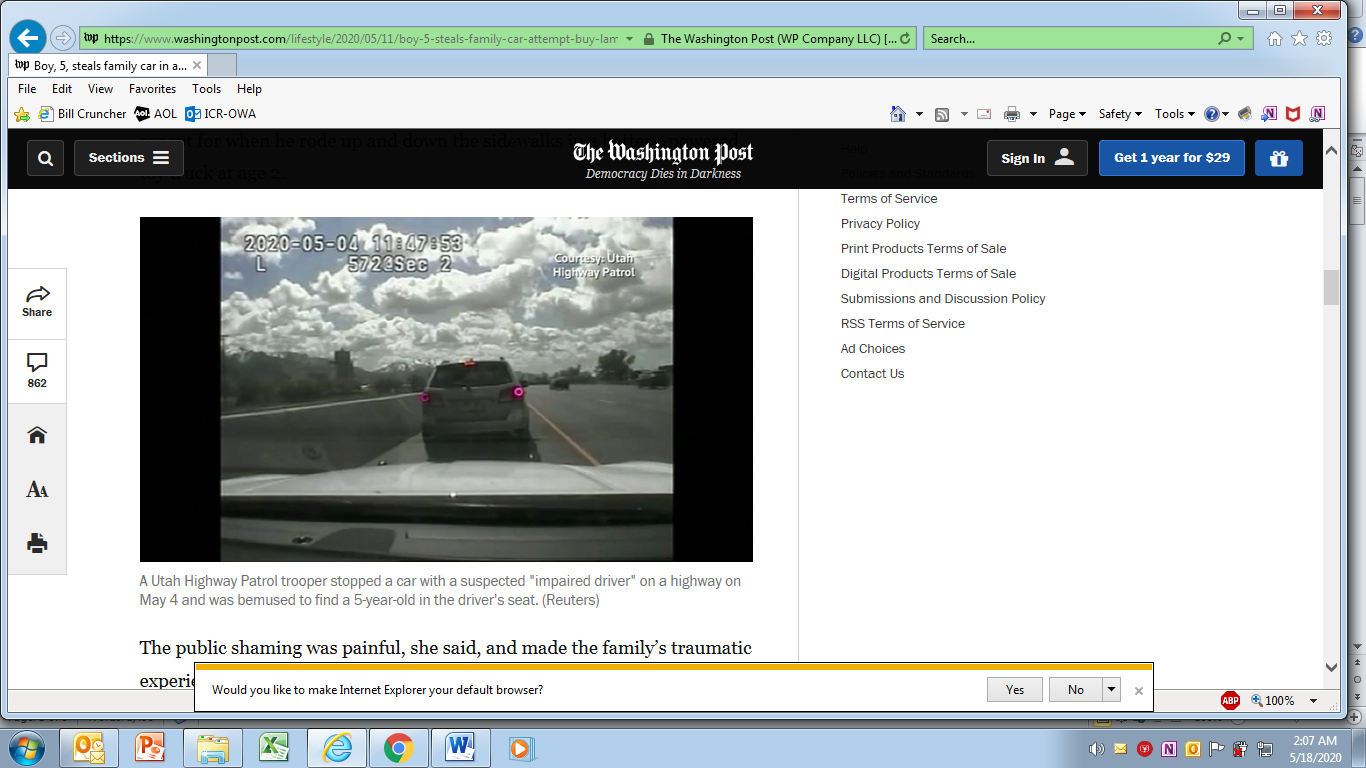
Trooper Rick Morgan … saw the car swerving so badly on Interstate 15 in Odgen, Utah, that he thought the driver was impaired or needed medical attention. He was driving 32 mph in an area with a speed limit of 70 mph. Morgan told the Associated Press that [the car’s driver] did not respond to his [flashing] lights but pulled over when he hit his siren. “I approached the vehicle and I was expecting to find somebody who needed an ambulance or paramedics,” Morgan said.(3)

But the driver was a 5-year-old kindergartener, Adrian Zamarippa.

Last week [May 4, 2020], 5-year-old Adrian Zamarripa took $3 out of his piggy bank, stole the keys to his parents’ SUV in Ogden, Utah, and went for a joyride on the freeway, following the signs that pointed south to Los Angeles. When the kindergartner was pulled over on Interstate 15 … he told the shocked highway patrol officer that he was on his way to California to buy a Lamborghini sports car.(2)

boy-age-5-wants-Lamborghini.dashcam-traffic-stop-AD2020

How did that happen?

Adrian’s 16-year-old sister, Sidney Flores, who was babysitting, had taken a nap about 11 a.m. while her mom and stepfather were away at work, and that’s when her little brother decided to take the keys from a hook near the door and go after his dream. “We thought he’d been kidnapped and we were all panicked,” said Sidney, speaking on behalf of her family because her parents understand limited English. “I called my mom at work and she came rushing home, crying,” she said. “It never occurred to any of us that he would take off in the car by himself. How would he know how to do that?” Nobody in the family had ever encouraged Adrian to drive, said Sidney, except for when he rode up and down the sidewalks in a battery-powered toy truck at age 2.(2)

Officer Morgan’s dash-cam video recording shows the vehicle pull over onto the multi-lane highway’s left shoulder, and stop, in response to Morgan’s flashing lights. Morgan then approached the driver’s window, to speak to the driver. The recording provides video and audio of this unusual encounter.

But when the window came down, Morgan said it was pretty clear that it was “a very under-aged driver who was behind the wheel.”(3)

Behind the wheel, in this case, meant sitting on the driver’s seat edge, so that his short legs could reach the brake pedal—it took both feet to brake the car to a full stop.  The dash-cam footage records audio of Officer Morgan questioning the young driver.(4)

“How old are you? You’re 5 years old?” Morgan says in the video. “Wow, OK. Where did you learn how to drive a car?” The boy told the trooper he was planning to drive to California to buy himself an Italian luxury sports car [specifically, a Lamborghini]. “He might have been short on the purchase amount, as he only had $3 dollars in his wallet,” the Utah Highway Patrol said in a statement on Twitter. The boy’s parents were contacted and they took custody of their son and the vehicle.(3)

Lamborghini-Miura.on-dirt-road

But Adrian is not the first precocious youngster to do what many would not imagine possible for someone so young, nor will he be the last.

More than a century ago, a 6-year-old boy named Jack played the piano, as his older brother fiddled, at a Texas saloon, earning big money for hours till midnight. But this opportunity was cut short by gunfire—and Jack’s saloon piano playing career was terminated by his mother, when she learned about the shooting.(5)

Jack Abernathy: Catching Live Wolves Bare-Handed - America Comes Alive

That little boy grew up to be “Catch-‘em-alive” Jack Abernathy, the youngest man to be appointed a U.S. Marshal—appointed by none other than Teddy Roosevelt.(5)  Jack was already famous for catching wild wolves alive, with his bare hands, so he could sell them to zoos. Later (as U.S. Marshal), he caught violent criminals, though his hands usually then held firearms.(5),(6)

How The Abernathy Boys Became The Most Adventurous Kids In History ...

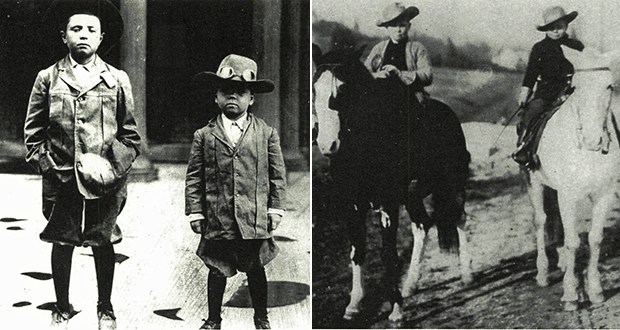
If you think Catch-‘em-Alive Jack’s two precocious sons—Louis (“Bud”) and Temple (“Temp”—“I’m not a little boy; I’m a little man!”)—followed in their father’s footsteps, as daring adventurers, you’d be right.(6),(7)

The Astounding Adventures of the Abernathy Boys - 405 Magazine

Bud and Temp Abernathy took their first cowboy adventure in 1909, at ages 9 and 5 –traveling horseback (with a shotgun) from their home in Oklahoma to the Governor’s Mansion in New Mexico and back.(6),(7) One night they lodged with men who identified themselves as being “in the cattle business”; their hosts were cattle rustlers, who hospitably respected them, yet one of the rustlers had recently been in a gunfight where he tried to kill their father (Jack), who was then U.S. Marshal.(6),(7)

Buster Welch | RFD-TV :: Rural America's Most Important Network

On returning to a hometown welcome in Oklahoma, one lady emotionally questioned why their mother had permitted this reckless adventure—to which 5-year-old Temp replied that she was dead.(6)

The Abernathy Boys | Redtree Times

The next adventure Bud and Temp took in 1910, at ages 10 and 6, was to ride horses from their home in Oklahoma to New York City, unsupervised—more than 1500 miles.(6),(7) Bud sent telegrams to their father, on arrival in different cities along the way—including visiting Comanche Chief Quanah Parker (in Oklahoma’s Indian Territory) and, at the White House, President Taft, plus they briefly addressed both House of Congress.(6),(7)

The trip’s main goal was timely reached—rendezvousing with their dad (Jack, who arrived in New York City by train) at the port where Teddy Roosevelt would arrive, returning from his exploits in Africa.(6),(7) Teddy’s arrival was celebrated by a huge ticker-tape parade, with Bud and Temp (on horseback) immediately behind the former president’s car; the equestrian lads were followed by Teddy’s mounted Rough Riders.(6)

Abernathy-boys-NY-parade-with-Teddy.painting

Other adventures followed, including the boys (mostly Bud, as Temp could hardly reach the pedals) driving a small car from New York back to Oklahoma, while their horses rode the train.(6),(7)

The Abernathy Boys | Redtree Times

Soon afterward, in 1911, the two boys rode horses from the Atlantic Ocean (at New York) to the Pacific Ocean (at San Francisco), including a calamity where they almost died, after temporarily losing their horses.(6),(7)

Then there was a motorcycle trip in 1913, with stepbrother Anton.(6)

To recount details of just the highlights of the Abernathy boys’ adventures would require a book—in fact, more than one book, plus a museum.(6),(7),(8)

BUD & ME THE TRUE ADVENTURES OF THE ABERNATHY BOYS - Kindle ...

But there is at least one take-away lesson—for all of us—that we should never under-estimate the young. Children are capable of a whole lot more than most imagine!(9)

No wonder big-picture-thinking Christians invest resources and messaging efforts for reaching children (and more such outreach to come, God willing)—even very young kids are ripe for learning about their wonderful Creator.  Let us help, not hinder, them as they are learning about and coming toward the Lord Jesus Christ.(9)

Abernathy Boys Statue & Exhibit - Visit Frederick, OK    

References
  1. 1st Samuel 17:1-58.
  2. Free, C. 2020. Boy, 5, Steals Family Car in Attempt to Buy a Lamborghini. Posted on WashingtonPost.com (May 11, 2020) at https://www.washingtonpost.com/lifestyle/2020/05/11/boy-5-steals-family-car-attempt-buy-lamborghini-then-man-with-lamborghini-shows-up-his-house/ .
  3. Yancey-Bragg, N. 2020. 5-year-old Boy Caught Driving on Utah Highway was Heading to California for a Lamborghini. USA Today. Posted (May 5, 2020) at https://www.usatoday.com/story/news/nation/2020/05/05/5-year-old-boy-utah-driving-california-buy-lamborghini/3083410001/ .
  4. Morgan, R. 2020. Utah Highway Patrol (dash-camera recording of Utah trooper conducting traffic stop of 5-year-old driver on Utah highway), May 4, 2020. Posted at https://www.youtube.com/watch?v=C-W-ySng2t8 .
  5. Abernathy, J. R. 2006. Catch ‘em Alive Jack, The Life and Adventures of an American Pioneer. Lincoln, NE: Bison Books/ University of Nebraska Press. See also Marshal Jack Abernathy’s biographic highlights, posted at http://www.budandme.com/catch-em-alive-jack.php .
  6. Abernathy, A, with T. Abernathy. 1998. Bud & Me: The True Adventures of the Abernathy Boys. Irving, TX: Dove Creek Press. See especially pages 13-19 (Jack Abernathy’s wolf-catching adventure with Teddy Roosevelt), pages 20-45 (OK è NM è OK horseback trip), pages 46-89 (OK è NY horseback trip), pages 90-108 (NY è OK roadster car trip); pages 116-150 (NY è CA horseback trip), pages 151-159 (motorcycle trip).  See also the online photo gallery of Bud and Temp, posted at http://www.budandme.com/photo-gallery.php .
  7. Abernathy, M. 2004. Ride the Wind: The Amazing True Story of the Abernathy Boys. Long Riders’ Guild Press (reprint of 1911 book then titled The Rides of the Abernathy Boys). See especially pages 1-65 (OK è NM è OK horseback trip), pages 66-111 (OK è NY horseback trip), pages 112-116 (NY è OK roadster car trip); page 116 (NY è CA horseback trip).
  8. The museum is located in Frederick, Oklahoma, near Wichita Falls, Texas.
  9. Matthew 19:14; Luke 18:16. See also Johnson, J. J. S. 2015. Attracted to Genesis by Magnets and a Bird Book. Acts & Facts. 44(8):19, posted at https://www.icr.org/article/attracted-genesis-by-magnets-bird-book .
    Exploring Oklahoma History - The Adventure of the Abernathy Boys

India’s Shrimp ‘Ranching’ Needs Re-set

India’s Shrimp ‘Ranching’ Needs Re-set

Dr. James J. S. Johnson

And God created great whales, and every living creature that moves, which the waters brought forth abundantly, after their kind … and God saw that it was good. (Genesis 1:21)

The Aquaculturists: 20/10/2017: Shrimp farming in India

India may be looking to America for a jump-start to revitalize its shrimp aquaculture industry, according to recent report (May 11, 2020) in the Hindu Business Line.

The report, which was issued by the Confederation of Indian Industry (CII) looks into a range of measures to improve the export potential of the aquaculture sector. Around 90 % of India’s aquaculture production is generally exported. And, although exports have plummeted since the COVID-19 pandemic, the report warns that producers may struggle to meet demand once the movement of goods and people returns to normal . . . (1)

India’s shrimp-farming operations have two major vulnerabilities—dependence on outside (i.e., outside of India, which now includes lockdown/shutdown facts not previously present in the global marketplace) sources for breeding shrimp and for the kind of food that shrimp larva need to eat, so that they can grow into mature shrimp of marketable size.

The Confederation of Indian Industry has recommended measures to improve the export potential of the aquaculture sector in order to capture a major share of the global market. …  The lion’s share of Indian aquaculture comprises shrimp, for which both broodstocks and larval feeds are imported. With the global lockdown situation, the supply of these has been stalled, which will have a significant impact on production, CII said in its report.(2)

But for restarting India’s shrimp-farming operations, some adjustments to “business-as-usual” will be necessary, both logistically and legally.

To reduce the lag time in the supply of broodstock, CII has recommended re-establishing import of broodstock by expediting air transportation from the US by arranging special cargo flights. It is pointed out that the RGCA [Rajiv Gandhi Centre for Aquaculture] quarantine facility in Chennai is shut and its holding capacity is not sufficient for large consignments. Hence, the imported broodstock should be allowed to be taken to hatcheries directly and thereafter sampling can be done by RGCA. On approval, hatchery owners can be allowed to use the broodstock.(2)

India-freshwater-shrimp-farming

What a huge undertaking—revitalizing this part of India’s fisheries/aquaculture industry is truly a “big deal”, in the global marketplace. As a fish/seafood exporter India has very serious competition—for almost 20 years China has been the world’s #1 producer of fish and seafood exports.(3)

India is the world’s second-largest [sic] fish producer with a total production of 13.7 million tonnes in 2018-19 of which 65 % was from inland fishing. Almost 50 % of inland fish production is from culture fisheries, which constitutes 6.5 % of global fish production. Shrimp accounts for a majority share of India’s aquaculture, which is growing at a CAGR [compound annual growth rate] of 17.4 % over the past 3 years.(2)

Providing affordable (and available) protein-rich food is a worldwide need.  Harvesting oceanic fish and shellfish—including shrimp—can contribute much to feeding peoples of the world.(4),(5)  Aquaculture (which is comparable to “ranching” sea creatures–like shrimp–as livestock), however, can supplement oceanic finfish and shellfish, for the benefit of many hungry humans.(6),(7)

May God bless America to recover its own economic health—and to do so with such strength that it can once again bless India, and other nations of the world, such as by helping India to jump-start their own now-vulnerable aquaculture industry.(8)

Farmers making a fortune in shrimp farming

References

  1. Staff writer. 2020. Why India’s Shrimp Sector Must Become More Self-Sufficient. The Fish Site. Posted (May 12, 2020) at https://thefishsite.com/articles/why-indias-shrimp-sector-must-become-more-self-sufficient – accessed may 15, 2020.
  2. Kumar, V. S. 2020. CII Chalks Out Steps to Boost Aquaculture Exports. Hindu Business Line. Posted (May 11, 2020) at https://www.thehindubusinessline.com/economy/agri-business/cii-chalks-out-steps-to-boost-aquaculture-exports/article31555206.ece# — accessed May 15, 2020.
  3. Nag, O. S. 2017. Top Fish and Seafood Exporting Countries. Posted (April 25, 2017) at https://www.worldatlas.com/articles/top-fish-and-seafood-exporting-countries.html —  accessed May 15, 2020.
  4. According to the Lord Jesus, fish are good food. Matthew 7:9-11; Luke 11:11-13..
  5. Incorporating actuarial biology insights (pioneered by marine biologist Johan Hjort) has enabled the world’s shrimp industry, including shrimp-farming, to economically maximize productivity. See Johnson, J. J. S. 2019. Northern Prawns, Baltic Prawns, and Brown Shrimp, Illustrating Genesis 1:22 (including Johan Hjort’s Actuarial Biology Research on Pandalus borealis). Nordic Legacy Series (Norwegian Society of Texas, Fort Worth, Texas, February 24, 2019), 15 pages.
  6. Aquaculture now faces new challenges from pandemic politics. See Johnson, J. J. S. 2020. Fish Farming Feeds Scots, But It’s Not Getting Easier.  COVID-19 News. Posted April 21, 2020) at https://www.icr.org/article/fish-farming-feeds-scots-but-not-getting-easier .
  7. Fish-farming, using managed coast water net-pens is one aquaculture method useful in fulfilling the Genesis Mandate. See Johnson, J. J. S. 2013. Fulfilling the Genesis Mandate while Helping the Poor. Acts & Facts. 42(12):19, posted at https://www.icr.org/article/fulfilling-genesis-mandate-while-helping .
  8. Acts 20:35.


The Kingbird – McGuffey’s 2nd Grade Reader

Grey Kingbird (Tyrannus dominicensis) by Lee at Honeymoon Is SP

McGuffey Readers were a series of graded primers for grade levels 1-6. They were widely used as textbooks in American schools from the mid-19th century to the mid-20th century, and are still used today in some private schools and in homeschooling. [Posting these for young readers to enjoy and practice reading while school is out.]

Here is a story of Kingbird from the Second Grade Reader. (From Gutenberg)

McGuffey Reader Set ©WikiC

LESSON XVIII.

New Words:

ber’ries strikes rob’in ea’gle short king rid

foe dart fails sharp hawk worms ac’tive

Eastern Kingbird (Tyrannus tyrannus) by Margaret Sloan

THE KINGBIRD.

1. The kingbird is not bigger than a robin.

2. He eats flies, and worms, and bugs, and berries.

3. He builds his nest in a tree, near some house.

4. When there are young ones in the nest, he sits on the top of a tree near them.

5. He watches to see that no bird comes to hurt them or their mother.

6. If a hawk, a crow, or even an eagle comes near, he makes a dash at it.

7. Though he is so small, he is brave, and he is also very active.

8. He never fails to drive off other birds from his nest.

9. He flies around and around the eagle, and suddenly strikes him with his sharp bill.

10. He strikes at his eye, and then darts away before the eagle can catch him.

11. Or he strikes from behind, and is off again before the eagle can turn round.

12. In a short time, the great eagle is tired of such hard blows, and flies away. He is very glad to get rid of his foe.

13. Is not the little fellow a brave bird?

14. Because he can drive off all other birds, he is called the KINGBIRD.

“Watch, stand fast in the faith, be brave, be strong.” (1 Corinthians 16:13 NKJV)

***


Title: McGuffey’s Second Grade Reader – Gutenberg – Author: William Holmes McGuffey

Release Date: June 29, 2005 [EBook #14668] – Language: English

Wordless Birds

More McGuffey’s Second Grade Reader Stories

The Owl – McGuffey’s 2nd Grade Reader

Western Screech Owl (Megascops kennicottii)(captive) by Raymond Barlow

Western Screech Owl (Megascops kennicottii)(captive) by Raymond Barlow

McGuffey Readers were a series of graded primers for grade levels 1-6. They were widely used as textbooks in American schools from the mid-19th century to the mid-20th century, and are still used today in some private schools and in homeschooling.

LESSON LII.

oak dusk fight squeak ruf’fled

bag Fred whoo a wake’ creep’ing

THE OWL.

1. “Where did you get that owl, Harry?”

2. “Fred and I found him in the old, hollow oak.”

3. “How did you know he was there?”

4. “I’ll tell you. Fred and I were playing ‘hide and seek’ round the old barn, one night just at dusk.

5. “I was just creeping round the corner, when I heard a loud squeak, and a big bird flew up with something in his claws.

6. “I called Fred, and we watched him as he flew to the woods. Fred thought the bird was an owl, and that he had a nest in the old oak.

Barn Owls (Family Tytonidae) with catch ©Pixelbirds

7. “The next day we went to look for him, and, sure enough, he was there.”

8. “But how did you catch him? I should think he could fight like a good fellow with that sharp bill.”

9. “He can when he is wide awake; but owls can’t see very well in the daytime, and he was taking a nap.

Northern Barred Owl (Strix varia) LPZ by Dan 2014

Northern Barred Owl (Strix varia) LPZ by Dan 2014

10. “He opened his great eyes, and ruffled up his feathers, and said, “Whoo! Whoo!’ ‘Never mind who,’ Fred said, and slipped him into a bag.”

Eurasian Eagle-Owl (Bubo bubo) by Nikhil Devasar

Eurasian Eagle-Owl (Bubo bubo) by Nikhil Devasar

May kinds of owls are mentioned in the Bible. Most of them are listed as birds to not eat.

“… the short-eared owl, ;… the little owl, the fisher owl, and the screech owl; the white owl,… (Leviticus 11:16-18 NKJV)

McGuffey’s Reader for 2nd Grade:

ABC’s of the Gospel

More McGuffey’s Second Grade Reader Stories

What A Bird Taught – McGuffey’s 2nd Grade Reader

MacGillivray's Warbler

[Illustration: Bird perched on tree branch.] MacGillivray’s Warbler


LESSON XI.

twit-twee bough (bow) twit-twit top’most lock

spray mate close’ly ros’y an’swer (an’ser)

WHAT A BIRD TAUGHT.

1. Why do you come to my apple tree,
Little bird so gray?
Twit-twit, twit-twit, twit-twit-twee!
That was all he would say.

2. Why do you lock your rosy feet
So closely round the spray?
Twit-twit, twit-twit, twit-tweet!
That was all he would say.

3. Why on the topmost bough do you get,
Little bird so gray?
Twit-twit-twee! twit-twit-twit!
That was all he would say.

4. Where is your mate? come, answer me,
Little bird so gray.
Twit-twit-twit! twit-twit-twee!
That was all he would say.
Alice Cary.

***


Title: McGuffey’s Second Grade Reader – Gutenberg – Author: William Holmes McGuffey

Release Date: June 29, 2005 [EBook #14668] – Language: English

“And whoso shall receive one such little child in my name receiveth me.” (Matthew 18:5 KJV)

Wordless Birds

More McGuffey’s Second Grade Reader Stories