Avian And Attributes – Cloud

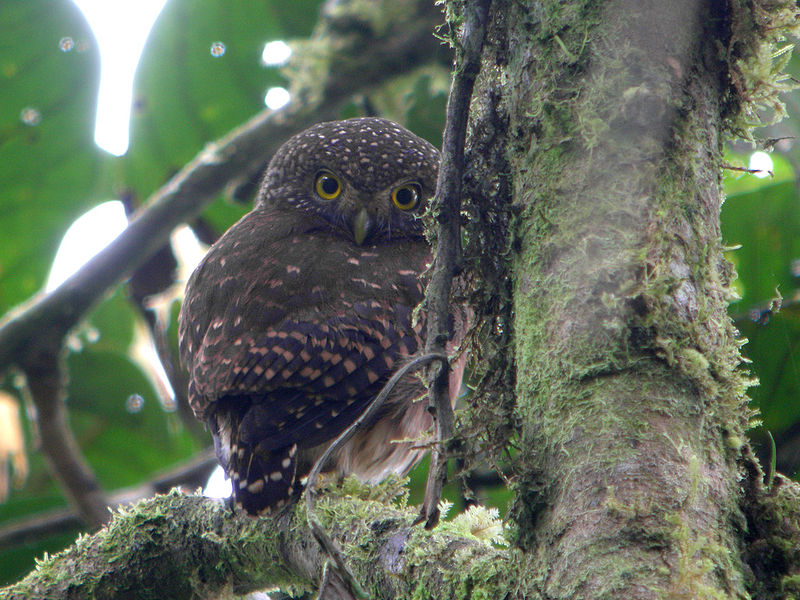
Cloud-forest Pygmy Owl (Glaucidium nubicola) ©WikiC

“And then shall they see the Son of man coming in a cloud with power and great glory. And when these things begin to come to pass, then look up, and lift up your heads; for your redemption draweth nigh.” (Luke 21:27-28 KJV)

“And the cloud of the LORD was upon them by day, when they went out of the camp.” (Numbers 10:34 KJV)

Where wast thou when I laid the foundations of the earth? declare, if thou hast understanding.” When I made the cloud the garment thereof, and thick darkness a swaddlingband for it,” (Job 38:4, 9 KJV)


Avian and Attributes – Cloud

Cloud
(1): (n.) A dark vein or spot on a lighter material, as in marble; hence, a blemish or defect; as, a cloud upon one’s reputation; a cloud on a title.
(2): (v. i.) To grow cloudy; to become obscure with clouds; — often used with up.
(3): (n.) That which has a dark, lowering, or threatening aspect; that which temporarily overshadows, obscures, or depresses; as, a cloud of sorrow; a cloud of war; a cloud upon the intellect.
(6): (v. t.) To overspread or hide with a cloud or clouds; as, the sky is clouded.

“And the LORD went before them by day in a pillar of a cloud, to lead them the way; and by night in a pillar of fire, to give them light; to go by day and night:” (Exodus 13:21 KJV)

(8): (n.) A collection of visible vapor, or watery particles, suspended in the upper atmosphere.
(9): (n.) A mass or volume of smoke, or flying dust, resembling vapor.
(10): (v. t.) To blacken; to sully; to stain; to tarnish; to damage; — esp. used of reputation or character.
(11): (n.) A great crowd or multitude; a vast collection.

“Wherefore seeing we also are compassed about with so great a cloud of witnesses, let us lay aside every weight, and the sin which doth so easily beset us, and let us run with patience the race that is set before us, Looking unto Jesus the author and finisher of our faith; who for the joy that was set before him endured the cross, despising the shame, and is set down at the right hand of the throne of God.” (Hebrews 12:1-2 KJV)


Cloud Birds – Cloud Cisticola, Cloud-forest Pygmy Owl, Cloud-forest Screech Owl
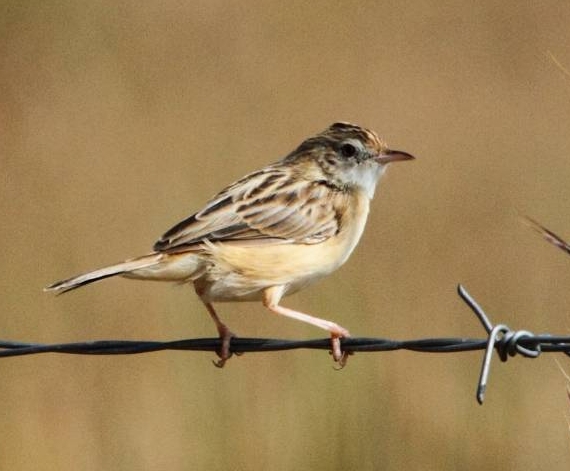
Cloud Cisticola (Cisticola textrix) ©WikiC

The Cloud Cisticola or tink-tink cisticola (Cisticola textrix) is a species of bird in the Cisticolidae – Cisticolas and allies Family. It is found in Angola, Lesotho, Mozambique, South Africa, Swaziland, and Zambia, and its natural habitat is subtropical or tropical dry lowland grassland.

Cloud-forest Pygmy Owl (Glaucidium nubicola) ©WikiC

The Cloud-forest Pygmy Owl (Glaucidium nubicola) is a short, muscular, small-sized species of owl found throughout the Andes of western Colombia and north-western Ecuador, being confined to cloud forests between 900–2000 m a.s.l. Below this altitudinal range the Central American pygmy owl (Glaucidium griseiceps) occurs; above the Andean pygmy owl (Glaucidium jardinii) occurs. It is in the Strigidae – Owls Family.

Its epithet nubicola means in Latin “cloud inhabiting”, because this species is restricted to very humid cloud forests.
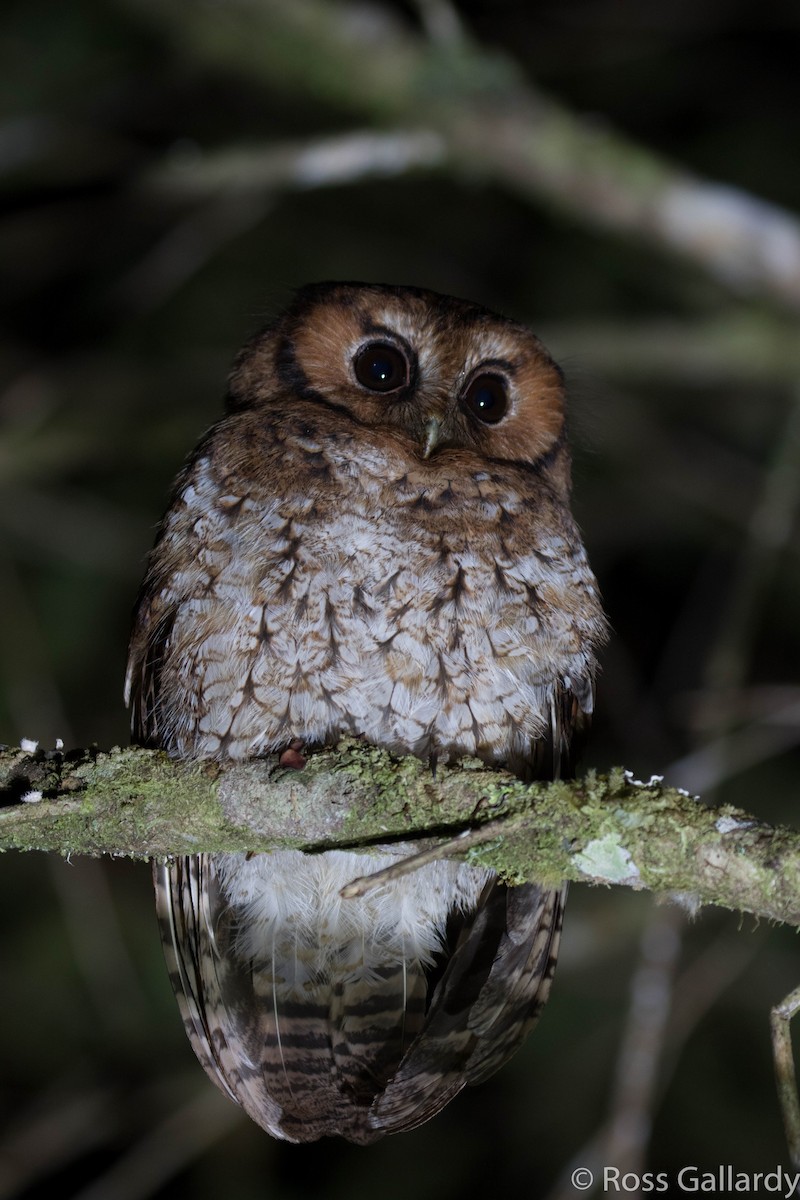
Cloud-forest Screech-Owl (Megascops marshalli)©Neotropical Birds Online

The Cloud-forest Screech Owl (Megascops marshalli) is a species of owl in the Strigidae – Owls Family. It is found in Bolivia and Peru. Its natural habitat is subtropical or tropical moist montane forests. It is threatened by habitat loss.


More Avian and Attributes

Birds whose first or last name start with “C”

Good News

*
[Definitions from Webster’s Dictionary of American English (1828), unless noted. Bird info from Wikipedia plus.]
Avian And Attributes – Clay (Molder or Potter)

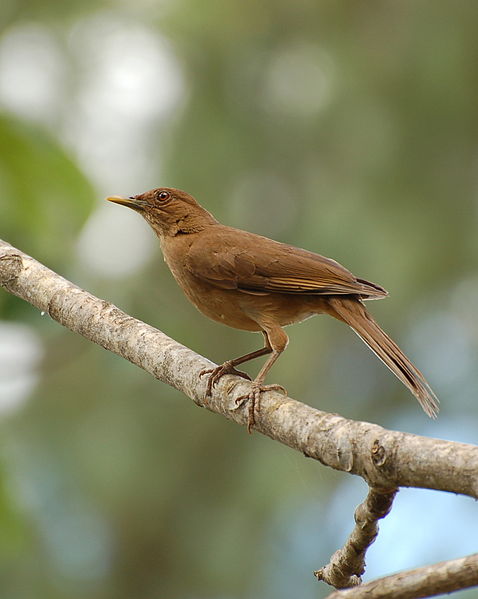
Clay-colored Thrush (Turdus grayi) ©WikiC

“But now, O LORD, thou art our father; we are the clay, and thou our potter; and we all are the work of thy hand.” (Isaiah 64:8 KJV)


Avian and Attributes – Clay (Molder or Potter)

Clay
(1): (n.) A soft earth, which is plastic, or may be molded with the hands, consisting of hydrous silicate of aluminium. It is the result of the wearing down and decomposition, in part, of rocks containing aluminous minerals, as granite. Lime, magnesia, oxide of iron, and other ingredients, are often present as impurities.
(2): (n.) Earth in general, as representing the elementary particles of the human body; hence, the human body as formed from such particles.
(4): (v. t.) To clarify by filtering through clay, as sugar. [edited]

“Then I went down to the potter’s house, and, behold, he wrought a work on the wheels. And the vessel that he made of clay was marred in the hand of the potter: so he made it again another vessel, as seemed good to the potter to make it.” (Jeremiah 18:3-4 KJV)


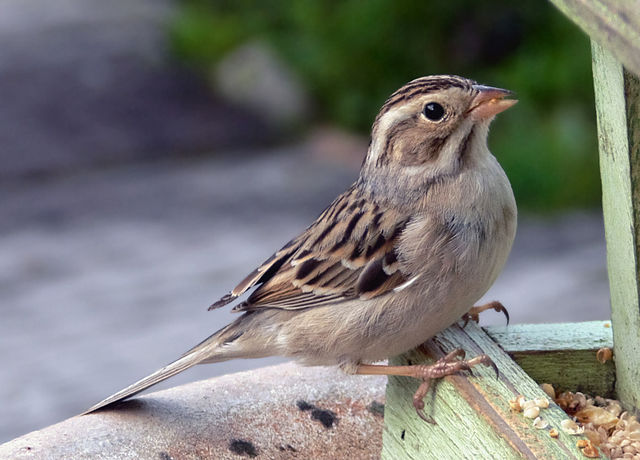
Clay-colored Sparrow (Spizella pallida) ©WikiC

Clay-colored Sparrow (Spizella pallida)  or clay-coloured sparrow (Spizella pallida) is a small sparrow of North America.

Adults have light brown upperparts and pale underparts, with darker streaks on the back. They have a pale crown stripe on a dark brown crown, a white line over the eyes, a dark line through the eyes, a light brown cheek patch and brown wings with wing bars. The short bill is pale with a dark tip and the back of the neck is grey; they have a long tail. Non-breeding adults and immature resemble chipping sparrows and Brewer’s sparrows; they often form flocks with these birds outside the nesting season.

The male sings from an open perch to indicate his ownership of the nesting territory. The song is a Bzzzz bzzzz za za.

**

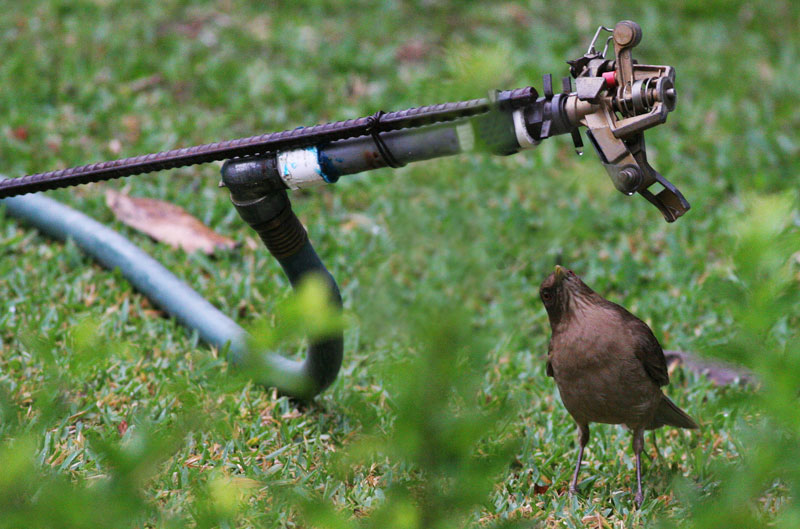
Clay-colored Thrush (Turdus grayi) by Margaret Sloan – Anticipation pose

Clay-colored Thrush (Turdus grayi) is a common Middle American bird of the thrush family (Turdidae). It is the national bird of Costa Rica, where it is well-known as the yigüirro. Other common names include clay-colored robin.

It ranges from South Texas (where it is rapidly expanding its range) to northern Colombia; west and north of the Isthmus of Tehuantepec. It is limited to the Atlantic slope, except for a population around Oaxaca City, Mexico that probably originates from escaped cage birds.

In general appearance and habits it resembles other Turdus thrushes such as the American robin. It is about the same length or slightly smaller. The plumage is brownish, somewhat lighter below than above, lightest on the flanks. Birds from humid regions are darker than those from dry regions. The throat is faintly streaked. Immature birds have faint mottling on the back and underparts. The bill is greenish-yellow with a dark base, the legs are pinkish or flesh-colored, and the irises are reddish—all useful identification points.

The song, rather low-pitched and with a slow steady tempo, consists of many slurred musical phrases which are often repeated irregularly. The tock flight call is like the American robin’s but harsher.

“Thou wilt say then unto me, Why doth he yet find fault? For who hath resisted his will? Nay but, O man, who art thou that repliest against God? Shall the thing formed say to him that formed it, Why hast thou made me thus? Hath not the potter power over the clay, of the same lump to make one vessel unto honour, and another unto dishonour?” (Romans 9:19-21 KJV)


More Avian and Attributes

Birds whose first or last name start with “C”

Good News

*
[Definitions from Webster’s Dictionary of American English (1828), unless noted. Bird info from Wikipedia plus. Both With Editing]

Avian And Attributes – Cheer

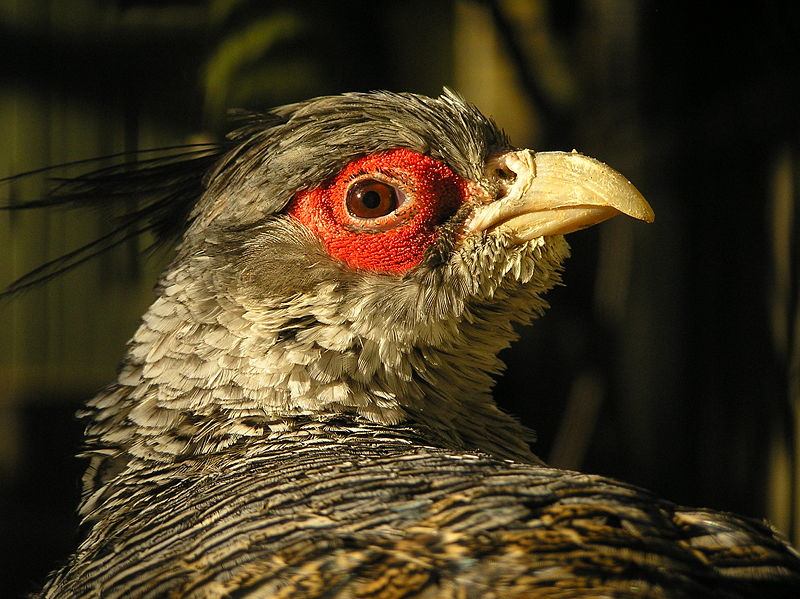
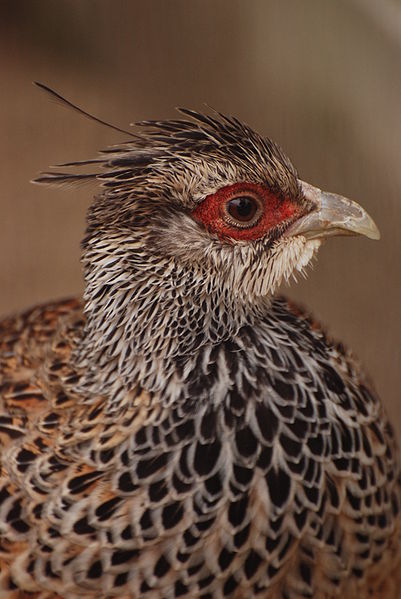
Cheer Pheasant (Catreus wallichii) ©©

Cheer Pheasant (Catreus wallichii) ©©

“And when the disciples saw him walking on the sea, they were troubled, saying, It is a spirit; and they cried out for fear. But straightway Jesus spake unto them, saying, Be of good cheer; it is I; be not afraid.” (Matthew 14:26-27 KJV)


Avian and Attributes – Cheer

CHEER, v.t.
1. To salute with shouts of joy, or cheers.
2. To dispel gloom, sorrow, silence or apathy; to cause to rejoice; to gladden; to make cheerful; as, to cheer a lonely desert; the cheering rays of the sun; good news cheers the heart.
3. To infuse life; spirit, animation; to incite; to encourage; as, to cheer the hounds.
CHEER, v.i. To grow cheerful; to become gladsome, or joyous.

CHEER, n.
1. A shout of joy; as, they gave three cheers.
2. A state of gladness or joy; a state of animation, above gloom and depression of spirits, but below mirth, gayety and jollity.
Son, be of good cheer, thy sins are forgiven thee. Mat 9.

And, behold, they brought to him a man sick of the palsy, lying on a bed: and Jesus seeing their faith said unto the sick of the palsy; Son, be of good cheer; thy sins be forgiven thee.” (Matthew 9:2 KJV)

Then were they all of good cheer, and they also took some meat. Acts 27.
6. Air of countenance, noting a greater or less degree of cheerfulness. [edited]


Cheer Pheasant (Catreus wallichii) ©WikiC

Cheer Pheasant (Catreus wallichii)

The Cheer Pheasant, (Catreus wallichii), also known as Wallich’s pheasant is a vulnerable species of the pheasant family, Phasianidae. It is the only member in monotypic genus Catreus. The scientific name commemorates the Danish botanist Nathaniel Wallich.

These birds lack the color and brilliance of most pheasants, with buffy gray plumage and long gray crests. Its long tail has 18 feathers and the central tail feathers are much longer and the colour is mainly gray and brown. The female is slightly smaller in overall size.

Males are monogamous. They breed on steep cliffs during summer with a clutch of 10 to 11 eggs. The cheer pheasant is distributed in the highlands and scrublands of the Himalayas region of India, Nepal, Kashmir and Pakistan.

Cheer Pheasant (Catreus wallichii) ©WikiC


More Avian and Attributes

Birds whose first or last name starts with “C”

Good News

*
[Definitions from Webster’s Dictionary of American English (1828), unless noted. Bird info from Wikipedia plus.]
Afraid To Stick Neck Out

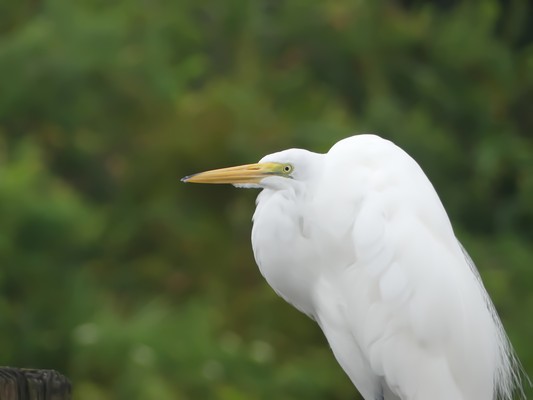
Great Egret with head tucked in at Gatorland

“Whatsoever thy hand findeth to do, do it with thy might; for there is no work, nor device, nor knowledge, nor wisdom, in the grave, whither thou goest.” (Ecclesiastes 9:10 KJV)

I found this Great Egret at Gatorland recently who was afraid to stick his neck out. Have you ever felt that way? As many readers are aware, there have been numerous broken links discovered on this site. Many pages have been fixed already, yet there are hundreds and hundreds more that need to be corrected. After chatting with WordPress again today, there is not much they can do to revive the deleted photos and music from the Media Cache. I did find out today, it is possible that this site was hacked. “You’re kidding,” I told them. “No, others have had that happen”.

For those of us on WordPress and other sites for that matter, they said it is very important to use a STRONG password. Also, to use a two-step authentification. I have since rechanged the password again. Here is a link to instructions on how to do this on WordPress.com.

Two Step Authentication

For now, I am not going to pull my head in, but am going to plug away at repairing the damage done to Lee’s Birdwatching Adventures Plus. This was not quite the “Adventure”  I had in mind, but it would be wrong to pull my head in and give up. Who knows, maybe the Lord will help me improve it and find more ways to show forth His wonderful Birds and Creation. Stay tuned!

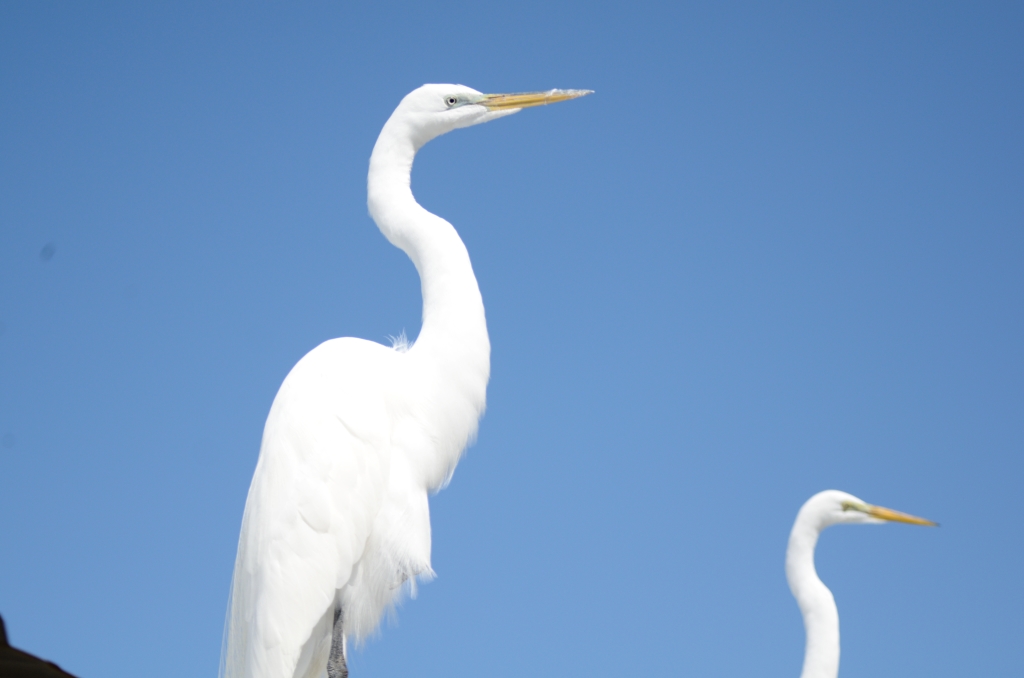
Great Egret at Gatorland by Dan


Dinosaurs and Feathers Re-post from Creation Moments

“And God made the beast of the earth after his kind, and cattle after their kind, and every thing that creepeth upon the earth after his kind: and God saw that it was good.”
I am a long-time fan of the BBC science fiction show Doctor Who, having watched it since the mid-1960s when the show was in black and white with no computer graphics and Daleks were upturned trash cans with sink plungers attached. One of my favorite episodes of the modern era was entitled Dinosaurs on a Spaceship. The title said it all.Dinosaur

A lost craft was traveling through space with a cargo of untethered dinosaurs. But not everyone enjoyed the episode. Some well-known evolutionary biologists in Britain complained about one scene which featured a couple of tyrannosauruses. Their complaint was that the T. Rexes should have been covered in feathers.

In practice, the idea of feathered dinosaurs still does not have solid fossil evidence to back it up. Most of the fossils found with evidence of feathers are clearly birds. A small number of others are doubtful but could easily be assumed to be birds.

In 2016, it was announced that a dinosaur feather had been found entrapped in amber. However, the feather was not attached to an animal. Later the same year, other amber-clad feathers were discovered that were definitely attached to a bird. Some have claimed that there are fossil T. Rexes that show signs of feather follicles.

Again, these patterns are open to interpretation. Now, it is possible, perhaps, that some dinosaurs could have had feathers, but this does not provide proof that birds evolved from dinosaurs. What we actually find in the fossil record is evidence of kinds of animals, just as the Bible states. It does not make sense to impose an evolutionary worldview on any of these findings.

Prayer: 
When You finished creating, Lord God, You looked at all You had made and declared it to be “very good”. Thank You that all we understand about dinosaurs and other animals is consistent with Your word. Amen.
Notes:
Ref: Thomas, B. New Doubts about Dinosaur Feathers, ICR article. Image: RJ Palmer, license: Creative Commons Attribution Share-alike 4.0 International.

Source: Dinosaurs and Feathers | Creation Moments

Used with permission ©Creation Moments 2017

Far Flying Ducks and Their Allies

Black-bellied Whistling Ducks forming V by Lee

I’ll fly away, Oh Glory
I’ll fly away; (in the morning)
When I die, Hallelujah, by and by,
I’ll fly away (I’ll fly away).

“Who are these who fly like a cloud, And like doves to their roosts?” (Isaiah 60:8 NKJV)

Yep! That’s what they have been doing. Flying right off the pages. I am still working away trying to fix my broken links. It is time consuming, but maybe the new reworked Bird Family pages will be easier to work with.

As you know, from the last few posts, I have been fixing missing birds, photographers, songs, etc:

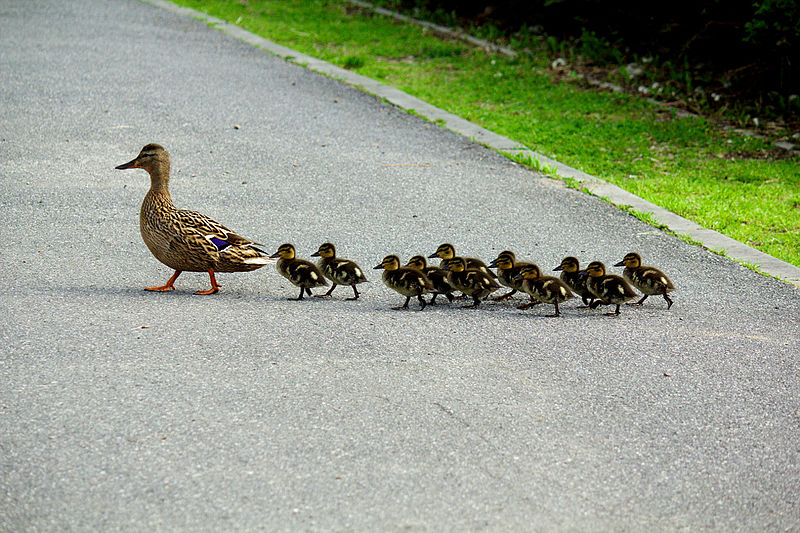
Mallard Duck army marching (I know it’s not a King, but it’s cute) ©WikiC

Today, a decision was made to rework ALL the Family Bird Pages. Hopefully, all of the pages listed below are error free. [Famous Last Words] These are in the new format. I wasn’t doing too bad until the Ducks pages were checked. 131 of them had taken off. Whew! I think most of them came back safely, especially because the hunters are out and about. The PLAN is to continue through the family pages one at a time. If you should find any escaped birds, would you try to SHOO them back this way??

Updated Family Pages

Stay Tuned!

Mass Exodus of Old World Parrots

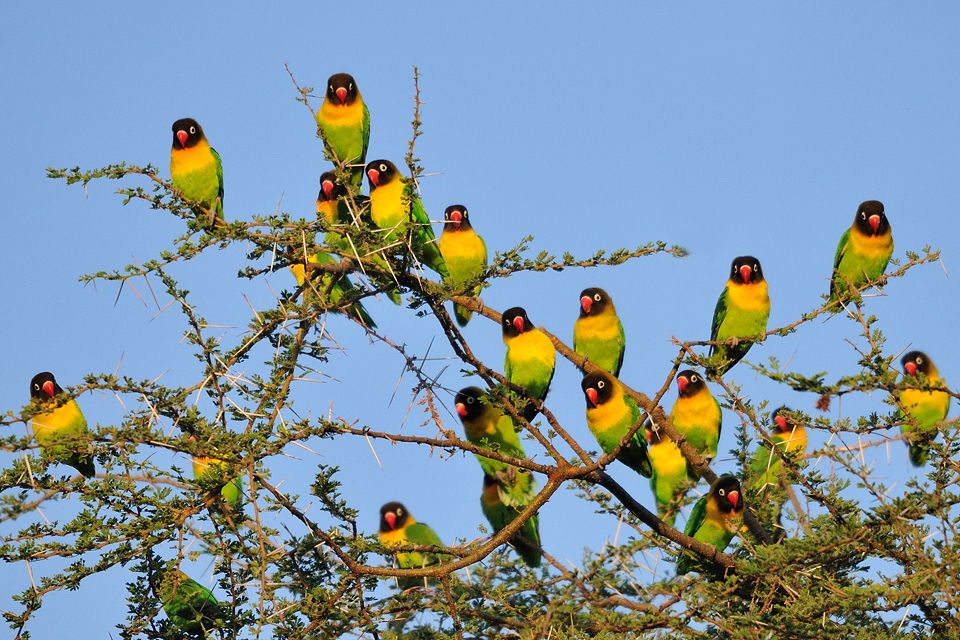
Black-cheeked Lovebird (Agapornis nigrigenis) ©ImagesFromAfrica

Mass Exodus of Parrots from the Psittaculidae – Old World Parrots

Now that the Thanksgiving break is over, I am back at work on the broken links. Out of 192 Old World Parrots in the Psittaculidae Family, 133 of them scattered. This was/is a major page to figure out how to rescue all those Parrots.

What to do??? I decided crying would not bring them back.

“For His anger is but for a moment, His favor is for life; Weeping may endure for a night, But joy comes in the morning.” (Psalms 30:5 NKJV)

After checking with WordPress recently, they found that there was a mass set of deletions back in April of this Year. They say I must have done it, and there is nothing they can do to retrieve those files. What I find so amazing is that every photo of a certain bird is gone. I could see me deleting duplicates, but to take out every copy of a bird, is beyond me. Also, even MP3 used in my Birds in Hymns pages are missing. I am only mentioning this, because many of you maintain blogs with photos, songs, or links to other articles, etc. It is wise to check your site occasionally for missing items. Dead Link Checker is a free link checker that I am using.

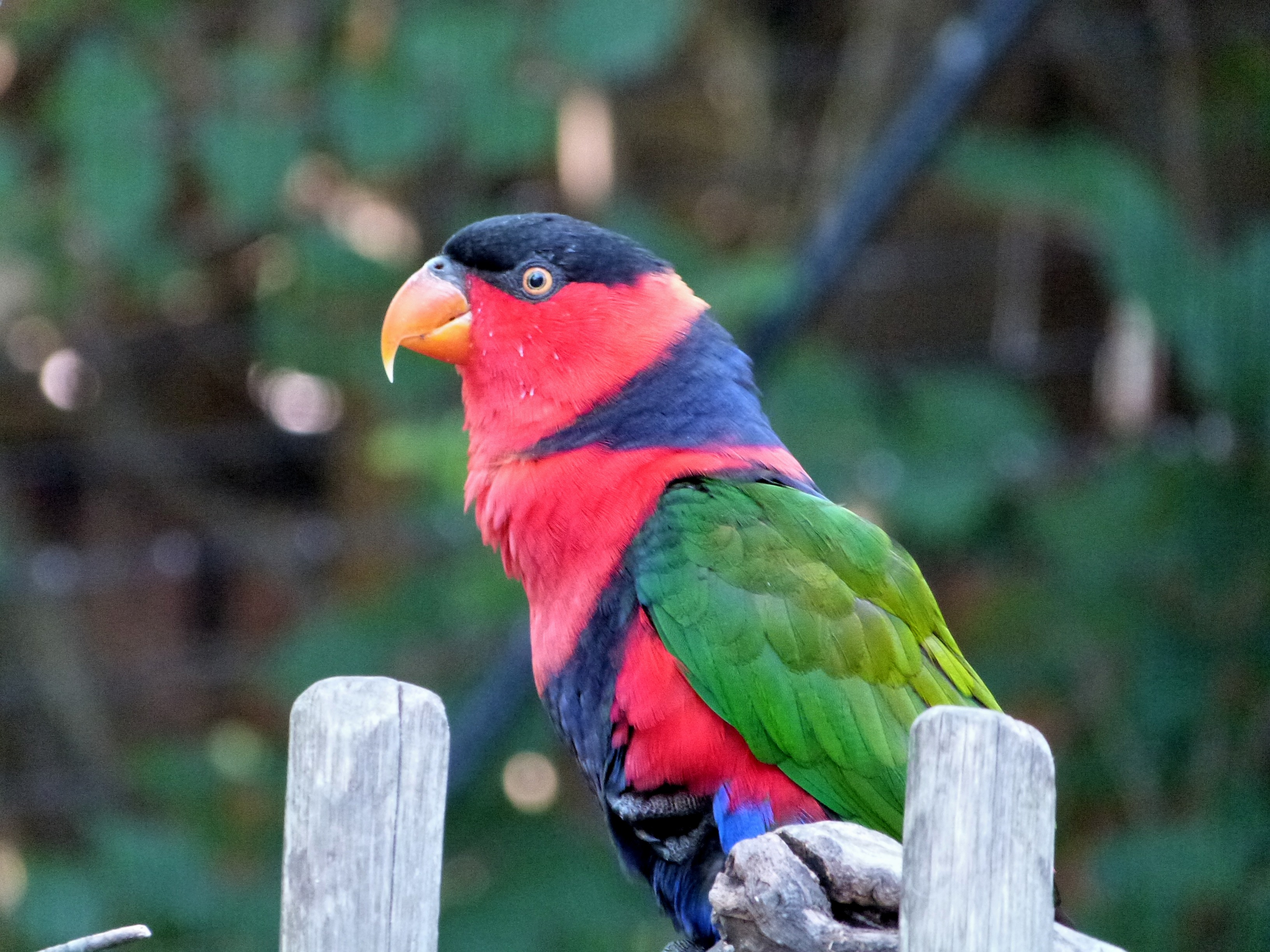
Black-capped Lory (Lorius lory) Cincinnati Zoo 9-5-13 by Lee

Black-capped Lory (Lorius lory) by Lee

“Look at the birds of the air, for they neither sow nor reap nor gather into barns; yet your heavenly Father feeds them. Are you not of more value than they?” (Matthew 6:26 NKJV)

The parrots must have thought hanging out on my page was similar to being in a barn. They sought their freedom.

This site tries to keep up with the latest version of the I.O.C. World List of Birds. The way the page is set up now, it will be easier to update in the future. The bird photos are now at the end of the page, in three columns. They will be alphabetical down the first row, then down the 2nd, then the last row. That is the way WordPress does their columns. Being in alphabetical order will make it easier to find the bird you are desiring.

Please leave a remark with your thoughts on this. I would appreciate ideas to improve these bird pages. [For now, I have not reloaded all the photos yet for this family. Also, I’ll have to locate new missing photos in the public domain since the pages were originally produced.]

Stay Tuned!

Gatorland’s Greedy Snowy Egret

Happy Thanksgiving to you all.

May you have a great day enjoying family, friends, and fine food. But please, do not bite off more than you should! [This video of a Snowy Egret was taken at Gatorland this week.]

“A Psalm of Thanksgiving. Make a joyful shout to the LORD, all you lands! Serve the LORD with gladness; Come before His presence with singing. Know that the LORD, He is God; It is He who has made us, and not we ourselves; We are His people and the sheep of His pasture. Enter into His gates with thanksgiving, And into His courts with praise. Be thankful to Him, and bless His name. For the LORD is good; His mercy is everlasting, And His truth endures to all generations.” (Psalms 100:1-5 NKJV)

Family: Building a Home God’s Way

More Gatorland Adventures

Gatorland in Orlando, Florida

*


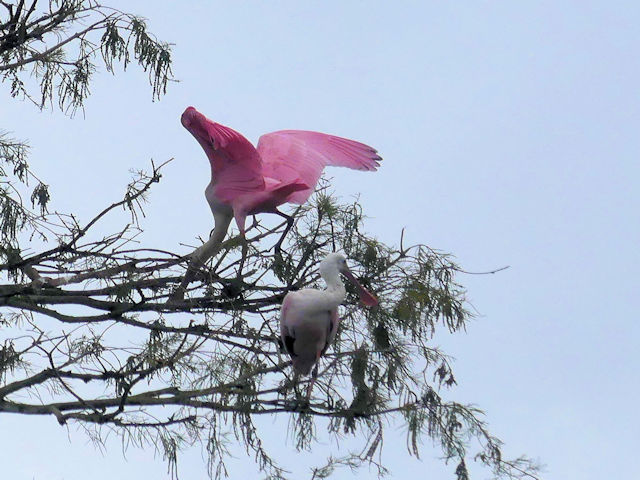
Gatorland Roseate Spoonbills

Roseate Spoonbill landing at Gatorland by Lee 11-21-17

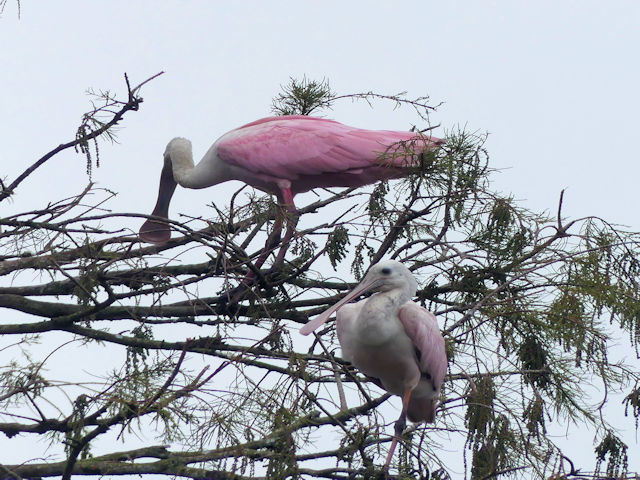
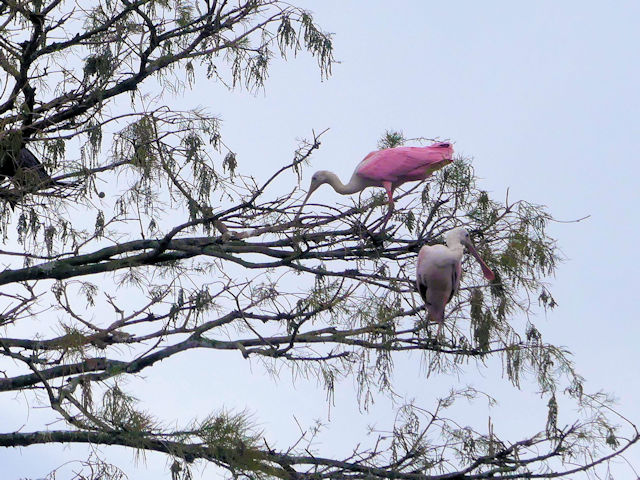
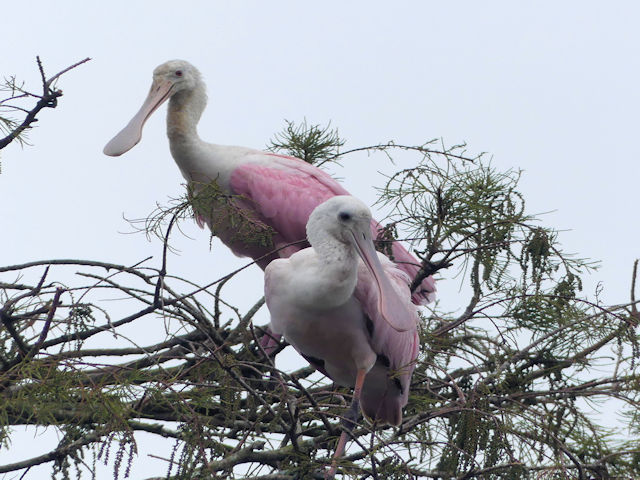
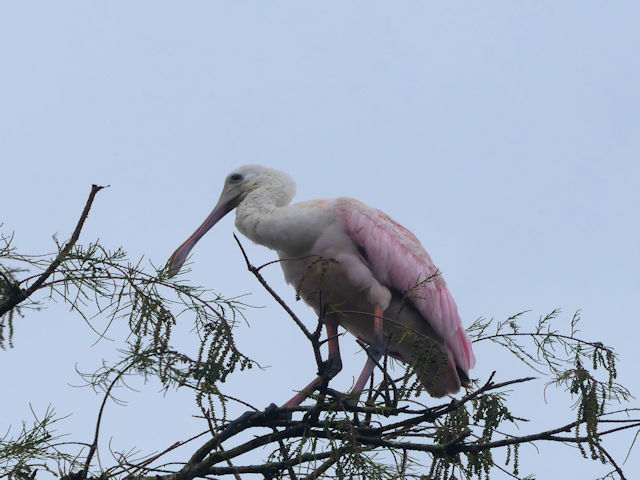
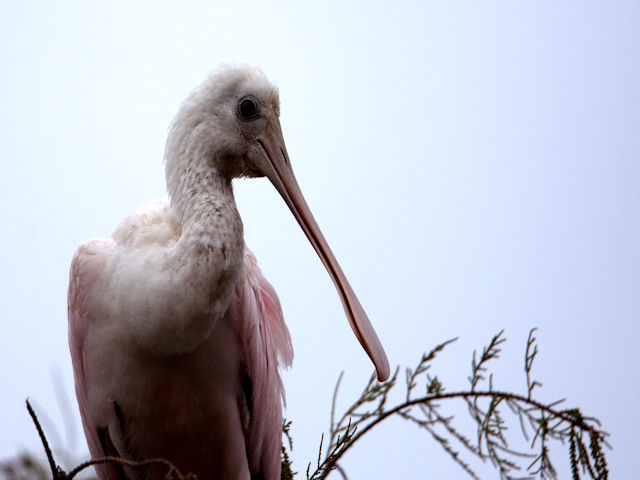
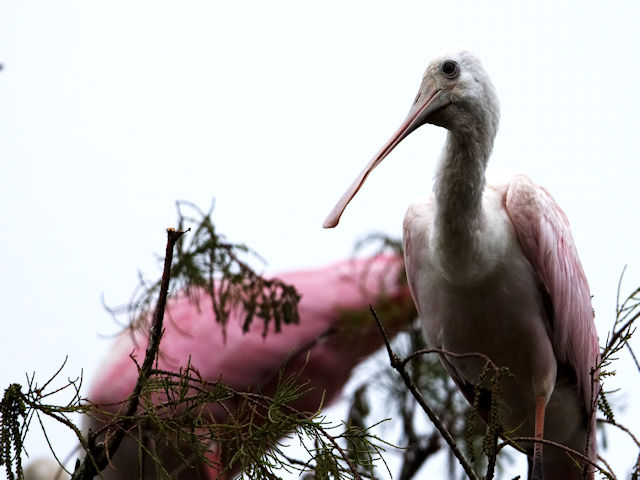
Yesterday, I shared the Boat-tailed Grackle female. Today, here are a few photos of two Roseate Spoonbills that landed on one of the trees at Gatorland. [Plus a bonus at the end]

Didn’t realize that she was already there.

The Roseate Spoonbill (Platalea ajaja) is a gregarious wading bird of the ibis and spoonbill family, Threskiornithidae. It is a resident breeder in South America mostly east of the Andes, and in coastal regions of the Caribbean, Central America, Mexico, the Gulf Coast of the United States, and on central Florida’s Atlantic coast at Merritt Island National Wildlife Refuge, adjoined with NASA Kennedy Space Center. They are also found here in Central Florida. These were at Gatorland in Orlando on 11/21/17.

Zoomed in even on this photo. The first ones were also cropped.

The roseate spoonbill is 71–86 cm (28–34 in) long, with a 120–133 cm (47–52 in) wingspan. The tarsus measures 9.7–12.4 cm (3.8–4.9 in), the culmen measures 14.5–18 cm (5.7–7.1 in) and the wing measures 32.3–37.5 cm (12.7–14.8 in) and thus the legs, bill, neck and spatulate bill all appear elongated. Adults have a bare greenish head (“golden buff” when breeding) and a white neck, back and breast (with a tuft of pink feathers in the center when breeding), and are otherwise a deep pink. The bill is grey.

Roseate Spoonbilsl landing at Gatorland by Lee 11-21-17

Roseate Spoonbills at Gatorland by Dan – Zoomed & Cropped

Roseate Spoonbills at Gatorland by Dan – Zoomed & Cropped

Like the American flamingo, their pink color is diet-derived, consisting of the carotenoid pigment canthaxanthin. Another carotenoid, astaxanthin, can also be found deposited in flight and body feathers. The colors can range from pale pink to bright magenta, depending on age, whether breeding or not, and location. Unlike herons, spoonbills fly with their necks outstretched. They alternate groups of stiff, shallow wingbeats with glides.

Roseate Spoonbills at Gatorland by Dan – Zoomed & Cropped

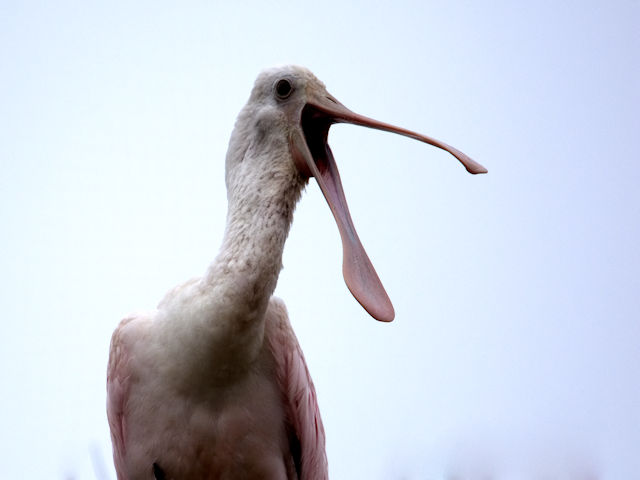
Roseate Spoonbills at Gatorland by Dan – Yawning

This species feeds in shallow fresh or coastal waters by swinging its bill from side to side as it steadily walks through the water, often in groups. The spoon-shaped bill allows it to sift easily through mud. It feeds on crustaceans, aquatic insects, frogs, newts and very small fish ignored by larger waders. In the United States, a popular place to observe roseate spoonbills is “Ding” Darling National Wildlife Refuge in Florida. Roseate spoonbills must compete for food with snowy egrets, great egrets, tricolored herons and American white pelicans. [Wikipedia, with editing]
Threskiornithidae – Ibises, Spoonbills Family
***

“Out of the ground the LORD God formed every beast of the field and every bird of the air, and brought them to Adam to see what he would call them. And whatever Adam called each living creature, that was its name.” (Genesis 2:19 NKJV)

Bonus:
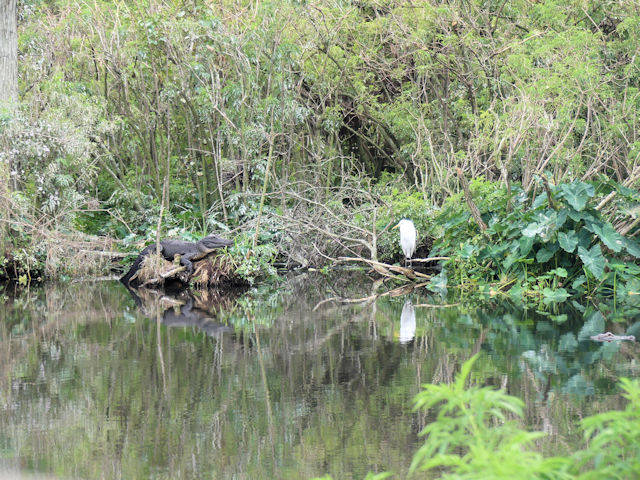
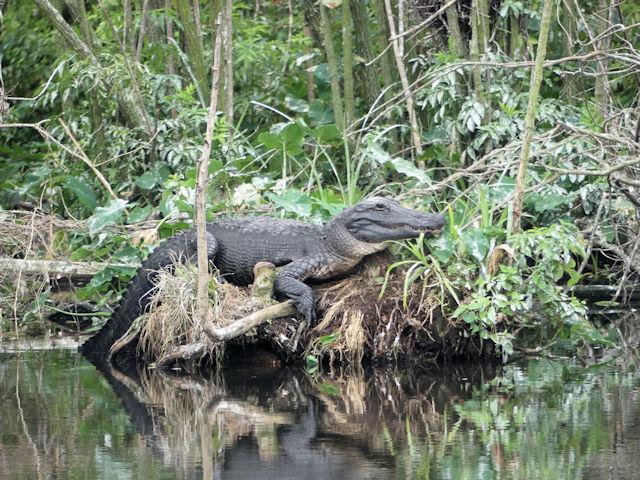
I found this Great Egret along the edge and an alligator nearby with quite a look on its face. They really weren’t that close, but thought you would enjoy this series of photos. [Click to enlarge]

More Gatorland Adventures

Gatorland in Orlando, Florida

Gatorland Grackle

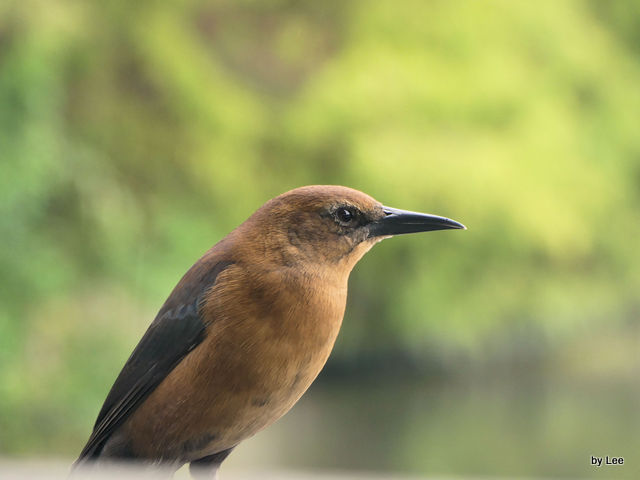
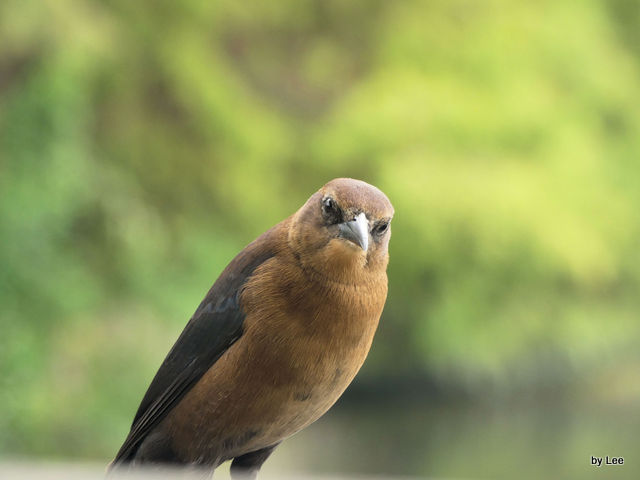
Boat-tailed Grackle at Gatorland by Lee

“To the end that my glory may sing praise to thee, and not be silent. O LORD my God, I will give thanks unto thee for ever.” (Psalms 30:12 KJV)

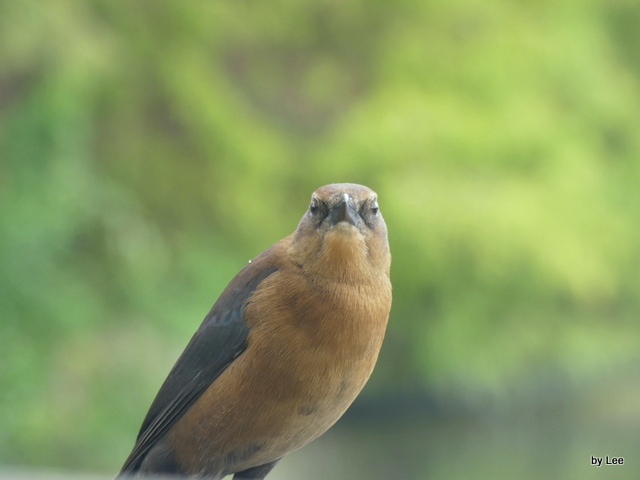
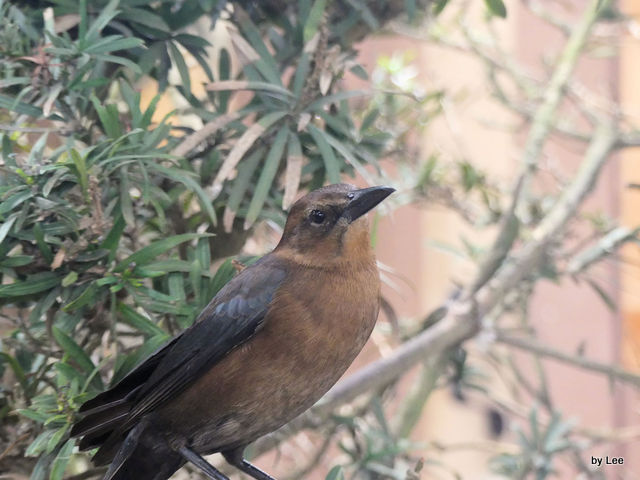
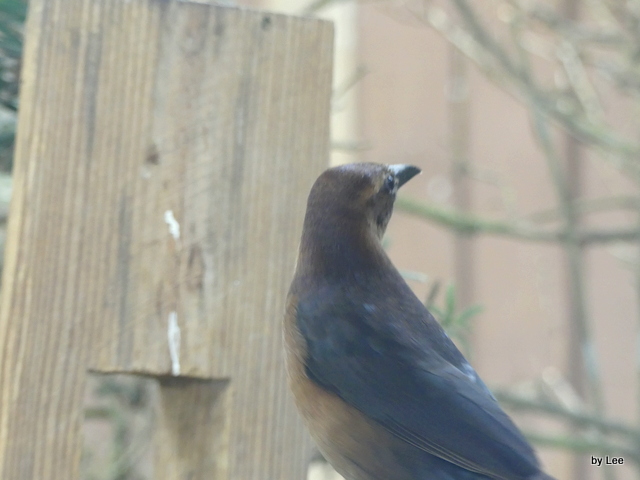
We drove over to Gatorland today to get in a bit of birdwatching. Those adventures have been rare lately, and today was not the best for photos. It was overcast and it began to rain less than an hour after arriving. Today, a female caught my attention and I was able to get a few fairly decent photos of her. I am always thankful for any bird that poses for me.

Were we discouraged? No way! We love watching birds and “trying” to take their photo, no matter what the weather. The Lord should give us pleasure in seeing His Creation, whether it is raining or not. Right?

“Giving thanks always for all things unto God and the Father in the name of our Lord Jesus Christ;” (Ephesians 5:20 KJV)

Boat-tailed Grackle Female at Gatorland

The Boat-tailed Grackle (Quiscalus major) is a passerine bird of the family Icteridae found as a permanent resident on the coasts of the southeastern United States. It is found in coastal saltwater marshes, and, in Florida, also on inland waters. The nest is a well-concealed cup in trees or shrubs near water; three to five eggs are laid.

Boat-tailed Grackle Female at Gatorland

The male boat-tailed grackle is 37–43 cm (15–17 in) long and weighs 165–250 g (5.8–8.8 oz). Adult males have entirely iridescent black plumage, a long dark bill, a pale yellowish or brown iris and a long keel-shaped tail. The adult female is much smaller at 26–33 cm (10–13 in) long and a weight of 90–115 g (3.2–4.1 oz). She is also distinguished by her shorter tail and tawny-brown coloration, which covers the body apart from the darker wings and tail. The wingspan in adult birds is 39–50 cm (15–20 in).

Boat-tailed Grackle Female at Gatorland near the Parrots

These birds forage on the ground, in shallow water, or in shrubs; they will steal food from other birds. They are omnivorous, eating insects, minnows, frogs, eggs, berries, seeds, and grain, even small birds. Boat-tailed grackles have established significant populations in several United States Gulf Coast cities and towns where they can be found foraging in trash bins, dumpsters, and parking lots. They also mooch off the food thrown to the gators and other critters that the visitors feed.

Boat-tailed Grackle Female at Gatorland near the Parrots

This bird’s song is a harsh jeeb, and it has a variety of typically grackle-like chatters and squeaks.
***
Bonus Yesterday:

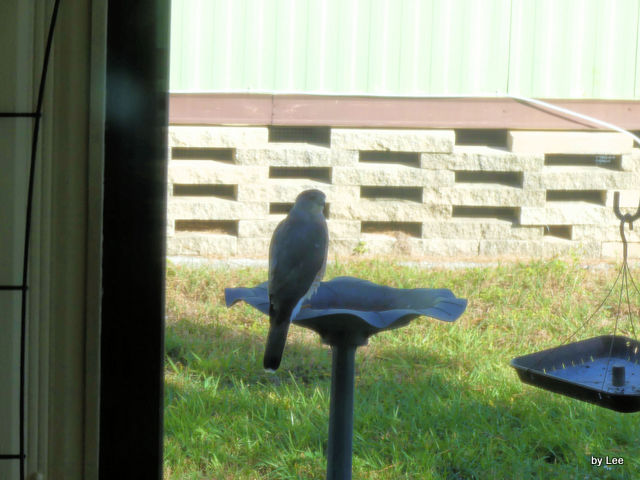
Coopers Hawk at Bird Bath 112017 by Lee

I glanced out the kitchen window yesterday and this Cooper’s Hawk was sitting on the bird bath. I hurried to get the camera before he flew off. This is through the window and the screen. The day before that, this Hawk was sitting in our carport on the water hose winder. We have feeders and the bird was probably waiting for lunch. No camera then. This is a life bird for our yard. Yeah!

Stay tuned! There are more photos to work on from this latest adventure. We always enjoy our trips over to Orlando to visit Gatorland.

More adventures from:

Don’t Feed the Birds or They’ll Evolve – Re-post from AIG

Eurasian Bullfinch (Pyrrhula pyrrhula) Male and Female ©WikiC

Don’t Feed the Birds or They’ll Evolve – Re-post from Answers In Genesis

by Avery Foley on November 13, 2017

Each year thousands of people fill bird feeders with seeds, corn, and nuts to encourage feathery friends to make a stop in their backyard. Bird feeding is especially popular in the United Kingdom where Britons spend nearly double that of other Europeans on bird feeders and birdseed, and half of homes with a backyard boast bird feeders. According to researchers, this seedy proffering is driving the rapid evolution of bird species.

Bird Feeders and Beak Size
This new research, part of a long-term study conducted by the University of Oxford’s Department of Zoology, focused on several populations of great tits (Parus major), a small bird species. One population was found in Wytham Woods, in the UK, the others in Oosterhout and Veluwe, in the Netherlands….

The Same Old Story

Of course, this isn’t the first time bird beaks have been used as examples of evolution. The so-called “Darwin’s finches” have famously been used to support the idea of molecules-to-man evolution….

…. Continue Reading There are some very nice photos in the article.

American Goldfinch at Feeder by Lee

The evolutionist just cannot figure it out that God is their Creator and the bird’s also. Enjoy reading about the latest reason not to feed the birds. As for me, my feeders are still out for the avian wonders of the Lord to enjoy eating from.

“For by him were all things created, that are in heaven, and that are in earth, visible and invisible, whether they be thrones, or dominions, or principalities, or powers: all things were created by him, and for him: And he is before all things, and by him all things consist.” (Colossians 1:16-17 KJV)

Harriet, The Osprey

Osprey Harriet’s transmitter is safely attached ©Craig Koppie USFWS

James J. S. Johnson, [Dr. Jim, to me] sent a very interesting article to share with you all. It is about an Osprey, named Harriet, who lives up in the Baltimore, Maryland [USA] area. Recently they, the U.S. Fish and Wildlife Service, mounted a satellite tracker on her. Wait, here is the article:

“…On July 10, Harriet was captured and fitted with a satellite transmitter to track her movements. The transmitter, which has a visible antenna, was comfortably and securely attached by a harness onto Harriet’s back.

Like so many other birds we see around the Chesapeake in spring and summer, ospreys begin to migrate to South America in September for the winter. Most of our Chesapeake osprey spend the colder months there, ranging from Venezuela, to as far south as Paraguay and even Argentina.”

Continue to the article, Hurricanes no match for Baltimore’s Harriet the Osprey on her fall trek, by CLICKING HERE

Harriot’s trip so far – Satelite ©USFWS


“Doth the hawk fly by thy wisdom, and stretch her wings toward the south? Doth the eagle mount up at thy command, and make her nest on high?” (Job 39:26-27 KJV)

We have also written articles along this line about tracking our migrating avian wonders from the Lord: