White-faced Owl – Transformer

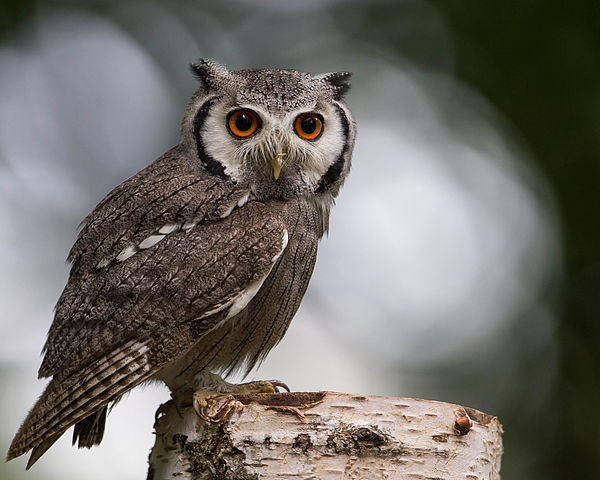
Southern White-faced Owl (Ptilopsis granti) ©PD

Southern White-faced Owl (Ptilopsis granti) ©PD

And be not conformed to this world: but be ye transformed by the renewing of your mind, that ye may prove what is that good, and acceptable, and perfect, will of God. (Romans 12:2 KJV)

Our contributing writer, James J. S. Johnson, sent me a really neat YouTube Video. It is called the Owl Transformer. After you watch this video, I will share the information I found about this cool owl.

There are two White-faced Owls. There is a Southern White-face Owl and a Northern White-faced Owl, but the one in the video is the Northern White-faced Owl. What a fantastic creation from the Creator.

Northern White-faced Owl (Ptilopsis leucotis) ©PD

Northern White-faced Owl (Ptilopsis leucotis) ©PD

These owls, both north and south, are from Africa. This northern one is from a band across Africa between the Sahara and the Equator. The southern owl appears in the southern part of Africa.

It is its “Fight-or-Flight” response that causes this defense mechanism. “When faced with another owl slightly larger than it, the bird flares its wings to appear larger. When faced with something much larger than itself, it pulls its feathers inwards, elongates its body, and narrows its eyes to thin slits. It is thought that it uses this ability to camouflage itself, and it shares the ability with relatives like the African scops owl.

In fact, many different types of owls have some ability to adopt a “concealing posture”, also known by the German word Tarnstellung, in which they squeeze and thin their body to look like a broken tree branch, and some types may also narrow their eyes to slits and fold a wing sideways across their chest in a Dracula-like manner to hide the lighter-colored feathers on their underparts. Such behavior has also been documented in eastern screech owls in a natural setting reacting to threats. (Wikipedia)

The Lord Jesus Christ gives these birds the ability to “transform” for their protection, just as he wants us to “transform” into His Image.

But we all, with open face beholding as in a glass the glory of the Lord, are changed into the same image from glory to glory, even as by the Spirit of the Lord. (2 Corinthians 3:18 KJV)

Here is another video found on YouTube:

*
Northern white-faced owl – Wikipedia

Southern white-faced owl – Wikipedia

Strigidae – Owls

Sharing The Gospel
*

Pileated Woodpeckers With a Chipmunk, One Singing, and One Eating

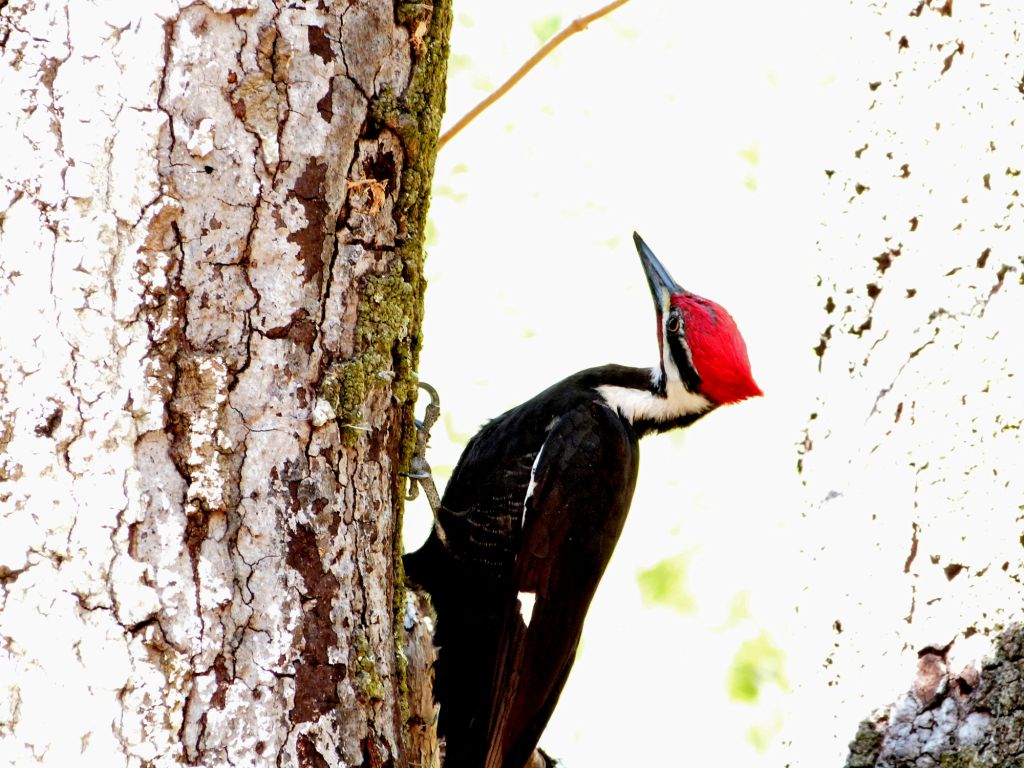
Pileated Woodpecker by Lee

Pileated Woodpecker by Lee

‘Ah, Lord GOD! Behold, You have made the heavens and the earth by Your great power and outstretched arm. There is nothing too hard for You. (Jeremiah 32:17 NKJV)

I always enjoy seeing Pileated Woodpeckers like this one at Circle B Bar Reserve here in the area. This was taken several years ago.

I found these videos on YouTube and they show the Pileated in a different way than we have observed them. Enjoy!

The first one is a YouTube by Dan & Joe. He discovers a chipmunk:

He has made the earth by His power; He has established the world by His wisdom, And stretched out the heaven by His understanding. (Jeremiah 51:15 NKJV)

Here’s another video of a Pileated Woodpecker Singing by Pureimaginationvideo:

This last one has a very good close-up of a Pileated digging for Grubs by Martyn Stewart:

But the LORD is the true God; He is the living God and the everlasting King. At His wrath the earth will tremble, And the nations will not be able to endure His indignation. Thus you shall say to them: “The gods that have not made the heavens and the earth shall perish from the earth and from under these heavens.” He has made the earth by His power, He has established the world by His wisdom, And has stretched out the heavens at His discretion. (Jeremiah 10:10-12 NKJV)

I have been reading through Jeremiah and these verse caught my attention.

*

Birds of the World

Picidae – Woodpeckers Family

Who Paints the Leaves?

*

Helps For Updating Bird List To I.O.C. Version 5.3

Mourning Dove by Reinier Munguia

Mourning Dove by Reinier Munguia

Out of the ground the LORD God formed every beast of the field and every bird of the air, and brought them to Adam to see what he would call them. And whatever Adam called each living creature, that was its name. So Adam gave names to all cattle, to the birds of the air, and to every beast of the field… (Genesis 2:19-20a NKJV)

Today I want to share a little behind the scene helps that really make updating a blog and your files. As you may be aware, we use the I.O.C.’s list of world bird names here. About every quarter, they (IOC) delete, add, and revise the species names and positions in the list of all the birds in the world. If you are nutty enough to have had the bright idea, like I did several years back, to list ALL THE BIRDS, then you have a headache every quarter.

Each update they (IOC) provide files you can download with all the birds listed. Most of these are in the Excel format. Spreadsheets like Excel and others can greatly speed up fixing the list to update my site. I use simple (and I mean simple) formulas to combine the bird’s name and its scientific name together with the parenthesis around it. Then just copy the formula down the 10,000 plus birds and “wa laa” you have a

Black-headed Ibis (Threskiornis melanocephalus) instead of  a

Black-headed Ibis” and aThreskiornis melanocephalus with no parenthesis to be found.

=CONCATENATE(E796,” (“,G796,”)”)

E796 is the cell of the English name and G796 is the cell of the Scientific name. The ,” (, and the ,”)” tells it to add a space and parenthesis, and a parenthesis at the end.

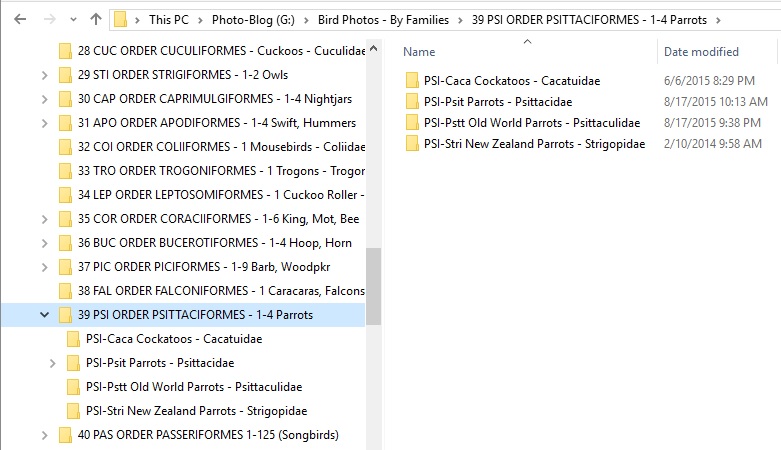
I also came up with a naming system to help find the photos of birds on the hard drives. I use a 3-letter code – All Caps – for the Order of birds, a dash(-), followed by a 4-letter code to represent the Family of the birds. It really helps in aiding to find bird photos or to rename them. (that is next)

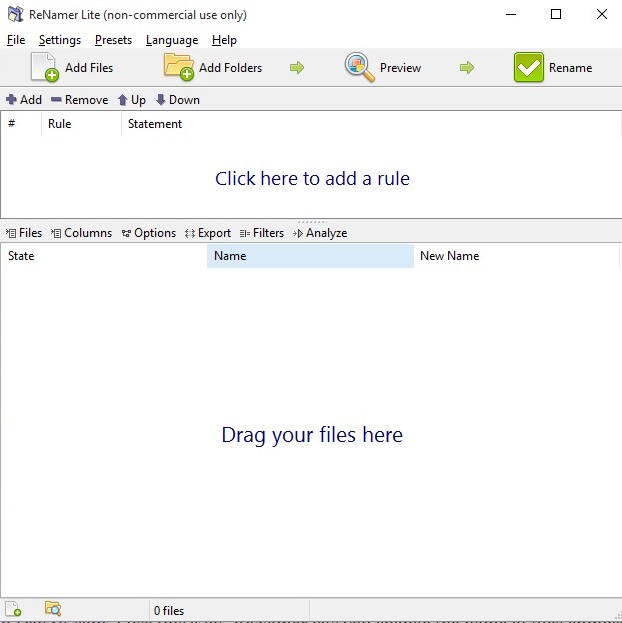
Another great program, this one is free, is ReNamer from Den4B.com. I use this a lot. ReNamer lets you change the name of files enmasse. File explorer will let you rename a group of files, but you cannot go in there and just change parts of it like ReNamer can do. As I mentioned in the last post about I.O.C. Version 5.3, the Parrot family was split into two families. Fixing the pages that list all the birds was tedious enough, but having to separate the photos on my hard drive was another situation.

My File Explorer - For Parrots

My File Explorer – For Parrots

My Code for the original Parrot family was PSI-Psit (PSITTACIFORMES order and Psittacidae family) and now with the new Psittaculidae family I came up with PSI-Pstt. So how am I suppose to rename over 200 photos in the new family to the new code? Easy with ReNamer. Drag the files you want to rename into ReNamer, add a new Rule (Replace PSI-Psit with PSI-Pstt), then press the “Rename” button and 200 plus photos are renamed. There are lots of other options. It is a fantastic program in my opinion.

ReNamer from den4b.com

ReNamer from den4b.com

I know for some of you, this was a little more technical than normal, but thought you might find something in it you can use on your projects. The CONCATENATE (combining) feature of Excel and the ReNamer program are both very useful.

Because of health issues and other events going on, the update to I.O.C. Ver. 5.3 has not moved as fast as other versions. I am working on it and here are the families updated so far. I have been making a change to the pages as I work on them. I am adding a slideshow at the bottom of each page. Stay tuned!

‘I have made the earth, the man and the beast that are on the ground, by My great power and by My outstretched arm, and have given it to whom it seemed proper to Me. (Jeremiah 27:5 NKJV)

I.O.C. Version 5.3

Tinamous – Tinamidae
Ostriches – Struthionidae
Rheas – Rheidae
Cassowaries – Casuariidae
Emu – Dromaiidae
Kiwis – Apterygidae
Screamers – Anhimidae
Magpie Goose – Anseranatidae
Ducks, Geese and Swans – Anatidae
Megapodes – Megapodiidae
Chachalacas, Curassows and Guans – Cracidae
Guineafowl – Numididae
New World Quail – Odontophoridae
Pheasants and allies – Phasianidae
Loons – Gaviidae
Penguins – Spheniscidae
Austral Storm Petrels – Oceanitidae
Albatrosses – Diomedeidae
Northern Storm Petrels – Hydrobatidae
Petrels, Shearwaters – Procellariidae
Diving Petrels – Pelecanoididae
Grebes – Podicipedidae
Flamingos – Phoenicopteridae
Tropicbirds – Phaethontidae
Storks – Ciconiidae
Ciconiidae – Storks
* The Parrots
Strigopidae – New Zealand Parrots
Cacatuidae – Cockatoos
Psittacidae – African and New World Parrots
Psittaculidae – Old World Parrots
*

New Parrot Family – I.O.C. 5.3 Version

Mulga Parrot (Psephotellus varius) by Ian

Mulga Parrot (Psephotellus varius) by Ian

My son, fear thou the LORD and the king: and meddle not with them that are given to change: (Proverbs 24:21 KJV)

Finally have my computer and Excel back up running. I decided to start working on the new I.O.C. 5.3 version and was surprised to see that they had divided the Psittacidae – Parrots Family. Well, that family had 369 species and now the new family has been named Pittaculidae –  “Old World Parrots” with 192 parrots.

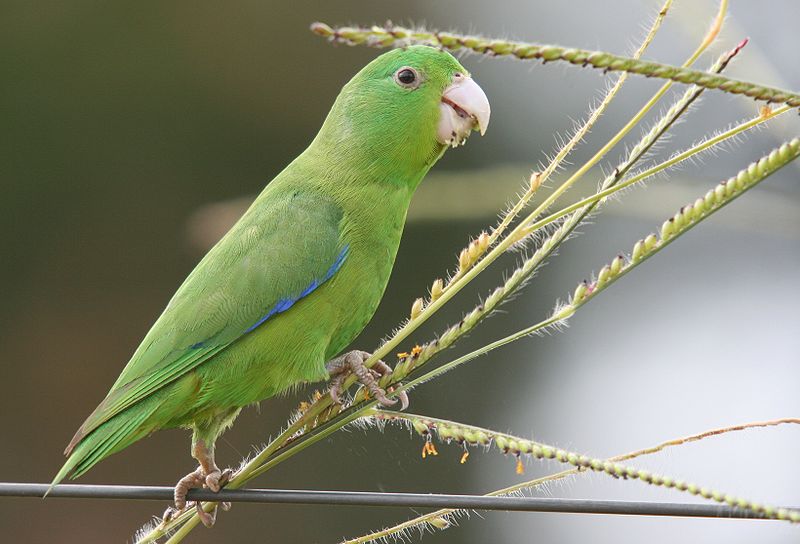
Blue-winged Parrotlet (Forpus xanthopterygius) ©WikiC

Blue-winged Parrotlet (Forpus xanthopterygius) ©WikiC

The old family, Psittacidae – African and New World Parrots has 178 avian wonders. They added two new ones to this family; the Turquoise-winged Parrolett (Forpus spengeli) and the Large-billed Parrotlet (Forpus crassirostris) that were subspecies of the Blue-winged Parrotlet family.

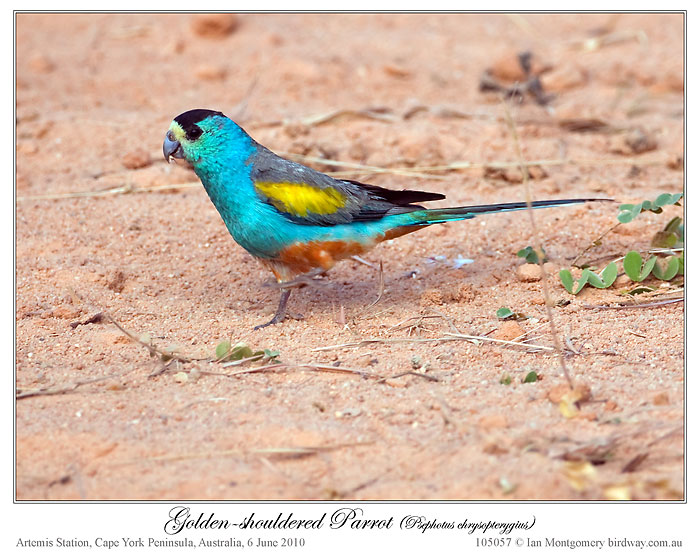
Golden-shouldered Parrot (Psephotellus chrysopterygius) by Ian

Golden-shouldered Parrot (Psephotellus chrysopterygius) by Ian

In the new Psittaculidae – Old World Parrots Family they changed the genus of several birds:

Mulga Parrot (Psephotus varius) to (Psephotellus varius)
Hooded Parrot (Psephotus dissimilis) to (Psephotellus dissimilis)
Golden-shouldered Parrot (Psephotus chrysopterygius) to (Psephotellus chrysopterygius)
Paradise Parakeet (Psephotus pulcherrimus) to (Psephotellus pulcherrimus)

Purple-crowned Lorikeet (Parvipsitta porphyrocephala) WikiC

Purple-crowned Lorikeet (Parvipsitta porphyrocephala) WikiC

Little Lorikeet (Glossopsitta pusilla) to (Parvipsitta pusilla)
Purple-crowned Lorikeet (Glossopsitta porphyrocephala) to (Parvipsitta porphyrocephala)

Cardinal Lory (Pseudeos cardinalis) Busch Gardens, Tampa Bay WikiC

Cardinal Lory (Pseudeos cardinalis) Busch Gardens, Tampa Bay WikiC

Cardinal Lory (Chalcopsitta cardinalis) to (Pseudeos cardinalis)

For now, that is about as far as I have gotten with the update. That was a major reshuffle which I plan to tell about in the next blog. Stay tuned!

The PSITTACIFORMES – Parrot Order

Strigopidae – New Zealand Parrots
Cacatuidae – Cockatoos
Psittacidae – African and New World Parrots
Psittaculidae – Old World Parrots

Gideon

*

Sea To Sea In 2015 Page Created

Gull with feet in the Pacific by Lee

Gull with feet in the Pacific by Lee

So whether we are at home or away, we make it our aim to please him. (2 Corinthians 5:9 ESV)

Just finished creating a Sea To Sea In 2015 page. Pages are different than post because they are more permanent. This site has lots of pages and are usually used for reference, like the Birds of the Bible pages. Each Bird of the Bible has it’s own page and as articles are written, a link is added to the page.

The Sea to Sea in 2015 is a place where all these articles about our vacation, that took us from “Sea to Shining Sea,” can be listed.

Also, if you haven’t checked out the menus on the left side lately, you will find other “pages” have been added or updated. If you hold your mouse over “Birdwatching” you will see eight (8) more pages pop-up. One of those is Birdwatching Trips. That is where you will find pages of birdwatching trips we have taken. “Sea to Sea” is found under the Around the U.S.A. section.

Jacksonville, Florida Beach Sunrise while packing to go home.

Jacksonville, Florida Beach Sunrise while packing to go home.

Pages help make an index of the topics and the writers here. Search works all the time.

Check back, from time to time, as all these pages are being updated.

*

Sea To Sea In 2015

Where Did They Go and Why? Bird Mystery

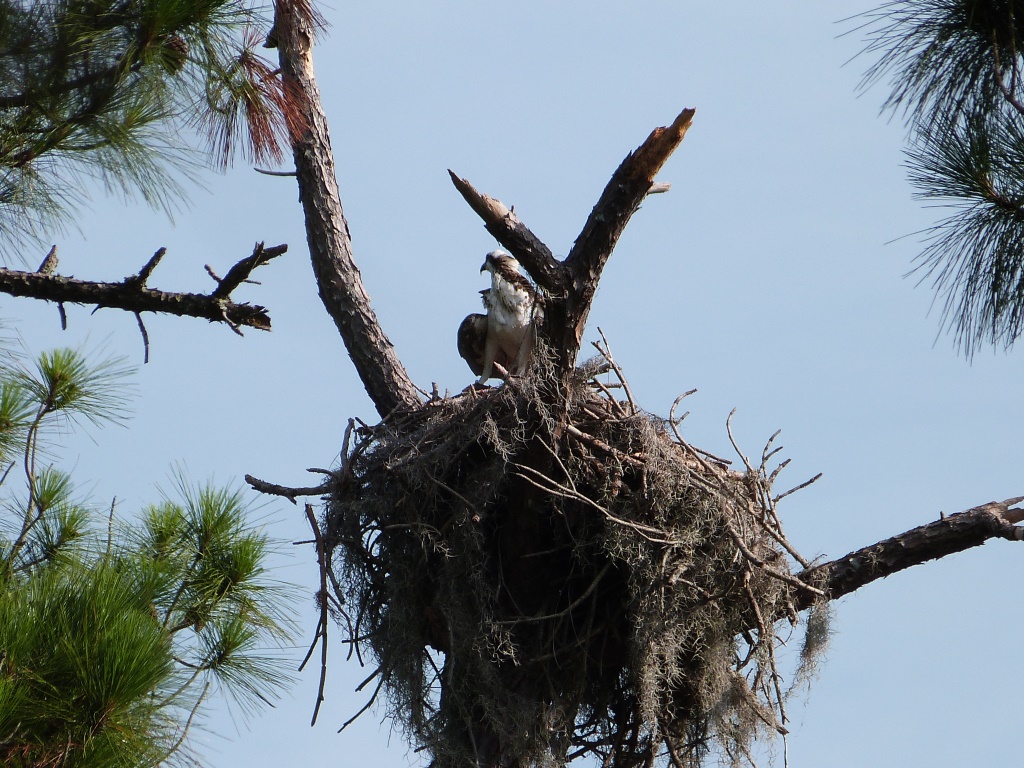
Western Osprey (Pandion haliaetus) by Lee at Honeymoon Is SP

Western Osprey (Pandion haliaetus) by Lee

On Seahorse Key in Florida, a very popular nesting spot was vacated en mass in May. Now the avian biologist from U.S. Fish and Wildlife Service and others are trying to find out why and where they went. Here are some of the quotes from different articles, listed below.

Seahorse Key, a 150-acre mangrove-covered dune off Florida’s Gulf Coast, a key that “fell eerily quiet all at once”.

“It’s a dead zone now,” said Vic Doig, a U.S. Fish and Wildlife Service biologist. “This is where the largest bird colony on the Gulf Coast of Florida used to be.”

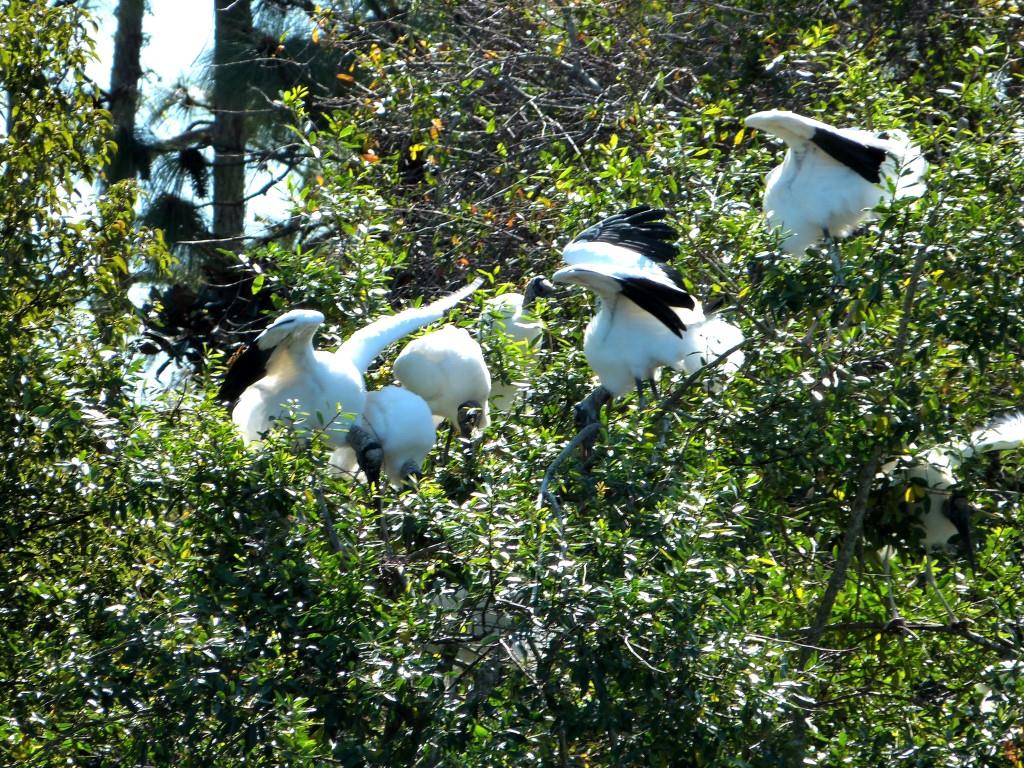
Wood Storks in the Rookery at Gatorland

Wood Storks in the Rookery at Gatorland

Another quote, “It’s not uncommon for birds to abandon nests,” said Peter Frederick, a University of Florida wildlife biologist who has studied Florida’s birds for nearly 30 years. “But, in this case, what’s puzzling is that all of the species did it all at once.”

“Any rookery that’s persisted for decades as one of the largest colonies is incredibly important,” said Janell Brush, an avian researcher with the Florida Fish and Wildlife Conservation Commission. “It’s quite a large colony. There had to be some intense event that would drive all these birds away.” “Some of the Seahorse birds seem to have moved to a nearby island, but they’re just a fraction of the tens of thousands of birds that would normally be nesting on the key right now, Doig added.

They have even checked with the military to see if they may have experimented with something. They say that they were not involved.

Whatever scared the birds that much must have been something very unusual. The Lord knows all about it and gave the birds the sense to get out of harms way. It is a shame that so many eggs and little ones were abandoned.

Wood Storks Flying

Wood Storks Flying

There is a time in the future when all the birds will flee:

I beheld the mountains, and, lo, they trembled, and all the hills moved lightly. I beheld, and, lo, there was no man, and all the birds of the heavens were fled. (Jeremiah 4:24-25 KJV)

I will take up a weeping and wailing for the mountains, And for the dwelling places of the wilderness a lamentation, Because they are burned up, So that no one can pass through; Nor can men hear the voice of the cattle. Both the birds of the heavens and the beasts have fled; They are gone. (Jeremiah 9:10 NKJV)

One article even questioned whether climate change did it. That one is a little far-fetched. Over time, maybe, over-night, I doubt it.

We can’t ask the birds directly, but as they continue to investigate this mystery, there will be lessons learned. Too bad we can’t ask the birds, but we can observe them.

“But now ask the beasts, and they will teach you; And the birds of the air, and they will tell you; (Job 12:7 NKJV)

Here are some of the articles about this mystery:

Bird mystery: Thousands disappear and abandon eggs, nests on island off Florida’s Gulf Coast,
Published July 07, 2015 Associated Press

Large Florida bird colony suddenly a “dead zone”, July 7, 2015

Bird mystery: Thousands disappear and abandon eggs, nests on island off Florida’s Gulf Coast, July 7, 2015

Tens fo thousands of birds…, July 7, 2015

*

Birds of the Bible

Birds of the World

Wordless Birds

*

Dubai World Record Eagle Flight

You will enjoy watching this video sent to me from a friend. They took an eagle up to tallest building in the world in Dubai and released him. He has a camera strapped to him.

He then comes down and lands on his handler’s outstretched arm. Amazing footage.

Eagles are an amazing creation from the Lord.

Wilt thou set thine eyes upon that which is not? for riches certainly make themselves wings; they fly away as an eagle toward heaven. (Proverbs 23:5 KJV)

Though thou exalt thyself as the eagle, and though thou set thy nest among the stars, thence will I bring thee down, saith the LORD. (Obadiah 1:4 KJV)

*

I.O.C. Version 5.2 Updated

Ashy Gerygone (Gerygone cinerea) ©PNG Katerina Tvardikova

Grey Thornbill (Acanthiza cinerea) – (was the Ashy Gerygone) ©PNG Katerina Tvardikova

For the last few days I have been updating to the new I.O.C. Version 5.2. This update wasn’t too bad.

“The IOC World Bird List 5.2 contains 10,567 extant species (and 149 extinct species)  classified in 40 Orders,  238 Families (plus 2 Incertae Sedis) and 2277 Genera.  The list also includes 20,803 subspecies.” I don’t list the subspecies here.

Version 5.2 added 10 species:

And Deleted 3 species:

  • Forsten’s Megapode (Megapodius forsteni)
  • Central Nicobar Serpent Eagle (Spilornis [cheela] minimus)
  • Northern Parrotbill (Paradoxornis polivanovi)

They changed the name of 8 species:

Bluebonnet (Northiella haematogaster) to Eastern Bluebonnet
Swan River Honeyeater (Melithreptus chloropsis) to Gilbert’s Honeyeater
Wattled Honeyeater (Foulehaio carunculatus) to Greater Wattled Honeyeater
Giant Honeyeater (Gymnomyza viridis) to Yellow-billed Honeyeater
Ashy Gerygone (Acanthiza [Gerygone] cinerea) to Grey Thornbill
Chestnut-backed Quail-thrush (Cinclosoma castanotum) to Chestnut Quail-thrush
Mottled Whistler (Rhagologus leucostigma) to Mottled Berryhunter
Blue Seedeater (Amaurospiza concolor) to Cabanis’s Seedeater

They changed 2 scientific names:

  • Ashy Gerygone – Gerygone cinerea to Acanthiza cinerea (then changed the name to Grey Thornbill – see above)
  • Yellow-bellied Fantail – Chelidorhynx hypoxantha to Chelidorhynx hypoxanthus

As far as I know, all Family pages and all the Indexes have been changed. The Update is so new that photos are difficult to locate at this time. Many of the “new species” are subspecies raised to specie level. I am sure the Lord knows all about how many birds He Created and where they all are.

My son, fear thou the LORD and the king: and meddle not with them that are given to change: (Proverbs 24:21 KJV)

For I am the LORD, I change not; (Malachi 3:6a KJV)

Jesus Christ the same yesterday, and to day, and for ever. (Hebrews 13:8 KJV)

Birds of the World

*

Tickle Me Tuesday – Manakins

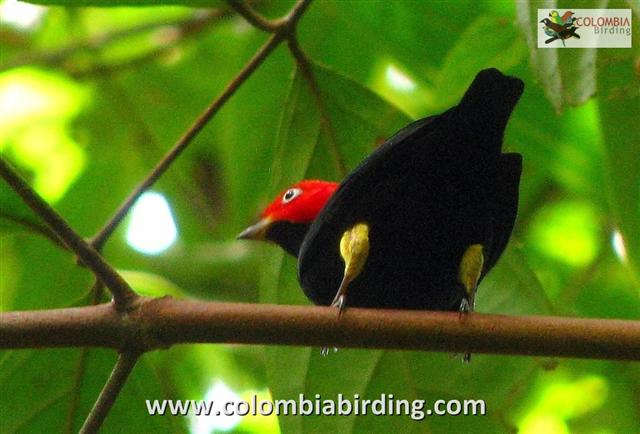
Red-capped Manakin (Dixiphia mentalis) ©Flickr Columbiabirding

Red-capped Manakin (Dixiphia mentalis) ©Flickr Columbiabirding

And God blessed them, saying, “Be fruitful and multiply, and fill the waters in the seas, and let birds multiply on the earth.” So the evening and the morning were the fifth day. (Genesis 1:22-23 NKJV)

In Sunday Inspiration – Give Thanks, the Manakins were highlighted. Here is one in action:

They are only doing what God commanded them to do; multiply. Oh my, what they go through to attact their mate. It can tickle you.

*

Sunday Inspiration – Give Thanks

Pipridae – Manakins Family

Wordless Birds

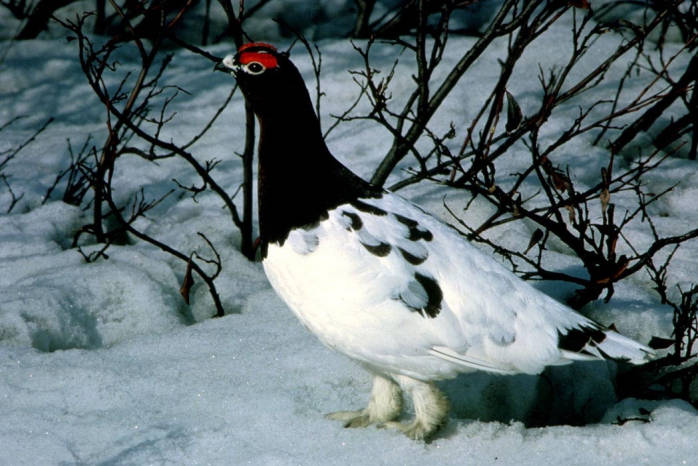
Winter Willow Ptarmigan

Willow Ptarmigan (Lagopus lagopus) ©USFWS

Willow Ptarmigan (Lagopus lagopus) ©USFWS

He gives snow like wool; He scatters the frost like ashes; (Psalms 147:16 NKJV)

Let them praise the name of the LORD, For He commanded and they were created. He also established them forever and ever; He made a decree which shall not pass away. Praise the LORD from the earth, You great sea creatures and all the depths; Fire and hail, snow and clouds; Stormy wind, fulfilling His word; (Psalms 148:5-8 NKJV)

Since so much of North America is having such a cold and snowy winter, thought that you might like watching a Willow Ptarmigan in its winter outfit.

Lesley the Bird Nerd produced this YouTube and thought you might enjoy watching how the Lord has prepared this bird to survive in winter.

We are going to drop down to freezing the for a few nights here in Central Florida, but nothing like what many of you are experiencing. Stay warm and enjoy the Lord’s Creations.

God thunders marvelously with His voice; He does great things which we cannot comprehend. For He says to the snow, ‘Fall on the earth’; Likewise to the gentle rain and the heavy rain of His strength. He seals the hand of every man, That all men may know His work. (Job 37:5-7 NKJV)

The willow ptarmigan (Lagopus lagopus) is a bird in the grouse subfamily Tetraoninae of the pheasant family Phasianidae. It is also known as the willow grouse and in the British Isles, where it was previously believed to be a separate species, as the red grouse. It is a sedentary species, breeding in birch and other forests and moorlands in northern Europe, the tundra of Scandinavia, Siberia, Alaska and northern Canada, in particular in the provinces of Newfoundland and Labrador. It is the state bird of Alaska. In the summer the birds are largely brown, with dappled plumage, but in the winter they are white with some black feathers in their tails (British populations do not adopt a winter plumage). Nesting takes place in the spring when clutches of four to ten eggs are laid in a scrape on the ground. The chicks are precocial and soon leave the nest and while they are young, both parents play a part in caring for them. The chicks eat insects and young plant growth while the adults are completely herbivorous, eating leaves, flowers, buds, seeds and berries during the summer and largely subsisting on the buds and twigs of willow and other dwarf shrubs and trees during the winter. (Wikipedia)

*

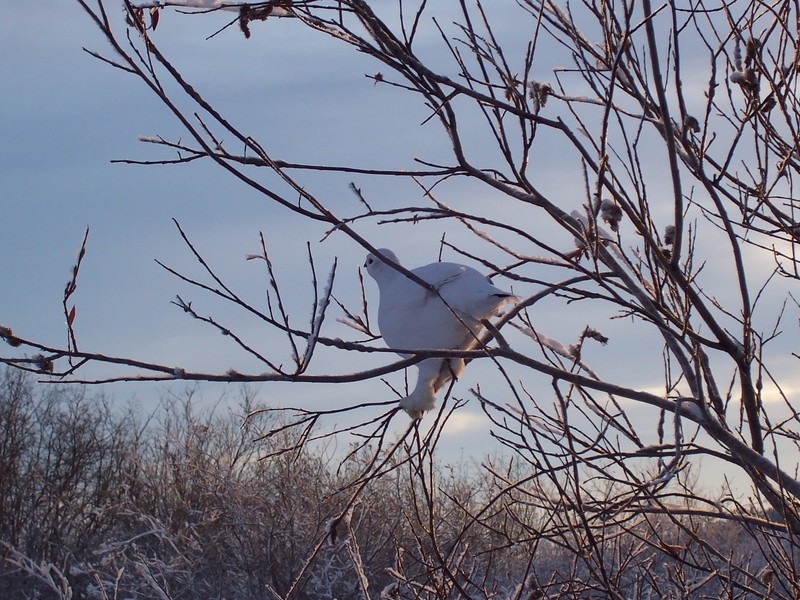
Willow Ptarmigan (Lagopus lagopus)  Winter ©WikiC

Willow Ptarmigan (Lagopus lagopus) Winter ©WikiC

Willow Ptarmigan – State of Alaska with videos

Willow Ptarmigan – All About Birds

Willow Ptarmigan – Wikipedia

Willow Ptarmigan – Kidzone

Phasianidae – Pheasants, Fowl & Allies Family

Wordless Birds

*

Strawberry (Red-faced) Mousebird – Urocolius Indicus

Red-faced Mousebird (Urocolius indicus) ©Our Rumbling Ocean

Red-faced Mousebird (Urocolius indicus) ©Our Rumbling Ocean

Red-faced Mousebird

Endemic to Africa, about the size of a normal sparrow, crested head and beautiful cinnamon colored breast and strawberry red mask and bill. They are especially beautiful in the early morning sun. Their general body color is blue-grey or slate-ish.

With its long tail, about the same length as the body, they look like mice when they climb around in trees, therefore the name. Their outside toes are reversed to allow them to do just that, moving forward and backward as they climb around in the trees. They are more nervous of people than especially the Speckled Mousebird, which we have done before….. (To see the rest of the article – click here)


Lee’s Addition:

The shield of his mighty men is made red, the valiant men are in scarlet: … (Nahum 2:3a KJV)

Strawberry (Red-faced) Mousebird – Urocolius Indicus is re-blogged and was written on one of the blogs I follow, Our Rumbling Ocean. It is produced in South Africa.

Anyway, I wanted to share these beautiful Mousebirds with you.

Mousebirds are members of the Mousebirds – Coliidae Family and consist of only six species. And, no, the plural of Mousebird is not “Micebirds.”

*

Our Rumbling Ocean

Mousebirds – Coliidae Family

Birds of the World

*


Babbler For Who?

Indian Scimitar Babbler (Pomatorhinus horsfieldii) ©WikiC

Indian Scimitar Babbler (Pomatorhinus horsfieldii) ©WikiC

bab·bler – ˈbab(ə)lər/ – noun

  • a person who babbles.
  • a thrushlike Old World songbird with a long tail, short rounded wings, and typically a loud discordant or musical voice.

While reading in Ecclesiastes recently, I saw the word “babbler.” Working on the Birds of the World lists, that word caught my attention. Ahh! Maybe I could write an article about the Babblers that I had seen in the list.

A serpent may bite when it is not charmed; The babbler is no different. (Ecclesiastes 10:11 NKJV)

Chestnut-faced Babbler (Zosterornis whiteheadi) ©WikiC

Chestnut-faced Babbler (Zosterornis whiteheadi) ©WikiC

What I did not know is that there are seven families that have “Babbler” birds in them. There are Ground Babblers, Wren Babblers, Thrush-Babblers, Scimitar Babblers, Jewel-babblers, Hill Babblers, Tit-Babblers, a Rail-babblers and regular just plain Babblers.

Then checking for more verses on “babblers,” I found two more. The verse above and this one both have a sort of negative meaning to the word.

Whoever goes about slandering reveals secrets; therefore do not associate with a simple babbler. (Proverbs 20:19 ESV)

There is one more verse that will come later. First, what is a Babbler of the bird kind?

Rail-babbler (Eupetes macrocerus) by Peter Ericsson

Rail-babbler (Eupetes macrocerus) by Peter Ericsson

“The Old World babblers or timaliids are a large family of mostly Old World passerine birds. They are rather diverse in size and coloration, but are characterised by soft fluffy plumage. These are birds of tropical areas, with the greatest variety in Southeast Asia and the Indian subcontinent. The timaliids are one of two unrelated groups of birds known as babblers, the other being the Australasian babblers of the family Pomatostomidae (also known as pseudo-babblers).

White-browed Babbler by Ian

White-browed Babbler by Ian (Australia)

Morphological diversity is rather high; most species resemble “warblers”, jays or thrushes. This group is among those Old World bird families with the highest number of species still being discovered.

Timaliids are small to medium birds. They have strong legs, and many are quite terrestrial. They typically have generalised bills, similar to those of a thrush or warbler, except for the scimitar babblers which, as their name implies, have strongly decurved bills. Most have predominantly brown plumage, with minimal difference between the sexes, but many more brightly coloured species also exist.

The systematics of Old World babblers have long been contested. During much of the 20th century, the family was used as a “wastebin taxon” for numerous hard-to-place Old World songbirds (such as Picathartidae or the wrentit). Ernst Hartert was only half-joking when he summarized this attitude with the statement that, in the passerines, (Wikipedia)

“Was man nicht unterbringen kann, sieht man als Timalien an.” (What one can’t place systematically is considered an Old World babbler)

They finally started trying to divide them into different groups and families. You will find those seven families below. Also, from the definition at the beginning, they are vocal with a “typically a loud discordant or musical voice.”

Nepal Wren-Babbler (Pnoepyga immaculata) by Nikhil Devasar

Nepal Wren-Babbler (Pnoepyga immaculata) by Nikhil Devasar

The last verse I found with “babbler” gives us a more positive emphasis. The Apostle Paul was in Athens and:

“Now while Paul waited for them at Athens, his spirit was provoked within him when he saw that the city was given over to idols. Therefore he reasoned in the synagogue with the Jews and with the Gentile worshipers, and in the marketplace daily with those who happened to be there. Then certain Epicurean and Stoic philosophers encountered him. And some said, “What does this babbler want to say?” Others said, “He seems to be a proclaimer of foreign gods,” because he preached to them Jesus and the resurrection. And they took him and brought him to the Areopagus, saying, “May we know what this new doctrine is of which you speak? For you are bringing some strange things to our ears. Therefore we want to know what these things mean.” (Acts 17:16-20 NKJV)

Are we “babblers” for the Lord like Paul? When people listen to us (or read what we write), do they hear a loud “discordant sound” or a clear “musical note”? We have no control how the words are heard. Some may consider the Words of Jesus as just another belief system in the world, while others will hear the Words as joy to their souls. We are told to tell others about Christ. So, Who do we “Babble” for?

*
Eupetidae – Rail-babbler – 1

Pellorneidae – Fulvettas, Ground Babblers – 40+ Wren Babblers, Thrush-Babbler, Scimitar Babbler, Babblers

Pnoepygidae – Wren-babblers – 5 Wren-babblers

Pomatostomidae – Australasian Babblers – 5 Babblers

Psophodidae – Whipbirds, Jewel-babblers and Quail-thrushes – 4 Jewel-babblers

Sylviidae – Sylviid Babblers – 6 Hill Babblers, Thrush-Babblers, and Babblers

Timaliidae – Babblers – 55 Scimitar Babblers, Wren-Babblers, Tit-Babblers and Babblers

Orni-Theology

Sharing The Gospel

*