Birdwatching at Lake Morton Finally

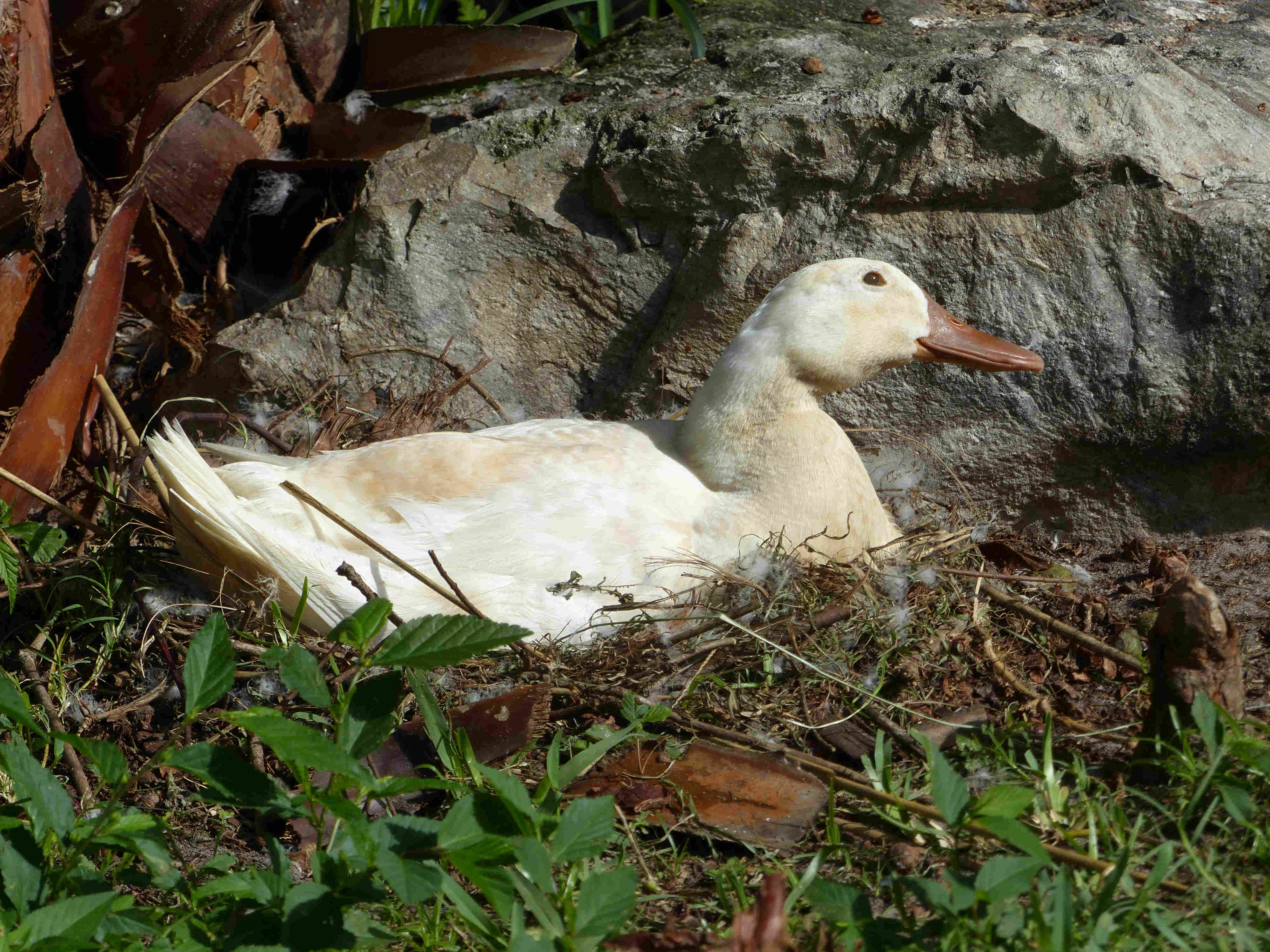
Aflac Momma Duck at Lake Morton by Lee

Aflac Momma Duck at Lake Morton by Lee

Last week Dan and I actually got to do a little birdwatching. My back has been improving, but not healed. After 12 therapy sessions, I felt brave enough to see what was going on at Lake Morton. It is in Lakeland, Florida and you can park across the street from the lake. Easy walk for me.

Needless to say, I was excited about getting out birdwatching, but the birds had other ideas. There were very few birds other than the normal residents hanging around for a hand out. Guess the winter birds haven’t arrived yet. That top pictures show the lack of birds on the lake.

Momma Duck at Lake Morton by Lee Close-up

Momma Duck at Lake Morton by Lee Close-up

“If you happen to come upon a bird’s nest along the way, in any tree or on the ground, with young ones or eggs, and the mother sitting on the young or on the eggs, you shall not take the mother with the young; you shall certainly let the mother go, but the young you may take for yourself, in order that it may be well with you and that you may prolong your days.” (Deuteronomy 22:6-7 NASB)

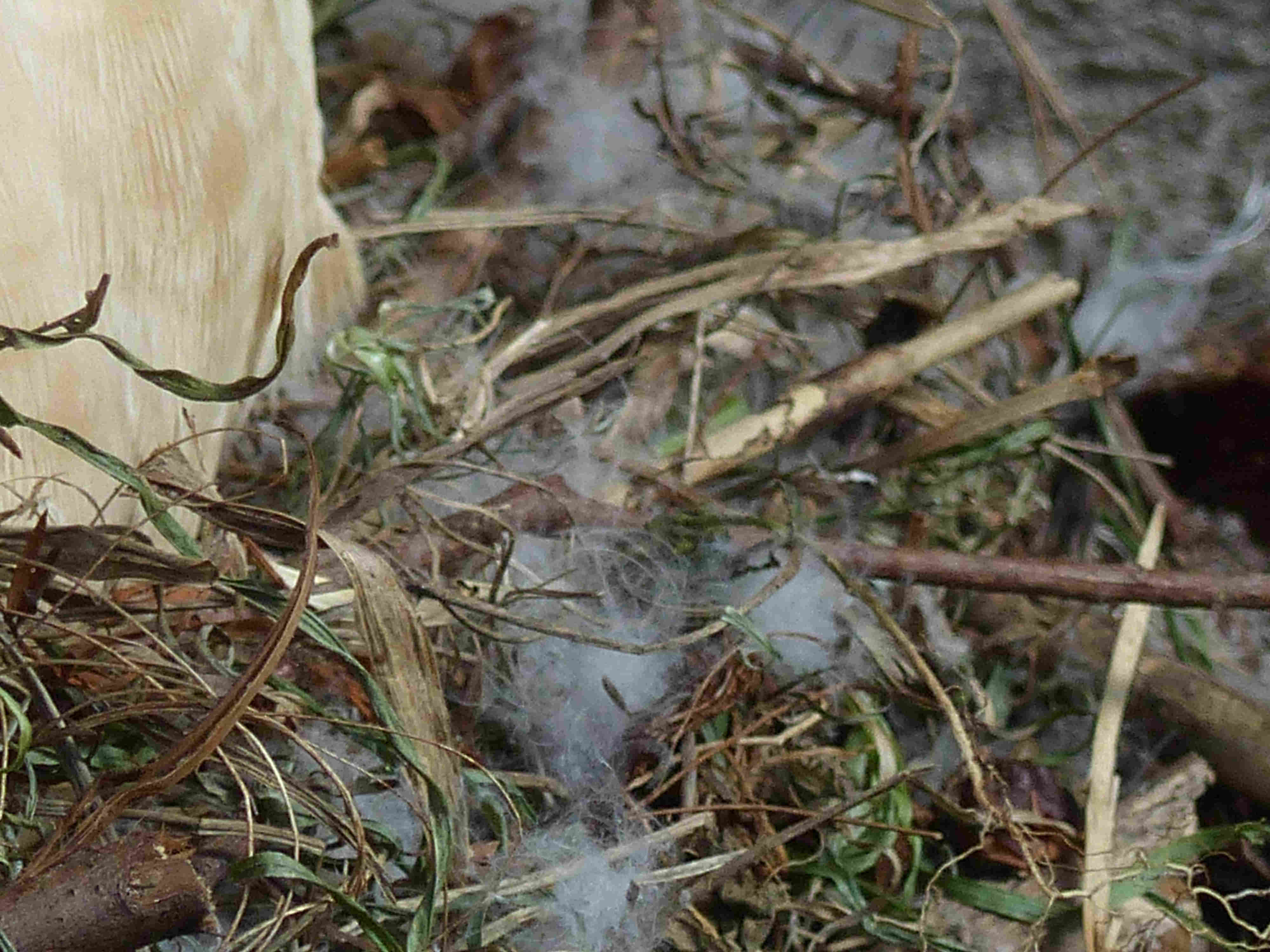
Aflac is not the name of this domestic Peking/Mallard Duck. She is pretty though she is a hybrid. She was busy working on her nest and you can see some of the things she was adding below.

Aflac Momma Duck at Lake Morton by Lee Close-up of nest material

Aflac Momma Duck at Lake Morton by Lee Close-up of nest material

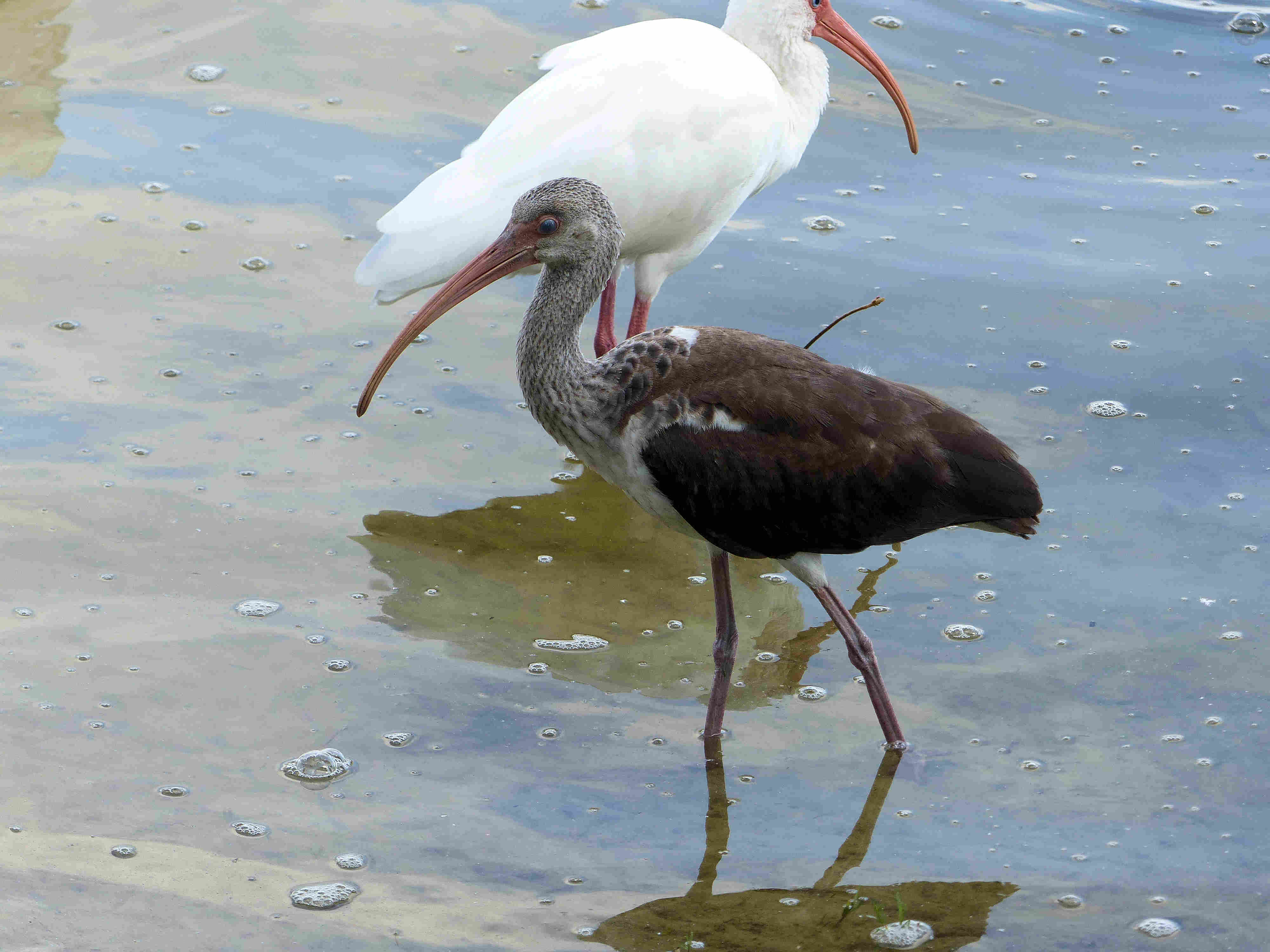
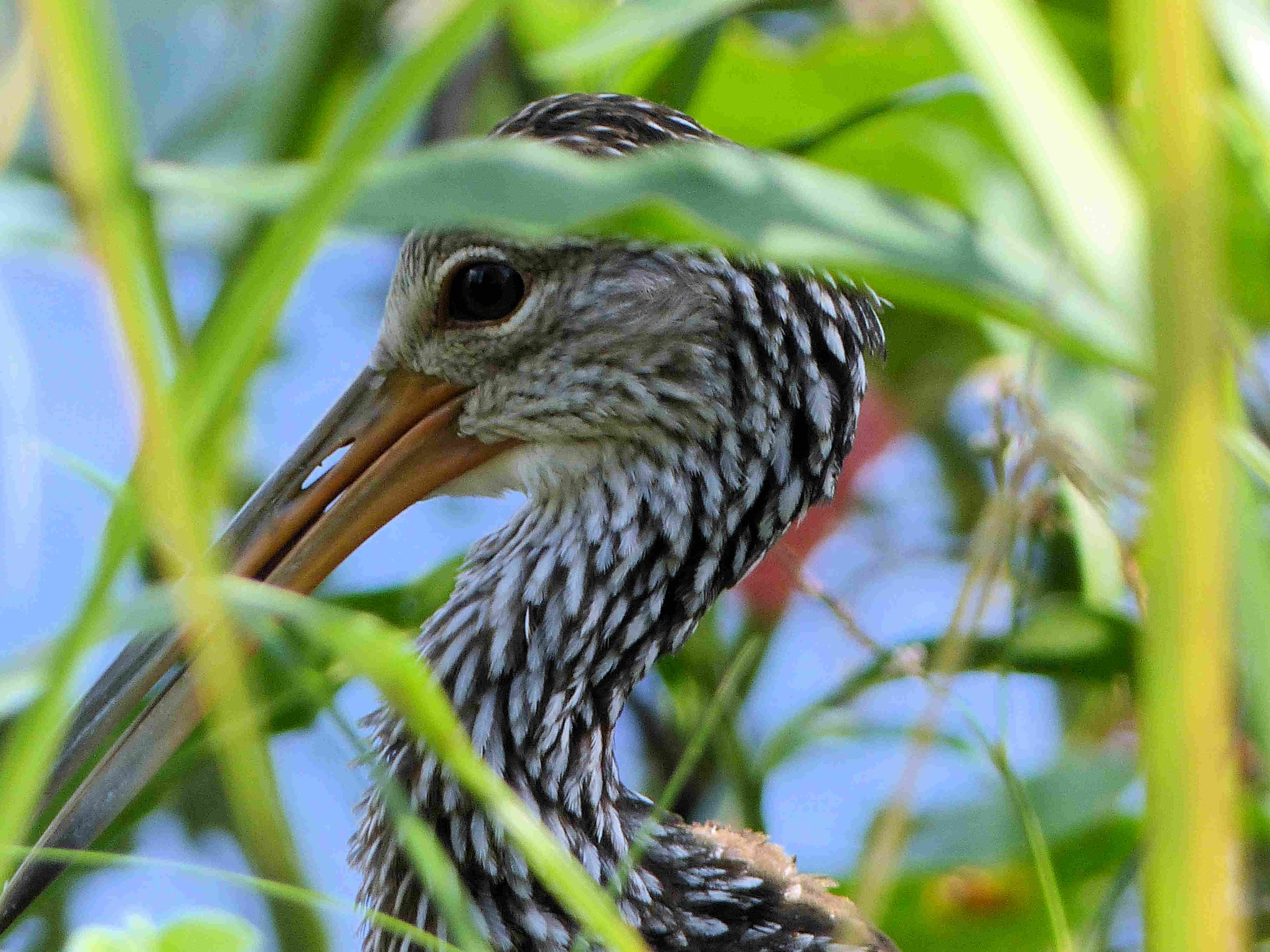
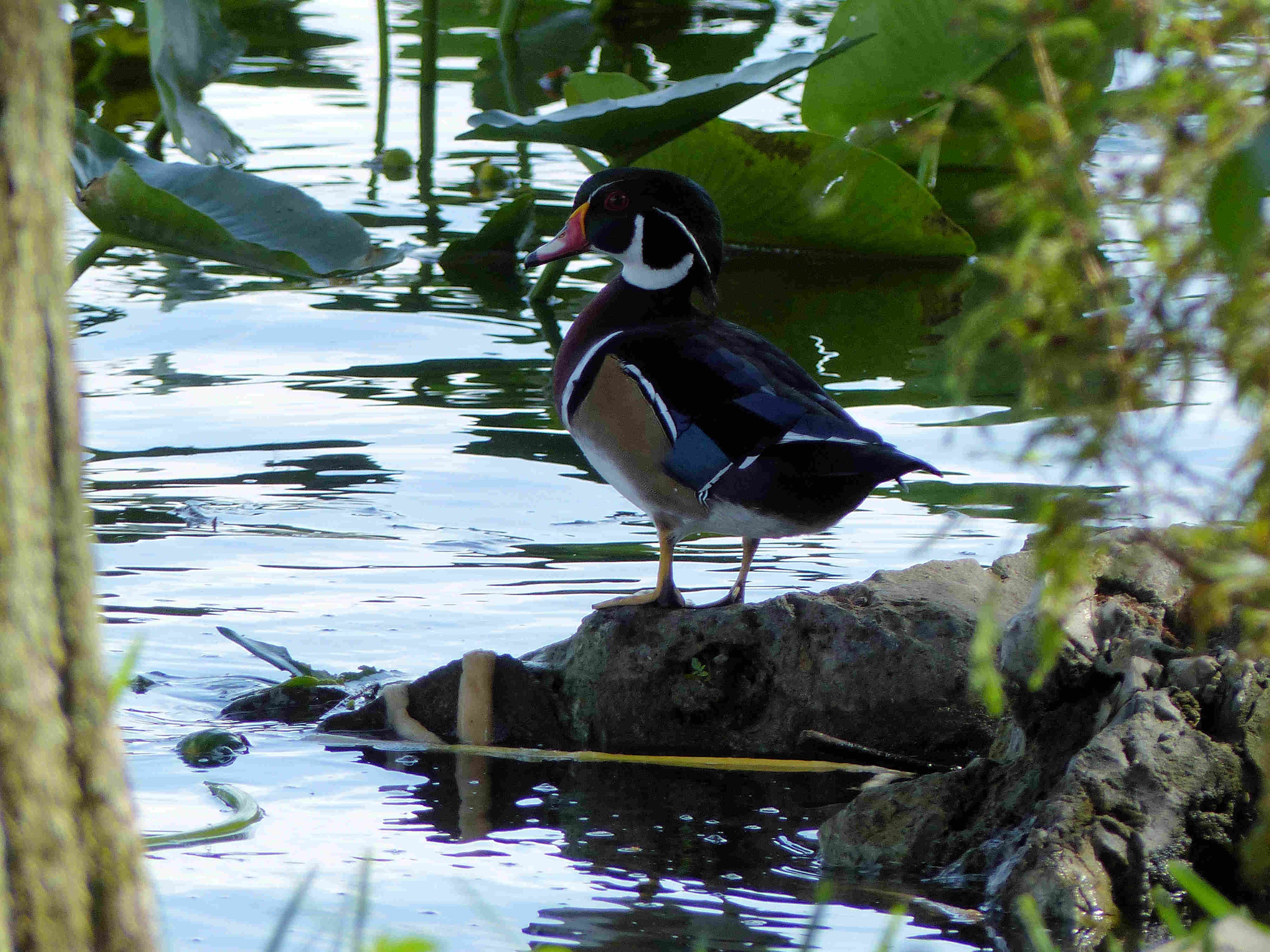
Other interesting birds were some immature White Ibises, an immature Limpkin and some Wood Ducks. Like I said, it was rather quiet.

Immature White Ibis at Lake Morton by Lee

Immature White Ibis at Lake Morton by Lee

Limpkin Juvenile at Lake Morton by Lee

Limpkin Juvenile at Lake Morton by Lee

Wood Duck at Lake Morton by Lee

Wood Duck at Lake Morton by Lee

Any day we can go birdwatching is always enjoyable. There is usually something that is there to see. Life is not made up of big events all the time, just the everyday normal sights. When we do get to see special birds or whatever, then that makes them extra nice.

Here is a video of that Wood Duck and his mate bouncing around in the water. Trust you don’t get seasick. They seem to have been created to handle floating and bobbing well.

The water prevailed and increased greatly upon the earth, and the ark floated on the surface of the water. (Genesis 7:18 NASB)

*

History Through the Eyes of Ogden Owl

(Sandra Conner, my Christian friend, that writes great blogs, books and a whole lot more, has taken me up on the challenge to write about the Great Grey Owl.)

Here is her tale about our owl:

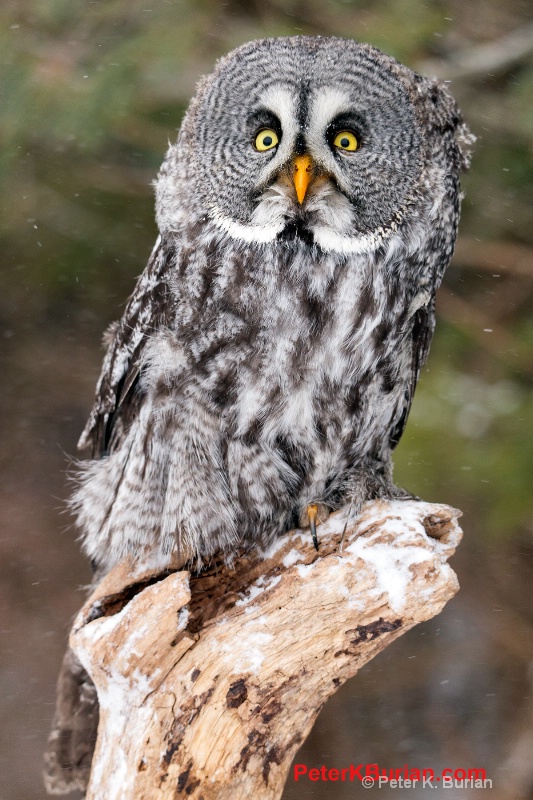
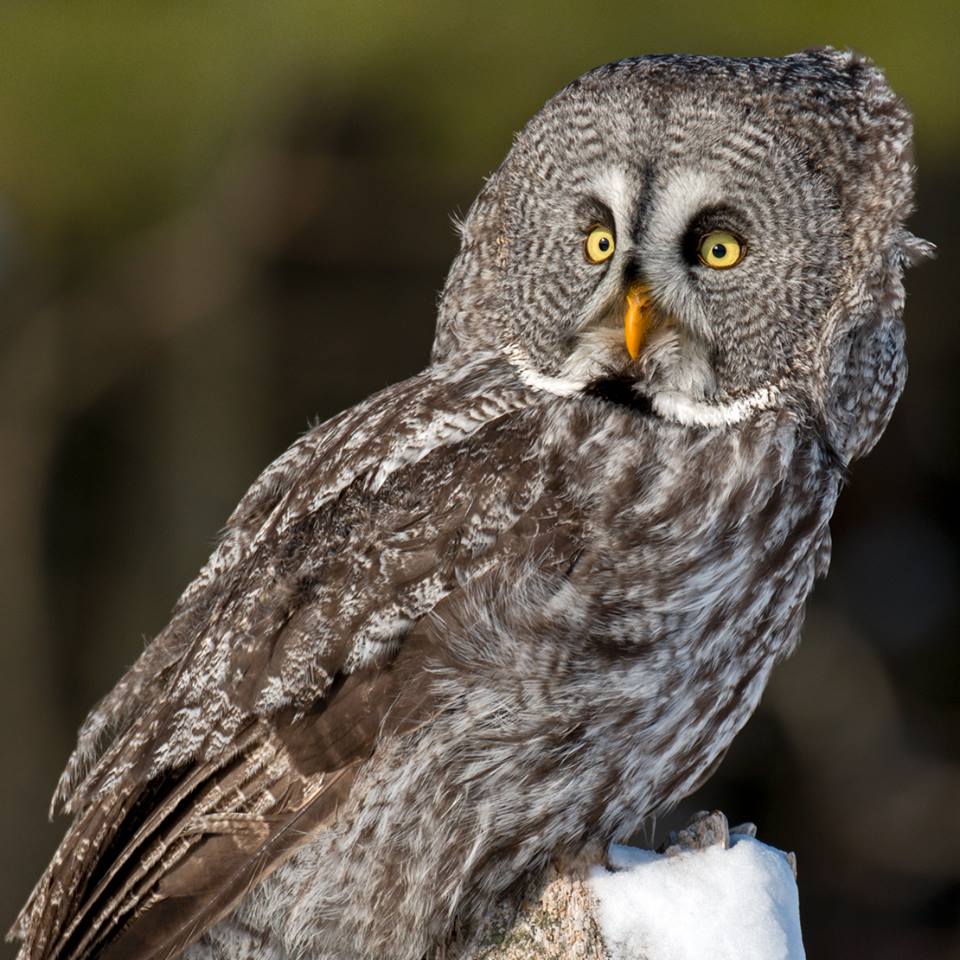
“Lee Dusing, over at Lee’s Birdwatching Adventures Plus, has posted the picture on her site of this owl with his eyes bulging as he takes in some scene before him. Lee has asked us to write a caption or a story based on the picture — taken by Peter K. Burian.  So, naturally, I had to take up the challenge — even though I’m not much of an owl person in general. My story is below the picture.

LEE'S OWL PIC -- PETER K. BURIAN

HISTORY THROUGH THE EYES OF OGDEN OWL

Ogden Owl couldn’t believe his eyes. He was sure they must be bulging because he was straining so hard to see what was really going on. He’d lived in these sparse clumps of trees close to the sandy beaches of Kitty Hawk, NC, for almost three years now, and ever since he’d moved here, there had been some strange things going on.

Two human beings had spent months at a time out on the sandy stretches of land between the hills, half rolling – half carrying – some contraption that looked a little like a huge, ugly bird, but that seemed to be bound to move on the ground. Ogden was usually up doing his hunting during the night, and by morning, he was ready to get some rest, so he hadn’t bothered with the humans much, except to shake his head at their ability to waste time and energy out here on this almost barren stretch of land.

But early this morning, when he really should have been considering getting some rest again, he had noticed that the two human beings had an even bigger monster of a machine – even more ugly – and this time it made a horrible noise as they moved it across the ground.  They pushed it onto some kind of inclined track, and the next thing Ogden knew, one of the men seemed to climb right into the middle of the machine.

Ogden could hardly hold his eyes open, but he was determined to find out what was going on practically right under his nose. Suddenly the huge machine began moving along the inclined track, picking up speed, and then, to Ogden’s astonishment – and horror – it lifted up from the ground, all the time making a roaring noise. It seemed to catch the wind with its enormous wings and sailed through the air just like he did when he took off from his tree limb and weaved through the sky looking for food.

It couldn’t be! Surely not! Human beings flying??? His eyes stayed glued to the scene. For long seconds, the huge, ugly contraption floated and soared – and scared the heck out of Ogden.

When the machine came back down to the ground and sat down without breaking apart, Ogden took a deep breath. He hadn’t realized that he had been holding his breath the whole time he watched that ugly, noisy machine fly. He shook his head now and stirred restlessly on the branch where he sat. He sighed and stretched his wings a little, wanting to feel their strength once more before he moved back onto one of the hidden branches of his tree to get some rest. He felt sad – and fearful. He had a feeling that life was never going to be the same again after today.  ~”

~~~

Source: History Through the Eyes of Ogden Owl

Click to find out more about Sandra Conner

I have enjoyed reading several of her online stories, plus I have read her three latest novels:

Set Free To Love – Novel 1, Smokey Mountain Series

‘Cameron’s Rib’ – Sneak a Peek… – Book 2

Sneak a Peak at “Repaired By Love” — Book 3 in ‘Smoky Mountain Series’

Her Short Stories

*

Great Grey Owl

Great Grey Owl (Strix nebulosa) ©Peter K Burian at www.peterkburian.com

Great Grey Owl (Strix nebulosa) ©Peter K Burian at http://www.peterkburian.com

The beast of the field shall honour me, the dragons and the owls: because I give waters in the wilderness, and rivers in the desert, to give drink to my people, my chosen. (Isaiah 43:20 KJV)

Peter K Burian at www.peterkburian.com has given me permission to use this photo. Now, what am I going to tell you about it?

Those eyes look like it is in shock from seeing something. Or maybe he is telling a tale and getting very expressive as it is being told. I would like you to leave a remark and tell me your take on this photo. Or maybe one of you readers could come up with a short story about this? (Remember this is a Christian site.)

The Great Grey Owl or great gray owl (Strix nebulosa) is a very large owl, documented as the world’s largest species of owl by length. It is distributed across the Northern Hemisphere. In some areas it is also called Phantom of the North, cinereous owl, spectral owl, Lapland owl, spruce owl, bearded owl, and sooty owl

Adults have a large rounded head with a grey face and yellow eyes with darker circles around them. The underparts are light with dark streaks; the upper parts are grey with pale bars. This owl does not have ear tufts and has the largest facial disc of any raptor. In terms of length, the great grey owl is believed to exceed the Eurasian eagle-owl and the Blakiston’s fish owl as the world’s largest owl. The great grey is outweighed by those two species as well as several others, including most of the Bubo genus.

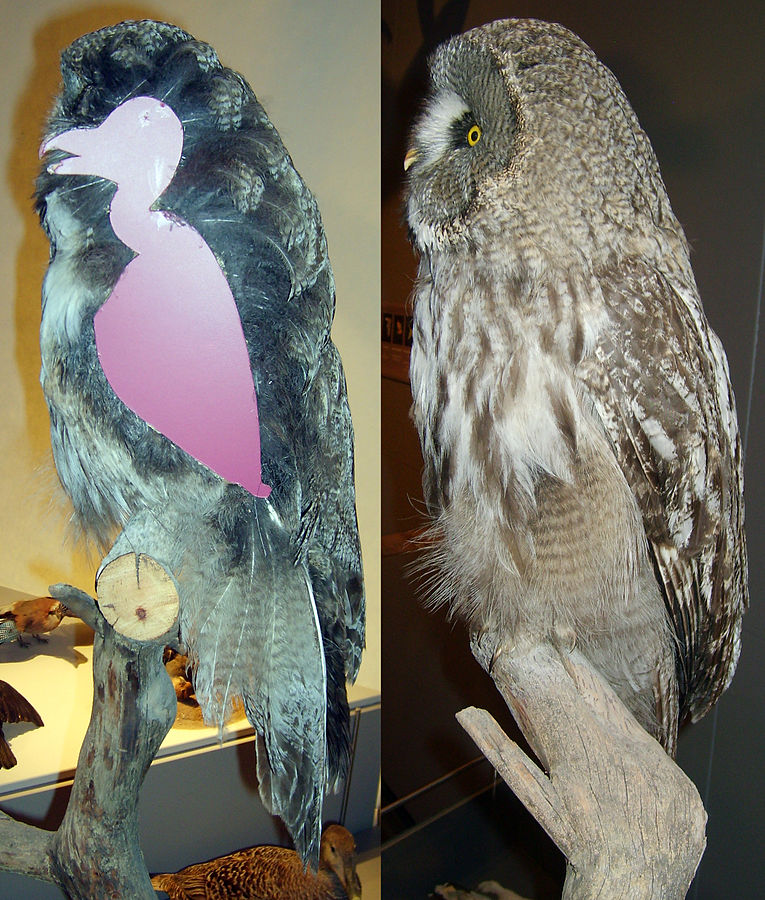
Great Grey Owl (Strix nebulosa) Cross section showing fullness of feathers ©WikiC

Great Grey Owl (Strix nebulosa) Cross section showing fullness of feathers ©WikiC

Much of its size is deceptive, since this species’ fluffy feathers, large head and the longest tail of any extant owl obscure a body lighter than that of most other large owls. The males are usually smaller than females, as with most owl species.

These birds wait, listen, and watch for prey, then swoop down; they also may fly low through open areas in search of prey. Their large facial disks, also known as “ruffs”, focus sound, and the asymmetrical placement of their ears assists them in locating prey, because of the lack of light during the late and early hours in which they hunt. On the nesting grounds, they mainly hunt at night and near dawn and dusk; at other times, they are active mostly during the night.

They have excellent hearing, and may locate (and then capture) prey moving beneath 60 cm (2.0 ft) of snow in a series of tunnels solely with that sense. They then can crash to a snow depth roughly equal to their own body size to grab their prey. Only this species and, more infrequently, other fairly large owls from the Strix genus are known to “snow-plunge” for prey, a habit that is thought to require superb hearing not possessed by all types of owls.

Here’s another photo of the owl by Peter K Burian.

Great Grey Owl (Strix nebulosa) ©Peter K Burian

Great Grey Owl (Strix nebulosa) ©Peter K Burian at http://www.peterkburian.com

He that planted the ear, shall he not hear? he that formed the eye, shall he not see? (Psalms 94:9 KJV)

The hearing ear, and the seeing eye, the LORD hath made even both of them. (Proverbs 20:12 KJV)

GBNA – Guide to Birds of North America eField Guide: Great Gray Owl//

Classification
Order ~ Strigiformes — Owls
Family ~ Strigidae — Owls
Size ~ 27 inches (69 cm)
Abundance ~ Uncommon
Identification Tips
  • Very large, nocturnal, predatory bird
  • Yellow eyes appear small
  • Two white horizontal marks below chin
  • Long tail
  • Large, rounded head
  • Gray facial disks with darker rings
  • Large gray upperparts with paler barring
  • Pale underparts with large, dark irregular streaks
  • Sexes similar
Mnemonic ~ whoo-whoo-whoooo
This Great Grey Owl is another beautifully designed avian wonder from its Creator, the Lord Jesus Christ. The eyes and ears of the owls allow these fantastic birds to live and survive.
All things were made by him; and without him was not any thing made that was made. (John 1:3 KJV)
*
Peter K Burian at www.peterkburian.com
Great Grey Owl – Wikipedia
Great Gray Owl – All About Birds
*

Sunday Inspiration – Cisticolas and Singing

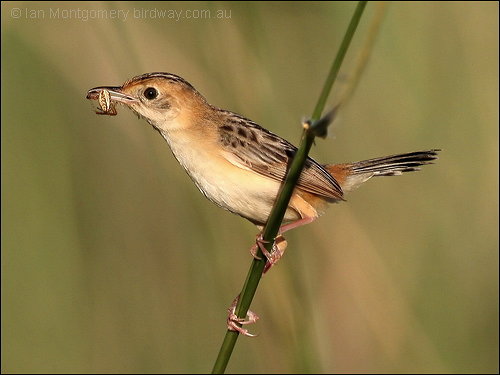
Golden-headed Cisticola (Cisticola exilis) by Ian

Golden-headed Cisticola (Cisticola exilis) by Ian

The flowers appear on the earth; The time of singing has come, And the voice of the turtledove (Cisticola?) Is heard in our land. (Song of Solomon 2:12 NKJV)

The Cisticolidae – Cisticolas and Allies family has 158 species currently. They are  warblers found mainly in warmer southern regions of the Old World. They are often included within the Old World warbler family Sylviidae. Among the Cisticolida, besides the Cisticola, there are; Jery, Prinia, Warblers, a Longtail, Apalis, Camaroptera, Wren-Warblers, Tailorbirds, Forest Warblers, and Eremomelas.

This family probably originated in Africa, which has the majority of species, but there are representatives of the family across tropical Asia into Australasia, and one species, the zitting cisticola, even breeds in Europe.

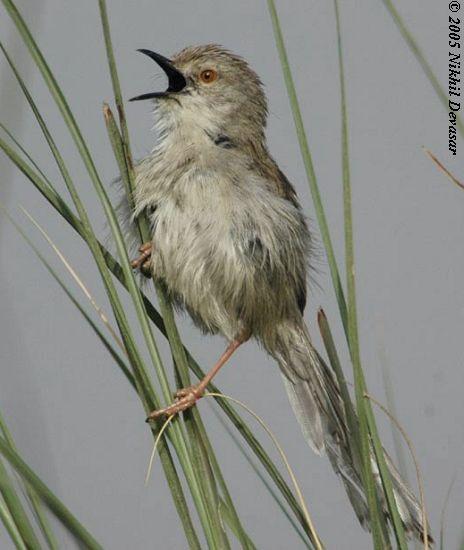
Graceful Prinia (Prinia gracilis) by Nikhil Devasar

These are generally very small birds of drab brown or grey appearance found in open country such as grassland or scrub. They are often difficult to see and many species are similar in appearance, so the song is often the best identification guide.

By them the birds of the heavens have their home; They sing among the branches. (Psalms 104:12 NKJV)

These are insectivorous birds which nest low in vegetation.

This slideshow requires JavaScript.

Serve the LORD with gladness; Come before His presence with singing. (Psalms 100:2 NKJV)

“How Can I Keep From Singing?” ~  by the Trio + 1 (Pastor Jerry, Reagan Osborne, Caleb & Jessie Padgett) Faith Baptist

*

More Sunday Inspirations

Cisticolidae – Cisticolas and allies

In Our Place

*

How Well Do We Reflect?

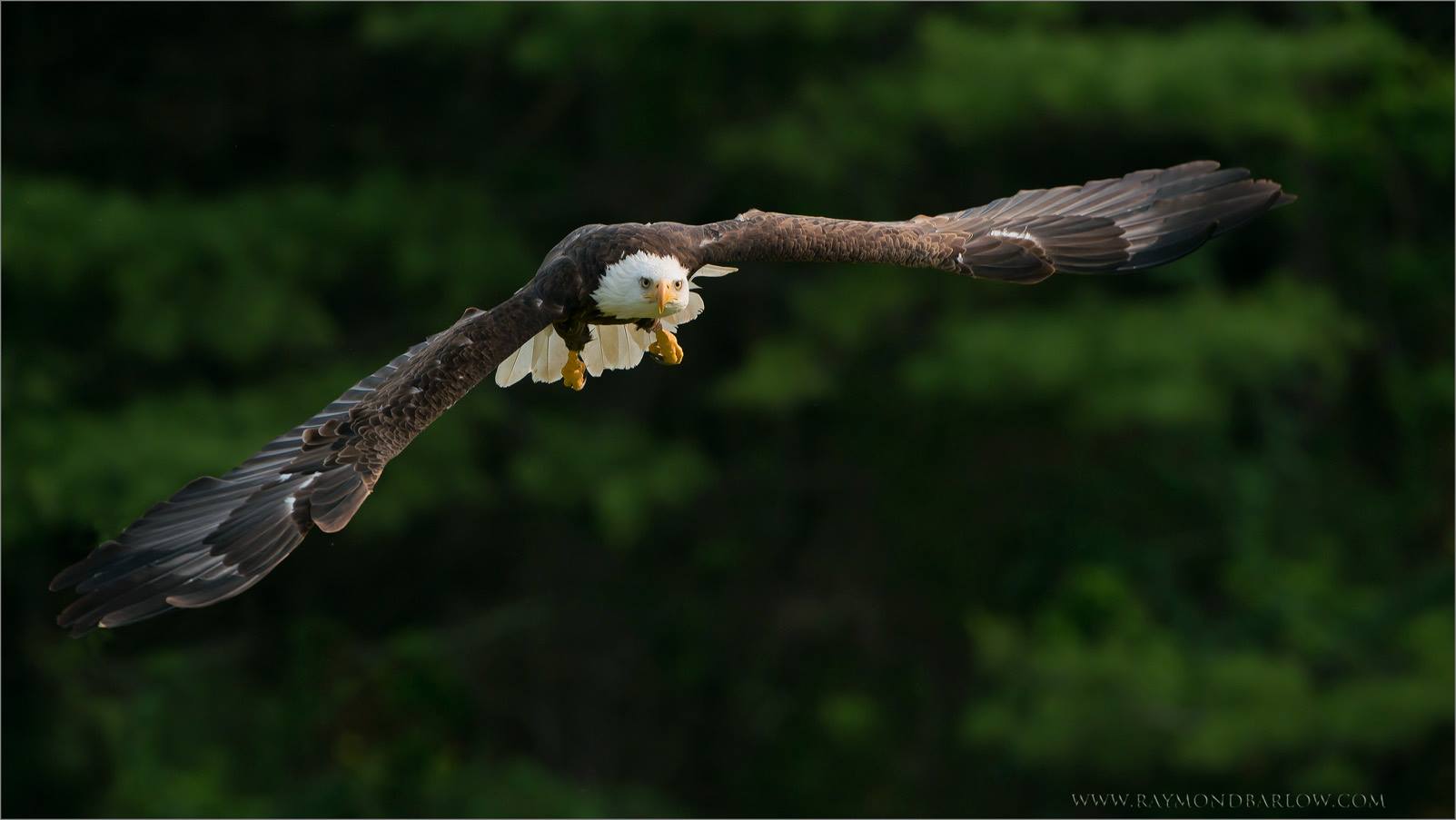
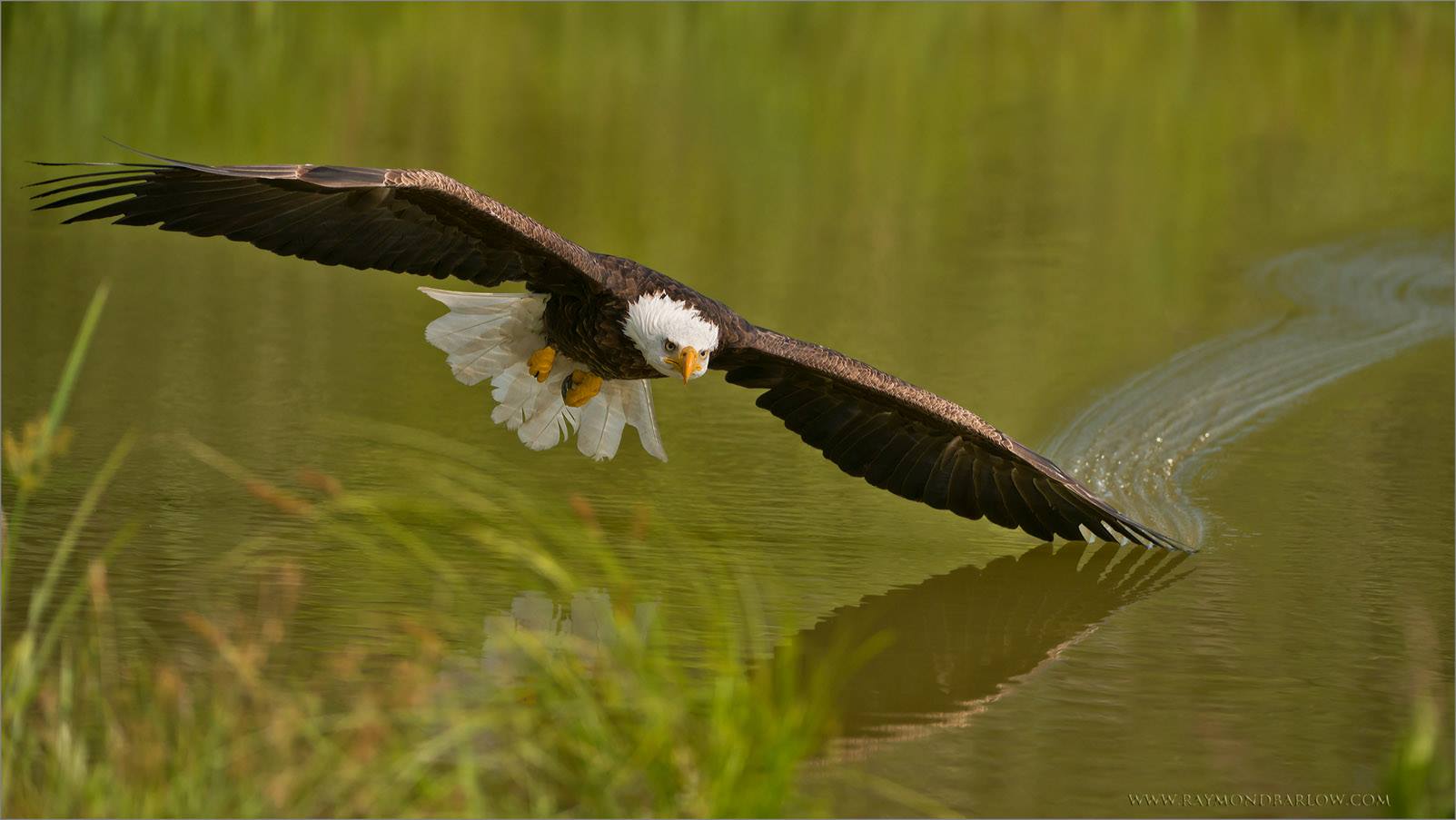
Bald Eagle (Haliaeetus leucocephalus) by Ray Barlow

Bald Eagle (Haliaeetus leucocephalus) by Ray Barlow

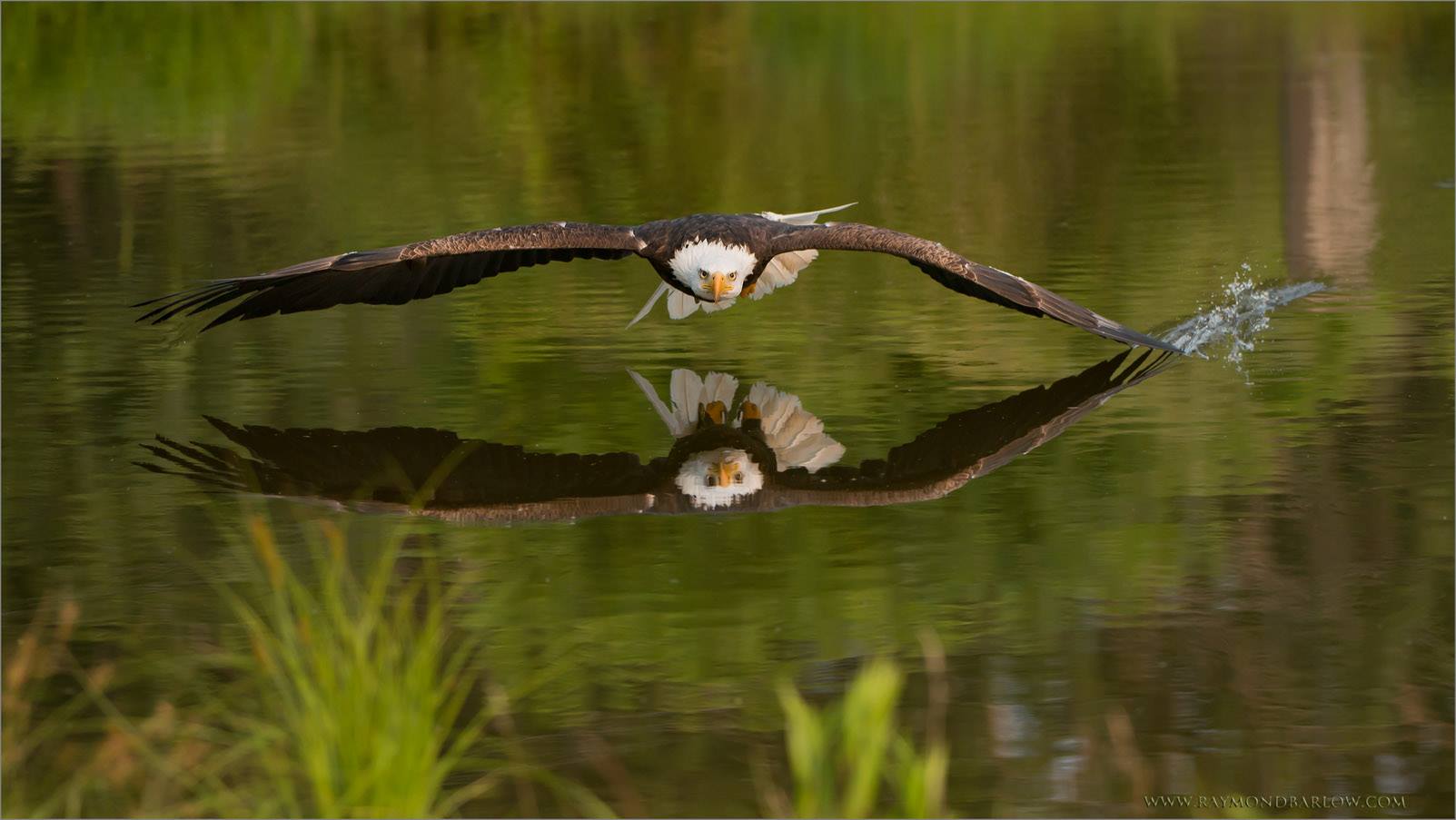
These photos by Ray Barlow have just been running around in my mind. It’s about the same as when you hear a song and then for days you hear it and hum the song.

How close are we walking with the Lord Jesus Christ? Are we near and close enough to touch base once in awhile like the photo below?

Bald Eagle (Haliaeetus leucocephalus) by Ray Barlow

Bald Eagle (Haliaeetus leucocephalus) by Ray Barlow

But be doers of the word, and not hearers only, deceiving yourselves. For if anyone is a hearer of the word and not a doer, he is like a man observing his natural face in a mirror; for he observes himself, goes away, and immediately forgets what kind of man he was. But he who looks into the perfect law of liberty and continues in it, and is not a forgetful hearer but a doer of the work, this one will be blessed in what he does. (James 1:22-25 NKJV)

Are we spending more time in reading, praying, attending church, and having fellowship with other believers? Getting closer to the Lord to where we are starting to reflect Him in our lives.

Bald Eagle (Haliaeetus leucocephalus) by Ray Barlow

Bald Eagle (Haliaeetus leucocephalus) by Ray Barlow

As in water face reflects face, So a man’s heart reveals the man. (Proverbs 27:19 NKJV)

Bald Eagle (Haliaeetus leucocephalus) by Ray Barlow

Bald Eagle (Haliaeetus leucocephalus) by Ray Barlow

But we all, with unveiled face, beholding as in a mirror the glory of the Lord, are being transformed into the same image from glory to glory, just as by the Spirit of the Lord. (2 Corinthians 3:18 NKJV)

*

Lord Bless your day as you consider these verses. I trust we all will strive to be more like Jesus and others can see Him in us.

*

Gospel Message
Birds of the Bible – Fly Like An Eagle
Thanks to Raymond Barlow for the permission to use these photos.

*

Birds of the Bible – Fly Like An Eagle

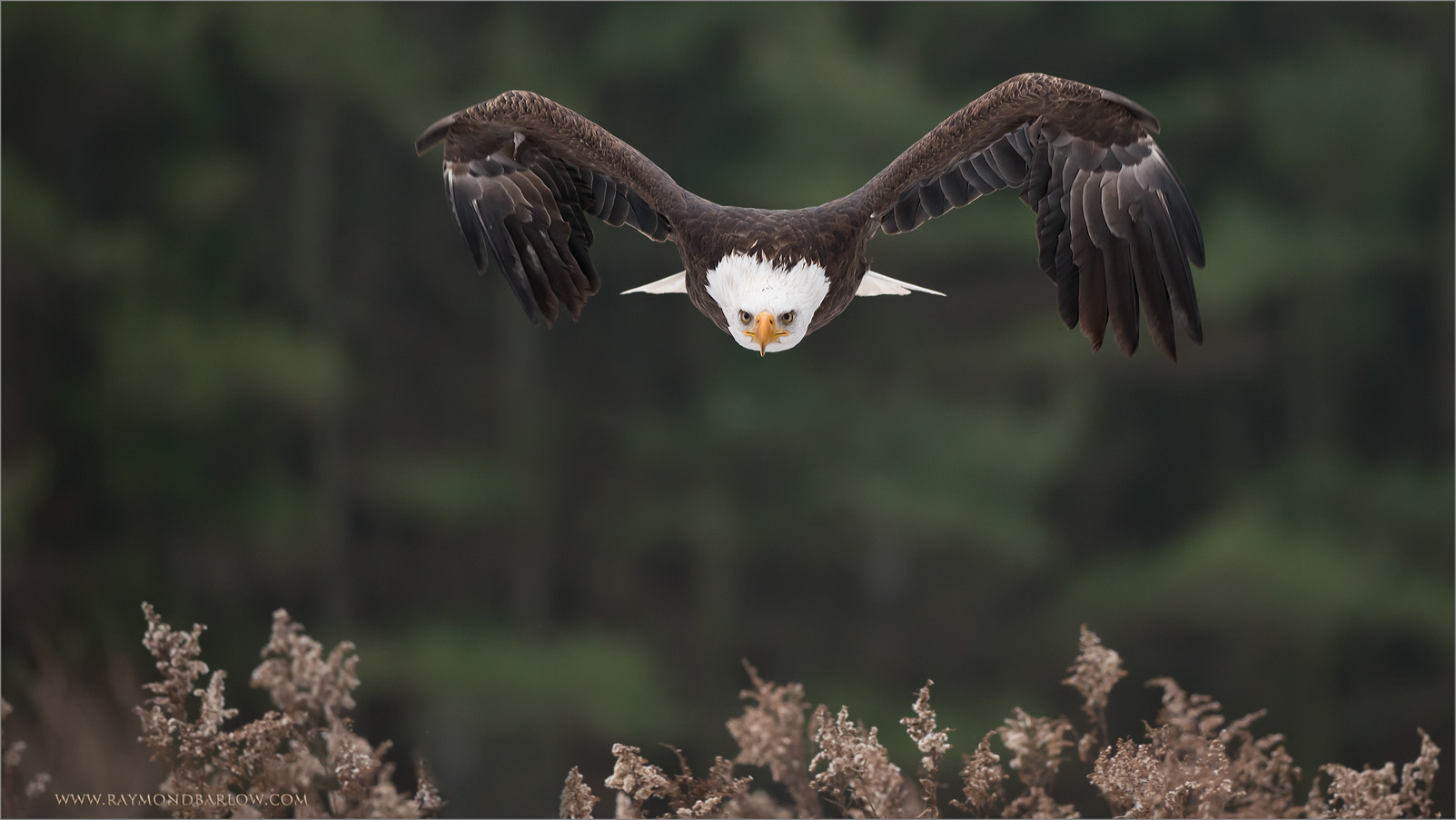
Bald Eagle (Haliaeetus leucocephalus) by Ray Barlow

Bald Eagle (Haliaeetus leucocephalus) by Ray Barlow

For thus saith the LORD; Behold, he shall fly as an eagle, and shall spread his wings over Moab. (Jeremiah 48:40 KJV)

I received an email newsletter from Raymond Barlow today with this photo. Oh, my! What a shot. Ray has been one of the first photographers that gave permission to use his photos on this blog. After sending a quick note up to him (Canada), that permission remains and here are some of his latest Bald Eagle photos.

Bald Eagle (Haliaeetus leucocephalus) by Ray Barlow

Bald Eagle (Haliaeetus leucocephalus) by Ray Barlow

Wilt thou set thine eyes upon that which is not? for riches certainly make themselves wings; they fly away as an eagle toward heaven. (Proverbs 23:5 KJV)

Bald Eagle (Haliaeetus leucocephalus) by Ray Barlow

Bald Eagle (Haliaeetus leucocephalus) by Ray Barlow

Behold, he shall come up and fly as the eagle, and spread his wings over Bozrah: and at that day shall the heart of the mighty men of Edom be as the heart of a woman in her pangs. (Jeremiah 49:22 KJV)


Bald Eagle (Haliaeetus leucocephalus) by Ray Barlow

Bald Eagle (Haliaeetus leucocephalus) by Ray Barlow

And the first beast was like a lion, and the second beast like a calf, and the third beast had a face as a man, and the fourth beast was like a flying eagle.
(Revelation 4:7 KJV)

Bald Eagle (Haliaeetus leucocephalus) by Ray Barlow

Bald Eagle (Haliaeetus leucocephalus) by Ray Barlow

And to the woman were given two wings of a great eagle, that she might fly into the wilderness, into her place, where she is nourished for a time, and times, and half a time, from the face of the serpent. (Revelation 12:14 KJV)

Bald Eagle (Haliaeetus leucocephalus) by Ray Barlow

Bald Eagle (Haliaeetus leucocephalus) by Ray Barlow

If you click on these photos you will see them much larger. Thank you, Ray. Thank you Lord for creating such fantastic birds, especially Eagles.

Blessings,

Lee

*

Birds of the Bible Eagles

Raymond Barlow’s Site

Wordless Birds

*


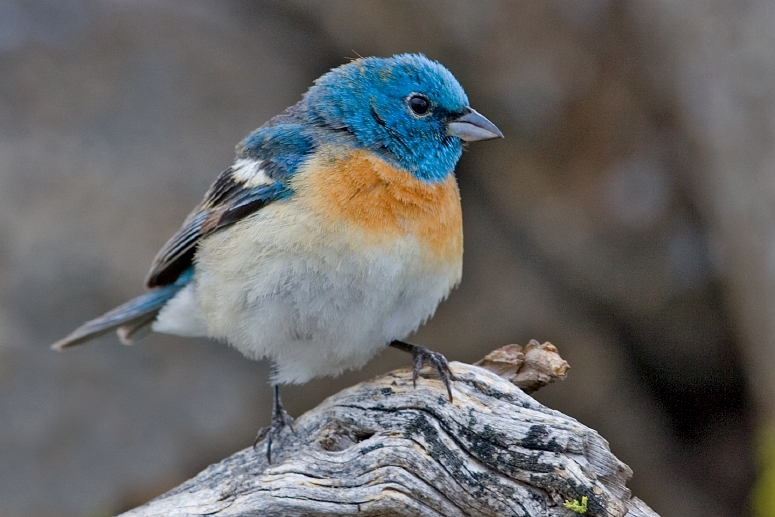
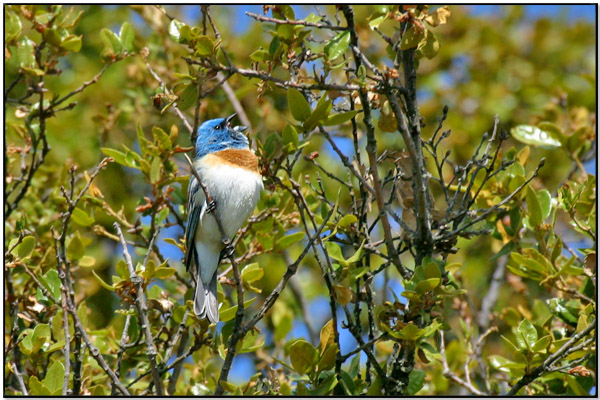
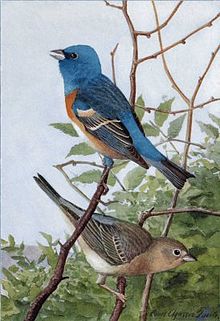
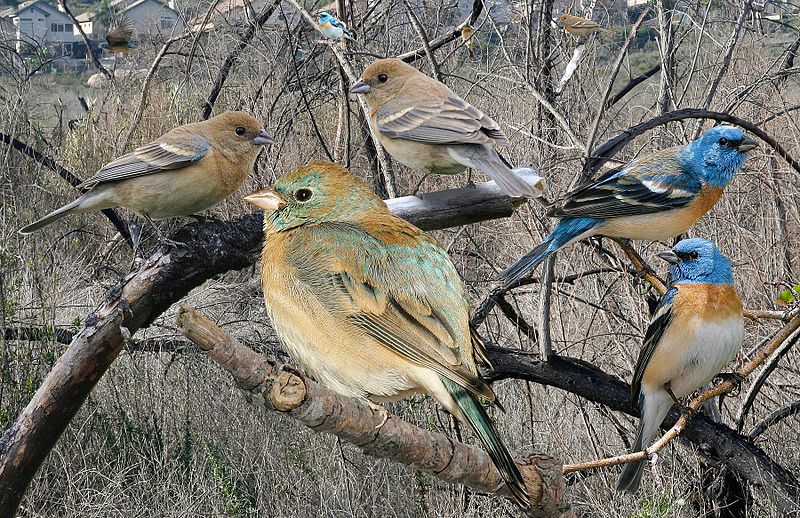
Birds of the Bible – Lazuli Birds

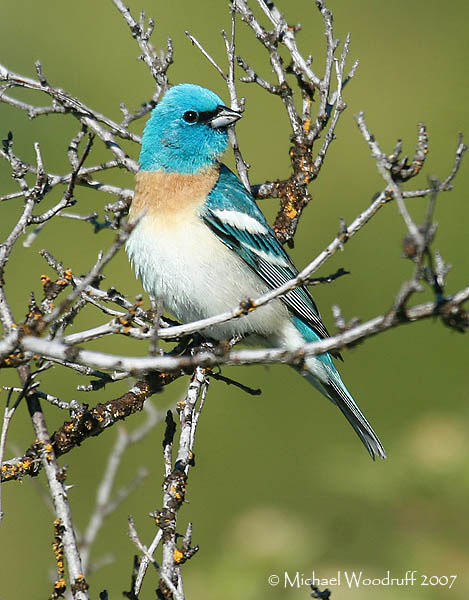
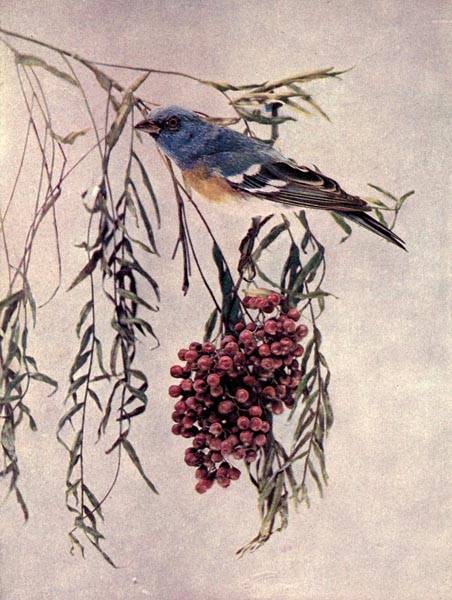
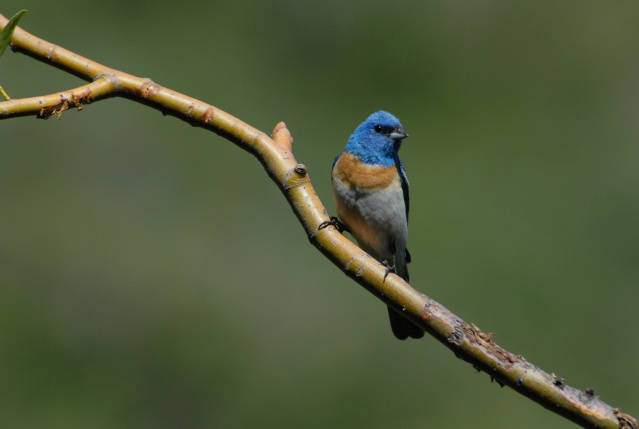
Lazuli Bunting (Passerina amoena) by Michael Woodruff

Lazuli Bunting (Passerina amoena) by Michael Woodruff

While reading through Lamentations, I came across this verse:

Her consecrated ones were purer than snow, They were whiter than milk; They were more ruddy in body than corals, Their polishing was like lapis lazuli. (Lamentations 4:7 NASB)

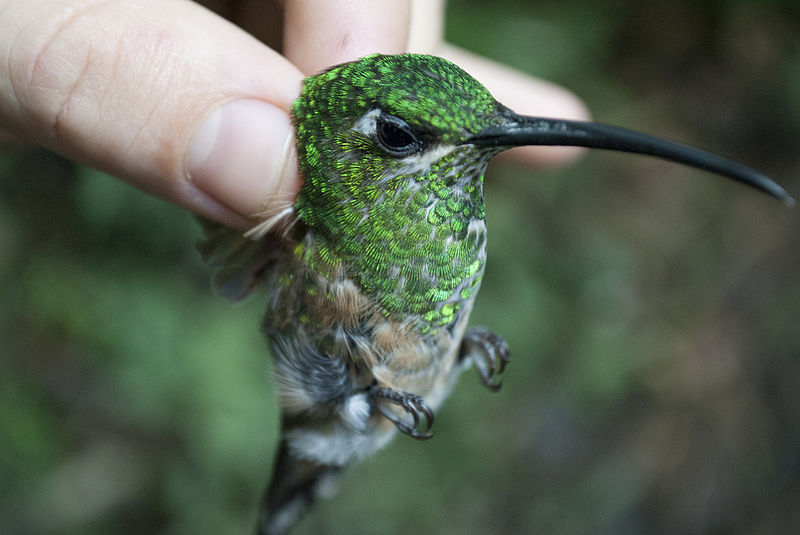
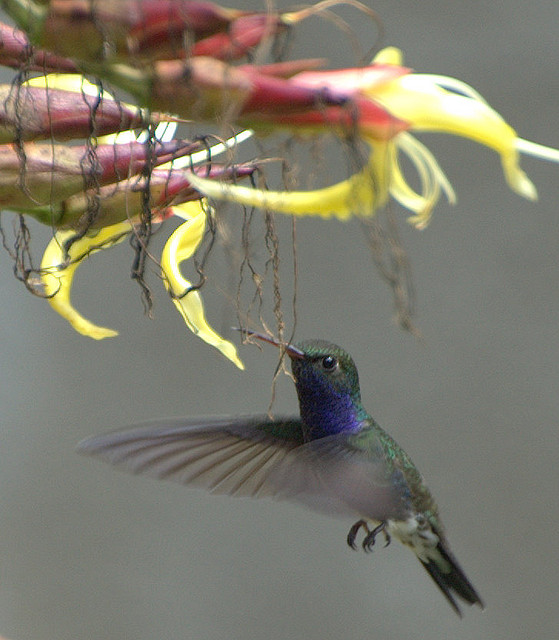
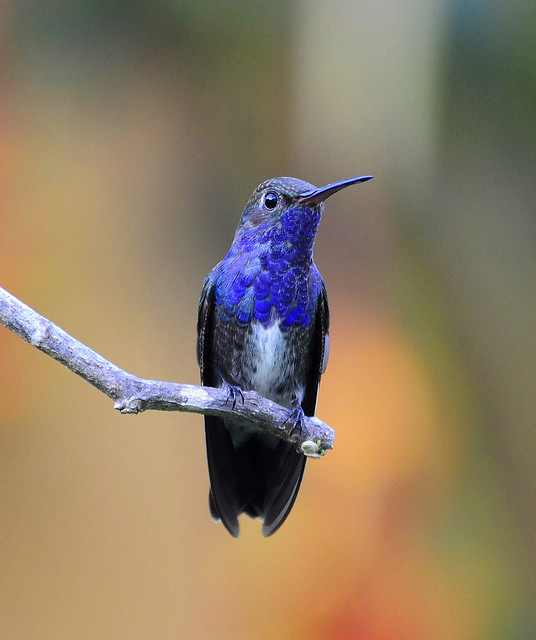
I immediately thought of the bird above – the Lazuli Bunting. Working with the Birds of the World, the name “Lazuli” has been seen before, so this is an attempt to find out what it really means and which birds have that color. Let’s dig around and see what we can find out.

Lazuline Sabrewing (Campylopterus falcatus) ©WikiC

Lazuline Sabrewing (Campylopterus falcatus) ©WikiC

The NASB has two more verses that use “lazuli”: Ezekial 1:26 and 28:13. All three use lapis with the lazuli. Checking with my eSword program in the compare mode most of the translations use “Sapphire.” and some use the lapis lazuli. They all refer to a very well polished and cut stone of the sapphire or lazuli color.

Polished Block of Lapis Lazuli from Afghanistan ©WikiC

Polished Block of Lapis Lazuli from Afghanistan ©WikiC

Lazuli
Lazuline Sabrewing (Campylopterus falcatus)
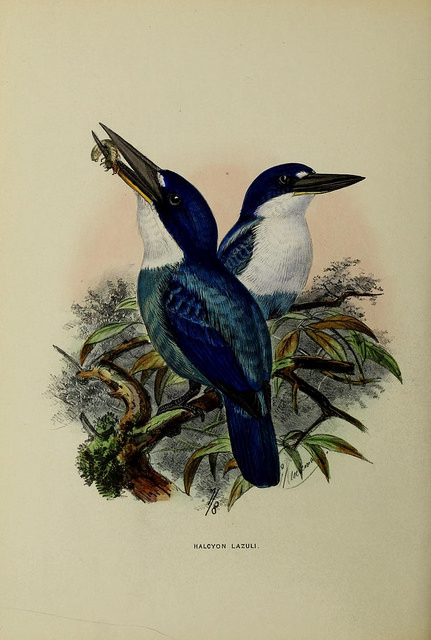
Lazuli Kingfisher (Todiramphus lazuli)
Lazuli Bunting (Passerina amoena)

Sapphire Gem ©WikiC

Sapphire Gem ©WikiC

Sapphire
Blue-chinned Sapphire (Chlorestes notata)
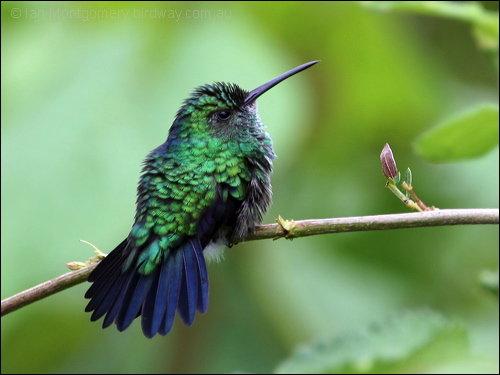
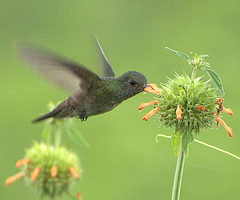
Sapphire-throated Hummingbird (Lepidopyga coeruleogularis)
Sapphire-bellied Hummingbird (Lepidopyga lilliae)
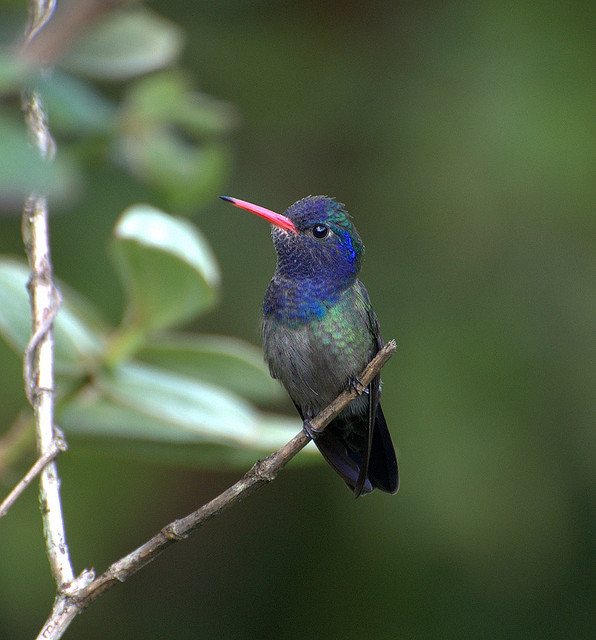
Blue-throated Sapphire (Hylocharis eliciae)
Rufous-throated Sapphire (Hylocharis sapphirina)
White-chinned Sapphire (Hylocharis cyanus)
Gilded Sapphire (Hylocharis chrysura)
Blue-headed Sapphire (Hylocharis grayi)
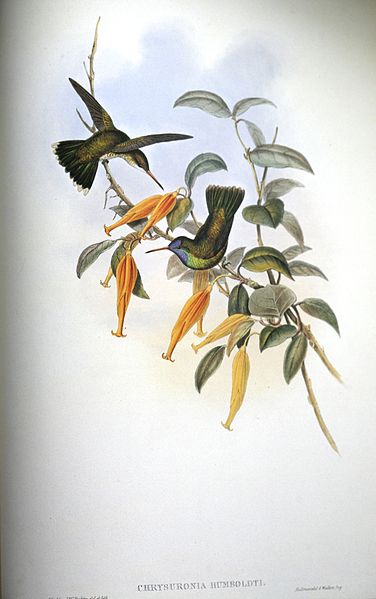
Humboldt’s Sapphire (Hylocharis humboldtii)
Golden-tailed Sapphire (Chrysuronia oenone)
Sapphire-spangled Emerald (Amazilia lactea)
Great Sapphirewing (Pterophanes cyanopterus)
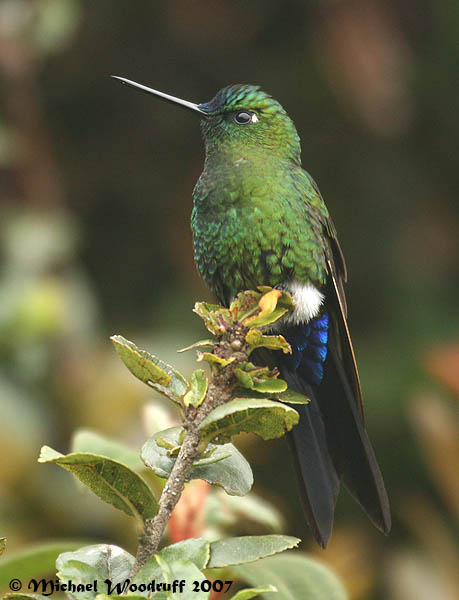
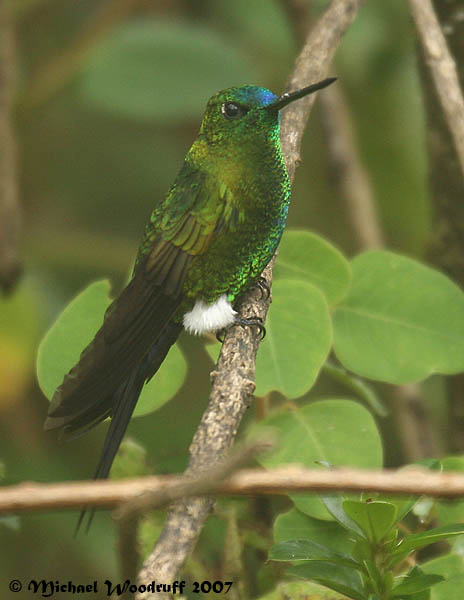
Sapphire-vented Puffleg (Eriocnemis luciani)
Sapphire-rumped Parrotlet (Touit purpuratus)
Sapphire Flycatcher (Ficedula sapphira)
Sapphire Quail-Dove (Geotrygon saphirina)

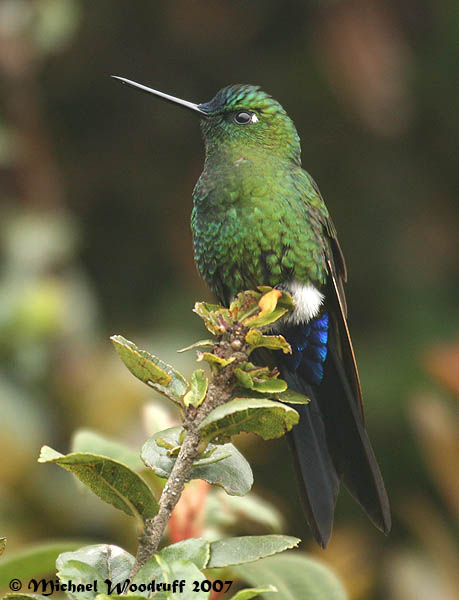
Sapphire-vented Puffleg (Eriocnemis luciani) by Michael Woodruff

Sapphire-vented Puffleg (Eriocnemis luciani) by Michael Woodruff

What an amazing colection of birds with a beautiful color that the Lord has given us. Not only did we get that fantastic color in stones from the Creator, but He used that color for His avian beauties also.


*

Hope you enjoy seeing these beautiful birds. The Bibles verses didn’t really have anything to do with birds. The verse is actually about the destruction of Jerusalem and how those that had been so well dressed in various colors were now appearing blacker than soot (Lam 4:8) because of their sin which had caused the destruction. Jeremiah, the weeping prophet, was describing what had been and what they were seeing now.

We also will face judgment one day, for either rejection of the Lord Jesus Christ, at the Great White Throne judgment or for those that have accepted Him as Lord and Savior at the Judgment Seat of Christ.

“For God so loved the world, that He gave His only begotten Son, that whoever believes in Him shall not perish, but have eternal life. “For God did not send the Son into the world to judge the world, but that the world might be saved through Him. “He who believes in Him is not judged; he who does not believe has been judged already, because he has not believed in the name of the only begotten Son of God. “This is the judgment, that the Light has come into the world, and men loved the darkness rather than the Light, for their deeds were evil. “For everyone who does evil hates the Light, and does not come to the Light for fear that his deeds will be exposed. “But he who practices the truth comes to the Light, so that his deeds may be manifested as having been wrought in God.” (John 3:16-21 NASB)

Birds of the Bible

Torrey’s Topical Textbook – Precious Stones

The Gospel

*

Sunday Inspiration – Worthy The Lamb

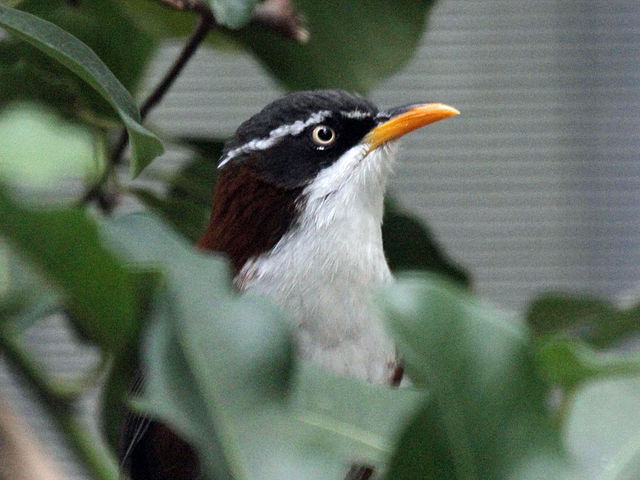
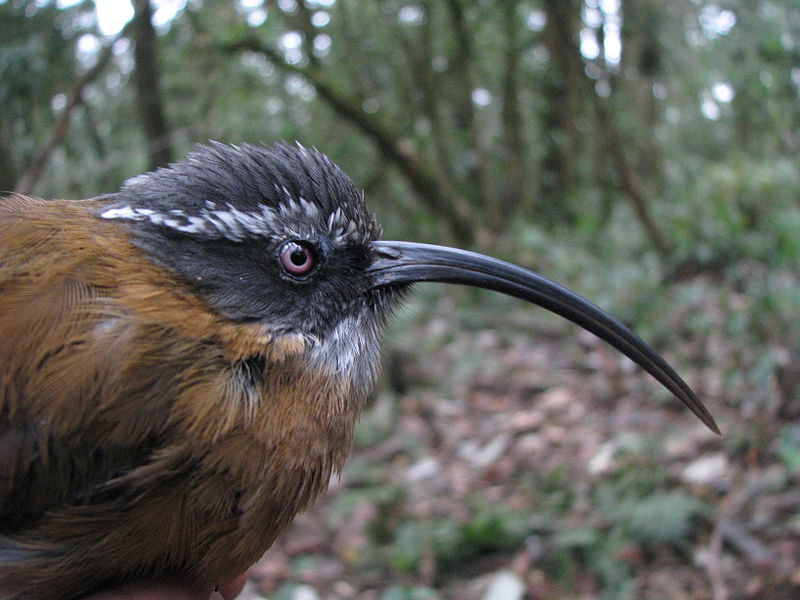
Chestnut-backed Scimitar Babbler (Pomatorhinus montanus) ©WikiC

Chestnut-backed Scimitar Babbler (Pomatorhinus montanus) ©WikiC

Wherefore, holy brethren, partakers of the heavenly calling, consider the Apostle and High Priest of our profession, Christ Jesus; Who was faithful to him that appointed him, as also Moses was faithful in all his house. For this man was counted worthy of more glory than Moses, inasmuch as he who hath builded the house hath more honour than the house. For every house is builded by some man; but he that built all things is God. (Hebrews 3:1-4 KJV)

Looks like this week you’ll be introduced to three families of avian wonders. I am skipping over the Cisticolidae – Cisticolas and allies until next week, because it is quite large. This week the Black-capped Donacobius (Donacobiidae), only bird in family; the Malagasy Warblers (Bernienidae) with 11 species; and the Babblers, Scimitar Barbler’s of the Timaliidae Family of 55 should give us enough birds for a slideshow.

Black-capped Donacobius (Donacobius atricapilla) ©©

Black-capped Donacobius (Donacobius atricapilla) ©©

The Black-capped Donacobius (Donacobius atricapilla) is a conspicuous, vocal South American bird. It is found in tropical swamps and wetlands in Argentina, Bolivia, Brazil, Colombia, Ecuador, French Guiana, Guyana, Paraguay, Peru, Suriname, and Venezuela; also Panama of Central America. They are common in a wide range of Amazonian wetlands, including oxbow lakes, riparian zones, and other areas with tall dense aquatic or semi-aquatic vegetation.

Mating for life, pairs of Black-capped Donacobiuses can be seen frequently and throughout the day atop thickets of dense lakeside or streamside vegetation. They often will engage in antiphonic dueting. Adult offspring will remain with their parents and help raise siblings from subsequent nesting periods in a system of cooperative breeding. (Wikipedia)

Long-billed Bernieria (Bernieria madagascariensis) WikiC

Long-billed Bernieria (Bernieria madagascariensis) WikiC

The Malagasy warblers are a newly validated clade of songbirds. They were formally named Bernieridae in 2010. The family consists of 11 species of small forest birds and is endemic to Madagascar. (Wikipedia)

Slender-billed Scimitar Babbler (Pomatorhinus superciliaris) ©WikiC

Slender-billed Scimitar Babbler (Pomatorhinus superciliaris) ©WikiC

Our last family has Scimitar Babblers and some of the various Babblers.

The genus Pomatorhinus of scimitar babblers are jungle birds with long downcurved bills. These are birds of tropical Asia, with the greatest number of species occurring in hills of the Himalayas. They are medium-sized, floppy-tailed landbirds with soft plumage. They are typically long-tailed, dark brown above, and white or orange-brown below. Many have striking head patterns, with a broad black band through the eye, bordered with white above and below.

Spelaeorni genus the typical wren-babblers, is a bird genus in the family Timaliidae. Among this group, the typical wren-babblers are quite closely related to the type species, the chestnut-capped babbler (Timalia pileata). Typical babblers live in communities of around a dozen birds, jointly defending a territory. Many even breed communally, with a dominant pair building a nest, and the remainder helping to defend and rear their young. Young males remain with the group, while females move away to find a new group, and thus avoid inbreeding. They make nests from twigs, and hide them in dense vegetation. (Info from Wikipedia)

This slideshow requires JavaScript.

Saying with a loud voice, Worthy is the Lamb that was slain to receive power, and riches, and wisdom, and strength, and honour, and glory, and blessing. (Revelation 5:12 KJV)

“Worthy The Lamb” ~ Choir at Faith Baptist Church

*

More Sunday Inspirations

Donacobiidae – Black-capped Donacobius

Bernieridae – Malagasy Warblers

Timaliidae – Babblers, Scimitar Babblers

Gospel Presentation

*

STAY UNDER HIS WINGS

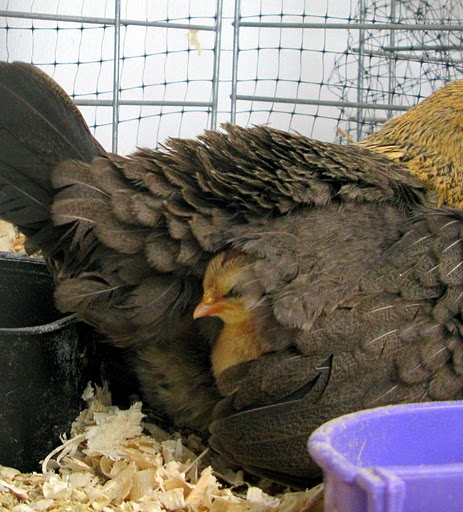
Baby Chick Peeping Out From Under His Mom's Wing - CC

Baby Chick Peeping Out From Under His Mom’s Wing – CC

STAY UNDER HIS WINGS

“Abide in me, and I in you.  As the branch cannot bear fruit of itself, except it abide in the vine; no more can ye, except ye abide in me.  I am the vine, ye are the branches: He that abideth in me, and I in him, the same bringeth forth much fruit: for without me ye can do nothing.” (John 15:4, 5 King James Version)

Pastor William Orcutt Cushing wrote a beautiful hymn “UNDER HIS WINGS”.  I love the words in this hymn.  “Under His wings, what a refuge in sorrow!  How the heart yearningly turns to His rest!  Often when earth has no balm for my healing, There I find comfort, and there I am blessed.”  We have a loving Saviour!

A mother bird will push her baby out of the nest so it will learn to fly.  It is just the opposite with Jesus.  He wants us to stay with Him not only so He can protect us, but also because we can’t do anything without Him.  I can’t even get out of bed without Him.  If I can’t serve Him, there is no reason to live.

Someone said “I can’t wait until I’m old enough to move out and leave home”. When Jesus is our Saviour, we don’t want to leave Him.  Not only is Jesus our Saviour, He is also the dearest Friend we will ever have.  He will never leave us, not even for one minute.  What a Saviour, this Jesus of Nazareth!

For those who are trying to make it in this world without Jesus, it hasn’t worked and it will never work.  We need Jesus every minute of every day.  Stay under His wings and allow Him to protect you, comfort you and encourage you.  Don’t try to make it without Jesus.  You will hurt Him and break His heart.

Joanne Lowe

September 25, 2015

To see more of Joanne’s  devotionals go to her blog at  He Loves You And Died For You.

*

Joanne Lowe is a guest author and I trust you will be blessed by this and her other devotionals.

*

Want a Home in the Mountains? Some Birds Have One!

Want a Home in the Mountains?   Some Northern Flickers Have One!

James J. S. Johnson

I know all the fowls [i.e., birds] of the mountains; and the wild beasts of the field are Mine.    Psalm 50:11

Mountains are wonderful places to see God’s handiwork, including the many birds dwelling in (and around) mountains year-round or seasonally.  Some of my best bird-watching has been done in mountains, usually the Rocky Mountains or Appalachians. (This birding report notes the Rocky Mountains’ Northern Flicker.)

SANGRE2©WikiC

Of specific mountain ranges, one of my all-time favorite mountain ranges is the Sangre de Cristo Range, northern part of the Sangre de Cristo Mountains (themselves a range within the Rocky Mountains) that runs north-to-south in southern Colorado, spilling into northern New Mexico.  Within that range my favorite mountain is Horn Peak, near Horn Creek Christian Family Camp (where Dr. Stan Toussaint occasionally taught the Scriptures) and Sangre de Cristo Seminary, not far outside of Westcliffe, Colorado.  The elevation there ranges about 8500 feet, with Horn Peak peaking at about 14,000 feet!

Sangre de Cristo Range Looking West ©WikiC

Sangre de Cristo Range Looking West ©WikiC

“Sangre de Cristo” is Spanish for “blood of Christ”, perhaps an indication that the range was named when its snow-capped mountains were reflecting a scarlet-hued sunset.  In any case, it’s magnificently beautiful out there.

Sangre de Christo Mountains, Winter Sunset ©WikiC

Sangre de Christo Mountains, Winter Sunset ©WikiC

Much of Colorado’s Sangre de Cristo Range is located within two of America’s national forests:  San Isabel National Forest (containing the range’s northeastern portion), and the Rio Grande National Forest (containing most of the southwestern portion, i.e., the San Luis Valley).   Amazingly, the Sangre de Cristo Mountains border a very unusual inland sand dunes area (the largest in North America), the Great Sand Dunes National Park and Preserve.   By the way, where did all that sand come from?  (Hint: check out Genesis chapters 6-9.)

Dunes great sand ©WikiC

Great Sand Dunes ©WikiC

In the montane forests on the slope of Horn Peak (and Little Horn Peak) there is a Protestant Reformation-based seminary named “Sangre de Cristo Seminary”, founded by Dr. Dwight F. Zeller.  (FYI: its website is http://sdcs76.org/  — which includes a music-enhanced PowerPoint slide show on its homepage.)

If you drive up to the entrance of the seminary campus, especially in the summer, roll down your car’s windows – and listen.  Actually, park your car and find a “blind” where you can observe the trees around you – if you stay still for a while you are likely to see the varied bird life of those montane evergreen forests.  One bird that you may hear before you see it, the Northern Flicker (Colaptes auratus), because a stone’s throw from the seminary’s mountain road entrance, which is thick with evergreen trees, is (or at least “was” – in the late AD1990s) a tree that served as the home of a Northern Flicker family.  Many summer days, during the mid-to-late AD1990s, I have found a comfortable place to sit, there – hidden — so that I could observe that Northern Flicker tree-home, without being observed by the Northern Flickers that continually went in and out, in and out, therefrom.
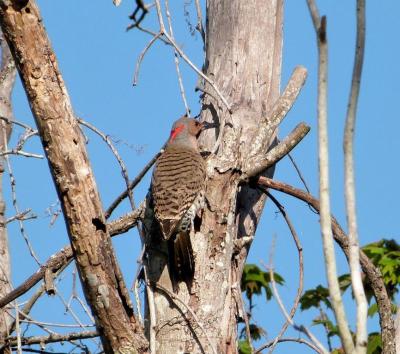
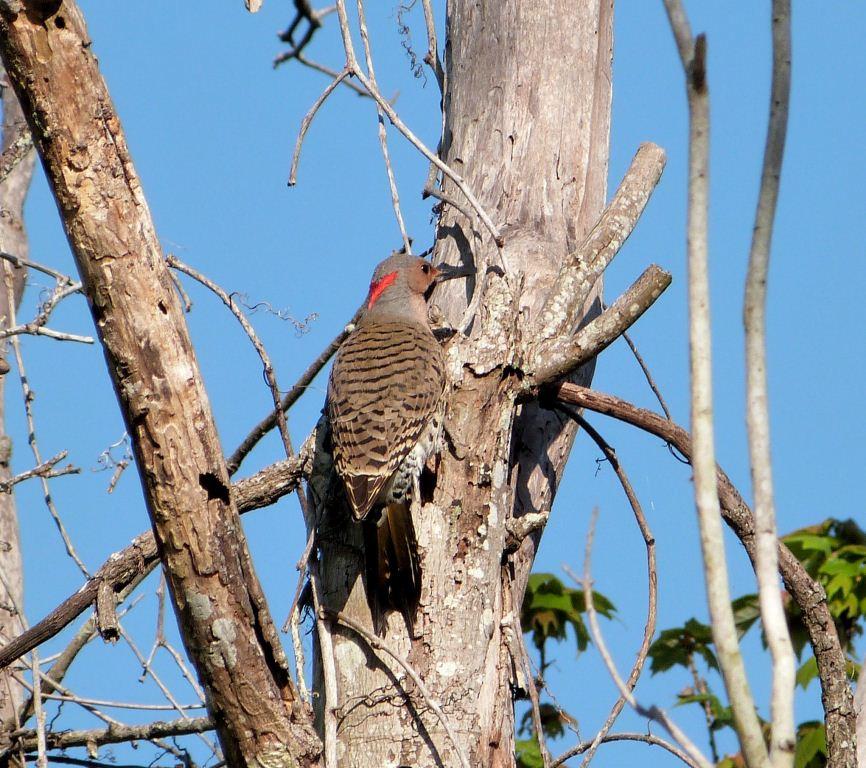
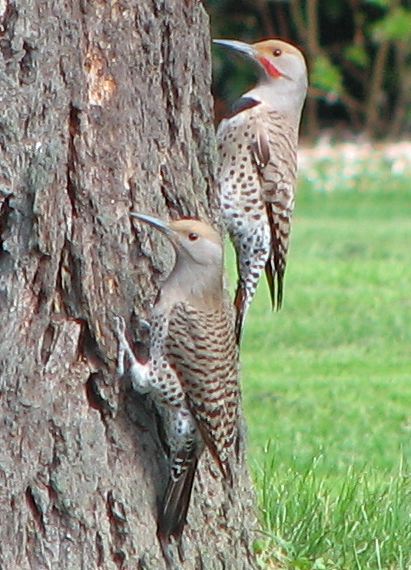
Northern Flicker cropped by Lee at S. Lk Howard Ntr Pk

Northern Flicker cropped by Lee

Flickers routinely convert a tree into a tree-house!
Orni-Theology with Luzan Bleeding-heart by Dan

Orni-Theology

Says ornithologist Mary Taylor Gray, in her book WATCHABLE BIRDS OF THE ROCKY MOUNTAINS (Mountain Press Publishing, 1992), at pages 30, “Flickers nest in holes in trees, fenceposts, telephone poles and the like, excavating the nest hole by pecking.  They are important homebuilders for other cavity-nesting birds who, with bills too weak to make their own holes, use those abandoned by woodpeckers.  Both the male and the female flicker incubate the eggs and care for the young [hatchlings].  When the adults bring food to the nest, they light on the tree, then disappear into the nest cavity.  As the babies get older, they learn to expect the parents, poking their heads out of the nest and squawking to be fed.”  That description of Northern Flicker behavior (with illustrative photographs on page 31), by Mary Taylor Gray, perfectly fits what I have observed (and what my wife observed), summer after summer, at Sangre de Cristo Seminary’s campus.

But what were those woodpeckers eating?

Bugs of all kinds strive in the Sangre de Cristo montane forests, crawling on the ground and in trees and bushes – the bugs are very active there during the summer – and that’s fine for flickers!  Says ornithologist Stan Tekiela, in his book  BIRDS OF COLORADO FIELD GUIDE (Adventure Publications, 2001), on page 147, “The flicker is the only woodpecker to regularly feed on the ground, preferring ants and beetles.  Produces antacid saliva [without the need for Nexium!] to neutralize the acidic defense of ants.”  (Although such a diet would bug me, the flickers seem to enjoy it.)

Northern Flicker (Colaptes auratus) red-shafted F-left M-right ©WikiC

Northern Flicker (Colaptes auratus) red-shafted F-left M-right ©WikiC

The two main varieties are the “red-shafted” and “yellow-shafted” forms, though hybridized  versions occur where the ranges overlap, in the western edge of the great plains (where the prairies merge into the Rocky Mountains), and this Northern Flicker looked like such a hybrid.  After my wife and I watched it go into its tree-hole, again and again, we suddenly learned why that tree-hole was the scene of such repeated in-and-out activity:  cautiously baby flickers poked their little heads out, perhaps curious about the outside world, or maybe in hopes that the next airborne meal was soon headed home!

Northern Flicker (Female Yellow-shafted) ©WikiC

Northern Flicker (Female Yellow-shafted) ©WikiC

In recalling those cool summer days, when I watched for birds in the montane forests by Sangre de Cristo Seminary – sometimes with my wife, sometimes alone – I realized that all around me the hungry were being fed.  Baby flickers were being fed by their woodpecker parents.  But also seminary students, instructed by godly teachers, were being fed the Word of God (Deuteronomy 8:3, quoted in Matthew 4:4 & Luke 4:4.)

So, good eating can mean physical food (like bugs for hungry flickers!), or it can mean spiritual food (like the Holy Bible, for hungry Christians).  Bon appetite!
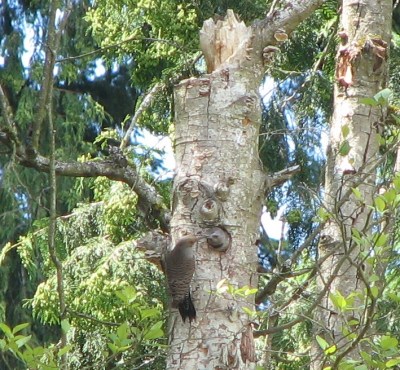
Northern Flicker feeding baby ©WikiC

Northern Flicker feeding baby ©WikiC


Lee’s Addition:

Thanks, James for a very interesting article to share with us. Love those Flickers.

More articles:

Orni-Theology

James J. S. Johnson

Picidae – Woodpeckers

Northern Flicker – All About Birds

Northern Flicker – Wikipedia

*
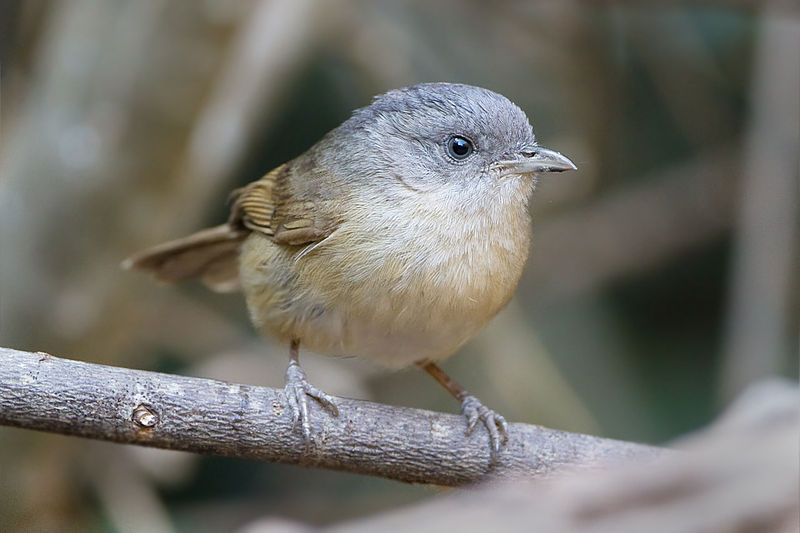
“SUPERB,” “SPLENDID” AND “LOVELY” – Re-post Plus

“SUPERB,” “SPLENDID” AND “LOVELY”

“I know all the fowls of the mountains: and the wild beasts of the field are mine.” Psalm 50:11

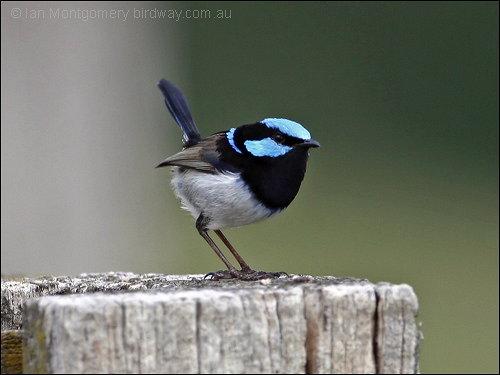
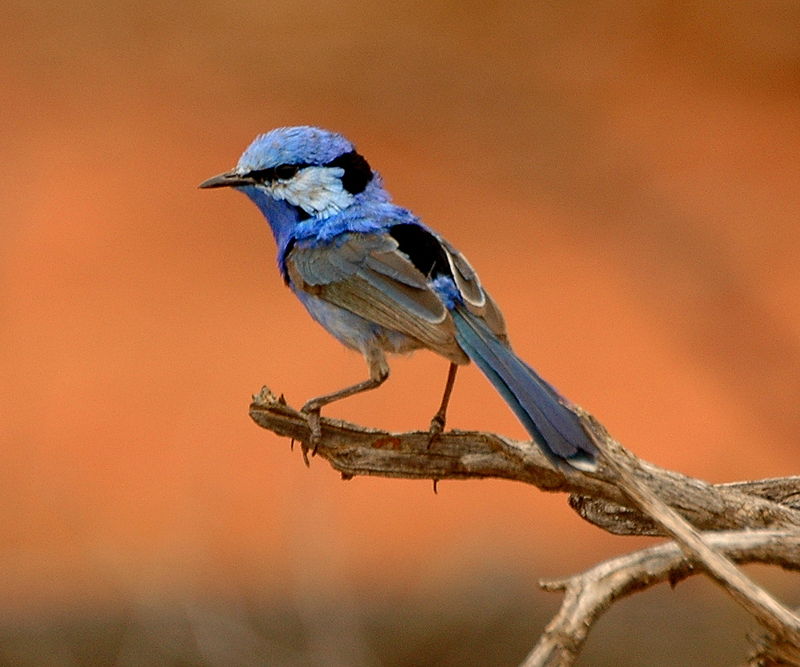
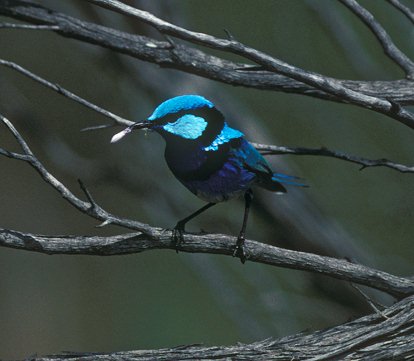
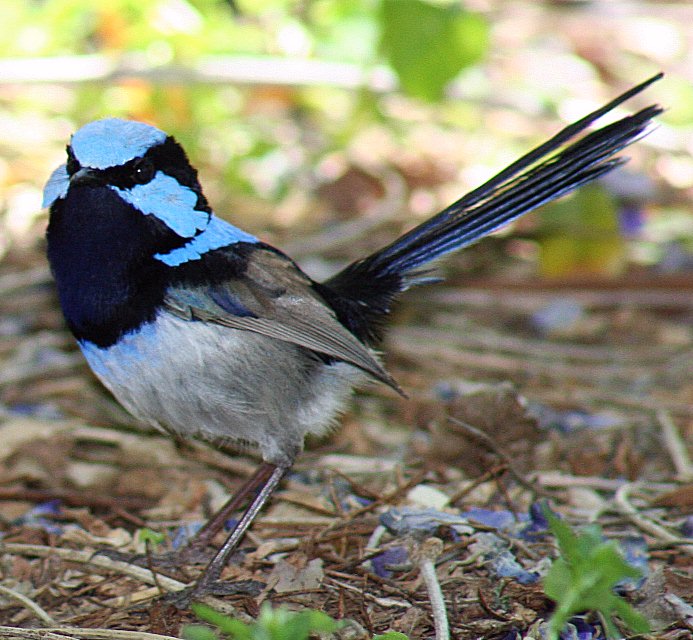
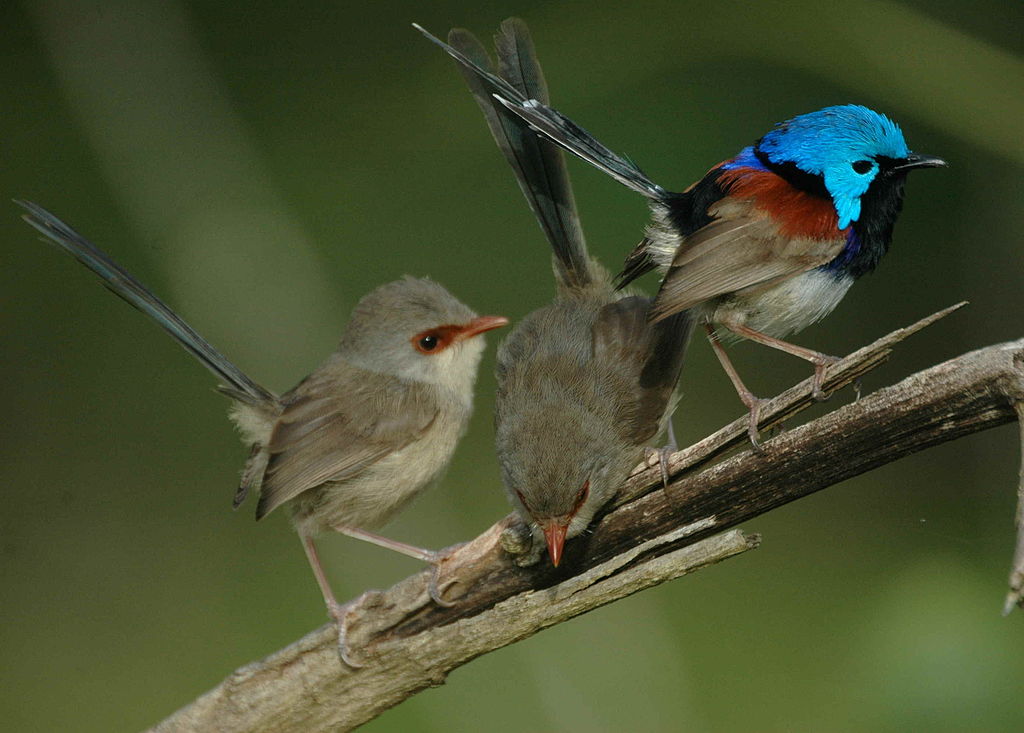
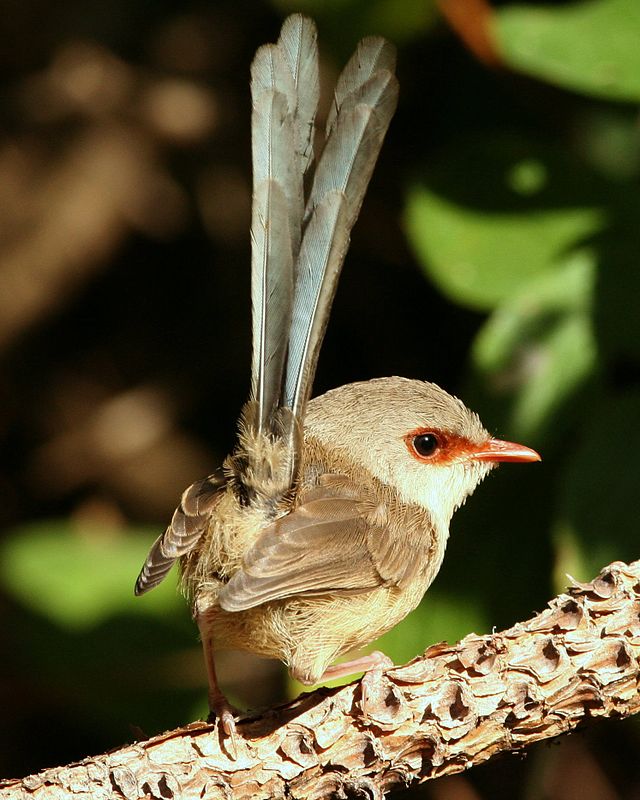
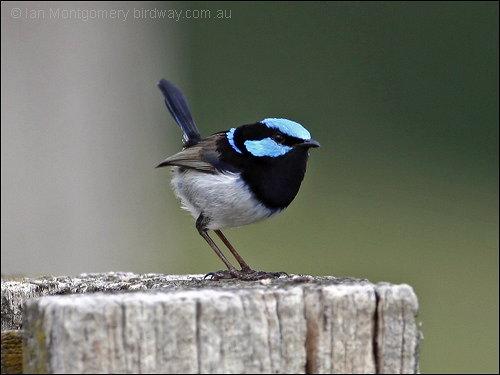
There are 13 species of a brightly plumed little songbird known as the fairy wren. The birds are found in Australia and New Guinea. So colorful are their feathers that the various species go by names like “superb,” “splendid” and “lovely.” However, even more noteworthy is the birds’ unusual behavior.

Superb Fairy-wren (Malurus cyaneus) by Ian

Superb Fairywren (Malurus cyaneus) by Ian

A male courting a female will bring her a flower petal. The petal usually matches his color or is a deeply contrasting color. Normally a perky little bird with an upright tail, when courting he lowers his tail and creeps around close to the ground. As he twists his body back and forth, he puffs out his cheek feathers. If the female accepts his courting, she builds their nest alone, lining it with bright parrot feathers. While they mate for life, they are not known for fidelity to their mates.

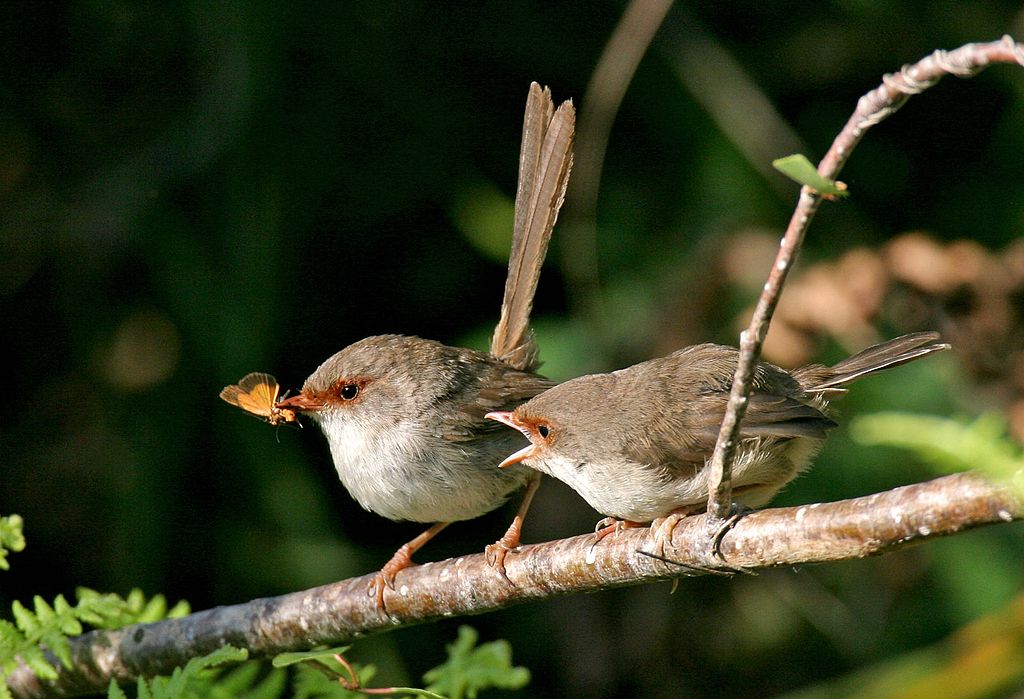
Superb Fairy-wren (Malurus cyaneus) Juvenile and Female ©WikiC

Superb Fairywren (Malurus cyaneus) Juvenile and Female ©WikiC

When mature, females will go off on their own, but males may stay with their parents for a year or more. Their main duty is to guard the family nest. If danger approaches the nest, the guard will puff up his wings, lower his tail and scuttle through dry grass, pretending to be a mouse. The idea is to lure the predator away from the nest.

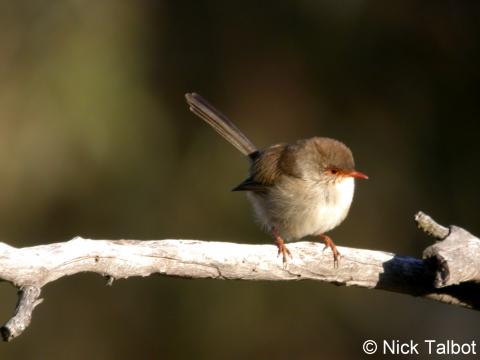
Superb Fairy-wren (Malurus cyaneus) Female by Nick Talbot

Superb Fairywren (Malurus cyaneus) Female by Nick Talbot

The beauty and unusual behavior of these little birds testifies to more than God’s creativity and love for beauty. They remind us of the beauty that was lost to God’s creation when it was tainted by man’s sin. Thankfully, some of that beauty that was lost can return to our lives through the forgiveness of sins that is found in Jesus Christ.

Prayer:
Dear Father, I thank You for the beauty of Your creation and for giving me the forgiveness of sins in Jesus Christ. Amen.

Notes:
Natural History, 11/94, pp. 56 62, “Faithful Philanderers.” Photo: Superb blue fairy-wren. Courtesy of Benjamint444. (CC-BY-SA 3.0)
©Creation Moments 2015 used with Permission


Lee’s Addition:
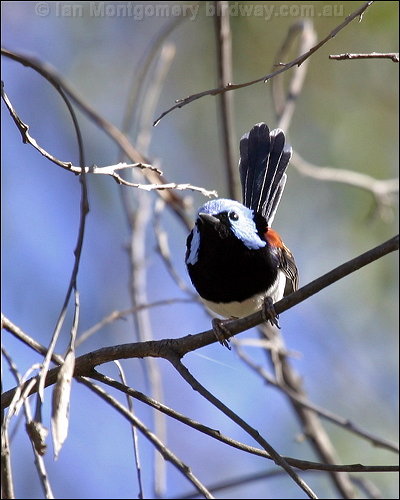
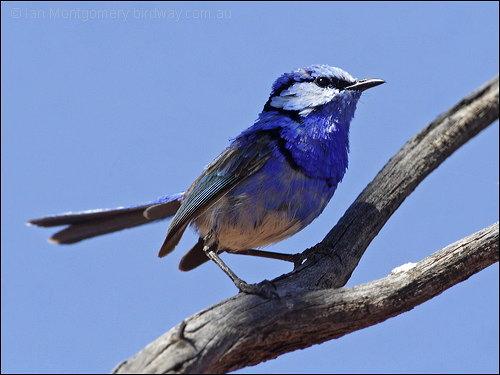
Here are some more photos of the Fairywrens from their Creator:


*
Creation Moments
“Superb, Splendid and Lovely”
Interesting Things
Fairywren Family
Wordless Birds
*
Ian’s Bird of the Week – Silvereye

Ian’s Bird of the Week – Silvereye ~ by Ian Montgomery

Newsletter – 9/18/15

Two weeks ago we had the obscure Small Lifou White-eye as bird of the week. This week we have what is probably its best known relative – at least in Australasia – the Silvereye. I mentioned that the members of the White-eye family are expert colonisers of small islands in the Indian and western Pacific Oceans. The Silvereye is no exception and provides a particularly interesting case-study in bio-geography that is unusual in that some of its range expansion is both historically recent and well documented.

Silvereye (Zosterops lateralis) by Ian

I’ll return to that later after looking at its range and variation in Australia. Here it occurs in coastal and sub-coastal regions from the tip of Cape York clockwise around Australia to Shark Bay in Western Australia, including Tasmania. Between Shark Bay and western Cape York it is replaced by the Australian Yellow White-eye. Currently, about nine races are recognised. The nominate race, lateralis, is Tasmanian and visually the most distinctive having cinnamon-coloured flanks, which is presumably what John Latham was referring to when he described the species in 1801 only 13 years after European settlement.

Silvereye (Zosterops lateralis) by Ian

There are five mainland races ranging northeastern Queensland to Western Australia. The differences between these are subtle and the race grade into one another. Townsville, second photo, is in the zone of intergradation between the Cape York race (vegetus) and the eastern Australian one (cornwalli). Note the lack of the cinnamon flanks and the clear demarcation between the yellowish-green head and the grey back and compare that with the Western Australian race ,third photo, which has a green back and to which its sub-specific name chloronotus refers. (I’m using the words race and subspecies interchangeably here).

Silvereye (Zosterops lateralis) by Ian

There are three island races in addition to the Tasmanian one and they occur on King Island in Bass Strait; the islands of the Barrier Reef notably Heron Island; and on Lord Howe Island. The Lord Howe one, aptly name robusta, is larger and stronger than the nominate race and survived the introduction of mice and rats. That’s an interesting little story in its own right as it became very rare, was thought to have become extinct like other Lord Howe Island species and the nominate race was deliberately introduced to replace it. To everyone’s surprise the indigenous race survived, adapted to the presence of the rodents, recovered and the introduction of the nominate race was unsuccessful.

Silvereye (Zosterops lateralis) by Ian

If you go farther afield to Norfolk Island expecting to find a distinctive looking local Silvereye, you’d be in for a surprise, fourth photo, as the locals, complete with cinnamon flanks, are indistinguishable from the nominate race, which it in fact is. If you went to New Zealand, the same thing would happen and you would find the nominate race on both main islands, Stewart Island, Chatham Island and the sub-Antarctic islands such as Snares, the Aucklands and Chatham. What happens if you head north and end up in New Caledonia? On the main island, you’d find this race, fifth photo, called griseonota, meaning, of course, ‘grey-backed’. Apart from the black smudge on the face, it looks to me very like the Cape York race.

Silvereye (Zosterops lateralis) by Ian

So what, you may ask, is happening? The proliferation of race suggests a sedentary species with little genetic mixing between neighbouring populations but this is contradicted by the widespread range of the Tasmanian race which suggests genetic flow between Tasmanian, Norfolk Island and New Zealand. In fact both are true to some extent, and this is where history comes to the rescue. Here is a map that I’ve drawn up showing the different races of the Silvereye using the basic range map from Handbook of Birds of the World (HBW) as a template. The different colours represent races. The red one is the nominate race; the other Australian races are shown in varying shades of blue and green and black; the New Caledonian races (three) in grey, the Vanuatu races (three) in purple and the Fiji race in indigo.

Silvereye (Zosterops lateralis) by Ian Map

The Tasmanian race isn’t completely sedentary. At least part of the population, probably mainly young birds, disperse in autumn and move Victoria and New South Wales for the winter. The Victorian ornithologist Alfred North noticed the change in plumage and ascribed it to winter and summer plumages. It was only later that it was realised that the change in appearance didn’t coincide with moulting in the mainland birds and the truth emerged. Incidentally, Latham’s original specimen came from ‘Port Jackson’ (Sydney) and must have been a Tasmanian bird.

As any blue-water sailor will tell you, the weather in Bass Strait between Tasmania and Victoria is notorious and a pleasant sail, or flight, in calm conditions can suddenly become a nightmare when a low pressure system and its associated cold front can arrive from the southwest. Powerful weather systems move continuously in an easterly direction between Tasmania and New Zealand. Have a look at the current four-day weather chart: http://www.bom.gov.au/australia/charts/4day_col.shtml. Another clue comes from the Maori name for the Silvereye: ‘tauhou’ meaning ‘stranger’. Silvereyes were rare vagrants to New Zealand until 1856 when large numbers appeared in the Welllington district, became established and spread to other parts of New Zealand. Similarly, Silvereyes first appeared in Norfolk Island in 1904 and it as assumed that these came from New Zealand rather than Tasmania. Silvereyes have benefitted from European settlement in Australia and it may be that is also a factor in their recent colonisation of New Zealand and Norfolk Island.

I wonder how the Silvereyes got to New Caledonia, Vanuatu and Fiji? These all look more like the Cape York race than the nominate one. Tropical cyclones in the Coral Sea are famously erratic and often head from Queensland to New Caledonia, so it looks as if the weather could play the main role here.

I’m going to stop here. I was going to talk about names and languages as well, but you can work that out for yourselves. We’ve already had cloronotus and griseonota for Australian races. Combine that with the French for Silvereye ‘Lunette a dos gris’ and the New Caledonian endemic Green-backed White-eye: ‘Lunette a dos vert’. Globally, there are almost 100 species of White-eye, not to mention races, and they nearly all look much the same, so pity any unfortunate taxonomists trying to be original.

And here’s a paper that I found interesting: http://aviculturalsocietynsw.org/_PDFs/Silvereye.pdf. You can check out photos of various White-eyes here: http://www.birdway.com.au/zosteropidae/index.htm.

Greetings

**************************************************
Ian Montgomery, Birdway Pty Ltd,
454 Forestry Road, Bluewater, Qld 4818
Tel 0411 602 737 ian@birdway.com.au
Bird Photos http://www.birdway.com.au/

And God blessed them, saying, “Be fruitful and multiply and fill the waters in the seas, and let birds multiply on the earth.” And there was evening and there was morning, the fifth day. (Genesis 1:22-23 ESV)

Lee’s Addition:

Well, Ian really got informative on these Silvereyes. Very interesting, at least to me. When the Lord commanded the birds to cover the earth and reproduce, these little avian wonders with beautiful silver eye rings seem to have obeyed.

*

Ian’s Bird of the Week

Ian’s Zosteropidae Family

Wordless Hummers

*