Wood Storks at Gatorland

Lee with Wood Stork at Gatorland by Dan

Lee with Wood Stork at Gatorland by Dan

Where the birds make their nests: as for the stork, the fir trees are her house. (Psalms 104:17 KJV)

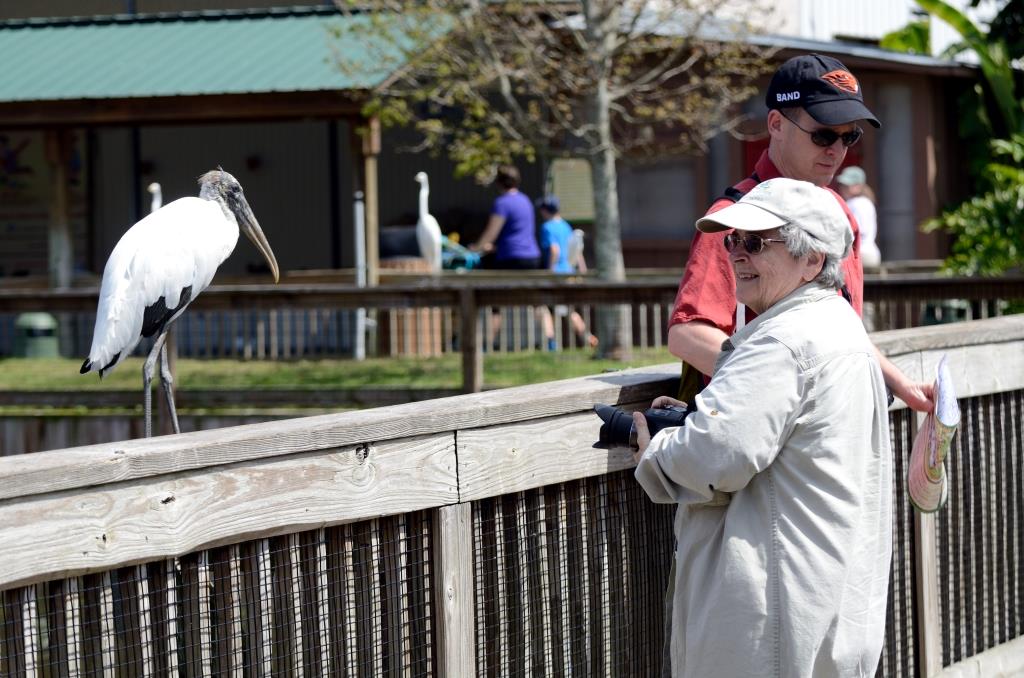
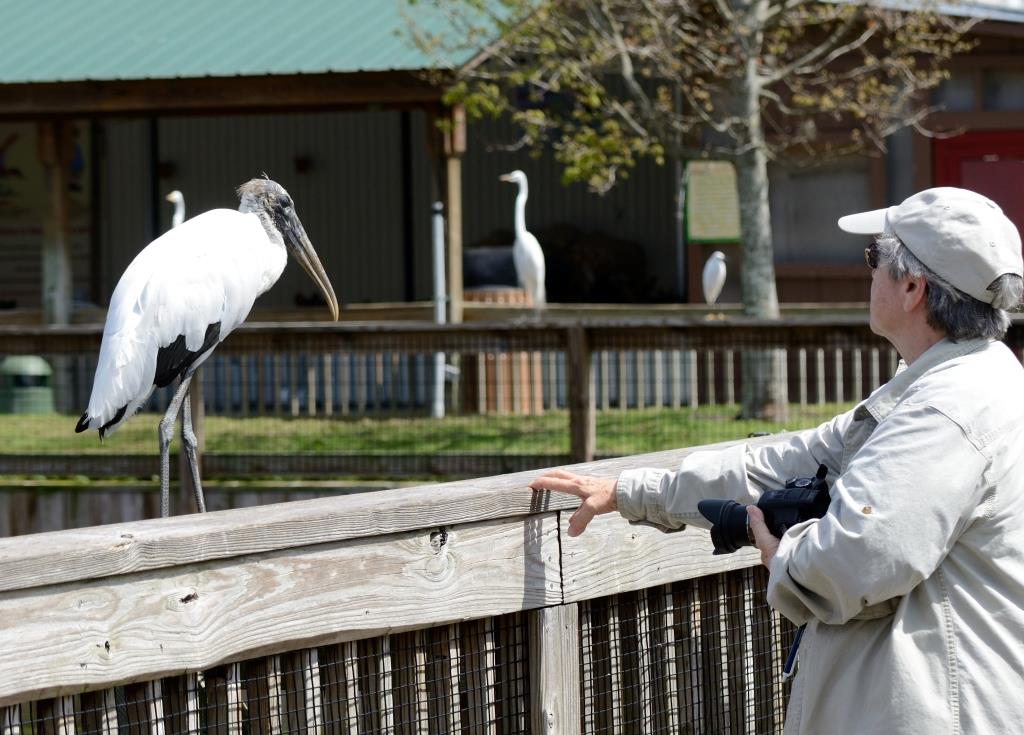
As you can see, these birds at Gatorland can get quite personal. I had been photographing this Wood Stork when Dan took my picture. My hand was about a foot from his beak. On the rail behind us there is a Great Egret and a Snowy.

Lee with Wood Stork at Gatorland by Dan

Lee with Wood Stork at Gatorland by Dan

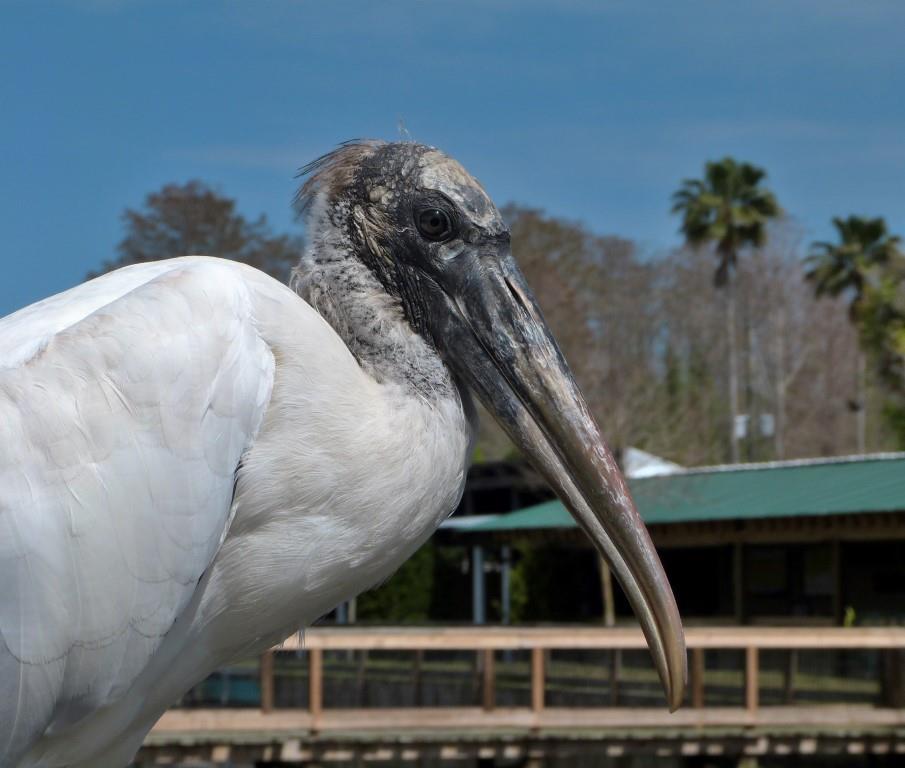
Thought maybe you might like to see what photos I had been taking of that Wood Stork. They were really close-up needless to say. I have been known to be closer. (Me Feeding a Stork)

Wood Stork Close-up by Lee

Wood Stork Close-up by Lee

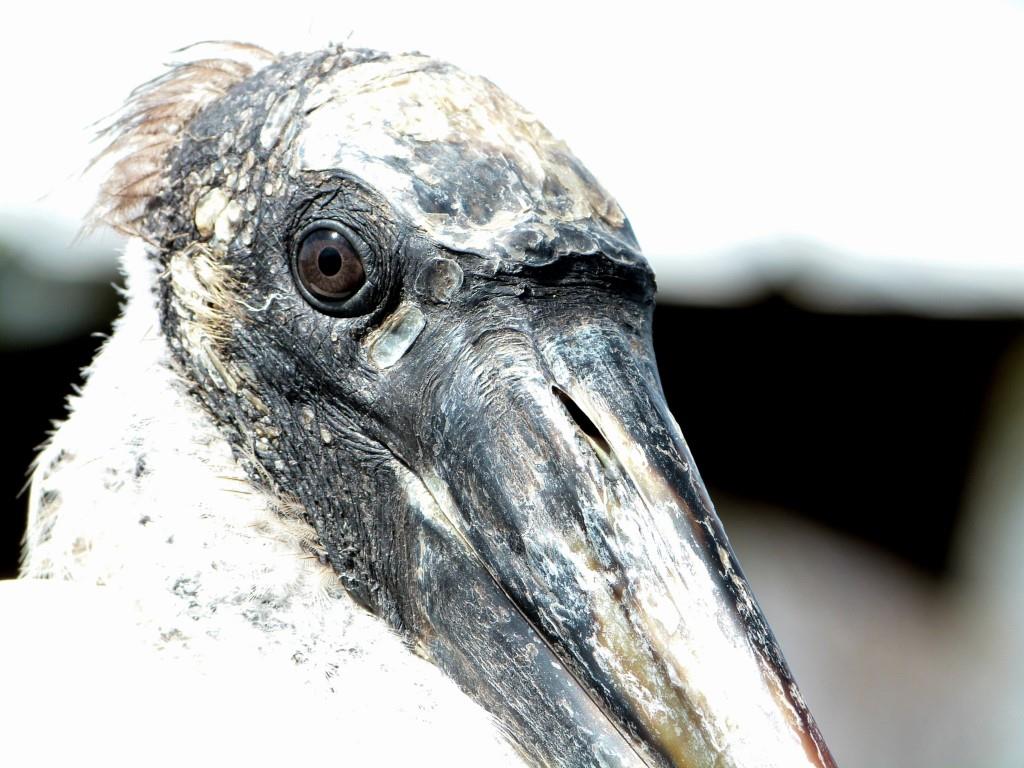
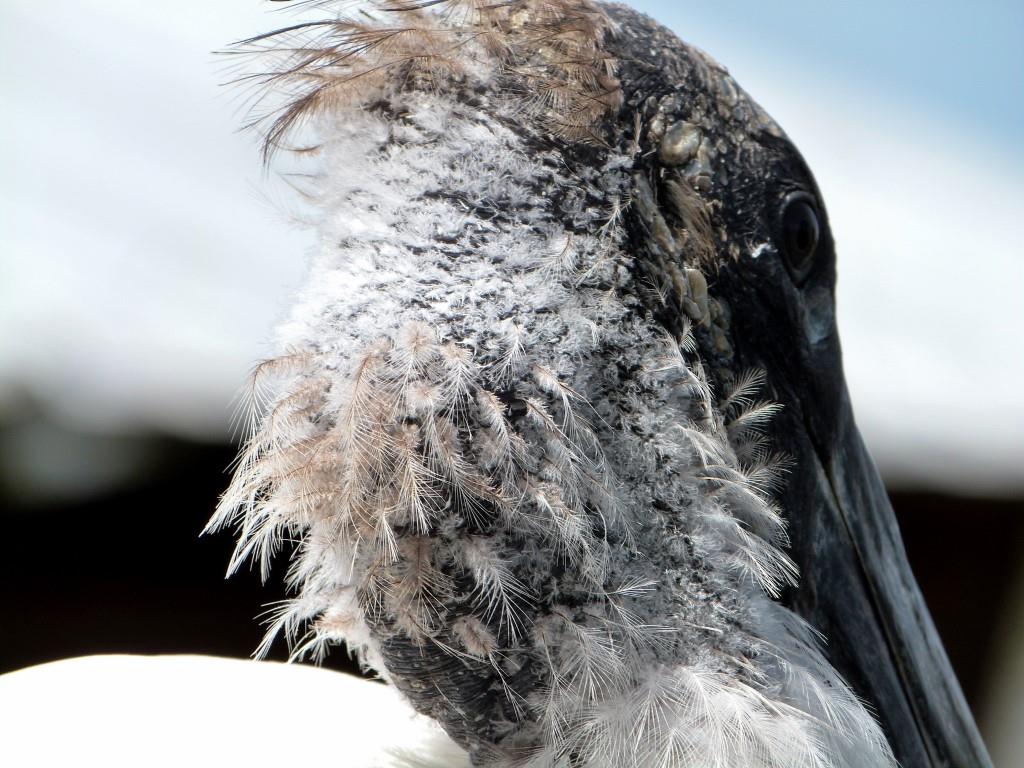
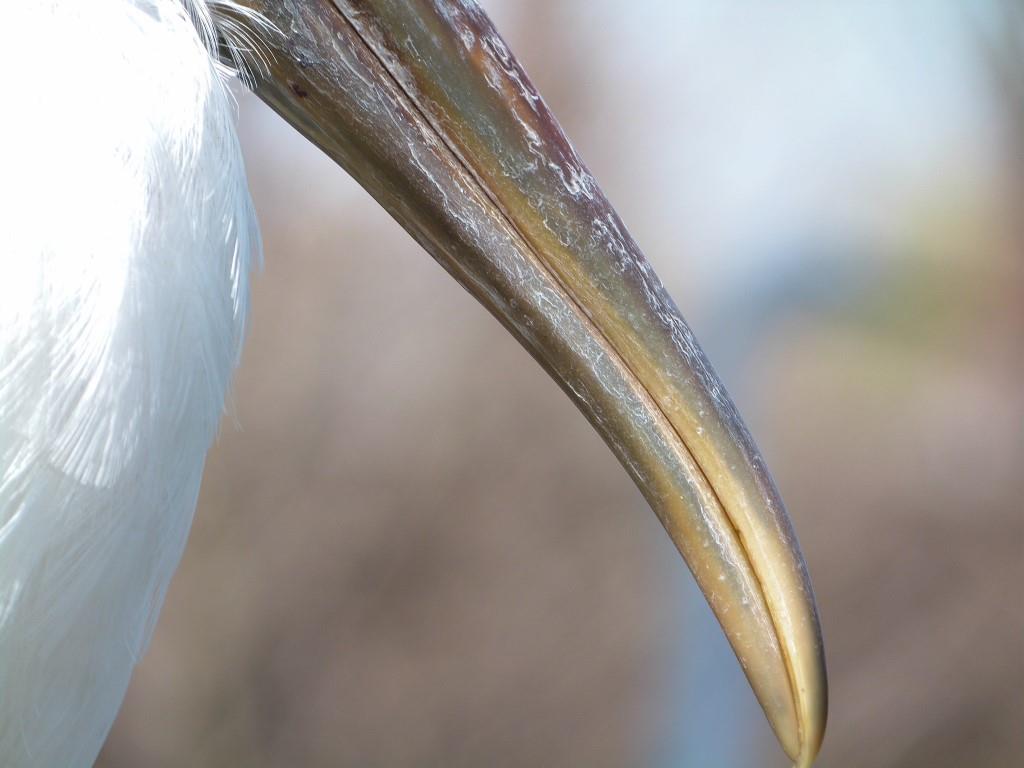
How about a little closer – zoomed in:

Wood Stork Face Close-up by Lee

Wood Stork Face Close-up by Lee

*
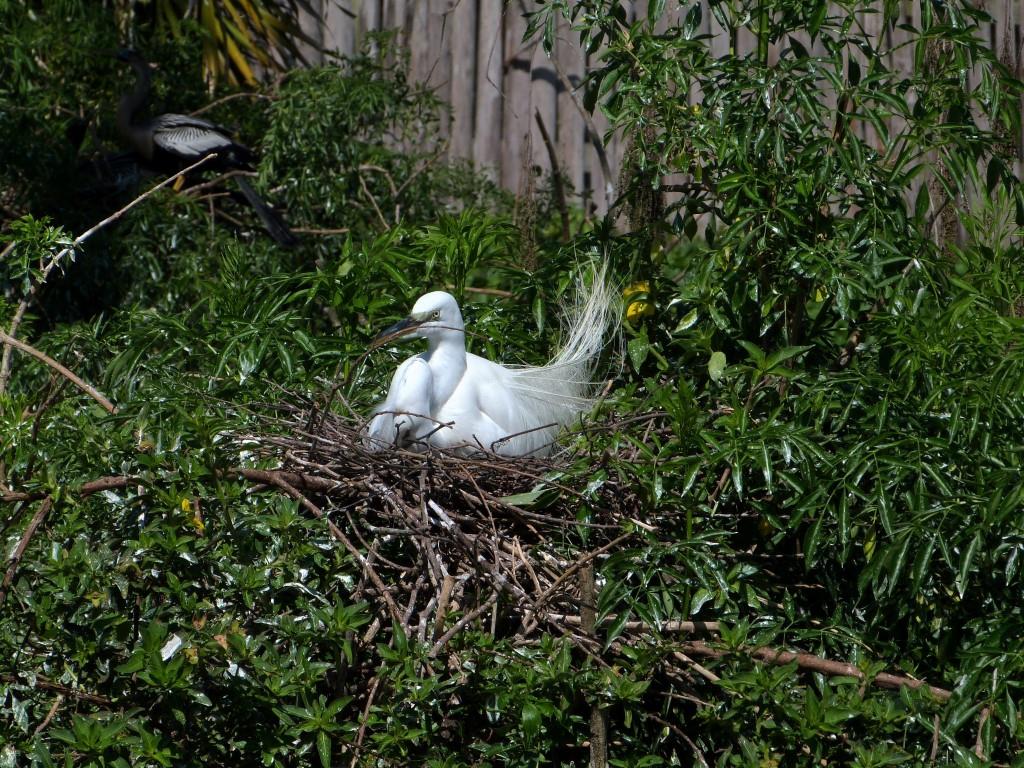
Wood Stork Close-up by Lee

Wood Stork Neck Close-up by Lee

*
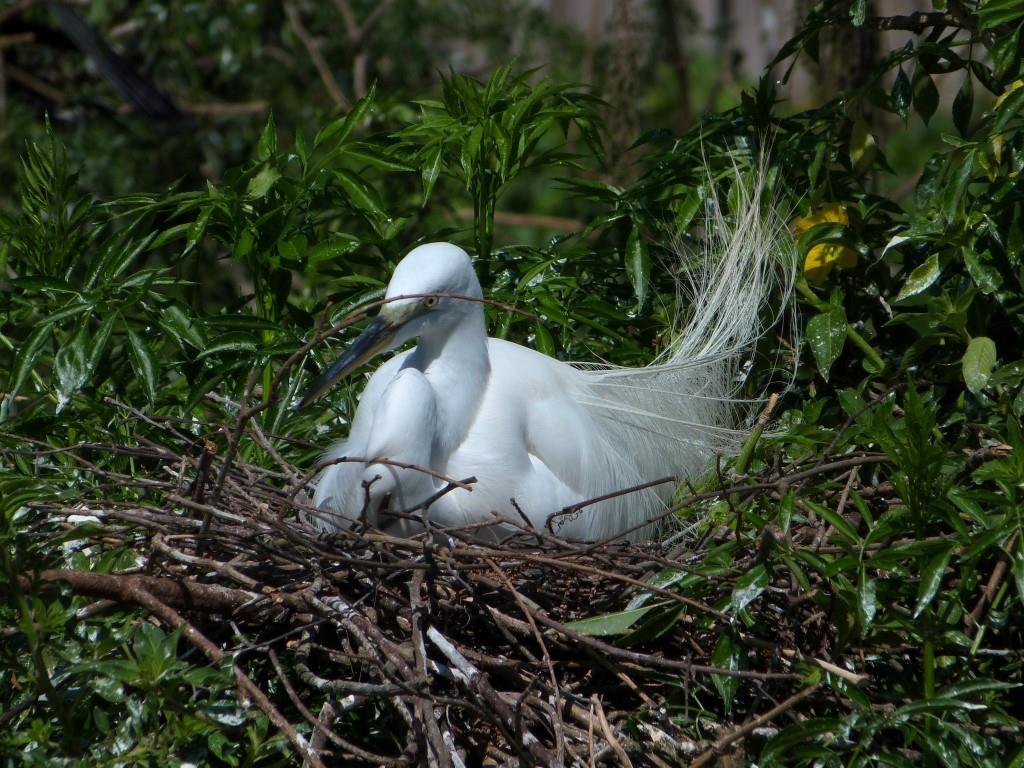
Wood Stork Close-up by Lee

Wood Stork Beak Close-up by Lee

*
What always amazed about the Wood Storks is that to me they are “ugly”, but when they fly, they are so graceful. Isn’t that the way with us. The Lord made us all, birds and humans, but when we look at someone, there is always somethig that we can find to compliment them on.

Wood Storks belong to the Ciconiidae – Storks Family.

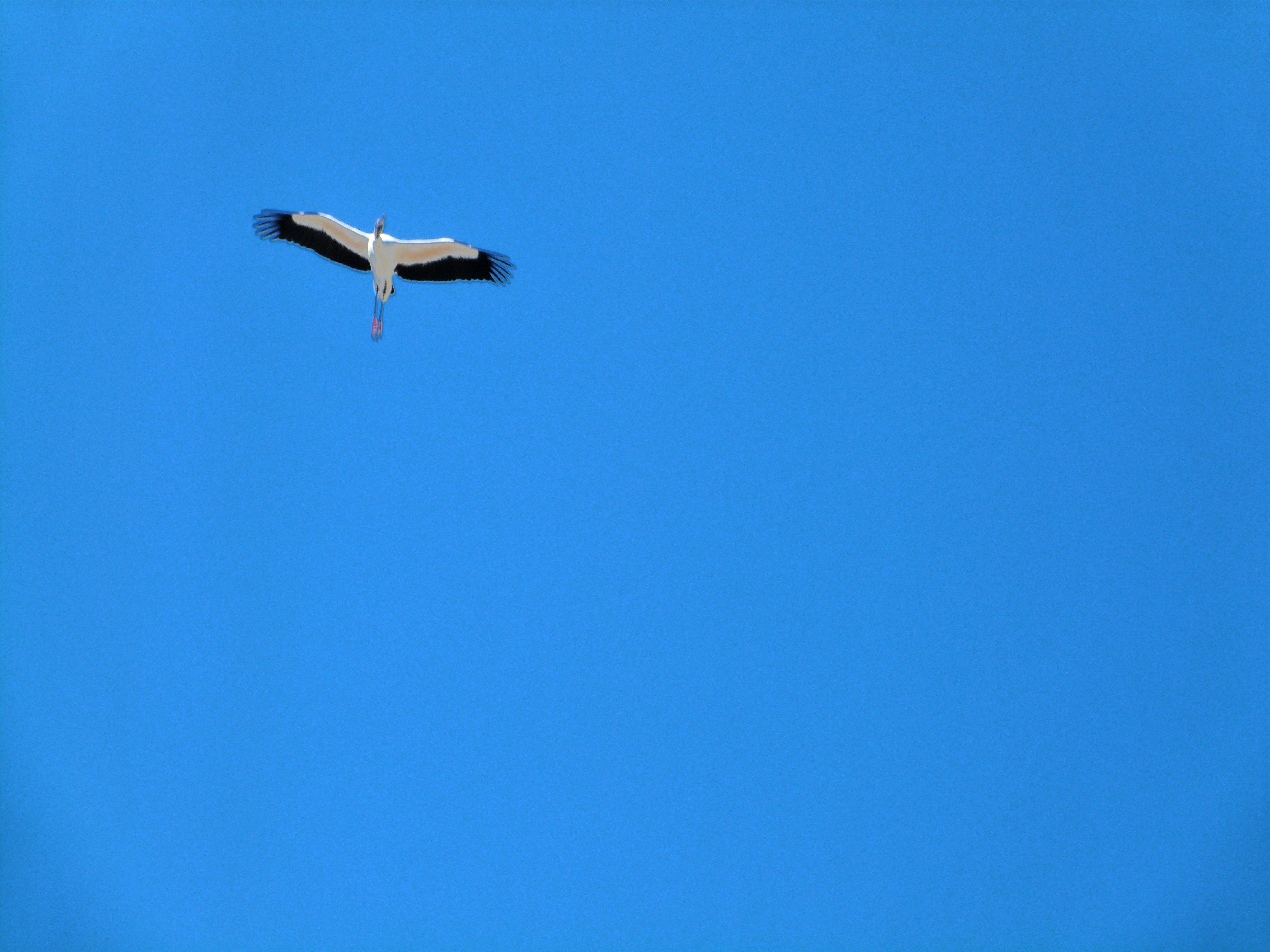
This photo was just caught as one flew over, not in focus, but you can see their beauty.

Wood Stork overhead at Gatorland

Wood Stork overhead at Gatorland

Yea, the stork in the heaven knoweth her appointed times; and the turtle and the crane and the swallow observe the time of their coming; but my people know not the judgment of the LORD. (Jeremiah 8:7 KJV)

Below are the photos taken of the Wood Storks around Gatorland. The ones in the distant were zoomed in from across the pond (see that photo). Later, we walked around on the other side of the pond and got them closer.

(Disclaimer, I am not a photographer, but a birdwatcher. So, don’t expect super shots, but just trying to show different parts of the Wood Storks.)

*
This slideshow requires JavaScript.


*
See:

*

Gatorland II – Great Egret Chick

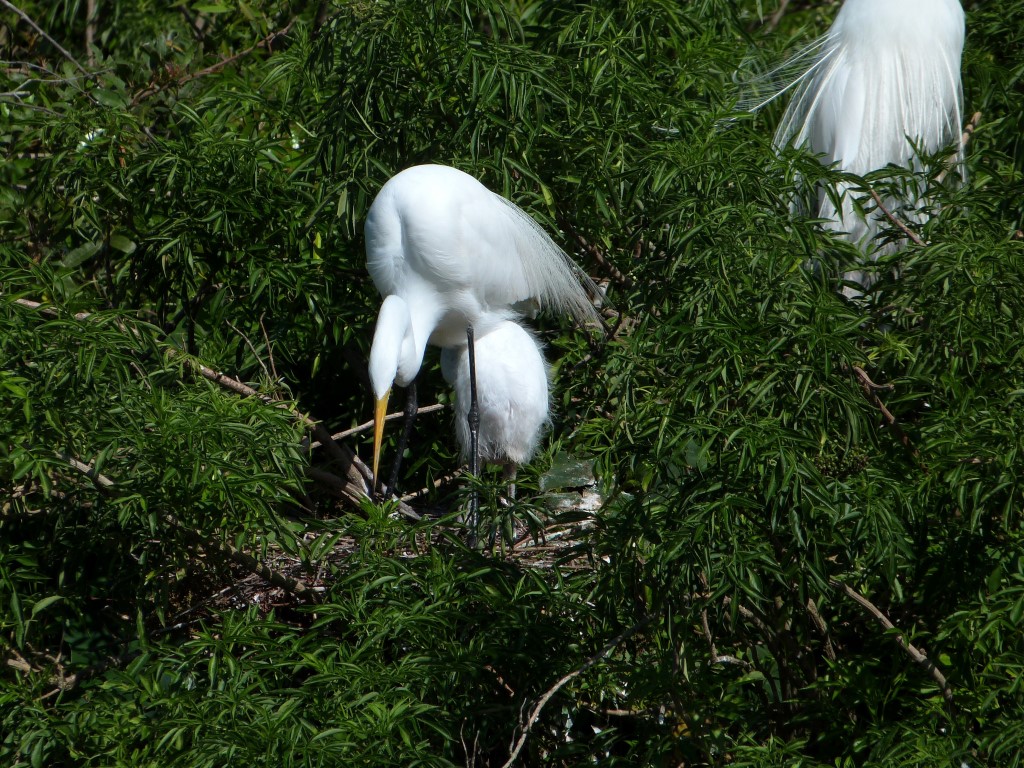
Great Egret at Gatorland by Dan

Great Egret at Gatorland by Dan

I know all the birds of the mountains, And the wild beasts of the field are Mine. (Psalms 50:11 NKJV)

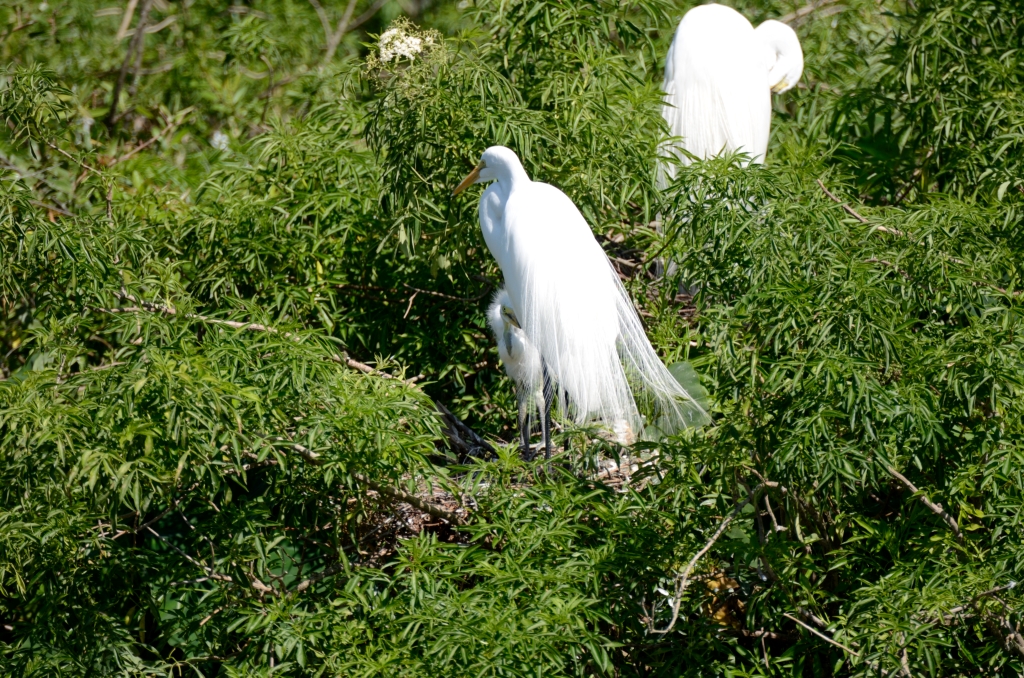
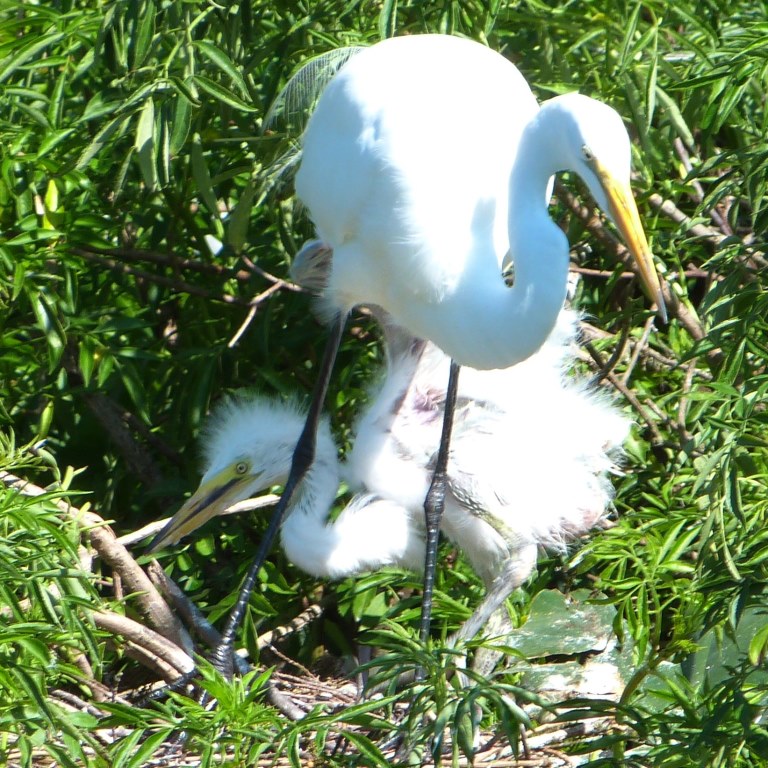
As you may be able to tell by Dan’s photo, that the parent was protecting the youngster. We were told that this was the first Great Egret chick born this year. From the other articles, you saw lots of them sitting on nests. A few others have been born since this one, but we weren’t able to see them.

Great Egret at Nest with Chick at Gatorland by Lee cropped more

Great Egret at Nest with Chick at Gatorland by Lee cropped more

After all the fancy display of feathers and courting, nest building and mating, the Egrets get to work incubating and then raise their young. This one was being watched for very well. The normal clutch size is 1-6 eggs. This one seems to be the only one for this pair.

Great Egret at Nest with Chick at Gatorland by Lee

Great Egret at Nest with Chick at Gatorland by Lee

Come, you children, listen to me; I will teach you the fear of the LORD. (Psalms 34:11 NKJV)

“The Great Egret feeds in shallow water or drier habitats, feeding mainly on fish, frogs, small mammals, and occasionally small reptiles and insects, spearing them with its long, sharp bill most of the time by standing still and allowing the prey to come within its striking distance of its bill which it uses as a spear. It will often wait motionless for prey, or slowly stalk its victim.” (Wikipedia) From this remark and the photos we have shown, they are in a habitat that allows them to feed their young.

See 

Here are photos of this Great Egret chick taken at Gatorland. As you can tell, the little one has a way to go. Its feathers on the wings, its skin, legs, etc. all need to grow.

*

*

*

Gatorland II – Great Egrets at the Nest

Great Egret on Nest at Gatorland

Great Egret on Nest at Gatorland

If a bird’s nest happens to be before you along the way, in any tree or on the ground, with young ones or eggs, with the mother sitting on the young or on the eggs, you shall not take the mother with the young; (Deuteronomy 22:6 NKJV)

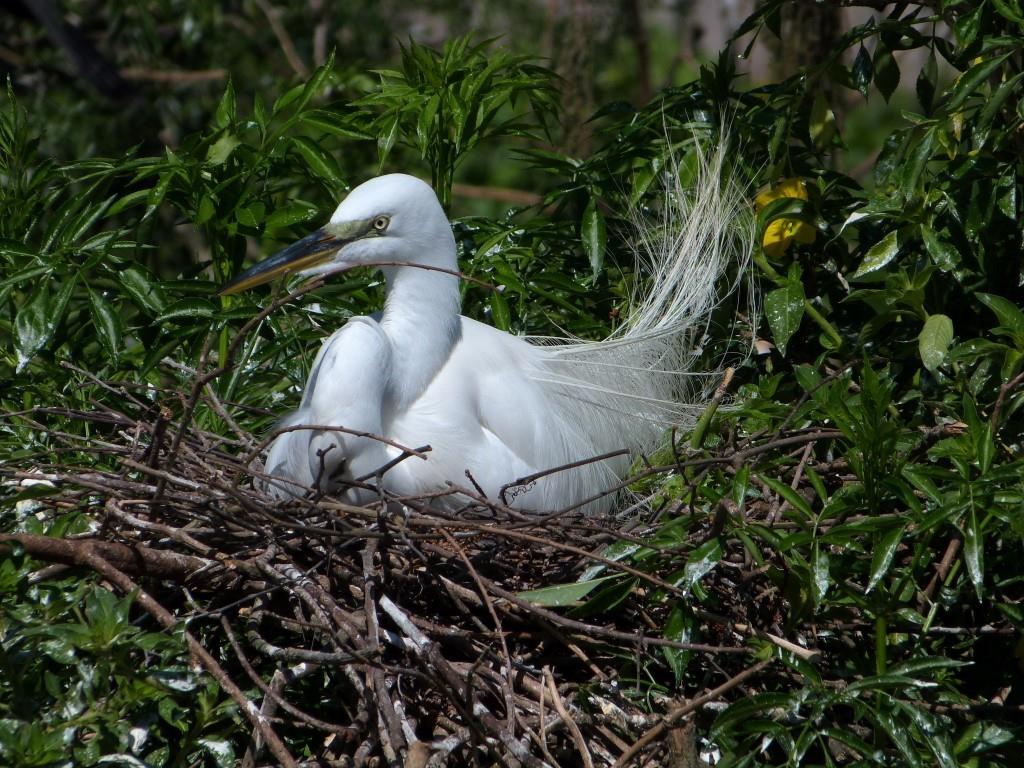
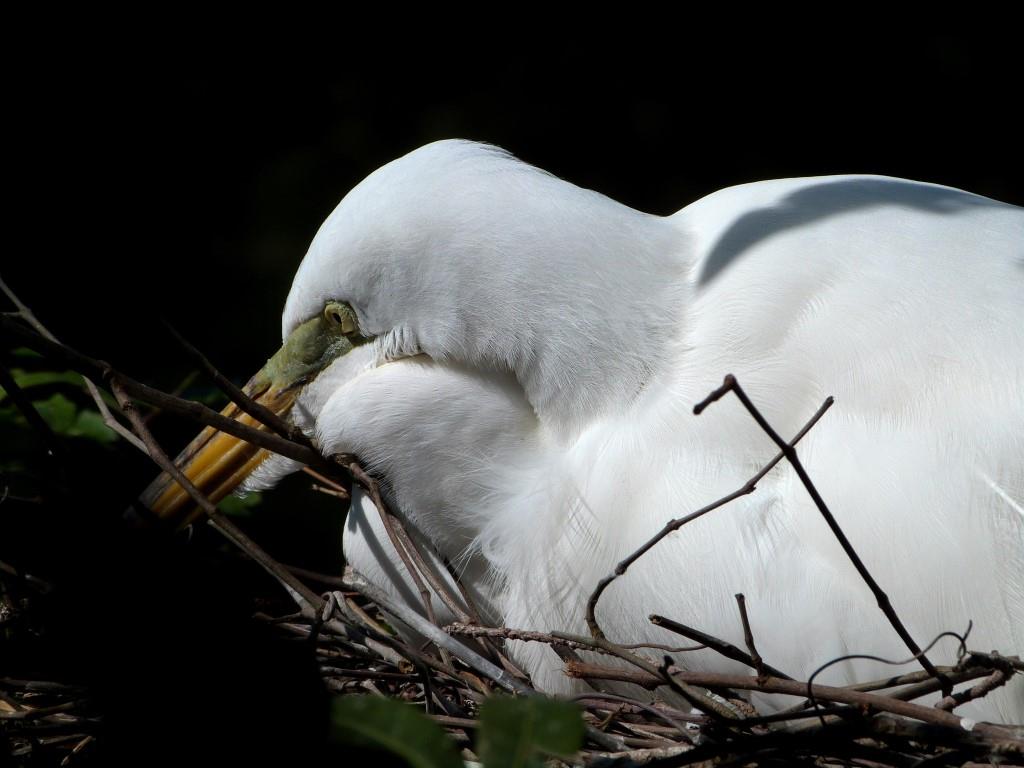
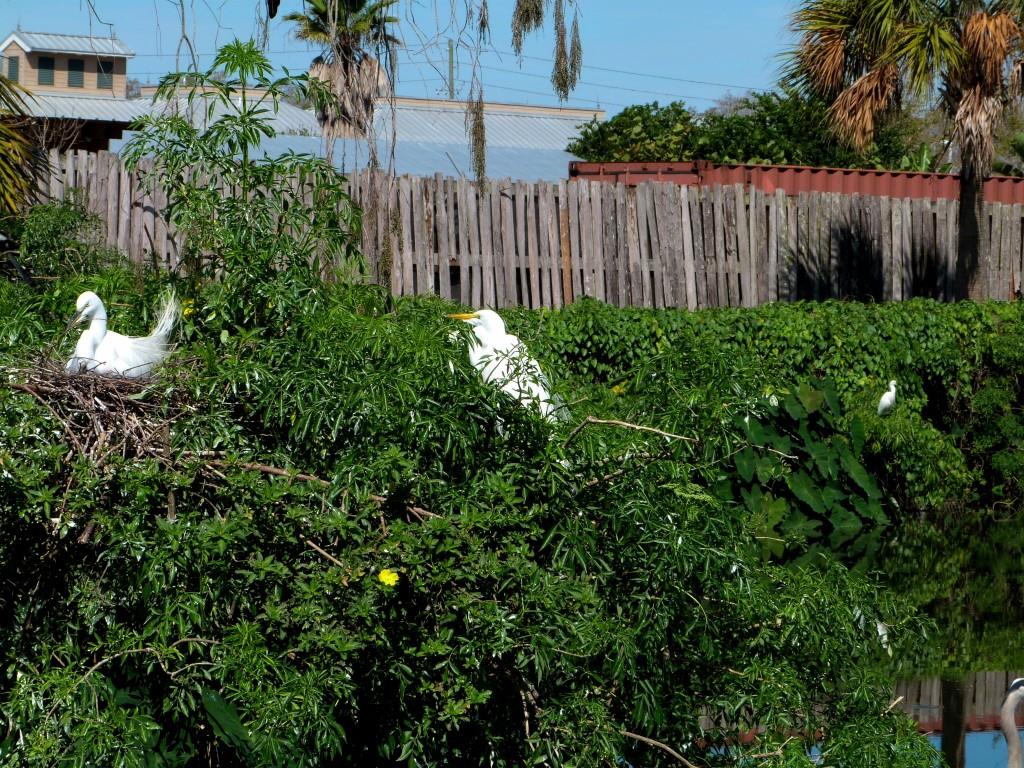
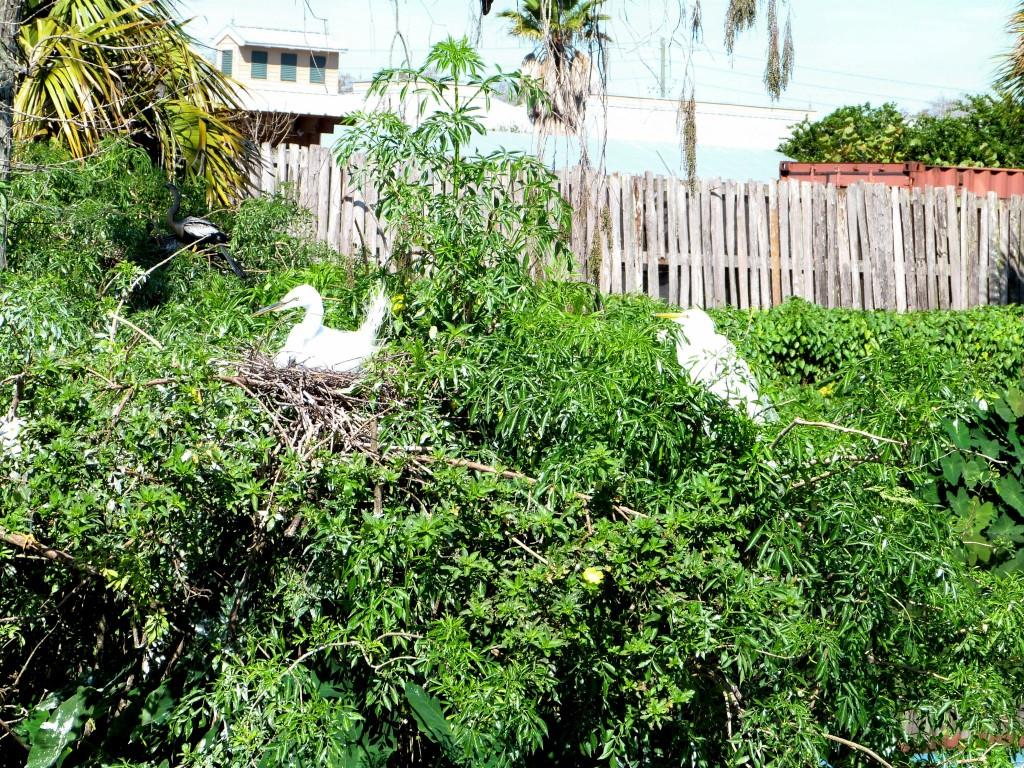
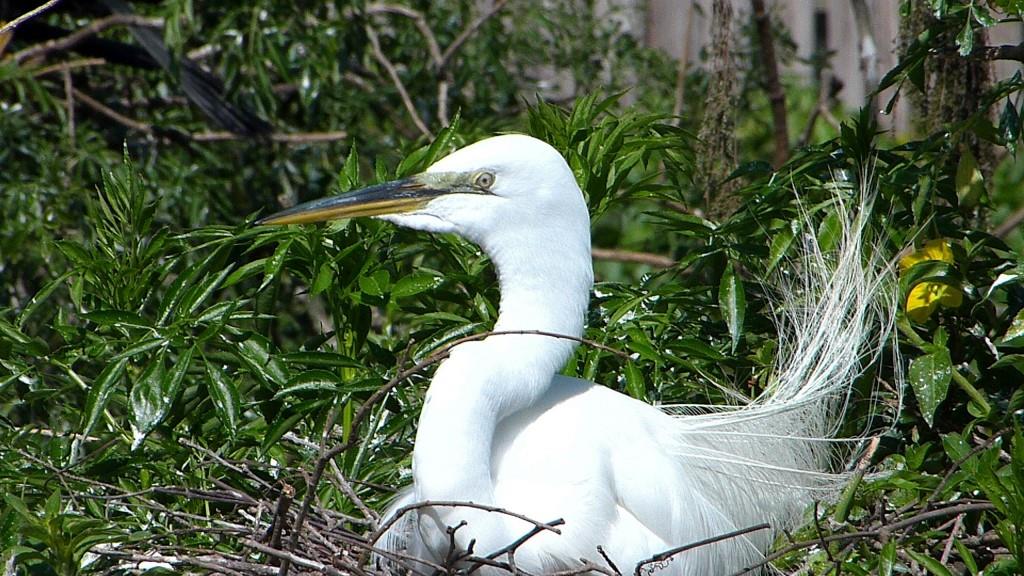
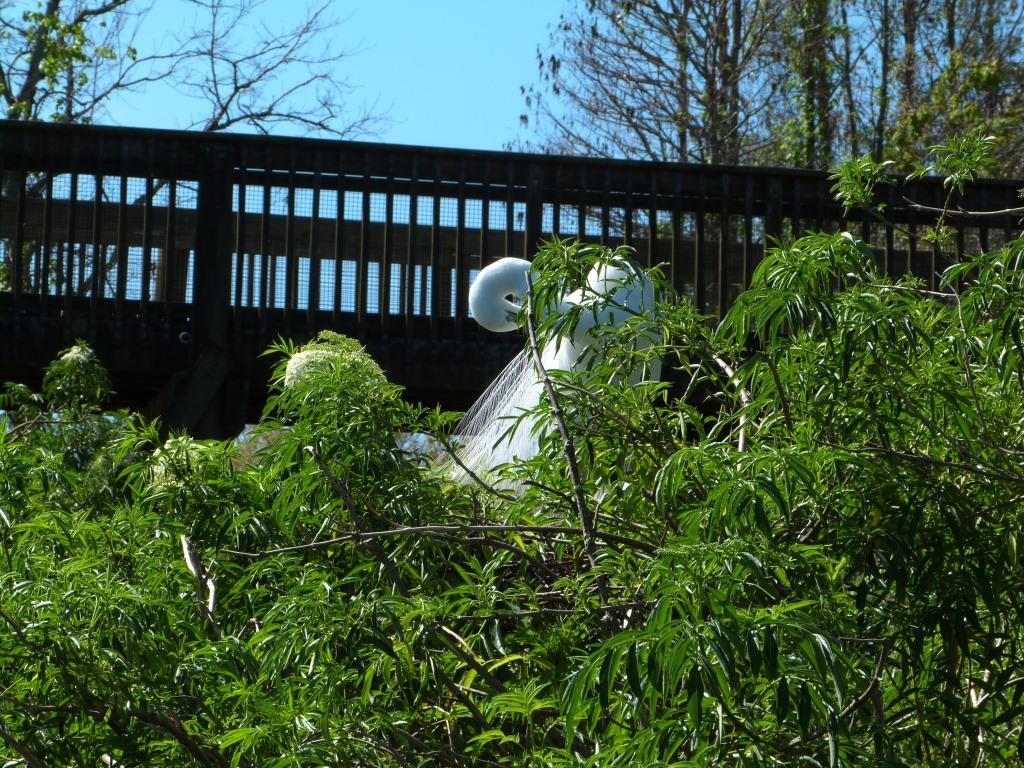
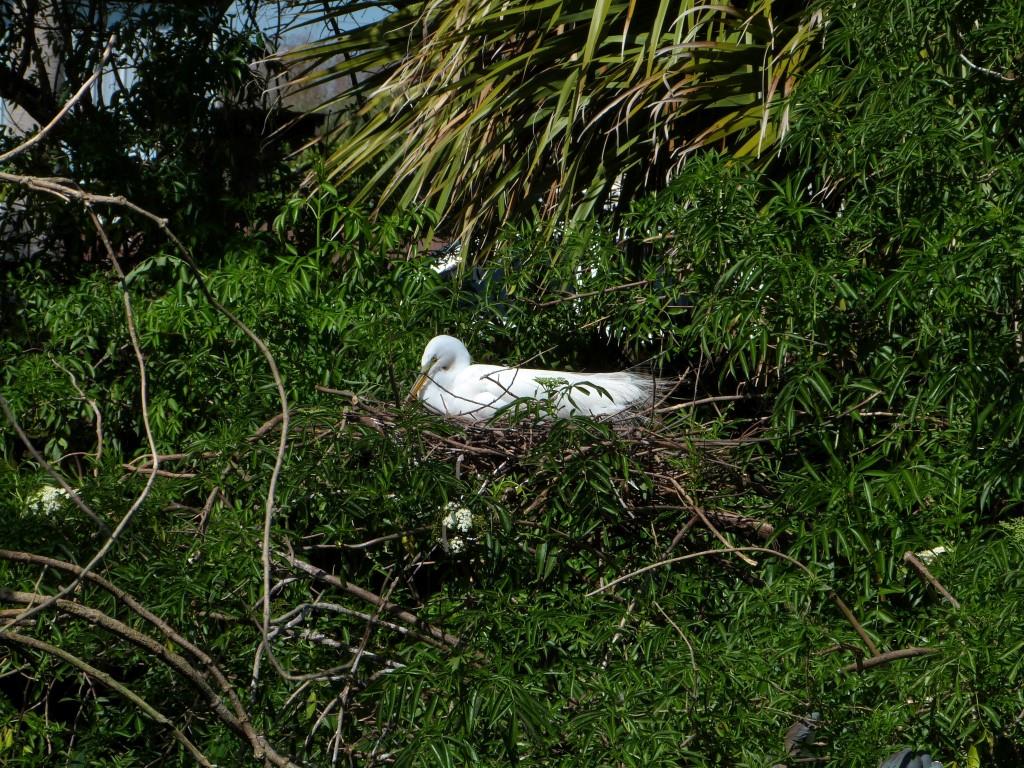
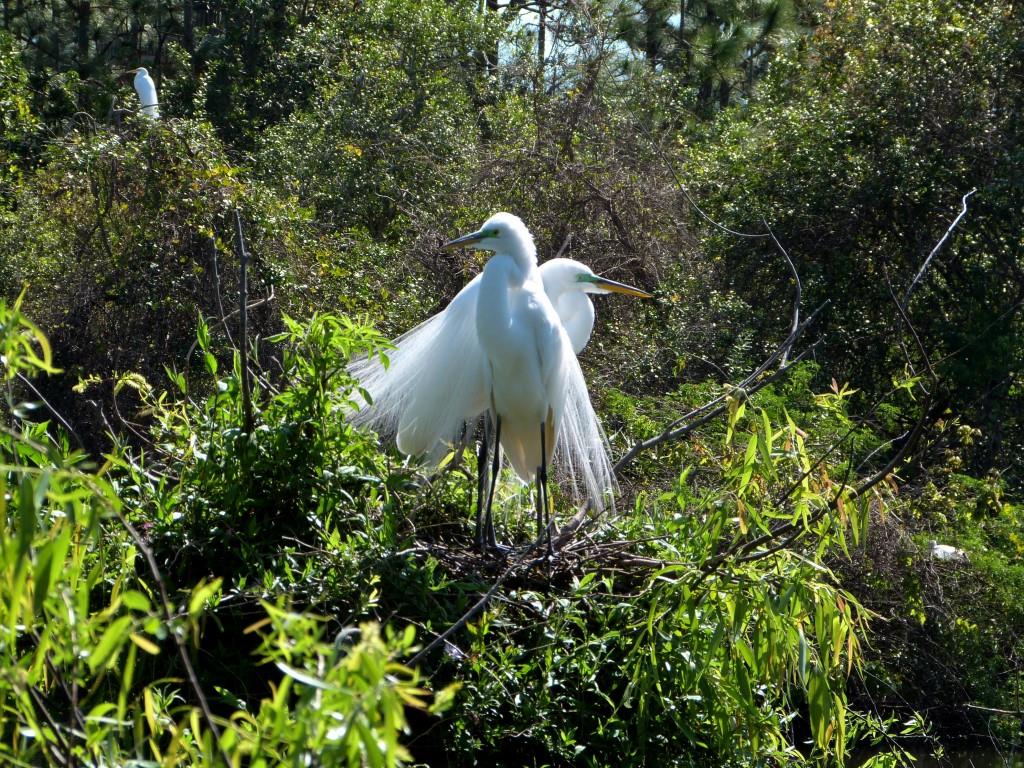
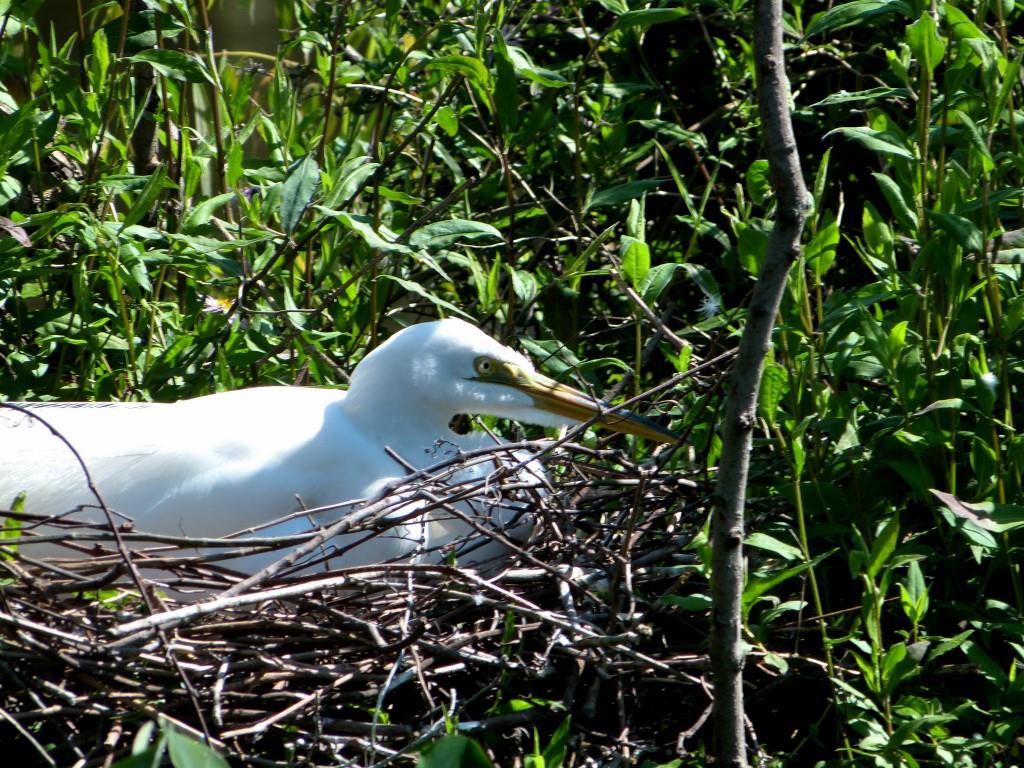
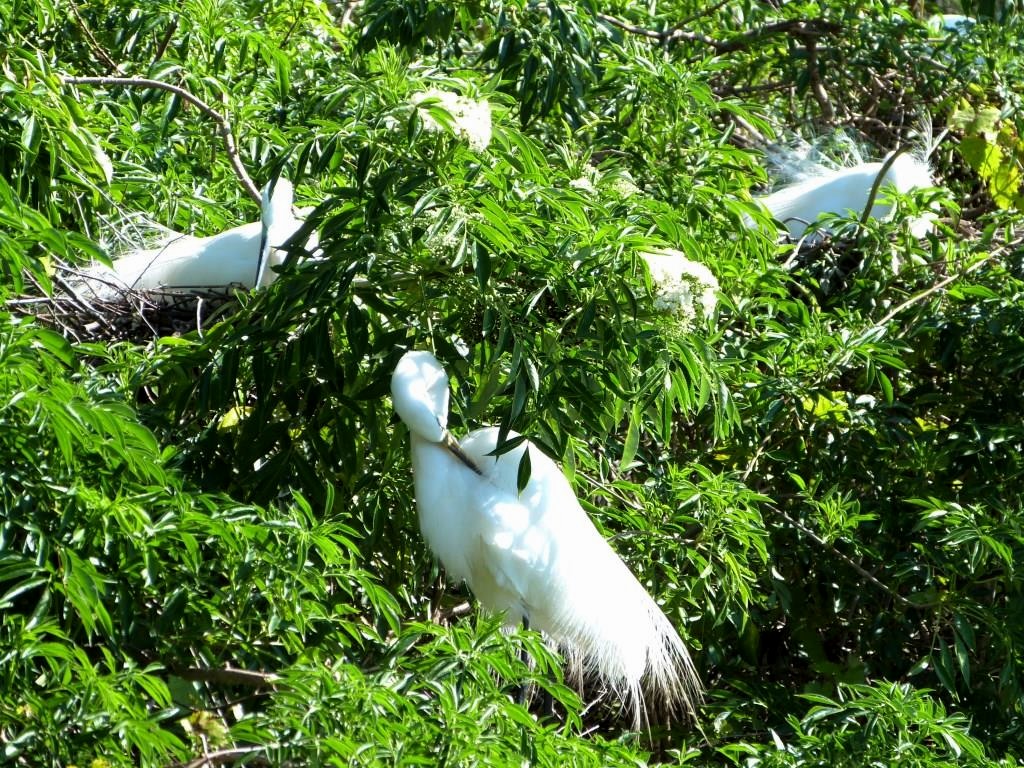
I have been saving the Great Egrets because they were so numerous. They were absolutely spectacular in the breeding plumage. This first article is about the Great Egrets on the nest. They were either sitting, building, improving or exchanging mates sitting on the eggs. Later I will show the one that has already been born and then on Sunday, plans are to show the beautiful plumage as a Sunday Inspiration.

Great Egret on Nest at Gatorland

Great Egrets in Breeding Plumage on Nest at Gatorland

There were not that many species represented at Gatorland (which are not captives), but what was there has left me awed by the way Our Creator has provided for the birds. He commanded them to reproduce and these birds put on quite a show to impress their mates. Their Maker has given them the ability to grow extra feathers, change the colors on their beaks and feet, and some birds have eyes that change color. Wow! Praise the Lord for His love and care for them. How much more love has He shown to us.

Great Egret on Nest at Gatorland

Great Egret on Nest at Gatorland

Another parable He put forth to them, saying: “The kingdom of heaven is like a mustard seed, which a man took and sowed in his field, which indeed is the least of all the seeds; but when it is grown it is greater than the herbs and becomes a tree, so that the birds of the air come and nest in its branches.” (Matthew 13:31-32 NKJV)

Enjoy these photos of Great Egrets on their nest and then a video of “the changing of the guard” at one of the nest I was able to witness. (Click on a thumbnail to see photos full screen)

*

*

*

See the Gatorland Birdwatching Page

Gatorland in Orlando

Falling Plates

*

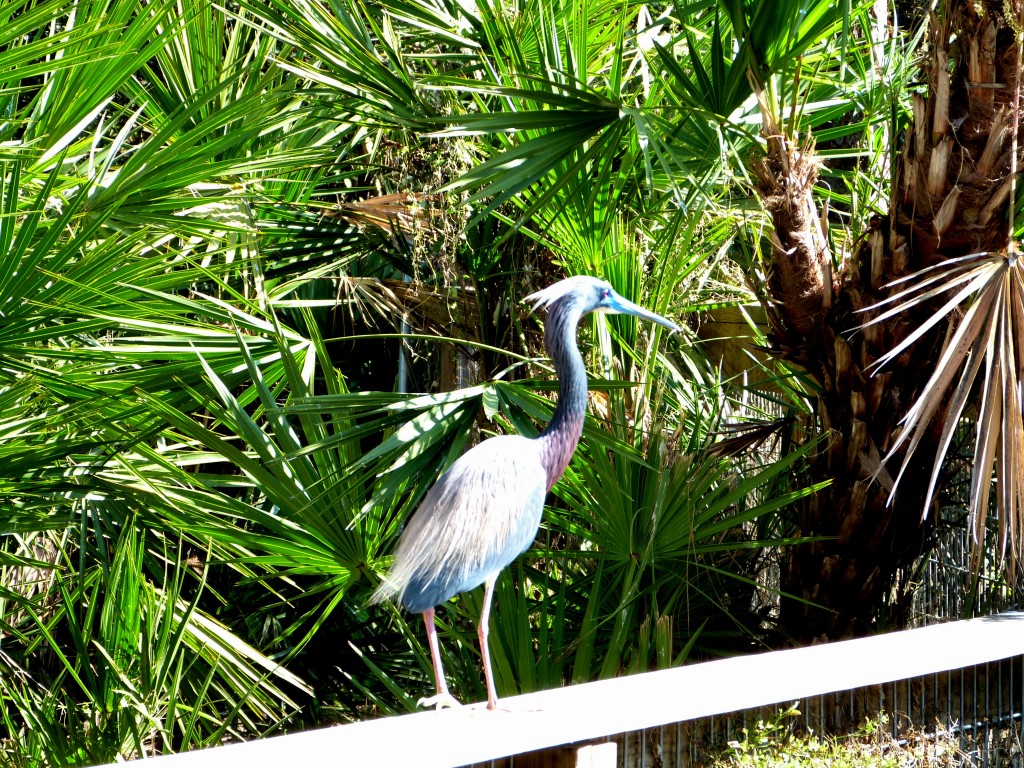
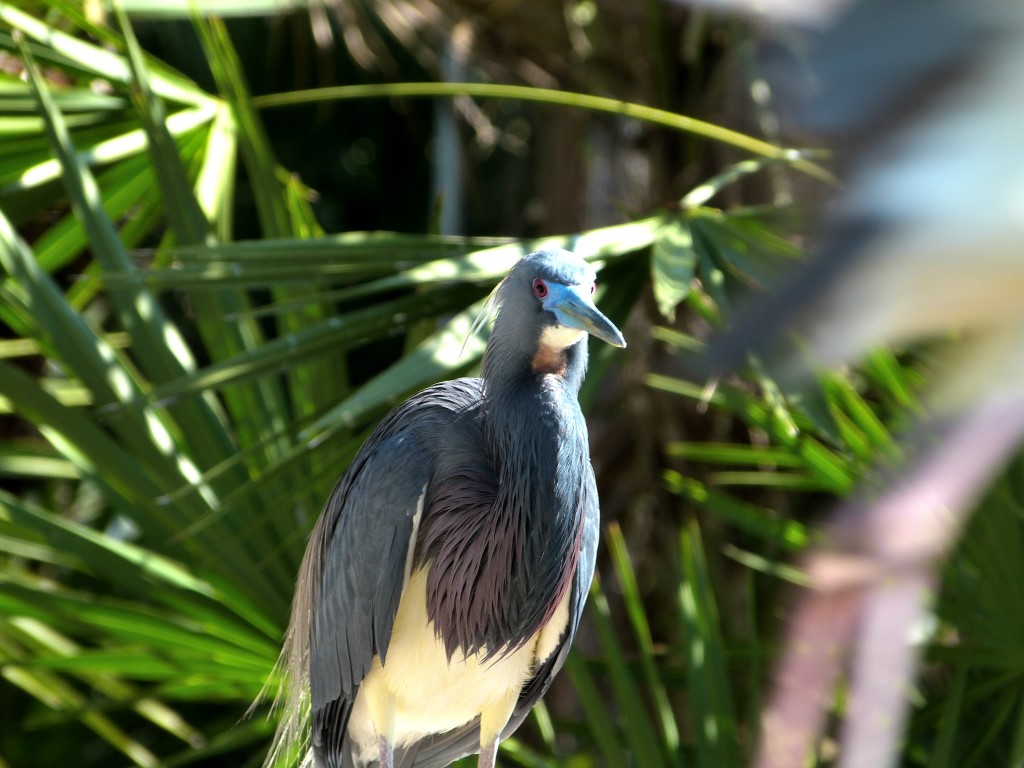
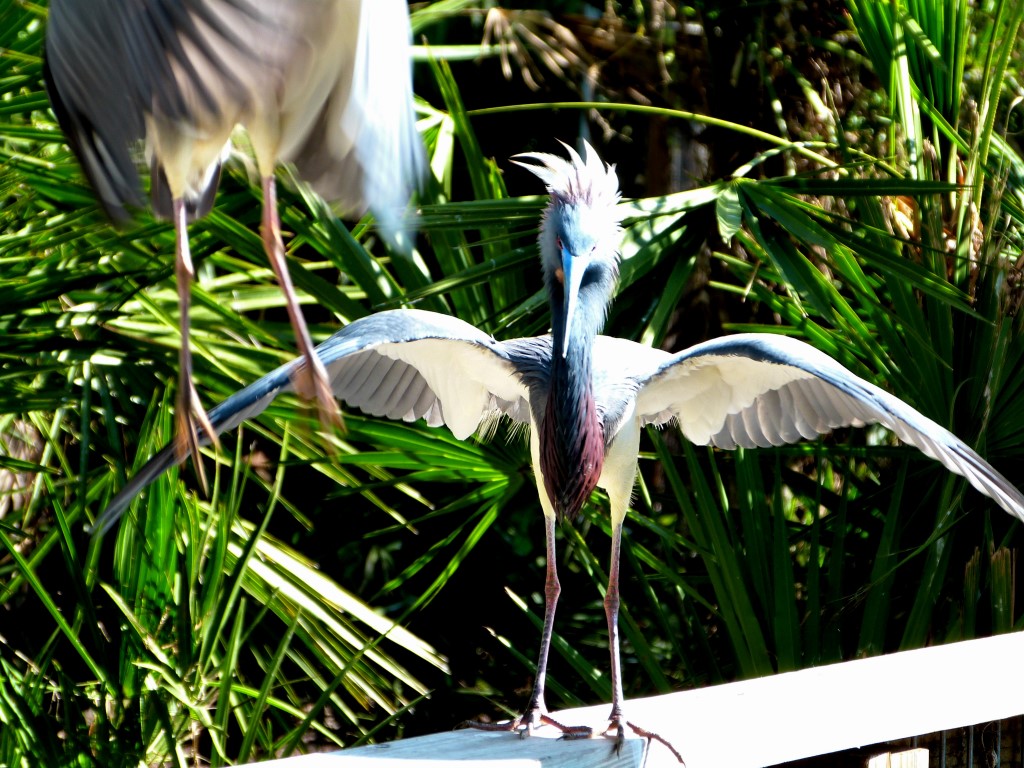
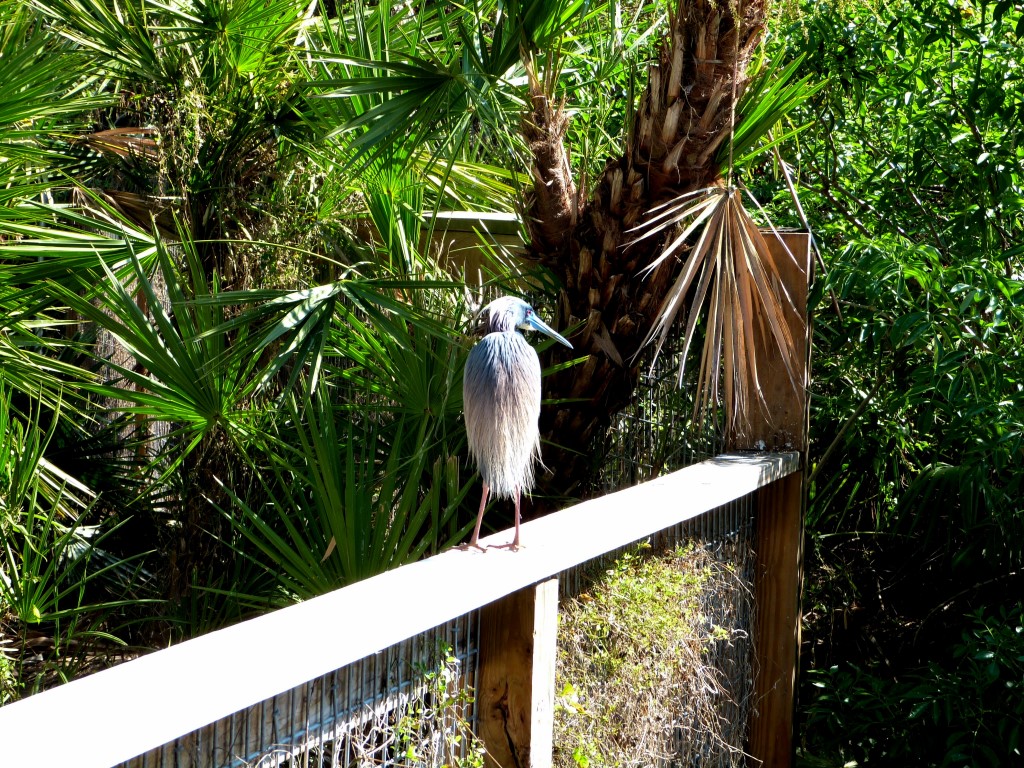
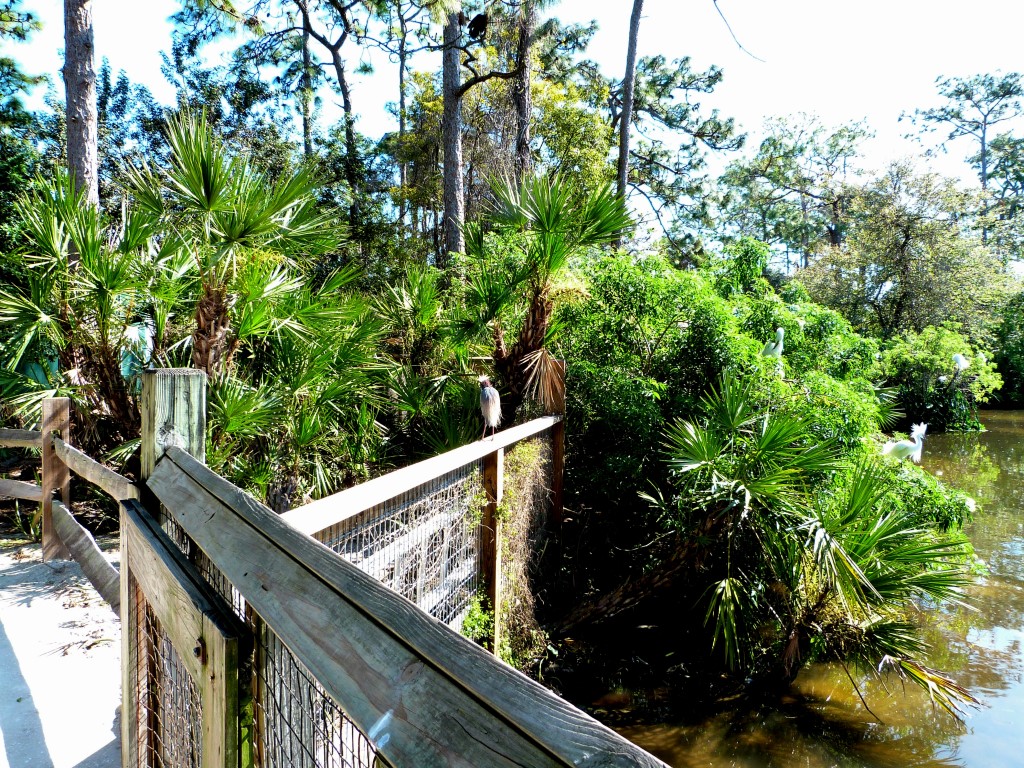
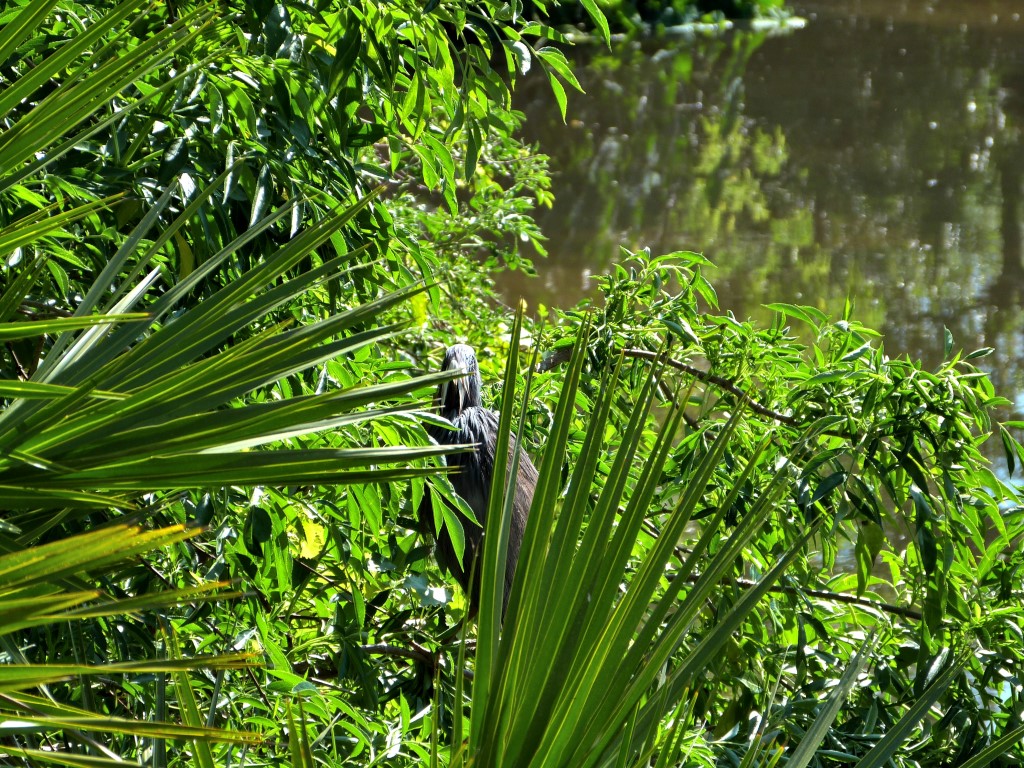
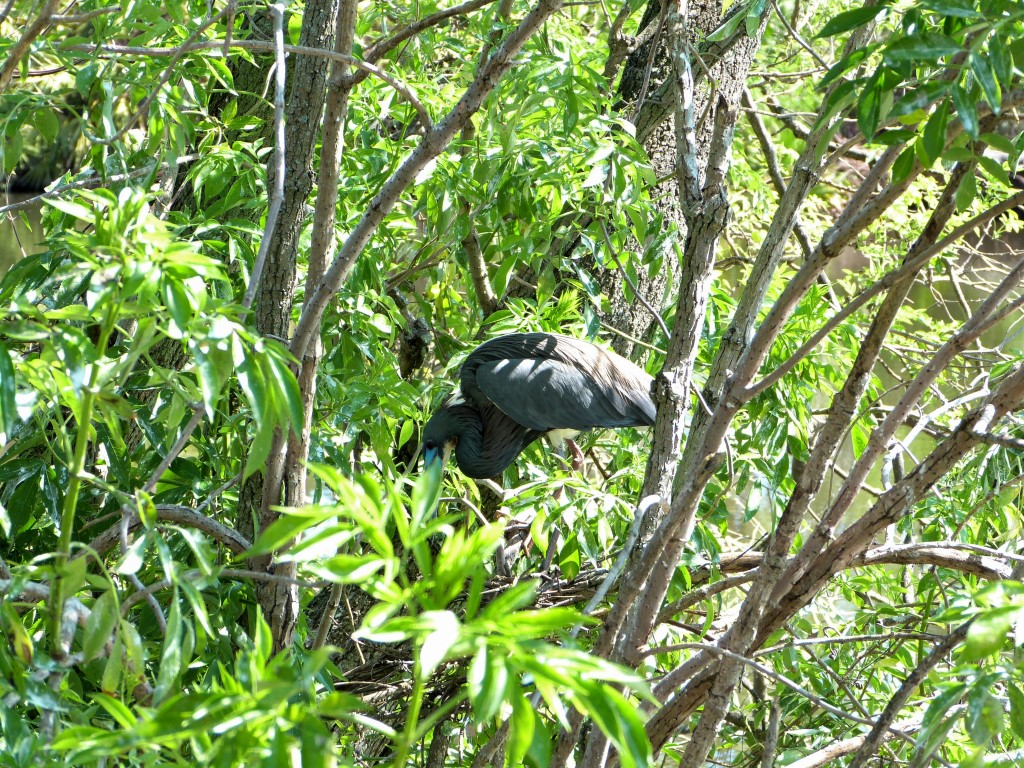
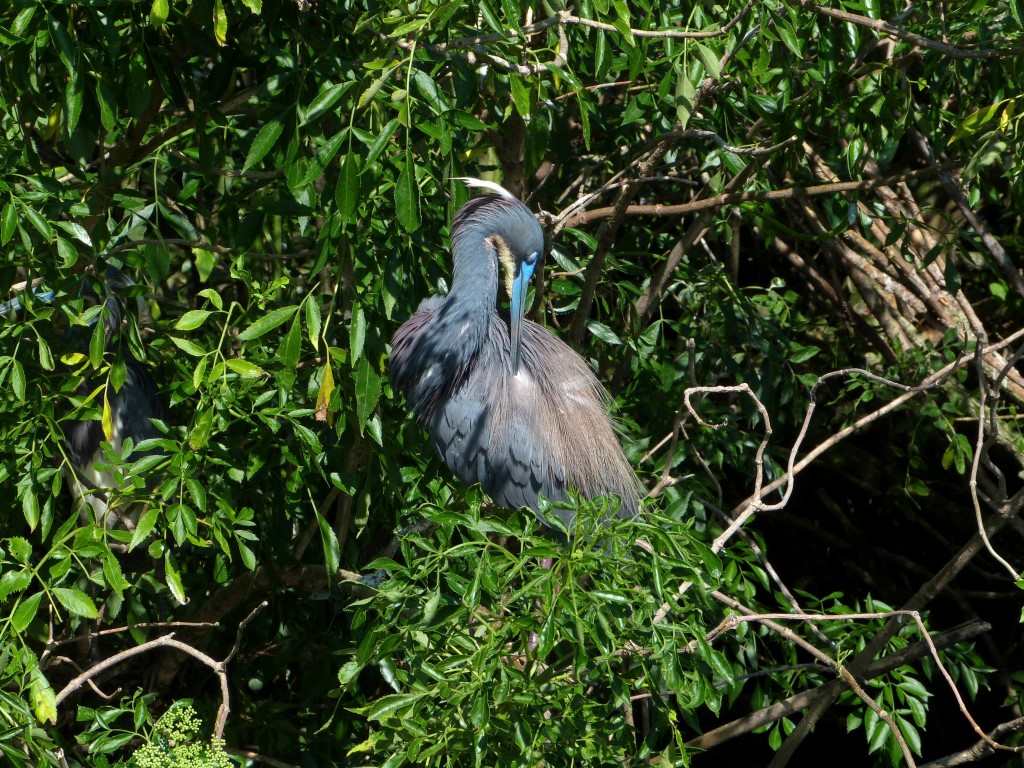
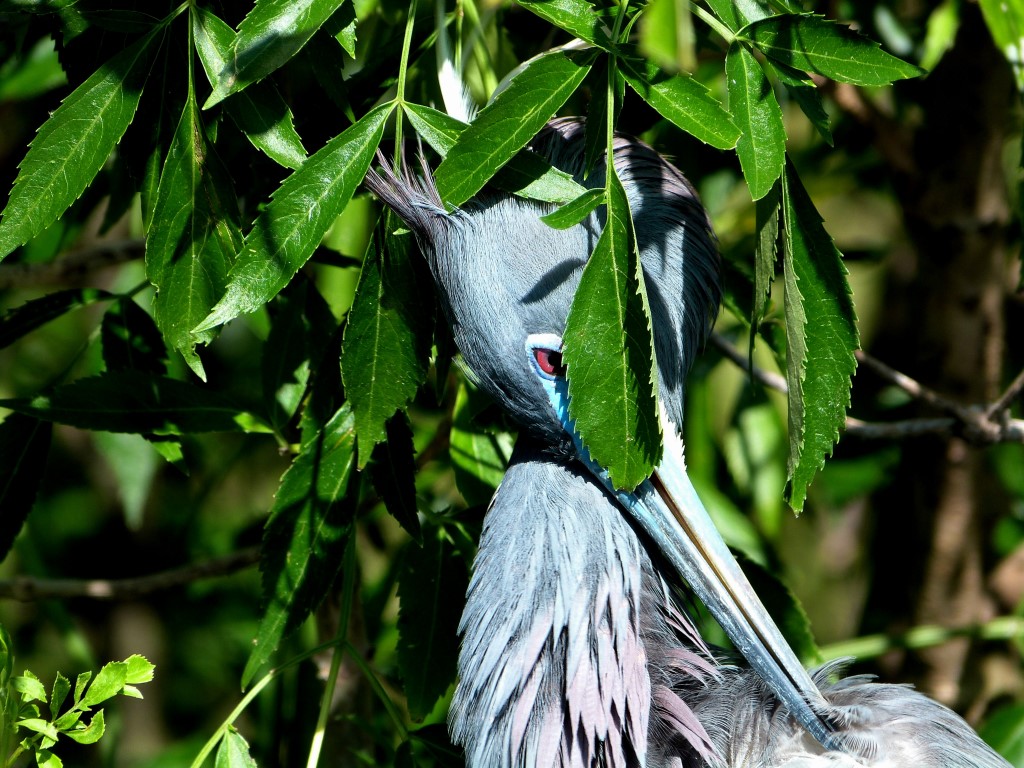
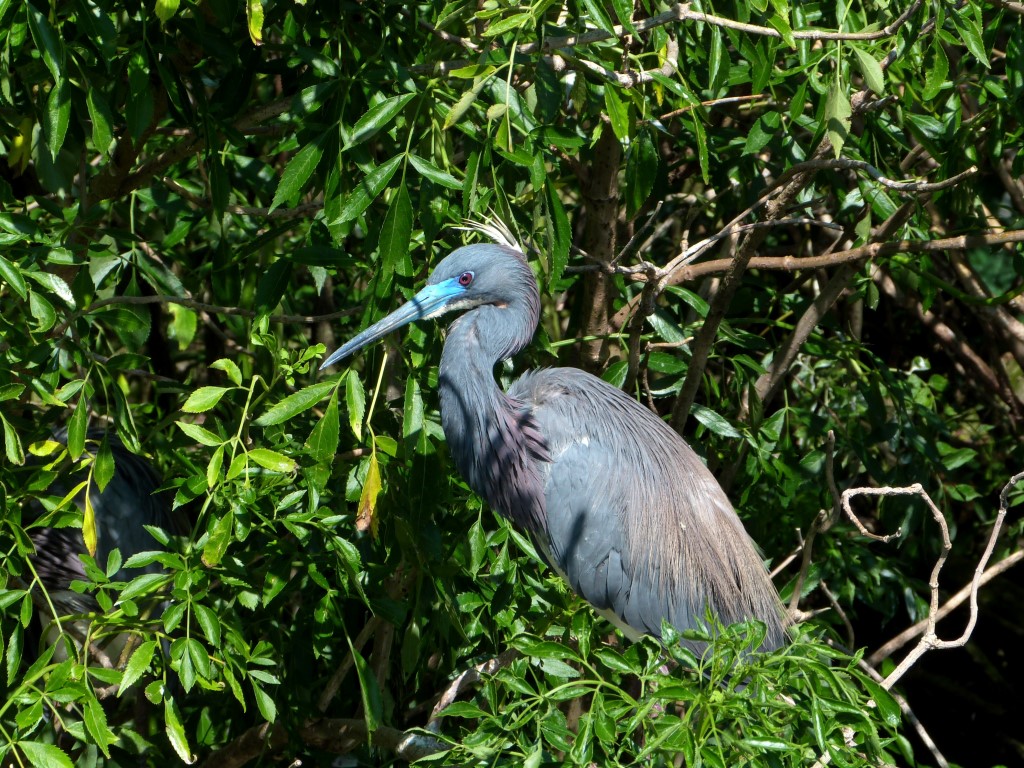
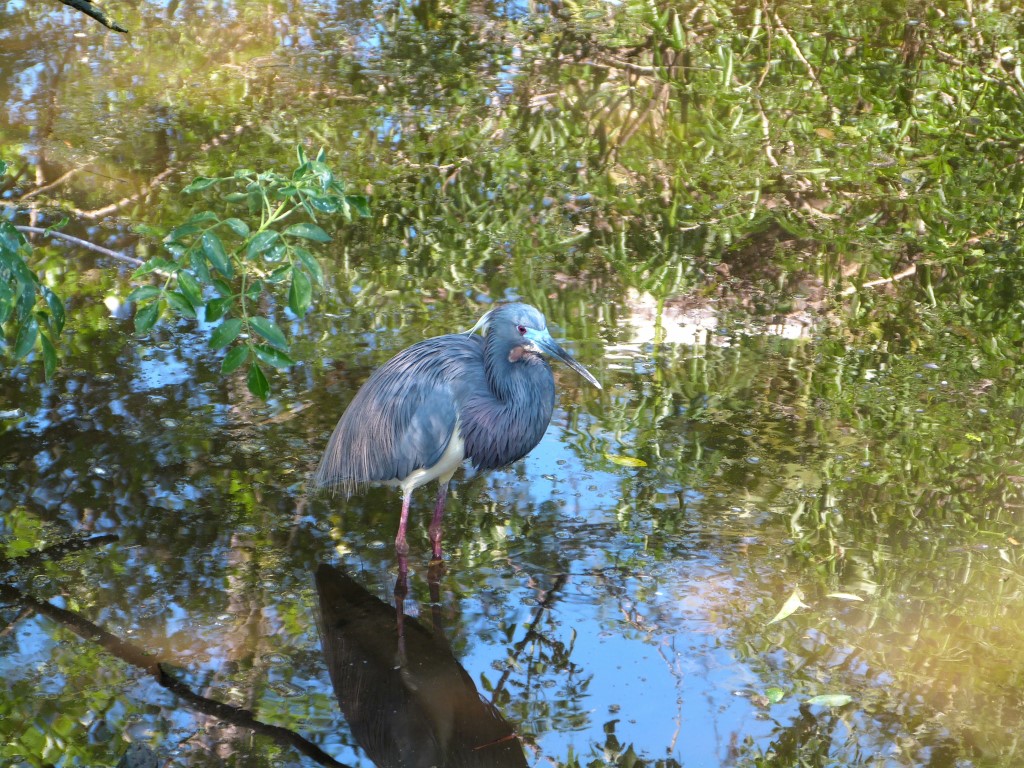
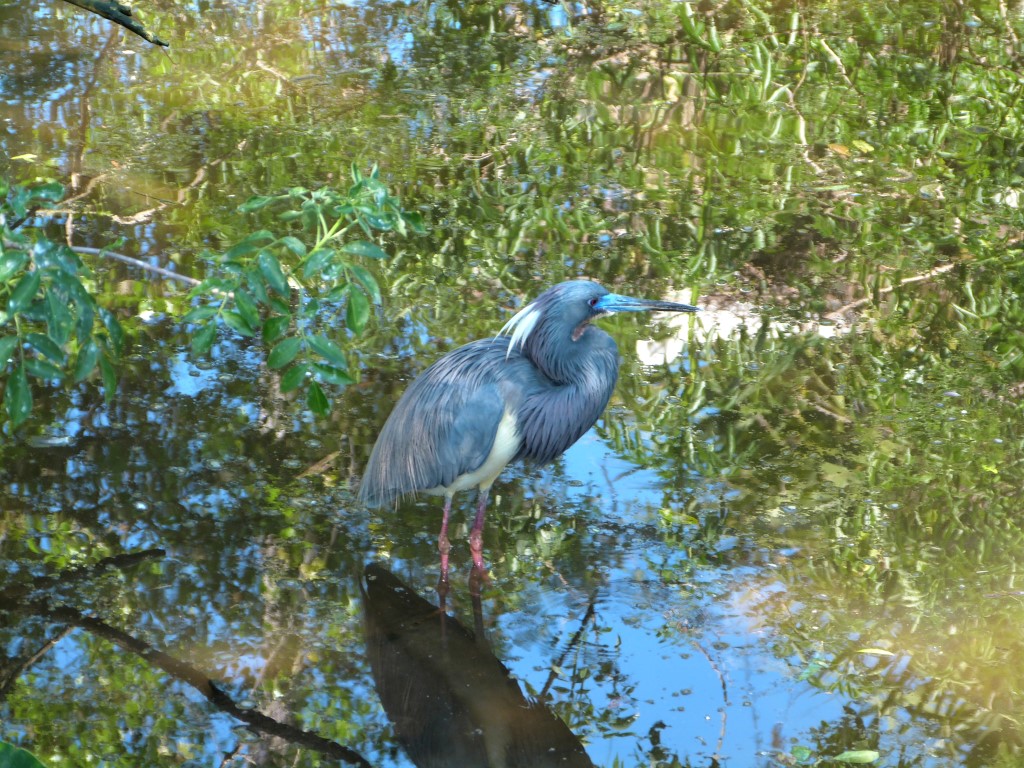
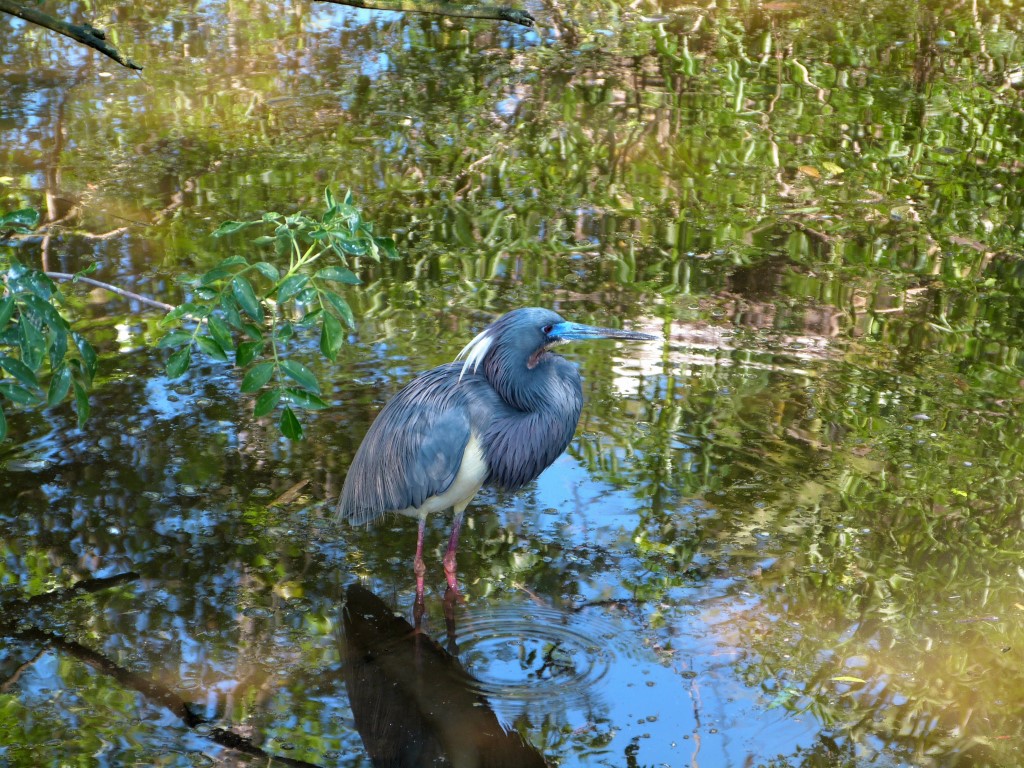
Tricolored Herons at Gatorland

Tricolored Heron at Gatorland

Tricolored Heron at Gatorland

the stork, the heron after its kind, the hoopoe…. (Leviticus 11:19 NKJV)

Here is the next beautifully created bird seen on our trip to Gatorland this week. See the other articles listed below.

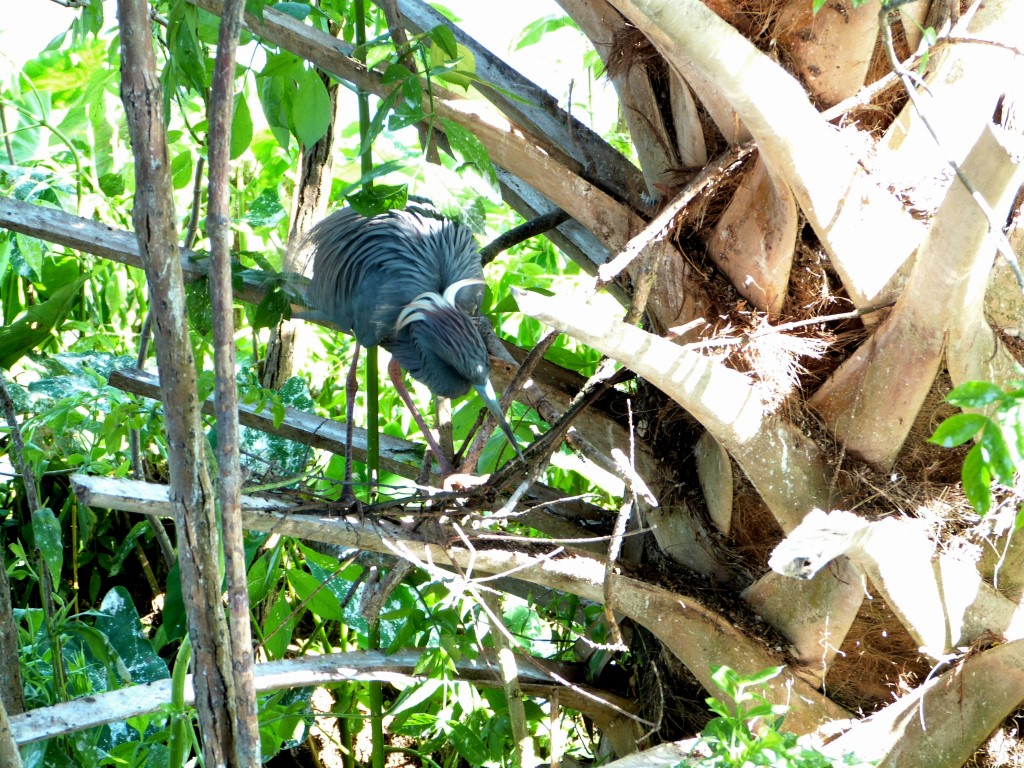
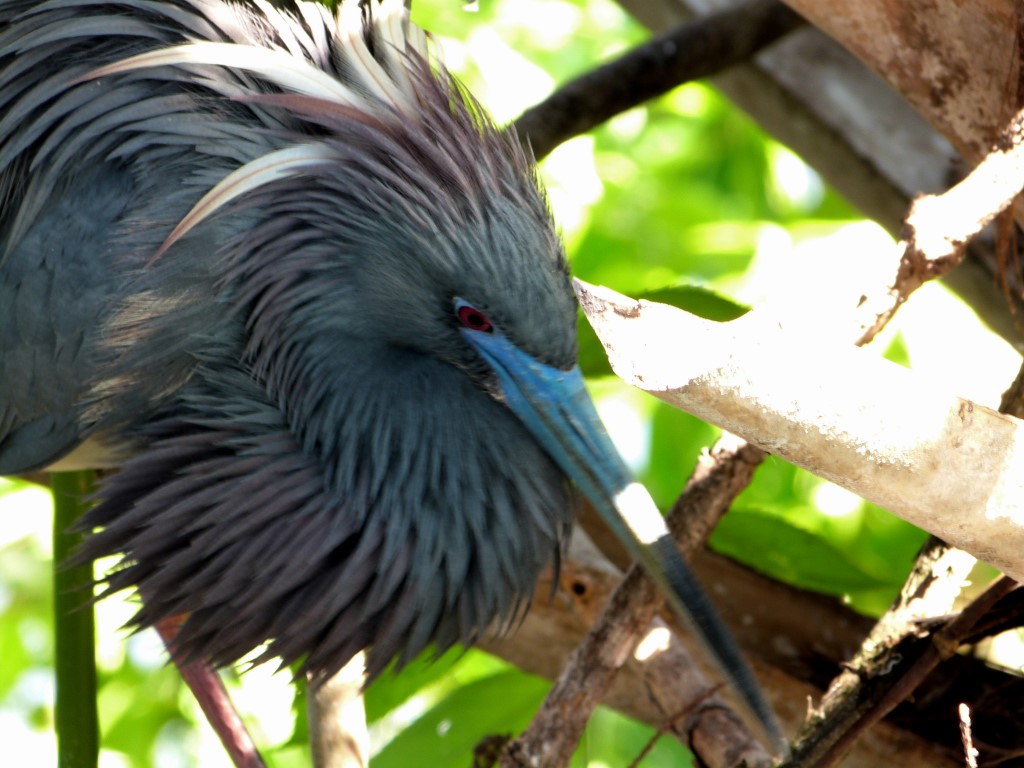
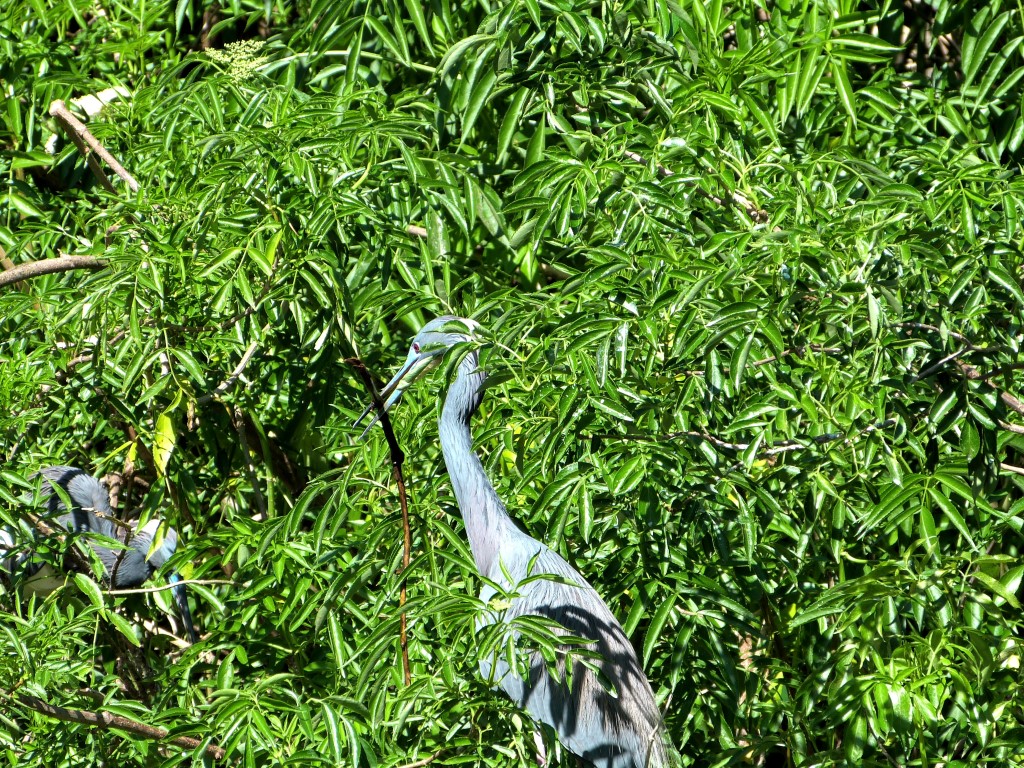
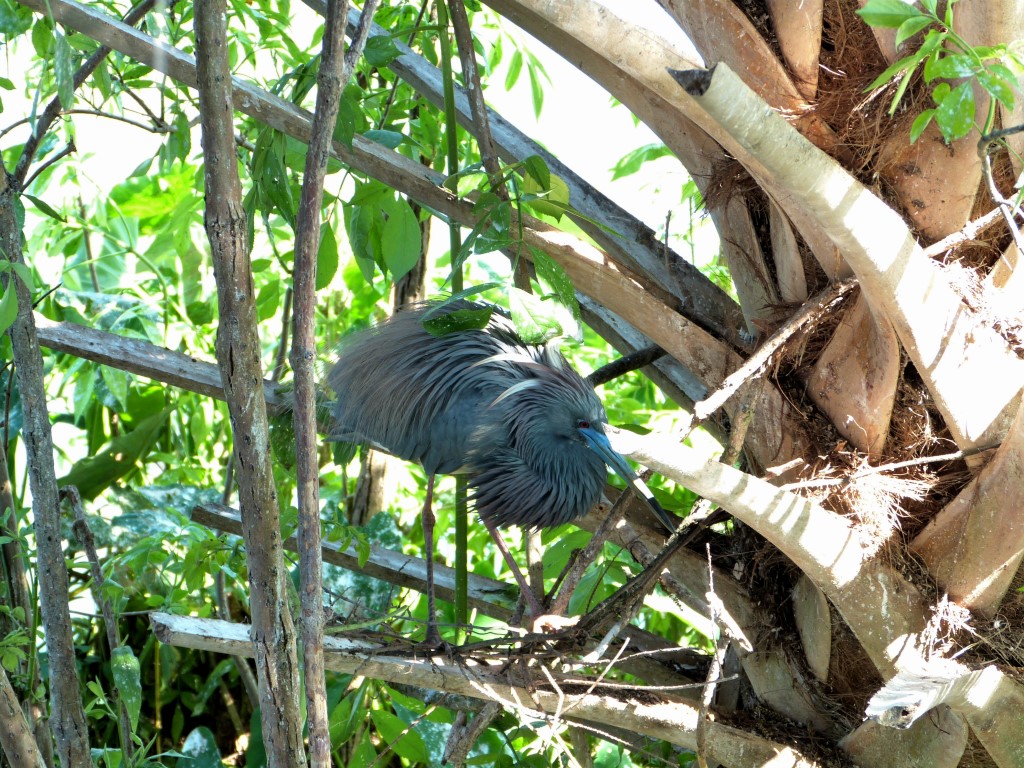
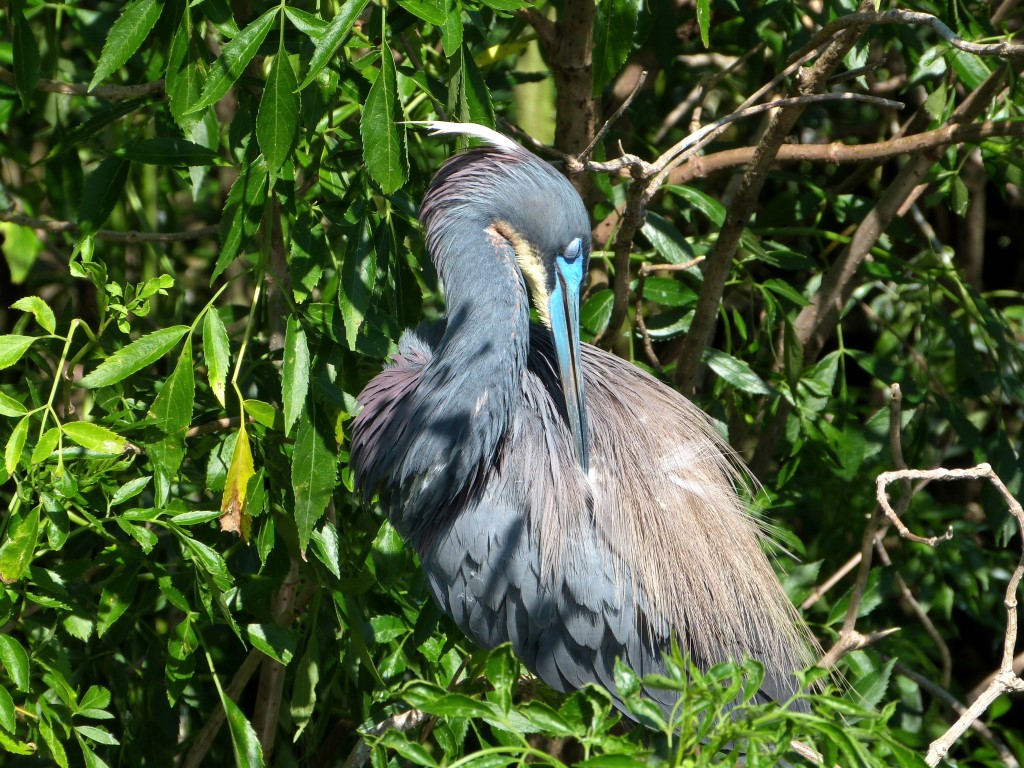
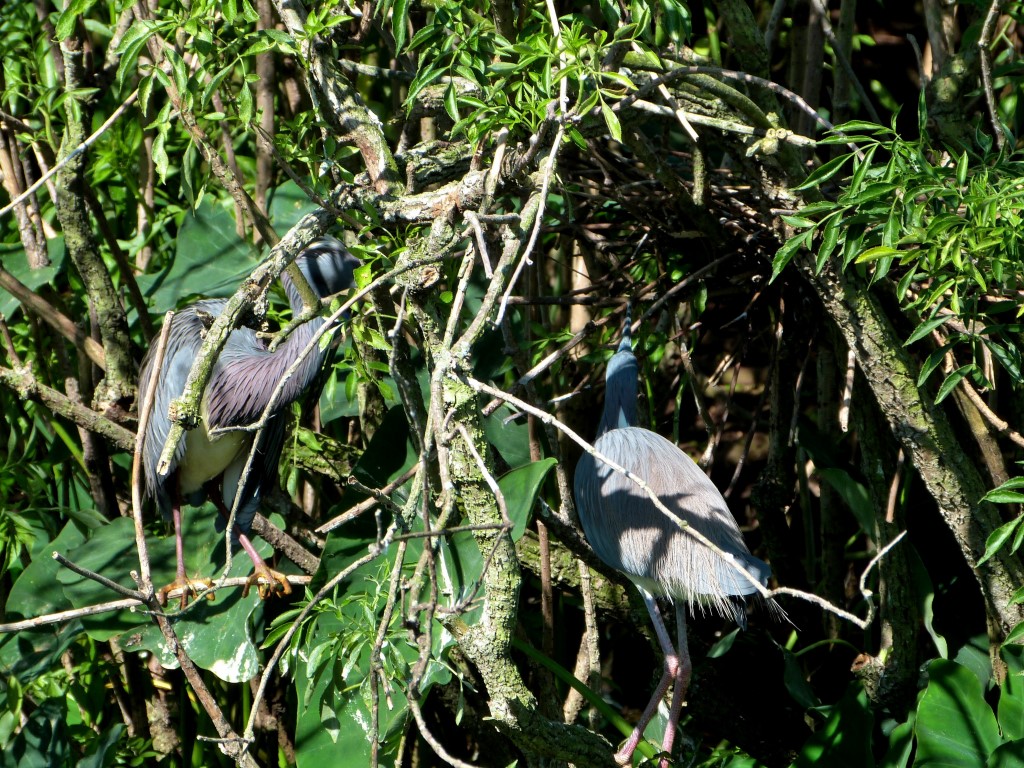
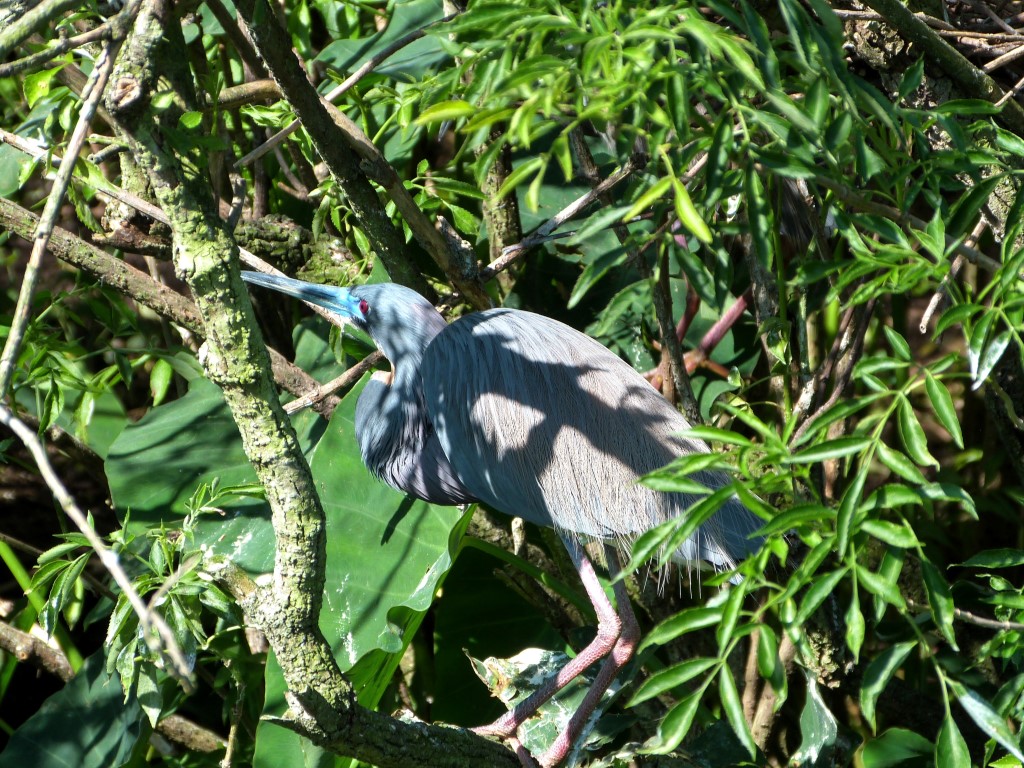
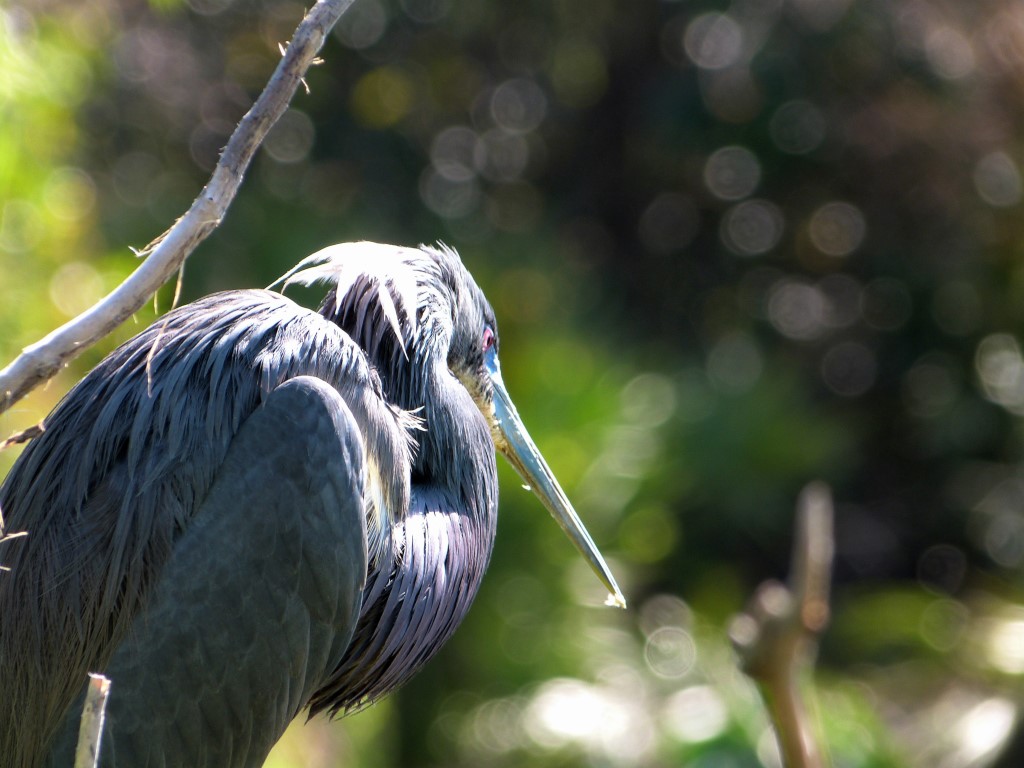
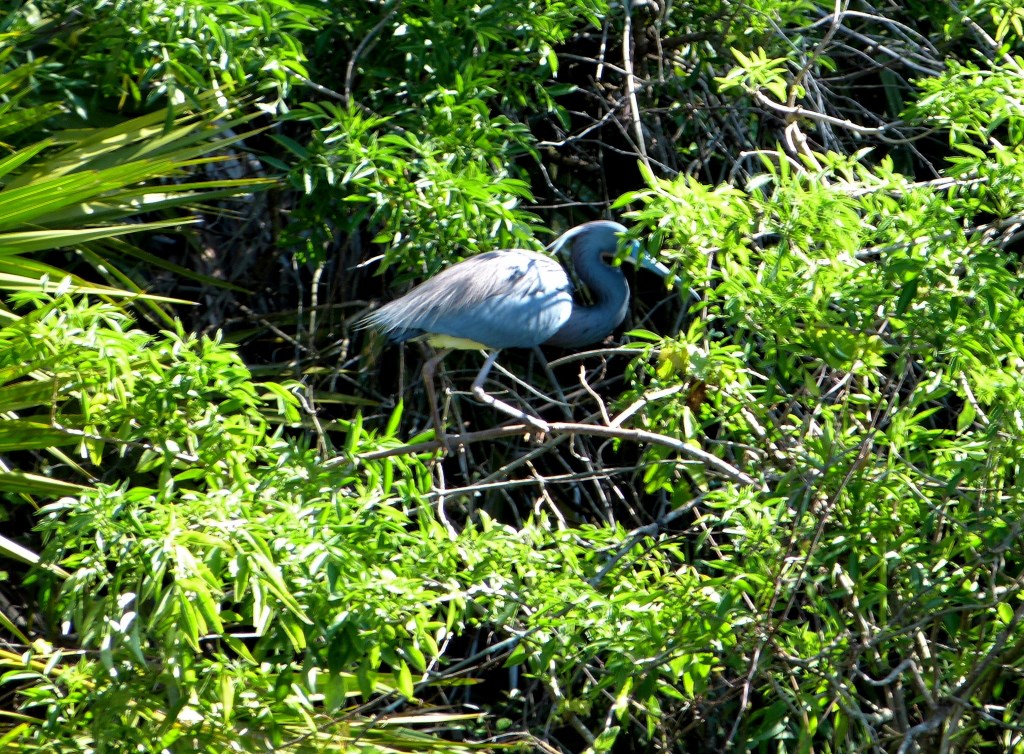
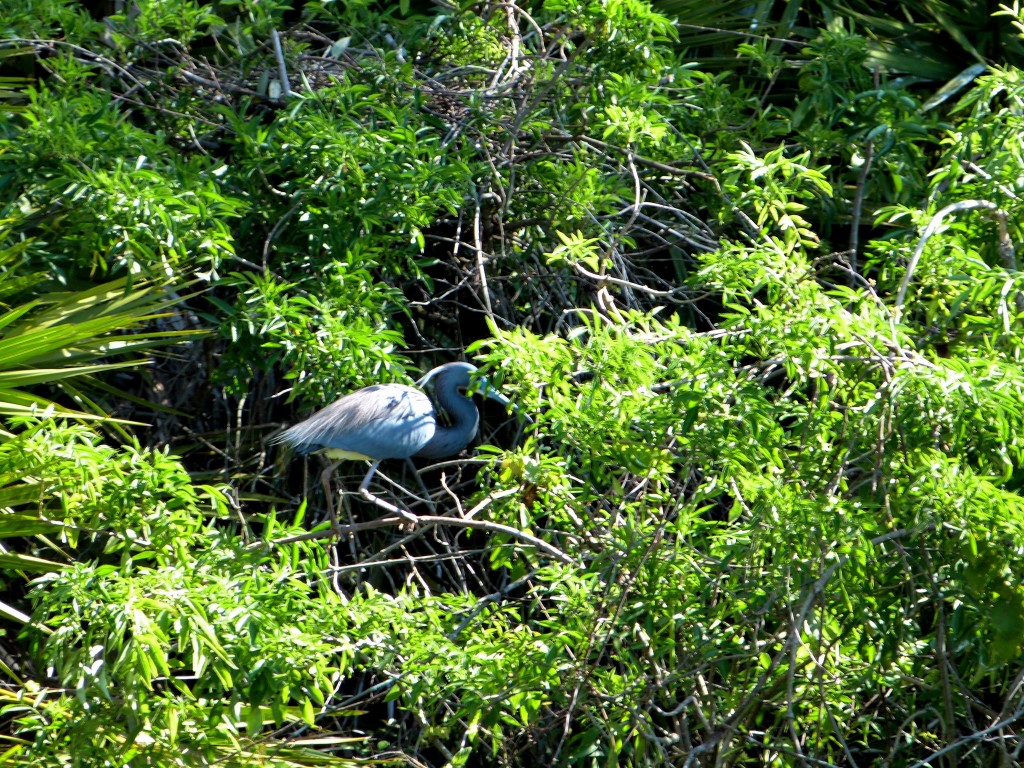
Today, I want to share the Tricolored Herons (Egretta tricolor) which were in their breeding plumage busy courting and building nest.

“During breeding season, the Tricolored Heron sports a short white head plume, a buffy throat and fore-neck, a blue face, and a blue bill, tipped with black. The eyes are reddish, and the legs pinkish. Nonbreeding adults have a yellow face, bill, and legs; the throat and fore-neck are white.” (Audubon)

Tricolored Heron at Gatorland

Tricolored Heron at Gatorland

The Tricolored Heron (Egretta tricolor) formerly known in North America as the Louisiana Heron, is a small heron. They are in the Ardeidae- Herons, Bitterns Family. It is a resident breeder from the Gulf states of the USA and northern Mexico south through Central America and the Caribbean to central Brazil and Peru. There is some post-breeding dispersal to well north of the nesting range.

Tricolored Heron’s breeding habitat is sub-tropical swamps. It nests in colonies, often with other herons, usually on platforms of sticks in trees or shrubs. In each clutch, 3–7 eggs are typically laid.

Tricolored Heron at Gatorland

Tricolored Heron at Gatorland

This species measures from 56 to 76 cm (22 to 30 in) long, and has a wingspan of 96 cm (38 in). The slightly larger male heron weighs 415 g (14.6 oz) on average, while the female averages 334 g (11.8 oz). It is a medium-large, long-legged, long-necked heron with a long pointed yellowish or greyish bill with a black tip. The legs and feet are dark.

Adults have a blue-grey head, neck, back and upperwings, with a white line along the neck. The belly is white.
Tricolored Heron stalks its prey in shallow or deeper water, often running as it does so. It eats fish, crustaceans, reptiles, and insects. (Wikipedia)

Trying this method of showing the photos. By clicking on a photo, it will bring it up full screen and then you can browse through them. Leave a comment as to which method you prefer.

*

*

Video of Tricoloreds Preening and Building Nest

*

*

Gatorland’s Snowy Egrets

Snowy Egret in Breeding Plumage at Gatorland by Dan

Snowy Egret in Breeding Plumage at Gatorland by Dan

Bring out with you every living thing of all flesh that is with you: birds and cattle and every creeping thing that creeps on the earth, so that they may abound on the earth, and be fruitful and multiply on the earth. (Genesis 8:17 NKJV)

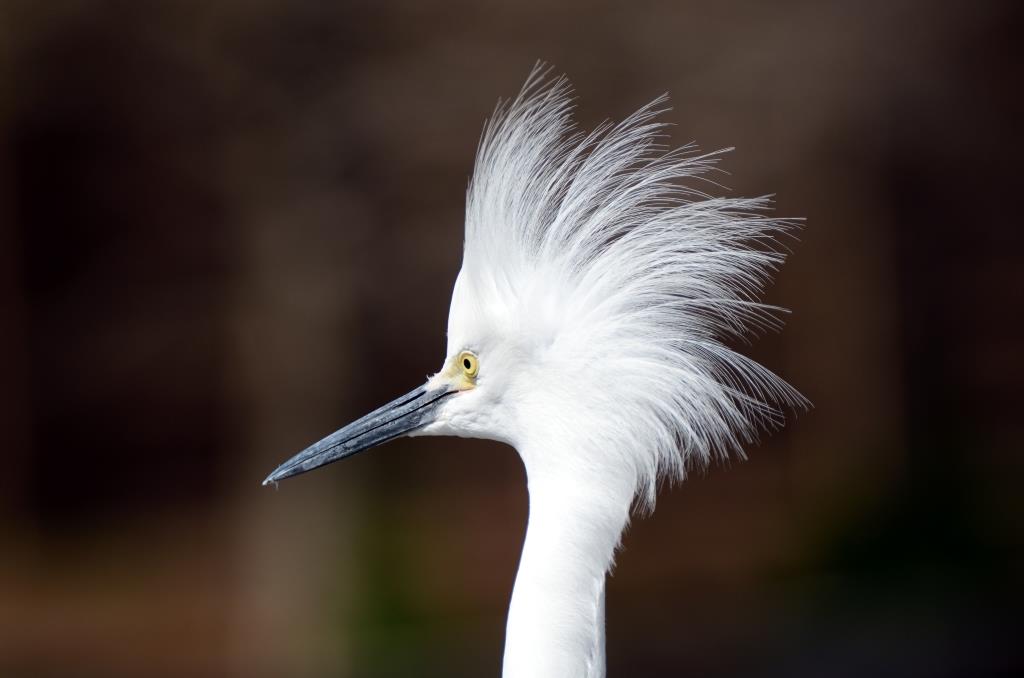
In yesterday’s blog, I told about the alligators at Gatorland. Today, we continue with the Snowy Egrets which are there in the rookery. The “rookery” or a place where lots of birds gather to build nest, court, mate and raise their young at Gatorland is protected by the gators. Birds like to find small islands or areas that are protected from animals or snakes that eat the young. When the rookery is surrounded by gators, they have much protection. The alligators get their “pay” by catching the young that accidentally fall from the nest. It is not perfect for the birds, but it does allow them to raise most of their young.

Snowy Egret - Noticd the Red when breeding by Lee

Snowy Egret – Noticd the Red when breeding by Lee

All the birds in the nesting area are wild birds and not captives. They are free to come and go as they please. Right now, they please to be there to raise their young. This is prime time breeding season at Gatorland.

Even Feet Get Reddish Tint - Snowy Egret at Gatorland by Lee

Even Feet Get Reddish Tint – Snowy Egret at Gatorland by Lee

Here are some of the photos of the Snowy Egrets from yesterday. The top one was a great catch by Dan. Isn’t the Lord amazing in how He created these birds. Their feathers are so beautiful and it is neat how some of their parts change color.

*

This slideshow requires JavaScript.

*

See:

*

Gatorland – March 2014 ~ I

Gators at Gatorland

Gators at Gatorland

Then God said, “Let the earth bring forth the living creature according to its kind: cattle and creeping thing and beast of the earth, each according to its kind”; and it was so. (Genesis 1:24 NKJV)

Today we drove over to Gatorland in Orlando. We had heard that the “rookery” was hopping with birds making nest, courting, mating, and raising babies.Spring is in the air.

We were not disappointed. We were over there last year, Vol 2, #6 – The American Flamingo, and I showed some of the Flamingos. They are still there, plus lots of Gators. We saw one crocodile also. What was so neat about thsi trip was the “rookery” which I will share later. With over 500 photos to sort through, I decided to show some of the gators and a really neat video I made of some acting like taxis.

Gatorland has been there for many years and as a bird lover, it is a super place to visit. In fact, I went to Gatorland as a kid with my mother almost 60 years ago. Needless to say, it has changed over the years, but they still have lots of gators.

Jumperoo Show - Dan caught this one taking the chicken

Jumperoo Show – Dan caught this one taking the chicken

They have shows like the Jumparoo where they get the gators to jump up to get some chicken (dead of course). It is an interesting place to visit and reasonably priced.

Here are some of the photos from today of alligators.

This slideshow requires JavaScript.

*

I couldn’t believe these Great Egrets that were using the Alligators as a Taxi. They were even chasing one another off so they could catch a ride.

Gators at Gatorland - Great Egrets catching a ride by Lee

Gators at Gatorland – Great Egrets catching a ride

*

Here are some videos I made of them catching a “Taxi”

*

*

*

Nuggets Plus – Variety

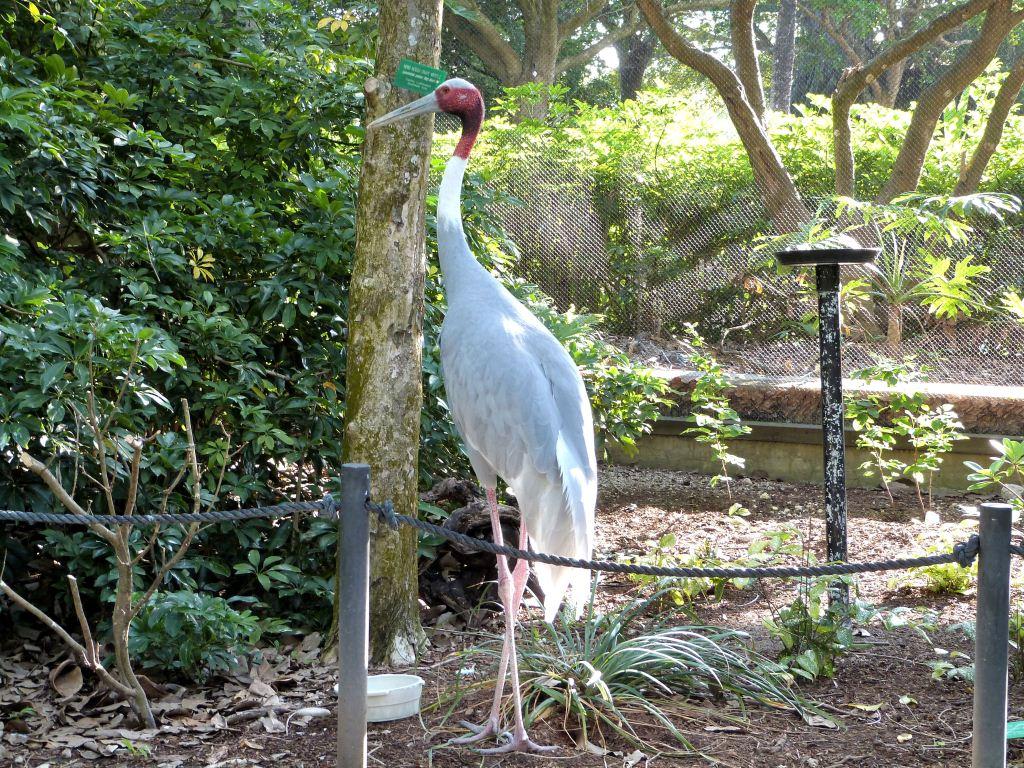
Sarus Crane (Grus antigone) by Lee at Wings of Asia

Sarus Crane (Grus antigone) by Lee at Wings of Asia

Today while doing my daily reading , I came across two verses that caused me to think about the varieties of birds and our talents.

Nuggets Plus

Nuggets Plus

And David said to his son Solomon, “Be strong and of good courage, and do it; do not fear nor be dismayed, for the LORD God—my God—will be with you. He will not leave you nor forsake you, until you have finished all the work for the service of the house of the LORD. Here are the divisions of the priests and the Levites for all the service of the house of God; and every willing craftsman will be with you for all manner of workmanship, for every kind of service; also the leaders and all the people will be completely at your command. (1 Chronicles 28:20-21 NKJV)

Magnificent Hummingbird (Eugenes fulgens) by Judd Patterson

Magnificent Hummingbird (Eugenes fulgens) by Judd Patterson

David was handing over the kingdom to Solomon, his son, who was young. David had wanted to build a temple for The LORD, but was told no, but that Solomon would be the one to build the temple.

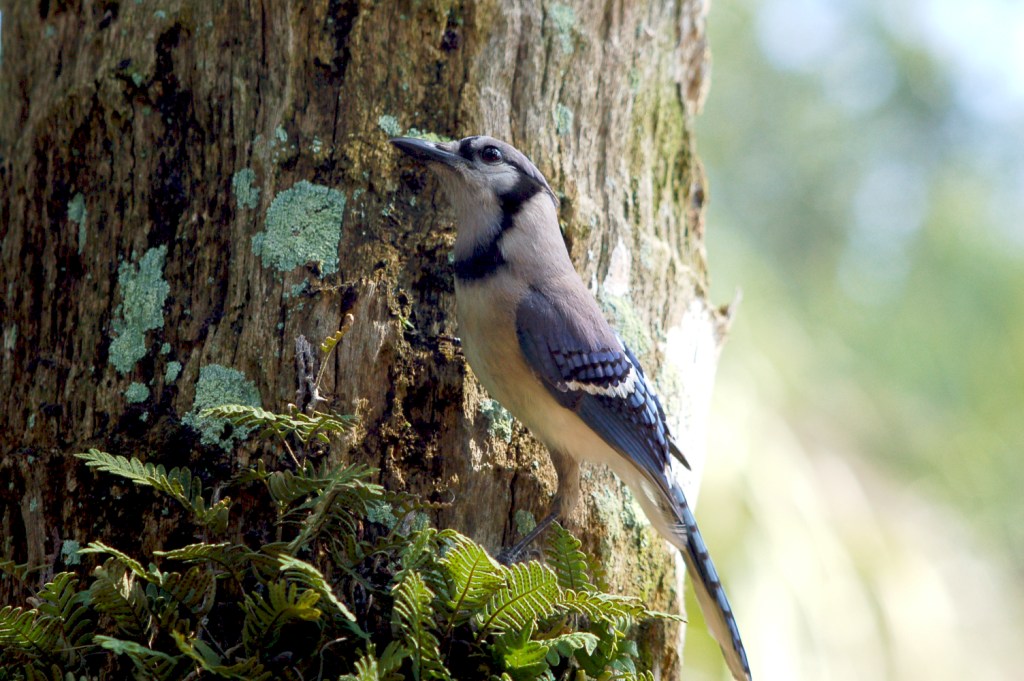
Blue Jay (Cyanocitta cristata) at Bok Tower By Dan'sPix

Blue Jay (Cyanocitta cristata) at Bok Tower By Dan’sPix

David is explaining this to Solomon and the people of Israel. He was encouraging his son and also the people and reminding them of these promises from God:

  • Be strong
  • of good courage
  • do it
  • not fear
  • nor be dismayed
  • LORD God—my God—will be with you
  • not leave you
  • nor forsake you,
  • until you have finished all the work

Then in the next verse (21) he explains the different division (variety) of work to be done:

  • every willing craftsman
  • for all manner of workmanship
  • for every kind of service;
  • also the leaders and all the people will be completely at your command.
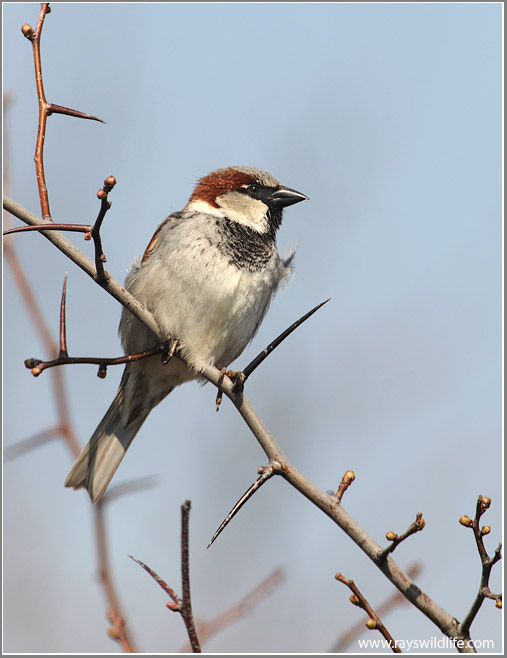
House Sparrow by Ray

House Sparrow by Ray

Isn’t it amazing when we see all the variety in the birds the Lord Created? They are all birds, but they vary so much in height, width, color, beaks, feet, behavior, the way and place they build their nest, etc, etc.

Blue-footed Booby (Sula nebouxii) by Ian

Blue-footed Booby (Sula nebouxii) by Ian

How about us? We are all different and each have different talents and abilities. Our interest vary. Many of our readers are bloggers, yet each of us do it differently.

Birdwatchers vary in how they view the birds. Some like to view the birds through a camera, binoculars, just their eyes. Some make list of all kinds, some never bother. There really isn’t a right way or wrong way to watch birds, unless you are doing something harmful to the birds.

Keel-billed Toucan (Ramphastos sulfuratus) by Margaret Sloan

Keel-billed Toucan (Ramphastos sulfuratus) by Margaret Sloan

In the Christian realm, again, we are all different and there is so much variety in our talents and abilities, yet the Lord gave them to us.

Are we willing to use them?

*

*

Carolina Wren at Myakka River State Park

Embed from Getty Images
Carolina Wren

The flowers appear on the earth; the time of the singing of birds is come, and the voice of the turtle is heard in our land; (Song of Solomon 2:12 KJV)

I am testing a new feature that WordPress has just made available for bloggers. We can now “embed” photos from Getty Images into articles. They have a wealth of photos, but unless embedded, can be expensive to use.

Since I chased the Carolina Wren at Myakka River SP all over the place with my camera and never got a photo, I turned on the video and recorded its sound. I have converted it to an MP3 and borrowed some of Getty’s great photos. Here is another of the neat birds that the Lord gave such a pretty song to.

*

Embed from Getty Images
Carolina Wren

*
Carolina Wrens belong to the Troglodytidae – Wrens Family. The Carolina Wren (Thryothorus ludovicianus) is a common species of wren, resident in the eastern half of the USA, the extreme south of Ontario, Canada, and the extreme northeast of Mexico. A distinct population in the Yucatan Peninsula of Mexico, Belize and extreme north of Guatemala is treated either as a subspecies Thryothorus ludovicianus albinucha, or as a separate species, White-browed Wren (Thryothorus albinucha) . The Carolina Wren is the state bird of South Carolina; its specific name ludovicianus means “from Louisiana”.

Embed from Getty Images
Carolina Wren

*
The upperparts are rufous brown, and the underparts a strong orange-buff, usually unmarked but faintly barred on the flanks in the southwest of the range. The head has a striking pure white supercilium (eyebrow) and a whitish throat. The race albinucha is duller brown above and has additional white streaking on the head.

It is easiest to confuse with the Bewick’s Wren, a fairly close relative, which differs in being smaller but with a longer tail, grayer-brown above and whiter below. The Carolina and White-browed Wrens differ from the House Wren in being larger, with a decidedly longer bill and hind toe.

House Wren (Troglodytes aedon) by Ian

House Wren (Troglodytes aedon) by Ian (Not Getty)

The Carolina Wren is noted for its loud song, popularly rendered as “teakettle-teakettle-teakettle”. This song is rather atypical among wrens and closely resembles that of the Kentucky Warbler which shares much of its range. A given bird will typically sing several different songs. Only the male birds sing their loud song. The songs vary regionally, with birds in northern areas singing more slowly than those in southern areas.

The Carolina Wren also has a series of calls, including a rapid series of descending notes in a similar timbre to its song, functioning as an alarm call, and a very harsh and loud scolding call made to threaten intruders. (Wikipedia)

*

3:16 The Numbers of Hope

*

Shutterfly’s Faces of Nature

Shutterfly - Penguin - at Faces of Nature

Shutterfly – Penguin – at Faces of Nature

Moreover the word of the LORD came to me, saying, “Jeremiah, what do you see?” And I said, “I see a branch of an almond tree.” (Jeremiah 1:11 NKJV)

Received an email from one of our readers who wanted to share her site that shows Faces of Nature.

Brown Hooded Longbeak at Faces of Nature

Brown Hooded Longbeak at Faces of Nature

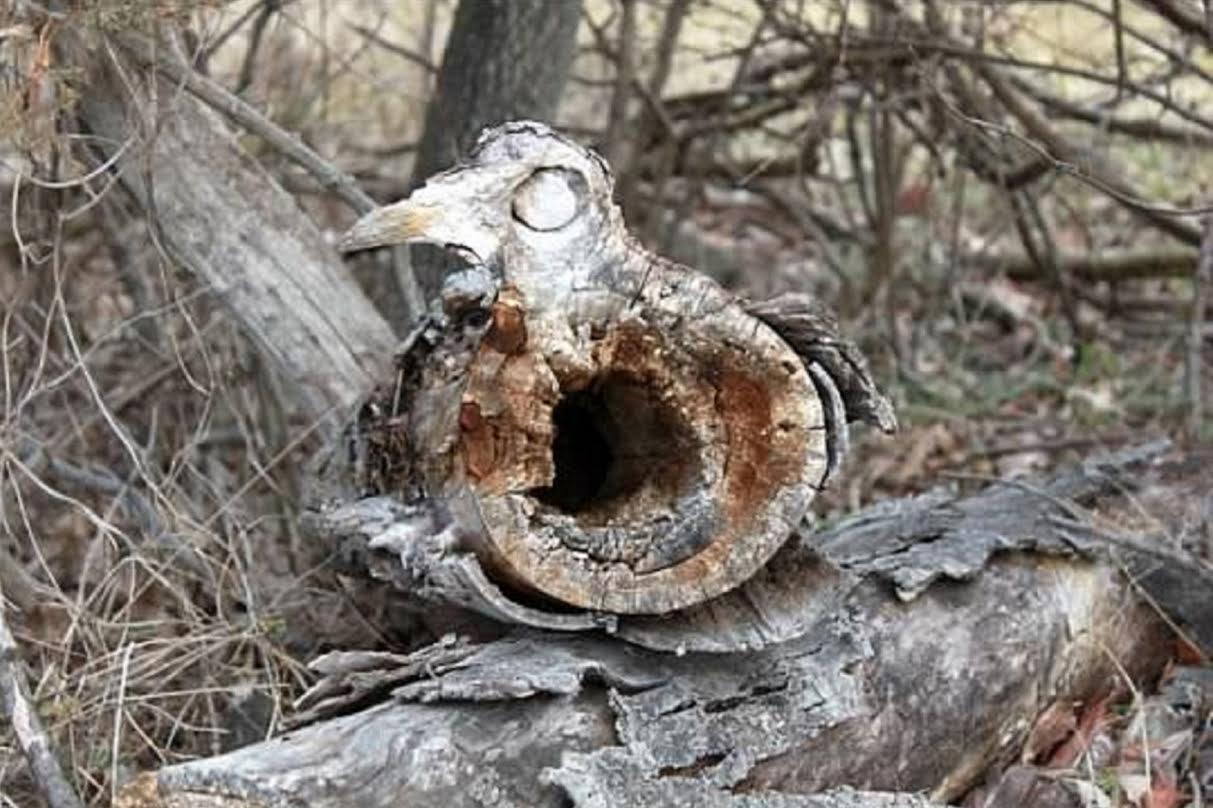
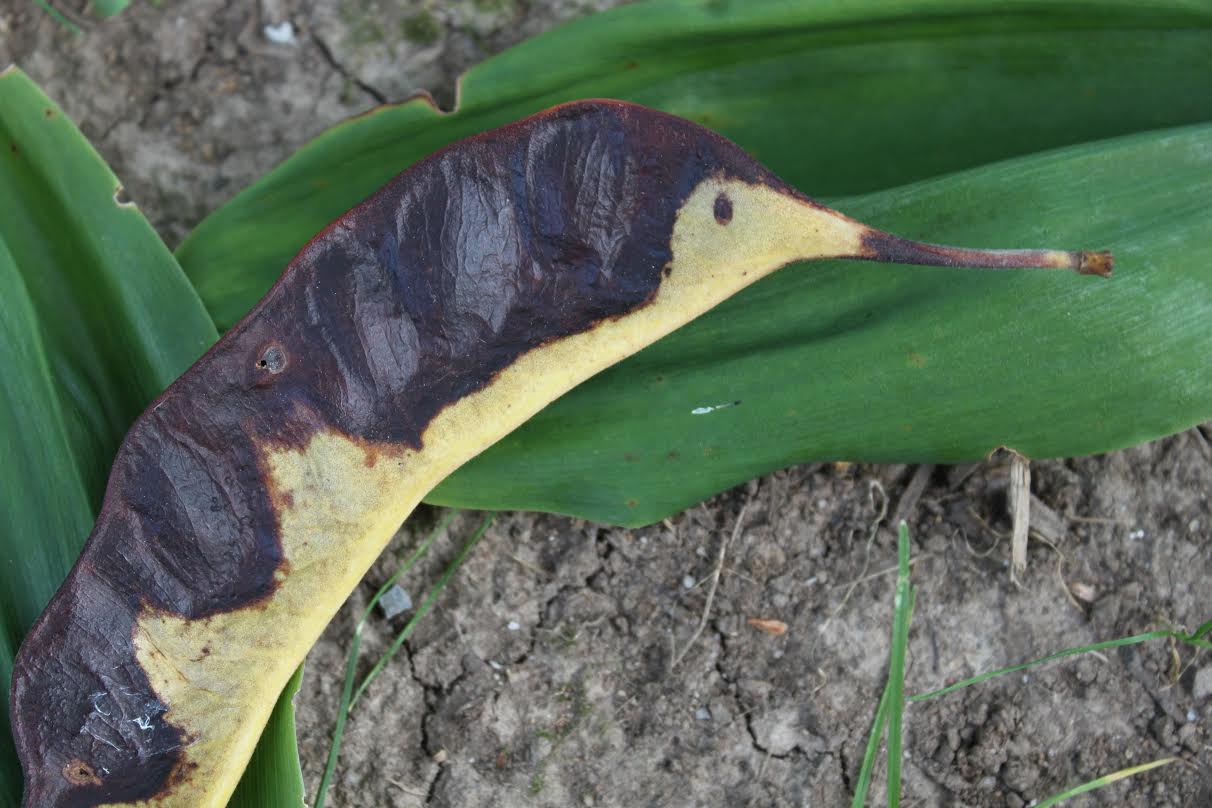
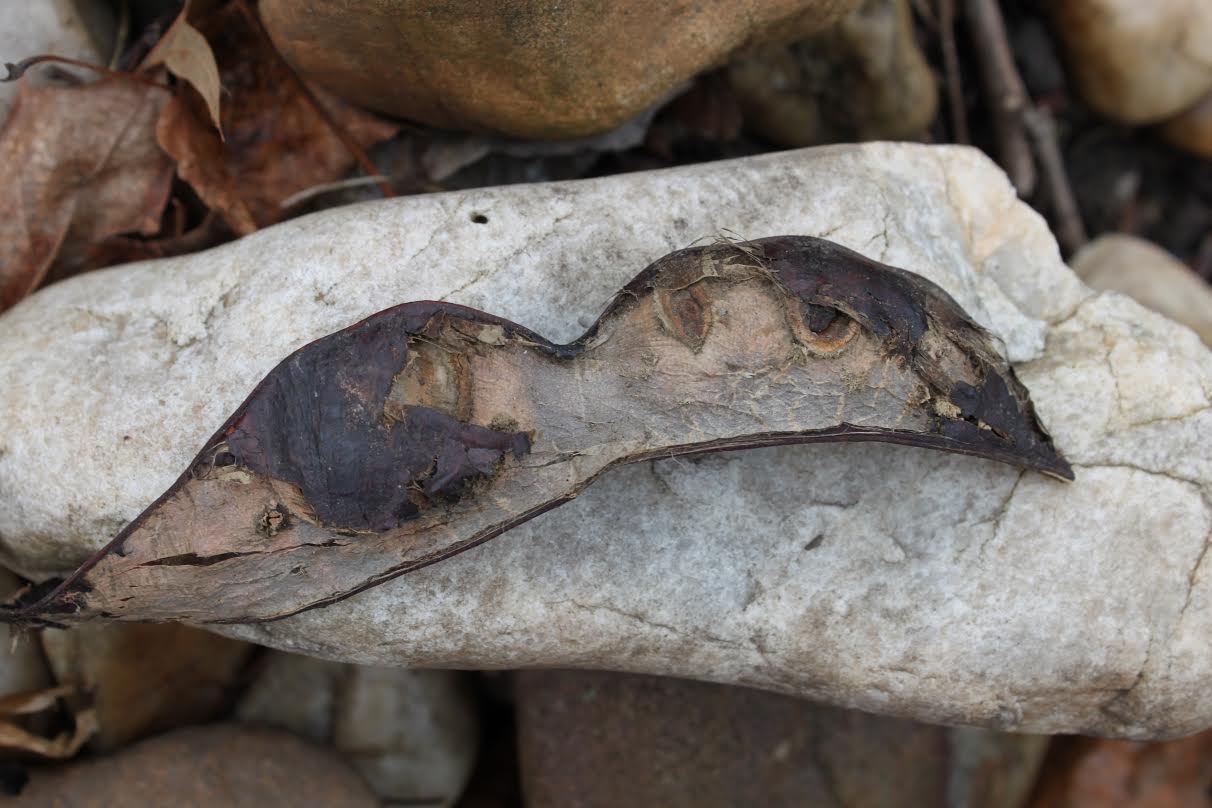
” I am a nature enthusiast and photographer from Langhorne, PA.  I take photos of “Faces in Nature” – items that resemble faces which occur naturally in our surroundings – I don’t change or Photoshop – they are as I find them.  I have over 100 but lots of birds as it turns out.”

Here is one on the “lighter side.”

Angry Bird at Faces of Nature

Angry Bird at Faces of Nature

If you would like to check out all of Susan’s “Faces of Nature” at Shutterfly: CLICK HERE

I think my favorite is a “White Toucan

Beloved, now are we the sons of God, and it doth not yet appear what we shall be: but we know that, when he shall appear, we shall be like him; for we shall see him as he is. (1 John 3:2 KJV)

*

Myakka River State Park – March 4th

Myakka River SP

Myakka River SP

let us draw near with a true heart in full assurance of faith, having our hearts sprinkled from an evil conscience and our bodies washed with pure water. Let us hold fast the confession of our hope without wavering, for He who promised is faithful. (Hebrews 10:22-23 NKJV)

Yesterday we rode down to Myakka River State Park, then over to an Amish restuarant in Sarasota and back. A birdwatching adventure of almost 200 miles .  What a beautiful the Lord gave to see some more of His Creation.

As Dan drives I keep a list of the birds spotted. Just finished posting them to eBird. Counting the State Park and the different county lists, we saw a total of 43 species today. Not bad.

This was sort of a survey trip to check out the park. We have never been there before. We spotted 23 species there and saw lots of alligators floating in their lake. It was foggy driving down and it was starting to clear some by the time we arrived. At the first little pond the water was quite reflective. Myakka is the largest park in the State system.

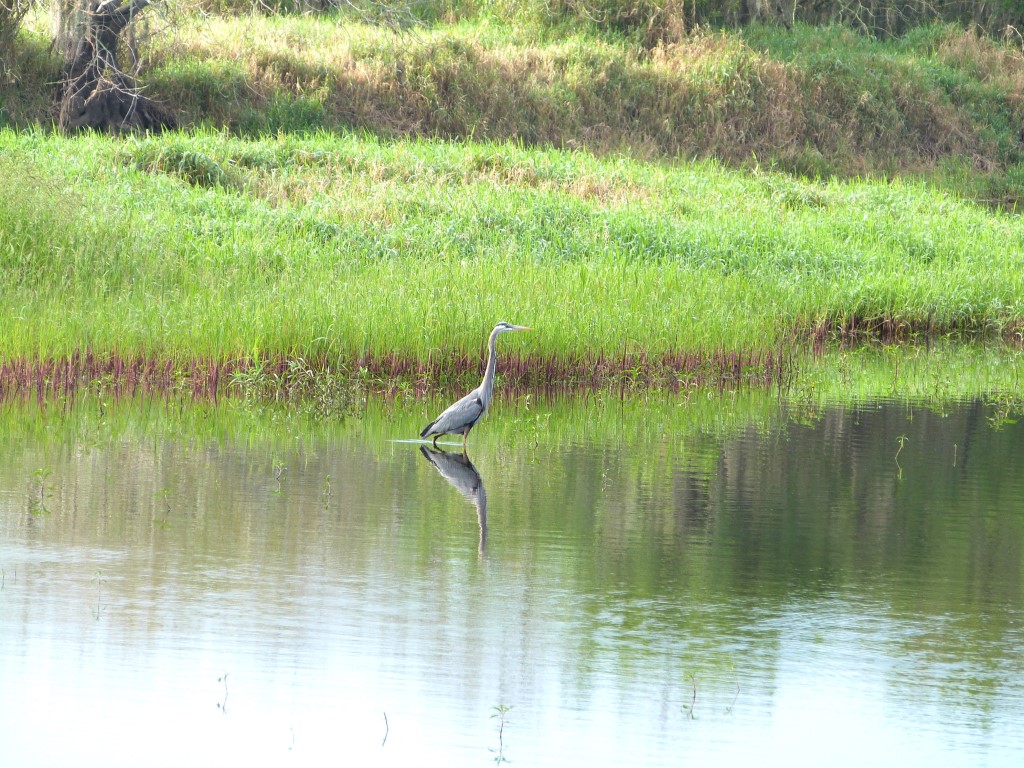
Great Blue Heron  by Lee Myakka SP

Great Blue Heron by Lee Myakka SP

Actually, compared to Circle B Bar Reserve, which is only about 5 miles from the house, it was sparse on birds. Guess we have gotten spoiled having Circle B so close.

But still, it was an enjoyable trip. I was able to get a photo of a Catbird and chased a Northern Parula with my camera all over the place. Finally got a bad shot which at least help nail down the ID. A Carolina Wren was singing away, but never got a decent shot of him either. Also saw 9 Wild Turkeys.

On the ride down, my highlight was spotting 4 Crested Caracaras and 5 Belted Kingfishers. Of course since we were traveling, no photos taken.

Haven’t gone through all photos yet, but here are a few from yesterday.

*

This slideshow requires JavaScript.

*

Taxonomic order – 04 Mar 2014
1 Wild Turkey – 9
2 Pied-billed Grebe – 1
3 Wood Stork – 4
4 Double-crested Cormorant – 1
5 Great Blue Heron – 2
6 Great Egret – 2
7 Snowy Egret – 1
8 Little Blue Heron – 1
9 Tricolored Heron – 1
10 Cattle Egret – 53
11 White Ibis – 25
12 Glossy Ibis – 1
13 Black Vulture – 35
14 Turkey Vulture – 11
15 Osprey – 21
16 Red-shouldered Hawk – 2
17 Red-tailed Hawk – 1
18 Common Gallinule – 4
19 American Coot – 1
20 Limpkin – 1
21 Sandhill Crane – 2
22 Eurasian Collared-Dove – 1
23 White-winged Dove – 1
24 Mourning Dove – 5
25 Belted Kingfisher – 5
26 Downy Woodpecker – 1
27 Crested Caracara – 4
28 American Kestrel – 1
29 Loggerhead Shrike – 2
30 Blue Jay – 3
31 American Crow – 1
32 Fish Crow – 6
33 Tree Swallow – 10
34 Carolina Wren – 3
35 Blue-gray Gnatcatcher – 2
36 Gray Catbird – 2
37 Northern Mockingbird – 2
38 Northern Parula – 1
39 Palm Warbler – 4
40 Yellow-rumped Warbler – 3
41 Red-winged Blackbird – 1
42 Common Grackle – 3
43 Boat-tailed Grackle – 8

*

*


Picnic In February

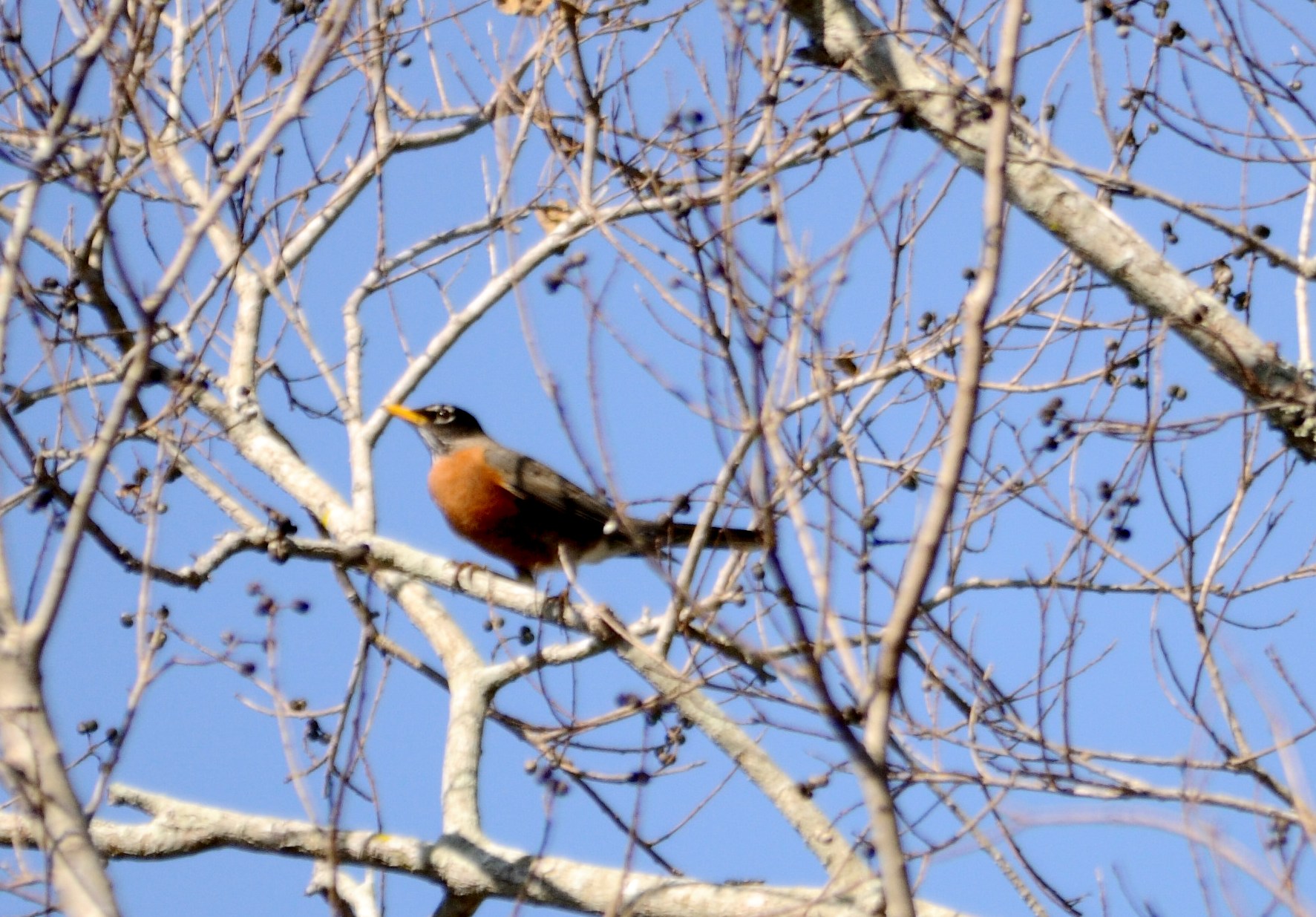
American Robin (Turdus migratorius)  by Dan

American Robin (Turdus migratorius) by Dan

Picnic In February ~ by Dorothy Malcolm

It’s open to all who wish to come. So some find it so and make it a habit to always be around every day–the Blue Jays, a pain of Cardinals, Red-winged Blackbirds, Doves and squirrels. In the winter months, Titmouse, Pine Warblers and occasionally Blackbirds add to the mix.

Today started out rather ordinary with Bible reading, breakfast, a few pills, letting Ruby my dog in and out of the house several times and talking myself into going to the bank and grocery.

After lunch Ruby and I went out for her afternoon walk. After this I started pricing things for a garage sale that will be sometime this spring. I just happen ed to look out the patio door and saw a most glorious sight – ROBINS!

Time just stopped for me. I was totally taken in by the sight of them. Where they came from it is obvious they had a great time because they looked really good and healthy. Their feathers looked as smooth and soft as velvet. Hopping, stopping, looking, flicking leaves, talking – oh, what a great time they and I were having – by now I’m just quietly looking out a small back bathroom window where I could get a better view.

What then! It is my daughter asking on behalf of her daughter how Ruby is doing. So I gave a quick report and then excitedly told her about the Robins. Soon as I could I hung up and got back to the little window only to hear two gunshots in the neighborhood.

But why now! I’ve heard this a few days in the past week, but am real unhappy about it now!

Of course the Robins flew off. Well they and I had great joy for a short time until someone spoiled the picnic!

Is this not the way some things are in our lives? But what joy there will be in the future when we will have a forever picnic in the presence of the Lord. There will be a new heaven and new earth that will not be spoiled by anyone or anything. It will be awesome and I suspect it will include birds along with many awesome creatures and all of God’s redeemed!

And he that sat upon the throne said, Behold, I make all things new. And he said unto me, Write: for these words are true and faithful. (Revelation 21:5 KJV)

Seeing then that all these things shall be dissolved, what manner of persons ought ye to be in all holy conversation and godliness, Looking for and hasting unto the coming of the day of God, wherein the heavens being on fire shall be dissolved, and the elements shall melt with fervent heat? Nevertheless we, according to his promise, look for new heavens and a new earth, wherein dwelleth righteousness. (2 Peter 3:11-13 KJV)

*

American Robin (Turdus migratorius) by Dan at Bok Sanctuary

American Robin (Turdus migratorius) by Dan at Bok Sanctuary

See Dorothy Malcolm’s Other articles:

*

(P.S. This was written in February, but I just now worked it up. Sorry, Dottie)

Lemmings Fuel Biggest Snowy-owl Migration in 50 years – Re-post

Snowy Owl (Bubo scandiacus) Female in Florida 2013-2014 ©©minds-eye

Snowy Owl (Bubo scandiacus) Female in Florida 2013-2014 ©©minds-eye

the little owl, the fisher owl, and the screech owl; the white owl, the jackdaw, and the carrion vulture; (Leviticus 11:17-18 NKJV)

Look at the birds of the air, for they neither sow nor reap nor gather into barns; yet your heavenly Father feeds them. Are you not of more value than they? (Matthew 6:26 NKJV)

Here is a very interesting article about the Snowy Owls being spotted so much this winter. It is from the Focusing On Wildlife blog.

For the lowly Arctic lemming, life is cruel. In a flash before death, often the last things a lemming sees are the deadly talons of a majestic . A mass sacrifice of this rodent with stubby legs probably gave rise to what scientists are calling the largest snowy-owl irruption in at least half a century. The gleaming white birds poured out of Canada this winter to points throughout the eastern US, captivating birdwatchers, scientists and people who had never seen them up close.

For the rest of the article – CLICK HERE

Wordless Birds

*