This is the day which the LORD hath made; we will rejoice and be glad in it. (Psalms 118:24 KJV)
Today we finally were able to get a little birdwatching in. I have been sick for the last 3 weeks fighting bronchitis and felt well enough to enjoy some time with our avian friends at Lake Morton. Lake Morton is in Lakeland, Florida. It is one of the few places around where people feed the birds. You can hardly get out of your car and cross the street before they start heading your way. The local birds have been “well-trained.”
Lee at Lake Morton by Dan
Off we went, with a few tidbits in hand and my new hat. Since the skin cancer cells were removed from my neck recently, I was told to stay out of the direct sunlight.
Most of the normal residents were hanging out. There were lots of Mallards, American White Ibises, Boat-tailed Grackles, plus some Great Blue Herons, Anhingas, Great Egrets, Mute and Black Swans, and the Bald Eagle made His appearance.
Bald Eagle (Haliaeetus leucocephalus) at Lake Morton by Lee
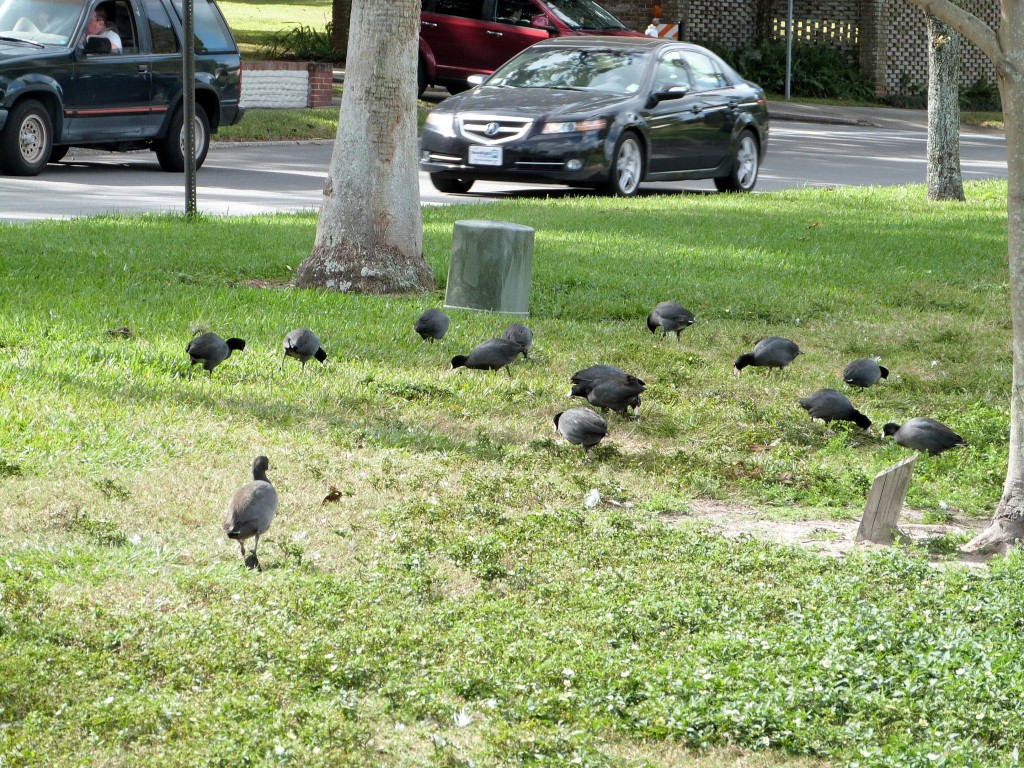
Some of our winter visitors were hanging out also. There were lots of American Coots
American Coot (Fulica americana) at Lake Morton by Lee
There were many Ring-necked Ducks – The Male
Ring-necked Duck (Aythya collaris) Male at Lake Morton by Lee
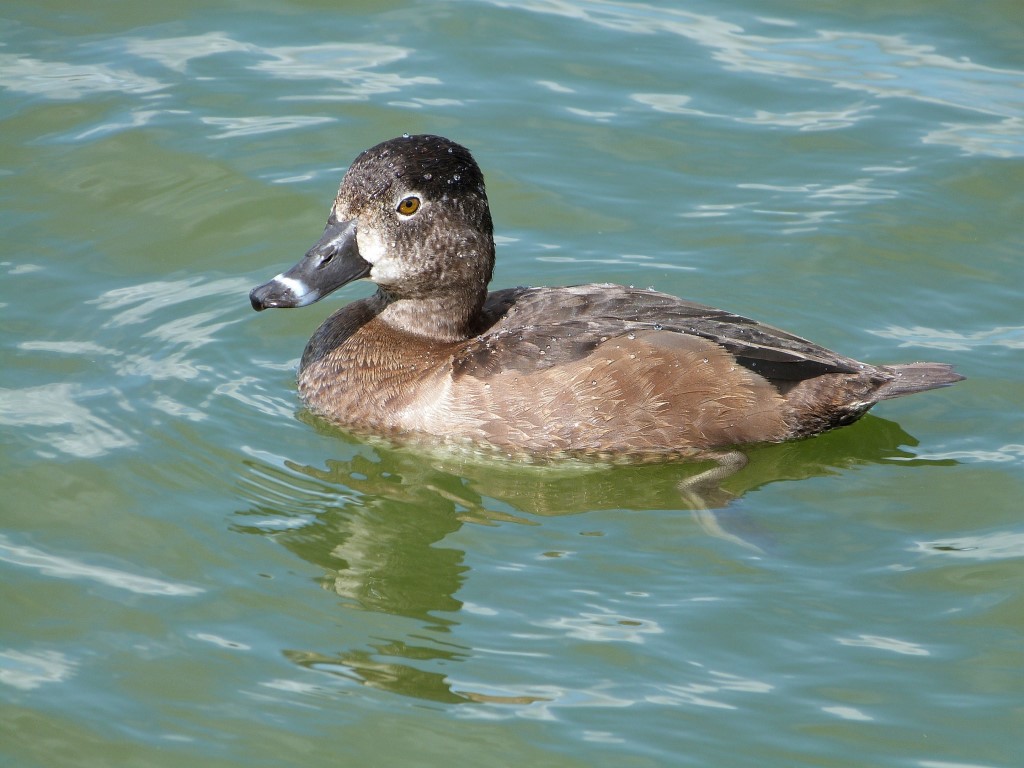
And the Female
Ring-necked Duck (Aythya collaris) Female at Lake Morton by Lee
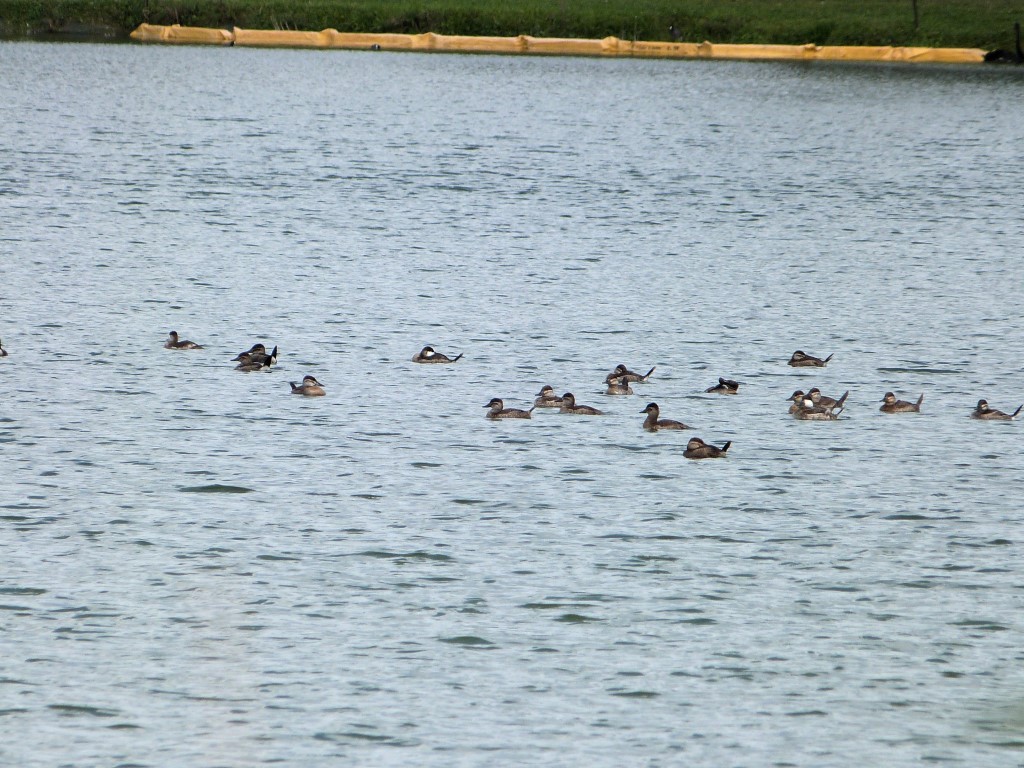
If you look at that first photo up close, way out in the middle of the lake you will see small ducks. This is a good as I could zoom in on them. They were Ruddy Ducks. Well over 50 of them on the lake floating around.
Ruddy Duck (Oxyura jamaicensis) at Lake Morton by Lee
Also, way off across the lake were two American White Pelicans with the usual Double-crested Cormorants swimming along with them. Again, this is zoomed way in.
American White Pelican (Pelecanus erythrorhynchos) with DC Cormorants at Lake Morton by Lee
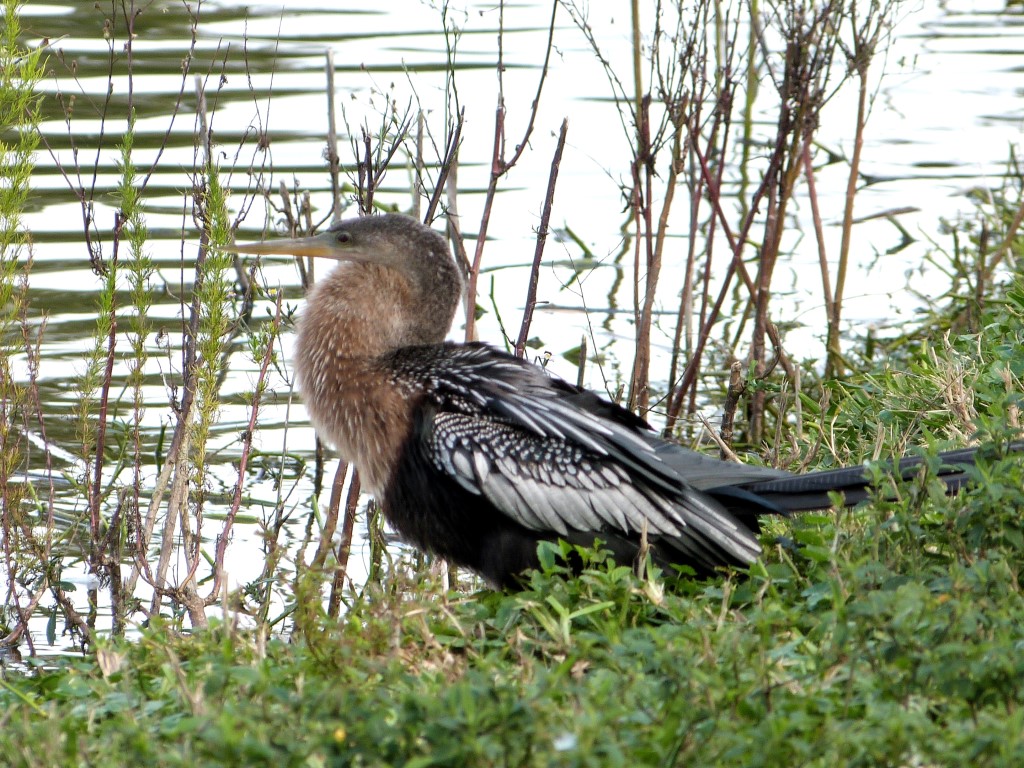
I also caught an Anhinga setting along the shore.
Anhinga (Anhinga anhinga) at Lake Morton by Lee
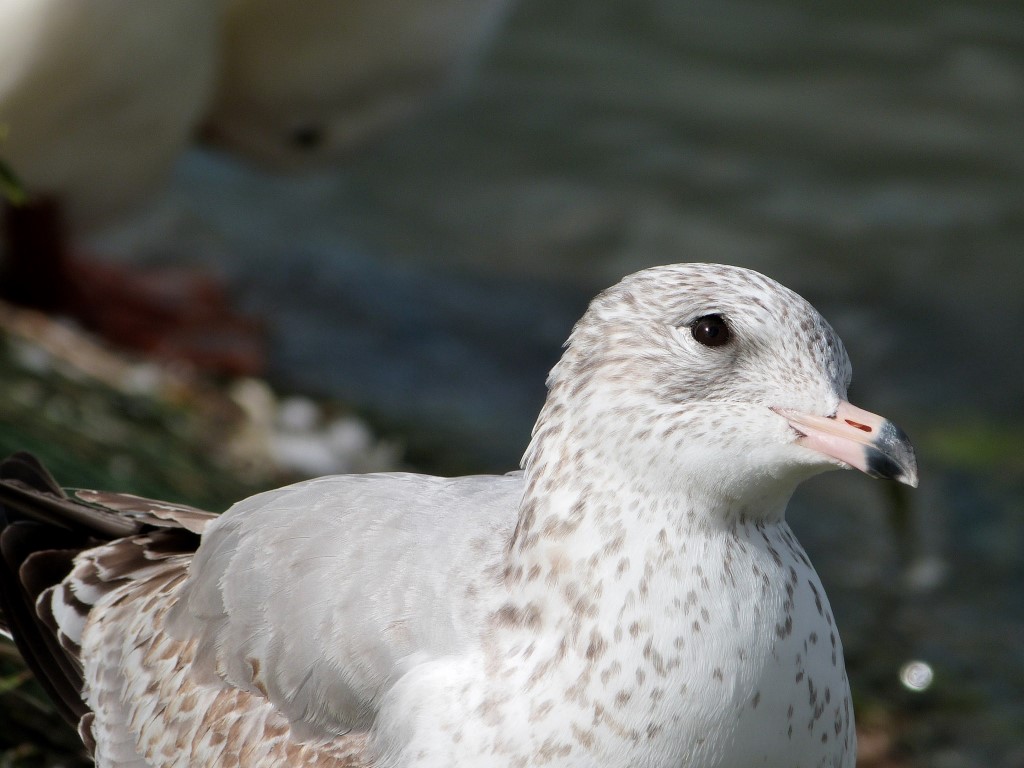
The Ring-billed Gulls are back down and this one seems to be a younger one.
Ring-billed Gull (Larus delawarensis) at Lake Morton by Lee
All in all, for about a 35-40 minute visit to the lake, we enjoyed checking out these and several more I didn’t mention. The Lord gave us good weather until it started sprinkling. Then I made a fast retreat to the car. No since getting sick again.
For as the rain cometh down, and the snow from heaven, and returneth not thither, but watereth the earth, and maketh it bring forth and bud, that it may give seed to the sower, and bread to the eater: (Isaiah 55:10 KJV)
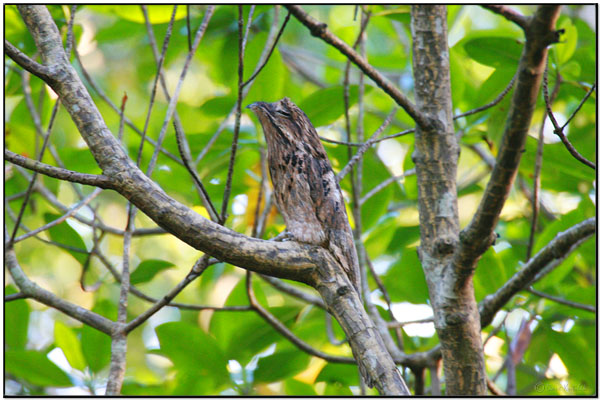
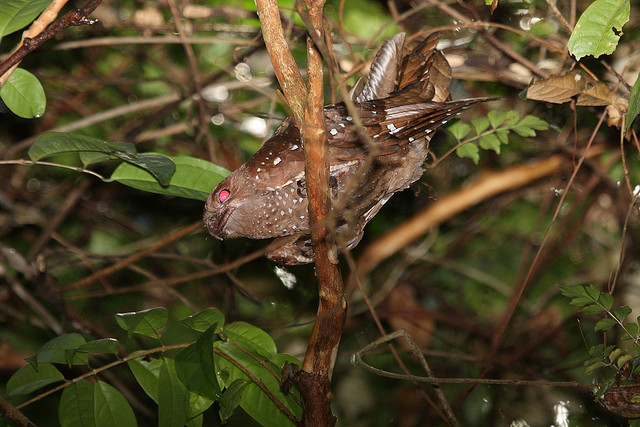
For the king had at sea a navy of Tharshish with the navy of Hiram: once in three years came the navy of Tharshish, bringing gold, and silver, ivory, and apes, and peacocks. (1 Kings 10:22 KJV)For the king’s ships went to Tarshish with the servants of Huram: every three years once came the ships of Tarshish bringing gold, and silver, ivory, and apes, and peacocks. (2 Chronicles 9:21 KJV)
Common Potoo (Nyctibius griseus) by Daves BirdingPix
And David said to Jonathan, “Indeed tomorrow is the New Moon, and I should not fail to sit with the king to eat. But let me go, that I may hide in the field until the third day at evening. (1 Samuel 20:5 NKJV)
For in the time of trouble he shall hide me in his pavilion: in the secret of his tabernacle shall he hide me; he shall set me up upon a rock. (Psalms 27:5 KJV)
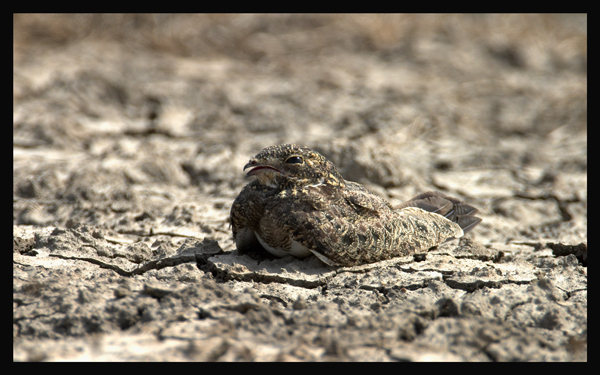
Nacunda Nighthawk (Podager nacunda) by R Scanlon
And do not hide Your face from Your servant, For I am in trouble; Hear me speedily. (Psalms 69:17 NKJV)
Australian Owlet-nightjar (Aegotheles cristatus) by Ian
Deliver me, O LORD, from mine enemies: I flee unto thee to hide me. (Psalms 143:9 KJV)
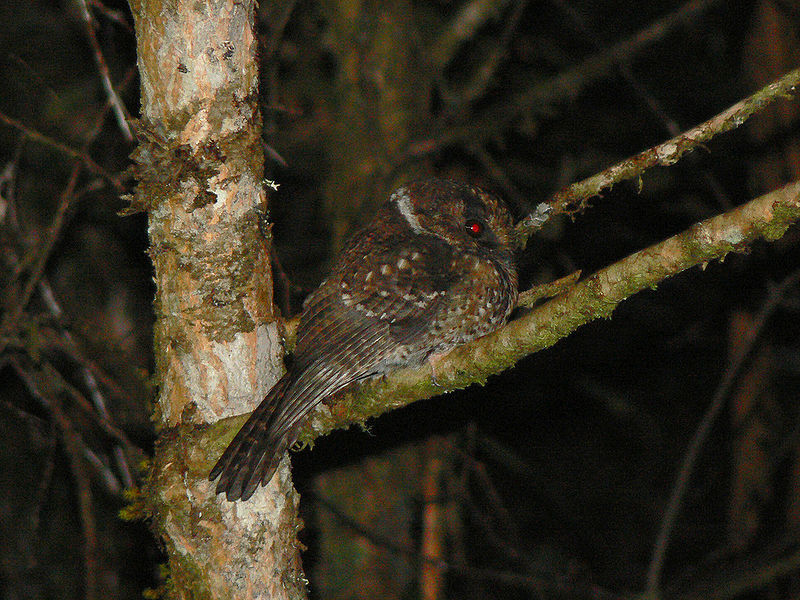
Collared Nightjar(Caprimulgus enarratus) by Dave’s BirdingPix
And when Absalom’s servants came to the woman to the house, they said, Where is Ahimaaz and Jonathan? And the woman said unto them, They be gone over the brook of water. And when they had sought and could not find them, they returned to Jerusalem. (2 Samuel 17:20 KJV)
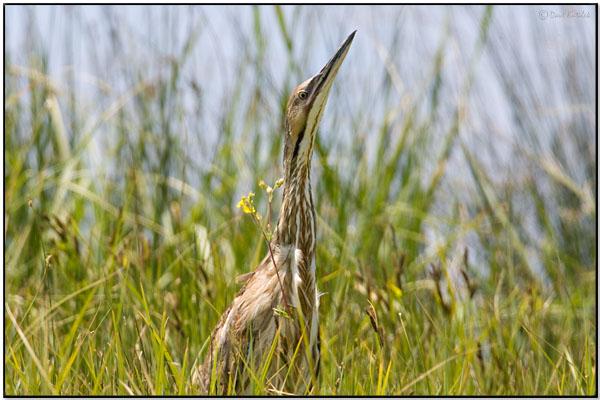
American Bittern (Botaurus lentiginosus) by Daves BirdingPix
Then shall they call upon me, but I will not answer; they shall seek me early, but they shall not find me: For that they hated knowledge, and did not choose the fear of the LORD: They would none of my counsel: they despised all my reproof. (Proverbs 1:28-30 KJV)
Thou shalt seek them, and shalt not find them, even them that contended with thee: they that war against thee shall be as nothing, and as a thing of nought. (Isaiah 41:12 KJV)
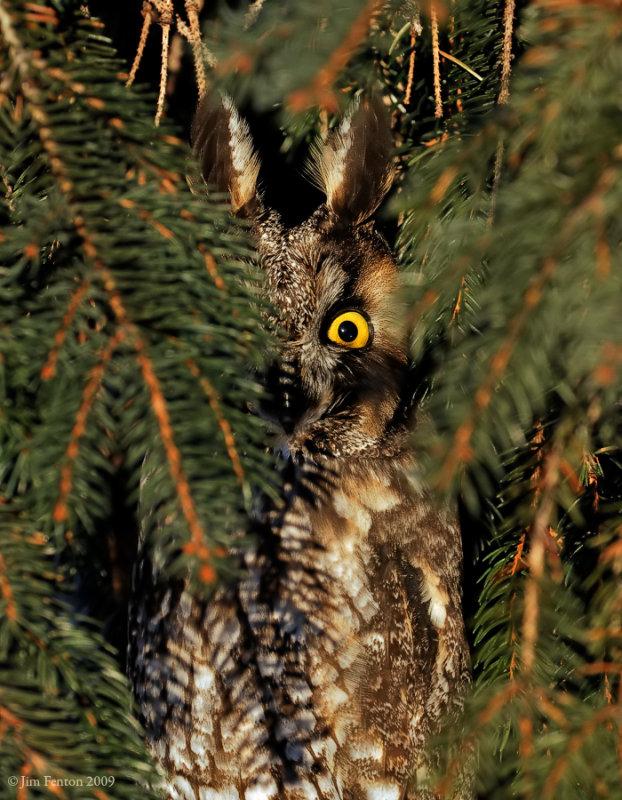
Long-eared Owl (Asio otus) by J Fenton
Behold, the days come, saith the Lord GOD, that I will send a famine in the land, not a famine of bread, nor a thirst for water, but of hearing the words of the LORD: And they shall wander from sea to sea, and from the north even to the east, they shall run to and fro to seek the word of the LORD, and shall not find it. (Amos 8:11-12 KJV)
What man of you, having an hundred sheep, if he lose one of them, doth not leave the ninety and nine in the wilderness, and go after that which is lost, until he find it? (Luke 15:4 KJV)
Either what woman having ten pieces of silver, if she lose one piece, doth not light a candle, and sweep the house, and seek diligently till she find it? And when she hath found it, she calleth her friends and her neighbours together, saying, Rejoice with me; for I have found the piece which I had lost. Likewise, I say unto you, there is joy in the presence of the angels of God over one sinner that repenteth. (Luke 15:8-10 KJV)
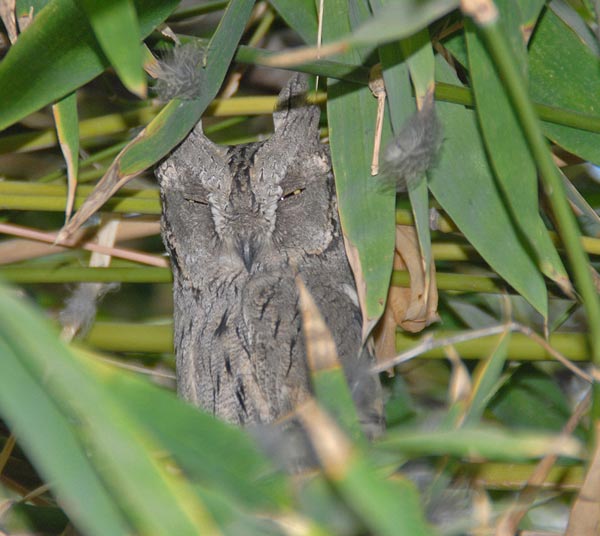
Pallid Scops Owl (Otus brucei) by Nikhil Devasar
Ye shall seek me, and shall not find me: and where I am, thither ye cannot come. (John 7:34 KJV)
For I know that in me (that is, in my flesh,) dwelleth no good thing: for to will is present with me; but how to perform that which is good I find not. (Romans 7:18 KJV)
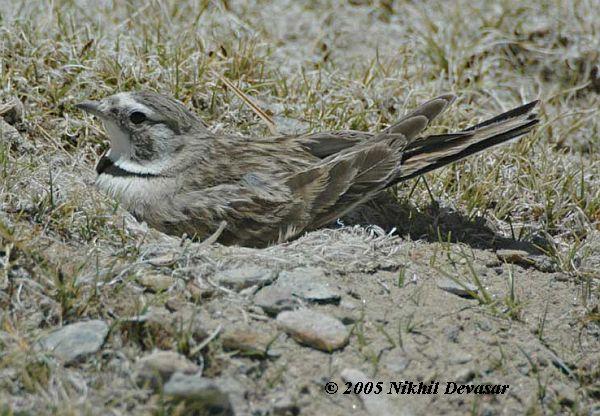
Horned Lark (Eremophila alpestris) on nestby Nikhil Devasar
If thou shalt hearken unto the voice of the LORD thy God, to keep his commandments and his statutes which are written in this book of the law, and if thou turn unto the LORD thy God with all thine heart, and with all thy soul. For this commandment which I command thee this day, it is not hidden from thee, neither is it far off. (Deuteronomy 30:10-11 KJV)
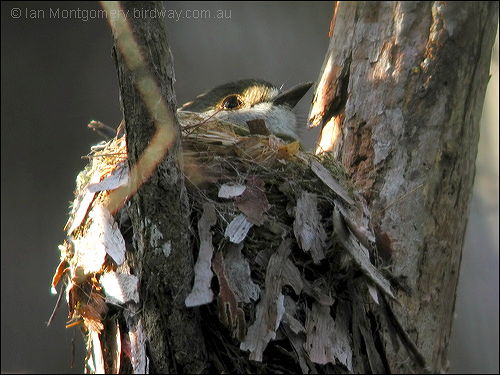
Pale-yellow Robin (Tregellasia capito) in nest by Ian
And I will give thee the treasures of darkness, and hidden riches of secret places, that thou mayest know that I, the LORD, which call thee by thy name, am the God of Israel. (Isaiah 45:3 KJV)
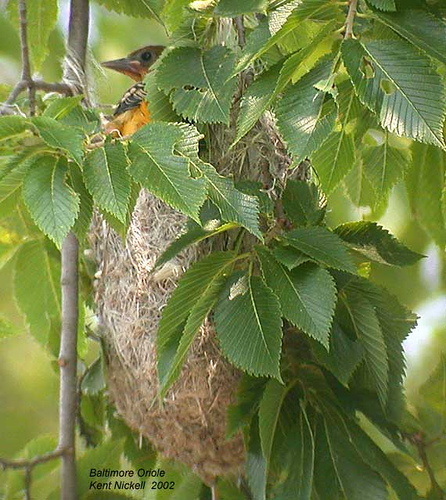
Baltimore Oriole (Icterus galbula) on nest by Kent Nickell
Thou hast heard, see all this; and will not ye declare it? I have shewed thee new things from this time, even hidden things, and thou didst not know them. (Isaiah 48:6 KJV)
But we speak the wisdom of God in a mystery, even the hidden wisdom, which God ordained before the world unto our glory: (1 Corinthians 2:7 KJV)
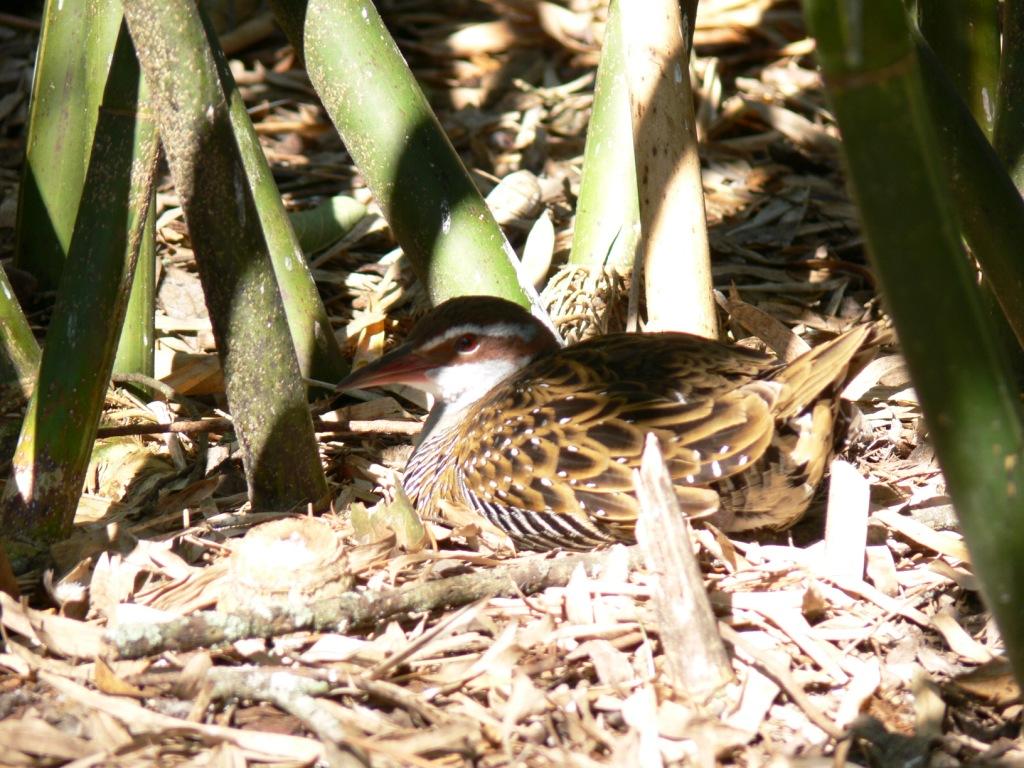
Buff-banded Rail (Gallirallus philippensis) by Lee
rather let it be the hidden person of the heart, with the incorruptible beauty of a gentle and quiet spirit, which is very precious in the sight of God. (1 Peter 3:4 NKJV)
***
When the Lord created the birds, some of them he made very beautiful to look at, others he made very hard to find. He did that for their protection. Either way, He loves them and cares for them. How much more does he care for us, love us and protect us?
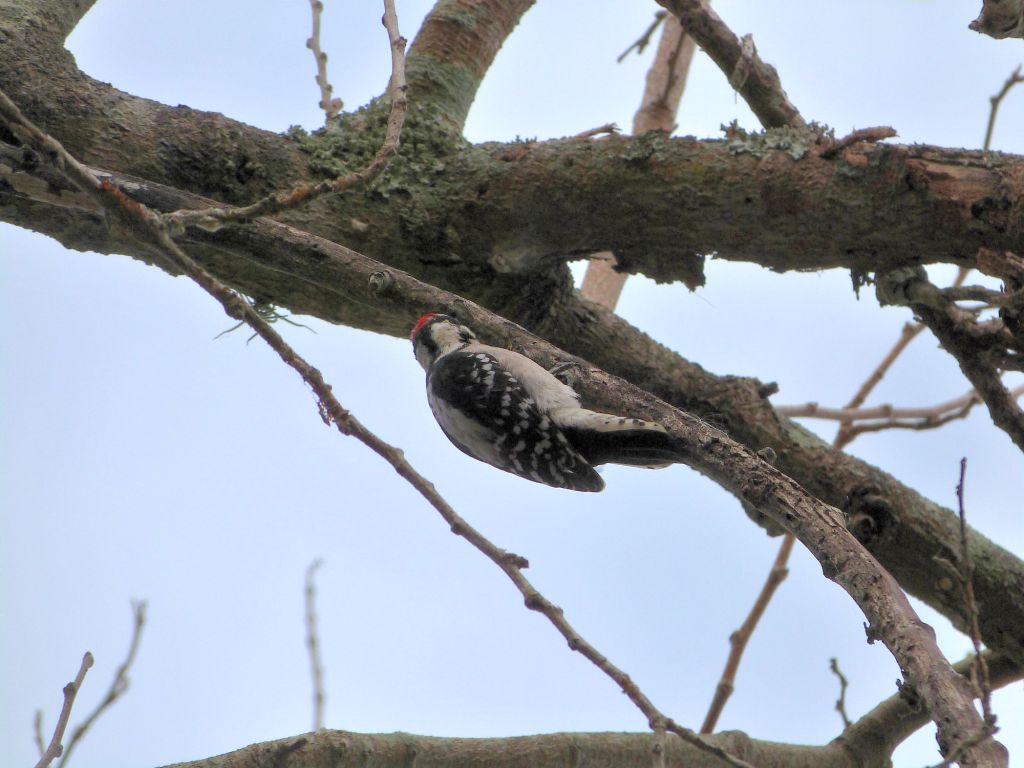
Downy Woodpecker (Picoides pubescens) Brevard Zoo by Dan
VI
FRIEND DOWNY
No better little bird comes to our orchards than our friend the downy woodpecker. He is the smallest and one of the most sociable of our woodpeckers,—a little, spotted, black-and-white fellow, precisely like his larger cousin the hairy, except in having the outer tail-feathers barred instead of plain. Nearly everything that can be said of one is equally true of the other on a smaller scale. They look alike, they act alike, and their nests and eggs are alike in everything but size.
Downy is the most industrious of birds. He is seldom idle and never in mischief. As he does not fear men, but likes to live in orchards and in the neighborhood of fields, he is a good friend to us. On the farm he installs himself as Inspector of Apple-trees. It is an old and an honorable profession among birds. The pay is small, consisting only of what can be picked up, but, as cultivated trees are so infested with insects that food is always plentiful, and as they have usually a dead branch suitable to nest in, Downy asks no more. Summer and winter he works on our orchards. At sunrise he begins, and he patrols the branches till sunset. He taps on the trunks to see whether he can hear any rascally borers inside. He inspects every tree carefully in a thorough and systematic way, beginning low down and following up with a peek into every crevice and a tap upon every spot that looks suspicious. If he sees anything which ought not to be there, he removes it at once.
Downy
A moth had laid her eggs in a crack in the bark, expecting to hatch out a fine brood of caterpillars: but Downy ate them all, thus saving a whole branch from being overrun with caterpillars and left fruitless, leafless, and dying. A beetle had just deposited her eggs here. Downy saw her, and took not only the eggs but the beetle herself. Those eggs would have hatched into boring larvæ, which would have girdled and killed some of the branches, or have burrowed under the bark, causing it to fall off, or have bored into the wood and, perhaps, have killed the tree.
Nor is the full-grown borer exempt. Downy hears him, pecks a few strokes, and harpoons him with unerring aim. When Downy has made an arrest in this way, the prisoner does not escape from the police. Here is a colony of ants, running up the tree in one line and down in another, touching each other with their feelers as they pass. A feast for our friend! He takes both columns, and leaves none to tell the tale. This is a good deed, too, since ants are of no benefit to fruit-trees and are very fond of the dead-ripe fruit.
And Downy is never too busy to listen for borers. They are fine plump morsels much to his taste, not so sour as ants, nor so hard-shelled as beetles, nor so insipid as insects’ eggs. A good borer is his preferred dainty. The work he does in catching borers is of incalculable benefit, for no other bird can take his place. The warblers, the vireos, and some other birds in summer, the chickadees and nuthatches all the year round, are helping to eat up the eggs and insects that lie near the surface, but the only birds equipped for digging deep under the bark and dragging forth the refractory grubs are the woodpeckers.
So Downy works at his self-appointed task in our orchards summer and winter, as regular as a policeman on his beat. But he is much more than a policeman, for he acts as judge, jury, jailer, and jail. All the evidence he asks against any insect is to find him loafing about the premises. “I swallow him first and find out afterwards whether he was guilty,” says Downy with a wink and a nod.
Most birds do not stay all the year, in the North, at least, and most, in return for their labors in the spring, demand some portion of the fruit or grain of midsummer and autumn. Not so Downy. His services are entirely gratuitous; he works twice as long as most others. He spends the year with us, no winter ever too severe for him, no summer too hot; and he never taxes the orchard, nor takes tribute from the berry patch. Only a quarter of his food is vegetable, the rest being made up of injurious insects; and the vegetable portion consists entirely of wild fruits and weed-seeds, nothing that man eats or uses. Downy feeds on the wild dogwood berries, a few pokeberries, the fruit of the woodbine, and the seeds of the poison-ivy,—whatever scanty and rather inferior fare is to be had at Nature’s fall and winter table.
If in the cold winter weather we will take pains to hang out a bone with some meat on it, raw or cooked, or a piece of suet, taking care that it is not salted,—for few wild birds except the crossbills can eat salted food,—we may see how he appreciates our thoughtfulness. Shall we grudge him a bone from our own abundance, or neglect to fasten it firmly out of reach of the cat and dog? If his cousin the hairy and his neighbor the chickadee come and eat with him, bid them a hearty welcome. The feast is spread for all the birds that help men, and friend Downy shall be their host.
Lee’s Addition:
Downy Woodpecker by Lee Lake Parker Park
He will bless them that fear the LORD, both small and great. (Psalms 115:13 KJV)
This is Chapter VI from The Woodpeckers book. Our writer, Fannie Hardy Eckstorm, wrote this in 1901. There are 16 chapters, plus the Forward, which are about the Woodpecker Family here in America. All the chapters can be found on The Woodpeckers page. I added photos to help enhance the article. In 1901, photography was not like today.
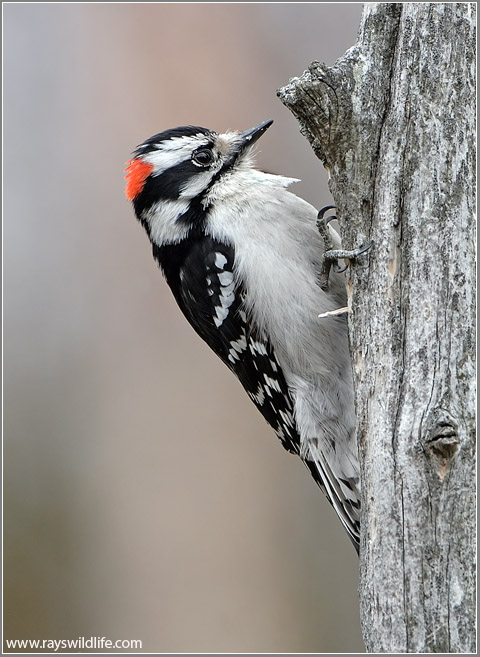
Downy Woodpecker (Picoides pubescens) by Raymond Barlow
We have another neat creation from the Lord. I always enjoy watching this little Woodpecker checking out the trees nearby.
Adult Downy Woodpeckers are the smallest of North America’s woodpeckers but there are many smaller species elsewhere, especially the piculets. The total length of the species ranges from 5.5 to 7.1 in (14 to 18 cm) and the wingspan from 9.8 to 12 in (25 to 31 cm).
The Downy Woodpecker is mainly black on the upperparts and wings, with a white back, throat and belly and white spotting on the wings. There is a white bar above the eye and one below. They have a black tail with white outer feathers barred with black. Adult males have a red patch on the back of the head whereas juvenile birds display a red cap.
Hairy Woodpecker (Picoides villosus) by Daves BirdingPix
The Downy Woodpecker is virtually identical in plumage pattern to the much larger Hairy Woodpecker, but it can be distinguished from the Hairy by the presence of black spots on its white tail feathers and the length of its bill. The Downy Woodpecker’s bill is shorter than its head, whereas the Hairy Woodpecker’s bill is approximately equal to head length.
The Downy Woodpecker gives a number of vocalizations, including a short pik call. Like other woodpeckers, it also produces a drumming sound with its beak as it pecks into trees. Compared to other North American species its drums are slow. (Wikipedia with editing and sounds from xeno-canto)
Drumming
A pik and rattle call
*
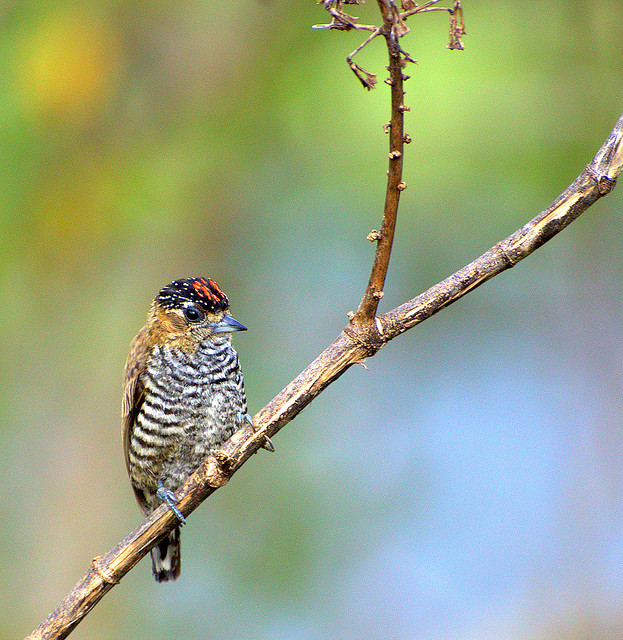
Ochre-collared Piculet (Picumnus temminckii) by Dario Sanches
Following is a YouTube from Ian Juby about the creation of our birds. This is from his
Our Created Birds – this is Genesis Week episode 10, season 3
*
To see all of the video click on YouTube symbol or go to wazooloo for more of his videos.
Then God said, “Let the waters teem with swarms of living creatures, and let birds fly above the earth in the open expanse of the heavens.” God created the great sea monsters and every living creature that moves, with which the waters swarmed after their kind, and every winged bird after its kind; and God saw that it was good. God blessed them, saying, “Be fruitful and multiply, and fill the waters in the seas, and let birds multiply on the earth.” (Genesis 1:20-22 NASB)
Hairy Woodpecker (Picoides villosus) by Daves BirdingPix
The Woodpeckers Bird Band
The Woodpecker family were around on various trees drumming, drumming on the bark. Mr. Hairy Woodpecker, Mr. Downy Woodpecker, and Mr. Red-Headed Woodpecker were hard at work.
Downy Woodpecker (Picoides pubescens) by Raymond Barlow
“Let’s start a band,” suggested Mr. Hairy Woodpecker.
“What’s that you say?” asked Mr. Red-Headed Woodpecker, who had been so busy at work that he had not heard what Mr. Hairy Woodpecker had been suggesting. “A band,” repeated Mr. Hairy Woodpecker. “What sort of a band?” asked Mr. Red-Headed Woodpecker. “In the first place,” continued Mr. Hairy Woodpecker, “our bills are not only fine tools for the work we have to do getting the insects from the trees, and burrowing for our nests, but they would be splendid to use in beating the drums in a band.” “Where would we get the drums?” asked Mr. Red-Headed Woodpecker. “The trees, of course, you silly!” said Mr. Hairy Woodpecker. “Oh yes, yes,” agreed Mr. Red-Headed Woodpecker. And Mr. Downy Woodpecker said, “Of course, of course. The trees will be our drums.”
American Goldfinch (Carduelis tristis) on Thistle by Fenton
“We’ll get the other birds,” said Mr. Hairy Woodpecker, “to help us. We need something in a band besides the drums. We will ask the goldfinches, the mocking-birds, the bobolinks, the phœbe and chickadee families, all of the warbler and vireo families, and the robins of course. Then I think we’ll ask the orioles, the whippoorwills, the thrush family, and the song sparrows.”
Carolina Chickadee (Poecile carolinensis) by Daves BirdingPix
“Oh,” said Mr. Downy Woodpecker, “that will make a perfect band. We’d better get started right away.” And the woodpeckers began to practise. They made such a noise that the birds came from far and near to see what they were doing. Mr. Sapsucker, Mr. Crested Woodpecker, and Mr. Flicker Woodpecker had all joined in beating the drums too!
Yellow-bellied Sapsucker (Sphyrapicus varius) by Raymond Barlow
“Why are you making so much noise?” asked the birds as they flew around to the nearby trees to talk to the woodpeckers. “Oh,” said Mr. Hairy Woodpecker, “we were just going to ask you all to join our band. We will beat the drums.”
American Robin (Turdus migratorius) by Daves BirdingPix
“And just what do you want us to do?” asked Mr. Robin Redbreast, who was always eager to help. “You must all sing.”
Song Sparrow (Melospiza melodia) by J Fenton
“But we all sing differently,” chirped a song sparrow. “We know different tunes and different songs.” “Oh,” said Mr. Hairy Woodpecker, “I never thought about that. But never mind, you can have little parts to sing alone, and other choruses where you will all sing together. I’m sure it will be a very fine band after we have practised.” And they began pounding the drums again. “Well,” said Mr. Robin Redbreast, “if the bird band isn’t to be the finest in the land, at least we’ll make a cheerful noise!”
With four illustrations in color by Florence Choate and Elizabeth Curtis
These stories first appeared in the American Press Association Service and the Western Newspaper Union.
Many of the sketches in this volume are the work of Rebecca McCann, creator of the “Cheerful Cherub,” etc.
Daddy’s Bedtime Bird Stories by Mary Graham Bonner – 1917
Lee’s Addition:
Psalms 98:4-8 KJV (4) Make a joyful noise unto the LORD, all the earth: make a loud noise, and rejoice, and sing praise. (5) Sing unto the LORD with the harp; with the harp, and the voice of a psalm. (6) With trumpets and sound of cornet make a joyful noise before the LORD, the King. (7) Let the sea roar, and the fulness thereof; the world, and they that dwell therein. (8) Let the floods clap their hands: let the hills be joyful together
Meet the whole band: (a few missed the photo session)
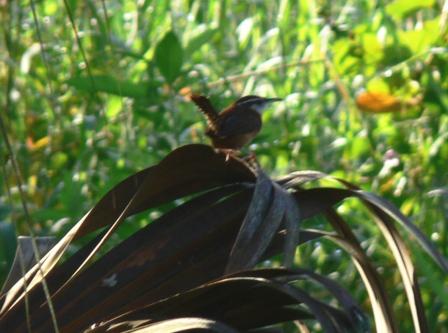
Carolina Wren (Thryothorus ludovicianus) by Lee at Circle B
Mnemonics – What is That?
When birdwatchers want to identify a bird, many times all they are able to do is hear it. Can you listen to a bird and know what kind it is? Some birders use a help called “mnemonics.”
hen birdwatchers want to identify a bird, many times all they are able to do is hear it. Can you listen to a bird and know what kind it is? Some birders use a help called “mnemonics.”
mne·mon·ics
pronunciation: ni ma nihks [or] nih ma nihks
part of speech: plural noun
definition: a process, system, or technique used to aid and improve the memory.
Eastern Wood Pewee (Contopus virens) by Raymond Barlow
Many birds say their name, like a Eastern Wood Pewee.
Carolina Chickadee (Poecile carolinensis) by Daves BirdingPix
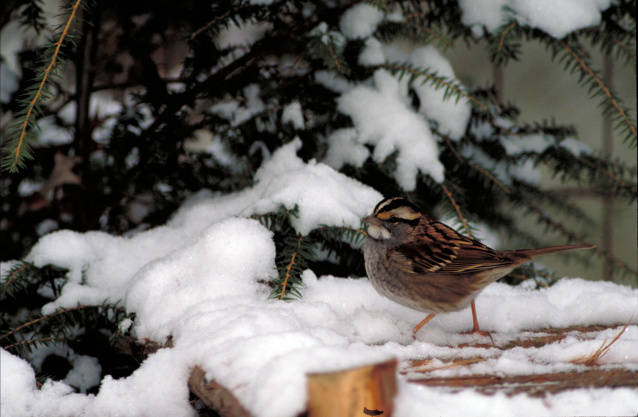
White-Throated Sparrow – “poor Sam Pea’body, Pea’body, Pea’body”
This is just an introduction to using “mnemonics” to help you find out what that neat bird your listening to is called. We will cover more birds later. The Lord has given us so many beautiful birds to watch and listen to. Each bird has it’s own songs and calls, but there are so many. How do we figure out who is who? Using this method is just one more way to help.
Hear instruction and be wise, and do not neglect it. (Proverbs 8:33 ESV)
Let the wise hear and increase in learning, and the one who understands obtain guidance, (Proverbs 1:5 ESV)
Thought I would repost Cher Ami’s story in honor of Veteran’s Day. Thank all of you who have served our country or your country to help preserve peace.
To grant us that we, Being delivered from the hand of our enemies, Might serve Him without fear, (Luke 1:74 NKJV)
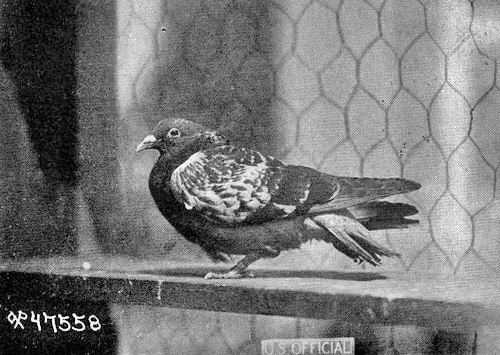
Cher Ami – Homing Pigeon Hero
Cher Ami – WW1 Hero
While researching for a hero for an article on our church blog, I tried to find out about my father, who was in WW1. Being as he died when I was four years old, it is hard to find out a lot of details. All I knew is that he was in the trenches where they were poisoned with mustard gas and that it took years, but he died as a result of that gassing. Talking to my family, I also found out that he was at the Meuse-Argonne Offensive (Argonne Forrest) in which 117,000 of our American troops gave their lives and that he was in a company that had few survivors. Also found that he had fought hand-to-hand with bayonets. But the actual details are still a mystery. So, my dad and all of our men that fought in WW1 are my heroes.
What I did find is a hero of the avian kind. His name was Cher Ami (French for “dear friend”, in the masculine) and he was a homing pigeon which had been donated by the pigeon fanciers of Britain for use by the U.S. Army Signal Corps in France during World War I and had been trained by American pigeoneers. He helped save the Lost Battalion of the 77th Division in the battle of the Argonne, October 1918.
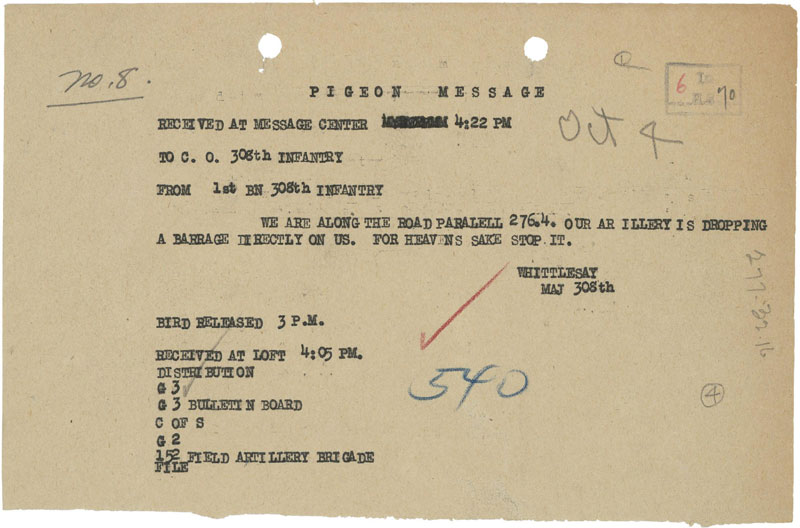
On October 3, 1918, Charles Whittlesey and more than 500 men were trapped in a small depression on the side of the hill behind enemy lines without food or ammunition. They were also beginning to receive friendly fire from allied troops who did not know their location. Surrounded by the Germans, many were killed and wounded in the first day and by the second day, only a little more than 200 men were still alive. Whittlesey dispatched messages by pigeon. The pigeon carrying the first message (“Many wounded. We cannot evacuate.”) was shot down. A second bird was sent with the message, “Men are suffering. Can support be sent?” That pigeon also was shot down. Only one homing pigeon was left: ‘Cher Ami’. He was dispatched with a note in a canister on his left leg,
We are along the road parallel to 276.4. Our own artillery is dropping a barrage directly on us. For heaven’s sake, stop it!
Actual Message Sent
As Cher Ami tried to fly back home, the Germans saw him rising out of the brush and opened fire and for several minutes, bullets zipped through the air all around him.The men of the Lost Battalion saw Cher Ami tragically shot down, but miraculously, he was airborne again soon. He managed to arrive back at his loft at division headquarters 25 miles to the rear in just 25 minutes, helping to save the lives of the 194 survivors. In this last mission, Cher Ami had delivered the message despite having been shot through the breast, blinded in one eye, covered in blood and with a leg hanging only by a tendon.
Cher Ami had become the hero of the 77th Infantry Division, so army medics worked long and hard to save his life. They were unable to save his leg, so they carved a small wooden one for him. When he recovered enough to travel, the little one-legged hero was put on a boat to the United States, with General John J. Pershing personally seeing Cher Ami off as he departed France.
Upon return to America, Cher Ami became the mascot of the Department of Service. The pigeon was awarded the Croix de Guerre Medal with a palm Oak Leaf Cluster for his heroic service in delivering 12 important messages in Verdun. He died at Fort Monmouth, New Jersey, on June 13, 1919 from the wounds he received in battle and was later inducted into the Racing Pigeon Hall of Fame in 1931. He also received a gold medal from the Organized Bodies of American Racing Pigeon Fanciers in recognition of his extraordinary service during World War I.
Cher Ami – WWI Homing Pigeon Hero – WikiC
Cher Ami was as well-known as any human World War I heroes. Cher Ami was later mounted by a taxidermist and donated to the Smithsonian where he is enshrined in the Smithsonian Institution, and is currently on display with Sergeant Stubby in the National Museum of American History’s “Price of Freedom” exhibit.
Who are these who fly like a cloud, And like doves to their roosts? (Isa 60:8)
Based upon the observations of Mr. William Brewster.
As the house of the woodpecker has no windows and the old bird very nearly fills the doorway when she comes home, it is hard to find out just how she feeds her little ones. But one of our best naturalists has had the opportunity to observe it, and has told what he saw.
A flicker had built a nest in the trunk of a rather small dead tree which, after the eggs were hatched, was accidentally broken off just at the entrance hole. This left the whole cavity exposed to the weather; but it was too late to desert the nest, and impossible to remove the young birds to another nest.
When first visited, the five little birds were blind, naked, and helpless. They were motherless, too. Some one must have killed their pretty mother; for she never came to feed them, and the father was taking all the care of his little family. When disturbed the little birds hissed like snakes, as is the habit of the callow young of woodpeckers, chickadees, and other birds nesting habitually in holes in trees. When they were older and their eyes were open, they made a clatter much like the noise of a mowing-machine, and loud enough to be heard thirty yards away.
The father came at intervals of from twenty to sixty minutes to feed the little ones. He was very shy, and came so quietly that he would be first seen when he alighted close by with a low little laugh or a subdued but anxious call to the young. “Here I am again!” he laughed; or “Are you all right, children?” he called to them. “All right!” they would answer, clattering in concert like a two-horse mower.
As soon as they heard him scratching on the tree-trunk, up they would all clamber to the edge of the nest and hold out their gaping mouths to be fed. Each one was anxious to be fed first, because there never was enough to go round. There was always one that, like the little pig of the nursery tale, “got none.” When he came to the nest, the father would look around a moment, trying to choose the one he wanted to feed first. Did he always pick out the poor little one that had none the time before, I wonder?
After the old bird had made his choice, he would bend over the little bird and drive his long bill down the youngster’s throat as if to run it through him. Then the little bird would catch hold as tightly as he could and hang on while his father jerked him up and down for a second or a second and a half with great rapidity. What was he doing? He was pumping food from his own stomach into the little one’s. Many birds feed their young in this way. They do not hold the food in their own mouths, but swallow and perhaps partially digest it, so that it shall be fit for the tender little stomachs.
While the woodpecker was pumping in this manner his motions were much the same as when he drummed, but his tail twitched as rapidly as his head and his wings quivered. The motion seemed to shake his whole body.
In two weeks from the time when the little birds were blind, naked, helpless nestlings they became fully feathered and full grown, able to climb up to the top of the nest, from which they looked out with curiosity and interest. At any noise they would slip silently back. A day or two later they left the old nest and began their journeys.
No naturalist has been able to tell us whether other woodpeckers than the golden-winged flicker feed their young in this way; and little is known of the number of kinds of birds that use this method, but it is suspected that it is far more common than has ever been determined. If an old bird is seen to put her bill down a young one’s throat and keep it there even so short a time as a second, it is probable that she is feeding the little one by regurgitation, that is, by pumping up food from her own stomach. Any bird seen doing this should be carefully watched. It has long been known that the domestic pigeon does this, and the same has been observed a number of times of the ruby-throated hummingbird. A California lady has taken some remarkable photographs of the Anna’s hummingbird in the act, showing just how it is done.
Lee’s Addition:
And Jesus saith unto him, The foxes have holes, and the birds of the air have nests; but the Son of man hath not where to lay his head. (Matthew 8:20 KJV)
This is Chapter V from The Woodpeckers book. Our writer, Fannie Hardy Eckstorm, wrote this in 1901. There are 16 chapters, plus the Forward, which are about the Woodpecker Family here in America. All the chapters can be found on The Woodpeckers page. I added photos to help enhance the article. In 1901, photography was not like today.
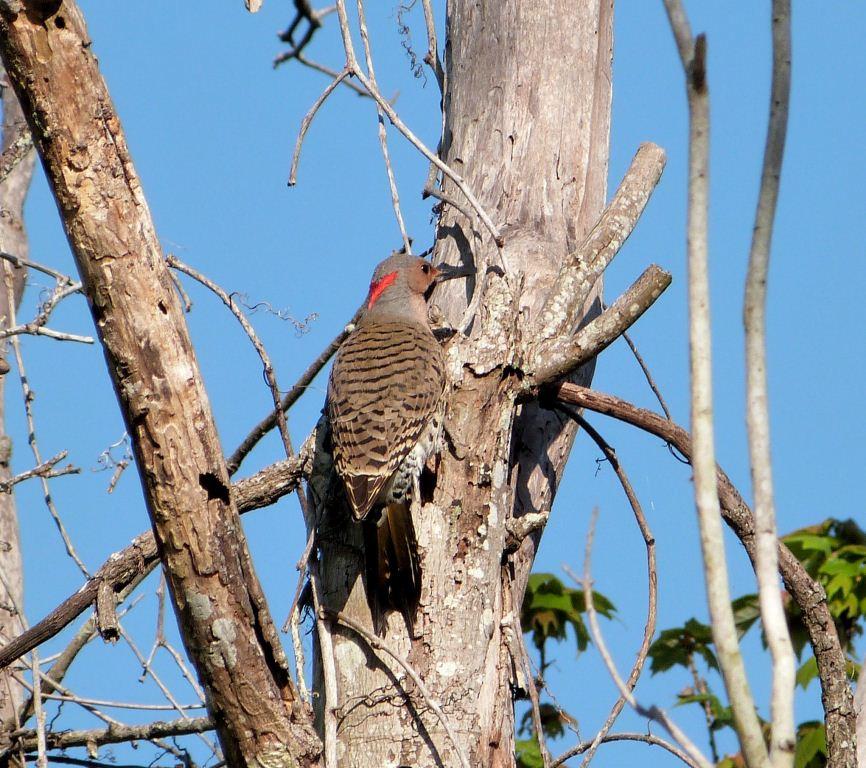
The Northern Flicker (Colaptes auratus) is a medium-sized member of the woodpecker family. It is native to most of North America, parts of Central America, Cuba, the Cayman Islands, and is one of the few woodpecker species that migrate. There are over 100 common names for the Northern Flicker. Among them are: Yellowhammer, clape, gaffer woodpecker, harry-wicket, heigh-ho, wake-up, walk-up, wick-up, yarrup, and gawker bird. Many of these names are attempts at imitating some of its calls.
Their breeding habitat consists of forested areas across North America and as far south as Central America. They are cavity nesters who typically nest in trees but they will also use posts and birdhouses if sized and situated appropriately. They prefer to excavate their own home although they will reuse and repair damaged or abandoned nests. Abandoned Flicker nests create habitat for other cavity nesters. Flickers are sometimes driven from nesting sites by another cavity nester, European starlings.
It takes about 1 to 2 weeks to build the nest which is built by both sexes of the mating pairs. The entrance hole is roughly 5 to 10 cm (2.0 to 3.9 in) wide.
A typical clutch consists of 6 to 8 eggs whose shells are pure white with a smooth surface and high gloss. The eggs are the second largest of the North American woodpecker species, exceeded only by the Pileated Woodpecker’s. Incubation is by both sexes for approximately 11 to 12 days. The young are fed by regurgitation and fledge about 25 to 28 days after hatching. (Wikipedia)
All woodpeckers make their houses in the wood of trees, either the trunk or one of the branches. Almost the only exceptions to this rule are those that live in the treeless countries of the West. In the torrid deserts of Arizona and the Southwest, some species are obliged to build in the thorny branches of giant cacti, which there grow to an enormous size. In the treeless plains to the northward, a few individuals, for lack of anything so suitable as the cactus, dig holes in clay banks, or even lay their eggs upon the surface of the prairie. In a country where chimney swallows nest in deserted houses, and sand martins burrow in the sides of wells, who wonders at the flicker’s thinking that the side of a haystack, the hollow of a wheel-hub, or the cavity under an old ploughshare, is an ideal home? But in wooded countries the woodpeckers habitually nest in trees. The only exceptions I know are a few flickers’ holes in old posts, and a few instances where flickers[21] have pecked through the weatherboarding of a house to nest in the space between the walls.
But because a bird nests in a hole in a tree, it is not necessarily a woodpecker. The sparrow-hawk, the house sparrow, the tree swallow, the bluebird, most species of wrens, and several of the smaller species of owls nest either in natural cavities in trees or in deserted woodpeckers’ holes. The chickadees, the crested titmice, and the nuthatches dig their own holes after the same pattern as the woodpecker’s. However, the large, round holes were all made by woodpeckers, and of those under two inches in diameter, our friend Downy made his full share. It is easy to tell who made the hole, for the different birds have different styles of housekeeping. The chickadees and nuthatches always build a soft little nest of grass, leaves, and feathers, while the woodpeckers lay their eggs on a bed of chips, and carry nothing in from outside.
Soon after they have mated in the spring, the woodpeckers begin to talk of housekeeping. First, a tree must be chosen. It may be sound or partly decayed, one of a clump or solitary; but it is usually dead or hollow-hearted, and at least partly surrounded by other trees. Sometimes a limb is chosen, sometimes an upright trunk, and the nest may be from two feet to one hundred feet from the ground, though most frequently it will be found not less than ten nor more than thirty feet up. However odd the location finally occupied, it is likely that it was not the first one selected. A woodpecker will dig half a dozen houses rather than occupy an undesirable tenement. It is very common to find their unfinished holes and the wider-mouthed, shallower pockets which they dig for winter quarters; for those that spend their winters in the cold North make a hole to live in nights and cold and stormy days.
Pileated Woodpecker (Dryocopus pileatus) by Raymond Barlow
The first step in building is to strike out a circle in the bark as large as the doorway is to be; that is, from an inch and a half to three or four inches in diameter according to the size of the woodpecker. It is nearly always a perfect circle. Try, if you please, to draw freehand a circle of dots as accurate as that which the woodpecker strikes out hurriedly with his bill, and see whether it is easy to do as well as he does.
If the size and shape of the doorway suit him, the woodpecker scales off the bark inside his circle of holes and begins his hard work. He seems to take off his coat and work in his shirtsleeves, so vigorously does he labor as he clings with his stout toes, braced in position by his pointed tail. The chips fly out past him, or if they lie in the hole, he sweeps them out with his bill and pelts again at the same place. The pair take turns at the work. Who knows how long they work before resting? Do they take turns of equal length? Does one work more than the other? A pair of flickers will dig about two inches in a day, the hole being nearly two and a half inches in diameter. A week or more is consumed in digging the nest, which, among the flickers, is commonly from ten to eighteen inches deep. The hole usually runs in horizontally for a few inches and then curves down, ending in a chamber large enough to make a comfortable nest for the mother and her babies.
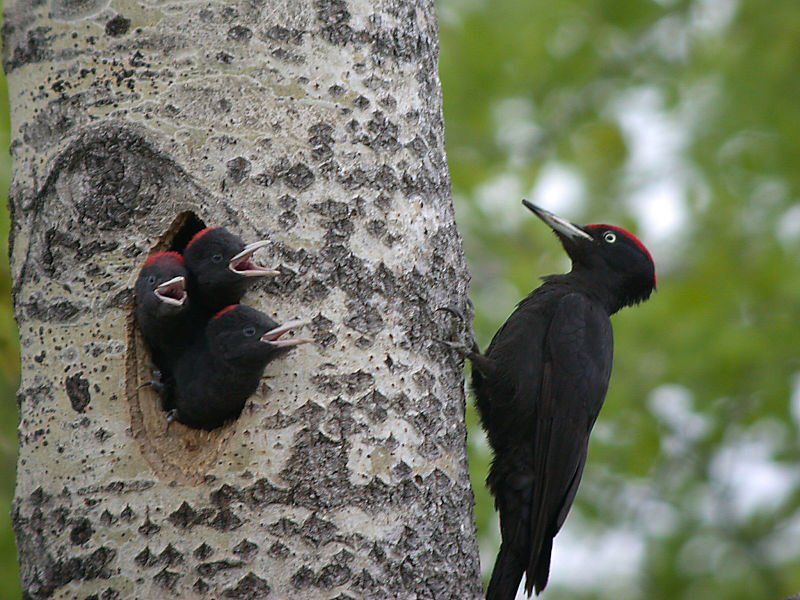
What a good time the little ones have in their hole! Rain and frost cannot chill them; no enemy but the red squirrel is likely to disturb them. There they lie in their warm, dark chamber, looking up at the ray of light that comes in the doorway, until at last they hear the scratching of their mother’s feet as she alights on the outside of the tree and clambers up to feed them. What a piping and calling they raise inside the hole, and how they all scramble up the walls of their chamber and thrust out their beaks to be fed, till the old tree looks as if it were blossoming with little woodpeckers’ hungry mouths!
Lee’s Addition:
Pileated Woodpecker, female at nest hole
The trees of the Lord are watered abundantly and are filled with sap, the cedars of Lebanon which He has planted, Where the birds make their nests; as for the stork, the fir trees are her house. (Psalms 104:16-17 AMP)
This is Chapter IV from The Woodpeckers book. Our writer, Fannie Hardy Eckstorm, wrote this in 1901. There are 16 chapters, plus the Forward, which are about the Woodpecker Family here in America. All the chapters can be found on The Woodpeckers page. I added photos to help enhance the article. In 1901, photography was not like today.
If you have ever been in the woods and heard a Woodpecker or other member of their family working on their “house,” that sound helps locate them. The Pileated Woodpeckers especially sound like they are tearing the place apart. The Lord created this family to prefer having their home in the tree trunks and larger limbs. He has prepared them with beaks that can handle all the pounding they do and a cushioned forehead to protect their brains. The video on the Woodpeckers page explains part of this.
Look at the birds of the air: they neither sow nor reap nor gather into barns, and yet your heavenly Father feeds them. Are you not of more value than they? (Matthew 6:26 ESV)
I alway enjoy seeing the Grebes swimming around and diving. Waiting for them to come up is always an adventure. You never know where to look. You watch an area and next thing you know, up they pop nowhere near where they dove.
As for a young one, like the photo, that is an site that has evaded us. It is “cute.”
The Pied-billed Grebe (Podilymbus podiceps) is a species of the grebe family of water birds. That is the Podicipedidae – Grebes FamilyThe Pied-billed Grebe is primarily found in ponds throughout the Americas. Other names of this grebe include American dabchick, dabchick, Carolina grebe, devil-diver, dive-dapper, dipper, pied-billed dabchick, thick-billed grebe, and other names.
Pied-billed Grebes are small, stocky, and short-necked. They are 12–15 in (31–38 centimeters) in length, with a wingspan of 18–24 in (45–62 cm) and weigh 8.9–20.0 oz (253–568 grams). They are mainly brown, with a darker crown and back. Their brown color serves as camouflage in the marshes they live in. They do not have white under their wings when flying, like other grebes. Their undertail is white and they have a short, blunt chicken-like bill that is a light grey color, which in summer is encircled by a broad black band (hence the name). In the summer, its throat is black. Juveniles have black and white stripes and look more like winter adults. This grebe does not have webbed feet. Its toes have lobes that come out of the side of each toe. These lobes allow for easy paddling. When flying, the feet appear behind the body due to the feet’s placement in the far back of the body.
Its call is unique, loud and sounds like a “whooping kuk-kuk-cow-cow-cow-cowp-cowp.” Its call is similar to the Yellow-billed Cuckoo.
Pied-billed Grebes rarely fly. They make a slow dive frequently, especially when in danger, diving to about 20 feet or less. They dive for about 30 seconds and may move to a more secluded area of the water, allowing only the head to be visible to watch the danger dissipate.
Pied-billed Grebes feed mainly on aquatic invertebrates, and also on small fish and amphibians (frogs, tadpoles). They dive to obtain food. Their bills allow them to crush crustaceans, like crawfish. They may also eat plants. They have been shown to eat their own feathers, like other grebes, to aid in digestion (prevent injury from small bones). They will also feed their feathers to their young. (Wikipedia with editing)
I have been young, and now am old, yet I have not seen the righteous forsaken or his children begging for bread. (Psalms 37:25 ESV)
This photo, even though the young one is not really begging, and the parent is only doing what it is supposed to do, reminds me of that promise.





















 Lee's Birdwatching Adventures Plus