According to Birds and Bloom magazine site, there are Birds of the Month.
“You’ve probably heard of birth month gemstones and birth month flowers, but have you heard of birth month birds? It might come as a surprise to learn every month of the year has not only a representative jewel and flower, but also a bird. From owls to ravens, here are the birds that represent everyone’s birthdays.”
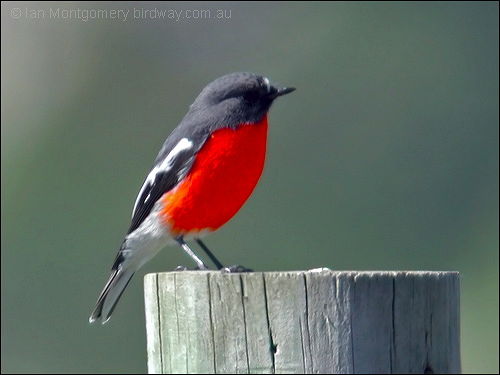
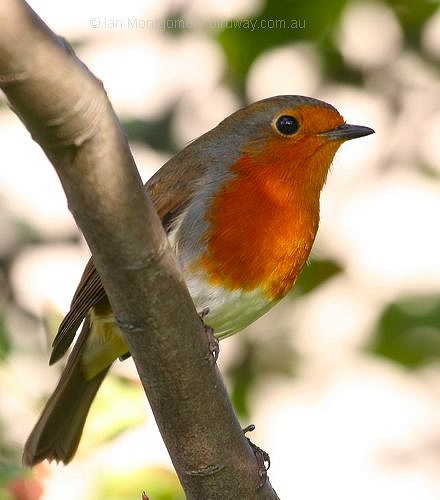
Flame Robin (Petroica phoenicea) by Ian
More from Birds and Bloom:
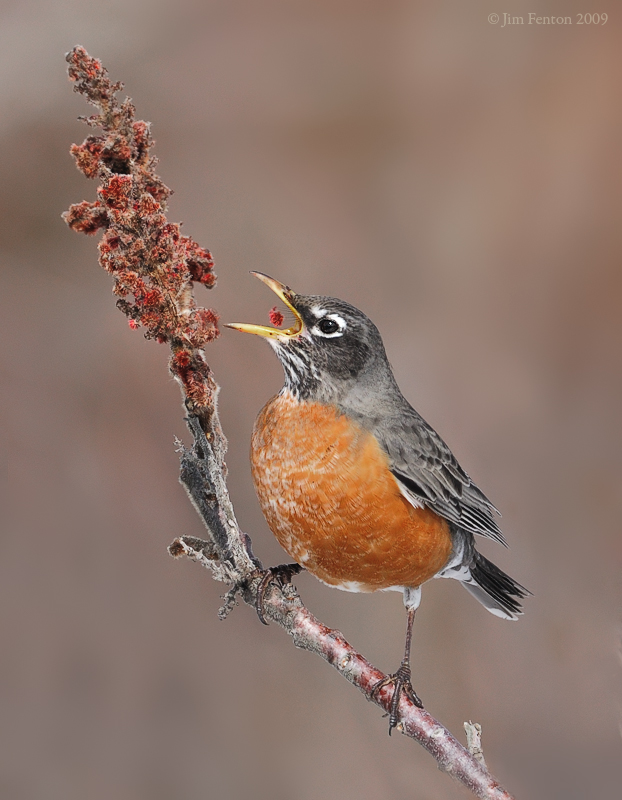
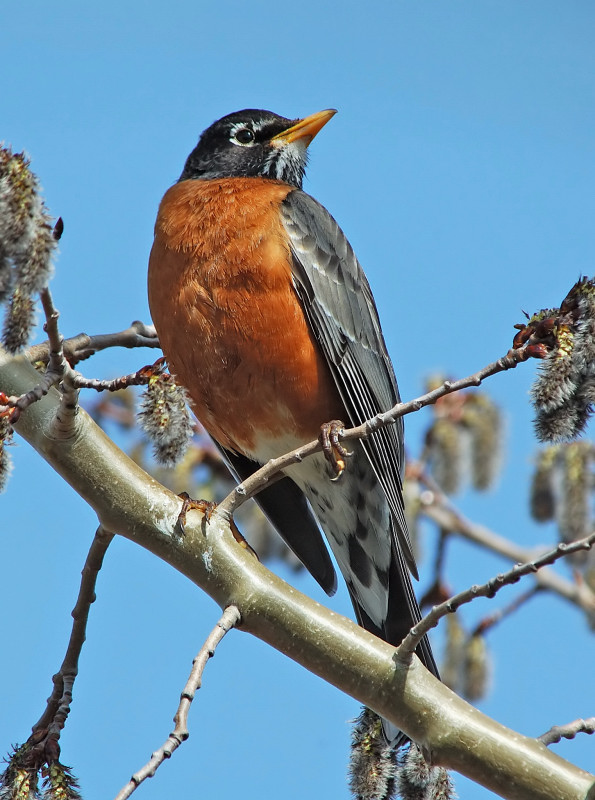
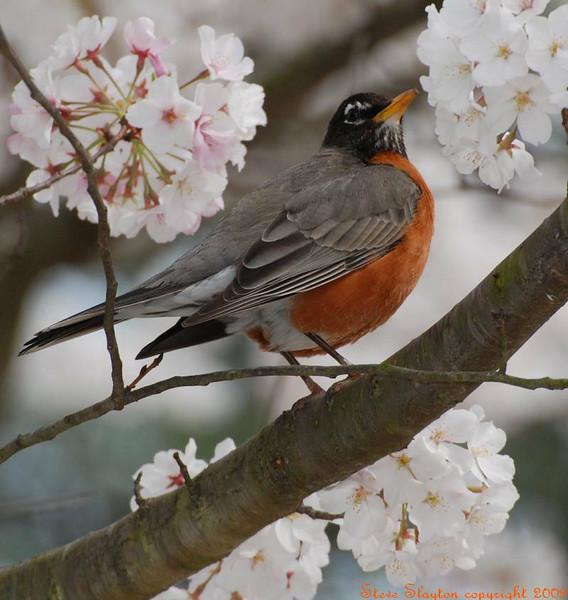
March: Robin
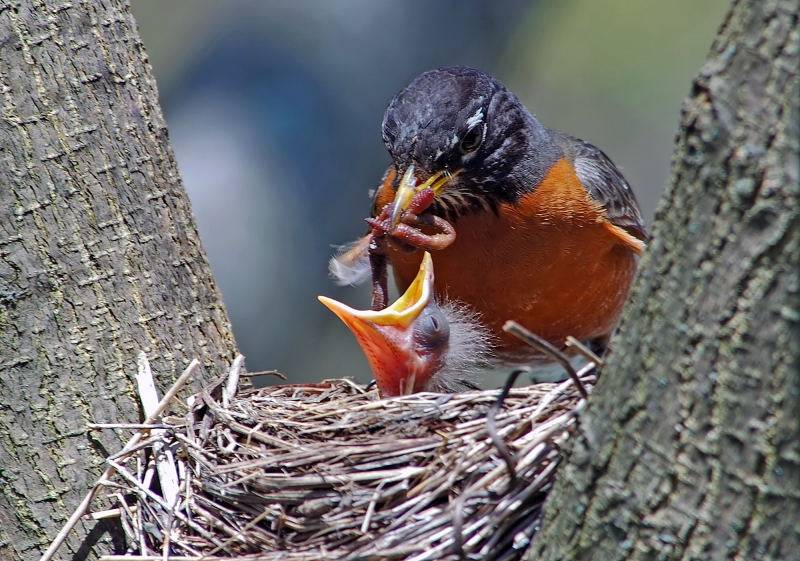
Fans of warm weather, brightly colored flowers and returning migrating birds adore the American robin. After all, many view it as the first sign of spring. To identify the March birth month bird, look for a medium-sized songbird with a red breast, gray upperparts and a yellow beak. Their sweet cheerily, cheer-up, cheerio song rings out on spring mornings.
“My husband and I were walking through the Tanger Family Bicentennial Garden in Greensboro, North Carolina, in June. I saw this little birdbath with what I thought was a fake bird… but then I heard it singing! I love the colors of this American robin, and I absolutely love photographing these beautiful birds!” says Teri Quintal.
According to Birds and Bloom magazine site, there are Birds of the Month.
“You’ve probably heard of birth month gemstones and birth month flowers, but have you heard of birth month birds? It might come as a surprise to learn every month of the year has not only a representative jewel and flower, but also a bird. From owls to ravens, here are the birds that represent everyone’s birthdays.”
More from Birds and Bloom:
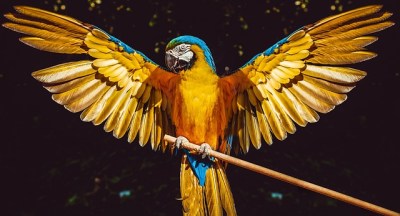
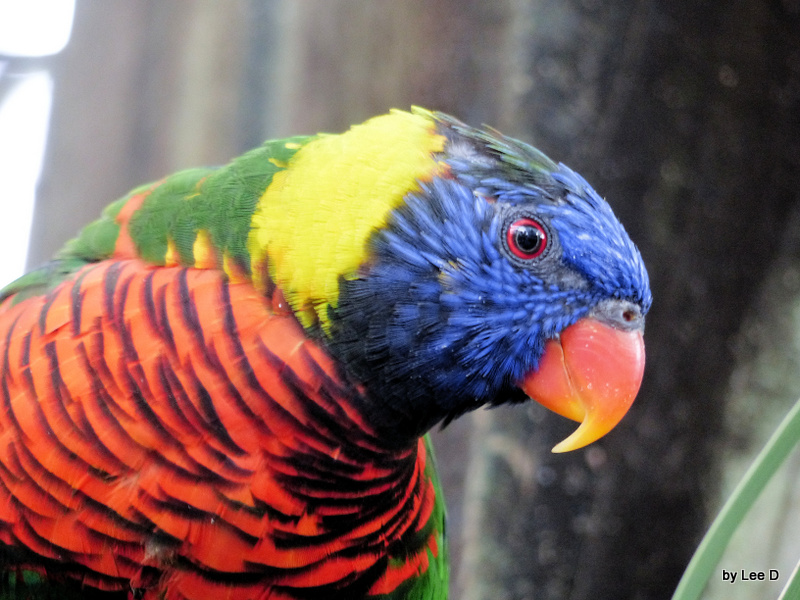
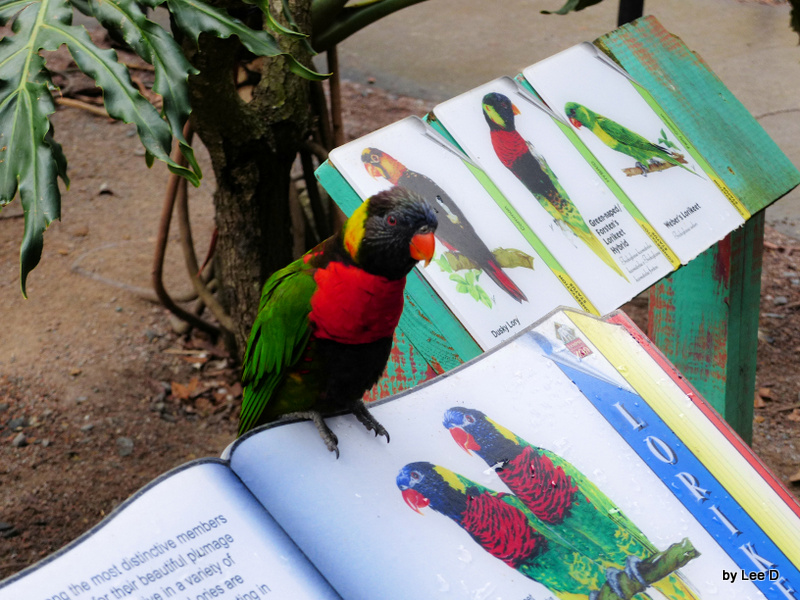
Spunky, smart, colorful and filled to the brim with personality, parrots always inspire smiles. While they’re perhaps most recognizable for sitting on pirates’ shoulders, there are more than 350 types of parrots in the world—and plenty of them live in the wild.
“I love this this bird because every single time my shutter would snap, he would pose. I took this picture at the Henry Doorly Zoo in Omaha, Nebraska,” says Katelyn Cheek.
Red-winged Parrot (Aprosmictus erythropterus) by Ian
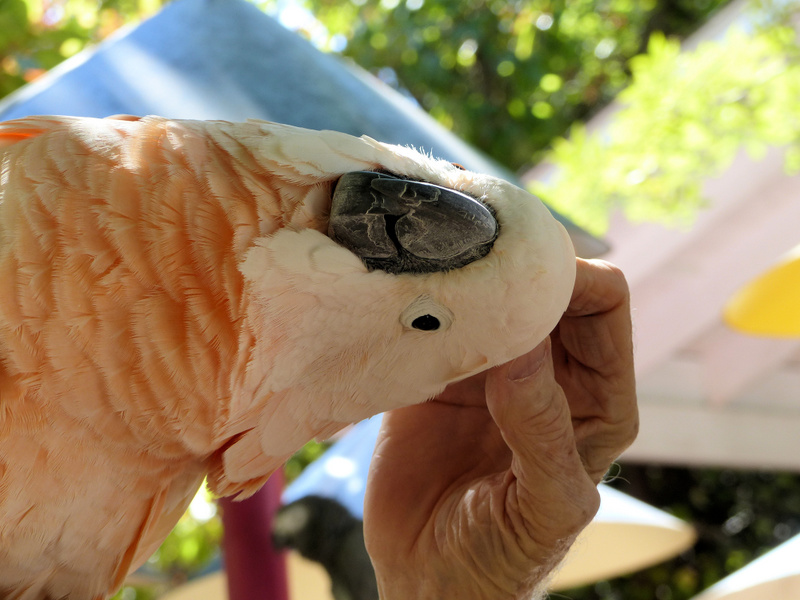
Salmon-crested Cockatoo (Cacatua moluccensis) at Parrot Mtn by Lee
The rainbow shall be in the cloud, and I will look on it to remember the everlasting covenant between God and every living creature of all flesh that is on the earth.” (Genesis 9:16 NKJV)
Did you know that there is a bird assigned to each month like they do stones? I was not aware of these for birds. September, which is my birthday month has a Saphire. I’ll reveal September’s when we get to that post.
According to Birds and Bloom magazine site, there are Birds of the Month.
“You’ve probably heard of birth month gemstones and birth month flowers, but have you heard of birth month birds? It might come as a surprise to learn every month of the year has not only a representative jewel and flower, but also a bird. From owls to ravens, here are the birds that represent everyone’s birthdays.”
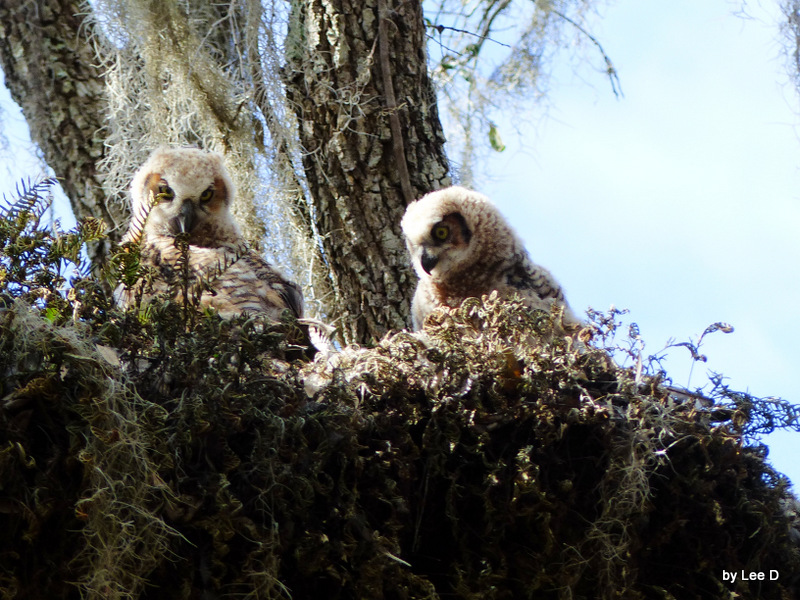
Great Horned Owl Youngsters at Circle B Bar Reserve by Lee
“January: Owl
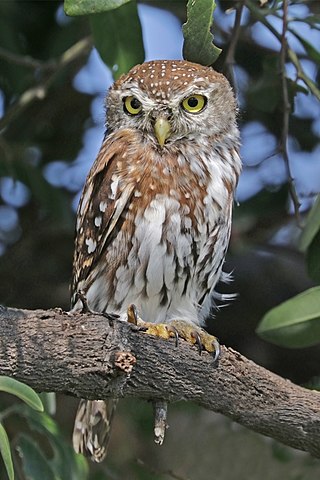
Wise and formidable, owls preside over the woods at night. They’re commonly seen as a symbol of smarts, with great horned owls showing up on many a graduation card. Identify these January birth month birds by their large eyes, rounded heads and hooked beak. Listen for their hooting when the skies grow dark.”
They didn’t say which kind, so here are some of the articles we have done about Owls:
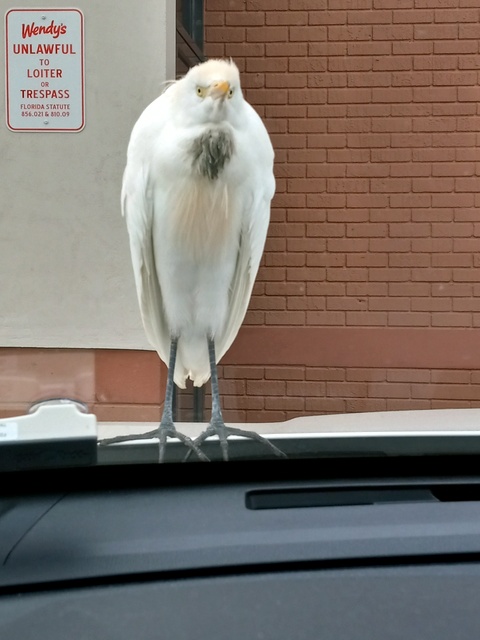
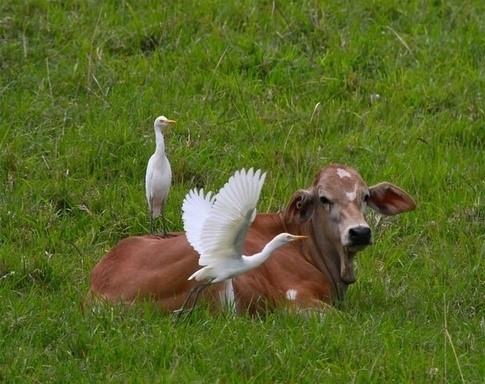
Adventurous Cattle Egret outside Wendy’s. When I pulled up to go into Wendy’s yesterday, this adventurous Cattle Egret decided to check my window. Later, as we were leaving, I noticed him riding on a man’s truck as he drove off. When the driver sped up, he finally hopped off.
If you notice the sign on the wall behind him/or her, it is Loitering.
Egret on Car in front of Wendy’s – no trespassing
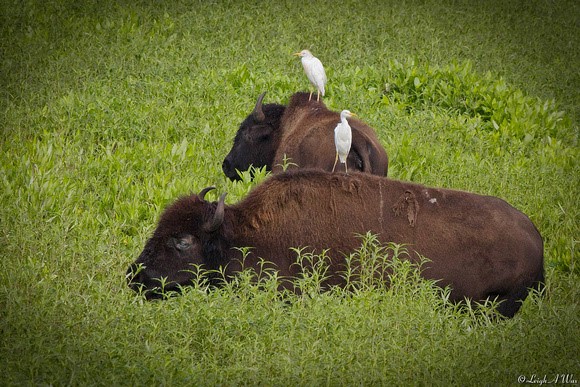
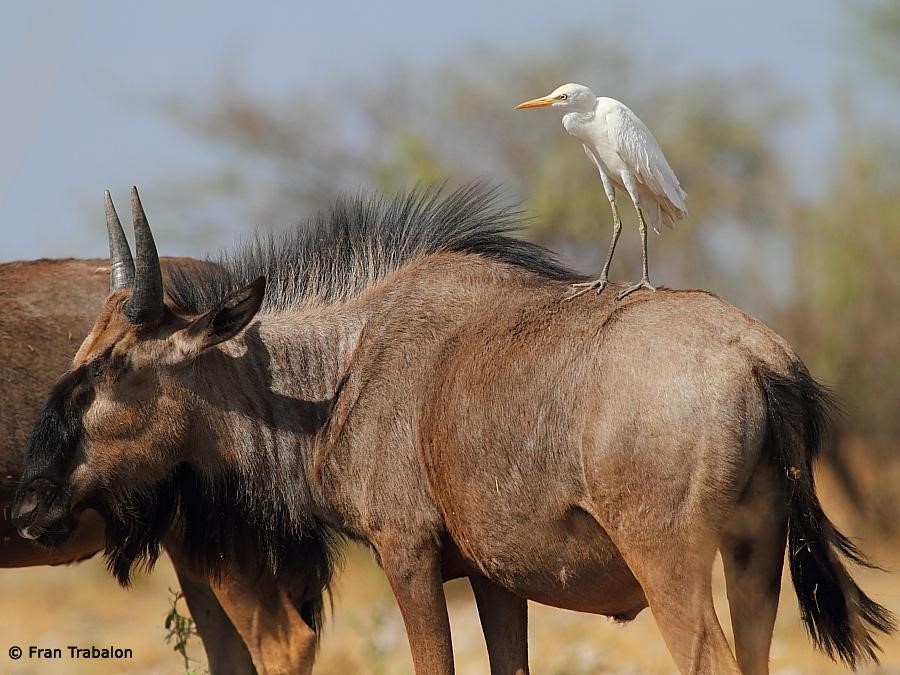
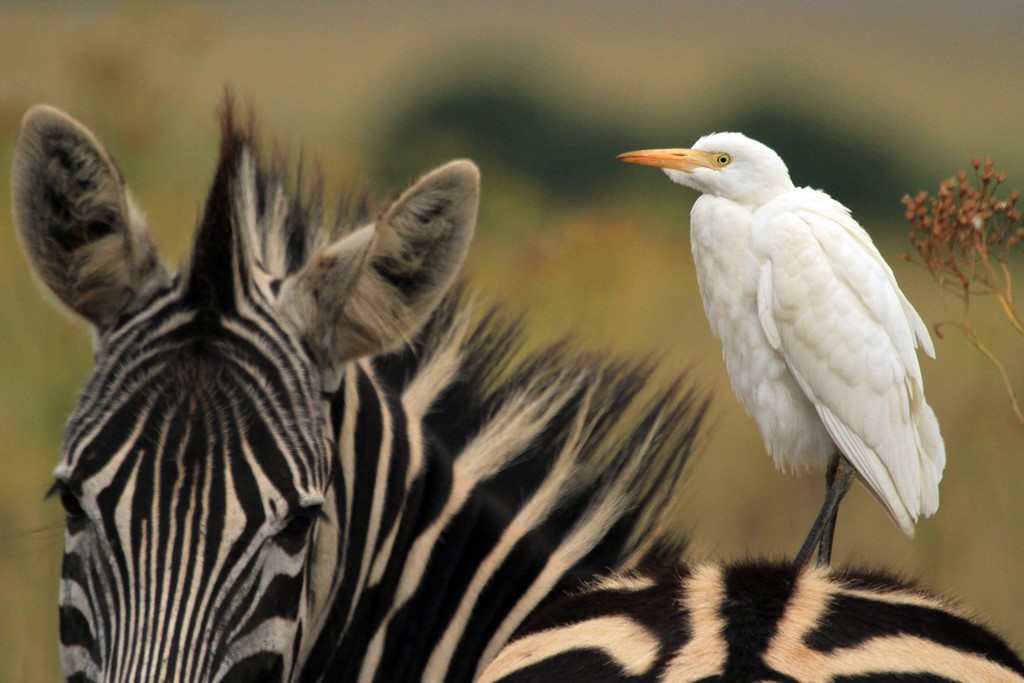
We have written about these Cattle Egrets before, but this was a very close encounter. They love to ride on cattle or whatever critter they can catch a ride on and try to find food. Here are a few of previous photos of Cattle Egrets.
“Look at the birds of the air, for they neither sow nor reap nor gather into barns; yet your heavenly Father feeds them. Are you not of more value than they?” (Matthew 6:26 NKJV)
Sharp-shinned Hawk (Accipiter striatus) by Daves BirdingPix
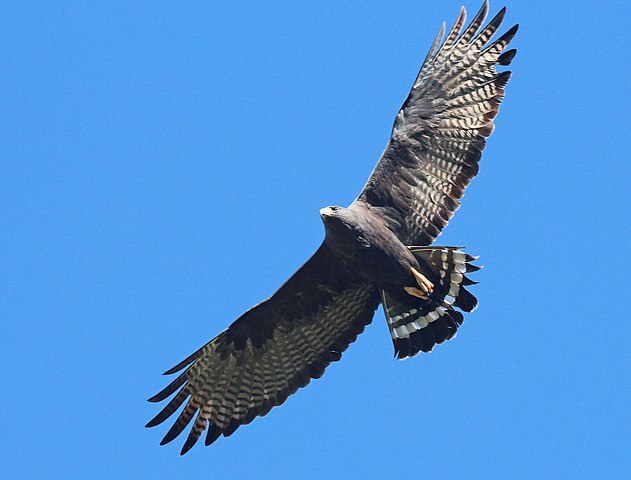
The other day while I was filling my gas tank, I looked up and spotted a Hawk flying overhead. He (or she) kept flying back and forth slowly. I have no clue as to what kind of hawk it was, but wondered which verses mentions the hawk? We have written about hawks many times here on the blog, and know it is one of the Birds of the Bible.
Job 39:26 is a great verse that asks a very thought-provoking question.
“Doth the hawk fly by thy wisdom, and stretch her wings toward the south?” (KJV)
I have Bible Gateway loaded on my computer and brought up that verse and asked to show all the various Bible versions. Looking through the various ways of asking or questioning God about His hawks was interesting. As I read through the various versions, it makes us realize how little we know about The Creator’s Wisdom.
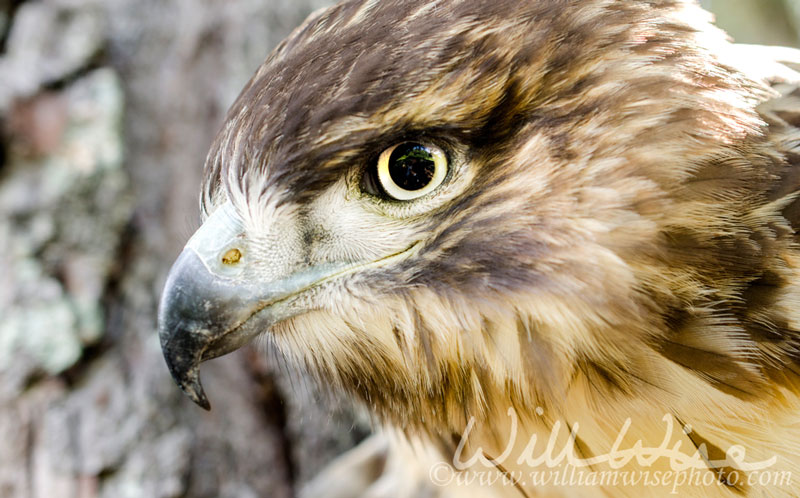
Raptor Bird of Prey, Juvenile Red Tailed Hawk profile, William Wise
“Was it through your know-how that the hawk learned to fly, soaring effortlessly on thermal updrafts? Did you command the eagle’s flight, and teach her to build her nest in the heights, Perfectly at home on the high cliff face, invulnerable on pinnacle and crag? From her perch she searches for prey, spies it at a great distance. Her young gorge themselves on carrion; wherever there’s a roadkill, you’ll see her circling.”
“Whether an hawk spreading abroad his wings to the south, beginneth to have feathers by thy wisdom? (Be it by thy wisdom that a hawk haveth feathers, and spreadeth his wings towards the south?)”
I’m very thankful that the Lord instructs the Hawks do spread their wings and come down here to Florida!! Especially in the winter!!
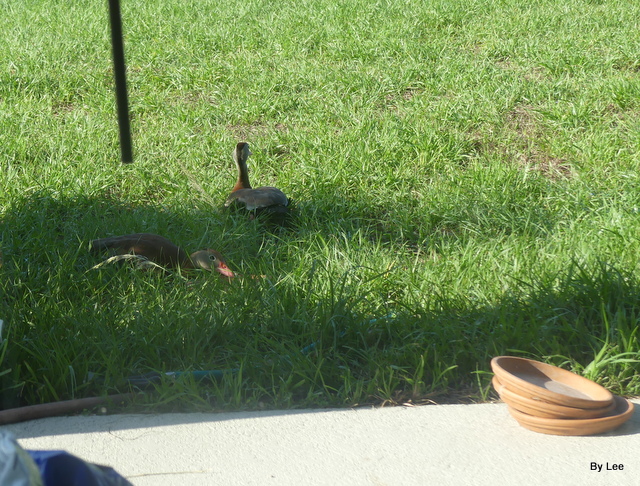
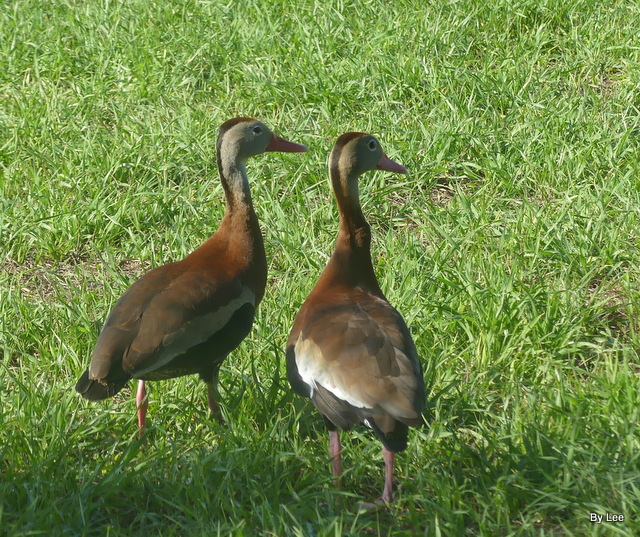
Our Black-bellied Whistling Ducks have shown up again this winter just like previous years. I’ve written about them many times, but I am always glad when they return each winter. I searched through some previous post about them and found this one from 2011. I especially like the verse quoted, “”I will instruct thee and teach thee in the way which thou shalt go: I will guide thee with mine eye.” (Psalms 32:8 KJV)” That verse means a lot as I am learning to adjust to my current situation. See Time To Find and Watch Birds Again. I trust you enjoy this older post again.
Black-bellied Whistling Ducks feeding 6/11 by Lee
Birdwatching and Blessings – 6/11/21
This morning our Whistling Duck pair came looking for food, as is becoming their routine. Dan was planning to mow the grass today, so the food dishes were empty and stacked on the patio. So, I put one close by and gave them some food.
Church Signs:
God likes it when you smile, but he loves it when He is the reason!
The will of God will never take you to where the grace of God will not protect you.
Truths To Consider:
Black-bellied Whistling Ducks looking to see if they should go that way. 6/11
“I will instruct thee and teach thee in the way which thou shalt go: I will guide thee with mine eye.” (Psalms 32:8 KJV)
Black-bellied Whistling Ducks maybe asking or deciding which way to go. 6/11
“And they said unto him, Ask counsel, we pray thee, of God, that we may know whether our way which we go shall be prosperous.” (Judges 18:5 KJV)
Decisions! Decisions! Always best when the Lord is involved in seeking answers.
I haven’t been active here for several months. So, it’s time to start writing posts again. An explanation is due to those of you who follow this blog.
On October 17th, the love of my life went to heaven. “To be absent from the body is to be present with the Lord.” The Lord chose to take Dan on to be with him. Dan developed a brain bleed 10 days earlier and never regained consciousness.
Since Dan was our main photographer, I’ll either repost previous favorite photos or use other photographers. So, bear with me as I try to get back in the “Birding Saddle”, so to say.
This is Birdwatching really close
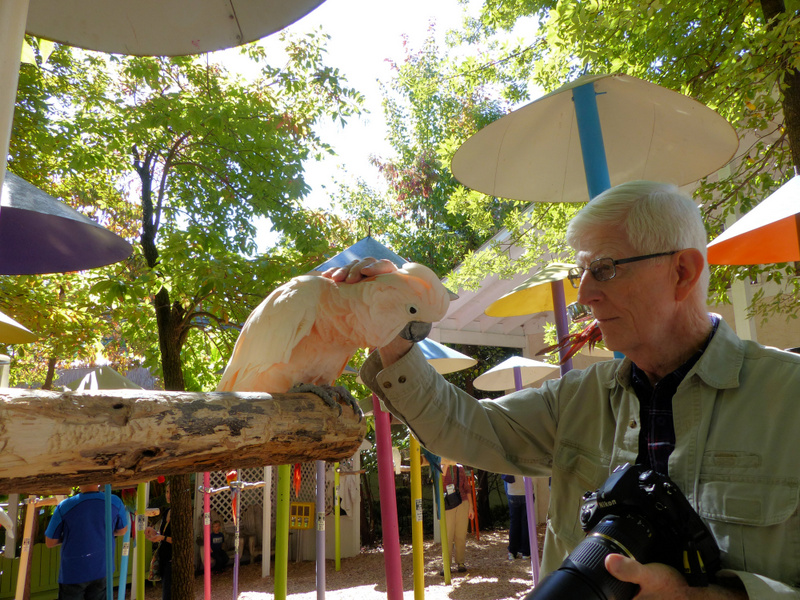
Galah (Eolophus roseicapilla) and Dan by Lee
These last two pictures are my favorites as I caught the mischievous Galah checking out Dan’s camera and then Dan’s expression as he looked at me.
As for Dan, I’ll see him later. He, like me, accepted the Lord as his personal Savior when he was a youngster.
“For God so loved the world that He gave His only begotten Son, that whoever believes in Him should not perish but have everlasting life.”
(John 3:16 NKJV)
Have you accepted Him?
Consider the ravens [κορακας], for they neither sow nor reap; which neither have storehouse nor barn; and God feedeth them: how much more are ye better than the fowls? (Luke 12:24)
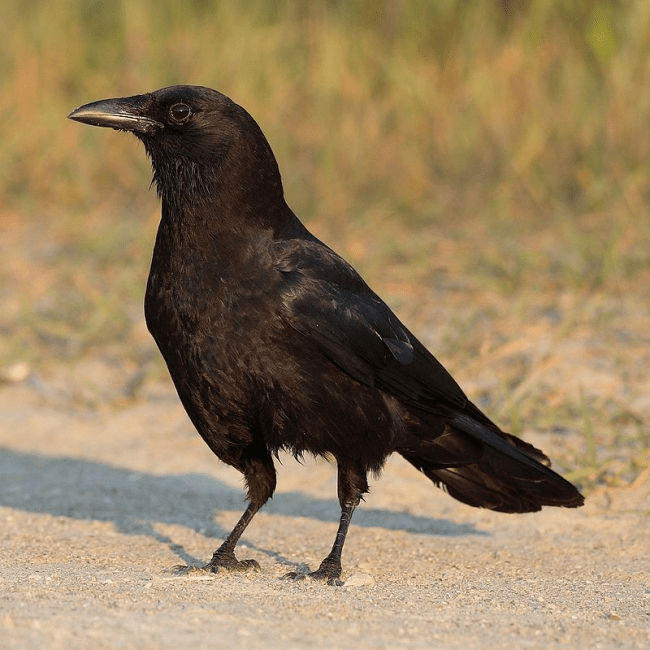
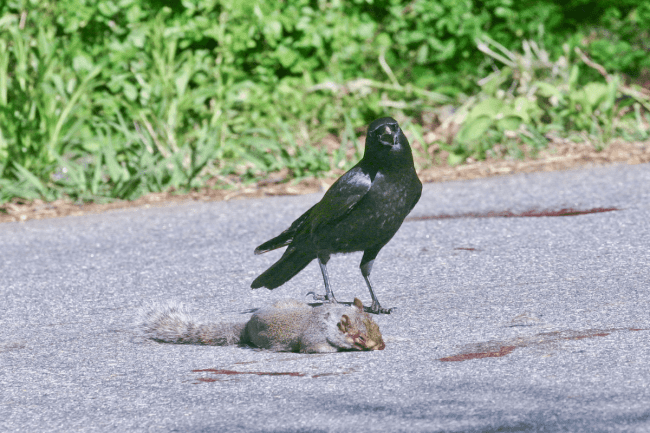
AMERICAN CROW (Wikipedia photo credit)
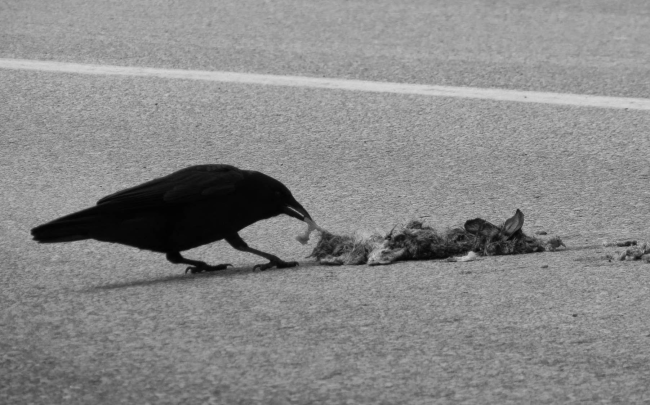
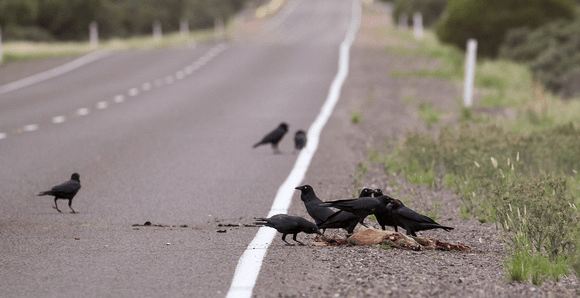
Ever seen a crow [Corvus brachyrhynchos] on a road, struggling to consume roadkill? Yesterday I approached a crow in the road, as I was commuting—the crow was struggling to pull edible portions of meat from roadkill—it looked like a squirrel.
Like the Holy Land’s ravens [Corvus corax] who are mentioned by the Lord Jesus Christ Himself (in Luke 12:24), crows are famously opportunistic eaters – and their potential food sources include the cadavers of dead rodents, such as squirrels who (sadly) become roadkill in tree-populated suburban streets.
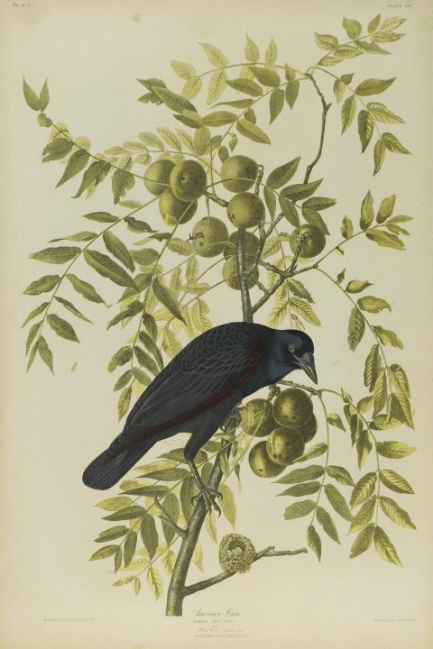
AMERICAN CROW (J. J. Audubon painting / public domain)
The crow that I saw, yesterday morning, was struggling so, to get some edible parts of the roadkill, that he (or she) did not see my car approaching—which could result in the roadkill-eating crow himself (or herself) soon becoming another example of roadkill!
So, of course, I tooted my car’s horn, with the jolting noise scaring the crow – so the crow quickly (and safely) flew away, thus escaping a roadkill fate. After my car passed through that part of the boulevard, happily, the hungry (and still living) crow returned to its roadkill meal.
Sometimes a little “beep, beep” is all that is needed to “save the day” (for a crow)!
Seest thou a man diligent in his business? he shall stand before kings; he shall not stand before mean men. (Proverbs 22:29)
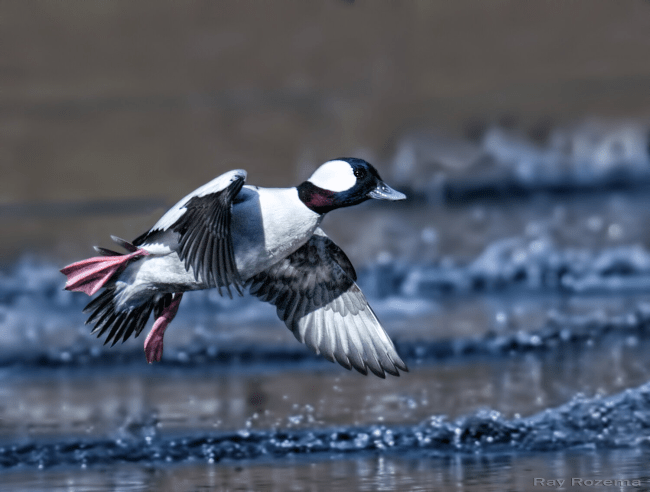
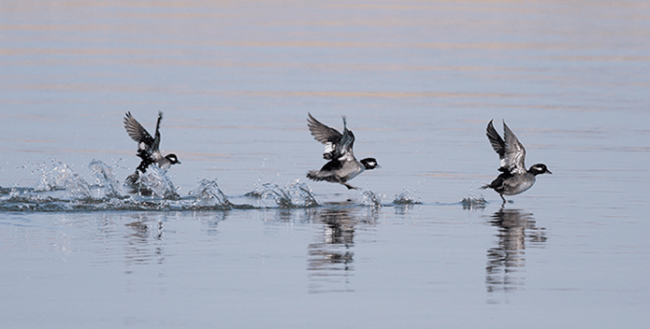
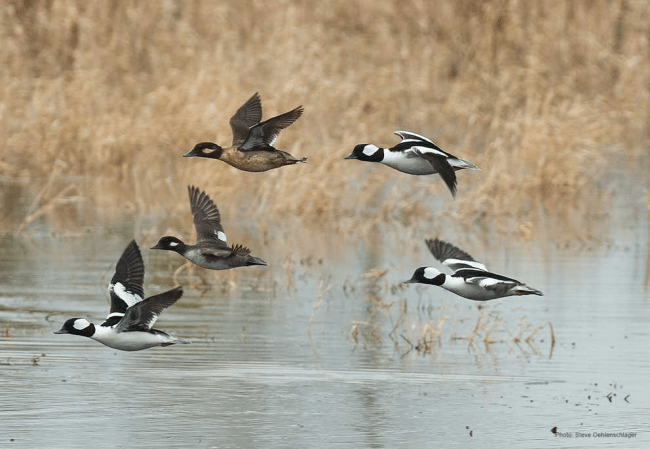
BUFFLEHEAD IN FLIGHT Sacramento Audubon Society / Ray Rozema photo credit
When I think of Bufflehead ducks (Bucephala albeola), I am reminded of the authoritative advice (“words of the wise”) of Proverbs 22:29, regarding reputations for dependable “diligence”. Why?
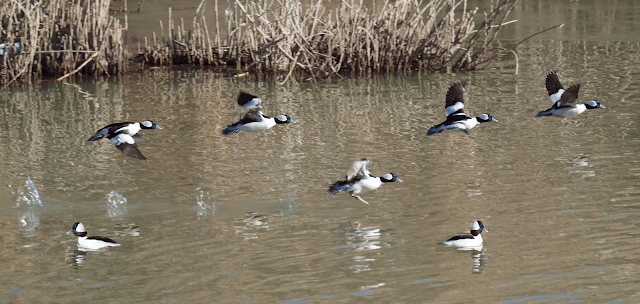
BUFFLEHEADS in migration Jonathan Maher Kresge / Chesapeake bay Foundation photo credit
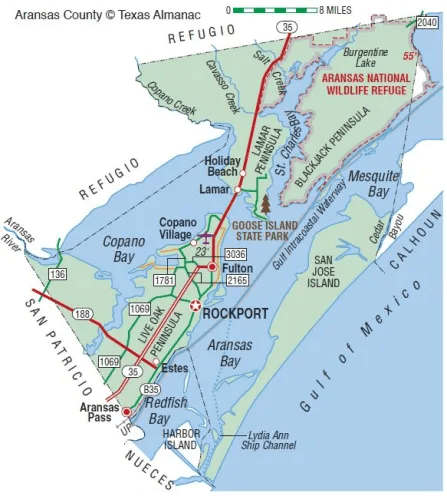
The first time that this author observed a Bufflehead, in the wild, was on March 11th of A.D.1996, while visiting the Texas Gulf Coast’s Aransas Bay (which is protected as Aransas Bay National Wildlife Refuge), as part of ornithological research (eventually) leading to a doctoral degree in creation science (applied to wildlife ecology). [See “Bufflehead Duck, One of Diverse Divers at Aransas Bay” (posted at https://leesbird.com/2018/01/26/bufflehead-duck-one-of-diverse-divers-at-aransas-bay/ .]
ARANSAS BAY MAP Aransas County in TEXAS ALMANAC image credit
What conspicuously beautiful ducks those Buffleheads were (and are)!
BUFFLEHEAD DUCK in flight Bill Bouton photo credit
Consider the reputation that the Bufflehead duck has, for dependability punctuality, as was recently observed by Alonso Abugattas, the Chesapeake Bay area’s “Capital Naturalist”:
The bufflehead is nothing if not punctual. Few other ducks are known to arrive in our neighborhood every winter within a few delays of the date they arrived the previous year. The smallest of North America’s diving ducks, the bufflehead … [can] nest in the tree cavities of woodpeckers, most commonly northern flickers, according to Canadian zoologist Gilles Gauthier. . . . .
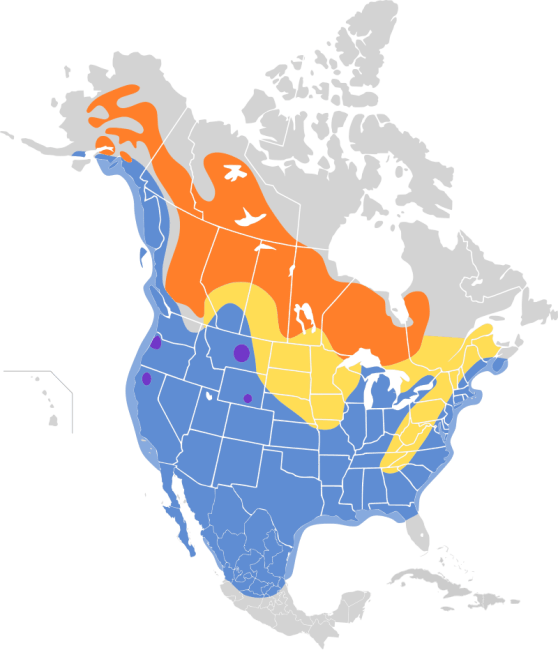
After forming their pair bonds over the winter, the birds head back to their breeding grounds in early April and early May, migrating at night. They’re among the last ducks to leave their winter territory. The greatest concentration of breeding grounds, according to abundance maps maintained by the Cornell Lab of Ornithology, are in northwestern Canada, in a wide swath crossing through Saskatchewan, Alberta and Northwest Territory… petering out in Alaska. . . .
Buffleheads start leaving [their breeding grounds] for the wintering grounds in October, settling mostly across [the U.S.A.’s Lower 48] but sometimes going as far [south] as Central America.
[Quoting CHESAPEAKE BAY JOURNAL, 34(8): 39 (November 2024).]
BUFFLEHEAD RANGE MAP (Cephas / BirdLife Internat’l / Wikipedia image credit)
So much for the Bufflehead’s predictable-because-dependable migration movements.
Yet is there a lesson for us humans, as we consider the Bufflehead’s phenological reliability? Yes, there is – especially if we look at the details of Proverbs 22:29.
BUFFLEHEADS in wetland habitat Robert Mortensen / BirdingIsFun.com composite photo credit
Of course, it is good to earn a reputation for dependable punctuality. In fact, that is similar to having a reputation for quickly fulfilling one’s responsibility — as opposed to having a reputation for dilatory procrastination. Some folks can be expected to do sloppy work – who needs that kind of “help”?
Yet other folks are famous for delivering extremely careful (almost perfectionist) work, but only in an all-too-often impractically slow response time, so slow that the perfectionist work is of diminished practical value (because the need for timely results was compromised and disappointed).
How is all that relevant to understanding Proverbs 22:29? That proverb is translated into English as follows:
Seest thou a man diligent in his business? he shall stand before kings; he shall not stand before mean men. (Proverbs 22:29)
In that sentence the phrase “man diligent” is a translation of ’îš mâhîr, with ’îš being a generic word for “man”—but what does the Hebrew word mâhîr (translated as “diligent” in the KJV) mean?
Consider that the masculine singular adjective mâhîr is translated by several English words in our English Bible. For example, mâhîr is translated “ready” in Ezra 7:6 and also in Psalm 45:1 (which is Psalm 45:2 in Hebrew verse numbering]). Also, mâhîr is translated “hasting” in Isaiah 16:5. But there is more to consider, because Hebrew adjectives are routinely related in meaning to similarly spelled nouns, verbs, and/or adverbs.
Therefore, to better understand what the Hebrew adjective mâhîr means, in Proverbs 22:29, consider also the following (non-exhaustive) listing of illustrative (etymologically related) verbs and adverbs:
[See generally George V. Wigram’s ENGLISHMAN’S HEBREW CONCORDANCE OF THE OLD TESTAMENT (Hendrickson’s 2001 reprint of the 1874 London-published 3rd edition), page 669.]
The listing above is incomplete—but the pattern is already clear—the adjective mâhîr denotes the trait of being speedy, swift, quick!
RAPIDLY RUNNING A RACE! Scottish Gov’t / Parent Club photo credit
In other words, a person who consistently and dependably does his or her work fastly is appreciated—and (eventually) will “stand before kings” (i.e., not be limited to serving before low-ranking individuals).
So, just as the phenological punctuality of the returning-from-winter Bufflehead duck is dependably predictable (as is also the migratory return of Israel’s faithful stork—see www.icr.org/article/lesson-from-stork — which is noted in Jeremiah 8:7), a truly diligent human will be prompt (i.e., give quick turnaround) in his or her work responsibilities.
Careful work is appreciated, yes, but only if it is contextually timely. Promptness is really appreciated!
Yea, the stork in the heaven knows her appointed times; and the turtledove and the crane and the swallow observe the time of their return; but My people know not the judgment of the LORD. (Jeremiah 8:7)
The Bible mentions migratory birds – for examples, storks, turtledoves, cranes, and swallows are mentioned as faithfully migratory birds in Jeremiah 8:7. (See JJSJ’s “A Lesson from the Stork”, at http://www.icr.org/article/lesson-from-stork .)
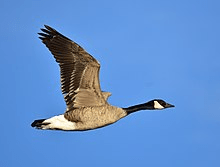
CANADA GOOSE in flight (Wikipedia photo credit)
Avian migrations are truly a wonderful recurrence in God’s phenological providences.
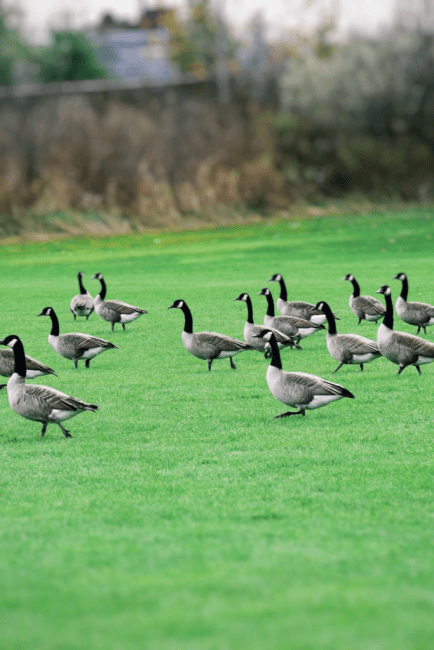
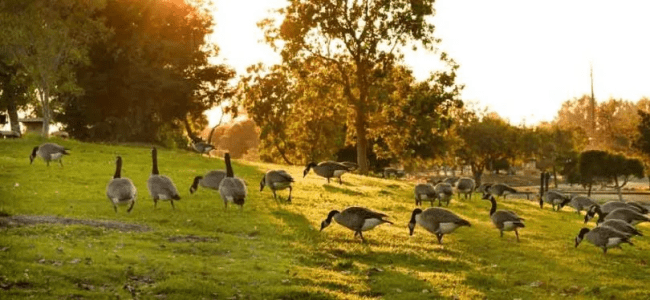
With that in mind, I observed a flock of Canada geese (Branta canadensis) in my neighborhood, not far from my mailbox—they were grazing among the grasses by my rain-runoff drainage ditch.
CANADA GEESE IN GRASS (HumaneActionPittsburgh.org photo credit)
But not long afterwards they were off again, in the air, southbound, toward wherever they go for winter. Today’s limerick follows.
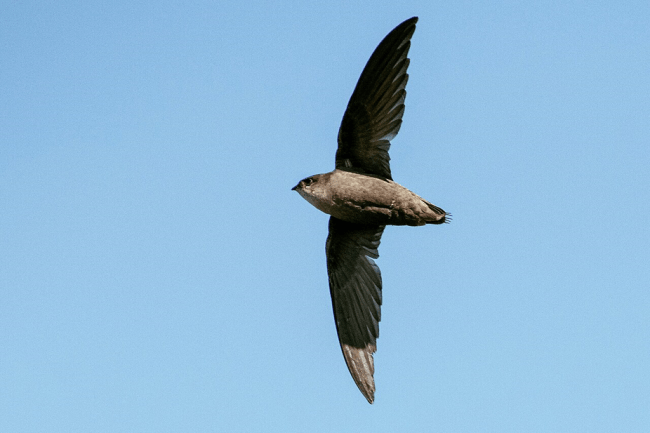
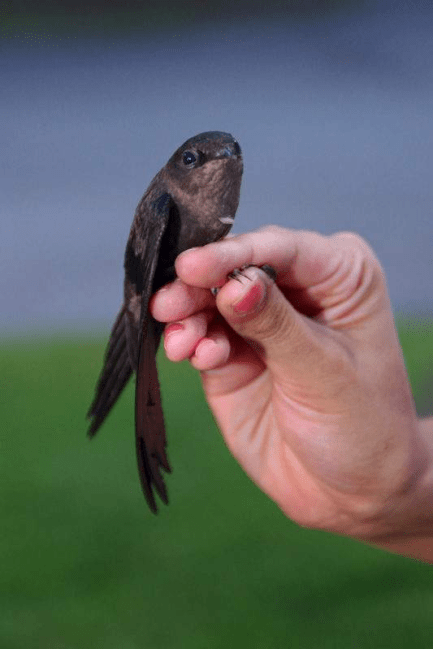
CHIMNEY SWIFT near Cleveland, Ohio, by Lake Erie (Adam Jackson / Wikipedia photo credit)
Make a joyful noise unto the LORD, all ye lands. (Psalm 100:1)
SWIFT is a fitting name for the swallow-like birds that swiftly dart, here-and-there, zigzagging and zipping and catching flying fast-food on the wing. Also, they are known for nesting inside traditional chimneys.
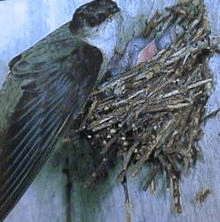
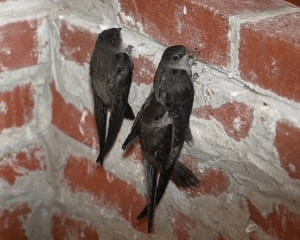
CHIMNEY SWIFT nesting (Wikipedia photo)
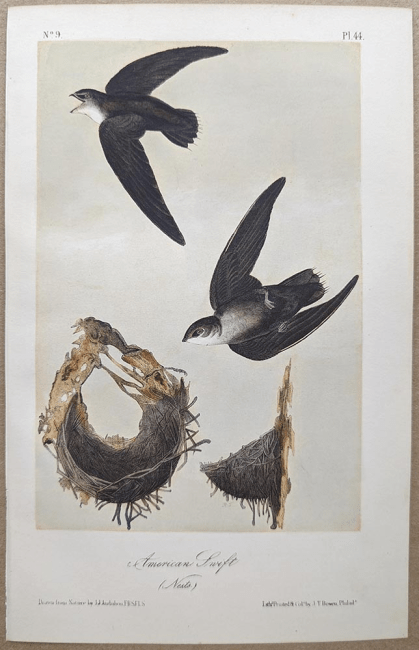
One of the well-known varieties of swifts are the Chimney Swifts (Chaetura pelagica), whose breeding ranges fill America’s eastern half plus some of the central prairie states. Swifts resemble swallows so closely, in morphology and in behavior, that swifts were originally categorized as swallows, e.g., by Carl Linnaeus, and later by ornithologists Mark Catesby and John James Audubon.
AMERICAN SWIFT by John James Audubon
Alonso Abugattas, on behalf of the CHESAPEAKE BAY JOURNAL, has recently reported on the Eastern seaboard’s Chimney Swifts, noting that these insectivorous birds are, as their name suggests, swift:
The twittering, darting flight of the chimney swift is a common sight in the skies of cities and towns in the Chesapeake Bay region during the warmer months. These birds are often best identified by their peculiar silhouettes even when they are high up in the air — looking like a “cigar with wings,” to borrow the description given to them by famed birding writer Roger Tory Peterson.
Male and female chimney swifts are identical in coloration, though the males may be slightly larger. These 5.5-inch birds are dark brownish gray with pale throats, short necks and round heads. Their tails are short, usually tucked to a point when in flight but sometimes spread out and square-ended. Their curved, scimitar-like wings extend far from the cigar-shaped body, giving them a wingspan more than twice their head-to-tail length. Surprisingly, swifts are not closely related to swallows, appearances notwithstanding.
Chimney swifts are true to their name, being very fast in the air, and their flight is fairly distinctive with rapid wing beats followed by a short glide. They are built to be aerial acrobats, rarely touching down except to nest and roost. They do every-thing else airborne. They feed, mate, drink, bathe and even snooze on the wing. Feeding is easy, because 95% of their diet is flying insects, using their short but wide bills to capture prey. They skim across water to drink and sometimes scoop up aquatic bugs the same way. . . . .
The chimney swift (Chaetura pelagica) is part of the swift family Apodidae, meaning “without feet.” They do have feet, of course, but very short and inept ones, making them clumsy on land and unable to land adroitly on branches. They are built to hang vertically inside hollow trees, chimneys and confined walls (sometimes even upside down, giving them the nickname “chimney bat”).
[Quoting Alonso Abugattas, “Roosting of Flying, the Chimney Swift Lives Up to its Name”, CHESAPEAKE BAY JOURNAL, 34(7):39 (October 2024).]
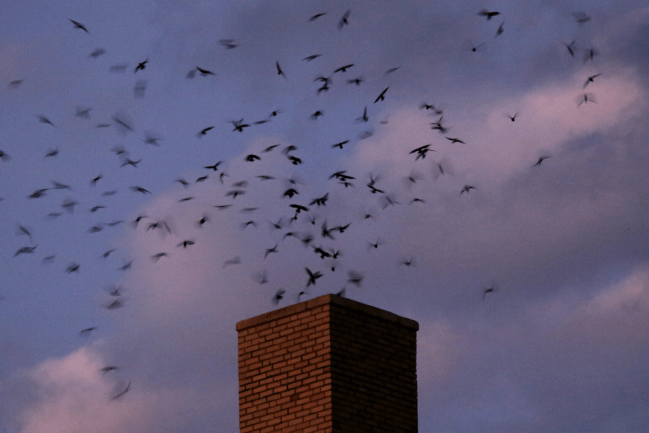
CHIMNEY SWIFTS flying over brick-and-mortar chimney (Ben Cvengros / Travis Audubon Society photo credit)
Thus, the Chimney Swift is at home in the air, winging it—rather than casually perching somewhere, waiting for the next crawling bug to creep by—and so they are easily seen when they perform their aerial acrobatics.
Make a joyful noise unto the LORD, all ye lands. (Psalm 100:1)
What is making a “joyful noise”? It is commanded is Scripture, whatever it is – see Psalm 66:1; 81:1; 95:1-2; 98:4; 98:4; 100:1.
To many, the noise of circuitous swifts is just that, a screeching-like screaming noise — not the kind of “music” that King David would have included in his orchestra-supported choir (1st Chronicles 15:16). But to a bird-lover, the aerial call of this air-zooming insectivore is a “joyful noise”, installed and directed by the Composer and Giver of all birdsong (and other avian vocalizations). Yes, as others ignore them, I enjoy hearing the energetic calls of Common Swifts (Apus apus), as they zip around, in hunting packs, de-bugging the lower airspace during the bug-filled days of summer.
CHIMNEY SWIFT (Greg Harber / Alabama Birding Trails photo credit)
The Chimney Swift’s migratory behavior, as well as their propensity for flying (rather than perching) is described by ornithologist Donald Stokes:
The arrival of swifts in late spring is an exciting moment. You will probably first hear their chittering calls, then look up and see their small bodies and curved, bladelike wings slicing through the air in graceful arcs. Their constant flight throughout the day makes them both physically and experientially remote from our earthbound living. But even so, bending back your neck to see only sky and these streamlined birds gliding about can draw you into their world of flight—so much so that when you again look down it may take you a moment to reorient yourself to the world of the flightless.
More than any of our other common birds, the Swift’s life is lived on the wing. As migration gets under way, large flocks can be seen in the early morning flying in formation over possible roosting sites and calling loudly all the time. Then, as it starts to get dark, they begin to dive into the roost, sometimes forming a steady stream out of the airborne flock.
[quoting Donald W. Stokes, STOKES NATURE GUIDES (A GUIDE TO BIRD BEHAVIOR), volume I (Boston, MA: Little Brown & Company, 1979), page 85.]
So, like busy Chimney Swifts, we should be busy at our daily activities, making a joyful noise –whistling (or singing)—while we work.
Make a joyful noise unto the Lord, all the earth: make a loud noise, and rejoice, and sing praise. (Psalm 98:4)
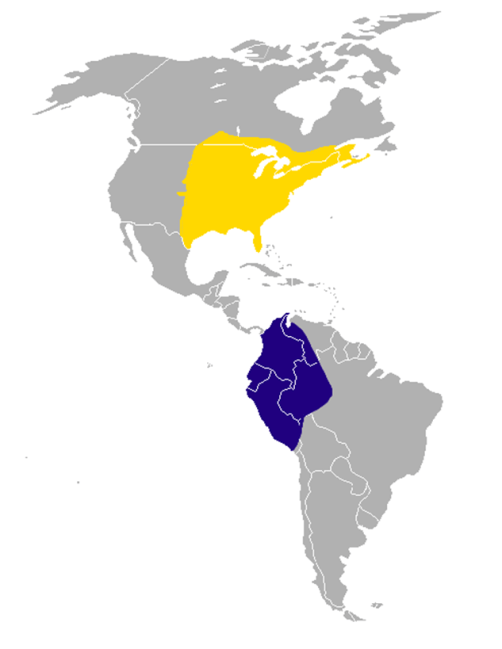
As a range map (see below, from Wikipedia) shows, Chimney Swifts are migratory birds, using the eastern half of America’s Lower 48 as their summer breeding grounds – yet where do they go for over-wintering?
By the fall, the swifts are in migration. For years, it was a mystery where they went — until 1943, when 13 leg bands were turned in by [native] people in eastern Peru, with eight of them having been banded in Tennessee. Since then, they have been found to overwinter in parts of Ecuador, Chile, Brazil and recently in Colombia.
[Quoting Alonso Abugattas, “Roosting of Flying, the Chimney Swift Lives Up to its Name”, CHESAPEAKE BAY JOURNAL, 34(7):39 (October 2024).]
RANGE MAP of CHIMNEY SWIFTS (Wikipedia map)
So, there! Chimney Swifts are long-distance migrants, geographically resourceful in accordance with the providential phenology that God designed and installed into their software/hardware systems, fitting them to fill and flourish the habitats of God’s design.
What a wonder! Think of that, and how swarms of swifts silently glorify God, the next time that you see a brick-and-mortar chimney. Who knows? Maybe you are looking at a chimney that houses the nest of a Chimney Swift family.
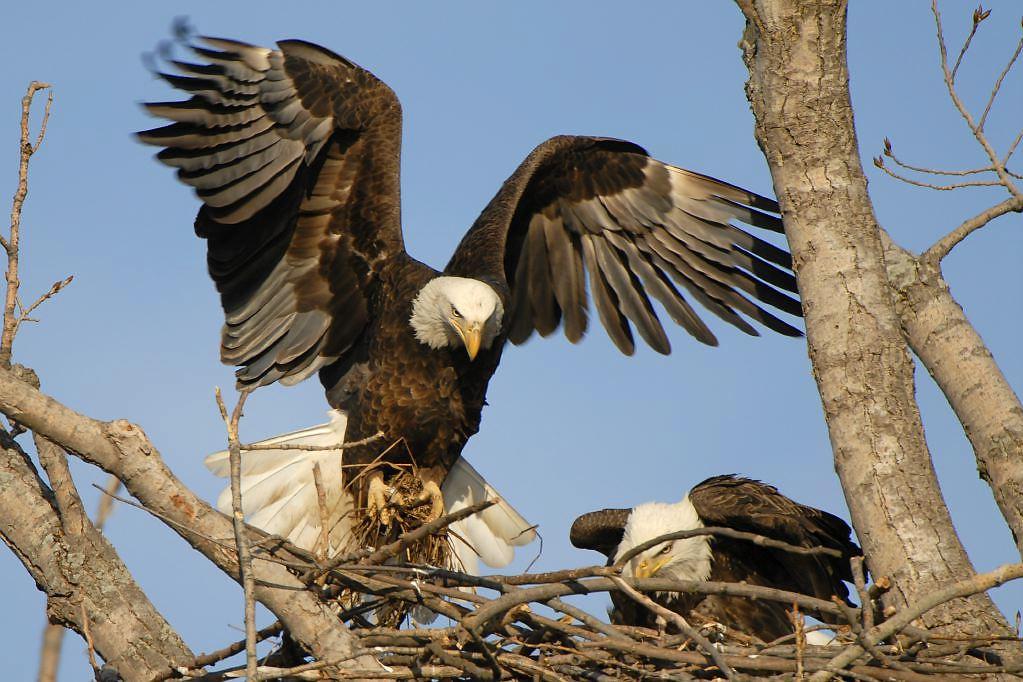
Bald Eagle (Haliaeetus leucocephalus) by AestheticPhotos
“As an eagle stirs up its nest, Hovers over its young, Spreading out its wings, taking them up, Carrying them on its wings,”
(Deuteronomy 32:11 NKJV)
Bald Eagles (from the above article)
“Although Benjamin Franklin once disparaged (possibly in jest) the bald eagle’s “bad moral character,” America’s national bird upholds a high standard for family life by (mostly) remaining faithful. Following a kamikaze courtship ritual in which two birds lock talons and tumble end-over-end until they nearly hit the ground, the male and female settle into a period of domestic bliss marked by dad’s willingness to undertake incubation and feeding duties. The “divorce” rate for these birds is less than 5%, according to scientists. And while they spend large chunks of the year alone, bald eagles mark their fidelity with a shared long-term commitment to nest building: One such home put together by an eagle couple in Florida was found to measure 9.5 feet long and 20 feet deep. It holds the record for the largest bird’s nest ever documented.” (The largest bird’s nest was built by a pair of bald eagles (Haliaeetus leucocephalus), and possibly their successors, near St Petersburg, Florida, USA and measured 2.9 m (9 ft 6 in) wide and 6 m (20 ft) deep. It was examined in 1963 and was estimated to weigh more than two tonnes (4,409 lb).)
Bald Eagle (Haliaeetus leucocephalus) by Aesthetic Photos
Atlantic Puffins
Atlantic Puffins by Bill Boothe, MD in the Isle of Mull Scotland












 Lee's Birdwatching Adventures Plus