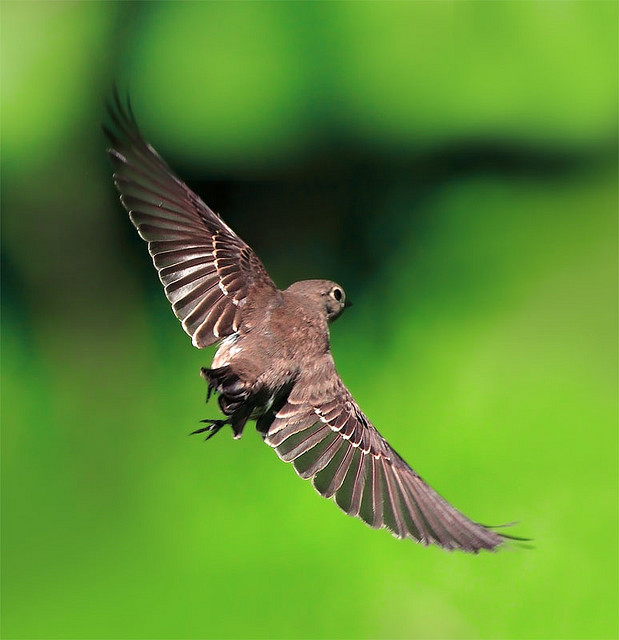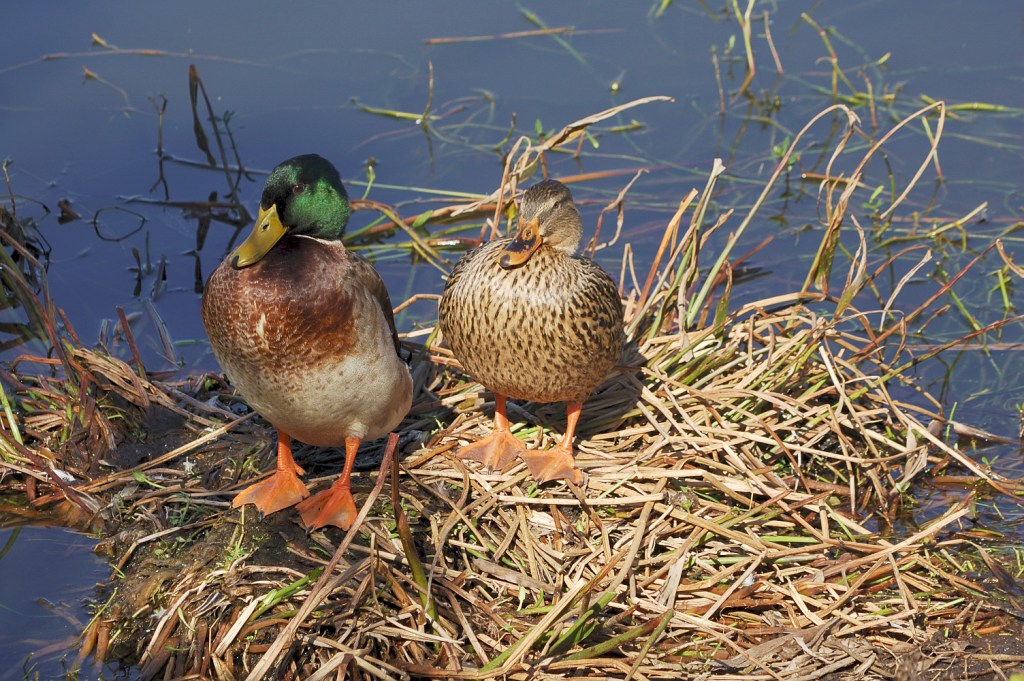
Lots of Ducks and Geese

Mallards

“A man that hath friends must shew himself friendly: and there is a friend that sticketh closer than a brother.” (Proverbs 18:24 KJV)”

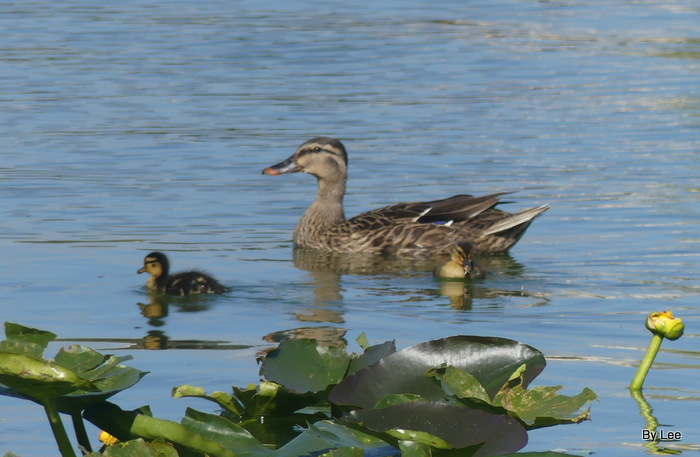
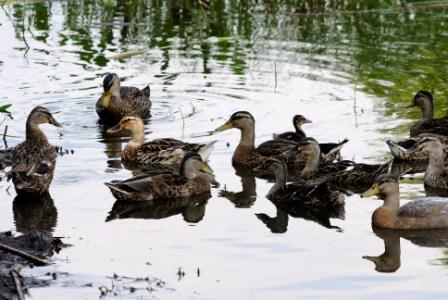
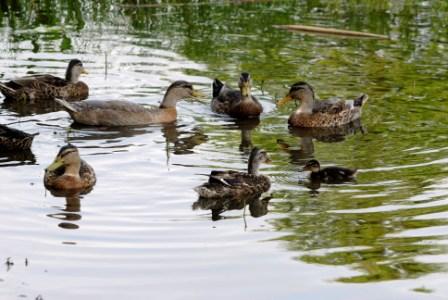
So far we haven’t seen many birds. My sister-in-law has a pond behind here with Mallards. Also, a Blue Jay has been calling, but has refused to show himself.

The ponds around town, Indianapolis, has lots of Canadian Geese hanging out. The one batch/flock had about 20 or so, and they were all faced south. Maybe they were getting aligned so they could get started South for the winter. Yet, up here it is still summer weather. Maybe they aren’t sure when to leave. Also, the remnants of Tropical Storm Gordon is going to come through tomorrow. The rain chance is 100% and flood warnings are being issued starting tomorrow. Welcome to Indiana.

Canada Goose (Branta canadensis) by Ian

Canada Goose (Branta canadensis) by Ian

Dan’s 60th High School reunion starts today and will be having gatherings for the next two days. We plan to leave here Sunday afternoon to go to Cincinnati area. Plans, depending on all this rain, we hope to go to the Cincinnati Zoo and then the Creation Museum. Then mosey home.

“But I trust I shall shortly see thee, and we shall speak face to face. Peace be to thee. Our friends salute thee. Greet the friends by name.” (3 John 1:14 KJV)

So far, praise the Lord, I have been handling this trip. My recent back surgery is still causing pain, but doing okay so far.

Unfortunately, my relative has NO INTERNET!!! :(   So here I sit at McDonalds. Yeah, for free internets! That is why the posts are intermitten. Trust to post photos from the Zoo later. Hope they won’t have raindrops dripping off of them. :)

Stay tuned!

Birds Heading South – We Are Heading North

Myrtle (Yellow-rumped) Warbler (Setophaga coronata) breeding ©WikiC

Looking forward to our northern birds to begin heading down for the winter. Actually, there have been reports already of migrating birds in various places around Florida. Unfortunately, some of them currently in Florida may be grounded for awhile until Tropical Storm Gordon blows out of the state.

“I would hasten my escape from the windy storm and tempest.” (Psalms 55:8 KJV)
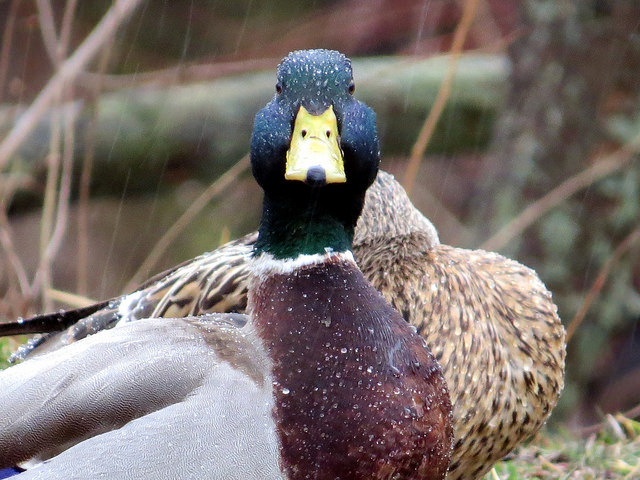
Hurricane season gets active about the same time the fall migration gets underway. The Lord has given most of the birds the instinct to take cover during these disturbances.

We are currently headed the opposite direction. We are going North for a few days. Hope there will be a few birds left up there to enjoy while we are there. Dan has a High School reunion [60th] to attend. I will be visiting with a niece that I haven’t seen in years. When we get back home, maybe we will have some winter bird visitors already in Florida setting up their lawn chairs for the winter. That will give us some birding photos to take. Summer time is pretty slim on birding.

I am trusting the Lord to help me heal from my back surgery so we can get out and about with the birds again. So far, I am getting better, but still taking it easy. Also hope to get a few photos taken while on trip. Stay tuned!

Avian And Attributes – Sharp Part I

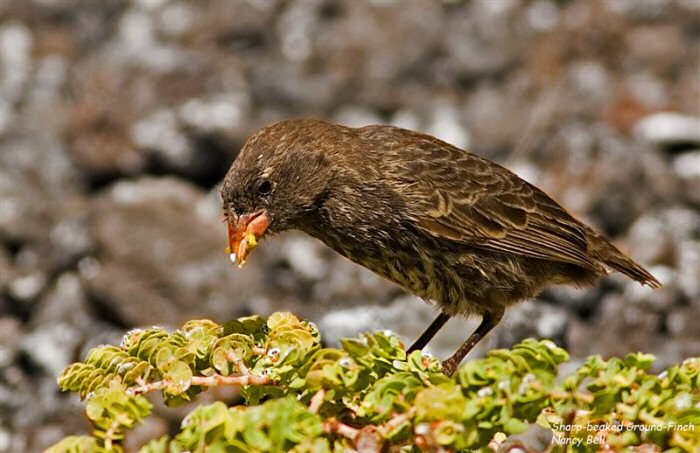
Sharp-beaked Ground Finch (Geospiza difficilis) Female ©WikiC

“For the word of God is quick, and powerful, and sharper than any twoedged sword, piercing even to the dividing asunder of soul and spirit, and of the joints and marrow, and is a discerner of the thoughts and intents of the heart. Neither is there any creature that is not manifest in his sight: but all things are naked and opened unto the eyes of him with whom we have to do.” (Hebrews 4:12-13 KJV)


Avian and Attributes – Sharp

SH’ARP, a.
1. Having a very thin edge or a fine point; keen; acute; not blunt. Thus we may say, a sharp knife, or a sharp needle. A sharp edge easily severs a substance; a sharp point is easily made to penetrate,it.
2. Terminating in a point or edge; not obtuse; as, a hills terminates in a sharp peak, or a sharp ridge.
3. Forming an acute or too small angle at the ridge; as a sharp roof.
4. Acute of mind; quick to discern or distinguish; penetrating; ready at invention; witty; ingenious.

“Thy tongue deviseth mischiefs; like a sharp razor, working deceitfully.” (Psalms 52:2 KJV)


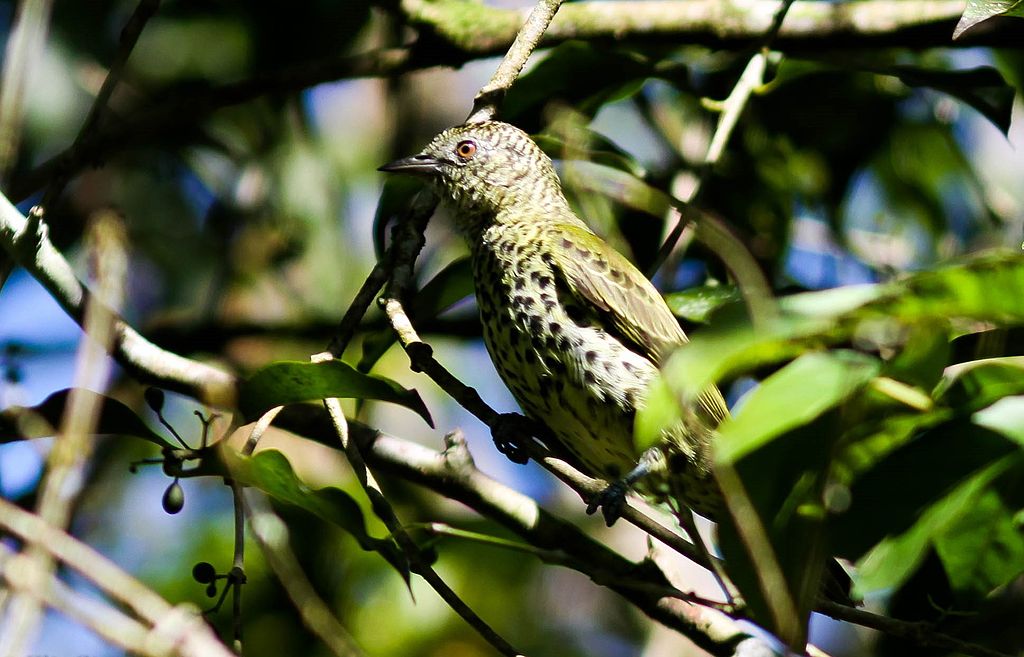
Sharpbill (Oxyruncus cristatus) ©WikiC

There are many “Sharp” named birds, but for this post, we will mention two of them. The Sharp-beaked Ground Finch and the Sharpbill. There will be more in a second article.

Sharp-beaked Ground Finch (Geospiza difficilis) ©Nancy Bell Mangoverde

The Sharp-beaked Ground Finch (Geospiza difficilis) is a species of bird in the Tanager family Thraupidae. It is classified as a least-concern species by the International Union for Conservation of Nature and it is native to the Galápagos Islands in Ecuador. It has a mass of around 20 grams (0.71 oz) and the males have black plumage, while females have streaked brown plumage. This finch was described by Richard Bowdler Sharpe in 1888.

This relatively small, slender-billed finch is endemic to the Galápagos Islands, where it is found on Fernandina, Santiago, Pinta, Genovesa, Darwin, and Wolf Islands. On the first three islands, it breeds in the humid highlands and disperses afterwards, but on the remaining smaller and lower islands the sharp-beaked ground finch is found in the arid zone year-round. Due to habitat destruction its range has decreased. It was formerly also present in the highlands of several other islands, and it is possible it still occurs on Isabela.

Sharpbill (Oxyruncus cristatus) ©WikiC

The Sharpbill (Oxyruncus cristatus) is a small passerine bird in the family Tityridae. Its range is from the mountainous areas of tropical South America and southern Central America (Panama and Costa Rica).

It inhabits the canopy of wet forest and feeds on fruit and some invertebrates. It has an orange erectile crest, black-spotted yellowish underparts and scaling on the head and neck. As its name implies, it has a straight, pointed beak, which gives its common name.

Sharpbills are most commonly found in tall dense forests but occasionally venture to the forest edge. Their diet consists of primarily of fruit, but they will also take insects, hanging upside down in from twigs to obtain insect larvae.


Sharp-Beaked Ground Finch – The Bloodsucker..

More Avian and Attributes

Birds whose first or last name starts with “S”

Good News

*
[Definitions from Webster’s Dictionary of American English (1828), unless noted. Bird info from Wikipedia plus.]

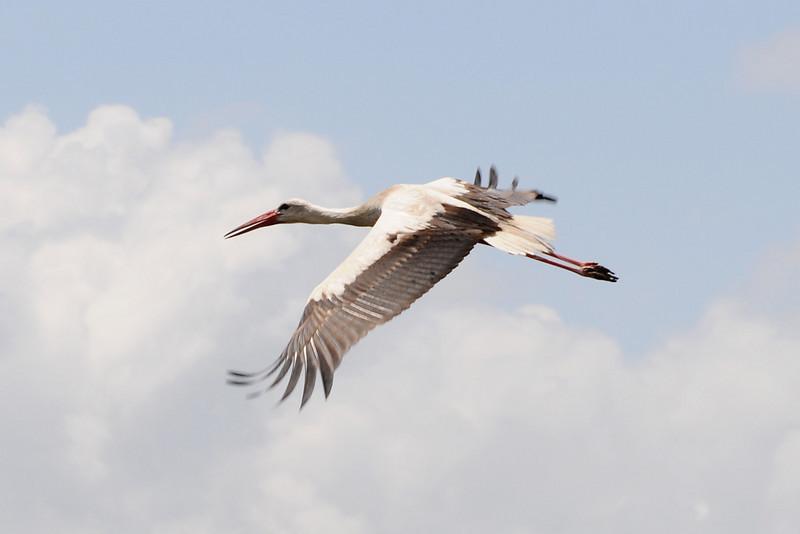
Bill It To The White Stork

White Stork (Ciconia ciconia) by Bob-Nan

“Yea, the stork in the heaven knoweth her appointed times; and the turtle and the crane and the swallow observe the time of their coming; but my people know not the judgment of the LORD.” (Jeremiah 8:7 KJV)

This migrating stork was tagged with a tracking device and ended up running up quite a phone bill. Here are excerpts from two different articles about Kajtek, the White Stork.

“A migrating, tagged, male white stork—known to the Polish environmentalists who were tracking him as “Kajtek”—blipped out of contact on 26 April.

That, however, did not stop him from making good use of the SIM card in his GPS tracker, with which the bird—or somebody who found the GPS device and picked it apart in order to get at the card—racked up a $2,700 phone bill.” [SIM card in bird’s GPS tracker]

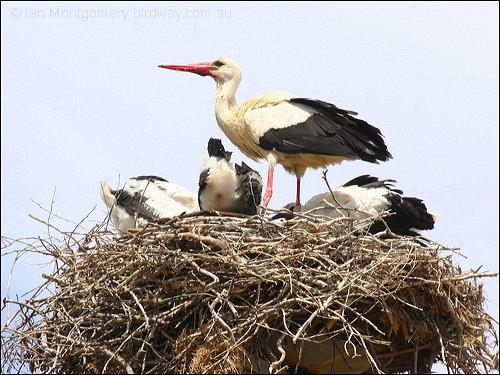
White Stork (Ciconia ciconia) by Ian

“In a Facebook post, the group explains that “for unknown reasons” Kajtek stayed in the area for over two months, “travelling 25 kms in different directions during the day”.

Last month, EkoLogiczna was surprised with a phone bill linked to the SIM card installed in the Kajtek’s GPS tracker for a total amount of 10,000 PLN (€2,278).

“Someone quite simply removed the card from the tracker, put it in a phone and used it for 20 hours of communication,” the group said in the Facebook post.

According to the EuroNatur Foundation, Poland is a major centre of distribution for the white stork, accounting for 40% of the bird’s world population.”

“Let him that stole steal no more: but rather let him labour, working with his hands the thing which is good, that he may have to give to him that needeth.” (Ephesians 4:28 KJV)

Here are the stories about this:

SIM card in bird’s GPS tracker used to rack up $2,700 phone bill …

Roaming stork lands Polish charity with huge phone bill

USA Today

You Hold Me Up

Skimmer Baby Leaning against Parents Beak – ©Thomas C – NatlGeog – Pinterest

“If I say, “My foot slips,” Your mercy, O LORD, will hold me up. In the multitude of my anxieties within me, Your comforts delight my soul.” (Psalms 94:18-19 NKJV)

A Black Skimmer chick holding on to it’s parent. Adorable!

What verse(s) would you use for this photo?

*

Gideon

Ian’s Bird of the Moment – Masked Finch

Ian’s Bird of the Moment – Masked Finch by Ian Montgomery

Surprise, surprise: a Bird of the Moment! I’ve been on a couple of camping trips in the last few months, so I have a few birds to share with you. The first trip was prompted by some birding friends who had found some Red-browed Pardalotes at a place called Cumberland Dam about half way between the Gulf of Carpentaria and both Cairns and Townsville. See the map below from the ebook Where to Find Birds in North-east Queensland.
At the time I was doing a major revision of the book and needed photos of both Cumberland Dam and Red-browed Pardalote, so I downed tools and set of with a couple of friends. The photo of the Dam proved easy enough (below) but the Pardalotes were more difficult. Cumberland was a gold mining town in the fourth quarter of the nineteenth century and at its peak in 1886 nearly 400 mine workers and their families lived there. Now all that is left is this square brick chimney and the dam, both built to serve the boilers that powered the batteries for crushing the gold-containing ore. See http://www.travelling-australia.info/Journal2011/22JulPtB.html.
Cumberland Dam is a well known birding spot. The area has a average annual rainfall of about 800mm/31in but 80% of that falls in the northern wet season from October to April so any persistent bodies of water in the dry season attract many birds. In addition, the region is on the western slopes of the Great Dividing Range – the Torresian Barrier of Schodde and Mason (1980) – so one can expect to find some species and races of birds different from those of coastal northeastern Queensland.
A striking example of these is the Cape York race of the Masked Finch, sometimes called the White-eared Finch. Cumberland is at the very southern tip of its range, shown below from The Directory of Australian Birds by Schodde and Mason (1999). The nominate race ranges from far northwestern Queensland to Broome in northern Western Australia and the ranges of the two races are disjoint.
When looking for the elusive Red-browed Pardalote, I found this pair of Masked Finches near the dam very busy gathering nesting material.
Their favourite material seemed to be what looked like thistle down but they also brought in feathers.
I assumed the nest was in a nearby clump of trees but on the second day they were still working away and I saw them taking the material into this clump of thick dried grass beside a barbed wire fence near where I’d first spotted them.
Here, incidentally is the nominate, western race of the Masked Finch so you can see why the Cape York race is called the White-eared Finch.
Pardalotes are easy to hear but hard to see as, unless you are lucky enough to find them at a nesting hollow on the ground, they spend their time in the outer foliage of trees. The Red-browed Pardalote has a distinctive call of about six notes, starting slow and low in pitch and then accelerating and rising. We heard three at Cumberland Dam and I went on a couple of wild-goose chases through forest and grazing country but got no more than a glimpse of one flying away and no photos. The Red-browed Pardalote quest ultimately succeeded on another camping trip: to be continued!

It has been some time since Ian Montgomery has produced on of his great articles. I trust you enjoy this latest one. Ian went from a Bird of the Week, to Bird of the Month, and now to the Bird of the Moment. Hew has been struggling with his health. We are always glad when he is able to produce a blog.
Ian, you are in our prayers that things are improving.

Ian’s searching for that Red-browed Paratote reminds me of the verse about seeking and searching with all your heart. In this case, it is a bird that is being searched for, yet we are to seek the Lord. He is the Creator of all these birds. He wants us to find Him and accept His gift of Salvation.

“And you will seek Me and find Me, when you search for Me with all your heart.” (Jeremiah 29:13 NKJV)

Ian’s Bird of the Week

Wages or a Gift

Flying Is Safer – At Least For Woodstock

Woodstock and Flying From Peanuts Cartoon

Then God said, “Let the waters abound with an abundance of living creatures, and let birds fly above the earth across the face of the firmament of the heavens.” (Genesis 1:20 NKJV)

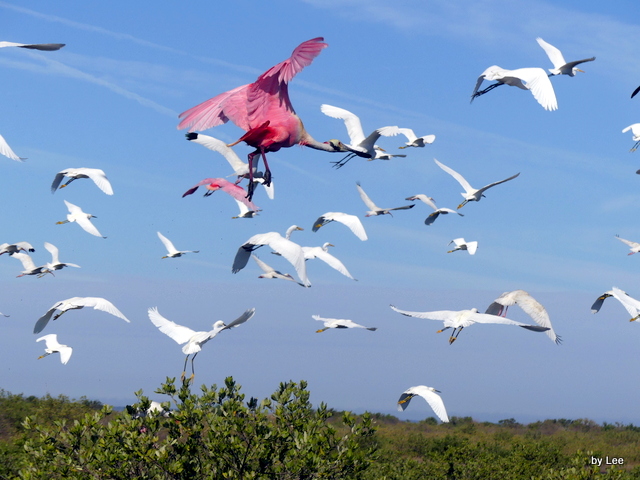
Mixed Flock Flyiing 122717 Merritt Is NWR by Lee

My friend Woodstock, from the Peanuts cartoons has been entertaining me lately. This is just one of many that have lightened my day.

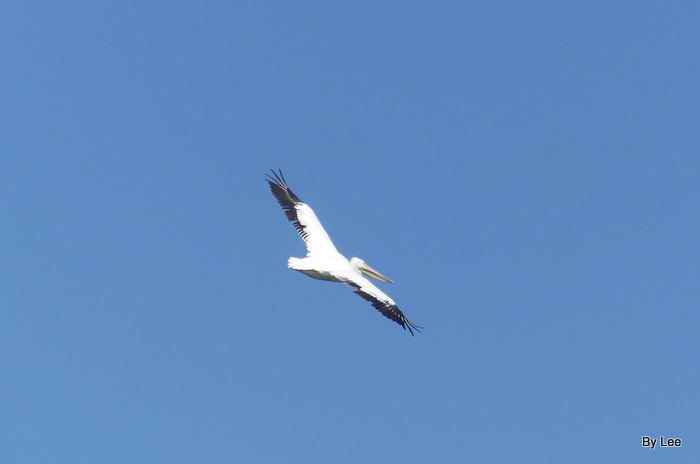
White Pelican Flying Overhead

Flying where it’s safer.

Spotted Flycatcher (Muscicapa striata) by John&Fish

Spotted Flycatcher (Muscicapa striata) by John&Fish

Bald Eagle (Haliaeetus leucocephalus) Flying by Aesthetic Photos

Bald Eagle (Haliaeetus leucocephalus) Flying by Aesthetic Photos

For thus says the LORD: “Behold, one shall fly like an eagle, And spread his wings over Moab. (Jeremiah 48:40 NKJV)

Enjoy!

Many Thanks!

Yellow-throated Vireo (Vireo flavifrons) singing ©Brindusa Art

As many of the readers of this blog know, I had back surgery on August 3rd. Before I mention the results of the surgery, I want to give some thanks.

#1  I want to thank the Lord for His Watching over all that has happened during this. Thanks and praise to a wonderful Savior who cares so much about us.

“O give thanks unto the LORD; call upon his name: make known his deeds among the people.” (Psalms 105:1 KJV)

#2  I want to thank all of you for your prayers and well wishes. Also, for continuing to keep up with the blog. I cannot thank you enough for that. Thank you.

“For the eyes of the Lord are over the righteous, and his ears are open unto their prayers: ” (1 Peter 3:12a KJV)

American Oystercatchers (American Bird Conservancy photo)

#3  I want to especially thank Dr. James J. S. Johnson, who has been practically carrying on this blog, by providing almost an article a day. The articles have been very interesting and entertaining, as I detect by the remarks that have been posted. He posts occasional posts here, but Dr. Jim, as I call him, has written the last 11 posts. Thank you, Dr. Jim.

“We therefore ought to receive such, that we might be fellowhelpers to the truth.” (3 John 1:8 KJV)

My forty-five (45) minute surgery and an overnight stay in the hospital ended up being a two and a half hour surgery and five nights in the hospital. Then we I returned home on Tuesday (100 mile ride), I ended up in the Emergency Room the next day, here in town. It is taking me a while to get back up to strength.

I just found out yesterday why the longer surgery. While they were placing the wedge/cage by my vertebra, the vertebrae fractured due to soft bone. I started bleeding immediately and they had to stop to get that stopped. Then they had to figure out what to do with the vertebra. [How many times I have prayed for other’s surgeries that the Lord would guide their hands, and their thinking.] Thank you for praying.

As a result of that, I ended up with fluid in the sac by the lung. That had to be drained a few days after the surgery. I believe I am now on the mend. I am still weak and on medicine that has slowed me down from even thinking about blogging. See why I am so thankful for the last 11 articles by Dr. Johnson. Needless to say, I have not done any birdwatching. :)

SNOWY EGRET wading & shading (Mrs. Bursk Science Class blog)

Thanks again to all of you for your thoughts and prayers, and especially for the Lord who knew all about this before, during, and after the surgery, and never left me.

***

If you missed the latest 11 articles by Dr. Jim:

Shake a Leg (or 2 or 3 or 4), Crab-Eater! – Aug 7

Crazy as a Coot! – Aug 8

Pinyon Jay, Grand Canyon’s Forester – Aug 9

Killdeer atop Killdeer: Appreciating Help from Others – Aug 10

Loggerhead Shrike: Converting Thorns into Meat-hooks – Aug 11

Oystercatchers Must be Gentiles – Aug 12

Eggs Taste Better if Salted – Aug 13

Penguin Eggs Tragedy – Aug 14

Shades of Snowies – Aug 15

Peregrine Falcon – Proactive Hunter – Aug 16

Egret Feathers Worth More Than Gold – Aug 17

Egret Feathers, Worth More than Gold!

Egret  Feathers,   Worth  More  than  Gold !

Dr. James J. S. Johnson

GreatWhiteEgret-Lewisville.MichaelDFox

GREAT WHITE EGRET (photo by Michael D. Fox of Lewisville, Texas)

The law of the Lord is perfect, converting the soul; the testimony of the Lord is sure, making wise the simple. The statutes of the Lord are right, rejoicing the heart; the commandment of the Lord is pure, enlightening the eyes. The fear of the Lord is clean, enduring forever; the judgments of the Lord are true and righteous altogether. More to be desired are they than gold, yea, than much fine gold; sweeter also than honey and the honeycomb.  Moreover by them is Thy servant warned: and in keeping of them there is great reward.   (Psalm 19:7-11)

The fine-feathered Great White Egret (a/k/a “Great Egret”) could have gone extirpated in America (i.e., regionally extinct in the USA), about a century ago,  if not for the timely intervention of the Lacey Act and the Migratory Bird Treaty.

GreatWhiteEgret-feeding-TX.DennisSkogsbergh

GREAT WHITE EGRET (photo by Dennis Skogsbergh, in Texas)

A summary of that avian conservation success story was reported earlier as “Looking Back 100 Years, at the Migratory Bird Treaty:   A Bird’s-eye View of How It was Hatched” [ https://leesbird.com/tag/migratory-bird-treaty/  ].  In fact, the fancy feathers of Great White Egrets were once worth more than gold of equal weight!

The plumes of the Great Egret and Snowy Egret were widely used to decorate women’s hats in the late 19th century [A.D.].

An ounce of egret feathers cost as much as $32 —  more than an ounce of gold at that time  —  and, as a result of overharvesting, egret populations [especially in Florida] began to decline.  Some of the first conservation legislation in North America [e.g., Lacey Act of 1900, codified at 16 U.S.C. §§ 3371-3378, a forerunner of the much-later Endangered Species Act] was enacted to outlaw the hunting of Great Egrets.  These egrets are now steadily recovering and expanding their range[s], probably to areas where they formerly nested.

The Great Egret is the symbol for the National Audubon Society, one of the oldest bird conservation organizations in the United States.   [Quoting Wayne R. Petersen & Roger Burrows, BIRDS OF NEW ENGLAND (Lone Pine Publishing, 2004), page 93.]

2USA CA, San Diego

GREAT WHITE EGRET (Audubon Field Guide photo)

Of course, market prices fluctuate. What is “worth more than gold” today may not be so tomorrow.  Consumer markets are fickle things:  beaver top-hats, Toys-R-Us toys, decoder rings, Bazooka Joe bubblegum, Pogo sticks, Rock ’em-Sock ’em Robots, floppy discs, etc.

However, it is a permanent truth that God’s Word is more valuable than gold:

The law of the Lord is perfect, converting the soul; the testimony of the Lord is sure, making wise the simple. . . .  the judgments of the Lord are true and righteous altogether. More to be desired are they than gold, yea, than much fine gold.  (Psalm 19:7 & 19:9b-10a)

JeffWilliams-NASA.SpaceBoosters

Col. Jeff Williams, NASA astronaut (photo credit: Space Boosters!)

In fact, I was once reminded of that truth by none other than Col. Jeff Williams, a NASA astronaut who was then in outer space, inside the International Space Station [“ISS”], during a satellite-phone-facilitated video-conference conversation (on June 17th of AD2017).  By God’s grace, my wife and I attended that special Skype-like conversation, hosted by Col. Williams’s good friend, Col. Chas Morse (USAF, retired).  The video-conference conversation was partially reported later, as “Videoconference with ISS Commander” [ http://www.icr.org/article/videoconference-with-iss-commander ].

[See also this short interviewhttp://www.icr.org/article/above-all-earth/   — as well as Michael Stamp’s article about astronaut Jeff Williams, “ISS Commander Returns from Space”, posted at  http://www.icr.org/article/iss-commander-returns-from-space/ . ]

JeffWilliams-waving.ABC-Net-Au

Col. Jeff Williams, NASA astronaut (ABC Net-Au photo credit)

But on June 17th of AD2017, the last earthbound participant in that space-to-Earth videoconference call, to ask Col. Jeff Williams an Earth-to-space question, was me.  (Of course, my wife and I will never forget that unique video-conference conversation!)

JeffWilliams-ICR.photo-quote

Col Jeff Williams, NASA astronaut (ICR image, with quote)

In particular, I asked astronaut Jeff Williams about his personal appreciation for Psalm 19, which begins with a declaration that “the heavens declare the glory of God”.

After discussing the first half of Psalm 19, which speaks of the wondrous astronomical glories that God operates in the heavens, Col. Williams added that he appreciated the second half of Psalm 19 (i.e., verses 7-14) even more than the first half (i.e., verses 1-6), because Psalm 19:7-14 speaks of God’s written Word (i.e., the Holy Bible), which is even more glorious (see also Psalm 138:2b) than all of the magnificent heavens!  –  and, of crucial importance, only the Bible tells us about how our souls can be redemptively returned to God through Christ as our personal Savior.   Now that’s infinitely priceless!

Psalm19.10-BiblePic-dot-com

PSALM 19:10 (BiblePic.com credit)

Surely God’s Word is “more valuable than gold, yea, than much fine gold” –  and even more valuable than marketed Great White Egret feathers during the AD1800s.

GreatWhiteEgret-Lewisville.MichaelDFox

GREAT WHITE EGRET (photo by Michael D. Fox of Lewisville, Texas)


Peregrine Falcon, Proactive Hunter

Peregrine Falcon, Proactive Hunter

Dr. James J. S. Johnson

PeregrineFalcon.PhysOrg

PEREGRINE FALCON (Phys.org photo)

If you want to eat, go eat what is available!

The righteous eats to the satisfying of his soul; but the belly of the wicked shall lack. (Proverbs 13:25)

And, if you want to eat well, go to work to get what you (and others who depend on you) need!

Yea, you yourselves know, that these hands have ministered unto my necessities, and unto those who were with me.   (Acts 20:34)

If you want to eat regularly, and to have resources to bless other with, work for it!

Neither did we eat any man’s bread for naught; but we worked with labor and travail night and day, that we might not be chargeable to any of you; not because we have not authority, but to make ourselves an example unto you to follow us.  For even when we were with you, this we commanded you, that if any would not work, neither should he eat.   (2nd Thessalonians 3:8-10)

The wandering Peregrine Falcon has been previously covered  —  see my  “Northern  Raven  and  Peregrine  Falcon:   Two  Birds  Supporting  the  Manx  Coat  of  Arms”  [ https://leesbird.com/2016/02/12/northern-raven-and-peregrine-falcon-two-birds-supporting-the-manx-coat-of-arms/ ]  —   so that descriptive information won’t be repeated here.

However, it is worth noting that Peregrine diets change according to the seasons, because the available prey changes seasonally. So Peregrine Falcons need to be proactive, hunting here and there for new opportunities. Then, as opportunities are found, they need to be grabbed, promptly!   [For a short video of Peregrine hunting, see the BBC video at https://www.youtube.com/watch?v=legzXQlFNjs .]

PeregrineFalcon.DawnKey

PEREGRINE FALCON (Dawn Key photo)

Diving at speeds of over 200 miles per hour, the Peregrine Falcon clenches its feet and then strikes its prey with a lethal blow that often sends both falcon and prey tumbling. Whereas migrating and wintering Peregrine Falcons commonly hunt waterfowl and shorebirds, summering Peregrines typically concentrate on birds of the forest canopy, capturing anything from woodpeckers to warblers.   [Quoting Wayne R. Petersen & Roger Burrows, BIRDS OF NEW ENGLAND (Lone Pine Publishing, 2004), page 117.]

Thus, the Peregrine Falcon is willing to exert some effort – in fact, remarkable effort!  — to acquire its daily diet.  (Maybe this falcon should be exhibited as demonstrating what economist Max Weber called the Protestant work ethic!)  In any case, this bird is neither slothful nor sluggish.  Even this falcon’s name “Peregrine”, meaning “wanderer” or “traveler”, indicates that it is constantly on the move! Whoosh!

PeregrineFalcon-flying.NPS

PEREGRINE FALCON (National Park Service photo / public domain)


Shades of Snowies!

SHADES   OF   SNOWIES !

Dr. James J. S. Johnson

SnowyEgret-shading-wading.MrsBurskScienceClass

SNOWY EGRET wading & shading (Mrs. Bursk Science Class blog)

Choosing rather to suffer affliction with the people of God, than to enjoy the pleasures of sin for a season…   (Hebrews 11:25)

Sometimes it seems like “a little pleasure” could be enjoyed, for a little while, somewhere else. As the happy little fish swam, toward a shady spot in the pond-waters near shore, that was his last voluntary thought!  (But why?)

SnowyEgret.GatorlandFlorida-AD2016

SNOWY EGRETS, showing off for the Dusings (Lee Dusing photo, at Gatorland, Forida)

Snowy Egrets are famous for their “golden slippers”, i.e., their black legs contrast with the gold-yellow color of their feet. Nicknamed “Snowies”, these small-sized egrets have all-white plumage that is extra bright, like soft new-fallen snow, hence the name “Snowy Egret“.

But, to some hapless fish, another trait of the Snowy might be more important – the behavioral trait of “shading” that Snowy Egrets are known for, in order to entice shallow-water fish into their bill’s striking zone.  Consider the following descriptive report, by ornithologists Wayne Petersen and Roger Burrows:

“The elegant, snow white plumage, black legs and bright yellow feet of the Snowy Egret are … mainly wanderers to inland areas, although they breed along the coast …

Herons and egrets, particularly Snowy Egrets, make use of a variety of feeding techniques.  By shuffling their bright-yellow feet in the much of shallow wetlands, these birds attempt to spook potential prey out of hiding.  In an even more creative hunting strategy, they are known to create shade by extending their wings over open water.  When a fish succumbs to the lure of the cooler shaded spot, it is promptly seized and eaten.”   [Quoting Wayne R. Petersen & Roger Burrows, BIRDS OF NEW ENGLAND (Lone Pine Publishing, 2004), page 94.]

SnowyEgret-striking.DorianAnderson-photo

SNOWY EGRET striking underwater prey (Dorian Anderson photo)

That poor hapless fish, who only sought some comfortable shade (i.e., just a little “pleasure” for a “season”), in the shallow water of a pond  –  snatched by the Snowy’s bill, in an eye-blink !  —   in other words, before the swamp-critter ever knew what hit him, he was strzok!

Of course, it might also be the case that “shading” shallow water makes it easier for a Snowy to survey its near-surface prey, in order for the Snowy to know where to aim its bill thrust.

SnowyEgret-shading.Esmeralda-Pinterest

SNOWY EGRET shading (photo by Esmeralda)

The lesson here is a lesson we can trace to the Old Testament book of Jonah, namely, if you are inclined to wander from your properly assigned place of service, as Jonah was, don’t be too surprised if there’s a “ship” waiting for you, to take you away from where you should be (Jonah 1:3).

As poet Gertrude Grace Sanborn once wrote, “there is always a ship at Joppa”  –  waiting to take to farther into a big mess of trouble!

REMAIN IN YOUR PLACE

If you’re discontented and unhappy    And your place and purpose grows dim,

There is always a ship at Joppa    If you don’t want to stay and win.

If you turn from the task of the present    To follow a beckoning star;

There is always a ship at Joppa    To take you from where you are.

But you’ll miss the blessing He gives you    If you wander away from His place;

For there’s a fare to be paid at Joppa    If you do not remain in your place.

[Quoting Gertrude Grace Sanborn, “Remain in Your Place”, WITH TEARS IN MY HEART:  POETIC MEDITATIONS OF A CHRISTIAN WOMAN (Bible for Today product # 3196), posted at https://www.biblefortoday.org/Articles/tears.htm .]

Nikon and Olympus Imaging - Graeme Simpson Images

SNOWY EGRET, shading (Graeme Simpson photo)

So, if you are tempted to stray from the Lord’s present assignment for your life, and you find yourself allured toward a substitute “opportunity”, and then you see a convenient ship docked “at Joppa” (just waiting to take your fare, so that you can thereby “escape” God’s will for your life)  —  don’t naïvely interpret that the Joppa ship’s availability is “confirming” that this is your “lucky day” (to escape your proper assignment)!

In other words, beware!  What looks comfortable, convenient, and pleasurable may not be so good as it appears to the eye (or to the imagination)!

Now the parable is this:  The seed is the Word of God.  Those by the wayside are they who hear; then comes the devil, and takes away the Word out of their hearts, lest they should believe and be saved.  They on the rock are they who, when they hear, receive the word with joy; and these have no root, who for a while believe, and in time of temptation fall away.   And that [seed] which fell among thorns are they who, when they have heard, go forth and are choked with cares and riches and pleasures of this life, and they bring no fruit to perfection.   But that [seed] on the good ground are they who, in an honest and good heart, having heard the Word, keep it and bring forth fruit with patience.   (Luke 8:11-15)


Penguin Eggs Tragedy

Penguin Eggs Tragedy

Dr. James J. S. Johnson

There is a way that seemeth right unto a man, but end thereof is the way of death.  (Proverbs 14:12)

Antarctica-5froze2death.publicdomain

Collecting a few penguin eggs, in Antarctica, sounds like a “cool” adventure (pardon the pun), but the adventure is not worth dying for.  Even moreso, dying in a quixotic quest to “prove Darwin right” is beyond merely reckless  —  it both foolhardy and tragic.

Here is my limerick, followed by a link to my earlier article “Penguins to Die For“, which appeared in ACTS & FACTS, 44(10):20 (October 2015), about how 5 Darwin fans froze to death, down under, for their error   —  trying to “prove” Darwin’s “natural selection” phylogenetic theory of biological origins.   (Sad and foolish at the same time.)


PenguinEggs2Die4.publicdomain

DARWIN’S  FANS  DEAD WRONG  DOWN  UNDER

Darwin’s theory, as “science”, was bad

But, in England, it soon was a fad;

Seeking eggs, as its proof

Gambling all, for a goof  —

So 5 froze, to death  —  and that’s sad.

For more, see “Penguin Eggs to Die For“, posted at http://www.icr.org/article/penguin-eggs-die-for/ .

[See also, on this blog-site, regarding the Emperor Penguin, “Flag that Bird! — Part 2”, posted at https://leesbird.com/2015/04/13/flag-that-bird-part-2/ .]