Eggs Taste Better if Salted

Eggs  Taste  Better  if  Salted

Dr. James J. S. Johnson

Can that which is unsavory be eaten without salt? Or is there any taste in the white of an egg?  (Job 6:6)

eggs-neptune-crabcake.TripAdvisor

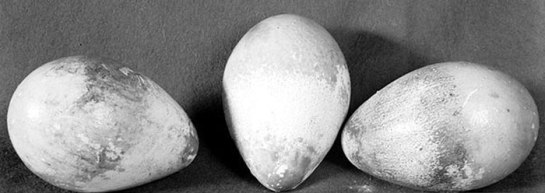
EGGS NEPTUNE (eggs Benedict with crab — Trip Advisor photo)

Although we Americans sometimes over-salt our food,  it is nonetheless true  that it is perfectly Biblical  to salt poultry eggs  before you eat them  —  but what about crab eggs?

Since, during spring stopovers, Red Knots eat lots of Horseshoe Crab eggs on the beaches of Delaware Bay,  —  and the crabs who deposited those eggs just came from the salty seawater of the Atlantic Ocean,  —  it’s unlikely that the voracious Red Knots need to add salt, to flavor those crab eggs for eating.

As an illustration of Genesis 8:22, this bird-blog has already reported on the magnificent migration of the Red Knot, which mileage-marathon marvel annually feasts on beach-buried Horseshoe Crab eggs during its yearly stopover at Delaware Bay, before the refueled shorebird continues its migration northward (toward its breeding grounds in Canada) during the spring.  [See “Shorebirds Looney about Horseshoe Crabs”, at https://leesbird.com/2017/08/11/shorebirds-looney-about-horseshoe-crab-eggs/ .]

RedKnot-DelawareBay-beach.GregoryBreese-USFWS

RED KNOT at Delaware Bay beach (USFWS photo / public domain)

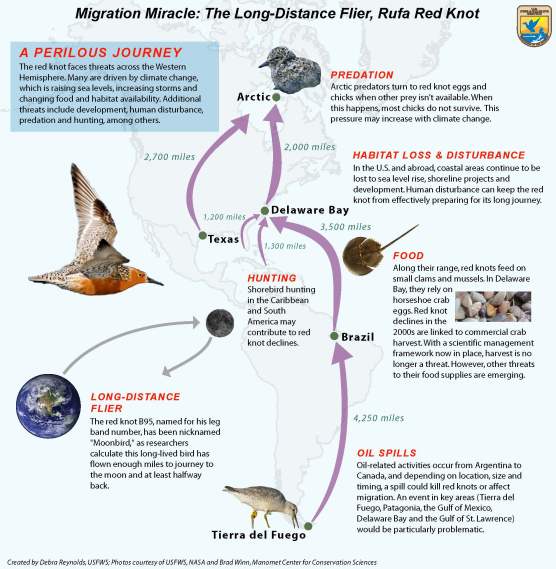
As this USFWS chart (created by Debra Reynolds) shows, the long-distance adventures of the Rufa Red Knot are, in their repeated successes, providential miracles of populational migration.  

In other words, when we think about how this works out, during each migratory cycle, our minds should automatically think about how amazingly clever and capable God is, to have arranged all of the Red Knot’s long-distance (and metabolic) bioengineering to work.  The Red Knot is providentially programmed (“fitted”) to survive and thrive like this[This can be compared to the providential programming that God has installed into the Arctic Tern   —   see “Survival of the Fitted:  God’s Providential Programming”, ACTS & FACTS, 39(10):17-18 (October 2010), posted at http://www.icr.org/article/survival-fitted-gods-providential-programming/ .]

RedKnot-migration-infochart.USFWS

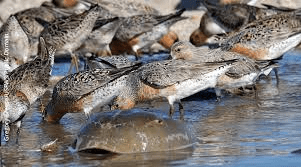
Of course, the hungry Red Knot is not alone in this all-you-can-eat “fast-food” fiesta – because the Red Knot is joined, at Delaware Bay beaches, by oövorous (i.e., egg-eating) “tablemates” including turnstones and sandpipers.   [See Delaware Bay beach photographs below:  left, USF&W / public domain;  right, Larry Niles.]

All of which leads us to today’s limerick:

CONVERTING  CRAB  EGGS  INTO  MIGRATORY  BIRD  FUEL

Red Knots scoot about, on thin legs;

First come, first serve! — no one begs;

Horseshoe crab eggs, the treat

And it’s “all-you-can-eat“!

Watch the shorebirds gulp down the crab eggs!

RedKnots-eating-crab-eggs.NJEnvtNews

RED KNOTS eating crab eggs (N.J. Environment News photo)

Hmm, now I’m hungry!  —  it’s time to eat a couple of poached eggs, that my gourmet-whiz wife prepared for me this morning.   (Of course, those eggs are slightly salted!)


Oystercatchers Must be Gentiles

OYSTERCATCHERS   MUST   BE   GENTILES

Dr. James J. S. Johnson

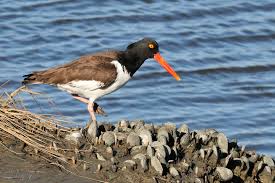
Oystercatcher-with-shellfish.ConserveWildlifeFndtn

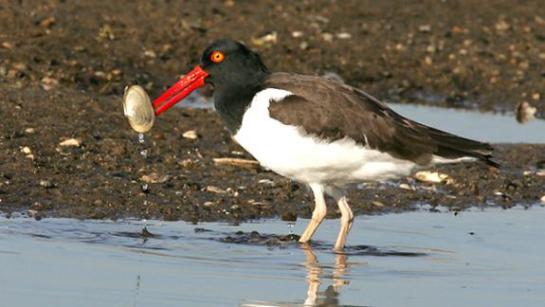
American Oystercatcher (Conserve Wildlife Foundation photo)

These shall ye eat of all that are in the waters: whatsoever hath fins and scales in the waters, in the seas, and in the rivers, them shall ye eat.  And all that have not fins and scales in the seas, and in the rivers, of all that move in the waters, and of any living thing which is in the waters, they shall be an abomination unto you; they shall be even an abomination unto you; ye shall not eat of their flesh, but ye shall have their carcasses in abomination.  Whatsoever hath no fins nor scales in the waters, that shall be an abomination unto you.    (Leviticus 11:9-12)

[At some point, please review Acts chapters 10 & 15, and 1st Timothy 4:1-5 (quoted below), to see how it was decided that New Testament Gentile Christians were not to be burdened with keeping the Mosaic dietary restrictions — which would include the ban on shellfish reported in Leviticus 11:9-12.]

Oystercatchers are amazing birds.  As their name indicates, they are famous for eating raw shellfish, especially oysters — and their strong and sharp bills are providentially designed and shaped to accomplish forced entry into shellfish shells, to facilitate getting at the mollusk-meat inside those bivalve shells.

Now the Spirit speaks expressly, that in the latter times some shall depart from the faith, giving heed to seducing spirits, and doctrines of devils: speaking lies in hypocrisy; having their conscience seared with a hot iron, forbidding to marry, and commanding to abstain from meats, which God hath created to be received with thanksgiving of them which believe and know the truth.  For every creature of God is good, and nothing to be refused, if it be received with thanksgiving, for it is sanctified by the word of God and prayer.   (1st Timothy 4:1-5)

Oystercatcher-by-shells.ChesapeakeBayProgram

American Oystercatcher (Chesapeake Bay Program photo)

“American Oystercatchers are large, stocky shorebirds with long, orange razor-sharp bills.  Found exclusively in marine habitats [such as tidal beaches], they eat mostly shellfish, including oysters, clams and mussels, which are hammered open or quickly stabbed through an opening in the shell and cut open [for “fast-food” consumption].  When the opportunity arises, they will gladly eat a host of other intertidal invertebrates, including limpets, crabs, marine worms, sea urchins, chitons and even jellyfish.”   [Quoting Wayne R. Petersen & Roger Burrows, BIRDS OF NEW ENGLAND (Lone Pine Publishing, 2004), page 129.]

Oystercatcher-by-tidewater.ChesapeakeBayProgram

American Oystercatcher on tidal beach (Chesapeake Bay Program photo)

This skill for accessing he raw mollusk meat inside a bivalve is also described by ornithologist Fred J. Alsop III:

“Like all oystercatchers, this bird [i.e., the American Oystercatcher] uses its three-to-four-inch, laterally compressed, sharp chisel-tipped bill to pry open shells for food, but it sometimes hammers and chips them open as well.”  [Quoting Frederick J. Alsop III, BIRDS OF TEXAS (Smithsonian Handbooks, 20020, page 174.]

Obviously, with a mollusk-rich diet (as (described above), the American Oystercatcher declines to keep the Mosaic (i.e., Jewish) dietary code restrictions, especially as provided in Leviticus 11:9-12.   Rather, its shellfish-dominated diet better resembles the New Testament Gentile diet, as recommended in Acts chapter 15, which was later confirmed by the apostle Paul in 1st Timothy 4:1-5 (quoted above).

The first time that I viewed American Oystercatchers was at Aransas National Wildlife Refuge, (on the Gulf of Mexico’s northwestern coastline, touching southern Texas), on March 11th AD1995, during an avian ecology research trip, taken as part of a doctoral program.  What a conspicuous shorebird this busy wader is!

And now for my limerick, to highlight the oystercatcher’s dietary habit, as a warning to all tidewater beach-dwelling bivalves.

Oystercatchers Must be Gentiles

Beware! oyster, clam, and mussel,

Don’t with Oystercatchers tussle;

That sharp, orange bill

Is keen for the kill

So, from it, you’d better hustle!


Oystercatcher.AmerBirdConservy

American Oystercatchers (American Bird Conservancy photo)

Loggerhead Shrike: Converting Thorns into Meat-hooks

Loggerhead  Shrike:  Converting  Thorns  into  Meat-hooks

Dr. James J. S. Johnson

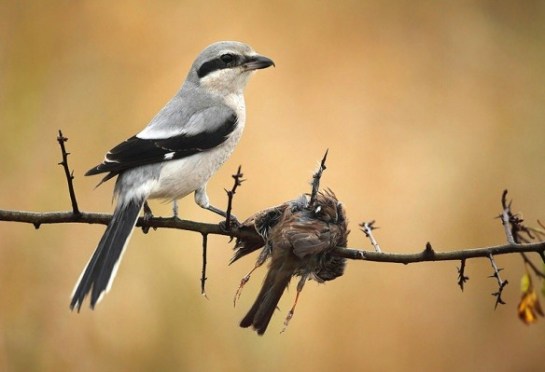
LoggerheadShrike-with-impaled-prey.Quora

LOGGERHEAD SHRIKE with impaled bird prey (photo credit: Quora)

Yet within three days shall Pharaoh lift up thy head from off thee, and he shall hang thee on a tree; and the birds shall eat thy flesh from off thee.  (Genesis 40:19)

Do Loggerhead Shrikes live where you live? Have you ever seen one?

Just because a trustworthy range map indicates that a bird lives where you live, with suitable habitat (e.g., semi-open fields, forests, xeric scrub-brush, etc.), is no guarantee that you will see that bird, even if you are a careful and consistent birdwatcher.

For example, during the entire calendar year of AD1995, as part of a research project that overlapped with my duties as a Certified Water Quality Monitor (then serving the Trinity River Authority of Texas, and what was then called the Texas Natural Resource Conservation Commission), I did regular birdwatching near some ponds next to a part of Furneaux Creek in Carrollton (Denton County), Texas  —  a mostly open habitat that included lotic (creek) and lentic (pond) freshwater, semi-open fields, mesquite trees, and a nearby oak-dominated forest.  That location was a great place for year-round birding!

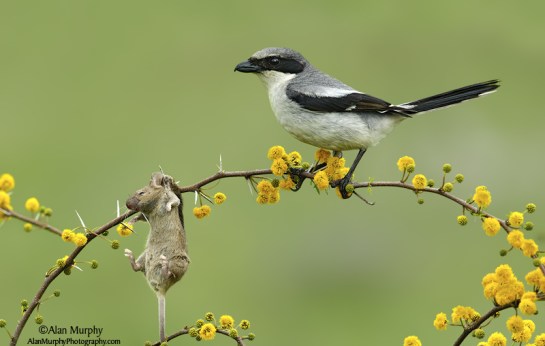
loggerheadshrike-with-impaled-prey.AlanMurphy

LOGGERHEAD SHRIKE with impaled rodent prey (Alan Murphy photo)

Yet during that entire year I never saw, there,  a Loggerhead Shrike, although I did see one, once (1-30-AD1995), a few blocks south, along the semi-wooded roadside (at the northwest corner of what was then McCoy and Trinity Mills Road), and later saw another Loggerhead Shrike along a roadside in Aransas National Wildlife Refuge (3-11-AD1996).

In today’s cyber-world we sometimes talk about “open source” categories. But with the parapatric shrikes [i.e., shrikes belonging to the same created “kind”, so they are genetically compatible for hybridization, yet usually live in geographically distinct populations]  — such as the Loggerhead Shrike, and its look-almost-alike “twin” (the Northern Shrike), as well as other shrikes of Eurasia  —  one thinks of an “open pantry” lifestyle – because the predatory shrikes are best known for their behavior of impaling their “too-large-to-eat-all-at-once” prey on plant spines (i.e., thorns) and barbed wire, as if using meat hooks, for convenient storage till time for eating.  (Get the point?)

loggerheadshrike-with-impaled-prey.ScottSimmons

LOGGERHEAD SHRIKE, impaling grasshopper prey (Scott Simmons photo)

Although the Zorro-masked Loggerhead Shrike shares similar grey, white, and black coloration and some of the markings of the Northern Mockingbird (which has no “Zorro mask”), the Loggerhead Shrike uses completely different food-getting and food-storing techniques than the mockingbird.  Also, shrike prefer different prey — often prey too large to consume in one meal.

[Like other shrikes, the Loggerhead Shrike] is a patient and skilled hunter that often perches atop shrubs and small trees, using its keen vision to search for prey. Any small vole, mouse, shrew, lizard, snake, frog or large insect [like a grasshopper, or even a small bird] that comes into view is quickly dispatched [by the shrike’s hook-tipped bill, which can break the neck of a small bird] in a swift swoop [like a hawk on the hunt] and added to a cache of food impaled on thorns [or] barbed wire. Shrikes seem to have an uncanny memory for the location of their food caches, and they have been known to find prey stored for up to eight months.   [Quoting Wayne R. Petersen & Rogers Burrows, BIRDS OF NEW ENGLAND (Lone Pine Publishing, 2004), page 225.]

Wow!  —  there you have it – shrikes impale their “too-large-to-eat-all-at-once” prey, returning to it when convenient (unless a thief gets it while the shrike is elsewhere, not an unlikely contingency).

So, the next time that you see what looks like a mockingbird, wearing a black Zorro mask, watch out!  Actually, no need to fear  —  unless you are small enough to be hung upon barbed wire, or upon a rose-bush’s thorn!

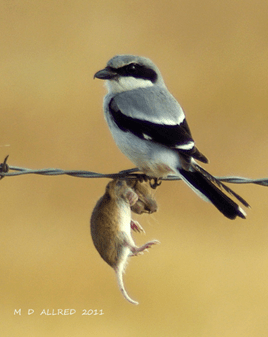
loggerheadshrike-with-impaled-prey.M-D-Allred

LOGGERHEAD SHRIKE with impaled rodent prey (H. D. Allred photo)


Killdeer atop Killdeer: Appreciating Help from Others

Killdeer  atop  Killdeer:  Appreciating  Help  from  Others

Dr. James J. S. Johnson

Killdeer-atop-killdeer.TheOfflede

KILLDEER perched atop KILLDEER (photo credit: The Offlede)

And are built upon the foundation of the apostles and prophets, Jesus Christ Himself being the chief cornerstone.  (Ephesians 2:20)

As you strive for a “higher” place in life (whether that be a little higher, or a lot higher, than where you started form)  —  and when you think about your own achievements  —   don’t forget to appreciate those who helped you to rise higher.  Whose shoulders are you standing on?  Whose help should you be appreciative of?

If you are a Christian, this surely applies to your faith’s foundation:  the Lord Jesus Christ Himself is the unique cornerstone of our faith; His apostles and prophets (such as the holy men who wrote the books of the New Testament) provide the theological and historical foundation for our faith, connecting it to the Old Testament (John 5:44-47).

So whatever accomplishment we may ever have, as Christians, we are relying upon — and benefiting from — the firm foundation providentially given to us, i.e., what the prophet Jude calls the “once-delivered-unto-the-saints faith” (Jude 1:3).

That’s what I see, from where I’m perched  —  there are many who have helped me, according to God’s many and good providences along the years!

Killdeer-atop-killdeer.ThePhotoNaturalist

KILLDEER atop KILLDEER (photo credit: The PhotoNaturalist)


Pinyon Jay, Grand Canyon’s Forester

Pinyon Jay, Grand Canyon’s Forester

Dr. James J. S. Johnson

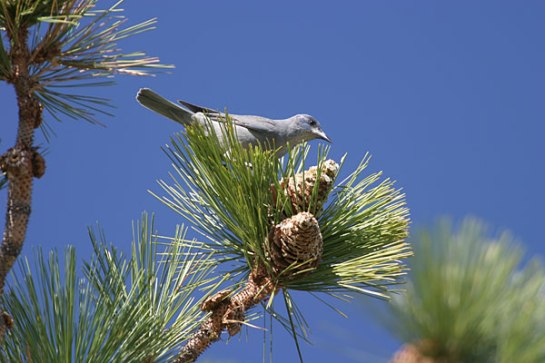
PinyonJay.Sallyking-NatlparkService

PINYON JAY (photo credit: Sally King / National park Service)

“And herein is that saying true:  one sowth and another reapeth.”  (John 4:37)

A wonderful way to appreciate the catastrophic impact of the Genesis Flood is to visit the Grand Canyon, in northern Arizona, a warm and arid panorama in America’s Great West. However, if you visit that grandiose canyonland, don’t rush off too quickly! Also visit a nearby testimony of God’s caring involvement in our world, the ‘pygmy forest’ just south of the Grand Canyon’s southern rim.

In addition to juniper evergreens, you will find short, scrubby trees called pinyon pines. They produce pine cones containing edible seeds. Maybe you don’t like to eat pinyon pine seeds, but an interesting blue-and-grey bird does. The pinyon jay is famous for eating its favorite fare — pinyon pine seeds.

But that is not the only relationship between the pinyon pine and the pinyon jay. The pinyon jay is also a type of forester, a tree farmer—the pinyon jay actually plants pinyon pines. But how?

Pinyon pine seeds are not planted by bird droppings, the way hard-coated seeds (such as indigestible cherry ‘pits’) are dropped out the ‘back door’ of flying birds, mixed with natural fertilizer. Bird droppings are one method God designed for some tree planting, but that is not the method He provided for planting pinyon pine trees.

Rather, the pinyon tree slowly manufactures large pine cones with seeds having a very thin seed coat. In fact, this coat is so thin that it allows a seed-eating bird to eat it and to digest the entire seed—so there is no left-over, plantable ‘pit’ (to be dropped from the birds) thereafter. Thus, once a pinyon seed is eaten by a pinyon jay (or by a Clark’s nutcracker, chipmunk, pine cone moth, or pine cone beetle) that’s it!

So how do the birds help plant the next generation of pine trees?

PinyonJay-PinyonPine.CaganSekercioglu

PINYON JAY on PINYON PINE (photo by Cagan Sekercioglu)

God carefully bioengineered (i.e., programmed) these birds to hide more seeds in the soil than they will subsequently eat.

The jays have an expandable pouch in which they can carry up to 56 seeds. So, a flock of 200 jays can quickly harvest 10,000 or more seeds from a stand of pinyon pine trees, especially if the trees have put out a ‘bumper crop’ of seeds (which the trees historically do, about every six years on average). The birds eat what they immediately need in order to survive, and then they bury the rest in the soil for future needs.

This periodic ‘bumper crop’ of pinyon pine seeds, and their burial by pinyon jays, has been studied for years. Says Dr. John Kricher, an American forest ecologist:

“At one well-documented site in the Southwest, pinyon seed bonanzas occurred in 1936, 1943, 1948, 1954, 1959, 1965, 1969 and 1974. In intervening years, seed crops were dramatically less. Pinyons in most areas have this roughly 6-year interval between heavy seed crops. …  Jays bury pinyon seeds—lots of pinyon seeds. In one study it was estimated that from September through January, a flock of 250 pinyon jays buried about 4.5 million pinyon seeds! They do not bury the seeds just anywhere. The jays tend to cache [hide] seeds in open areas, selecting sites near brush piles or fallen trees.” [Quoting John C. Kricher, A FIELD GUIDE TO THE ECOLOGY OF WESTERN FORESTS, Houghton Mifflin, New York, pages. 147–149.]

Thus, the jays even plant the seeds in places just right for new tree growth.

If the birds planted seeds at the base of tall, healthy trees, those trees would shield the new seedling from needed sunlight, and would likely absorb the scarce rainfall of this area, so the new sprouts would fail to thrive. Also, being planted near brush or fallen trees provides these seedlings with protection from gusty desert winds which might otherwise tear them out of the soil.

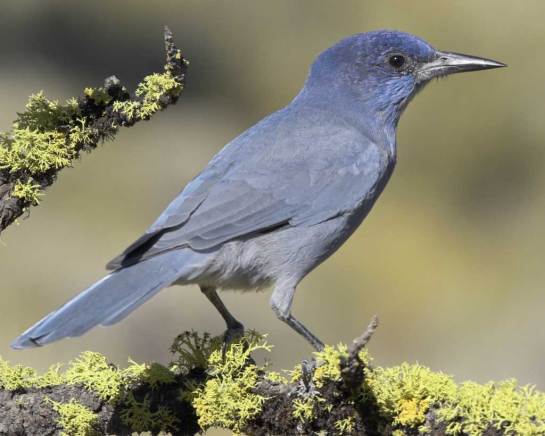
PinyonJay.AudubonFieldGuide

PINYON JAY perching (Audubon Field Guide)

When winter comes, the pinyon jays harvest many of their carefully hidden pinyon seeds. Many more, however, go unharvested. These seeds, forgotten by jays, become the next generation of pinyon pines.

Is this a picture of tooth-and-claw, selfish, survival-of-the-fittest accident-produced ‘evolution’? Hardly! This coöperative relationship between bird and tree, called ‘mutualistic symbiosis’ (or ‘mutual aid’) by ecologists, is the kind of system-ordered harmony God originally designed into His good creation. In fact even after the Fall, nature still displays more coöperation than competition.

The creation sings out an ecological symphony of praise to its Creator, the Lord Jesus Christ. Job instructs us to accept the teaching of the beasts and the birds, for such wildlife—by their very traits, behaviors, and generational cycles—instruct us with the answer to this question:

‘Who knoweth not in all these that the hand of the LORD hath wrought this?’ [Quoting Job 12:9]


[ The preceding avian ecology highlight was originally published as “Providential Planting: The Pinyon Jay,” Creation Ex Nihilo, 19 (3): 24-25 (summer 1997).  At present (AD2018), it now appears online at https://answersingenesis.org/evidence-for-creation/providential-planting/ .  Slight editing was added by the author prior to re-posting here.  It should be noted that the Lord Jesus once used ravens (not Pinyon Jays — Matthew 6:26, clarified by Luke 12:24) as an example of a bird-kind that did not sow seeds for its own food — please see “Hidden Assumptions Play ‘Hide-and-Seek’:  Using Context and Clarification to ‘Tag’ Bible Critics”, ACTS & FACTS, 39(6):8-9 (June 2010), now posted at http://www.icr.org/article/hidden-assumptions-play-hide-seek-using .   ><>  JJSJ  profjjsj@aol.com ]

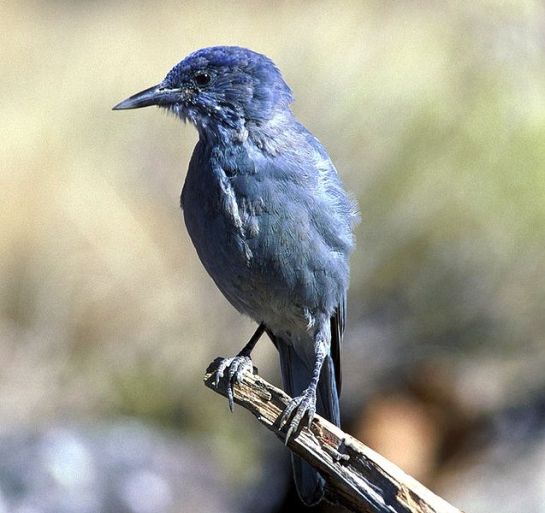
Pinyon-Jay.Wiki-photo

PINYON JAY (Wikipedia photograph)


Crazy as a Coot!

CRAZY  AS  A  COOT!

Dr. James J. S. Johnson

And as he [i.e., Paul] thus spoke for himself, Festus said with a loud voice, “Paul, thou art beside thyself; much learning doth make thee mad!” But he [i.e., Paul] said, “I am not mad, most noble Festus; but I speak forth the words of truth and soberness”.   (Acts 26:24-25)

But the natural man receives not the things of the Spirit of God, because they are foolishness unto him;  neither can he know them, because they are spiritually discerned.   (1st Corinthians 2:14)

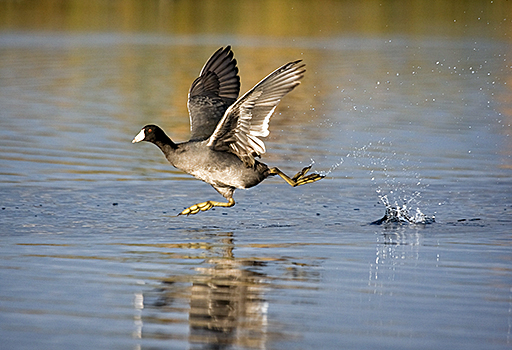
AmericanCoot-water-takeoff.AudubonFieldGuide

AMERICAN COOT’s water take-off (credit: Audubon Field Guide)

Isn’t it ironic how unbelievers can accuse Christians of being “crazy”, especially in conversations when a Christian (like the apostle Paul) is soberly speaking God’s weighty words of eternal truth!  In short, if you dare to explain the timeless treasure-truths of the Holy Bible, to an unbeliever (whose foolish heart is darkened – see Romans 1:21) who rejects truth reflexively, and who thus dismisses Biblical truths as “foolishness”  —  you can expect to be unjustly accused of being “crazy as a coot”.

Crazy as a Coot”:  what does that mean?  So, what kind of bird is a Coot, anyway?  (Not quite duck! – and not quite chicken!)  Why are Coots called “crazy”?

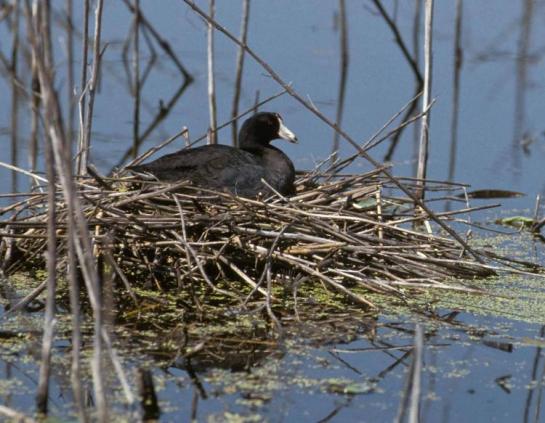
Let us consider the American Coot (a/k/a “Mud Hen”), a head-bobbing waterfowl that resembles the Common Moorhen (a/k/a Florida Gallinule or “Candy Corn Bird”), except the Coot is almost all sooty black, red-eyed, possessing greenish legs that end in individually “scallops”-lobed toes, and sporting a prominent poultry-like white bill (with an incomplete blackish ring near the bill-tip), garnished by a red spot on its slightly bulging forehead “shield”.

The expression “crazy as a coot” may at first seem inappropriate for such a well-adapted, successful waterfowl, but watch American Coots in spring and summer [!] and the appellation becomes much more suitable. These spirited and aggressive birds squabble constantly during the breeding season, not just among themselves, but also with any waterbird that has the audacity to intrude upon their waterfront property.  They can often be seen scooting across the surface of the water, charging [perceived] rivals with flailing, splashing wings in an attempt to intimidate.  Outside the breeding season, coots gather amicably together in large groups.  American Coots are known in many places as ‘Mud Hens’, and are often misidentified as a species of duck.   [Quoting Wayne R. Petersen & Roger Burrows, BIRDS OF NEW ENGLAND (Lone Pine Publishing, 2004), page 123.]

“Squabble constantly … in an attempt to intimidate” –  does that sound like anyone “crazy” that you know personally?  (If so, you really shouldn’t reply by blog-posting the name or names of whomever you are thinking of.)

AmericanCoot-water-takeoff.USFWS

AMERICAN COOT’s water take-off (USFWS photo / public domain)

Like others perceived as being “crazy”, the Coot dramatically displays a lot of head-bobbing energy!   Go, coot, go!

When swimming, it pumps its head back and forth; it dabbles but also dives from the surface. Taking off [to fly], it skitters, flight labored; the big feet trail beyond the short tail; a narrow white border shows on the rear of [each] wing.  [Quoting Roger Tory Peterson, BIRDS OF NEW ENGLAND (Houghton Mifflin, 1990), page 64.]

AmericanCoot-ID-notes-pic.Birdzilla

AMERICAN COOT (credit: Birdzilla)

Of course, it’s easy for me to link dramatic displays of energy to “craziness”, because it has been decades since I was described as highly energetic or animated (although I was actually nicknamed “Jumpin’ Jim”, about 30 years ago, when I was a young tall-building litigator in downtown Dallas).

Nowadays, if I wasn’t “low-energy” I might be “no-energy”! (Did you know that I never get tired?  What’s my secret, that I never get tired?  —  simple:  I don’t get tired; I stay tired.)   On that I’ll rest.

Of course, my real “rest” is in the Lord Jesus Christ  –  Whom to have, as my personal Savior, may seem “crazy” and “foolish” to a Gospel-rejecting unbeliever, like provincial governor Festus (recall Acts chapter 26).  However, the infallible holy Scriptures assure me that to belong to Christ is not at all “foolish” — rather, it is the power of God unto His very gracious salvation (1st Corinthians 1:18 & 15:3-4; Luke 10:20).

AmericanCoot-on-nest.MDC-DiscoverNature

AMERICAN COOT on nest (photo credit: MDC Discover Nature)


Shake a Leg (or 2 or 3 or 4), Crab-Eater!

Shake a Leg (or 2 or 3 or 4), Crab-Eater!

Dr. James J. S. Johnson

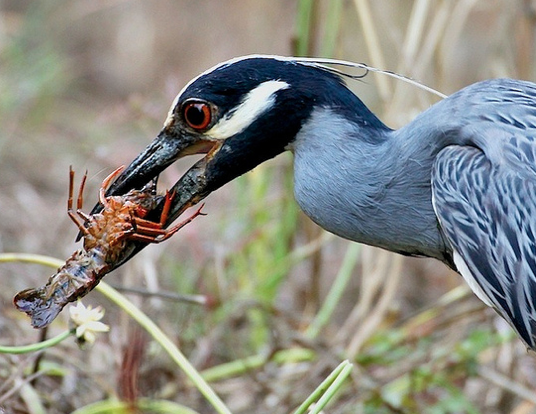
YellowCrowned-NightHeron-eating-crab.BioWeb-photo

Yellow-crowned Night Heron eating crab in marshy grass (BioWeb photo credit)

He sends forth His commandment upon earth; His word runs very swiftly.  (Psalm 147:15)

Do you usually think of God’s Word as “running very swiftly”? Maybe not, but the psalmist portrays God’s commandment as being sent forth with a speed that is so fast it is comparable to someone running.  In fact, God rules the world’s weather by issuing meteorological mandates that are executed with lightning-like rapidity:

He gives snow like wool; He scatters the hoarfrost like ashes. He casts forth His ice like morsels; who can stand before His cold?  He sends out His word, and melts them; He causes His wind to blow, and the waters flow. (Psalm 147:16-18)

When we think of running, we think of fast motion. Young children and young adults run; old folks like to walk (Isaiah 40:31).  Of course, lots of animals move pretty quickly, too.  Legs are pretty important, if you want to do any serious running around!

The fastest-footed bird of Africa is the Ostrich, a running ratite with a galloping gait. Here in Texas (where I live), we have a much smaller bird, nonetheless swift-legged, the Greater Roadrunner.  Earlier this evening I saw two Roadrunners scooting around by the east side of my house – may God bless them as they hunt snakes and other varmints!

Speaking of varmints, there are varieties of rodents that run around quite nimbly – mice, rats, squirrels (which I don’t really consider “varmints” unless they are chewing electrical system components), voles, prairie dogs, etc.  Rabbits (and other lagomorphs, like the Pikas of the Rocky Mountains) can move with serious speed, especially when fleeing in fear when chased by a predator.

Many of the larger mammals can hoof it – pronto! — such as the fleet-footed pronghorn of the prairie plains (or its antelope-like “cousins”, Africa’s gnu and India’s blackbuck) or feral felines like North America’s cougars (or Africa’s lions and cheetahs).  Even Australia’s kangaroos can hop at speeds over 40 m.p.h., like race-horses.  Actually, as goofy as moose sometimes look, don’t casually assume that you can outrun them  —  especially if turf-defending attitude is an issue (and I recall that cautionary caveat as one once nicknamed “Dances with Moose”).

Yes, even at tidal beaches there are a lot of God’s creatures that can scurry furtively about. Consider, for a moment, the decapod crustaceans we call “crabs”. There are many different varieties of crabs (Ghost Crabs, Chesapeake Bay Blue Crabs, Fiddler Crabs, Dungeness Crabs, Tanner Crabs, King Crabs, etc.) – and they have nimble legs for swift and purposeful maneuvering, both on land or in water!

Yet what if those crab legs are rudely amputated?   –  the crab becomes near-hopelessly vulnerable to a quick end, inside a decapod-dining predator.  No running away then!

Which leads us (“finally”, you say) to our featured bird of the day, the YELLOW-CROWNED NIGHT HERON, because it is known to seize upon and amputate crab legs, prior to consuming its hapless crustacean prey.

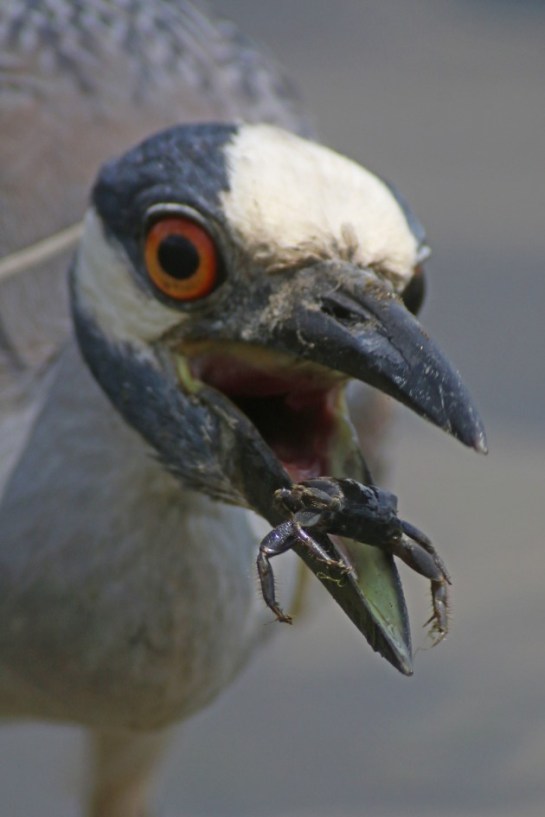
Although night-herons are named for their habit of hunting from dusk until dawn, the Yellow-crowned Night-Heron quite commonly also hunts through daylight hours [if it’s not sleeping!], particularly when there are hungry mouths to feed [sound familiar, parents?].  Its secretive habits, choice of dense, concealing habitats and nearly motionless hunting strategy combine to make this bird a challenge to locate and observe.  The Yellow-crowned Night-Heron’s partiality for crustaceans has earned it the name “Crab-Eater in some parts of its [almost exclusively coastal] range.  It will typically grab a crab by its legs or pinchers [!] and shake vigorously until these fall off, making the crab more manageable.   [Quoting Wayne R. Petersen& Rogers Burrows, BIRDS OF NEW ENGLAND (Lone Pine Publishing, 2004), page 100, emphasis added.]

YellowCrowned-NightHeron-eating-crab.BioWeb-closeup

Yellow-crowned Night Heron eating crab (BioWeb photo credit)

So, if the caught crab is too big to swallow, shedding a few appendages might reduce it to an ingestible size – and then “down the hatch” it goes!  Also, if the seized crab were to fall out of the heron’s beak-grasp (onto the beach), while the bird was trying to position the struggling crab for swallowing it, a legless or crippled crab (if dropped) will have quite a challenging time trying to make a successful getaway!

Wow! That gives a new twist to the phrase “shake a leg!”

By the way, how did the Yellow-crowned Night-Heron know that thrashing and breaking off crab legs was a good strategy to reduce a crab in size, for more-manageable swallowing?  — or a good strategy for preventing the crustacean prey from escaping if dropped?  — or a good strategy to diminish a crab’s ability to resisting being eaten?  The night heron’s targeted practice of immobilizing the crab is not just behavioral “dumb luck”!  God designed the bio-machinery and behavioral abilities of the bird.  God taught (i.e., programmed the “software” that drives the “hardware” of) the heron how to quickly catch, keep, and consume its shellfish snack.  Crunch! Crunch!  Crunch! GULP!

Just another eye-catching example of God’s creation in action, appreciating a few small details within a super-complicated-and-interactive coastal food web  —   with all of these interactive details, both  separately and together, exhibiting our great God’s ecological and bioengineering genius, as His critters live to be “fruitful, multiply, and fill the earth”. God is really, really clever!

That’s it for now  –  gotta “run”!

YellowCrowned-NightHeron-eating-FiddlerCrab.10000Birds-photo

Yellow-crowned Night Heron eating Fiddler Crab (10,000 Birds photo credit)


Avian And Attributes – Shade

Shade Bush Warbler Drawing ©HBAlive

“The LORD is thy keeper: the LORD is thy shade upon thy right hand.” (Psalms 121:5 KJV)


Avian and Attributes – Shade

SHADE, n. [L. scutum, a shield.]
1. Literally, the interception, cutting of or interruption of the rays of light; hence, the obscurity which is caused by such interception. Shad differs from shadow, as it implies no particular form or definite limit. whereas a shadow represents in form the object which intercepts the light. Hence when we say, let us resort to the shade of a tree, we have no reference to its form; but when we speak of measuring a pyramid or other object by its shadow, we have reference to its extent.
2. Darkness; obscurity; as the shades of night.
3. An obscure place, properly in a grove or close wood, which precludes the sun’s rays; an hence, a secluded retreat.
4. A screen; something that intercepts light or heat.
5. Protection; shelter.
6. In painting, the dark part of the picture.
7. Degree or gradation of light.
White, red, yellow, blue, with their several degrees, or shades and mixtures, as green, come only in by the eyes. Locke.
8. A shadow.


Shade Bush Warbler in Middle Drawing by John Anderton

Shade Bush Warbler (Horornis parens) or shade warbler (Horornis parens) is a species of bird in the family Cettiidae. It is found only in Solomon Islands, where it is endemic to the island of Makira (formerly San Cristobal Island). Its natural habitats are tropical moist lowland forests and tropical moist montane forest above 600m. It feeds on insects in the undergrowth and on the ground.

There are really no photos available on line.

H B Alive Drawing

https://goo.gl/images/aiFdky


More Avian and Attributes

Birds whose first name starts with “S”

Good News

*
[Definitions from Webster’s Dictionary of American English (1828), unless noted. Bird info from Wikipedia plus.]

Some Homes in the Green Forest – Chapter 18

Redtail the Hawk - Burgess Bird Book ©©

Redtail the Hawk – Burgess Bird Book ©©

Some Homes in the Green Forest

The Crow, the Oven Bird and the Red-tailed Hawk.

The Burgess Bird Book For Children

*

CHAPTER 18. Some Homes in the Green Forest.

Listen to the story read.

Reddy Fox wasted very little time waiting for Peter Rabbit to come out from under that pile of brush where he had hidden at Sammy Jay’s warning. After making some terrible threats just to try to frighten Peter, he trotted away to look for some Mice. Peter didn’t mind those threats at all. He was used to them. He knew that he was safe where he was, and all he had to do was to stay there until Reddy should be so far away that it would be safe to come out.

Just to pass away the time Peter took a little nap. When he awoke he sat for a few minutes trying to make up his mind where to go and what to do next. From ‘way over in the direction of the Old Pasture the voice of Blacky the Crow reached him. Peter pricked up his ears, then chuckled.

“Reddy Fox has gone back to the Old Pasture and Blacky has discovered him there,” he thought happily. You see, he understood what Blacky was saying. To you or me Blacky would have been saying simply, “Caw! Caw!” But to all the little people of the Green Forest and Green Meadows within hearing he was shouting, “Fox! Fox!”

“I wonder,” thought Peter, “where Blacky is nesting this year. Last year his nest was in a tall pine-tree not far from the edge of the Green Forest. I believe I’ll run over there and see if he has a new nest near the old one.”

So Peter scampered over to the tall pine in which was Blacky’s old nest. As he sat with his head tipped back, staring up at it, it struck him that that nest didn’t look so old, after all. In fact, it looked as if it had recently been fixed up quite like new. He was wondering about this and trying to guess what it meant, when Blacky himself alighted close to the edge of it.

There was something in his bill, though what it was Peter couldn’t see. Almost at once a black head appeared above the edge of the nest and a black bill seized the thing which Blacky had brought. Then the head disappeared and Blacky silently flew away.

“As sure as I live,” thought Peter, “that was Mrs. Blacky, and Blacky brought her some food so that she would not have to leave those eggs she must have up there. He may be the black-hearted robber every one says he is, but he certainly is a good husband. He’s a better husband than some others I know, of whom nothing but good is said. It just goes to show that there is some good in the very worst folks. Blacky is a sly old rascal. Usually he is as noisy as any one I know, but he came and went without making a sound. Now I think of it, I haven’t once heard his voice near here this spring. I guess if Farmer Brown’s boy could find this nest he would get even with Blacky for pulling up his corn. I know a lot of clever people, but no one quite so clever as Blacky the Crow. With all his badness I can’t help liking him.”

Twice, while Peter watched, Blacky returned with food for Mrs. Blacky. Then, tired of keeping still so long, Peter decided to run over to a certain place farther in the Green Forest which was seldom visited by any one. It was a place Peter usually kept away from. It was pure curiosity which led him to go there now. The discovery that Blacky the Crow was using his old nest had reminded Peter that Redtail the Hawk uses his old nest year after year, and he wanted to find out if Redtail had come back to it this year.

Halfway over to that lonesome place in the Green Forest a trim little bird flew up from the ground, hopped from branch to branch of a tree, walked along a limb, then from pure happiness threw back his head and cried, “Teacher, teacher, teacher, teacher, teacher!” each time a little louder than before. It was Teacher the Oven Bird.

Ovenbird (Seiurus aurocapilla) by Raymond Barlow

Ovenbird (Seiurus aurocapilla) by Raymond Barlow

In his delight at seeing this old friend, Peter quite forgot Redtail the Hawk. “Oh, Teacher!” cried Peter. “I’m so glad to see you again!”

Teacher stopped singing and looked down at Peter. “If you are so glad why haven’t you been over to see me before?” he demanded. “I’ve been here for some time.”

Peter looked a little foolish. “The truth is, Teacher,” said he very humbly, “I have been visiting the Old Orchard so much and learning so many things that this is the first chance I have had to come ‘way over here in the Green Forest. You see, I have been learning a lot of things about you feathered folks, things I hadn’t even guessed. There is something I wish you’d tell me, Teacher; will you?”

“That depends on what it is,” replied Teacher, eyeing Peter a little suspiciously.

“It is why you are called Oven Bird,” said Peter.

“Is that all?” asked Teacher. Then without waiting for a reply he added, “It is because of the way Mrs. Teacher and I build our nest. Some people think it is like an oven and so they call us Oven Birds. I think that is a silly name myself, quite as silly as Golden Crowned Thrush, which is what some people call me. I’m not a Thrush. I’m not even related to the Thrush family. I’m a Warbler, a Wood Warbler.”

“I suppose,” said Peter, looking at Teacher thoughtfully, “they’ve given you that name because you are dressed something like the Thrushes. That olive-green coat, and white waistcoat all streaked and spotted with black, certainly does remind me of the Thrush family. If you were not so much smaller than any of the Thrushes I should almost think you were one myself. Why, you are not very much bigger than Chippy the Chipping Sparrow, only you’ve got longer legs. I suppose that’s because you spend so much time on the ground. I think that just Teacher is the best name for you. No one who has once heard you could ever mistake you for any one else. By the way, Teacher, where did you say your nest is?”

“I didn’t say,” retorted Teacher. “What’s more, I’m not going to say.”

“Won’t you at least tell me if it is in a tree?” begged Peter.

Teacher’s eyes twinkled. “I guess it won’t do any harm to tell you that much,” said he. “No, it isn’t in a tree. It is on the ground and, if I do say it, it is as well hidden a nest as anybody can build. Oh, Peter, watch your step! Watch your step!” Teacher fairly shrieked this warning.

Peter, who had just started to hop off to his right, stopped short in sheer astonishment. Just in front of him was a tiny mound of dead leaves, and a few feet beyond Mrs. Teacher was fluttering about on the ground as if badly hurt. Peter simply didn’t know what to make of it. Once more he made a movement as if to hop. Teacher flew right down in front of him. “You’ll step on my nest!” he cried.

Peter stared, for he didn’t see any nest. He said as much.

“It’s under that little mound of leaves right in front of your feet!” cried Teacher. “I wasn’t going to tell you, but I just had to or you certainly would have stepped on it.”

Ovenbird (Seiurus aurocapilla) Nest ©WikiC

Very carefully Peter walked around the little bunch of leaves and peered under them from the other side. There, sure enough, was a nest beneath them, and in it four speckled eggs. “I won’t tell a soul, Teacher. I promise you I won’t tell a soul,” declared Peter very earnestly. “I understand now why you are called Oven Bird, but I still like the name Teacher best.”

Feeling that Mr. and Mrs. Teacher would feel easier in their minds if he left them, Peter said good-by and started on for the lonesome place in the Green Forest where he knew the old nest of Redtail the Hawk had been. As he drew near the place he kept sharp watch through the treetops for a glimpse of Redtail. Presently he saw him high in the blue sky, sailing lazily in big circles. Then Peter became very, very cautious. He tiptoed forward, keeping under cover as much as possible. At last, peeping out from beneath a little hemlock-tree, he could see Redtail’s old nest. He saw right away that it was bigger than it had been when he saw it last. Suddenly there was a chorus of hungry cries and Peter saw Mrs. Redtail approaching with a Mouse in her claws. From where he sat he could see four funny heads stretched above the edge of the nest.

“Redtail is using his old nest again and has got a family already,” exclaimed Peter. “I guess this is no place for me. The sooner I get away from here the better.”

Red-tailed Hawk- Cochran Shoals Unit Chattahoochee River by SSlayton

Red-tailed Hawk- Cochran Shoals Unit Chattahoochee River by SSlayton

Just then Redtail himself dropped down out of the blue, blue sky and alighted on a tree close at hand. Peter decided that the best thing he could do was to sit perfectly still where he was. He had a splendid view of Redtail, and he couldn’t help but admire this big member of the Hawk family. The upper parts of his coat were a dark grayish-brown mixed with touches of chestnut color. The upper part of his breast was streaked with grayish-brown and buff, the lower part having but few streaks. Below this were black spots and bars ending in white. But it was the tail which Peter noticed most of all. It was a rich reddish-brown with a narrow black band near its end and a white tip. Peter understood at once why this big Hawk is called Redtail.

It was not until Mr. and Mrs. Redtail had gone in quest of more food for their hungry youngsters that Peter dared steal away. As soon as he felt it safe to do so, he headed for home as fast as he could go, lipperty-lipperty-lip. He knew that he wouldn’t feel safe until that lonesome place in the Green Forest was far behind.

Yet if the truth be known, Peter had less cause to worry than would have been the case had it been some other member of the Hawk family instead of Redtail. And while Redtail and his wife do sometimes catch some of their feathered and furred neighbors, and once in a while a chicken, they do vastly more good than harm.

This story gives good examples of friends watching out for friends. Also, friends love their neighbors and go for visits now and then.

“But you be watchful in all things,…” (2 Timothy 4:5a NKJV)

*

  • Who was the one warning the animal and bird friends?
  • What is a call of the Crow?
  • Is it good for us to warn others of danger?
  • What does Peter really think it says?
  • Who was the little bird that Peter spotted up in the tree?
  • Why is he called by that name?
  • When Peter began to leave, why did the little bird become upset?
  • What bird was Peter looking for, yet had to make sure that bird didn’t see him?
  • Why didn’t Peter want to be seen?
  • Who sees us all the time? Can we hide from Him?

*

“A friend loveth at all times,…” (Proverbs 17:17a KJV)

Links:

*

Links:


  Next Chapter (A Maker of Thunder and a Friend in Black. Coming Soon)


Burgess-Bird-Book-for-Children


  Burgess-Bird-Book-for-Children


Gold/Yellow = Heaven


Wordless Birds


**


Avian And Attributes – Seaside

Seaside Sparrow (Ammodramus maritimus) (Dusky-extinct) ©WikiC

“The same day went Jesus out of the house, and sat by the sea side.” (Matthew 13:1 KJV)

“And he began again to teach by the sea side: and there was gathered unto him a great multitude, so that he entered into a ship, and sat in the sea; and the whole multitude was by the sea on the land.” (Mark 4:1 KJV)


Avian and Attributes – Seaside

Sea-side
SE’A-SIDE, n. [sea and side.]

The land bordering on the sea; the country adjacent to the sea, or near it.


Seaside Sparrow (Ammodramus maritimus mirabilis) (Cape Sabel) ©WikiC

Seaside Sparrow (Ammodramus maritima) is a small American sparrow.

Adults have brownish upperparts with gray on the crown and nape, and a grayish-buff-colored breast with dark streaks; they have a dark face with gray cheeks, a white throat, and a short, pointed tail. Birds show a small yellow streak just above the eye.

Their breeding habitat is salt marshes on the Atlantic and Gulf coasts of the United States from southern New Hampshire to southern Texas. The nest is an open cup usually built in the salt marsh on tidal reeds and spartina grasses. Females lay two to five eggs.

Seaside Sparrow (Ammodramus maritimusl) ©WikiC

Northern birds most often migrate further south along the eastern coast of the United States. They forage on the ground or in marsh vegetation, sometimes probing in mud. They mainly eat insects, marine invertebrates and seeds. Their feeding areas are often some distance away from the areas they choose to nest.

The song is a raspy buzz that closely resembles a distant red-winged blackbird.


More Avian and Attributes

Birds whose first name starts with “S”

Good News

*
[Definitions from Webster’s Dictionary of American English (1828), unless noted. Bird info from Wikipedia plus.]

Osprey Feeding On His Catch of the Day

Osprey at Viera looking to the Creator and hopefully he is thanking Him for the fish.

“Who provideth for the raven [and Ospreys] his food? when his young ones cry unto God, they wander for lack of meat.” (Job 38:41 KJV)

Dan took a couple of really nice photos of the hungry Osprey.

Now for Dan’s great photos.

Time to strip the innards! Yuck!

When we were last at Viera Wetlands, we caught an Osprey eating a fish. Apparently he doesn’t like the “guts.” We watched it pull them out and then drop them. Did that several times, and then started eating the fish.

“But God giveth it a body as it hath pleased him, and to every seed his own body. All flesh is not the same flesh: but there is one kind of flesh of men, another flesh of beasts, another of fishes, and another of birds.” (1 Corinthians 15:38-39 KJV)

I am thankful that the Lord let me be born as a human. I am also very thankful that He provided salvation for our fallen sinful human nature.

What will you do with Jesus?

Other Photos by Dan

The Painting by Emma Foster

House Finch Nest ©J-TWO-O

The Painting

by Emma Foster

Once there was a small finch named Michael who lived on a farm in the Kansas countryside. The farm was small with only a few acres of land, but on the land was a large red barn in which Michael lived. The barn was very comfortable because it was cool in the summer and warm in the winter. Michael had built his nest in the rafters, and every morning when he woke up he would fly out of the barn to look for worms to eat.

One day while Michael was looking for food, a woman walked down the dirt road to the farm. She carried a large easel, a canvas, a stool, and some paint. When she reached the top of the hill near the tree where Michael was sitting she sat down on the small tool and began setting her other materials down.

House Finch (Carpodacus mexicanus) by Raymond Barlow

Michael perched on a branch and watched the woman begin painting on her canvas. She painted for what felt like hours, mixing the paints together to make different colors. The woman started with the bright green trees in the background then painted the coarse grass. Just as she was about to start painting the barn, the sky grew dark.

Michael watched until thunder rumbled in the distance. He quickly retreated to the barn as it started to rain. The woman quickly packed her things and carried off her painting so it wouldn’t become wet.

Red Barn Painting ©Pinterest

Fortunately, the rain stopped the next morning. Michael was relieved when the woman came back to continue her painting. He watched her paint again the entire afternoon until he could see that the barn was finished. The barn in the painting looked exactly like the barn in real life, and as the woman finished the painting she signed it in the bottom corner. As the woman was packing her belongings again the wind began to pick up.

Michael flew into the barn and waited with the rest of the farm animals as the wind blew harder. The wind refused to stop. It shook the barn walls furiously. All of the animals grew very afraid, and they realized that the barn was about to come down. Fortunately, the door swung open, and all of the animals galloped to a nearby field away from the tornado that was quickly approaching. Michael followed them, hiding in a hole in a tree to keep away from the wind.

Barn Destroyed by Tornado in Madison County

When the tornado finally passed and the sky cleared, Michael came out of the tree to see that the barn was completely destroyed by the tornado. Michael saw the barn tumbled down in a large pile of wood. Many of the animals slowly returned to the barn because it was still their home, but Michael decided that he should find a new home somewhere safe.

Michael flew away until he came to a small town. Finding the nearest tree, he promptly began building a small nest.

Mrs Finch

A few days passed after Michael finished building his nest. He woke up one morning to see a small group of people gathering inside a building near him. Michael looked inside the window to see a series of paintings hung up on a wall. One of the paintings was of the barn. He recognized the lady who had painted it standing next to it, and he heard the lady announce that she was going to use some of the money from her exhibit to help rebuild the barn and other buildings that had been torn down during the tornado.

Construction begins

When Michael flew back to the countryside a few days later, he saw the barn being rebuilt by several construction workers. Several weeks went by before the barn was completely rebuilt, but when it was done all of the animals were happy to live in the barn again. Michael happily made a new nest in the rafters of the new barn, which kept him and the animals cool in the summer and warm in the winter.


Do Not Be Anxious

Then He said to His disciples, “Therefore I say to you, do not worry about your life, what you will eat; nor about the body, what you will put on. Life is more than food, and the body is more than clothing. Consider the ravens, for they neither sow nor reap, which have neither storehouse nor barn; and God feeds them. Of how much more value are you than the birds? (Luke 12:22-24)

What a delightful story, Emma. I am glad the finch and the critters were safe, and eventually were able to have a new red barn to live in. When things unexpectedly happen, we should not become anxious. The lady came up with a way to replace her barn. Our Lord love to provide for us.

*

See more of Emma’s Stories

*