Avian And Attributes – Glittering

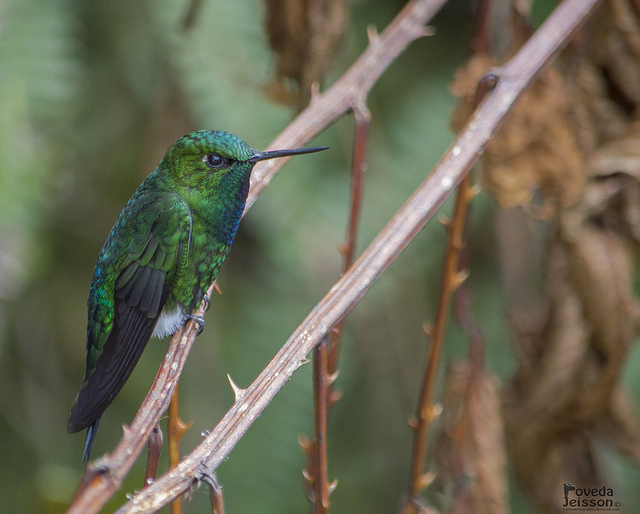
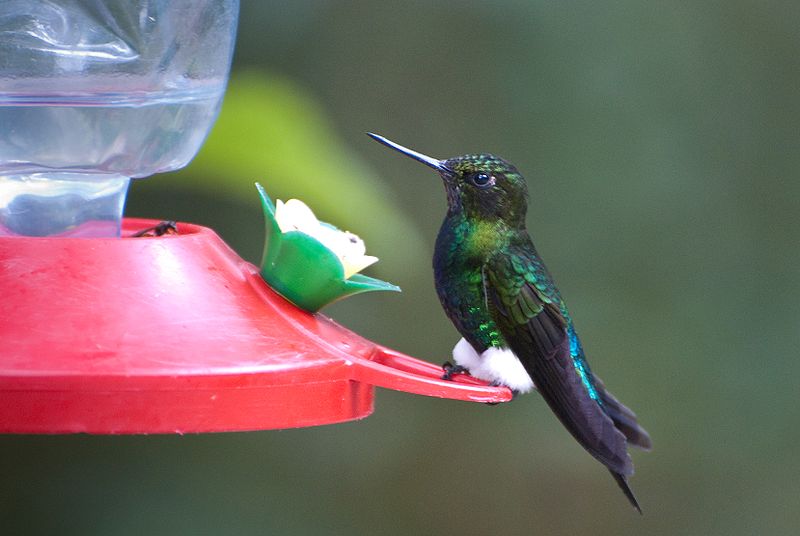
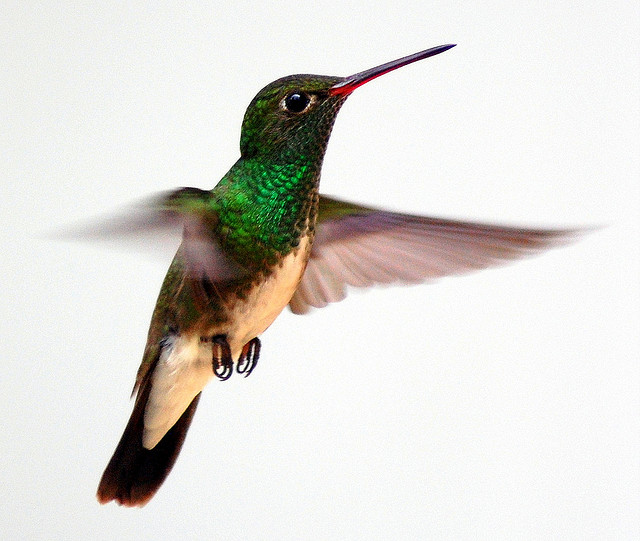
Glittering-throated Emerald (Amazilia fimbriata) by Dario Sanches

“A prayer of Habakkuk the prophet upon Shigionoth.  O LORD, I have heard thy speech, and was afraid: O LORD, revive thy work in the midst of the years, in the midst of the years make known; in wrath remember mercy.  God came from Teman, and the Holy One from mount Paran. Selah. His glory covered the heavens, and the earth was full of his praise.  And his brightness was as the light; he had horns coming out of his hand: and there was the hiding of his power…. (6)  He stood, and measured the earth: he beheld, and drove asunder the nations; and the everlasting mountains were scattered, the perpetual hills did bow: his ways are everlasting… (11)  The sun and moon stood still in their habitation: at the light of thine arrows they went, and at the shining of thy glittering spear.” (Habakkuk 3:1-4, 6, 11 KJV  )


Avian and Attributes – Glittering

GLIT’TERING, ppr. Shining; splendid; brilliant.

Glitter
GLIT’TER, v.i.
1. To shine; to sparkle with light; to gleam; to be splendid; as a glittering sword.
The field yet glitters with the pomp of war.
2. To be showing, specious or striking, and hence attractive; as the glittering scenes of a court.
GLIT’TER, n. Brightness; brilliancy; splendor; luster; as the glitter of arms; the glitter of royal equipage; the glitter of dress.


Glittering Birds

White-rumped Kingfisher (Caridonax fulgidus), Pagal, Flores, Indonesia, 2015-09-15--105

Glittering Kingfisher (Caridonax fulgidus) ©Marcel Holyoak

The Glittering Kingfisher or White-rumped Kingfisher (Caridonax fulgidus) is a species of bird in the family Alcedinidae. It is monotypic within the genus Caridonax. It is endemic to Indonesia, where its natural habitats are subtropical or tropical moist lowland forests and subtropical or tropical moist montane forests.

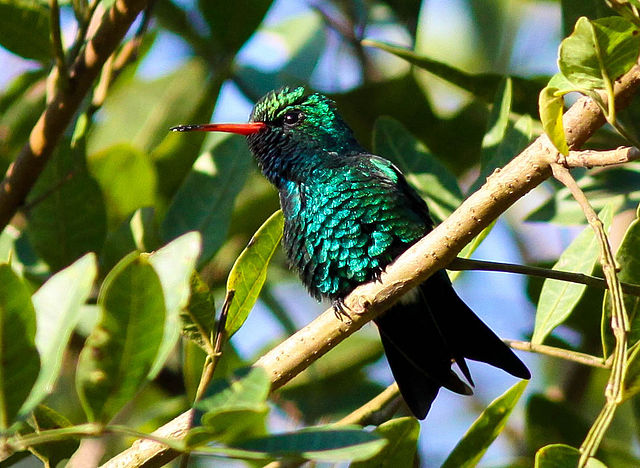
Glittering-bellied Emerald (Chlorostilbon lucidus) ©WikiC

Glittering-bellied Emerald
The Glittering-bellied Emerald (Chlorostilbon lucidus) is a species of hummingbird in the Trochilidae family. It has widely been listed by the scientific name Chlorostilbon aureoventris, but this was shown to be mistaken by J. F. Pacheco and B. M. Whitney in 2006.

It is found in north-eastern Argentina, eastern and central Bolivia, eastern Brazil, Paraguay, and Uruguay. It is widespread and often common in a wide range of semi-open habitats, including gardens and parks.

Glittering-throated Emerald (Amazilia fimbriata) by Dario Sanches

Glittering-throated Emerald

The Glittering-throated Emerald emerald (Amazilia fimbriata), sometimes placed in the genus Polyerata, is a species of hummingbird in the Trochilidae family. It is found in the Amazon Basin, Venezuela, the Guianas and Brazil. Its natural habitats are subtropical or tropical moist lowland forests, subtropical or tropical dry shrubland, and heavily degraded former forest.


More Avian and Attributes

Birds whose first name start with “G”

Good News

*
[Definitions from Webster’s Dictionary of American English (1828), unless noted. Bird info from Wikipedia plus.]

Why Do We Get New Species? – Creation Moments

Mixed Flock of birds flying in a V Formation- Put together- ©Creative Commons

Mixed Flock of birds flying in a V Formation- Put together- ©Creative Commons

WHY DO WE GET NEW SPECIES?

“And God said, Let the earth bring forth the living creature after his kind, cattle, and creeping thing, and beast of the earth after his kind: and it was so. And God made the beast of the earth after his kind, and cattle after their kind, and every thing that creepeth upon the earth after his kind: and God saw that it was good.” Genesis 1:24-25

We know that Noah did not have to fit two of every species of animal on the Ark. The Ark sheltered two of every kind of land and flying vertebrate, not two of every species. For example, modern species like lions and tigers would have developed from the pair from the Image: Wild Big Catscat family that were on the Ark. Over time, different species of cats have developed from this pair.

It is easy to see how this happened. Environmental conditions favor certain genes over others, so that these features are selected in the offspring. A simplistic example is that creatures with longer hair or fur have developed in colder areas of the world. This has involved no new genetic information; there has simply been selection from existing genetic information.

But why did God make this speciation possible? God knew the different conditions that would arise in different parts of the world. Because Scripture shows us that God actively sustains life, it is possible that He included this ability to diversify in creatures in order to help their offspring to survive in radically different conditions – especially the vastly changed conditions in the aftermath of the Flood.

Prayer:
Thank You, Lord, because we read that You give the beasts their food. You own the cattle on a thousand hills, and You look after Your creation with wisdom. Amen.

Notes:
Ref: Lightner, J.K. (2016), Toward a Creationary View of Why Speciation Occurs, Journal of Creation 30(1):70–75, April 2016. Image: Adobe Stock Photo, licensed to author.


When the new updates come out from the I.O.C. of the list of world birds, this helps explain why they find “new species.” Also, as the subspecies develop, many time they have been raised to full species status also. Our Lord, their Creator, knew how to protect his created critters.

©Creation Moments 2018 Used with Permission

More articles from Creation Moments

Surveying the Birds in Puerto Rico after Hurricane Maria – Audubon

Pin-tailed Whydah (Puerto Rico)

“I know every bird of the mountains, And everything that moves in the field is Mine.” (Psalms 50:11 NASB)

Here is an Interesting Article from Audubon that I wanted to share from Audubon. It concerns their Christmas Bird count there on the island.

Christmas Bird Count

Puerto Ricans Band Together to Survey Birds in Hurricane Maria’s Aftermath

Amid power outages, devastated landscapes, and destroyed buildings, birders assessed the storm’s avian toll on their Christmas Bird Count.

José Salguero places his hands around his mouth to make the sound go farther. His right hand clenching the homemade cane he now needs to walk up the small mountain, he emits the call of the Puerto Rican Screech-Owl. The only answer he receives is silence. He keeps walking the same path he has been walking every year, only to realize this time, the outcome will be different.

“What is happening here that the birds are . . . ?” He doesn’t even finish the question. Omar Monzón already has the answer: “Maria.”…..

Continue Reading

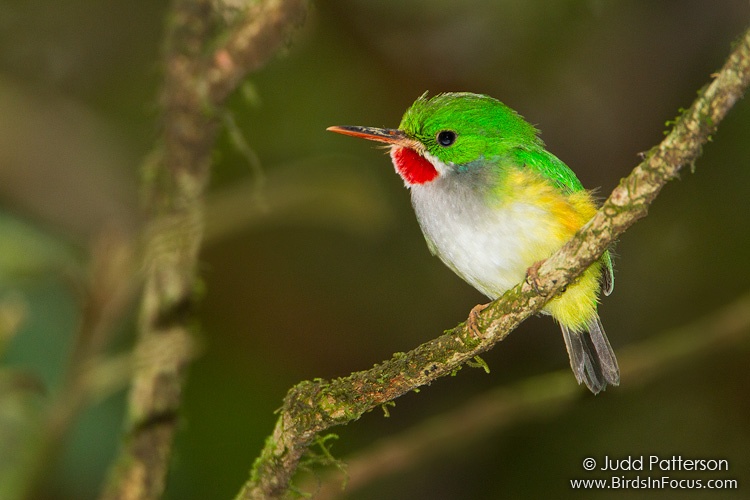
Puerto Rican Tody (Todus mexicanus) by Judd Patterson

Puerto Rican Tody (Todus mexicanus) by Judd Patterson

Avian And Attributes – Glistening

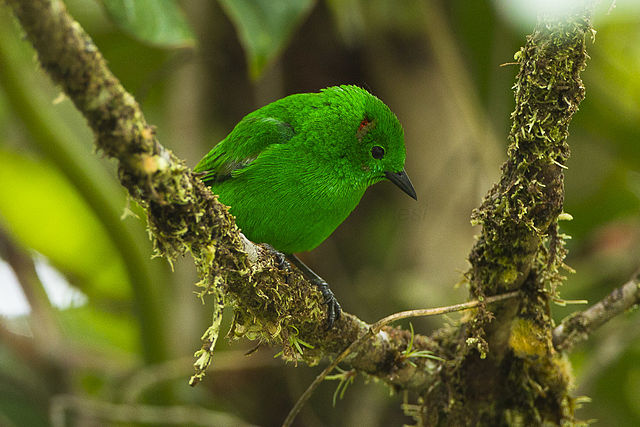
Glistening-green Tanager (Chlorochrysa phoenicotis) ©WikiC

“And after six days Jesus taketh with him Peter, and James, and John, and leadeth them up into an high mountain apart by themselves: and he was transfigured before them. And his raiment became shining, exceeding white as snow; so as no fuller on earth can white them.” (Mark 9:2-3 KJV)

“Six days after this, Jesus took with Him Peter and James and John and led them up on a high mountain apart by themselves. And He was transfigured before them and became resplendent with divine brightness. And His garments became glistening, intensely white, as no fuller (cloth dresser, launderer) on earth could bleach them.”
(Mark 9:2-3 AMP)


Avian and Attributes – Glistening

GLIS’TENING, ppr. Shining; sparkling; emitting rays of light

GLIS’TEN, v.i. glis’n. [Heb. to shine; L. glisco; Eng. gloss.]
To shine; to sparkle with light; as the glistening stars.


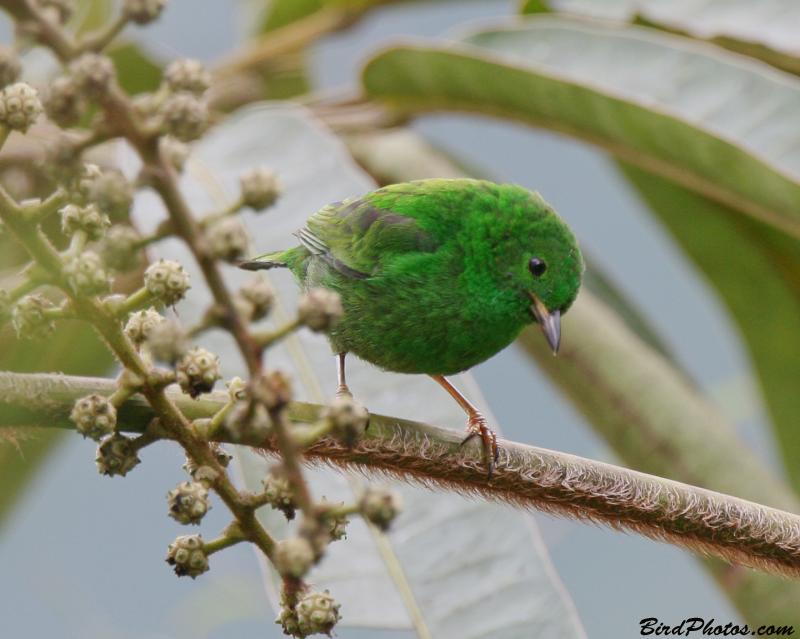
Glistening-green Tanager (Chlorochrysa phoenicotis) Female ©BirdPhotos.com

The Glistening-green Tanager (Chlorochrysa phoenicotis) is a species of bird in the family Thraupidae. It is found in Colombia and Ecuador. Its natural habitat is subtropical or tropical moist montane forests.

Males are almost entirely bright glistening emerald green, with small gray patches behind and below the eye with another on the shoulders. Females are slightly duller than males.


More Avian and Attributes

Birds whose first  name start with “G”

Good News

*
[Definitions from Webster’s Dictionary of American English (1828), unless noted. Bird info from Wikipedia plus.]

Avian and Attributes – Creator of The Garden

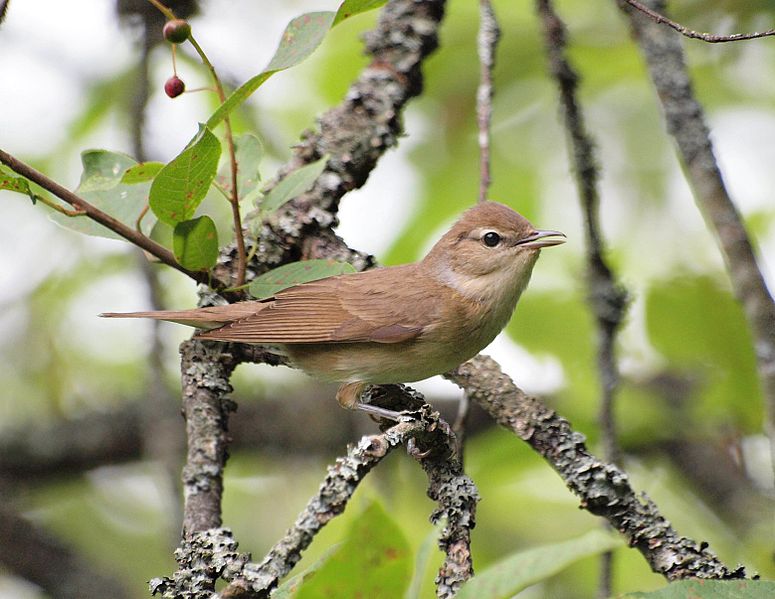
Garden Warbler (Sylvia borin) ©WikiC

“And the LORD God formed man of the dust of the ground, and breathed into his nostrils the breath of life; and man became a living soul. And the LORD God planted a garden eastward in Eden; and there he put the man whom he had formed. And out of the ground made the LORD God to grow every tree that is pleasant to the sight, and good for food; the tree of life also in the midst of the garden, and the tree of knowledge of good and evil.” (Genesis 2:7-9 KJV)


Avian and Attributes – Creator of The Garden

“When Jesus had spoken these words, he went forth with his disciples over the brook Cedron, where was a garden, into the which he entered, and his disciples. And Judas also, which betrayed him, knew the place: for Jesus ofttimes resorted thither with his disciples.” (John 18:1-2 KJV)

Garden

G`ARDEN, n. [Eng. yard, an inclosed place; L. hortus.]
1. A piece of ground appropriated to the cultivation of herbs, or plants, fruits and flowers; usually near a mansion-house. Land appropriated to the raising of culinary herbs and roots for domestic use, is called a kitchen-garden; that appropriated to flowers and shrubs is called a flower garden; and that to fruits, is called a fruit garden. But these uses are sometimes blended.
2. A rich, well cultivated spot or tract of country; a delightful spot. The intervals on the river Connecticut are all a garden. Lombardy is the garden of Italy.
Garden, in composition, is used adjectively, as garden-mold, a rich fine mold or soil; garden-tillage,the tillage used in cultivating gardens.
G`ARDEN, v.i. To layout and to cultivate a garden; to prepare ground to plant and till it, for the purpose of producing plants, shrubs, flowers and fruits.

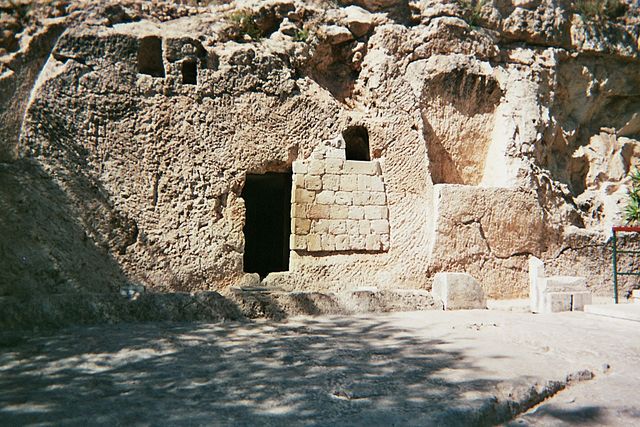
“Now in the place where he was crucified there was a garden; and in the garden a new sepulchre, wherein was never man yet laid. There laid they Jesus therefore because of the Jews’ preparation day; for the sepulchre was nigh at hand.” (John 19:41-42 KJV)

Jerusalem Tomb of the Garden ©WikiC


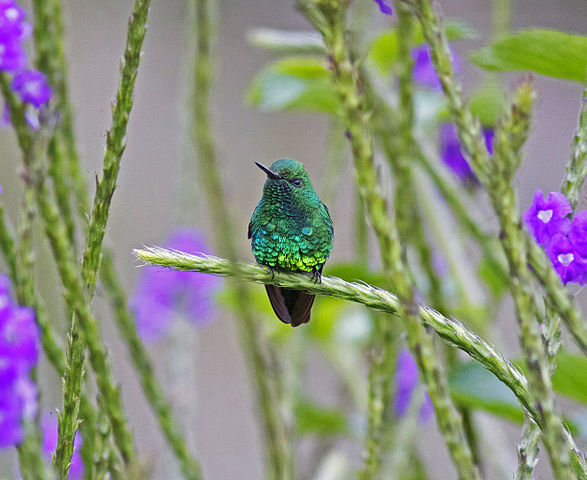
Garden Emerald (Chlorostilbon assimilis) ©WikiC

Garden Emerald (Chlorostilbon assimilis)

The Garden Emerald (Chlorostilbon assimilis) is a small hummingbird that is an endemic resident breeder in Costa Rica and western Panama. It was formerly considered to be a subspecies of the blue-tailed emerald. This is a species of open habitats, including bushy savanna, clearings, cultivation, and gardens. It can be found in the Pacific lowlands and hills, locally up to an elevation of 1500 m.

The nest is a neat cup of plant fibres decorated on the outside with bark fragments. The two white eggs are incubated by the female alone.

The garden emerald is 8 cm long and weighs 2.6 g. The male has bronze-green upper parts, brilliant green under parts, white thighs and a deeply forked tail. The female has grey underparts, a white stripe behind the eye and dusky ear patches. She has white tips to her tail, which lacks the deep fork of the male. Young birds resemble the adult female, but have some buff feather tips.
Garden Warbler (Sylvia borin)

Garden Warbler (Sylvia borin) ©WikiC

Garden Warbler (Sylvia borin

The Garden Warbler (Sylvia borin is a common and widespread small bird that breeds in most of Europe and in western Asia. It is a plain, long-winged and long-tailed typical warbler with brown upperparts and dull white underparts; the sexes are similar and juveniles resemble the adults. Its two subspecies differ only slightly and interbreed where their ranges overlap. Due to its lack of distinguishing features, this species can be confused with a number of other unstreaked warblers. The garden warbler’s rich melodic song is similar to that of the blackcap, its closest relative, which competes with it for territory when nesting in the same woodland.

The preferred breeding habitat in Eurasia is open woodland with dense low cover for nesting; despite its name, gardens are rarely occupied by this small passerine bird. The clutch of four or five blotched cream or white eggs is laid in a robust cup-shaped nest built near the ground and concealed by dense vegetation. The eggs are incubated for 11–12 days. The chicks are altricial, hatching naked and with closed eyes, and are fed by both parents. They fledge about 10 days after hatching.


More Avian and Attributes

Birds whose first name starts with “G”

Birds in Hymns – In The Garden

Birds in Hymns – The Garden of My Heart

Good News

*
[Definitions from Webster’s Dictionary of American English (1828), unless noted. Bird info from Wikipedia plus.]
Avian And Attributes – Friend/Friendly

“The Son of man came eating and drinking, and they say, Behold a man gluttonous, and a winebibber, a friend of publicans and sinners. But wisdom is justified of her children.” (Matthew 11:19 KJV)
“Yea, mine own familiar friend, in whom I trusted, which did eat of my bread, hath lifted up his heel against me.” (Psalms 41:9 KJV)

“These things said he: and after that he saith unto them, Our friend Lazarus sleepeth; but I go, that I may awake him out of sleep.” (John 11:11 KJV)


Avian and Attributes – Friendly

“And the scripture was fulfilled which saith, Abraham believed God, and it was imputed unto him for righteousness: and he was called the Friend of God.” (James 2:23 KJV)

FRIEND’LY, a. frend’ly.
1. Having the temper and disposition of a friend; kind; favorable; disposed to promote the good of another.
Thou to mankind be good and friendly still, and oft return.
2. Disposed to peace.
3. Amicable. We are on friendly terms.
4. Not hostile; as a friendly power or state.
5. Favorable; propitious; salutary; promoting the good of; as a friendly breeze or gale. Excessive rains are not friendly to the ripening fruits. Temperance is friendly to longevity.
FRIEND’LY, adv. frend’ly. In the manner of friends; amicably. [Not much used.]


“A man that hath friends must shew himself friendly: and there is a friend that sticketh closer than a brother.”
(Proverbs 18:24 KJV) Christ has definitely shown Himself friendly.

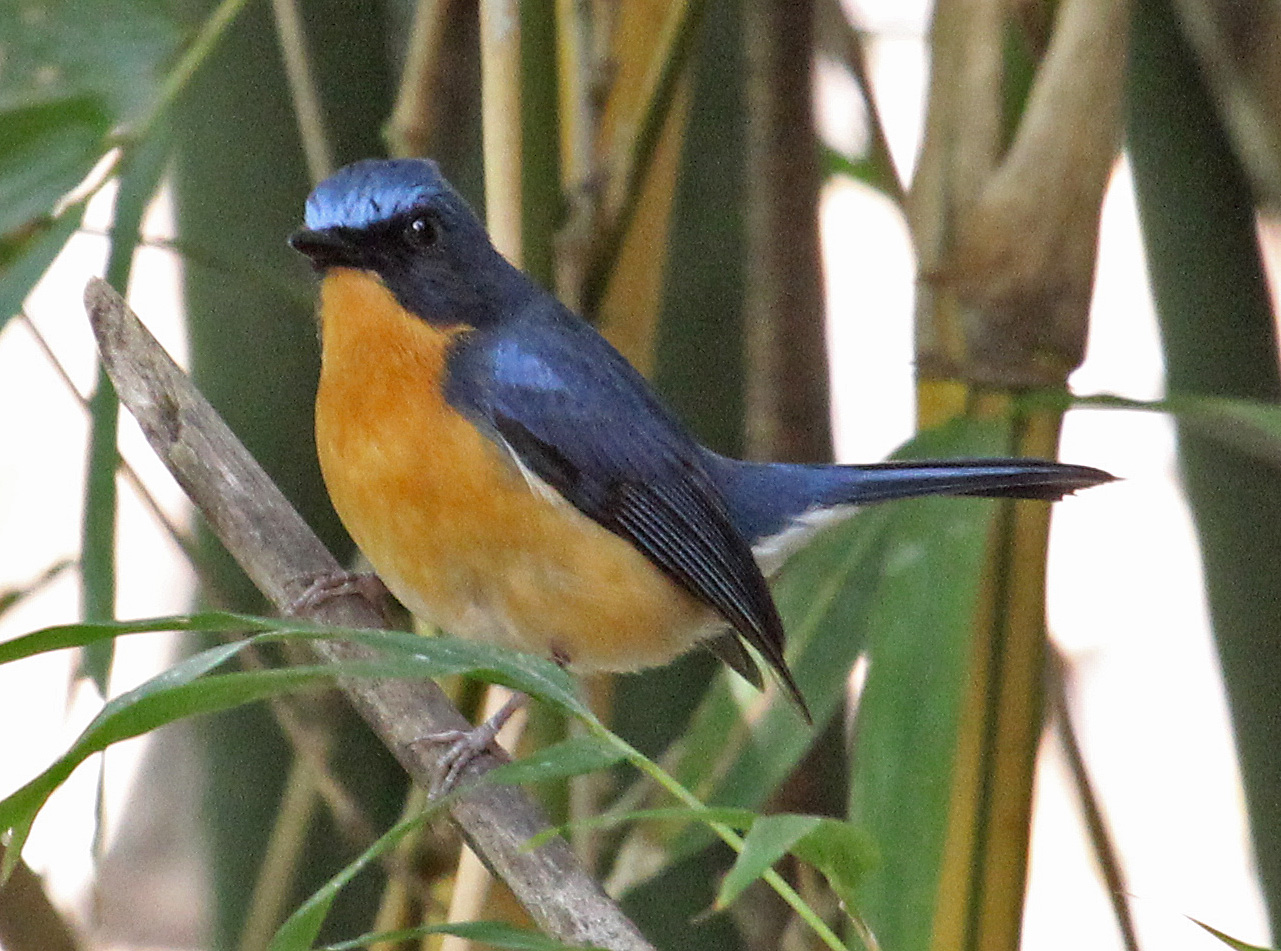
Friendly Bush-warbler, Mt Kinabalu, Borneo, 2009-07-03 (1 of 1).jpg

Friendly Bush Warbler ©Flickr Marcel Holyoak

Friendly Bush Warbler (Locustella accentor), also known as the Kinabalu friendly warbler, is a species of Old World warbler in the family Locustellidae. It is endemic to the island of Borneo.

See Video Above

The Friendly Fantail (Rhipidura albolimbata) is a species of bird in the family Rhipiduridae. It is found in the highlands of New Guinea. Its natural habitat is subtropical or tropical moist montane forests. Lives in the “Forest, mainly in more open lower to middle levels, occasionally in canopy, and forest edge; also wooded grassland, human-altered areas (gardens), clearings, stunted moss forest, alpine grassland with tree-ferns. Found mainly at 1370–3600 m, including above timber-line; on occasion as low as 1130 m.” [©HBW Alive]

*** The Post have been slower than normal. Dealing with Bronchitis again. ***


More Avian and Attributes

Birds whose first name start with “F”

Good News

*
[Definitions from Webster’s Dictionary of American English (1828), unless noted. Bird info from Wikipedia plus.]
Beware, Squirrels: Red-shouldered Hawk!

Beware, Squirrels:  Red-shouldered Hawk!

Dr. James J. S. Johnson

And the owl, and the night-hawk, and the cuckoo, and the hawk after his kind…  (Deuteronomy 14:15)

RedShouldered-Hawk.perched-wikipedia

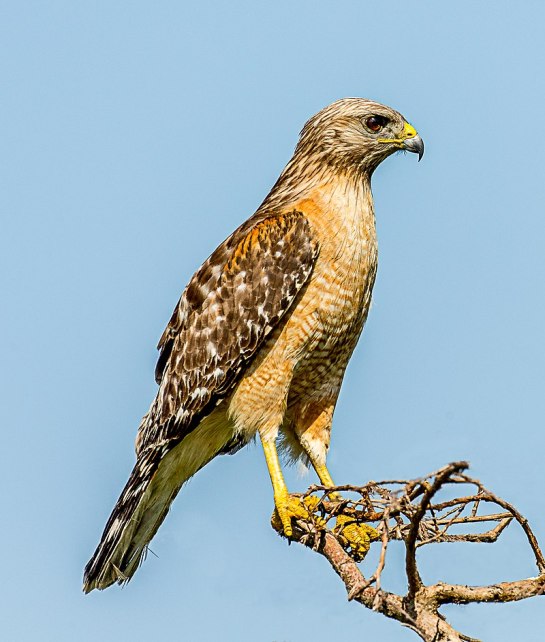
RED-SHOULDERED HAWK   (Buteo lineatus)     Wikipedia photo

Today a RED-SHOULDERED HAWK (Buteo lineatus) graced an enclosed garden-like area (between 2 buildings) where I work, swooping down from a rooftop, to land where the local squirrels gather fallen acorns from the nearby oak trees.

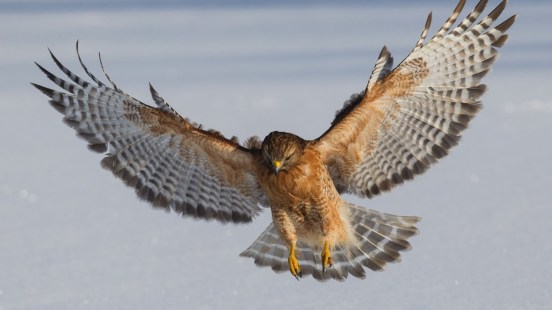
The identification was confirmed by eye-witness Don Barber, my genius cousin (and one of the best wildlife experts you could ever meet, having specialized experience with raptors). What a wonderful buteo!  Notice its orange-buff underside, its white-and-dark-brown-mottled wings (sometimes with a spread wider than 3 feet!), its narrowly striped tail-band, and its very serious-looking head!  What a bird!  Squirrels, you better flee!

RedShouldered-Hawk.JJAudubon

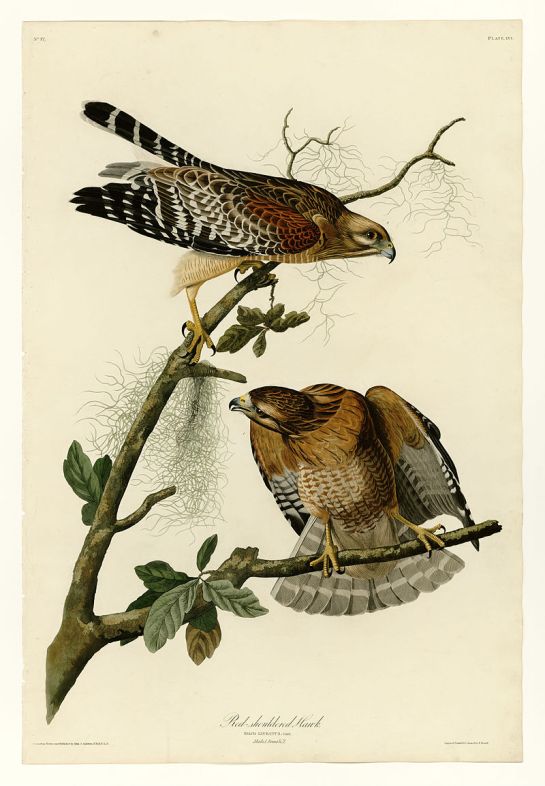
RED-SHOULDERED HAWK (J. J. Audubon)

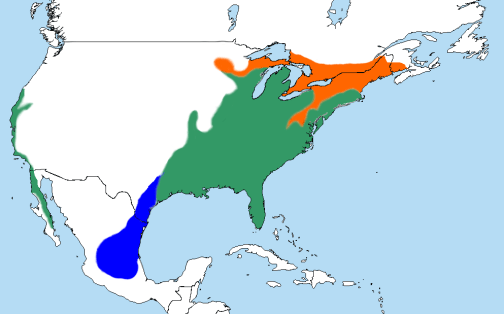
These buteos make themselves at home within the eastern half of Texas (especially during winter), and their range also includes almost all of the eastern half of America’s Lower 48 (as shown by the Wikipedia range map, below).

RedShouldered-Hawk.RangeMap-Wikipedia

Regarding the red-shouldered Hawk, Roger Tory Peterson once said:

Recognized as a Buteo by ample tail and broad wings; as this species, by heavy dark bands across both sides of tail. Adults have rufous shoulder (not always visible) and pale robin-red [i.e., orange] underparts.  Anotehr mark, not often shared by other Buteos, is a translucent patch or “window” toward wing-tip at base of primaries.  Immatures have streaked [plumage] below, as are most other hawks.

[Quoting Roger Tory Peterson, A FIELD GUIDE TO THE BIRDS FO TEXAS AND ADJACENT STATES (Houghton Mifflin, 1988), page 62 —  see also color plate illustrations facing page 60.]

RedShouldered-Hawk.LucasTexas

RED-SHOULDERED  HAWK  in  Lucas, Texas   (photo credit:  bigdaddydog1 youtube)

https://www.youtube.com/watch?v=YcUjcYyNQKA

Avian And Attributes – Flame

Crimson-backed Flameback-©SamindaDeSilva-Flickr

“His eyes were as a flame of fire, and on his head were many crowns; and he had a name written, that no man knew, but he himself.” (Revelation 19:12 KJV)


Avian and Attributes – Flame

“Therefore because the king’s commandment was urgent, and the furnace exceeding hot, the flame of the fire slew those men that took up Shadrach, Meshach, and Abednego. And these three men, Shadrach, Meshach, and Abednego, fell down bound into the midst of the burning fiery furnace. Then Nebuchadnezzar the king was astonied, and rose up in haste, and spake, and said unto his counsellors, Did not we cast three men bound into the midst of the fire? They answered and said unto the king, True, O king. He answered and said, Lo, I see four men loose, walking in the midst of the fire, and they have no hurt; and the form of the fourth is like the Son of God.” (Daniel 3:22-25 KJV)

The last article, Avian and Attributes – Fire, the verses of Christ the Lord has eyes like a “flame of fire.” The “Fire” birds were shown. Today, you will be introduced to the “Flame” birds. Also, the Lord was able to control flames. For instance, when he was seen with the three Hebrew children. Today, you will be introduced to the “Flame” Birds.

Flame
(1): (n.) Burning zeal or passion; elevated and noble enthusiasm; glowing imagination; passionate excitement or anger.
(2): (n.) A stream of burning vapor or gas, emitting light and heat; darting or streaming fire; a blaze; a fire.
(3): (n.) Ardor of affection; the passion of love.
(4): (n.) A person beloved; a sweetheart.
(5): (n.) To burn with a flame or blaze; to burn as gas emitted from bodies in combustion; to blaze.
(6): (n.) To burst forth like flame; to break out in violence of passion; to be kindled with zeal or ardor.
(7): (v. t.) To kindle; to inflame; to excite.


“Flame” Birds.

Flame-colored Tanager (Piranga bidentata) by Raymond Barlow

Flame-colored Tanager (Piranga bidentata) by Raymond Barlow

Flame Robin, Flame-breasted Flowerpecker, Flame-breasted Fruit Dove, Flame-breasted Sunbird, Flame-colored Tanager

Flamecrest

Flamecrest, Flame-crested Manakin, Flame-crested Tanager, Flame-crowned Flowerpecker,
Flame-eared Honeyeater

Flame-rumped Tanager (Ramphocelus flammigerus) ©WikiC

Flame-rumped Tanager (Ramphocelus flammigerus) ©WikiC

Flame-faced Tanager, Flame-fronted Barbet, Flame-rumped Tanager, Flame-templed Babbler, Flame-throated Bulbul, Flame-throated Sunangel

Flame-throated Warbler (Oreothlypis gutturalis) ©WikiC

Flame-throated Warbler, Flame-winged Parakeet, Flaming Sunbird


More Avian and Attributes

Birds whose first or last name start with “F”

Good News

*
[Definitions from Webster’s Dictionary of American English (1828), unless noted. Bird info from Wikipedia plus.]
Avian And Attributes – Fire

Fire-tufted Barbet by Lee at Wings of Asia

“And unto the angel of the church in Thyatira write; These things saith the Son of God, who hath his eyes like unto a flame of fire, and his feet are like fine brass;” (Revelation 2:18 KJV)


Avian and Attributes – Fire

FIRE, n. [The radical sense of fire is usually, to rush, to rage, to be violently agitated; and if this is the sense of fire, in coincides with L. furo. It may be from shining or consuming.]
1. In the popular acceptation of the word, fire is the effect of combustion. The combustible body ignited or heated to redness we call fire; and when ascending in a stream or body, we call it flame. A piece of charcoal in combustion, is of a red color and very hot. In this state it is said to be on fire, or to contain fire. When combustion ceases, it loses its redness and extreme heat, and we say, the fire is extinct.
2. The burning of fuel on a hearth, or in any other place.
3. The burning of a house or town; a conflagration. Newburyport and Savannah have suffered immense losses by fire. The great fire in Boston in 1711 consumed a large part of the town.
4. Light; luster; splendor.
Stars, hide your fires!
6. The instrument of punishment; or the punishment of the impenitent in another state.
Who among us shall dwell with the devouring fire? Isa 33.

Fire-breasted Flowerpecker (Dicaeum ignipectus) by Nikhil Devasar

Fire-breasted Flowerpecker (Dicaeum ignipectus) by Nikhil Devasar

8. Ardor of temper; violence of passion.
He had fire in his temper.
9. Liveliness of imagination; vigor of fancy; intellectual activity; animation; force of sentiment or expression.
And warm the critic with a poet’s fire.
11. Ardor; heat; as the fire of zeal or of love.
12. Combustion; tumult; rage; contention.
13. Trouble; affliction.
When thou walkest through the fire, thou shalt not be burnt. Isa 43.
To set on fire, to kindle; to inflame; to excite violent action.

Fire-tailed Myzornis (Myzornis pyrrhoura) ©WikiC

FIRE, v.t.
1. To set on fire; to kindle; as, to fire a house or chimney; to fire a pile.
2. To inflame; to irritate the passions; as, to fire with anger or revenge.
3. To animate; to give life or spirit; as, to fire the genius.
5. To cause to explode; to discharge; as, to fire a musket or cannon. [edited]


“As soon then as they were come to land, they saw a fire of coals there, and fish laid thereon, and bread. Jesus saith unto them, Bring of the fish which ye have now caught.” (John 21:9-10 KJV) [Jesus provided a fire to cook their meal.]

Too many “Fire” birds to give facts on, so here is a list and a gallery of their photos. Fire-bellied Woodpecker, Fire-breasted Flowerpecker, Fire-capped Tit, Fire-crested Alethe, Fire-eyed Diucon, Fire-fronted Bishop, Fire-maned Bowerbird, Fire-tailed Myzornis, Fire-tailed Sunbird, Firethroat, Fire-tufted Barbet, Firewood-gatherer. This does not include the birds who’s last name starts with “Fire.” Nor are any of the “Fiery” birds listed. [Another time]


More Avian and Attributes

Birds whose first name start with “F”

Good News

*
[Definitions from Webster’s Dictionary of American English (1828), unless noted. Bird info from Wikipedia plus.]

Avian And Attributes – Fearful

Fearful Owl (Nesasio solomonensis) Drawing Plant of birds_com

“Who is like unto thee, O LORD, among the gods? who is like thee, glorious in holiness, fearful in praises, doing wonders?” (Exodus 15:11 KJV)


Avian and Attributes – Fearful

FE’ARFUL, a.
1. Affected by fear; feeling pain in expectation of evil; apprehensive with solicitude; afraid. I am fearful of the consequences of rash conduct. Hence,
2. Timid; timorous; wanting courage.
“What man is there that is fearful and fainthearted?” Deu 20.
3. Terrible; impressing fear; frightful; dreadful.
“It is a fearful thing to fall into the hands of the living God.” Heb 10.
4. Awful; to be reverenced.
“That thou mayest fear this glorious and fearful name, Jehovah, thy God.” Deu 28.

Fearful can be used both ways, but for this article, I chose to think of the Lord attribute of Fearful as awesome in doing wonders. Matthew 8:26 He told them not to be fearful because He was in control.

“And he saith unto them, Why are ye fearful, O ye of little faith? Then he arose, and rebuked the winds and the sea; and there was a great calm. But the men marvelled, saying, What manner of man is this, that even the winds and the sea obey him!” (Matthew 8:26-27 KJV)


Fearful Owl

Directly linked to Flickr.

Fearful Owl

The Fearful Owl (Nesasio solomonensis) is a medium-sized owl endemic to the Solomon Islands archipelago. It is generally seen no more than 800 m above sea level, where it is found in tall lowland or hill forests.

The fearful owl is a large forest owl growing to a length of about 38 cm (15 in). It has a rufous facial disk and distinct white eyebrows. The inner edge of the facial disk is also white. It is usually mottled brown with deep ochre underparts and blackish streaks. This species may be confused with the Solomon hawk owl, although the latter is slightly smaller and more slender. It is also similar in appearance to the laughing owl, which is now extinct.

Its call is similar to a clear human scream, increasing in volume and tone and emitted in a series, each pulse being repeated at intervals of ten seconds.

*** Of course, the bird I chose, the Fearful Owl, did not have but one or two photos to use. Check online for more photos that are copyrighted. Also, there was no blog the last few days, because I have been/am fighting another bad cold. Praying it doesn’t go into bronchitis. ***


More Avian and Attributes
Birds whose first name starts with “F”
Good News
*
[Definitions from Webster’s Dictionary of American English (1828), unless noted. Bird info from Wikipedia plus.]
Fowl Are Fair on Day 5

Fowl Are Fair on Day Five, with Special Attention to Galliforms

Dr. James J. S. Johnson

RedJunglefowl.Gallus-gallus-FredericPelsey

Red Junglefowl (wild equivalent of domestic chicken) Frederic Pelsey photo

And God said, Let the waters bring forth abundantly the moving creature that hath life, and fowl [‘ôph] that may fly [ye‘ôphēph] above the earth in the open firmament of heaven.  And God created great whales [tannînim ha-gadolîm], and every living creature that moveth, which the waters brought forth abundantly, after their kind, and every winged fowl [‘ôph kanaph] after his kind: and God saw that it was good.  And God blessed them, saying, Be fruitful, and multiply, and fill the waters in the seas, and let fowl [‘ôph] multiply in the earth. (Genesis 1:20-22)

In the Holy Bible, King James Version, the term “fowl” is repeatedly used to denote birds in general – animals who fly with wings and feathers. Nowadays, however, we usually limit the term “fowl” to refer to “waterfowl” (like ducks) or landfowl, like chickens.  The latter category – landfowl – are, generally speaking, birds that stay close to the ground because their body plan is fairly heavy (which is not good for intense or prolonged flying), like chickens or turkeys.  The fancy term for these landfowl is GALLIFORM, meaning shaped like a chicken.

Accordingly, God is glorified by His creation of poultry (domesticated chicken-like birds) and similar landfowl (a/k/a “gamefowl”), both being taxonomically categorized as Galliforms (i.e., birds whose physical forms that resemble big or small chickens).

Galliforms, as large ground-dwelling birds, are well-known for eating seeds and insects (both of which are often found on or near the ground). As noted above, their body weight encumbers them from flying very much or very far, although they can and do fly short distances when needed.  When chased, by predators, they often run and hide (as is indicated in 1st Samuel 26:18 & 26:20).  These often-domesticated birds include chicken, quails, pheasants, tragopans, argus, grouse, guineafowl, incubator birds, craciforms (such as guan, chachalaca and curassow), ptarmigan, turkey, and peafowl.  1st-Samuel26.20-partridge-slide

The typical icon of the galliform group (according to taxonomist Carl Linnaeus, in A.D. 1758) is Gallus gallus, a label assigned to both Asia’s wild Junglefowl and the domestic Chicken.  Many of these birds, especially chickens and turkeys, are raised by humans, for their eggs or to be eaten (as meat).  CodfishLays1000000Eggs-poem

As we know from Scripture (Luke 11:12-13), poultry eggs are a truly good source of nutrition for humans, and the whites (albumen) of eggs taste better when seasoned with salt (Job 6:6).

Galliform birds mostly live mostly sedentary lives (although some seasonally migrate) in moderate climate zones of Europe, Asia, North and South America, Africa, Australia, and many islands. (Don’t expect to find them in the super-dry Sahara Desert or in super-cold Antarctica.)

Turkeys-in-wild.SchuylkillCenter-EnvlEducn

AMERICAN TURKEYS Schuylkill Center for Envir’l Educ’n photo

Some of these poultry birds are usually found only live in certain parts of the world (such as wild turkeys, which are biogeographically native only to North and South America), yet they can be introduced (as immigrants) to other places that have similar climates.  Because landfowl usually nest on or near the ground they are often victims to predators, including humans; accordingly it is important to avoid over-hunting them (and over-harvesting their eggs); this conservation-relevant reality (and concern) is acknowledged by Moses in Deuteronomy 22:6-7.

Amazingly, the Lord Jesus once compared His own willingness and ability, to care and protect humans, to that of a galliform – specifically, a mother hen — who uses her own body to protectively care for her own hatchling baby chicks (Matthew 23:37; Luke 13:34).    How good it is to belong to Him forever!

Luke13.34-KnowingJesus.com-pic

LUKE 13:34 (Knowing-Jesus.com image)

Avian And Attributes – Emerald

Coppery-headed Emerald by Ray

Coppery-headed Emerald by Ray

“And the foundations of the wall of the city were garnished with all manner of precious stones. The first foundation was jasper; the second, sapphire; the third, a chalcedony; the fourth, an emerald;” (Revelation 21:19 KJV)

“And he that sat was to look upon like a jasper and a sardine stone: and there was a rainbow round about the throne, in sight like unto an emerald.” (Revelation 4:3 KJV)


Avian and Attributes – Definition Name

EM’ERALD, n. [L. smaragdus.] A mineral and a precious stone, whose colors are a pure, lively green, varying to a pale, yellowish, bluish, or grass green. It is always crystallized, and almost always appears in regular, hexahedral prisms, more or less perfect, and sometimes slightly modified by truncations on the edges, or on the solid angles. It is a little harder than quartz, becomes electric by friction, is often transparent, sometimes only translucent, and before the blowpipe is fusible into a whitish enamel or glass. The finest emeralds have been found in Peru.
The subspecies of emerald are the precious emerald and the beryl. [Webster]

Emerald
Exodus 39:11 (c) This green stone represents praise, worship and adoration which begins now and lasts throughout eternity. Judah which means “praise” had his name graven on the emerald stone on the breastplate of the high priest.

Rev. 4:3 (c) This complete rainbow was given this color to typify the eternal character of GOD’s grace and the everlasting nature of GOD’s covenant of mercy. It was “green” to signify eternal praise. [Wilson’s Dictionary of Bible Types]


Emerald Tanager (Tangara florida) ©WikiC

Emerald Birds

There are six birds that have a first name of Emerald: Emerald Starling, Emerald Tanager, Emerald Toucanet, Emerald-bellied Puffleg, Emerald-chinned Hummingbird, Emerald-spotted Wood Dove. There are also Hummingbird family members that are Emeralds.

“Happy is he that hath the God of Jacob for his help, whose hope is in the LORD his God: Which made heaven, and earth, the sea, and all that therein is: which keepeth truth for ever:” (Psalms 146:5-6 KJV)


*
[Definitions from Webster’s Dictionary of American English (1828), unless noted. Bird info from Wikipedia plus.]