“And it was so, that, after they had carried it about, the hand of the Lord was against the city with a very great destruction: and He smote the men of the city, both small and great, and they had hemorrhoids in their secret parts.” (1st Samuel 5:9)
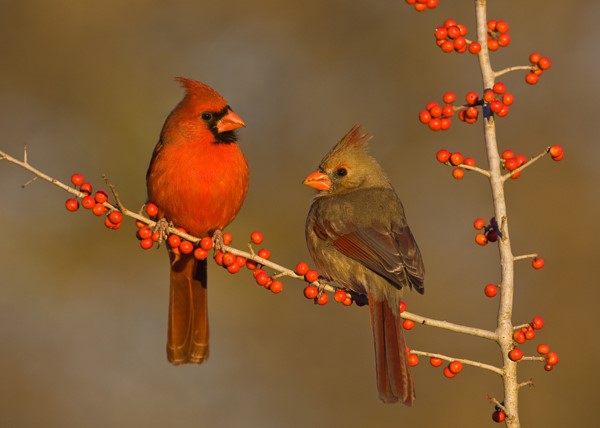
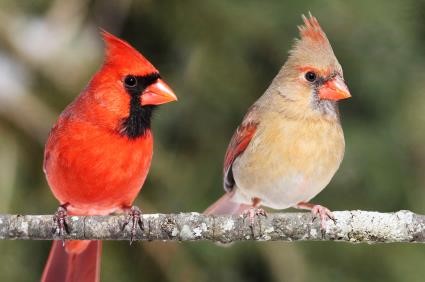
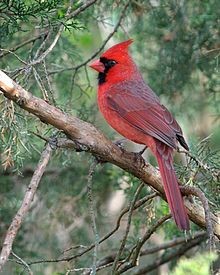
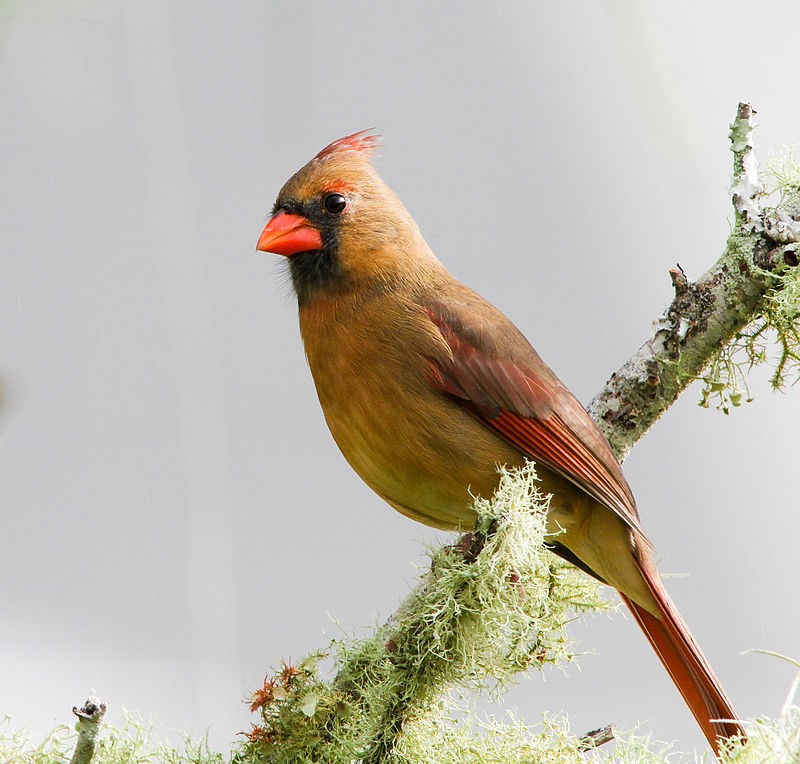
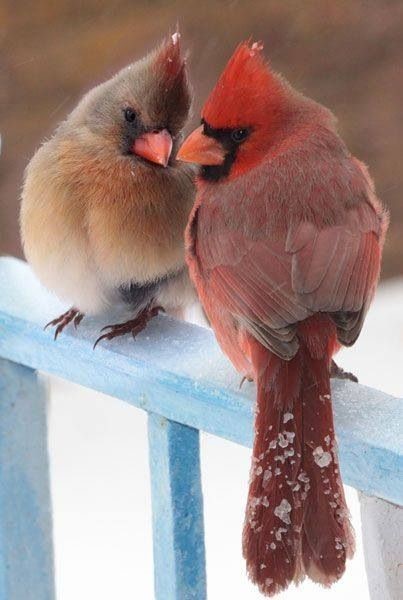
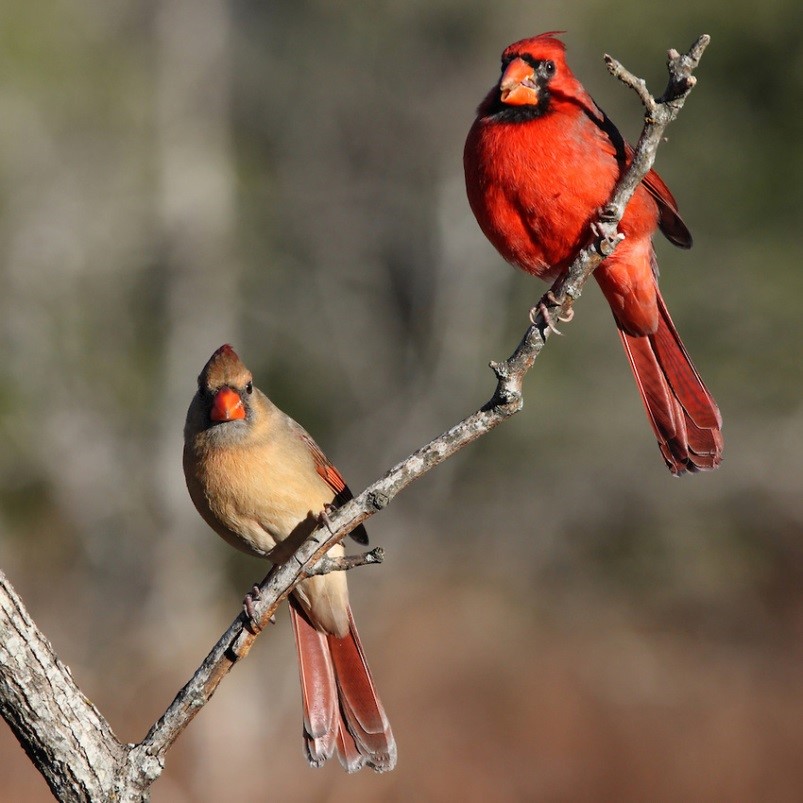
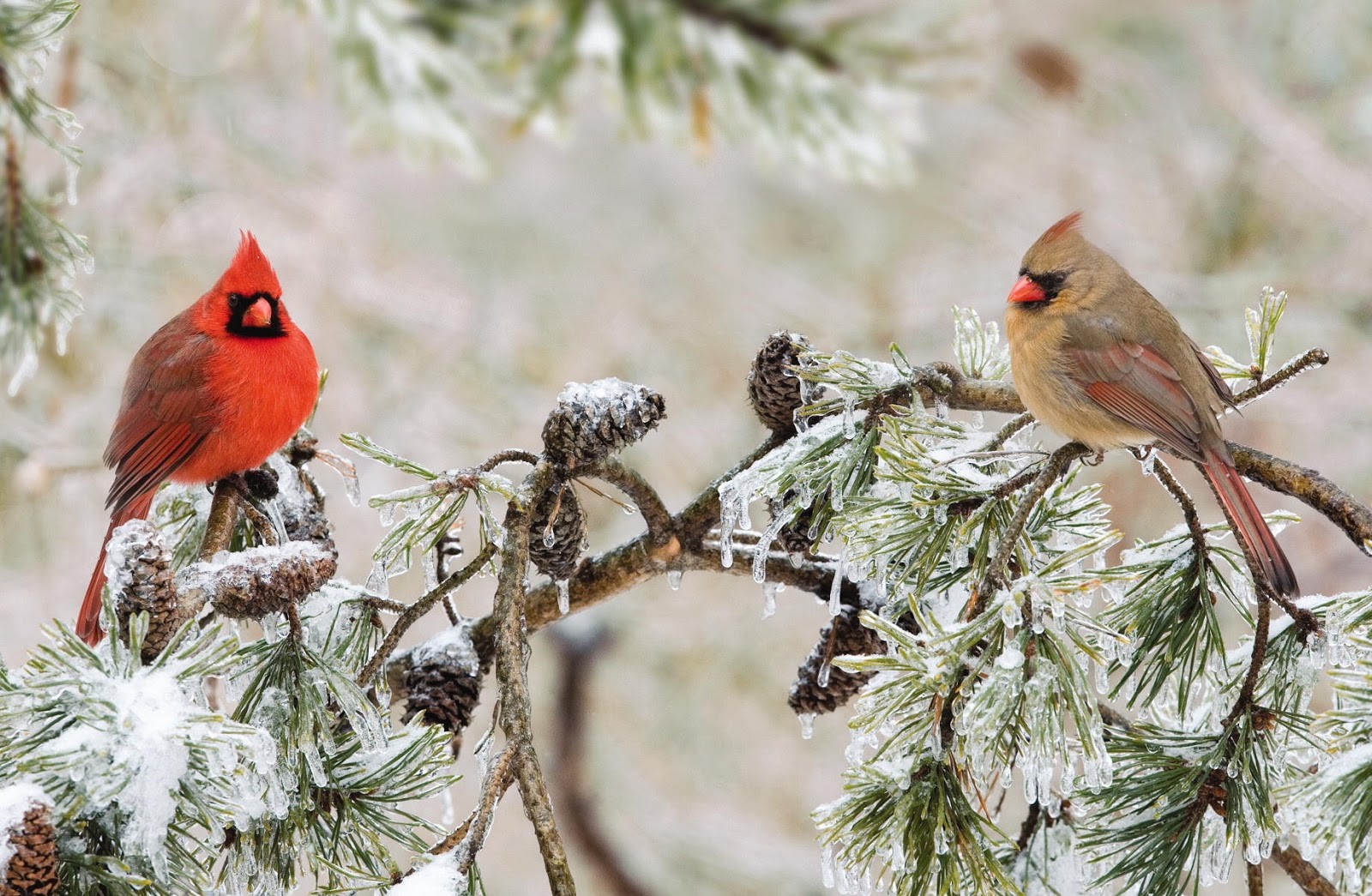
Northern Cardinal (Cardinalis cardinalis) male & female
“C” is for as Cardinal, Chicken, Coot, Cormorant, Chicken, Coot, Chickadee, Caracara, Crane, Cuckoo, Curlew, and Corvid (including Crow) — plus many other birds with names that begin with the letter C !
This blogpost-article calmly continues an alphabet-based series on birds, starting with a quick introduction to 4 types of birds that start with the letter “C” – followed by a few observations of alphabetic patterns in Scripture (exhibited by Psalm 119:17-24) – then followed by specific information on Cardinals, Cormorant, and Cranes.. In particular, this article will feature the Northern Cardinal, also known as the Redbird (Cardinalis cardinalis), and the Double-crested Cormorant (Phalacrocorax auritus).
The sentences in each section start with the same Hebrew letter, so Verses 1-8 start with ALEPH, Verses 9-16 start with BETH, Verse 17-24 start with GIMEL, and so forth. In this serial study’s lesson, the third octet of verses in Psalm 119 (i.e., Psalm 119:17-24), each sentence starts with GIMEL, the Hebrew consonant equivalent to the English “G”.
So, because GIMEL is the third letter in the Hebrew alphabet, each verse (in Psalm 119:7-24) literally starts with that letter as the first letter in the first word (although the first Hebrew word may be differently placed in the English translation’s sentence):
17Transact/bear up [gemōl] with thy servant, that I may live, and keep Thy word.
18 Roll back Thou [gal] mine eyes, that I may behold wondrous things out of Thy law.
19 A stranger [gêr], I am, in the earth; hide not Thy commandments from me.
20 Has been broken [gârsâh], my soul, for the longing that it hath unto Thy judgments at all times.
21 Thou hast rebuked [gâ‘artâ] the proud, who are cursed, who do err from Thy commandments.
22 Roll back [gal], from me, reproach and contempt, for I have kept Thy testimonies.
23 Also [gam], princes did sit and speak against me, but Thy servant did meditate in Thy statutes.
24 Also [gam], Thy testimonies are my delight and my counselors.
As noted before, Psalm 119 is all about God’s revelation of truth – especially truth about Himself – to mankind (in a comprehensive “A to Z” panorama). The most important revelation of truth that God has given to us, and the most authoritative form of truth we have, is the Holy Bible – the Scriptures. Accordingly, Psalm 119 is dominated by references to the Scriptures, using terms like “the law of the LORD” (and “Thy Word”, “Thy commandments”, “Thy testimonies”, “Thy statutes”, “Thy judgments”, etc.). In Psalm 119:9-16 these terms are used, to denote God’s revealed truth to mankind: “Thy Word” (3x), “Thy commandments”, “Thy statutes”, ”Thy precepts”, Thy “judgments”, and “Thy testimonies”.
The Hebrew letter GIMEL means “camel” (primarily as a vehicle for transport, such as for travel, i.e., bearing a rider and/or providing a transfer, from one place to another – so a secondary connotation is that which results from a transfer, such as the outcome of a transaction or some kind of personal dealings. Accordingly, Psalm 119:17-24 illustrates how God’s Word is the facilitating vehicle that carries God’s servant unto God’s intended outcomes in life (and to God Himself), somewhat like the way that John the Baptist (who wore camel-hair garments) pointed people to the Lord Jesus Christ, informationally conveying them to Jesus as the true Lamb of God Who came to remove our sin (John 1:29).
In Verse 17 (of Psalm 119), God’s Word is recognized as facilitating the psalmist’s goals of living and keeping God’s Word (Psalm 119:105 & 119:129).
In Verse 18, the psalmist recognizes that God Himself must enable our “eyes” to see, with comprehension, the truths that are contained within God’s Word – because different parts of God’s Word are required in order to provide enlightenment about the meaning and value of other parts of God’s Word (1st Corinthians 2:13; John 17:17).
In Verse 19, the psalmist understands that, in this earthly life, he sojourns as a pilgrim-like stranger “passing through”, so He needs to use God’s Word as the authority for what to do during this journey (as the psalmist treks through a strange land where he does not permanently belong), because this temporal world and its institutions are not the ultimate affiliation or fealty that defines the psalmist’s allegiance or belonging (Philippians 3:20).
In Verse 20, the psalmist’s soul is broken in its effort to be attached to God’s great doings, yet only God’s Word can equip us for appreciating and comprehending God’s providential program and judgments in the world.
In Verse 21, the psalmist reflects on how God rebukes the proud, who are cursed by and for their refusal to respect God’s Word – in effect, God has provided His Word in such a way that it delivers judgments for rejecting its truth (Romans 1:18-28).
In Verse 22, the psalmist appreciates his need for God to secure his ability to keep and care for God’s testimonies, and it is the Scriptures that enable us to break out of the world’s opposition, so that a worthwhile life of honoring God (and His Word) can be accomplished (Psalm 1:1-3; Psalm 101:3).
Verse 23, extends the thought of the previous verse, using political powerfully foes as examples of how the psalmist needs protection from the world’s opposition, and how immersing one’s thoughts and attitudes with Scripture’s truth is the proper “logistic” for avoiding failure amidst such opposition (Joshua 1:7-9).
Verse 24, likewise, extends the thought of the previous verse, noting that meditating upon God’s Word is the best counsel for living. In other words, living life according to God’s Word is like taking a reliable camel ride that transmits us unto a desirable destination – the journey is a good ride and the outcome is a happy ending. In sum, Scripture-facilitated living is the best way to go through life!
Thus we see the theme, woven throughout the octet of GIMEL verses (Psalm 119:17-24), that we are designed to rely upon the truth and values of the holy Scriptures, as we journey through life, as if God’s Word was a transportation vehicle (or camel) that bears us up and delivers us to a good and proper outcome in life. Ultimately, of course, God’s Word transports, in our thinking unto God Himself, Who is our ultimate destination, our everlasting Home – see “Why We Want to Go Home”, as we learn from Psalm 90:1 and 2nd Corinthians 5:1-6.
Now back to the “C” birds, beginning with cardinals. These birds are visually distinctive, the male of which is almost entirely crimson-red, accented by a black “face-mask” contrasting with a thick reddish bill.
“The [male] cardinal (7¾ in. [in length]) is the only eastern red bird with a crest. The heavy red bill, with black at its base, is a good field [identification] mark. The light brown [sometimes tinted a golden mustard shade of tan] female has the [red-tinged] crest and red bill, but little red on the body [with most of her red feathers highlighting her wings and tail plumage]. Young [cardinals] have dusky bills. Cardinals are common in shrubbery, hedgerows, and wood margins [i.e., forest edges]. In recent years [as of AD1987] the cardinal has gradually spread [its residential range] northward. The [somewhat similar-looking] Pyrrhuloxia (7½ in.) of the Southwest [a/k/a “desert cardinal”] is mostly gray with red face, crest, breast, and tail, and the general cardinal shape [and is also distinguishable by its golden-yellow bill].”
[Quoting Herbert S. Zim & Ira N. Gabrielson, Birds, A Guide to Familiar American Birds (New York, NY: Golden Press, 1987 rev. ed.), page 104.]
In particular, this article looks at the Northern Cardinal, which was previously known as the Virginia Cardinal (Cardinalis virginianus), a fitting name for the state bird of Virginia. (In fact, the Redbird is also the official state bird of North Carolina, Illinois, Indiana, Kentucky, Ohio, and West Virginia – making the redbird the official bird of 7 states, more than any other American bird.)
[government-issues postage stamp images are public domain]
The cardinal is also appreciated outside of America, as is demonstrated by postage stamps of other countries, such as Belize (f/k/a British Honduras), Bermuda, and Mexico.
In a previous article, about a year ago (March 12th of AD2015), an artificial “cardinal” was featured, in lesson about what it means to make “selections” — see “How Can a Mechanical ‘Cardinal’ Make ‘Selections’?. As that article demonstrated, the notion of so-called “natural selection” is an example of bait-and-switch terminology, serving as a cloak for science fiction (1st Timothy 6:20).
Now, however, a few real facts — about real cardinals — will be reviewed.
The Northern Cardinal(Cardinalis cardinalis) is widely spread, range-wise, across most of North America, covering the eastern half of America, into Texas, plus most of Mexico. As a Terry Sohl range map (not shown) indicates, the Northern Cardinal is a permanent resident in the wide range cardinals inhabits, so green fields during spring and summer, as well as snow-covered fields (during winter), seasonally serve as a contrasting backdrop for the bright red hue of male cardinals. Earth-toned females too are often seen, year-round, where they live. [NOTE: the above-referenced Terry Sohl range map is not shown here, because Mr. Sohl, as a self-described “hardcore atheist”, does not want his maps associated with a Christian blogsite.]
“The Cardinal is a favorite bird of many people and it’s easy to see why. The brilliant scarlet plumage of the male and the subtle [earth-tone] shades of the female, combined with their clear melodic song, make them enjoyable to watch in any season.”
[Quoting Donald Stokes & Lillian Stokes, A Guide to Bird Behavior, Volume II (Boston: Little, Brown & Company, 1983), page 247.]
So what do Northern Cardinals like to eat? Mostly seeds (including grains, such as corn, oats, and sunflower seeds) and fruits (especially berries). The seeds of what humans call “weeds” are a delightful contribution to a cardinal’s diet. Also, cardinals will eat many kinds of insects, such as beetles, grasshoppers, and cicada “locusts”. Even snails are sometimes eaten by redbirds.
Socially speaking, cardinals are monogamous – they mate for life, living together year-round.
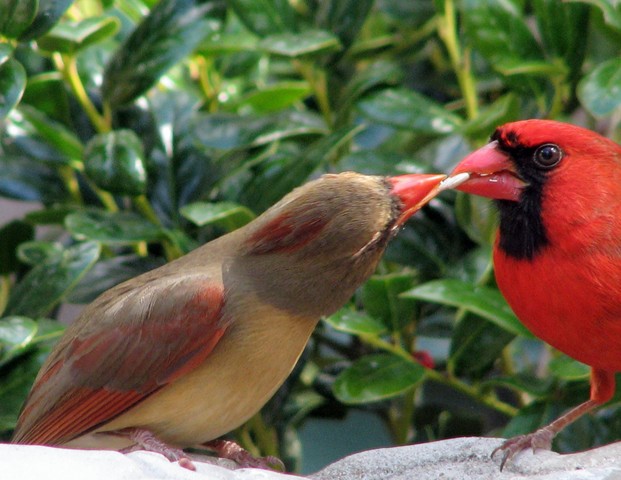
“At your [bird] feeder you may see mate-feeding, a highlight of the relationship between the pair. In this the male picks up a bit of food, hops over to the female, and the two momentarily touch beaks as she takes the food. If you have a pair mate-feeding at your feeder, they are likely to nest in the area. The nest is not hard to find …and once you know where it is, you will be able to watch mate-feeding continue at the nest through the incubation phase.”
[Quoting Donald Stokes & Lillian Stokes, A Guide to Bird Behavior, Volume II (Boston: Little, Brown & Company, 1983), page 247.]
Sometimes they sing together, as they prepare for life in a new nest! The male finds and delivers ingredients for the new nest; the female does most of the nest assembly work. Most incubation of their eggs is done by the mother cardinal, yet sometimes the father will incubate the eggs while Mama takes an off-the-nest break.
“Male and female Cardinals sing equally well, a fact not generally known by those used to the widespread assumption that only male birds sing. Song is an important coordinating behavior in the life of the Cardinal. Cardinal song consists of many different phrases. In countersinging, one bird will sing one phrase several times and then the other will match it. Then the leader will sing a new phrase and the other will again match it. This type of countersinging that involves copying phrases functions to synchronize and unify members of a pair; and when given between males, helps settle territorial disputes.”
[Quoting Donald Stokes & Lillian Stokes, A Guide to Bird Behavior, Volume II (Boston: Little, Brown & Company, 1983), page 247.]
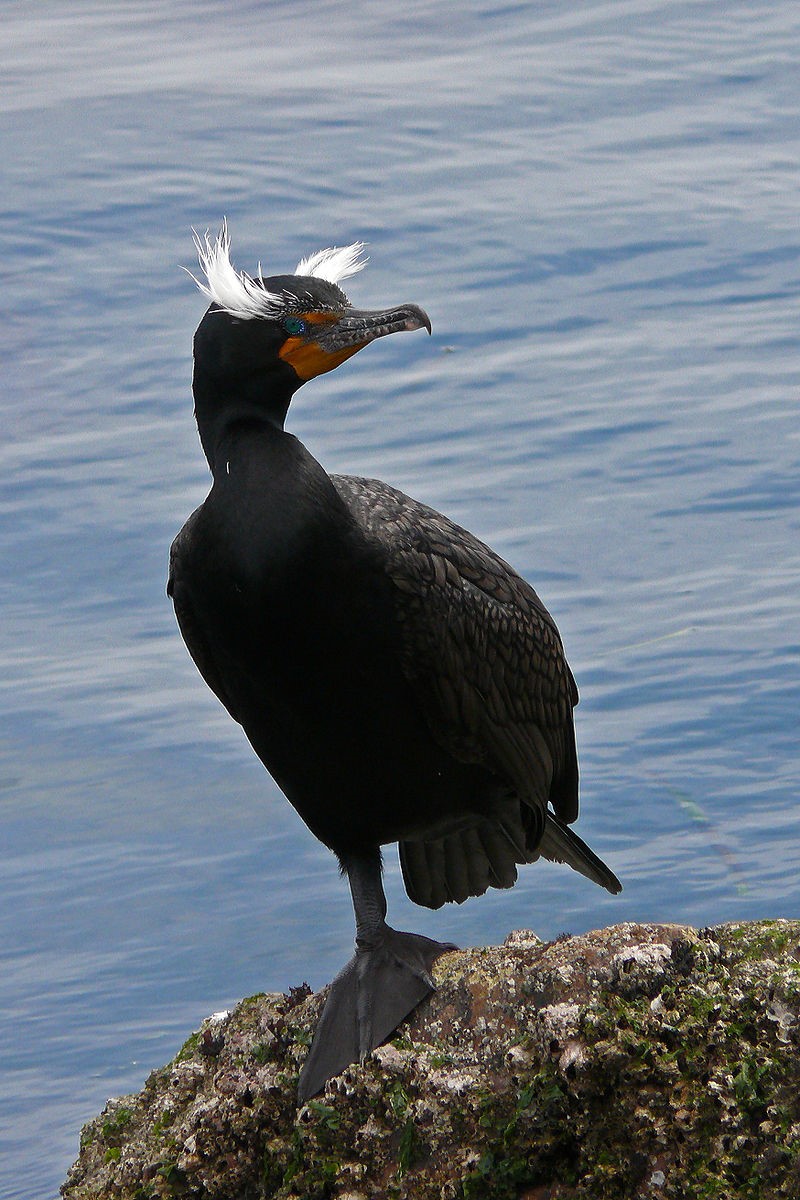
Now for another “C bird”: Cormorants, a group of coast-water birds, typically black (or greyish-black), and known for catching and eating fish – and sometimes even for being trained by innovative humans, to catch fish for human masters!
As Lee Dusing has already observed, cormorants and shags are really part of the same avian kind, some of which have crests and some of which don’t — so, does that mean the latter category of cormorants are “crestfallen”? :)
Cormorants are social creatures – they congregate together. Regarding the Double-crested Cormorant in particular, see the group photo (from Danspix), shown below — perhaps it was a family reunion?
Cormorants (and “shags”) are variously distributed, around the world, yet their ranges usually concentrate at or near coastal seawaters, or sometimes near freshwater habitats such as ponds, lakes, and rivers). They usually fly close to the water’s surface, using steady wingbeats. After plunging (diving) into seawater, while fishing, they protect their feathers by spreading out their wings, while resting, to accelerate air-drying. In this article, however, the piscivorous “family” of cormorants is represented by the Double-crested Cormorant (Phalacrocorax auritus). Besdies fish, cormorants eat amphibians and crustaceans, underwater. A mated pair work together to build their nest, incubate eggs, and raise their hatching young. [See Oliver L. Austin, Jr. & Arthur Singer, Families of Birds (Racine, Western Publishing Company, 1971), page 31.]
The Double-crested Cormorant(Phalacrocorax auritus) is widely spread, range-wise, across North America. As a Terry Sohl range map (not shown) indicates, the Double-crested Cormorant is a migratory bird, so its range differs depending upon the season of the year. [NOTE: the above-referenced Terry Sohl range map is not shown here, because Mr. Sohl, as a self-described “hardcore atheist”, does not want his range maps associated with a Christian blogsite.]
Of course, other birds (such as the American Coot!) have names that start with “C” – but this article is already long enough. God willing, the next contribution to this alphabetic series will be some more “C“ birds – perhaps a couple of these: Chicken, Coot, Chickadee, Caracara, Crane, Cuckoo, Curlew, or Corvids (including Crow)! So stay tuned! ><> JJSJ
“But the fruit of the Spirit is love, joy, peace, longsuffering, gentleness, goodness, faith, Meekness, temperance: against such there is no law.” (Galatians 5:22-23 KJV)
All flesh is not the same flesh: but there is one kind of flesh of men, another flesh of beasts, another of fishes, and another of birds. (1 Corinthians 15:39 KJV)
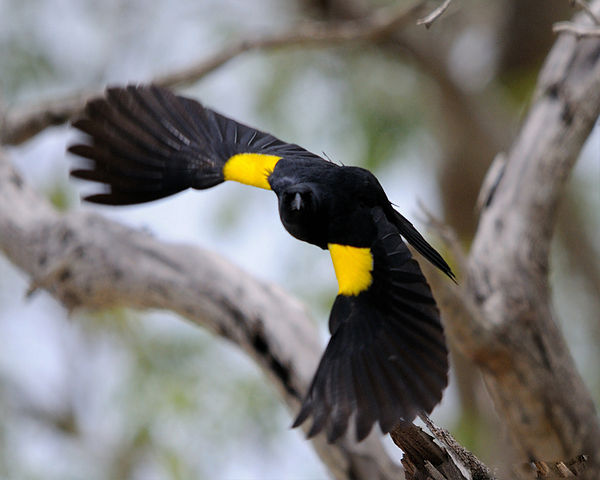
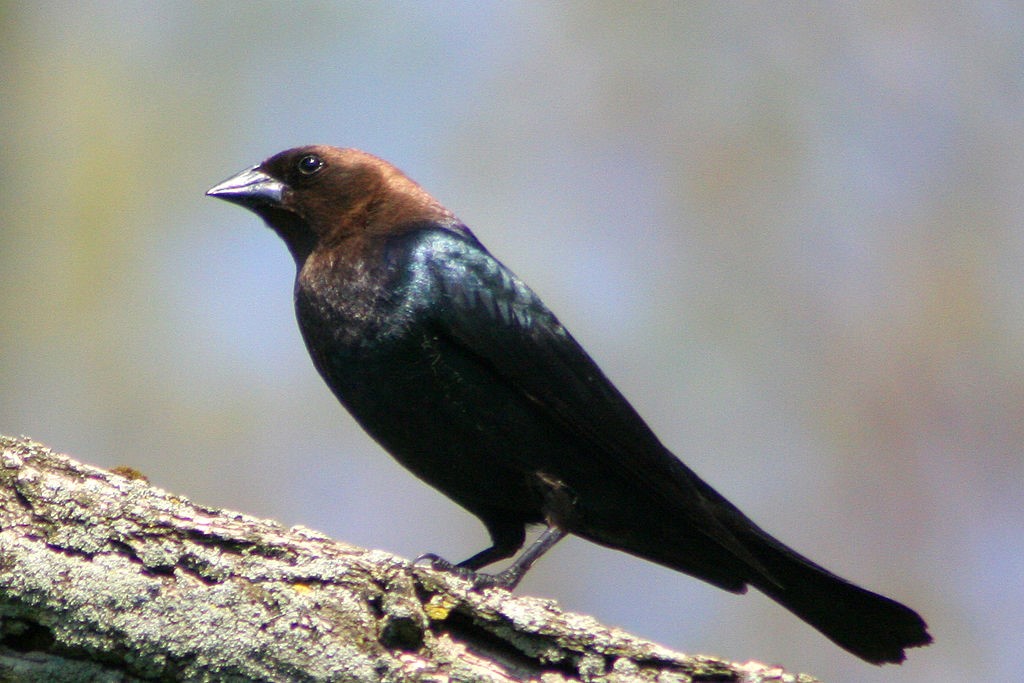
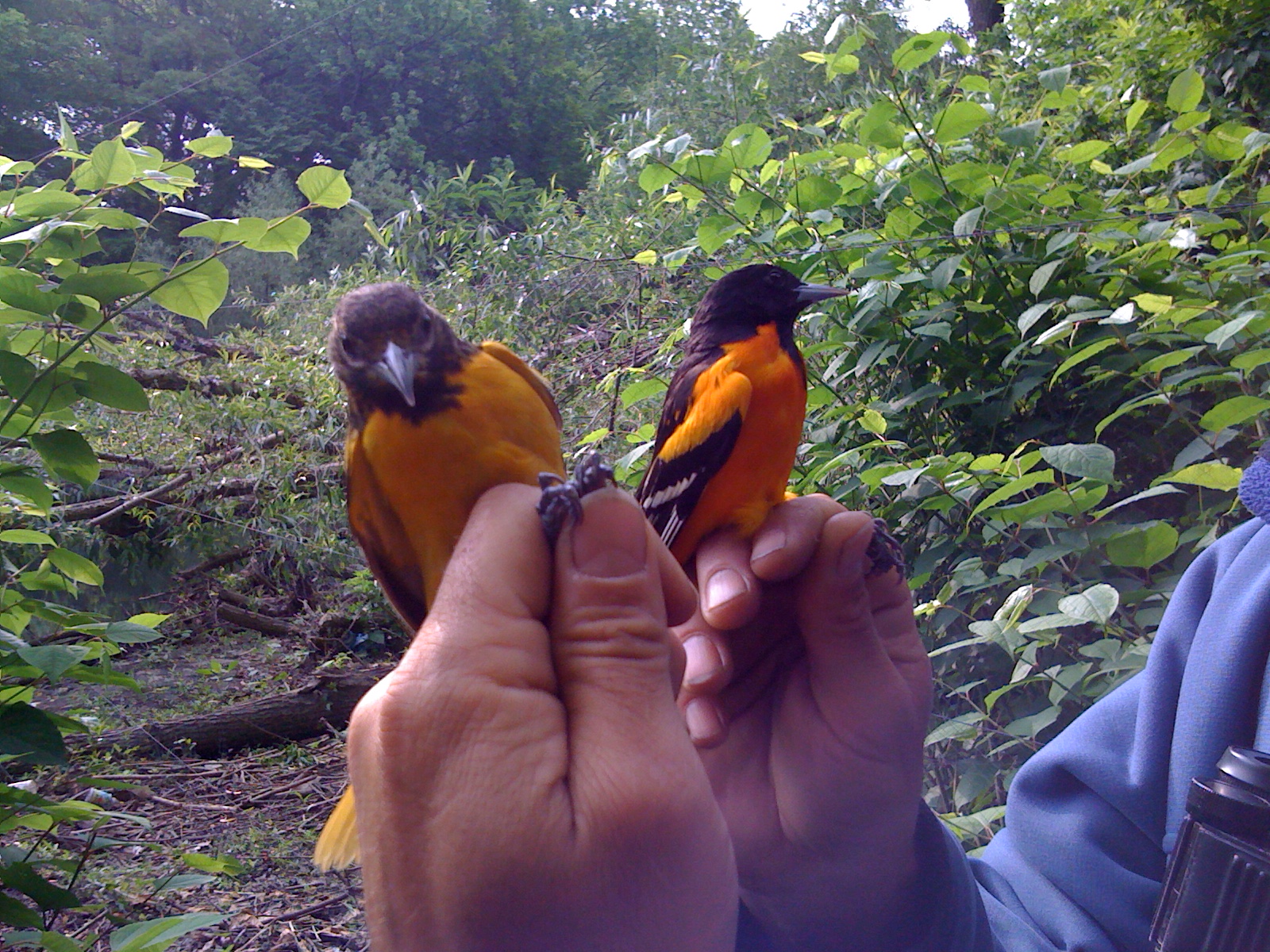
Today we finish up the Icteridae Family of New World blackbirds, New World orioles, the Bobolink, Meadowlarks, Grackles, Cowbirds, Oropendolas and Caciques, plus. Trust you enjoyed seeing the first two parts of the family. (Part I, Part II)
“All flesh is not the same flesh: but there is one kind of flesh of men, another flesh of beasts, another of fishes, and another of birds.” (1 Corinthians 15:39 KJV)
The last 64 members of the family come from numerous Genus; the Nesopsar, Agelaius, Molothrus, Dives,Ptiloxena, Euphagus, Quiscalus, Hypopyrrhus, Lampropsar, Gymnomystax, Macroagelaius, Macroagelaius, Curaeus, Amblyramphus, Anumara, Gnorimopsar, Oreopsar, Agelaioides, Chrysomus, Xanthopsar and the Pseudoleistes. Some have only one species per genus. For many of you, the genus names mean little, but, if we mention Cowbirds, Grackles, Blackbirds, Baywings and Marshbirds, then you would recognize them that way.
This slideshow requires JavaScript.
Blessed be the LORD, who hath not given us as a prey to their teeth. Our soul is escaped as a bird out of the snare of the fowlers: the snare is broken, and we are escaped. Our help is in the name of the LORD, who made heaven and earth. (Psalms 124:6-8 KJV)
Hairy Woodpecker (Picoides villosus – now Leuconotopicus villosus) by Daves BirdingPix
“And Adam gave names to all cattle, and to the fowl of the air, and to every beast of the field;” (Genesis 2:20a KJV)
Since I.O.C. Version 6.2 Has Come Out, the rest of the changes are all now complete. I finished all the “First Name-Last Name” indexes. Now you can find your bird by either part of its name. Since the English alphabet has 26 letters, that is 51 pages that had to be changed. There aren’t any birds, whose last name begins with “Z.” There are also 9 other Index pages to change. Then the Family page for the individual bird has to be updated. And, I am just a website. Those that do the actual work at I.O.C. are to be commended for the weeks of work that they do.
From the top of the main indexes:
These pages contain Lee’s Birds of the World, based on the IOC World Bird List 6.2 contains 10,637 extant species (and 154 extinct species) classified in 40 Orders, 239 Families (plus 2 Incertae Sedis) and 2289 Genera and 20,490 Subspecies. All the ORDERs and the Families are listed. Please enjoy looking around at the references to the numerous birds that the Lord has created.
(All the Indexes are now up to date and it makes it easier to find them with theTaxonomic List of the Birds. (The use of your “Search” or “Find” on your browser is very useful on long lists. “Control + F” is the shortcut for Find. I use it quite frequently.)
So, what did they do this time? They added 22 new species, changed the names of 9 birds, changed 4 genus names and the hardest to update was the Woodpecker-Picidae family. (Never thought I would get that one straight.)
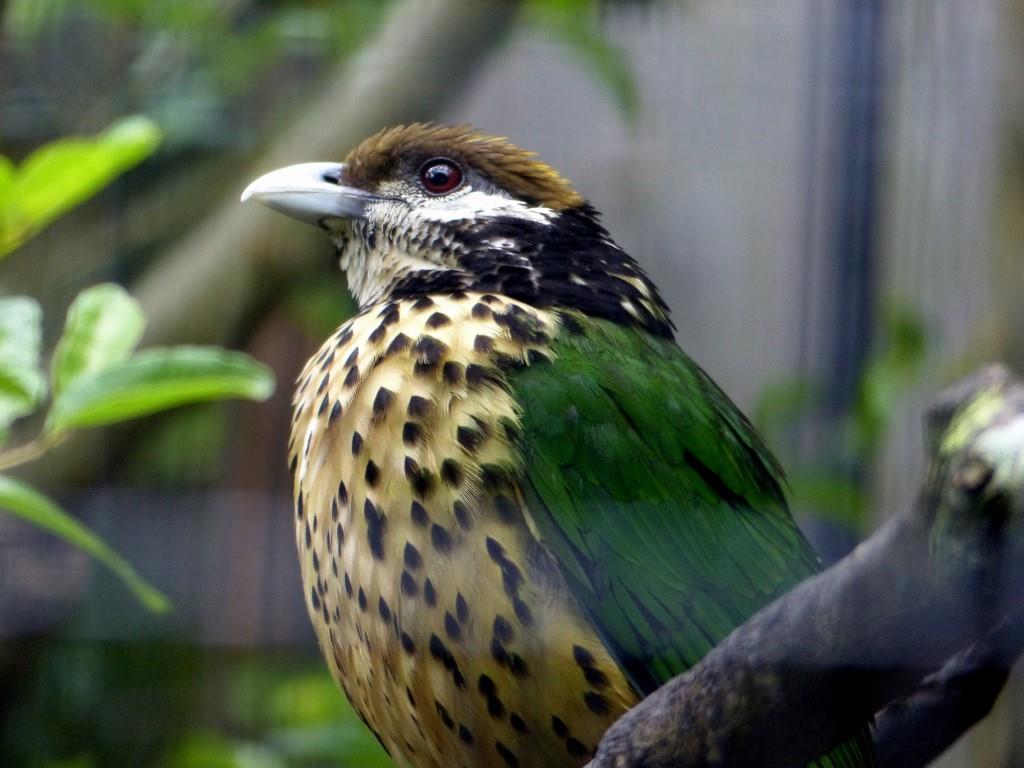
White-eared Catbird (Ailuroedus buccoides) Houston Zoo by Lee
The new Species added are many times subspecies moving up to full genus status. The family with the most new additions is the Bowerbirds – Ptilonorhynchidae family. There were 3 Catbirds; the White-eared, Green, and Spotted Catbirds. Now, there are 10 Catbirds.
Ochre-breasted Catbird (Ailuroedus stonii) – NEW
White-eared Catbird (Ailuroedus buccoides) NA
Tan-capped Catbird (Ailuroedus geislerorum) – NEW
Green Catbird (Ailuroedus crassirostris) NA
Spotted Catbird (Ailuroedus maculosus) – NEW
Huon Catbird (Ailuroedus astigmaticus) – NEW
Black-capped Catbird (Ailuroedus melanocephalus)
Northern Catbird (Ailuroedus jobiensis) – NEW
Arfak Catbird (Ailuroedus arfakianus) – NEW
Black-eared Catbird (Ailuroedus melanotis) – this was a name change. It was the Spotted Catbird (Ailuroedus melanotis)
The Pigeons, Doves – Columbidae Family also had 8 new additions added. Before doing that, they changed the names of four more birds.
Amboyna Cuckoo-Dove (Macropygia amboinensis) – was Slender-billed Cuckoo-Dove
Sultan’s Cuckoo-Dove (Macropygia doreya) – NEW
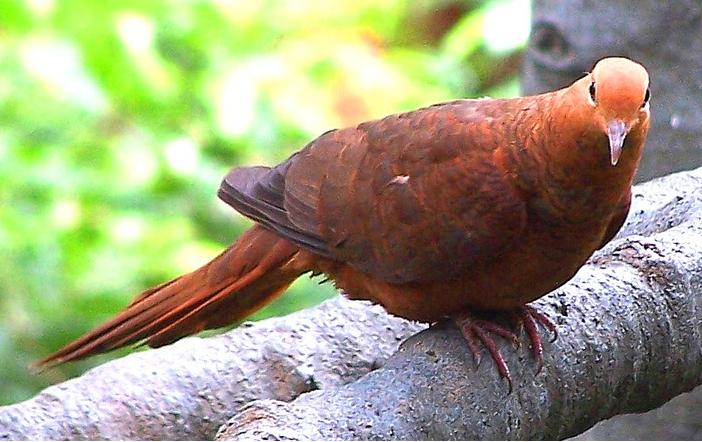
Ruddy Cuckoo-Dove (Macropygia emiliana) NA
Enggano Cuckoo-Dove (Macropygia cinnamomea) – NEW
Barusan Cuckoo-Dove (Macropygia modiglianii) – NEW
Timor Cuckoo-Dove (Macropygia magna) – was Bar-necked Cuckoo-Dove
Tanimbar Cuckoo-Dove (Macropygia timorlaoensis) – NEW
Flores Sea Cuckoo-Dove (Macropygia macassariensis) – NEW
Philippine Cuckoo-Dove (Macropygia tenuirostris) NA
Brown Cuckoo-Dove (Macropygia phasianella) NA
White-faced Cuckoo-Dove (Turacoena manadensis) – was the White-faced Dove
Sula Cuckoo-Dove (Turacoena sulaensis) – NEW
Black Cuckoo-Dove (Turacoena modesta) – was the Black Dove
They also added:
Sula Fruit Dove (Ptilinopus mangoliensis) – NEW
Kosrae Fruit Dove (Ptilinopus hernsheimi) – NEW
As for the Woodpecker family, it was a change of genus names and resuffling that was mostly involved. More on those later. I still want to double check that they are right on the page.
There were other changes, but enough for now. Those are the biggest changes. For once there were not deletions.
For those who are photographers, these changes can affect how the bird names are filed and given. Which means, names of photos have to be updated also. No one in the bird hobby or profession has ever “arrived.” There is always something to do, after the “shoot”.
Intermediate Egret (Egretta intermedia) is now (Ardea intermedia) 6.2 Taxonomy Change
“For I am the LORD, I change not;…” (Malachi 3:6 KJV)
The I.O.C. released their latest version, and I have started updated the blog to reflect those changes. It takes time, but I have the “Last, First” name’s lists up and running. In the I. O. C. 6.1 Updated post, I mentioned that I would catch on the next version. It is the hardest one to get ready, so, I decided to do it first.
Streak-chested (Spectacled) Antpitta (Hylopezus perspicillatus) by Ian
As the name implies, the birds are listed as “Sparrow, House” or “Duck, Wood”. These lists are especially handy when trying to find birds that have the same last name, but are not in the same bird family. An example would be Antpitta. Almost all of them are in the Grallariidae family, yet two of them are over in the Gnateater-Conopophagidae family. The Streak-chested is in with most of the Antpittas in the Grallarridae and this Black-crowned and the Rufous-crowned Antpitta are down in the next family of Gnateaters.
That is just one example. There are many other uses for the links. Lord willing, I plan on having the normal “First Name-Last Name” list up later this evening. Then I will make the actual species updates.
The IOC World Bird List 6.2 contains 10,637 extant species (and 154 extinct species) classified in 40 Orders, 239 Families (plus 2 Incertae Sedis) and 2289 Genera and 20,601 Subspecies. They added 22 new species, changed the names of 8 species and made 4 taxonomy changes. Those will be updated as soon as the indexes are changed. Stay Tuned!
“In a moment, in the twinkling of an eye, at the last trump: for the trumpet shall sound, and the dead shall be raised incorruptible, and we shall be changed.
(1 Corinthians 15:52)