“B” is for Bluebird and Bittern: “B” Birds, Part 1
James J. S. Johnson
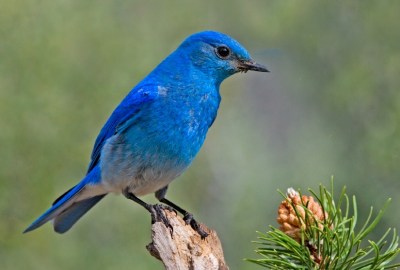
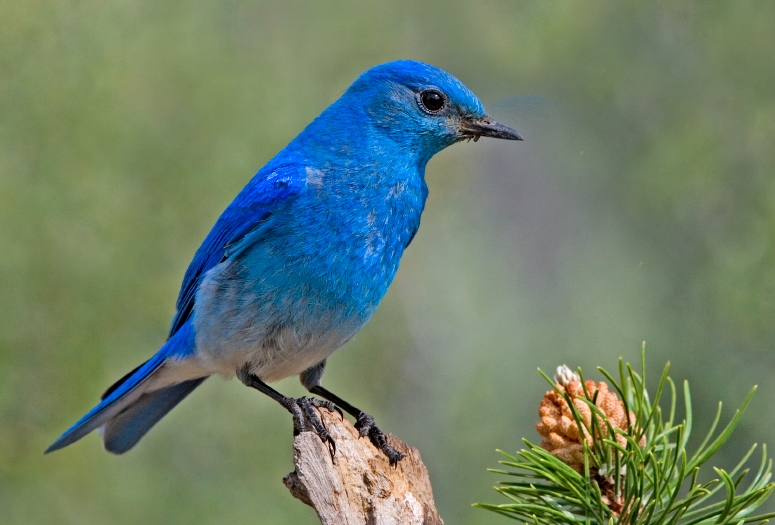
Mountain Bluebird (Sialia currucoides) ©Elaine R Wilson WikiC
“B” is for Bluebird, Bittern, Bobwhite Quail, and Buteo hawks (which include Old World “buzzards”, a/k/a “buzzard hawks”) – plus Buffleheads, Babblers, Barbets, Becards, Bowerbirds, Bulbuls, Bullfinches, Berrypeckers, Brushturkeys, Birds-of-paradise, Bushshrikes, Bustards, Bushtits, Broadbills, Boobies, Bee-eaters, Buttonquail, Buntings (including Painted Bunting, Indigo Bunting, Snow Bunting, Lark Bunting, Lazuli Bunting, etc.), and various Blackbirds (including Bobolink and Brewer’s Blackbird, all of which blackbirds this series will treat as “icterids”), and a few other birds.
This blogpost-article calmly continues an alphabet-based series on birds, starting with a quick introduction to 4 types of birds that start with the letter “B” – followed by a few observations of alphabetic patterns in Scripture (exhibited by Psalm 119:9-16) – then followed by specific information on Bluebirds, Bitterns, Bobwhite Quail, and Buteo hawks. In particular, this article will feature the Mountain Bluebird (Sialis currucoides) as a representative bluebird; the American Bittern (Botaurus lentiginosus) as a representative bittern; the Bobwhite Quail (Colinus virginianus); and the Red-tailed Hawk (Buteo jamaicensis) as a representative buteo hawk.
In this Part 1, of the “B” birds, the Bluebird and Bittern are reviewed. (Part 2, God willing, will continue with Bobwhite and Buteo.)
THE ALPHABET HELPS TO TEACH US ABOUT GOD’S TRUTH
As noted in the earlier article on “A birds” – titled “A” is for Avocet, Albatross, Accipiter, and Alcid” [posted at leesbird.com , Deo volente] – using the alphabet, to organize a sequence of information, has Biblical precedent. The perfect example is the “acrostic” pattern of Psalm 119, the longest psalm (having 176 verses!), which has 22 sections (comprised of 8 verses per section), representing the 22 letters of the Hebrew alphabet. (Compare that to English, which has 26 alphabet letters, and Norwegian, which has 29 alphabet letters.)
The sentences in each section start with the same Hebrew letter, so Verses 1-8 start with ALEPH, Verses 9-16 start with BETH, Verse 17-24 start with GIMEL, and so forth. Here are the second 8 verses in Psalm 119, each sentence of which starts with BETH [a consonant like our “B”, whenever it does to immediately follow a vowel sound, otherwise its consonantal sound is like our “V”, where it is sometimes transliterated as “bh”].
So, because BETH is the second letter in the Hebrew alphabet, each verse (in Psalm 119:9-16) literally starts with that letter as the first letter in the first word (although the first Hebrew word may be differently placed in the English translation’s sentence):
9 With-what [bammeh] shall a young man cleanse his way? — by taking heed thereto according to Thy Word.
10 In-all [becâl] my heart have I sought thee; O, let me not wander from Thy commandments.
11 In-my-heart [belibbî] Thy Word have I hid, that I might not sin against thee.
12 Blessed [berûk] art Thou, O Lord; teach me Thy statutes.
13 In-my-lips [bisephâtêi] have I declared all the judgments of Thy mouth.
14 In-the-way [bederek] of Thy testimonies I have rejoiced, as much as in all riches.
15 In-Thy-precepts [bephiqqūdekâ] I will meditate, and have respect unto thy ways.
16 In-Thy-statutes [bechūqqōtkâ] I will delight myself; I will not forget Thy Word.

Bible Open to Psalm 119 ©Flickr Jason2917
As noted before, Psalm 119 is all about God’s revelation of truth – especially truth about Himself – to mankind (in a comprehensive “A to Z” panorama). The most important revelation of truth that God has given to us, and the most authoritative form of truth we have, is the Holy Bible – the Scriptures. Accordingly, Psalm 119 is dominated by references to the Scriptures, using terms like “the law of the LORD” (and “Thy Word”, “Thy commandments”, “Thy testimonies”, “Thy statutes”, “Thy judgments”, etc.). In Psalm 119:9-16 these terms are used, to denote God’s revealed truth to mankind: “Thy Word” (3x), “Thy commandments”, “Thy statutes”, ”Thy precepts”, Thy “judgments”, and “Thy testimonies”.
The Hebrew letter BETH means “house” (primarily as a building, such as a physical home, yet secondarily as a household, i.e., that family who lives within a house). Accordingly, we see in Psalm 119:9-16 that God’s Word is the protective framework within which we should live our lives. In particular, it is within God’s Word where we clean ourselves (verse 9); it is God’s Word wherefrom we should not wander (verse 10); it is in God’s Word, better than any physical shelter, wherein we take refuge from sin (verse 11); it is in God’s laws that we need to live and learn in (verse 12); because our lips are like the “gates” of our lives, it is God’s judgments that outline the gatekeeping boundaries for “where” we live our lives (verse 13); it is God’s testimonies, of which the Scripture is the great treasure-room, that we should rejoice in (verse 14); and better, than any mansion’s relaxing reading-room is God’s Word, with its laws as a restorative “room” for delightfully meditating “in” (verses 15 & 16).
Thus we see the theme, woven throughout the octet of BETH verses (Psalm 119:9-16), that we are designed to live in God’s truth (which we know best form God’s written Word), as if it was a “house”. In other words, God’s truth should dwell in us (Psalm 119:11), just as we should dwell in God’s truth (John 4:21-24 & 14:17; 2nd John 1:2). This complements the prior octet – the ALEPH verses (Psalm 119:1-8), which emphasized that God’s truth is mighty (Hebrews 4:12) as a powerful “ox”.
Ultimately, of course, God’s Word draws us (through the Lord Jesus Christ – see John 14:2-6) unto God Himself, Who should be our everlasting Home – see “Why We Want to Go Home”, as we learn from Psalm 90:1 and 2nd Corinthians 5:1-6.

Now back to the “B” birds, beginning with bluebirds.
In a previous article, late last year, the Bluebird was featured, after it was observed during a trip to attend a Christmas lutefisk banquet — see “Bluebirds of Happiness, Plus Enjoying a Lutefisk Banquet”.
Since attention has, thus, already been given to the Eastern Bluebird (with brief mention of how to distinguish it from the similar-yet-not-identical-looking Western Bluebird), this review will feature the Mountain Bluebird, a bluebird often seen in the forests and fields of Colorado, as well as in other parts of America’s Rocky Mountains.
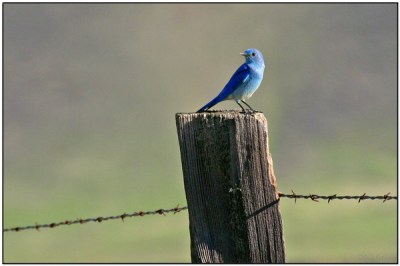
Mountain Bluebird (Sialia currucoides) by Daves BirdingPix
The male of the Mountain Bluebird (Sialia currucides), unlike the Eastern Bluebird and the Western Bluebird, has feathers of bright blue (peacock-to-turquoise blue) above and light-blue-fading-to-white beneath. The female has less conspicuous coloring; her plumage is a blend of blue and Confederate grey (sometimes with brownish-grey blended in), atop, with a whitish underside. This bluebird ranges almost entirely in and west of the Rocky Mountains. [See Roger Tory Peterson, A FIELD GUIDE TO WESTERN BIRDS (Houghton Mifflin, 3rd ed., 1990), pages 278-279 & Map 303. See also Tom J. Ulrich, BIRDS OF THE NORTHERN ROCKIES (Missoula: Mountain Press Publishing, 1994), pages 122-123; Mary Taylor Gray, WATCHABLE BIRDS OF THE ROCKY MOUNTAINS (Missoula: Mountain Press Publishing, 1992), page 138-139.]
Says ornithologist Mary Taylor Gray, “As soon as the young [Mountain Bluebirds] are able to leave the nest, [they] flock together and head for the high mountains, fluttering in waves of blue up mountain slopes and onto the alpine tundra. Mountain bluebirds differ from other bluebirds by their preference for more open habitat. Mountain blue birds nest in holes in trees or other structures, using either natural cavities or nests excavated by woodpeckers. Removal of dead timber in forests and replacement of wood fence posts with metal has reduced the nesting sites for [these] bluebirds, who must compete with other bird species—sparrows, flickers, starlings—for nest cavities. … Primarily an insect-eater, the mountain bluebird may launch suddenly from its perch to pluck a flying insect from the air, or hunt by watching for prey on the ground as it flies, hovering when it spots something, then dropping down to grab a meal.” [Quoting Gray, WATCHABLE BIRDS OF THE ROCKY MOUNTAINS, page 138.]
Now for another “B bird: Bitterns, a group of mostly piscivorous (fish-eating) heron-like wading birds of wetland habitats.
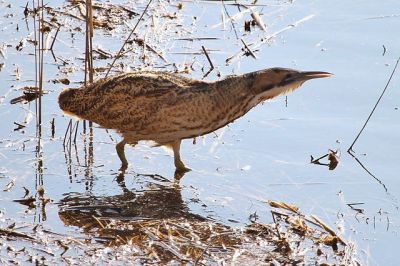
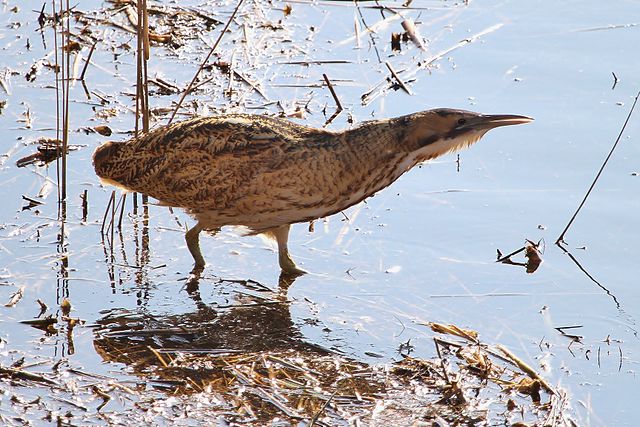
Eurasian Bittern (Botaurus stellaris, a/k/a Great Bittern) ©WikiC
For general information on bitterns, see ornithologist Lee Dusing’s insightful birdwatching articles: “Bird of the Bible – Bittern” — and “Birds of the Bible – Bitterns II”. Regarding the American Bittern in particular, see Lee’s “Birds of the Bible – American Bittern”, including close-up photographs of the American Bittern, taken by Lee at the Circle B Bar Ranch Reserve (n/k/a Circle B Bar Reserve), an amazing venue for birdwatching in Lakeland, Florida. To learn about this birding resource, see Southwest Florida Water Management District’s website.
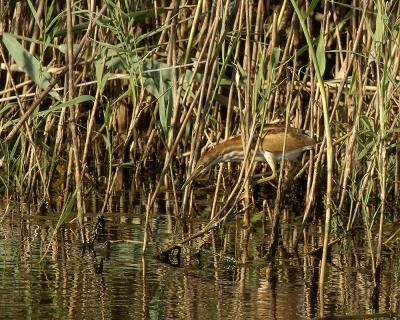
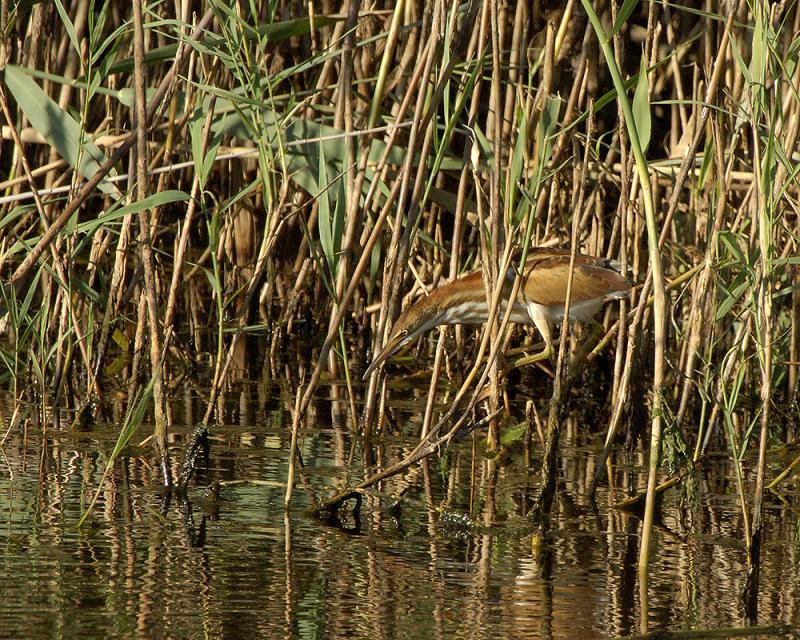
Least Bittern (Ixobrychus exilis) by Jim Fenton / from Leesbird.com
There are several bitterns – such as the Least Bittern shown above, as well as the Little Bittern (Ixobrychus minutus), Eurasian Bittern (Botaurus stellaris), Australasian Bittern (Botaurus poiciloptilus), Yellow Bittern (Ixobrychus sinensis), Black-backed Bittern (Ixobrychus dubius), Cinnamon Bittern (Ixobrychus cinnamomeus), and others. In this article, however, this “family” of wetland waders will be represented by the American Bittern (Botaurus lentiginosus).
In addition to what Lee Dusing has already reported (see links shown above) the American Bittern (Botaurus lentiginosus) has been the subject of many (other) ornithological studies.
The American Bittern (Botaurus lentiginosus) is widely spread, range-wise, across North America. As a Terry Sohl range map (not shown) indicates, the American Bittern is a migratory bird, so its range differs depending upon the season of the year. [NOTE: the above-referenced Terry Sohl range map is not shown here, because Mr. Sohl, as a self-described “hardcore atheist”, does not want his range maps associated with a Christian blogsite.]
So watch carefully, in wetland habitats, for bitterns – but you are more likely to hear one!
Meanwhile, in Part 2 of (of the “B” birds), God willing, the Bobwhite and Buteo hawks will be reviewed. Thereafter, D.v., this alphabetic series will continue with some “C“ birds – such as Cardinal, Chicken, Coot, Cormorant, Chickadee, Caracara, Crane, Cuckoo, Curlew, and Corvid (including Crow)! So stay tuned!
<> JJSJ
*
“A” is for Avocet, Albatross: “A” Birds, Part 1
“A” is for Accipiter and Alcid: “A” Bird, Part 2

















 Lee's Birdwatching Adventures Plus