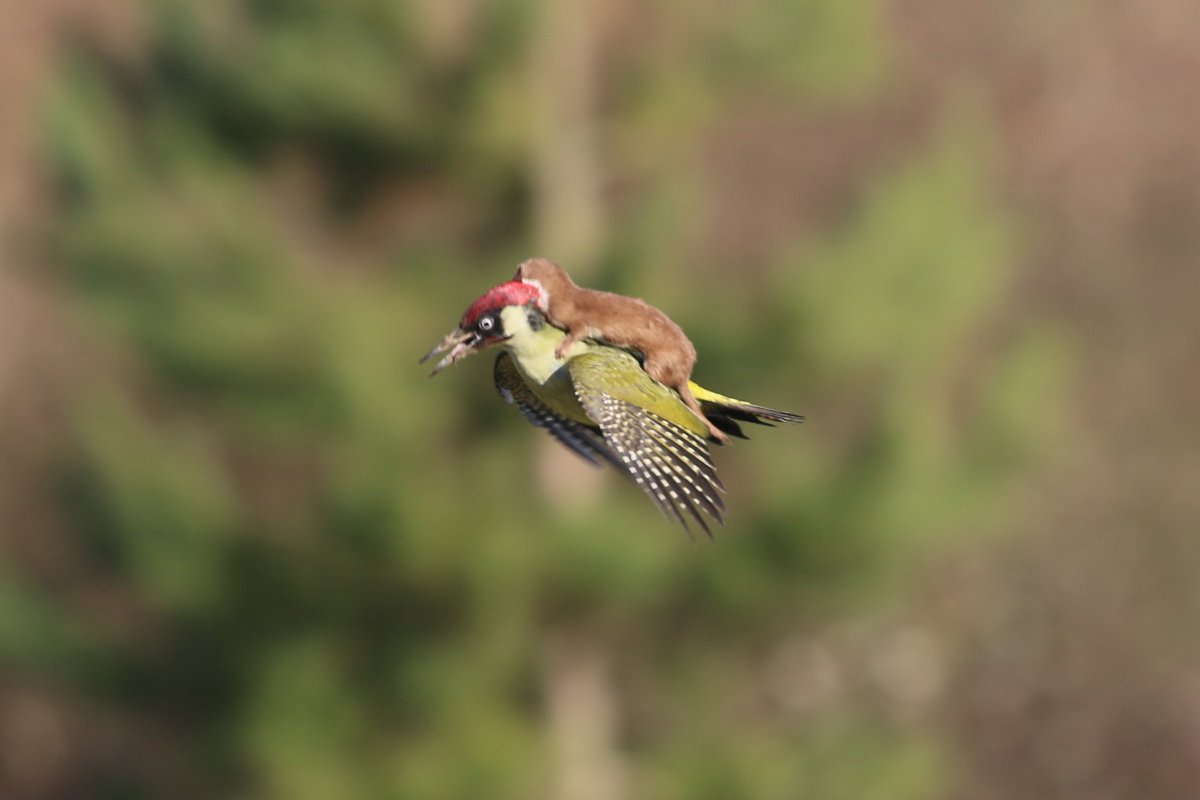
Woodpecker With A Weasel On It’s Back

Green Woodpecker with Weasel On It's Back ©Martin Le-May

Green Woodpecker with Weasel On It’s Back ©Martin Le-May

You have to see this:

Amateur photographer Martin Le-May, from Essex, has recorded the extraordinary image of a weasel riding on the back of a green woodpecker as it flies through the air.

http://focusingonwildlife.com/news/weasel-photographed-riding-on-a-woodpeckers-back/

*

Now behold, there was a man named Zacchaeus who was a chief tax collector, and he was rich. And he sought to see who Jesus was, but could not because of the crowd, for he was of short stature. So he ran ahead and climbed up into a sycamore tree to see Him, for He was going to pass that way. And when Jesus came to the place, He looked up and saw him, and said to him, “Zacchaeus, make haste and come down, for today I must stay at your house.” (Luke 19:2-5 NKJV)

Maybe the Weasel, like Zacchaeus, thought Jesus was going to come by and he wanted to get a better look.
*
Picadae – Woodpeckers

Wordless Birds

*

Some Unlikely Relatives – Chapter 12

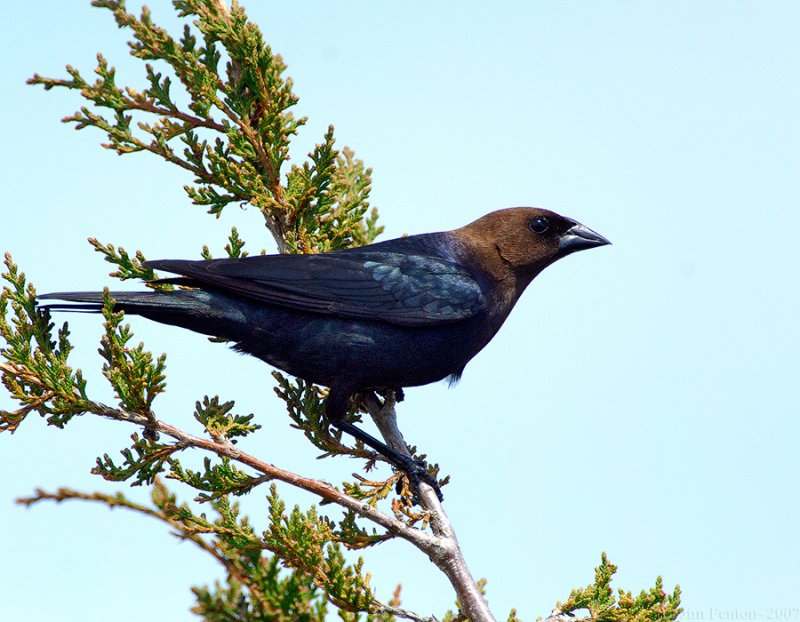
Brown-headed Cowbird (Molothrus ater) by J Fenton

Brown-headed Cowbird (Molothrus ater) by J Fenton

Some Unlikely Relatives

The Cowbird and the Baltimore Oriole.

The Burgess Bird Book For Children

*

Listen to the story read.

CHAPTER 12. Some Unlikely Relatives.

Having other things to attend to, or rather having other things to arouse his curiosity, Peter Rabbit did not visit the Old Orchard for several days. When he did it was to find the entire neighborhood quite upset. There was an indignation meeting in progress in and around the tree in which Chebec and his modest little wife had their home. How the tongues did clatter! Peter knew that something had happened, but though he listened with all his might he couldn’t make head or tail of it.

Finally Peter managed to get the attention of Jenny Wren. “What’s happened?” demanded Peter. “What’s all this fuss about?”

Jenny Wren was so excited that she couldn’t keep still an instant. Her sharp little eyes snapped and her tail was carried higher than ever. “It’s a disgrace! It’s a disgrace to the whole feathered race, and something ought to be done about it!” sputtered Jenny. “I’m ashamed to think that such a contemptible creature wears feathers! I am so!”

“But what’s it all about?” demanded Peter impatiently. “Do keep still long enough to tell me. Who is this contemptible creature?”

Sally Sly,” snapped Jenny Wren. “Sally Sly the Cowbird. I hoped she wouldn’t disgrace the Old Orchard this year, but she has. When Mr. and Mrs. Chebec returned from getting their breakfast this morning they found one of Sally Sly’s eggs in their nest. They are terribly upset, and I don’t blame them. If I were in their place I simply would throw that egg out. That’s what I’d do, I’d throw that egg out!”

Peter was puzzled. He blinked his eyes and stroked his whiskers as he tried to understand what it all meant. “Who is Sally Sly, and what did she do that for?” he finally ventured.

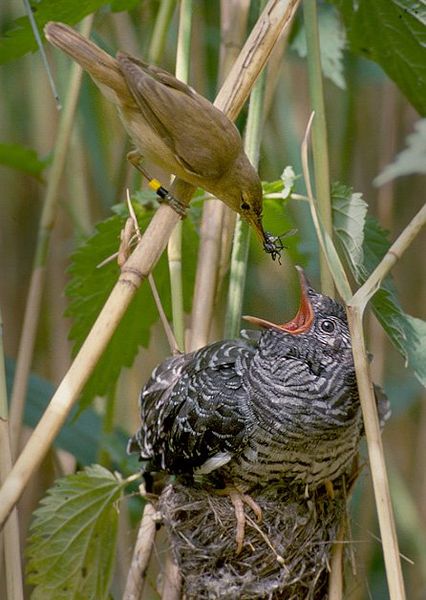
Common Cuckoo (Cuculus canorus) being raised by a Reed Warbler©WikiC

Common Cuckoo (Cuculus canorus) being raised by a Reed Warbler©WikiC

“For goodness’ sake, Peter Rabbit, do you mean to tell me you don’t know who Sally Sly is?” Then without waiting for Peter to reply, Jenny rattled on. “She’s a member of the Blackbird family and she’s the laziest, most good-for-nothing, sneakiest, most unfeeling and most selfish wretch I know of!” Jenny paused long enough to get her breath. “She laid that egg in Chebec’s nest because she is too lazy to build a nest of her own and too selfish to take care of her own children. Do you know what will happen, Peter Rabbit? Do you know what will happen?”

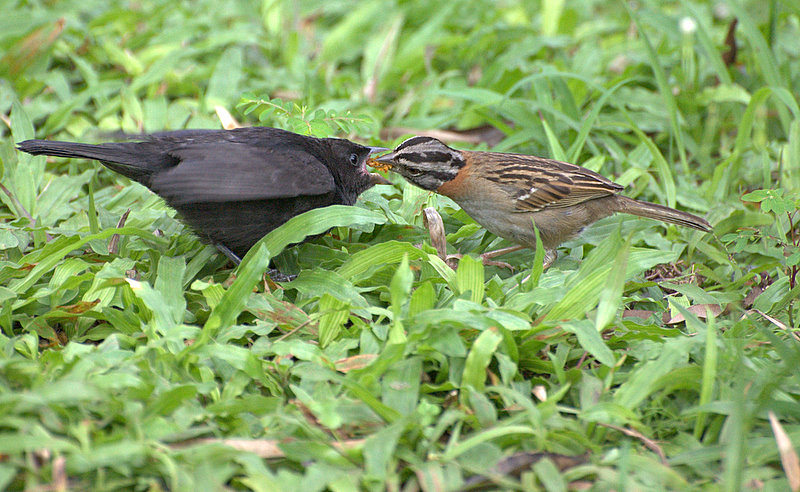
A Shiny Cowbird (Molothrus bonariensis) chick being fed by a Rufous-collared Sparrow (Zonotrichia Capensis)

A Shiny Cowbird (Molothrus bonariensis) chick being fed by a Rufous-collared Sparrow (Zonotrichia Capensis)

Peter shook his head and confessed that he didn’t. “When that egg hatches out, that young Cowbird will be about twice as big as Chebec’s own children,” sputtered Jenny. “He’ll be so big that he’ll get most of the food. He’ll just rob those little Chebecs in spite of all their mother and father can do. And Chebec and his wife will be just soft-hearted enough to work themselves to skin and bone to feed the young wretch because he is an orphan and hasn’t anybody to look after him. The worst of it is, Sally Sly is likely to play the same trick on others. She always chooses the nest of some one smaller than herself. She’s terribly sly. No one has seen her about. She just sneaked into the Old Orchard this morning when everybody was busy, laid that egg and sneaked out again.”

“Did you say that she is a member of the Blackbird family?” asked Peter.

Jenny Wren nodded vigorously. “That’s what she is,” said she. “Thank goodness, she isn’t a member of MY family. If she were I never would be able to hold my head up. Just listen to Goldy the Oriole over in that big elm. I don’t see how he can sing like that, knowing that one of his relatives has just done such a shameful deed. It’s a wierd thing that there can be two members of the same family so unlike. Mrs. Goldy builds one of the most wonderful nests of any one I know, and Sally Sly is too lazy to build any. If I were in Goldy’s place I—”

“Hold on!” cried Peter. “I thought you said Sally Sly is a member of the Blackbird family. I don’t see what she’s got to do with Goldy the Oriole.”

“You don’t, eh?” exclaimed Jenny. “Well, for one who pokes into other people’s affairs as you do, you don’t know much. The Orioles and the Meadow Larks and the Grackles and the Bobolinks all belong to the Blackbird family. They’re all related to Redwing the Blackbird, and Sally Sly the Cowbird belongs in the same family.”

Peter gasped. “I—I—hadn’t the least idea that any of these folks were related,” stammered Peter.

“Well, they are,” retorted Jenny Wren. “As I live, there’s Sally Sly now!”

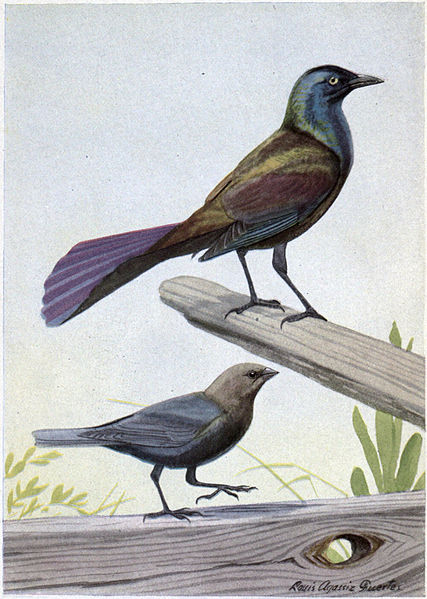
Creaker the Purple Grackle, The Male Cowbird - Burgess Bird Book ©©

Creaker the Purple Grackle, The Male Cowbird – Burgess Bird Book ©©

Peter caught a glimpse of a brownish-gray bird who reminded him somewhat of Mrs. Redwing. She was about the same size and looked very much like her. It was plain that she was trying to keep out of sight, and the instant she knew that she had been discovered she flew away in the direction of the Old Pasture. It happened that late that afternoon Peter visited the Old Pasture and saw her again. She and some of her friends were busily walking about close to the feet of the cows, where they seemed to be picking up food. One had a brown head, neck and breast; the rest of his coat was glossy black. Peter rightly guessed that this must be Mr. Cowbird. Seeing them on such good terms with the cows he understood why they are called Cowbirds.

Sure that Sally Sly had left the Old Orchard, the feathered folks settled down to their personal affairs and household cares, Jenny Wren among them. Having no one to talk to, Peter found a shady place close to the old stone wall and there sat down to think over the surprising things he had learned. Presently Goldy the Baltimore Oriole alighted in the nearest apple-tree, and it seemed to Peter that never had he seen any one more beautifully dressed. His head, neck, throat and upper part of his back were black. The lower part of his back and his breast were a beautiful deep orange color. There was a dash of orange on his shoulders, but the rest of his wings were black with an edging of white. His tail was black and orange. Peter had heard him called the Firebird, and now he understood why. His song was quite as rich and beautiful as his coat.

Baltimore Oriole (Icterus galbula) ©USFWS

Baltimore Oriole (Icterus galbula) ©USFWS

Shortly he was joined by Mrs. Goldy. Compared with her handsome husband she was very modestly dressed. She wore more brown than black, and where the orange color appeared it was rather dull. She wasted no time in singing. Almost instantly her sharp eyes spied a piece of string caught in the bushes almost over Peter’s head. With a little cry of delight she flew down and seized it. But the string was caught, and though she tugged and pulled with all her might she couldn’t get it free. Goldy saw the trouble she was having and cutting his song short, flew down to help her. Together they pulled and tugged and tugged and pulled, until they had to stop to rest and get their breath.

“We simply must have this piece of string,” said Mrs. Goldy. “I’ve been hunting everywhere for a piece, and this is the first I’ve found. It is just what we need to bind our nest fast to the twigs. With this I won’t have the least bit of fear that that nest will ever tear loose, no matter how hard the wind blows.”

Eurasian Golden Oriole (Oriolus oriolus) Nest ©WikiC

Eurasian Golden Oriole (Oriolus oriolus) Nest ©WikiC

Once more they tugged and pulled and pulled and tugged until at last they got it free, and Mrs. Goldy flew away in triumph with the string in her bill. Goldy himself followed. Peter watched them fly to the top of a long, swaying branch of a big elm-tree up near Farmer Brown’s house. He could see something which looked like a bag hanging there, and he knew that this must be the nest.

“Gracious!” said Peter. “They must get terribly tossed about when the wind blows. I should think their babies would be thrown out.”

“Don’t you worry about them,” said a voice.

Peter looked up to find Welcome Robin just over him. “Mrs. Goldy makes one of the most wonderful nests I know of,” continued Welcome Robin. “It is like a deep pocket made of grass, string, hair and bark, all woven together like a piece of cloth. It is so deep that it is quite safe for the babies, and they seem to enjoy being rocked by the wind. I shouldn’t care for it myself because I like a solid foundation for my home, but the Goldies like it. It looks dangerous but it really is one of the safest nests I know of. Snakes and cats never get ‘way up there and there are few feathered nest-robbers who can get at those eggs so deep down in the nest. Goldy is sometimes called Golden Robin. He isn’t a Robin at all, but I would feel very proud if he were a member of my family. He’s just as useful as he is handsome, and that’s saying a great deal. He just dotes on caterpillars. There’s Mrs. Robin calling me. Good-by, Peter.”

With this Welcome Robin flew away and Peter once more settled himself to think over all he had learned.

*

Let him who stole steal no longer, but rather let him labor, working with his hands what is good, that he may have something to give him who has need. (Ephesians 4:28 NKJV)

That is an interesting verse. Did Sally Sly “steal” another bird’s nest? Could she have made her own nest, raise her own chicks and feed them? Sure she could have and many of the Cowbirds do. But there are a few that sneak around and place eggs in other nests.

Are we suppose to steal answers from someone else’s paper? No, we are supposed to study and write our own answers.

*

Why were all the birds upset?

What kind of bird caused the problem?

What Family of birds does it belong to?

What other birds belong to that bird family?

Was Sally Sly being kind?

Eph 4:32  And be kind to one another, tenderhearted, forgiving one another, even as God in Christ forgave you.

Links:

*

Links:

Bubbling Bob the Bobolink - Burgess Bird Book ©©

  Next Chapter (More of the Blackbird Family.)


Burgess-Bird-Book-for-Children

Burgess Bird Book For Children


Robust Woodpecker (Campephilus robustus) by BirdPhotos_com Wordless Birds

*

Pond-side Birdwatching in Florida III

PondsideBirdwatching-WebelBackyard.2

Pond-side Birdwatching-Webel Backyard

Pond-side Birdwatching in Florida,

from Chaplain Bob’s Backyard: Part 3

 by James J. S. Johnson

Like a crane or a swallow, so did I chatter: I did mourn as a dove: mine eyes fail with looking upward: O Lord, I am oppressed; undertake for me. (Isaiah 38:14)

But they that escape of them shall escape, and shall be on the mountains like doves of the valleys, all of them mourning, every one for his iniquity. (Ezekiel 7:16)

O ye that dwell in Moab, leave the cities, and dwell in the rock, and be like the dove that maketh her nest in the sides of the hole’s mouth.  (Jeremiah 48:28)

Mourning Dove (Zenaida macroura) by Daves BirdingPix

Mourning Dove (Zenaida macroura) by Daves BirdingPix

Doves (a kind of birds that include pigeons) are among the most commonly observed birds in the world.  Doves display great variety (mourning dove, turtle dove, zebra dove, Inca dove, white-winged dove, etc.), the most popular variety being the pigeon (whose more formal name is “rock dove”).   Doves illustrate 2 different nesting habits (both being mentioned in Deuteronomy 22:6-7):  some nest in trees or other high places; others nest on the ground. Pigeons are often seen, due to their conspicuous habit of domesticating urban habitats (such as city buildings and bridges), nesting in high places (as indicated by , feeding, and flying in plain view of human spectators – often learning to accept food from humans, or to scavenge human garbage.  However, other doves (such as mourning doves) nest on the ground, a more vulnerable lifestyle.  Doves that nest on the ground, however, tend to be more reclusive (hiding in bushes and other thick vegetation), so they are more often heard than seen.  For example, in this birding report, brief mention will be made of a cooing mourning dove – that was heard, but not seen.

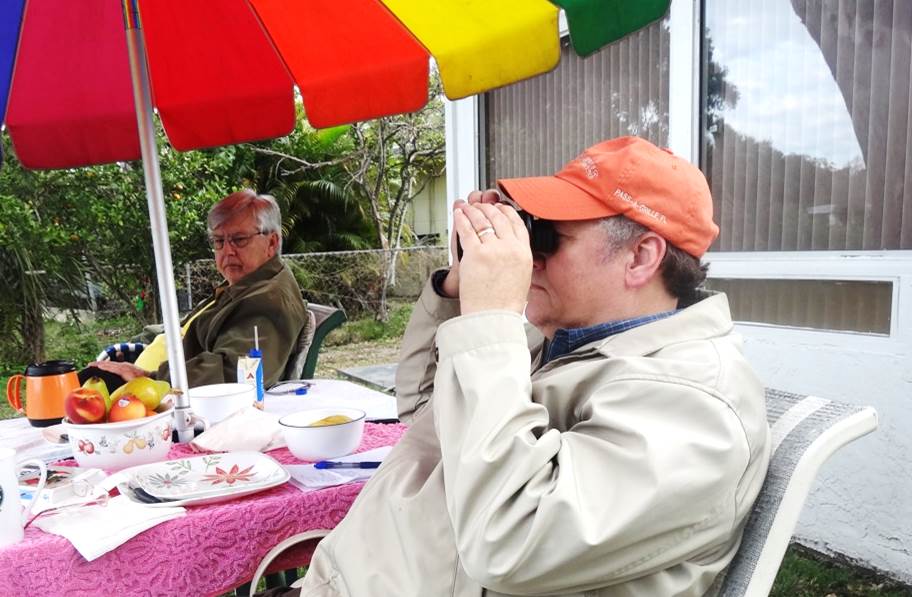
As reported previously, at Lee’s Birdwatching Adventures, it was a wonderful morning in St. Petersburg, where 3 of us  (my dear friends in Christ, Chaplain Bob and Marcia Webel, and I)  were watching the duck-populated pond and its bird-visited shores, with coffee and feet propped up, in the Webels’ backyard —  under a huge beach umbrella, shielded from occasional droppings (!) from ibises and ospreys (who were perched in branches hanging over where we were) sitting with binoculars, coffee mugs, healthy breakfast foods, and a bird-book.  Mostly we were bird-watching, that morning, but also we were bird-listening!

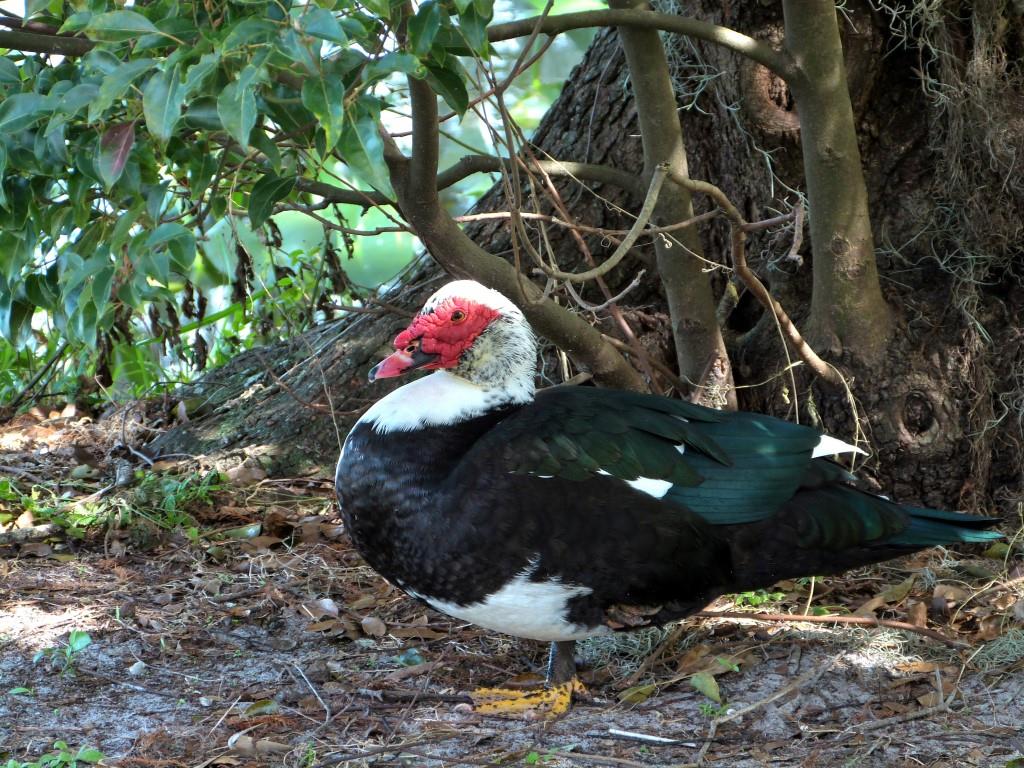
Muscovy Duck

Muscovy Duck

MUSCOVY   (a/k/a “MUSCOVY DUCK” or “BARBARY DUCK”:  Cairina moschata).

RTP @ 52-53 & 302-303

The Muscovy Duck is a strange looking fowl.  (And its name refers to “musk”, so it must have a characteristic smell, too!)  It is a duck, yet it is large – the size of a goose.  Yet even stranger are the colorful growths of red flesh upon its face:  the Muscovy looks like someone spilled some red bumpy-lumpy oatmeal on the sides of its bill, and on some of them the “red oatmeal” stuck to the face even around the eyes.  This fleshy growth is wattle-like “caruncle”, something like what turkey faces display.  Some people dislike the Muscovy Duck simply because its knobby (i.e., carunculated) face looks grotesque or diseased or “corrupted”!  But Mallards don’t seem to disdain these beauty contest flunkies; often a Muscovy (or two) is seen amidst a group of Mallards, and it seems that maybe they sometimes hybridize.  The coloring of a Muscovy Duck might be mostly white, or mostly black (with iridescent green tinting), or a quilt-patched mixture of black and white, with large white “patches” or “bars” on the wings.   (See Roger Tory Peterson, A Field Guide to the Birds Eastern Birds:  A Completely New Guide to All the Birds of Eastern and Central North America, abbreviated as “Eastern Birds” [Peterson Field Guides, Houghton Mifflin, 1980], at pages 52-53 & 302-303.)   The Muscovy’s awkward gait, when waddling about, sometimes looks a clumsy-looking, but these strange ducks are hearty survivors.  Regardless of where they came from (some say Latin America), these ducks are here to stay.   A domesticated form of the Muscovy is bred as the Pato Criollo (i.e., Creole Duck), though it seems that many of these have figured out how to escape their intended culinary destinies, becoming semi-wild as escapees. Muscovy Ducks have been observed and studied for centuries.  The Muscovy Duck was noted by two of the earliest (and most godly) eco-science geniuses, Konrad Gessner and John Ray, both being Bible-believing creationists.  To appreciate just an introductory sample of their trail-blazing creation research, analysis, and scholarship, see:  http://www.icr.org/article/christianity-cause-modern-science/  (mentioning John Ray),   http://www.icr.org/article/graffiti-judgment/  (mentioning, in Footnote #3, both Konrad Gessner and John Ray),  and  http://www.icr.org/article/fossil-political-correctness-sixteenth-century (mentioning Konrad Gessner as a Bible-believing Christian ecologist).

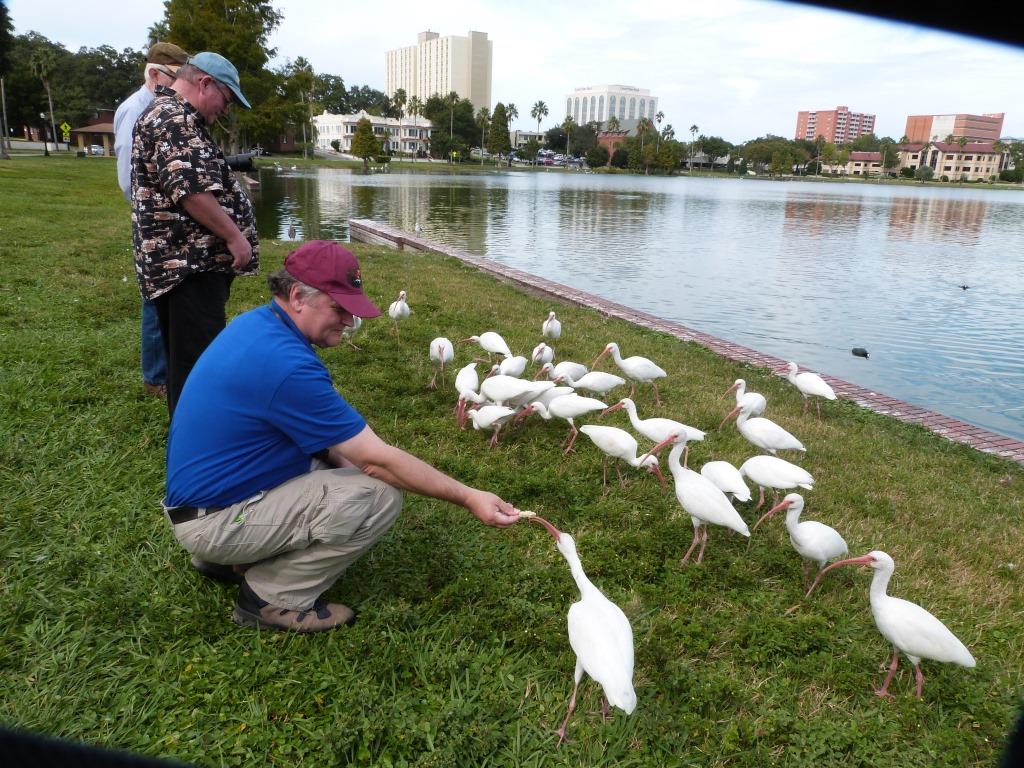
Feeding White Ibises at Lake Morton

Feeding White Ibises at Lake Morton

WHITE  IBIS   (Eudocimus albus).

The White Ibis is a white-plumed wading bird, with a reddish/orange-scarlet/pinkish/salmon-colored “decurved” (i.e., downward-curved) bill — shown here (with Dan Dusing, Baron Brown, and me  —  in a lakeshore photograph taken by ornithologist Lee Dusing) being fed bread crumbs.  The White Ibis is a gregarious bird, nesting in colonies and often seen foraging as a group.  Its homes are found in coastal mudflats, lakes and lakeshores, ponds and pondshores, and marshy areas.  (Obviously this group of ibises have been fed bread crumbs before – they are quite ready for a tasty snack!)  During the breeding season the White Ibis also has skinny pink legs (about the same color as its prominent bill, but at non-breeding times these legs are duller in color),  —  and this bird knows how to scurry about on those legs! The decurved bill, of course, is an excellent tool for probing around in shoreline mud or sand, for little things to eat, such as small crustaceans (like mudcrabs), frogs, or bugs.  (Obviously God gets the credit, for designing the ibis bill to accomplish what it does for the ibis, as well as for supplying ibis populations with the food sources they need to carry on the business of life.)  If the White Ibis bill snaps your fingers, as you feed him (or her) a bread-crumb, don’t worry!  –  the ibis’s bill is so light and gentle that its peck doesn’t hurt at all.  The White Ibis is found all over Florida, year-round, as well as on the Gulf Coast and America’s East Coast as far north as North Carolina.   (See Peterson’s Eastern Birds” [noted above, in entry for Muscovy Duck], at page M105.)  Why do fishermen especially appreciate the White Ibis?   The ibises eat a lot of shoreline crustaceans (like crabs and crayfish), which in turn eat fish eggs.  So if the crustacean populations grow too much, eating lots of fish eggs, the fish populations decline – bad news for fishermen.  Without consciously realizing it, therefore, the White Ibis is protecting the reproductive success of coastal fish populations — on which human fishermen (and their customers) rely.   (See the National Audubon Society’s Field Guide to North American Birds – Eastern Region [Alfred A, Knopf, 1994 revised edition], co-authored by John Bull & John Farrand, Jr., at page 376.)

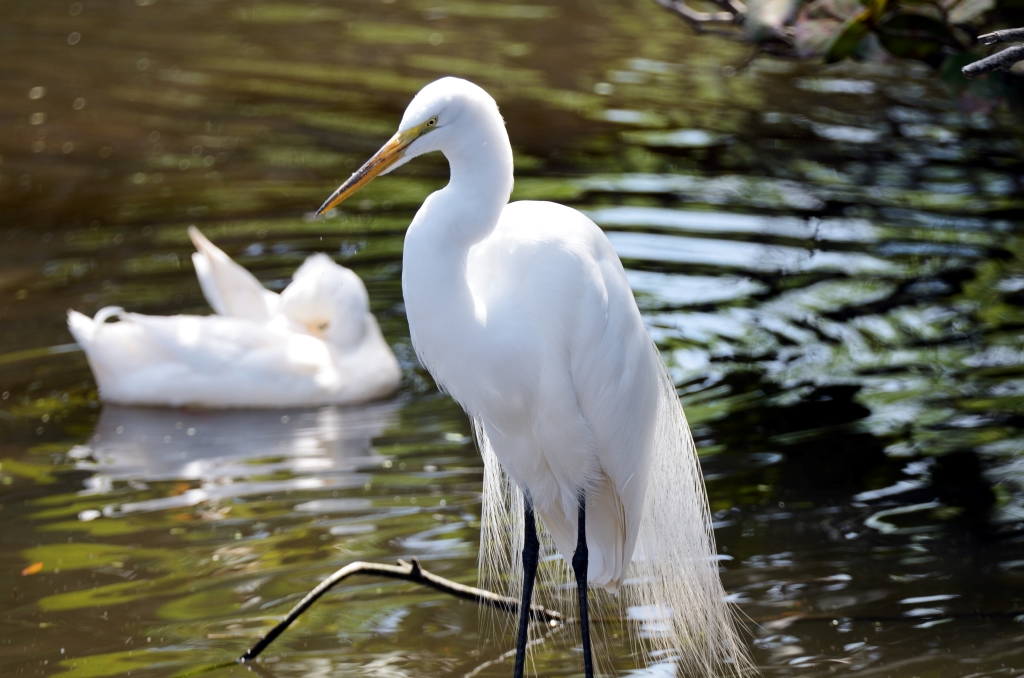
Great Egret at Gatorland by Dan

GREAT  WHITE  EGRET   (Ardea alba  or  Casmerodius albus).

The Great White Egret (a/k/a “Great Egret”) is a large long-legged heron-like wading bird, white in plumage, with a yellow bill and black legs.  (See Bull & Farrand’s Eastern Region [noted above, in entry for White Ibis], at page 368.)  This truly “great” egret is often seen standing, like a statute, on the shoreline of a pond, waiting for movement that would betray the availability, in the shallow water or the shoreline weeds, of a quick meal  –  perhaps a fish, a frog, or even a snake.   Donald and Lillian Stokes describe its eating habits as follows:  “Primarily feeds by walking slowly, head erect, then striking prey.  Forages in shallow water for small fish and amphibians [like frogs], but also on land for insects, reptiles [like snakes], and small mammals.  May feed solitarily and defend feeding areas by displaying aggressively and supplanting intruders.  Also feeds in large groups when food is concentrated.  Has been known to steal fish from other birds.” (Quoting Donald W. Stokes & Lillian Q. Stokes, Stokes Field Guide to Birds – Eastern Region [Little, Brown & Co., 1996], page 34.)  During summer this egret also frequents marshy grasslands, tidal mudflats, salt marsh beaches, and other wet habitats – all over America’s lower 48 states.  During winter this fair-weather fowl routinely migrates to America’s East (northward to Delaware), Gulf Coast, and West Coast.  It makes guttural-hoarse croaking noises, as well as loud squawking noises, but it is usually seen before it is heard – due to its large size and strikingly white color.  Its flight is majestic and gracious  —  a marvel to watch, with or without binoculars.

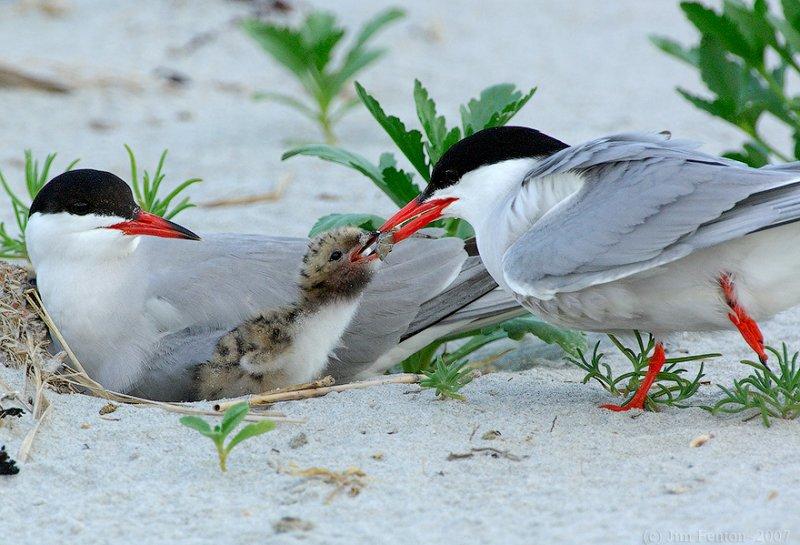
Common Tern (Sterna hirundo) by J Fenton

Common Tern (Sterna hirundo) by J Fenton

COMMON  TERN   (Sterna hirundo).

The Common Tern is one of the many coastline-dwelling birds that get lumped into the term “seagull”.  The Common Tern has been described as “White with black cap and pale gray back and wings.  Bill red with black tip; tail deeply forked.  Similar to Forster’s Tern, but lacks frosty wing tip.  Also similar to Arctic and Roseate Terns.”  (Quoting Bull & Farrand’s Eastern Region [noted above, in entry for White Ibis], at page 519.)  This seagull likes to nest in colonies, often on sandy beaches or on small islands, near lakes, bays, or ocean tidewaters.  Unsurprisingly, the males are the more aggressive sex, although a male intruder may be rebuffed by a male-and-female pair  —  so don’t mess with a Common Tern couple!  (See “Common Tern”, by Donald W. Stokes & Lillian Q. Stokes, in Bird Behavior, Volume III [Little, Brown & Co., 1989], page 71.)

Mourning Dove by Reinier Munguia

Mourning Dove by Reinier Munguia

MOURNING  DOVE   (heard cooing  —   Zenaida macroura).

Many books could be written about the Mourning Dove, and about its many cousins – such as the “pigeon” (Rock Dove) – that inhabit so many rural, suburban, and urban places around the world (as noted above, at the beginning of this birding report).  But a better description and appreciation for this bird must wait another day, because this report is already too long!  So, for now, this report closes with a passing mention that “mourning” was heard that morning – the plaintive cooing of the (well-named) Mourning Dove.  But no need for sadness  –  because it will soon be (God willing) another day for pondside birdwatching in Florida!


On the morning of February 9th, AD2015, from the pond-side backyard of Bob & Marcia Webel (while enjoying breakfast and Christian fellowship with the Webels), I saw 14 birds:  Great Blue Heron, Brown Pelican, Mallard, Double-Crested Cormorant, Black Vulture, Wood Stork, Lesser Scaup, Osprey, Snowy Egret, and Florida Gallinule,  as reported previously,  —  and, as reported hereinabove, Muscovy Duck, Great Egret, White Ibis, and Common Tern, plus the cooing of a nearby Mourning Dove was clearly recognizable.  What a morning!


James J. S. Johnson loves duck ponds, having formerly taught Environmental Limnology and Water Quality Monitoring for Dallas Christian College, as well as other courses on ecology and ornithology.  Limnology terms are not universal:  what some call a “pond” others call a “lake”.  [NOTE:  Some use the temperature of the bottom water as the lentic nomenclature determinant:  if the bottom water is the same temperature, year-round (i.e., regardless of whether it is winter or summer), it’s deep enough to be a “lake” – otherwise limnologists call it a “pond”.]   Regardless of this semantic custom, the “pond” viewed in the foregoing bird-watching report is called “Lake Coronado” in Florida’s Pinellas County.  J


*
Pond-side Birdwatching in Florida I

Pond-side Birdwatching in Florida II

Other Articles by James J. S. Johnson

*

Tickle Me Tuesday – Birds and Ice

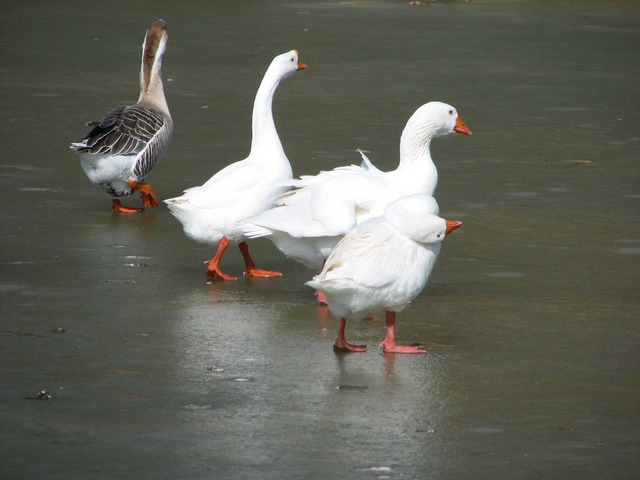
Geese on Ice ©Pixabay

Geese on Ice ©Pixabay

He casteth forth his ice like morsels: who can stand before his cold? (Psalms 147:17KJV)”From the breath of God ice is made, And the expanse of the waters is frozen. (Job 37:10 NASB)

Still laughing as I am typing this blog. Remembered a video several years back of birds landing on ice. I found it and two more. Trust you enjoy them and get a good chuckle for the day.

Landing on Ice

Penguin slips and falls – makes a funny sound

Penguins on an iceberg (funny)

On a more serious note, I found this article about how birds can die from the ice. It can trap them or cause them to not be able to take off.

Not Spring-like Yet – Ducks and the Ice, Oh My!

*

More Tickle Me Tuesdays:

Tickle Me Tuesday – For the Birds

Tickle Me Tuesday – Bird of Paradise

Tickle Me Tuesday – Top Funny Bird Video

Tickle Me Tuesday,” Challenge by Sandra Connor

Wordless Birds

*


Pond-side Birdwatching in Florida II

Pond-side Birdwatching in Florida,

from Chaplain Bob’s Backyard: Part 2

 by James J. S. Johnson

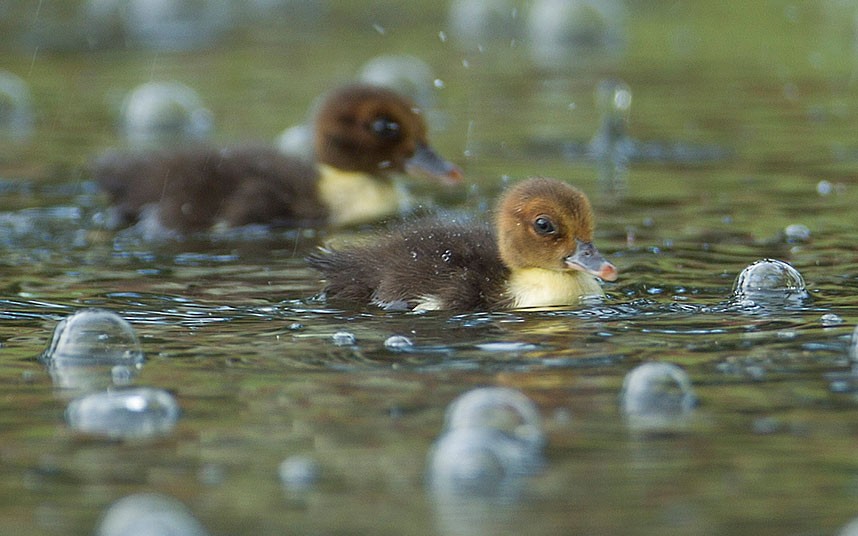
Moscovy Duck

Muscovy ducklings in the rain   (photo credit: J Pat Carter / AP)

For He [i.e., God] maketh small the drops of water: they pour down rain according to the vapor thereof, which the clouds do drop and distil [literally, pour down and drop down] upon man abundantly.  (Job 36:27-28)

For as the rain comes down, and the snow from heaven, and returns not there, but waters the earth, and makes it bring forth and bud, that it may give seed to the sower, and bread to the eater, so shall My word be that goes forth out of My mouth: it shall not return unto Me void, but it shall accomplish that which I please, and it shall prosper in the thing whereto I sent it.  (Isaiah 55:10-11)

[photo above: http://i.telegraph.co.uk/multimedia/archive/02298/ducklings_2298053k.jpg ]

A pond is not a pond unless it has standing [“lentic”] water, — yet a pond will eventually dry up (and thus cease to be a “pond”) if cloud-dumped rains fail to refill its standing waters!  (The same is true of running [“lotic”] waters – see 1st Kings 17:7.)  Why?  Because rain-provided water is always escaping ponds by evaporation.  (That’s why swimming pool owners must continually add more water to their pools.)

Accordingly, every pond needs rain (or snow that melts into rain-like liquid water), sooner or later, to be a pond!  Obviously, steady rainfall impedes birdwatching, so ideal birdwatching is done when it is not raining.  Even so, all bird-watchers should appreciate the rains that God sends, from time to time!  In fact, rain is a major part of God’s program for how our world and its diverse lifeforms function:  birds need rain, other animals need rain, people need rain, plants need rain, even microörganisms needs rain, — and all of that water is continually recycled throughout the earth!  In fact, Earth itself is mostly water!

As the prophet Isaiah noted [above]—and as every Gideon knows — God’s providentially sustained hydrologic cycle is comparable to how, all over the world, God carefully manages and orchestrates the specific influence and productivity of His written Word.  For more Scriptures relevant to Earth’s water cycle, see also Deuteronomy 8:7 & 32:2; Job 26:8; Ecclesiastes 1:7 & 11:3; Amos 5:8 & 9:6; Psalm 19:1-2 (noting that solar heat affects the sky) & 65:9-10 & 72:6 & 104:10-18 & 135:7; Isaiah 30:23; Jeremiah 10:13 & 14:22 & 51:16; Zechariah 10:1; — and especially Luke 12:54.

This birding report follows “Part 1” of this mini-series.   As noted in Part 1, I happily observed the busy birds at the pond that borders the backyard of Chaplain Bob and Marcia Webel (of St. Petersburg, Florida) on the morning of February 9th (AD2015), a Monday, when we saw 14 birds and heard (but did not see) a mourning dove.  As noted before, those birds were busy  —  quacking, splashing, swimming, perching on shoreline tree branches, dabbling, diving, and with several of them sporadically flying here and there.

Already, 5 of those lacustrine birds were described in Part 1 (Great Blue Heron, Brown Pelican, Mallard, Double-Crested Cormorant, and Black Vulture).  This Part 2 will feature 5 more:  Wood Stork, Lesser Scaup, Osprey, Snowy Egret, and Common Moorhen.  (Hopefully, the remaining 5 birds will be mentioned in an anticipated “Part 3” of this series.)
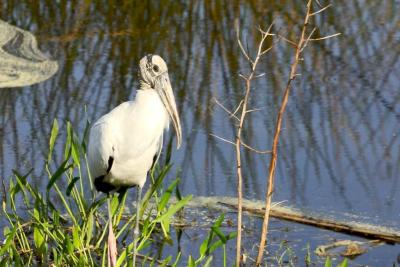
Wood Stork (Mycteria americana) By Dan'sPix

Wood Stork (Mycteria americana) By Dan’sPix

WOOD STORK   (Mycteria americana).

The Wood Stork (in some places nicknamed “Flinthead”, and f/k/a “wood ibis”) is a huge, long-legged wading bird, built somewhat like a large egret, heron, ibis, or spoonbill.  This bird is tall!  — with adults growing from 3 to almost 4 feet high!  The Wood Stork sports a long, flexible, blackish-grey, featherless neck.  Its ibis-like head is likewise featherless and not likely to be called beautiful (except by its mother).  Its powerful and prodigious bill is stout and slightly curved, well-fitted for probing in mud or muddy water, and for gobbling up fish, frogs, snakes, bugs, and worms located in wetland mud.  Storks sometimes eat small birds, small mammals, and even baby alligators!  The feathers of the Wood Stork are mostly white, except for the tail-feathers and black edge of its wings, which trail behind when the stork is flying.  Its feet are noticeably reddish in color.

Wood Stork (Mycteria americana) sitting by Dan

Wood Stork (Mycteria americana) sitting by Dan

The Wood Stork is typically mute (i.e., no vocal calls), communicating in other ways, such as by “bill-clattering”.  Being very large – and therefore heavy — birds, Wood Storks try to conserve their food-provided energy when flying.  Like other heavy birds (e.g., eagles, vultures, hawks), storks locate and “ride” thermal air currents, soaring and gliding when they can.  A true wetland bird, the Wood Stork is comfortable in a variety of wet habitats (such as ponds, marshy pastures, and swampy woodlands).  Storks construct huge nests for their families, typically as part of a stork colony (which may include literally thousands of stork pairs), often adding size to them year after year – some being built to about 6 feet in diameter and about 10 feet in depth!  Usually storks are monogamous (i.e., a male and female stay paired till one dies) although, for reasons not understood, sometimes pairs can get separated during a migration.  The dependability of the stork, in its migratory movements, is reflected in its Hebrew name (chasidah) which means “faithful” — see Jeremiah 8:7, explained in “A Lesson from the Stork” (posted at  http://www.icr.org/article/lesson-from-stork ).  Although they often migrate – spending summer in the southeastern states, these storks are known to reside in Florida (and parts of Georgia) year-round.  (See range map in Donald W. Stokes & Lillian Q. Stokes, Stokes Field Guide to Birds – Eastern Region [Little, Brown & Co., 1996], page 47, — as well as National Audubon Society’s Field Guide to North American Birds – Eastern Region [Alfred A, Knopf, 1994 revised edition], co-authored by John Bull & John Farrand, Jr., at page 379-380.)

Lesser Scaup (Aythya affinis) by Ray

Lesser Scaup (Aythya affinis) by Ray

LESSER  SCAUP   (a/k/a “LITTLE BLUEBILL”:  Aythya affinis).

The Lesser Scaup looks a lot like the Greater Scaup, but there are two ways to distinguish these look-almost-alike ducks:  (1) different shapes of their respective heads and bills; and (2) different winter ranges of territory where they live.  Donald and Lillian Stokes note the following traits:  “Head and bill shapes are most useful characteristics distinguishing [the Lesser Scaup] from the Greater Scaup … [on the] Lesser Scaup the head comes to a peak at the top or near the back [of the head]; [the Lesser Scaup] bill is slightly shorter and narrower [than that of the Greater Scaup].”  (Quoting Stokes & Stokes, Stokes Field Guide to Birds – Eastern Region [noted above, in entry on the Wood Stork], page 75.)  Regarding the respective ranges of scaups, the typical winter range territories of the Lesser Scaup includes the East Coast, Gulf Coast, West Coast, and non-mountainous regions of states (including most of Texas) that include the greater Mississippi River Valley’s tributary drainage basin.

Greater Scaup (Aythya marila) by Ray

Greater Scaup (Aythya marila) by Ray

The Greater Scaup, however, has a winter range that usually includes only the northern portions of the West Coast and East Coast, plus regions near the Great Lakes.  (Compare the sparser ranges indicated in Stokes & Stokes, Eastern Region, at page 75, with the range maps in Roger Tory Peterson, A Field Guide to the Birds Eastern Birds:  A Completely New Guide to All the Birds of Eastern and Central North America, abbreviated as “Eastern Birds” [Peterson Field Guides, Houghton Mifflin, 1980], at maps M43 & M44, with field notes at pages 58 & 72.)   In other words, if it’s a scaup on a Florida pond, it’s probably a Lesser Scaup!  The male of this duck has an easy-to recognize color pattern:  its bill is pale blue, its head, breast, and tail are dark-blackish; its flanks are white, and its back is mottled grey. In bright sunlight the male’s head has a purplish iridescence.   The female is mostly dark grey-brownish and black, with a noticeable white patch-like spots on both sides of her dark bill. (As with ducks generally, the easiest way to spot a female Lesser Scaup is to watch for a dark duck that pairs with a male Lesser Scaup!)   These ducks are divers – they dive into pond-water to catch and consume submergent plant seeds, insects, snails, and small crustaceans.  These duck are seen on ponds, lakes, rivers, and marshlands (including “prairie potholes” and estuarial saltmarshes).  Lesser Scaups, like ducks generally, are social creatures – sometimes they aggregate in hundreds or even thousands!  In many places, due to the availability of needed resources – which may be indicted by the size of a lake or pond, less than a hundred (maybe only a dozen) will group together.   Bird-books sometimes allege irresponsible and irrational opinions about how scaups supposedly “evolved” (e.g., Bull & Farrand, Eastern Region [noted above, in entry on the Wood Stork], at page 403), without any forensic evidence for such science fiction. The real truth is that all Lesser Scaups (like all other ducks) ultimately descend from ducks that disembarked Noah’s Ark, about 4500 years ago, which Flood survivors were themselves s directly descended form ducks that God made on Day #5 of Creation Week (see Genesis 1:21).
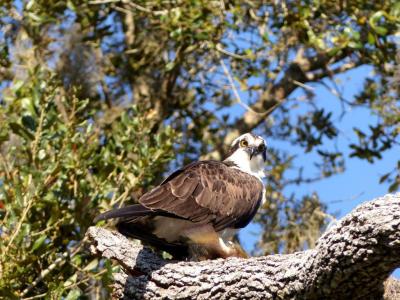
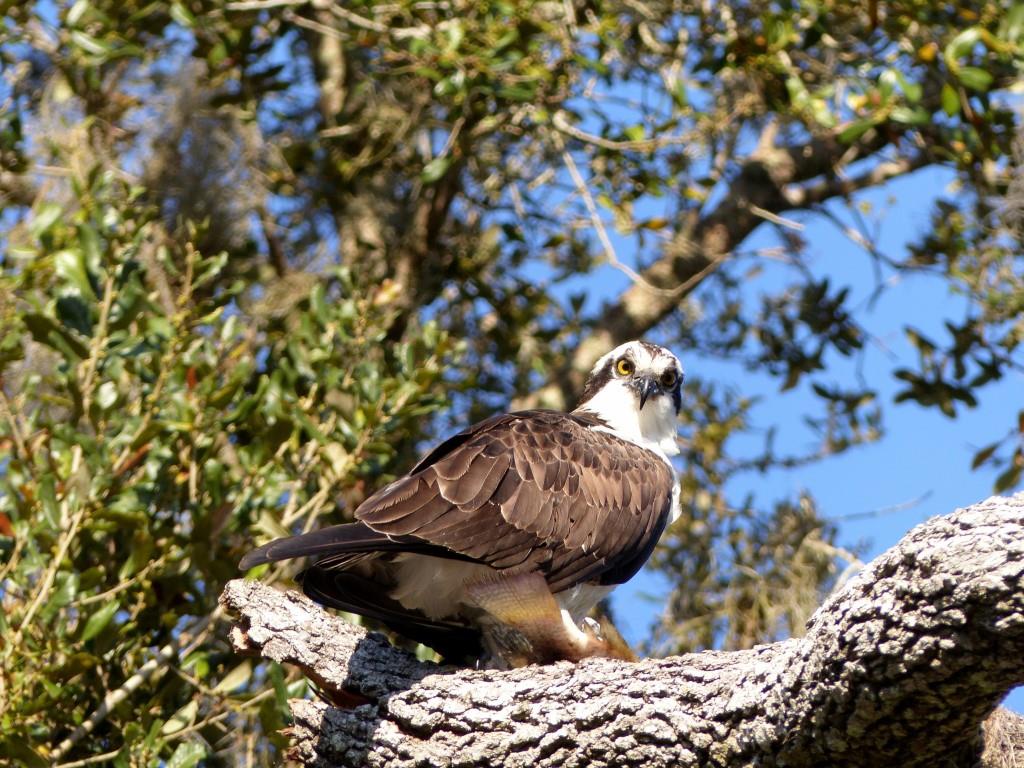
Osprey at Circle B by Lee

Osprey at Circle B by Lee

OSPREY    (a/k/a “FISH HAWK”:  Pandion haiaetus).

The Osprey is rightly nicknamed the “fish hawk” – they love to catch and eat fish! And, to the delight of bird-watchers, ospreys are not afraid to display their fish-eating lifestyle to nearby humans. Donald and Lillian Stokes make this interesting observation about osprey behavior:  “Among our birds of prey the osprey is one of the most amenable to living near humans.  Its main requirements are open water [such as a Florida pond!] where it can hunt for fish and a platform or strong tree where it can build its nest.  Ospreys have occasionally built nests [or use habitual perching sites] right next to homes [such as a large tree in the Webels’ backyard, bordering the pond], in parking lots, and in public parks.  Although they do not prefer being near humans [especially busy humans who move around a lot, causing distraction], they do seem to tolerate human presence, an ability that is a big asset for the survival of any species.” (Quoting “Osprey”, by Donald W. Stokes & Lillian Q. Stokes, in Bird Behavior, Volume III (Little, Brown & Co., 1989), page 159.]  The Osprey has a range that includes river systems in America’s Great West (e.g., Wyoming’s Snake River), a well as coastlines on the West Coast, Gulf Coast, and East Coast.  (See Stokes & Stokes, Eastern Region [noted above, in entry on the Wood Stork], at page 94.)  This “fish hawk” is relatively slender, for a hawk, but obviously stouter than a falcon.
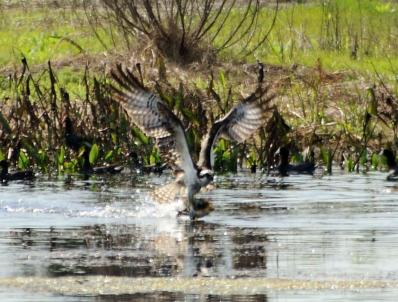
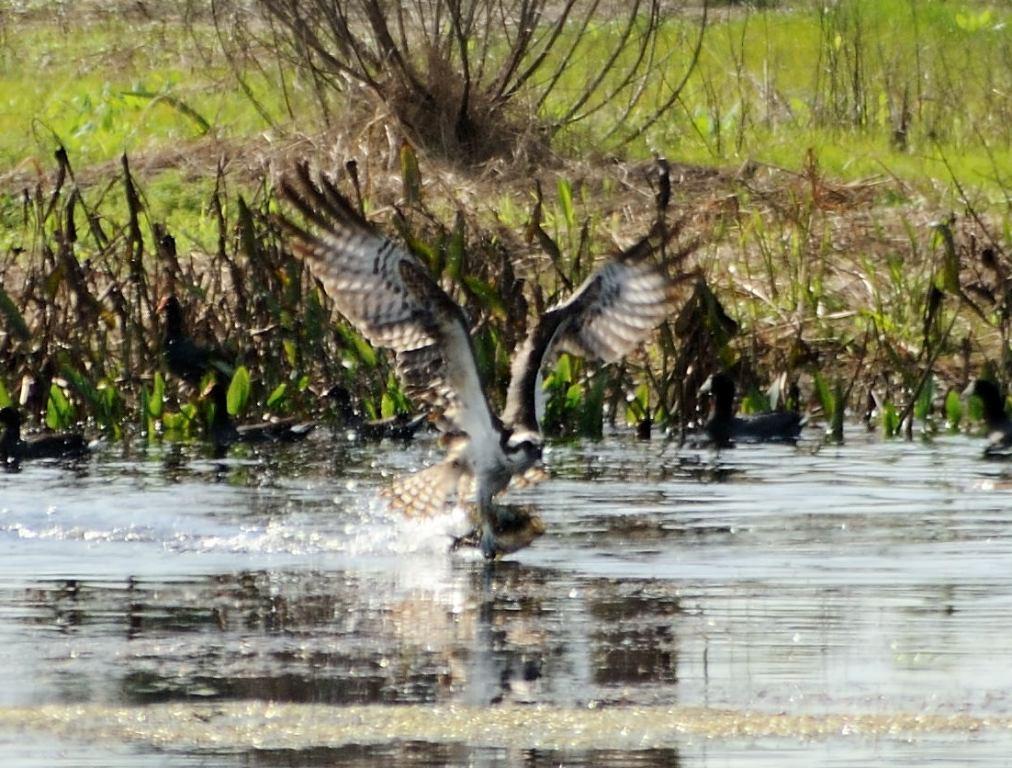
Osprey Catching Fish - Viera Wetlands

Osprey Catching Fish – Viera Wetlands by Dan

The Osprey is long-winged, white underneath (except the outer feathers of its wings, and its tail, which are brown), with a mottled brown pattern above; its head is mostly white, with a dark side-streak that passes “through” each eye and on the side of the hawk’s face.  The talons of this fish-grabber are opened for prey, when the Osprey dives into water, tightly clutching any fish it succeeds in seizing after it splashes into the water.  Sometimes a dead Osprey is seen hanging onto a riverine fish.  How did that happen?  Occasionally a strong fish flees when attacked by an Osprey, diving deeper with the Osprey still attached, as the desperate fish tries to avoid its avian pursuer.  If the Osprey’s talons are embedded in the diving fish’s flesh, the fish may cause the Osprey to die by drowning, if the Osprey cannot shake loose its talons in time to escape.   (Fishing always has its hazards, as any fisherman knows!) If the Osprey is successful, it quickly re-surfaces and flies off with its fish, adjusting its hold on the fish so that the fish’s face is pointed forward – for safe eating.  Ospreys are sloppy eaters.  If Ospreys eat chunks of their catch while perched in tree branches that spread over where you are sitting, watch out!  Fish scraps may fall on your head – or something worse (!) might drop onto your head.  Therefore, a wide beach umbrella (like one that Bob and Marcia Webel have, and use in their backyard, while bird-watching) is a good “shield” to have when Ospreys are eating above you.

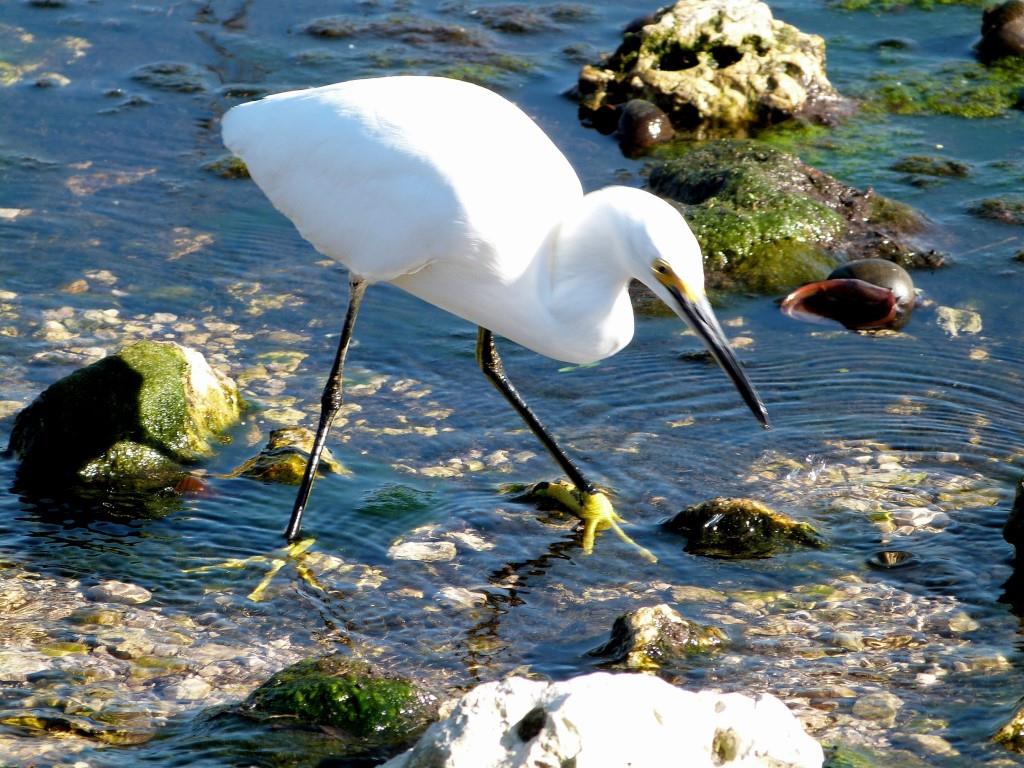
Snowy Egret (Egretta thula) Notice Yellow Feet by Lee at Circle B

Snowy Egret (Egretta thula) Notice Yellow Feet by Lee at Circle B

SNOWY  EGRET   (Egretta thula).

This beautiful white-feathered egret looks like a small version of the Great Egret (a/k/a Great White Egret), except it has its trademark “golden slippers” – i.e., its long skinny black legs end with feet that are conspicuously bright-yellow (unlike the black feet of a Great White Egret).  Also, the slender Snowy Egret has a thin black bill, in contrast to the thicker golden-yellow bill of the stouter  Great White Egret.   (See Roger Tory Peterson, Eastern Birds [noted above, in entry on the Lesser Scaup], pages 102-103 & map M93 & M444.)   Sometimes the Snowy Egret’s feathers, at the back of its head, “hang loose” (i.e., these feathers won’t lay down close to the bird’s head/neck), looking somewhat like a comb-over that won’t “sit down”).   Its feet stir up opportunities to find food:  “When feeding [it] rushes about, shuffling [its] feet to stir up food.”  (Quoting Peterson, Eastern Birds, at page 102.)
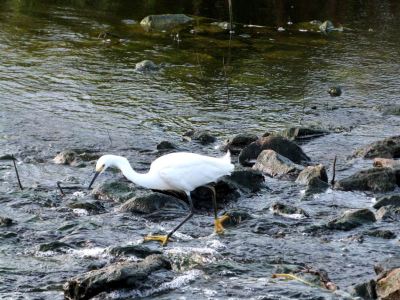
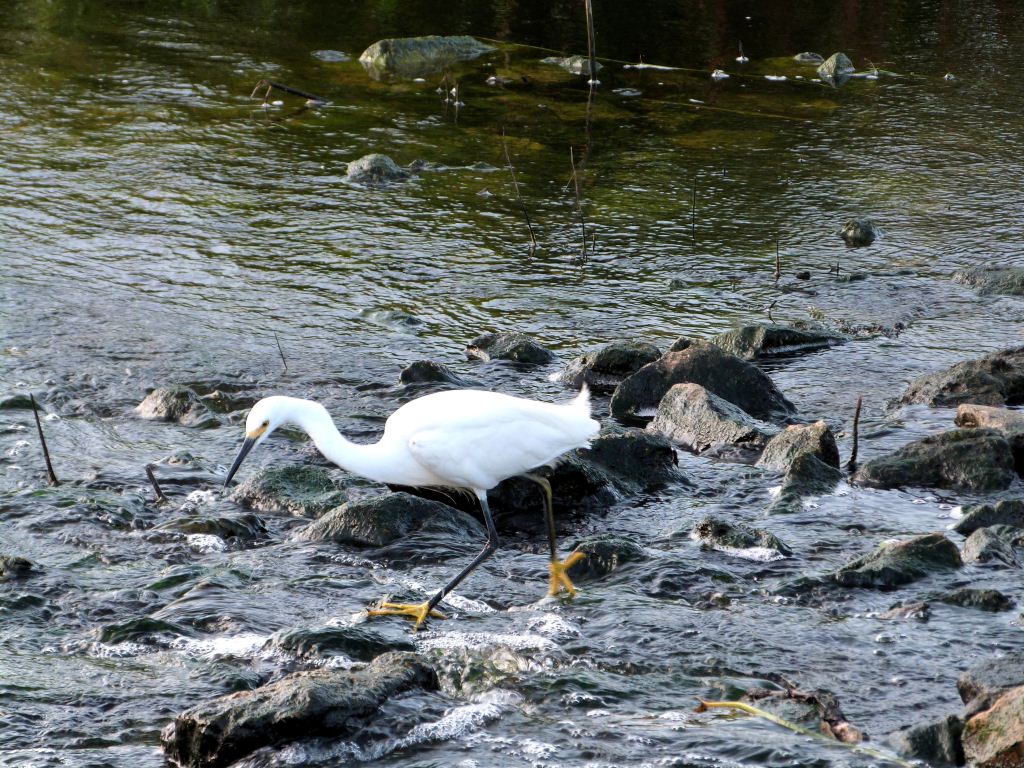
Snowy Egret Circle B 8-3-12 by Lee

Snowy Egret Circle B by Lee

Like other egrets, the Snowy Egret habituates the marshy edges of lakes and ponds, as well as other marshy areas, eating fish and almost anything else it can grab with its bill. The summer range of this elegant egret is broad – it can be found at and near many lakes, ponds, estuarial marshlands, and even wet pasturelands throughout America’s lower 48 states.  During winter it can be found all over Florida , as well as all along the Gulf Coast, along the East Coast as far north as North Carolina, plus parts of California (See Stokes & Stokes, Stokes Field Guide to Birds –  Eastern Region [noted above, in entry on the Wood Stork], at page 35.)  notwithstanding taxonomic “splitting”, this is basically the same bird that Europeans call the “Little Egret” (Egretta garzetta), which winters in northern Africa.  (See, accord, Chris Kightley, Steve Madge, & Dave Nurney, Pocket Guide to Birds of Britain and North-West Europe [British Trust for Ornithology/Yale University Press, 1998], page 19.)
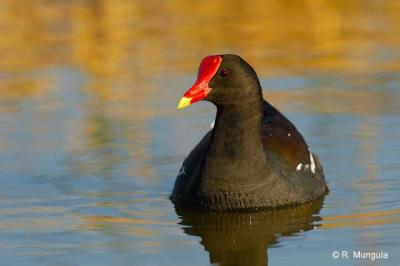
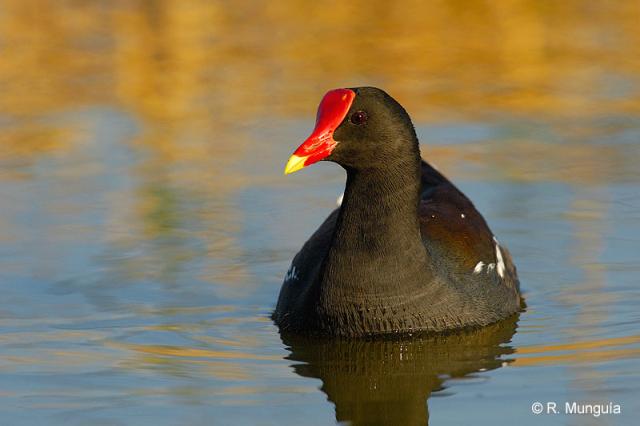
CommonMoorhen (Gallinula chloropus) by Reinier Munguia
CommonMoorhen (Gallinula chloropus) by Reinier Munguia

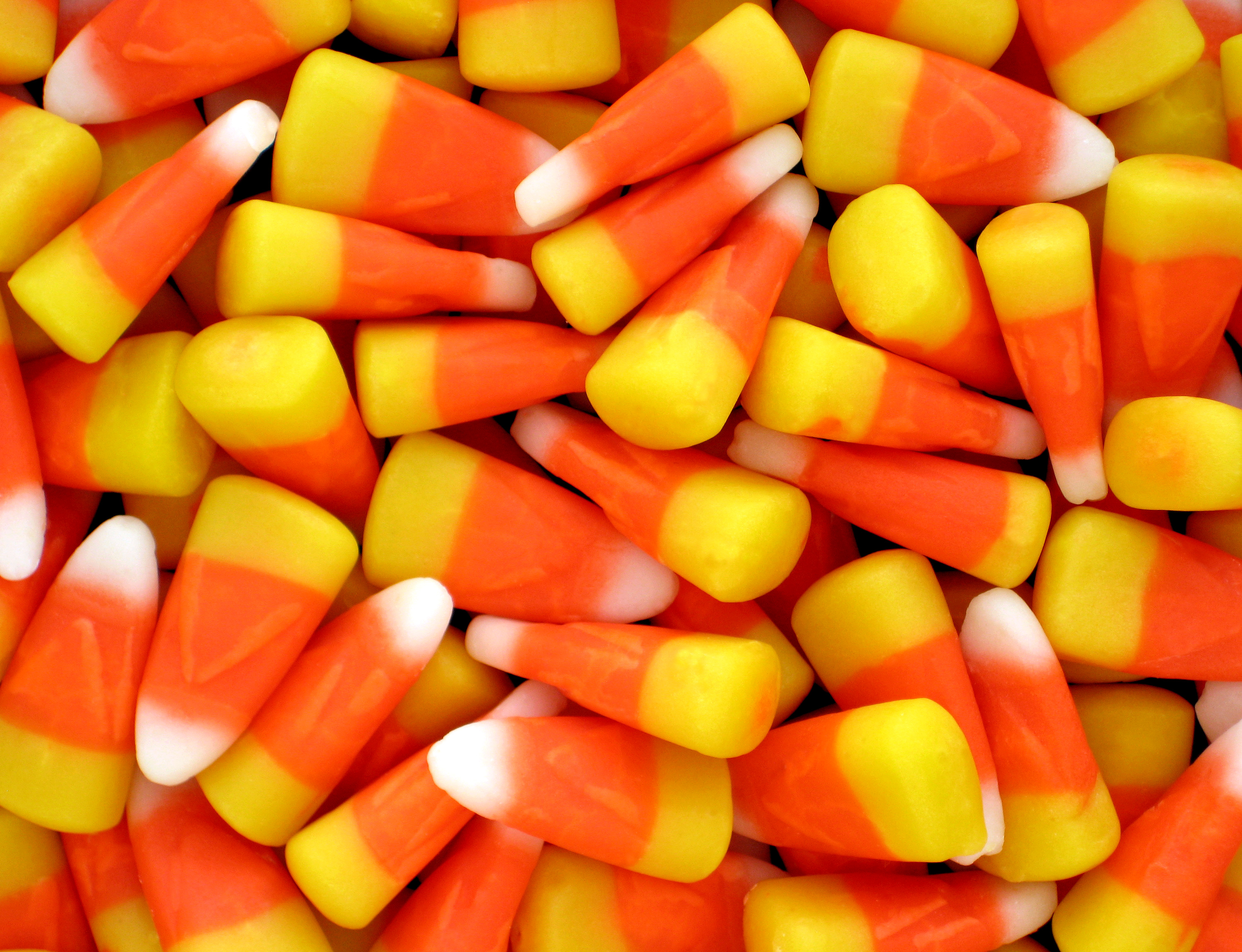
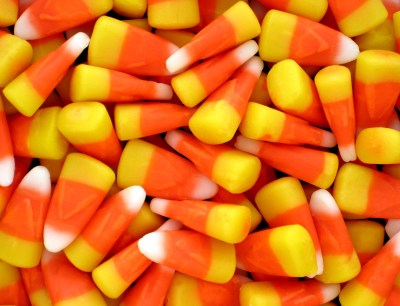
Candy-Corn

Candy-Corn

FLORIDA  GALLINULE   (a/k/a “COMMON MOORHEN” & “COMMON GALLINULE”:   Gallinula chloropus).

This gallinule (i.e., chicken-sized marsh-fowl) is almost all black, with a characteristic and conspicuous yellow-tipped scarlet-red bill.  (Actually the scarlet part of the bill can fade to a less vibrant reddish hue during winter.)  Due to the specific color pattern and shape of this gallinule’s bill, ornithologist Lee Dusing aptly calls this the “candy corn” bird.  (Some of us remember “candy corn” as a trick-or-treat candy.)  This waterfowl makes a variety of noises, including chicken-like clucking noises (befitting its nickname “moorhen”).  The Florida Gallinule is quite similar to the American Coot (which, though a similarly shaped black gallinule, is distinguishable by its all-white bill) and the Purple Gallinule (which is distinguishable due to its male’s iridescent peacock-blue, indigo, and slightly purplish breast and neck feathers, and its glossy green back feathers).  The long “fingers” (i.e., toes) on their feet enable this gallinule to spread out their modest body weight so that they can “walk” on lily pads and similar vegetation that floats in marshy lentic waters.  This gallinule (or “moorhen”) habituates lakes, ponds, and marshy wet places, often near cattails, summering in states east of and within the Mississippi River Valley, plus a few coastal place on the West Coast.  (See Stokes & Stokes, Stokes Field Guide to Birds – Eastern Region [noted above, in entry on the Wood Stork], page 139; Bull & Farrand, Eastern Region [noted above, in entry on the Wood Stork], at page 459.)  Its diet includes marshy vegetation (especially seeds), snails, land bugs, and water bugs.  This rail-like bird is entertaining to watch, routinely bobs its head while swimming across a pond.  Like coots they confidently swim in open-water contexts where they are easily observable to appreciative bird-watchers (like me).

Wow!  That’s another 5 of the 15 birds that the Webels and I observed, that morning, from the Webels’ pond-side backyard.   Stay tuned!  God willing, the remaining 5 birds will be given their proper recognition, at this excellent bird-site!

**

On the morning of February 9th, AD2015, from the pond-side backyard of Bob & Marcia Webel (while enjoying breakfast and Christian fellowship with the Webels), I saw 14 birds:  Great Blue Heron, Brown Pelican, Mallard, Double-Crested Cormorant, and Black Vulture  –  as reported previously – plus Wood Stork, Lesser Scaup, Osprey, Snowy Egret, White Ibis, Common Tern, and Florida Gallinule,   — as reported above  —  as well as Muscovy Duck, Great Egret, White Ibis, and Common Tern, plus the cooing of a nearby Mourning Dove was clearly recognizable.  It is hoped (God willing) that one more report will supplement this one, so the remaining 5 birds will be properly recognized for their lacustrine appearances on that Monday morning.

James J. S. Johnson loves duck ponds, having formerly taught Environmental Limnology and Water Quality Monitoring for Dallas Christian College, as well as other courses on ecology and ornithology.  The hydrologic cycle Scriptures (quoted at the beginning of this bird-watching report) are especially appreciated by Jim, as a Certified Water Quality Monitor, certified by and serving the Texas Natural Resource Conservation Commission, providing reports on Furneaux Creek to the Trinity River Authority of Texas.  Like us all, birds need clean water!  Accordingly, backyard pond habitats are for bird-watching!

*

Pond-side Birdwatching in Florida I

Other Articles by James J. S. Johnson

*
Seventh Anniversary

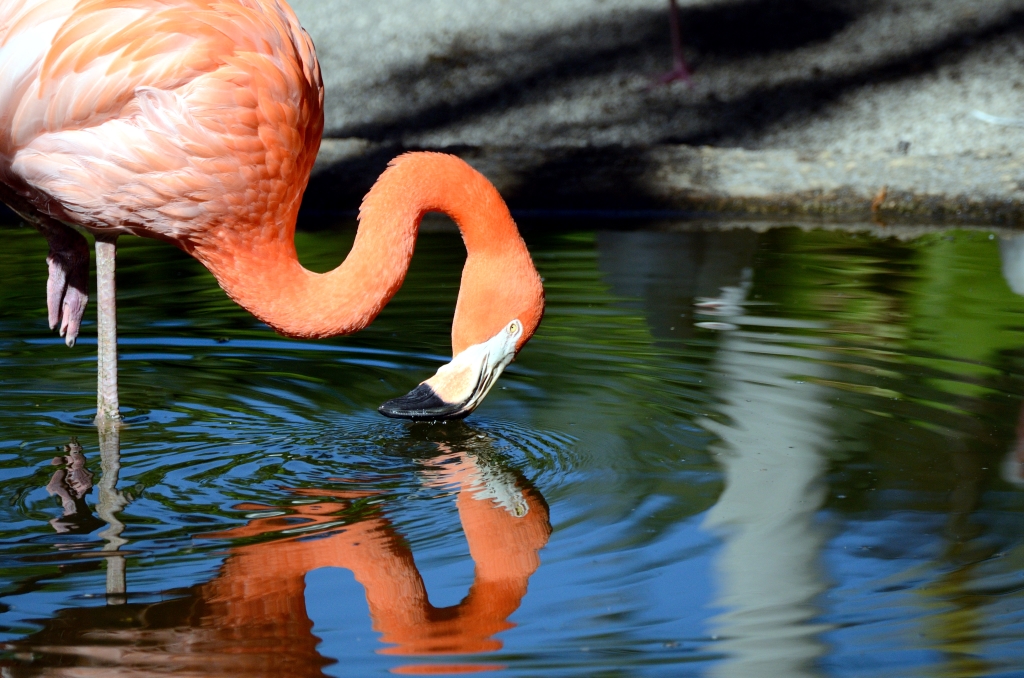
Flamingo by Dan' at Flamingo Gardens

Flamingo by Dan’ at Flamingo Gardens

Wow! Has it now been seven years since I started writing the Birds of the Bible articles? February 2008 is the original beginning month of the blog. It was started using Blogspot, but moved here to WordPress in July of that year. If you take a look at the articles below you will see how the Lord has been blessing over these years.

Today with almost 1.3 million visits (with WordPress), over 1,100 followers and 216 Flags of countries that you have visited from, I am amazed. Here is a quote from the 1st Anniversary blog:

Our pastor just reminded us of a quote by William Carey, an English Missionary to India:

Expect great things from God, attempt great things for God.

Great Blue Heron by Dan

I am not sure this was attempted as a “great thing,” but it was attempted to honor the Lord. That is a very great thing, and God has turned that attempt into a blog that has been visited over 10,000 times just since July. Many of those visits have come from around the world. Thank all of you for your visits.

Carey also said, “If I begin a thing I must go through with it!” This blog has been started and we trust we will continue to keep writing about God’s wonderful creation, especially His birds, and the joy of observing all God’s marvelous handiwork.

Because of this blog many you have become great friends that most we have never met personally, and you are from around the world, where Dan and I will never visit. Yet many of you will be sharing eternity with us and we will meet as we share the presence of Our Saviour. What a thought!

Thanks to the many writers that have added greatly to the blog; Ian, Dottie, Emma, Golden Eagle (Baron), James J S Johnson, Stephen, and others.

Thank you for your visits! Thank you for your friendships! Especially THANK YOU LORD!

I would like to use Paul’s words to express my feelings:

Grace to you and peace from God our Father and the Lord Jesus Christ. I thank my God upon every remembrance of you, always in every prayer of mine making request for you all with joy, for your fellowship in the gospel from the first day until now, being confident of this very thing, that He who has begun a good work in you will complete it until the day of Jesus Christ; (Philippians 1:2-6 NKJV)

Yes, I do pray for many of you even by name. I especially pray for those of you who do not know the peace of knowing my Savior and the Creator of these fantastic birds.

Some of the previous articles about the anniversaries:

*
5 Day Black and White Photo Challenge #5 – Happy Bird

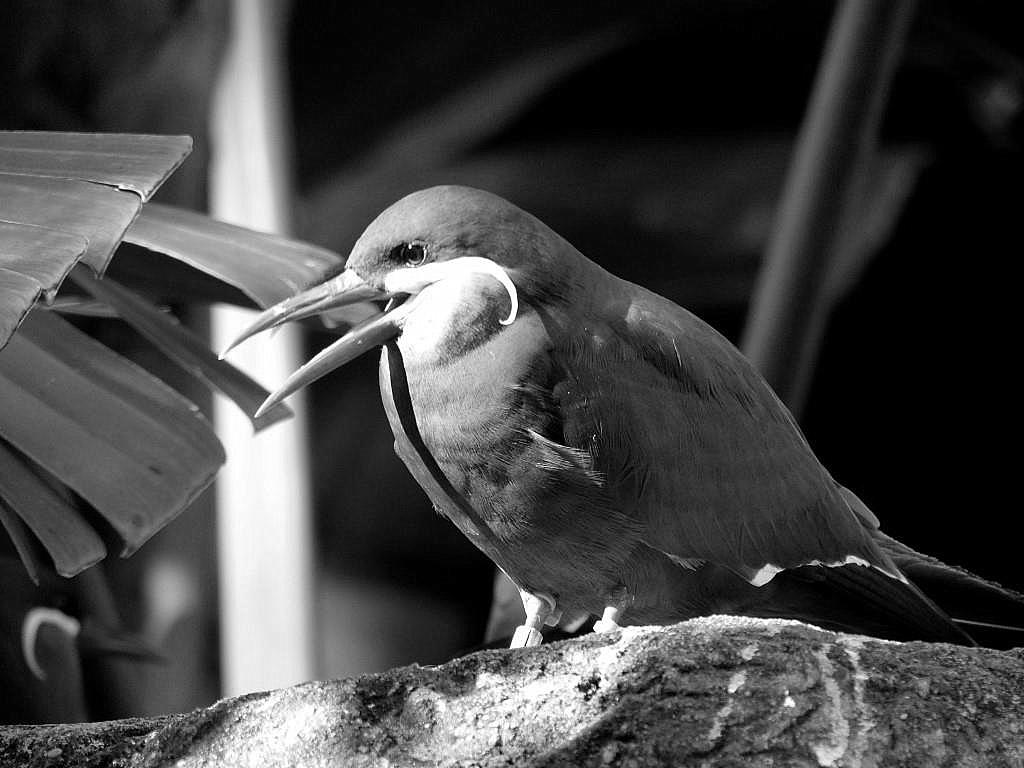
Inca Tern at Lowry Park Zoo by Lee

Inca Tern at Lowry Park Zoo by Lee

 Happy is the man that findeth wisdom, and the man that getteth understanding. (Proverbs 3:13 KJV)

There are only two rules for this challenge:

1. On 5 consecutive days, create a post using either a past or recent photo in B&W.
2. Each day invite another blog friend to join in the fun.

My fifth nomination is Talainsphotographybecause he has a variety of photos, most of them from nature. He “likes birds, bees, trees and flowers with sunsets, rainbows, and with rocky towers thrown in. But don’t be surprised if I throw in something else that is not nature oriented occasionally. If it catches my eye, I’ll put it in and try to give you some background on the photo’s subject matter!”

Again, I was nominated by Our Rumbling Ocean, and I nominated AussieBirderSukanya RamanujanThrough Open Lens, B is for Blessed and now Talainsphotography. Please check out all of these fine sites.

This is the fifth and final one in the 5-day challenge. I trust you have enjoyed them and checking out the sites of the ones nominated. There are many more of you that I could have nominated, but I could only choose five. Maybe another challenge will come along that interests me and I will pick you.

*

My photos so far for this challenge:

*

Good News

*

5 Day Black and White Photo Challenge #4 – Shore Friends

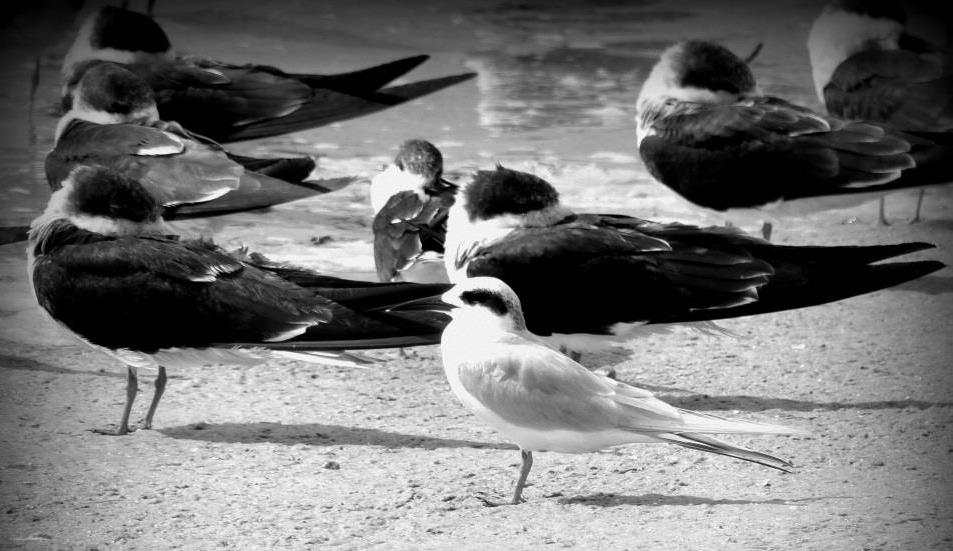
Tern with Skimmer Friends at MacDill AFB Shore 2015 by Lee

And great multitudes were gathered together unto him, so that he went into a ship, and sat; and the whole multitude stood on the shore. (Matthew 13:2 KJV)

But when the morning was now come, Jesus stood on the shore: but the disciples knew not that it was Jesus. (John 21:4 KJV)

There are only two rules for this challenge:

1. On 5 consecutive days, create a post using either a past or recent photo in B&W.
2. Each day invite another blog friend to join in the fun.

My fourth nomination is B is for Blessed, “Receive God’s Grace Every Day,” because Lilkah is a Christian who likes to encourage others with her photos, verses and enjoyable stories.

Again, I was nominated by Our Rumbling Ocean, and I nominated AussieBirder and Sukanya RamanujanThrough Open Lens and now B is for Blessed. Please check out all of these fine sites.

*

My photos so far for this challenge:

*

Good News

*

5 Day Black and White Photo Challenge #3 – Galah

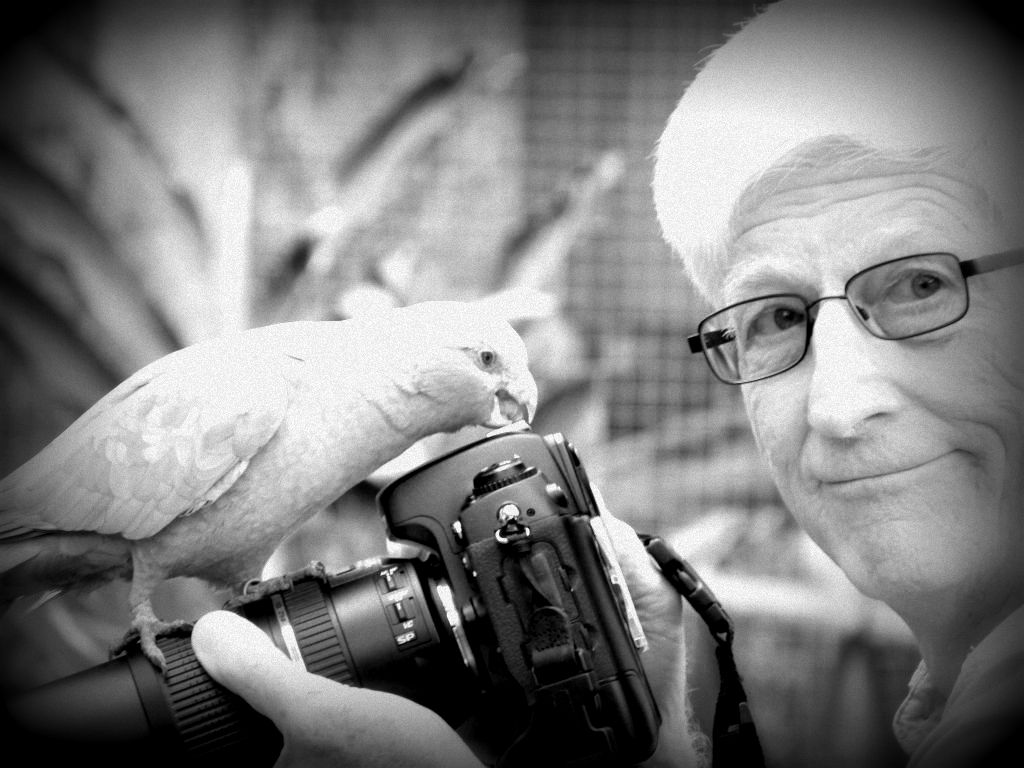
Galah (Eolophus roseicapilla) and Dan at Brevard Zoo BW

Beloved, do not be surprised at the fiery ordeal among you, which comes upon you for your testing, as though some strange thing were happening to you; (1 Peter 4:12 NASB)

There are only two rules for this challenge:

1. On 5 consecutive days, create a post using either a past or recent photo in B&W.
2. Each day invite another blog friend to join in the fun.

My third nomination is Through Open Lensbecause he is a great photographer and has some stunning photos. The articles are short, but informative. An all around variety of nature.

Again, I was nominated by Our Rumbling Ocean, and I nominated AussieBirder, Sukanya Ramanujan and now Through Open Lens. Please check out all of these fine sites.

(Couldn’t resist turning my favorite photo of Dan into Black and White)

*

My photos so far for this challenge:

*

Good News

*

5 Day Black and White Photo Challenge #2 – Woody

Wood Duck Brevard Zoo 120913 by Lee BW

Wood Duck Brevard Zoo 120913 by Lee BW

Neither shalt thou swear by thy head, because thou canst not make one hair white or black. (Matthew 5:36 KJV)

There are only two rules for this challenge:

1. On 5 consecutive days, create a post using either a past or recent photo in B&W.
2. Each day invite another blog friend to join in the fun.

My second nomination is Sukanya Ramanujanbecause she accepted the challenge and she has great photos. She is from Chennai, India (Same town a j mithra was from) She is a “multi-lingual professional with varied interests such as reading, travelling, music and photography.” Also check out her photos.

Again, I was nominated by Our Rumbling Ocean, and I nominated AussieBirder and now Sukanya Rananujan. Please check out both of these fine sites.

*

My photos so far for this challenge:

*

Good News

*


5 Day Black and White Photo Challenge #1 – Drying Out

Anhinga (Anhinga anhinga) Female at Vierra Wetlands By Dan'sPix B-W

Anhinga (Anhinga anhinga) Female at Vierra Wetlands By Dan’sPix B-W

There are only two rules for this challenge:

1. On 5 consecutive days, create a post using either a past or recent photo in B&W.
2. Each day invite another blog friend to join in the fun.

My first nomination is AussieBirderbecause their purpose is for “the appreciation of Australian birds and the love of birdwatching, sharing bird sightings, photographs, personal experiences and helpful information.” That pretty well sums up their purpose and feel they are up to the challenge.

I am thankful to Our Rumbling Ocean for nominating me. They live on the East Coast of South Africa and have lots of nature photos, plus an adorable son, Boeta. I enjoy following their adventures.

Like the heat of summer in a dry land, the angry shouts of those foreigners brought us to our knees. But like a thick cloud that blocks the summer heat, you answered their challenge. (Isaiah 25:5 ERV)

(I converted one of Dan’s great Anhinga photos)

AussieBirder

Our Rumbling Ocean

Dan’s Pix

*

Good News

*

Winter Willow Ptarmigan

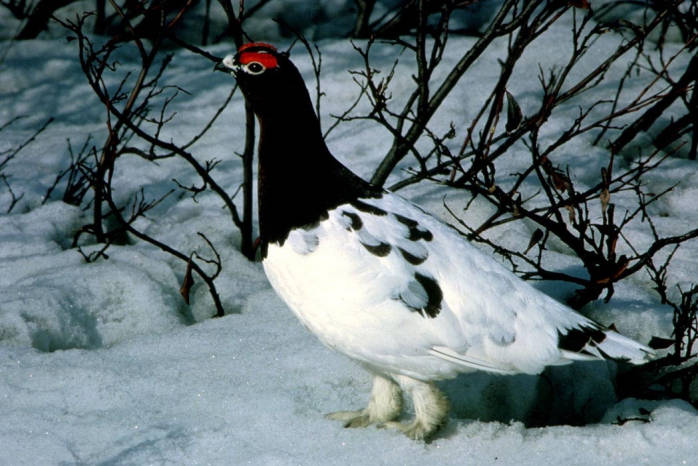
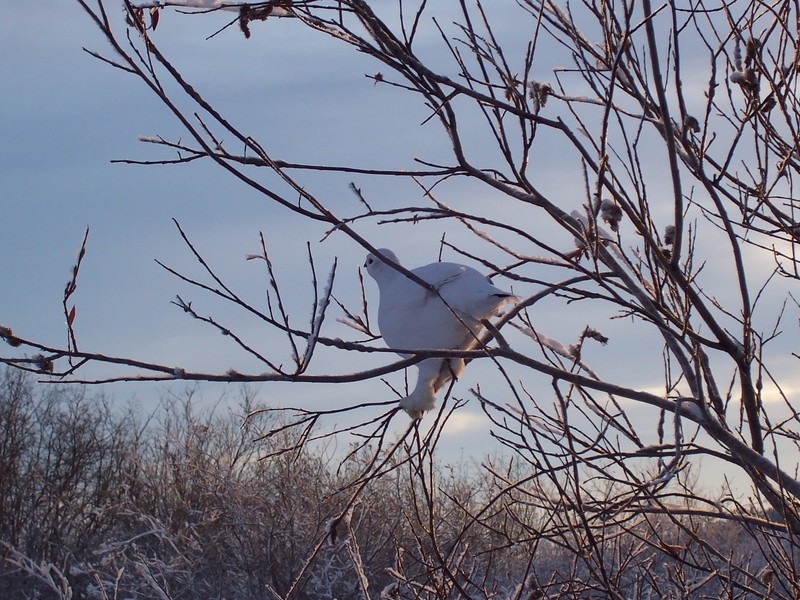
Willow Ptarmigan (Lagopus lagopus) ©USFWS

Willow Ptarmigan (Lagopus lagopus) ©USFWS

He gives snow like wool; He scatters the frost like ashes; (Psalms 147:16 NKJV)

Let them praise the name of the LORD, For He commanded and they were created. He also established them forever and ever; He made a decree which shall not pass away. Praise the LORD from the earth, You great sea creatures and all the depths; Fire and hail, snow and clouds; Stormy wind, fulfilling His word; (Psalms 148:5-8 NKJV)

Since so much of North America is having such a cold and snowy winter, thought that you might like watching a Willow Ptarmigan in its winter outfit.

Lesley the Bird Nerd produced this YouTube and thought you might enjoy watching how the Lord has prepared this bird to survive in winter.

We are going to drop down to freezing the for a few nights here in Central Florida, but nothing like what many of you are experiencing. Stay warm and enjoy the Lord’s Creations.

God thunders marvelously with His voice; He does great things which we cannot comprehend. For He says to the snow, ‘Fall on the earth’; Likewise to the gentle rain and the heavy rain of His strength. He seals the hand of every man, That all men may know His work. (Job 37:5-7 NKJV)

The willow ptarmigan (Lagopus lagopus) is a bird in the grouse subfamily Tetraoninae of the pheasant family Phasianidae. It is also known as the willow grouse and in the British Isles, where it was previously believed to be a separate species, as the red grouse. It is a sedentary species, breeding in birch and other forests and moorlands in northern Europe, the tundra of Scandinavia, Siberia, Alaska and northern Canada, in particular in the provinces of Newfoundland and Labrador. It is the state bird of Alaska. In the summer the birds are largely brown, with dappled plumage, but in the winter they are white with some black feathers in their tails (British populations do not adopt a winter plumage). Nesting takes place in the spring when clutches of four to ten eggs are laid in a scrape on the ground. The chicks are precocial and soon leave the nest and while they are young, both parents play a part in caring for them. The chicks eat insects and young plant growth while the adults are completely herbivorous, eating leaves, flowers, buds, seeds and berries during the summer and largely subsisting on the buds and twigs of willow and other dwarf shrubs and trees during the winter. (Wikipedia)

*

Willow Ptarmigan (Lagopus lagopus)  Winter ©WikiC

Willow Ptarmigan (Lagopus lagopus) Winter ©WikiC

Willow Ptarmigan – State of Alaska with videos

Willow Ptarmigan – All About Birds

Willow Ptarmigan – Wikipedia

Willow Ptarmigan – Kidzone

Phasianidae – Pheasants, Fowl & Allies Family

Wordless Birds

*