According to Birds and Bloom magazine site, there are Birds of the Month.
“You’ve probably heard of birth month gemstones and birth month flowers, but have you heard of birth month birds? It might come as a surprise to learn every month of the year has not only a representative jewel and flower, but also a bird. From owls to ravens, here are the birds that represent everyone’s birthdays.”
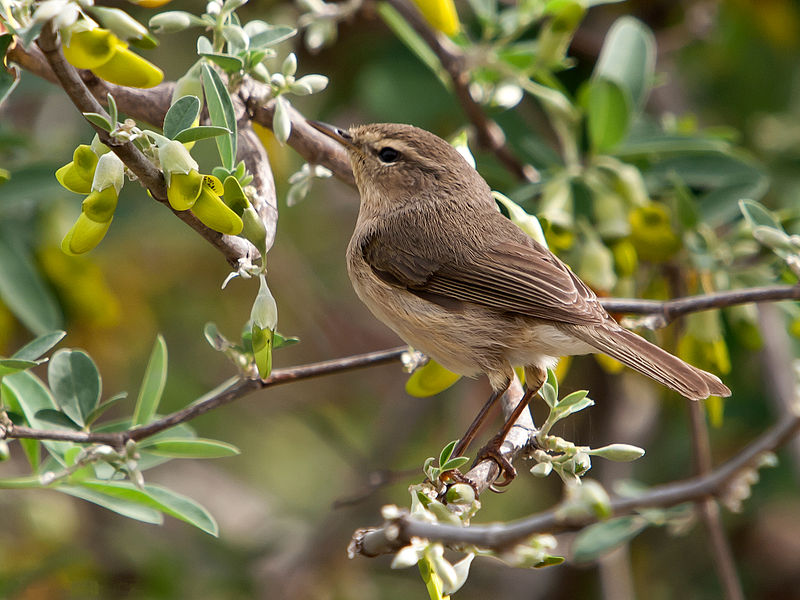
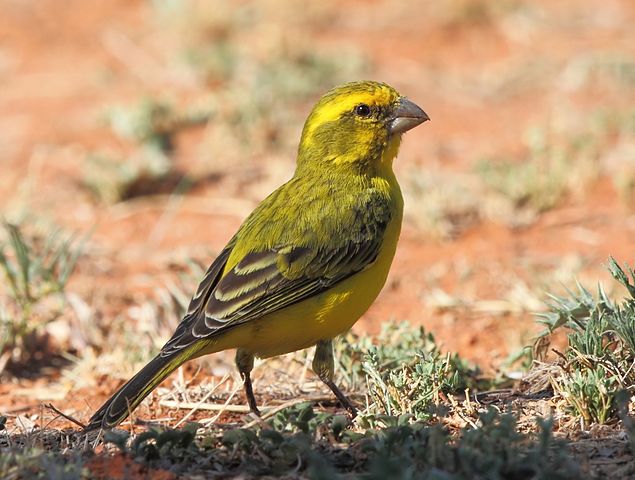
Perhaps it’s fitting that the bird for the month of Peeps candy is the canary. Some canaries live in the wild, but others, such as the domestic canary, are kept as pets. They’re not all yellow, either; some are red, while others are yellow and black. As part of the finch family, they are cheerful birds with a delightful song. To find them in the wild, you’d need to go to the Canary, Madeira or Azores Islands.
When I consider thy heavens, the work of thy fingers, the moon and the stars, which thou hast ordained; What is man, that thou art mindful of him? and the son of man, that thou visitest him? For thou hast made him a little lower than the angels, and hast crowned him with glory and honour. Thou madest him to have dominion over the works of thy hands; thou hast put all things under his feet: All sheep and oxen, yea, and the beasts of the field; The fowl of the air, and the fish of the sea, and whatsoever passeth through the paths of the seas. O LORD our Lord, how excellent is thy name in all the earth! (Psalms 8:3-9 KJV)
“And the stork, the heron after her kind, and the lapwing, and the bat.” (Leviticus 11:19)
This is just a quick note, from my part of Texas, to report seeing some white egrets lately.
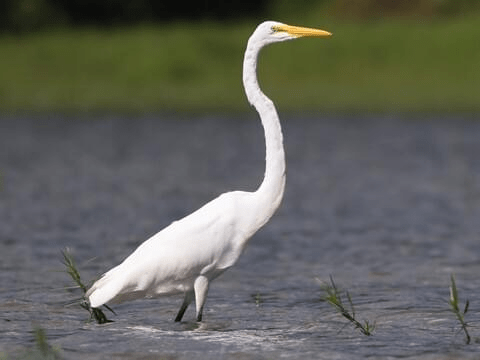
GREAT WHITE EGRET, wading in pond-water (Cornell Lab of Ornithology photo credit)
So much of (our part of) Texas is urbanizing–and suburbanizing. So, frequenting a rural area, where birdwatching is convenient, is like hunting for an endangered species.
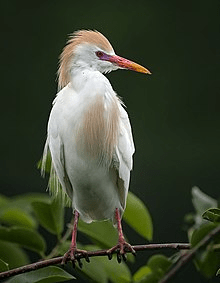
Last Sunday, in a journey that included driving through parts of Denton County and Tarrant County (Texas), my wife drove our car, as I looked out my car window–for birds in pastures and ponds. Ponds attract heron-like birds, such as foraging Great White Egrets (a/k/a “Great White Heron”). Likewise, pastures (with bovine cattle grazing), attract foraging Cattle Egrets.
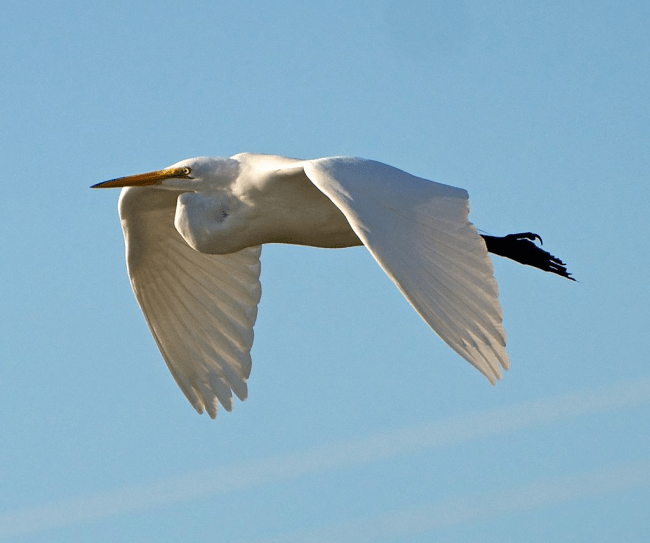
GREAT WHITE EGRET in flight (Wikipedia photo credit)
Thankfully, I saw several kinds of birds, from place to place, in field and trees, and besides ponds and drainage ditches. Among those birds, observed that day, were two kinds of heron-like wading birds–Great White Egret and Cattle Egret. Which led to composing this limerick:
GREAT WHITE & CATTLE EGRETS, OBSERVED WHILE TRAVELLING
Cute critters—some are wild, some are pets;
Yesterday, I observed white egrets!
Standing, beside a pond;
Others, in grass beyond …
Go birding—you’ll have no regrets!
It’s good to know that, so far, there are still some pastures and ponds, where we can still view egrets.
Yes, we can all thank the Lord for making and sustaining these oft-ignored (yet magnificent) wild white wonders (Job 9:10).
According to Birds and Bloom magazine site, there are Birds of the Month.
“You’ve probably heard of birth month gemstones and birth month flowers, but have you heard of birth month birds? It might come as a surprise to learn every month of the year has not only a representative jewel and flower, but also a bird. From owls to ravens, here are the birds that represent everyone’s birthdays.”
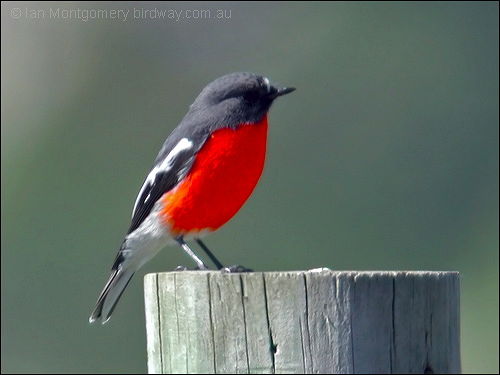
Flame Robin (Petroica phoenicea) by Ian
More from Birds and Bloom:
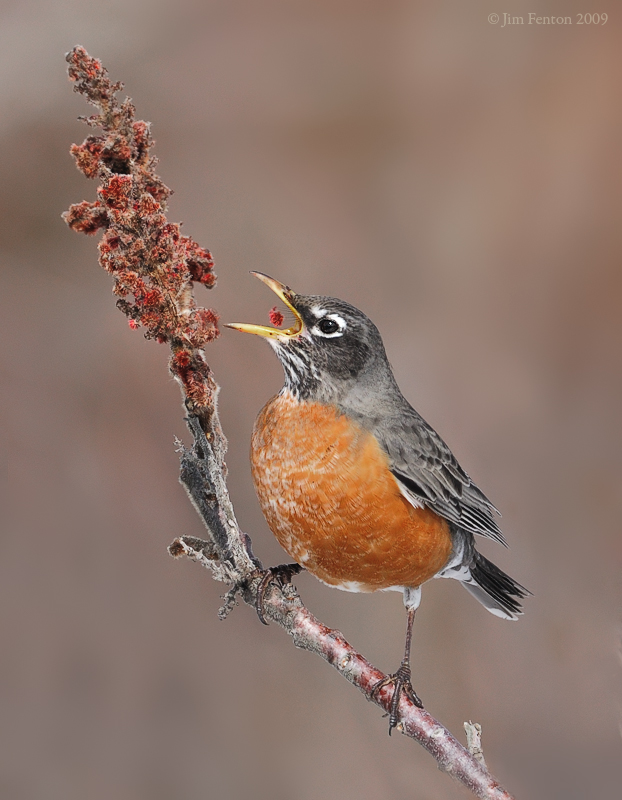
March: Robin
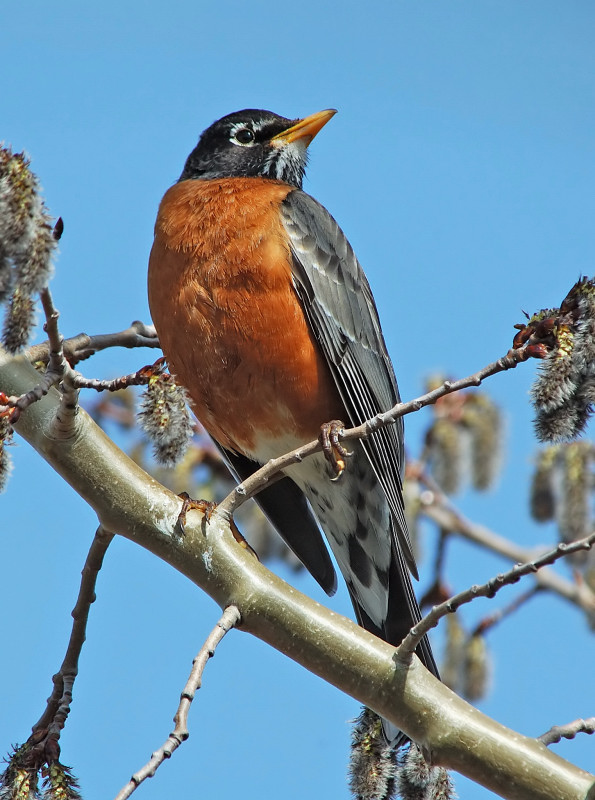
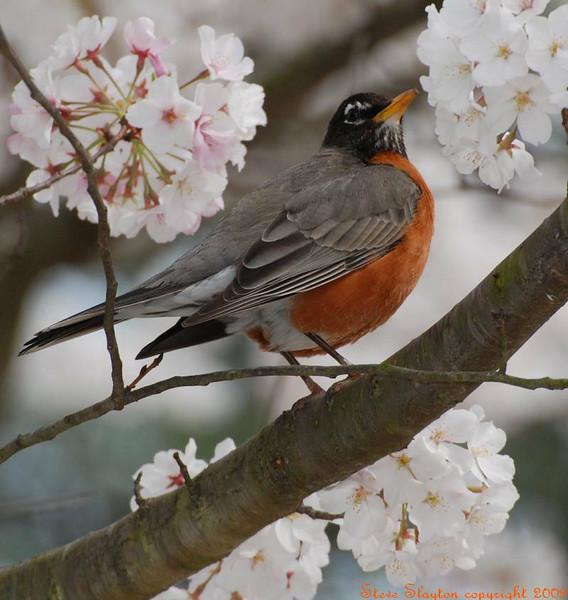
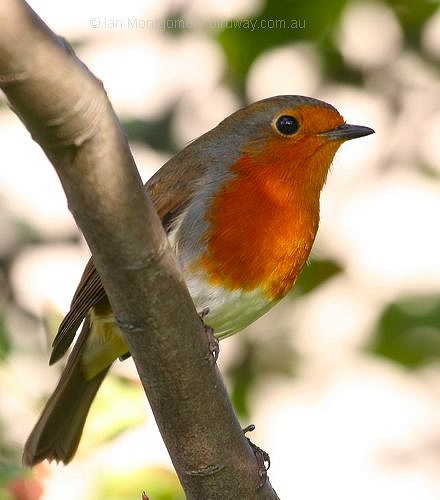
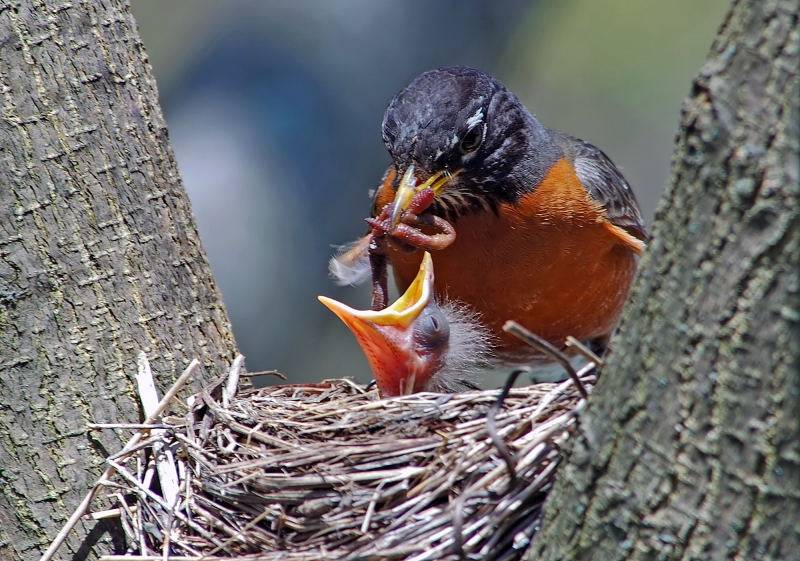
Fans of warm weather, brightly colored flowers and returning migrating birds adore the American robin. After all, many view it as the first sign of spring. To identify the March birth month bird, look for a medium-sized songbird with a red breast, gray upperparts and a yellow beak. Their sweet cheerily, cheer-up, cheerio song rings out on spring mornings.
“My husband and I were walking through the Tanger Family Bicentennial Garden in Greensboro, North Carolina, in June. I saw this little birdbath with what I thought was a fake bird… but then I heard it singing! I love the colors of this American robin, and I absolutely love photographing these beautiful birds!” says Teri Quintal.
According to Birds and Bloom magazine site, there are Birds of the Month.
“You’ve probably heard of birth month gemstones and birth month flowers, but have you heard of birth month birds? It might come as a surprise to learn every month of the year has not only a representative jewel and flower, but also a bird. From owls to ravens, here are the birds that represent everyone’s birthdays.”
More from Birds and Bloom:
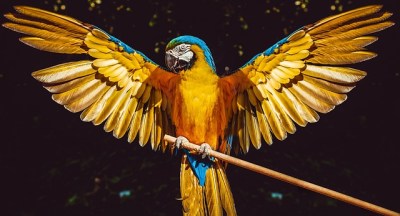
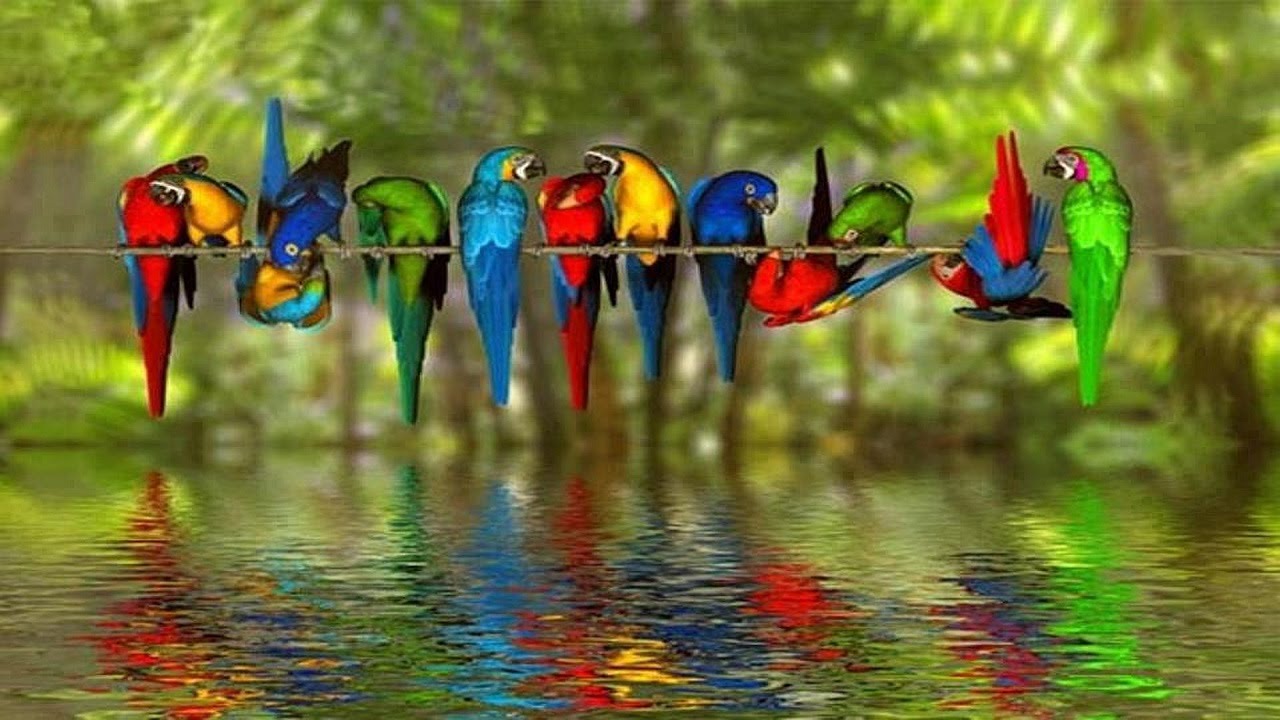
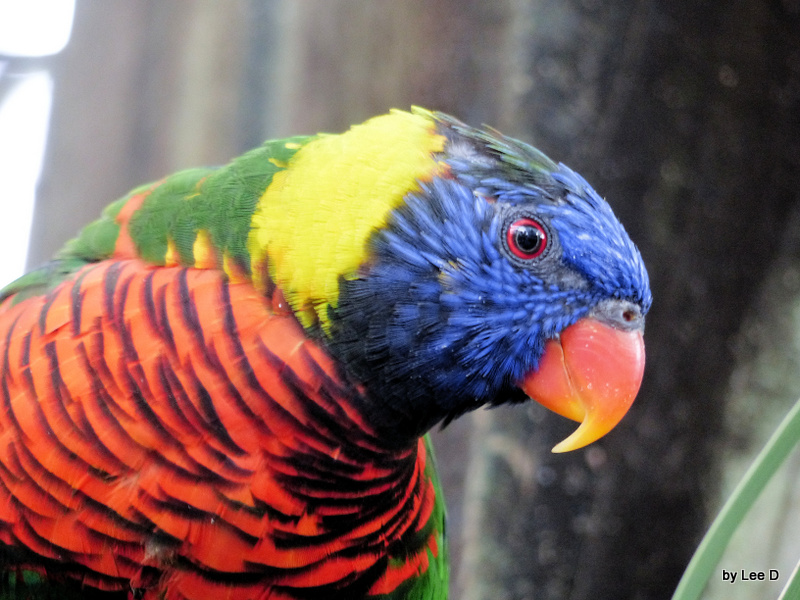
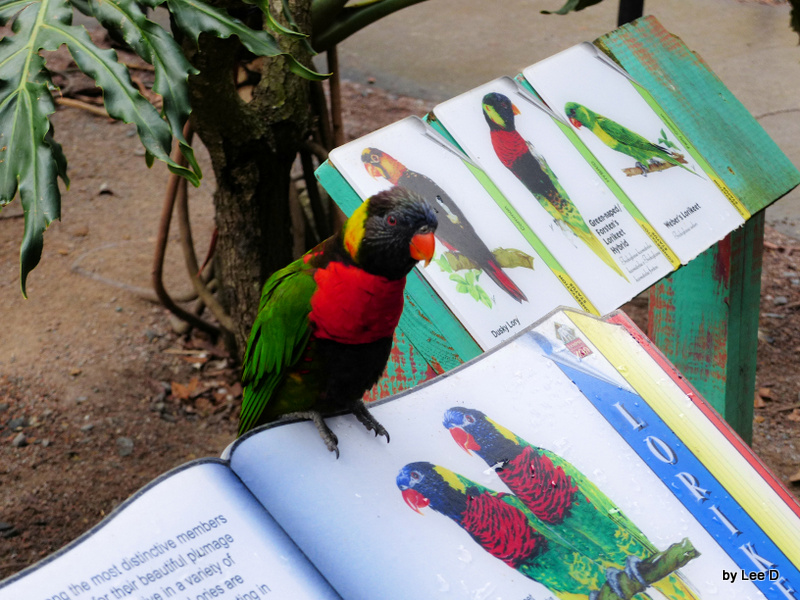
Spunky, smart, colorful and filled to the brim with personality, parrots always inspire smiles. While they’re perhaps most recognizable for sitting on pirates’ shoulders, there are more than 350 types of parrots in the world—and plenty of them live in the wild.
“I love this this bird because every single time my shutter would snap, he would pose. I took this picture at the Henry Doorly Zoo in Omaha, Nebraska,” says Katelyn Cheek.
Red-winged Parrot (Aprosmictus erythropterus) by Ian
Salmon-crested Cockatoo (Cacatua moluccensis) at Parrot Mtn by Lee
The rainbow shall be in the cloud, and I will look on it to remember the everlasting covenant between God and every living creature of all flesh that is on the earth.” (Genesis 9:16 NKJV)
Did you know that there is a bird assigned to each month like they do stones? I was not aware of these for birds. September, which is my birthday month has a Saphire. I’ll reveal September’s when we get to that post.
According to Birds and Bloom magazine site, there are Birds of the Month.
“You’ve probably heard of birth month gemstones and birth month flowers, but have you heard of birth month birds? It might come as a surprise to learn every month of the year has not only a representative jewel and flower, but also a bird. From owls to ravens, here are the birds that represent everyone’s birthdays.”
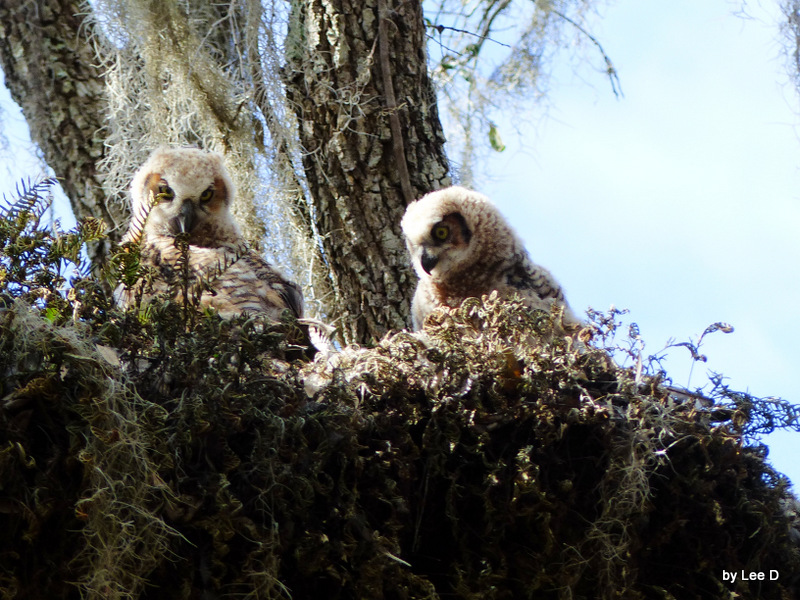
Great Horned Owl Youngsters at Circle B Bar Reserve by Lee
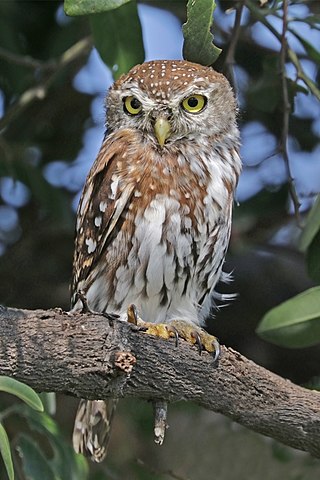
“January: Owl
Wise and formidable, owls preside over the woods at night. They’re commonly seen as a symbol of smarts, with great horned owls showing up on many a graduation card. Identify these January birth month birds by their large eyes, rounded heads and hooked beak. Listen for their hooting when the skies grow dark.”
They didn’t say which kind, so here are some of the articles we have done about Owls:
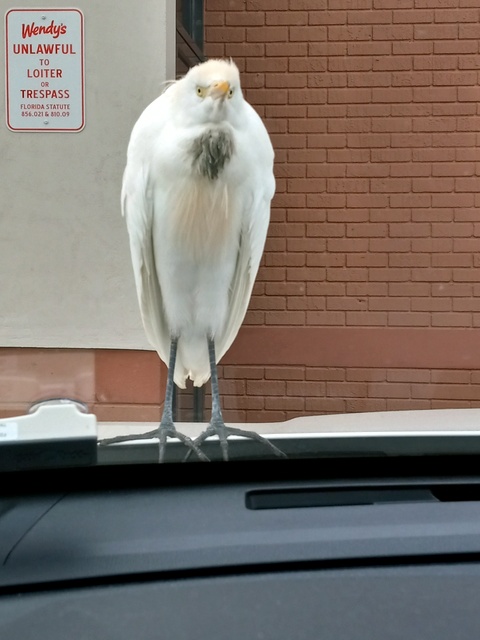
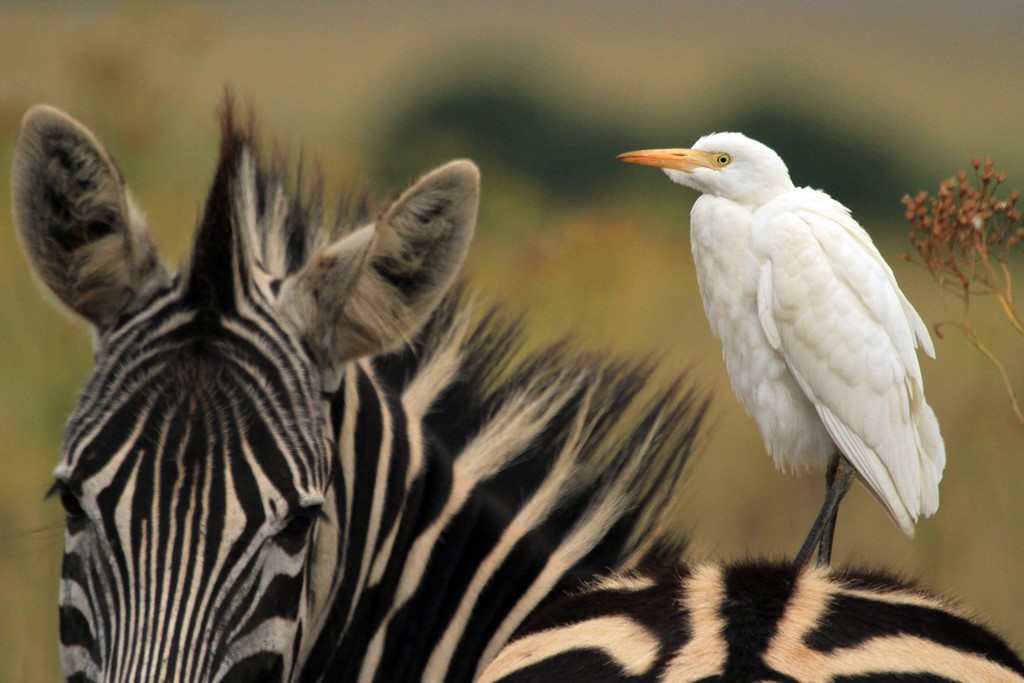
Adventurous Cattle Egret outside Wendy’s. When I pulled up to go into Wendy’s yesterday, this adventurous Cattle Egret decided to check my window. Later, as we were leaving, I noticed him riding on a man’s truck as he drove off. When the driver sped up, he finally hopped off.
If you notice the sign on the wall behind him/or her, it is Loitering.
Egret on Car in front of Wendy’s – no trespassing
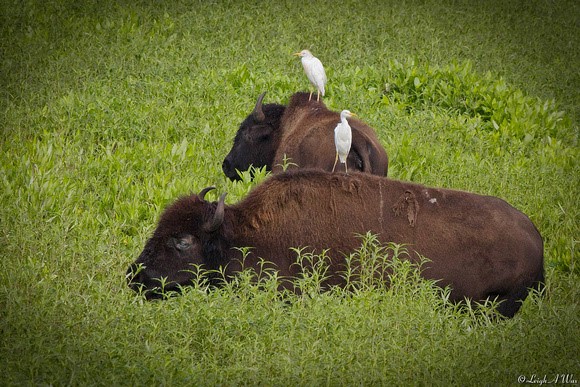
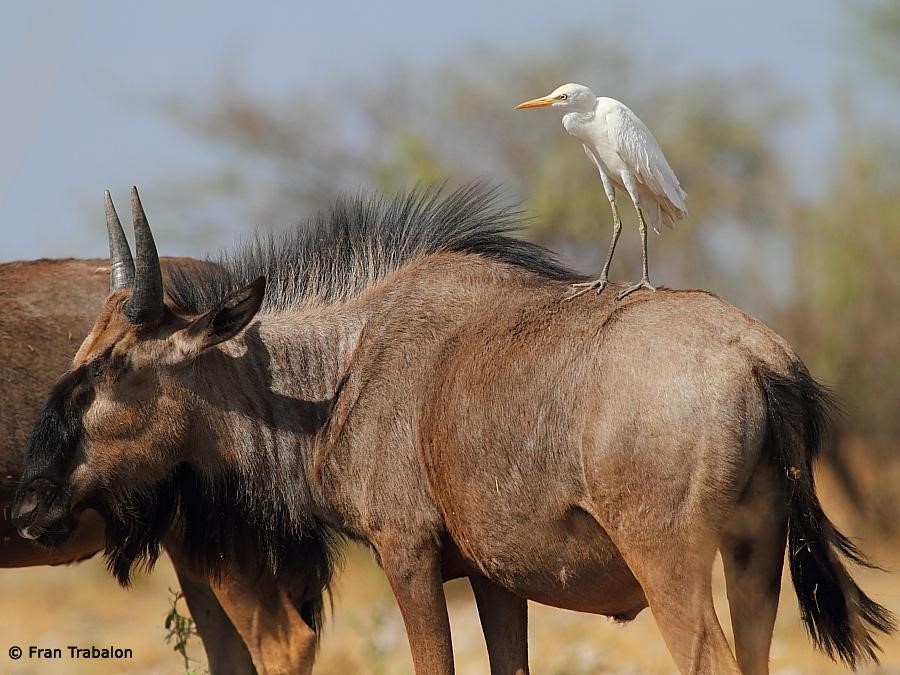
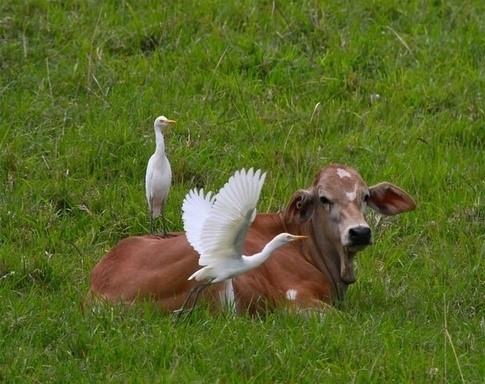
We have written about these Cattle Egrets before, but this was a very close encounter. They love to ride on cattle or whatever critter they can catch a ride on and try to find food. Here are a few of previous photos of Cattle Egrets.
“Look at the birds of the air, for they neither sow nor reap nor gather into barns; yet your heavenly Father feeds them. Are you not of more value than they?” (Matthew 6:26 NKJV)
For as the rain comes down, and the snow from heaven, and returns not there, but waters the earth, and makes it bring forth and bud, that it may give seed to the sower, and bread to the eater, so shall My Word be, that goes forth out of My mouth; it shall not return unto Me void, but it shall accomplish that which I please, and it shall prosper in the thing to which I sent it. (Isaiah 55:10-11)
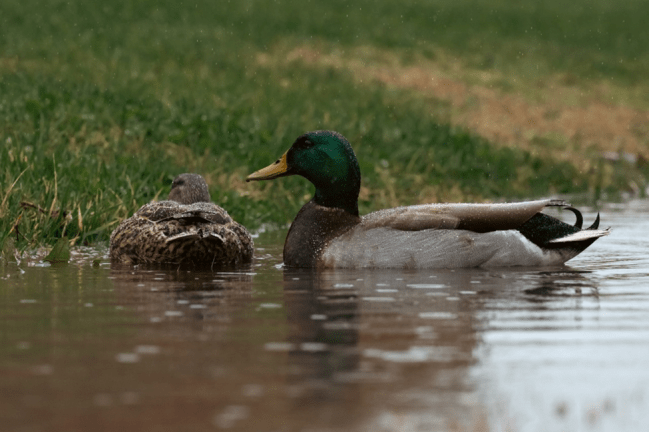
MALLARDS in rain-filled drainage ditch (Ian Sullens / U.S. Air Force photo credit)
Mallards like to float about in rainwater-runoff puddles and pools—in fact, a group of Mallards is sometimes called a “puddle” of Mallards. Mostly unnoticed by humans (even though Mallards are the world’s most ubiquitous duck), these delightful ducks serenely enjoy their own small part of God’s great global water cycle.
At my home, our front yard is bounded by roadside drainage ditches—so, when it rains a lot, those drainage ditches become brook-like pools of flooded rainwater.
Year after year after year, during the colder months (such as December), migratory Mallards (Anas platyrhynchos) seasonally seek out southern ponds and lakes, for over-wintering, yet they also frequent shallow rainwater-filled drainage ditches and rain-pooled puddles.
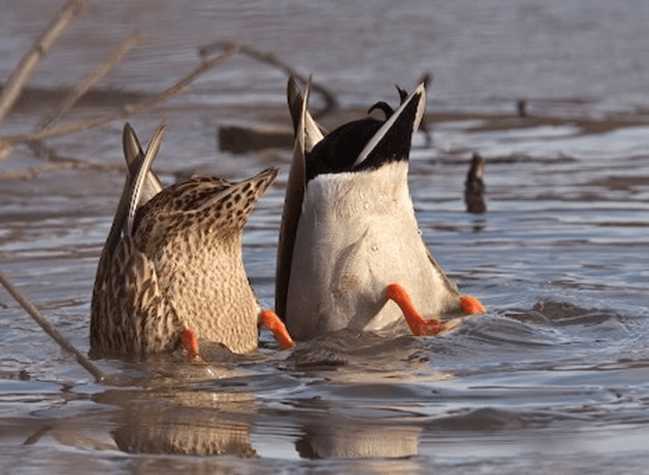
As dabbling ducks (a/k/a “puddle ducks”), they often “upend” in water, thus grazing on water-covered plants that they easily reach by flipping upside-down at the pooled water’s surface.
Dabbling ducks feed by straining food from the water’s surface or by submerging their heads while their tails remain out of the water. Male dabblers are usually brightly colored while females are drab. Plants make up most dabblers’ diets. Their method of taking flight is a sort of leap from the water’s surface. Look for them on rivers and close to shorelines. The most widely known dabbler duck is the mallard. The male has a dark green head while the female is dusky brown. Another dabbler species is the American black duck. Both male and female American black ducks look similar to mallard hens, only darker. Other dabblers include the American wigeon, green-winged teal, northern pintail (the male has long black tail feathers), and northern shoveler (named for its large, spatula-like bill). [Quoting CHESAPEAKE BAY JOURNAL, 33(9):40 (December 2023), posted at www.BayJournal.com ]
Since dabblers don’t dive into deep water, they don’t need large paddle-like feet for underwater propulsion mobility. So, it makes sense that God did not design dabbling ducks to have the larger paddle-shaped feet that diving ducks have. Also, it makes sense that dabbling ducks have legs (and feet) positioned near the middle of their bellies, for balancing themselves as they tread water, upside-down in shallow puddle-water, while the dabblers are grasping water-covered (and water-softened) acorns, nuts, seeds, and underwater plants.
God, in His providential care for the ducks He created, fitted His ducks with appropriate anatomies for the places they “fill” on Earth. Likewise, their behaviors fit their family life roles and territorial needs.
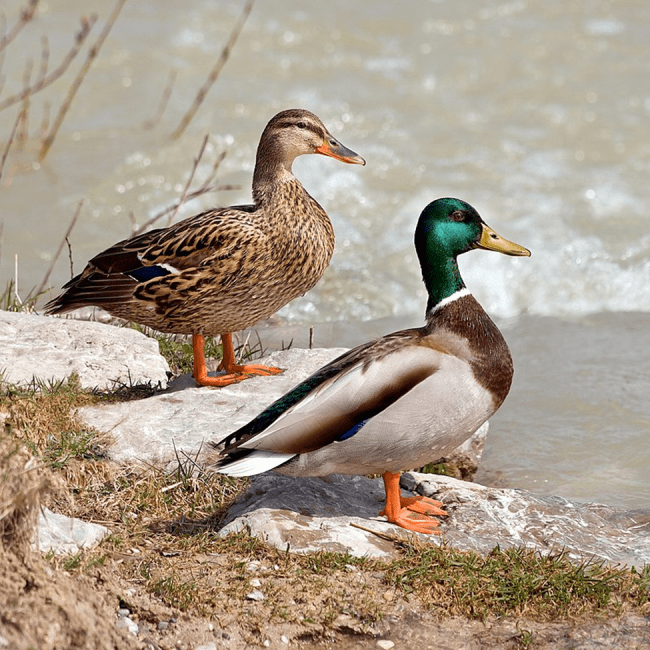
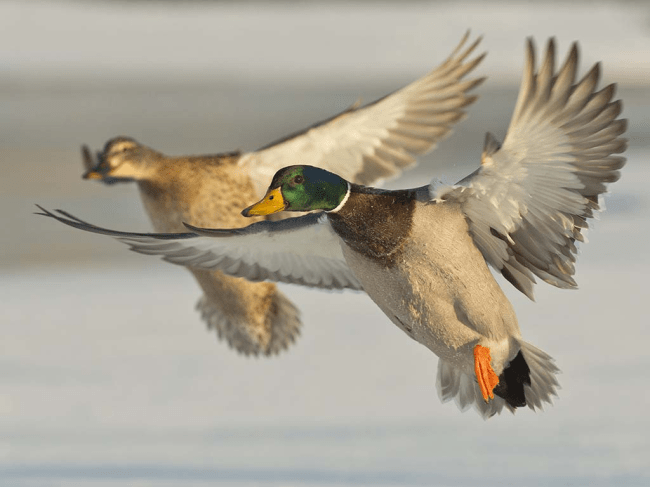
MALLARD male (R) & female (L) (Richard Bartz / Wikipedia photo credit)
Ornithologist Donald Stokes informs us that Mallards not only display sexual dimorphism (i.e., the 2 sexes have very different plumage, with the male being the distinctive “greenhead”), their vocalizations differ based upon sex:
When I first started studying Mallards I was surprised to find that the males and females make entirely different sounds. The quacking sound, which I had assumed all Ducks make, can be made only by the female. The male has two other calls of his own—a nasal rhaeb sound and a short Whistle-call. . . . An added advantage to knowing Mallard displays is that closely related species of Ducks such as Black Ducks, Gadwalls, Pintails, Widgeons and Teals have similar displays. Therefore, once you learn some of the patterns of Mallard behavior you will have a good start on being able to understand the behavior of these other Ducks as well. The Black Duck is particularly close in this respect, having nearly the same display repertoire as the Mallard. [Quoting Donald Stokes, GUIDE TO BIRD BEHAVIOR: VOLUME ONE (Boston, MA: Little, Brown & Company, 1979), pages 31-32]
Of course, hybrid ducks are common, proving that such hybridizing ducks really belong to the same created kind. For example, ornithologist Eugene McCarthy has documented that the Common Pintail (Anas acuata) is known to hybridize with the Mallard, as well as with American Black Duck (Anas rubripes), various pochards, various widgeons, various teals, Gadwall (Anas strepera), Northern Shoveler (Anas clypeata), and more. [See Eugene M. McCarthy, HANDBOOK OF AVIAN HYBRIDS OF THE WORLD (Oxford, UK: Oxford Univ. Press, 2006), pages 71-73.]
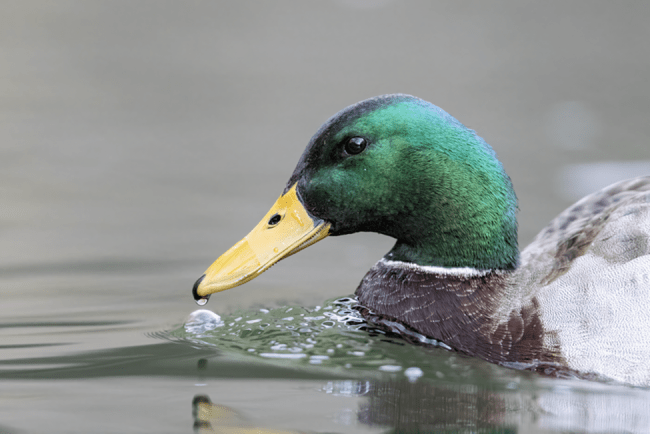
MALLARD MALE close-up (Chuck Homler / Wikipedia photo credit)
Interestingly, Mallards can be permanent (i.e., “year-round”) residents or migrants.
One of the reasons why mallard ducks are so plentiful is because they’re highly adaptable to climate, geography, temperature and diet. Particularly, they love shallow ponds, marshes and wetlands, as those calmer waters tend to produce the most aquatic bugs and plants—more so than fast moving rivers or deeper lakes. Mallards mate in pairs, and while some migrate to warmer temperatures, many are permanent residents in their nested homes throughout the United States. [Quoting Camo Trading, at www.camotrading.com/resources/the-upside-down-life-of-dabbling-ducks/ ]
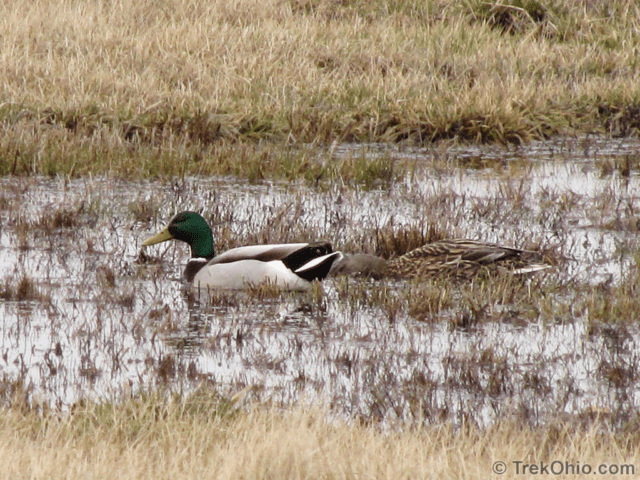
MALLARD male & female, in shallow wetland pool (TrekOhio.com photo credit)
In other words, God gave ducks what they need, anatomically and genetically (and even behaviorally)—for building families where they live—so that God’s ducks can be fruitful, multiply, and “fill” parts of Earth that God providentially prepared for their homes.
And they shall take gold, and blue, and purple, and scarlet, and fine linen.
EXODUS 28:5
Cardinal males are red birds, easy to see. Yet cardinal females have a softer-hued beauty of their own.
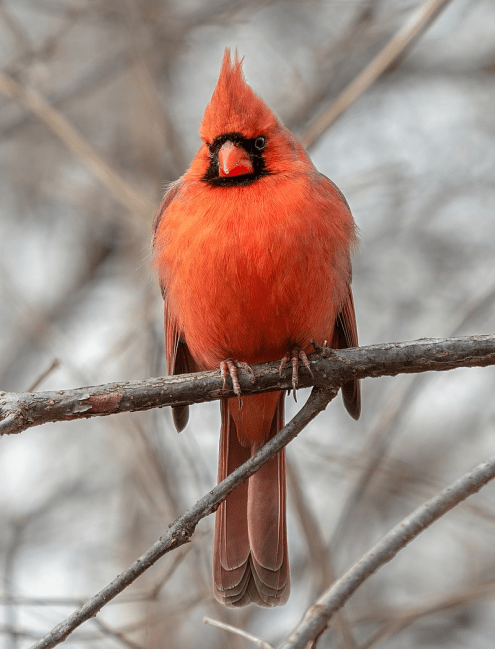
male Cardinal (Wikipedia / Rhododendrites photo credit)
Just as the Old Testament Tabernacle blended theological meaning with aesthetically attractive colors—as exemplified by Exodus 28:5 (quoted above), some birds are gold (e.g., Goldfinch, Yellow Warbler, Evening Grosbeak), or blue (e.g., Mountain Bluebird, Indigo Bunting), or purple (e.g., Purple Starling, Purple Honeycreeper), or scarlet (e.g., Scarlet Tanager, Northern Cardinal), or white as fine linen (e.g., Snowy Egret, White Ibis, Trumpeter Swan).
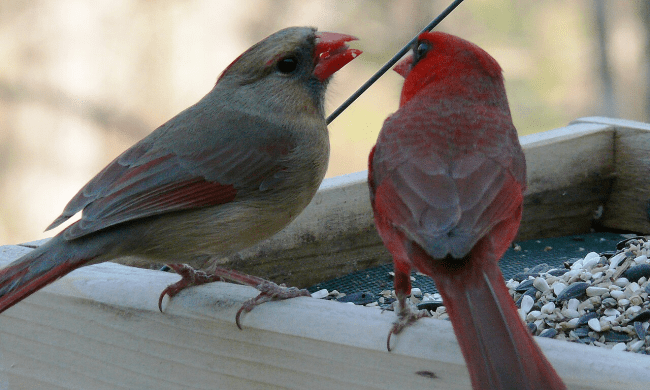
male Cardinal feeding female Cardinal (Wikipedia / Ken Thomas photo credit)
In fact, the Northern Cardinal (Cardinalis cardinalis) is often nicknamed the Redbird, because the male cardinal is almost all-covered in bright red plumage. Male cardinals, being bright red, are conspicuous—so conspicuous that they get noticed! Cardinals are so popular, in fact, that 7 states have officially adopted the Northern Cardinal as their official state bird: Illinois, Indiana, Kentucky, North Carolina, Ohio, Virginia, and West Virginia. (That’s more states than any other bird represents!)
Recently (i.e., during December of A.D.2024), it has been my prized privilege to hear Northern Cardinals chirping happily in and around trees, where I live and also in places that I visit. Perhaps the cardinals are extra talkative at this time of year. Or maybe I am paying better attention to the cardinals’ movements and vocalizations. Sometimes I see a cardinal flitting about, or hopping among leaf litter at the bottom of bushes, shrubs, or tree-trunks. Sometimes I see cardinals perching on tree branches. Then, suddenly, a cardinal might fly off to a nearly spot on the ground–or to a branch of another tree. Also, cardinal chirping–which can be a somewhat squeaky whistle–is often easy to recognize.
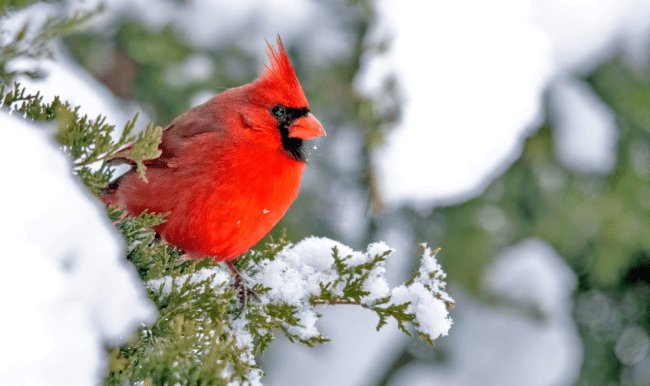
CARDINAL IN WINTER SNOW (All About Birds / Brad Imhoff photo credit)
What wonderful birds! What beauty the Lord built into these winged wonders!
The Cardinal is a favorite bird of many people and it’s easy to see why. The brilliant scarlet plumage of the male and the subtle shades of the female, combined with their clear melodic song, make them enjoyable to watch in any season. Male and female Cardinals sing equally well, a fact not generally known by those used to the widespread [yet erroneous] assumption that only male birds sing. Song is an important coordinating behavior in the life of a Cardinal. . . . In countersinging, one bird will sing one phrase several times and then the other [cardinal] will match it. Then the leader will sing a new phrase and the other will again match it. This type of countersinging that involves copying [musical] phrases functions to synchronize and unify members fo a pair; and when given between males, helps settle territorial disputes. [Quoting Donald Stokes & Lillian Stokes, “Northern Cardinal”, A GUIDE TO BIRD BEHAVIOR, volume II (Boston, MA: Little, Brown & Company), page 247]
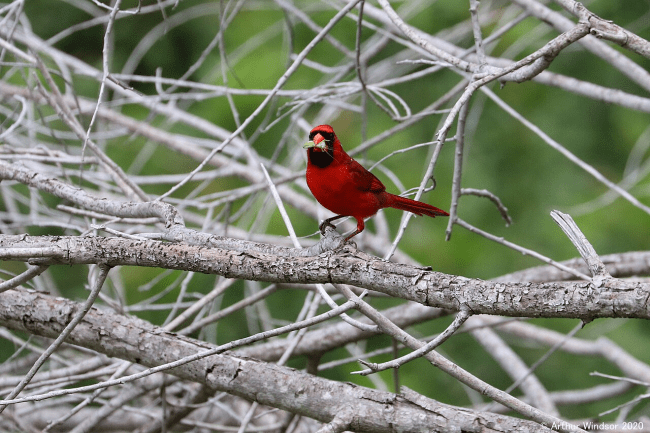
CARDINAL with grasshopper (Wikipedia / Arthur Windsor image credit)
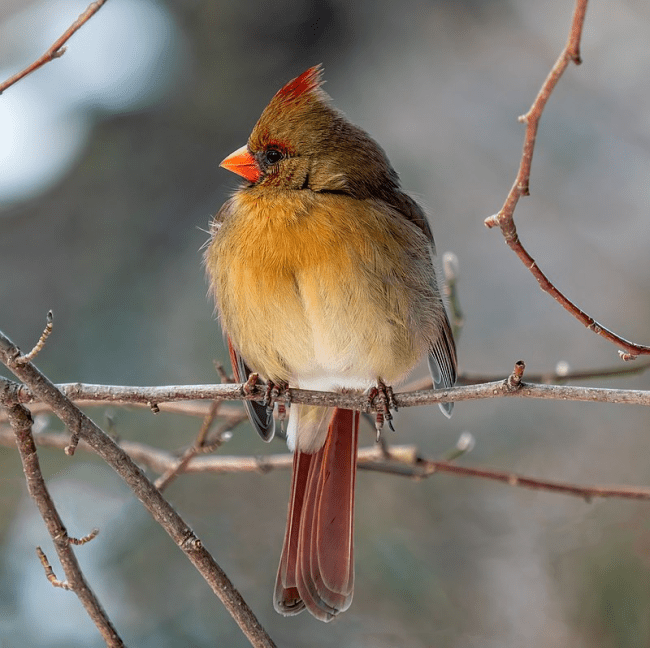
The Cardinal males are so brightly colored, with crimson-red wings and scarlet-red bellies, contrasting with black face-masks that showcase their red beaks. Female cardinals also have bright scarlet-red beaks, yet they are more camouflaged in their plumage hues—soft beige-cream bellies with russet-brown wings and head feathers, accented by reddish crests.
Cardinals are year-round residents—they don’t migrate to avoid cold winters. Rather, cardinals tough out winter weather—hence many scenic photographs display bright-red cardinals perched in tree branches against backdrops of snow-drifts. What beautiful pairs they are, to see in December, braving cold winds and chilly rains or snowfall.
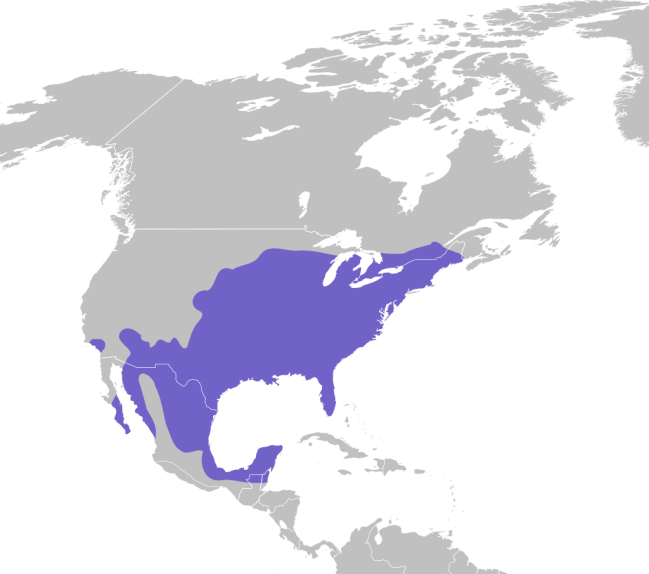
NORTHERN CARDINAL RANGE MAP (Wikipedia image credit)
So, as you journey through winter months, remember that there are times when you should stop being so busy, just long enough to gaze upon busy cardinals that flit about, outside, sharing with us overlapping bits of space and winter weather.
Sharp-shinned Hawk (Accipiter striatus) by Daves BirdingPix
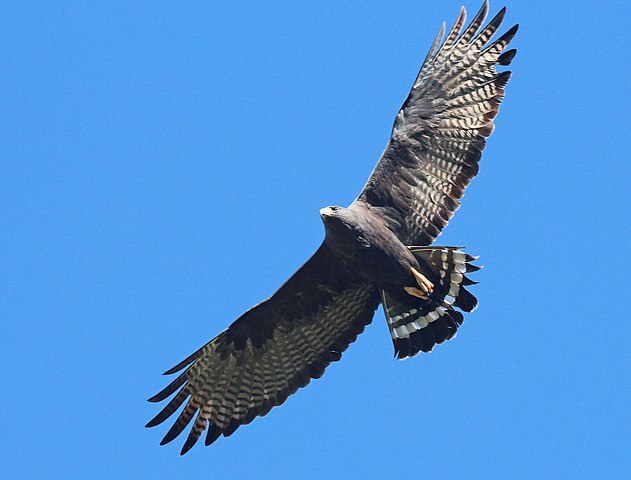
The other day while I was filling my gas tank, I looked up and spotted a Hawk flying overhead. He (or she) kept flying back and forth slowly. I have no clue as to what kind of hawk it was, but wondered which verses mentions the hawk? We have written about hawks many times here on the blog, and know it is one of the Birds of the Bible.
Job 39:26 is a great verse that asks a very thought-provoking question.
“Doth the hawk fly by thy wisdom, and stretch her wings toward the south?” (KJV)
I have Bible Gateway loaded on my computer and brought up that verse and asked to show all the various Bible versions. Looking through the various ways of asking or questioning God about His hawks was interesting. As I read through the various versions, it makes us realize how little we know about The Creator’s Wisdom.
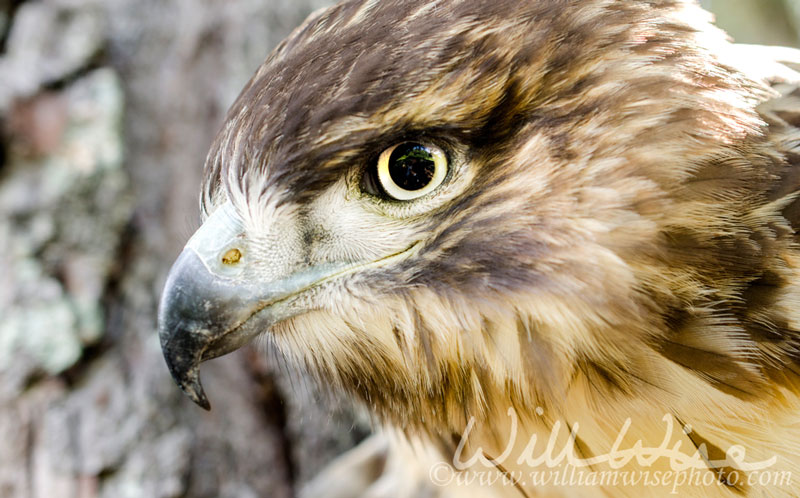
Raptor Bird of Prey, Juvenile Red Tailed Hawk profile, William Wise
“Was it through your know-how that the hawk learned to fly, soaring effortlessly on thermal updrafts? Did you command the eagle’s flight, and teach her to build her nest in the heights, Perfectly at home on the high cliff face, invulnerable on pinnacle and crag? From her perch she searches for prey, spies it at a great distance. Her young gorge themselves on carrion; wherever there’s a roadkill, you’ll see her circling.”
“Whether an hawk spreading abroad his wings to the south, beginneth to have feathers by thy wisdom? (Be it by thy wisdom that a hawk haveth feathers, and spreadeth his wings towards the south?)”
I’m very thankful that the Lord instructs the Hawks do spread their wings and come down here to Florida!! Especially in the winter!!
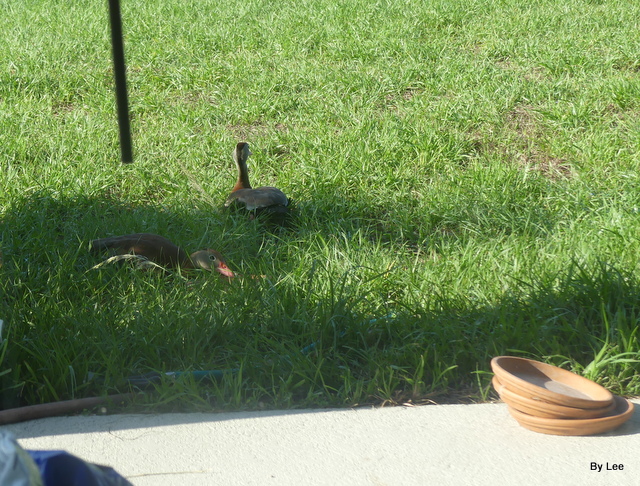
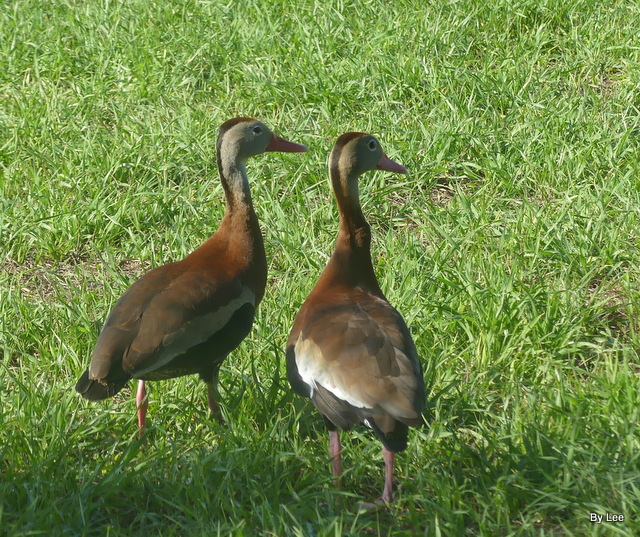
Our Black-bellied Whistling Ducks have shown up again this winter just like previous years. I’ve written about them many times, but I am always glad when they return each winter. I searched through some previous post about them and found this one from 2011. I especially like the verse quoted, “”I will instruct thee and teach thee in the way which thou shalt go: I will guide thee with mine eye.” (Psalms 32:8 KJV)” That verse means a lot as I am learning to adjust to my current situation. See Time To Find and Watch Birds Again. I trust you enjoy this older post again.
Black-bellied Whistling Ducks feeding 6/11 by Lee
Birdwatching and Blessings – 6/11/21
This morning our Whistling Duck pair came looking for food, as is becoming their routine. Dan was planning to mow the grass today, so the food dishes were empty and stacked on the patio. So, I put one close by and gave them some food.
Church Signs:
God likes it when you smile, but he loves it when He is the reason!
The will of God will never take you to where the grace of God will not protect you.
Truths To Consider:
Black-bellied Whistling Ducks looking to see if they should go that way. 6/11
“I will instruct thee and teach thee in the way which thou shalt go: I will guide thee with mine eye.” (Psalms 32:8 KJV)
Black-bellied Whistling Ducks maybe asking or deciding which way to go. 6/11
“And they said unto him, Ask counsel, we pray thee, of God, that we may know whether our way which we go shall be prosperous.” (Judges 18:5 KJV)
Decisions! Decisions! Always best when the Lord is involved in seeking answers.
I haven’t been active here for several months. So, it’s time to start writing posts again. An explanation is due to those of you who follow this blog.
On October 17th, the love of my life went to heaven. “To be absent from the body is to be present with the Lord.” The Lord chose to take Dan on to be with him. Dan developed a brain bleed 10 days earlier and never regained consciousness.
Since Dan was our main photographer, I’ll either repost previous favorite photos or use other photographers. So, bear with me as I try to get back in the “Birding Saddle”, so to say.
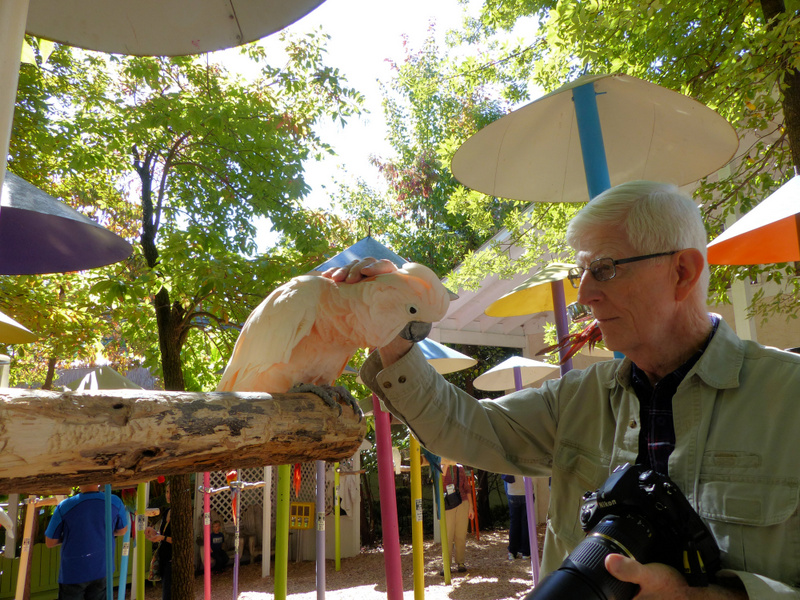
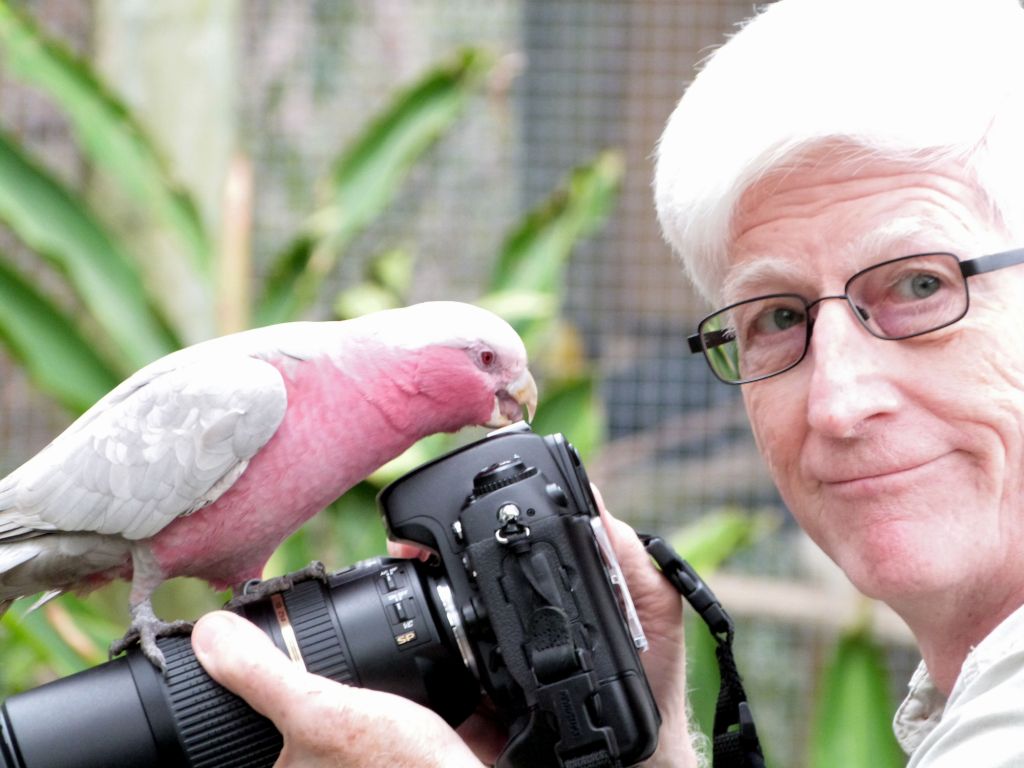
This is Birdwatching really close
Galah (Eolophus roseicapilla) and Dan by Lee
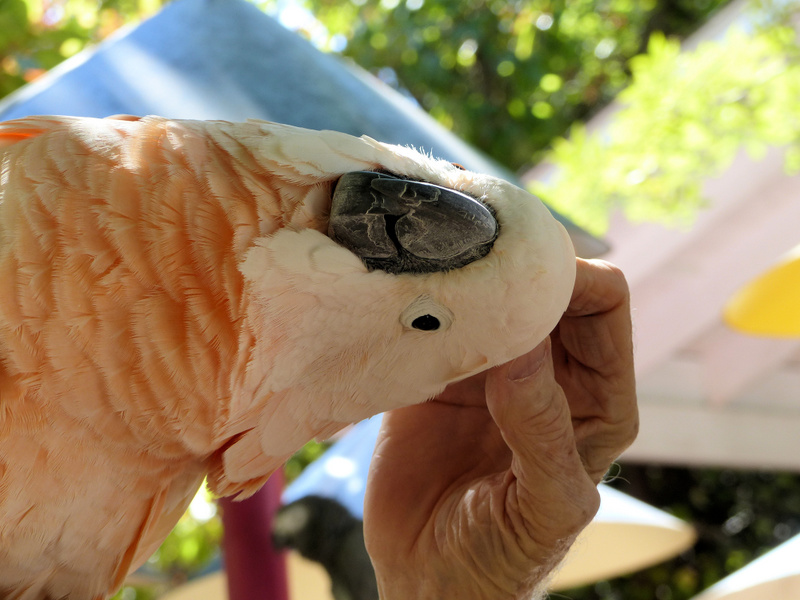
These last two pictures are my favorites as I caught the mischievous Galah checking out Dan’s camera and then Dan’s expression as he looked at me.
As for Dan, I’ll see him later. He, like me, accepted the Lord as his personal Savior when he was a youngster.
“For God so loved the world that He gave His only begotten Son, that whoever believes in Him should not perish but have everlasting life.”
(John 3:16 NKJV)
Have you accepted Him?
For the invisible things of Him [i.e., the God of the Bible] from the creation of the world are clearly seen, being understood by the things that are made, even His eternal power and deity; so that they are without excuse[αναπολογητους]; because that, when they knew God, they glorified Him not as God, neither were thankful; but they became vain in their imaginations, and their foolish heart was darkened. (Romans 1:20-21)
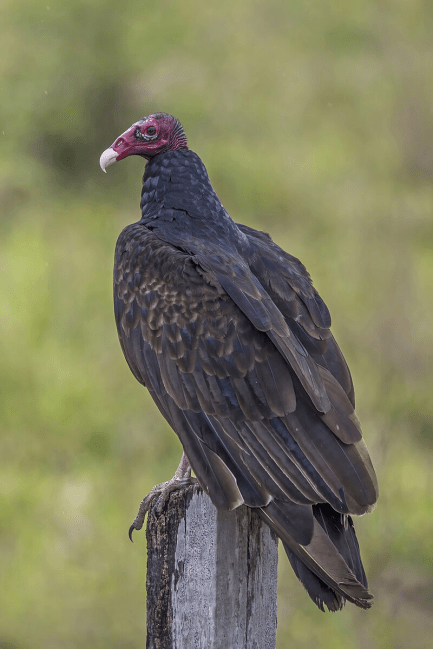
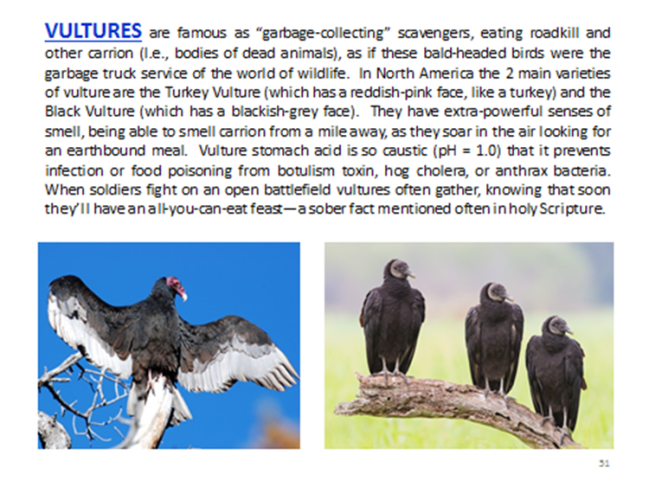
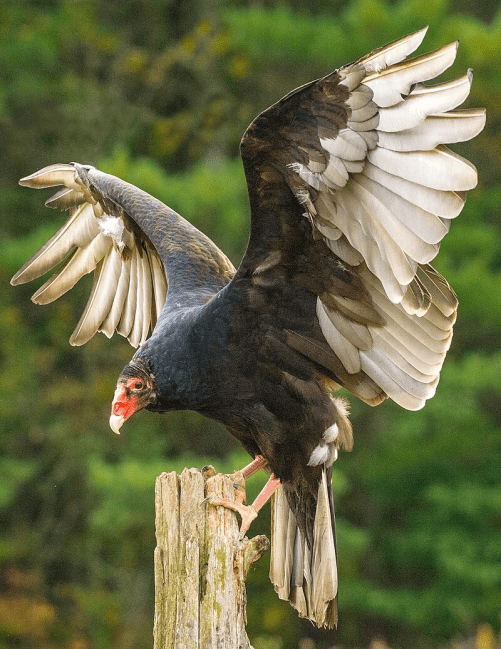
TURKEY VULTURE perching Wikipedia / Charles J. Sharp photo credit
The two inexcusable sins, routinely committed by evolutionist fools [and notice that the term “fools” is factually appropriate, because Romans 1:21 says that “their foolish heart was darkened”], are the inexcusable failure to glorify God as the Creator He ubiquitously proves Himself to be — plus the inexcusable failure to give thanks unto Him for the uncountable blessings that He caringly and providentially provides to us all (Romans 1:18-25; Acts 14:17; Daniel 5:23; Psalm 14:1).
Meanwhile, speaking of giving thanks, Thanksgiving is fast approaching; many folks are thinking about the American Turkey. See “Strangers and Pilgrims (and the American Turkey)”, posted at https://leesbird.com/2014/11/25/strangers-and-pilgrims/ .
But what about another large bird that we often see, the Turkey Vulture? This scavenger, known scientifically as Cathartes aura, is actually a very valuable neighbor in whatever habitat they inhabit.
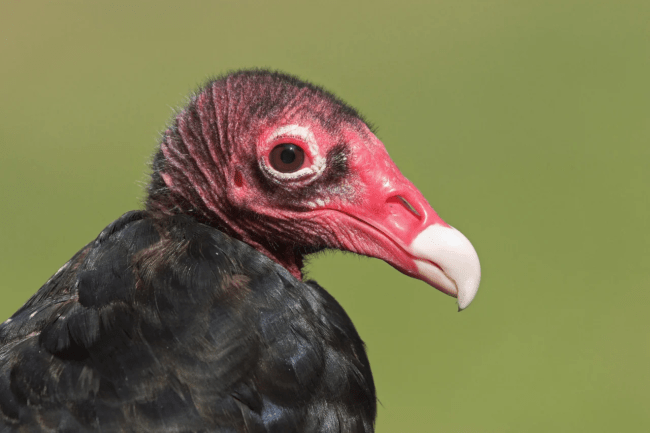
Turkey vultures are most interesting creatures. One can tell, just by looking at them, that they are well-suited to their task as disposers of dead things. Their beaks and feet lack the power and the design for killing living things, though their hooked beaks allow them to free the last shred of meat clinging to a carcass. Their heads are completely featherless, which makes it easier to clean them of bacteria and parasites encountered while rooting around in dead carcasses. Turkey vultures nest on crags, caves and clefts in rock piles. They don’t bother to build a nest. The female lays her two brown, mottled eggs on the bare ground and incubates them for forty-one days. When the babies hatch, they are fed exclusively on a diet of regurgitated carrion. (Yumm!??) These birds sound totally disgusting, right? Actually, they are quite impressive. They are a very large bird—males and females are quite similar in appearance, with shiny black feathers. They have a wingspan of up to six feet, and the underside tips of their flying feathers are greyish white. When they are observed soaring aloft on the thermals, they are quite beautiful indeed, and beauty is in the eye of the beholder. [Quoting Sandy Stoecker, Highlands Center for Natural History naturalist]
But, how did the Turkey Vulture get its valuable role in the so-called “circle of life” neighborhood (i.e., within the dynamic life-and-death ecosystem of this fallen (i.e., good-yet-“groaning”-with-sin and-death) world? The fallenness of our world is thanks to Adam (Romans 5:12-21); however, the gift of life–from the beginning–plus the providential and redemptive sustaining of life in this fallen world–is thanks to our Lord Jesus Christ, Who is both the life-giving Creator (John 1; Colossians 1; Hebrews 1) and the life-restoring Redeemer (Romans chapter 8, especially Romans 8:21-23).
Because the creature itself also shall be delivered from the bondage of corruption into the glorious liberty of the children of God. For we know that the whole creation groaneth and travails in pain together until now. And not only they, but ourselves also, which have the firstfruits of the Spirit, even we ourselves groan within ourselves, waiting for the adoption, to wit, the redemption of our body. (Romans 8:21-23)
TURKEY VULTUREin Canada Wikipedia / Peter Burian photo credit
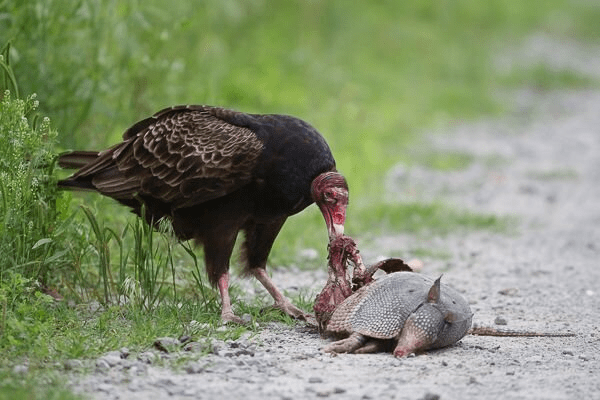
It’s not by good luck that turkey vultures can find rotten carrion, gobble it down, and not die of food poisoning. Vultures have powerful senses of sight and smell; they detect dead animals from afar. Equipped by God for scavenging in this fallen world, they serve as garbage collectors/processors, picking apart and eating roadkill and other carcasses.
Why don’t they get sick or die of botulism? The acidity of vultures’ digestive tracts is astounding. The digestive juices in their stomachs can reach a pH between 1.5 and 1.0, more corrosive than car battery acid and caustic enough to instantly denature to death almost any bacterial or viral pathogen! [Chen, Y. et al. 2023. Vultures as a Model for Testing Molecular Adaptations of Dietary Specialization in Birds. Avian Research. 14: 100128; Buechley, E. R. and C. H. Sekercioglu. 2016. Vultures. Current Biology. 26 (13): R560–R561. Genesis 15:11 reports on carrion-seeking birds whose behavior resembles that of vultures.]
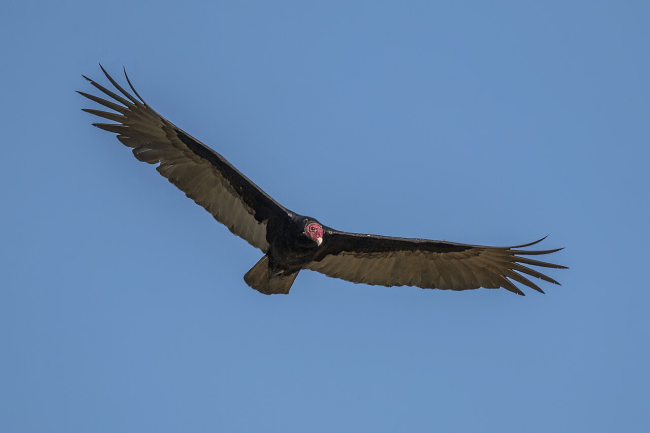
TURKEY VULTURE soaring Wikipedia / Charles J. Sharp photo credit
In other words, if the vultures’ Creator had not constructed their stomachs with such germ-destroying acidity, the vultures themselves would quickly become dead meat. These built-in (and interactively dynamic) habitat-fitting traits utilize what Dr. Randy Guliuzza calls “continuous environmental tracking”, linked to providentially installed equipment that adjust to the outside world that the vultures live in. God’s providence is thus obvious to — and logically recognized by — honest observers, because God’s glorious craftsmanship is what the apostle Paul calls “clearly seen” (Romans 1:20).
TURKEY VULTURE scavenging dead armadillo Sound View Camp photo credit
Meanwhile, it’s sad that arrogant evolutionists, like Joel Duff, are self-blinded to these clearly seen Christ-honoring wildlife ecology facts, but they show themselves as self-blinded, habitually, “without excuse” [αναπολογητους] — see Romans 1:18-25 (especially Romans 1:20.)
But, for those with eyes to see it, we can enjoy God’s brilliant bioengineering displayed in Turkey Vultures — and also in the American Turkey — as we approach Thanksgiving with an attitude of gratitude.






 Lee's Birdwatching Adventures Plus