Bible Birds – Hawk Introduction

Red-tailed Hawk (Buteo jamaicensis) by Dan (closeup)

“Does the hawk fly by your wisdom, And spread its wings toward the south? (Job 39:26 NKJV)

According to the King James Version of Scripture, the other two verses with hawk in them are:

“the ostrich, the short-eared owl, the sea gull, and the hawk after its kind;” (Leviticus 11:16 NKJV)

“the ostrich, the short-eared owl, the sea gull, and the hawk after their kinds;” (Deuteronomy 14:15 NKJV)

For more advanced reading, you can check out Birds of the Bible – Clean vs. Unclean,  Birds of the Bible – The Law Of The Birds and Deuteronomy 14:11-18 Visualized on Leesbird.com

What is a Hawk? To what Family of birds does it belong?

Harris Hawk in Training at National Aviary

Hawks are one of God’s Created Avian Wonders. The bird family of Hawks, Accipitridae, not only includes Hawks, but also Eagles, Kites, Harriers, Vultures, plus more. The Lord has given them great eyesight, hearing, and speed.

Hawks have excellent eyesight. They can see up to 8 times more clearly than the sharpest human eye. Eyesight is primarily used for hunting.

Their hearing is acute, but their sense of smell is poor.

Hawk species are known for their speed, particularly when chasing prey. During the hunt, some species of hawks can dive 240 kilometers (150 miles) per hour through the air. [Just Fun Facts]

“All hawks are almost exactly the same structurally as all other birds, and the distinguishing features that set them apart from all of the other hawks are minute. Hawks are distinguished from all other birds, especially falcons, by their broader, more rounded wings. They also have sharp, curved, hooked bills, strong feet with curved talons, and amazing sight capabilities. All hawks have uniform 20/2 vision, exactly 8 times better than a human with good eyesight! Almost all male hawks are smaller than females.” Hawks – CreationWiki [with editing]

Great Black Hawk (Buteogallus urubitinga) ©WikiC
Sharp-shinned Hawk (Accipiter striatus) ©USFWS
Short-tailed Hawk (Buteo brachyurus) ©WikiC

Hawks are in the Accipitridae Family of Kites, Hawks & Eagles and you can read more about them in the Birds of the Bible – Hawk section.
Hawks have claws which are used for catching their prey. Beware of these:

Red-tailed Hawk (Buteo jamaicensis) talons by Beedie
  • A Cooper’s Hawk captures a bird with its feet and kills it by repeated squeezing. Falcons tend to kill their prey by biting it, but Cooper’s Hawks hold their catch away from the body until it dies. [Cool Fact from All about Birds]

Hawks and the other birds in this family did not always prey (catch) other living critters. Because of sin, these avian creations from the Lord, were placed under God’s curse. One day, when that curse is removed, the birds of prey will become birds of play [with others.]

Check out All About Birds – Hawks and Falcons

See also:

Accipitriformes – Order, Accipitridae – Family (Kites, Hawks & Eagles)
ABC’s of the Gospel

Pleasant Surprise – Hawks and Owls

BJU Waterman Bird Collection Hawks Display 2018

“Doth the hawk fly by thy wisdom, and stretch her wings toward the south?” (Job 39:26 KJV)

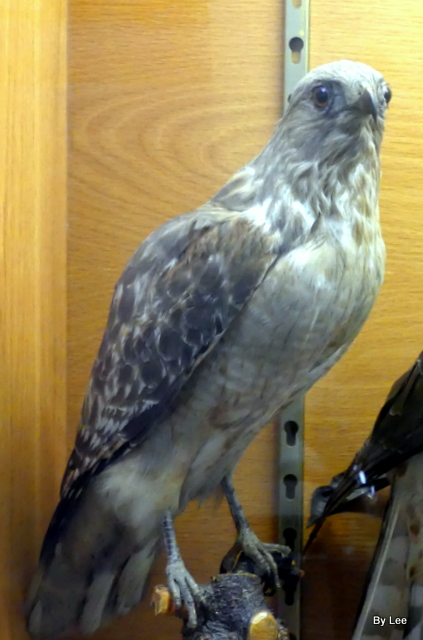
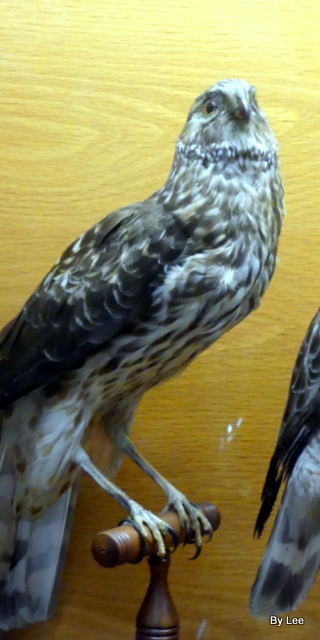
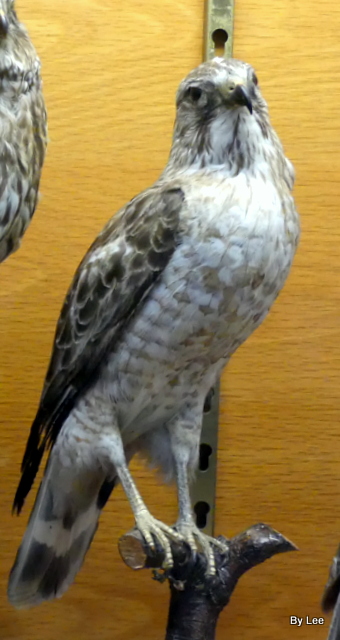
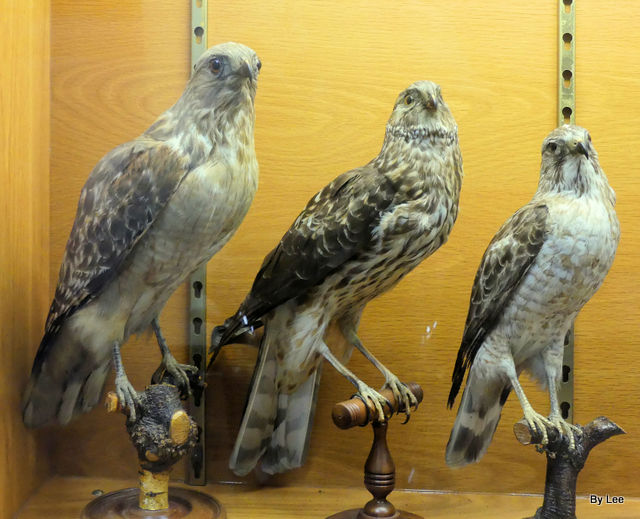
The next upper display case had Hawks and Owl specimen. The three Hawks give a size perspective of those hawks. The largest is the Red-Shouldered Hawk, then the Northern Harrier (female), and the Broad-Winged Hawk.

BJU Waterman Bird Collection Hawks and Owls Display 2018

“And the owl, and the night hawk, and the cuckow, and the hawk after his kind, The little owl, and the great owl, and the swan,” (Deuteronomy 14:15-16 KJV)

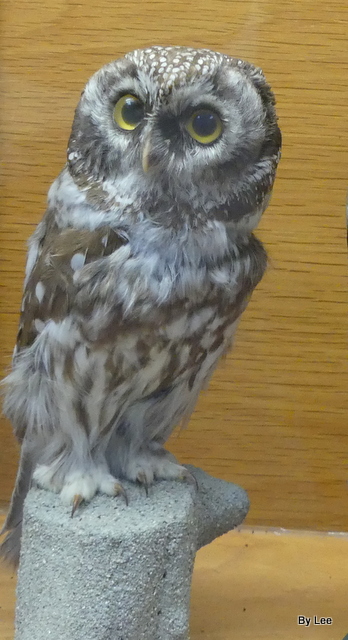
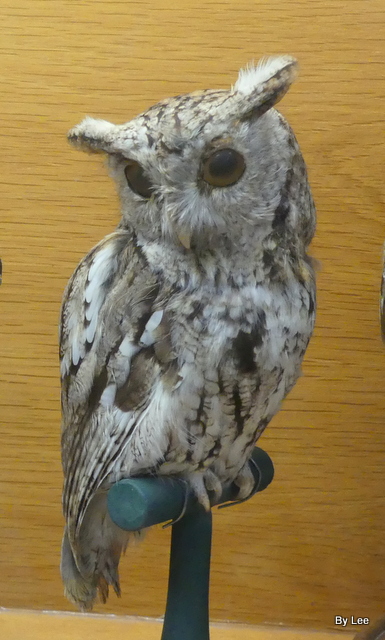
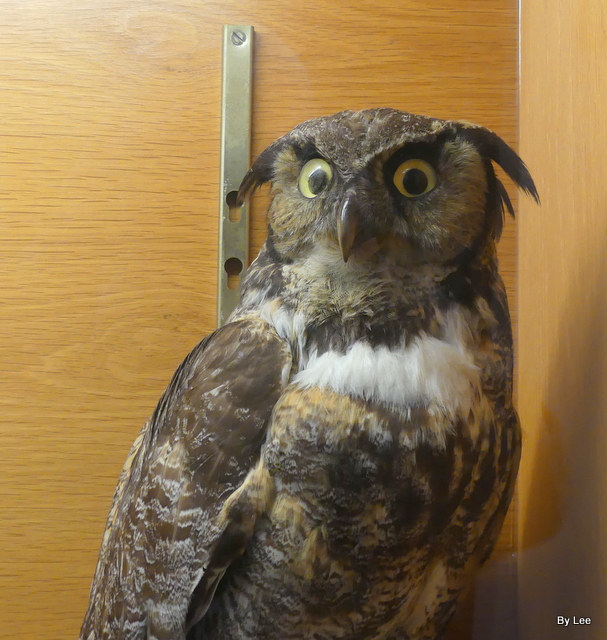
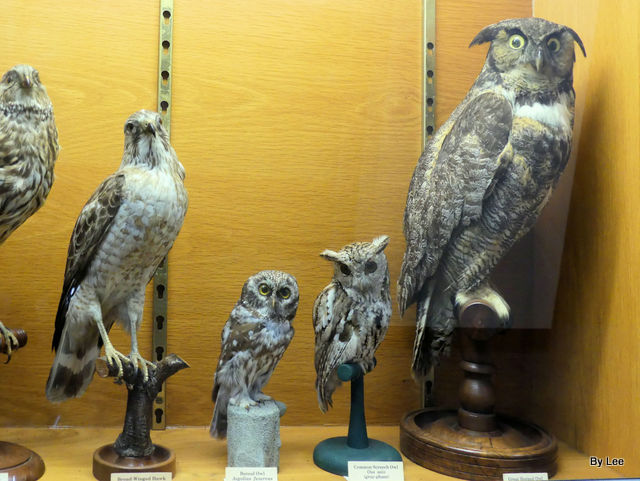
The Owls went from small to the large Great Horned Owl being the largest. The two small owls are the Boreal Owl, and the Common Screech Owl. Out of the five species, we have only seen the Red-shouldered Hawk, the Harrier and a Great Horned Owl in the wild. Again, I think these birds look pretty good, considering how long they have be preserved. [Before 1910]

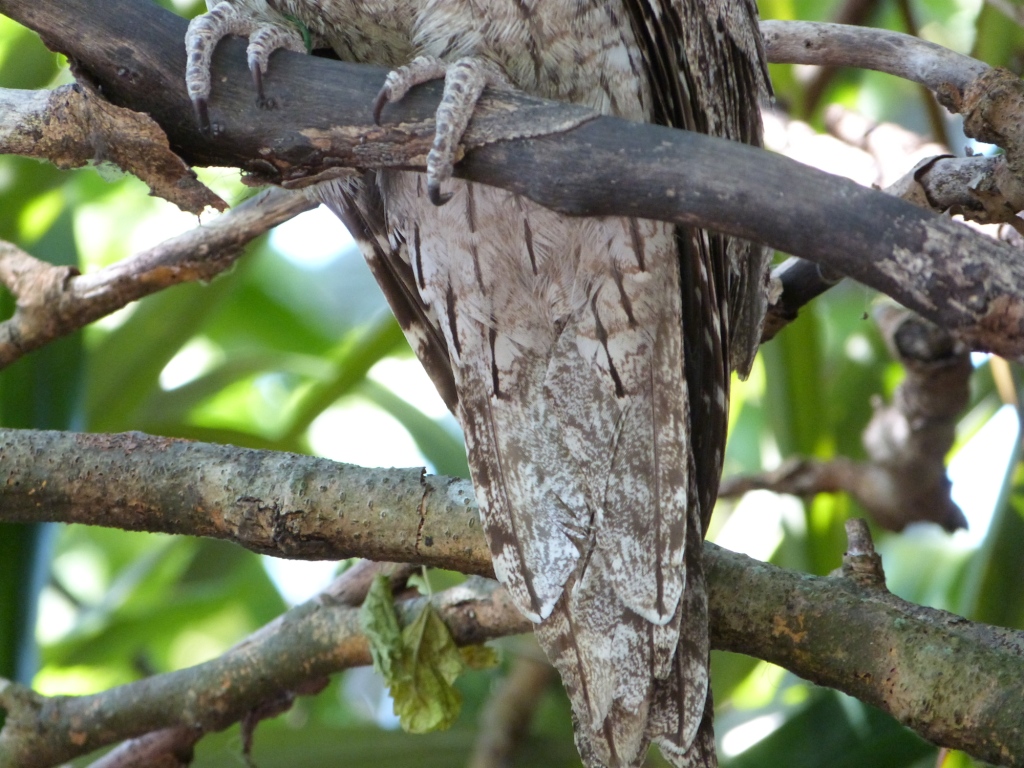
Hawks and Owls are both mentioned in Scripture and are therefore – Birds of the Bible. Birds of the Bible – Hawks and Birds of the Bible – Owls. Did you notice their coloration? Most sleep during the day and the Lord, their Creator, has provided them with a camouflage that helps many of them look like bark on trees.

Tawny Frogmouth (Podargus strigoides) Tail

Tawny Frogmouth (Podargus strigoides) Tail by Lee

[My favorite “bark” covered bird is the Tawny Frogmouth. We see them in the zoos.] Back to this article.

Here are some very informative articles with great photos about these birds from WhatBird and All About Birds. The WhatBird links have sounds to which you can listen.

Red-shouldered Hawk BJU Bird Collection 2018

  • The Red-shouldered Hawk and the Barred Owl occupy the same range in the eastern United States. They prefer the same moist woodland habitats and eat similar animals. The hawk is active during the day, and the owl is active at night. [WhatBird]

Red-shouldered Hawk  All About Birds

Northern Harrier BJU Bird Collection 2018

  • Unusual among hawks, Northern Harriers use their sense of hearing to help locate prey. They have an owl-like facial disk to help with directional hearing and soft feathers for a quieter flight. [WhatBird]

Northern Harrier  All About Birds

Broad-Winged Hawk BJU Bird Collection

  • During migration, weather and geography cause these birds to concentrate into groups that number in the thousands. These large groups are referred to as “kettles.” [WhatBird]

Broad-Winged Hawk  All About Birds

Boreal Owl (Aegolius funereus) BJU Collection

  • The Boreal Owl is also known as Tengmalm’s Owl, after the Swedish naturalist Peter Gustaf Tengmalm. [WhatBird]

Boreal Owl  All About Birds

Screech Owl (Megascops asio) BJU Bird Collection 2018

  • The Eastern Screech Owl was first described by Carolus Linnaeus, in 1758. They have also been called the Common Screech Owl, Ghost Owl, Dusk Owl, Little-eared Owl, Spirit Owl, Whickering Owl, Little Gray Owl, Mottled Owl, Mouse Owl, Cat Owl, Shivering Owl, and Little Horned Owl.” [WhatBird]

Eastern Screech-Owl  All About Birds

Great-Horned Owl BJU Bird Collection

  • A group of owls has many collective nouns, including a “bazaar”, “glaring”, “parliament”, “stooping”, and “wisdom” of owls. [WhatBird]

Great Horned Owl  All About Birds

*

Birds of the Bible – Hawks

Birds of the Bible – Owls

Accipitriformes – Order, Accipitridae – Family (Kites, Hawks & Eagles)
STRIGIFORMES (Owls) Order

What will you do with Jesus?

Pleasant Surprise – Petrel and Crow

Leach’s Storm Petrel (Oceanodroma leucorhoa) BJU Bird Collection 2018

Just realized I didn’t post this. Again, it is a duplicate of a Waterman Bird Collection – Part II – Petrel & Crow article on the Birds of the Bible for Kids blog. [I am behind in blogging] This time it is about the Leach’s Storm Petrel and the Crow.

As promised, in Waterman Bird Collection – Part II, here are the last two birds from that display. The Leach’s Storm Petrel and the Crow will now be introduced. Many of you already have heard of a Crow, but how about a Storm Petrel? Let’s see what we can find out about these avian creations from the Creator.

BJU Bird Collection 2018 Bottom Shelf

The two birds today are the two right hand birds in the Display.

The Leach’s Storm Petrel [at the top] is starting to show a tiny bit of deterioration, but considering it’s over 100 years old, it’s not too much.

“The Leach’s Storm Petrel or Leach’s Petrel (Oceanodroma leucorhoa) is a small seabird of the tubenose order. It is named after the British zoologist William Elford Leach. The scientific name is derived from Ancient Greek. Oceanodroma is from okeanos, “ocean” and dromos, “runner”, and leucorhoa is from leukos, “white” and orrhos, “rump”.

“It breeds on inaccessible islands in the colder northern areas of the Atlantic and Pacific. It nests in colonies close to the sea in well concealed areas such as rock crevices, shallow burrows or even logs. It lays a single white egg which often has a faint ring of spots at the large end. This storm petrel is strictly nocturnal at the breeding sites to avoid predation by gulls and skuas, and will even avoid coming to land on clear moonlit nights. The largest colony of Leach’s storm petrels can be found on Baccalieu Island of eastern Canada, an ecological reserve with more than 3 million pairs of the bird.” [Wikipedia with editing]

Fun Fact: “Flies swiftly, erratically, buoyantly with 1 or 2 fast, powerful flaps followed by glides on wings held well above the horizontal and noticeably kinked; sudden changes of direction impart a bounding quality. Flutters less than other storm-petrels.” [Neotropical Birds]

Drinks salt water – Formed By Him – Sea Birds That Drink Seawater, is an interesting article about Tubenose birds.

American Crow (Corvus brachyrhynchos) BJU Bird Collection 2018

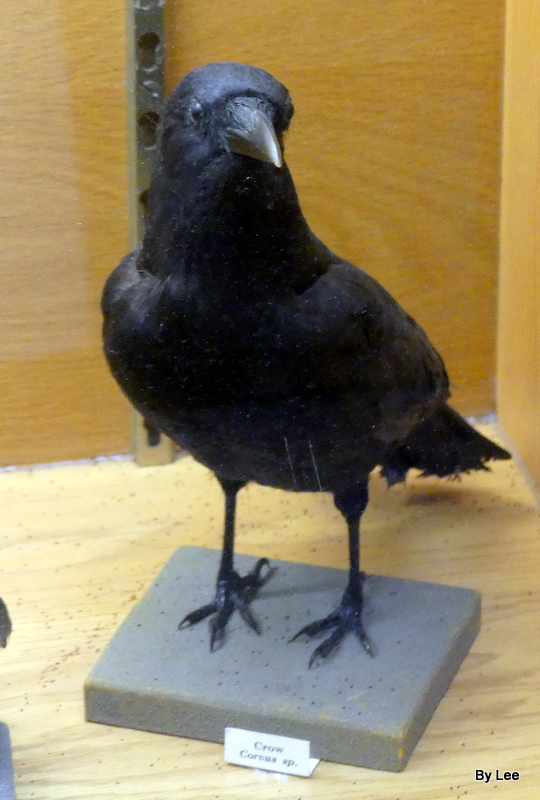
The last bird in the part of the collection is a Crow. It wasn’t shown which one exactly, so we are using the American Crow.

“The American crow (Corvus brachyrhynchos) is a large passerine bird species of the family Corvidae. It is a common bird found throughout much of North America. American crows are the new world counterpart to the carrion crow and the hooded crow. Although the American crow and the hooded crow are very similar in size, structure and behavior, their calls are different. The American crow nevertheless occupies the same role the hooded crow does in Eurasia.”

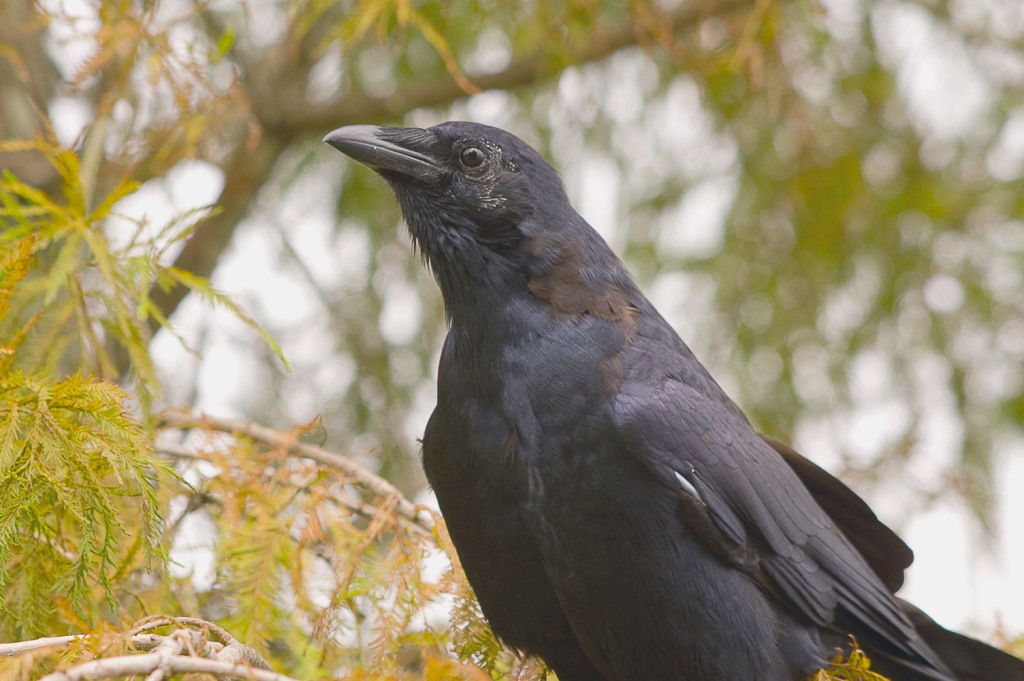
Florida Fish Crow (Corvus ossifragus) at Lake Morton By Dan’sPix

“From beak to tail, an American crow measures 40–50 cm (16–20 in), almost half of which is tail. Mass varies from about 300 to 600 g (11 to 21 oz). Males tend to be larger than females. The most usual call is CaaW!-CaaW!-CaaW!.’

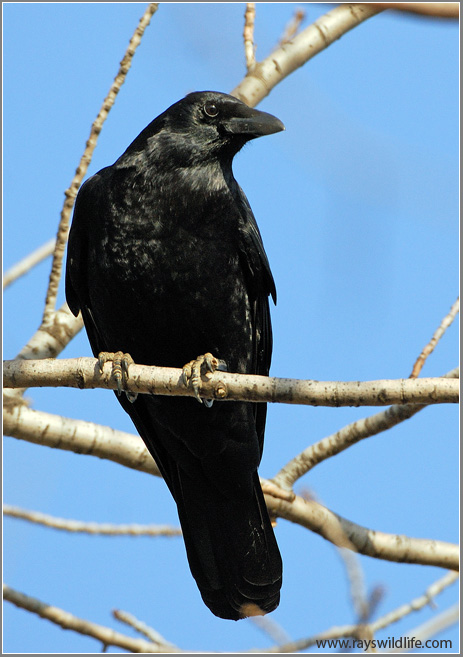
American Crow (Corvus brachyrhynchos) by Ray

“The American crow is all black, with iridescent feathers. It looks much like other all-black corvids. They can be distinguished from the common raven (C. corax) because American crows are smaller and from the fish crow (C. ossifragus) because American crows do not hunch and fluff their throat feathers when they call, and from the carrion crow (C. corone) by the enunciation of their calls.” [American Crow – Wikipedia]

A Cool Fact from American Crows – All About Birds:

  • Crows sometimes make and use tools. Examples include a captive crow using a cup to carry water over to a bowl of dry mash; shaping a piece of wood and then sticking it into a hole in a fence post in search of food; and breaking off pieces of pine cone to drop on tree climbers near a nest.

*

Here are the links to this Series:

A Pleasant Surprise At The BJU Homecoming

Pleasant Surprise II

Pleasant Surprise III


Woodstock’s New Hairdo

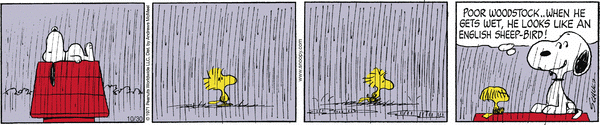
Today’s Peanut’s cartoon reminds me of the birds we saw at the Jacksonville Zoo recently. It had rained before and it rained while we were visiting.

Woodstock and Rain

“Poor Woodstock.. When he gets wet, he looks like an English Sheep-Bird!” [In case you can’t read it]

“Who does great things, and unsearchable, Marvelous things without number. He gives rain on the earth, And sends waters on the fields.” (Job 5:9-10 NKJV)

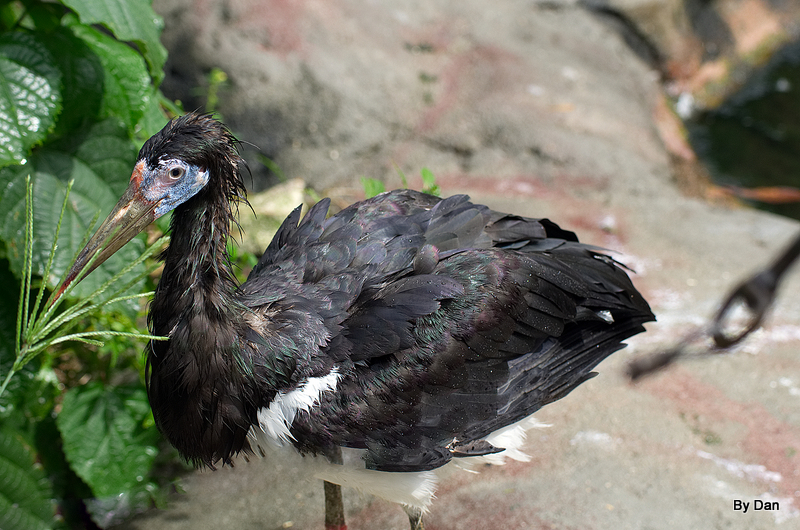
In Where Am I Found? – Abdim’s Stork, the first photo showed the stork still wet. Dan just showed me his photo of the Stork, which definitely shows a wet bird hairdo.

Wet Abdim’s Ibis at Jacksonville Zoo by Dan

My photo of this wet Ibis:

Abdim’s Stork (Ciconia abdimii) -Jacksonville Zoo wet

There were a few others that were not up to their normally sleek appearance.

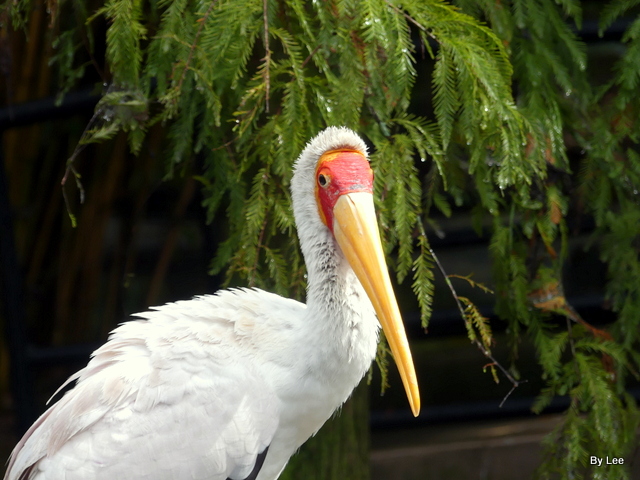
Another wet avian wonder was the Yellow-billed Stork. He was damp, but not as wet as the Abdim’s Stork.

Yellow-billed Stork (Mycteria ibis) Wet at Jacksonville Zoo

Are you taking a picture of me like this when I am not preened?

Yellow-billed Stork (Mycteria ibis) – Jacksonville Zoo

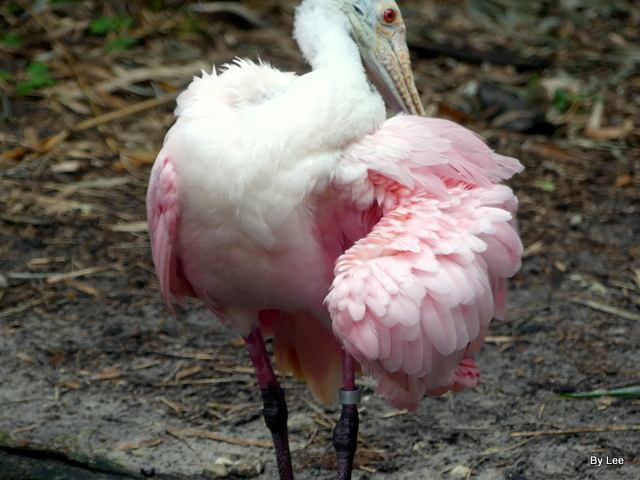
This is why you see so many birds preening. The Roseate Spoonbill was busy straightening and drying its feathers.

Roseate Spoonbill (Platalea ajaja) Preening – Jax Zoo

“Who covers the heavens with clouds, Who prepares rain for the earth, Who makes grass to grow on the mountains. He gives to the beast its food, And to the young ravens that cry.” (Psalms 147:8-9 NKJV)

There were a few others that were not up to their normally sleek appearance.

*

Where Am I Found? – Abdim’s Stork

Some of the Other Jacksonville Zoo articles:

Jacksonville Zoo’s Noisy Stork Tree

Marabou Stork Chicks and Inca Tern at Jacksonville Zoo

Birdwatching at the Jacksonville Zoo by Dan’s Pix

Jacksonville Zoo’s Cape Thick-knee

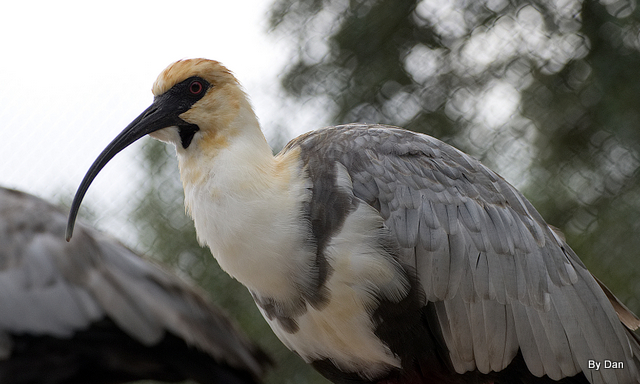
Birds of the Bible – Black-faced Ibis at Jax Zoo by Dan

Birds of the Bible – Black-faced Ibis at Jax Zoo by Dan

Black-faced Ibis (Theristicus melanopis) Jax Zoo by Dan

On the way to South Carolina we visited the Jacksonville Zoo. The birds were a bit damp as it had just rained. Here is one of the avian wonders that Dan captured with his camera.

and for a long time birds and hedgehogs, and ibises and ravens shall dwell in it: and the measuring line of desolation shall be cast over it, and satyrs shall dwell in it. (Isaiah 34:11 Brenton)

“The Black-faced Ibis (Theristicus melanopis) is a species of bird in the family Threskiornithidae. It is found in grassland and fields in southern and western South America. It has been included as a subspecies of the similar buff-necked ibis, but today all major authorities accept the split. The black-faced ibis also included the Andean ibis (T. branickii) as a subspecies. Some taxonomic authorities (including the American Ornithological Society) still do so.” [Wikipedia with editing]

Links:


A Pleasant Surprise – III

BJU Bird Collection 2018 Bottom Shelf

The next set of birds from the Waterman Bird Collection at BJU has five specimens. Four of these birds are found in or near water, but the Crow is not really known as a water bird. [This is a copy of the Waterman Bird Collection – Part II from Birds of the Bible for Kids]

This is the bottom shelf display under the Anatidae Family, just above them. That Family was covered in A Pleasant Surprise – II. I trust you clicked on the links provided to read more about those avian wonders.

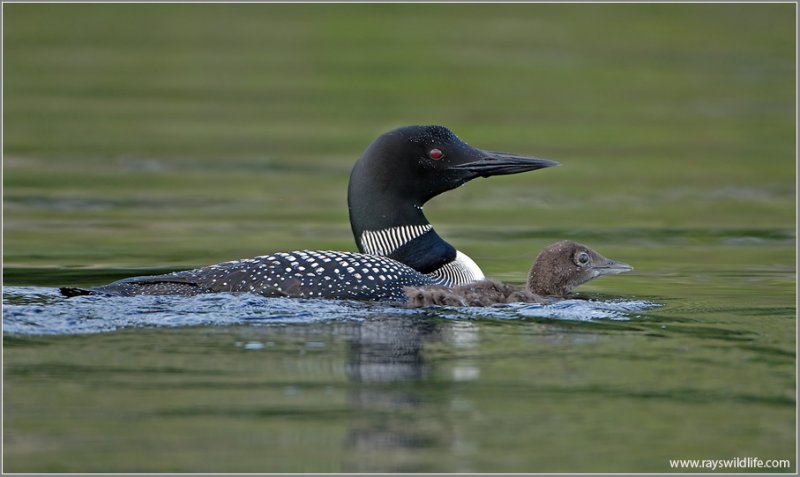
Common Loon (Gavia immer) BJU Bird Collection 2018

Common Loon (Gavia immer) BJU Bird Collection 2018

Our big tall bird is a Common Loon. “The common loon or great northern diver (Gavia immer) is a large member of the loon, or diver, family of birds. Breeding adults have a plumage that includes a broad black head and neck with a greenish, purplish, or bluish sheen, blackish or blackish-grey upperparts, and pure white underparts except some black on the undertail coverts and vent. Non-breeding adults are brownish with a dark neck and head marked with dark grey-brown. Their upperparts are dark brownish-grey with an unclear pattern of squares on the shoulders, and the underparts, lower face, chin, and throat are whitish. The sexes look alike, though males are significantly larger and heavier than females. During the breeding season, they live on lakes and other waterways in Canada, the northern United States (including Alaska), as well as in southern parts of Greenland and Iceland. Small numbers breed on Svalbard and sporadically elsewhere in Arctic Eurasia. Common loons winter on both coasts of the US as far south as Mexico, and on the Atlantic coast of Europe.

Common Loon by Raymond Barlow

Common loons eat a wide range of animal prey including fish, crustaceans, insect larvae, mollusks, and occasionally aquatic plant life. They swallow most of their prey underwater, where it is caught, but some larger items are first brought to the surface.” Common Loon – Wikipedia

Here is just one of the Cool Facts from Common Loon – All About Birds

  • Loons are agile swimmers, but they move pretty fast in the air, too. Migrating loons have been clocked flying at speeds more than 70 mph.

Red-necked Grebe (Podiceps grisegena) BJU Bird Collection 2018

Next to the Loon is a Red-necked Grebe (Podiceps grisegena). “Like all grebes, the Red-necked is a good swimmer, a particularly swift diver, and responds to danger by diving rather than flying. The feet are positioned far back on the body, near the tail, which makes the bird ungainly on land. It dives for fish or picks insects off vegetation; it also swallows its own feathers, possibly to protect the digestive system.” Red-necked Grebes – Wikipedia

Red-necked Grebe (Podiceps grisegena) young on her wing©USFWS

Red-necked Grebe (Podiceps grisegena) young on her wing©USFWS

Here is a Cool Fact from Red-necked Grebe – All About Birds

  • The oldest recorded Red-necked Grebe was at least 11 years old when it was found in Minnesota, the same state where it had been banded.

Pied-billed Grebe (Podilymbus podiceps) BJU Bird Collection 2018

The smaller Grebe, next to the Red-necked Grebe, is a Pied-billed Grebe (Podilymbus podiceps) . They both belong to the Podicipedidae Family. Now that is a bird we see often here in Florida.

Pied-Billed Grebe at Lake Hollingsworth, Lakeland, FL by Dan

Pied-Billed Grebe at Lake Hollingsworth, Lakeland, FL by Dan

“The Pied-billed Grebes (Podilymbus podiceps) is a species of the grebe family of water birds. Since the Atitlán grebe (Podilymbus gigas) has become extinct, it is the sole extant member of the genus Podilymbus. The pied-billed grebe is primarily found in ponds throughout the Americas. Other names of this grebe include American dabchick, dabchick, Carolina grebe, devil-diver, dive-dapper, dipper, hell-diver, pied-billed dabchick, pied-bill, thick-billed grebe, and water witch.”

Pied-billed Grebes are small, stocky, and short-necked. They are mainly brown, with a darker crown and back. Their brown color serves as camouflage in the marshes they live in. They do not have white under their wings when flying, like other grebes. Their undertail is white and they have a short, blunt chicken-like bill that is a light grey color, which in summer is encircled by a broad black band (hence the name). In the summer, its throat is black.”  Pied-billed grebe – Wikipedia [with editing]

A Cool Fact about this from Pied-billed Grebe – All About Birds

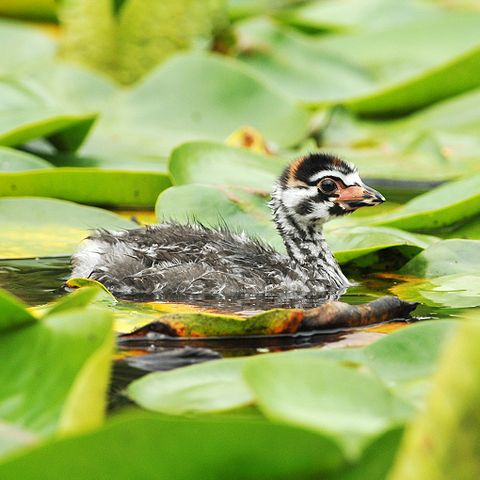
  • Pied-billed Grebe chicks typically leave the nest the first day after hatching and spend much of their first week riding around on a parent’s back. They usually spend most of their first 3 weeks on or near the nest platform.

Pied-billed Grebe (Podilymbus podiceps) chick ©WikiC

We will check out the other two birds in the display case next.

I trust you will enjoy meeting the various birds through this series. The links provided give much more information, and photos of these species.

“The works of the LORD are great, Studied by all who have pleasure in them.” (Psalms 111:2 NKJV)

Gaviidae – Loons – Family

Podicipedidae – Grebes – Family


A Pleasant Surprise – II

BJU Bird Collection 2018

In A Pleasant Surprise At The BJU Homecoming the Waterman Bird Collection, in the Science building, was introduced. This post will start introducing you to these wonderfully preserved specimens of birds that lived over a hundred years ago.

BJU Waterman Bird Collection 2018

At first, it bothered me about the use of birds in this manner, even though many museums have displays of birds. Yet, when you look back 100 plus years, they didn’t have the technology, nor the modern color cameras or slow motion videos to capture images of them. John Audubon did excellent drawing, with detailed colors. He also studied live birds and specimens.

“John James Audubon’s Birds of America is a portal into the natural world. Printed between 1827 and 1838, it contains 435 life-size watercolors of North American birds (Havell edition), all reproduced from hand-engraved plates, and is considered to be the archetype of wildlife illustration.” Birds of America

When the Lord first created the birds, there were no specimens until sin entered. How must those first birds have appeared? Photos, movies, and even specimens would have given us quite a sight. Today, we have fossils, but they do not show the beautiful feathers and features that those original avian wonders must have been adorned with.

“So God created great sea creatures and every living thing that moves, with which the waters abounded, according to their kind, and every winged bird according to its kind. And God saw that it was good. And God blessed them, saying, “Be fruitful and multiply, and fill the waters in the seas, and let birds multiply on the earth.” So the evening and the morning were the fifth day.” (Genesis 1:21-23 NKJV)

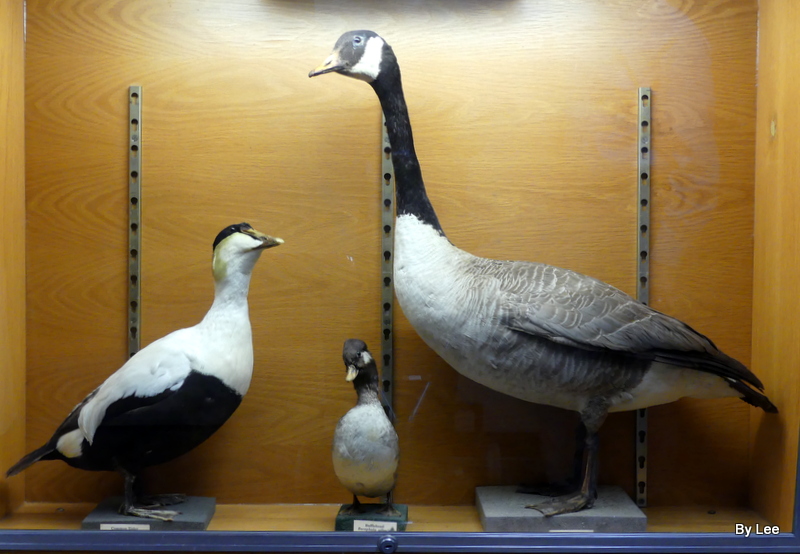
Common Eider, Bufflehead, and Canada Goose

The birds in the right hand side of the display above is where we will begin. On the top shelf is an Eider, a Bufflehead and a Goose. It is nice to see them together to get a size perspective.

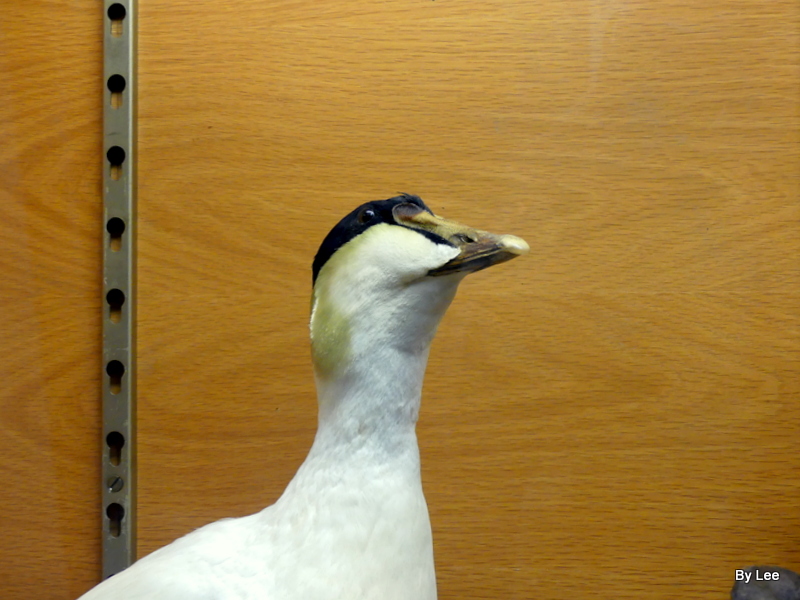
Common Eider (Somateria mollissima) BJU Bird Collection 2018

The Common Eider (pronounced /ˈaɪ.dər/) (Somateria mollissima) is a large (50–71 cm (20–28 in) in body length) sea-duck that is distributed over the northern coasts of Europe, North America and eastern Siberia. It breeds in Arctic and some northern temperate regions, but winters somewhat farther south in temperate zones, when it can form large flocks on coastal waters. It can fly at speeds up to 113 km/h (70 mph) Part of the Anatidae Family. Common Eider – Wikipedia and All About Birds

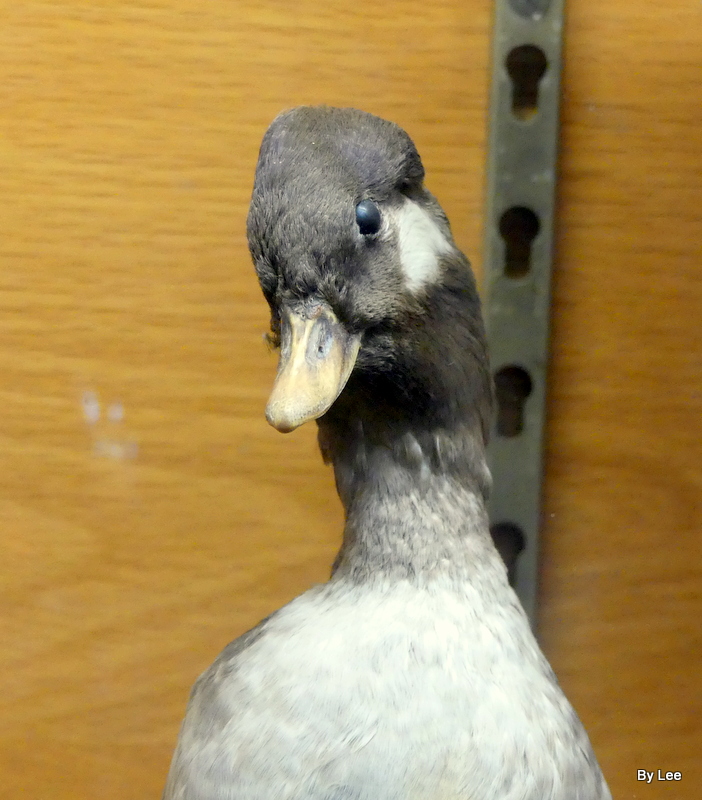
Bufflehead (Bucephala albeola) BJU Bird Collection 2018

The Bufflehead (Bucephala albeola) is a small sea duck of the genus Bucephala, the goldeneyes. This species was first described by Linnaeus in his Systema naturae in 1758 as Anas albeola.

The genus name is derived from Ancient Greek boukephalos, “bullheaded”, from bous, “bull ” and kephale, “head“, a reference to the oddly bulbous head shape of the species. The species name albeola is from Latin albus, “white”. The English name is a combination of buffalo and head, again referring to the head shape. This is most noticeable when the male puffs out the feathers on the head, thus greatly increasing the apparent size of the head.

Canada Goose (Branta canadensis) BJU Bird Collection 2018

All of these three birds are in the Anatidae Family. The photo shows how much larger the Goose is than the Bufflehead.

The Canada Goose (Branta canadensis) is a large wild goose species with a black head and neck, white cheeks, white under its chin, and a brown body. Native to arctic and temperate regions of North America, its migration occasionally reaches northern Europe. It has been introduced to the United Kingdom, New Zealand, Argentina, Chile, and the Falkland Islands. Like most geese, the Canada goose is primarily herbivorous and normally migratory; it tends to be found on or close to fresh water. Canada Goose Wikipedia and All About Birds

I trust you will enjoy meeting the various birds through this series. The links provided give much more information, and photos of these species.

“The works of the LORD are great, Studied by all who have pleasure in them.” (Psalms 111:2 NKJV)


A Pleasant Surprise At The BJU Homecoming

BJU Homecoming

Dan and I rode up to Greenville, South Carolina to attend the 2018 BJU Homecoming. We had two main events that we attended. When we parked quite a way from the place we were to be, I sort of grumbled because of the long walk with my walker [The campus is on hills]. Yet, the Lord always seems to turn our upside down grumps into upright delights.

BJU Science Building

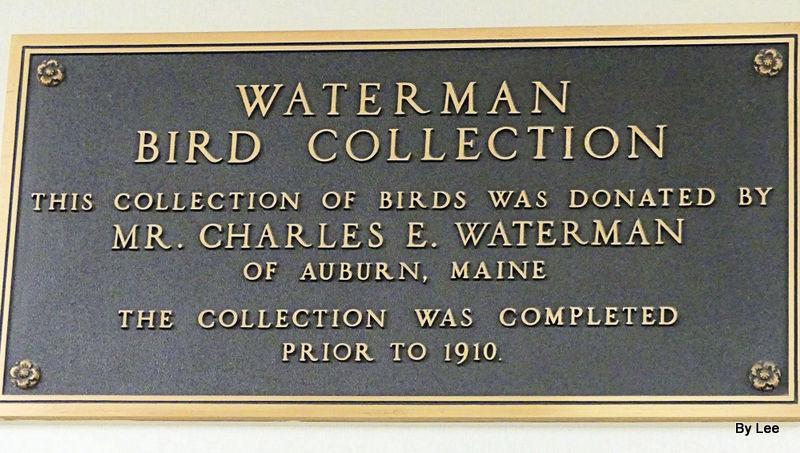
We parked down by the Science building, where Dan had taught years ago. I decided to take some photos. Thankfully, the building was open, and so began my delight. Inside we found a display of BIRDS! A lot of birds, which were from a collection of specimens that was completed before 1910. It was donated by Mr. Charles E. Waterman.

Waterman Bird Collection BJU 2018 Plaque

There were display cases filled with a Bird specimen collection that had been donated by Mr. Charles E Waterman. The collection is well over 100 years old. The birds have been well preserved, considering the age of ithe collection. My camera received a nice workout. [So did my back]

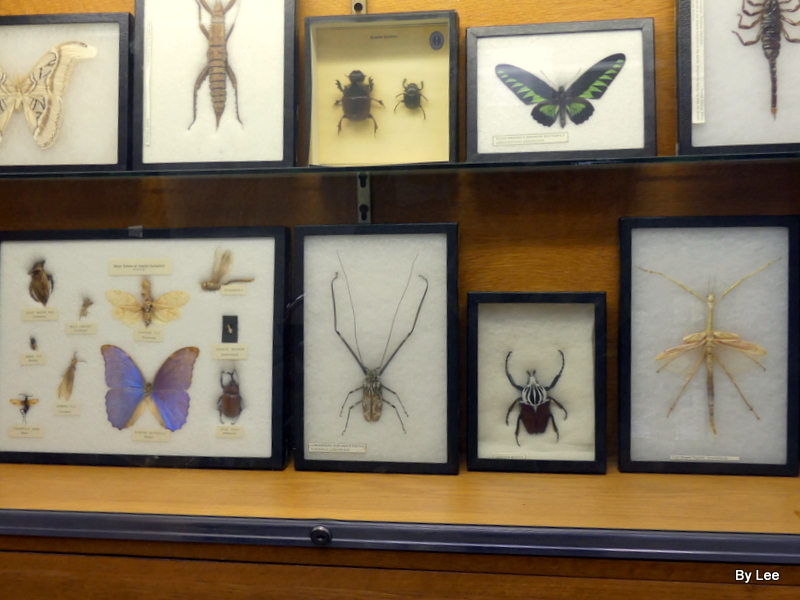
BJU BUg Collection 2018

BJU BUg Collection 2018

BJU BUg Collection 2018

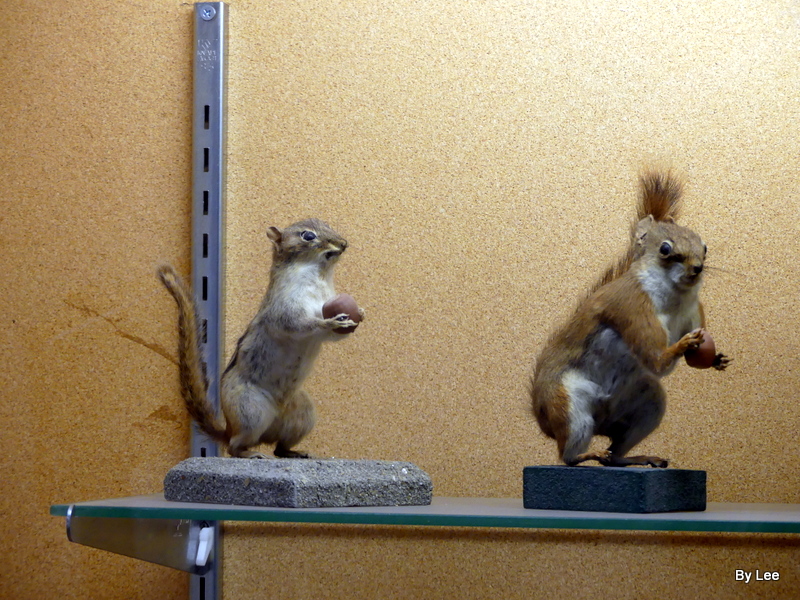
Today, I want to show you the Bug and Squirrel displays, as the bird photos are still being adjusted. Photos of the display case is to give you an idea of how big those bugs really were. Sure wouldn’t want any of them on me.

BJU Squirrel Collection 2018

The squirrels look as if they were practicing for a football game. :)

God’s Creative Hand is definitely seen in all of these created critters.

“Because that which may be known of God is manifest in them; for God hath shewed it unto them. For the invisible things of him from the creation of the world are clearly seen, being understood by the things that are made, even his eternal power and Godhead; so that they are without excuse: Because that, when they knew God, they glorified him not as God, neither were thankful; but became vain in their imaginations, and their foolish heart was darkened. Professing themselves to be wise, they became fools,” (Romans 1:19-22 KJV)

You Got To Be Kidding!!!

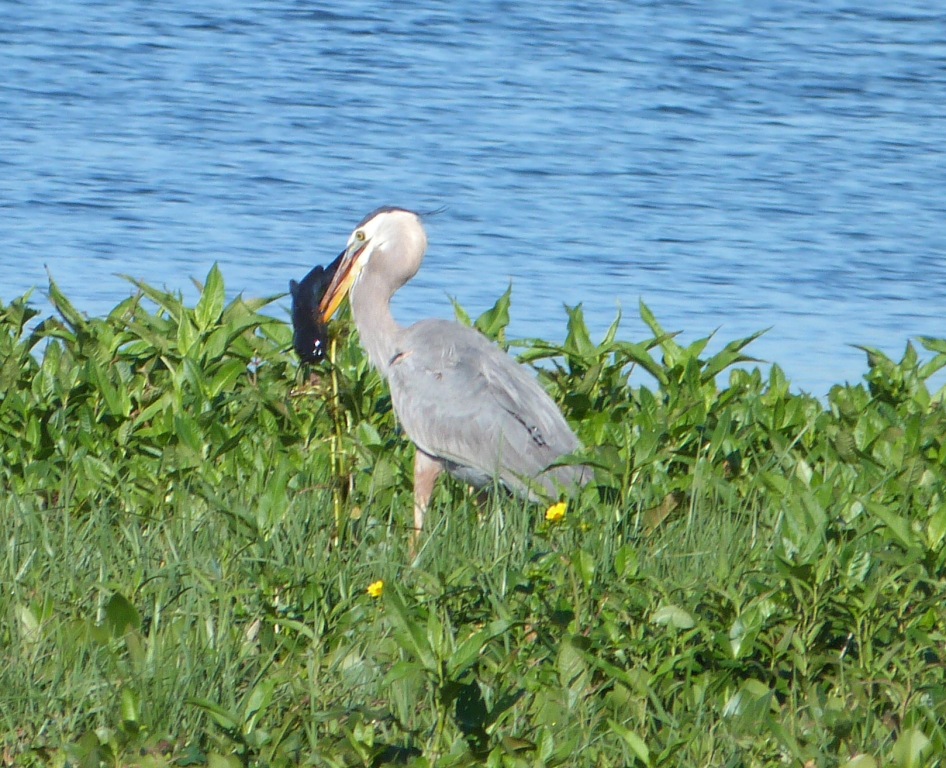
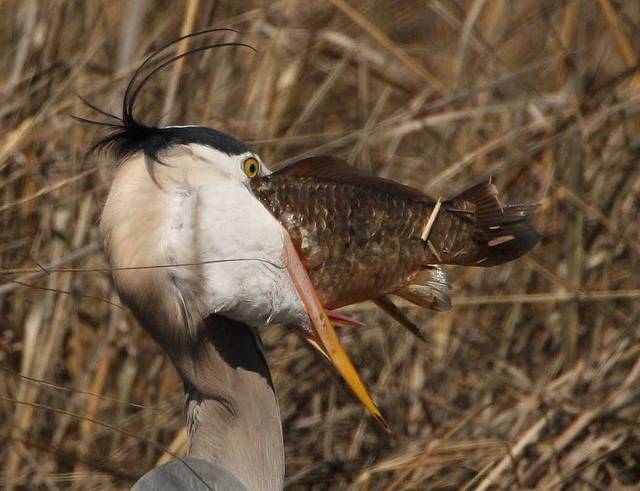
YouTube Video by stonecabinphotos – “A Great Blue Heron spears and swallows a huge carp at Bosque del Apache NWR on 29 Oct 2013. The process took 11 minutes.” I have seen them do this, but never with a fish this large. Watched this Great Blue catch a catfish at Circle B Reserve, but it was small compared to the one above.
Great Blue Heron with Catfish at Circle B by Lee - cropped

Great Blue Heron with Catfish at Circle B by Lee – cropped

Here is a photo by ©USFWS, but even it is smaller than the video above.

Great Blue Heron (Ardea herodias) ©USFWS

I can’t think of a verse that says that “you shouldn’t bite off more than you can chew.” There are verses that the Lord promises food for all his creation:
Who giveth food to all flesh: for his mercy endureth for ever. O give thanks unto the God of heaven: for his mercy endureth for ever.” (Psalms 136:25-26 KJV) “Which executeth judgment for the oppressed: which giveth food to the hungry.” (Psalms 146:7a KJV) “He giveth to the beast his food, and to the young ravens which cry.” (Psalms 147:9 KJV)

*

And having food and raiment let us be therewith content.” (1 Timothy 6:8 KJV)
This last verse reminds the Great Blue Heron that his catch and his beautiful feathers should help him be content. Though, not sure that the Heron may have a sore throat and an upset stomach. Enjoy! Bolding and italics in verse added for emphasis.

Ian’s Bird of the Moment – Black-breasted Buzzard

Ian’s Bird of the Moment – Black-breasted Buzzard

by Ian Montgomery

You may remember in the last Bird of the Moment, in April I went to Cumberland Dam near Georgetown in Northern Queensland in the hope of photographing Red-browed Pardalotes but came away instead with photos of nesting Masked Finches. In May I set off on another, longer trip to Mt Isa with several species in my sights, in addition to the Pardalote.

The distance from Townsville to Mt Isa is about 900km/560miles, so I split the journey by staying for a couple of nights at Kooroorinya Reserve, a little gorge 50km/30miles south of Prairie. Kooroorinya’s main claim to fame is that it hosts the annual Oakley amateur horse race and they were preparing for the race during my stay. The satellite image below shows the race track, the Prairie-Muttaburra Road and the oasis created by the gorge in very dry country, which holds water for months in the dry season after the creek has stopped flowing.

A Townsville birder had found nesting Little Eagle and Black-breasted Buzzard there. The Little Eagle is uncommon in North Queensland, and the Black-breasted Buzzard is uncommon generally. So I search diligently along both sides of the creek looking for the nest of raptors. I found several unoccupied nests but these could have been built by Whistling Kites, which were common in the area, and I didn’t initially see any sign of Little Eagles or Black-breasted Buzzards.

It wasn’t until I returned to the campsite near the race track that I saw this Black-breasted Buzzard in the distance perched in a dead tree on the far side of the creek. I went back round to get a closer look at it and when I approached it flew down into a tree with lots of foliage and a nest, just visible in the lower left hand corner of the second photo of the Buzzard. In this photo you can see the characteristic black breast that gives the bird its name, and the short unbarred tail, not as long as the folded wings, which you can see behind the tail.

I left the bird in peace in case it was actually nesting, though laying doesn’t usually start until June. Later that afternoon as I was birding along the creek – there were various birds including Budgerigars – I saw it, or maybe its mate, soaring past in its characteristic hunting mode and exhibiting the striking under-wing pattern with the large white panels at the base of the primary flight feathers.

Black-breasted Buzzards are versatile feeders and will eat mammals, birds, reptiles, carrion and even large insects. I suppose in the arid interior, you eat what you can find. They show a preference for young rabbits, nestlings, lizards and eggs. They will tackle the large eggs of Emus, breaking them either by pounding them with the bill or dropping stones on them. Have a look at this http://www.arkive.org/black-breasted-buzzard/hamirostra-melanosternon/image-G138753.html if you don’t believe me (or even if you do, it’s a great photo of a juvenile BB Buzzard caught red-handed!).

Black-breasted Buzzards are large. They can have a wing-span of up to 1.56m/61in and can weight more than 1,400g/3.1lbs , making them the third heaviest Australian raptor after Wedge-tailed and White-bellied Sea-Eagles. The species in an Australian endemic, the sole member of the genus Hamirostra (‘monotypic’) and apparently related to the Square-tailed Kite, also the sole member of its genus Lophoictinia. Its range includes most of mainland Australia except the higher rainfall areas of eastern and southern Australia and is more common in the north.
I didn’t find any Red-browed Pardalotes (or Little Eagles) at Kooroorinya, so the search continued.
Greetings,

Ian


Lee’s Addition:

It is amazing when we search for a particular bird, at times we do not find what we sought, but many times another bird presents itself so that we still have be productive in our birdwatching adventure. This is the case with Ian. He has gone off on searches for birds and has ended up sharing a different avian wonder with us.

I couldn’t help but remember two verses which have to do with searching. In Ian’s case, he was searching for the Red-browed Pardalotes. Yet, this verse has to do with searching for the Lord and finding Him.

“Then you will call upon Me and go and pray to Me, and I will listen to you. And you will seek Me and find Me, when you search for Me with all your heart.” (Jeremiah 29:12-13 NKJV)

See more of Ian’s Articles:

Ian’s Bird of the Week

Night Birds

Four Billion Birds Flying

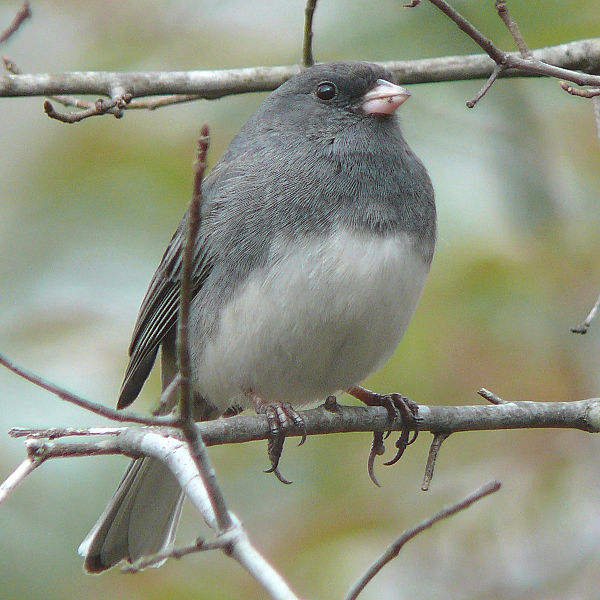
Dark-eyed Junco (Slate-colored) (Junco hyemalis hyemalis) female WikiC

“To everything there is a season, A time for every purpose under heaven:” (Ecclesiastes 3:1 NKJV)

Here are some interesting statements from an article on All About Birds. The research that Cornell Lab of Ornithology scientists are discovering with weather radar data is assisting the ornithologist. They are learning more about the 4 Billion birds that migrate during this time of the year.

“An average of 4 billion birds passed from Canada across the northern border of the U.S. in autumn, with 2.6 billion birds returning across the Canada–U.S. border in spring. Activity across the southern border was on an even grander scale: an average of 4.7 billion birds left the U.S. for Mexico and other points south each autumn, with 3.5 billion birds heading north across the U.S. southern border each spring.”

Summer Tanager (Piranga rubra) male by Kent Nickell

Summer Tanager (Piranga rubra) male by Kent Nickell

That is quite a few birds heading south, with fewer returning in the spring. It appears the birds that go further south have a better survival rate than the ones that winter here in the United States. 

” For birds crossing the U.S. northern border—which includes many short-distance migrants such as sparrows, Snow Buntings, and Dark-eyed Juncos that fly from Canada to spend winter in the Lower 48 states—the average rate of return was 64 percent. But for birds crossing the U.S. southern border—which includes more of the long-distance migrants such as warblers, tanagers, and orioles that travel to Central and South America, three to four times farther than the short-distance migrants—the average rate of return was 76 percent.”

Boat-tailed Grackle (Quiscalus major) at Lake Howard, Winter Haven, Florida By Dan'sPix

Boat-tailed Grackle (Quiscalus major) at Lake Howard, Winter Haven, Florida By Dan’sPix

My first thoughts were why are so many not surviving here in North America. Yet, those traveling further south, seem to fare better. I knew from previous articles I’ve read that many birds die from impact with tall buildings and glass windows. Here is what they had to say:

One explanation for the higher mortality among birds that overwinter in the U.S. may be a higher number of hazards. “All birds need to stay safe from predators, find enough food, and not get hit by a car,” says Ken Rosenberg, research coauthor and conservation scientist at the Cornell Lab. “Birds wintering in the U.S. may have more habitat disturbances and more buildings to crash into, and they might not be adapted for that.” 

They also discuss in this article the differences in different breeding strategy between short distant and long distant migrants.

“And He changes the times and the seasons;” (Daniel 2:21 NKJV)

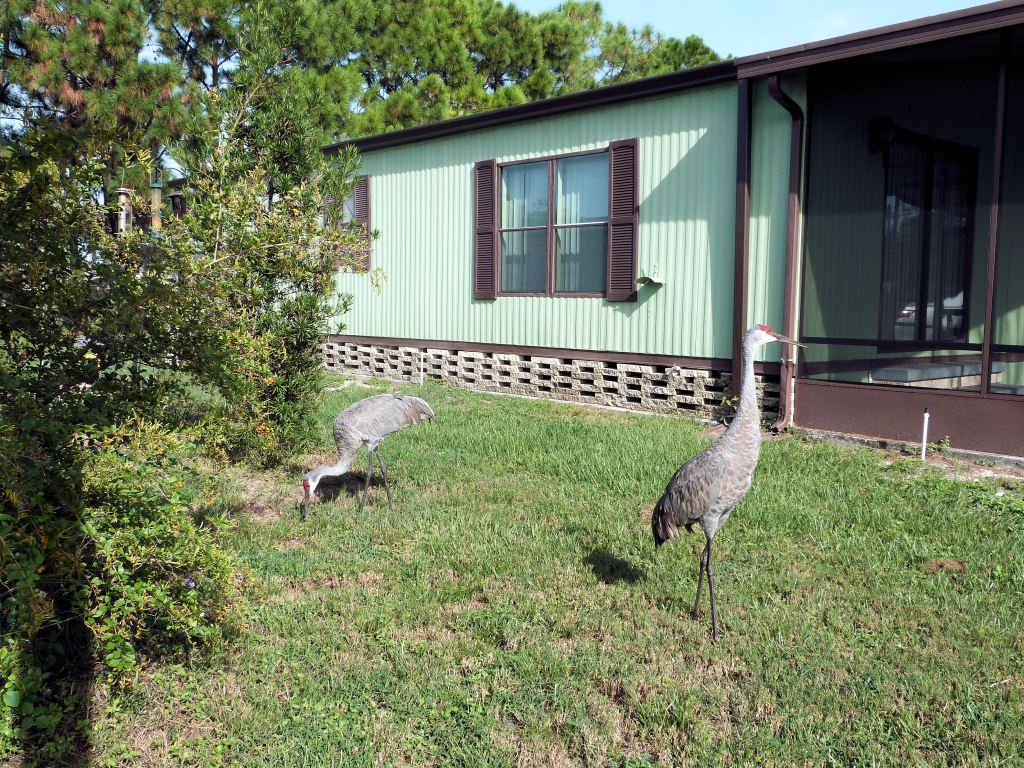
Sandhill Cranes in our side yard

Here in Florida, I have begun seeing more of the migrants that spend time near here. The Boat-tailed Grackles are invading my feeders already. I have also spotted more Bald Eagles, and the Heron, Egrets, and Sandhill Cranes seem to be more populous. Yeah, for the Winter Visitors!!


4 Billion Birds Will Fly Through American Airspace This Fall by Carley Eschiman, All About Birds, Sept 17,2018

Unbelievable Migrations from Creation Moments

Bird Migration Mistakes

Birds of the Bible – Migration September 2009

Interesting Things – Amazing Bird Migration


Birdwatching, Bugs, and Woodstock

Family Circus Bug And Birdwatching ©ArcMax

When you go birdwatching, do you get side-tracked by other critters? It is easy to do. Since the Creator, the Lord Jesus Christ created all of them, they are all amazing and enjoyable to examine up close.

So God created great sea creatures and every living thing that moves, with which the waters abounded, according to their kind, and every winged bird according to its kind. And God saw that it was good. And God blessed them, saying, “Be fruitful and multiply, and fill the waters in the seas, and let birds multiply on the earth.” (Genesis 1:21-22 NKJV)

Ladybug ©WikiC

Or maybe he was watching one of these:

Brevard Zoo Butterflies 4-3-2018 by Lee

Or could this be what he was looking at through his magnifying glass?

Caterpillar of the Old World Swallowtail – Size 42mm ©WikiC

“Then God said, ‘Let the earth bring forth the living creature according to its kind: cattle and creeping thing and beast of the earth, each according to its kind’; and it was so. And God made the beast of the earth according to its kind, cattle according to its kind, and everything that creeps on the earth according to its kind. And God saw that it was good.” (Genesis 1:24-25 NKJV)

Red-billed Oxpecker on equid “neighbor” (zebra), inspecting ear for bugs ©ibc.lynxeds

If you were to watch Woodstock, he would definitely entertain you.

Woodstock playing Elevator ©Arcamax

Then again, maybe Woodstock is trying to copy the behavior of the Widowbirds:

Trust you enjoy your day. A little humor helps our days be brighter.