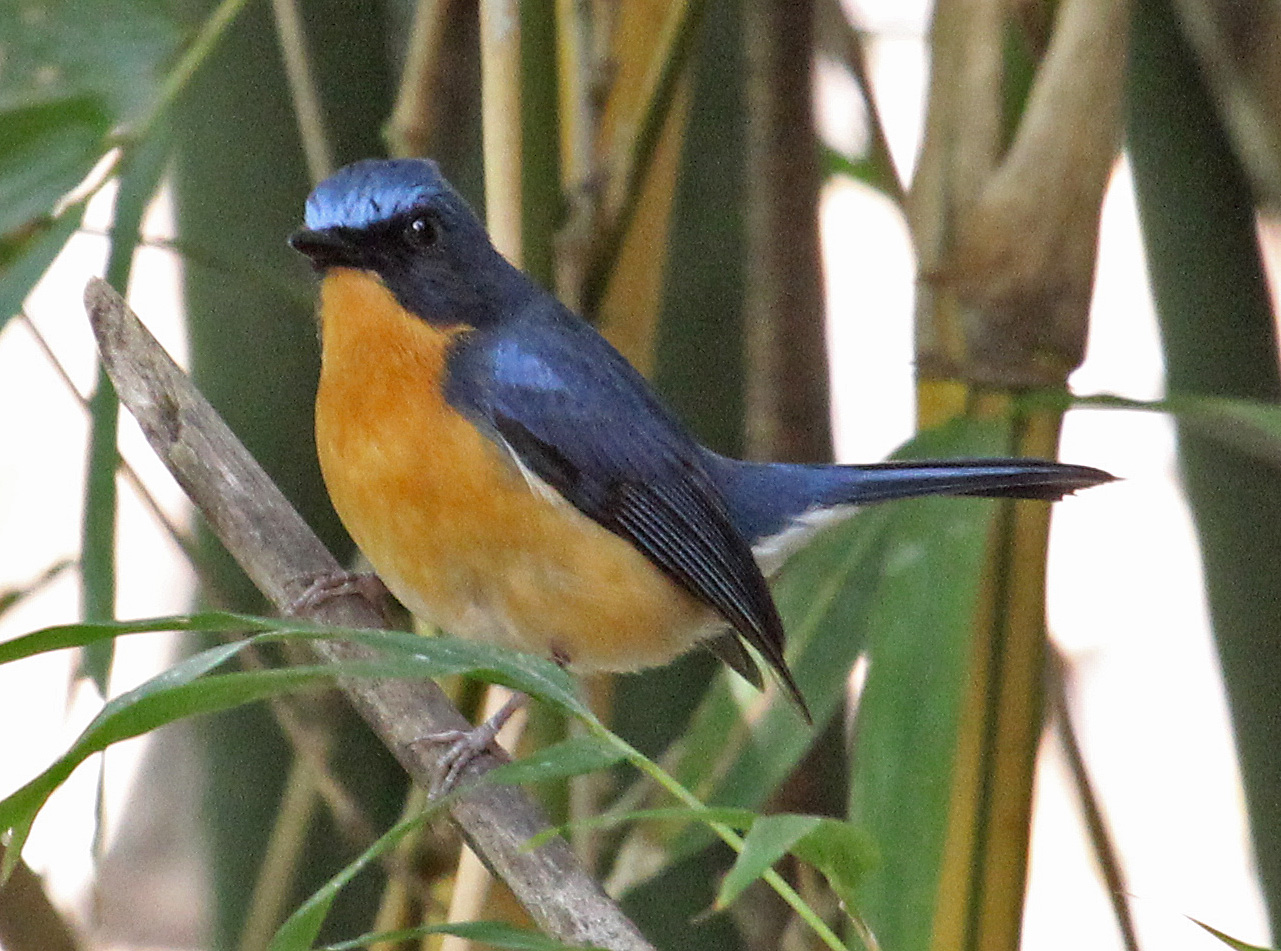
Avian And Attributes – Hill

Hill Blue Flycatcher (Cyornis banyumas) ©©Flickr

“A Psalm of David. The earth is the LORD’S, and the fulness thereof; the world, and they that dwell therein. For he hath founded it upon the seas, and established it upon the floods. Who shall ascend into the hill of the LORD? or who shall stand in his holy place?” (Psalms 24:1-3 KJV)

“For thou art the God of my strength: why dost thou cast me off? why go I mourning because of the oppression of the enemy? O send out thy light and thy truth: let them lead me; let them bring me unto thy holy hill, and to thy tabernacles. Then will I go unto the altar of God, unto God my exceeding joy: yea, upon the harp will I praise thee, O God my God.” (Psalms 43:2-4 KJV)


Avian and Attributes – Hill

Exalt the LORD our God, and worship at his holy hill; for the LORD our God is holy.” (Psalms 99:9 KJV)

Hill
HILL, n. [L. collis.]
1. A natural elevation of land, or a mass of earth rising above the common level of the surrounding land; an eminence. A hill is less than a mountain, but of no definite magnitude, and is sometimes applied to a mountain. Jerusalem is seated on two hills. Rome stood on seven hills.
2. A cluster of plants, and the earth raised about them; as a hill of maiz or potatoes.
HILL, v.t. To raise earth about plants; to raise a little mass of earth. Farmers in New England hill their maiz in July.
Hilling is generally the third hoeing.
1. To cover. [L. celo.]


Five Hill Birds
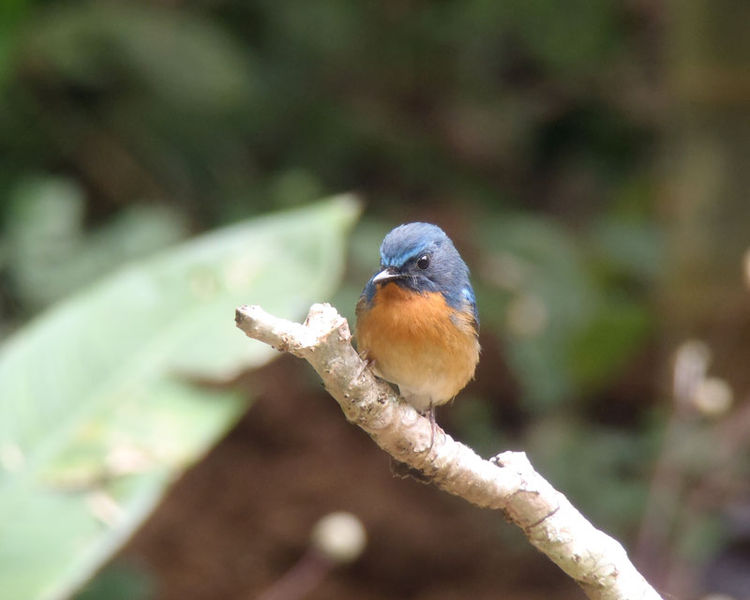
Hill Blue Flycatcher (Cyornis banyumas) ©WikiC2

The Hill Blue Flycatcher (Cyornis banyumas) is a species of bird in the family Muscicapidae. It is found in southern China and Southeast Asia.
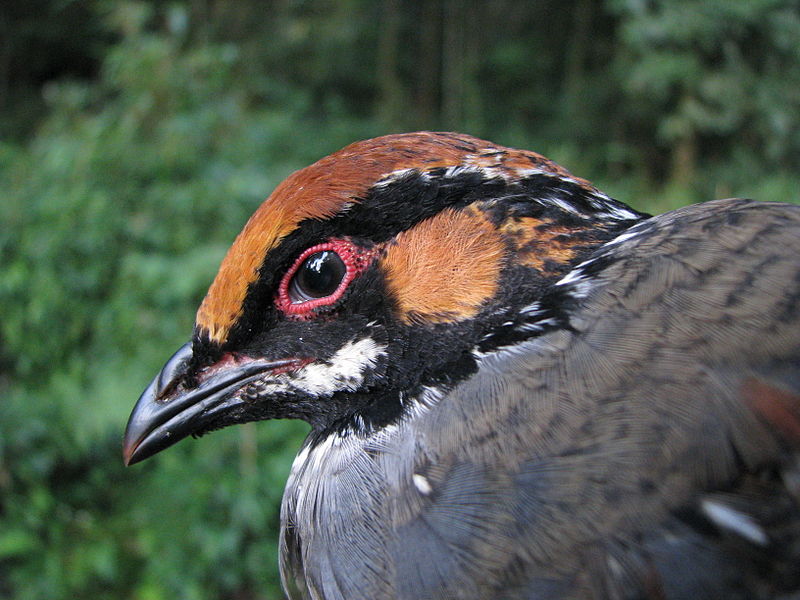
Hill Partridge (Arborophila torqueola) ©WikiC

The Hill Partridge, necklaced hill partridge (Arborophila torqueola) is a species of bird in the pheasant family that is found in Asia.

Hill Pigeon (Columba rupestris) by Nikhil Devasar

Hill Pigeon (Columba rupestris) by Nikhil Devasar

The Hill Pigeon (Columba rupestris) is a stout-bodied pigeon, very similar in size and general appearance to the rock pigeon, but mainly differentiated by its tail pattern which consists of a broad white tail-band across the black tail. Other differences include a paler mantle and upper wings and a white patch on the back. In flight, the tail pattern is similar to the snow pigeon, but lacks the contrast between the head and neck in that species.
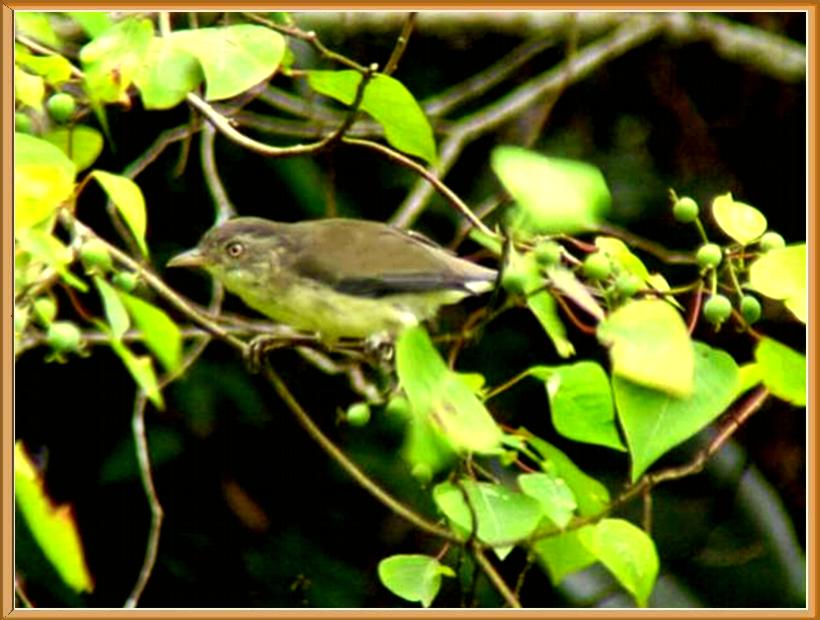
Hill Prinia (Prinia superciliaris)

Hill Prinia (Prinia superciliaris)

Hill Prinia

The Hill Prinia (Prinia superciliaris) is a species of passerine bird in the Cisticolidae family.

It is found in China, India, Indonesia, Laos, Malaysia, Myanmar, Thailand and Vietnam. It was formerly considered con-specific with the black-throated prinia.

Hill Swallow (Hirundo domicola) ©WikiC

Hill Swallow (Hirundo domicola) is a small passerine bird in the swallow family. It breeds in southern India and Sri Lanka. It is resident apart from some local seasonal movements. This bird is associated with coasts, but is increasingly spreading to forested uplands. It was formerly considered a subspecies of the Pacific swallow.


More Avian and Attributes

Birds whose first name starts with “H”

Good News

“Ye are the light of the world. A city that is set on an hill cannot be hid.” (Matthew 5:14 KJV)

*
[Definitions from Webster’s Dictionary of American English (1828), unless noted. Bird info from Wikipedia plus.]
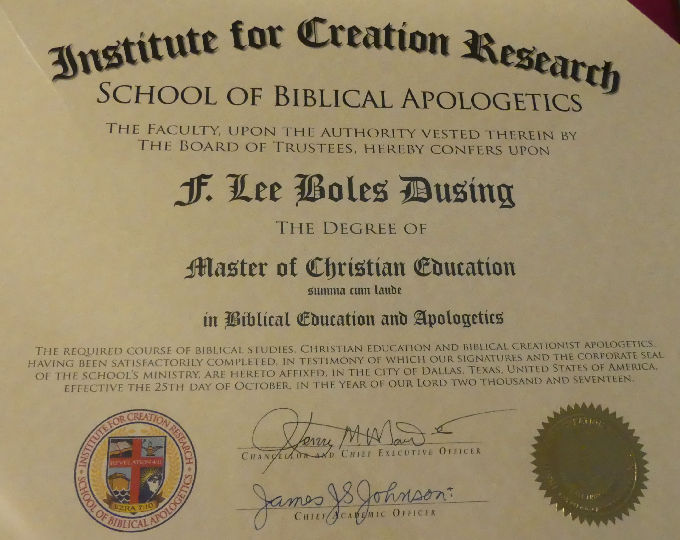

Master’s Degree WAS Finished in 2017

From February 2016 until October 2017 I was working on a Master’s Degree online from the School of Biblical Apologetics. With my back surgery, a hurricane, and etc., etc., … I failed to post the conclusion of it. It’s about time I express my thankfulness to the Institute for Creation Research for having the online school.

SOBA Degree

I was delighted when I received my tassel and the cords that I would have worn with a cap and gown. When there is no graduation ceremony because of being an online degree, you are at a loss to figure out how to show them off. I solved that problem by hanging my tassel on my walker. Then I showed it off at church. I caused my pastor to double over laughing when I told him the following:

When you graduate when you are young, you hang your tassel on your mirror in the car. When you are 74, you hang it on your walker.

Tassel Hanging plus the Cords on Walker (Posed)

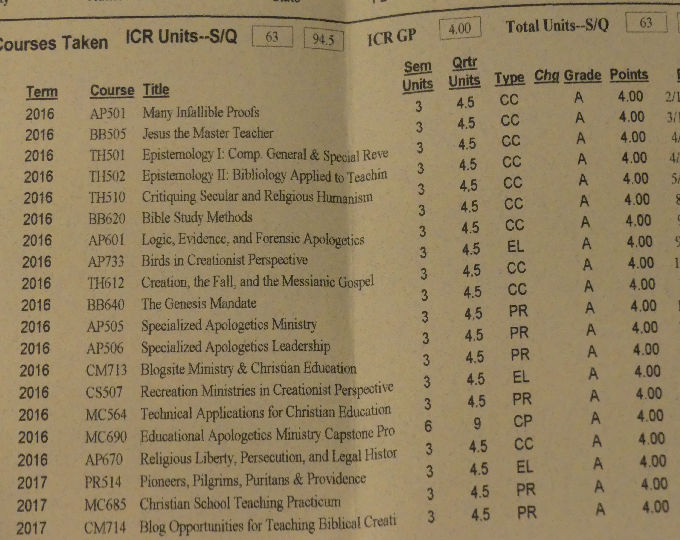
I praise the Lord for the opportunity to take the great courses offered through the School of Biblical Apologetics. Here is a list of the courses that I took for my Master of Christian Education in Biblical Education and Apologetics.

S.O.B.A. Courses Taken

What is the School all about? (Taken from their About page)

The School of Biblical Apologetics (SOBA) is a formal education arm of the Institute for Creation Research. (For more on ICR’s purposes, see Who We Are.)

SOBA provides certificate-level, undergraduate-level, and graduate-level training in biblical education and apologetics. SOBA’s foundation is Scripture, which the school and its faculty hold as inerrant, accurate, and authoritative. Biblical creation, with a special emphasis on Genesis 1-11, is a significant focus of all SOBA degrees, majors, and minors. This focus sets ICR’s program apart from other graduate level apologetic programs.

Fulfilling the purpose of training future leaders in biblical education and apologetics, while maintaining a strict adherence to Scripture (including biblical creationist appreciation of Genesis 1-11), makes ICR’s School of Biblical Apologetics the best choice for those desiring to round out their biblical education. SOBA prepares its students with defensible answers for their faith, giving them the tools necessary to “be ready always to give an answer” for the hope within (1 Peter 3:15) and to “earnestly contend for the faith” (Jude 1:3).

Dr. James J. S. Johnson is the Chief Academic Officer of the School. As you may know, he posts articles here on this blog. He loves birdwatching and taught birding courses previous to joining I.C.R. He was a tremendous encouragement for me to begin and continue working on this degree. Also, Mrs Mary Smith, the Registrar and Academic Coordinator, was a great encourager. My thanks to both of them.

My husband, Dan, was my most encouraging supporter. He helped complete my neglected duties because of me “having my head in a book.” :) Thank you, Dan!

At my age, this degree was undertaken for several reasons. It was to help increase my Biblical Knowledge and to help me explain the Creation of God’s fantastic critters better. In other words, for personal enrichment and better witnessing of God’s Love and Salvation. The best decision I ever made in my life was on March 20, 1960, when I personally accepted the Lord Jesus Christ as my Personal Savior.

I desire to use the truth of God’s Word to encourage others to, 1) accept Christ as their personal Savior, 2) to read and study the truths found in Scripture, 3) apply the Word to their lives and grow Spiritually, and 4) use that knowledge to teach others to do the same.

Please check out the School of Biblical Apologetics and see how you could also benefit from their courses.

“For God so loved the world, that he gave his only begotten Son, that whosoever believeth in him should not perish, but have everlasting life. For God sent not his Son into the world to condemn the world; but that the world through him might be saved.” (John 3:16-17 KJV)


Avian And Attributes – Glowing

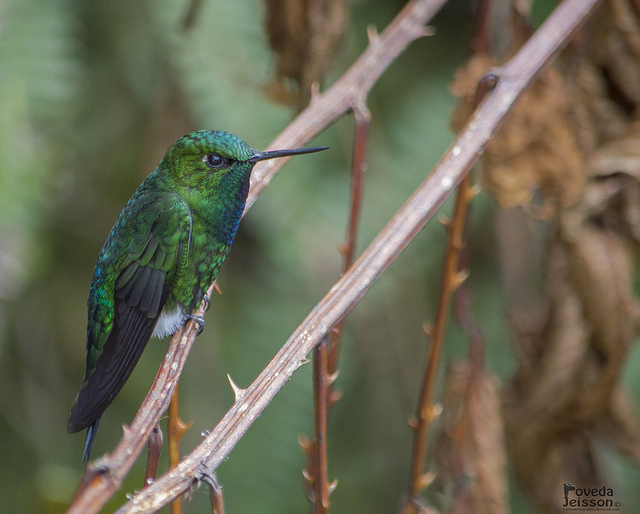
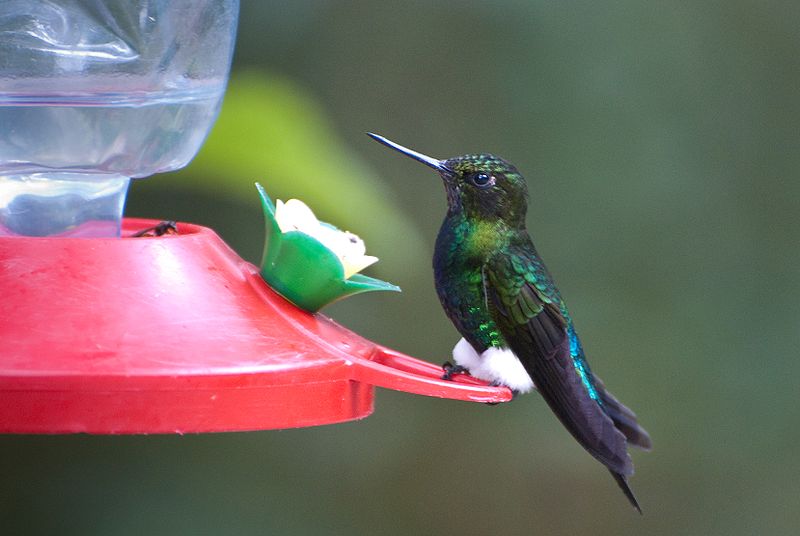
Glowing Puffleg (Eriocnemis vestita) ©WikiC

“Who is this who comes from Edom, With garments of glowing colors from Bozrah, This One who is majestic in His apparel, Marching in the greatness of His strength? “It is I who speak in righteousness, mighty to save.” (Isaiah 63:1 NASB)

“Then I noticed from the appearance of His loins and upward something like glowing metal that looked like fire all around within it, and from the appearance of His loins and downward I saw something like fire; and there was a radiance around Him. As the appearance of the rainbow in the clouds on a rainy day, so was the appearance of the surrounding radiance. Such was the appearance of the likeness of the glory of the LORD. And when I saw it, I fell on my face and heard a voice speaking.” (Ezekiel 1:27-28 NASB)

“It came about in the sixth year, on the fifth day of the sixth month, as I was sitting in my house with the elders of Judah sitting before me, that the hand of the Lord GOD fell on me there. Then I looked, and behold, a likeness as the appearance of a man; from His loins and downward there was the appearance of fire, and from His loins and upward the appearance of brightness, like the appearance of glowing metal.” (Ezekiel 8:1-2 NASB)


Avian and Attributes – Glowing

Glowing
GLOWING, ppr. Shining with intense heat; white with heat.
1. Burning with vehement heat.
2. Exhibiting a bright color; red; as a glowing color; glowing cheeks.
3. Ardent; vehement; animated; as glowing zeal.
4. Inflamed; as a glowing breast.


Glowing Puffleg (Eriocnemis vestita) ©WikiC

Glowing Puffleg (Eriocnemis vestita)

The Glowing Puffleg (Eriocnemis vestita) is a species of hummingbird in the Trochilidae family.

It is found in the Andes of Colombia, Ecuador, northern Peru and western Venezuela. Its natural habitats are subtropical or tropical moist montane forests and heavily degraded former forest.


More Avian and Attributes

Birds whose first name start with “G”

Good News

*
[Definitions from Webster’s Dictionary of American English (1828), unless noted. Bird info from Wikipedia plus.]
Avian And Attributes – Glittering

Glittering-throated Emerald (Amazilia fimbriata) by Dario Sanches

“A prayer of Habakkuk the prophet upon Shigionoth.  O LORD, I have heard thy speech, and was afraid: O LORD, revive thy work in the midst of the years, in the midst of the years make known; in wrath remember mercy.  God came from Teman, and the Holy One from mount Paran. Selah. His glory covered the heavens, and the earth was full of his praise.  And his brightness was as the light; he had horns coming out of his hand: and there was the hiding of his power…. (6)  He stood, and measured the earth: he beheld, and drove asunder the nations; and the everlasting mountains were scattered, the perpetual hills did bow: his ways are everlasting… (11)  The sun and moon stood still in their habitation: at the light of thine arrows they went, and at the shining of thy glittering spear.” (Habakkuk 3:1-4, 6, 11 KJV  )


Avian and Attributes – Glittering

GLIT’TERING, ppr. Shining; splendid; brilliant.

Glitter
GLIT’TER, v.i.
1. To shine; to sparkle with light; to gleam; to be splendid; as a glittering sword.
The field yet glitters with the pomp of war.
2. To be showing, specious or striking, and hence attractive; as the glittering scenes of a court.
GLIT’TER, n. Brightness; brilliancy; splendor; luster; as the glitter of arms; the glitter of royal equipage; the glitter of dress.


Glittering Birds

White-rumped Kingfisher (Caridonax fulgidus), Pagal, Flores, Indonesia, 2015-09-15--105

Glittering Kingfisher (Caridonax fulgidus) ©Marcel Holyoak

The Glittering Kingfisher or White-rumped Kingfisher (Caridonax fulgidus) is a species of bird in the family Alcedinidae. It is monotypic within the genus Caridonax. It is endemic to Indonesia, where its natural habitats are subtropical or tropical moist lowland forests and subtropical or tropical moist montane forests.

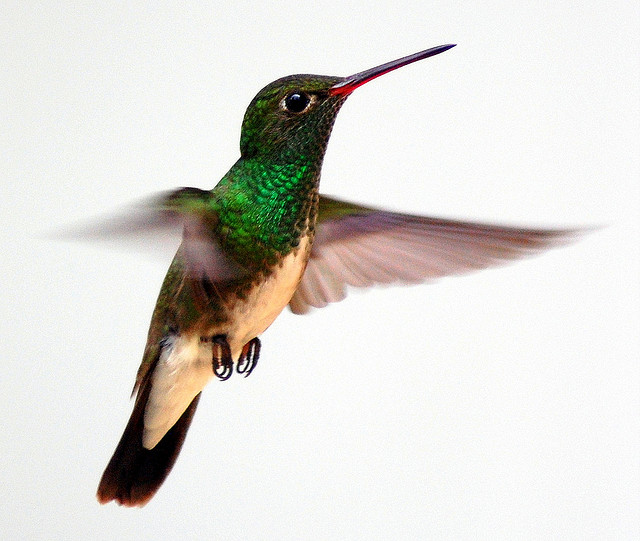
Glittering-bellied Emerald (Chlorostilbon lucidus) ©WikiC

Glittering-bellied Emerald
The Glittering-bellied Emerald (Chlorostilbon lucidus) is a species of hummingbird in the Trochilidae family. It has widely been listed by the scientific name Chlorostilbon aureoventris, but this was shown to be mistaken by J. F. Pacheco and B. M. Whitney in 2006.

It is found in north-eastern Argentina, eastern and central Bolivia, eastern Brazil, Paraguay, and Uruguay. It is widespread and often common in a wide range of semi-open habitats, including gardens and parks.

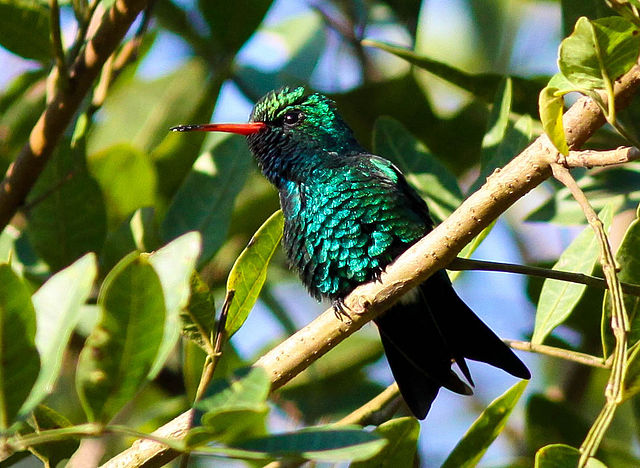
Glittering-throated Emerald (Amazilia fimbriata) by Dario Sanches

Glittering-throated Emerald

The Glittering-throated Emerald emerald (Amazilia fimbriata), sometimes placed in the genus Polyerata, is a species of hummingbird in the Trochilidae family. It is found in the Amazon Basin, Venezuela, the Guianas and Brazil. Its natural habitats are subtropical or tropical moist lowland forests, subtropical or tropical dry shrubland, and heavily degraded former forest.


More Avian and Attributes

Birds whose first name start with “G”

Good News

*
[Definitions from Webster’s Dictionary of American English (1828), unless noted. Bird info from Wikipedia plus.]
Bible Birds – Bird Claws and Eagle Hair

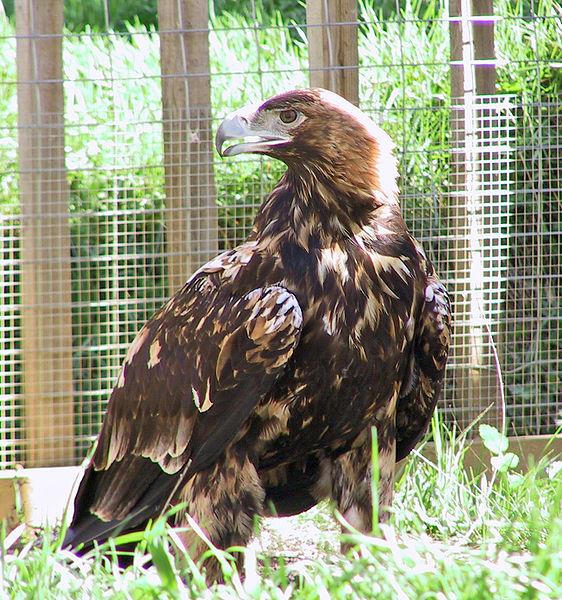
Bald Eagle (Haliaeetus leucocephalus) by Aesthetic Photos

Bald Eagle (Haliaeetus leucocephalus) by Aesthetic Photos

Bible Birds – Bird Claws and Eagle Hair

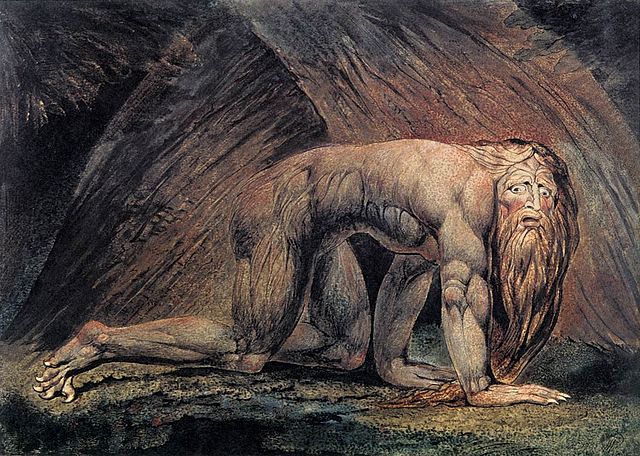
That very hour the word was fulfilled concerning Nebuchadnezzar; he was driven from men and ate grass like oxen; his body was wet with the dew of heaven till his hair had grown like eagles’ feathers and his nails like birds’ claws. (Daniel 4:33 NKJV emphasis mine)

What an interesting verse to read in the Bible. Most of you know what an Eagle looks like, because Eagles fly to many countries.

Adalbert's Eagle Aquila adalberti) ©WikiC

Adalbert’s Eagle Aquila adalberti) ©WikiC

Whose hair was going to grow so long that it would be as long as eagles’ feathers?

Sea Eagle (Haliaeetus pelagicus) Feet by Lee at National Aviary

Sea Eagle (Haliaeetus pelagicus) Feet by Lee at National Aviary

This is what a person looks like with long nails:

Long nails like a bird's claws

Long nails like a bird’s claws

Whose fingernails and toenails was going to grow so long that they would look like bird claws?

The person that verse is referring to is Nebuchadnezzar. He was the King of Babylon in 605 BC – 562 BC. The Lord God had placed him in power to rule over the whole world, but he had forgotten to give God the credit. He started saying things like:

  • “Is not this great Babylon, that I have built for a royal dwelling
  • by my mighty power
  • and for the honor of my majesty?” (Daniel 4:30 NKJV emphasis mine)

Do you know what that is called? Pride! The King was failing to give God the credit for making him the ruler, having majesty, and ability to build his royal place.

Do we have a false pride? Yes, we may do great things. You may make 100% on a test, earn a high award, or receive some other great recognition. Are you swelling up with pride? Have you thanked your parents, friends, or, if you know the Lord as Savior, the Lord for helping you achieve your success?

We should be thankful for the abilities that we have. Thank the Lord for helping you remember those answers to get the 100%. Thank Him for allowing you to earn that award. Thank the Lord for being recognized for something you did that was great.

Thank the Lord even if you didn’t get 100%, a trophy, award, or other prize. If you did your best, that is all He can expect you to do. If you didn’t do your best, then ask the Lord to help you do better the next time something comes up.

Nebuchadnezzar - depicting the king during his bout of insanity by William Blake ©WikiC

Nebuchadnezzar – showing the king during his bout of insanity by William Blake ©WikiC

Yes, after the Lord sent Nebuchadnezzar out to the field with an animal’s heart, eating grass, growing long hair like eagle’s feathers, and his nails growing long like bird’s claws, He finally looked to the Lord God.

Now I, Nebuchadnezzar, praise and extol and honor the King of heaven, all of whose works are truth, and His ways justice. And those who walk in pride He is able to put down. (Daniel 4:37 NKJV)

*

*

Bible Birds – Swan Introduction

Bible Birds – Swan Introduction

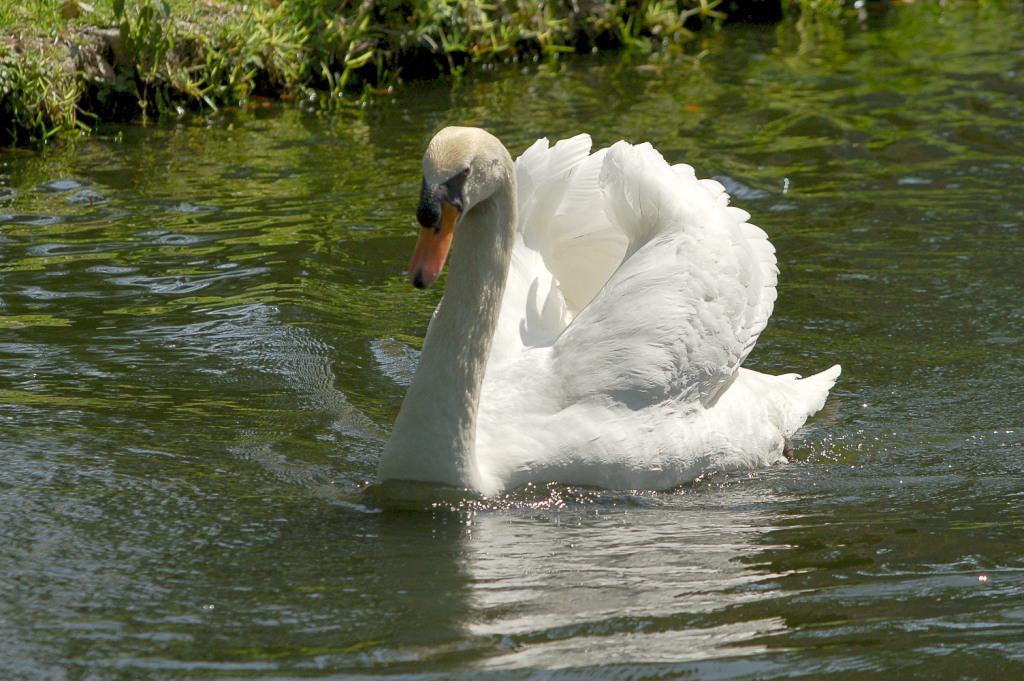
Swan (Cygnus olor)II at Bok Tower By Dan'sPix

Swan (Cygnus olor)II at Bok Tower By Dan’sPix

“And the swan, and the pelican, and the gier eagle,” (Leviticus 11:18 KJV)

“The little owl, and the great owl, and the swan,” (Deuteronomy 14:16 KJV)

Swans are mentioned in these two verses in the KJV Bible. Some other versions list it as another bird. For now, let us learn about the beautiful Swans that the Lord created.

Both of the Swan verses above are found in the “do not eat” list that the Lord gave to the “children of the LORD your God.” Who would want to eat such great looking birds?

Swans are in the Anatidae Family which includes Ducks, Geese and Swans. There are seven species which include these:

Coscoroba Swan (Coscoroba coscoroba)
Black Swan (Cygnus atratus)
Black-necked Swan (Cygnus melancoryphus)
Mute Swan (Cygnus olor)
Trumpeter Swan (Cygnus buccinator)
Tundra Swan (Cygnus columbianus)
Whooper Swan (Cygnus cygnus)

Some Interesting Facts:

  • The Trumpeter Swan has the most contour feathers of any bird. (25,216) That doesn’t count the downy feathers.
  • Swans can fly as fast as 60 miles per hour!
  • A male swan is called a cob, and a female swan is called a pen.
  • A baby swan is called a cygnet.
  • The largest species, including the mute swan, trumpeter swan, and whooper swan, can reach length of over 1.5 m (60 inches) and weigh over 15 kg (33 pounds). Their wingspans can be almost 3 m (10 ft).


This slideshow requires JavaScript.

*

Bible Birds – Swan

Birds of the Bible – Swan

Ian’s Bird of the Week – Black Swan

Anatidae – Ducks, Geese and Swans Family

Wordless Birds

*


Bible Birds Finally Moved Here

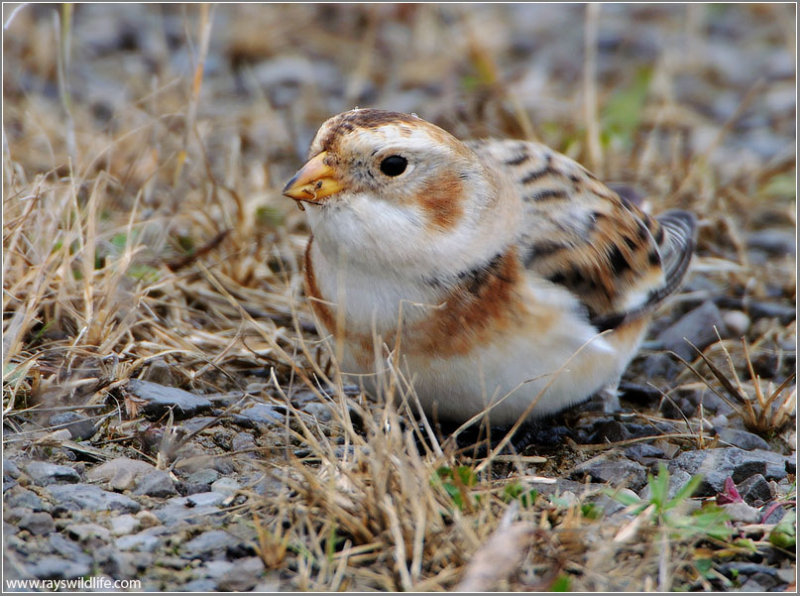
Snow Bunting (Plectrophenax nivalis) by Ray

Snow Bunting (Plectrophenax nivalis) by Ray

And let the beauty of the LORD our God be upon us: and establish thou the work of our hands upon us; yea, the work of our hands establish thou it. (Psalms 90:17 KJV)

Man goeth forth unto his work and to his labour until the evening. (Psalms 104:23 KJV)

Been working most of the day, moving the Bible Birds pages to here at Lee’s Birdwatching Adventures. It has been a challenge, but with dust still flying, they are now here.

I posted an article on the Birds of the Bible For Kids blog explaining the move of those articles. You might want to read that article because it affects this blog.

Changes On The Way

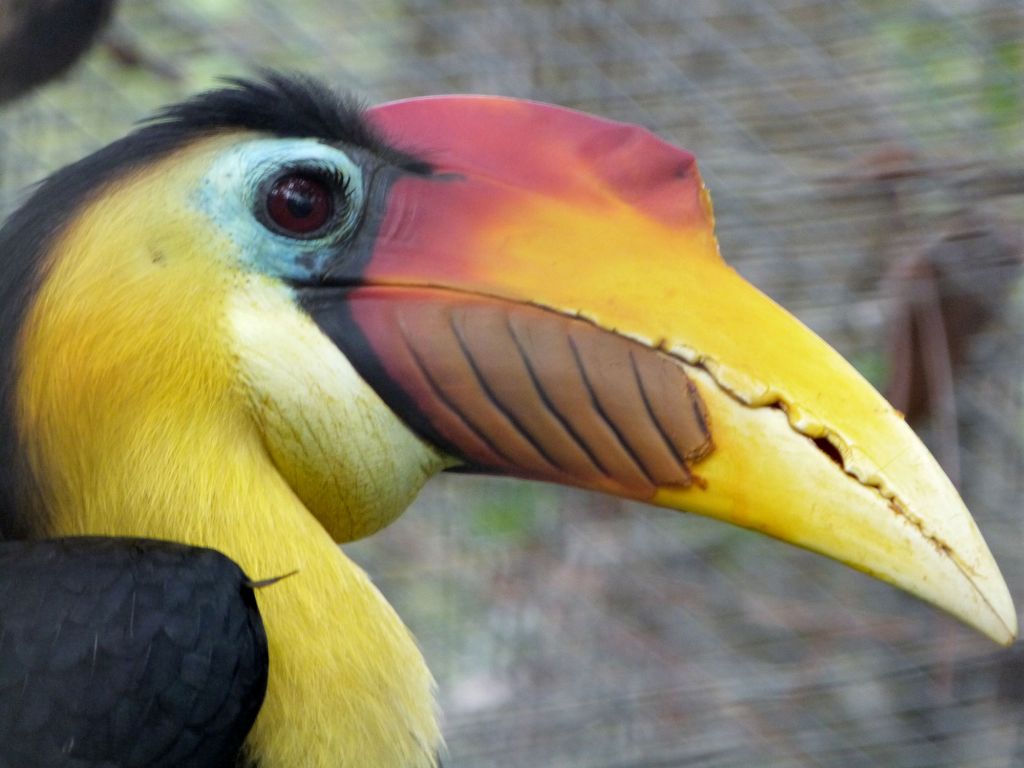
Wrinkled Hornbill (Aceros corrugatus) Brevard Zoo by Lee

Wrinkled Hornbill (Aceros corrugatus) Brevard Zoo by Lee

You can find the Bible Birds listed in the Kid’s Section. The side menu is now working also for that section. (I think it’s correct). Just hover your mouse over the Kid’s Section and you will see the Bible Birds, along with the Watching Birds, Bird Tales and Scripture Alphabet of Animals sections.

Now that the Bible Bird pages are here, I can start improving them and the regular Birds of the Bible sections.

Thanks you for being patient while things are being moved around and I trust you will see much improvement soon. As mentioned in the Changes on the Way article, “Our purpose is to Glorify Our Lord and show forth His great creation through His Birds and other Critters.”

There is still lots of work ahead, as other sections are moved to this blog. Just wanted to let you know why things are changing and dust is flying still. I have another big challenge coming next, but that will have to hold for now.

*

Introduction to Bible Birds

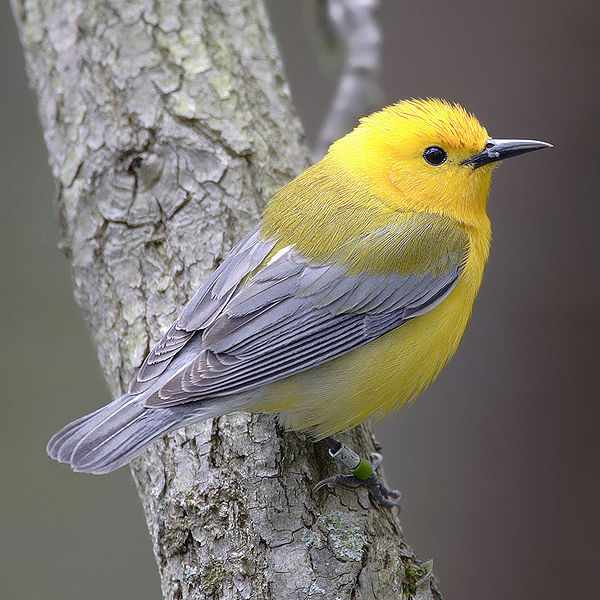
Prothonotary Warbler (Protonotaria citrea) ©WikiC

Prothonotary Warbler (Protonotaria citrea) ©WikiC

Introduction to Bible Birds

This is an Introduction to the Bible Birds. We have been adding many things about the birds in the Bible and other birds that are not named in the Bible, but the Lord made all the birds.

On Day Five (5) of creation, the birds were created. They didn’t just happen. They were designed by God and each one is different. Each one was given just what it needs to live, eat, and make more birds.

Genesis 1:20-23 NKJV
(20) Then God said, “Let the waters abound with an abundance of living creatures, and let birds fly above the earth across the face of the firmament of the heavens.”
(21) So God created great sea creatures and every living thing that moves, with which the waters abounded, according to their kind, andevery winged bird according to its kind. And God saw that it was good.
(22) And God blessed them, saying, “Be fruitful and multiply, and fill the waters in the seas, and let birds multiply on the earth.”
(23) So the evening and the morning were the fifth day.

I know there are some big words in those verses, but the bold letters help find important words.

Did you see the “let birds multiply”? That doesn’t mean they do math. It means that they were to have baby birds, then the baby could grow up and have more baby birds. Then there would be lots of birds.

We will be telling you more soon. Come back and find out about the many birds in the bible.

See:

Bible Birds

Birds of the Bible

Wordless Birds

*

(Sept 1 – Opened up a new section of the blog called Kids Section – Bible Birds. This is the Introduction for their Bible Birds section, which has links to easier reading articles or ones written for the younger folks.

Some of these articles were here already and others were written just for the Birds of the Bible For Kids blog.  We are placing a copy of all articles on this blog. This will save much duplications. Also, the younger readers will also have the benefit of the wealth of information here also.

Expect to see more articles for both our regular readers and our younger readers. You might be surprised how interesting they can be.

Bible Birds – Peacocks Page Updated

Indian Peafowl (Pavocristatus) by Nikhil Devasar

Indian Peafowl (Pavocristatus) by Nikhil Devasar

Gavest thou the goodly wings unto the peacocks? or wings and feathers unto the ostrich?  (Job 39:13)

Peacocks belong to the  Phasianidae – Pheasants, Fowl & Allies Family.

Click to See the updated page with a Slideshow and the article

*

Bible Birds – Peacocks in South Carolina

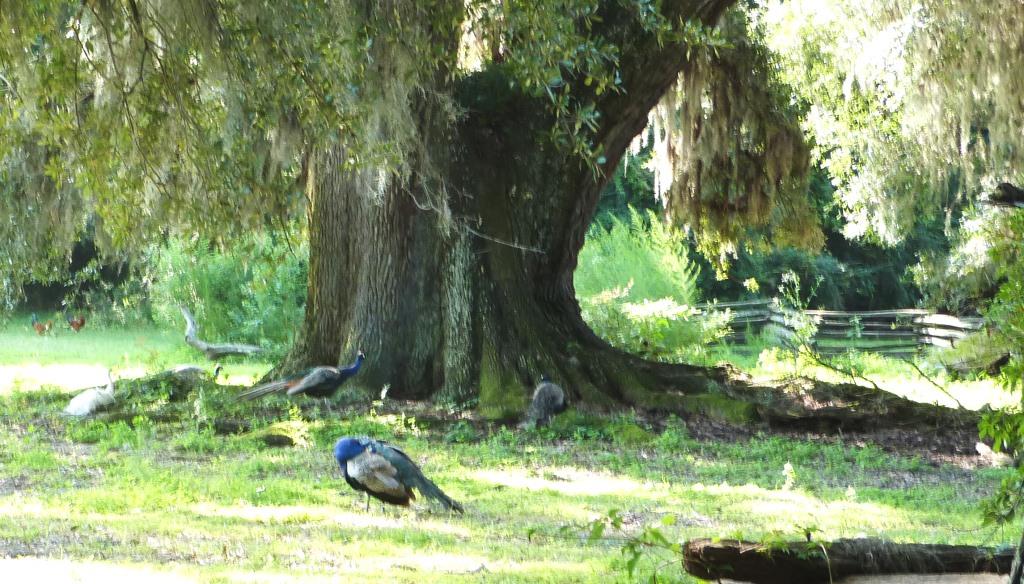
Peacocks at entrance to Magnolia Plantation

Peacocks at entrance to Magnolia Plantation


For the king had at sea a navy of Tharshish with the navy of Hiram: once in three years came the navy of Tharshish, bringing gold, and silver, ivory, and apes, and peacocks. (1 Kings 10:22)

We have just arrived home from a shortened vacation due to a health issue. We got as far as Charleston, S. C. before turning around and drifting back home.

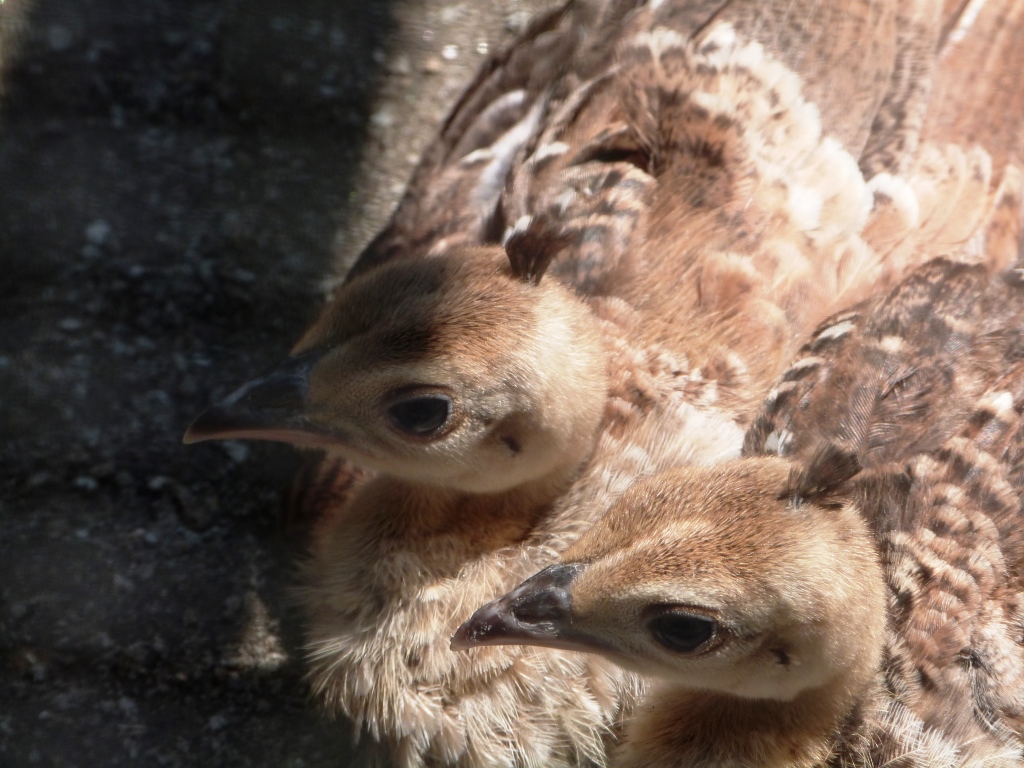
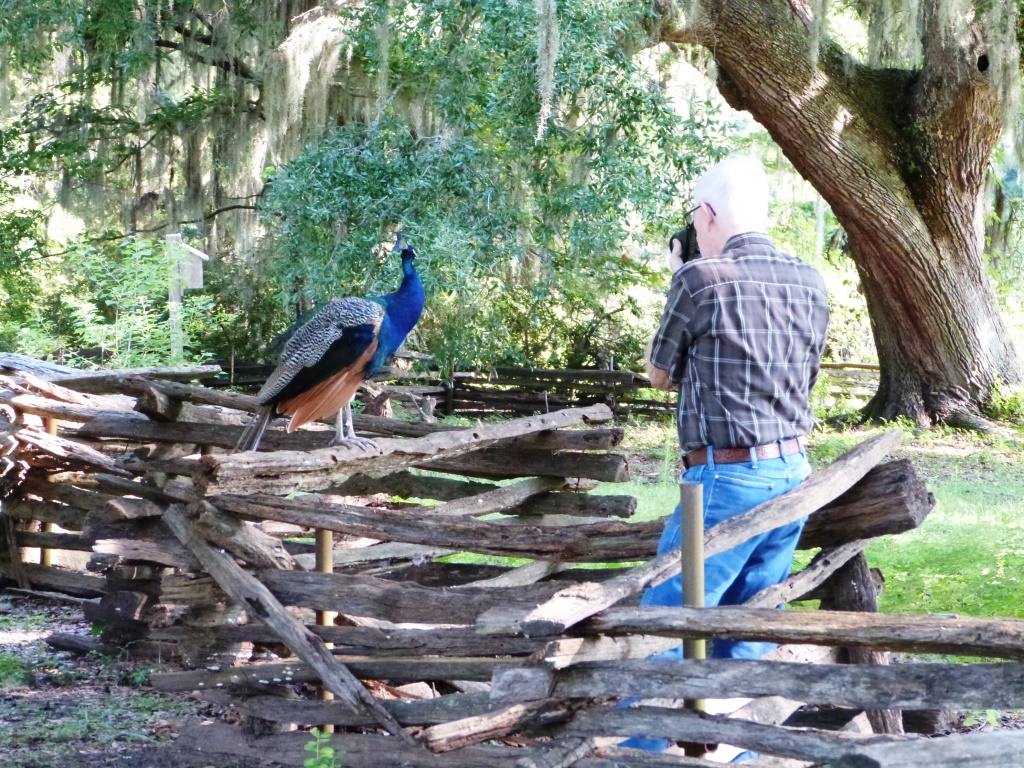
We were able to visit a few places, the Magnolia Plantation, for one, in Charleston. We were greeted at the entrance by at least 6 or 7 Peacocks. Also at the Petting Zoo, they had two female Peafowl with very young peachicks. As far as I could tell, these were Indian Peafowl (Pavo cristatus). Peacocks are actually Peafowl and belong to the Pheasant & Allies Phasianidae Family.

I have never seen peachicks before and thought it cute that they have the little tufts on their heads that will eventually grow those top feathers.

Peachicks at Magnolia Gardens by Lee

Peachicks at Magnolia Gardens by Lee

“First, the “Peacocks” are the males. The females are called “Peahen” and their chicks are called “Peachicks.”  Collectively the birds are called Peafowl. They all belong to the Phasianidae – Pheasants, Fowl & Allies Family.” (From Birds of the Bible – Peacocks II


Here are some of the photos of the peacocks there at the Plantation.

Dan photographing one of the Peacocks

Dan photographing one of the Peacocks

To find out more about Peacocks (Peafowl):

*

PS. Sorry about the quickly edited photos. I’ve had the blog on “auto-pilot” for over a week, but ran out of pre-scheduled blogs.

*

Bible Birds – Mighty Hand of God!

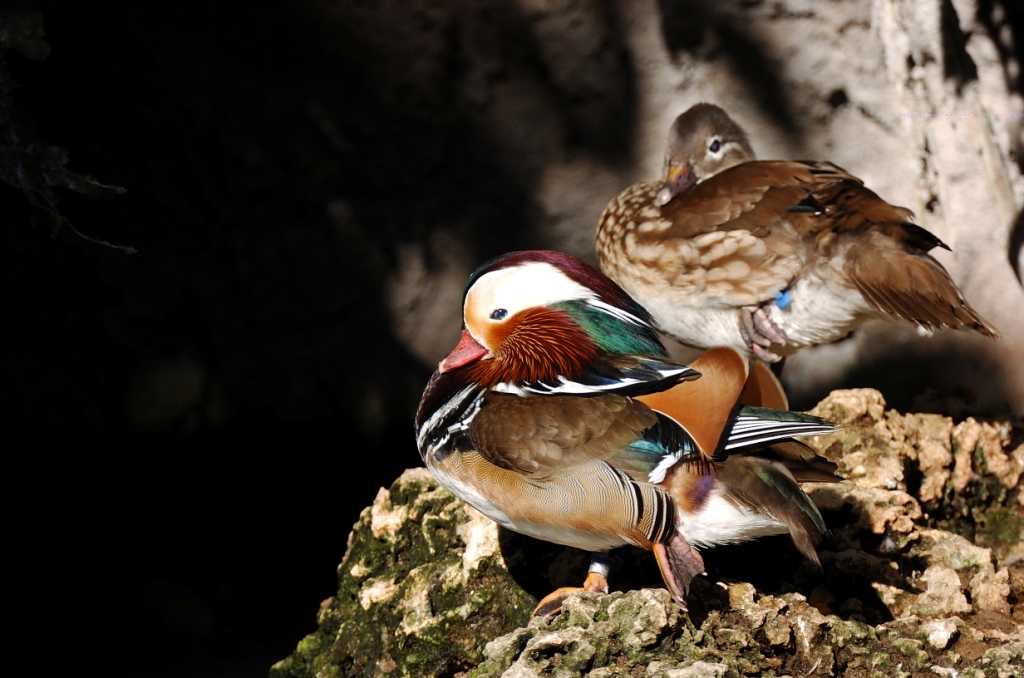
Mandarin Duck (Aix galericulata) by Dan at Zoo Miami

Mandarin Duck (Aix galericulata) by Dan at Zoo Miami

O Lord GOD, You have begun to show Your servant Your greatness and Your mighty hand, for what god is there in heaven or on earth who can do anything like Your works and Your mighty deeds? (Deuteronomy 3:24 NKJV)

What a beautiful duck. When we look around us, the Lord’s Hand is at work everywhere. Be thankful today for the Lord’s Blessing.

Brown-headed Barbet (Megalaima zeylanica) by Nikhil Devasar

Hang in there, today!

O taste and see that the LORD is good: blessed is the man that trusteth in him. (Psalms 34:8 KJV)

*

Bible Birds

*


Bible Birds – Lapwings II

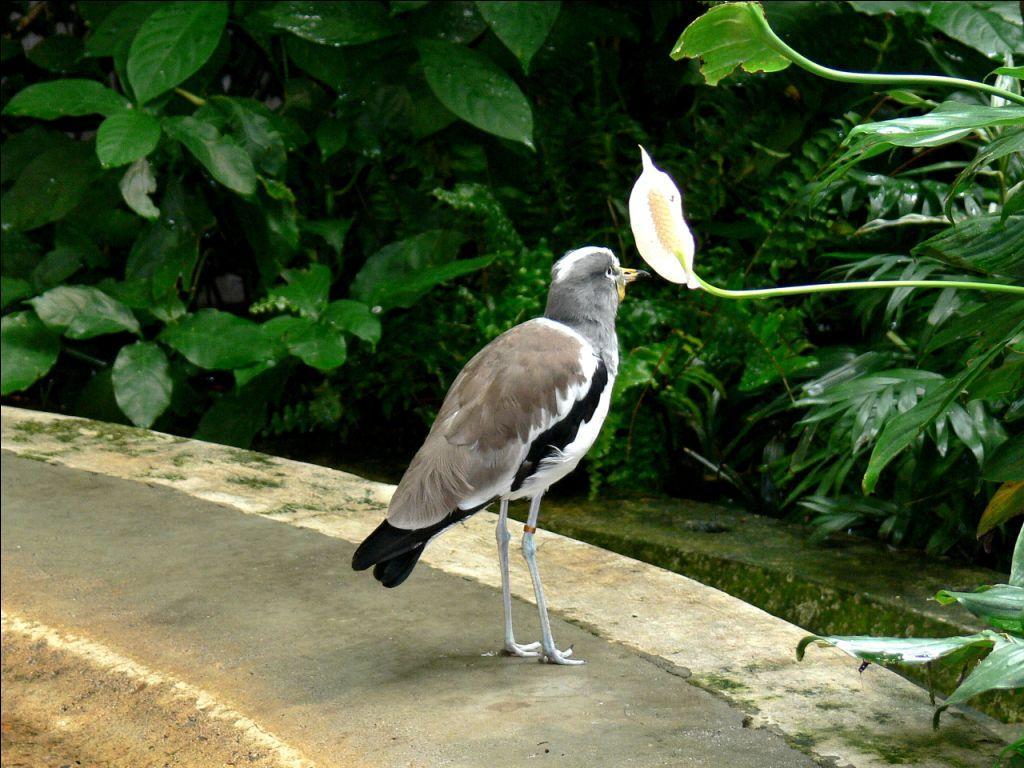
White-crowned Lapwing (Vanellus albiceps) at NA

White-crowned Lapwing (Vanellus albiceps) at NA

And the stork, the heron after her kind, and the lapwing, and the bat. (Leviticus 11:19 KJV)

The White-crowned Lapwing above was my first Lapwing encountered. They were at the National Aviary in Pittsburg, PA. They are from the tropical regions of Africa and have a diet of insects and other small invertebrates. (Fun Fact from Aviary) ~ White-headed Wattled Lapwings will bravely defend their territories against all comers, even hippos!

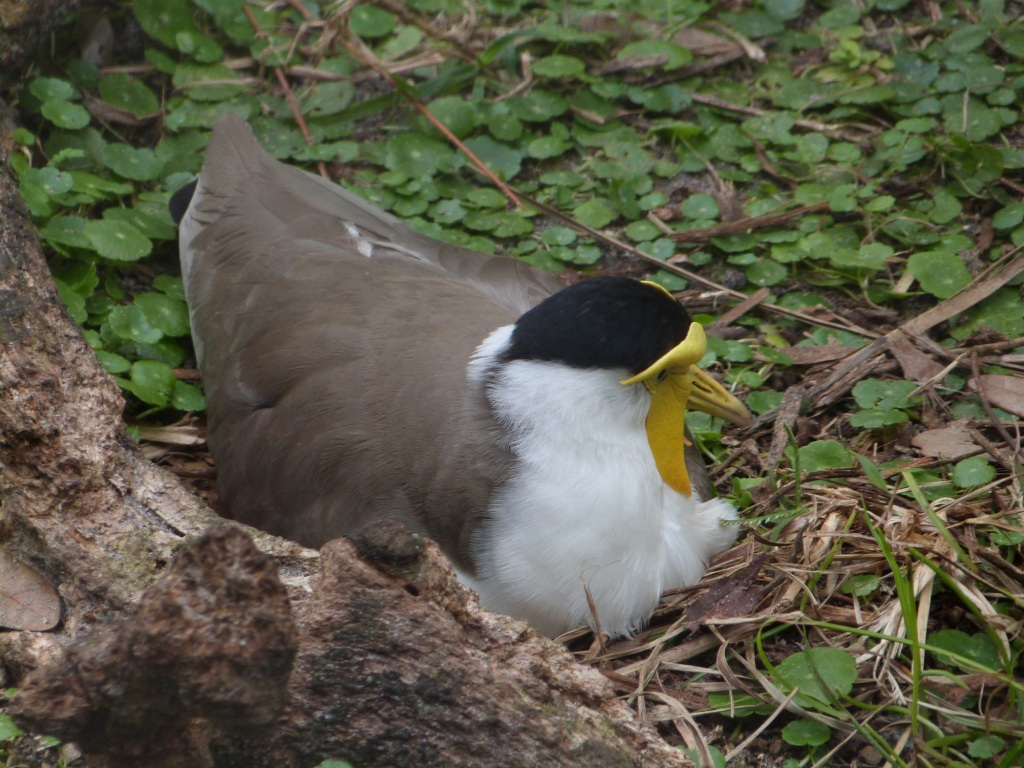
Now almost every zoo we visit has at least one species of Lapwing present. We see the Masked Lapwing most frequently. The reason Lapwings are mentioned in the Bible is because it is on the “Do Not Eat” list.

Masked Lapwing (Vanellus miles) Brevard Zoo by Lee

Masked Lapwing (Vanellus miles) Brevard Zoo by Lee

And the stork, and the heron after her kind, and the lapwing, and the bat. (Deuteronomy 14:18 KJV)

The Masked Lapwings are interesting to watch as they walk around on their long legs and as the “wattle” wiggles.

Vanellinae are any of various crested plovers, family Charadriidae, noted for its slow, irregular wingbeat in flight and a shrill, wailing cry. Its length is 10-16 inches. They are a subfamily of medium-sized wading birds which also includes the plovers and dotterels. The Vanellinae are collectively called lapwings but also contain the ancient Red-kneed Dotterel. A lapwing can be thought of as a larger plover.

The traditional terms “plover”, “lapwing” and “dotterel” were coined long before modern understandings of the relationships between different groups of birds emerged: in consequence, several of the Vanellinae are still often called “plovers”, and the reverse also applies, albeit more rarely, to some Charadriinae (the “true” plovers and dotterels).

In Europe, “lapwing” often refers specifically to the Northern Lapwing, the only member of this group to occur in most of the continent. (Wikipedia)

*

Here are some photos of Lapwings in the Vanellinae genera.

This slideshow requires JavaScript.

*

*