Scripture Alphabet of Animals: The Leopard

Leopard - Persischer leopard ©WikiC

Scripture Alphabet of Animals: The Leopard

By Harriet N. Cook (1814-1843)

The leopard is a beautiful animal, though very savage and cruel. It is about as large as the largest of our dogs, but it looks much more like a cat than a dog. You have watched kittens at their play a hundred times, and you know how very quick, and pretty, and graceful all their motions are. It is just so with the leopard; and it can creep along too, as softly as a cat, and run up a tree after a monkey, as easily as a cat does after a bird. It lives mostly upon young antelopes and deer, and it often lies still a long time watching one till it comes near, and then springs out upon it. The Bible says in one place,

A leopard shall watch over their cities; every one that goeth out thence shall be torn in pieces;

and in another, “Therefore will I be to them as a lion; as a leopard by the way will I observe (or watch for) them.

The leopard runs very swiftly when it is trying to overtake any animal: the Bible says, Their horses are swifter than leopards.

Leopard - Panthera pardus japonensis ©WikiC

Leopard – Panthera pardus japonensis ©WikiC

Its color is a clear, handsome yellow, spotted with black; the spots are found in little groups, two, or three, or four together, and the skin is very smooth and shining. There is such a great difference between the color of the spots and the rest of the skin, that you would think it a very curious looking animal. The 23d verse of the 12th chapter of Jeremiah is this:

Can the Ethiopian change his skin or the leopard his spots? Then may ye also do good that are accustomed to do evil.

It would be no easy thing to wash away the leopard’s black spots; indeed nothing but God’s power could do it. So it is not easy to do right when we have been used to do wrong, and have loved to do it: this is why we need to pray that God will

create a clean heart and renew a right spirit within

us. Should we not be careful about every sinful habit? Remember, dear child, that such a habit in you may become fixed, almost like the leopard’s spots; and pray God to help you love every thing that is

pure, and lovely, and of good report.

What a peaceful and happy time that will be, when Jesus our Savior shall reign in all the earth-when all men shall love him and each other-when “the leopard (fierce and cruel as it is now) shall lie down with the kid; and the calf and the young lion and the fatling together; and a little child shall lead them.” That bright day is coming; and if you love Christ, even you-a child-can do something to prepare for it.

___
See:

Harriet Newell Cook – Scripture Alphabet of Animals

Nave’s Topical Bible – Leopard

Torrey’s Topical Textbook – Leopard

(Photos ©WikiC)

*

Scripture Alphabet of Animals: The Hart and Hind

Hinds at Killarney National Park©WikiC

Scripture Alphabet of Animals: The Hart and Hind

By Harriet N. Cook (1814-1843)

Several animals of the deer kind are mentioned in the Bible under the names of Fallow-deer, Hart, Hind, and Roe-buck. They were all numbered among the clean animals, or those which the Israelites were allowed to eat; as we see in Deut. 14:4, 5,

These are the beasts which ye shall eat; the ox, the sheep, the goat, the hart, the roe-buck and the fallow-deer.

In 1st Kings, 4:23, we read of the daily provision which was made for king Solomon’s table, and among the rest were

ten fat oxen, and twenty oxen out of the pastures, and a hundred sheep, besides harts, and roe-bucks, and fallow-deer.

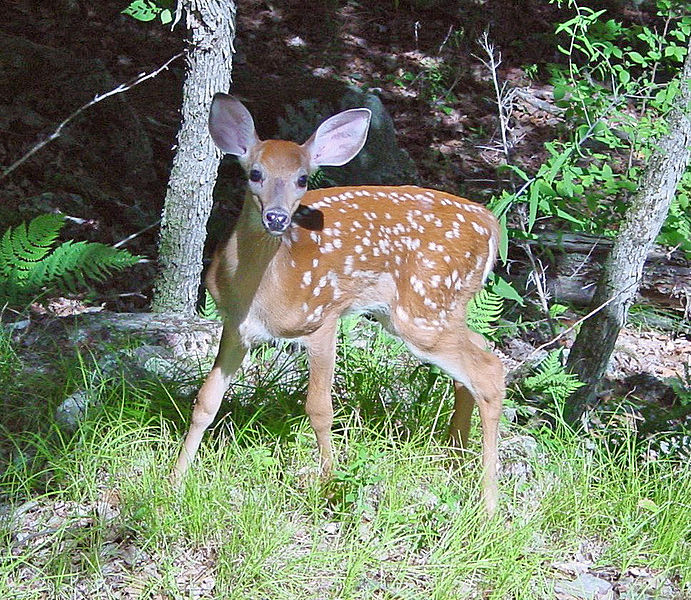
Fawn ©WikiC
Fawn ©WikiC

These animals are all harmless, gentle, timid, loving and beautiful; noted for their branching horns, for the elegance of their form, and for their surprisingly swift and graceful motion. It has long been a favorite amusement in eastern countries to pursue them in the chase; and as the swiftest greyhound can scarcely overtake them, it is usual to train hawks or falcons to attack them, and so delay them till the dogs come up. They bound along over the plains, “fleet as the wind,” seeming scarcely to touch the ground: no motion can be more beautiful. In the last verse of Solomon’s Song we read,

Make haste, my beloved, and be thou like to a roe, or to a young hart on the mountains of spices.

The 35th chapter of Isaiah contains a beautiful description of the peaceful kingdom which Christ will one day establish in the earth; and among other things it is said,

Then the eyes of the blind shall be opened, and the ears of the deaf shall be unstopped; then shall the lame man leap as an hart, and the tongue of the dumb shall sing.

The hart or hind is remarkably sure-footed as well as swift: this may explain one or two verses in the Bible. David says, 2d Sam. 22:33, 34,

God is my strength and power, and he maketh my way perfect. He maketh my feet like hinds’ feet, and setteth me upon my high places.

In the last verse of Habakkuk we read,

The Lord is my strength, and he will make my feet like hinds’ feet.

The male deer is called a hart, the female a hind; and their affection for each other is beautiful. Solomon says in the Proverbs,

Rejoice with the wife of thy youth; let her be as the loving hind and pleasant roe.

The hart often suffers from thirst in the dry and sandy countries where it lives-especially when pursued by the hunters; it then longs for water, and plunges with the greatest eagerness into the cooling stream. David says in the 42d Psalm,

As the hart panteth after the water brooks, so panteth my soul after thee, O God. My soul thirsteth for God, for the living God; when shall I come and appear before God?

Nothing could more strongly express his love to God, or his ardent desire for communion with him. Happy is the child who has in his heart such feelings towards God, and who finds pleasure in praying to him, from day to day; he has been taught by the Holy Spirit, and is preparing to meet God in peace. (See Roe.)

___
See:

Harriet Newell Cook – Scripture Alphabet of Animals

Nave’s Topical Bible – Hart

Nave’s Topical Bible – Hind

Torrey’s Topical Textbook – Hart

(Photos ©WikiC)

Scripture Alphabet of Animals: The Goat

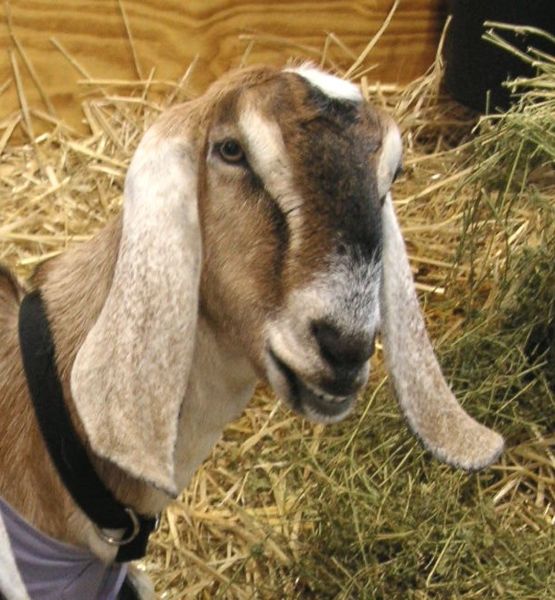
Nubian Goat with long ears ©WikiC

Scripture Alphabet of Animals: The Goat

By Harriet N. Cook (1814-1843)

There are two kinds of goat in the countries where the Bible was written; one very much like those that we sometimes see; the other differing from it in several respects, especially in the greater length of its ears. It is supposed that the prophet Amos speaks of the latter kind when he says,

As the shepherd taketh out of the mouth of the lion, two legs or a piece of an ear.

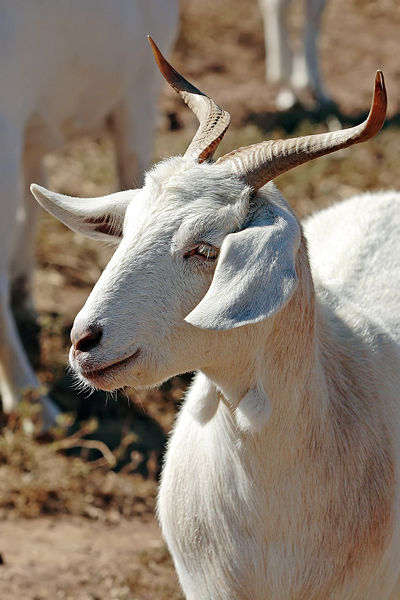
Goat with unusual horns ©WikiC

Goat with unusual horns

The ear of this kind of goat is so long that a large piece might easily be bitten off; it sometimes measures more than a foot.

Solomon says, in the Proverbs, when speaking to a man who is diligent in his work,

Thou shalt have goats’ milk enough for thy food, for the food of thy household, and for the maintenance of thy maidens.

This seems strange to us, because we are not much used to it; but in those countries the milk of the goat is very sweet and good, and is often made into cheese.

The people there often have a great number of goats. Jacob sent a present of two hundred and twenty to his brother Esau; and a great king, mentioned in the Bible, once received seven thousand seven hundred as a gift. A man is mentioned in the first book of Samuel who owned a thousand goats: perhaps you can find the place; and if you do, you will see in the next verse what his name was, and also the name of his wife.

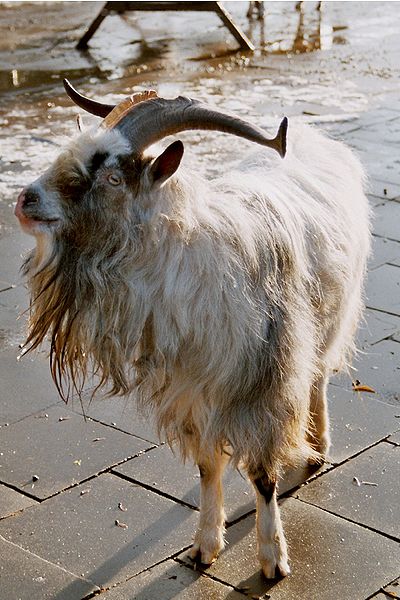
Long-haired Goat ©WikiC

Long-haired Goat ©WikiC

There are two kinds of hair upon the goat; one is long and coarse, the other soft and fine. Of the first kind the people make a kind of rough, coarse cloth; the other is made into very fine cloth, almost as soft as silk. A part of the curtains for the tabernacle were made of goats’ hair.

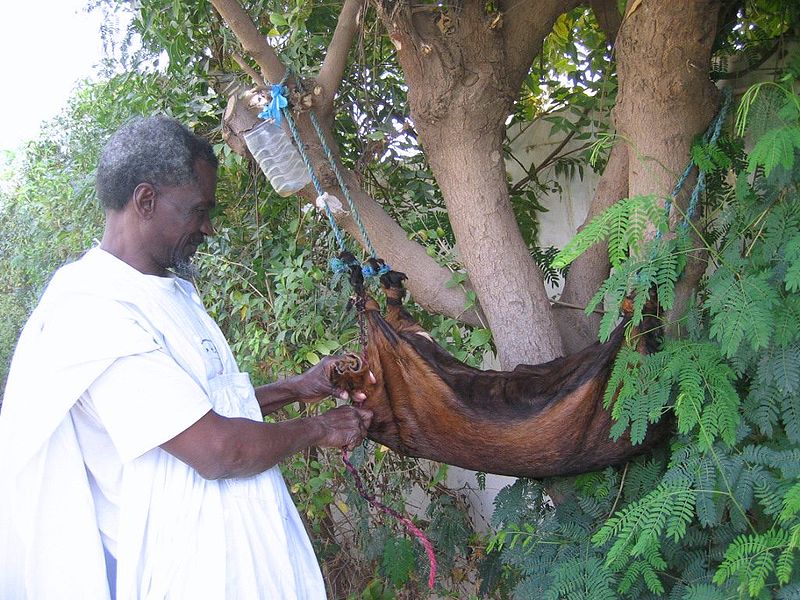
The bottles mentioned in the Bible were usually made of goat-skins: the people in those days had not learned to make glass. When they had been used a long time, they became worn, so that they would not hold what was put in them. Our Savior once said,

Neither do men put new wine into old bottles;

this was because the new wine would ferment and the leathern bottles would burst. There is a story in the Old Testament about some men who wished to deceive Joshua, and lead him to think that they lived at a very great distance from him, when they really lived very near. So it is said, (Josh. 9:4, 5)

They took old sacks upon their asses, and wine-bottles, old and rent, and bound up; and old shoes and clouted upon their feet, and old garments upon them; and all the bread of their provision was dry and mouldy

Mauritanian making a bota bag©WikiC

Mauritanian making a bota bag©WikiC

Then they said to Joshua, (verses 12 and 13)

This our bread we took hot for our provision out of our houses on the day we came forth to go unto you; but now, behold it is dry, and it is mouldy. And these bottles of wine which we filled were new, and behold they be rent; and these our garments and our shoes are become old by reason of the very long journey.

The Israelites had a singular custom in ancient times, about which you may read in the sixteenth chapter of Leviticus. It was commanded by God, and was to be observed once in every year. On the morning of the day appointed for it, the high-priest was to wash in pure water, and clothe himself in a dress of clean white linen. Then two fair and handsome young goats were brought to him, one of which was to be killed. The priest was to cast lots, that he might know which of them it should be; then he was to kill him, sprinkle his blood upon the altar seven times, and burn the flesh. Afterwards he was to take the live goat, lay both hands upon his head, and confess over him the sins of the Israelites,

putting them upon the head of the goat.

Then the animal was given into the care of a man who led him away and let him go in the wilderness,

bearing upon him all the iniquities

of the people. This goat was a type of our Savior; that is, it represented what he afterwards did, when he came into the world and “bore our sins.”
___
See:

Harriet Newell Cook – Scripture Alphabet of Animals

Nave’s Topical Bible – Goat

Torrey’s Topical Textbook – Goat

(Photos ©WikiC)

*

Scripture Alphabet of Animals: The Fox or Jackal

Fox - Blandford's Fox

Scripture Alphabet of Animals: The Fox or Jackal

By Harriet N. Cook (1814-1843)

It is not quite certain whether the fox mentioned in the Bible is the same animal that we now call by that name. It probably means what we now call the jackal. This animal is about as large as a common sized dog, and its color is yellow, or reddish brown. It never goes out alone to seek its food, but always in companies of forty or fifty together. Then they make strange noises, which sound very much like the crying of children.

They do not go out for their food in the daytime, but wait till it begins to be dark; and then they kill all the animals they can find that are not too strong for them. Sometimes a large animal like the lion will hear the cries that they make when they are hunting, and will come and snatch away from them whatever they have found. These foxes or jackals have been known to scratch away the earth from graves that have been lately made, and then devour the bodies of the dead. This explains a verse in the sixty-second Psalm, where David says of those who

seek his soul to destroy it,”-“They shall fall by the sword; they shall be a portion for foxes.

They eat plants of different kinds; sometimes roots, and sometimes fruits. This is one of the verses in Solomon’s Song,

Take us the foxes, the little foxes which spoil the vines; for our vines have tender grapes.

These animals are often found in great numbers around the walls and ruins of old cities; they live in holes or burrows which they dig in the ground. Our Savior says,

The foxes have holes and the birds of the air have nests; but the Son of man hath not where to lay his head.

Fox - (Vulpes macrotis mutica) with pups

Fox – (Vulpes macrotis mutica) with pups

We have read this verse so many times that we scarcely think how much it means; but was it not a wonderful thing that when Christ came from his bright throne in heaven to this poor earth, he should not find even a home here? Every animal on all the hills has its shelter and hiding-place; every little bird in all the forest has its comfortable nest; but our Savior “had not where to lay his head.” During all his life he was

a man of sorrows and acquainted with grief.

For whom did he suffer all this?-and when his sorrowful life was ended, for whom did he die? I need not tell you this, dear child, but I may ask you,

“Is there nothing we can do

“To prove our grateful love?”

___

See:

Harriet Newell Cook – Scripture Alphabet of Animals

Nave’s Topical Bible – Fox

Torrey’s Topical Textbook – Fox

(Photos ©WikiC)

*

Scripture Alphabet of Animals: The Eagle

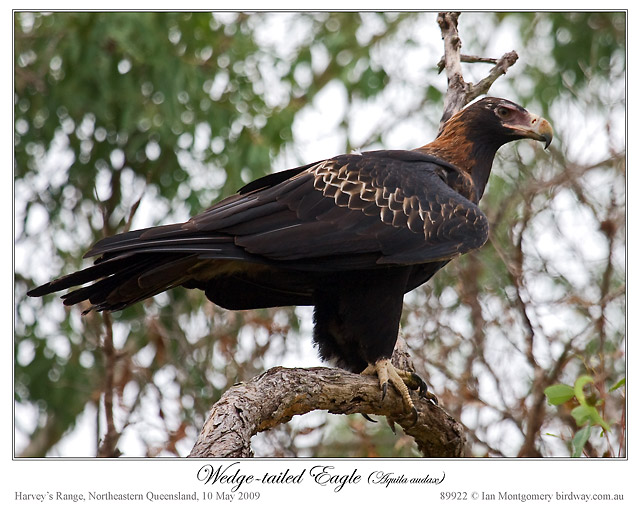
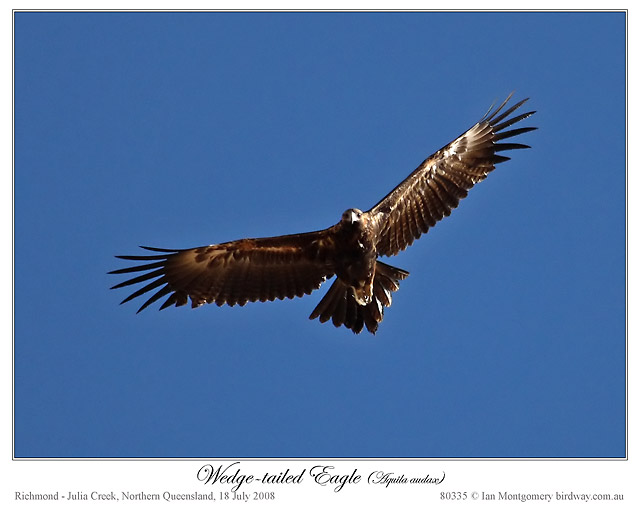
Wedge-tailed Eagles (Aquila audax) by Ian

Wedge-tailed Eagles (Aquila audax) by Ian

Scripture Alphabet of Animals: The Eagle

By Harriet N. Cook (1814-1843)

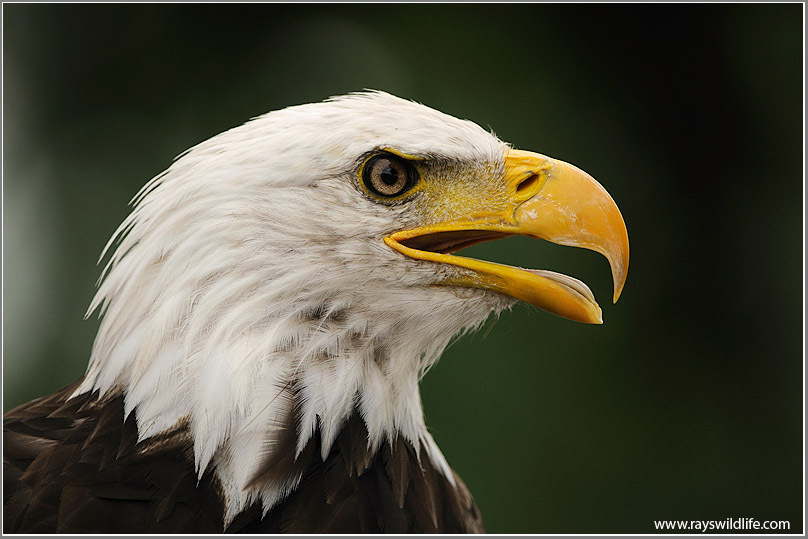
Bald Eagle (Haliaeetus leucocephalus) by AestheticPhotos

Did you ever see an eagle? There were once a great many among the rocks and mountains of our own country, but they will not stay where there are many people; so they are seldom seen here now. They like to make their nests in high and rocky places, where nobody can find them; as a verse in the Bible says,

“Though thou shouldest make thy nest on high as the eagle, yet will I bring thee down from thence.”

Their nests are not usually made in trees like those of many other birds, neither are they shaped in the same way: they are nothing but a layer of sticks spread flat upon the rock, and covered with some hay or straw. The care of the eagle for her young is spoken of in Deut. 32:11.

“As an eagle stirreth up her nest, fluttereth over her young, spreadeth abroad her wings, taketh them, beareth them on her wings; so the Lord alone did lead him.”

This beautifully describes God’s care over the children of Israel while they were passing through the wilderness; does it not also well express his kindness to us?

These birds fly very swiftly, and you will find verses in the Bible that speak of this. One is the forty-ninth verse of the twenty-eighth chapter of Deuteronomy. “The Lord shall bring a nation against thee from far, as swift as the eagle flieth.” In another place it is said, “His horses are swifter than eagles.” Job says,

“My days are swifter than a post, (or post-rider;) they are passed away as the swift ships, as an eagle that hasteth to the prey.”

Bald Eagle by Raymond J Barlow

Bald Eagle by Ray

The eye of the eagle is very curious. It has something like an inner eyelid, only it is very thin; and the eagle can draw this over its eye, like a curtain, whenever there is too much light. You have heard perhaps that it can look directly at the bright sun; and this is the reason. It can see a great deal farther than we can; and when it is very high in the air, so that it would look to you but little larger than a speck, it often sees some small animal on the ground and flies down to catch it.

See how well this bird was described a great many years ago: these are the last verses of the thirty-ninth chapter of Job:

“Doth the eagle mount up at thy command and make her nest on high? She dwelleth and abideth upon the rock, upon the crag of the rock, and the strong place. From thence she seeketh the prey, and her eyes behold afar off. Her young ones also suck up blood; and where the slain are, there is she.”

Wedge-tailed Eagles (Aquila audax) by Ian

Wedge-tailed Eagles (Aquila audax) by Ian

The eagle lives a great many years; sometimes more than seventy, I believe. It sheds its feathers every spring, and new ones come out; then it looks like a young bird. This is why David says in the Psalms,

“Who satisfieth thy mouth with good things, so that thy youth is renewed, (or comes again,) like the eagle’s.”

There is this beautiful verse in Isaiah,

“They that wait upon the Lord shall renew their strength; they shall mount up on wings as eagles; they shall run and not be weary, they shall walk and not faint.”

How blessed and happy a thing it is to be a Christian indeed! to “wait upon the Lord” every day for the strength we need; and to be always preparing for that world where the inhabitants are for ever young, for ever active, for ever holy, for ever happy.

(Blog formatted by Lee)

See:

Harriet Newell Cook -Scripture Alphabet of Animals

Birds of the Bible

Eagles

Accipitridae Family – Kites, Hawks & Eagles

Nave’s Topical Bible – Eagle

Torrey’s Topical Textbook – Eagle

*

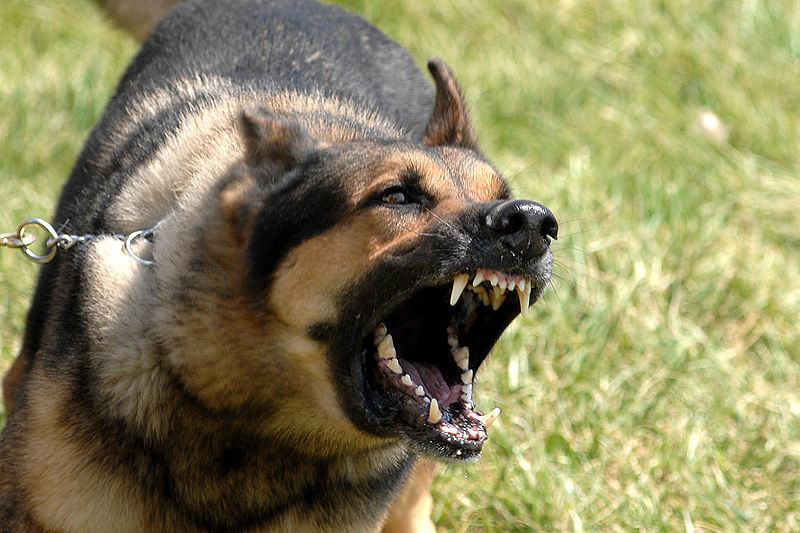
Scripture Alphabet of Animals: The Dog

Sleeping Pubs ©WikiC

Scripture Alphabet of Animals: The Dog

By Harriet N. Cook (1814-1843)

There are many dogs in the countries where the Bible was written, but the people do not like them as well as we do, and do not let them live about their yards and houses. So the dogs go wandering about without any master, and live on whatever they can find in the streets or around the markets. In the fifty-ninth Psalm you will find the verse:

They return at evening; they make a noise like a dog, and go round about the city,

-and a little farther on you will see,

Let them wander up and down for meat, and grudge if they be not satisfied.

Military Dog©WikiC

Military Dog©WikiC

These verses show that the dogs wandered about in those days just as they do now. Sometimes when they do not find enough to eat, they become very fierce and cruel, so that you would be afraid to meet one of them.

There is a sad story in some of the chapters of the two books of Kings, in which you will find these dogs mentioned. There was a very proud and wicked queen, named Jezebel, and she tried to make her husband, king Ahab, do all the evil she could. Once Ahab wanted a piece of ground that was near his palace, so that he might have it made into a garden, and he asked the owner of it, whose name was Naboth, to sell it to him. But Naboth was not willing, because he used it for his vineyard, and because his father had given it to him before he died. Then Ahab was very angry about it, and acted just as I have seen some foolish children do when they were not pleased. He went into his great splendid house, and laid himself down on the bed; then he turned his face towards the wall, and when it was dinner time he would not get up or eat any thing. So his wife Jezebel asked him what was the matter; and when she found out, she told him that he need not be troubled, for she could get that vineyard for him. Then she contrived to have Naboth killed by stoning, and when he was dead king Ahab took the vineyard.

Now you may be sure God was displeased with such wickedness as this, and you will think it was very right that he should punish the cruel Jezebel. Do you think her husband Ahab ought to be punished too? I do; because he knew that his wife was going to kill Naboth, and yet he did not try to keep her from doing it. I think he was as wicked as she. After Ahab had taken the vineyard, God sent to him the prophet Elijah to say to him these words,

Thus saith the Lord, In the place where dogs licked the blood of Naboth, shall dogs lick thy blood, even thine.” And of Jezebel he said, “The dogs shall eat Jezebel by the wall of Jezreel.

Now see how the word of God was fulfilled, just as he had said. Pretty soon after this, king Ahab went out to fight with his enemies, and as he was riding along in his carriage a man drew his great, strong bow, and shot an arrow which pierced the king and almost killed him. He lived a few hours, until nearly night, and then he died. The blood had run down from his wound into the carriage, and after the king was dead they took it to the pool of Samaria to wash it: there the dogs came and licked up the blood of Ahab.

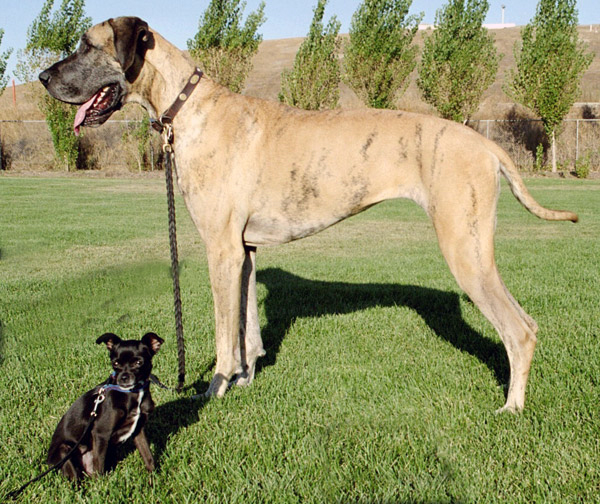
Mutt and Jeff ©WikiC

Mutt and Jeff ©WikiC

The wicked Jezebel lived some years after this, and one of her sons became king; but God raised up another king, named Jehu, who slew this son, and then went to Jezreel, the city where Jezebel lived. She heard he was coming, and feared that he meant to put her to death; but she determined that, instead of begging him to spare her life, she would act as though she was still a queen, and then perhaps he would not dare to injure her. So she put ornaments on her head, and painted her face, and then sat down by an upper window in all the splendor of a queen. When Jehu came near, she called out to him in great anger and scorn, to reproach him for having put her son to death. When Jehu heard her voice and saw her sitting at the window, he cried out,

Who is on my side?

and two or three of the queen’s officers looked out at the windows. Then he said to them,

Throw her down.

They were very glad to get rid of the proud and cruel queen, and so they threw her down, as he had said. It was so far to the ground that she was killed immediately, and her blood was sprinkled upon the walls. But Jehu did not care for this; he went into the house to eat and drink. After he had taken his dinner, he thought of Jezebel, and told some of his servants that they must go and bury her: but in the mean time a terrible thing had happened. The dogs had seized and devoured the body, and nothing was left of it but the feet, and the palms of the hands, and part of the bones of the head. So God’s word came to pass,

The dogs shall eat Jezebel.

___

See:

Harriet Newell Cook – Scripture Alphabet of Animals

Nave’s Topical Bible – Dog

Torrey’s Topical Textbook – Dog

(Photos ©WikiC)

*

Scripture Alphabet of Animals: The Ass (Donkey)

Scripture Alphabet of Animals: The Ass (Donkey)

By Harriet N. Cook (1814-1843)

Perhaps you may have seen the ass, though it is not very common in this country. It has some resemblance to a horse, but is not as large, and generally seems rather sleepy and dull. In some countries, such as those where the Bible was written, it is a fine large animal, and the people use it for riding. Some persons mentioned in the Bible owned a great many asses. Abraham had sheep, and oxen, and asses and camels; and Job had at one time five hundred asses, and afterwards he had a thousand. A great many years ago, long before Christ came into the world, the rich men and the judges used to ride upon asses: so we read in the 10th verse of the 5th chapter of Judges,

Speak, ye that ride upon white asses, ye that sit in judgment.

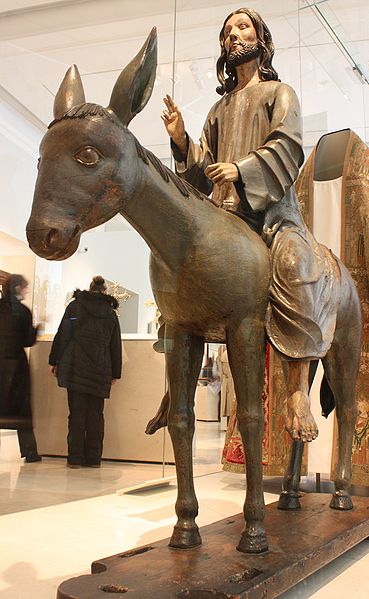
Statue of Christ Riding on the Ass at Victoria and Albert Museum©WikiC

Statue of Christ Riding on the Ass at Victoria and Albert Museum©WikiC

After this time many fine horses were brought into those countries, and the kings and great men liked them for riding: so the ass was used by the poorer people who could not buy a horse. You remember that when our blessed Savior was entering Jerusalem a few days before his death, he rode upon an ass; thus showing his meekness and humility, even while the multitude were shouting his praises, and spreading their garments in the way to do him honor. How shall we be like our Savior, if we let pride stay in our hearts?

The ass is very gentle and patient, and does not seem angry even when he has a very heavy load to carry. I should be very sorry to have him treated unkindly. Though he seems so dull, he loves his master, and will sometimes find him out and run to him even when he is in a crowd of men. God says, in the Bible,

The ox knoweth his owner, and the ass his master’s crib; but Israel doth not know, my people doth not consider.

Is it not a sad thing that the dull ass should be more grateful than we are?

Baudet Donkey - Shaky and Brown

Baudet Donkey – Shaky and Brown

Would it not seem to you very wonderful to hear a dog or a horse speak, so that you could understand what he said? It would be a strange thing indeed-a miracle; but you will find in the 22d chapter of Numbers that an ass once spoke to his master. The master’s name was Balaam. He was a wicked man, and he was riding on an ass to a place where he knew God did not wish him to go. As they were journeying an angel with a drawn sword in his hand stood in the way, but Balaam did not see him. The ass saw him, and was so afraid that she turned aside out of the road, and went into a field; then Balaam was angry and tried to drive her back into the way. They had now come to a path of the vineyards, having a wall on each side, and there the ass saw the bright angel again. In trying to avoid the angel, the ass crushed Balaam’s foot against the wall; and he was more angry and struck her again. Then the angel went forward a little distance, and stood where the path was so narrow that it was impossible to pass him. The ass was now so much frightened that she would go no farther, and fell down in the road; and Balaam beat her in a great passion. Then the ass spoke to Balaam and said,

What have I done to thee that thou hast smitten me these three times?” And when Balaam exclaimed, “I wish there were a sword in my hand, for now would I kill thee,” she only replied, “Am I not thine ass upon which thou hast ridden ever since I was thine unto this day? Was I ever wont to do so unto thee?”

Can we not learn, even from the ass, a lesson of meekness and patience?

The wild ass is often mentioned in the Bible, as in Psalm 104:11.

They (the springs) give drink to every beast of the field; the wild asses quench their thirst.

They live in desert places, and go about in great companies with one for their leader. You will find these words about them in the 39th chapter of Job:

Who hath sent out the wild ass free ? or who hath loosed the bands of the wild ass? Whose house I have made the wilderness, and the barren land his dwellings. He scorneth the multitude of the city, neither regardeth he the crying of the driver. The range of the mountains is his pasture, and he searcheth after every green thing.

Travellers who have seen great herds of wild asses say that the beautiful animal agrees exactly with this fine description, written so many years ago.

Harriet Newell Cook -Scripture Alphabet of Animals

See Also:

Torrey’s Topical Textbook – Ass, the Domestic

Torrey’s Topical Textbook – Ass, the Wild

Donkey – Wikipedia

Scripture Alphabet of Animals: The Ant

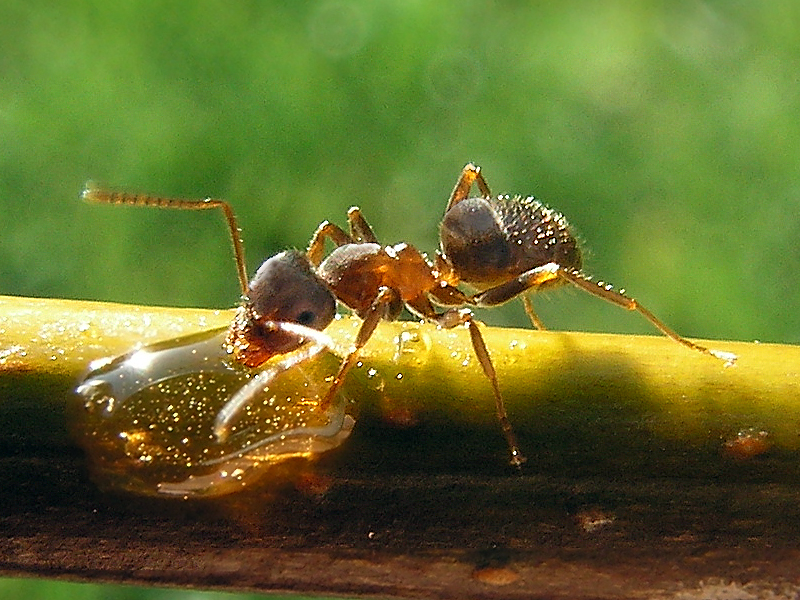
Lasius Niger ©WikiC

Scripture Alphabet of Animals: The Ant

By Harriet N. Cook (1814-1843)

If you look at the sixth verse of the sixth chapter of Proverbs, you will read,

Go to the ant, thou sluggard; consider her ways, and be wise.

A sluggard, you know, is a man, or woman, or child, who does not love to read or to do any kind of work, but likes to sleep or be idle all the day long. Do you think you were ever acquainted with one?

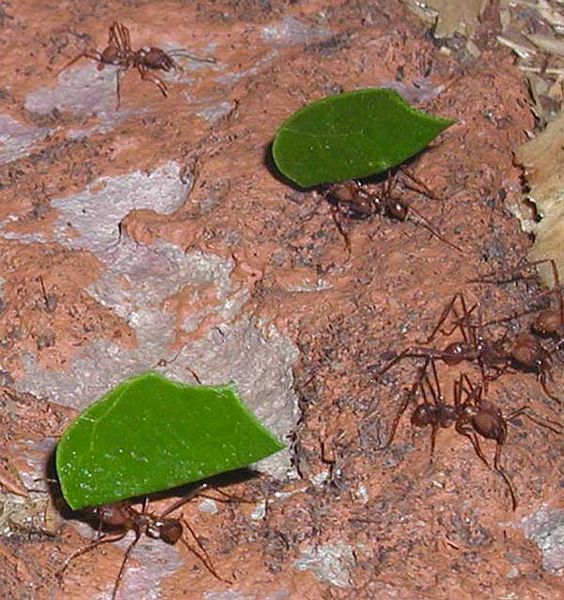
Leaf Cutting Ant©WikiC

Leaf Cutting Ant©WikiC

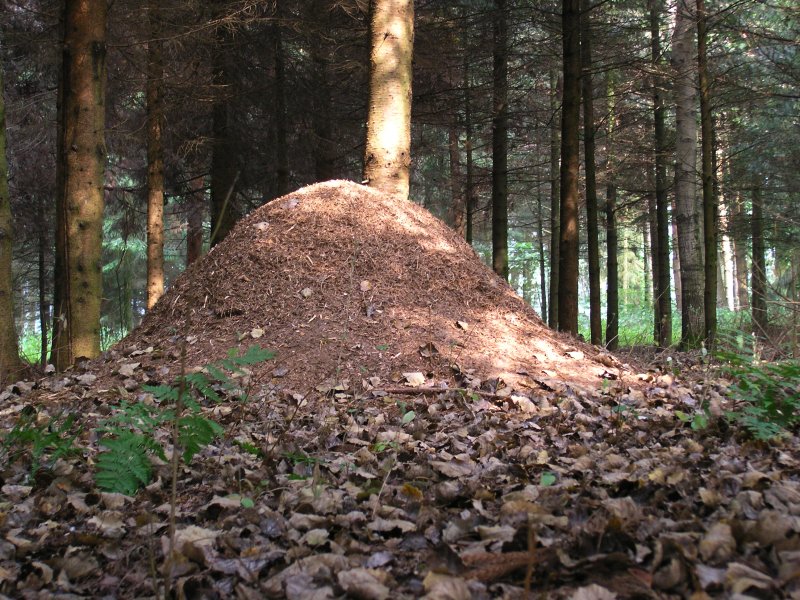
Now see what the Bible tells the sluggard to do. It bids him go to the little ant, and “consider her ways,” that is, look on and see what she does. Have you ever watched the ants when they were busy at work? It will give you very pleasant employment for half an hour on a summer’s day. In some places you may see small ant-hills scattered about, so close together that you can hardly step without treading on them; and you may find other places where there are not so many, but where the hills are much larger. I have seen them so large that you could hardly step over one of them without touching it with your foot and breaking some part of it. And then how busy the little creatures are! Just kneel down on the grass beside them, and notice how they work! You will see one little fellow creeping along as fast as he can go, with a grain of sand in his mouth, perhaps as large as his head. He does not stop to rest, but when he has carried his grain to help build the hill, away he goes for another. You may watch them all day and never see them idle at all.

Ant Hill in Germany ©WikiC

Ant Hill in Germany ©WikiC

You see why God tells the sluggard to go and look at the little ants: it is that when he sees them so busy, he may be ashamed of himself for being idle, and learn to be “wise,” or diligent in whatever he undertakes. I should not think he could help going to work, after he had looked at them a little while. The ants seem to be very happy, and I think it is because they are so busy. God has put nobody in this world to be idle: even children have something to do. The inside of an ant-hill is very curious, but it is not easy to examine it without destroying all the work that the little insects have taken so much pains to finish. There is a kind of ant in warm climates that builds for itself hills as high as a man. They are not made of sand, but of a kind of clay; and have a great many cells or apartments, and many winding passages leading from one part to another. All this is done, as the Bible says, without “guide, overseer or ruler;” that is, they have no one to direct them how to do it. God gives them skill just as he does to the honey-bees in building the beautiful cells which you have so often admired; all His works are wonderful.

Harriet Newell Cook -Scripture Alphabet of Animals

See also:

Naves Topical Bible – Ant

Ant – Wikipedia

McGuffey’s Reader – 1st Grade Lessons LVI and LVII

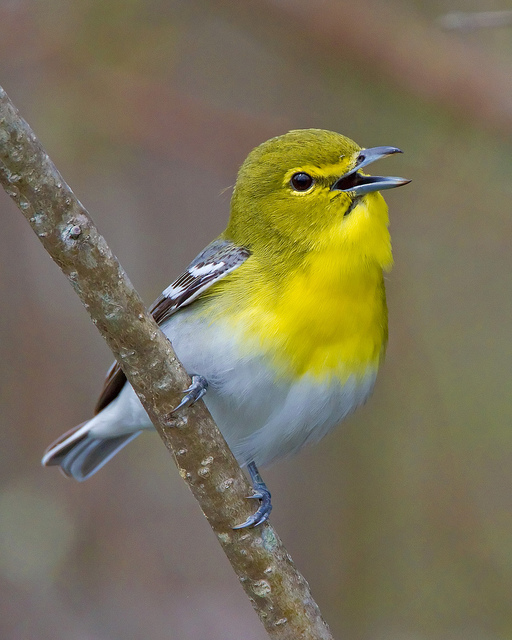
Yellow-throated Vireo (Vireo flavifrons) singing ©nebirdsplus

Yellow-throated Vireo (Vireo flavifrons) singing ©nebirdsplus

These lessons start off with words, then the story. You can practice writing with the Slate Work.

“The flowers appear on the earth; the time of the singing of birds is come, …” (Song of Solomon 2:12a KJV)

LESSON LVI.

strong round dry bill worked

sends claws flit God spring

“How does the bird make the nest so strong, Willie?”

“The mother bird has her bill and her claws to work with, but she would not know how to make the nest if God did not teach her. Do you see what it is made of?”

“Yes, Willie, I see some horse-hairs and some dry grass. The old bird must have worked hard to find all the hairs, and make them into such a pretty, round nest.”

“Shall we take the nest, Rose?”

“Oh no, Willie! We must not take it; but we will come and look at it again, some time.”

Verdin (Auriparus flaviceps) Building Nest 1 ©Earle Robinson

SLATE WORK.

[Illustration: Script Exercise:]

God made the little birds to sing,
And flit from tree to tree;
‘Tis He who sends them in the spring
To sing for you and me.


LESSON LVII.

feathers a go’ fly worm crumb feed’ing

ug’ly off feed brown guess things

Grey Jay (Perisoreus canadensis) Feeding at Nest WikiC

Grey Jay (Perisoreus canadensis) Feeding at Nest WikiC

“Willie, when I was feeding the birds just now, a little brown bird flew away with a crumb in its bill.”

“Where did it go, Rose?”

“I don’t know; away off, somewhere.”

“I can guess where, Rose. Don’t you know the nest we saw some days ago?
What do you think is in it now?”

“O Willie, I know! Some little brown birds. Let us go and see them.”

“All right; but we must not go too near. There! I just saw the old bird fly out of the bush. Stand here, Rose. Can you see?”

“Why, Willie, what ugly little things! What big mouths they have, and no feathers!”

“Keep still, Rose. Here comes the old bird with a worm in her bill. How hard she must work to feed them all!”


McGuffey’s First Grade Reader

The Wordless Book

Some Homes in the Green Forest – Chapter 18

Redtail the Hawk - Burgess Bird Book ©©

Redtail the Hawk – Burgess Bird Book ©©

Some Homes in the Green Forest

The Crow, the Oven Bird and the Red-tailed Hawk.

The Burgess Bird Book For Children

*

CHAPTER 18. Some Homes in the Green Forest.

Listen to the story read.

Reddy Fox wasted very little time waiting for Peter Rabbit to come out from under that pile of brush where he had hidden at Sammy Jay’s warning. After making some terrible threats just to try to frighten Peter, he trotted away to look for some Mice. Peter didn’t mind those threats at all. He was used to them. He knew that he was safe where he was, and all he had to do was to stay there until Reddy should be so far away that it would be safe to come out.

Just to pass away the time Peter took a little nap. When he awoke he sat for a few minutes trying to make up his mind where to go and what to do next. From ‘way over in the direction of the Old Pasture the voice of Blacky the Crow reached him. Peter pricked up his ears, then chuckled.

“Reddy Fox has gone back to the Old Pasture and Blacky has discovered him there,” he thought happily. You see, he understood what Blacky was saying. To you or me Blacky would have been saying simply, “Caw! Caw!” But to all the little people of the Green Forest and Green Meadows within hearing he was shouting, “Fox! Fox!”

“I wonder,” thought Peter, “where Blacky is nesting this year. Last year his nest was in a tall pine-tree not far from the edge of the Green Forest. I believe I’ll run over there and see if he has a new nest near the old one.”

So Peter scampered over to the tall pine in which was Blacky’s old nest. As he sat with his head tipped back, staring up at it, it struck him that that nest didn’t look so old, after all. In fact, it looked as if it had recently been fixed up quite like new. He was wondering about this and trying to guess what it meant, when Blacky himself alighted close to the edge of it.

There was something in his bill, though what it was Peter couldn’t see. Almost at once a black head appeared above the edge of the nest and a black bill seized the thing which Blacky had brought. Then the head disappeared and Blacky silently flew away.

“As sure as I live,” thought Peter, “that was Mrs. Blacky, and Blacky brought her some food so that she would not have to leave those eggs she must have up there. He may be the black-hearted robber every one says he is, but he certainly is a good husband. He’s a better husband than some others I know, of whom nothing but good is said. It just goes to show that there is some good in the very worst folks. Blacky is a sly old rascal. Usually he is as noisy as any one I know, but he came and went without making a sound. Now I think of it, I haven’t once heard his voice near here this spring. I guess if Farmer Brown’s boy could find this nest he would get even with Blacky for pulling up his corn. I know a lot of clever people, but no one quite so clever as Blacky the Crow. With all his badness I can’t help liking him.”

Twice, while Peter watched, Blacky returned with food for Mrs. Blacky. Then, tired of keeping still so long, Peter decided to run over to a certain place farther in the Green Forest which was seldom visited by any one. It was a place Peter usually kept away from. It was pure curiosity which led him to go there now. The discovery that Blacky the Crow was using his old nest had reminded Peter that Redtail the Hawk uses his old nest year after year, and he wanted to find out if Redtail had come back to it this year.

Halfway over to that lonesome place in the Green Forest a trim little bird flew up from the ground, hopped from branch to branch of a tree, walked along a limb, then from pure happiness threw back his head and cried, “Teacher, teacher, teacher, teacher, teacher!” each time a little louder than before. It was Teacher the Oven Bird.

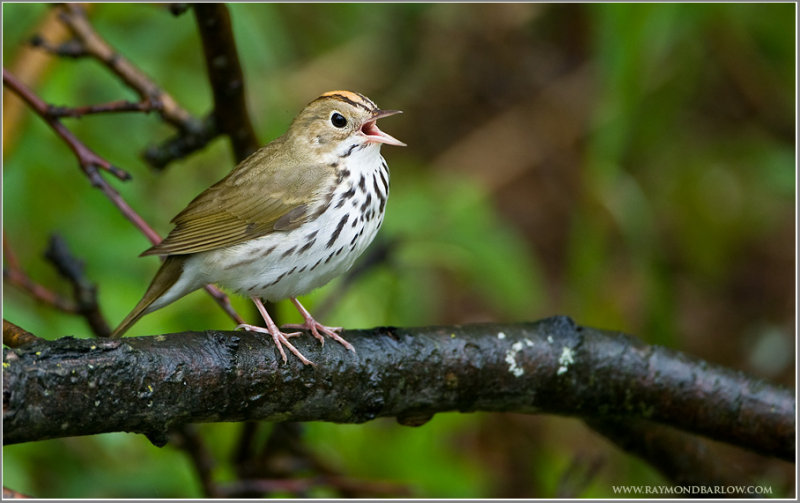
Ovenbird (Seiurus aurocapilla) by Raymond Barlow

Ovenbird (Seiurus aurocapilla) by Raymond Barlow

In his delight at seeing this old friend, Peter quite forgot Redtail the Hawk. “Oh, Teacher!” cried Peter. “I’m so glad to see you again!”

Teacher stopped singing and looked down at Peter. “If you are so glad why haven’t you been over to see me before?” he demanded. “I’ve been here for some time.”

Peter looked a little foolish. “The truth is, Teacher,” said he very humbly, “I have been visiting the Old Orchard so much and learning so many things that this is the first chance I have had to come ‘way over here in the Green Forest. You see, I have been learning a lot of things about you feathered folks, things I hadn’t even guessed. There is something I wish you’d tell me, Teacher; will you?”

“That depends on what it is,” replied Teacher, eyeing Peter a little suspiciously.

“It is why you are called Oven Bird,” said Peter.

“Is that all?” asked Teacher. Then without waiting for a reply he added, “It is because of the way Mrs. Teacher and I build our nest. Some people think it is like an oven and so they call us Oven Birds. I think that is a silly name myself, quite as silly as Golden Crowned Thrush, which is what some people call me. I’m not a Thrush. I’m not even related to the Thrush family. I’m a Warbler, a Wood Warbler.”

“I suppose,” said Peter, looking at Teacher thoughtfully, “they’ve given you that name because you are dressed something like the Thrushes. That olive-green coat, and white waistcoat all streaked and spotted with black, certainly does remind me of the Thrush family. If you were not so much smaller than any of the Thrushes I should almost think you were one myself. Why, you are not very much bigger than Chippy the Chipping Sparrow, only you’ve got longer legs. I suppose that’s because you spend so much time on the ground. I think that just Teacher is the best name for you. No one who has once heard you could ever mistake you for any one else. By the way, Teacher, where did you say your nest is?”

“I didn’t say,” retorted Teacher. “What’s more, I’m not going to say.”

“Won’t you at least tell me if it is in a tree?” begged Peter.

Teacher’s eyes twinkled. “I guess it won’t do any harm to tell you that much,” said he. “No, it isn’t in a tree. It is on the ground and, if I do say it, it is as well hidden a nest as anybody can build. Oh, Peter, watch your step! Watch your step!” Teacher fairly shrieked this warning.

Peter, who had just started to hop off to his right, stopped short in sheer astonishment. Just in front of him was a tiny mound of dead leaves, and a few feet beyond Mrs. Teacher was fluttering about on the ground as if badly hurt. Peter simply didn’t know what to make of it. Once more he made a movement as if to hop. Teacher flew right down in front of him. “You’ll step on my nest!” he cried.

Peter stared, for he didn’t see any nest. He said as much.

“It’s under that little mound of leaves right in front of your feet!” cried Teacher. “I wasn’t going to tell you, but I just had to or you certainly would have stepped on it.”

Ovenbird (Seiurus aurocapilla) Nest ©WikiC

Very carefully Peter walked around the little bunch of leaves and peered under them from the other side. There, sure enough, was a nest beneath them, and in it four speckled eggs. “I won’t tell a soul, Teacher. I promise you I won’t tell a soul,” declared Peter very earnestly. “I understand now why you are called Oven Bird, but I still like the name Teacher best.”

Feeling that Mr. and Mrs. Teacher would feel easier in their minds if he left them, Peter said good-by and started on for the lonesome place in the Green Forest where he knew the old nest of Redtail the Hawk had been. As he drew near the place he kept sharp watch through the treetops for a glimpse of Redtail. Presently he saw him high in the blue sky, sailing lazily in big circles. Then Peter became very, very cautious. He tiptoed forward, keeping under cover as much as possible. At last, peeping out from beneath a little hemlock-tree, he could see Redtail’s old nest. He saw right away that it was bigger than it had been when he saw it last. Suddenly there was a chorus of hungry cries and Peter saw Mrs. Redtail approaching with a Mouse in her claws. From where he sat he could see four funny heads stretched above the edge of the nest.

“Redtail is using his old nest again and has got a family already,” exclaimed Peter. “I guess this is no place for me. The sooner I get away from here the better.”

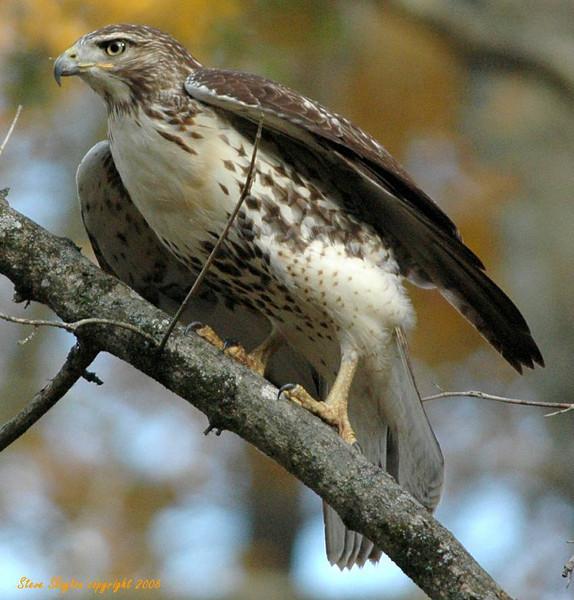
Red-tailed Hawk- Cochran Shoals Unit Chattahoochee River by SSlayton

Red-tailed Hawk- Cochran Shoals Unit Chattahoochee River by SSlayton

Just then Redtail himself dropped down out of the blue, blue sky and alighted on a tree close at hand. Peter decided that the best thing he could do was to sit perfectly still where he was. He had a splendid view of Redtail, and he couldn’t help but admire this big member of the Hawk family. The upper parts of his coat were a dark grayish-brown mixed with touches of chestnut color. The upper part of his breast was streaked with grayish-brown and buff, the lower part having but few streaks. Below this were black spots and bars ending in white. But it was the tail which Peter noticed most of all. It was a rich reddish-brown with a narrow black band near its end and a white tip. Peter understood at once why this big Hawk is called Redtail.

It was not until Mr. and Mrs. Redtail had gone in quest of more food for their hungry youngsters that Peter dared steal away. As soon as he felt it safe to do so, he headed for home as fast as he could go, lipperty-lipperty-lip. He knew that he wouldn’t feel safe until that lonesome place in the Green Forest was far behind.

Yet if the truth be known, Peter had less cause to worry than would have been the case had it been some other member of the Hawk family instead of Redtail. And while Redtail and his wife do sometimes catch some of their feathered and furred neighbors, and once in a while a chicken, they do vastly more good than harm.

This story gives good examples of friends watching out for friends. Also, friends love their neighbors and go for visits now and then.

“But you be watchful in all things,…” (2 Timothy 4:5a NKJV)

*

  • Who was the one warning the animal and bird friends?
  • What is a call of the Crow?
  • Is it good for us to warn others of danger?
  • What does Peter really think it says?
  • Who was the little bird that Peter spotted up in the tree?
  • Why is he called by that name?
  • When Peter began to leave, why did the little bird become upset?
  • What bird was Peter looking for, yet had to make sure that bird didn’t see him?
  • Why didn’t Peter want to be seen?
  • Who sees us all the time? Can we hide from Him?

*

“A friend loveth at all times,…” (Proverbs 17:17a KJV)

Links:

*

Links:


  Next Chapter (A Maker of Thunder and a Friend in Black. Coming Soon)


Burgess-Bird-Book-for-Children


  Burgess-Bird-Book-for-Children


Gold/Yellow = Heaven


Wordless Birds


**


Birds Illustrated by Color Photography Move Finished

Snowy Egret in Breeding Plumage at Gatorland by Dan

Both Volume I and Volume II are completely moved to the Birds of the Bible for Kids blog. As best I could, all the links to photos, information and articles should be working properly. I am encouraging you to stop by and check out this latest volume.

Here is the rest of the latest blog over there:

I trust you will enjoy reading the articles. If you are not familiar with the Birds Illustrated by Color Photography, at the beginning of the index, they mention that the articles are written for the younger reader. Then, more information is given about the bird on a normal reading level. After that, I updated with current photos and information. Even though the original articles were produced in a magazine in 1897, they are worth repeating here.

Birds Illustrated by Color Photography Vol #1 – Complete covered the first Volume. Here is a list of the articles for Volume II. Please enjoy discovering interesting avian wonders from their Creator.

Volume 2, Number 1, July 1897

Wood Duck by Dan at Lake Hollingsworth

Wood Duck by Dan at Lake Hollingsworth [Real-not a painting]

Bird Song – July
The Bald-Headed Eagle
The Semi-Palmated Ring Plover
The Mallard Duck
The American Avocet
The Canvas-Back Duck
The Wood Duck
The Anhinga Or Snake Bird
The American Woodcock
The American Scoter
Old Abe
The Snowy Heron

Volume 2, Number 2, August 1897

Evening Grosbeak (Hesperiphona vespertina) male by Raymond Barlow

Evening Grosbeak (Hesperiphona vespertina) male by Raymond Barlow

Bird Song
The American Osprey
The Sora Rail
The Kentucky Warbler
The Red Breasted Merganser
The Yellow Legs
The Skylark
Wilson’s Phalarope
The Evening Grosbeak
The Turkey Vulture
To A Water-Fowl
Gambel’s Partridge

Volume 2, Number 3, September 1897

Ruby-crowned Kinglet (Regulus calendula) by BirdingPix

Ruby-crowned Kinglet (Regulus calendula) by BirdingPix

Bird Song – September
The Yellow Warbler
The Hermit Thrush
The Song Sparrow
The Cuckoo
The Ruby-Throated Humming Bird
The House Wren
The Phoebe
The Ruby-Crowned Kinglet
The Mourning Dove
How The Birds Secured Their Rights
The Captive’s Escape
The White-Breasted Nuthatch

Volume 2, Number 4, October 1897

Warbling Vireo (Vireo gilvus swainsoni) by Ian

Warbling Vireo (Vireo gilvus swainsoni) by Ian

The Blackburnian Warbler
The Lost Mate
The American Goldfinch
The Chimney Swift
Shore Lark
The Yellow-Bellied Sapsucker
The Warbling Vireo
The Wood Pewee
The Snowflake
The Slate-Colored Junco
The Kingbird

Volume 2, Number 5, November 1897

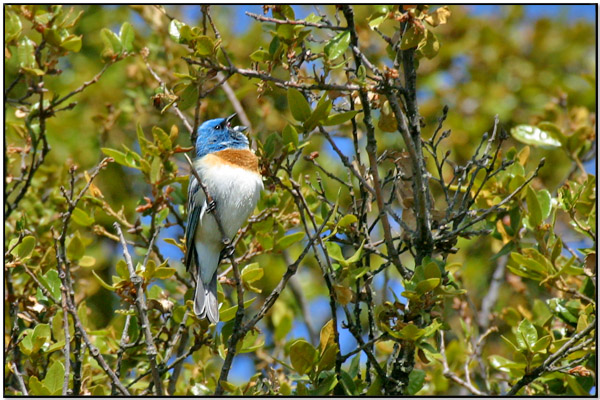
Lazuli Bunting (Passerina amoena) by Daves BirdingPix

Lazuli Bunting (Passerina amoena) by Daves BirdingPix

John James Audubon
The Summer Tanager
The American White-Fronted Goose
The Turnstone
The Belted Piping Plover
The Wild Turkey
The Cerulean Warbler
The Yellow-Billed Tropic Bird
The European Kingfisher
The Vermilion Fly-Catcher     Version II
The Lazuli Bunting
Bird Miscellany Plus

Volume 2, Number 6, December 1897

American Flamingo Beak at Gatorland by Lee

American Flamingo Beak at Gatorland by Lee

The Ornithological Congress
The Mountain Bluebird
The English Sparrow
Allen’s Humming Bird
The Green-Winged Teal
The Black Grouse
The American Flamingo
The Verdin
The Bronzed Grackle
The Ring-Necked Pheasant
More Bird Miscellany
The Yellow-Breasted Chat

Birds Vol 2 #6 – The Volume II. July to December 1897 – Index

*
Wordless Birds

The Autobiography of a Duck

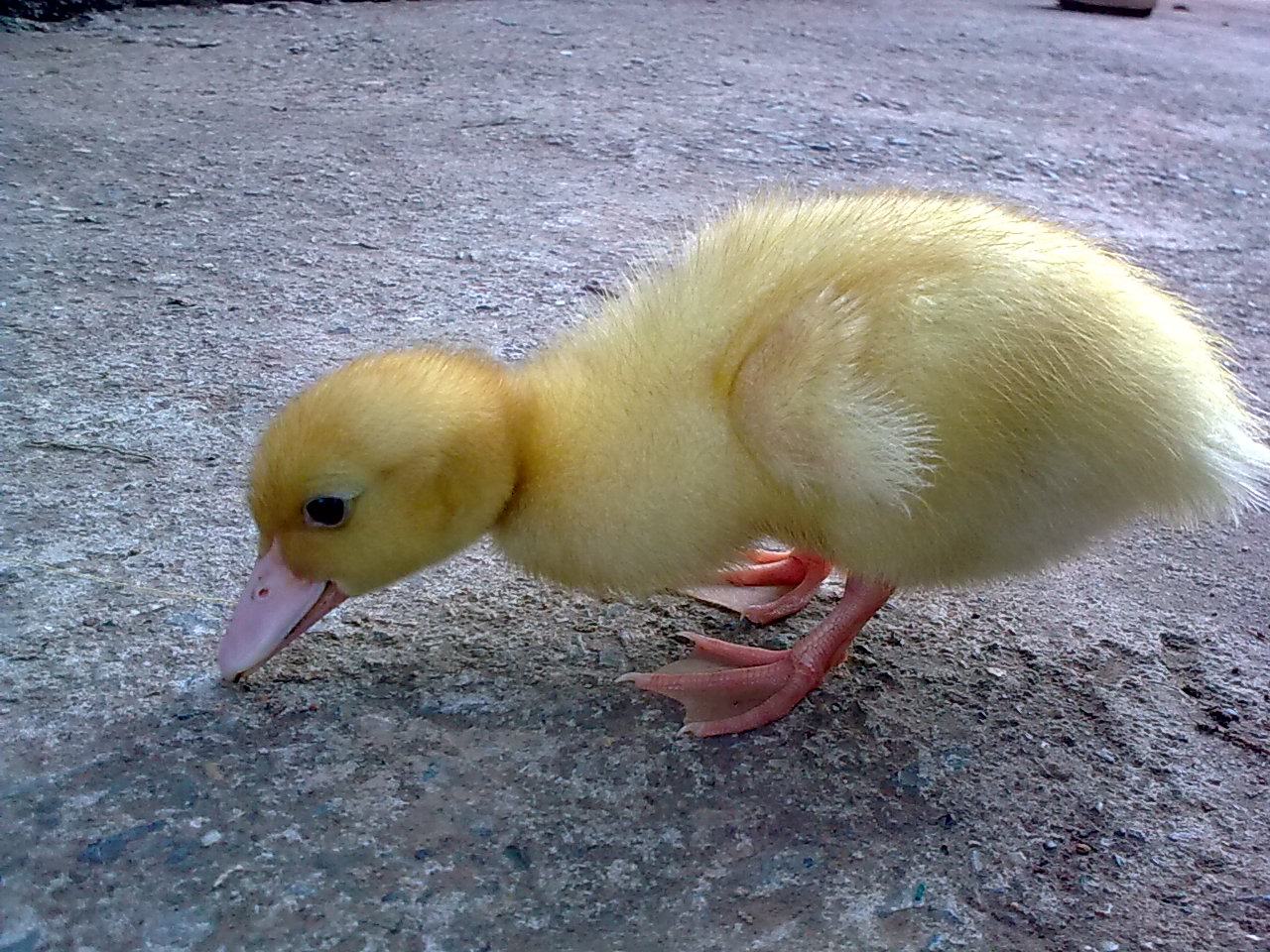
Pecking duckling ©WikiC

Pecking duckling ©WikiC

THE AUTOBIOGRAPHY OF A DUCK.
FOUNDED UPON FACT.

“How queer, my child! what a long, broad mouth you have, and what peculiar feet!”

It was my mother, a big brown hen, who spoke. I had stepped from my egg, only a short while before, and as I was the only one hatched out of the whole thirteen, my poor mother was greatly disappointed.

Now, to add to her troubles, there seemed to be something very peculiar about my appearance.

“Yes,” she went on still watching me critically, “I have raised many families, but never a chick like you. Well! well! don’t cry about it. Your yellow dress is very pretty. It doesn’t pay to be too sensitive, as you will find, I am afraid, when you have lived with these chickens. Some of them are dreadfully trying. Dear! dear! how stiff I am! This setting is tiresome work.”

“I wonder what sort of home we are going to have.”

Our home, into which we moved a few hours later, proved to be an upturned soap box. Seven little chickens were there before us.

“The same old story,” said my mother with a knowing air. “People imagine we hens have no sense. I did not hatch those chickens, but I am expected to care for them, as though I did. Some mothers would peck them so they would be glad to stay away.”

She had too good a heart for this, however, and I was very glad to have these brothers and sisters.
Chick ©PD

Chick ©PD

They were different from me, though, in many ways, principally, in their dislike for water. They hated even to get their feet wet, while I dearly loved to get in the pond, and swim around on its surface, or even dive down to the bottom, where such nice fat worms lived.

My poor mother never could understand my tastes. The first time she saw me on the water, she came rushing towards me, screaming and beating her wings.

“Oh, my child! my child!” she cried, with tears in her eyes. “You will drown! You will drown!”

I loved her, and so could not bear to see her distress. It was hard to be different from all the others.

I had a little yellow sister who was a great comfort to me at these times. I could never persuade her to try the water,—but she always sat upon the edge of the pond while I had my swim. We shared everything with each other; even our troubles.

About this time, my voice began to change. It had been a soft little “peep,” but now it grew so harsh, that some of the old hens made unpleasant remarks about it, and my mother was worried.

“It isn’t talking. It’s quacking,” said an old, brown-headed hen who was always complaining of her nerves.

She was very cross and spent most of her time standing on one leg in a corner and pecking any poor chicken that came in her reach.

“Don’t you know why it’s quacking?” asked a stately Buff Cochin who was a stranger in the yard; having arrived only that morning. “That child isn’t a chicken. She’s a duck.”

“What you giving us?” said a dandified Cock, who was busy pluming his feathers. “Whoever heard of a duck?”

“Not you, I daresay,” answered the Buff with a contemptuous sniff. “It’s easy to see you have never been away from this yard. I have traveled, I would have you understand, and I know a duck, too.”

“Well, I don’t care what you call her,” snapped the cross one. “I only hope she’ll keep her voice out of my hearing. The sound of it gives me nervous prostration.”
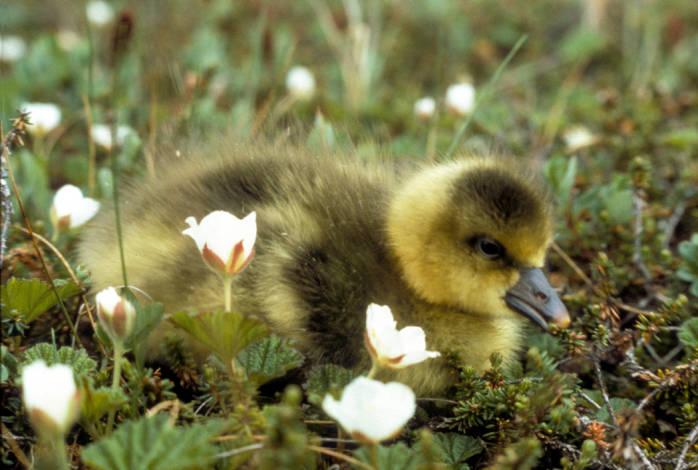
Greater White-fronted Goose (Anser albifrons) chick ©USFWS

Greater White-fronted Goose (Anser albifrons) chick ©USFWS

As for poor me,—I stole quietly away, and went up into a corner of the chicken house to cry. I was a duck, alas! and different from all about me. No wonder I was lonely.

My mother asked the cause of my trouble, and when I told her she looked sad and puzzled. “I don’t know what a duck is,” she sighed, “things have been strangely mixed. But cheer up. Whatever comes you are still my child.”

That was indeed a comfort to me. For never had chicken or duck a better mother.

There was consolation also, in what the kind old Buff Cochin told me.

I had nothing to be ashamed of, she said, for ducks were much esteemed by those who knew them.

From her this had more weight, for we all regarded the Buff Cochin as very superior. They were well born, and well bred, and had seen life in many places. Their husband, too, was a thorough gentleman.

However, he also was having his troubles now. He was losing his old feathers, and his new ones were long in coming. Consequently, his appearance was shabby, and he staid away from the hens.

Duck Drawing ©PD

Duck Drawing ©PD

Poor fellow, he looked quite forlorn, leaning up against a sunny corner of the barn, trying to keep warm. I believe he felt the loss of his tail feathers most for the young roosters who strutted by in their fine new coats, made sneering remarks about it.

I was very sorry for him, but my own troubles were getting to be as much as I could bear; for just when I needed a sympathetic mother she was taken from me and her place filled by a big, bare-headed hen as high tempered as she was homely.

“Raising a duck,” she said with a contemptuous sniff at me. “I never supposed I’d come to that. Well, I’ll keep you, but understand one thing, don’t go quacking around me, and don’t bring your wet and mud into the house. I’m not your other mother. My children don’t rule me. I won’t have that Mrs. Redbreast saying my house is dirty. There’s no standing that hen anyhow. I’ll give her my opinion if she puts on her airs around me. There’s too much mixture here. One can’t tell where breed begins or ends.”

It was not many days later, before my mother and Mrs. Redbreast came to words and then blows. The cause was only a worm, but it was enough. Mrs. Redbreast insisted that it was hers. My mother thought otherwise, and with a screech of defiance rushed upon her enemy. Dust and feathers flew. We children withdrew to a safe distance, and with necks stretched watched in fear and trembling.

The fight, though fierce, was short. Our mother was victorious, but she had lost the tail feathers of which she had been so proud, and I am sure she never forgave Mrs. Redbreast.
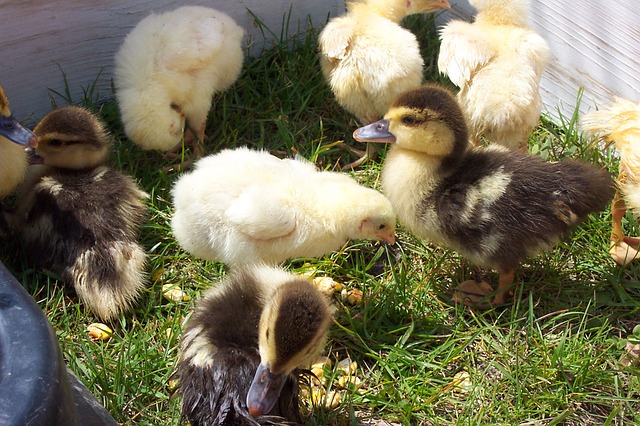
Chicks and Ducklings ©PD

Chicks and Ducklings ©PD

Like children, chickens and ducks grow older and bigger with the passing days.

In time we were taken from our mothers and put to roost with the older hens and cocks. I was not made to roost so I spent my nights alone in a corner of the chicken house.

It was quieter down there—for up above the chickens all fought for best place, and their cackling and fluttering was disturbing.

The old gentleman was very heavy. Not only was it hard for him to fly up to the roost, but equally hard for him to hold on when once there. Yet I could never persuade him to rest on the floor with me. Like his kind, he preferred the discomfort of sleeping on a pole—a taste I cannot understand.

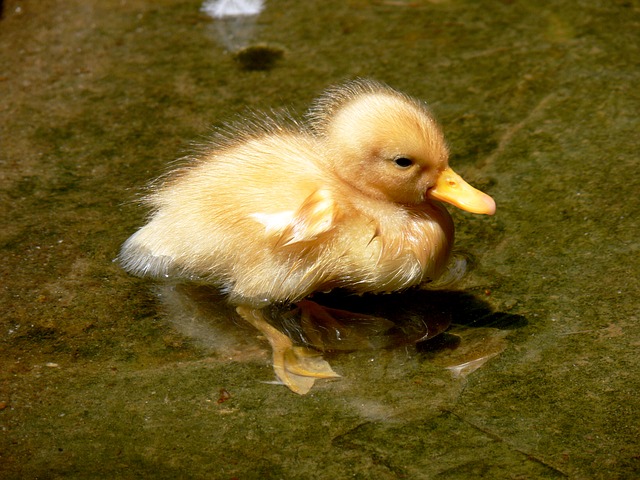
Three Ducklings ©WikiC

Three Ducklings ©WikiC

I was four months old before I saw one of my own kind. Then, one day three ducks were brought into the yard. They did not seem to mind being stared at, but fell to eating corn and talking among themselves.

“Horribly greedy,” said Mrs. Redbreast. “I for one don’t care to associate with them.”

“Now you know what you look like, old quacker,” snapped the cross hen, with a peck at me. “My poor nerves will suffer sadly now.”

These unkind remarks scarcely disturbed me, however. There was a new feeling stirring in my heart. I am afraid you will have to be a duck, and live a long time without other ducks, to understand it. Here were companions, whose natures and tastes were like mine, and I was content.

Louise Jamison.


Lee’s Addition:

A man that hath friends must shew himself friendly: and there is a friend that sticketh closer than a brother. (Proverbs 18:24 KJV)

Trust you enjoyed this delightful bird tale about a duck. This was written by Louise Jamison in the Birds and Nature Vol. X, No. 3, Octorber 1901.

Near the end, when our duckling met up with some of her own and made this remark: “Here were companions, whose natures and tastes were like mine, and I was content.” I couldn’t but think of how we as Christian feel a certain bond when we are around like believers.

God is faithful, by whom ye were called unto the fellowship of his Son Jesus Christ our Lord. (1 Corinthians 1:9 KJV)

that which we have seen and heard we proclaim also to you, so that you too may have fellowship with us; and indeed our fellowship is with the Father and with his Son Jesus Christ. (1 John 1:3 ESV)

This is from Gutenberg’s ebooks.

Kid’s Section

Bird Tales

*
*