Sunday Inspiration – Thraupidae – Flowerpiercers, Sierra Finches, Plus

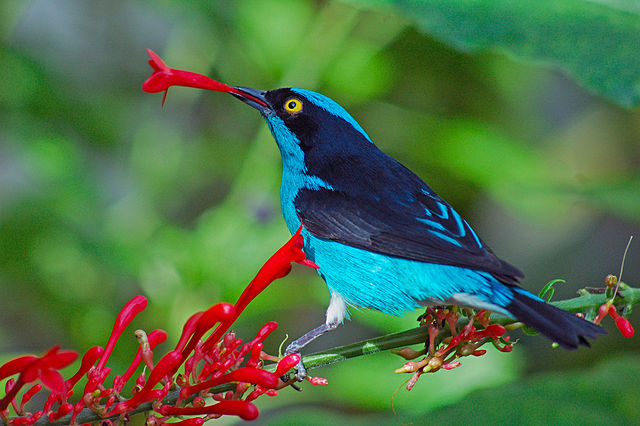
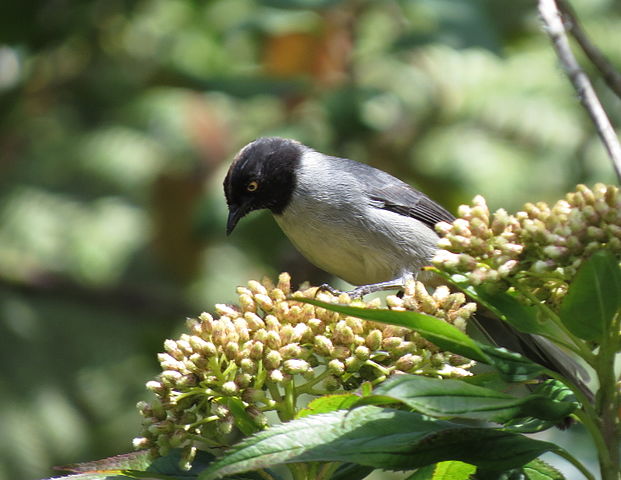
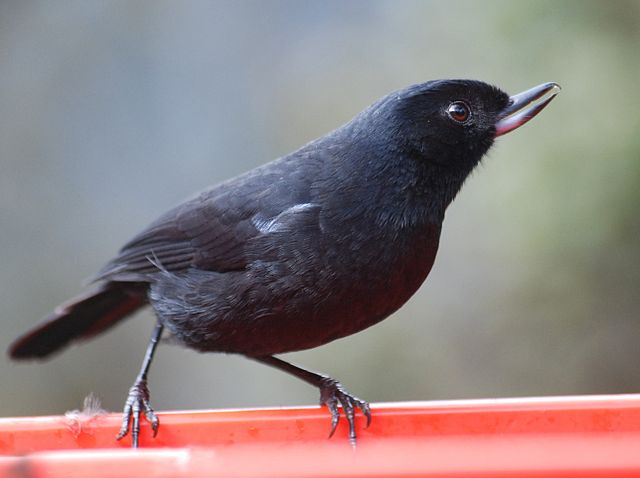
Glossy Flowerpiercer (Diglossa lafresnayii) ©WikiC

The grass withereth, the flower fadeth: but the word of our God shall stand for ever. (Isaiah 40:8 KJV)

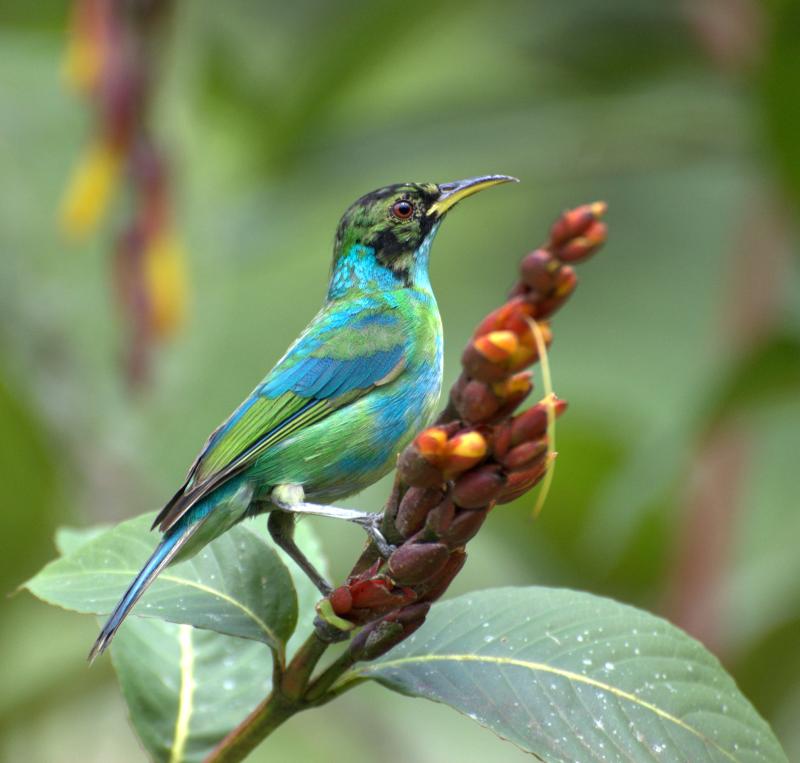
Starting off this weeks avian wonders from the Thraupidae Family, these perfectly created “flowerpiercers are the members of two genera of tanagers, Diglossa and Diglossopis. The latter genus is sometimes subsumed into the former, but at present most authorities maintain them as separate. Based on mtDNA, the indigo flowerpiercer, which traditionally has been placed in Diglossopis, actually belongs in Diglossa. The common name refers to their habit of piercing the base of flowers to access nectar that otherwise would be out of reach. This is done with their highly modified bills [created by their creator], although this is greatly reduced in the bluish flowerpiercer, which has an almost “normal” bill. Most flowerpiercers are restricted to highlands, especially the Andes, in South America, but two species occur in Central America.” (Wikipedia)

Red Pileated Finch (Coryphospingus cucullatus) ©WikiC

Red Pileated Finch (Coryphospingus cucullatus) ©WikiC

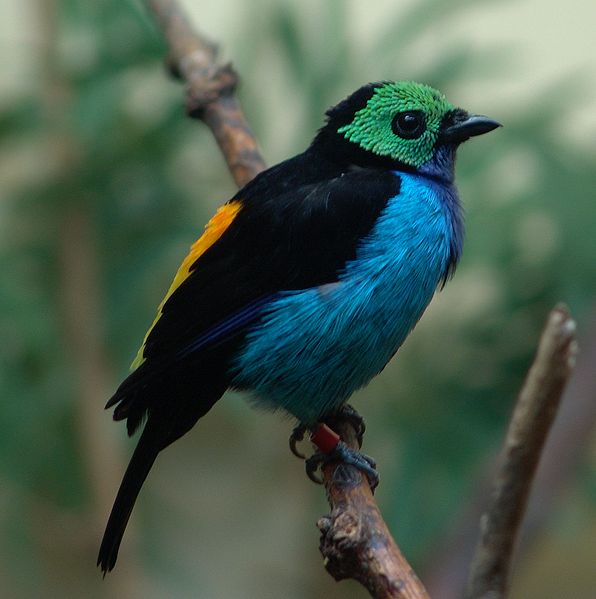
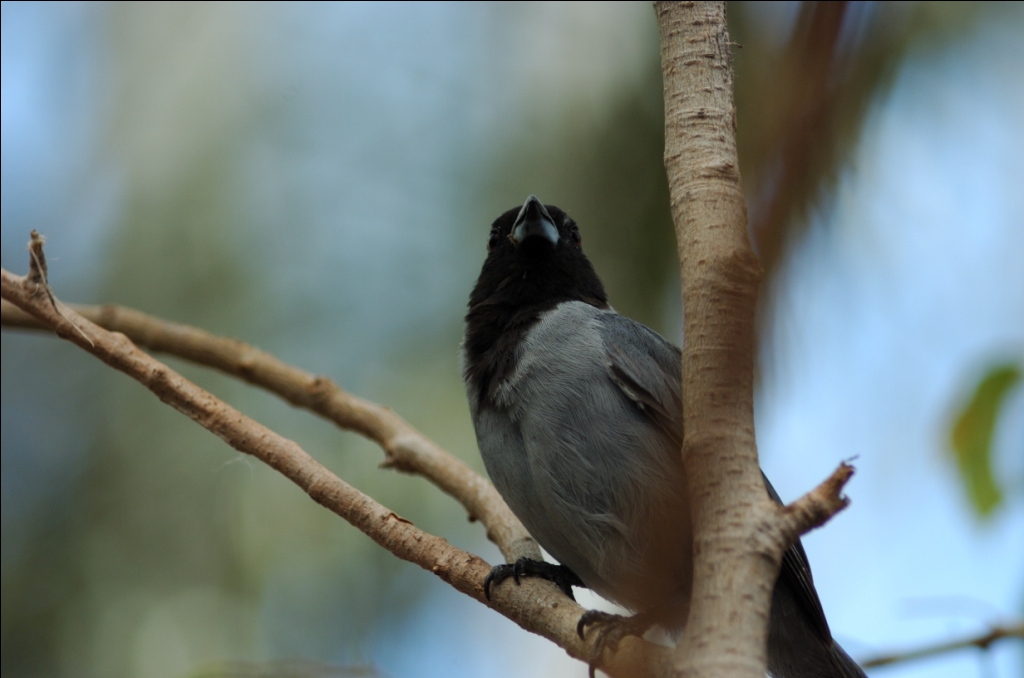
There are eight species in between the Flowerpiercers and the Sierra Finches. These are in six different genera. All of these are songbirds that live in South America. They are considered incertae sedis which means in Latin that they are of uncertain placement. So they just sort of placed them together until they figure out were to place them.
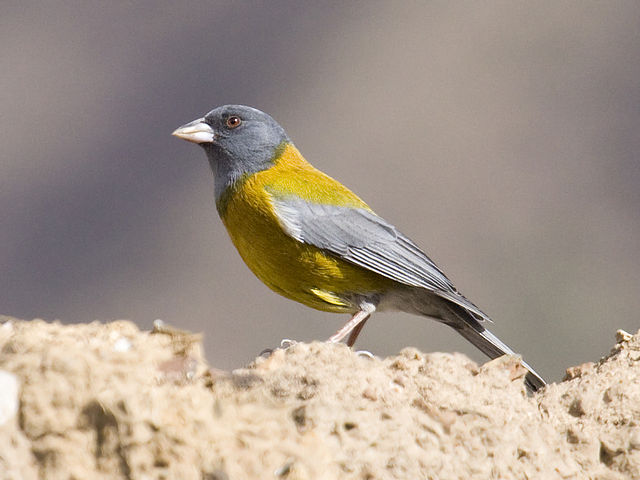
Peruvian Sierra Finch (Phrygilus punensis) ©WikiC

Peruvian Sierra Finch (Phrygilus punensis) ©WikiC

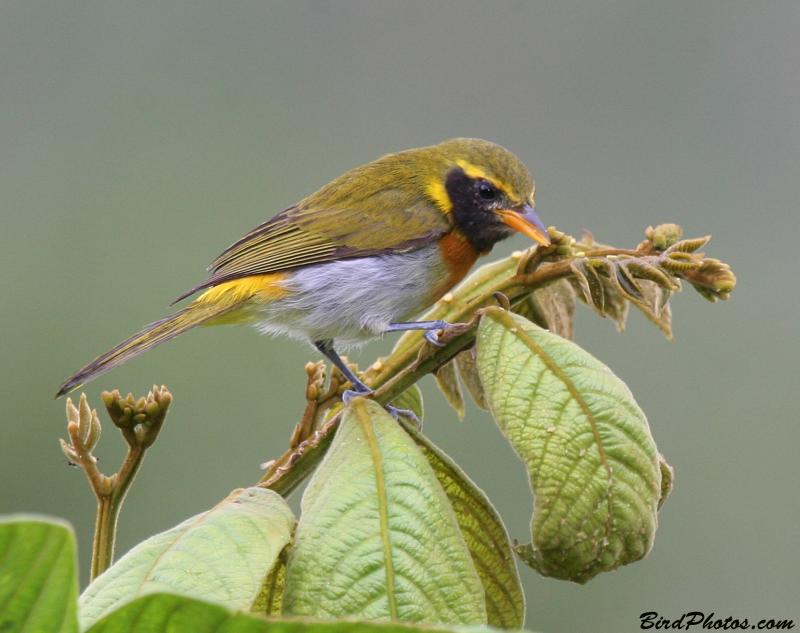
Phrygilus is a genus of mainly Andean seed-eating tanagers commonly known as sierra finches. Phrygilos means finch in Ancient Greek. Sometimes classified in the bunting and American sparrow family Emberizidae, more recent studies have shown them to belong in the Thraupidae. The genus appears to be polyphyletic consisting of at least three distinct lineages which in future may need to be split into separate genera.

This slideshow requires JavaScript.

“And he said unto me, My grace is sufficient for thee: for my strength is made perfect in weakness. Most gladly therefore will I rather glory in my infirmities, that the power of Christ may rest upon me.” (2 Corinthians 12:9 KJV)

“Your Grace is Sufficient” ~ Special by Courtney Love – Flute

*

More Sunday Inspirations

Sunday Inspiration – Thraupidae – Tanagers and Allies I

Sunday Inspiration – Thraupidae – Tanagers and Allies II

Sunday Inspiration – Thraupidae – Tanagers and Allies III

Sunday Inspiration – Thraupidae – Tanagers and Allies IV

Sunday Inspiration – Thraupidae – Dacnis, Honeycreepers, Conebills

Traupidae Family – Tanagers and Allies

Sharing The Gospel

*

Sunday Inspiration – Thraupidae – Dacnis, Honeycreepers, Conebills

Continuing through the Tanagers of the Thraupidae, we have some more beautiful birds to let you enjoy. Our Lord must have loved creating this kind of bird. He sure created enough of them through their interbreeding. We are about half way through the Traupidae family. This is the fifth installment. Not sure how many more it will take to finish up this family. Trust you are enjoying them.

Black-faced Dacnis (Dacnis lineata) ©WikiC

Black-faced Dacnis (Dacnis lineata) ©WikiC

The Dacnis genus are from the Columbia and other nearby countries in South America. Some I could not find photos of that gave permission to use, so enjoy the ones that could be shown. The most common Dacnis seems to be the Blue Dacnis. Typical of this genus, they “occur in forests and other woodlands, including gardens and parks. The bulky cup nest is built in a tree and the normal clutch is of two to three grey-blotched whitish eggs. The female incubates the eggs, but is fed by the male. These are social birds which eat mainly insects gleaned from foliage, flowers or bromeliads. Fruit is often taken and usually swallowed whole, but nectar is rarely consumed.” (Wikipedia) There is one more Dacnis that is in the Xenodacnis genus.

Green Honeycreeper (Chlorophanes spiza) Male Immature ©BirdPhotos.com

Green Honeycreeper (Chlorophanes spiza) Male Immature ©BirdPhotos.com

The next three genera, Cyanerpes, Chlorophanes, and Iridophanes are Honeycreepers. They have longer tails than the Dacnis and you will notice a little more down curve on their bills. The four Cyanerpes species have colourful legs, long wings and a short tail. The males are typically glossy purple-blue and the females greenish.

Guira Tanager (Hemithraupis guira) Male ©BirdPhotos.com

Guira Tanager (Hemithraupis guira) Male ©BirdPhotos.com

“Yellow-rumped” clade of Tanagers include the Heerospingus, Chrysothlpis, and Hemithraupis genera. These small to medium tanagers are found in the moist forests of Central and South America.  The females are duller than the males.

White-browed Conebill (Conirostrum ferrugineiventre) ©WikiC

White-browed Conebill (Conirostrum ferrugineiventre) ©WikiC

The Conebills from the Conirostrum genus, finish our group of beautiful birds from the Tanager Family for this week. “They are small tanagers (9–14 cm) found in the forests of South America. They feed in pairs or small flocks by gleaning insects from foliage.” Following these here is a Giant Conebill (Oreomanes fraseri) in its own genus.

“The genus consists of two rather distinct subgenera: The first, Ateleodacnis, possibly deserving full generic status, is confined to lowland areas. They are mostly grey in colour and inhabit deciduous woodlands, mangroves or riverbank habitats. The second group, the nominate Conirostrum subgenus, inhabits the forests of the Andes. They are somewhat more colourful combining grey or blue backs with rufous underparts. Their thin bills led to them being formerly classified as wood-warblers or honeycreepers but genetic data places them firmly in the tanager family and they are now generally considered to belong in the Thraupidae.” (Wikipedia)

Enjoy the Slideshow and the music below.

This slideshow requires JavaScript.

That in the ages to come he might shew the exceeding riches of his grace in his kindness toward us through Christ Jesus. For by grace are ye saved through faith; and that not of yourselves: it is the gift of God: Not of works, lest any man should boast. For we are his workmanship, created in Christ Jesus unto good works, which God hath before ordained that we should walk in them. (Ephesians 2:7-10 KJV)

“Amazing Grace & I Love You Written In Red” – Choir and Orchestra at Faith Baptist

*

More Sunday Inspirations

Sunday Inspiration – Thraupidae – Tanagers and Allies I

Sunday Inspiration – Thraupidae – Tanagers and Allies II

Sunday Inspiration – Thraupidae – Tanagers and Allies III

Sunday Inspiration – Thraupidae – Tanagers and Allies IV

Traupidae Family – Tanagers and Allies

10 Reasons Jesus Came to Die

*


Sunday Inspiration – Thraupidae – Tanagers and Allies IV

Paradise Tanager (Tangara_chilensis) -DenverZoo-WikiC

Paradise Tanager (Tangara_chilensis) -DenverZoo-WikiC

And Jesus said unto him, Verily I say unto thee, To day shalt thou be with me in paradise. (Luke 23:43 KJV)

This week, you are only going to meet those Tanagers that belong to one Genus. Why? Because there are around 50 of them and they are beautiful. The Lord created these beauties, and through their breeding, many varieties are available for us to enjoy. The genus featured today are those with Tangara as the first part of their scientific name. One of my favorites is the one above (actually all of them are). You might think an artist worked on these birds. Well, actually, He Did! “I know all the fowls of the mountains: and the wild beasts of the field are mine.” (Psalms 50:11 KJV)

Well, let’s get started looking at and learning about these lovely avian wonders.

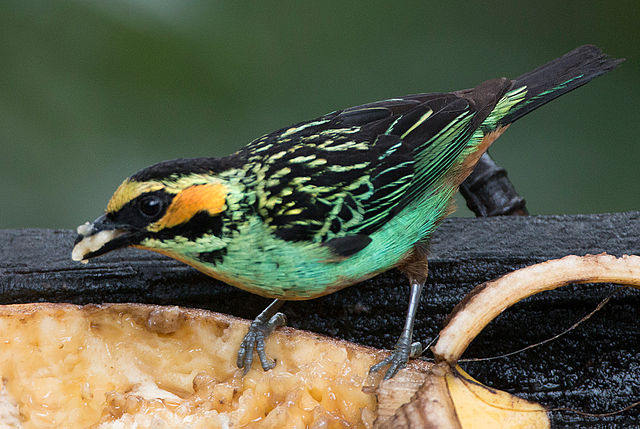
Golden-eared Tanager (Tangara chrysotis) ©WikiC

Golden-eared Tanager (Tangara chrysotis) ©WikiC

Tangara is a large genus of birds of the tanager family. It includes about 50 species, but as currently defined the genus is polyphyletic. All are from the Neotropics, and while most are fairly widespread, some have small distributions and are threatened. They are fairly small, ranging in size from 11.5–15 centimetres (4.5–5.9 in). This genus includes some of the most spectacularly colored birds of the world.

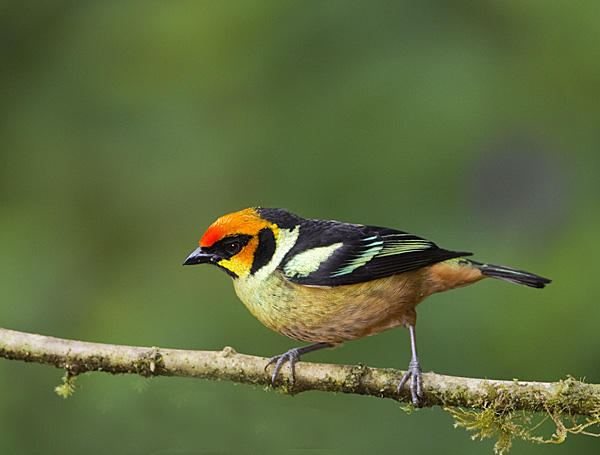
Flame-faced Tanager (Tangara parzudakii) ©WikiC

Flame-faced Tanager (Tangara parzudakii) ©WikiC

These tanagers are mainly found high in forest canopies, but some occupy more open habitat. They are found at all elevations below tree line but are most diverse in the Andean subtropical and foothill forests of Colombia, Ecuador and Peru.

The female builds a usually well concealed cup nest and lays two brown- or lilac-speckled white eggs. These hatch in 13–14 days and the chicks fledge in a further 15–16 days. The male and female feed the nestlings on insects and fruit, and may be assisted by helpers.

Tangara tanagers pick insects from leaves, or sometimes in flight, but fruit is a major dietary item, accounting for 53-86% of food items in those species which have been studied. (Information from Wikipedia Tangara)

This slideshow requires JavaScript.

And they sing the song of Moses the servant of God, and the song of the Lamb, saying, Great and marvellous are thy works, Lord God Almighty; just and true are thy ways, thou King of saints. (Revelation 15:3 KJV)

“El Shaddai” ~ by Nell Reese

*

More Sunday Inspirations

Sunday Inspiration – Thraupidae – Tanagers and Allies I

Sunday Inspiration – Thraupidae – Tanagers and Allies II

Sunday Inspiration – Thraupidae – Tanagers and Allies III

Traupidae Family – Tanagers and Allies

Sharing The Gospel

*

Sunday Inspiration – Thraupidae – Tanagers and Allies III

Yellow-scarfed Tanager (Iridosornis reinhardti) ©Dubi Shapiro

“To the chief Musician, A Psalm of David. In the LORD put I my trust: how say ye to my soul, Flee as a bird to your mountain?” (Psalms 11:1 KJV)

We start off this week’s segment of the Thraupidae Family with some Mountain Tanagers. They are very colorful creations from their Creator. Needless to say, they like to live in the mountains, mostly in Central and South America. These genera; Cyanicterus, Bangsia, Buthraupis, Cnemathraupis, Chlorornis, Wetmorethraupis, Anisognathus, Dubusia are considered Mountain Tanagers by Wikipedia.

Fawn-breasted Tanager (Pipraeidea melanonota) ©WikiC

Fawn-breasted Tanager (Pipraeidea melanonota) ©WikiC

Typical Tanagers: Pipraeidea, Iridosornis, and Thraupis (covered last week) are being included this week also. These occur from Mexico to Argentina.

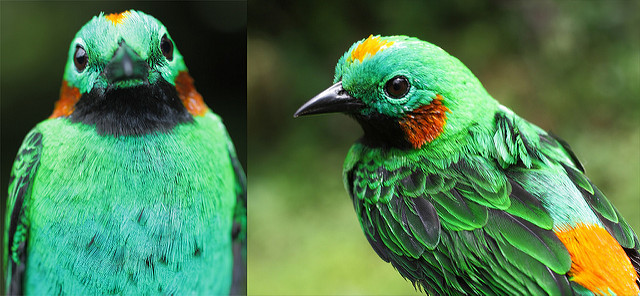
Orange-eared Tanager (Chlorochrysa calliparaea bourcieri) ©Flickr Andres Cuevo

Orange-eared Tanager (Chlorochrysa calliparaea bourcieri) ©Flickr Andres Cuevo

The last group Chlorochrysa is a genus of small colorful tanagers.  Their natural habitats are subtropical or tropical moist montane forests.

This slideshow requires JavaScript.

I will remember the works of the LORD: surely I will remember thy wonders of old. I will meditate also of all thy work, and talk of thy doings. Thy way, O God, is in the sanctuary: who is so great a God as our God? Thou art the God that doest wonders: thou hast declared thy strength among the people. (Psalms 77:11-14 KJV)

“Jesus Paid It All” – Men’s Father’s Day Choir

“While The Ages Roll” –  Men’s Quartet

These were both sung on Father’s Day 2016 at Faith Baptist

*

More Sunday Inspirations

Sunday Inspiration – Thraupidae – Tanagers and Allies I

Sunday Inspiration – Thraupidae – Tanagers and Allies II

Traupidae Family – Tanagers and Allies

Wages or a Gift
*

Sunday Inspiration – Thraupidae – Tanagers and Allies II

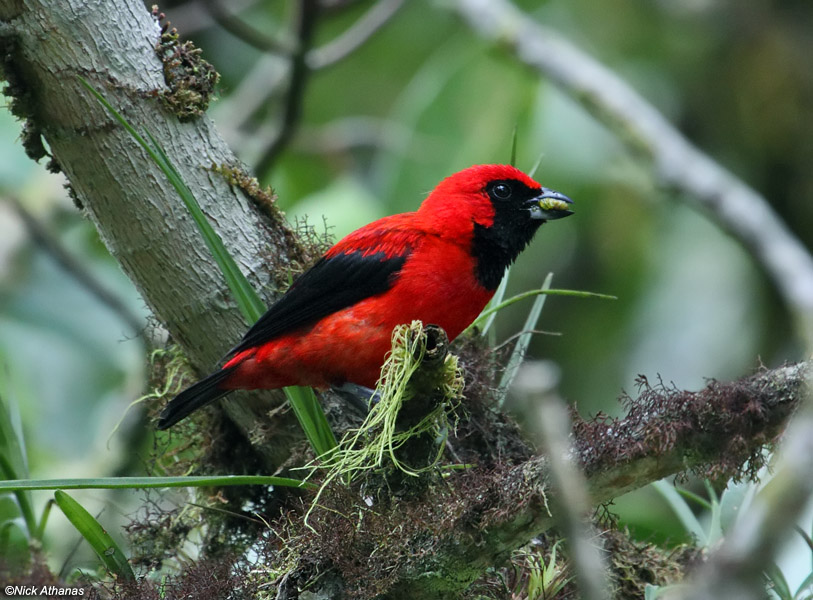
Vermilion Tanager (Calochaetes coccineus) ©Nick Athanas

Vermilion Tanager (Calochaetes coccineus) ©Nick Athanas

Come now, and let us reason together, saith the LORD: though your sins be as scarlet, they shall be as white as snow; though they be red like crimson, they shall be as wool. (Isaiah 1:18 KJV)

Last week’s Sunday Inspiration of Tanagers and Allies started us off on this huge family. We will continue, starting with the five Lanio genus of Shrike-Tanagers.

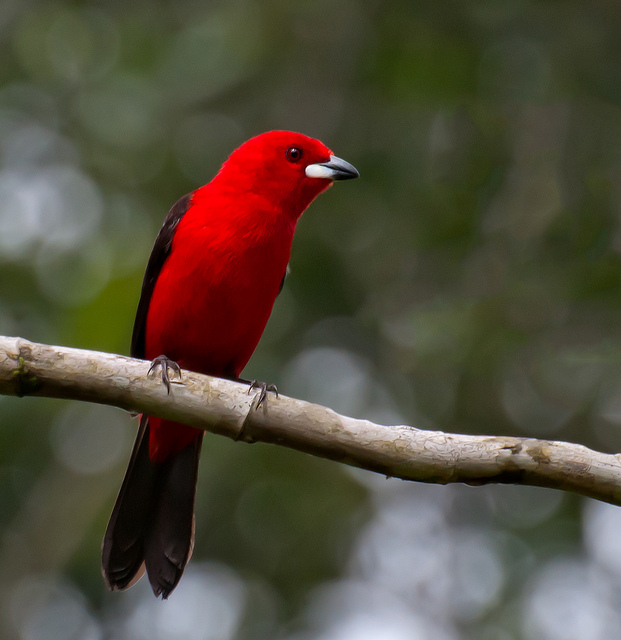
Brazilian Tanager (Ramphocelus bresilius) by Dario Sanches

Brazilian Tanager (Ramphocelus bresilius) by Dario Sanches

The words of the LORD are pure words: as silver tried in a furnace of earth, purified seven times. (Psalms 12:6 KJV)

Wait until you see the second very colorful genus, the Ramphocelus. These are Neotropical birds that have enlarged shiny whitish or bluish-grey lower mandibles, which are pointed upwards in display. However, this is greatly reduced in the females of most species. Males are black and red, orange or yellow, while females resemble a duller version of the males, or are brownish or greyish combined with dull red, orange or yellowish.

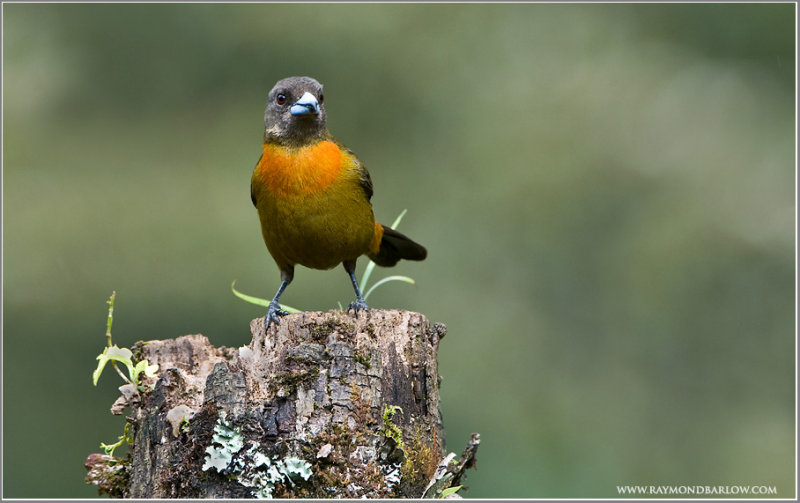
Cherrie's Tanager (Ramphocelus costaricensis) Female by Raymond Barlow

Cherrie’s Tanager (Ramphocelus costaricensis) Female by Raymond Barlow

Ramphocelus tanagers are found in semi-open areas. The nest is a cup built by the female of plant materials such as moss, rootlets, and strips of large leaves like banana or Heliconia, and is often in a fairly open site in a tree. The female usually lays pale blue eggs, with grey, brown or lavender spots, and the young stay in the nest for only about 12 days. The songs of this genus are repetitions of rich one- or two-syllable whistles. Most of these are of a crimson or reddish hue.

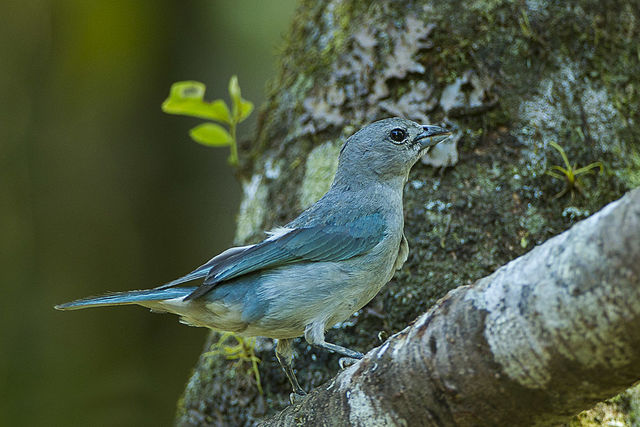
Sayaca Tanager (Thraupis sayaca) ©WikiC

Sayaca Tanager (Thraupis sayaca) ©WikiC

The Thraupis Tanagers are another beautiful genera of the Lord’s Creation. This time, blue will is the dominate color. “These tanagers are mainly found in semi-open habitats including plantations and open woodland, but some will venture into towns. They feed from medium to high levels in trees, taking mainly fruit, with some nectar, and insects which may be taken in flight.” (Wikipedia)

Blue-backed Tanager (Cyanicterus cyanicterus) ©Francesco_Veronesi

This week will end with two genus that have only one species each, the Vermilion Tanager (Calochaetes coccineus) and the Blue-backed Tanager (Cyanicterus cyanicterus). All the birds this week live from Mexico down through South America.

This slideshow requires JavaScript.

I know all the birds of the mountains, And the wild beasts of the field are Mine. (Psalms 50:11 NKJV)

“My Faith Still Holds” ~ Faith Baptist Orchestra

*

More Sunday Inspirations

Sunday Inspiration – Thraupidae – Tanagers and Allies I

Traupidae Family – Tanagers and Allies

Hope for Hard Times

*

Sunday Inspiration – Thraupidae – Tanagers and Allies I

Chestnut-headed Tanager (Pyrrhocoma ruficeps) ©WikiC

Chestnut-headed Tanager (Pyrrhocoma ruficeps) ©WikiC

“For ye shall go out with joy, and be led forth with peace: the mountains and the hills shall break forth before you into singing, and all the trees of the field shall clap their hands.” (Isaiah 55:12 KJV)

Our journey through the Song Bird Order, known as the Passeriformes Order, has been ongoing for many Sundays. There are 131 Families within this Order, and we are now down to three families to go. The Traupidae Family which we are starting today, has 375 species. Guess what? We will not be covering them all today. The last four Sundays was used to show you the Emberizidae family of 181 species. I trust you enjoyed having that family split up into “bite-size” articles. The same will be true with this family of beautiful Tanagers and allies created by their Creator.

If you are fairly new to seeing these Sunday Inspirations, the slide shows have the birds arranged in taxonomy order. So, there really is a reason for the way they are presented in the slides.

White-lined Tanager (Tachyphonus rufus) Female ©WikiC

White-lined Tanager (Tachyphonus rufus) Female ©WikiC

“The family has an American distribution. The Thraupidae are the second-largest family of birds and represent about 4% of all avian species and 12% of the Neotropical birds. Traditionally, about 240 species of tanagers were described, but the taxonomic treatment of this family’s members is currently in a state of flux.” (Wikipedia)

Red-crested Cardinal (Paroaria coronata) ©WikiC

Red-crested Cardinal (Paroaria coronata) ©WikiC

“Tanagers are small to medium-sized birds. The shortest-bodied species, the white-eared conebill, is 9 cm (3.5 in) long and weighs 7 grams, barely smaller than the short-billed honeycreeper. The longest, the magpie tanager is 28 cm (11 in) and weighs 76 grams (0.168 pounds). The heaviest is the white-capped tanager which weighs 114 grams (0.251 pounds) and measures about 24 cm (9.4 in). Both sexes are usually the same size and weight. Tanagers are often brightly colored, but some species are black and white. Birds in their first year are often duller or a different color altogether. Males are typically more brightly colored than females. Most tanagers have short, rounded wings. The shape of the bill seems to be linked to the species’ foraging habits.”(Wikipedia)

Black-faced Tanager (Schistochlamys melanopis) at National Aviary by Dan

Black-faced Tanager (Schistochlamys melanopis) at National Aviary by Dan

The Brown Tanager (Orchesticus abeillei) starts us off, followed by six Cardinals in the Paroaria genus. Various Tanagers from Schistochlamys, Cissopis, Conothraupis, Lamprospiza, Compsothraupis, Sericossypha, Nemosia, Creurgops, Mitrospingus and Orthogonys. (22 birds)

Black-headed Hemispingus (Hemispingus verticalis) ©WikiC

Black-headed Hemispingus (Hemispingus verticalis) ©WikiC

Next will be 15 Hemispingus, all in the Hemispingus genus. Hemispingus is a genus of warbler-like tanagers. They are found in highland forest in South America, especially in the Andes.

Fulvous-headed Tanager (Thlypopsis fulviceps) ©WikiC

Fulvous-headed Tanager (Thlypopsis fulviceps) ©WikiC

We will conclude with 20 or so more Tanagers from eight various genera. As you watch the slide show, you will see how the Lord enjoyed giving a great variety of color and patterns for these avian singers.

“Let them praise the name of the LORD: for he commanded, and they were created.” (Psalms 148:5 KJV)

This slideshow requires JavaScript.

Deck thyself now with majesty and excellency; and array thyself with glory and beauty. (Job 40:10 KJV)

“My Jesus I Love Thee” ~ Faith Baptist Orchestra

*

Sunday Inspirations

Traupidae Family – Tanagers and Allies

Family: Building a Home God’s Way

*


Sunday Inspiration – Emberizidae Family Allies II

Ochre-breasted Brushfinch (Atlapetes semirufus) ©WikiC

That ye might walk worthy of the Lord unto all pleasing, being fruitful in every good work, and increasing in the knowledge of God; (Colossians 1:10 KJV)

We finally come to the last birds in the Emberizidae –  Buntings, New World Sparrows & Allies Family. This is the first family that we split up into four articles. With 181 species in this very common family, this gave you a chance to see more of them.

So, today, we will finish up the family by showing you last group of the “allies.” There is a Large-footed Finch in the Peropetes genus, the only one in the genus actually. Then the Atlapetes genus will be the bulk of the birds (31) and they are all Brushfinches, two finches from the Pselliophorus genus, a Yellow Cardinal from the Gubernatrix, and finish it off with 9 Bush Tanagers in the Chlorospingus genus. Forty-four amazing avian wonders from their Creator for us to enjoy.

Large-footed Finch (Pezopetes capitalis) ©WikiC

Large-footed Finch (Pezopetes capitalis) ©WikiC

The Large-footed Finch is found in the undergrowth of mountain forests, second growth, bamboo clumps, and scrubby pastures from 2150 m altitude to the scrubby páramo at 3350 m. It has a slender bill, a modestly sized tail and very large and powerful feet and legs.

White-naped Brushfinch (Atlapetes albinucha) by Kent Nickell

White-naped Brushfinch (Atlapetes albinucha) by Kent Nickell

The next genus, the Atlapetes with their Brushfinches are rather interesting and colorful. Most are found in forest in subtropical or tropical areas. The range from Mexico, Central America and throughout South America.

White-rimmed Brushfinch (Atlapetes leucopis) ©Dusan M Brinkhuizen

White-rimmed Brushfinch (Atlapetes leucopis)
©Dusan M Brinkhuizen

Looks like the Lord created that White-rimmed Brushfinch with glasses, which it is not wearing. I’m sure it has very good eyesight.

Yellow-thighed Finch (Pselliophorus tibialis) by Ian

Yellow-thighed Finch (Pselliophorus tibialis) by Ian

The Yellow-thighed Finch and the Yellow-green Finch of the Pselliophorus genus look like they are wearing short leggings on the top of their legs.

Yellow Cardinal (Gubernatrix cristata) ©WikiC

Yellow Cardinal (Gubernatrix cristata) ©WikiC

The Yellow Cardinal is another neat avian creation, Looks just like our Northern Cardinal, but is yellow and in a different family altogether.

Sooty-capped Bush Tanager (Chlorospingus pileatus) by Ian

Sooty-capped Bush Tanager (Chlorospingus pileatus) by Ian

The last genus in this family, is the Chlorospingus and contains 9 Bush Tanagers. With this last group, we finish up the Emberizidae Family. Trust you enjoyed seeing most of the 181 members over the last few weeks.

This slideshow requires JavaScript.

Thou art worthy, O Lord, to receive glory and honour and power: for thou hast created all things, and for thy pleasure they are and were created. (Revelation 4:11 KJV)

“Worthy The Lamb” ~ Choir and Orchestra at Faith Baptist Church (May 15, 1916)
*

More Sunday Inspirations

Sunday Inspiration – Emberizidae’s – Buntings – #1

Sunday Inspiration – Emberizidae – Part II – #2

Sunday Inspiration – Emberizidae Family Allies I – #3

Emberizidae –  Buntings, New World Sparrows & Allies Family

Gideon

*

Sunday Inspiration – Emberizidae Family Allies I

Chestnut-capped Brushfinch (Arremon brunneinucha) ©WikiC

Chestnut-capped Brushfinch (Arremon brunneinucha) ©WikiC

Yea, the sparrow hath found an house, and the swallow a nest for herself, where she may lay her young, even thine altars, O LORD of hosts, my King, and my God. (Psalms 84:3 KJV)

Sunday is here again, and it’s time to continue with the Emberizidae Family of Buntings, New World Sparrows and their allies.  First, aren’t we thankful that the Lord has created the world and set up a seven day week. He set the pattern for us to rest after six days of work. He was tired, nor has he stopped working, He was just setting an example, because the human body needs rest. He ought to know, He created us.

“Thus the heavens and the earth were finished, and all the host of them. And on the seventh day God ended his work which he had made; and he rested on the seventh day from all his work which he had made. And God blessed the seventh day, and sanctified it: because that in it he had rested from all his work which God created and made.” (Genesis 2:1-3 KJV) (emphasis mine)

I for one look forward to Sundays. We rest and attend church, eat and fellowship with our friends, and attend the evening service and rest some more. These Sunday Inspirations, which have been going on for some time now, take several hours to put together, and then are scheduled for 1 or 2 minutes after midnight Sunday morning. When WordPress puts them up, I will already be resting in bed and enjoying the start of my Day of Rest. Enough of the personal information, let’s see what these birds are up to this week.

The first Sunday, we showed the Buntings in this family, last week, we showed most of the New World Sparrows in this Emberizidae family, so, let’s see who these “allies” are.

Eastern Towhee (Pipilo erythrophthalmus) by Ray

Eastern Towhee (Pipilo erythrophthalmus) by Ray

Towhees typically have longer tails than other emberizids. Most species tend to avoid humans, so they are not well known, though the eastern towhee P. erythrophthalmus is bolder. This species, and some others, may be seen in urban parks and gardens. Also, in with the Melozone genus are four Ground Sparrows.

Prevost's Ground Sparrow (Melozone biarcuata) ©Flickr Richard Gibbons

Prevost’s Ground Sparrow (Melozone biarcuata) ©Flickr Richard Gibbons

Arremon is a genus of neotropical birds in the Emberizidae family. With the exception of the green-striped brush finch, which is endemic to Mexico, all species are found in South America, with a few reaching Central America.

Chestnut-capped Brushfinch (Arremon brunneinucha) ©Flickr Amy McAndrews

  • (Wikipedia with editing)

This slideshow requires JavaScript.

“Where there is no vision, the people perish: but he that keepeth the law, happy is he.” (Proverbs 29:18 KJV)

“Be Thou My Vision” ~ by Ladies and Girls Choir on Mother’s Day

*

More Sunday Inspirations

Sunday Inspiration – Emberizidae’s – Buntings

Sunday Inspiration – Emberizidae – Part II

Emberizidae –  Buntings, New World Sparrows & Allies

Gospel Message

*

Sunday Inspiration – Emberizidae Family II

Vesper Sparrow (Pooecetes gramineus) ©WikiC

Vesper Sparrow (Pooecetes gramineus) ©WikiC

“Yea, the sparrow hath found an house, and the swallow a nest for herself, where she may lay her young, even thine altars, O LORD of hosts, my King, and my God.” (Psalms 84:3 KJV)

This week, as we continue in the Emberizidae – Buntings, New World Sparrows and allies Family, the next 50 or so will be highlighted. That will leave us with the last of the Emberizidae Family III and/or IV to finish up this family. Last week’s Sunday Inspiration had most of the Buntings from this Family.

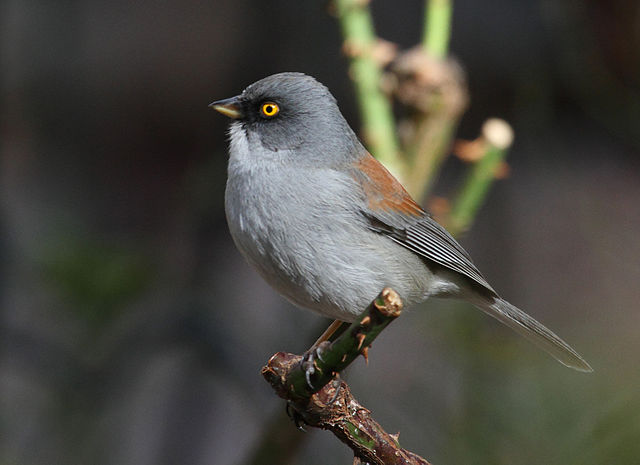
Yellow-eyed Junco (Junco phaeonotus) ©WikiC

Yellow-eyed Junco (Junco phaeonotus) ©WikiC

American sparrows are a group of mainly New World passerine birds, forming part of the family Emberizidae. American sparrows are seed-eating birds with conical bills, brown or gray in color, and many species have distinctive head patterns.

Although they share the name sparrow, American sparrows are more closely related to Old World buntings (which are also in the family Emberizidae) than they are to the Old World sparrows (family Passeridae). American sparrows are also similar in both appearance and habit to finches, with which they sometimes used to be classified. (Wikipedia)

Many of the sparrows are just called “Little Brown Jobs” or LBJs. They are very numerous and common, yet they are special to the Lord. Matthew 10 quotes the Lord with these verses:

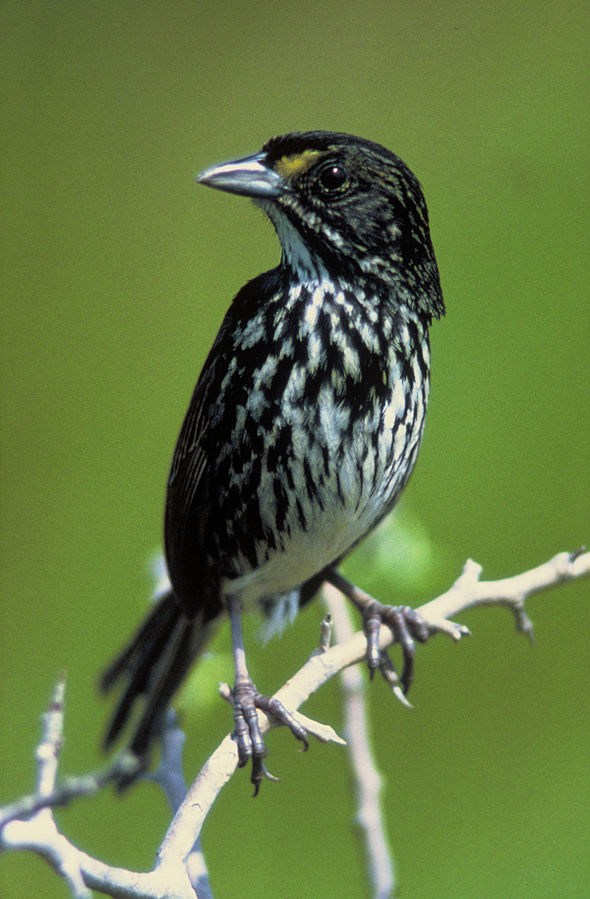
Seaside Sparrow (Ammodramus maritimus) (Dusky-extinct) ©WikiC

Seaside Sparrow (Ammodramus maritimus) (Dusky-extinct) ©WikiC

“Are not two sparrows sold for a farthing? and one of them shall not fall on the ground without your Father.” (Matthew 10:29 KJV)

Chipping Sparrow (Spizella passerina) by Daves BirdingPix

Chipping Sparrow (Spizella passerina) by Daves BirdingPix

“Fear ye not therefore, ye are of more value than many sparrows.” (Matthew 10:31 KJV)

When a person knows the Lord he needs not to fear.

“Trust in the LORD, and do good; so shalt thou dwell in the land, and verily thou shalt be fed.” (Psalms 37:3 KJV)

This slideshow requires JavaScript.

“His Eye Is On The Sparrow” ~ Kathy Lisby – Special at Faith Baptist

*
Sunday Inspiration

Emberizidae –  Buntings, New World Sparrows & Allies

Birds of the Bible – Little Brown Jobs

Birds of the Bible – Sparrows

Fear: Breaking Every Chain

*

Sunday Inspiration – Emberizidae’s Buntings

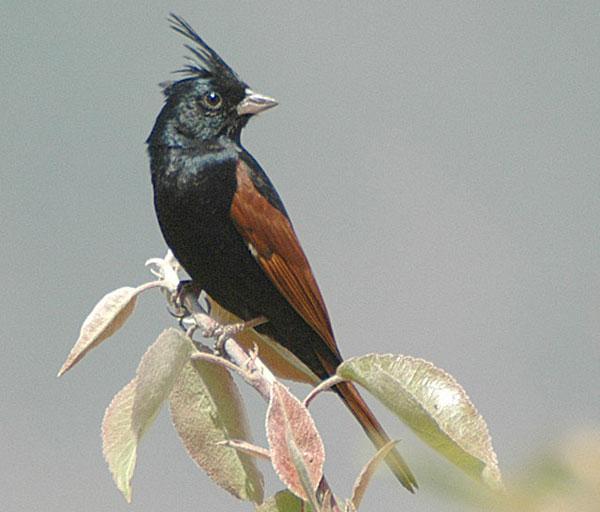
Crested Bunting (Emberiza lathami) by Nikhil Devasar

Crested Bunting (Emberiza lathami) by Nikhil Devasar

The flowers appear on the earth; the time of the singing of birds is come, and the voice of the turtle is heard in our land; (Song of Solomon 2:12 KJV)

Our new family we start today is the Emberizidae – Buntings, New World Sparrows and allies. Since there are 181 species in the family, today we will introduce you to the Emberiza genus. It contains 42 Buntings and one Yellowhammer. These are small sparrow-sized birds with conical bills that gives the power to crack open many kinds of seeds. Seeds being their favorite food.

Golden-breasted Bunting (Emberiza flaviventris) ©WikiC

There is one more bunting, the Lark Bunting, that follows next after the Emberiza genus. “Lark buntings are small songbirds, with a short, thick, bluish bill. There is a large patch of white on the wings and they have a relatively short tail with white tips at the end of the feathers. Breeding males have an all black body with a large white patch on the upper part of the wing. Non-breeding males and females look similar and are grayish brown with white stripes.” (Wikipedia)

Lark Bunting (Calamospiza melanocorys) ©WikiC

Lark Bunting (Calamospiza melanocorys) ©WikiC

There are many of these “Emberizidae buntings are boldly patterned on the face and head, or have colorful underparts.” (National Geographic Birds of the World,, p. 356) You will meet the other members of this family later. The Sparrows and others will be very familiar, many referred to as “little brown jobs”

This slideshow requires JavaScript.

*

“That he might present it to himself a glorious church, not having spot, or wrinkle, or any such thing; but that it should be holy and without blemish.” (Ephesians 5:27 KJV)

“Triumphantly The Church Will Rise” ~ Faith Baptist Men’s Quintet

“That the God of our Lord Jesus Christ, the Father of glory, may give unto you the spirit of wisdom and revelation in the knowledge of him: The eyes of your understanding being enlightened; that ye may know what is the hope of his calling, and what the riches of the glory of his inheritance in the saints, And what is the exceeding greatness of his power to us-ward who believe, according to the working of his mighty power, Which he wrought in Christ, when he raised him from the dead, and set him at his own right hand in the heavenly places, Far above all principality, and power, and might, and dominion, and every name that is named, not only in this world, but also in that which is to come: And hath put all things under his feet, and gave him to be the head over all things to the church, Which is his body, the fulness of him that filleth all in all.” (Ephesians 1:17-23 KJV)

*
Sunday Inspiration

Emberizidae –  Buntings, New World Sparrows & Allies

What will you do with Jesus?

*

Sunday Inspiration – Icteridae Family III

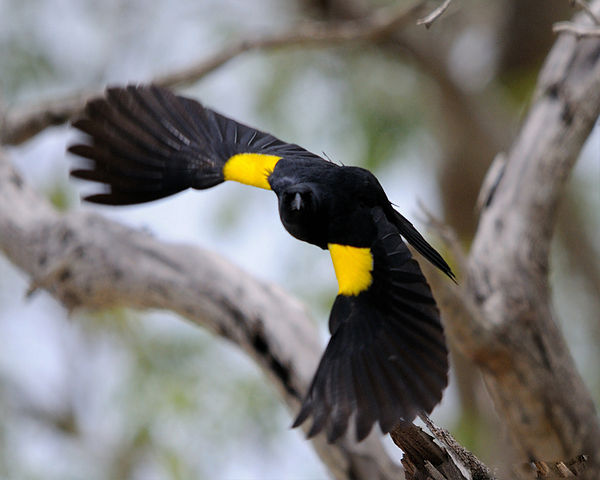
Yellow-shouldered Blackbird (Agelaius xanthomus) ©WikiC

Yellow-shouldered Blackbird (Agelaius xanthomus) ©WikiC

All flesh is not the same flesh: but there is one kind of flesh of men, another flesh of beasts, another of fishes, and another of birds. (1 Corinthians 15:39 KJV)

Today we finish up the Icteridae Family of New World blackbirds, New World orioles, the Bobolink, Meadowlarks, Grackles, Cowbirds, Oropendolas and Caciques, plus. Trust you enjoyed seeing the first two parts of the family. (Part I, Part II)

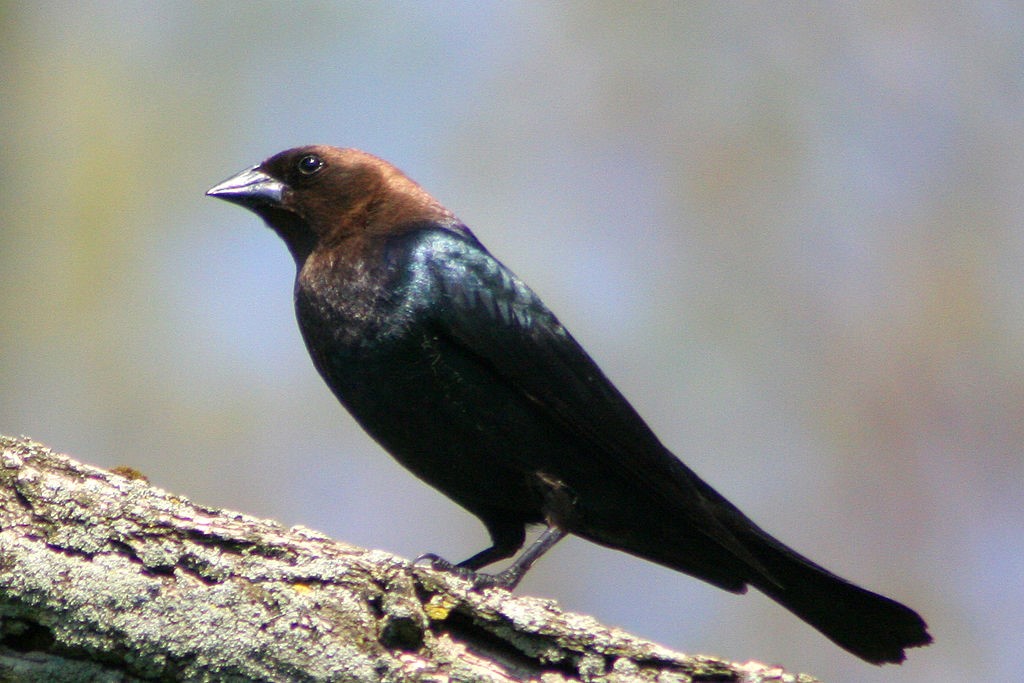
Brown-headed Cowbird (Molothrus ater) ©WikiC

Brown-headed Cowbird (Molothrus ater) ©WikiC

“All flesh is not the same flesh: but there is one kind of flesh of men, another flesh of beasts, another of fishes, and another of birds.” (1 Corinthians 15:39 KJV)

The last 64 members of the family come from numerous Genus; the Nesopsar, Agelaius, Molothrus, Dives,Ptiloxena, Euphagus, Quiscalus, Hypopyrrhus, Lampropsar, Gymnomystax, Macroagelaius, Macroagelaius, Curaeus, Amblyramphus, Anumara, Gnorimopsar, Oreopsar, Agelaioides, Chrysomus, Xanthopsar and the Pseudoleistes. Some have only one species per genus. For many of you, the genus names mean little, but, if we mention Cowbirds, Grackles, Blackbirds, Baywings and Marshbirds, then you would recognize them that way.

This slideshow requires JavaScript.

Blessed be the LORD, who hath not given us as a prey to their teeth. Our soul is escaped as a bird out of the snare of the fowlers: the snare is broken, and we are escaped. Our help is in the name of the LORD, who made heaven and earth. (Psalms 124:6-8 KJV)

“Stay Close To Me” ~ ©Hyssongs

*
Sunday Inspiration

Sunday Inspiration –  Icteridae Family I

Sunday Inspiration –  Icteridae Family II

Icteridae – Oropendolas, Orioles & Blackbirds Family

Icterid – Wikipedia

Falling Plates

*

Sunday Inspiration – Icteridae Family II

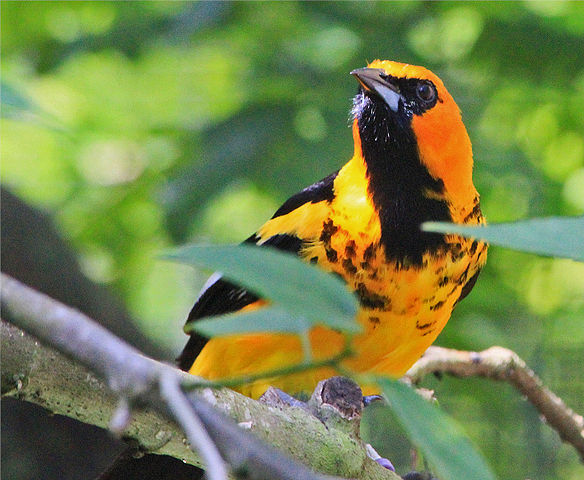
Spot-breasted Oriole (Icterus pectoralis) ©WikiC

Spot-breasted Oriole (Icterus pectoralis) ©WikiC

“The fear of the LORD is clean, enduring for ever: the judgments of the LORD are true and righteous altogether. More to be desired are they than gold, yea, than much fine gold: sweeter also than honey and the honeycomb.” (Psalms 19:9-10 KJV)

Last week we made it down through the Icteridae – Oropendolas, Orioles & Blackbirds Family to the Red-rumped Cacique. That was just about of a third of the 109 members of the family. Now the list will start with the Icterus genus, which are Orioles. In fact, those are all we will look at today. There are 33 species in that genus and most of them are orioles, except for three Troupials. Troupials (turpial in Spanish), were formerly considered one species.

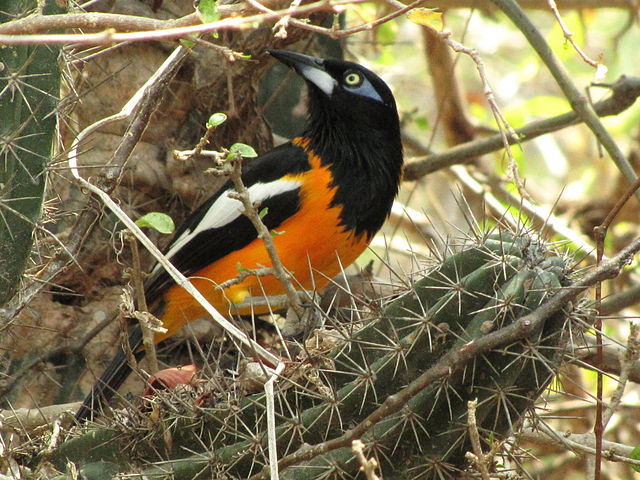
Venezuelan Troupial (Icterus icterus) ©WikiC

Venezuelan Troupial (Icterus icterus) ©WikiC

“A word fitly spoken is like apples of gold in pictures of silver.” (Proverbs 25:11 KJV)

New World orioles, comprising the genus Icterus, are a group of birds in the blackbird family. They are not related to Old World orioles, which are in the family Oriolidae, but are strikingly similar in size, diet, behaviour and in their strongly contrasting plumage. Could it be because they are from the same kind? Predictably, the two have been given the same vernacular name. “Oriole”

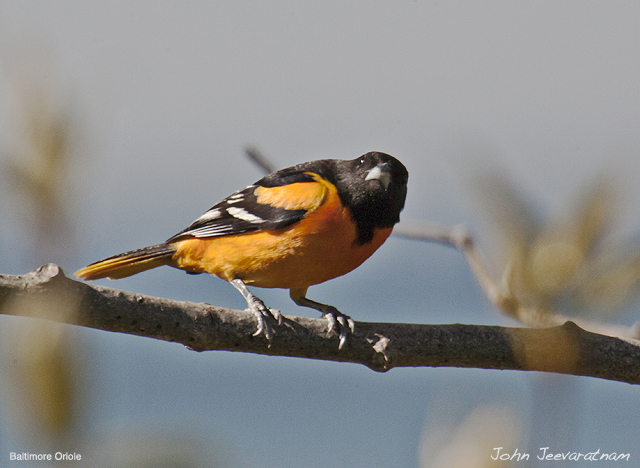
Baltimore Oriole (Icterus galbula) Male by Nature's Hues

Baltimore Oriole (Icterus galbula) Male by Nature’s Hues

“How much better is it to get wisdom than gold! and to get understanding rather to be chosen than silver!” (Proverbs 16:16 KJV)

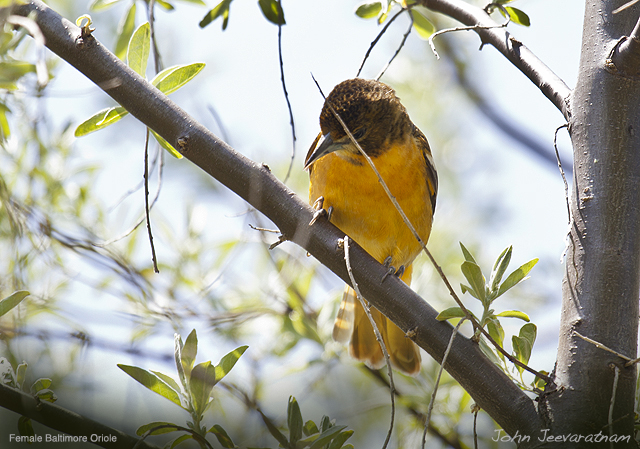
The males are typically black and yellow or orange, with white markings; the plumage of females and immature birds is duller. These birds go through one moult in a year. They are generally slender with long tails and a pointed bill. They mainly eat insects, but also enjoy nectar and fruit. The nest is a woven, elongated pouch. Several species are easy to attract to bird tables by the provision of cut oranges and grape jelly. Species nesting in areas with cold winters (including most of the United States) are strongly migratory, while subtropical and tropical species are more sedentary.

Baltimore Oriole (Icterus galbula) Female by Nature's Hues

Baltimore Oriole (Icterus galbula) Female by Nature’s Hues

“Therefore I love thy commandments above gold; yea, above fine gold.” (Psalms 119:127 KJV)

The name “oriole” was first recorded (in the Latin form oriolus) by Albertus Magnus in about 1250, and was stated by him to be onomatopoeic, from the song of the European Golden Oriole.

The genus name Icterus as used by classical authors, referred to a bird with yellow or green plumage. In modern times this has been identified as the golden oriole. (Notes are from Gutenberg’s Icterus (Genus) with editing.)

This slideshow requires JavaScript.

“That the trial of your faith, being much more precious than of gold that perisheth, though it be tried with fire, might be found unto praise and honour and glory at the appearing of Jesus Christ: Whom having not seen, ye love; in whom, though now ye see him not, yet believing, ye rejoice with joy unspeakable and full of glory: Receiving the end of your faith, even the salvation of your souls.” (1 Peter 1:7-9 KJV)


“It Is Well With My Soul” by Sean Fielder [Hacked]

*

Sunday Inspiration

Sunday Inspiration –  Icteridae Family I

Icteridae – Oropendolas, Orioles & Blackbirds Family

Appreciating Baltimore Orioles and My First Bird Book

Icterus (Genus) – Gutenberg

Icterid – Wikipedia

Gospel Message

*