The article is somewhat technical, but very interesting.
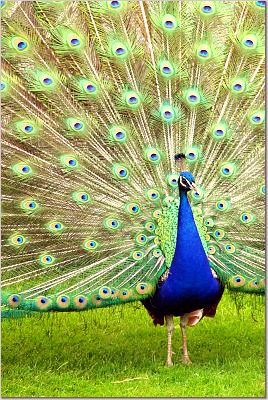
I like her closing thoughts, “God created all kinds of animals, plants, and the first two human beings in the space of just six days, about 6,000 years ago. They have for about 6,000 years varied and reproduced only within their created kinds, as we infer from Genesis chapter one He designed them to do. Protolife-to-peacock evolution cannot explain the beauty of the peacock’s feathers or its aerodynamic qualities, but what we read in the history book of all life—God’s Word—explains what we see in God’s world.
Of course we still don’t know why God designed such an over-the-top artistic wonder as the peacock. Perhaps He simply wanted His people to know that He is not only a great engineer but also to demonstrate that the Creator Himself appreciates beauty and wants us to do the same, admiring the handiwork of our God.”
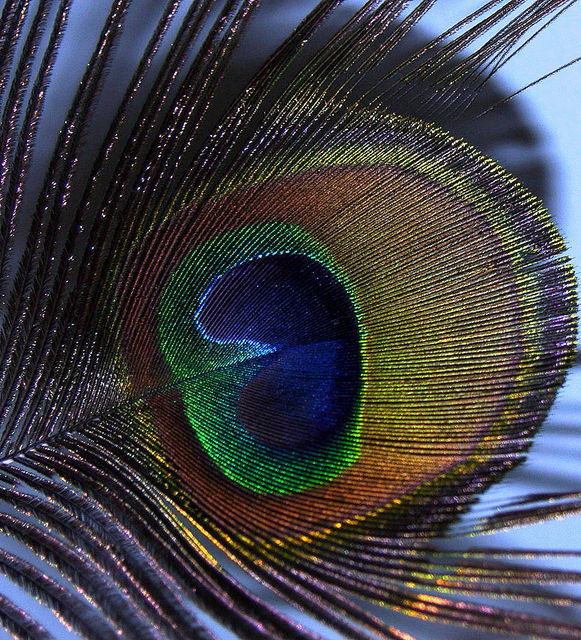
Peacock Feather
Gavest thou the goodly wings unto the peacocks? or wings and feathers unto the ostrich? (Job 39:13 KJV)
I am the LORD, and there is no other; There is no God besides Me…, (Isaiah 45:5 NKJV)
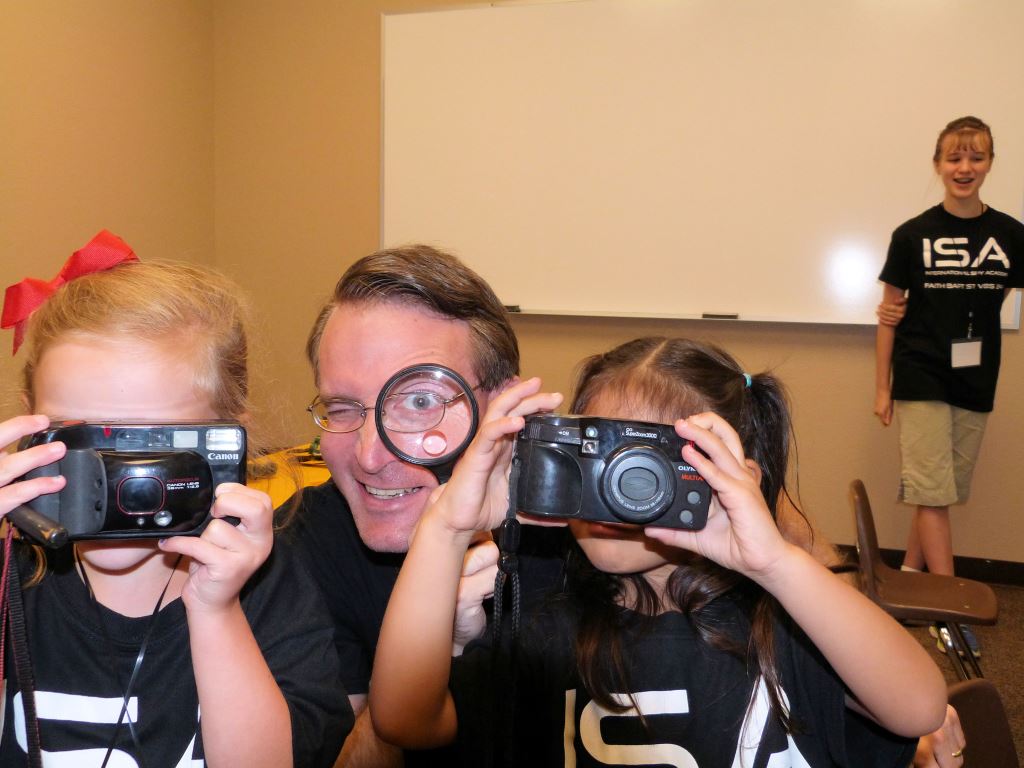
We are in the middle of Vacation Bible School this week and it is difficult to keep up the blog also. We take photos in the morning and then spend time cleaning them up later. (Over 200 photos Monday, plus what Dan took.)
We have been posting 25 or so each day to the Faith Baptist Church Facebook photos – Vacation Bible School 2014.
Monday, a really funny video was posted and want to share it here. This is our own Missions Pastor Pete playing the part of Dr. Grunkenkleiner.
Dr. Grunkenkleiner was demonstrating scientific evidence of things we cannot see at the International Spy Academy VBS.
We can’t see wind, but we can certainly see its effect. Similarly, we cannot see God, but we know He is there.
Look unto me, and be ye saved, all the ends of the earth: for I am God, and there is none else. (Isaiah 45:22 KJV)
VBS 2014
Who is a liar but he who denies that Jesus is the Christ? He is antichrist who denies the Father and the Son. Whoever denies the Son does not have the Father either; he who acknowledges the Son has the Father also. (1 John 2:22-23 NKJV)
In the beginning God created the heavens and the earth. (Genesis 1:1 NKJV)
A group of Answers in Genesis staff attended the opening of Noah last night in a local movie theater. With all the Hollywood hype and news surrounding the controversial film, we were surprised at the low turnout, with only twelve other people in the theater. We had heard many negative reports but were hopeful, based on other comments, that there may have been some redeeming qualities of the film. However, those hopes were dashed against the rocks harder than Hollywood’s ark when it ran aground in the film. This point should be one that jars us to attention, realizing that our hope is not in a Hollywood film but in something infinitely more redeeming in quality: the person and work of Jesus Christ.
Sorry I didn’t put a blog up last evening, but was occupied watching the Ken Ham vs Bill Nye Debate on Livestream. It was very interesting. Here is the YouTube of it, if you missed it. I believe it is only going to be available for a few days. (At least on Answers page)
In the beginning, God created the heavens and the earth. Genesis 1:1 ESV)
*
*
Here is another YouTube of a Post-debate Show by Creationtoday. It is a little shaky at first, but settles down after a minute or so.
“Scientists studying the dragonfly are learning even more secrets of flight. Our best high-performance aircraft can barely lift themselves off the ground. However, the dragonfly can lift 15 times his own weight into the air.”
But ask now the beasts, and they shall teach thee; and the fowls of the air, and they shall tell thee: Or speak to the earth, and it shall teach thee: and the fishes of the sea shall declare unto thee. Who knoweth not in all these that the hand of the LORD hath wrought this?
(Job 12:7-9 KJV)
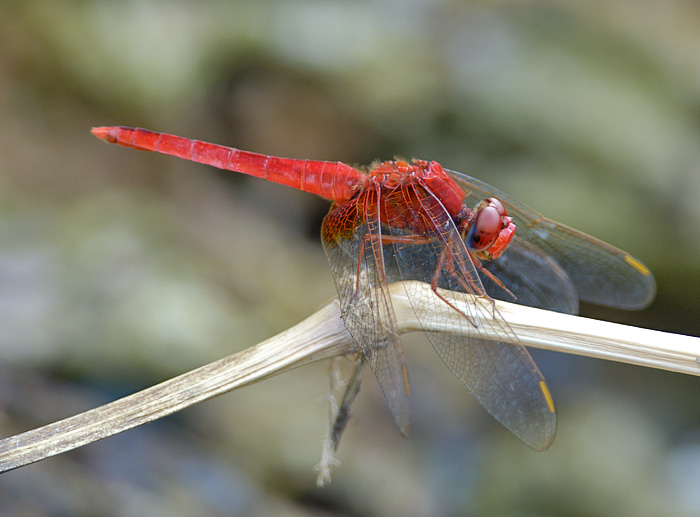
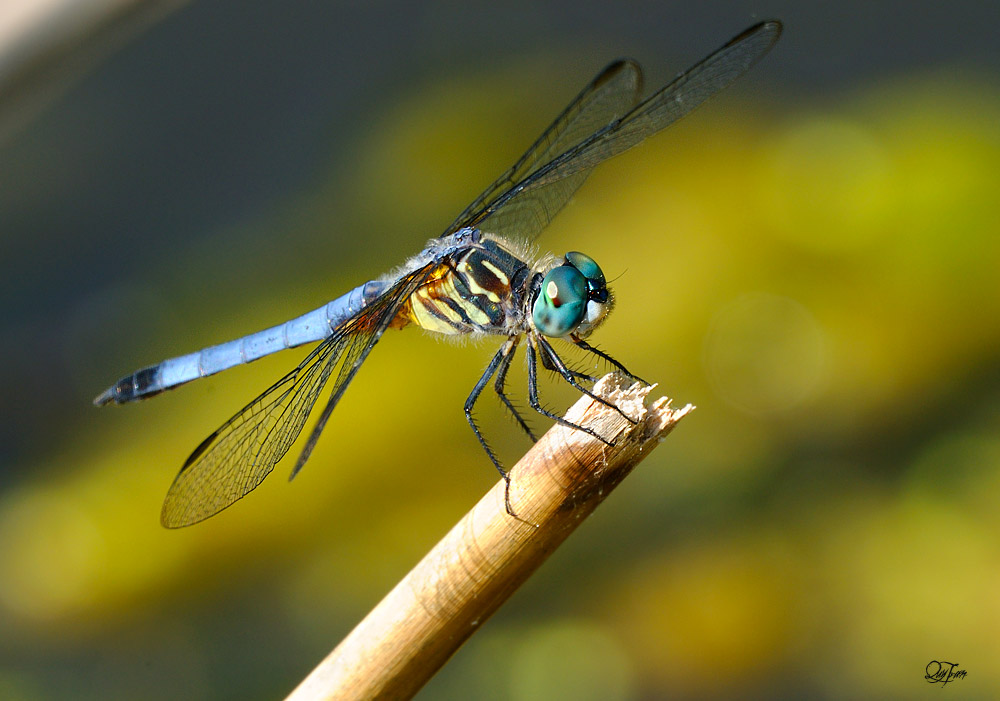
Dragonflies are probably the most beautiful of the flying insects. There are about 4,500 different varieties. They begin their life in water, where eggs hatch into rather ugly brown nymphs. The time spent living in water varies from a few weeks to several years, but for all the varieties the day comes when the nymph suddenly has the urge to climb out of the water. It sits for a while at the top of a piece of grass until its skin splits open and out comes a dragonfly! After waiting for its wings to become firm and dry, the dragonfly flies away, its lovely colours glinting in the sunshine.
Although they are very small, dragonflies are wonderfully designed for flying. Their two pairs of wings are very light, but strengthened by a network of tiny veins, which not only carry blood fluid to keep the wings stiff, but also nerves and oxygen. Some dragonflies beat their wings 40 times in one second! Dragonflies are like tiny helicopters—they can even fly backwards! In fact, Igor Sikorsky, who first designed helicopters, for the idea from watching dragonflies.
Dragonfly by QuyTran
Another wonderful thing about dragonflies is their eyes. Each pair of eyes is actually made up of as many as 30,000 separate eyes, each with its own lens! This enables the insect to see what is happening over a wide area, and spot every tiny movement without moving its head.
The supposedly oldest fossil dragonflies are just like dragonflies are now, except that they were much larger—75 centimeters (2.5 feet) from wing-tip to wing-tip! So there is no evidence that they evolved from ancestors without wings. And surely those amazing eyes did not evolve? Dragonflies are another of the many wonders of God’s creation!” From Our World (Answers for Kids.)
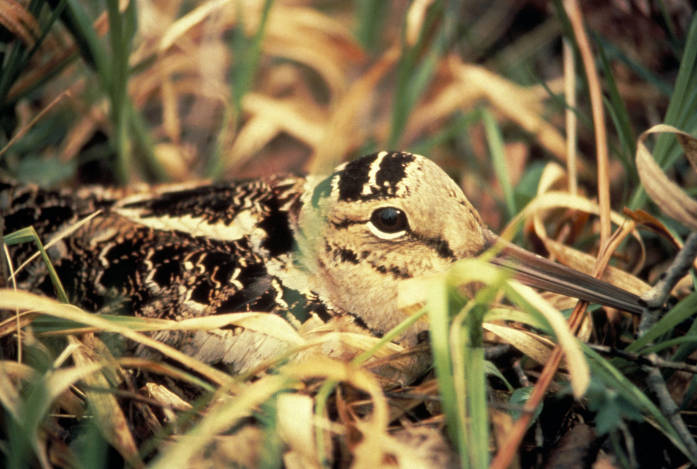
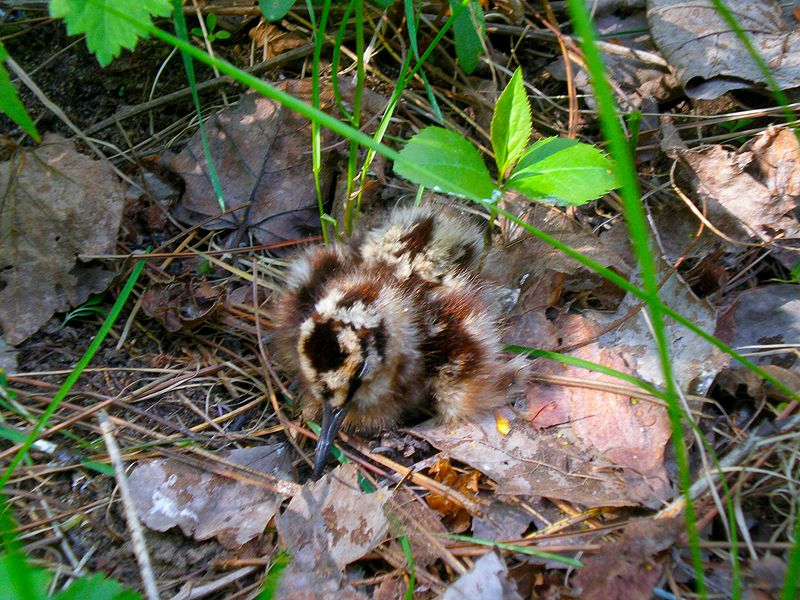
The drought had been rather severe that summer, and the normally moist woodland was dry and parched. Suddenly, out of the brush, a chunky bird was frantically searching the soil for earthworms. Following behind, and looking as famished as their mama, were four of her wood-brown chicks. And as their mama stopped and probed the arid ground before her, the chicks looked on with eager expectation. But all at once, and without warning, mama bird performed an amazing feat! She lay her body flat along the ground and began drumming the surface with her wings. Minutes later, their hunger satisfied, this American Woodcock family disappeared into the dry undergrowth.
All birds reveal incredible design, but the American Woodcock has an interesting design feature in its behaviour as well.
We have been led to believe by the scientific establishment that birds, like the American Woodcock, are products of time and chance. That through natural processes and eons of time, they are the descendants of a common ancestor that sprang from the reptilian line.
On the other hand, the Word of the Creator states that birds were designed and created by Him, according to their own kind, on the fifth day. As a result, He considered them very good (Genesis 1:31).
Chance vs design. Aimlessness vs plan and purpose. These are two fiercely competitive worldview’s. They are mutually exclusive. And, contrary to popular opinion, the essence of both can be described as the science of one person’s religion vs the science of another’s. Why? Because no one was there at the beginning! Scientifically speaking, the conditions of the early earth are unknown and hence cannot be duplicated. On the other hand, God was there! He is perfectly capable of communicating to His people.
When we look at His world, we find tremendous evidence of His fingerprints, so to speak—design and purpose.
For instance, how did drumming the ground bring the woodcock family from famine to feast? Amazingly enough, mama woodcock was aware of the habits of earthworms. She knew that in dry conditions, they squirm to the lower, moist depths of the soil. However, she was also aware of another quirk in their behaviour! When it rains, worms can sense the ground vibrations caused by raindrops. When this happens, they quickly propel themselves to the soil surface so they won’t drown. Therefore, when the mother beat the ground, she and her family were able to leave the area with their hunger pangs satisfied.
How did she know how to do that? What complicated series of events caused all of this information to come together in one little bird? Was it by chance and natural processes or was it creation with deliberate purpose?
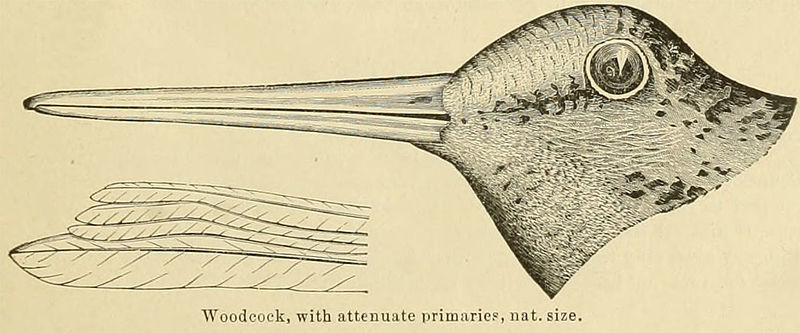
Not only did it know the habits of the earthworms, this bird’s anatomy is highly complex as well. The eyes are located high on its head enabling it to see 360 degrees. Imagine being able to see, with overlapping vision allowing depth perception, both in front of and behind you. The ears are situated between the eyes and its eight-centimetre (three-inch) bill. This highly sophisticated hearing apparatus is better able to detect the sub-soil movement of its prey. Working together with its exquisitely attuned vision and hearing, are its sensitive feet. Designed to feel ground vibration, they help to pinpoint a worm’s location.
Being fairly certain that the worm is within reach, the bird pushes its bill into the ground. But this isn’t just any old bill! The flexible tip, which allows it to open and close in a tweezer fashion within tiny spaces, has highly sensitive nerve endings. It allows the woodcock to know that it has grasped its meal.
A nocturnal animal, the woodcock is probably best known for its bizarre courtship behaviour. At dusk, the male of the species will circle high in the sky on a spring night making a continual ‘twittering’ noise. At this highest point, he’ll suddenly dive in a zig-zag fashion toward the earth. It’s a most unusual display, completely captivating his mate-to-be. The three outer primary feathers not only make the strange sounds of this courting male, but also contribute greatly to his survival. When the woodcock is in danger of being discovered by a predator, it will explode from its concealment. In so doing, those feathers make such an unexpected and horrible noise, that often the predator is temporarily shocked. This brief moment is all the time the bird needs to make its escape!1
When it is realized how many of these complicated factors must come together, at the same time, just for the bird to survive, that all this could come from gradual, piecemeal evolution defies credibility.
The outdoors is chock full of unique and fascinating organisms, like the American Woodcock, just waiting to be discovered by both children and adults alike. All of creation, though now fallen from its original perfection, holds a wonder and fascination that finds its meaning in the Creator God who put it there! Evidence of His handiwork can be seen and understood. And evidence can be logically discussed in scientific circles, so be bold, be confident and be in awe of His creative abilities!
The world today needs more people who will proclaim the news in every land that Jesus Christ, the awesome Creator, came to us, lived amongst us, died and rose again for us!
‘Be strong and of a good courage; be not afraid, neither be thou dismayed: for the Lord thy God is with thee whithersoever thou goest’ (Joshua 1:9).
Tom Hennigan, B.S., M.S.,is an environmental educator with DeRuyter Central Schools, New York. He operates a creation ministry called, ‘Genesis Moment Ministries’.
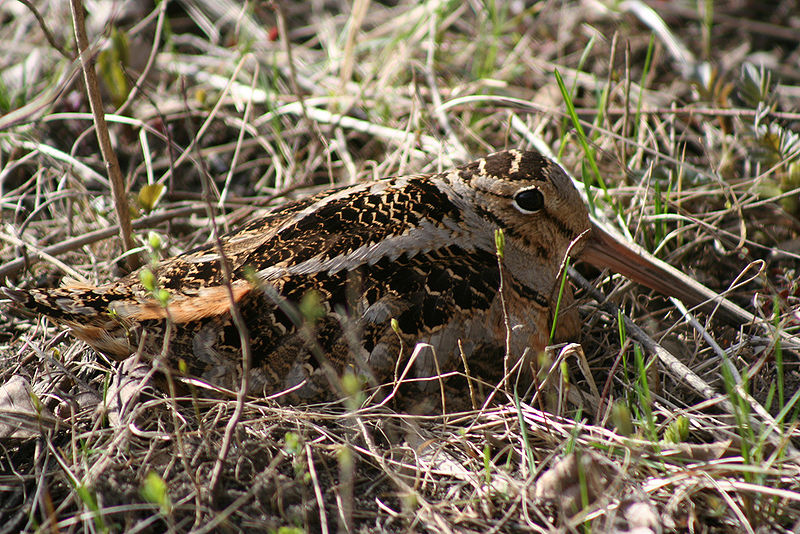
“The American Woodcock (Scolopax minor), sometimes colloquially referred to as the Timberdoodle, is a small chunky shorebird species found primarily in the eastern half of North America. Woodcocks spend most of their time on the ground in brushy, young-forest habitats, where the birds’ brown, black, and gray plumage provides excellent camouflage.
Because of the male Woodcock’s unique, beautiful courtship flights, the bird is welcomed as a harbinger of spring in northern areas. It is also a popular game bird, with about 540,000 killed annually by some 133,000 hunters in the U.S. (Ugh!)
The American Woodcock is the only species of Woodcock inhabiting North America. Although classified with the sandpipers and shorebirds in Family Scolopacidae, the American Woodcock lives mainly in upland settings. Its many folk names include timberdoodle, bogsucker, night partridge, brush snipe, hokumpoke, and becasse.
The American Woodcock has a plump body, short legs, a large, rounded head, and a long, straight prehensile bill. Adults are 10 to 12 inches (25 to 30 cm) long and weigh 5 to 8 ounces (140 to 230 g). Females are considerably larger than males.] The bill is 2.5 to 2.75 inches (6.4 to 7.0 cm) long.
The plumage is a cryptic mix of different shades of browns, grays, and black. The chest and sides vary from yellowish white to rich tans. The nape of the head is black, with three or four crossbars of deep buff or rufous. The feet and toes, which are small and weak, are brownish gray to reddish brown.[8]
Woodcock have large eyes located high in the head, and their visual field is probably the largest of any bird, 360° in the horizontal plane and 180° in the vertical plane.
The Woodcock uses its long prehensile bill to probe in the soil for food, mainly invertebrates and especially earthworms. A unique bone-and-muscle arrangement lets the bird open and close the tip of its upper bill, or mandible, while it is sunk in the ground. Both the underside of the upper mandible and the long tongue are rough-surfaced for grasping slippery prey.
In Spring, males occupy individual singing grounds, openings near brushy cover from which they call and perform display flights at dawn and dusk, and if the light levels are high enough on moonlit nights. The male’s ground call is a short, buzzy peent. After sounding a series of ground calls, the male takes off and flies from 50 to 100 yards into the air. He descends, zigzagging and banking while singing a liquid, chirping song. This high spiralling flight produces a melodious twittering sound as air rushes through the male’s outer primary wing feathers.” (Wikipedia with editing)
How Did Birds Get To Be So Smart: Are They “Feathered Apes”?
This is one of the latest articles from Answers in Genesis:
News to Know
by Dr. Elizabeth Mitchell
July 27, 2013
*
“The Term Bird Brain Is Evolving
Some birds—crows, parrots, and jays—possess problem-solving skills that rival those of mammals. Crows demonstrate impressive memory for details, even remembering for years the faces of people who annoy them. Does this represent true cognitive ability? Some birds can improvise tools—by bending a piece of wire, for instance—to get the food they want. Are they actually reasoning or just associating each step with coming closer to the goal? Are birds able to get a picture in their minds of what they want to accomplish and then reason out the steps, or are simpler stepwise “associative learning” processes involved?” … that is the beginning of the article.
Common Ostrich (Struthio camelus) Foot front at Riverbanks Zoo SC by Lee
The ostrich leaves her eggs on the ground and warms them in the dust, Forgetting that a foot may crush them or that the wild beast may trample them. She is hardened against her young ones, as though they were not hers; her labor is in vain because she has no sense of danger [for her unborn brood], For God has deprived her of wisdom, neither has He imparted to her understanding. (Job 39:14-17 AMP)
Here is one more excerpt from the ending of the article which is very interesting and worth reading:
A Better Explanation
God provides in His Word the historical account of the origin of birds, man, and all things. Furthermore, the Bible informs us that God is the one who supplies or deprives an animal of its intelligence. In particular, God takes the credit for the lack of bird-smarts in the ostrich, telling Job, “God deprived her of wisdom, and did not endow her with understanding” (Job 39:17). God also points out that He is the source of wisdom for the hawk and eagle (Job 39:26–27). Learning what makes a bird tick offers a fascinating bit of insight into the creatures our Creator designed and how their brains work.
I came across several interesting articles from Answers in Genesis that deal with changes within the species. Having just updated the pages to the I.O.C. 3.4 Version, there were several new species added. Where did they come from? Some of them were subspecies that had been elevated to a species status. At least one, was a newly discovered species. So, how do we look at this as Christians that believe in creation and not evolution?
An article from Answers asks, “Do Species Change?” by Paul Garner. It actually gave Darwin credit for realizing that there was not a fixity or immutability of species.
Before the time of Charles Darwin, a false idea had crept into the church—the belief in the “fixity” or “immutability” of species.1 According to this view, each species was created in precisely the same form that we find it today. In his famous book, On the Origin of Species, first published in 1859, Darwin set out to demolish this widespread view.
The article goes on to show how Darwin went too far. It is a very interesting article worth reading. Do Species Change?
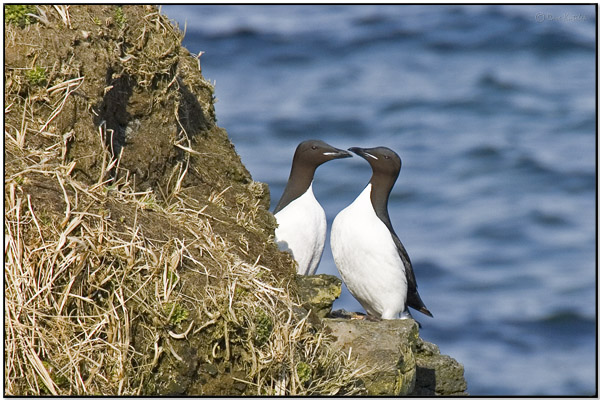
Thick-billed Murre (Uria lomvia) by Daves BirdingPix
“Seabird Study Said To Solve the Evolutionary Mystery of Flightlessness” by Dr. Elizabeth Mitchell discusses how the Penguin became flightless and use the Thick-billed Murre as a possible example. They compare the amount of energy used to swim and/or fly. “Murres, able to fly and to execute penguin-like wing-propelled dives, were the focus of the study because researchers believe their performance provides a living model of the penguin’s evolutionary past….” Also, the bone structure is discussed. I like the wrap-up by the article writer, Dr. Elizabeth Mitchell.
Yet this fact just demonstrates a great design—an ideal “form” for a diving, flying seabird—and confirms nothing about the evolutionary path of any bird, let alone the flightless penguin.
God created birds on the fifth day of Creation week about 6,000 years ago. They reproduced “after their kinds” as the Bible describes, only varying within their created kinds. Biology does not demonstrate the evolution of flight or flightlessness or the evolution of any kind of creature into a different kind.
Our Creator used His Omnipotence and His Wisdom to create the fantastic and varied creatures for us to enjoy, especially the birds. They are there in front of us all to see, observe and try to understand more about them and their development. How we look at them is where the differences in how this came about is where the creationist and evolutionist part ways.
In the beginning God created the heavens and the earth. (Genesis 1:1 NKJV)
or
For since the creation of the world His invisible attributes are clearly seen, being understood by the things that are made, even His eternal power and Godhead, so that they are without excuse, because, although they knew God, they did not glorify Him as God, nor were thankful, but became futile in their thoughts, and their foolish hearts were darkened. Professing to be wise, they became fools, and changed the glory of the incorruptible God into an image made like corruptible man—and birds and four-footed animals and creeping things. Therefore God also gave them up to uncleanness, in the lusts of their hearts… who exchanged the truth of God for the lie, and worshiped and served the creature rather than the Creator, who is blessed forever. Amen. For this reason God gave them up to vile passions. … And even as they did not like to retain God in their knowledge, God gave them over to a debased mind… (Romans 1:20-28 NKJV)
Like a flitting sparrow, like a flying swallow, So a curse without cause shall not alight. (Proverbs 26:2 NKJV)
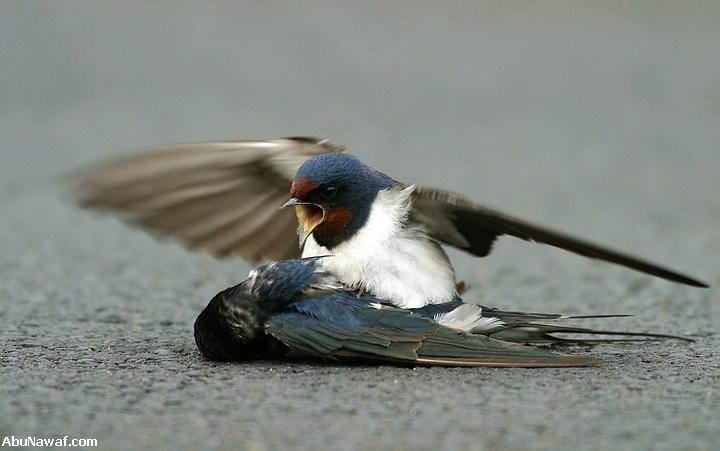
Wanted to share an article I came across about Swallows.
A recent article from the UK’s Daily Mail declared, “Swallows are evolving shorter wings because they keep getting hit by traffic.” Now, the article explains the results of a recent study from the journal Current Biology. The study examined cliff swallows, both living and dead, that build their mud nests on highway overpasses, to see if there were certain traits in swallows that favored their survival. The researchers argued that natural selection should “favor individuals that either learn to avoid cars or that have other traits making them less likely to collide with vehicles.” The study found that the swallows that survived had shorter wingspans, while the ones that died had longer wings…..”
“three enthusiastic brothers, ages 10, 11, and 13, are combining their interest in writing, creationism, and web design to launch the Virtual Creation Zoo. Their goal is to declare the glory of our Creator, and these three boys are doing it! “
God created the great sea monsters and every living creature that moves, which the waters brought forth abundantly, according to their kinds, and every winged bird according to its kind. And God saw that it was good (suitable, admirable) and He approved it. (Genesis 1:21 AMP)
Here is an interesting link to Answers in Genesis about the “beginning of birds.” It is a 5 minute video by David Menton, Ph.D.





 Lee's Birdwatching Adventures Plus