Birds of the Bible – Gleaning’s Noah and the Birds

Mourning Dove (Zenaida macroura) by Quy Tran

Mourning Dove (Zenaida macroura) by Quy Tran

And of every living thing of all flesh you shall bring two of every sort into the ark, to keep them alive with you; they shall be male and female. (Gen 6:19 NKJV)

After computer problems last week, we are back up and running. I reloaded my e-Sword on to a new SSD drive and decided to see how fast the searches would be. Zip! Searching for the word “bird” in the Reference Library, I came across these interesting thoughts from “Gleanings In Genesis” by Arthur W. Pink

Noah, as a Type of Christ, is being discussed in this section and the reference to caring for the birds and animals of course caught my “birdwatching eye.”

From Gleanings in Genesis, Chapter 12, Noah A Type of Christ (excerpt):

“9. The successful issue of Noah’s work, seen in “the saving of his house” (Hebrews_11:7) reminds us of the language of Hebrews_3:6, “But Christ as a son over his own house” (Hebrews_3:6). But the type goes further: Noah’s work brings blessing to all creation as is seen from the fact that the animals and birds were also preserved in the ark. Observe how beautifully this is brought out in Genesis_8:1 —”And God remembered Noah, and every living thing, and all the cattle that was with him in the ark.” So, too, the work of Christ shall yet bring blessing to the beasts of the field. At His return to the earth “the creation itself also shall be delivered from the bondage of corruption into the glorious liberty of the children of God” (Romans_8:21).

Spotted Nightingale-Thrush (Catharus dryas) ©WikiC

Spotted Nightingale-Thrush (Catharus dryas) ©WikiC

10. In Genesis_6:19 we have a hint of the animal creation being subject to Noah “And of every living thing of all flesh, two of every sort shalt thou bring into the ark, to keep them alive with thee.” We have a passing glimpse of the yet future fulfillment of this part of the type in Mark_1:13 —”And He was there in the wilderness forty days tempted of Satan; and was with the wild beasts.” Noah’s headship over all creatures comes out even more clearly in Genesis_9:2 —”And the fear of you and the dread of you shall be upon every beast of the earth, and upon every fowl of the air, upon all that moveth upon earth, and upon all the fishes of the sea; into your hand are they delivered.” How this reminds us of Psalm 8, which speaks of the future dominion of the Son of Man. “For Thou hast made Him a little lower than the angels, and hast crowned Him with glory and honor. For thou madest Him to have dominion over the works of Thy hands; Thou hast put all things under His feet (compare Hebrews_2:8), “But now we see not yet all things put under Him, all sheep and oxen, yea, and the beasts of the field; the fowl of the air and the fish of the sea!” This same thought is repeated in the Genesis narrative again and again as if with deliberate emphasis. When we read of the animals entering the Ark we are told “They went in unto Noah (not unto Noah and his family) into the Ark,” and then we are told “And the Lord shut him (not ‘them’) in” (Genesis_7:15-16). And again, on leaving the ark we read that God said unto Noah, “Every moving thing that liveth shall be meat for you; even as the green herb have I given you all things” (Genesis_9:3). So Christ is “the Heir of all things” (Hebrews_1:2).

Interesting House Finch at feeder

Interesting House Finch at feeder

11. In Gen_6:21 we find Noah presented as the great food-provider: “And take thou unto thee of all food that is eaten, and thou shalt gather it to thee; and it shall be for food for thee, and for them.” We need hardly say that this finds its complement in Christ the Bread of Life. He is God’s Manna for our souls. He is the Shewbread which was eaten by Aaron and his sons (Leviticus_24:9). He is the Old Corn of the land (Joshua_5:11). In short, it is only as we feed upon Christ as He is presented unto us in the written Word that our spiritual life is quickened and nourished.

He does great things past finding out, Yes, wonders without number. (Job 9:10 NKJV)

We have a wonderful Creator, Sustainer and Saviour in the Lord Jesus Christ. Through the use of “Types,” like Noah, and illustrations with birds and other objects, it helps us better understand many things that are beyond our grasp or understanding at times.

(Spelling of Books and bolding are mine.)

See:

Birds of the Bible

Gospel Presentation

*

Birds Of The Bible – Clinging Birds

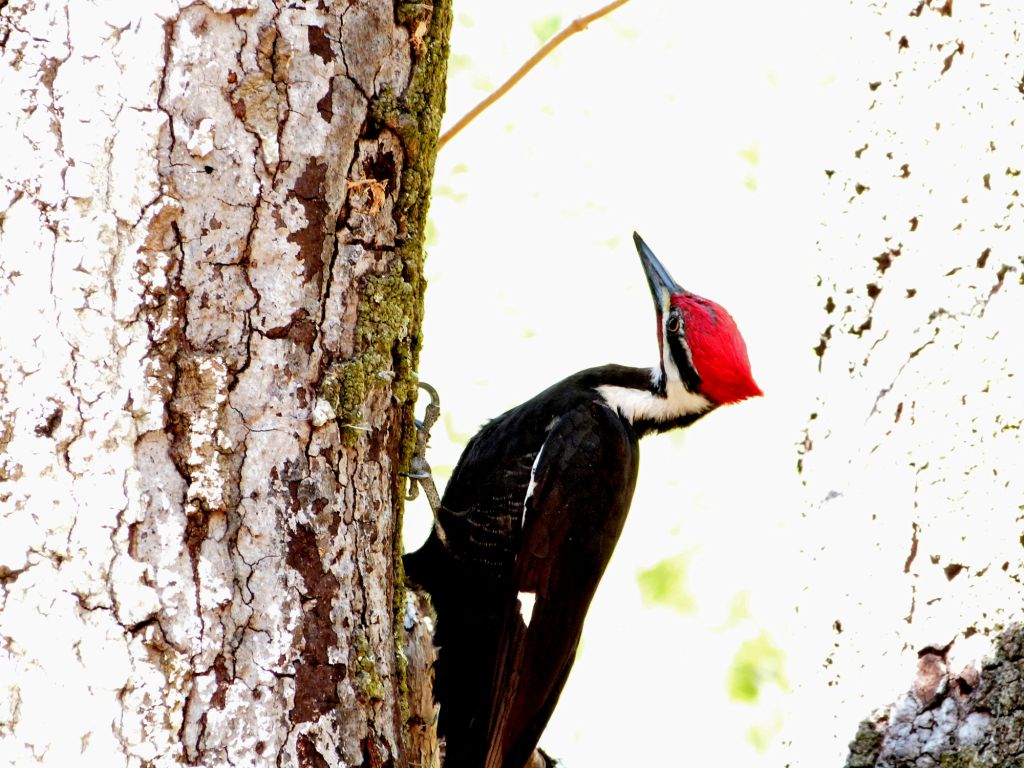
Pileated Woodpecker by Lee

Pileated Woodpecker at Circle B by Lee

But you are to cling to the LORD your God, as you have done to this day. (Joshua 23:8 NASB)

While finishing the last two chapters of Joshua, I came across the verse above. I immediately pictured a Woodpecker “clinging” to a tree. Then the following picture also came to mind. What can we learn about our “clinging birds” and us “clinging to the Lord”?

Brown-headed Barbet (Megalaima zeylanica) by Nikhil Devasar

Brown-headed Barbet (Megalaima zeylanica) by Nikhil Devasar

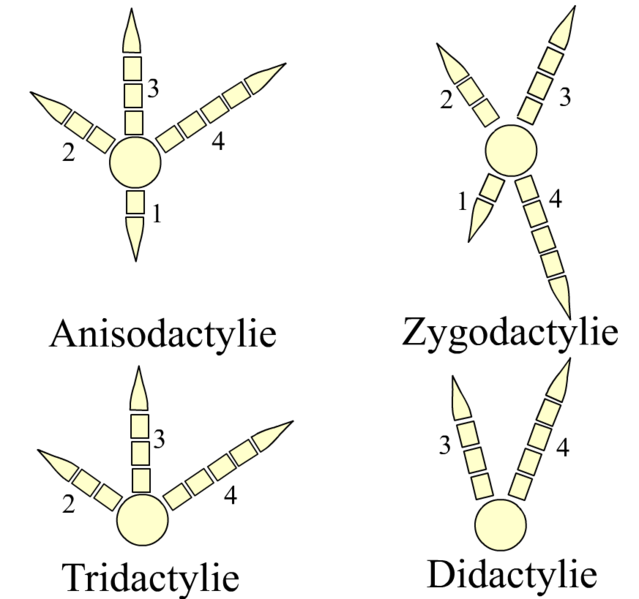
Woodpeckers were created with an ability to cling to trees with the help of the way the toes are arranged on their feet. They also use their stiffened tail feathers to keep them on the tree.”Woodpeckers, piculets and wrynecks all possess zygodactyl feet. Zygodactyl feet consist of four toes, the first (hallux) and the fourth facing backward and the second and third facing forward. This foot arrangement is good for grasping the limbs and trunks of trees. Members of this family can walk vertically up a tree trunk, which is beneficial for activities such as foraging for food or nest excavation. In addition to the strong claws and feet, woodpeckers have short strong legs. This is typical of birds that regularly forage on trunks. The tails of all woodpeckers except the piculets and wrynecks are stiffened, and when the bird perches on vertical surfaces, the tail and feet work together to support it.” (Wikipedia)

Bird Feet ©WikiC

Bird Feet ©WikiC

The following video from explorationfilm has information about the feet and tail of Woodpeckers at the beginning. The rest of the video is very interesting also.

*

*

Other birds also, like the Barbets can do some clinging also. “Nine families of largely arboreal birds make up the order Piciformes, the best-known of them being the Picidae, which includes the woodpeckers and close relatives. The Piciformes contain about 67 living genera with a little over 400 species, of which the Picidae (woodpeckers and relatives) make up about half.

In general, the Piciformes are insectivorous, although the barbets and toucans mostly eat fruit and the honeyguides are unique among birds in being able to digest beeswax (although insects make up the bulk of their diet). Nearly all Piciformes have parrot-like zygodactyl feet—two toes forward and two back, an arrangement that has obvious advantages for birds that spend much of their time on tree trunks. An exception are a few species of three-toed woodpeckers. The jacamars aside, Piciformes do not have down feathers at any age, only true feathers. They range in size from the Rufous Piculet at 8 centimetres in length, and weighing 7 grams, to the Toco Toucan, at 63 centimetres long, and weighing 680 grams. All nest in cavities and have altricial young.” (Wikipedia)

Short-toed Treecreeper (Certhia brachydactyla) ©WikiC

Short-toed Treecreeper (Certhia brachydactyla) ©WikiC

Another group of birds that “cling” are the Tree Creepers. Treecreepers measure from 12 to 18 centimetres in length. Their bills are gently down-curved and rather long, used for probing bark for insects and spiders. They often climb up tree trunks in a helical path, hopping with their feet together; their toes are long and tipped with strongly curved claws for gripping. The longer tails of the Certhia treecreepers are stiffened to use as a prop while climbing, but those of the Spotted Creeper are shorter and not stiffened. Their songs and calls are thin and high-pitched.

Most species of treecreeper occur in the Palearctic and Indomalaya ecozones, from Western Europe to Japan and India. One species occurs in North America from Alaska to Nicaragua and another has a discontinuous distribution in sub-Saharan Africa and India. All species of treecreeper are found in forest and woodland habitats. The more northerly species are partly migratory, and those found in warmer climates are thought to be resident, although information is lacking for many species.

Brown-headed Nuthatch (Sitta pusilla) ©WikiC

Brown-headed Nuthatch (Sitta pusilla) ©WikiC

One more well-known bird that clings to trees is the Nuthatch. Not only does he cling, but goes up and down the trees head first. Nuthatches are compact birds with short legs, compressed wings, and square 12-feathered tails. They have long, sturdy, pointed bills and strong toes with long claws.

We know birds can cling, how about us? When I searched the KJV on my e-Sword, the word “cling” did not show up in any verses. Switching to the NASB, which I had been reading, “cling” was found in fourteen (14) verses. Here are some of them:

You shall fear the LORD your God; you shall serve Him and cling to Him, and you shall swear by His name. “He is your praise and He is your God, who has done these great and awesome things for you which your eyes have seen. (Deuteronomy 10:20-21 NASB)

Blond-crested Woodpecker (Celeus flavescens) ©WikiC

Blond-crested Woodpecker (Celeus flavescens) ©WikiC

You shall follow the LORD your God and fear Him; and you shall keep His commandments, listen to His voice, serve Him, and cling to Him. (Deuteronomy 13:4 NASB)

Northern Flicker (Colaptes auratus) Red-shafted ©WikiC

Northern Flicker (Colaptes auratus) Red-shafted ©WikiC

I have chosen the faithful way; I have placed Your ordinances before me. I cling to Your testimonies; O LORD, do not put me to shame! I shall run the way of Your commandments, For You will enlarge my heart. (Psalms 119:30-32 NASB)

White-barred Piculet (Picumnus cirratus) ©©LeeKip

White-barred Piculet (Picumnus cirratus) ©©LeeKip

Let love be without hypocrisy. Abhor what is evil; cling to what is good. Be devoted to one another in brotherly love; give preference to one another in honor;
(Romans 12:9-10 NASB)

These are all great ways we can CLING to the Lord.

The word cling is translated several ways in our original verse:

But you are to cling to the LORD your God, as you have done to this day. (Joshua 23:8 NASB)

KJV – But cleave unto the LORD your God
AKJV – But hold to the LORD your God
BBE – But be true to the Lord your God
Bishops – But sticke fast vnto the Lorde your God,
CEV – Be as faithful to the LORD
ERV – You must continue to follow the LORD your God
GW – But you must be loyal to the LORD your God
MSG – Hold tight to GOD, your God
NET – But you must be loyal to the LORD your God

KJV+ – But cleave H1692
H1692
דּבק
dâbaq
daw-bak’
A primitive root; properly to impinge, that is, cling or adhere; figuratively to catch by pursuit: – abide, fast, cleave (fast together), follow close (hard, after), be joined (together), keep (fast), overtake, pursue hard, stick, take.

They are all good words and may we learn to “cling” to our Lord, just as the birds “cling” to the trees.

“But ask the animals — they will teach you — and the birds in the air — they will tell you; (Job 12:7 CJB)

O taste and see that the LORD is good: blessed is the man that trusteth in him. (Psalms 34:8 KJV)

*

See also:

Birds of the Bible

PICIFORMES – Woodpeckers and Allies

Picidae (woodpeckers and relatives)

Certhiidae – Treecreepers

Sittidae – Nuthatches

*

Bible Birds – Hawk Migration

Sharp-shinned Hawk (Accipiter striatus) ©USFWS

Sharp-shinned Hawk (Accipiter striatus) ©USFWS

Is it by your understanding that the hawk soars and spreads his wings toward the south? (Job 39:26 ESV)

Job was being asked by the Lord if he knew how and why the Hawk knows that it needs to go south for the winter. The Lord is smarter than we are and when He created the birds, He gave them instincts (knowledge) to do certain tasks. He put within the Hawks and other birds that migrate (travel to other areas) the knowledge of when and where to go.

Why do they migrate? There are various reasons why they travel, many great distances, for the winter or summer. The weather turns cold in the northern part of the world (northern hemisphere) in the winter and many birds cannot survive in really cold weather. In the summer, those birds go back north, because it gets cold down where they spent the winter. (The seasons are reversed in the northern and southern hemispheres.) So, some birds just keep going north and south each year so they can live in warm weather.

Other birds move around or migrate because their food supply ends and they go to the next area to be able to feed themselves. The Lord promised the birds and animals to provide for them, but He does not “spoon-feed” them. They have to go where He has provided for them.

And to all the animals on the earth and to every bird of the air and to everything that creeps on the ground–to everything in which there is the breath of life–I have given every green plant for food. And it was so. (Genesis 1:30 AMP)

A tree in Daniel has this promise given about it:

Its leaves were fair and its fruit abundant, and in it was food for all. The living creatures of the field found shade under it, and the birds of the sky dwelt in its branches; and all flesh was fed from it.  (Daniel 4:12 AMP)

Crane Hawk (Geranospiza caerulescens) ©WikiC

Crane Hawk (Geranospiza caerulescens) ©WikiC

Look at the birds of the air; they neither sow nor reap nor gather into barns, and yet your heavenly Father keeps feeding them. Are you not worth much more than they? (Matthew 6:26 AMP)

Those are very good promises by the Lord, the Creator, that He will provide for them. That last verse also gives you and I the promise that He will also provide for us, because we are worth more. He loves us and has given us much more. See The Wordless Birds.

We will tell more things about the Hawks in other Bible Bird – Hawks articles.

See Also:

*

Birds of the Bible – Hawks and Wisdom

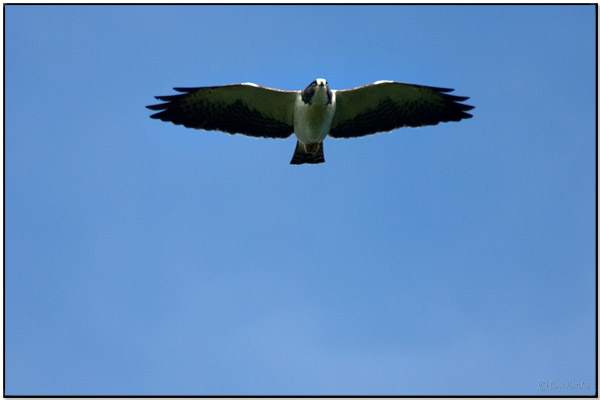
Short-tailed Hawk (Buteo brachyurus) by Daves BirdingPix

Short-tailed Hawk (Buteo brachyurus) by Daves BirdingPix

Is it by your wisdom [Job] that the hawk soars and stretches her wings toward the south [as winter approaches]? (Job 39:26 AMP)

In the Birds of the Bible – Hawk Migration, written in 2008, this verse was introduced. Job was being addressed and the questions started coming:

THEN THE Lord answered Job out of the whirlwind and said, Who is this that darkens counsel by words without knowledge? [Job 35:16.] Gird up now your loins like a man, and I will demand of you, and you declare to Me. (Job 38:1-3 AMP)

Questions of Where…?; Who…?; When…?; Have you commanded…, explored…, entered…?; Can you …?; Do you…? etc. These question run all through Job 38 and 39. That is where we find our question about the hawk.

Sharp-shinned Hawk (Accipiter striatus) ©USFWS

Sharp-shinned Hawk (Accipiter striatus) ©USFWS

Commentary Quotes on Job 39:26 (From my e-Sword)

Barnes – “Doth the hawk fly by thy wisdom – The appeal here is to the hawk, because it is among the most rapid of the birds in its flight. The particuIar thing specified is its flying, and it is supposed that there was something special in that which distinguished it from other birds. Whether it was in regard to its speed, to its manner of flying, or to its habits of flying at periodical seasons, may indeed be made a matter of inquiry, but it is clear that the particular thing in this bird which was adapted to draw the attention, and which evinced especially the wisdom of God, was connected with its flight. The word here rendered “hawk,” (נץ nêts) is probably generic, and includes the various species of the falcon or hawk tribe, as the jet-falcon, the goshawk, the sparrow, hawk, the lanner, the saker, the hobby, the kestril, and the merlin. Not less than one hundred and fifty species of the hawk, it is said, have been described, but of these many are little known, and many of them differ from others only by very slight distinctions.

They are birds of prey, and, as many of them are endowed with remarkable docility, they are trained for the diversions of falconry – which has been quite a science among sportsmen. The falcon, or hawk, is often distinguished for fleetness. One, belonging to a Duke of Cleves, flew out of Westphalia into Prussia in one day; and in the county of Norfolk (England) one was known to make a flight of nearly thirty miles in an hour. A falcon which belonged to Henry IV. of France, having escaped from Fontainebleau, was found twenty-four hours after in Malta, the space traversed being not less than one thousand three hundred and fifty miles; being a velocity of about fifty-seven miles an hour, on the supposition that the bird was on the wing the whole time. It is this remarkable velocity which is here appealed to as a proof of the divine wisdom. God asks Job whether he could have formed these birds for their rapid flight. The wisdom and skill which has done this is evidently far above any that is possessed by man.

And stretch her wings toward the south – Referring to the fact that the bird is migratory at certain seasons of the year. It is not here merely the rapidity of its flight which is referred to, but that remarkable instinct which leads the feathered tribes to seek more congenial climates at the approach of winter. In no way is this to be accounted for, except by the fact that God has so appointed it. This great law of the winged tribes is one of the clearest proofs of divine wisdom and agency.”

Grey Goshawk ( novaehollandiae) by Ian 1

Grey Goshawk ( novaehollandiae) by Ian

Pulpit Commentary – ” Doth the hawk fly (or, soar) by thy wisdom? The hawk”s strength of wing is extraordinary, and one of the greatest of natural marvels. Can Job claim to have contrived it? Many as have been the attempts made, human ingenuity has not yet devised anything that can fly. And stretch her wings toward the south? Migrate, i.e. , when winter approaches, to the warmer southern regions. Few things in nature are more remarkable than the instinct of migratory birds.

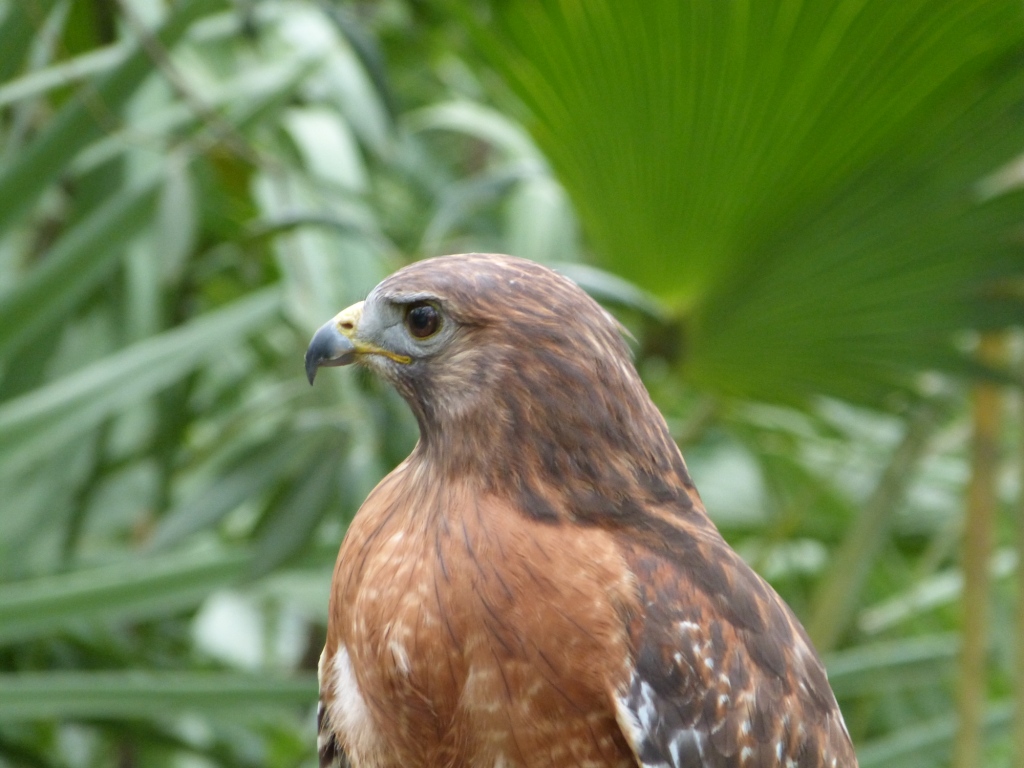
Red Sholdered Hawk by Ray

Red Sholdered Hawk by Ray

Matthew Henry – “All these beautiful references to the works of nature, should teach us a right view of the riches of the wisdom of Him who made and sustains all things. The want of right views concerning the wisdom of God, which is ever present in all things, led Job to think and speak unworthily of Providence.

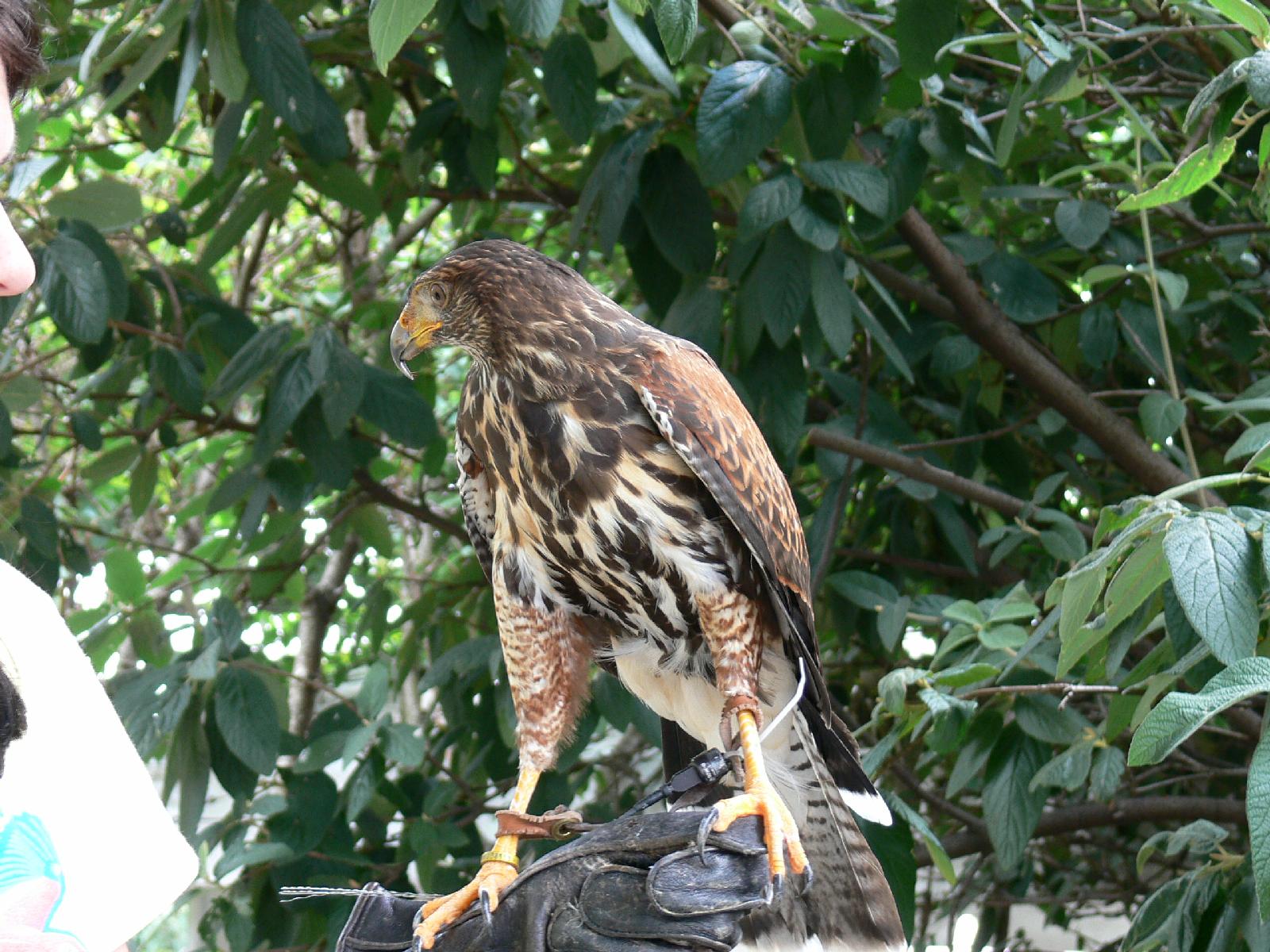
Harris's Hawk at NA by Lee

Harris’s Hawk at National Aviary by Lee

Wesley – Fly – So strongly, constantly, unweariedly, and swiftly. South – At the approach of winter, when wild hawks fly into warmer countries, as being impatient of cold. The birds of the air are proofs of the wonderful providence of God, as well as the beasts of the earth. God instances in two stately ones.

Red-shouldered Hawk (Buteo lineatus) Brevard Zoo by Lee

Red-shouldered Hawk (Buteo lineatus) Brevard Zoo by Lee

Lange – “… If even the book of nature transcends our ability to decipher it fully, how much more incomprehensible and mysterious will the book of Holy Scripture be for us.—von Gerlach: The fundamental thought of these representations which God here puts forth is that only He who can create and govern all things, who superintends everything and adjusts all things in their relation to each other, can also comprehend the connection of human destinies. Inasmuch however as feeble short-sighted man cannot understand and fathom the created things which are daily surrounding him, how can he assume to himself any part of God’s agency in administering the universe?”

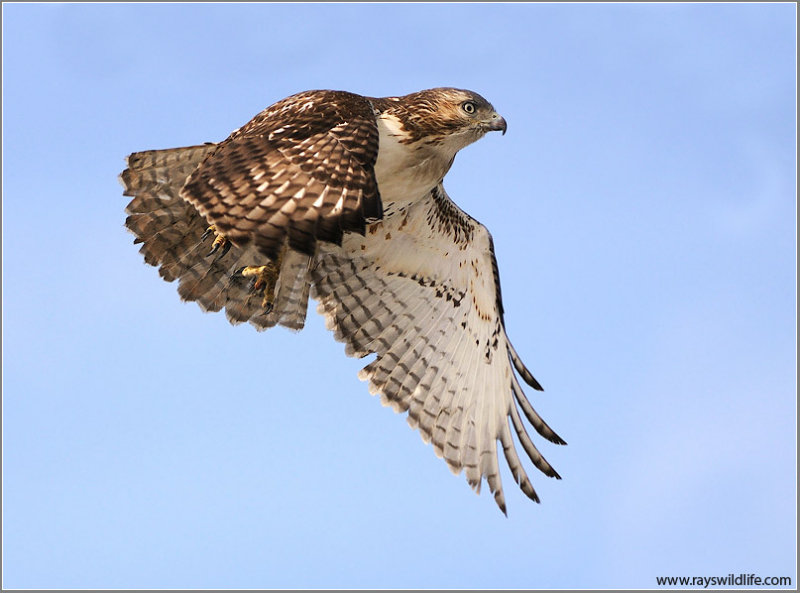
Red-tailed Hawk by Ray

Red-tailed Hawk by Ray

Believers Bible Commentary – “39:26-30 Did Job give wisdom to the hawk to migrate south? And was he the one who taught the eagle to fly, to nest on the high rocky crag, to spy out carrion from a great distance, and to train its young ones to find their food?”

Red-backed Hawk - Argentina

Red-backed Hawk – Argentina

Biblical Illustrator – “The higher teaching of Nature The intent of all these beautiful references to the works of Nature is to teach us, from the wisdom, skill, and curious designs discoverable in the formation and the instincts of various birds and beasts, to impress ourselves with a worthy notion of the “riches of the wisdom” of Him that made and sustaineth all things. These impressions we are to carry with us when we consider the dealings of God in the way of Providence, and in His ordering of all events, as the great Governor of the universe. Can we suppose that there is anything wrong here, or without the design of the most consummate wisdom, when He has put forth so much of His skill and contrivance in the formation and ordering of these inferior animals? May He not be trusted to do all things well, concerning the destiny of man, the greatest of His works? In this higher economy, are we to suppose there is less wisdom and design to be manifested, than in this, which displays itself so visibly in these inferior works of His hand? Thus would our blessed Lord increase the confidence of His disciples in His providential care of them, by observing, “Are not two sparrows sold for a farthing, and not one of them falleth to the ground without your Father?” “Fear not,” “are ye not much better than they?—of more value than many sparrows.” It was the want of such due impressions concerning the designing wisdom of God, ever present, and ever operating in all things, that had led Job to think and speak unworthily of that dispensation of Providence under which he now lived, as being altogether arbitrary, discovering no design and discriminating wisdom, nor manifesting the righteous Governor of all things….”

If any of you lack wisdom, let him ask of God, that giveth to all men liberally, and upbraideth not; and it shall be given him. (James 1:5 KJV)

My the Lord continue his blessings as we observe His Wisdom through the birdwatching of His Hawks.

See also:

*

Updated: The Bible Bird Owls Page

Just finished the Bible Birds – Owls page. A Photo gallery and some Fun Facts were added.

This slideshow requires JavaScript.


Bible Birds are the Birds of the Bible Birds written with to Younger Folks and those who are “Young at Heart”. As other pages are updated, a post will announce them also.

*

How Did Birds Get To Be So Smart? (Excerpt)

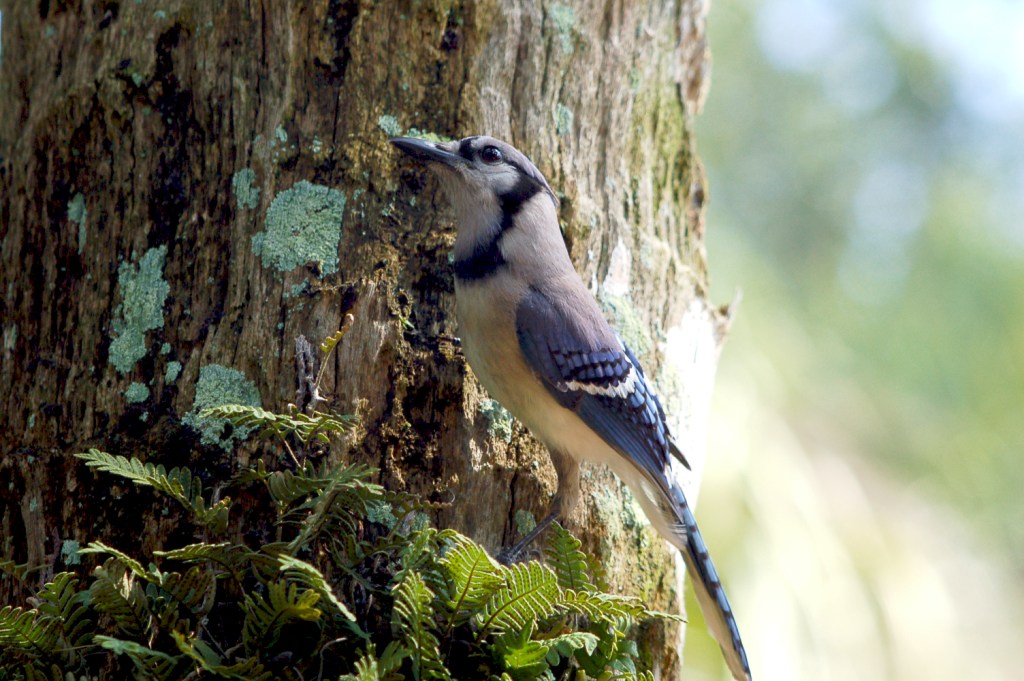
Blue Jay at Bok Tower by Dan's Pix

Blue Jay II at Bok Tower by Dan’s Pix

How Did Birds Get To Be So Smart: Are They “Feathered Apes”?

This is one of the latest articles from Answers in Genesis:

News to Know

by Dr. Elizabeth Mitchell

July 27, 2013

*

“The Term Bird Brain Is Evolving

Some birds—crows, parrots, and jays—possess problem-solving skills that rival those of mammals. Crows demonstrate impressive memory for details, even remembering for years the faces of people who annoy them. Does this represent true cognitive ability? Some birds can improvise tools—by bending a piece of wire, for instance—to get the food they want. Are they actually reasoning or just associating each step with coming closer to the goal? Are birds able to get a picture in their minds of what they want to accomplish and then reason out the steps, or are simpler stepwise “associative learning” processes involved?” … that is the beginning of the article.

Common Ostrich (Struthio camelus) Foot at Riverbanks Zoo SC by Lee

Common Ostrich (Struthio camelus) Foot front at Riverbanks Zoo SC by Lee

The ostrich leaves her eggs on the ground and warms them in the dust, Forgetting that a foot may crush them or that the wild beast may trample them. She is hardened against her young ones, as though they were not hers; her labor is in vain because she has no sense of danger [for her unborn brood], For God has deprived her of wisdom, neither has He imparted to her understanding. (Job 39:14-17 AMP)

Here is one more excerpt from the ending of the article which is very interesting and worth reading:

A Better Explanation

God provides in His Word the historical account of the origin of birds, man, and all things. Furthermore, the Bible informs us that God is the one who supplies or deprives an animal of its intelligence. In particular, God takes the credit for the lack of bird-smarts in the ostrich, telling Job, “God deprived her of wisdom, and did not endow her with understanding” (Job 39:17). God also points out that He is the source of wisdom for the hawk and eagle (Job 39:26–27). Learning what makes a bird tick offers a fascinating bit of insight into the creatures our Creator designed and how their brains work.

See the whole artice – CLICK HERE.

*

Plus

*

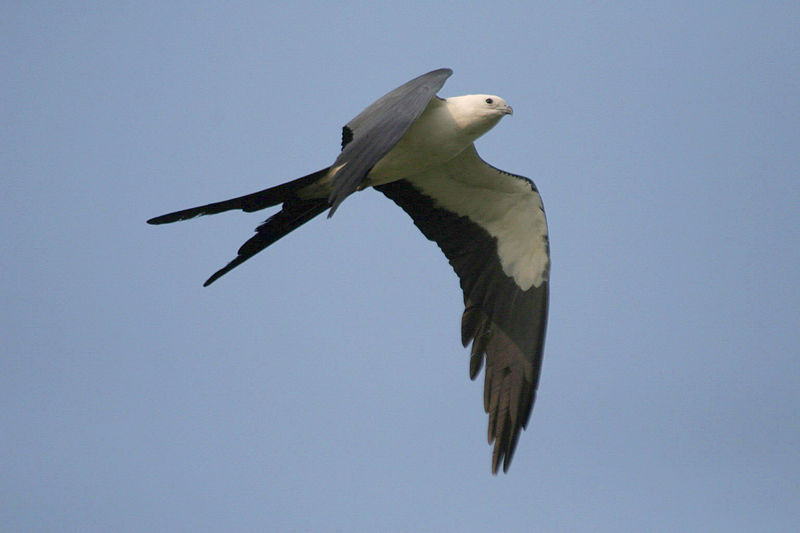
Birds Of The Bible – Swallow-tailed Kites

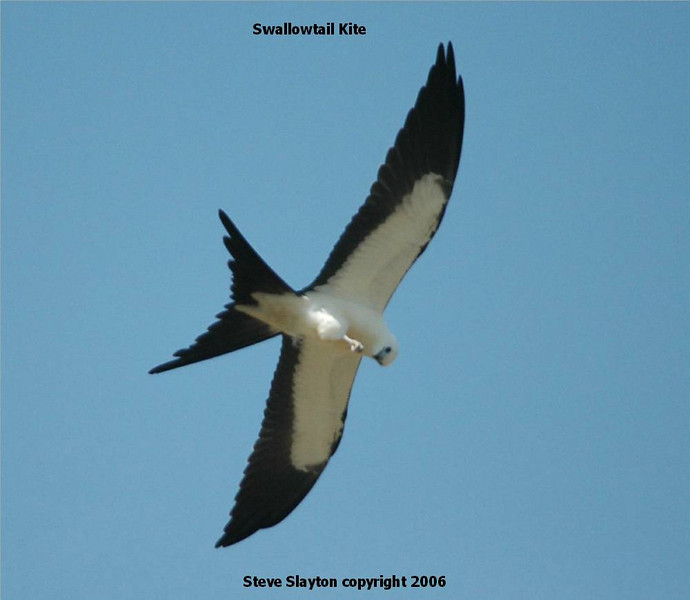
Swallow-tailed Kite by S Slayton

Swallow-tailed Kite by S Slayton

and the red kite, the falcon, and the kite in their kinds, (Deuteronomy 14:13 NASB)

In the Birds of the Bible – Hidden Covenant Part 3, I mistakenly placed this photo of a Swallow-tailed Kite instead of a Swallow. I have since fixed my mistake. A J was talking about the Swallows observing the time of their coming and he used Jeremiah 8:7.

Even the stork in the heavens Knows her appointed times; And the turtledove, the swift, and the swallow Observe the time of their coming. But My people do not know the judgment of the LORD. (Jeremiah 8:7 NKJV)

The reason I mixed them up is because right now, in this area, the Swallow-tailed Kites are being spotted. I have seen a single one three times and just the other day, Dan and I had two of them skim over the top of trees, right in front of us. They have been in the area for a month or so, and soon they will move on again. They “Observe the time of their coming.” Thus the mistake on my part.

They may be one of the Birds of Prey, but they were beautifully created by the Lord. They are so graceful and enjoyable to watch. I am always amazed at the Creator’s use of such variety in the birds and in all the other neat things around us.

Who is like You, O LORD, among the gods? Who is like You, glorious in holiness, Fearful in praises, doing wonders? (Exodus 15:11 NKJV)

According to the Audubon WatchList, “Two subspecies found in the Americas. Northern subspecies (Elanoides forficatus forficatus) breeds in small sections of seven southeastern U.S. states and in southern Mexico. Members of this group migrate to South America in the late summer. Southern subspecies (Elanoides forficatus yetapa) found through much of South America. The estimated U.S. population of approximately 10,000 birds now breeds in fragmented populations from South Carolina south to Florida and west to Louisiana/Texas border with largest known populations in northern Florida. Formerly bred north to Minnesota and west through Texas to Mexico. Significant populations remain in Florida and along the Pascagoula River in Mississippi.”

I really enjoy seeing these Kites because you just have to be looking in the right direction at the right time. Every time they have been spotted by us, they just sort of “appear” over the tops of the trees. They skim so low, that when they come over you, you either see them or you don’t.

Kites are of course one of our Birds of the Bible – (Glede and Kites). They are mentioned twice in Scripture in the list of “unclean” birds in Leviticus 11:14 and Deuteronomy 14:13. Each time “after its kind” is given. So, our Swallow-tailed Kite is one of those kinds and would like to introduce you to this amazing bird that is so neat to watch flying. When they spread that tail of theirs, it is just super neat.

Swallow-tailed Kite (Elanoides forficatus) ©Wikipedia

Swallow-tailed Kite (Elanoides forficatus) ©Wikipedia

(Sounds from xeno-canto)

The Swallow-tailed Kite is a member of the Accipitridae Family (Kites, Hawks & Eagles) Family in the Order Accipitriformes. They are considered Abundance Common according the Thayer Birding software.

They are 24 inches (60 cm) with a very long black forked tail, white head, chest, belly and leading portion of underwing. Their flight feathers are black and their back is also black.

They are a medium-sized, graceful, long-winged, long-tailed hawk with pointed wings, a short, dark, hooked bill. The males and females are similar.

Adults have a long, deeply forked tail. white head, neck, chest, underwing coverts, belly, and undertail coverts, a slate gray back and upperwings, black tail and flight feathers. Whereas the immature is duller than adult with fine streaks on head and breast and has a shorter, less deeply-forked tail than adult.

Thayer also says of their habitat and behavior – ” Wet open woodlands, bottomlands, wooded river swamps, marshes, wetlands, and along rivers, ponds and lakes. Agile and graceful in flight. Eats in flight by bending head and neck under body to eat prey held in talon. Will drink in flight, much like a swallow. Gregarious. Will sweep low over open fields and grasslands to catch food or soar very high for flying insects.”

Swallow-tailed Kite (Elanoides forficatus) by Africaddict

Swallow-tailed Kite (Elanoides forficatus) by Africaddict

The Swallow-tails like to breed in “Lowland forest, especially swampy areas extending into open woodland. 1 brood. Mating system is monogamous. Displays are In flight: easy sailing, curving chase often over water. On perch: mutual approach on horizontal limb, face-off, female quickly turns or backs under limb. They also do courtship feeding.

The nest is usually in treetop concealed by thick foliage and they place it on a foundation of preceding year’s nest. It consist of sticks, twigs, moss, pine needles, leaves, lichen. Lined with fine materials, few feathers. Both sexes help with nest construction.

The eggs are white, marked with browns, occasionally lavender, often concentrated at end. 1.8” (47 mm). Both sexes incubate.  with Incubation taking 28 days. Development is semialtricial (immobile, downy, eyes open, fed). Young are able to fly after 36-42 days. Both sexes tend young.

The spend their winters from Colombia and Venezuela S. Marsh drainage, deforestation, and shooting are responsible for reduction in population and range.

Miscellaneous notes; Occasionally nest in loose colonies of a few pairs. Bathe and drink by skimming water surface like swallow. Occasionally soar at great heights. Up to 200 pieces used in nest, carried individually, may require up to 800 miles of flight. Formerly known as American Swallow-tailed Kite; changed by AOU in 1996.

From Thayer Birding Software, The Birder’s Handbook, Wikipedia, and other internet sources.

See also:

*

Birds of the Bible – The Hidden Covenant – Intro

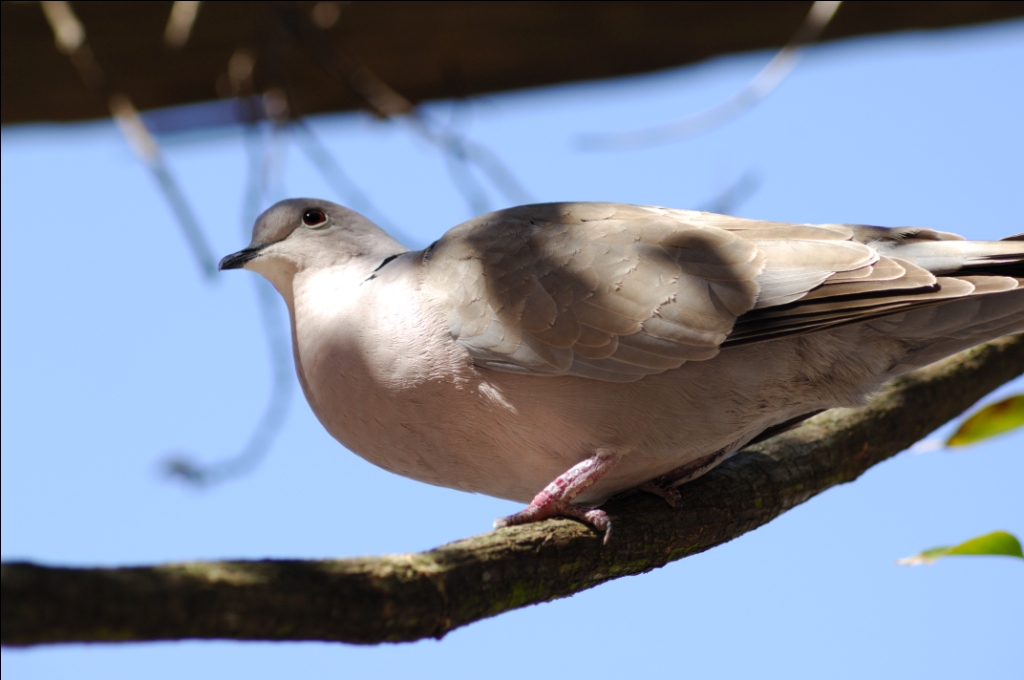
Eurasian Collared Dove (Streptopelia decaocto) by Dan

Eurasian Collared Dove (Streptopelia decaocto) by Dan

(The first of a three part article.)


The Hidden Covenant

“Berith” the Hebrew word for covenant means “a coming together” in English, appears 280 times in the Bible. Covenants may include a treaty, agreement, mutual understanding, pact, deal, alliance, pledge, promise and so on. Marriage is a covenant between two individuals. Treaty is a covenant between two states or nations. The Last will that is written by an ailing individual to pass on his /her property to his surviving spouse or children is also a covenant. We are bound by so many covenants in our everyday life. Housing and vehicle loans, debit and credit cards, driving license are all covenants.

Though each one of us is bound by a direct or an indirect covenant with an individual, an organization or a government, we long for God to make a covenant with us. Bible shows us so many covenants between individuals, kings and between leaders of a group of men; but the covenants that God made with individuals and a group of individuals are the ones which were widely meditated, preached and written about.

Somewhere down the line, over centuries after centuries after centuries, there is one covenant that was either unintentionally hopped or deliberately overlooked. This covenant may look irrelevant and immaterial, trivial and trifling; but an in-depth study of this covenant would unveil a big secret that God has for the peace and tranquility of the whole universe.

That “Berith – Covenant” is as follows…

“And in that day will I make a covenant for them with the beasts of the field, and with the fowls of heaven, and with the creeping things of the ground: and I will break the bow and the sword and the battle out of the earth, and will make them to lie down safely.” Hosea 2:18

When does God make a covenant with them?

Why would God want to make a covenant with the beasts of the field, with the fowls of the air and with the creeping things of the ground?

How could a covenant with wildlife break the bow and the sword and the battle out of the earth?

Is it possible for a covenant with wildlife, help us lie down safely?

These were the queries that rose from my mind when I read the above verse from Hosea. While I was pondering over this attention-grabbing episode of God, He slowly unraveled the crucial presence of wildlife, not just for food and clothing but for the survival of mankind as a whole.

Sitting on the balcony one morning, trying hard to gulp those recent unpleasant happenings along with her morning coffee, watching a squirrel jump from a coconut tree to a custard apple tree like a seasoned pro, my wife probed, “God could have created us like these animals. Why should we suffer like this? See how they enjoy life” Just as she was lamenting, I felt God say, “They are sinless, whereas man was born of sin”

I thought this conversation not only opened avenues of thought but also made sense on this new covenant that God uncovered a few days back. Ever since God clothed Adam and Eve with animal skin and accepted the sacrifice of Abel. God did express how imperative animals and birds are in His creation. Abel knew that there is no redemption without shedding blood. So he chose from the best among wildlife and sacrificed. And we all know how God accepted his sacrifice and rejected the sacrifice of Cain.

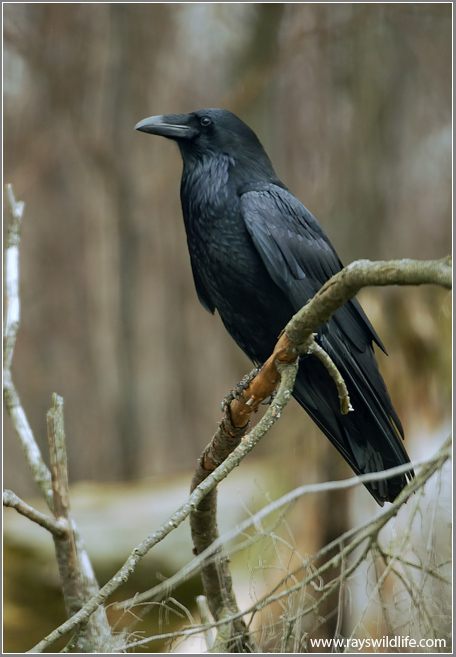
Northern Raven (Corvus corax) by Ray

Northern Raven (Corvus corax) by Ray

Noah also had to seek the help of birds to get the weather report after the flood isn’t it? And God made a covenant with Noah but not before he sacrificed from every clean beast and from every clean animal. Remember, if not for the beasts and birds God wouldn’t have placed the beautiful rainbow in the sky. If not for rainbow, we wouldn’t have studied prism in school.

God also taught Moses and Aaron, His appointed servants. about how to sacrifice, when to sacrifice and what to sacrifice. God gave them a list of clean animals and birds for sacrifice. In fact birds were sacrificed when Jesus was brought to the temple of Jerusalem after the days of purification.

“And when eight days were accomplished for the circumcising of the child, his name was called Jesus, which was so named of the angel before he was conceived in the womb.

And when the days of her purification according to the law of Moses were accomplished, they brought him to Jerusalem, to present him to the Lord;

(As it is written in the law of the Lord, Every male that openeth the womb shall be called holy to the Lord;)

And to offer a sacrifice according to that which is said in the law of the Lord, A pair of turtledoves, or two young pigeons.” Luke 2:21-24

The birds seem to have handed over the entry ticket for the Creator when He entered the temple of Jerusalem for the first time is His life on earth.

So? Does it mean that only clean beasts and birds are sinless? I thought.  If it is so, why should God send an unclean raven to feed Prophet Elijah? I wondered. Anyway, there should be a strong central theme for God to make a covenant with the beasts and the birds instead of man, whom He created in His own image.

Birds of the Bible – The Hidden Covenant ~ by A J Mithra

See:

Birds of the Bible – The Hidden Covenant – Part 2

Birds of the Bible – The Hidden Covenant – Part 3

Birds of the Bible

*

Yours in YESHUA,

a j mithra

Please visit us at:

*

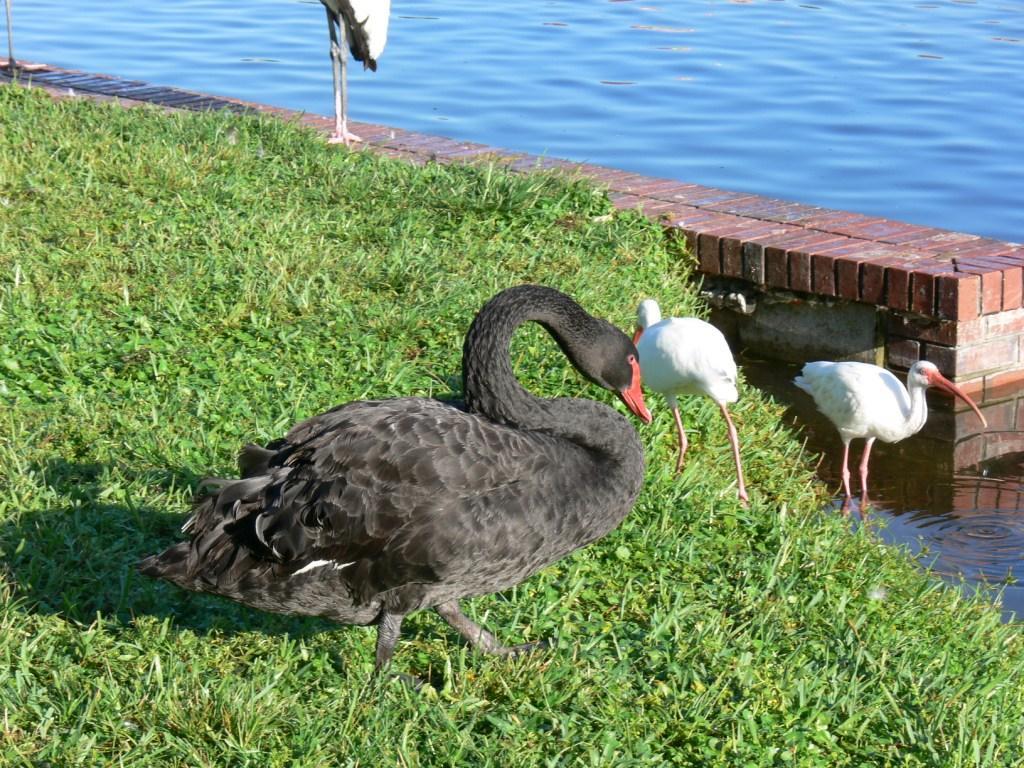
Black Swans by Bellamoon Nature

Black Swan by Lee

Black Swan by Lee

Bellamoon sent a link to some of his videos. The one below of the Black Swans and their family is super. He previously gave me permission to use his music for videos I put together, but this is better than anything I could ever do.

Several verses came to mind about “under his wings” while watching this:

Keep me as the apple of the eye, hide me under the shadow of thy wings, (Psalms 17:8 KJV)

How excellent is thy lovingkindness, O God! therefore the children of men put their trust under the shadow of thy wings. (Psalms 36:7 KJV)

He shall cover thee with his feathers, and under his wings shalt thou trust: his truth shall be thy shield and buckler. (Psalms 91:4 KJV)

He shall cover thee with his feathers, and under his wings shalt thou trust: his truth shall be thy shield and buckler. (Psalms 91:4 KJV)

O Jerusalem, Jerusalem, which killest the prophets, and stonest them that are sent unto thee; how often would I have gathered thy children together, as a hen doth gather her brood under her wings, and ye would not! (Luke 13:34 KJV)

There are verses that help us think about how kind these swans are to their young:

For thy lovingkindness is before mine eyes: and I have walked in thy truth. (Psalms 26:3 KJV)

Withhold not thou thy tender mercies from me, O LORD: let thy lovingkindness and thy truth continually preserve me. (Psalms 40:11 KJV)

Whoso is wise, and will observe these things, even they shall understand the lovingkindness of the LORD. (Psalms 107:43 KJV)

Links:

*

The Changing Of Species

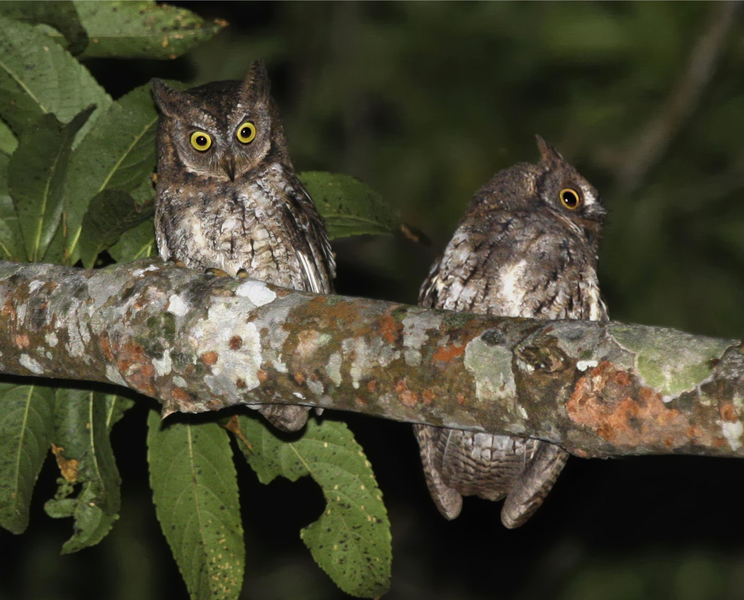
Rinjani Scops Owl (Otus jolandae) ©WikiC

Rinjani Scops Owl (Otus jolandae) ©WikiC

I came across several interesting articles from Answers in Genesis that deal with changes within the species. Having just updated the pages to the I.O.C. 3.4 Version, there were several new species added. Where did they come from? Some of them were subspecies that had been elevated to a species status. At least one, was a newly discovered species. So, how do we look at this as Christians that believe in creation and not evolution?

An article from Answers asks, “Do Species Change?” by Paul Garner. It actually gave Darwin credit for realizing that there was not a fixity or immutability of species.

Before the time of Charles Darwin, a false idea had crept into the church—the belief in the “fixity” or “immutability” of species.1 According to this view, each species was created in precisely the same form that we find it today. In his famous book, On the Origin of Species, first published in 1859, Darwin set out to demolish this widespread view.

The article goes on to show how Darwin went too far. It is a very interesting article worth reading. Do Species Change?

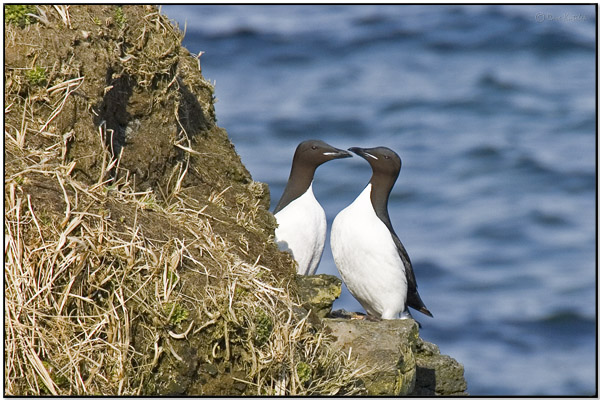
Thick-billed Murre (Uria lomvia) by Daves BirdingPix

Thick-billed Murre (Uria lomvia) by Daves BirdingPix

Seabird Study Said To Solve the Evolutionary Mystery of Flightlessness” by Dr. Elizabeth Mitchell discusses how the Penguin became flightless and use the Thick-billed Murre as a possible example. They compare the amount of energy used to swim and/or fly. “Murres, able to fly and to execute penguin-like wing-propelled dives, were the focus of the study because researchers believe their performance provides a living model of the penguin’s evolutionary past….”  Also, the bone structure is discussed. I like the wrap-up by the article writer, Dr. Elizabeth Mitchell.

Yet this fact just demonstrates a great design—an ideal “form” for a diving, flying seabird—and confirms nothing about the evolutionary path of any bird, let alone the flightless penguin.

God created birds on the fifth day of Creation week about 6,000 years ago. They reproduced “after their kinds” as the Bible describes, only varying within their created kinds. Biology does not demonstrate the evolution of flight or flightlessness or the evolution of any kind of creature into a different kind.

A few more of their writings worth reading are:

Creations Hidden Potential by Tom Hennigan, Georgia Purdom, and Todd Charles Wood

The Discontinuity of Life by Kurt P. Wise

Variation Withing Created Kinds by Dr. Gary Parker

Our Creator used His Omnipotence and His Wisdom to create the fantastic and varied creatures for us to enjoy, especially the birds. They are there in front of us all to see, observe and try to understand more about them and their development. How we look at them is where the differences in how this came about is where the creationist and evolutionist part ways.

In the beginning God created the heavens and the earth. (Genesis 1:1 NKJV)

or

For since the creation of the world His invisible attributes are clearly seen, being understood by the things that are made, even His eternal power and Godhead, so that they are without excuse, because, although they knew God, they did not glorify Him as God, nor were thankful, but became futile in their thoughts, and their foolish hearts were darkened. Professing to be wise, they became fools, and changed the glory of the incorruptible God into an image made like corruptible man—and birds and four-footed animals and creeping things. Therefore God also gave them up to uncleanness, in the lusts of their hearts… who exchanged the truth of God for the lie, and worshiped and served the creature rather than the Creator, who is blessed forever. Amen. For this reason God gave them up to vile passions. … And even as they did not like to retain God in their knowledge, God gave them over to a debased mind… (Romans 1:20-28 NKJV)

Gospel Presentation – Video

(This video is narrated by Pastor Nathan Osborne and the music is played by Sean Fielder.)

*

Independance Day – 2013

Uncle Sam Eagle at Titusville by Dan

Uncle Sam Eagle at Titusville by Dan

Happy Fourth of July!!

May you enjoy your day and may you remember our founders and their sacrifices to form our country. More than that, may you remember the Lord and His Word which provided the principles to govern this country.

Unfortunately, many today are trying to remove those principles from our laws and morality. Today, many are:

“You shall not at all do as we are doing here today—every man doing whatever is right in his own eyes— (Deuteronomy 12:8 NKJV)

The way of a fool is right in his own eyes, But he who heeds counsel is wise. (Proverbs 12:15 NKJV)

Every way of a man is right in his own eyes, But the LORD weighs the hearts. (Proverbs 21:2 NKJV)

Our leaders are more worried about being “politically correct” instead of doing what is right based on the Word of God. Chunk by chunk, Christianity and it’s principles, which guided our Founding Fathers, are being removed from our country. In place, things that are clearly taught as sin are now the “right” of the people to do, while the “rights” of Christians are being taken away. We are on the way to becoming a pagan nation. So this year, the 4th of July is sadder than last year.

Yet, the Lord has still allowed us to live in the greatest nation, because of those great Founding Fathers that believed in God. They applied the principles found in God’s Word to found this great nation. I am thankful that, so far, we still have the privilege to openly worship our Lord in our churches. I am thankful the Lord let me be born here.

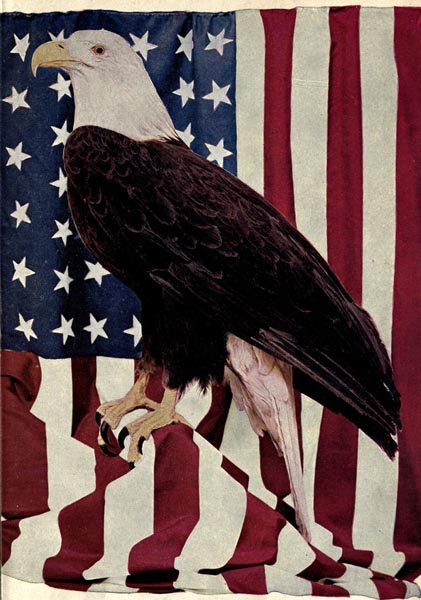
The Bald-headed Eagle (Bald Eagle) - Birds Illustrated by Color Photography, 1897

The Bald-headed Eagle (Bald Eagle) – Birds Illustrated by Color Photography, 1897

George Washington
1st U.S. President

“While we are zealously performing the duties of good citizens and soldiers, we certainly ought not to be inattentive to the higher duties of religion. To the distinguished character of Patriot, it should be our highest glory to add the more distinguished character of Christian.”

--The Writings of Washington, pp. 342-343.

John Adams
2nd U.S. President and Signer of the Declaration of Independence

“Suppose a nation in some distant Region should take the Bible for their only law Book, and every member should regulate his conduct by the precepts there exhibited! Every member would be obliged in conscience, to temperance, frugality, and industry; to justice, kindness, and charity towards his fellow men; and to piety, love, and reverence toward Almighty God … What a Eutopia, what a Paradise would this region be.”

--Diary and Autobiography of John Adams, Vol. III, p. 9.

“The general principles, on which the Fathers achieved independence, were the only Principles in which that beautiful Assembly of young Gentlemen could Unite, and these Principles only could be intended by them in their address, or by me in my answer. And what were these general Principles? I answer, the general Principles of Christianity, in which all these Sects were United: And the general Principles of English and American Liberty, in which all those young Men United, and which had United all Parties in America, in Majorities sufficient to assert and maintain her Independence.

“Now I will avow, that I then believe, and now believe, that those general Principles of Christianity, are as eternal and immutable, as the Existence and Attributes of God; and that those Principles of Liberty, are as unalterable as human Nature and our terrestrial, mundane System.”

--Adams wrote this on June 28, 1813, excerpt from a letter to Thomas Jefferson.

Thomas Jefferson
3rd U.S. President, Drafter and Signer of the Declaration of Independence

“God who gave us life gave us liberty. And can the liberties of a nation be thought secure when we have removed their only firm basis, a conviction in the minds of the people that these liberties are of the Gift of God? That they are not to be violated but with His wrath? Indeed, I tremble for my country when I reflect that God is just; that His justice cannot sleep forever; That a revolution of the wheel of fortune, a change of situation, is among possible events; that it may become probable by Supernatural influence! The Almighty has no attribute which can take side with us in that event.”

--Notes on the State of Virginia, Query XVIII, p. 237.

“I am a real Christian – that is to say, a disciple of the doctrines of Jesus Christ.”

--The Writings of Thomas Jefferson, p. 385.

John Hancock
1st Signer of the Declaration of Independence

“Resistance to tyranny becomes the Christian and social duty of each individual. … Continue steadfast and, with a proper sense of your dependence on God, nobly defend those rights which heaven gave, and no man ought to take from us.”

--History of the United States of America, Vol. II, p. 229.

Benjamin Franklin
Signer of the Declaration of Independence and Unites States Constitution

“Here is my Creed. I believe in one God, the Creator of the Universe. That He governs it by His Providence. That He ought to be worshipped.

“That the most acceptable service we render to him is in doing good to his other children. That the soul of man is immortal, and will be treated with justice in another life respecting its conduct in this. These I take to be the fundamental points in all sound religion, and I regard them as you do in whatever sect I meet with them.

“As to Jesus of Nazareth, my opinion of whom you particularly desire, I think the system of morals and his religion, as he left them to us, is the best the world ever saw, or is likely to see;

“But I apprehend it has received various corrupting changes, and I have, with most of the present dissenters in England, some doubts as to his divinity; though it is a question I do not dogmatize upon, having never studied it, and think it needless to busy myself with it now, when I expect soon an opportunity of knowing the truth with less trouble. I see no harm, however, in its being believed, if that belief has the good consequence, as probably it has, of making his doctrines more respected and more observed; especially as I do not perceive, that the Supreme takes it amiss, by distinguishing the unbelievers in his government of the world with any peculiar marks of his displeasure.”

--Benjamin Franklin wrote this in a letter to Ezra Stiles, President of Yale University on March 9, 1790.

The above quotes from our Founding Fathers are from Christian Quotes of the Founding Fathers. (See for more quotes)

Bible and Flag

Bible and Flag

Then Jesus said … “If you abide in My word, you are My disciples indeed. And you shall know the truth, and the truth shall make you free.” (John 8:31-32 NKJV)

For God so loved the world that He gave His only begotten Son, that whoever believes in Him should not perish but have everlasting life. For God did not send His Son into the world to condemn the world, but that the world through Him might be saved. “He who believes in Him is not condemned; but he who does not believe is condemned already, because he has not believed in the name of the only begotten Son of God. And this is the condemnation, that the light has come into the world, and men loved darkness rather than light, because their deeds were evil. For everyone practicing evil hates the light and does not come to the light, lest his deeds should be exposed. But he who does the truth comes to the light, that his deeds may be clearly seen, that they have been done in God.” (John 3:16-21 NKJV)

*

Wordless Birds

Falling Plates

*

*

Birds of the Bible – Name Study – Heron

Great Blue Heron (Ardea herodias) Watching young nearby by Lee at Viera Wetlands

Great Blue Heron (Ardea herodias) Watching young nearby by Lee at Viera Wetlands

Let’s look into a name study for another Bird of the Bible – this time the Heron. Our fishing Green Heron directed my thinking towards the Heron. So, let’s see what we can find out about how they are mentioned in Scripture.

The Heron and their kind are mentioned in Leviticus and Deuteronomy in the list of “Unclean Birds” or the “Do not eat” list.

And the stork, the heron after her kind, and the lapwing, and the bat. (Leviticus 11:19 KJV)

And the stork, and the heron after her kind, and the lapwing, and the bat. (Deuteronomy 14:18 KJV)

Those are the only two references to Herons in the King James Version. But how do other versions translate this bird? That is what these name study articles do. Dig around in the Word. I use e-Sword’ s compare mode to see the different versions.

Brenton, as does the APB, DRB, ISV, and NET  has the Heron in Psalms:

There the sparrows will build their nests; and the house of the heron takes the lead among them. Psalms 104:17 Brenton)

The Bishops and CJB only use Heron in Deuteronomy, but not Leviticus.

The Phillips does not even use the word “Heron.”

Here is the Hebrew word used in these verses:

H601
אנפה
‘ănâphâh
an-aw-faw’
From H599; an unclean bird, perhaps the parrot (from its irascibility): – heron.

*

The DRB also uses Heron in Job:

The wing of the ostrich is like the wings of the heron, and of the hawk. (Job 39:13 DRB)

The GW shows Heron in these verses:

“It will become the possession of herons. It will become pools of water. I’ll sweep it with the broom of destruction,” declares the LORD of Armies. (Isaiah 14:23 GW)

Pelicans and herons will take possession of the land. Owls and crows will live there. He will stretch the measuring line of chaos and the plumb line of destruction over it. (Isaiah 34:11 GW)

Flocks will lie down in it along with animals of every kind. Even pelicans and herons will nest on top of its columns. Listen! A bird will sing in a window. The doorway will be in ruins, because the LORD will expose the cedar beams. (Zephaniah 2:14 GW)

Isaiah 14:23 uses H7090 which is:

H7090
קפּד קפּוד
qippôd qippôd
kip-pode’, kip-pode’
From H7088; a species of bird, perhaps the bittern (from its contracted form): – bittern.

Isaiah 34:11 GW and Zephaniah 2:14 GW both use the same H7090. The word is translated as “Bittern” in the KJV for all three verses. The Ardeidae- Herons, Bitterns Family consists of Heron, Egrets and Bitterns so, there doesn’t seem to be a problem there, especially since the first two verses said, “heron after her kind.” They are related.

The DRB’s (1899 Douay-Rheims Bible) translation, to me, does not seem to match the rest of the other translations.

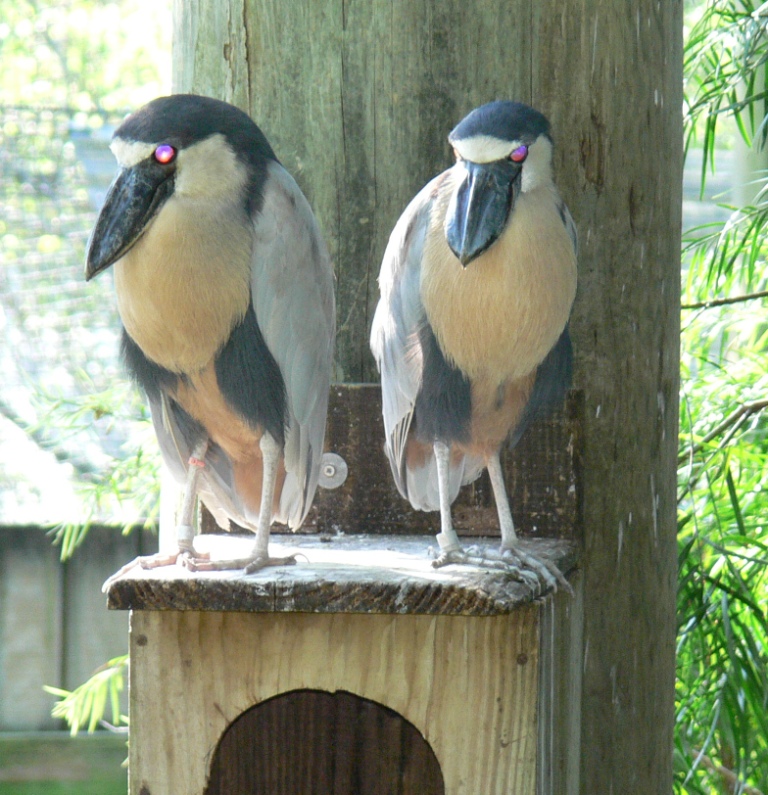
Boat-billed Heron (Cochlearius cochlearius) by Lee at LPZoo

Boat-billed Heron (Cochlearius cochlearius) by Lee at LPZoo

Herons:

The herons are long-legged freshwater and coastal birds in the family Ardeidae, with 72 recognised species (some are called “egrets” or “bitterns” instead of “heron”). Within Ardeidae, all members of the genera Botaurus and Ixobrychus are referred to as “bitterns”, and — including the Zigzag Heron or Zigzag Bittern — are a monophyletic group within the Ardeidae. However, egrets are not a biologically distinct group from the herons, and tend to be named differently because they are mainly white and/or have decorative plumes. Although egrets have the same build as herons, they tend to be smaller.

The classification of the individual heron/egret species is fraught with difficulty, and there is still no clear consensus about the correct placement of many species into either of the two major genera, Ardea and Egretta. One species formerly considered to constitute a separate monotypic family Cochlearidae, the Boat-billed Heron, is now regarded as a member of the Ardeidae.

Although herons resemble birds in some other families, such as the storks, ibises, spoonbills and cranes, they differ from these in flying with their necks retracted, not outstretched. They are also one of the bird groups that have powder down. Some members of this group nest colonially in trees, while others, notably the bitterns, use reedbeds.

Grey Heron (Ardea cinerea) by W Kwong

Grey Heron (Ardea cinerea) by W Kwong

The herons are a widespread family, they exist on all continents except Antarctica, and are present in most habitats except the coldest extremes of the Arctic, extremely high mountains and the driest deserts. Almost all species are associated with water, they are essentially non-swimming waterbirds that feed on the margins of lakes, rivers, swamps, ponds and the sea. They are predominately found in lowland areas, although some species live in alpine areas, and the majority of species occur in the tropics.

The herons are a highly mobile family, with most species being at least partially migratory. Birds are particularly inclined to disperse widely after breeding but before the annual migration where the species is colonial, searching out new feeding areas and reducing the pressures on feeding grounds near the colony. The migration typically occurs at night, usually as individuals or in small groups.

The herons and bitterns are carnivorous. The members of this family are mostly associated with wetlands and water, and feed on a variety of live aquatic prey. The diet includes a wide variety of aquatic animals, including fish, reptiles, amphibians, crustaceans, molluscs and aquatic insects. Individual species may be generalists or specialise in certain prey types, like the Yellow-crowned Night Heron, which specialises in crustaceans, particularly crabs. Many species will also opportunistically take larger prey, including birds and bird eggs, rodents, and more rarely carrion. Even more rarely there have been reports of herons eating acorns, peas and grains, but most vegetable matter consumed is accidental.

The most common hunting technique is for the bird to sit motionless on the edge of or standing in shallow water and wait until prey comes within range. (Birds of the Bible – Patient Herons) Birds may either do this from an upright posture, giving them a wider field of view for seeing prey, or from a crouched position, which is more cryptic and means the bill is closer to the prey when it is located. Having seen prey the head is moved from side to side, so that the heron can calculate the position of the prey in the water and compensate for refraction, and then the bill is used to spear the prey.

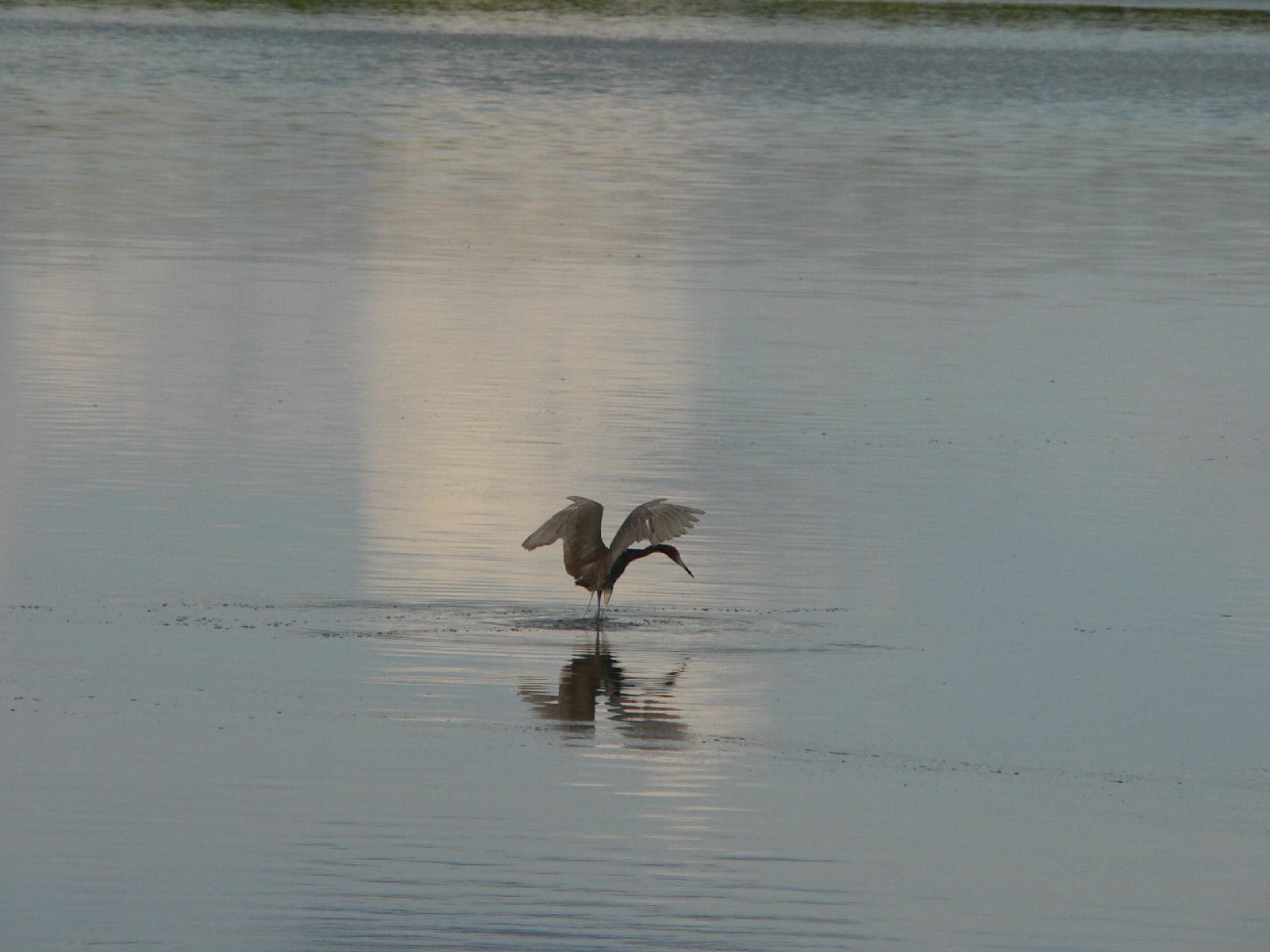
Reddish Egret scarring up breakfast

Reddish Egret scarring up breakfast

In addition to sitting and waiting, herons may feed more actively. They may walk slowly, at around or less than 60 paces a minute, snatching prey when it is observed. Other active feeding behaviours include foot stirring and probing, where the feet are used to flush out hidden prey. The wings may be used to frighten prey (or possibly attract it to shade) or to reduce glare; the most extreme example of this is exhibited by the Black Heron, which forms a full canopy with its wings over its body.

Some species of heron, such as the Little Egret and Grey Heron, have been documented using bait in order to lure prey to within striking distance. Herons may use items already in place, or actively add items to the water in order to attract fish. Items used may be man-made, such as bread; alternatively Striated Herons in the Amazon have been watched repeatedly dropping seeds, insects, flowers and leaves into the water to catch fish. (Green Heron Fishing With Bread)

(Heron information from Wikipedia with editing)

Names of Birds Study

Birds of the Bible – Herons

*