Birds of the Bible – Remembering

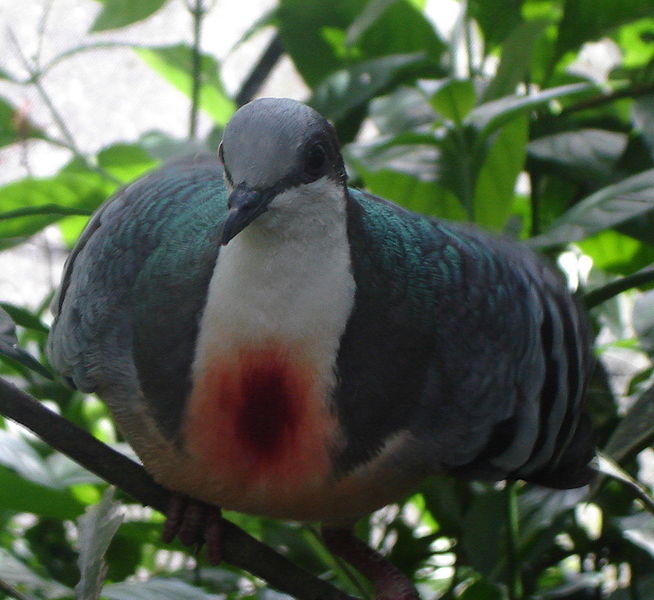
Bleeding-Heart Pigeon ©WikiC

Bleeding-Heart Pigeon ©WikiC

And God remembered Noah, and every living thing, and all the cattle that was with him in the ark: and God made a wind to pass over the earth, and the waters asswaged; (Genesis 8:1 KJV)

Today, here in the United States, is Memorial Day. A day when we remember those who have given their all in the service of our country. We honor those who we can no longer thank. As this is being written, they are laying a wreath at the tomb of the unknown soldier at Arlington National Cemetary.

My father was one of those who passed away as a result of his being in the trenches in WW I. He suffered for several years from the effects of the “mustard gas” that was sprayed on them. It is good for us to remember things and honor events.

Yesterday, in the morning service, the event of the 12 stones being taken for the Jordon River by the Israelites for a memorial was taught. That was a memorial to remind them of the way the LORD protected them and made a way for them to cross over the Jordon. It is good to remember things and honor events.

And Joshua said unto them, Pass over before the ark of the LORD your God into the midst of Jordan, and take ye up every man of you a stone upon his shoulder, according unto the number of the tribes of the children of Israel: That this may be a sign among you, that when your children ask their fathers in time to come, saying, What mean ye by these stones? Then ye shall answer them, That the waters of Jordan were cut off before the ark of the covenant of the LORD; when it passed over Jordan, the waters of Jordan were cut off: and these stones shall be for a memorial unto the children of Israel for ever. (Joshua 4:5-7 KJV)

Mourning Dove (Zenaida macroura) by Quy Tran

Mourning Dove (Zenaida macroura) by Quy Tran

Our Scripture above is where the God remembered those He was protecting from the flood that were aboard the ark. He did not forget them. In time, the waters went down and they were able to leave the ark.

And it came to pass in the six hundred and first year, in the first month, the first day of the month, that the waters were dried up from the earth; and Noah removed the covering of the ark and looked, and indeed the surface of the ground was dry. And in the second month, on the twenty-seventh day of the month, the earth was dried. Then God spoke to Noah, saying, “Go out of the ark, you and your wife, and your sons and your sons’ wives with you. Bring out with you every living thing of all flesh that is with you: birds and cattle and every creeping thing that creeps on the earth, so that they may abound on the earth, and be fruitful and multiply on the earth.” (Genesis 8:13-17 NKJV)

It does us good to remember what the God has done through His creation and protection during the flood. Just as He provided salvation for them from the flood, and only those in the ark were saved. Today, we have a Savior who said:

Jesus saith unto him, I am the way, the truth, and the life: no man cometh unto the Father, but by me. (John 14:6 KJV)

Bald Eagle Brings Nesting Material by Aesthetic Photos

Bald Eagle Brings Nesting Material by Aesthetic Photos

Happy Memorial Day! Lord Bless your day as you remember.

See:

Gospel Message

Birds of the Bible

Bible Birds

P.S. Check out this article:

‘Sarge, Will You Tell Us About God?’ – The Story of God’s Miraculous Protection of an Entire U. S. Marine Unit, From A Walk In The Word

*
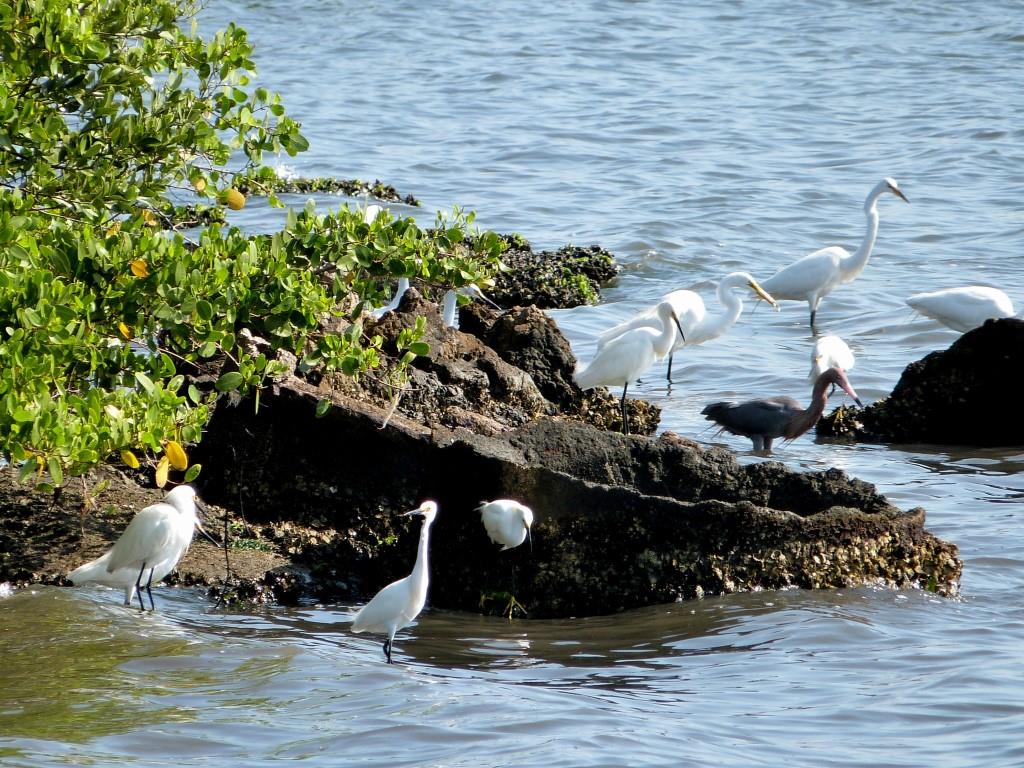
Birds of the Bible – Herons On Tampa Bay

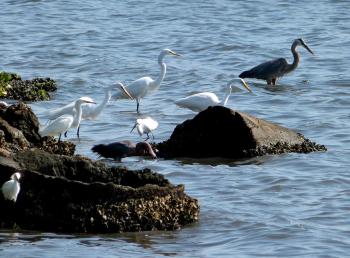
Reddish, Snowys, Greats Egrets and Great Blue Heron 5-10-13 by Lee at MacDill

Reddish, Snowys, Greats Egrets and Great Blue Heron (5-10-13) by Lee

And the stork, the heron after her kind, and the lapwing, and the bat. (Leviticus 11:19 KJV)

Herons are one of the species listed on the “Do not eat list” as we have written about before in the various Birds of the Bible – Heron articles. The first one was written back in 2008 when I first started the blog.

Since we were out birdwatching last week over in Tampa at the bay, I thought I would share some of those photos and update the Heron information some more. We saw a Great Blue Heron, several Little Blue Herons, and several others that are “after her kind” and in the same Ardeidae – Heron, Bittern  family. There were Snowy Egrets and Great Egrets fishing along with the others. The Little Blue Herons were in breeding plumage which you could tell because of their exceptionally blue beaks. (Not real clear-I was zoomed from quite a distance)

Little Blue Heron and Snowy Egrets by Lee from distance

Little Blue Heron and Snowy Egrets by Lee from distance

Herons are only mentioned twice in Scripture; Leviticus 11:19 and in Deuteronomy 14:18. That modern-day family, Ardiedae, currently has 72 members which includes not only Herons and Egrets, but also Bitterns. Some of them are grouped together like, Tiger Herons, Night Herons, Pond Herons, Reef Herons and Cattle Egrets. Not sure about the Tiger Herons but the night, pond, reef, and cattle name give you a clue as to where you might find them out and about.

And the stork, and the heron after her kind, and the lapwing, and the bat. (Deuteronomy 14:18 KJV)

The herons are long-legged freshwater and coastal birds in the family Ardeidae, (some are called “egrets” or “bitterns” instead of “heron”). Within Ardeidae, all members of the genera Botaurus and Ixobrychus are referred to as “bitterns”, and — including the Zigzag Heron or Zigzag Bittern — are a monophyletic group within the Ardeidae. However, egrets are not a biologically distinct group from the herons, and tend to be named differently because they are mainly white and/or have decorative plumes. Although egrets have the same build as herons, they tend to be smaller.

Great Egret (Ardea alba) Swallowing MacDil by Lee

Great Egret (Ardea alba) Swallowing by Lee

The classification of the individual heron/egret species is fraught with difficulty, and there is still no clear consensus about the correct placement of many species into either of the two major genera, Ardea and Egretta. Similarly, the relationship of the genera in the family is not completely resolved. However, one species formerly considered to constitute a separate monotypic family Cochlearidae, the Boat-billed Heron, is now regarded as a member of the Ardeidae.

Although herons resemble birds in some other families, such as the storks, ibises, spoonbills and cranes, they differ from these in flying with their necks retracted, not outstretched. They are also one of the bird groups that have powder down. Some members of this group nest colonially in trees, while others, notably the bitterns, use reedbeds.

The largest species of heron is the Goliath Heron, which stand up to 152 cm (60 in) tall. The necks are able to kink in an s-shape, due to the modified shape of the sixth vertebrae. The neck is able to retract and extend, and is retracted during flight, unlike most other long-necked birds. The neck is longer in the day herons than the night herons and bitterns. The legs are long and strong and in almost every species are unfeathered from the lower part of the tibia (the exception is the Zigzag Heron). In flight the legs and feet are held backward. The feet of herons have long thin toes, with three forward pointing ones and one going backward.

Reddish-Snowys-Greats Egrets -Great Blue Heron by Lee

Reddish-Snowys-Greats Egrets – Snowy in front with yellow feet

The herons are a widespread family with a cosmopolitan distribution. They exist on all continents except Antarctica, and are present in most habitats except the coldest extremes of the Arctic, extremely high mountains and the driest deserts. Almost all species are associated with water, they are essentially non-swimming waterbirds that feed on the margins of lakes, rivers, swamps, ponds and the sea. They are predominately found in lowland areas, although some species live in alpine areas, and the majority of species occur in the tropics.

While the family exhibits a range of breeding strategies, overall the herons are monogamous and mostly colonial. Most day-herons and night-herons are colonial, or partly colonial depending on circumstances, whereas the bitterns and tiger-herons are mostly solitary nesters. Colonies may contain several species as well as other types of waterbird. In a study of Little Egrets and Cattle Egrets in India the majority of the colonies surveyed contained both species. (Wikipedia with editing)

See:

Birds of the Bible

Birds of the Bible – Heron – Page

Bible Birds – Herons [younger readers]

Birds of the Bible – Herons – Article

Heron – Wikipedia

Ardeidae – Heron, Bitterns  family

*

Bible Birds – Mother Birds and Their Young – (Re-post)

My Mom and Me 26

Yesterday’s My Mom And Me – Email blog inspired me to write a new article for the Birds of the Bible For Kids. It is called:”

Bible Birds – Mother Birds and Their Young.

Please check it out. It is geared for a younger audience.

*

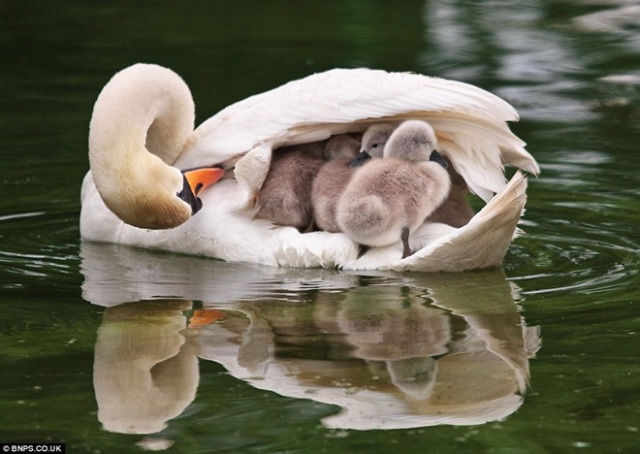
Bible Birds – Mother Birds and Their Young

My Mom and Us

My Mom and Us

Yesterday, in My Mom and Me – Photos, you saw many photos of Mother Animals and Mother Birds with their young ones. Does the Bible mention mother birds and their young or eggs. Yes, it does.

“If a bird’s nest happens to be before you along the way, in any tree or on the ground, with young ones or eggs, with the mother sitting on the young or on the eggs, you shall not take the mother with the young;

you shall surely let the mother go, and take the young for yourself, that it may be well with you and that you may prolong your days. (Deuteronomy 22:6-7 NKJV)

That is very interesting verse. It tells us not to take both the mother and the young or eggs. Do you know why? Look at the last verse; it says “may be well with you and you will prolong your days (live longer). Do you know another reason not to take both? The Lord commanded the animals and birds to have babies and fill the earth. If you kill them both, then none of that family will be able to have more baby birds or the young will not get to grow up and have baby birds. Soon, there wouldn’t be any more of those kinds of birds and they would become “extinct.”

The Lord told us from the very beginning of the Bible to have “dominion” over the birds and animals. That does not mean to be mean to them, but more like to watch over them and care for them. That is what our verse above is telling us. Not to destroy all of them, but to leave some of the family alive to carry on.

Gather the people–men, women, children, and foreigners living within your gates–so that they may listen and learn to fear the LORD your God and be careful to follow all the words of this law. (Deuteronomy 31:12 HCSB)

Wordless Birds

See:

More Bible Birds

*

Birds of the Bible – Details

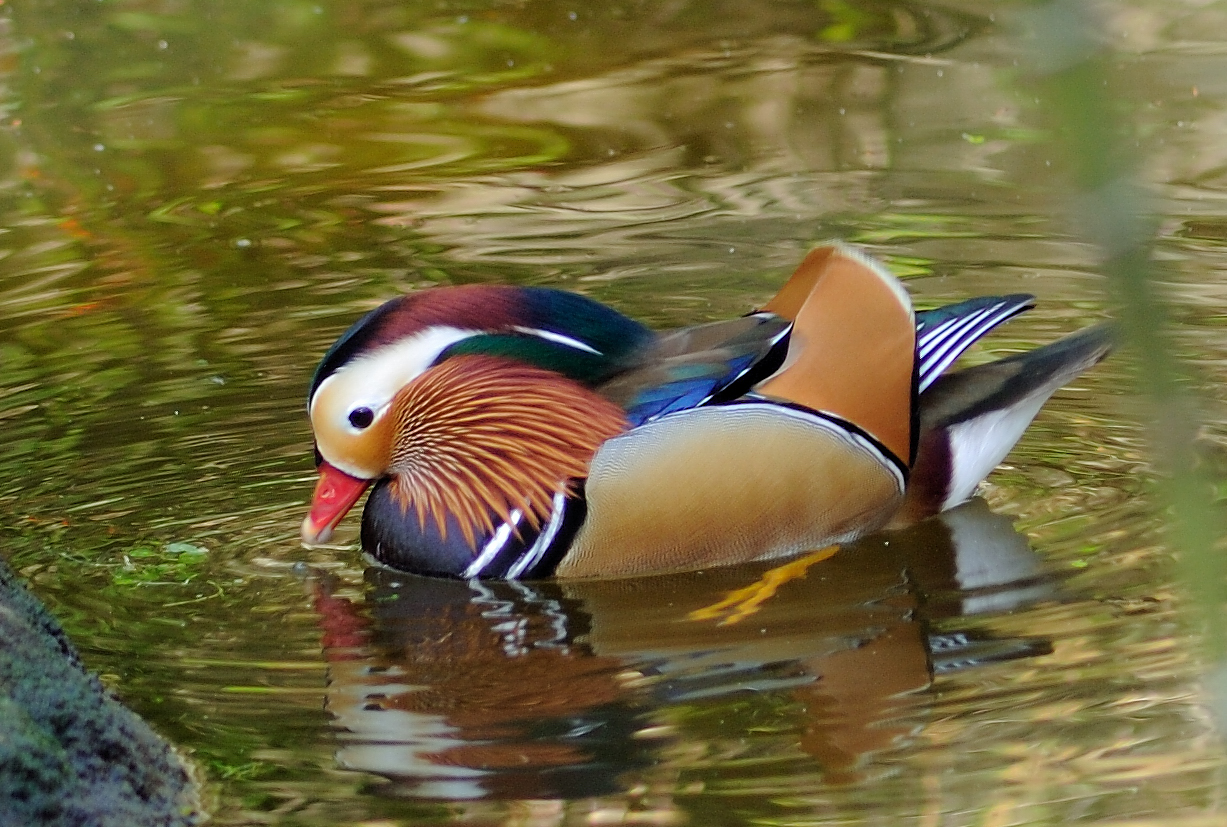
Mandarin Duck (Aix galericulata) by Dan

Mandarin Duck (Aix galericulata) by Dan

Currently, I am reading through Leviticus. When I cam to the Tabernacle, my first thoughts were, “Here we go again” with all the details about how to make it. The LORD gave Moses the details and then he shared those details with all the workers and skilled craftsmen as to how it was supposed to be prepared. It includes down to the number of rings to hold the curtains, like 50 on this side and 50 on that side, etc. The colors Gold, Blue, Purple and Scarlet are constantly mentioned.

Details, details, details. I stopped grumbling when I thought about how the LORD in His creative acts was so, “detailed.” Much of the Bible gives us details about God, the Lord, and the Holy Spirit.It is one of God’s attributes that He is so omnipotent, omniscient, understanding, etc. because He does know all the “details.”

For since the creation of the world His invisible attributes are clearly seen, being understood by the things that are made, even His eternal power and Godhead, so that they are without excuse, (Romans 1:20 NKJV)

We are told to look around us to observe creation and we can see His attributes. Think of just the birds. Are they not each different and made with so much detail. So, here is my attempt to share with you some of the neatly “detailed” birds in a slideshow. My first thoughts were of the Mandarin Duck with its lines and marks. Looks like a paintbrush was used by the Hand of our Creator. I have been trying to think of a bird that is gold, blue, purple and scarlet, but so far, it allude me. (The Mandarin Duck is close)

This slideshow is only featuring the colors and feather designs, but how about all the bills, feet, and other aspects of the birds? Enjoy these beautiful birds. (Thanks to all those who took the photos also.)

This slideshow requires JavaScript.

*

(I hardly got to the Passerines. Sorry)

See:

Birds of the Bible

Falling Plates

*

Birds of the Bible – Coat of Many Colors

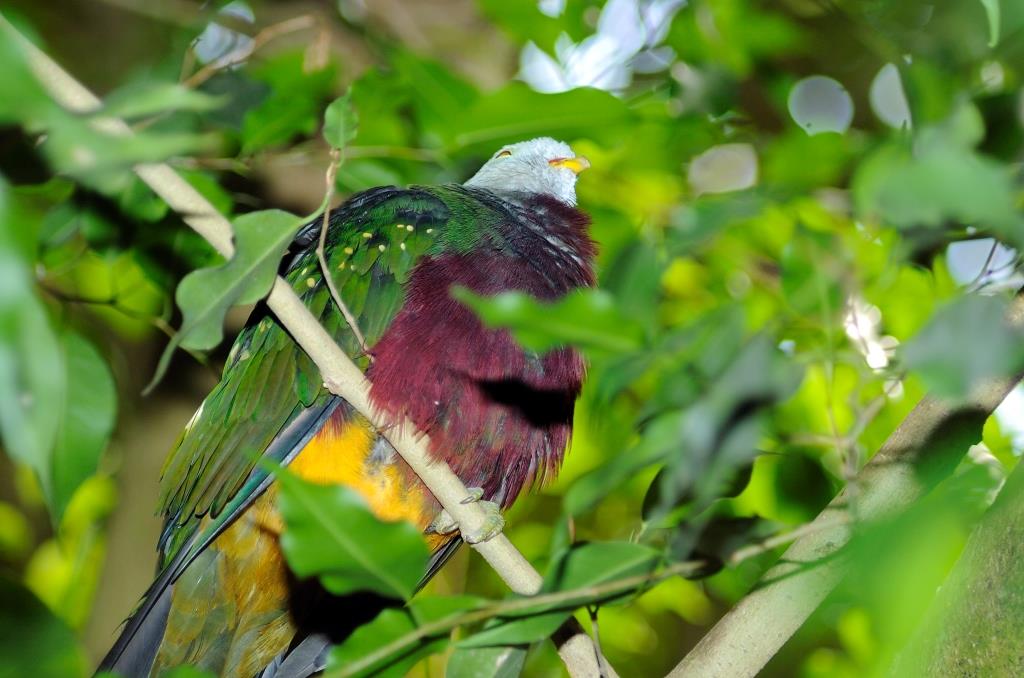
Many-colored Fruit Dove (Ptilinopus perousii) ©WikiC

Many-colored Fruit Dove (Ptilinopus perousii) ©WikiC

While working on the Columbidae – Pigeons, Doves Family, I was enjoying the Fruit Doves and their beautiful colors. Of course the verse about Joseph’s Coat of Many Colors kept crossing my mind. Then I actually found the Many-colored Fruit Dove.

Now Israel loved Joseph more than all his children, because he was the son of his old age: and he made him a coat of many colours. (Genesis 37:3 KJV)

The Fruit Doves belong to the Ptilinopus genus. There are 53 Fruit Doves at present (I.O.C. 3.3) They eat fruit mostly and they may help enhance their colours, at least that is one opinion. “These small- to medium-sized doves generally have short, fan-shaped tails, and are remarkable for their colorful and often glossy plumage, as evidenced in the aptly named Orange Fruit Dove, Flame-breasted Fruit Dove, and Pink-headed Fruit Dove. Males and females of many fruit dove species look very different. For example, the female Many-coloured Fruit Dove shares the male’s crimson crown and deep pink undertail feathers, but is otherwise green, whereas the male has a crimson on the upper back and has areas of yellow, olive, cinnamon, and grey.

Wompoo Fruit Dove (Ptilinopus magnificus) by Dan at National Aviary

Wompoo Fruit Dove (Ptilinopus magnificus) by Dan at National Aviary

This is a large genus, most diverse in and around the island of New Guinea, in the Philippines, and in the biogeographical region of Wallacea. Some species have ranges as far west as the Sunda Islands, others north to Taiwan, south to Australia, and east into Polynesia.

Fruit doves, as their name implies, eat fruit — ficus is especially important — and live in various kinds of forest or woodland. Some species are restricted to primary forest, such as lowland rainforest, montane forest, or monsoon forest, while others prefer secondary forest or disturbed areas. Some species specialize in particular habitats, from lowland coastal forest to the cloud forest or moss forest of high altitudes. Some species of fruit doves are only found in habitats dominated by particular plants, such as mangrove, eucalyptus, or pandanus. Only a few species can commonly be seen around human habitation, these include the Knob-billed Fruit Dove, Makatea Fruit Dove, and Black-naped Fruit Dove, which are known to visit gardens and such.

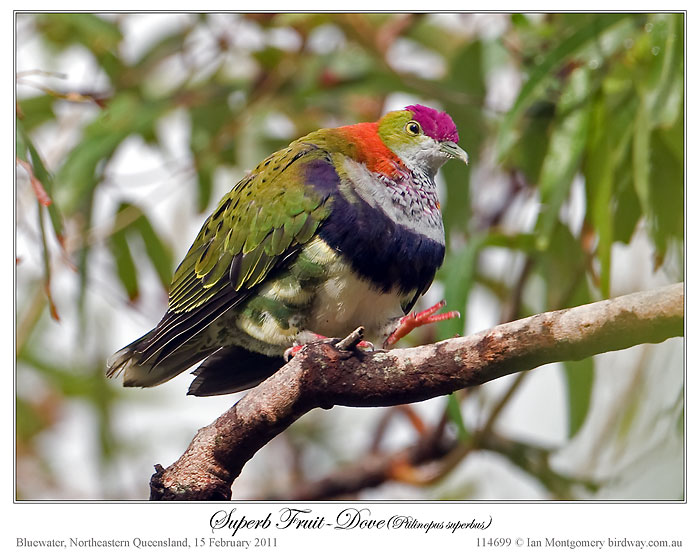
Superb Fruit Dove (Ptilinopus superbus) by Ian

Superb Fruit Dove (Ptilinopus superbus) by Ian

Much is still to be learned about fruit doves. Many species are shy and difficult to observe in their natural habitat. For example, there are several species in the Philippines, and for most of them, little or nothing is known of their breeding or nesting behavior.” (Wikipedia with editing)

We have had the privilege of seeing several of the Fruit Doves at the Zoos we have visited. They are so beautiful and colorful. Isn’t the Lord great in His providing them the ability to show off all their “coats of many colors?” I trust you will enjoy looking at the slideshow below and seeing them. These are the ones that I have permission to show. I am putting the whole list of them from the Family pages so that you can view the others.

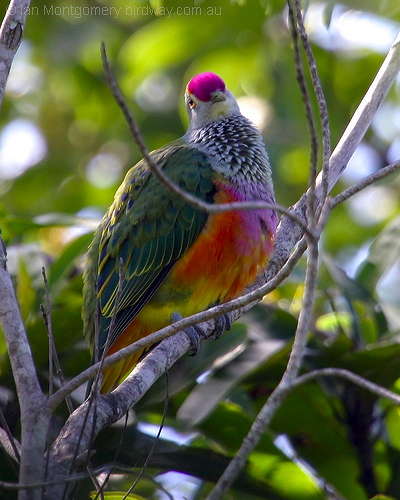
Rose-crowned Fruit Dove (Ptilinopus regina) by Ian

Rose-crowned Fruit Dove (Ptilinopus regina) by Ian

Divers colours is only associated with one bird in Scripture and that is with an eagle:

And say, Thus saith the Lord GOD; A great eagle with great wings, longwinged, full of feathers, which had divers colours, came unto Lebanon, and took the highest branch of the cedar: (Ezekiel 17:3 KJV)

“Divers colours” is used 6 times in the King James Version, others translate that phrase as; various colors, beautiful feathers, long, colorful feathers , full of varicolored feathers, of variety,  feathers covered with spots, rich in plumage of many colors, full of plumage of embroidery, having different colors to him, multi-colored plumage, or in full plumage and bright colors.

I think those descriptions can well describe our feather colors  the Creator placed on these Fruit Doves. Doves are mentioned many times in the Bible. See the Birds of the Bible – Dove and Pigeon page.

This slideshow requires JavaScript.

****

Columbidae – Pigeons, Doves Family

Birds of the Bible – Dove and Pigeon

*

P.S. I’ll be adding more of our as I find them.

*

Birds of the Bible – Wing Survey

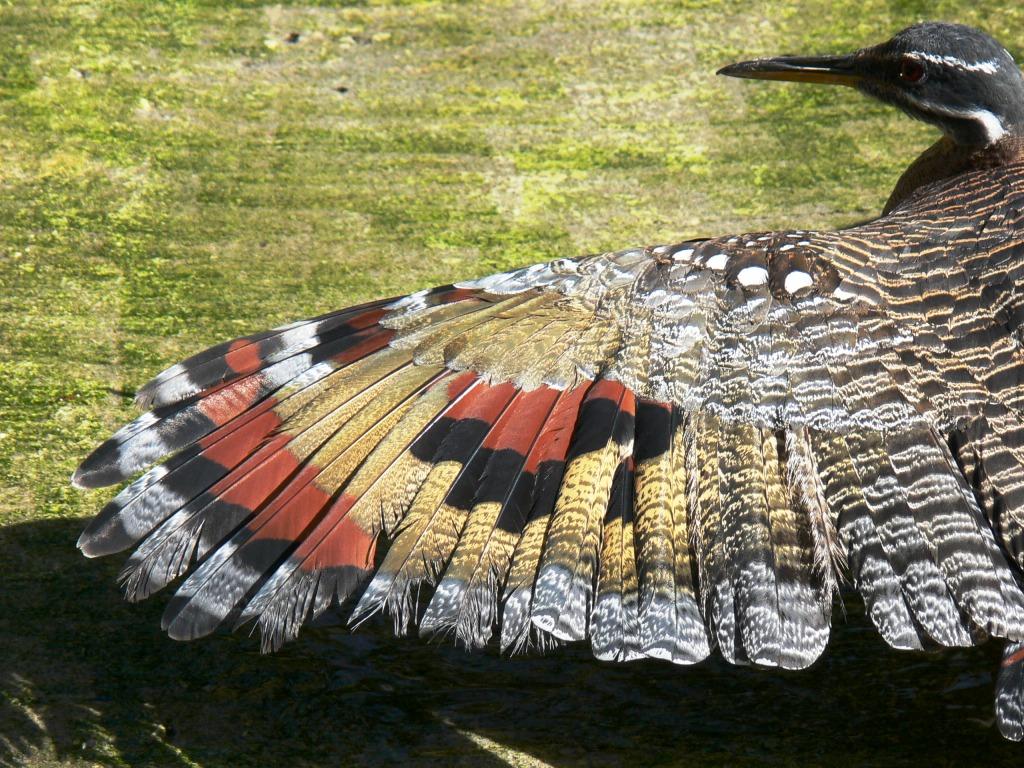
Sunbittern (Eurypyga helias) Left Wing by Lee at Lowry Park Zoo

Sunbittern (Eurypyga helias) Left Wing by Lee at Lowry Park Zoo

While reading in Exodus 25 this week, I noticed that the plan for the Ark is written out in quite specific details. The plans for the mercy seat was to be covered by the outstretched wings of the cherubims of gold.

And the cherubims shall stretch forth their wings on high, covering the mercy seat with their wings, and their faces shall look one to another; toward the mercy seat shall the faces of the cherubims be. (Exodus 25:20 KJV)

I wondered if I had written much about “wings”, so I checked and found only three articles, so far:

I am curious about what can be found, so, let’s see what we can find. Of course my e-Sword is fired up and ready for the searching. Searching first with just “wing”, only 6 verses show up. I Kings 6:24, 6:27; 2 Chronicles 3:11-2 all refer to the wing of the cherub. Isaiah 10:14 actually mentions a bird having its eggs taken and not moving its wing, opening its mouth or peeping. It is used as an illustration.

And my hand hath found as a nest the riches of the people: and as one gathereth eggs that are left, have I gathered all the earth; and there was none that moved the wing, or opened the mouth, or peeped. (Isaiah 10:14 KJV)

Ezekiel 17:23 is the verse used in Fowl (Birds) of Every Wing.

Searching again with “wings” this time shows 64 verses (KJV). Again the cherubims are mentioned in Exodus 25:20, 37:9; I Kings 6:26, 8:6, 8:7; 1 Chronicles 28:18; 2 Chronicles 3:11, 3:13, 5:7-8. Cherubim and serephim wings are again mentioned later in the prophecies of Isaiah (Isa 6:2, 8:8, 18:1, and 40:31), Ezekiel (Exe 1:6-11, 1:23-25, 3:13, 10:5-21, 11:22) and Daniel.  Ezekiel 17:3 & 7 mention “A great eagle with great wings, longwinged, full of feathers” and “another great eagle with great wings and many feathers” Daniel 7:4 and 6 mention “eagle’s wings” and “wings of a fowl

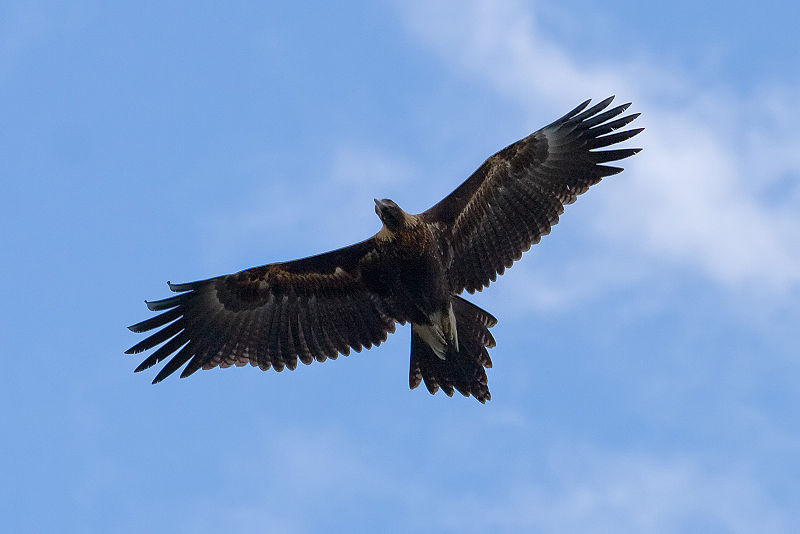
Wedge-tailed Eagle (Aquila audax) ©WikiC

Wedge-tailed Eagle (Aquila audax) ©WikiC

Eagles’ wings are mentioned several more times:

Ye have seen what I did unto the Egyptians, and how I bare you on eagles‘ wings, and brought you unto myself. (Exodus 19:4 KJV)

As an eagle stirreth up her nest, fluttereth over her young, spreadeth abroad her wings, taketh them, beareth them on her wings: (Deuteronomy 32:11 KJV)

Wilt thou set thine eyes upon that which is not? for riches certainly make themselves wings; they fly away as an eagle toward heaven. (Proverbs 23:5 KJV)

But they that wait upon the LORD shall renew their strength; they shall mount up with wings as eagles; they shall run, and not be weary; and they shall walk, and not faint. (Isaiah 40:31 KJV)

For thus saith the LORD; Behold, he shall fly as an eagle, and shall spread his wings over Moab. (Jeremiah 48:40 KJV)

Behold, he shall come up and fly as the eagle, and spread his wings over Bozrah: and at that day shall the heart of the mighty men of Edom be as the heart of a woman in her pangs. (Jeremiah 49:22 KJV)

Indian Peafowl (Pavo cristatus) by Nikhil Devasar

Indian Peafowl (Pavo cristatus) by Nikhil Devasar

Of course other birds are named such as:

Gavest thou the goodly wings unto the peacocks? or wings and feathers unto the ostrich? (Job 39:13 KJV)

Doth the hawk fly by thy wisdom, and stretch her wings toward the south? (Job 39:26 KJV)

And I said, Oh that I had wings like a dove! for then would I fly away, and be at rest. (Psalms 55:6 KJV)

Though ye have lien among the pots, yet shall ye be as the wings of a dove covered with silver, and her feathers with yellow gold. (Psalms 68:13 KJV)

Then lifted I up mine eyes, and looked, and, behold, there came out two women, and the wind was in their wings; for they had wings like the wings of a stork: and they lifted up the ephah between the earth and the heaven. (Zechariah 5:9 KJV)

O Jerusalem, Jerusalem, thou that killest the prophets, and stonest them which are sent unto thee, how often would I have gathered thy children together, even as a hen gathereth her chickens under her wings, and ye would not! (Matthew 23:37 KJV)

O Jerusalem, Jerusalem, which killest the prophets, and stonest them that are sent unto thee; how often would I have gathered thy children together, as a hen doth gather her brood under her wings, and ye would not! (Luke 13:34 KJV)

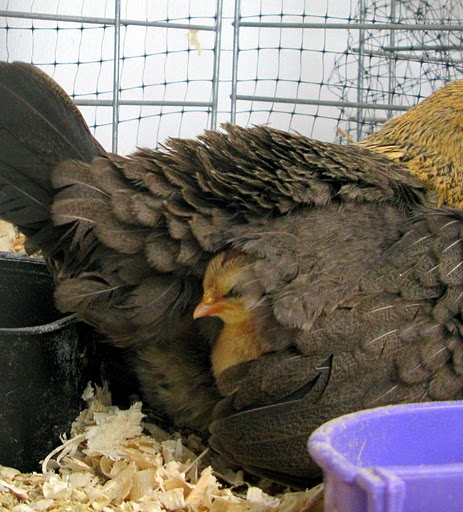
Baby Chick Peeping Out From Under His Mom's Wing - ©©

Baby Chick Peeping Out From Under His Mom’s Wing – ©©

Other references to wings:

  • wings of the wind – 2 Samuel 22:11
  • under whose wings thou art come to trust. – Ruth 2:12
  • hide me under the shadow of thy wings – Psalm 17:8
  • fly upon the wings of the wind – Psalm 18:10
  • trust under the shadow of thy wings. – Psalm 36:7
  • in the shadow of thy wings will I make my refuge – Psalm 57:1
  • rust in the covert of thy wings – Psalm 61:4
  • in the shadow of thy wings will I rejoice – Psalm 63:7
  • He shall cover thee with his feathers, and under his wings shalt thou trust – Psalm 91:4
  • the wings of the wind – Psalm 104:3
  • If I take the wings of the morning – Psalm 139:9
  • for a bird of the air shall carry the voice, and that which hath wings shall tell the matter. – Ecclesiastes 10:20
  • stretching out of his wings – Isaiah 8:8
  • shadowing with wings – Isaiah 18:1
  • Give wings unto Moab, that it may flee and get away – Jeremiah 48:9
  • The wind hath bound her up in her wings – Hosea 4:19
  • healing in his wings – Malachi 4:2

That is an interesting survey of the verses with wing or wings in them. Now I will have to get busy and use this information in some future articles. There are definitely some trends that can be seen. Do you see them? Shadow, wind, healing and trust, just to name a few.

*

Birds of the Bible

Wordless Birds

*

What A Wonderful Savior

He is Risen from an e-mail

Tomorrow is Easter and many will attend church for many reasons. Some will go to show off a new outfit, some will go because it is the one time a year they always go, and many of us will go because it is our normal Sunday habit. Whatever the reason, it is a celebration of the resurrection of Our Savior. Yesterday, Good Friday, His death on the cross was commemorated.

Many of us have the knowledge of the death, burial and resurrection of Jesus Christ. Knowledge is one thing, belief is another. Many can quote John 3:16, even those who do not believe in Christ as their Savior:

For God so loved the world, that he gave his only begotten Son, that whosoever believeth in him should not perish, but have everlasting life. For God sent not his Son into the world to condemn the world; but that the world through him might be saved. He that believeth on him is not condemned: but he that believeth not is condemned already, because he hath not believed in the name of the only begotten Son of God. (John 3:16-18 KJV)

I like Easter and like many, I used to attend church once a year, no matter where I went to church; Catholic, Luther, Methodist, Baptist. Then in 1959, my sister’s father-in-law, Dulin, accepted the Lord as his personal Savior. He accepted the Gift that is offered by Christ’s sacrifice for our sins. He then started telling my sister and her husband, Sharry and Joe, about the Lord and so in February 1960 they were saved, by accepting the Lord. You guessed it, they started telling me about how Christ died for me and that I could be saved by believing in the Lord and accepting His gift of salvation.

So on March 20, 1960, after being invited to church with them, I decided to break a record and go to church two times in one year. Not having been raised in a Christian home, I wasn’t perfect, neither was I bad, but as I listened to Pastor Charlie Kittrell preach, I realized that I WAS a SINNER and I need Christ as my Savior. It finally clicked. The knowledge finally got from my head down to my heart. Praise the Lord I was led to the Lord that morning. My life has forever been changed.

Therefore if any man be in Christ, he is a new creature: old things are passed away; behold, all things are become new. (2 Corinthians 5:17 KJV)

So this Easter is my 53rd as a new creature in Christ. Praise the Lord, what a Wonder Savior He has been to me these many years. Am I prefect? No way, but I am forgiven and when I do mess up, I John 1:9 is always there to remind me to ask forgiveness. That is not to be saved again, but to return to fellowship with the Lord.

If we confess our sins, he is faithful and just to forgive us our sins, and to cleanse us from all unrighteousness. (1 John 1:9 KJV)

I was 16 then and this year I’ll turn 70. What a wonderful life the Lord has given me. He provided a super Christian husband that has put up with me all these years. We will be celebrating our 50th in July this year. Blessings and challenges, but Christ has always been there as we have tried to live for Him. We both had the privilege of graduating from Bob Jones University, though it took me 16 years to get through. (Speak of a slow learner :) ) We also have a fantastic church with a great Pastor and staff. Plus, He has given me an enjoyment of His creation, especially His birds. On and on I could go, but it all is from the Lord.

What about you? I trust you know Him also. If not, please consider what this weekend is all about. It is a celebration of God’s Son coming to earth and paying for our sins by His death on the cross. (short version) Best of all, it doesn’t end there. He is Risen! Death could not keep Him because  He was God in the Flesh. He loves you enough that He died for your sins. Won’t you accept His gift of salvation?

Therefore as by the offence of one judgment came upon all men to condemnation; even so by the righteousness of one the free gift came upon all men unto justification of life. (Romans 5:18 KJV)

For the wages of sin is death; but the gift of God is eternal life through Jesus Christ our Lord. (Romans 6:23 KJV)

Thanks be unto God for his unspeakable gift. (2 Corinthians 9:15 KJV)

For by grace are ye saved through faith; and that not of yourselves: it is the gift of God: (Ephesians 2:8 KJV)

Sharing The Gospel

Gospel Presentation is narrated by Pastor Nathan Osborne III and music is by Sean Fielder from Gospel Presentation

You Don’t Have to Be a Christian to Call on Jesus – Re-blogged

jesus-on-donkey-wikiped

Sandra Connor has written an excellent article called

You Don’t Have to Be a Christian to Call on Jesus.

“Here comes Jesus!”

“Jesus of Nazareth is coming!”

“Do you see Him yet?”

“Here He comes!”

“Here comes Jesus!”

Excitement was rampant, and cries of “Hosanna” filled the air. Shouts of joy and triumph could be heard for miles along the road, and people rushed to lay palm branches and their personal garments as a carpet of welcome. Jesus of Nazareth was coming to Jerusalem.

This carpenter-teacher who had journeyed among them for nearly three years, teaching them, healing them, feeding them, forgiving them, raising their dead. This miracle worker, this wise man, this man who was gentle enough to draw crowds of children to his side yet bold enough He would soon drive money-changers from the temple with a whip — this man whom many claimed was the prophesied Messiah of Jehovah — this man was coming again to Jerusalem! I’m sure, had we been there, we would have heard the message repeated over and over again for miles: “Here comes Jesus! Here comes Jesus!”

For the rest of the article – You Don’t Have to Be a Christian to Call on Jesus.

Sandra is a Christian writer who has some very interesting articles and books worth checking out.

Sandra Conner…By the Book

Birds of the Bible – Name Study ~ Ossifrage

Black Vulture by Birdway (Ian)

Black Vulture by Birdway (Ian)

And these are they which ye shall have in abomination among the fowls; they shall not be eaten, they are an abomination: the eagle, and the ossifrage, and the ospray, (Leviticus 11:13 KJV)

We have looked into this bird before in Birds of the Bible – Ossifrage and the Birds of the Bible Ossifrage Page. Since we have been looking at the actual meanings of the names in the Name Studies, maybe we can discover something else of interest. I hope this long list below of the different translations that are shown are a blessing and not a curse. They were cut down to just show the three birds, except for the translations that like to put all the verses in one verse. (from my e-Sword)

Scanning down through the list the Eagle seems to be no real problem. Most translate it as an Eagle. The last bird, most show as the Osprey or Sea-eagle. Wikipedia says, “The Osprey (Pandion haliaetus), sometimes known as the sea hawk, fish eagle or fish hawk,” A few make this last bird one of the vultures. The middle bird is our concentration in this article.

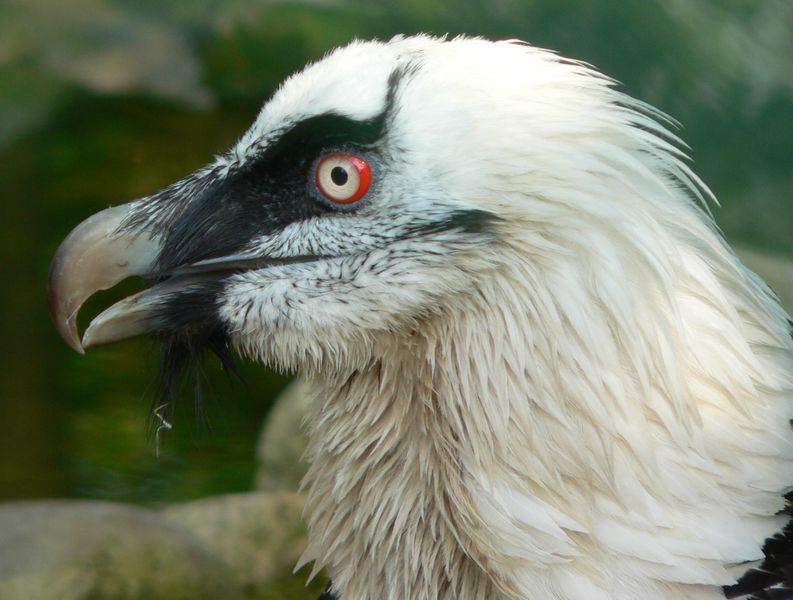
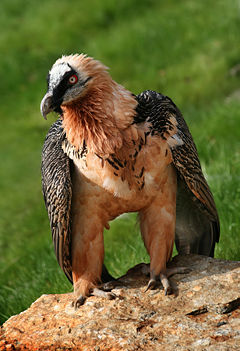
Ossifrage - Lammergier

Ossifrage – Lammergier

Looking down this list you will find these birds:

  • Vulture
  • Ossifrage
  • Gier-eagle
  • Goshauke or Goshawk
  • Griffon
  • Bearded Vulture
  • Black Vulture
  • Latin – grypem or gryphem = griffon
  • Spanish – el buitre – (from translator)

(Ornitología) vulture
buitre alimoche Egyptian vulture
buitre leonado griffon vulture

  • or quebrantahuesos – “In 1960, the Mexican ornithologist Rafael Martín del Campo identified the eagle in the pre-Hispanic codex as the Northern Caracara or “quebrantahuesos“, a species common in Mexico (although the name “eagle” is taxonomically incorrect, as the Caracara is in the falcon family). The golden eagle is considered the official bird of Mexico.
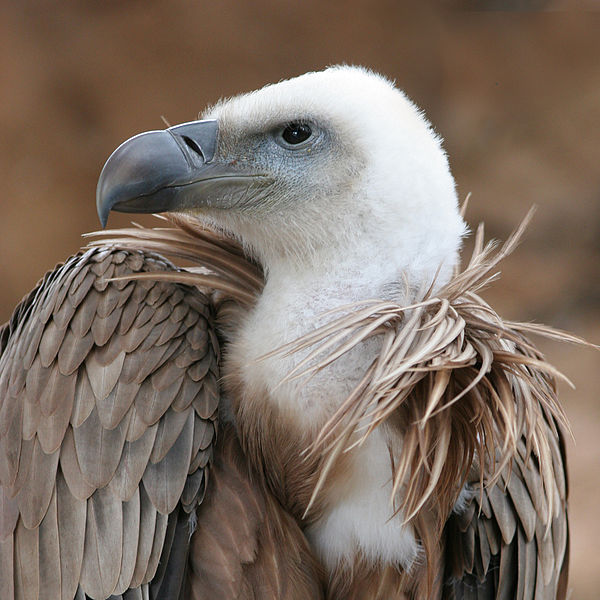
Griffon Vulture (Gyps fulvus) ©WikiC

Griffon Vulture (Gyps fulvus) ©WikiC

What is the Hebrew word for this bird?

H6538
פּרס
peres
peh’-res
From H6536; a claw; also a kind of eagle: – claw, ossifrage.

Many of the online Bible Commentaries and Dictionaries use “bone-breaker” and lean toward Lammergeir. See: Bible Encyclopedia, Net Bible, OED, Bible Suite,and Bible Study Tools.

English

  • (ACV) : the eagle, and the vulture, and the osprey,
  • (AKJV) …: the eagle, and the ossifrage, and the ospray,
  • (AMP) …: the eagle, the ossifrage, the ospray,
  • (ASV) …: the eagle, and the gier-eagle, and the ospray,
  • (BBE) …: the eagle and the gier-eagle and the ospray;
  • (Bishops) …: The Egle, the Goshauke, and the Ospray,
  • (Brenton) …: the eagle and the ossifrage, and the sea-eagle.
  • (CEV) Eagles, vultures, buzzards, crows, ostriches, hawks, sea gulls, owls, pelicans, storks, herons, hoopoes, and bats are also disgusting, and you are forbidden to eat any of them.
  • (CJB) …: the eagle, the vulture, the osprey,
  • (Darby) …: the eagle, and the ossifrage, and the sea-eagle,
  • (DRB) …: The eagle, and the griffon, and the osprey.
  • (ERV) …: eagles, vultures, buzzards,
  • (ESV)..: the eagle, the bearded vulture, the black vulture,
  • (ECB)…: the eagle and the ossifrage and the ospray
  • (Geneva) … the egle, and the goshauke, and the osprey:
  • (GNB) You must not eat any of the following birds: eagles, owls, hawks, falcons; buzzards, vultures, crows; ostriches; seagulls, storks, herons, pelicans, cormorants; hoopoes; or bats.
  • (GW) …. They are eagles, bearded vultures, black vultures,
  • (HCSB) …: the eagle, the bearded vulture, the black vulture,
  • (HRB) …: the eagle, and the black vulture and the bearded vulture,
  • (IAV) …: the eagle, and the ossifrage, and the ospray,
  • (ISV) …: the eagle, vulture, osprey,
  • (LITV-TSP) …: the eagle, and the black vulture and the bearded vulture,
  • (JPS) …: the great vulture, and the bearded vulture, and the ospray;
  • (KJ2000) …: the eagle, and the vulture, and the osprey,
  • (KJV) …: the eagle, and the ossifrage, and the ospray,
  • (KJV-1611) …: The Eagle, and the Ossifrage, and the Ospray,
  • (LITV) …: the eagle, and the black vulture and the bearded vulture,
  • (MKJV) …: the eagle, and the black vulture, and the bearded vulture,
  • (MSG) …: eagle, vulture, osprey,
  • (NAS77) …: the eagle and the vulture and the buzzard,
  • (NASB) ‘…: the eagle and the vulture and the buzzard,
  • (NET) … the griffon vulture, the bearded vulture, the black vulture,
  • (NIrV) …”‘They include eagles, vultures and black vultures.
  • (NIV) …: the eagle, the vulture, the black vulture,
  • (NKJV)…: the eagle, the vulture, the buzzard,
  • (NRSV) …: the eagle, the vulture, the osprey,
  • (RV) …: the eagle, and the gier eagle, and the ospray;
  • (The Disciple’s Bible) …: the eagle, and the gier-eagle, and the ospray,
  • (TRC) …The eagle, the goshawk, the cormorant, the kite,
  • (Tyndale) … The egle, the gooshauke, the cormoraunte, the kyte,
  • (UKJV) …: the eagle, and the vulture, and the buzzard,
  • (Webster) …: the eagle, and the ossifrage, and the ospray,
  • (WEB (R)) …: the eagle, and the vulture, and the black vulture,
  • (YLT) …: the eagle, and the ossifrage, and the ospray,

Latin

  • (Vulgate) … aquilam et grypem et alietum
  • (clVulgate) …: aquilam, et gryphem, et haliæetum,

Spanish

  • (LBLA) …: el águila, el buitre y el buitre negro,
  • (NBLH)…: el águila, el buitre y el buitre negro,
  • (SRV) …: el águila, el quebrantahuesos, el esmerejón,

Hebrew or Greek #s (with some editing)

  • (KJV+) …: the eagle,H5404 and the ossifrage,H6538 and the ospray,H5822
  • (NASB+) …: the eagle H5404 and the vulture H6538 and the buzzard H5822,
  • (Translit+) … . nesher H5404 . . perec H6538 . . ‘ozniyah H5822
  • (ABP+) … the G3588 eagle, G105 and the griffin,G1127.3 and the osprey,G230.1
  • (HSB) וְאֶת…; like אֶת־ H853 ‘et- הַנֶּ֙שֶׁר֙ H5404 han·Ne·sher the eagle וְאֶת־ H853 ve·’Et הַפֶּ֔רֶס H6538 hap·Pe·res, and the ossifrage וְאֵ֖ת H853 ve·’Et הָעָזְנִיָּֽה׃ H5822 ha·’a·ze·ni·Yah. and the ospray
  • (HSB2) … the eagle וְאֶת־ H853 הַפֶּ֔רֶס H6538 and the ossifrage וְאֵ֖ת H853 הָעָזְנִיָּֽה׃ H5822 and the ospray
Ossifrage - Lammergeier

Bearded Vulture (Gypaetus barbatus)

The Bearded Vulture is in the Gypaetus genus, which is similar to the Vulgate term for it. There are many Old World Vultures in the Accipitridae – Kites, Hawks and Eagles family and most likely it is one of them. A black or bearded one. The Black Vulture above is a New World Vulture and is in the Cathartidae – New World Vultures Family. That “black vulture” is not likely to be the one in this Scriputure.

The Bearded Vulture, like other vultures it is a scavenger, feeding mostly on animal matter from dead animals. It usually disdains the actual meat, however, and lives on a diet that is typically compromised at 85-90% by bone marrow. This is the only living bird species that specializes in feeding on marrow. The Lammergeier can swallow whole or bite through brittle bones up to the size of a lamb’s femur and its powerful digestive system quickly dissolves even large pieces. The Lammergeier has learned to crack bones too large to be swallowed by carrying them in flight to a height of 50–150 m (160–490 ft) above the ground and then dropping them onto rocks below, which smashes them into smaller pieces and exposes the nutritious marrow. They can fly with bones up to 10 cm (3.9 in) in diameter and weighing over 4 kg (8.8 lb), or nearly equal to their own weight. After dropping the large bones, the Bearded Vulture spirals or glides to down to inspect them and may repeat the act if the bone is not sufficiently cracked. This learned skill requires extensive practice by immature birds and takes up to seven years to master. Its old name of Ossifrage (“bone breaker”) relates to this habit. More seldom, these birds have been observed to try to break bones (usually of a medium size) by hammering them with their bill directly into rocks while perched. (from Wikipedia with editing)

Sounds like a “bone-breaker” and also look at its claws. As I said in the other article “Only God knows which bird was really indicated.” Whichever one it is, they are Birds of Prey and being on the “do not eat” list, they definitely would not end up on my table even though that law was for then. Praise the Lord that the Law was fulfilled through the sinless crucifixion of the Lord Jesus Christ on the cross.

Think not that I am come to destroy the law, or the prophets: I am not come to destroy, but to fulfil. For verily I say unto you, Till heaven and earth pass, one jot or one tittle shall in no wise pass from the law, till all be fulfilled.  (Matthew 5:17-18 KJV)

And he said unto them, These are the words which I spake unto you, while I was yet with you, that all things must be fulfilled, which were written in the law of Moses, and in the prophets, and in the psalms, concerning me. (Luke 24:44 KJV)

Gospel Presentation

Birds of the Bible – Get Off My Back

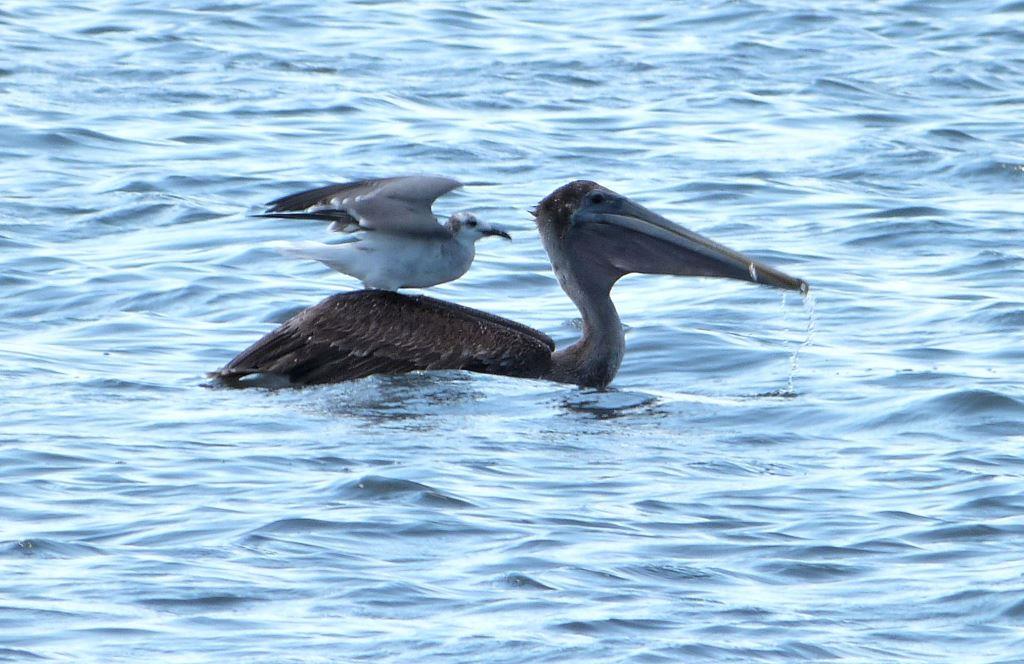
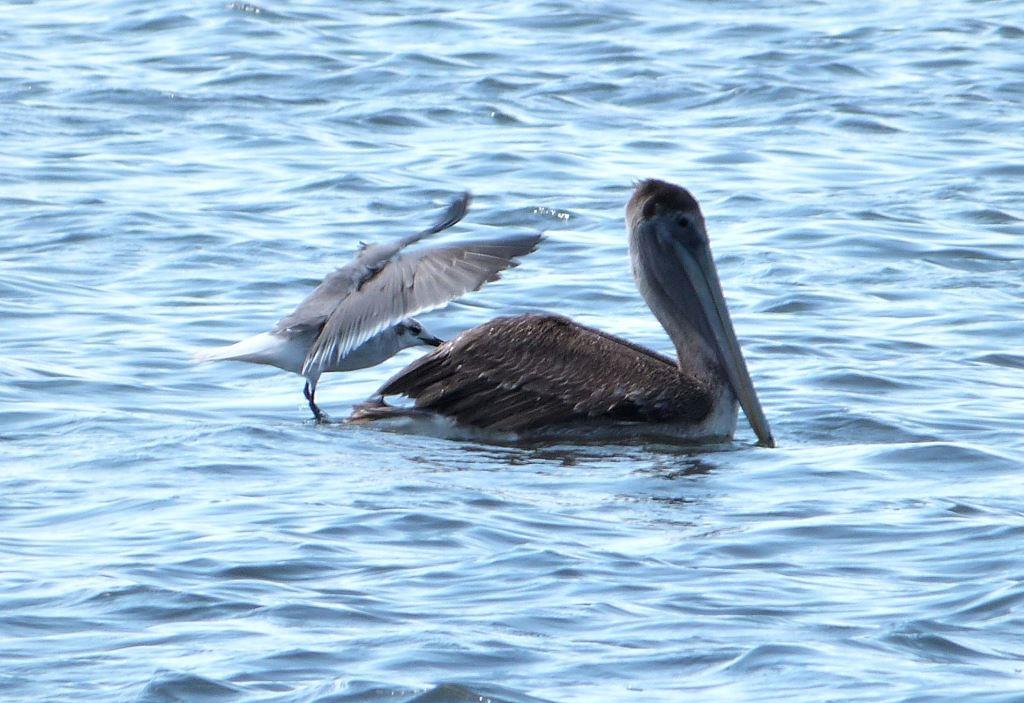
Laughing Gull landing on Brown Pelican

Laughing Gull landing on Brown Pelican

I am like a pelican of the wilderness; I am like an owl of the desert. (Psalms 102:6 NKJV)

Yesterday we were at the beach at MacDill AFB in Tampa. Apparently the fish were numerous, because the Brown Pelicans, Forster’s Tern, Laughing Gulls, Ospreys and others were diving in.

Laughing Gull landing on Brown Pelican

Laughing Gull landing on Brown Pelican

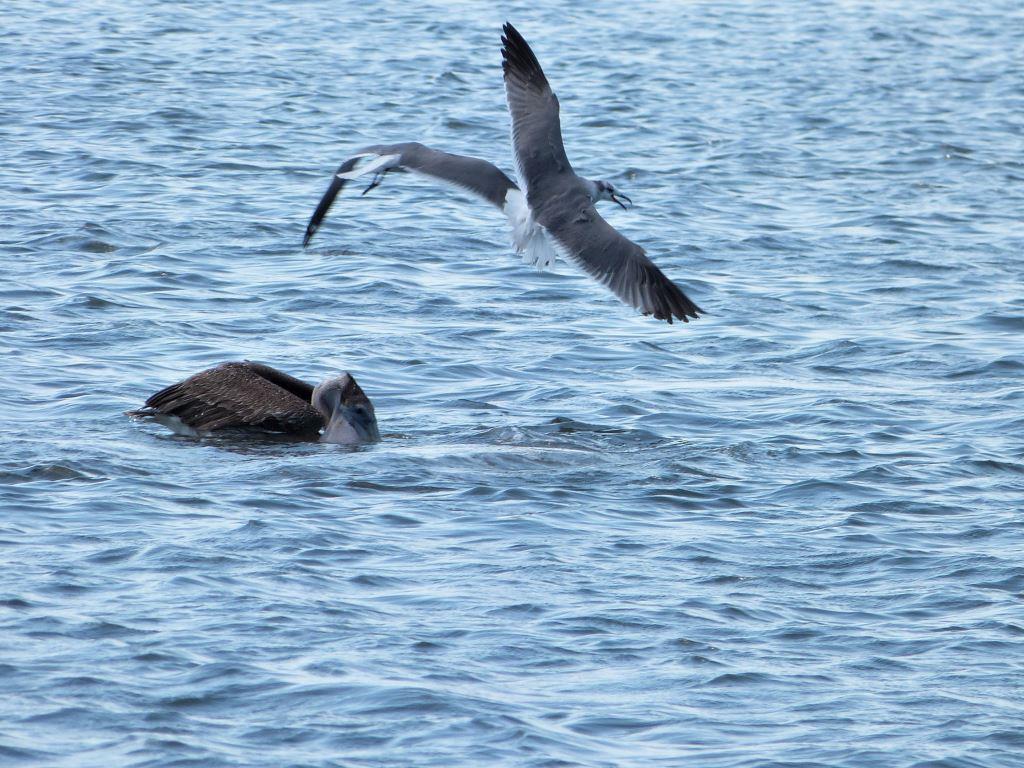
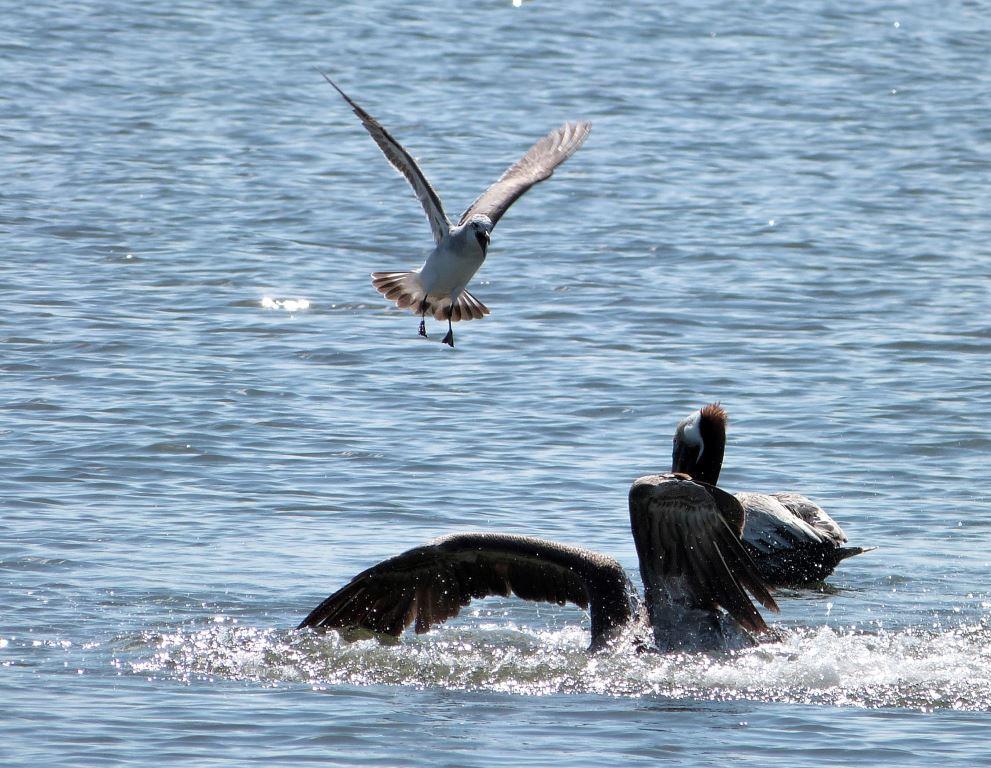
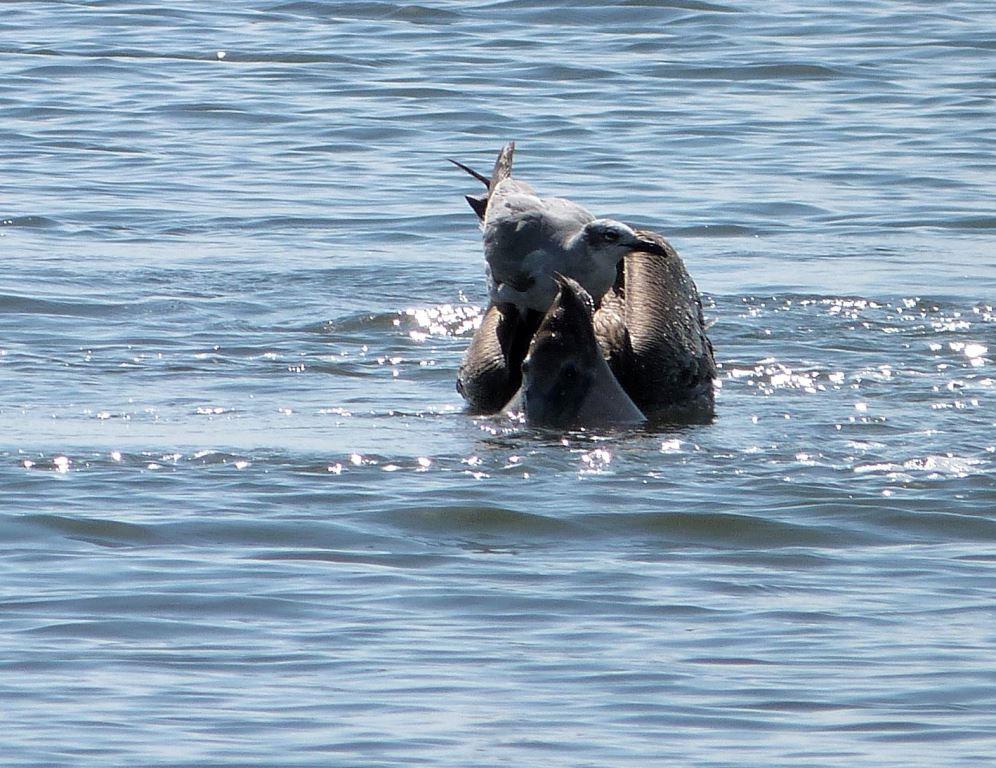
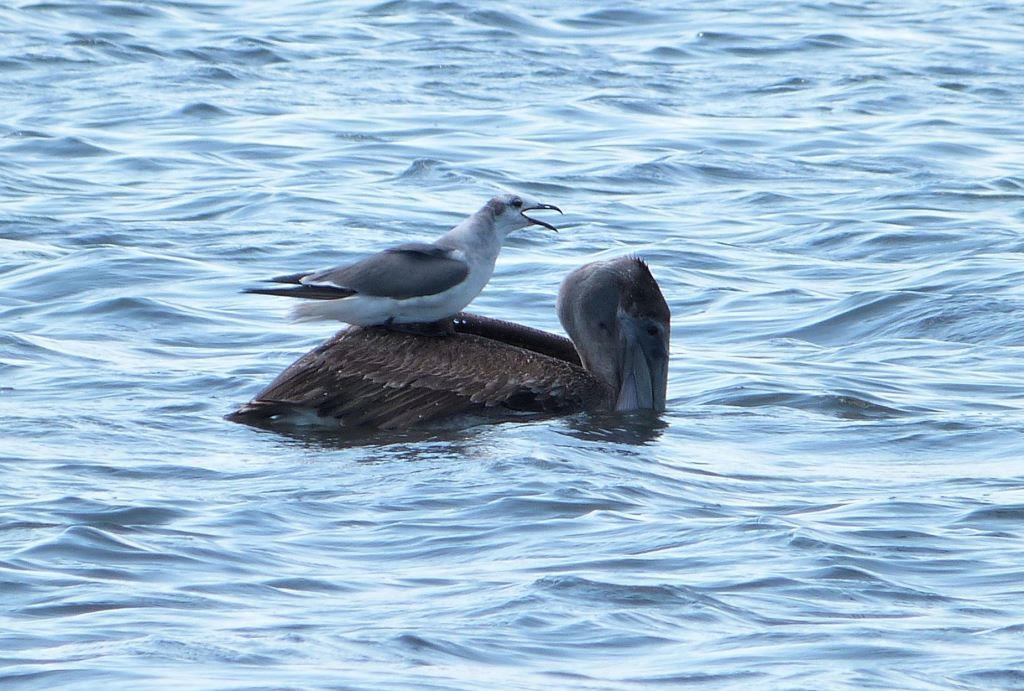
What really amazed me were the Laughing Gulls landing on the backs of the Brown Pelicans. Checking the internet to find out about this, I came across this very interesting article, The Pelican and the Gull. It appears this is a common practice for the Laughing Gull to steal some of the Pelicans food.

Here are some excerpts from that article:

One method the laughing gull has of getting food is to steal fish from another seabird that inhabits the region, the brown pelican. The laughing gull accomplishes this larceny by waiting for the brown pelican to make a successful dive….

When the pelican has a bill full of fish and water, it transfers the fish to the pouch that hangs below its bill. The pelican cannot fly away or swallow the fish until the water is drained from the pouch. Laughing gulls either circle closely above the pelican or land on the pelican’s bill or head. The gull may even give the pelican a sharp peck or two. If the pelican pays too much attention to the antics of the laughing gull and not enough attention to the delicate draining and swallowing process, the pelican may lose some of the trapped fish. The gull then swoops down and scoops up the pelican’s hard-earned catch, flying away at top speed from the scene of the crime and makes short work of his ill-gotten gains.

Of course, I could make all kinds of applications about not stealing, pecking someone on the head, or getting on their backs without permission. Because of the curse we are all under, the birds included, this kind of things happen. Eagles steal from Ospreys, Cuckoos lay eggs in other species nest, etc. For us, we know that stealing is wrong and I trust we don’t. Also, we are supposed to “love one another.” Not so sure this is being displayed here.

And be ye kind one to another, tenderhearted, forgiving one another, even as God for Christ’s sake hath forgiven you. (Ephesians 4:32 KJV)

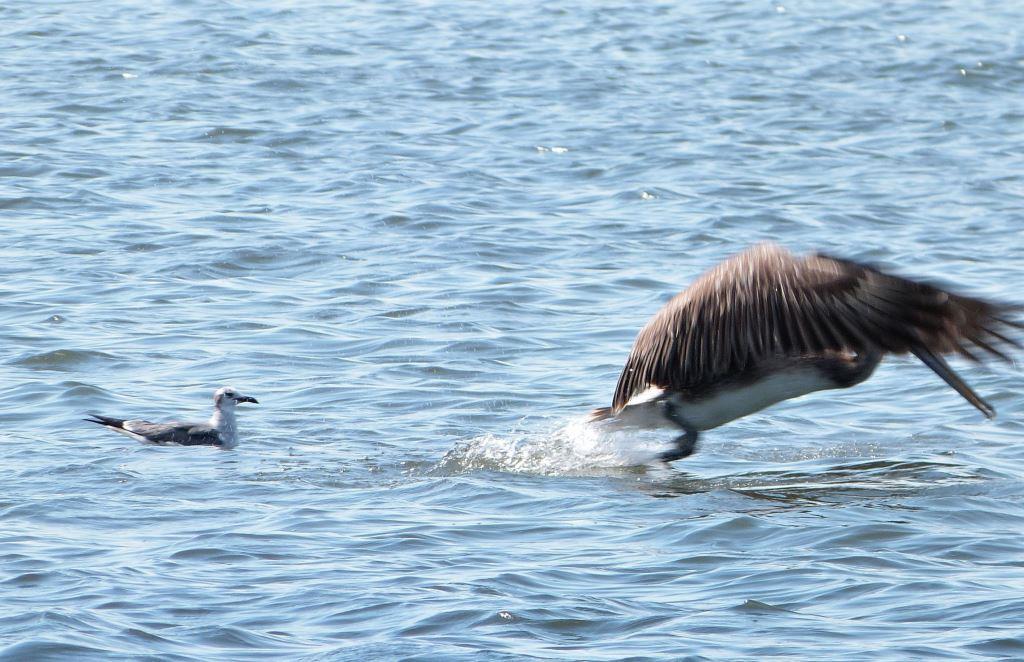
Here is another sequence of photos I took of an exchange between the Gull and the Pelican (cropped):

Pelican catching fish and Gull circling

Pelican catching fish and Gull circling

Laughing Gull watching Brown Pelican preparing to land

Laughing Gull watching Brown Pelican preparing to land

Laughing Gull lands on Pelican as he comes up

Laughing Gull lands on Pelican as he comes up

Would you hurry up

Would you hurry up

Brown Pelican and Laughing Gull - Waiting

Waiting

Brown Pelican and Laughing Gull - Slipping Off

Slipping Off

Brown Pelican leaving Laughing Gull

Watching His Food Source Leave

Maybe I can catch him

Maybe I can catch him

These photos were taken with my zoom because they were out quite a way from the shore. The following two photos were closer up as they both posed on posts for us.

Pelicans belong to the Pelecanidae – Pelicans Family and are on of the Birds of the Bible.

Mature Brown Pelican by Dan at MacDill

Mature Brown Pelican by Dan at MacDill

The Brown Pelican is the smallest of the eight species of pelican, although it is a large bird in nearly every other regard. It is 42–54 in (106–137 cm) in length, weighs from 6.1 to 12 lb (2.75 to 5.5 kg) and has a wingspan from 6.0 to 8.2 ft (1.83 to 2.5 m). Through most of its range, the brown pelican is an unmistakable bird. Like all pelicans, this species has a very large bill, 11 to 13.7 in (28 to 34.8 cm) long in this case, with a gular pouch on the bottom for draining water when it scoops out prey. The head is white but often gets a yellowish wash in adult birds. The bill is grayish overall in most birds, though breeding birds become reddish on the underside of the throat. The back, rump, and tail are streaked with gray and dark brown, sometimes with a rusty hue. In adult pelicans, the breast and belly are a blackish-brown and the legs and feet are black. The juvenile is similar but has a brownish-gray neck and white underparts.

This bird is readily distinguished from the American White Pelican by its non-white plumage, smaller size and its habit of diving for fish from the air, as opposed to co-operative fishing from the surface. The Peruvian Pelican, previously considered a subspecies of Brown Pelican, is now considered to be a separate species. It has very similar plumage to the Brown, but it is noticeably larger. The Brown and Peruvian pelicans may overlap in some areas along the Pacific coast of South America.

the ostrich, the short-eared owl, the sea gull, and the hawk after their kinds; (Deuteronomy 14:15 NKJV)

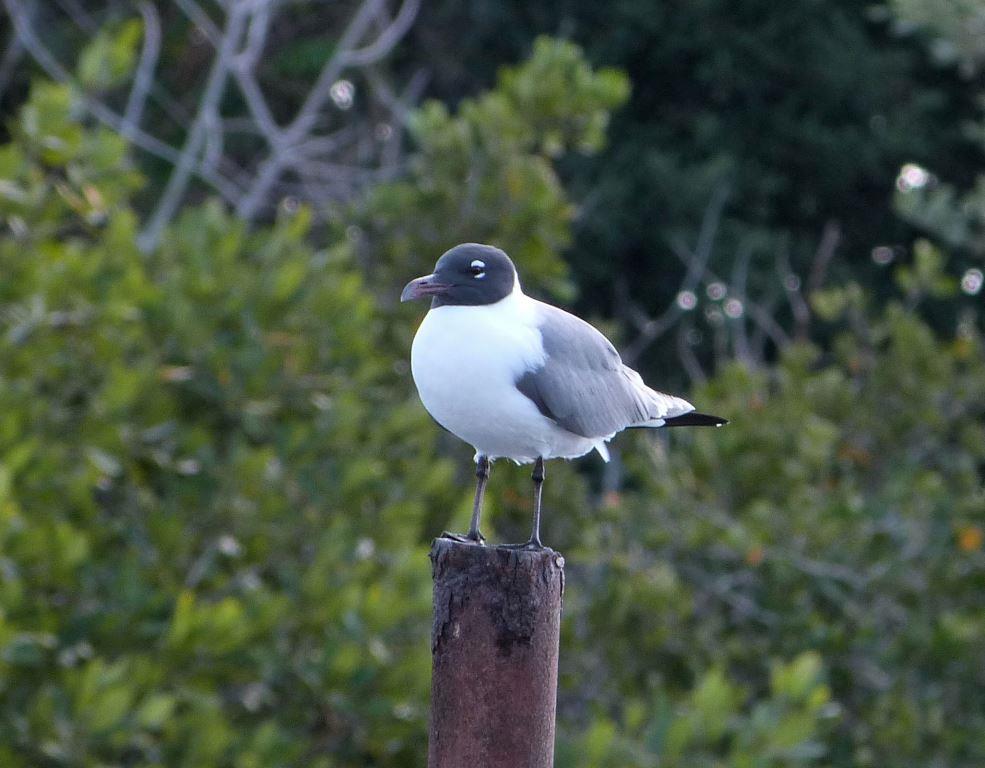
Laughing Gull on post

Laughing Gull on post by Lee

The Laughing Gull is a member of the Laridae – Gulls, Terns and Skimmers Family and is a Bird of the Bible also. The Laughing Gull (Leucophaeus atricilla) is a medium-sized gull of North and South America. It breeds on the Atlantic coast of North America, the Caribbean, and northern South America. Northernmost populations migrate further south in winter, and this species occurs as a rare vagrant to western Europe. The Laughing Gull’s English name is derived from its raucous kee-agh call, which sounds like a high-pitched laugh “ha… ha… ha…”.

This species is easy to identify. It is 14–16 in (36–41 cm) long with a 39–43 in (98–110 cm) wingspan. The summer adult’s body is white apart from the dark grey back and wings and black head. Its wings are much darker grey than all other gulls of similar size except the smaller Franklin’s Gull, and they have black tips without the white crescent shown by Franklin’s. The beak is long and red. The black hood is mostly lost in winter.

Laughing Gulls take three years to reach adult plumage. Immature birds are always darker than most similar-sized gulls other than Franklin’s. First-year birds are greyer below and have paler heads than first-year Franklin’s, and second-years can be distinguished by the wing pattern and structure. Laughing Gulls breed in coastal marshes and ponds in large colonies. The large nest, made largely from grasses, is constructed on the ground. The 3 or 4 greenish eggs are incubated for about three weeks. These are omnivores like most gulls, and they will scavenge as well as seeking suitable small prey. Like most other members of the genus Leucophaeus, the Laughing Gull was long placed in the genus Larus. (Wikipedia with editing)

Interesting Links:

*

Bible Birds – Swallow Introduction

Red-rumped Swallow (Cecropis daurica) by Nikhil Devasar

Red-rumped Swallow (Cecropis daurica) by Nikhil Devasar

Even the stork in the heavens Knows her appointed times; And the turtledove, the swift, and the swallow Observe the time of their coming. But My people do not know the judgment of the LORD. (Jeremiah 8:7 NKJV)

Previously, we introduced the Thrush and used the above verse. Today, we will look at that same verse, but from a different version of Scripture that translates the bird as a Swallow. Here is the same little Greek study for you: The Greek word (the OT was written mostly in Greek) gives the word (H5693) עגוּר -or – ‛âgûr (aw-goor’) An unused root meaning to twitter; probably the swallow: – swallow. Translations using the word Swallow, have more than one verse that refers to the bird. The New King James Version has these other verses:

Even the sparrow has found a home, And the swallow a nest for herself, Where she may lay her young— Even Your altars, O LORD of hosts, My King and my God. (Psalms 84:3 NKJV) Like a flitting sparrow, like a flying swallow, So a curse without cause shall not alight. (Proverbs 26:2 NKJV) Like a crane or a swallow, so I chattered; I mourned like a dove; My eyes fail from looking upward. O LORD, I am oppressed; Undertake for me! (Isaiah 38:14 NKJV)

So there are at least four verses with the Swallow listed. The Swallows belong to the Hirundinidae – Swallows, martins Family. There are 88 members in the family at present. Many times in the Bible they mention a bird‘s name and then say “after its kind.” For now, let’s just same that it means all of those species in that family. The Swallows also have Saw-wings and Martins in the family. They live on all the continents except Antarctica.

This family is known for their aerial feeding. taking flying insects on the wing. Swallows hunt insects on the wing because they were designed with a slender, streamlined body and long pointed wings, which allow great maneuverability and endurance, as well as frequent periods of gliding. Their body shape allows for very efficient flight, which costs 50-75% less for swallows than equivalent passerines of the same size. Swallows usually forage at around 18.6-25 mph (30–40 km/h), although they are capable of reaching speeds of between 31-40 mph (50–65 km/h) when traveling.

The legs are short, and their feet were created for perching rather than walking, as the front toes are partially joined at the base. Swallows are capable of walking and even running, but they do so with a shuffling, waddling gait. The leg muscles of the river martins (Pseudochelidon) are stronger and more robust than those of other swallows.

The most common plumage is glossy dark blue or green above and plain or streaked underparts, often white or rufous. Species which burrow or live in dry or mountainous areas are often matte brown above (e.g. Sand Martin and Crag Martin). The typical song of swallows is a simple, sometimes musical twittering.

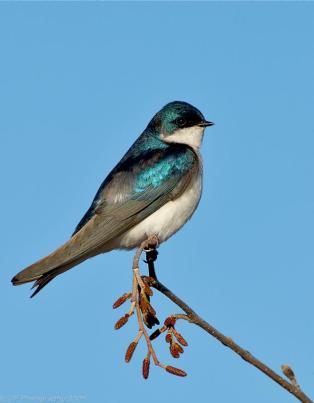
Tree Swallow (Tachycineta bicolor) by J Fenton

Tree Swallow (Tachycineta bicolor) by J Fenton

Our verse above mentions the birds and how they KNOW when it is time to migrate, but what about the end of the verse? The Lord uses birds and other critters as an example, BUT He is mainly trying to teach us something.

Let’s see what some of the different versions say about what we are supposed to learn from these birds.

(HCSB)  ”are aware of their migration, but My people do not know the requirements of the LORD.”

(MSG) …know when it’s time to move south for winter… know when it’s time to come back again. But my people? My people know nothing, not the first thing of GOD and his rule.

(NET) …knows when it is time to move on…recognize the normal times for their migration. But my people pay no attention to what I, the LORD, require of them.

Do you know what the Lord wants you to do? Do you know Him as your Savior? If you do, are you doing what the Bible tells us we should do? Are you obeying your parents? And doing what the Lord wants you to do?.

The Lord loves us, just as your parents do. When you obey them you are happier and blessed. When you do not obey, are you happy or sad? The same is true with obeying the Word that the Lord has given us through His Word, the Bible.

See:

*