The Forgetful Kingfisher

Pied Kingfisher (Ceryle rudis) by Ian

Pied Kingfisher (Ceryle rudis) by Ian

The Forgetful Kingfisher ~ from The Curious Book of Birds

THE FORGETFUL KINGFISHER

Cur Book of Birds letter-iN these days the Kingfisher is a sad and solitary bird, caring not to venture far from the water where she finds her food. Up and down the river banks she goes, uttering a peculiar plaintive cry. What is she saying, and why is she so restless? The American Kingfisher is gray, but her cousin of Europe is a bird of brilliant azure with a breast of rusty red. Therefore it must have been the foreign Kingfisher who was forgetful, as you shall hear.

Long, long after the sorrows of Halcyone, the first Kingfisher, were ended, came the great storm which lasted forty days and forty nights, causing the worst flood which the world has ever known. That was a terrible time. When Father Noah hastened to build his ark, inviting the animals and birds to take refuge with him, the Kingfisher herself was glad to go aboard. For even she, protected by Æolus from the fury of winds and waters, was not safe while there was no place in all the world for her to rest foot and weary wing. So the Kingfisher fluttered in with the other birds and animals, a strange company! And there they lived all together, Noah and his arkful of pets, for many weary days, while the waters raged and the winds howled outside, and all the earth was covered fathoms deep out of sight below the waves.

But after long weeks the storm ceased, and Father Noah opened the little window in the ark and sent forth the Dove to see whether or not there was land visible on which the ark might find rest. Now after he had sent out the Dove, Noah looked about him at the other birds and animals which crowded around him eagerly, for they were growing very restless from their long confinement, and he said, “Which of you is bravest, and will dare follow our friend the Dove out into the watery world? Ah, here is the Kingfisher. Little mother, you at least, reared among the winds and waters, will not be afraid. Take wing, O Kingfisher, and see if the earth be visible. Then return quickly and bring me faithful word of what you find out yonder.”

Day was just beginning to dawn when the Kingfisher, who was then as gray as gray, flew out from the little window of the ark whence the Dove had preceded her. But hardly had she left the safe shelter of Father Noah’s floating home, when there came a tremendous whirlwind which blew her about and buffeted her until she was almost beaten into the waves, which rolled endlessly over the face of the whole earth, covering the high hills and the very mountains. The Kingfisher was greatly frightened. She could not go back into the ark, for the little window was closed, and there was no land anywhere on which she could take refuge. Just think for a moment what a dreadful situation it was! There was nothing for her to do but to fly up, straight up, out of reach from the tossing waves and dashing spray.

The Kingfisher was fresh and vigorous, and her wings were strong and powerful, for she had been resting long days in the quiet ark, eating the provisions which Father Noah had thoughtfully prepared for his many guests. So up, up she soared, above the very clouds, on into the blue ether which lies beyond. And lo! as she did so, her sober gray dress became a brilliant blue, the color caught from the azure of those clear heights. Higher and higher she flew, feeling so free and happy after her long captivity, that she quite forgot Father Noah and the errand upon which she had been sent. Up and up she went, higher than the sun, until at last she saw him rising far beneath her, a beautiful ball of fire, more dazzling, more wonderful than she had ever guessed.

“Hola!” she cried, beside herself with joy at the sight. “There is the dear sun, whom I have not seen for many days. And how near, how beautiful he is! I will fly closer still, now that I have come so near. I will observe him in all his splendor, as no other bird, not even the high-flying, sharp-eyed Eagle, has ever seen him.”

And with that the foolish Kingfisher turned her course downward, with such mad, headlong speed that she had scarcely time to feel what terrible, increasing heat shot from the sun’s rays, until she was so close upon him that it was too late to escape. Oh, but that was a dreadful moment! The feathers on her poor little breast were scorched and set afire, and she seemed in danger not only of spoiling her beautiful new blue dress but of being burned into a wretched little cinder. Horribly frightened at her danger, the Kingfisher turned once more, but this time toward the rolling waters which covered the earth. Down, down she swooped, until with the hiss of burning feathers she splashed into the cold wetness, putting out the fire which threatened to consume her. Once, twice, thrice, she dipped into the grateful coolness, flirting the drops from her blue plumage, now alas! sadly scorched.

Common Kingfisher (Alcedo atthis) by W Kwong

Common Kingfisher (Alcedo atthis) by W Kwong

When the pain of her burns was somewhat relieved she had time to think what next she should do. She longed for rest, for refuge, for Father Noah’s gentle, caressing hand to which she had grown accustomed during those stormy weeks of companionship in the ark. But where was Father Noah? Where was the ark? On all the rolling sea of water there was no movement of life, no sign of any human presence. Then the Kingfisher remembered her errand, and how carelessly she had performed it. She had been bidden to return quickly; but she had wasted many hours—she could not tell how many—in her forgetful flight. And now she was to be punished indeed, if she could not find her master and the ark of refuge.

The poor Kingfisher looked wildly about. She fluttered here and there, backward and forward, over the weary stretch of waves, crying piteously for her master. He did not answer; there was no ark to be found. The sun set and the night came on, but still she sought eagerly from east to west, from north to south, always in vain. She could never find what she had so carelessly lost.

The truth is that during her absence the Dove, who had done her errand faithfully, returned at last with the olive leaf which told of one spot upon the earth’s surface at last uncovered by the waves. Then the ark, blown hither and thither by the same storm which had driven the Kingfisher to fly upward into the ether-blue, had drifted far and far to Mount Ararat, where it ran aground. And Father Noah, disembarking with his family and all the assembled animals, had broken up the ark, intending there to build him a house out of the materials from which it was made. But this was many, many leagues from the place where the poor Kingfisher, lonely and frightened, hovered about, crying piteously for her master.

And even when the waters dried away, uncovering the earth in many places, so that the Kingfisher could alight and build herself a nest, she was never happy nor content, but to this day flies up and down the water-ways of the world piping sadly, looking eagerly for her dear master and for some traces of the ark which sheltered her. And the reflection which she makes in the water below shows an azure-blue body, like a reflection of the sky above, with some of the breast-feathers scorched to a rusty red. And now you know how it all came about.
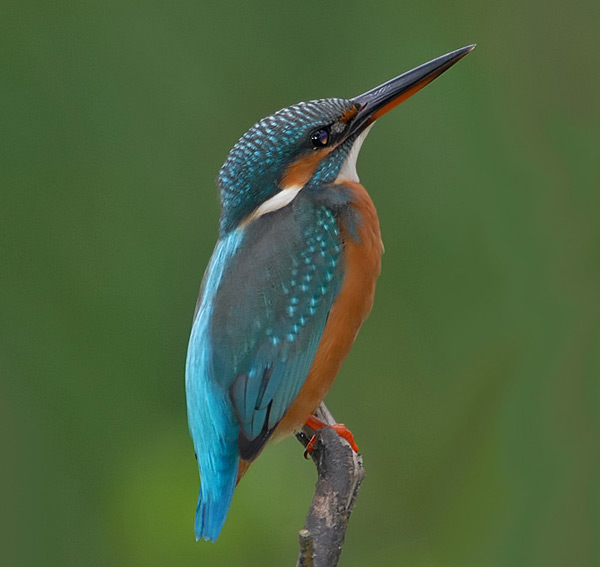

Common Kingfisher (Alcedo atthis) by Nikhil Devasar

Common Kingfisher (Alcedo atthis) by Nikhil Devasar

Lee’s Addition:

An enjoyable Bird Tale from The Curious Book of Birds. Kingfishers belong to the Alcedinidae – Kingfishers Family.

We know the Lord created Kingfishers and gave them their colors, but it is fun to read stories about them, even if they are make-believe. The flood and the ark were true, but that is not quite how they came to fly up and down the waterways.

That they may set their hope in God, And not forget the works of God, But keep His commandments; (Psalms 78:7 NKJV)

My son, do not forget my law, But let your heart keep my commands; (Proverbs 3:1 NKJV)

Get wisdom! Get understanding! Do not forget, nor turn away from the words of my mouth. (Proverbs 4:5 NKJV)

Kingfishers have been created by a loving Creator just as we have been. We differ from the birds because we were made in God’s image. Therefore, we need to remember our teachings about God and Christ and not forget them. That also includes what your parents ask you to do also.

(Photos added by me.)

Links:

White-throated Kingfisher (Halcyon smyrnensis) by Nikhil Devasar


  Alcedinidae – Kingfishers Family


Painted Bunting (Passerina ciris) ©©Flickr


  Bird Tales


Curious Book of Birds - Cover


  The Curious Book of Birds


Spanish Sparrow (Passer Hispaniolensis) female ©WikiC


  Wordless Birds


*
Birds of the Bible – The Bat Revisited

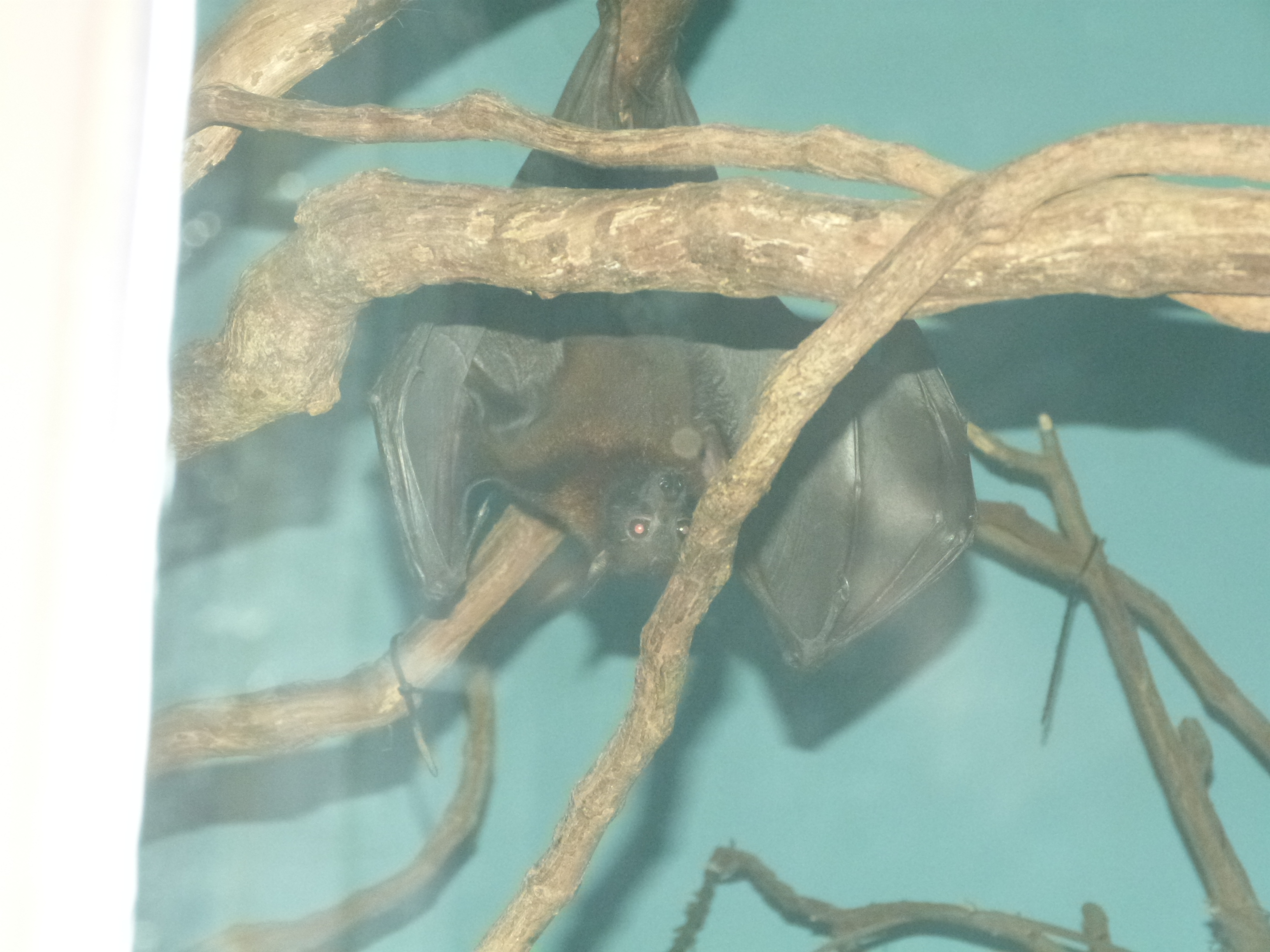
Giant Fruit Bat at Cincinnati Zoo 9-5-13 by Dan

Giant Fruit Bat at Cincinnati Zoo by Dan

And the stork, the heron after her kind, and the lapwing, and the bat. All fowls that creep, going upon all four, shall be an abomination unto you. Yet these may ye eat of every flying creeping thing that goeth upon all four, which have legs above their feet, to leap withal upon the earth; Even these of them ye may eat; the locust after his kind, and the bald locust after his kind, and the beetle after his kind, and the grasshopper after his kind. But all other flying creeping things, which have four feet, shall be an abomination unto you.
(Leviticus 11:19-23 KJV)

While we were at the Cincinnati Zoo, we were able to see and photograph several Bat species. They were really cool and I wanted to share them with you.

Giant Fruit Bat at Cincinnati Zoo 9-5-13 by Lee

Giant Fruit Bat at Cincinnati Zoo by Lee

Then I remembered that I had written about them in Birds of the Bible – The Bat?, in 2010. In that article, the controversy over whether a Bat is a Bird was mentioned, with several commentary comments. This time, I am mainly sharing the photos of the Bats that are there at the Zoo and comments about them. Just one personal observation about the above verses. The use of “fowl” in the King James Version and some of the others seems to refer to any creature that had wings and flies. I quoted the whole context because; 1) The verse and chapter separations were inserted later, 2) Birds, bats, and insects all seem to be referred to with the same collective term, “fowl.” I do not have a problem with the bat. It is not a bird.

The only other verses using “bat” or “bats” are:

And the stork, and the heron after her kind, and the lapwing, and the bat. (Deuteronomy 14:18 KJV)

In that day a man shall cast his idols of silver, and his idols of gold, which they made each one for himself to worship, to the moles and to the bats; (Isaiah 2:20 KJV)

The bats we saw at the Cincinnati Zoo were the Giant Fruit Bats and the Vampire Bats. They are amazing creatures of design and creation from their Creator, the Lord.

*
Giant Fruit Bat at Cincinnati Zoo 9-5-13 by Lee

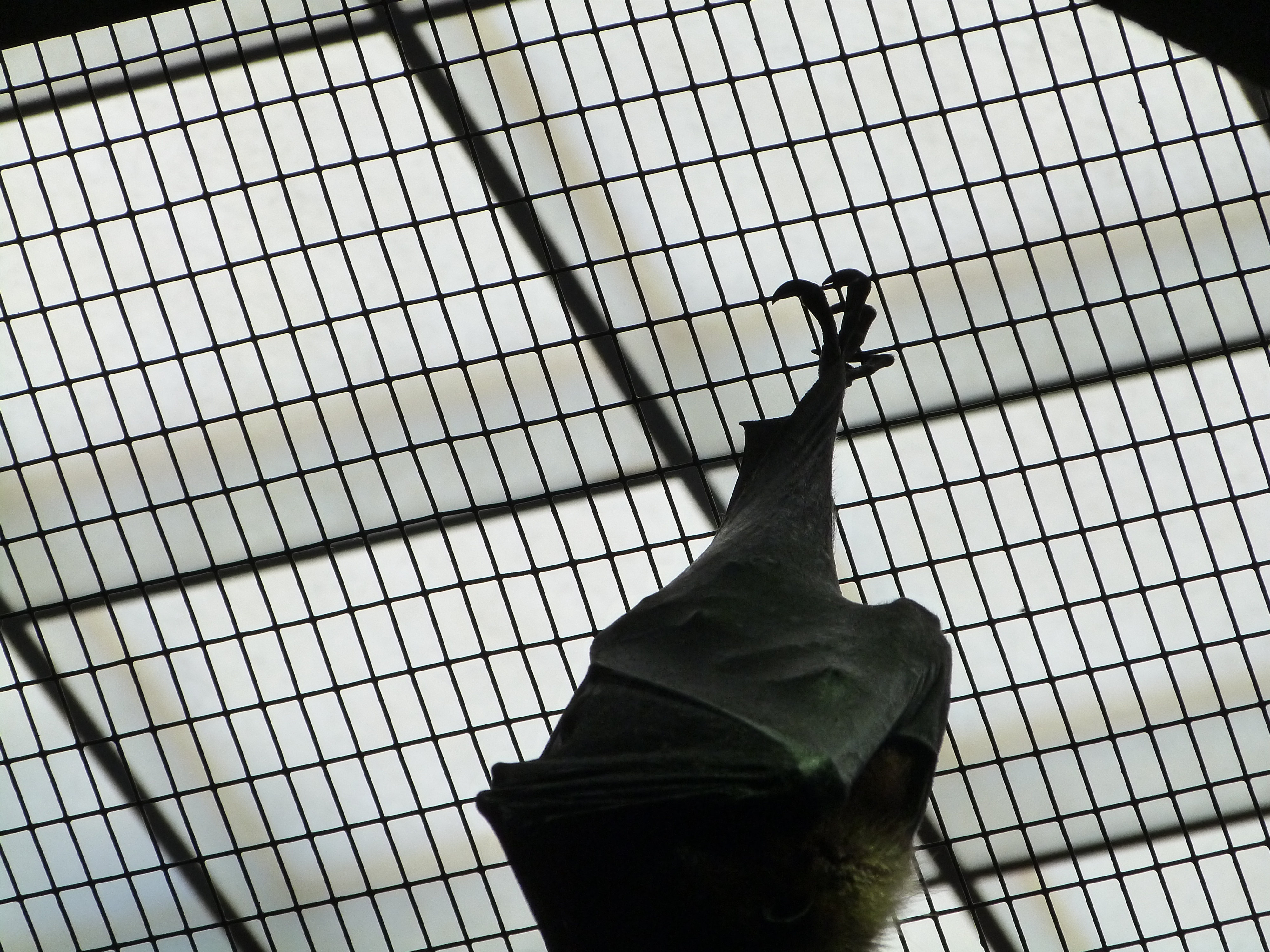
Giant Fruit Bat’s Foot amazed me

Giant Fruit Bat (Pteropus giganteus) or Indian Flying Fox is found in Bangladesh, China, India, the Maldives, Nepal, Pakistan, and Sri Lanka. Also known as the greater Indian fruit bat, it lives in mainly forests. It is a very large bat with a wingspan between 3 ft 10 in and 4 ft 10 in (1.2 and 1.5 m). It is nocturnal and feeds mainly on ripe fruits, such as mangoes and bananas, and nectar. This bat is gregarious and lives in colonies which can number a few hundred. Their offspring have no specific name besides ‘young’. They have one to two young.

The Indian flying fox lives in tropical forests and swamps, where a large body of water is nearby.

The way they were hanging up there amazed me. I zoomed in and took a photo of its foot. Also, they almost looked like a large cocoon hanging up there with the wings wrapped around them. The first photo, Dan caught one of them stretching.

*
*

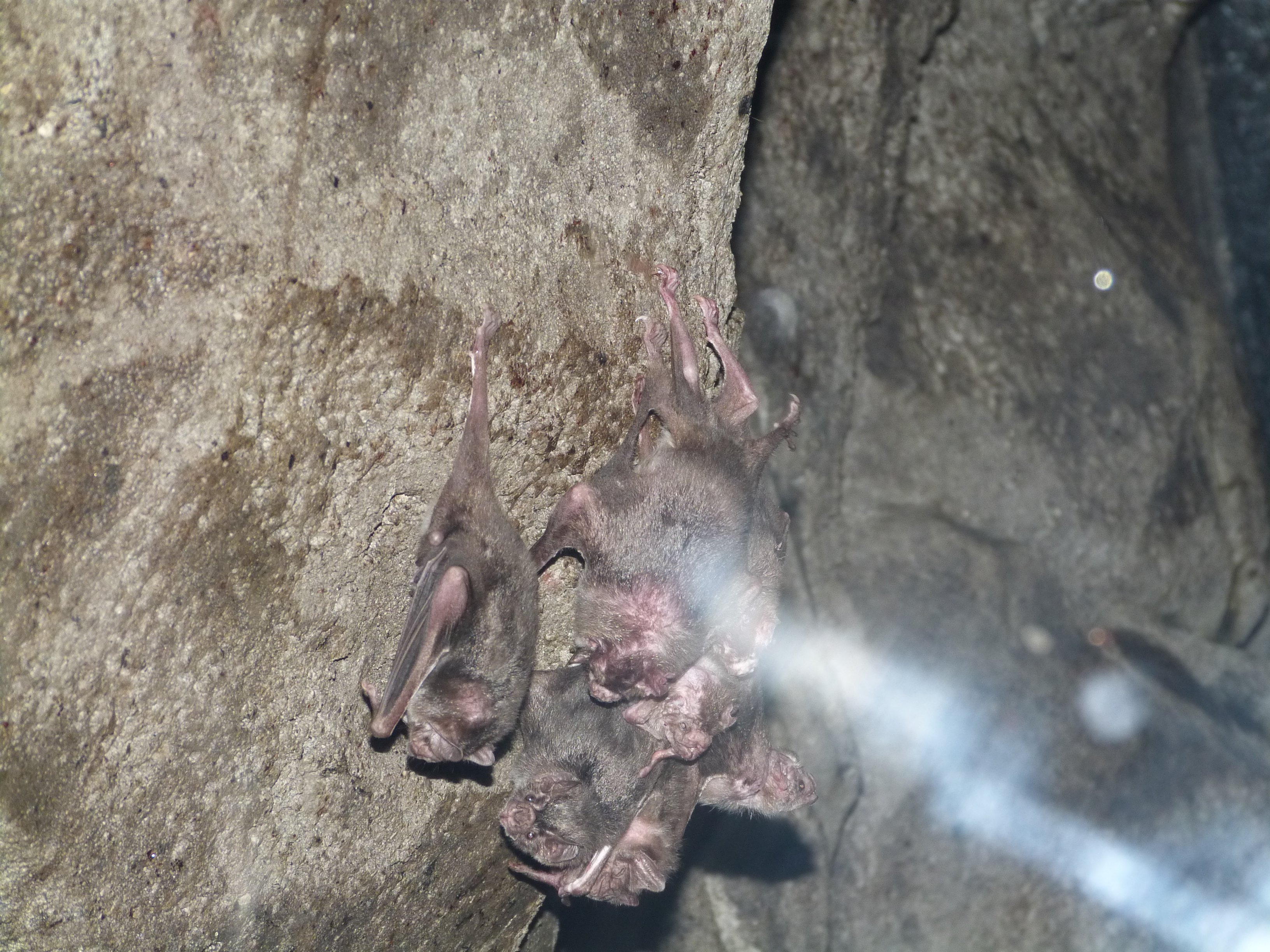
Common Vampire Bat (Desmodus rotundus) Cincinnati Zoo 9-5-13 by Lee

Common Vampire Bat Cincinnati Zoo by Lee (Shot through glass into a dark exhibit)

(Common) Vampire Bat (Desmodus rotundus) – The common vampire bat mainly feeds on the blood of livestock, approaching its prey at night while they are sleeping. It uses its razor-sharp teeth to cut open the skin of its hosts and laps up their blood with its long tongue. They are native to the New World, ranging from Mexico to Brazil, Chile, and Argentina.

The common vampire bat is short-haired, with silver-gray fur on its undersides, sharply demarcated from the darker fur on its back. It has small, somewhat rounded ears, a deeply grooved lower lip, and a flat, leaf-shaped nose. A well-developed, clawed thumb on each wing is used to climb onto prey and to assist the animal in take-off. The bat averages about 3.5 in (9 cm) long with a wingspan of 7 in (18 cm). It commonly weighs about 2 oz (57 grams), but its weight can double after a single feeding. The braincase is relatively large, but the snout is reduced to accommodate large incisors and canines. It has the fewest teeth among bats.

Common Vampire Bat - Cincinnati Zoo by Lee

Common Vampire Bat – Cincinnati Zoo by Lee

Common vampire bats have good eyesight. They are able to distinguish different optical patterns and may use vision for long-range orientation. These bats also have well-developed senses of smell and hearing: the cochlea is highly sensitive to low-frequency acoustics, and the nasal passages are relatively large. They emit echolocation signals orally, and thus fly with their mouths open for navigation.

Common Vampire Bat - Cincinnati Zoo by Lee

Common Vampire Bat – Cincinnati Zoo by Lee

*
(Wikipedia with editing)

*

*

Links:

Cincinnati Zoo

Giant Fruit Bats – Cincinnati Zoo

Indian Flying Fox – Wikipedia

Vampire Bats – Cincinnati Zoo

Common Vampire Bat – Wikipedia

Birds of the Bible – The Bat?

Birds of the Bible

*

Child’s Book of Water Birds ~ The Oyster Catcher

The Oyster Catcher

Child's Book of Water Birds - Book Cover

Child’s Book of Water Birds – Book Cover

***

Childs Bk of Water Birds titlebird

NEW YORK

LEAVITT & ALLEN.

1855.

***

Welcome to the Updated Child’s Book of Water Birds, by Anonymous. It was written in 1855 and this is 2013. That is 158 years ago.

*
*
Childs Bk of Water Birds oystercatcher

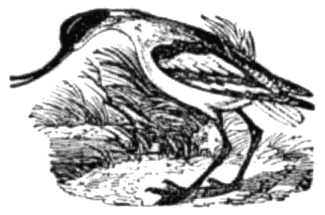
THE OYSTER CATCHER.

The Oyster Catcher feeds generally on shell-fish, oysters, limpets, &c. He detaches them from the rocks to which they are fastened, and opens them with his long, stout bill. The head, neck, and body are black. It lays two olive-brown eggs, spotted with black.

*

American Oystercatcher (Haematopus palliatus) by Robert Scanlon

American Oystercatcher (Haematopus palliatus) by Robert Scanlon

Update:

Just as day was breaking, Jesus stood on the shore; yet the disciples did not know that it was Jesus. (John 21:4 ESV)

American Oystercatchers are sometimes called the American Pied Oystercatcher. They are about 19 inches (42-52 cm) long. They were created with a large thick orange or red beak which helps them pry open their food, like oysters, clams, and mussels. They belong to the Oystercatcher Family which has twelve (12) species. They like the coastal areas and nest on the beaches. In winter, they are found in flocks along the coast from central New Jersey to the Gulf of Mexico (eastern) or along the Pacific coast from northwestern Baja California southward. (western).

Black Oystercatcher (Haematopus bachmani) Family by Beedie Savage

Black Oystercatcher (Haematopus bachmani) Family by Beedie Savage

***

See the other five Child’s Book of Water Birds:

The Swan

The Coot

The Dabchick

The Teal

The Goose

*

Oystercatcher Family

Oystercatcher – Wikipedia

Oystercatcher – All About Birds

Oystercatcher – ARKive


Bible Birds

Wordless Birds

*

Child's Book of Water Birds - Levit and Allen

Back Cover

*** PROJECT GUTENBERG EBOOK CHILD'S BOOK OF WATER BIRDS ***

*

The Dove – Weather Reporter… ~ Nuggets Plus

Mourning Dove (Zenaida macroura) by Quy Tran

Mourning Dove (Zenaida macroura) by Quy Tran

The Dove – Weather Reporter…
by A J Mithra
_

Nuggets Plus

Nuggets Plus

Dove sent by Noah

came at dusk with an olive leaf

and Noah knew that

the flood had receded!

God sent the dove, His Holy spirit

at dusk to the upper room

to encourage us or to help us

warn about the flood of the last days?

But as the days of Noah were, so shall also the coming of the Son of man be.”  Mathew 24:37


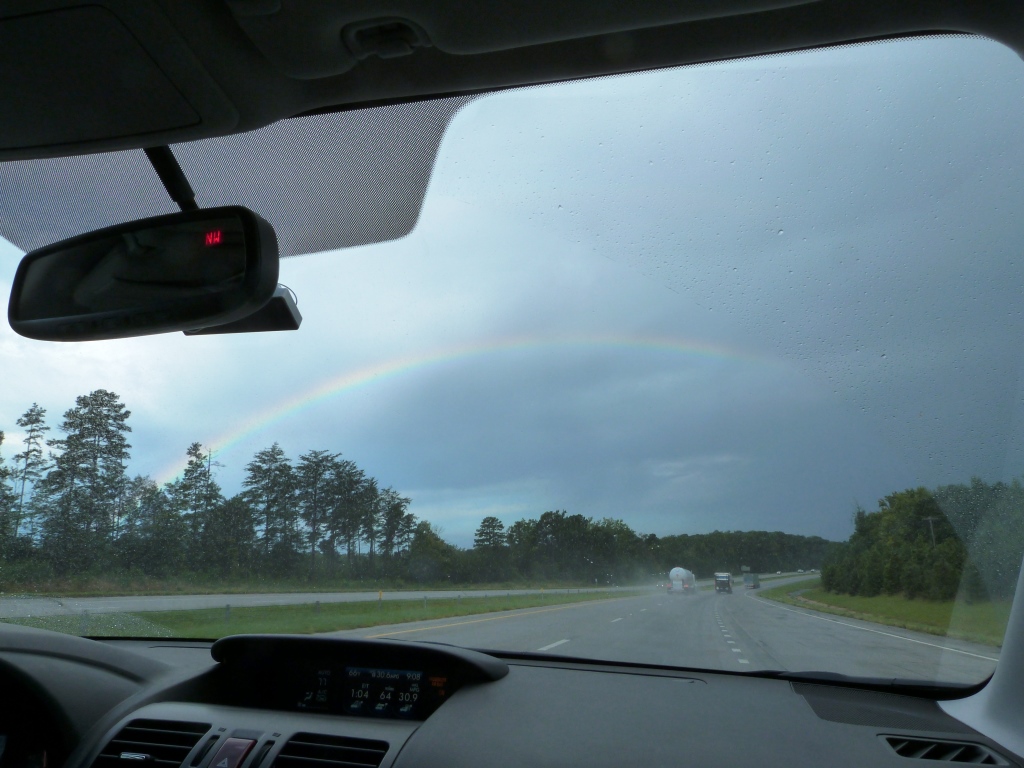
Carolina rainbow

Carolina rainbow

Lee’s Addition:

Thanks, A J, your timing is perfect as usual. We just got back from a week and a half trip to Indiana. Praise the Lord for his traveling mercies and for all of you who were praying for us as we traveled 2,300 miles. Also, we had great weather. Only one rain storm for about 10 minutes which produced a beautiful rainbow in South Carolina. More about the trip that later.

The rainbow shall be in the cloud, and I will look on it to remember the everlasting covenant between God and every living creature of all flesh that is on the earth. (Genesis 9:16 NKJV)

More Nuggets Plus

*


Birds Vol 2 #6 – The Volume II. July to December 1897 – Index

Yellow-Breasted Chat (Icteria virens) by USGS

Yellow-Breasted Chat (Icteria virens) by USGS

*

VOLUME II. JULY TO DECEMBER, 1897.

INDEX.

(RELOCATED – CLICK HERE)

Anhinga, or Snake Bird, Anhinga Anhingapages  Page  26-27
Avocet, American, Recurvirostra Americana 14-15
Audubon, John James 161
Bird Song JulSep
Bird MiscellanyBird Miscellany Plus 195-235
Blue Bird, Mountain, Sialia arctica 203-205
Bunting, Lazuli, Passerina amoena 196-198-199
Chimney Swift, Chætura pelagica 131-133
Captive’s Escape 116
Chat, Yellow-Breasted, Icteria virens 236-238-239
Cuckoo, Yellow-Billed, Coccyzus americanus 94-95
Dove, Mourning, Zenaidura macrura 111-112-113
Duck, Canvas-back, Athya valisneria 18-20
Duck, Mallard, Anas boschas 10-11-13
Duck, Wood, Aix Sponsa 21-23-24
Eagle, Baldheaded, Haliœtus lencocephalus 2-3-5
Flamingo, Phœnicopterus ruber 218-221
Flycatcher, Vermillion, Pyrocephalus rubineus mexicanus 192-193
Gold Finch, American, Spinus tristis 128-129-130
Goose, White-fronted, Anser albifrons gambeli 166-168-169
Grackle, Bronzed, Quiscalus quiscula 228-230-231
Grosbeak, Evening, Cocothraustes vespertina 68-70-71
Grouse, Black, Tetrao tetrix 217-220-223
Heron, Snowy, Ardea candidissima 38-39
How the Birds Secured Their Rights 115
Humming Bird, Allen’s Selasphorus alleni 210-211
Humming Bird, Ruby-Throated, Trochilus colubris 97-100-103
Junco, Slate Colored, Junco hyemalis 153-155
Kingbird, Tyrannus tyrannus 156-158-159
Kingfisher, European, Alcedo ispida 188-190-191
Kinglet, Ruby-crowned, Regulus calendula 108-110
Lark, Horned, Otocoris alpestris 134-135
Lost Mate 126
Merganser, Red-Breasted, Merganser serrator 54-55
Nuthatch, White-Breasted, Sitta carolinensis 118-119
Old Abe 35
Ornithological Congress 201
Osprey, American, Pandion paliœtus carolinenses 42-43-45
Partridge, Gambel’s, Callipepla gambeli 78-79
Phalarope, Wilson’s, Phalaropus tricolor 66-67
Pheasant, Ring-Necked, Phasianus torquatus 232-233
Phœbe, Sayornis phœbe 106-107
Plover, Belted Piping, Aegialitis meloda circumcincta 174-175
Plover, Semipalmated Ring, Aegialitis semi-polmata 6-8-9
Rail, Sora, Porzana Carolina 46-48-49
Sapsucker, Yellow-bellied, Sphyrapicus varius 137-140-143
Scoter, American, Oidemia deglandi 32-33
Skylark, Alauda arvensis 61-63-64
Snake Bird, (Anhinga) Anhinga anhinga 26-27
Snowflake, Plectrophenax nivalis 150-151-152
Sparrow, English, Passer domesticus 206-208-209
Sparrow, Song, Melospiza fasciata 90-91-93
Summaries (See each bird)
Tanager, Summer, Piranga rubra 163-165
Teal, Green winged, Anas carolinensis 213-214-215
The Bird’s Story 224
Thrush, Hermit, Turdus Aonalaschkae 86-88-89
To a Water Fowl 76
Tropic Bird, Yellow-billed, Phaethon flavirostris 184-186-187
Turkey, Wild, Meleagris gallopava 177-180-183
Turnstone, Arenaria interpres 170-171
Verdin, Auriparus flaviceps 226-227
Vireo, Warbling, Vireo gilvus 138-141
Vulture, Turkey, Catharista Atrata 72-73-75
Warbler, Blackburnian, Dendroica blackburnia 123-125
Warbler, Cerulean, Dendrœca caerulea 178-181
Warbler, Kentucky, Geothlypis formosa 50-51-53
Warbler, Yellow, Dendroica æstiva 83-85
Woodcock, American, Philohela minor 28-30-31
Wren, House, Troglodytes ædon 98-101-104
Wood Pewee, Contopus Virens 144-146-147-
Yellow Legs, Totanus flavipes 58-60

*

How precious also are Your thoughts to me, O God! How great is the sum of them! (Psalm 139:17 NKJV)

*

Birds Illustrated by Color Photography – Revisited

The above article is an article in the monthly serial for October 1897 “designed to promote Knowledge of Bird-Live.” These include Color Photography, as they call them, today they are drawings. There are at least three Volumes that have been digitized by Project Gutenberg.

To see the whole series of – Birds Illustrated by Color Photography – Revisited

*

Next Article – TBA

The Previous Article – The Yellow-breasted Chat

Wordless Birds

*

Birdwatching at the Cincinnati Zoo I

Cincinnati Zoo from Phone

Cincinnati Zoo from Phone

“Remember to magnify His work, Of which men have sung. (Job 36:24 NKJV)

Yesterday, we had the pleasure of checking out more birds of the Lord’s creation at the Cincinnati Zoo. The weather and the temperature were great and the birds were quite content to let us watch and photograph them. It has been over 45 years ago since we visited this zoo. Needless to say, it has changed and the most striking was their beautiful landscaping throughout the zoo.

Statue at the entrance to the Wings of the World exhibit.

Statue at the entrance to the Wings of the World exhibit.

When we arrived at the Wings of the World area, We were greeted by several birds and a neat statute of a child holding a bird. This shows how some of the landscaping was used around the zoo.

Statue at Wings of the World exhibit. Close-up

Statue at Wings of the World exhibit. Close-up

Wings of the World Aviary is divided into several different habitats and types of birds.

Wings of the World Aviary - Cincinnati Zoo 9-5-13

Wings of the World Aviary – Cincinnati Zoo

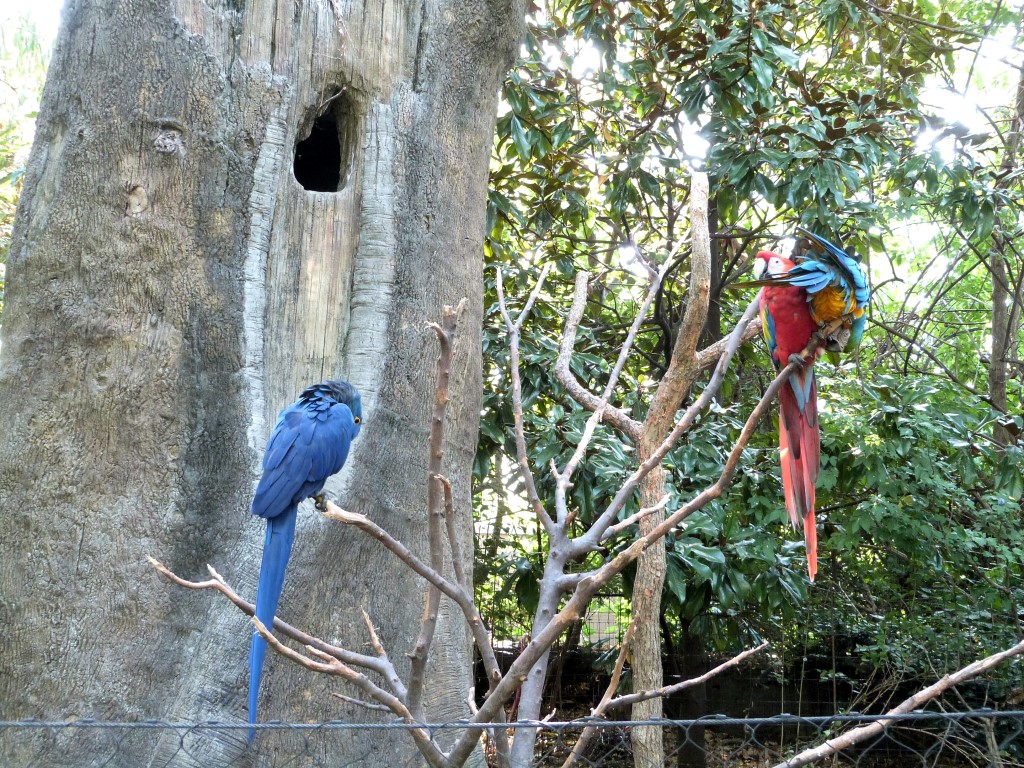
As you enter, you are greeted by Macaws, Screamers and a Laughing Kookaburra.

Southern Screamer

Southern Screamer (Chauna torquata) Cincinnati Zoo 9-5-13 by Lee

Southern Screamer (Chauna torquata) Cincinnati Zoo by Lee

*

Southern Screamer (Chauna torquata) Cincinnati Zoo 9-5-13 by Lee

Southern Screamer (Chauna torquata) by Lee

Macaws

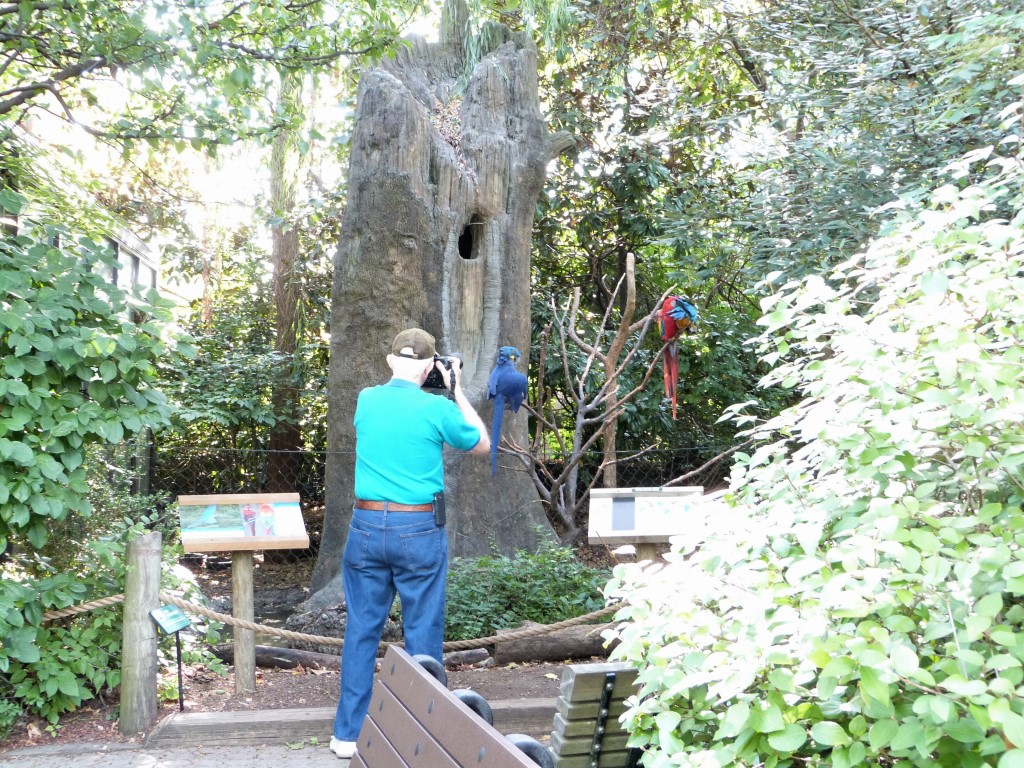
Dan photographing the MaCaws Cincinnati Zoo

Dan photographing the MaCaws Cincinnati Zoo

*

Parrots - McCaws by Lee

Parrots – McCaws by Lee

*

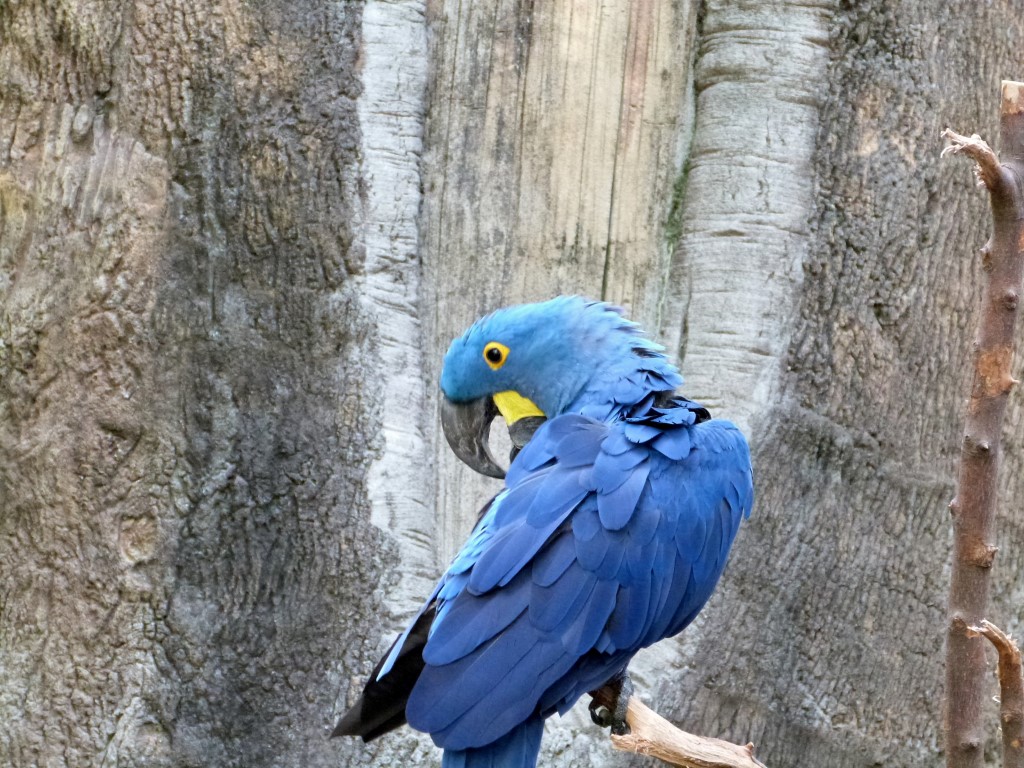
Hyacinth Macaw (Anodorhynchus hyacinthinus) Cincinnati Zoo 9-5-13 by Lee

Hyacinth Macaw (Anodorhynchus hyacinthinus) by Lee

*

Cincinnati Zoo 9-5-13

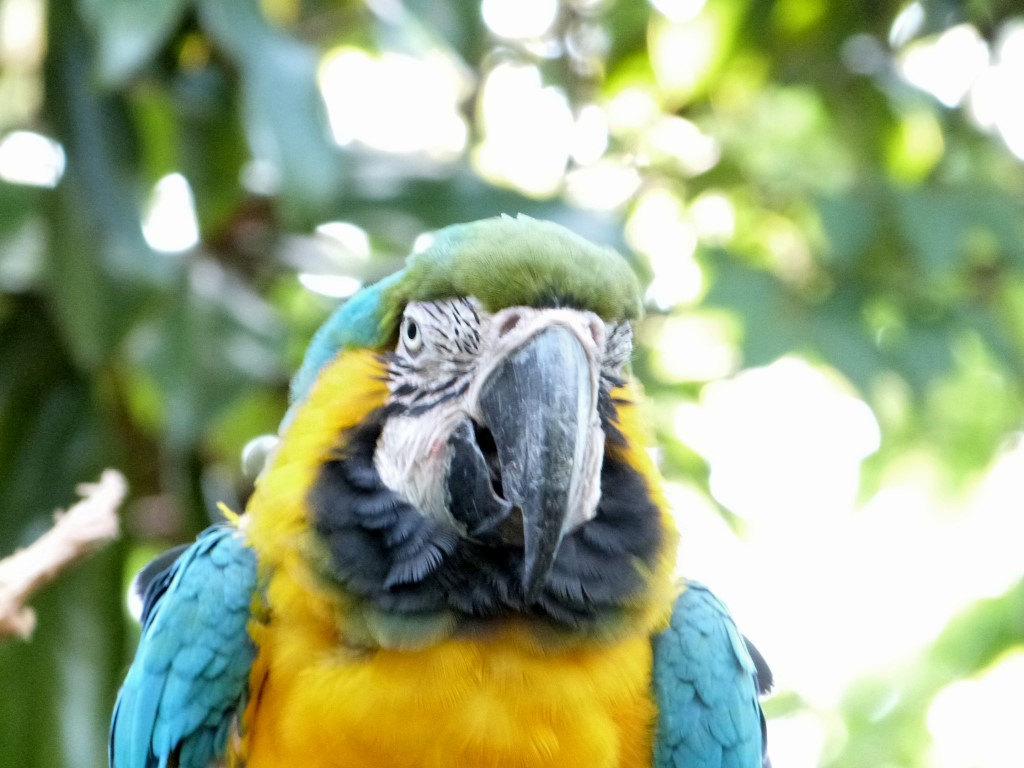
Blue-and-yellow Macaw (Ara ararauna) Cincinnati Zoo by Lee

*

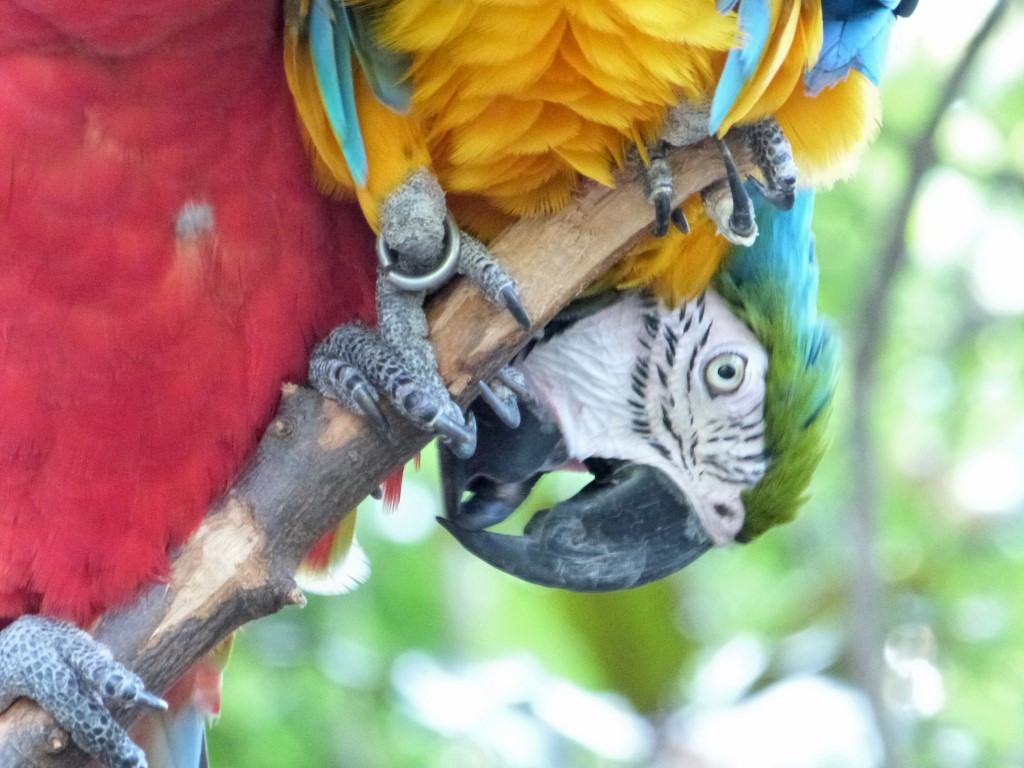
Scarlet and Blue-and-yellow Macaws by Lee

Scarlet and Blue-and-yellow Macaws by Lee

*

Scarlet and Blue-and-yellow Macaw

Scarlet and Blue-and-yellow Macaw

*

Kookaburra

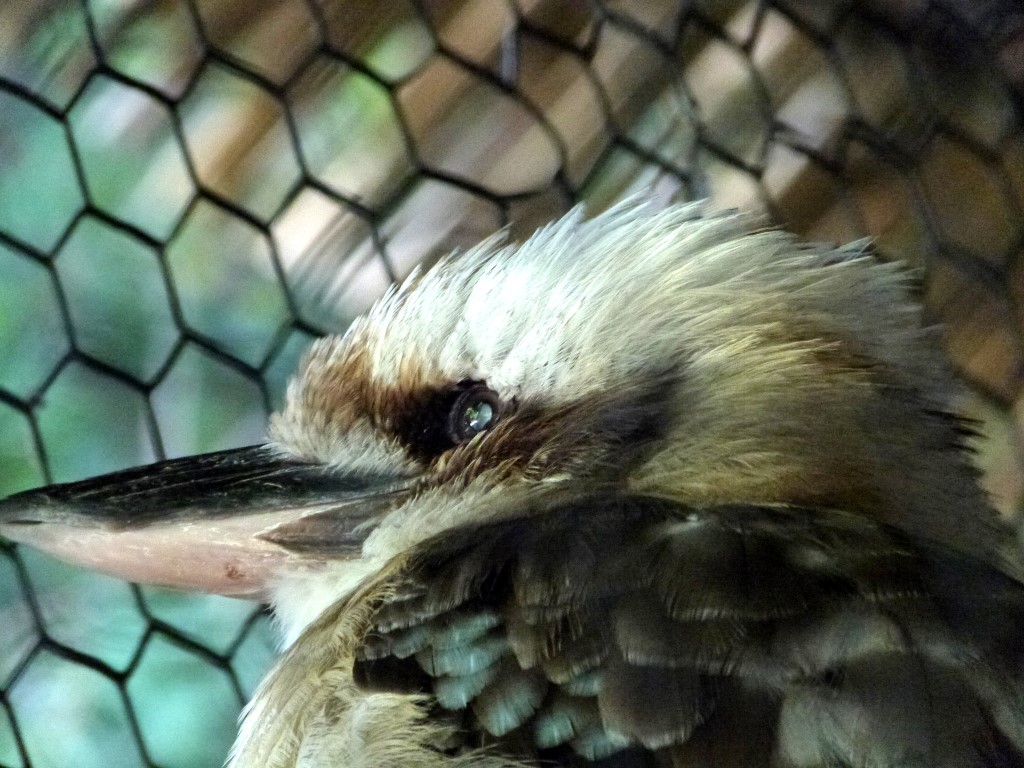
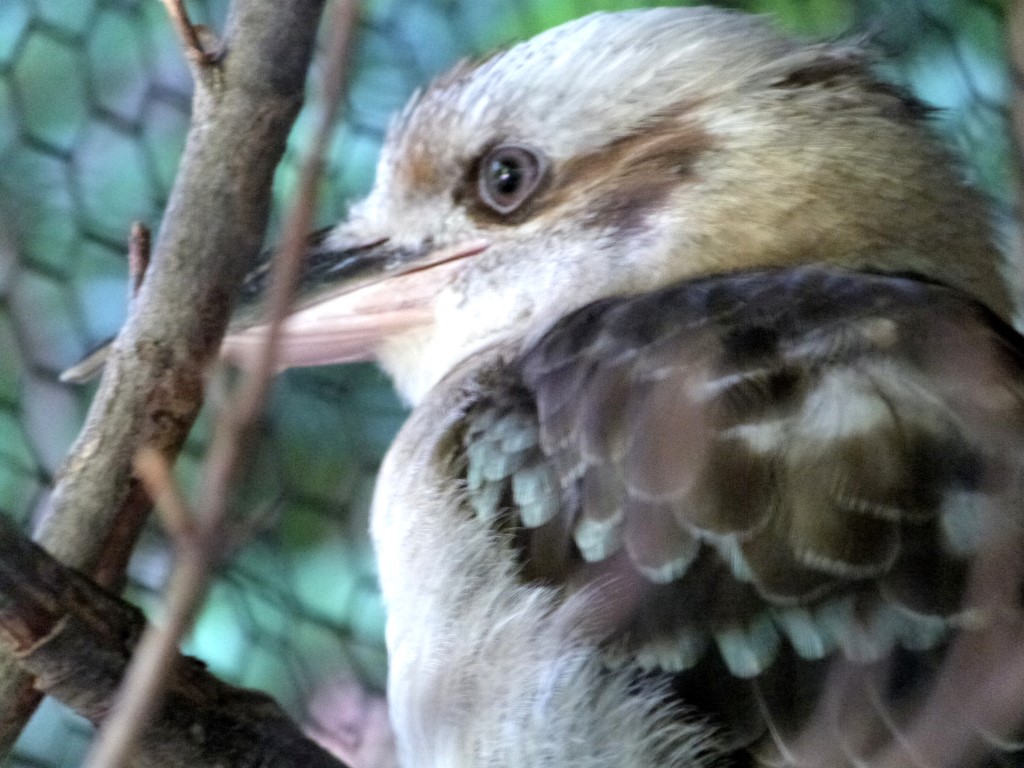
Laughing Kookaburra (Dacelo novaeguineae)

Laughing Kookaburra (Dacelo novaeguineae)

*

Laughing Kookaburra (Dacelo novaeguineae) by Lee Cincinnati Zoo 9-5-13

Laughing Kookaburra (Dacelo novaeguineae) by Lee

*

Laughing Kookaburra (Dacelo novaeguineae) by Lee Cincinnati Zoo 9-5-13

Laughing Kookaburra (Dacelo novaeguineae) by Lee

This is just the beginning of our visit to the Cincinnati Zoo. Look for more articles about some really neat birds like a Mousebird, Bee-eater, Bishop, Penguins, Murres and more.

Also:
Anhimidae – Screamers Family

Psittacidae – Parrots Family

Alcedinidae – Kingfishers Family

Cincinnati Zoo

*

Child’s Book of Water Birds ~ The Goose

The Goose

Child's Book of Water Birds - Book Cover

Child’s Book of Water Birds – Book Cover

***

Childs Bk of Water Birds titlebird

NEW YORK

LEAVITT & ALLEN.

1855.

***

Welcome to the Updated Child’s Book of Water Birds, by Anonymous. It was written in 1855 and this is 2013. That is 158 years ago.

*
*

Childs Bk of Water Birds goose

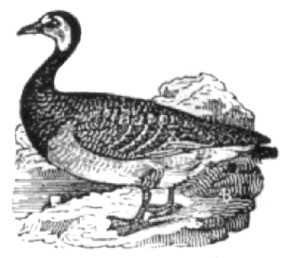
THE GOOSE.

The Goose is a very common bird. In Lincolnshire, England, enormous flocks are bred, containing from two to ten thousand each. They are subjected to the plucking of their wing-feathers periodically, in order to supply the demand for quills.

*

Canada Goose (Branta canadensis) w brood ©USFWS

Canada Goose (Branta canadensis) w brood ©USFWS

Update:

Today we use ballpoint pens and the Geese do not need to have their feathers plucked for quill pens. There are many Geese here in America and around the world.  They belong to the Ducks, Geese & Swan Family. Many local parks have geese of various kinds. They are larger than Ducks, but smaller than Swans,

The female is called a “goose” and the male is the “gander.” Some of the kinds of geese are: Barnacle, Cackling, Canada, Emperor, Nene, Ross’s and the Snow Goose.

Many geese, like the Snow Goose, have their chicks in summer in the northern parts of America and then fly south in the winter. They gather in huge flocks.

*

Even the stork in the heavens knows her times, and the turtledove, swallow, and crane keep the time of their coming, but my people know not the rules of the LORD. (Jer 8:7 ESV)

***

See the other five Child’s Book of Water Birds:

The Swan

The Coot

The Dabchick

The Teal

The Oyster Catcher

*

Ducks, Geese & Swan Family.

Bible Birds

Wordless Birds

*
Child's Book of Water Birds - Levit and Allen
*** PROJECT GUTENBERG EBOOK CHILD'S BOOK OF WATER BIRDS ***

*

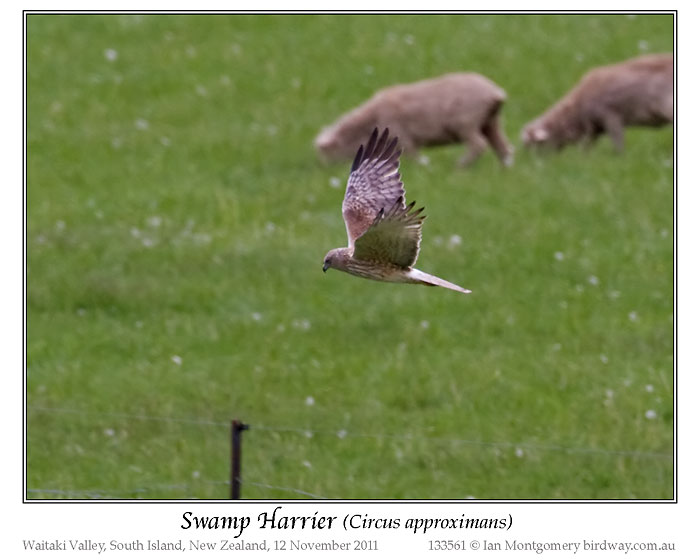
Ian’s Bird of the Week – Swamp Harrier

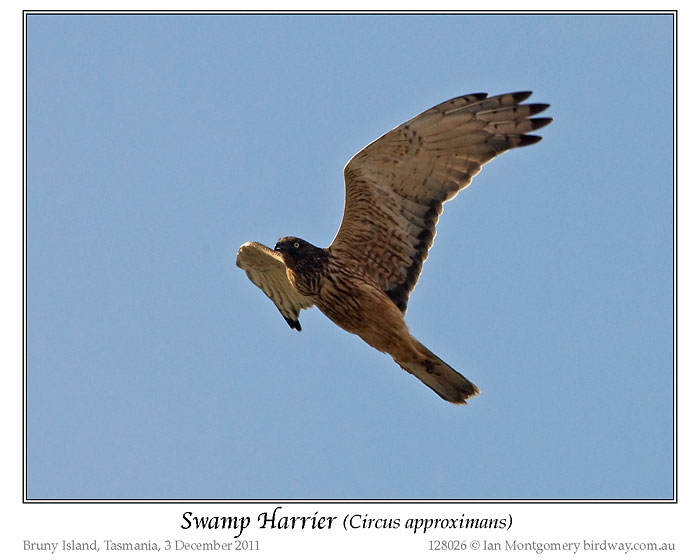
Swamp Harrier (Circus approximans) by Ian

Ian’s Bird of the Week – Swamp Harrier by Ian Montgomery

Newsletter – 9-2-13

Recently I was having trouble finding a reasonable photo of a Swamp Harrier for Where to Find Birds in Northeastern Queensland, when I remembered an encounter that I had with this one on a beach on Bruny Island in Southeastern Tasmania in late 2011. At the time, I was on the return leg of the trip to the Sub-Antarctic Islands via New Zealand and the Harrier photos got neglected in the excitement of posting penguin, petrel, prion and parakeet photos (not to mention albatrosses but they spoil the alliteration).

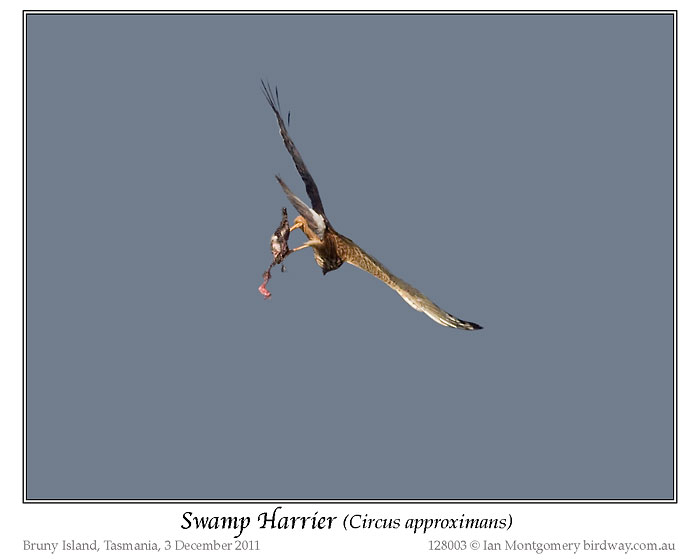
The encounter was the enactment of a minor natural tragedy that was sad to observe, and that may be a subconscious reason for the neglect. I’d actually photographed the bird first photo two minutes earlier struggling to fly into the teeth of a southerly gale and carrying an item of prey, that I couldn’t identify. The Harrier dropped it, back off to leeward and made another unsuccessful attempt to fly up-wind by flying low over the sea on the other side of me.

Swamp Harrier (Circus approximans) by Ian

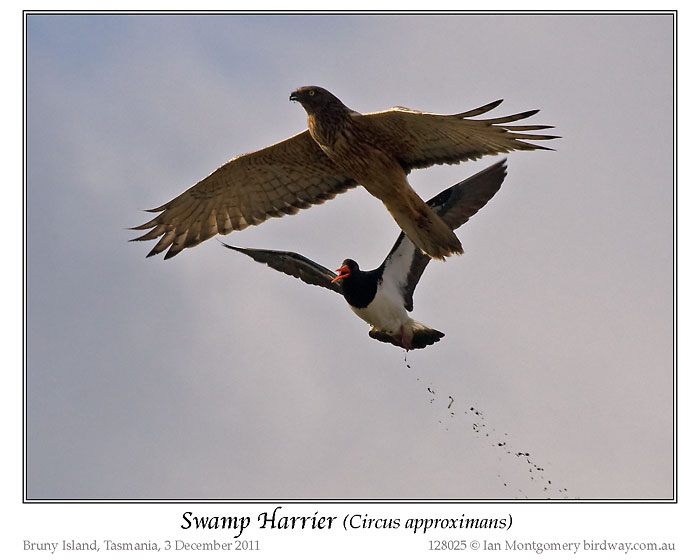
This attempt failed too, and the bird came back for another try flying more or less overhead. At that point, it was attacked by a very distraught-looking Pied Oystercatcher looking for all the world as if it was on a retaliatory bombing raid. The Oystercatcher made a couple of passes at the Harrier, which eventually gave up the struggle and flew inland across the prevailing wind. I could only assume that the item of prey was the Oystercatcher’s chick and the field guide confirmed that these look like plover chicks, camouflaged speckled brown with white bellies. Predation is a natural part of life, but it was sad that the chick died for no purpose.

Swamp Harrier (Circus approximans) by Ian

I’ve found Harriers difficult to photograph as they’re shy and normally keep their distance in flight. They are also terrestrial in their lifestyle, inhabiting tree-less plains and wetlands, hunting close to the ground and nesting and perching on the ground, usually invisible or nearly so in grass or reeds. They hunt by flying low over the land or water – quartering – and dropping suddenly to seize surprised prey (sorry, I’ve done it again) such as birds, small mammals and frogs in their long-legged talons. When quartering, they alternate between flapping their wings and gliding with the wings held in a characteristic V, like the bird in the fourth photo in an otherwise tranquil pastoral scene in New Zealand.

Swamp Harrier (Circus approximans) by Ian

Adult Swamp Harriers are brownish and streaked, with white rumps. Older males have greyish wings and grey tails, unmarked except for a sub-terminal band. Females are more rufous and have barred tails and both the Bruny Island and New Zealand birds are, I think, males. Juvenile Swamp Harriers look quite different and are rufous brown overall with pale rufous rather than white rumps, like the one in the fifth photo.

Swamp Harrier (Circus approximans) by Ian

In Australia, Swamp Harriers nest mainly in the south, including Tasmania and migrate north in winter – in North Queensland, we see them only in the winter months. In New Zealand they make local movements across Cook Strait and they turn up on various islands including Lord Howe and Norfolk. Raptors are poorly represented in New Zealand and the Swamp Harrier is the large bird of the prey, being the only breeding member of the Accipiter family (hawks, eagles, etc.), with the rarer New Zealand Falcon being the only breeding falcon. Swamp Harriers also breed in Melanesia and Polynesia as far east as Tonga. It has close relatives in Eurasia comprising the Eastern, Western, African and Madagascar Marsh Harriers.

Best wishes
Ian

**************************************************
Ian Montgomery, Birdway Pty Ltd,
454 Forestry Road, Bluewater, Qld 4818
Tel 0411 602 737 ian@birdway.com.au
Bird Photos http://www.birdway.com.au/
Recorder Society http://www.nqrs.org.au


Lee’s Addition:

And when the birds of prey swooped down upon the carcasses, Abram drove them away. (Genesis 15:11 AMP)

In this case, the Oystercatcher “drove them away.” You have to admit, that Oystercatcher looks right angry.

The Swamp Harrier is a member of the Accipitridae – Kites, Hawks & Eagles Family. There are 256 species, of which, 17 are Harriers or Harrier-hawks.

Ian already gave quite a bit of information about this beautiful bird. The diet of the Swamp Harrier is mainly ground birds and waterbirds, rabbits and other small mammals, reptiles, frogs and fish. During the Winter months harriers feed to a large extent on carrion, including roadkill.

This species nests on the ground, often in swamps, on a mound in reeds or other dense vegetation. The clutch size may range from 2 to 7, but is usually 3 or 4. The incubation period is about 33 days, with chicks fledging about 45 days after hatching. (Wikipedia)

See also:

Swamp Harrier – Wingspan

Swamp Harrier – Wikipedia

Ian’s Accipitridae Family Photos

Accipitridae – Kites, Hawks & Eagles Family

Ian’s Bird of the Week – Spotted Harrier

*

Birds of the Bible – Shield

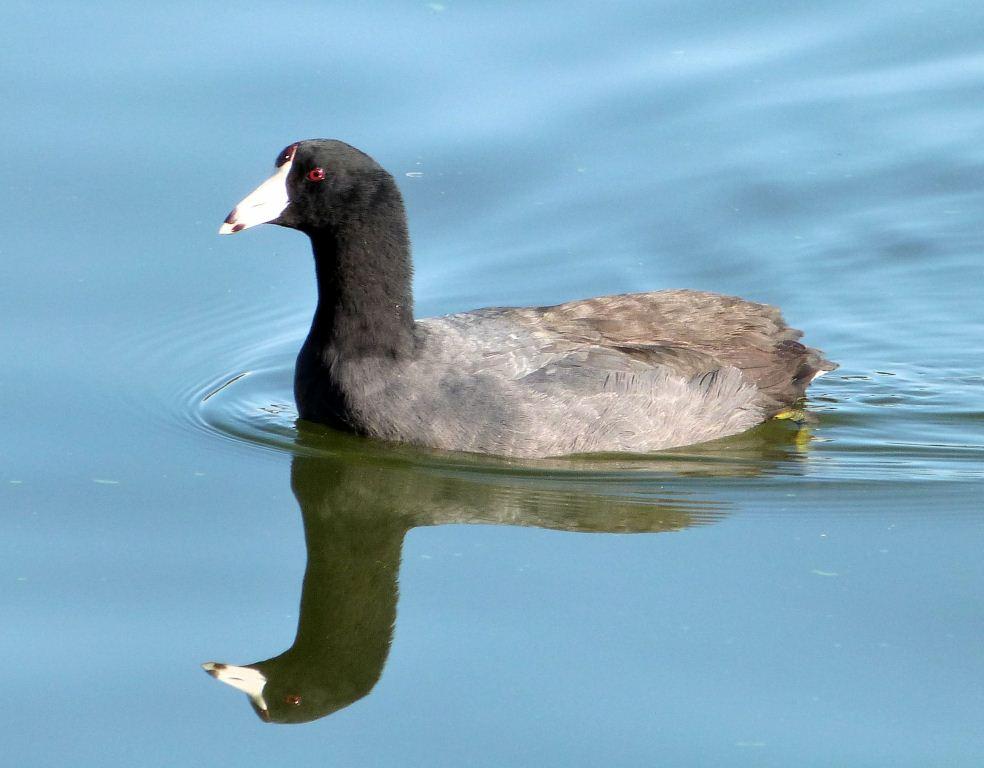
American Coot (Fulica americana) by Lee at Lk Morton

American Coot (Fulica americana) by Lee at Lk Morton

He shall cover thee with his feathers, and under his wings shalt thou trust: his truth shall be thy shield and buckler. (Psalm 91:4 KJV)

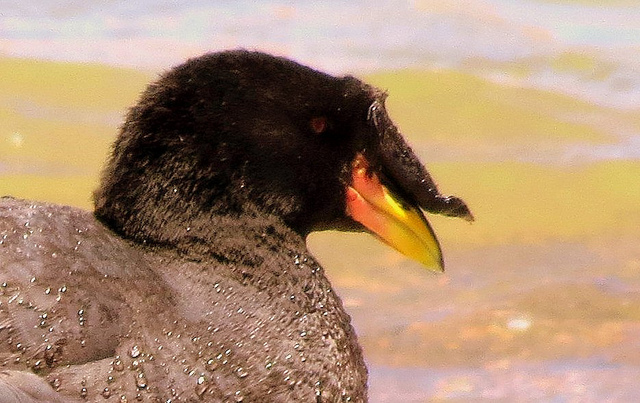
While working on the Coot article, the shield was mentioned. “Coots have prominent frontal shields or other decoration on the forehead…”

When the Lord created the Coots and many of the birds in the Rallidae – Rails, Crakes & Coots family, He gave them a frontal shield. Some Jacanas (Jacanidae – Jacanasalso have shields.

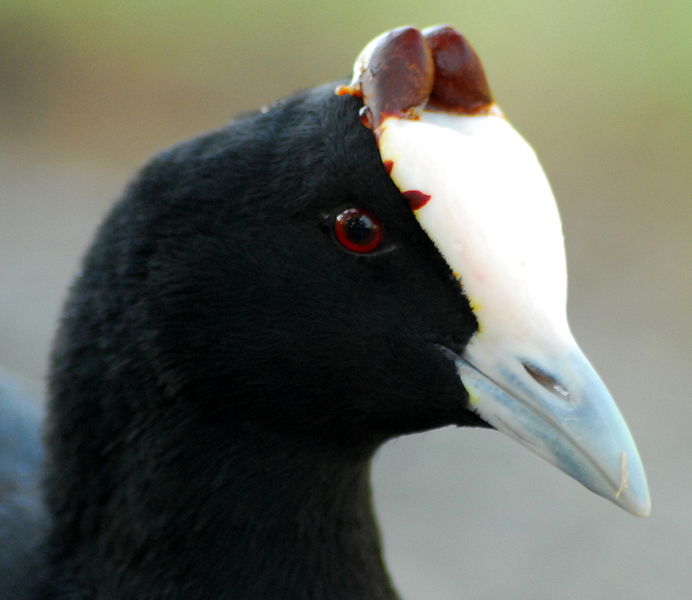
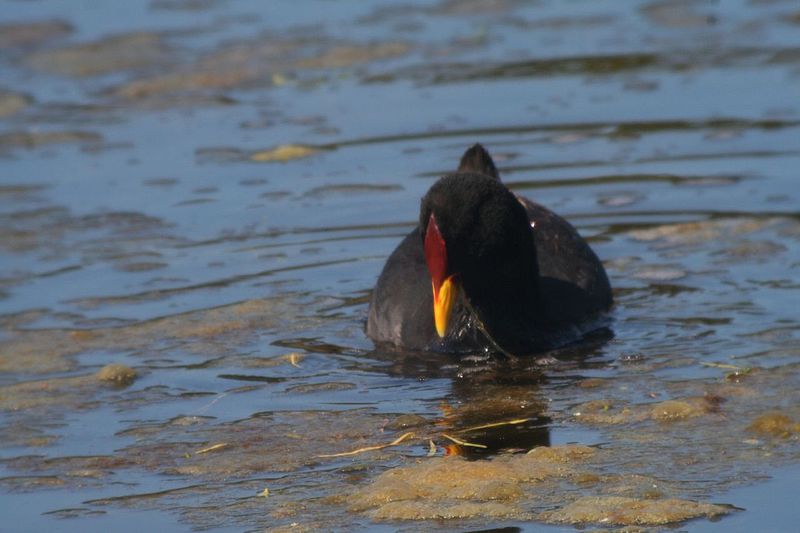
The Merriam-Webster Dictionary gives this definition: “a platelike prolongation of the base of the upper mandible over the forehead that is a characteristic feature of the coots and gallinules.”  A few coots and gallinules have a frontal shield, which is a fleshy rearward extension of the upper bill. The most complex frontal shield is found in the Horned Coot.

This slideshow requires JavaScript.


*
As you can see by the different photos, each species has a different shield, some similar, but others quite different.

Wikipedia says, “A shield is a type of personal armor, meant to intercept attacks, either by stopping projectiles such as arrows or redirecting a hit from a sword, mace, battle axe or similar weapon to the side of the shield-bearer.

Shields vary greatly in size, ranging from large panels that protect the user’s entire body to small models (such as the buckler) that were intended for hand-to-hand-combat use. Shields also vary a great deal in thickness; whereas some shields were made of relatively deep, absorbent, wooden planking to protect soldiers from the impact of spears and crossbow bolts, others were thinner and lighter and designed mainly for deflecting blade strikes.

Often shields were decorated with a painted pattern or an animal representation and these designs developed into systematized heraldic devices during high-medieval times for purposes of battlefield identification. ”

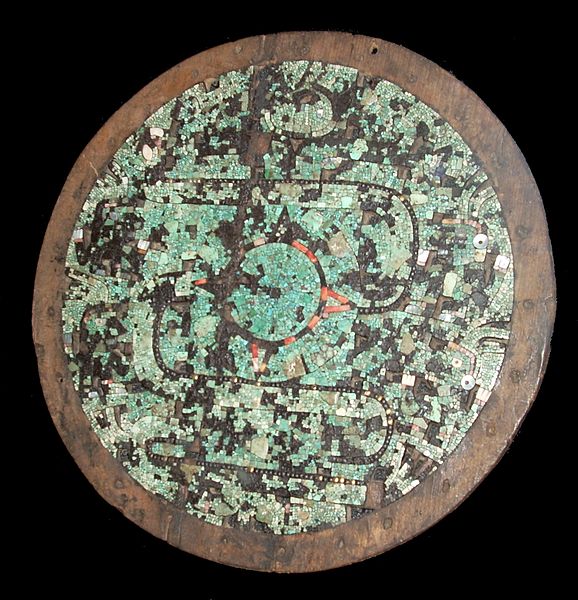
Ceremonial shield with mosaic decoration- Aztec or Mixtec-AD 1400-1521-In the British Museum ©WikiC

Ceremonial shield with mosaic decoration- Aztec or Mixtec-AD 1400-1521-In the British Museum ©WikiC

For our birds, I would think the decorated shields for identification seems the most logical. Since the Lord enjoys so much variety, we see it again displayed in these frontal shields.

At least 54 verses (depending on version) mention the word “shield” in the Bible. Psalm 91:4 above is providing refuge under feathers and wings and is protecting us with a shield of truth and faithfulness. Let’s look at some of the verses and just let His word encourage and challenge us to serve Him more.

The God of my rock; in him will I trust: he is my shield, and the horn of my salvation, my high tower, and my refuge, my saviour; thou savest me from violence. (2 Samuel 22:3 KJV)

But You, O LORD, are a shield about me, My glory, and the One who lifts my head. (Psalms 3:3 NASB)

Horned Coot (Fulica cornuta) ©©Flickr Gunnar Engblom

Horned Coot (Fulica cornuta) ©©Flickr Gunnar Engblom

Thou hast also given me the shield of thy salvation: and thy right hand hath holden me up, and thy gentleness hath made me great. (Psalms 18:35 KJV)

Our soul waiteth for the LORD: he is our help and our shield. (Psalms 33:20 KJV)

Red-knobbed Coot (Fulica cristata) Breeding ©WikiC

Red-knobbed Coot (Fulica cristata) Breeding ©WikiC

For the LORD God is a sun and shield: the LORD will give grace and glory: no good thing will he withhold from them that walk uprightly. (Psalms 84:11 KJV)

Ye that fear the LORD, trust in the LORD: he is their help and their shield. (Psalms 115:11 KJV)

Red-fronted Coot (Fulica rufifrons) ©WikiC

Red-fronted Coot (Fulica rufifrons) ©WikiC

Above all, taking the shield of faith, wherewith ye shall be able to quench all the fiery darts of the wicked. (Ephesians 6:16 KJV)

Are others able to identify us by our shield?

*

Wordless Birds

*

See:

Birds of the Bible

Rallidae – Rails, Crakes & Coots Family

Jacanidae – Jacanas Family

Birdwatching Term – Frontal Shield

*

Child’s Book of Water Birds ~ The Dabchick

The Dabchick

Child's Book of Water Birds - Book Cover

Child’s Book of Water Birds – Book Cover

***

Childs Bk of Water Birds titlebird

NEW YORK

LEAVITT & ALLEN.

1855.

***

Welcome to the Updated Child’s Book of Water Birds, by Anonymous. It was written in 1855 and this is 2013. That is 158 years ago.

*
*
Childs Bk of Water Birds dabchick

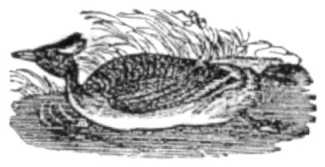
THE DABCHICK.

The Dabchick is a very timid bird, and when alarmed instantly dives, after which it is useless to look after the bird. It is easily domesticated, and is often seen placed as an ornament to ponds, where it swims about very merrily, and seems to enjoy a game of hide and seek with any one who is attempting to watch its movements.

*

Little Grebe (Tachybaptus ruficollis) by Nikhil Devasar

Little Grebe (Tachybaptus ruficollis) by Nikhil Devasar

Update:

The Little Grebe (Tachybaptus ruficollis), also known as Dabchick, is a member of the Grebe family of water birds. At 9 to 11.4 in (23 to 29 cm) in length it is the smallest European member of its family. It is commonly found in open bodies of water across most of its range. Also, there is a New Zealand Grebe (Dabchick).

It is a small water bird with a pointed bill. In summer, the adult is dark above with its rich, rufous colour neck, cheeks and flanks (sides), and bright yellow gape (mouth). Non-breeding and juvenile birds are a dirty brownish grey.

It is an excellent swimmer and diver and chases its fish and aquatic prey underwater. It uses the vegetation skilfully as a hiding place.  it nests at the water’s edge, since its legs are set very far back and it cannot walk well. The young leave the nest and can swim soon after hatching, and chicks are often carried on the backs of the swimming adults.

If a bird’s nest should chance to be before you in the way, in any tree or on the ground, with young ones or eggs, and the mother bird is sitting on the young or on the eggs, you shall not take the mother bird with the young. (Deu 22:6 AMP)

The Little Grebe’s breeding call, given singly or in duet, is a trilled repeated weet-weet-weet or wee-wee-wee which sounds like a horse whinnying.

***

See the other five Child’s Book of Water Birds:

The Swan

The Coot

The Teal

The Goose

The Oyster Catcher

*

Grebe family

New Zealand Grebe (Dabchick)

Little Grebe – Wikipedia

Bible Birds

Wordless Birds

*
Child's Book of Water Birds - Levit and Allen

Back Cover

*** PROJECT GUTENBERG EBOOK CHILD'S BOOK OF WATER BIRDS ***

*

Child’s Book of Water Birds ~ The Coot

The Coot

Child's Book of Water Birds - Book Cover

Child’s Book of Water Birds – Book Cover

***

Childs Bk of Water Birds titlebird

NEW YORK

LEAVITT & ALLEN.

1855.

***
Welcome to the Updated Child’s Book of Water Birds, by Anonymous. It was written in 1855 and this is 2013. That is 158 years ago.
*
Childs Bk of Water Birds coot

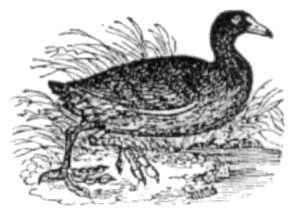
THE COOT.

The Coot is generally found in large sheets of water, particularly if shaded by trees. The nest is a mass of flags, reeds, and grass, usually at the water’s edge, but sometimes actually in the water. The Coot’s eggs are generally seven in number. They are of a greenish-white, spotted.

*

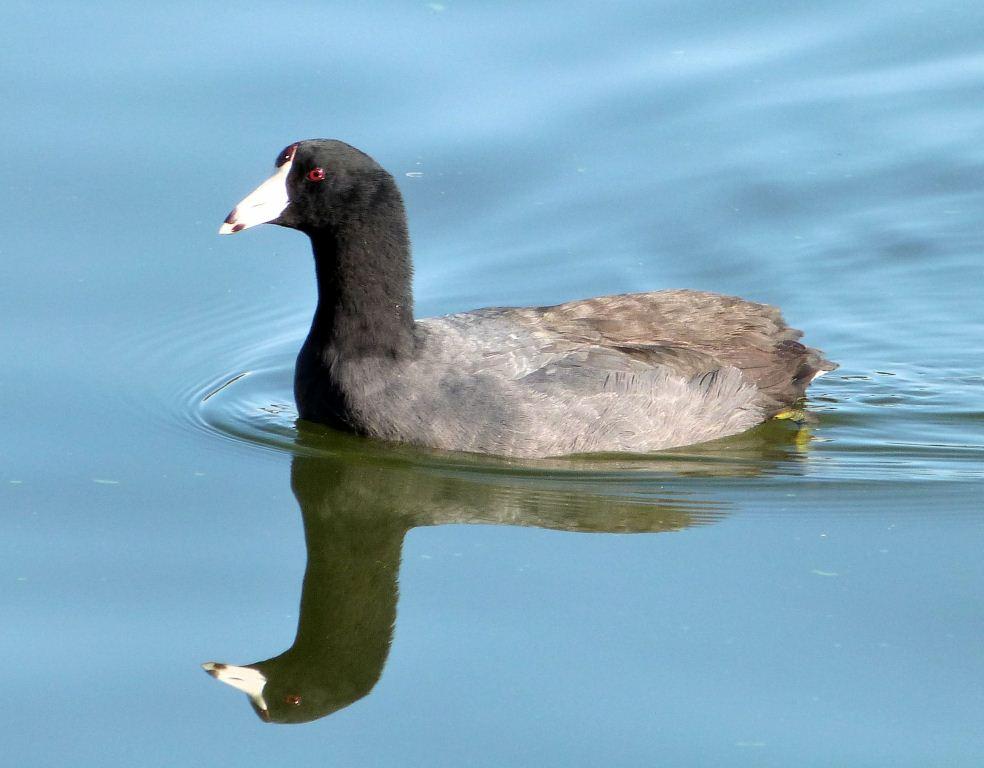
American Coot (Fulica americana) by Lee at Lk Morton

American Coot (Fulica americana) by Lee at Lk Morton

Update:

Coots are medium-sized birds that belong to the Raillidae – Rail Family. There are twelve (12) different Coots around the world.

They have mostly black feathers and can be seen swimming in open water. Coots have prominent frontal shields or other decoration on the forehead, with red to dark red eyes and coloured bills. Many, but not all, have white on the under tail.

Coots eat plants, eggs and some small animals. The defend their nest when they have babies. A group of Coots are called a “covert” or  “cover.”

Like other rails, they have long, lobed toes that are well adapted to soft, uneven surfaces. Coots have strong legs and can walk and run fast. This video shows their feet.

*


*

****

See the other five Child’s Book of Water Birds:

The Swan

The Dabchick

The Teal

The Goose

The Oyster Catcher

*

Rallidae – Rails, Crakes & Coots Family

American Coot – All About Birds

Bible Birds

Wordless Birds

*
Child's Book of Water Birds - Levit and Allen

Back Cover

*** PROJECT GUTENBERG EBOOK CHILD'S BOOK OF WATER BIRDS ***

*

Child’s Book of Water Birds ~ The Swan

The Swan

Child's Book of Water Birds - Book Cover

Child’s Book of Water Birds – Book Cover

***

Childs Bk of Water Birds titlebird

NEW YORK

LEAVITT & ALLEN.

1855.

***

Welcome to the Updated Child’s Book of Water Birds, by Anonymous. It was written in 1855 and this is 2013. That is 158 years ago.

*
Childs Bk of Water Birds swan

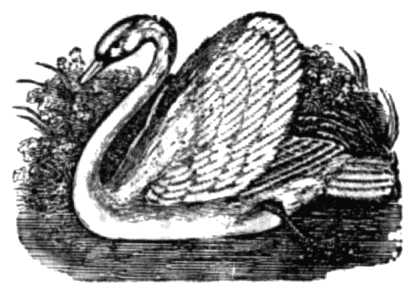
THE SWAN.

The Swan is a very beautiful bird. It is generally white, though a black swan has been discovered in Australia. It is not very often seen in this country. It was brought from Asia and Eastern Europe into England—from whence, most probably, a few specimens have been introduced into this country. The Swan is very graceful in the water, but on land it is an awkward waddler.

*

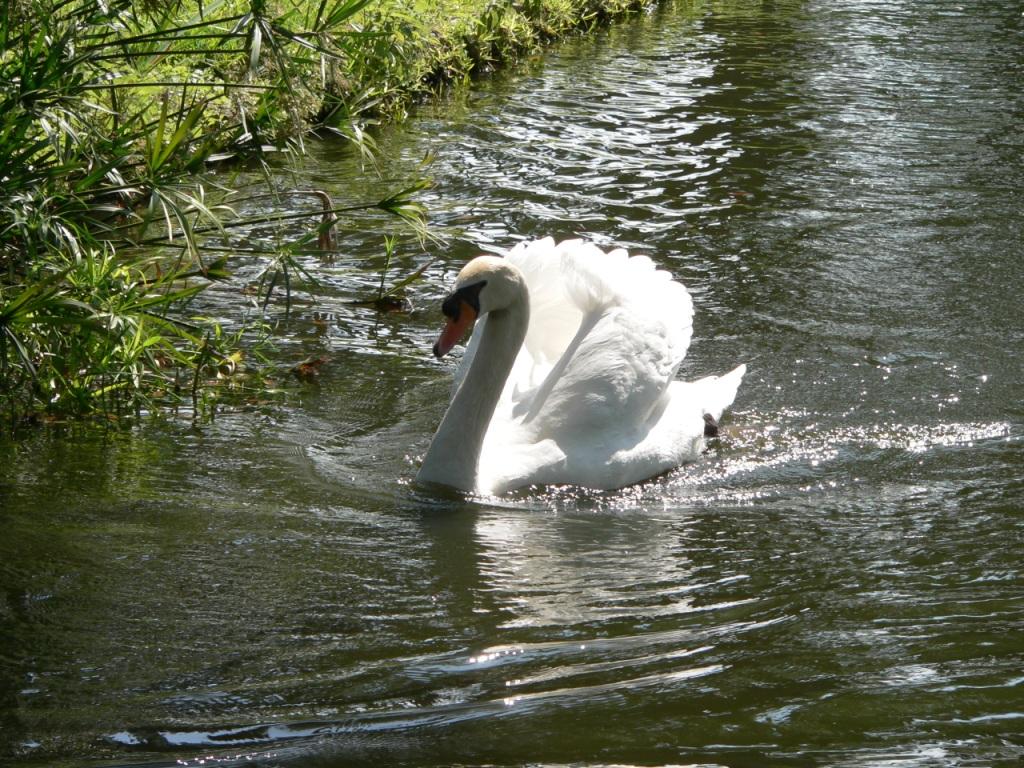
Swan at Bok Tower

Swan at Bok Tower

Update:

Swans are the largest member of the Water Birds family Swans. They are also among the largest flying birds. Some Swans have a wingspan almost 10 ft (3 m).

A group of swans is called a bevy or a wedge in flight. Swans feed in the water and on land.

The nest is on the ground near water. Average egg size (for the mute swan) is 4.4 X 2.9 in (113×74 mm), weighing 11 oz (340 g), in a clutch size of 4 to 7. Swans are very protective of their nest.

The Swan is one of the Bible Birds. (See Bible Birds – Swans)

And the swan, and the pelican, and the gier eagle, (Leviticus 11:18 KJV)

***

See the other five Child’s Book of Water Birds:

The Coot

The Dabchick

The Teal

The Goose

The Oyster Catcher

*

Anatidae – Swan Family

Bible Birds – Swans

Bible Birds

Wordless Birds


*

*
Child's Book of Water Birds - Levit and Allen
*** PROJECT GUTENBERG EBOOK CHILD'S BOOK OF WATER BIRDS ***

*