I Just Happened ~ by Dottie Malcolm

Outside A Window ©©jmason

I Just Happened ~ by Dorothy Belle Malcolm

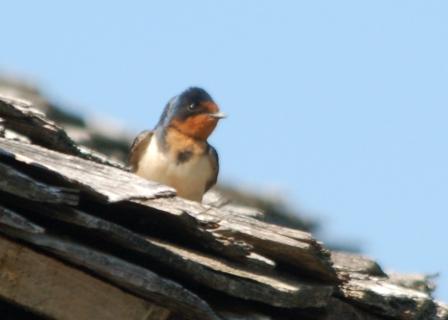
How many times have I said either out loud or to myself – “I just happened.” That seems to say it all for me when certain things occur. For instance, this spring I just happened to be looking out the family room window and saw the most beautiful bird. The colors were bright blue, red, and orange. In less than a minute it was gone. I had never seen one like it all the 30 plus years in Florida. Looking it up in a bird book the colors were described as blue-black, cinnamon belly and a reddish-brown chin. Well, yes, better than I described it. It was a Barn Swallow which I have not seen again.

Barn Swallow in Cades Cove by Dan

Barn Swallow in Cades Cove by Dan

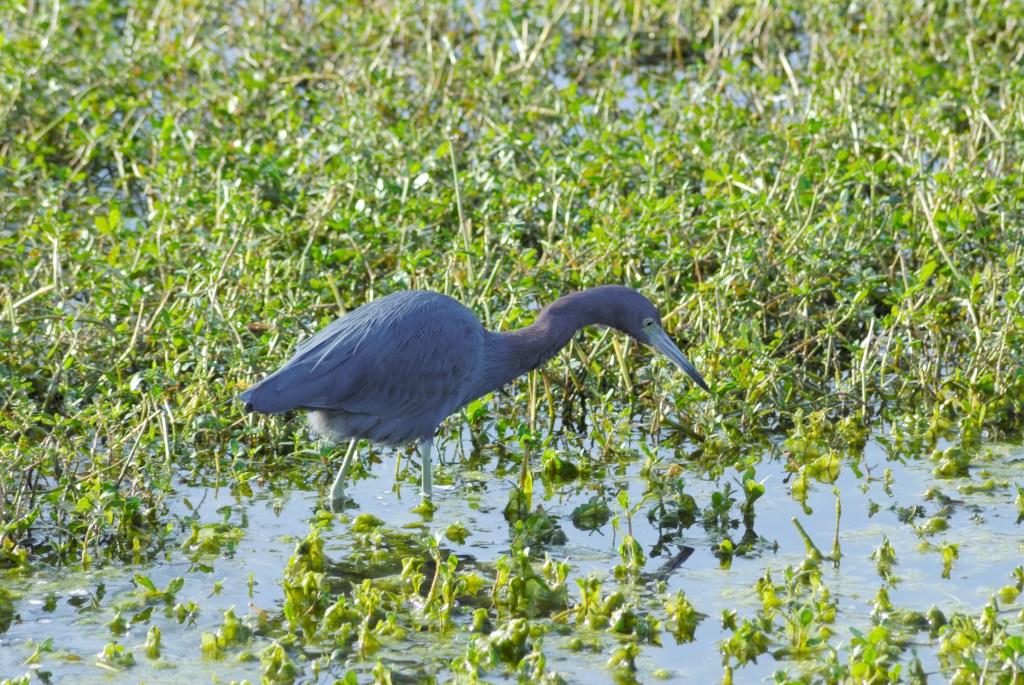
Also I had a first time visit from a non-breeding adult Little Blue Heron. Of course it was a result of “I just happened” to be looking out the same window and also had to look it up in a book.

Little Blue Heron at Lake Howard, Winter Haven, FL

Now that I think about it, maybe this particular window is proving to be a real winner for the “just happen” events. Come to think further about it, I recall seeing a pair of Orioles once.

The only thing is none of these birds have ever been seen by me again. Oh well, as long as I have the window, the book and the “I just happened,” perhaps ……

You will show me the path of life; In Your presence is fullness of joy; At Your right hand are pleasures forevermore. (Psalms 16:11 NKJV)

Other articles by Dottie:

*

Birds Vol 2 #1 – The Mallard Duck

THE MALLARD DUCK

THE MALLARD DUCK

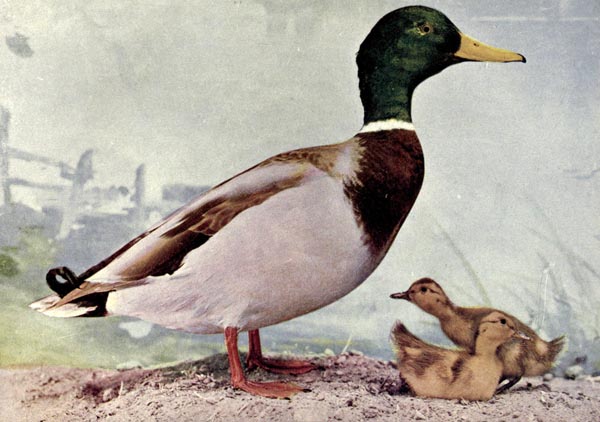
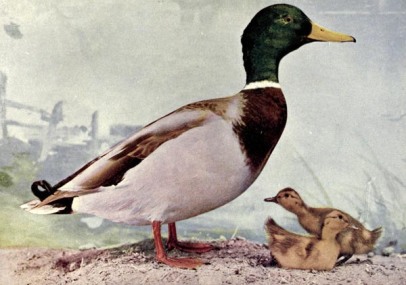
THE MALLARD DUCK.

We should probably think this the most beautiful of ducks, were the Wood Duck not around.

His rich glossy-green head and neck, snowy white collar, and curly feathers of the tail are surely marks of beauty.

But Mr. Mallard is not so richly dressed all of the year. Like a great many other birds, he changes his clothes after the holiday season is over. When he does this, you can hardly tell him from his mate who wears a sober dress all the year.

Most birds that change their plumage wear their bright, beautiful dress during the summer. Not so with Mr. Mallard. He wears his holiday clothes during the winter. In the summer he looks much like his mate.

Usually the Mallard family have six to ten eggs in their nest. They are of a pale greenish color—very much like the eggs of our tame ducks that we see about the barnyards.

Those who have studied birds say that our tame ducks are descendants of the Mallards.

If you were to hear the Mallard’s quack, you could not tell it from that of the domestic duck.

The Mallard usually makes her nest of grass, and lines it with down from her breast. You will almost always find it on the ground, near the water, and well sheltered by weeds and tall grasses.

It isn’t often you see a duck with so small a family. It must be that some of the ducklings are away picking up food.

Do you think they look like young chickens?

From col. Chi. Acad. Sciences.
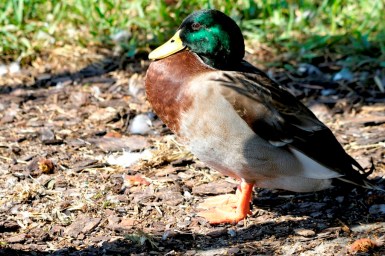
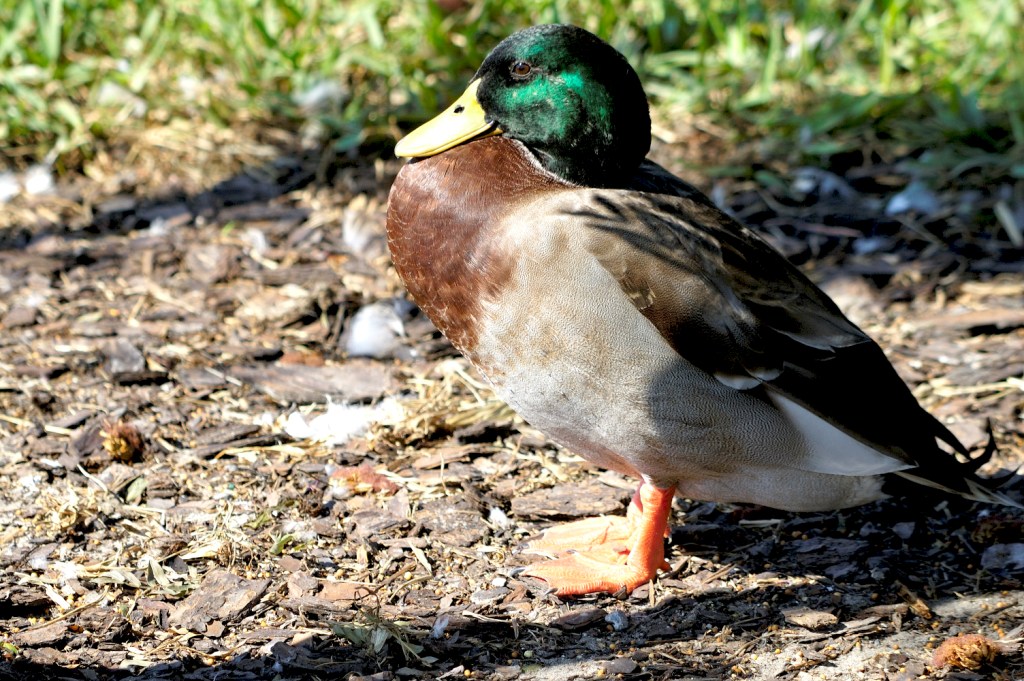
Mallard (Anas platyrhynchos) at Lake Parker By Dan'sPix

Mallard (Anas platyrhynchos) at Lake Parker By Dan’sPix


THE MALLARD DUCK.

imgt

HE Mallard Duck is generally distributed in North America, migrating south in winter to Panama, Cuba, and the Bahamas. In summer the full grown male resembles the female, being merely somewhat darker in color. The plumage is donned by degrees in early June, and in August the full rich winter dress is again resumed. The adult males in winter plumage vary chiefly in the extent and richness of the chestnut of the breast.

The Mallard is probably the best known of all our wild ducks, being very plentiful and remarkable on account of its size. Chiefly migrant, a few sometimes remain in the southern portion of Illinois, and a few pairs sometimes breed in the more secluded localities where they are free from disturbance. Its favorite resorts are margins of ponds and streams, pools and ditches. It is an easy walker, and can run with a good deal of speed, or dive if forced to do so, though it never dives for food. It feeds on seeds of grasses, fibrous roots of plants, worms, shell fish, and insects. In feeding in shallow water the bird keeps the hind part of its body erect, while it searches the muddy bottom with its bill. When alarmed and made to fly, it utters a loud quack, the cry of the female being the louder. “It feeds silently, but after hunger is satisfied, it amuses itself with various jabberings, swims about, moves its head backward and forward, throws water over its back, shoots along the surface, half flying, half running, and seems quite playful. If alarmed, the Mallard springs up at once with a bound, rises obliquely to a considerable height, and flies off with great speed, the wings producing a whistling sound. The flight is made by repeated flaps, without sailing, and when in full flight its speed is hardly less than a hundred miles an hour.”

Early in spring the male and female seek a nesting place, building on the ground, in marshes or among water plants, sometimes on higher ground, but never far from water. The nest is large and rudely made of sedges and coarse grasses, seldom lined with down or feathers. In rare instances it nests in trees, using the deserted nests of hawks, crows, or other large birds. Six or eight eggs of pale dull green are hatched, and the young are covered over with down. When the female leaves the nest she conceals the eggs with hay, down, or any convenient material. As soon as hatched the chicks follow the mother to the water, where she attends them devotedly, aids them in procuring food, and warns them of danger. While they are attempting to escape, she feigns lameness to attract to herself the attention of the enemy. The chicks are wonderfully active little fellows, dive quickly, and remain under water with only the bill above the surface.

On a lovely morning, before the sun has fairly indicated his returning presence, there can be no finer sight than the hurrying pinions, or inspiring note than the squawk, oft repeated, of these handsome feathered creatures, as they seek their morning meal in the lagoons and marshes.

Summary

MALLARD DUCK.Anas boschas. Other names: “Green-head,” “Wild Duck.” Adult male, in fall, winter, and spring, beautifully colored; summer, resembles female—sombre.

Range—Northern parts of Northern Hemisphere.

Nest—Of grasses, on the ground, usually near the water.

Eggs—Six to ten; pale green or bluish white.
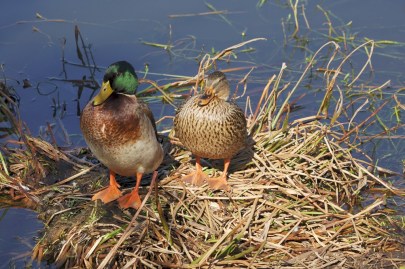
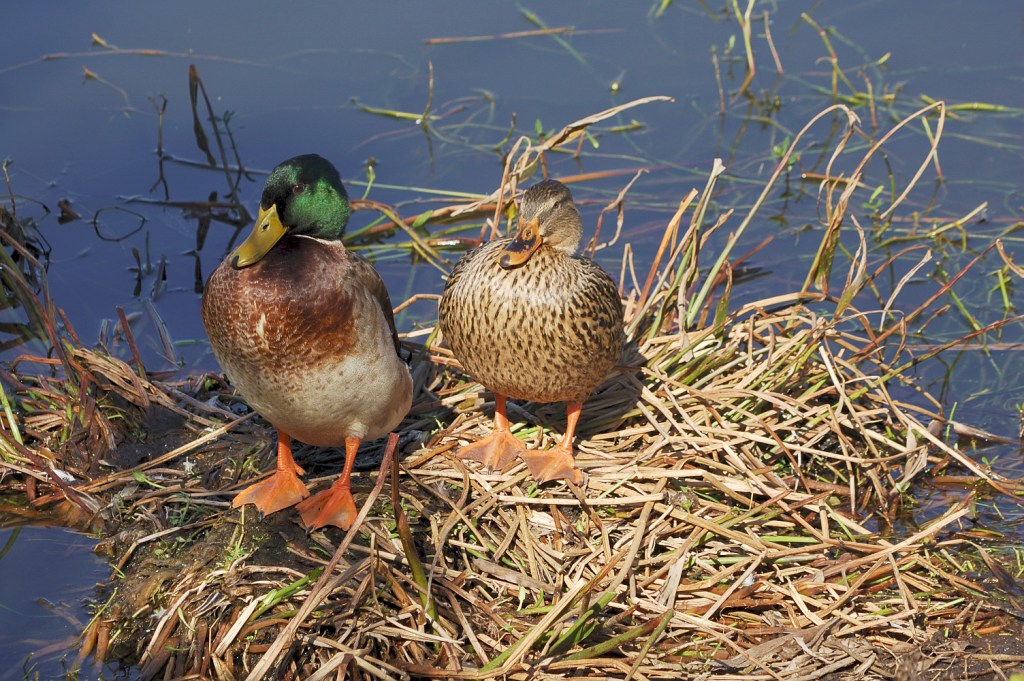
Mallard (Anas platyrhynchos) By Dan'sPix

Mallard (Anas platyrhynchos) By Dan’sPix at Lake Hollingsworth


Lee’s Addition:

And Jesus said to him, “Foxes have holes and birds of the air have nests, but the Son of Man has nowhere to lay His head.” (Matthew 8:20 NKJV)

We see Mallards all the time here in Central Florida. With over 500 lakes in Polk County, ducks, especially Mallards are quite common. A few of those lakes allow feeding and they become almost tame. Even the “Aflac” Duck (called that because of the Aflac Insurance ads) are actually a white version of the Mallard. (So I have been told.)

The Mallard (Anas platyrhynchos) belongs to the Anatidae – Ducks, Geese & Swans Family. There are 172 species in the family at present. Not all are ducks of course. The Anas genera is made up of Ducks, Teals, Wigeons, the Gadwall, Shovelers and Pintails. The whole family has Whistling Ducks, Geese and Pygmy Geese, Swans, Shelducks, Pochards, Scaups, Scoters, Eiders, Mergansers, and various other “ducks.”

Wikipedia says,The Mallard or Wild Duck (Anas platyrhynchos) is a dabbling duck which breeds throughout the temperate and subtropical Americas, Europe, Asia, and North Africa, and has been introduced to New Zealand and Australia. This duck belongs to the subfamily Anatinae of the waterfowl family Anatidae.
The male birds (drakes) have a bright green head and are grey on wings and belly, while the females are brown all over. Mallards live in wetlands, eat water plants and small animals, and are gregarious. This species is the ancestor of almost all of the breeds of domestic ducks (Aflacs etc).

The Mallard is 50–65 cm (20–26 in) long (of which the body makes up around two-thirds), has a wingspan of 81–98 cm (32–39 in), and weighs 0.72–1.58 kg (1.6–3.5 lb).

The breeding male is unmistakable, with a bright bottle-green head, black rear end and a yellowish orange (can also contain some red) bill tipped with black (as opposed to the black/orange bill in females). It has a white collar which demarcates the head from the purple-tinged brown breast, grey brown wings, and a pale grey belly. The dark tail has white borders. 

The female Mallard is a mottled light brown, like most female dabbling ducks, and has buff cheeks, eyebrow, throat and neck with a darker crown and eye-stripe. However, both the female and male Mallards have distinct purple speculum edged with white, prominent in flight or at rest (though temporarily shed during the annual summer moult).

Upon hatching, the plumage colouring of the duckling is yellow on the underside and face (with streaks by the eyes) and black on the backside (with some yellow spots) all the way to the top and back of the head. Its legs and bill are also black. As it nears a month in age, the duckling’s plumage will start becoming drab, looking more like the female (though its plumage is more streaked) and its legs will lose their dark grey colouring.
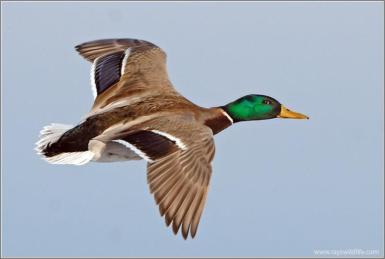
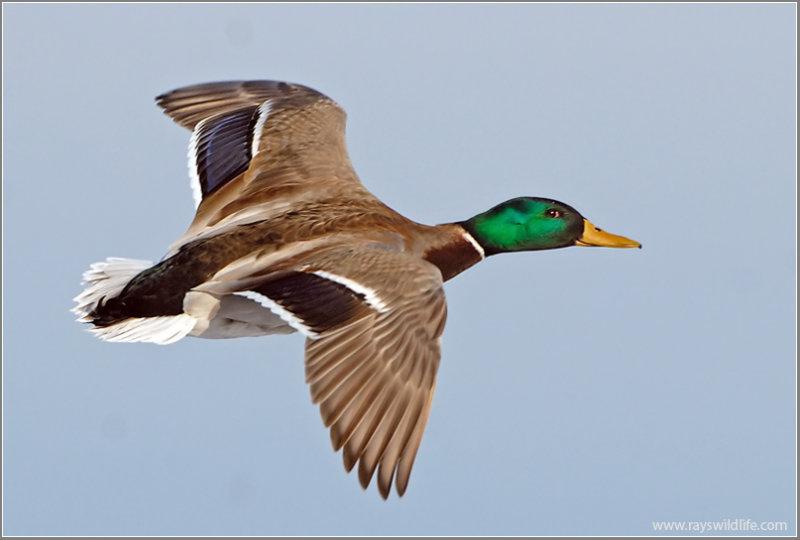
Mallard (Anas platyrhynchos) by Ray

*

Birds Illustrated by Color Photography – Revisited – Introduction

The above article is the first article in the monthly serial that was started in January 1897 “designed to promote Knowledge of Bird-Live.” These include Color Photography, as they call them, today they are drawings. There are at least three Volumes that have been digitized by Project Gutenberg.

To see the whole series of – Birds Illustrated by Color Photography – Revisited

*

(Information from Wikipedia and other internet sources)

Next Article – Bird Song – July

Previous Article – The Semi-Palmated Ring Plover

Sharing The Gospel

Links:

Anatidae – Ducks, Geese & Swans Family

Mallard – All About Birds

Mallard – Wikipedia

*
 

Ms. Theresa’s Thoughts – Nests

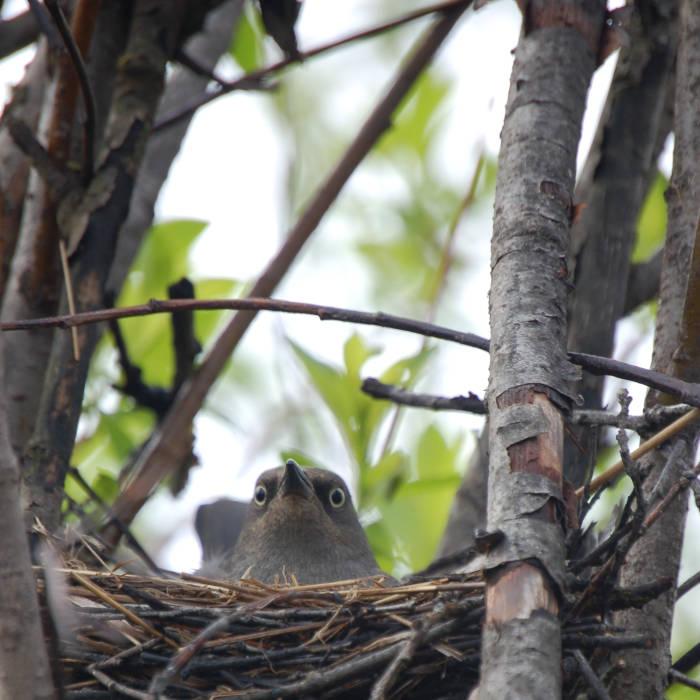
Rusty Blackbird (Euphagus carolinus) on nest ©USFWS

Rusty Blackbird (Euphagus carolinus) on nest ©USFWS

Ms. Theresa’s Thoughts – Nests

Where the birds make their nests; The stork has her home in the fir trees. (Psalms 104:17 NKJV)

How unique the wisdom God gave the birds to make their nests out of small twigs and such sort of reminds me of the Three Little Pigs Fable.

One of them built out of wood, one built out of straw and the wise one built out of bricks. Only the bricks withstood the Big Bad Wolf.

As the bird’s nest withstands all kinds of fowl (bad) weather (no pun intended), her nest stays there till her young are raised and ready to go on their own.

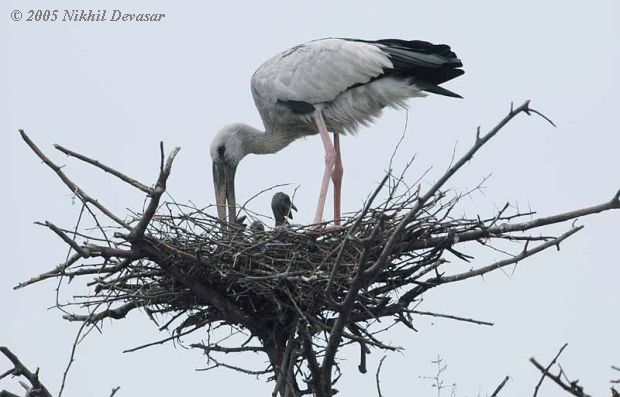
Asian Openbill (Anastomus oscitans) on nest by Nikhil Devasar

Asian Openbill (Anastomus oscitans) on nest by Nikhil Devasar

*

Wordless Birds

*

Birds Vol 2 #1 – The Semi-Palmated Ring Plover

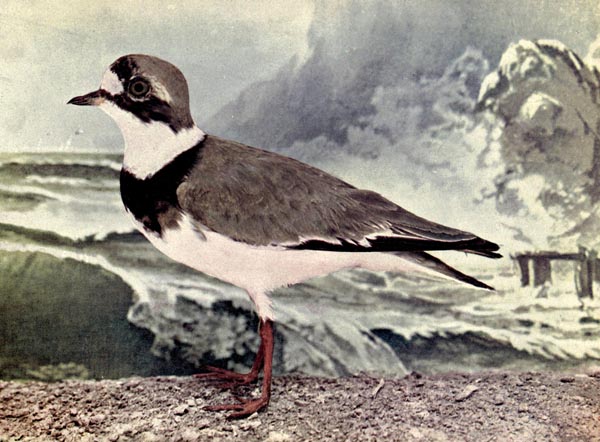
Ring Plover - Birds Illustrated by Color Photography, 1897

Ring Plover – Birds Illustrated by Color Photography, 1897

Birds Illustrated by Color Photography – Revisited

Vol 2. July, 1897 No. 1

*

THE SEMI-PALMATED RING PLOVER.

imgi

N THEIR habits the Plovers are usually active; they run and fly with equal facility, and though they rarely attempt to swim, are not altogether unsuccessful in that particular.

The Semi-palmated Ring Plover utters a plaintive whistle, and during the nesting season can produce a few connected pleasing notes. The three or four pear-shaped, variagated eggs are deposited in a slight hollow in the ground, in which a few blades of grass are occasionally placed. Both parents assist in rearing the young. Worms, small quadrupeds, and insects constitute their food. Their flesh is regarded as a delicacy, and they are therefore objects of great attraction to the sportsman, although they often render themselves extremely troublesome by uttering their shrill cry and thus warning their feathered companions of the approach of danger. From this habit they have received the name of “tell-tales.” Dr. Livingstone said of the African species: “A most plaguey sort of public spirited individual follows you everywhere, flying overhead, and is most persevering in his attempts to give fair warning to all animals within hearing to flee from the approach of danger.”

The American Ring Plover nests as far north as Labrador, and is common on our shores from August to October, after which it migrates southward. Some are stationary in the southern states. It is often called the Ring Plover, and has been supposed to be identical with the European Ringed Plover.

It is one of the commonest of shore birds. It is found along the beaches and easily identified by the complete neck ring, white upon dark and dark upon light. Like the Sandpipers the Plovers dance along the shore in rhythm with the wavelets, leaving sharp half-webbed footprints on the wet sand. Though usually found along the seashore, Samuels says that on their arrival in spring, small flocks follow the courses of large rivers, like the Connecticut. He also found a single pair building on Muskeget, the famous haunt of Gulls, off the shore of Massachusetts. It has been found near Chicago, Illinois, in July.


THE RING PLOVER.

Plovers belong to a class of birds called Waders.

They spend the winters down south, and early in the spring begin their journey north. By the beginning of summer they are in the cold north, where they lay their eggs and hatch their young. Here they remain until about the month of August, when they begin to journey southward. It is on their way back that we see most of them.

While on their way north, they are in a hurry to reach their nesting places, so only stop here and there for food and rest.

Coming back with their families, we often see them in ploughed fields. Here they find insects and seeds to eat.

The Ring Plover is so called from the white ring around its neck.

These birds are not particular about their nests. They do not build comfortable nests as most birds do. They find a place that is sheltered from the north winds, and where the sun will reach them. Here they make a rude nest of the mosses lying around.

The eggs are somewhat pointed, and placed in the nest with the points toward the center. In this way the bird can more easily cover the eggs.

We find, among most birds, that after the nest is made, the mother bird thinks it her duty to hatch the young.

The father bird usually feeds her while she sits on the eggs. In some of the bird stories, you have read how the father and mother birds take turns in building the nest, sitting on the nest, and feeding the young.

Some father birds do all the work in building the nest, and take care of the birds when hatched.

Among plovers, the father bird usually hatches the young, and lets the wife do as she pleases.

After the young are hatched they help each other take care of them.

Plovers have long wings, and can fly very swiftly.

The distance between their summer and winter homes is sometimes very great.

Summary

SEMI-PALMATED PLOVER.Ægialitis semi-palmata. Other names: “American Ring Plover,” “Ring Neck,” “Beach Bird.” Front, throat, ring around neck, and entire under parts white; band of deep black across the breast; upper parts ashy brown. Toes connected at base.

Range—North America in general, breeding in the Arctic and sub-arctic districts, winters from the Gulf States to Brazil.

Nest—Depression in the ground, with lining of dry grass.

Eggs—Three or four; buffy white, spotted with chocolate.


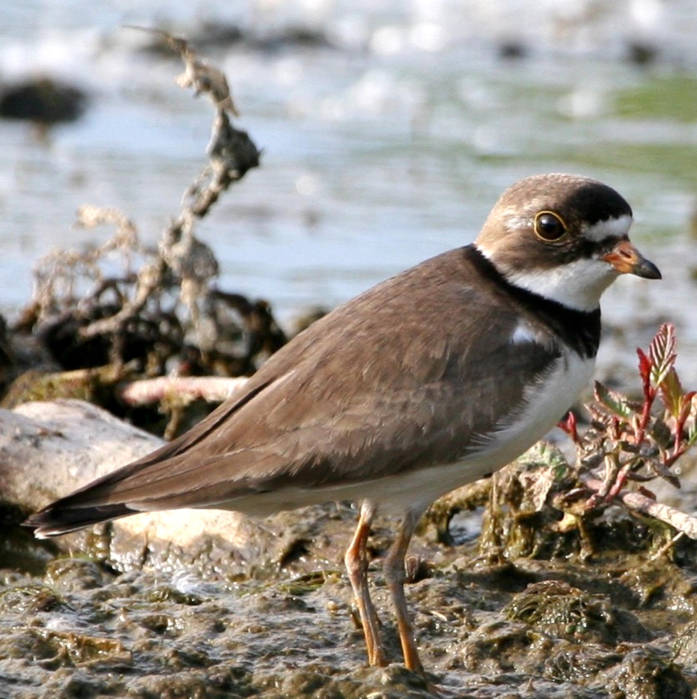
Semipalmated Plover (Charadrius semipalmatus) by S Slayton

Semipalmated Plover (Charadrius semipalmatus) by S Slayton


Call from xeno-canto.org

Lee’s Addition:

When I consider Your heavens, the work of Your fingers, The moon and the stars, which You have ordained, What is man that You are mindful of him, And the son of man that You visit him? For You have made him a little lower than the angels, And You have crowned him with glory and honor. You have made him to have dominion over the works of Your hands; You have put all things under his feet, All sheep and oxen— Even the beasts of the field, The birds of the air, And the fish of the sea That pass through the paths of the seas. O LORD, our Lord, How excellent is Your name in all the earth! (Psalms 8:3-9 NKJV)

The Semipalmated Plover (Charadrius semipalmatus) is a small plover. We see them here at our shores. Florida has lots of shoreline.
This species weighs  0.78–2.2 oz (22–63 g) and measures 5.5–7.9 in (14–20 cm) in length and 14–22 in (35–56 cm) across the wings. Adults have a grey-brown back and wings, a white belly, and a white breast with one black neckband. They have a brown cap, a white forehead, a black mask around the eyes and a short orange and black bill.

Their breeding habitat is open ground on beaches or flats across northern Canada and Alaska. They nest on the ground in an open area with little or no plant growth.
They are migratory and winter in coastal areas ranging from the United States to Patagonia. They are extremely rare vagrants to western Europe, although their true status may be obscured by the difficulty in identifying them from the very similar Ringed Plover of Eurasia, of which it was formerly considered a subspecies.
These birds forage for food on beaches, tidal flats and fields, usually by sight. They eat insects, crustaceans and worms.

Broken wing” display

This bird resembles the Killdeer but is much smaller and has only one band. The term “semipalmated” refers to its partly webbed feet. Like the Killdeer and since its nest is on the ground, it uses a “broken-wing” display to lure intruders away from the nest. (Wikipedia)

If a bird’s nest happens to be before you along the way, in any tree or on the ground, with young ones or eggs, with the mother sitting on the young or on the eggs, you shall not take the mother with the young; (Deuteronomy 22:6 NKJV)

Semipalmated Plovers belong to the Charadriidae – Plovers Family. There are 67 species that “are small to medium-sized birds with compact bodies, short, thick necks and long, usually pointed, wings, but most species of lapwing may have more rounded wings. Their bill are usually straight (except for the Wrybill) and short, their toes are short, hind toe could be reduced or absent, depending on species. Most Charadriidae also have relatively short tails, the Killdeer is the exception. In most genera, the sexes are similar, very little sexual dimorphism occurs between sexes. They range in size from the Collared Plover, at 26 grams and 14 cm (5.5 inches), to the Masked Lapwing, at 368 grams (13 oz) and 35 cm (14 inches)

Semipalmated Plover (Charadrius semipalmatus) ©USFWS

Semipalmated Plover (Charadrius semipalmatus) ©USFWS

Birds Illustrated by Color Photography – Revisited – Introduction

The above article is the first article in the monthly serial that was started in January 1897 “designed to promote Knowledge of Bird-Live.” These include Color Photography, as they call them, today they are drawings. There are at least three Volumes that have been digitized by Project Gutenberg.

To see the whole series of – Birds Illustrated by Color Photography – Revisited

*

(Information from Wikipedia and other internet sources)

Next Article – The Mallard Duck

Previous Article – The Bald-Headed Eagle

ABC’s Of The Gospel

Links:

Charadriidae – Plovers Family

Order – CHARADRIIFORMES

Semipalmated Plover – Wikipedia

Semipalmated Plover – All About Birds

*

Baby Golden Eagle Survives the Utah Wildfire

Here is an amazing video from YouTube about a Baby Golden Eagle that survived the Utah Wildfire this year.

As the fire burns the woods, And as the flame sets the mountains on fire, (Psalms 83:14 NKJV)

From YouTube

Published on Jul 8, 2012 by OptimizeSite

BigNewsStory.com – Baby Golden Eagle Survives Utah Wildfire

A baby golden eagle is recovering at a wildlife rehabilitation facility after officials say it miraculously survived a Utah wildfire last month.

Kent Keller told The Salt Lake Tribune (http://bit.ly/NKy8WO ) he feared the worst when he returned to the nest site west of Utah Lake to retrieve a leg band he had attached to the male eaglet June 1.

But the veteran Utah Division of Wildlife Resources volunteer found the burned bird alive on June 28 behind a charred tree, about 25 feet below the nest that was burned to a crisp in the 5,500-acre Dump Fire near Saratoga Springs.

“I thought there was no chance he would be alive. I was stunned when I saw him standing there,” Keller said. “I thought maybe I could rebuild the nest a little bit, but I took a good look at him and realized that was not going to happen.”

The 70-day-old eaglet had suffered burns on his talons, beak, head and wings. His flight feathers were melted down to within an inch or two of his wing and tail. He’s very underweight at just over five pounds.

Keller realized the eagle would not fly for at least a year and that the parents eventually would stop providing food. Not a stick from the nest was left after the fire sparked by target shooters swept through

“I’ve seen nests burn before, but this is the first year I have seen one burn with young in it,” he told the Tribune. “They are usually long gone and flying when fire season starts.”

After permission was secured from state and federal wildlife agencies, the Wildlife Rehabilitation Center of Northern Utah in Ogden assumed care of the eaglet this week.

“I wasn’t sure he was going to make it,” said DaLyn Erickson, executive director of the center. “He kind of had that look like he may have given up.”

But the eagle named Phoenix has since taken to eating beef heart and venison. He’s treated several times a day for his burns and seems to be gaining strength.

“He looks good now,” said Amber Hansen, a member of the center’s board of directors. “But we think if he had been there (at the nest site) another day, he probably would not have survived.”

What seems to have saved his life during the fire was the insulation offered by his down feathers and once-thick body, according to the wildlife rehabilitation center.

Officials hope the bird can be released back into the wild next year, but say it’s too early to tell about its future. Volunteers will work to keep him as wild as possible.

“It depends on how much follicle damage there is to his wings,” Hansen said. “If they are not too burned, he should be able to molt into new feathers next year and hopefully be able to fly.”

-usnews.com

Birdwatcher or Bird Collector?

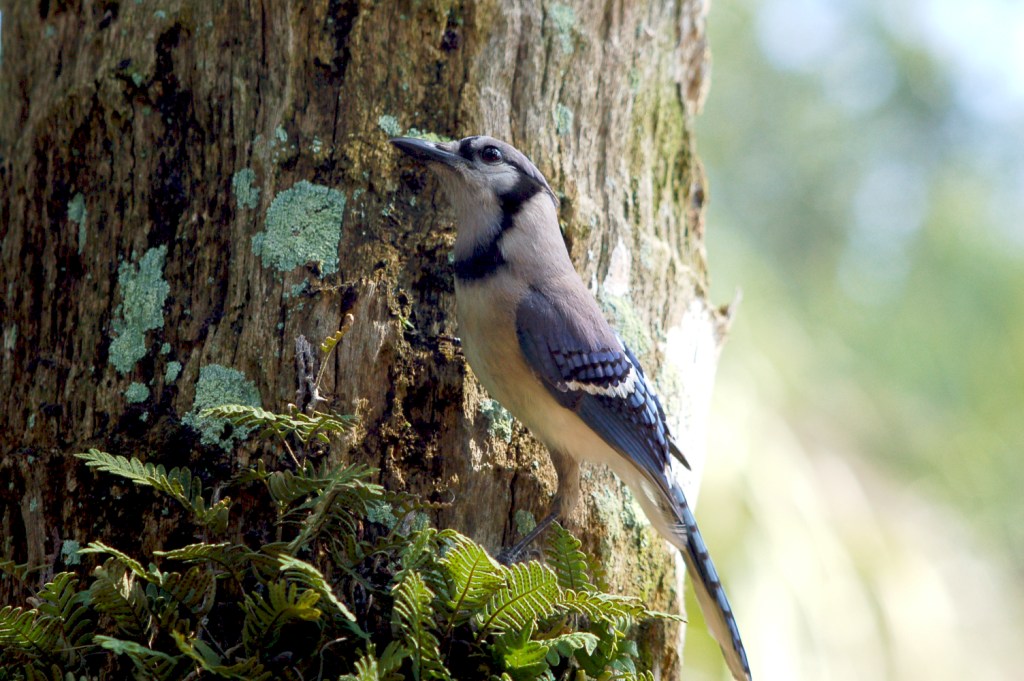
Blue Jay (Cyanocitta cristata) at Bok Tower By Dan'sPix

Blue Jay (Cyanocitta cristata) at Bok Tower By Dan’sPix

I just finished reading an article in the August 2012 issue of “BirdWatching” Magazine by Maeve Kim. It is called “Born-Again Bird-Watcher.” The title caught my interest since I am a “Born-again Christian.” The article, of course, had nothing to do with religion but was about watching birds.

She, Maeve, had progressed from being a birdwatcher that just loved to watch birds and make notes in a field notebook.

“My old field notebooks are full of exclamation points and underlinings and capital letters. “GREEN HERON at beaver pond! Glowing chestnut throat and neck! Gorgeous!”
I described everything I saw about a bird’s physical appearance, behavior, and song. Often, my notebook entries ended with questions that I hoped might be answered if I watched more birds.”

Progression went from lots of information to just a “checklist” were just seeing the bird and checking it off became the main goal. This is called a “Bird Getter” and not a bird watcher. Long interesting story short, Maeve has now gone back to “watching” the birds even common ones. It is a very good article.

Wood Duck male – Lake Morton 6-28-12 by Lee

As I have “progressed” in my own birdwatching I also have learned about “journals,” “notebooks” and “lists.” I enjoy seeing my “Life List of Birds” grow, but I try not to just want to “check them off” so the list will grow. As a Christian believing that the Lord created the birds, I enjoy watching them, their behaviors, their sounds, how they fly and eat and writing about them. I am amazed at His design and paintbrush used. How each bird was given just the right beak, feet, song, flight pattern, etc. is awesome.

She said, “True Bird-Watchers enjoy every single minute that they’re out birding. They don’t come home feeling cheated because they didn’t get a rare Dovekie. Instead, they celebrate every time they see a Black Guillemot’s (her common) red feet flashing under cold water.”

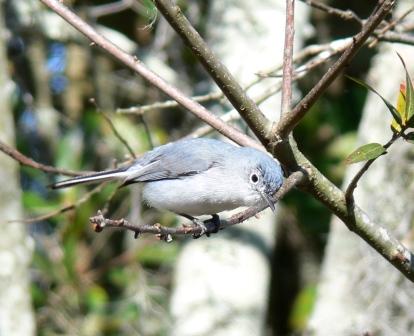
Blue-Gray Gnatcatcher at Circle B Reserve by Lee

Blue-Gray Gnatcatcher at Circle B Reserve by Lee

Every time we go to our local parks, I still enjoy watching the antics of our local common birds. May we never tire or grow weary of “only ” seeing a bird that we have seen many times before.

But now ask the beasts, and let them teach you; And the birds of the heavens, and let them tell you. “Who among all these does not know That the hand of the LORD has done this, (Job 12:7,9 NASB)

How can we learn from the birds if we don’t watch them?

See

Birdwatching

Birdwatching Tips

*

Birds Vol 2 #1 – The Bald-headed Eagle

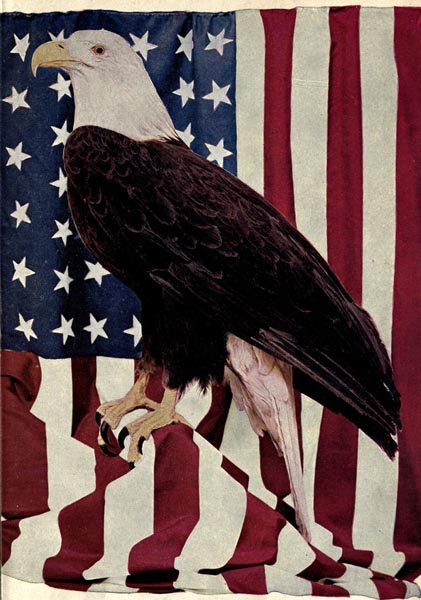
The Bald-headed Eagle (Bald Eagle) - Birds Illustrated by Color Photography, 1897

The Bald-headed Eagle (Bald Eagle) – Birds Illustrated by Color Photography, 1897

Birds Illustrated by Color Photography – Revisited

Vol 2. July, 1897 No. 1

THE BALD-HEADED EAGLE.

Dear Boys and Girls:

I had hoped to show you the picture of the eagle that went through the war with the soldiers. They called him “Old Abe.” You will find on page 35 a long story written about him. Ask some one to read it to you.

I could not get “Old Abe,” or you should now be looking at his picture. He is at present in Wisconsin, and his owner would not allow him to be taken from home.

I did the next best thing, and found one that was very much like him. They are as near alike as two children of a family. Old Abe’s feathers are not quite so smooth, though. Do you wonder, after having been through the war? He is a veteran, isn’t he?

The picture is that of a Bald-headed Eagle. He is known, also, by other names, such as White-headed Eagle, Bird of Washington, Sea Eagle.

You can easily see by the picture that he is not bald-headed. The name White-headed would seem a better name. It is because at a distance his head and neck appear as though they were covered with a white skin.

He is called “Sea Eagle” because his food is mostly fish. He takes the fish that are thrown upon the shores by the waves, and sometimes he robs the Fish Hawk of his food. (Not today – there is a Sea Eagle which is a different Eagle.)

This mighty bird usually places his large nest in some tall tree. He uses sticks three to five feet long, large pieces of sod, weeds, moss, and whatever he can find.

The nest is sometimes five or six feet through. Eagles use the same nest for years, adding to it each year.

Young eagles are queer looking birds. When hatched, they are covered with a soft down that looks like cotton.

Their parents feed them, and do not allow them to leave the nest until they are old enough to fly. When they are old enough, the mother bird pushes them out of the nest. She must be sure that they can fly, or she would not dare do this. Don’t you think so?

Eagle in nest feeding eaglets by Dan

Eagle in nest feeding eaglets-zoomed in by Dan

THE BALD-HEADED EAGLE.

THIS mighty bird of lofty flight is a native of the whole of North America, and may be seen haunting the greater portions of the sea coasts, as well as the mouths of large rivers. He is sometimes called the White-headed Eagle, the American Sea Eagle, the Bird of Washington, the Washington Eagle, and the Sea Eagle. On account of the snowy white of his head and neck, the name Bald Eagle has been applied to him more generally than any other.

Sea-faring men are partial to young Eagles as pets, there being a well established superstition among them that the ship that carries the “King of Birds” can never go down. The old Romans, in selecting the Eagle as an emblem for their imperial standard, showed this superstitious belief, regarding him as the favorite messenger of Jupiter, holding communion with heaven. The Orientals, too, believed that the feathers of the Eagle’s tail rendered their arrows invincible. The Indian mountain tribes east of Tennessee venerated the Eagle as their bird of war, and placed a high value on his feathers, which they used for headdresses and to decorate their pipes of peace.

The United States seems to have an abiding faith in the great bird, as our minted dollars show.

The nest of the Bald Eagle is usually placed upon the top of a giant tree, standing far up on the side of a mountain, among myriads of twining vines, or on the summit of a high inaccessible rock. The nest in the course of years, becomes of great size as the Eagle lays her eggs year after year in the same nest, and at each nesting season adds new material to the old nest. It is strongly and comfortably built with large sticks and branches, nearly flat, and bound together with twining vines. The spacious interior is lined with hair and moss, so minutely woven together as to exclude the wind. The female lays two eggs of a brownish red color, with many dots and spots, the long end of the egg tapering to a point. The parents are affectionate, attend to their young as long as they are helpless and unfledged, and will not forsake them even though the tree on which they rest be enveloped in flames. When the Eaglets are ready to fly, however, the parents push them from the perch and trust them to the high atmospheric currents. They turn them out, so to speak, to shift for themselves.

The Bald Eagle has an accommodating appetite, eating almost anything that has ever had life. He is fond of fish, without being a great fisher, preferring to rob the Fish-hawk of the fruits of his skillful labor. Sitting upon the side of a mountain his keen vision surveys the plain or valley, and detects a sheep, a young goat, a fat turkey or rooster, a pig, a rabbit or a large bird, and almost within an eye-twinkle he descends upon his victim. A mighty grasp, a twist of his talons, and the quarry is dead long before the Eagle lays it down for a repast. The impetuosity and skill with which he pursues, overtakes and robs the Fish-hawk, and the swiftness with which the Bald Eagle darts down upon and seizes the booty, which the Hawk has been compelled to let go, is not the least wonderful part of this striking performance.

The longevity of the Eagle is very great, from 80 to 160 years.

Summary

BALD EAGLE.Haliæetus leucocephalus. Other names: “White-headed Eagle,” “Bird of Washington,” “Gray Eagle,” “Sea Eagle.” Dark brown. Head, tail, and tail coverts white. Tarsus, naked. Young with little or no white.

Range—North America, breeding throughout its range.

Nest—Generally in tall trees.

Eggs—Two or three, dull white.

*


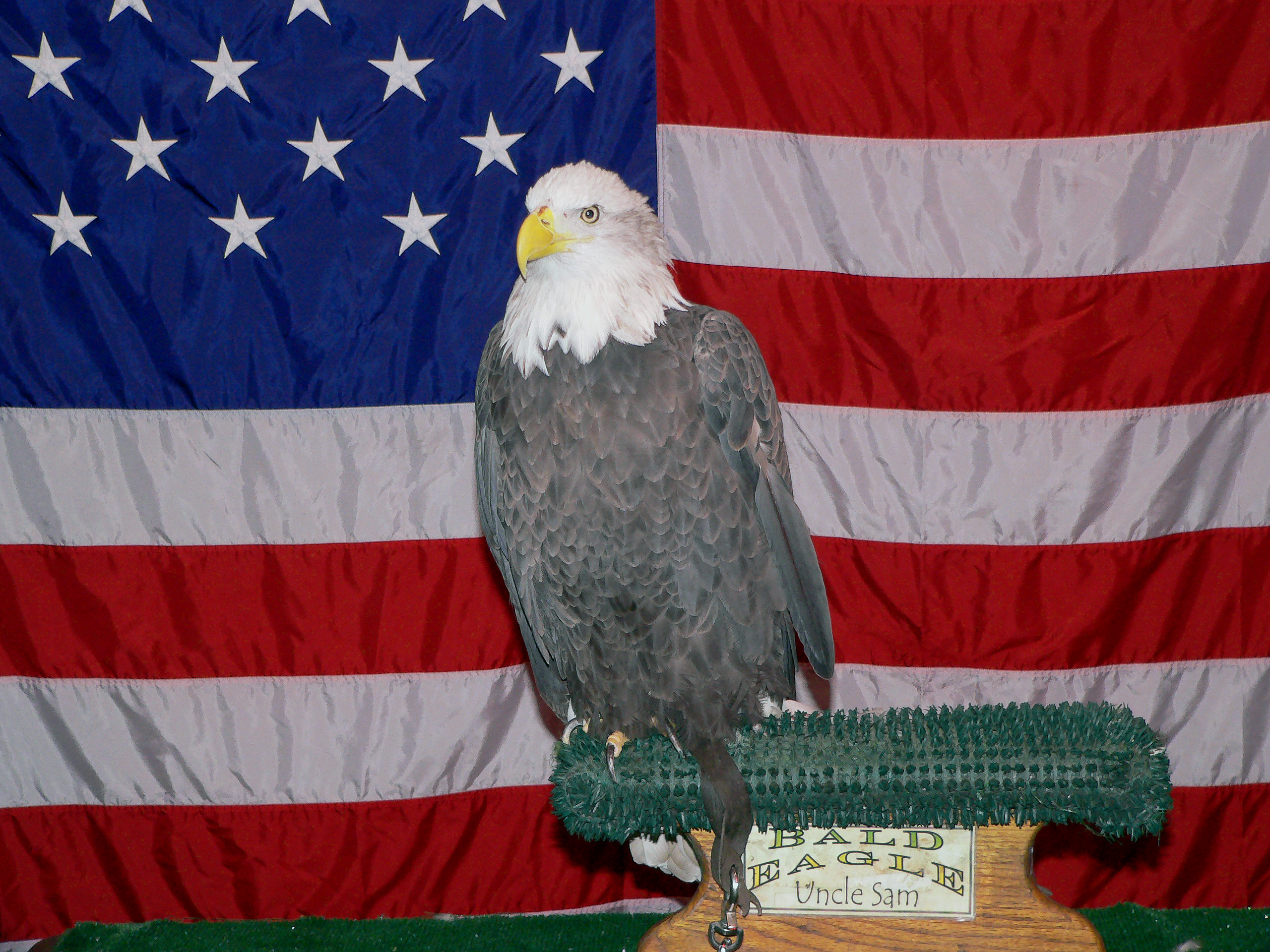
Uncle Sam – Bald Eagle taken at Titusville Birding Festival

Lee’s Addition:

Today the Bald-headed Eagle is just the Bald Eagle. The Sea Eagle is a different Eagle, much larger than the Bald. Also, not so sure about 160 year life span. Will have to check that out.

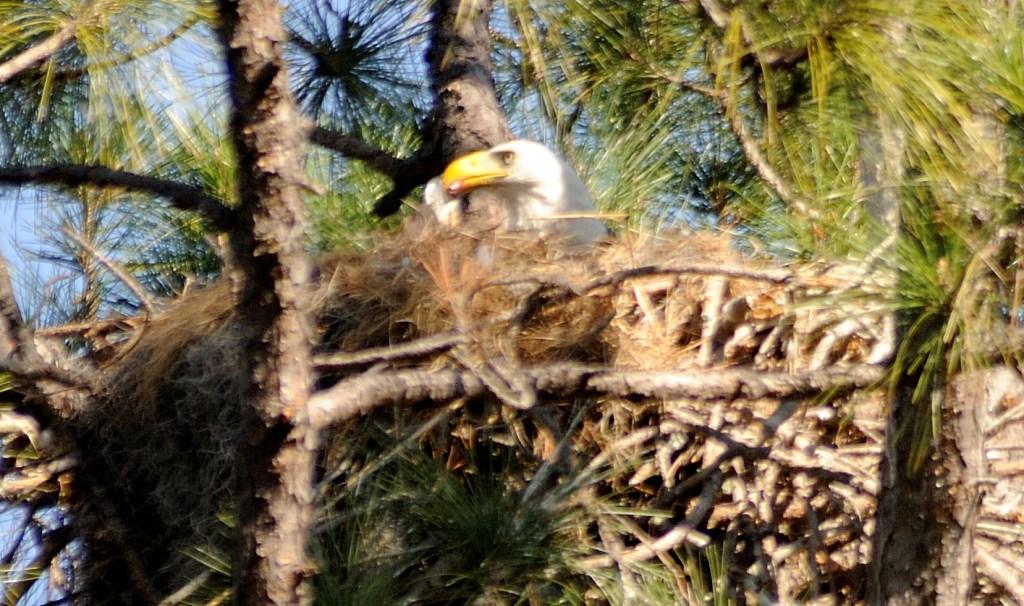
We are fortunate here in Polk County and in Central Florida. We get to see Bald Eagles quite often in the winter. That picture of the nest was taken at South Lake Howard Nature Park where the Eagles return to have young each year. At Circle B Bar Reserve, which we write about, they have several active Bald Eagle nests. Right by our Publix supermarket, the eagles sit on the high electrical posts and scan the area for dinner. I used to have to travel far to see them, but now, we live right where they hang out.

I have to admit that when I see a Bald Eagle fly by or just sitting, I stop in my tracks. There is something about the Bald Eagle’s appearance that appeals to me. Also, the Eagle is a Bible Birds and is mentioned in 34 times in the King James Version, 32 in NKJV, 31 in NASB and 29 times in ESV. It varies in the other versions also. Still it is mentioned about 30 times or so. Most are great verses that tell of their strenght and mighty wings. What a magnificent creation.

Ye have seen what I did unto the Egyptians, and how I bare you on eagles’ wings, and brought you unto myself. (Exodus 19:4 KJV)

Doth the eagle mount up at thy command, and make her nest on high? (Job 39:27 KJV)

But they that wait upon the LORD shall renew their strength; they shall mount up with wings as eagles; they shall run, and not be weary; and they shall walk, and not faint. (Isaiah 40:31 KJV)

Make thee bald, and poll thee for thy delicate children; enlarge thy baldness as the eagle; for they are gone into captivity from thee. (Micah 1:16 KJV)


Birds Illustrated by Color Photography – Revisited – Introduction

The above article is the first article in the monthly serial that was started in January 1897 “designed to promote Knowledge of Bird-Live.” These include Color Photography, as they call them, today they are drawings. There are at least three Volumes that have been digitized by Project Gutenberg.

To see the whole series of – Birds Illustrated by Color Photography – Revisited

*

(Information from Wikipedia and other internet sources)

Next Article – The Semi-Palmated Ring Plover

Previous Article – Birds Vol 1 #6 – The Volume 1. – Index

Sharing The Gospel

Links:

Bible Birds – Eagles

Birds of the Bible – Eagles

Accipitridae – Family (Kites, Hawks & Eagles)

Amazing Free-Flying Bald Eagle “Challenger”

Bald Eagle – WhatBird

*

Birds Illustrated By Color Photography – Volume II Indroduction

BIRDS

A MONTHLY SERIAL

ILLUSTRATED BY COLOR PHOTOGRAPHY

DESIGNED TO PROMOTE

KNOWLEDGE OF BIRD-LIFE


VOLUME II.


CHICAGO  Nature Study Publishing Company


copyright, 1897 by

Nature Study Publishing Co.

chicago.


INTRODUCTION.

This is the second volume of a series intended to present, in accurate colored portraiture, and in popular and juvenile biographical text, a very considerable portion of the common birds of North America, and many of the more interesting and attractive specimens of other countries, in many respects superior to all other publications which have attempted the representation of birds, and at infinitely less expense. The appreciative reception by the public of Vol. I deserves our grateful acknowledgement. Appearing in monthly parts, it has been read and admired by thousands of people, who, through the life-like pictures presented, have made the acquaintance of many birds, and have since become enthusiastic observers of them. It has been introduced into the public schools, and is now in use as a text book by hundreds of teachers, who have expressed enthusiastic approval of the work and of its general extension. The faithfulness to nature of the pictures, in color and pose, have been commended by such ornithologists and authors as Dr. Elliott Coues, Mr. John Burroughs, Mr. J. W. Allen, editor of The Auk, Mr. Frank M. Chapman, Mr. J. W. Baskett, and others.

The general text of Birds—the biographies—has been conscientiously prepared from the best authorities by a careful observer of the feather-growing denizens of the field, the forest, and the shore, while the juvenile autobiographies have received the approval of the highest ornithological authority.

The publishers take pleasure in the announcement that the general excellence of Birds will be maintained in subsequent volumes. The subjects selected for the third and fourth volumes—many of them—will be of the rare beauty in which the great Audubon, the limner par excellence of birds, would have found “the joy of imitation.”

Nature Study Publishing Company.


BIRDS.

Illustrated by COLOR PHOTOGRAPHY.

Vol. II.   No. 1.   JULY, 1897.


Bald Eagle (Haliaeetus leucocephalus) by Lee

Bald Eagle (Haliaeetus leucocephalus) by Lee

Lee’s Addition:

This second volume does not have a cover photo for each month like Volume I did. They apparently changed their format. Also, there are no old time advertisements. These were reproduced through Gutenberg Project.

Will be posting the different birds soon. See Birds Illustrated by Color Photography – Revisted.

*

Bible Birds – Ravens I

Australian Raven (Corvus coronoides) by Ian

Australian Raven (Corvus coronoides) by Ian

And it came to pass at the end of forty days, that Noah opened the window of the ark which he had made: And he sent forth a raven, which went forth to and fro, until the waters were dried up from off the earth.
(Genesis 8:6-7 KJV)

Did you know that is the first bird in the Bible that we are told its name. In Genesis 1 and 2 we are told that the LORD created the birds or fowls, but we don’t know what their names were. Adam gave them names in Genesis 1, but their names are not mentioned.

Ravens are in 11 verses in the Bible (KJV). We will be telling you about them.

The Raven is the largest bird in the Passerine order (Perching and songbirds), able to grow up to 27.1 inches (69 cm) in length. Males are not much different from the females, though the female might be a bit smaller. Both genders are known for their iridescent (shiny)  black feathers covering their bodies, with a bluish hint in the light. Ravens are distinguished from other birds in the Corvus Genus (such as the crows) by their wedge-like tail, large beak, hackles (shaggy neck feathers), and their tendency to soar in flight.

Northern Raven (Corvus corax) ©CreationWikiC

Northern Raven (Corvus corax) ©CreationWikiC

Did you know that the Ravens fed a prophet? God told them to feed him and they obeyed. I Kings 17 tells us about it. We tell you about it in another article.

How about Ravens not building barns? Luke 12:24

The Lord used the Ravens to do errands for Him. Do you do the errands your parents ask you to do?

Children, obey your parents in all things, for this is well pleasing to the Lord. (Colossians 3:20 NKJV)

See:

Bible Birds – Raven

Bible Birds

Ravens – CreationWiki

*

Birds of the Bible – Water-hen or Water hen

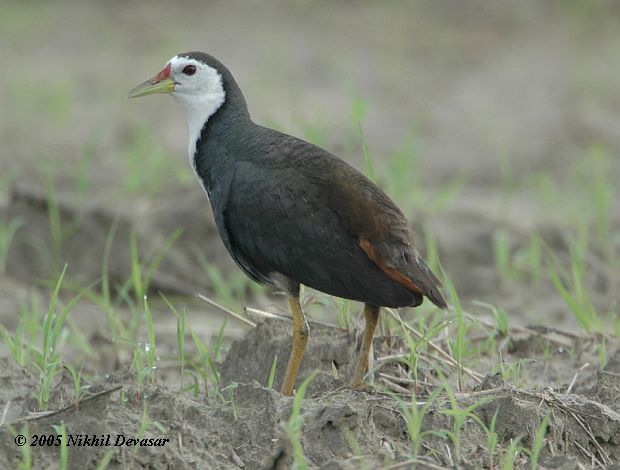
White-breasted Waterhen (Amaurornis phoenicurus) by Nikhil Devasar

White-breasted Waterhen (Amaurornis phoenicurus) by Nikhil Devasar

Leviticus 11:18
(BBE) And the water-hen and the pelican and the vulture;
(ERV) water hens, pelicans, carrion vultures,
(ISV) water-hen, pelican, carrion,
(MSG)  water hen, pelican, Egyptian vulture,
(NRSV) the water hen, the desert owl, the carrion vulture,

(ABP+) and the purple-legged stork, and pelican, and swan
CAB(i) 18 and the red-bill, and the pelican, and swan,
(Brenton) and the red-bill, and the pelican, and swan,
(Bishops) The Backe, the Pellicane, the Pye,

(Geneva) Also the redshanke and the pelicane, and the swanne:
(Vulgate) si ambulans per viam in arbore vel in terra nidum avis inveneris et matrem pullis vel ovis desuper incubantem non tenebis eam cum filiis
(KJV) And the swan, and the pelican, and the gier eagle,
Deuteronomy 14:16
(BBE) The little owl and the great owl and the water-hen;

(Bishops) The litle Owle, the great Owle, nor the Redshanke.
(Geneva) Neither the litle owle, nor the great owle, nor the redshanke,
(KJV)  The little owl, and the great owl,  and the swan,
(Vulgate) herodium et cycnum et ibin

Adam Clarke’s Commentary: “The swan – תנשמת tinshemeth. The Septuagint translate the word by πορφυριωνα, the porphyrion, purple or scarlet bird. Could we depend on this translation, we might suppose the flamingo or some such bird to be intended. Some suppose the goose to be meant, but this is by no means likely, as it cannot be classed either among ravenous or unclean fowls. Bochart thinks the owl is meant.”

Companion Bible Notes: “swan, not our swan: it is variously rendered “ibis”, “heron”, and “pelican”.

Gill: “Leviticus 11:18
And the swan,…. This is a bird well known to us, but it is a question whether it is intended by the word here used; for though it is so rendered in the Vulgate Latin, it is differently rendered by many others: the Targums of Jonathan and Jerusalem call it “otia”, which seems to be the same with the “otus” of Aristotle (n), who says it is like an owl, having a tuft of feathers about its ears (from whence it has its name); and some call it “nycticorax”, or the owl; and here, by Bochart (o), and others, the owl called “noctua” is thought to be meant; and with which agrees the account some Jewish writers give of it, as Aben Ezra and Baal Hatturim, who say it is a bird, which every one that sees is astonished at it, as other birds are at the owl, are frightened at the sight of it, and stupefied. But as the same word is used Lev_11:30 among the creeping things, for a mole, what Jarchi observes is worthy of consideration, that this is “calve (chauve) souris” (the French word for a bat), and is like unto a mouse, and flies in the night; and that which is spoken of among the creeping things is like unto it, which hath no eyes, and they call it “talpa”, a mole. The Septuagint version renders it by “porphyrion”, the redshank; and so Ainsworth; and is thought to be called by the Hebrew name in the text, from the blowing of its breath in drinking; for it drinks biting, as Aristotle says (p):”

Jamieson Fausset Brown: the swan — found in great numbers in all the countries of the Levant. It frequents marshy places – the vicinity of rivers and lakes. It was held sacred by the Egyptians, and kept tame within the precincts of heathen temples. It was probably on this account chiefly that its use as food was prohibited. Michaelis considers it the goose.
McGee:
Leviticus 11:13-19

CLEAN AND UNCLEAN FLYING CREATURES (IN THE AIR)
On the birds there are no visible markers like there are on the fish and the animals. But they seem to have in common that they are all unclean feeders. For the most part, they feed on dead carcasses of animals, fish, and other fowl.

A list of unclean birds of Palestine is given. This is another point that reveals that the Mosaic system was intended for the nation Israel and also for the particular land of Palestine. Some of these birds sound strange to us. They fall into the family of the eagles and the hawks, the vultures and the ravens, the owls and cormorants, and the swans and pelicans. They don’t even sound appetizing. They are the “dirty birdies” because of their feeding habits. Now remember, some people eat some of these birds today. I can’t say I would like any of them, but whether we eat them or don’t eat them makes no difference—meat will not commend us to God. The point is that it was teaching Israel to make a distinction. They had to make a decision about what was clean and unclean.

The lesson for us today is that we must make decisions about our conduct and our profession. We have to make the decision about whether to accept Christ or not, whether to study the Word of God or not, whether to walk in a way pleasing to God or not. That is the application for us today.

This section throws some light on the experience of Elijah. He was fed by the ravens—dirty birds. Elijah did not eat the ravens, but they fed him. This was a humbling experience for this man of God who obeyed God in every detail.

MHCC:
Leviticus 11:1-47

These laws seem to have been intended, 1. As a test of the people’s obedience, as Adam was forbidden to eat of the tree of knowledge; and to teach them self-denial, and the government of their appetites. 2. To keep the Israelites distinct from other nations. Many also of these forbidden animals were objects of superstition and idolatry to the heathen. 3. The people were taught to make distinctions between the holy and unholy in their companions and intimate connexions. 4. The law forbad, not only the eating of the unclean beasts, but the touching of them. Those who would be kept from any sin, must be careful to avoid all temptations to it, or coming near it. The exceptions are very minute, and all were designed to call forth constant care and exactness in their obedience; and to teach us to obey. Whilst we enjoy our Christian liberty, and are free from such burdensome observances, we must be careful not to abuse our liberty. For the Lord hath redeemed and called his people, that they may be holy, even as he is holy. We must come out, and be separate from the world; we must leave the company of the ungodly, and all needless connexions with those who are dead in sin; we must be zealous of good works devoted followers of God, and companions of his people.

***

Well, those are some of the remarks by the different commentaries. It seems there is no real set answer as to whether the Waterhen or Water-hen was the intended bird. The list of Unclean and Clean birds was for the Israelites and not us today. It is not even for them today. Why write about them, because it is interesting. To me, it comes down to a decision on their part and ours today whether we want to obey the Word of God.

….for the LORD your God is testing you to know whether you love the LORD your God with all your heart and with all your soul. You shall walk after the LORD your God and fear Him, and keep His commandments and obey His voice; you shall serve Him and hold fast to Him. (Deuteronomy 13:3-4 NKJV)

Most of the birds seem to have a diet that would cause eating that bird to make people sick or to die. Not all of them are in that category. It could be that they were not to eat a specific bird because they were few in number at that time and it could have caused them to go extinct. (That happens today.) It comes to obedience. That said, let’s see what a Water Hen really is.

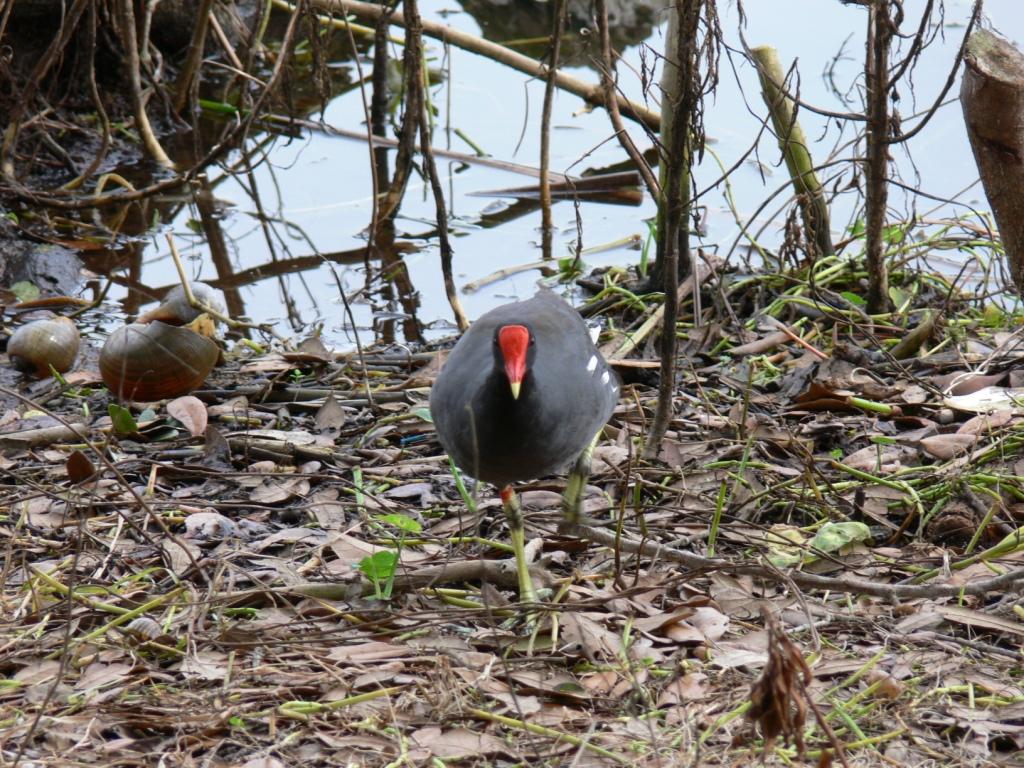
Common Moorhen (Gallinula chloropus) by Lee

Common Moorhen (Gallinula chloropus) by Lee

Water-hen or Waterhens are in the Rallidae – Rails, Crakes & Coots Family. According to Wikipedia’s article on the Waterhen:

Waterhen may refer to any of the following:

Black Crake (Amaurornis flavirostra) ©WikiC

Black Crake (Amaurornis flavirostra) ©WikiC

The adult Black Crake is 19–23 cm long with a short tail and long toes. As its name implies, the adult has mainly black plumage, with a brown olive tone on the wings and upperparts which is rarely detectable in the field. The eye is red, the bill is yellow, and the legs and feet are red, duller when not breeding.

The sexes are similar, but the male is slightly larger. Most males, but only 10% of females, have a hooked upper mandible. The immature bird has brown upperparts and a dark grey head and underparts. Its bill is greenish yellow, and its feet and legs are dull red. The downy chicks are black, as with all rails.

The Black Crake is extremely aggressive when breeding and will attack birds of many species, but especially other rails. It will attack and kill rails of species as large as itself.

The nest is a deep neat bowl made from wetland plants and built by both sexes in marsh vegetation or on the ground in a dry location. The nest is also sometimes constructed up to 3 m high in a bush.

If it was a Redshank(e), then we have a completely different bird in a different family, the Scolopacidae – Sandpipers, Snipes. If so, that would mean I would have to make yet another “Bird of the Bible” category. Humm!

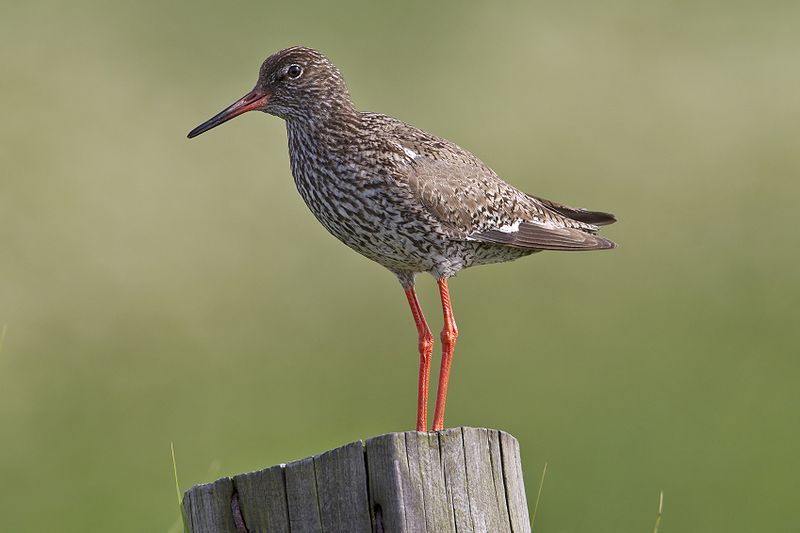
Common Redshank (Tringa totanus) ©WikiC

Common Redshank (Tringa totanus) ©WikiC

Of the three last bird pictures here, they do all have something red. The Moorhen has a red beak and the other two have red legs. You realize that these names are today’s name. They do change over the years. What ever bird this verse applies to, it has been enjoyable for me to investigate it. It has caused me to be in God’s Word, search the Commentaries, and check out the many birds the Lord created. And I trust you have benefited from it also and you might even dig around and find more about these verses.

And I get to add another Bird of the Bible page.

Birds of the Bible – Waterhen

All Birds of the Bible articles.

*