Sunday Inspiration – “King” Birds

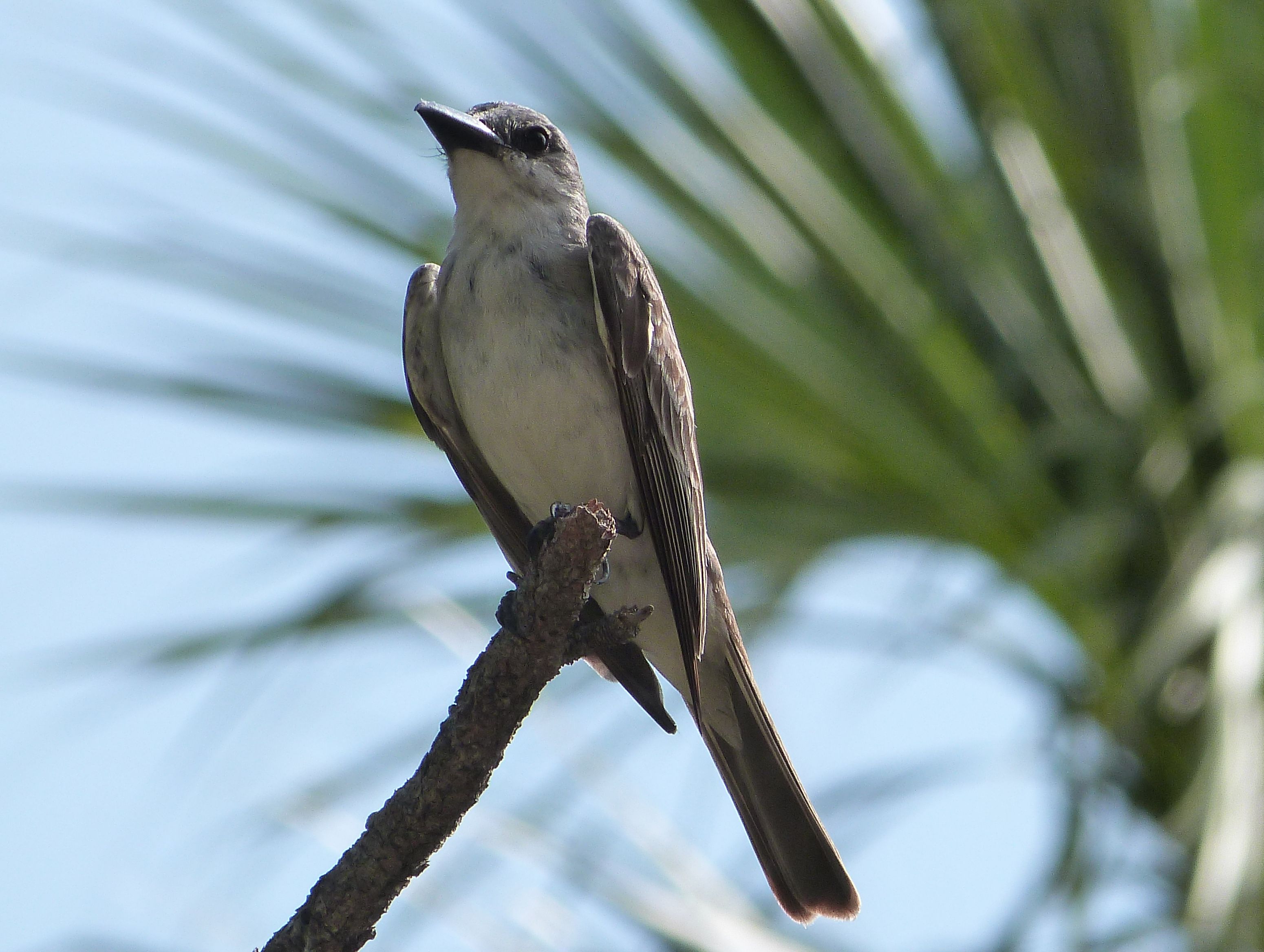
Grey Kingbird (Tyrannus dominicensis) by Lee at Honeymoon Is SP

Grey Kingbird (Tyrannus dominicensis) by Lee at Honeymoon Is SP

Rejoice greatly, O daughter of Zion! Shout, O daughter of Jerusalem! Behold, your King is coming to you; He is just and having salvation, Lowly and riding on a donkey, A colt, the foal of a donkey.
(Zechariah 9:9 NKJV)

‘TELL THE DAUGHTER OF ZION, ‘BEHOLD, YOUR KING IS COMING TO YOU, LOWLY, AND SITTING ON A DONKEY, A COLT, THE FOAL OF A DONKEY.’ ” (Matthew 21:5 NKJV)

Since writing about the Grey Kingbird last week, I have been thinking about birds that have “King” in their name. Here are some of the ones, plus many of the “King”fishers.

This slideshow requires JavaScript.

*

Both our Choir with the Orchestra and the Hyssongs did great and I couldn’t decide so here are both of them.

“The King is Coming” – Faith Baptist Choir and Orchestra. Intro by Pastor Osborne

Jesus answered, My kingdom is not of this world: if my kingdom were of this world, then would my servants fight, that I should not be delivered to the Jews: but now is my kingdom not from hence. Pilate therefore said unto him, Art thou a king then? Jesus answered, Thou sayest that I am a king. To this end was I born, and for this cause came I into the world, that I should bear witness unto the truth. Every one that is of the truth heareth my voice. (John 18:36-37 KJV)

“The King is Coming” – ©Hyssongs

*

The Gospel Message

More Sunday Inspirations

Faith Baptist Church

*

Bible Birds – Mighty Hand of God!

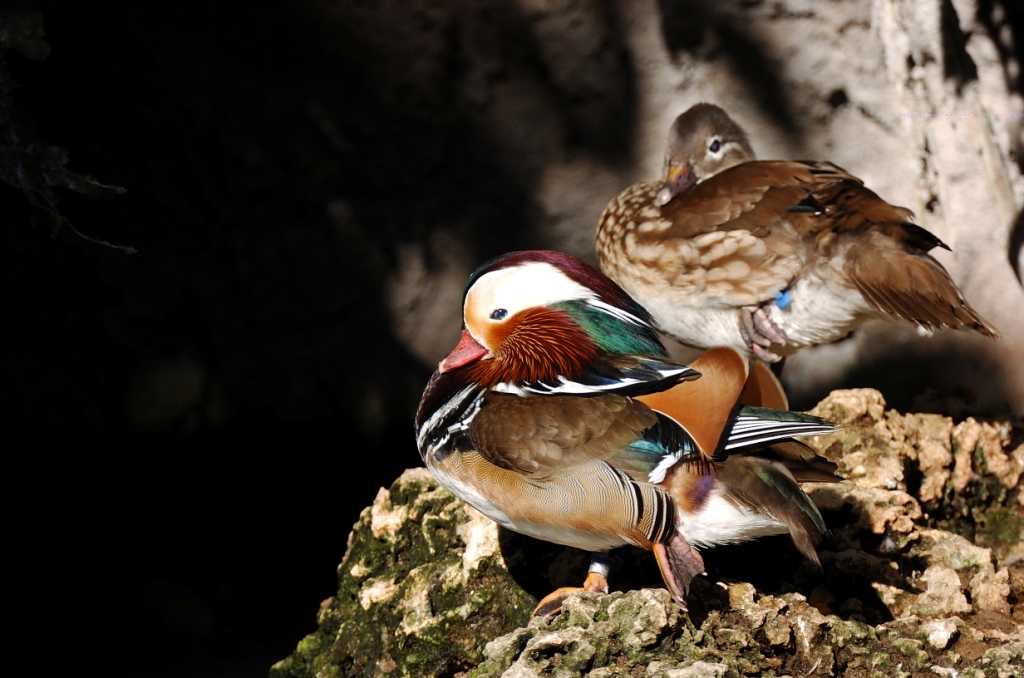
Mandarin Duck (Aix galericulata) by Dan at Zoo Miami

Mandarin Duck (Aix galericulata) by Dan at Zoo Miami

O Lord GOD, You have begun to show Your servant Your greatness and Your mighty hand, for what god is there in heaven or on earth who can do anything like Your works and Your mighty deeds? (Deuteronomy 3:24 NKJV)

What a beautiful duck. When we look around us, the Lord’s Hand is at work everywhere. Be thankful today for the Lord’s Blessing.

Brown-headed Barbet (Megalaima zeylanica) by Nikhil Devasar

Hang in there, today!

O taste and see that the LORD is good: blessed is the man that trusteth in him. (Psalms 34:8 KJV)

*

Bible Birds

*


Sneaky Roadrunner

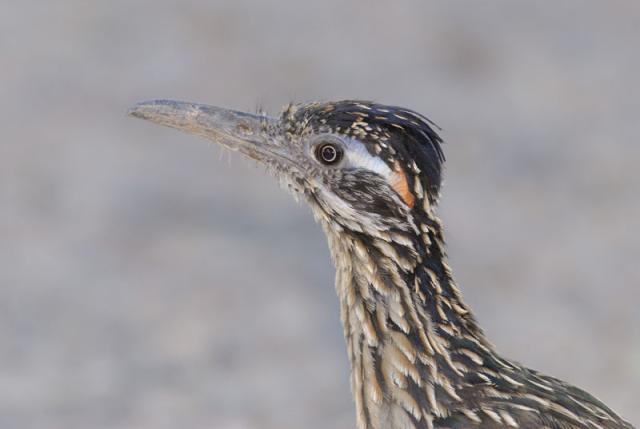
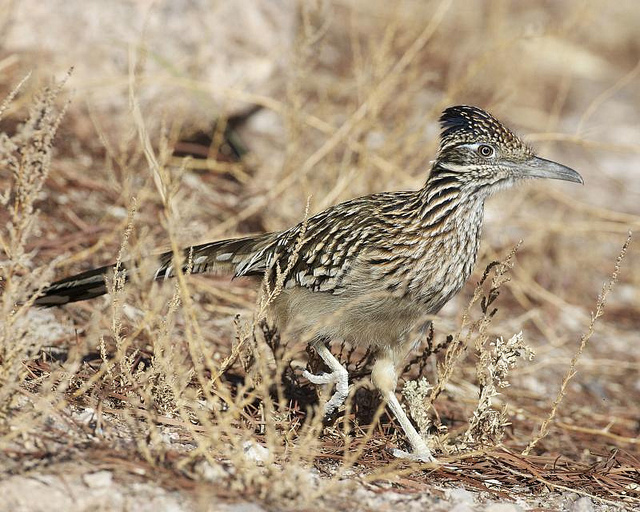
Greater Roadrunner (Geococcyx californianus) Reinier Munguia

Greater Roadrunner (Geococcyx californianus) Reinier Munguia

Sneaky Roadrunner ~ by Dr. James J. S. Johnson

There is no fear in love; but perfect love casteth out fear: because fear hath torment. He that feareth is not made perfect in love. (1 John 4:18 KJV)

Luzon Bleeding-heart by Dan

Orni-Theology

Roadrunners are unusual birds.   When you think of birds, usually you think of birds that fly.  But not roadrunners – mostly they run (up to 20 miles per hour!), or walk very quickly (“race-walking”).  But roadrunners sometimes fly short distances, if they want to escape someone.  Once I saw one fly from my home’s front yard to the roof of our house.  But a roadrunner’s usual exit strategy is to run.  But not always. Sometimes they try to be sneaky. Before recalling a memorable example of roadrunner sneakiness, however, a few fact about roadrunners should be reviewed.

Greater Roadrunner (Geococcyx californianus) by Daves BirdingPix

Greater Roadrunner (Geococcyx californianus) by Daves BirdingPix

Roadrunners have longer legs, in proportion to their bodies, than do most birds.  Obviously God designed these roadrunners to get around on foot!  Taxonomists (i.e., those who categorize creatures into groups of common traits, by “lumping” on similarities and “splitting” on dissimilarities) classify the Greater Roadrunner (Geococcyx californianus – meaning “Californian earth-cuckoo”) as a member of the cuckoo family, birds that look like half-starved chickens with long tails.  Roadrunners thrive in desert habitats, yet these black-and-white fowl are also found living in shrub-dominated lands known for hot, dry climates, such as the western half of Texas (as well as most of Oklahoma, New Mexico, Arizona, and California).  See Roger Tory Peterson, WESTERN BIRDS (Houghton Mifflin, 3rd ed., 1990), range map 192.  Roadrunners can also be seen, though less frequently, in contiguous states, such as Kansas, Colorado, Utah, Nevada, Missouri, and Arkansas.

Greater Roadrunner (Geococcyx californianus) ©©Alan Murphy Flickr

Greater Roadrunner (Geococcyx californianus) ©©Alan Murphy Flickr

Roadrunners are not picky eaters.  Roadrunners are happy to eat bugs (insects and spiders), seeds, fruits, millipedes, centipedes, scorpions, and even small birds (and their eggs), small mammals (usually rodents like mice, rats, and voles), and small reptiles (such as lizards).  One of the more unusual insects, that roadrunners are known to eat, is the tarantula hawk wasp – an amazing spider-killing wasp that the U.S. Army named one of its “unmanned aircraft” reconnaissance units after.  [See my article at www.icr.org/article/slow-death-for-tarantula-lesson-arachnid/ — “Slow Death for a Tarantula”.]

Greater Roadrunner (Geococcyx californianus) ©©Flickr

Greater Roadrunner (Geococcyx californianus) ©©Flickr

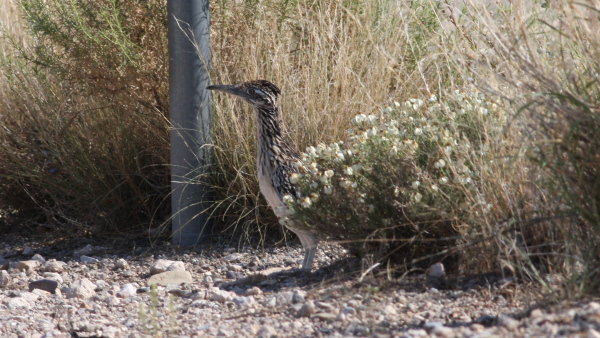
So how can a roadrunner be “sneaky”?  A few months ago I walked out of my house’s front door, and saw a roadrunner in my path.  Startled by my approach, the roadrunner skittishly scuttled around my van, which was parked in the driveway in front of my house.  So now I was standing on the north side of my van, and the roadrunner was standing on the south side of my van.

How do I know that, since I don’t have “x-ray eyes” that can see through a parked van?   As I slowly and silently crept, counter-clockwise around the west side of my van, I could see the roadrunner, standing on the south side of my blue van: he (or was it a she?) was bent over with his head turned to the southeast, with his slender bill and face aimed directly away from me.  By bending down his head, and aiming it away from where I was standing, the roadrunner must have thought that he was hiding from me, and that I could not see him – because he could not see me!  If I had impolitely startled him, then, surely it would have hurt his feelings, or his pride, because he obviously thought he really had me fooled.  So I stood silently, unmoving, for quite a while, to see if he would notice me – only about 3 feet form him – with nothing but air between us!  The roadrunner never moved, and he never turned his head to see me, so perhaps he thought I still could not see him.  Not having the heart to correct him, I slowly and silently backed up to the north side of the van, then retreated back through my front door, into my house.  To this day the roadrunner probably thinks that his bent-over, head-turned “hiding” had fooled me.

Greater Roadrunner (Geococcyx californianus) ©©thedrinkingbird Bing

Greater Roadrunner (Geococcyx californianus) ©©thedrinkingbird Bing

Then I got to thinking about how often we humans act as though we could hide ourselves from God.  When our first parents first sinned (Genesis 3:8-10) they tried to hide from God, among the trees in the Garden of Eden.  (If there had been a blue van there they might have tried to hide behind it.)  Of course, the very thought of hiding from God is silly because He is omnipresent and omniscient (Psalm 139).  But, because the Lord Jesus Christ provides us with a free redemption (John 3:16), there is no good reason to be afraid of God (Hebrews 10:19), because “perfect love casts out fear” (1st John 4:18).

Greater Roadrunner (Geococcyx californianus) ©©Nathan Davis Bing

Greater Roadrunner (Geococcyx californianus) ©©Nathan Davis Bing

Roadrunners are fun to watch – I love watching them scoot around on their fast, race-walking legs! If roadrunners only knew how kindly I regard them they would not fear me – they don’t need to sneak around to escape me.  And, because of Jesus, there is no good reason for us to try to hide from God.

(Dr. James J. S. Johnson, now apologetics professor at ICR,  previously taught ornithology at Dallas Christina College. Mrs. Thelma Bumgardner, his second-grade teacher, introduced him to creationist ornithology.)

*

*


Grey Kingbird at Honeymoon Island SP

Grey Kingbird by Lee at Honeymoon Is SP 7-4-2014

Grey Kingbird by Lee at Honeymoon Is SP 7-4-2014

All the kings of the earth will give thanks to You, O LORD, When they have heard the words of Your mouth. And they will sing of the ways of the LORD, For great is the glory of the LORD. (Psalms 138:4-5 NASB)

The Grey Kingbird (Tyrannus dominicensis) which we saw at Honeymoon Island SP last week was a Life Bird for me. Most Americans call it Gray, but the I.O.C. List of Birds use the Grey spelling. Either way, grey or gray, it is the same bird. That is one reason they use the Scientific name of Tyrannus dominicensis to ID the bird.

Recently I purchased the Latin for Bird Lovers book, because I have tried to see what these “scientific” mean on my own and thought this would be interesting. The book has over 3,000 bird names. I found it to be something quite useful, for me, at least. So let’s see what our Tyrannus dominicensis actually means.

  • Tyrannus “ti-RAN-nus” – “Tyrant, as in Tyanannus Allugularis, The White-throated Kingbird” [p.205]
  • dominicensis“doe-min-ib-SEN-sis-” – “After the Commonwealth of Dominica in the West Indies, as in Pluvialis dominica, the American Golden Plover, which passes through the West Indies during migrations.” [p.61]

So, we have a Tyrant that is from or passes through Dominica. The Kingbirds do belong to the Tyrannidae – Tyrant Flycatchers FamilyThere are 14 birds in the Tyrannus genus, which is the first part of the scientific name, Tyrannus Dominicensis, the second part of the name has 5 birds with that ending. That includes not only this Grey Kingbird, but also the Caribbean Martin (Progne dominicensis),  Antillean Siskin (Spinus dominicensis)Hispaniolan Oriole (Icterus dominicensis) and the Hispaniolan Spindalis (Spindalis dominicensis).

This was my 250th Life Bird record on eBird.

Grey Kingbird (Tyrannus dominicensis) by Lee at Honeymoon Is SP

Grey Kingbird (Tyrannus dominicensis) by Lee at Honeymoon Is SP

The bird also has found a house, And the swallow a nest for herself, where she may lay her young, Even Your altars, O LORD of hosts, My King and my God. (Psalms 84:3 NASB)

“The Grey or Gray Kingbird, also known as Pitirre (Tyrannus dominicensis) is a passerine bird. It breeds from the extreme southeast of the USA, mainly in Florida, through Central America, from Cuba to Puerto Rico as well as eastward towards all across the Lesser West Indies, south to Venezuela, Trinidad, Tobago the Guiana and Colombia. Northern populations are migratory, wintering on the Caribbean coast of Central America and northern South America.

Grey Kingbird by Dan

Grey Kingbird by Dan at HISP

This tyrant flycatcher is found in tall trees and shrubs, including the edges of savanna and marshes. It makes a flimsy cup nest in a tree. The female incubates the typical clutch of two cream eggs, which are marked with reddish-brown. Grey Kingbirds wait on an exposed perch high in a tree,which is where we found it, occasionally sallying out to feed on insects, their staple diet.

The adult Grey Kingbird is an average-sized kingbird. It measures 9.1 in (23 cm) in length and weighs from 1.3 to 1.8 oz (37 to 52 g). The upper parts are grey, with brownish wings and tail, and the underparts are white with a grey tinge to the chest. The head has a concealed yellow crown stripe, and a dusky mask through the eyes. The dark bill is heavier than that of the related, slightly smaller, Tropical Kingbird. The sexes are similar, but young birds have rufous edges on the wing coverts, rump and tail.

Grey Kingbird (Tyrannus dominicensis) by Lee at Honeymoon Is SP

The call is a loud rolling trill, pipiri pipiri, which is the reason behind many of its local names, like pestigre or pitirre, in the Spanish-speaking Greater Antilles, or “petchary” in some of the English-speaking zones.

(from xeno-canto)

Like other kingbirds, these birds aggressively defend their territory against intruders, including mammals and much larger birds such as caracaras and Red-Tailed Hawks. This phenomenon has led to the widespread adoption of the pitirre as a nationalist symbol (a sort of David vs. Goliath figure) in Puerto Rico.

It is found in increasing numbers in the state of Florida, and is more often found inland though it had been previously restricted to the coast. The species was first described on the island of Hispaniola, then called Santo Domingo, thus the dominicensis name.” (from Wikipedia with editing)

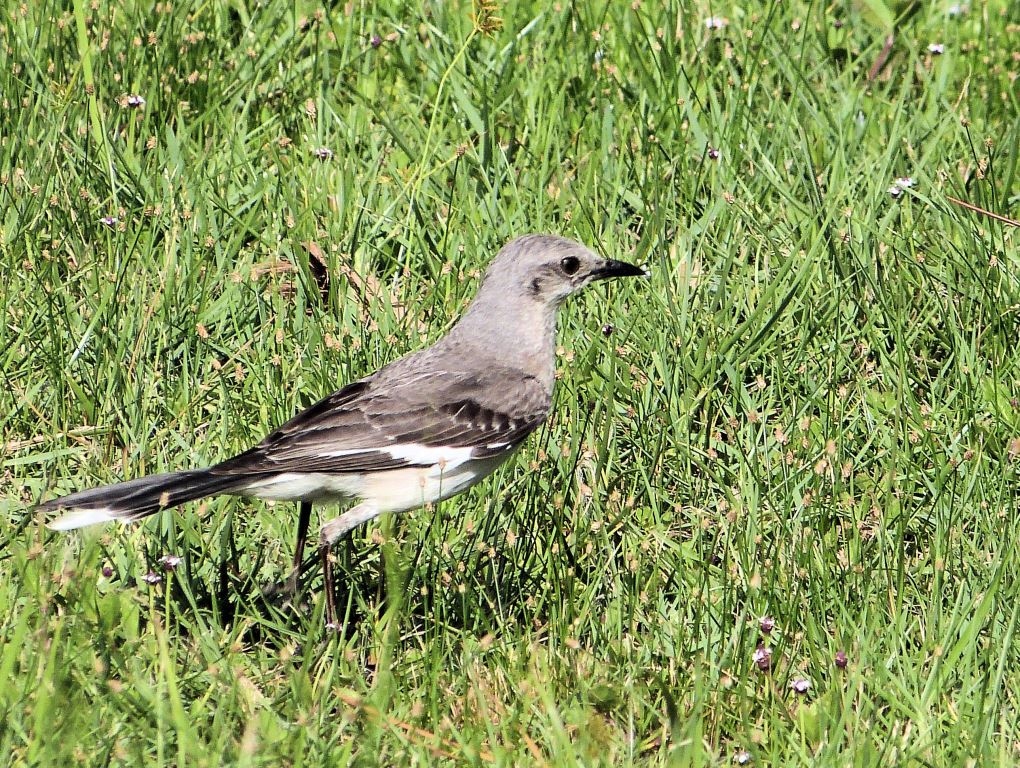
Northern Mockingbird (Mimus polyglottos) by Lee at Honeymoon Is SP

Northern Mockingbird (Mimus polyglottos) by Lee at Honeymoon Is SP

I added this Northern Mockingbird which was also there at the State Park. At first we kept thinking the Kingbird was a Mockingbird. If you compare the photos, you will notice the Mockingbird has a white spot on its wings and also a black spot near its ear. They are very close though. Also, Dan’s photo of the Kingbird came out more brownish. It may be that he caught a younger one. There were several at the park.

Isn’t the Lord great in that He makes us work for the IDs of these birds. As I have said, He should have put name tags on them, but then we wouldn’t learn about His creativity, would we? It is good for us to learn new things. Never get bored with learning.

Make me know Your ways, O LORD; Teach me Your paths. (Psalms 25:4 NASB)

I will instruct thee and teach thee in the way which thou shalt go: I will guide thee with mine eye. (Psalms 32:8 KJV)

*

*

Gideon

*

Sunday Inspiration – Thirst

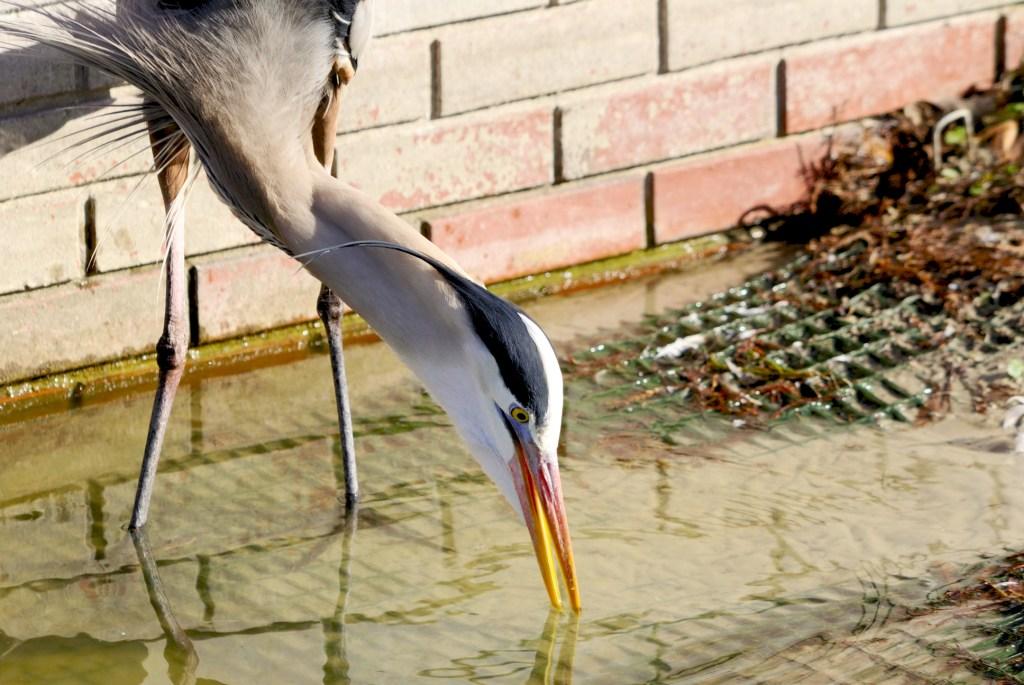
Great Blue Heron (Drinking) at Lake Morgan by Lee

Great Blue Heron (Drinking) at Lake Morgan

Jesus answered and said unto her, Whosoever drinketh of this water shall thirst again: But whosoever drinketh of the water that I shall give him shall never thirst; but the water that I shall give him shall be in him a well of water springing up into everlasting life. (John 4:13-14 KJV)

This slideshow requires JavaScript.

*

*
“Come Thou Fount Of Every Blessing” by Sean Fielder
*

More Sunday Inspiration

Gospel Message

*

Another Birdwatching Trip

Double-crested Cormorant (Phalacrocorax auritus) by Lee at Honeymoon Is SP

Double-crested Cormorant (Phalacrocorax auritus) by Lee at Honeymoon Is SP

The birds of the air, And the fish of the sea That pass through the paths of the seas. O LORD, our Lord, How excellent is Your name in all the earth! (Psalms 8:8-9 NKJV)

We just got back from another birdwatching trip. This time we birded the Honeymoon Island State Park and MacDill AFB beach. Was gone overnight and have many photos to prep. Here are just a few photos for now.

These Double-crested Cormorants were just sitting along the Gulf shore and one was sleeping. They seem to be tired and may have decided to stay on shore because of Hurricane Arthur’s bands of rain that kept sweeping the area the last two days. A man walked between the two and they didn’t even move.

Grey Kingbird (Tyrannus dominicensis) by Lee at Honeymoon Is SP

Grey Kingbird (Tyrannus dominicensis) by Lee at Honeymoon Is SP

This photo of a Kingbird, which is the best shot I have ever had of one, was also at the state park. (Actually, just checked, these are the only ones I have taken of Grey Kingbirds. This was a LIFE BIRD for me. Yeah!)

Today, July 4th, we checked out the shore on Tampa Bay at the base. The birds were few, but enough to give us a chance to get some photos. Without so many species, maybe I’ll be able to ID them. My ID’s of shorebirds is still weak. I will pouring be over my bird books again. Praise the Lord for bird books. (I still think the Lord should have hung tags on them.)

Trust those of us celebrating the Fourth have had a good day. We have!

*

*

Honeymoon Island State Park

Birdwatching Trips

Birdwatching

*


King Solomon and The Birds – Part 3

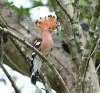
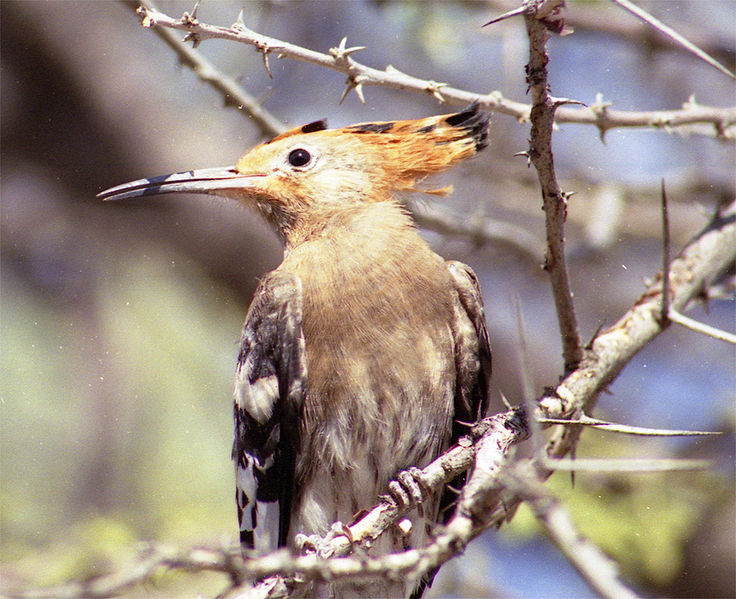
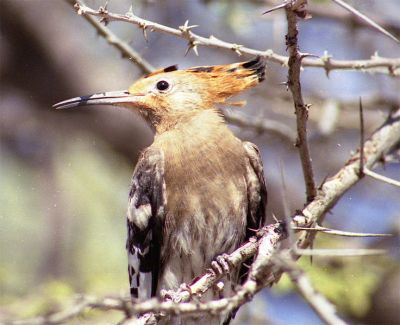
African Hoopoe (Upupa africana) ©WikiC

African Hoopoe (Upupa africana) ©WikiC

King Solomon and The Birds ~ from The Curious Book of Birds

KING SOLOMON AND THE BIRDS  – Part 3

Cur Book of Birds letter-kING SOLOMON was ever seeking to grow even wiser. The better to know the wonders of God’s world and the ways of all creatures, he undertook many journeys,—not as we ordinary poor mortals travel, in heavy wagons or clumsy boats, by dusty roads or stormy waves. It was in no such troublous ways that Solomon the all-powerful traversed space and reached the uttermost corners of the earth. Thanks to his great knowledge, he had discovered a means of locomotion compared to which the most magnificent railway coaches and the richest palanquins of Indian princes would seem poor indeed. He had caused his Genii to make a silken carpet of four leagues in extent. In the midst of this carpet was placed a magnificent throne for the royal traveler himself; and around it were seats of gold, of silver, of wood, for the multitude of persons of different rank whom he took with him. There was also no lack of the most gorgeous furniture and the necessary provisions for a king’s traveling banquet.

When all was ready Solomon was wont to seat himself upon his throne, and would command the winds to do their duty. Immediately they gently lifted the carpet and bore it rapidly through the air to the appointed spot. During the journey, above the aerial caravan fluttered a cloud of birds, who with their wings formed a splendid canopy to shield their beloved lord from the sun’s heat, as the Hoopoes had first done.

One day, while on such a journey, Solomon was shocked to feel a ray of sunlight piercing through this plumy dais (raised feathers) which overhung his head. Shading his eyes, the King glanced up and perceived that there was an opening in the canopy. One bird was missing from its post. In great displeasure Solomon demanded of the Eagle the name of the truant. Anxiously the Eagle called the roll of all the birds in his company; and he was horrified to find that it was Solomon’s favorite, the Hoopoe, who was missing. With terror he announced the bird’s desertion to the most wise King.

“Soar aloft,” commanded Solomon sternly, “and find the Hoopoe that I may punish him. I will pluck off his feathers that he may feel the scorching heat of the sun as his carelessness has caused me to do.”

The Eagle soared heavenward, until the earth beneath him looked like a bowl turned upside down. Then he poised on level wings and looked around in every direction to discover the truant. Soon he espied the Hoopoe flying swiftly from the south. The Eagle swooped down and would have seized the culprit roughly in his strong talons, but the Hoopoe begged him for Solomon’s sake to be gentle.

“For Solomon’s sake!” cried the Eagle. “Do you dare to name the King whom you have injured? He has discovered your absence and in his righteous anger will punish you severely.”

“Lead me to him,” replied the Hoopoe. “I know that he will forgive me when he hears where I have been and what I have to tell him.”

The Eagle led him to the King, who with a wrathful face was sitting on his throne. The Hoopoe trembled and drooped his feathers humbly, but when Solomon would have crushed him in his mighty fist the bird cried,—

“Remember, King, that one day you also must give an account of your sins. Let me not therefore be condemned unheard.”

“And if I hear you, what excuse can you have to offer?” answered Solomon, frowning. But this was his favorite bird and he hoped that there might be some reason for sparing him.

“Well,” said the Hoopoe, “at Mecca I met a Hoopoe of my acquaintance who told me so wonderful a tale of the marvelous Kingdom of Sheba in Arabia that I could not resist the temptation to visit that country of gold and precious stones. And there, indeed, I saw the most prodigious treasures; but best of all, O King, more glorious than gold, more precious than rare jewels, I saw Queen Balkis, the most beautiful of queens.”

“Tell me of this Queen,” said Solomon, loosening his rough grasp upon the Hoopoe. So it was, say the people, that a bird told Solomon of the great Queen whose journey to Jerusalem is described in the Bible.

The Hoopoe told of her power and glory, her riches, her wisdom, and her beauty, until Solomon sighed a great sigh and said, “It seems too good to be true! But we shall see.”

So the King wrote a letter to Balkis, bidding her follow the guidance of fate and come to the court of the wise King. This note he sealed with musk, stamped with his great signet, and gave to the Hoopoe, saying,—

“If now you have spoken truth, take this letter to Queen Balkis; then come away.”

The Hoopoe did as he was bid, darting off towards the south like an arrow. And the next day he came to the palace of the Queen of Sheba, where she sat in all her splendor among her counselors. He hopped into the hall and dropped the letter into her lap, then flew away.

Queen Balkis stared and stared at the great King’s seal upon the mysterious letter, and when she had read the brief invitation she stared and stared again. But she had heard the fame of Solomon and was eager to ask him some of her clever questions to prove his wisdom. So she decided to accept his invitation and come to Jerusalem.

She came with a great train of attendants, with camels that bore spices and treasures of gold and precious stones, gifts for the most wise King. And she asked him more questions than any woman had ever asked him before, though he knew a great many ladies, and they were all inquisitive.

But Solomon was so wise that he answered all her questions without any trouble.

And she said to him, “It was a true report that I heard of you in my own land, of your wisdom and of your glory. Only that which now I know and see is greater than what I heard. Happy are thy men and happy are thy servants who stand continually before thee and hear thy wisdom.”

And she gave the King a hundred and twenty talents of gold, which was a very rich treasure, besides great store of spices, and the most precious gifts; no one had ever seen such gifts as the Queen of Sheba gave to Solomon.

But he in turn was even more generous. For he gave to the fair Balkis all that she desired and everything she asked, because he admired so much this splendid Queen of whom the Hoopoe had first told him.

And so, the Bible says, the Queen of Sheba turned and went to her own country, she and her servants. But the People’s tales say that in later days she married Solomon and they lived happily ever after. And it was all the work of that little Hoopoe with a yellow crown, whom after that we may be sure Solomon loved better than ever.

***

Now King Solomon gave to the queen of Sheba all she desired, whatever she asked, much more than she had brought to the king. So she turned and went to her own country, she and her servants. (2 Chronicles 9:12 NKJV)

And that ends our story of King Solomon and the Birds.

See:

King Solomon and The Birds – Part 1

King Solomon and The Birds – Part 2

*

Links:

Eurasian Hoopoe (Upupa epops) by Peter Ericsson


  Hoopoes – Upupidae Family


Painted Bunting (Passerina ciris) ©©Flickr


  Bird Tales


Curious Book of Birds - Cover


  The Curious Book of Birds


Spanish Sparrow (Passer Hispaniolensis) female ©WikiC


  Wordless Birds


*

King Solomon and The Birds – Part 2

Eurasian Hoopoe (Upupa epops) by W Kwon

Eurasian Hoopoe (Upupa epops) by W Kwon

King Solomon and The Birds ~ from The Curious Book of Birds

King Solomon and The Birds – Part 2


Cur Book of Birds letter-one day when Solomon was journeying across the desert, he was sorely distressed by the heat of the sun, until he came near to fainting. Just then he spied a flock of his friends the Hoopoes flying past, and calling to them feebly he begged them to shelter him from the burning rays.

The King of the Hoopoes gathered together his whole nation and caused them to fly in a thick cloud over the head of Solomon while he continued his journey. In gratitude the wise King offered to give his feathered friends whatever reward they might ask.

For a whole day the Hoopoes talked the matter over among themselves, then their King came to Solomon and said to him,—

“We have considered your offer, O generous King, and we have decided that what we most desire is to have, each of us, a golden crown on his head.”

King Solomon smiled and answered, “Crowns of gold shall you have. But you are foolish birds, my Hoopoes; and when the evil days shall come upon you and you see the folly of your desire, return here to me and I will help you yet again.”

So the King of the Hoopoes left King Solomon with a beautiful golden crown upon his head. And soon all the Hoopoes were wearing golden crowns. Thereupon they grew very proud and haughty. They went down by the lakes and pools and strutted there that they might admire themselves in the water mirrors. And the Queen of the Hoopoes became very airy, and refused to speak to her own cousin and to the other birds who had once been her friends.

There was a certain fowler who used to set traps for birds. He put a piece of broken mirror into his trap, and a Hoopoe spying it went in to admire herself, and was caught. The fowler looked at the shining crown upon her head and said, “What have we here! I never saw a crown like this upon any bird. I must ask about this.”

So he took the crown to Issachar, the worker in metal, and asked him what it was. Issachar examined it carefully, and his eyes stuck out of his head. But he said carelessly, “It is a crown of brass, my friend. I will give you a quarter of a shekel for it; and if you find any more bring them to me. But be sure to tell no other man of the matter.” (A shekel was about sixty-two cents.)

After this the fowler caught many Hoopoes in the same way, and sold their crowns to Issachar. But one day as he was on his way to the metalworker’s shop he met a jeweler, and to him he showed one of the Hoopoes’ crowns.

“What is this, and where did you find it?” exclaimed the jeweler. “It is pure gold. I will give you a golden talent for every four you bring me.” (A talent was worth three hundred shekels.)

Now when the value of the Hoopoes’ crowns was known, every one turned fowler and began to hunt the precious birds. In all the land of Israel was heard the twang of bows and the whirling of slings. Bird lime was made in every town, and the price of traps rose in the market so that the trap-makers became rich men. Not a Hoopoe could show his unlucky head without being slain or taken captive, and the days of the Hoopoes were numbered. It seemed that soon there would be no more Hoopoes left to bewail their sad fate.

At last the few who still lived gathered together and held a meeting to consider what should be done, for their minds were filled with sorrow and dismay. And they decided to appeal once more to King Solomon, who had granted their foolish prayer.

Flying by stealth through the loneliest ways, the unhappy King of the Hoopoes came at last to the court of the King, and stood once more before the steps of his golden throne. With tears and groans he related the sad fortune which had befallen his golden-crowned race.

King Solomon looked kindly upon the King of the Hoopoes and said, “Behold, did I not warn you of your folly in desiring to have crowns of gold? Vanity and pride have been your ruin. But now, that there may be a memorial of the service which once you did me, your crowns of gold shall be changed into crowns of feathers, and with them you may walk unharmed upon the earth.”

In this way the remaining Hoopoes were saved. For when the fowlers saw that they no longer wore crowns of gold upon their heads, they ceased to hunt them as they had been doing. And from that time forth the family of the Hoopoes have flourished and increased in peace, even to the present day.


Lee’s Addition:

When pride comes, then comes dishonor, But with the humble is wisdom. (Proverbs 11:2 NASB)

Vanity means – “too much pride in oneself or in how one looks.”

Pride can mean – “a sense of one’s own value that is too high.” or “an inborn feeling of self-worth.” (One of these definitions is good and the other bad.)

Was our King of the Hoopoes showing good or bad pride? When we think too much of ourself and think we are better or nicer looking. (“Look at me, I have a gold crown.”)

You could work hard on a project and win a gold ribbon or metal for that effort. If you wore that ribbon around your neck, would your attitude about it be a good or bad pride?

Praise the LORD! Oh, give thanks to the LORD, for He is good! For His mercy endures forever. (Psalms 106:1 NKJV)

Links:

King Solomon and The Birds – Part 1

King Solomon and The Birds – Part 2

King Solomon and The Birds – Part 3


Eurasian Hoopoe (Upupa epops) by Peter Ericsson


  Hoopoes – Upupidae Family


Painted Bunting (Passerina ciris) ©©Flickr


  Bird Tales


Curious Book of Birds - Cover


  The Curious Book of Birds


Spanish Sparrow (Passer Hispaniolensis) female ©WikiC


  Wordless Birds


Great Blue Heron: Patient, Prompt, and (Rarely) Pugnacious

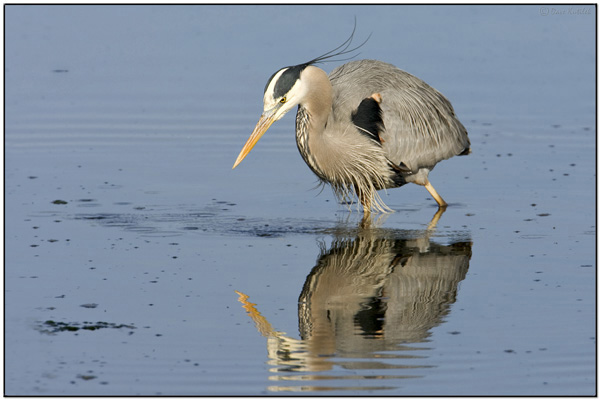
Great Blue Heron by Dan

Great Blue Heron

Great Blue Heron: Patient, Prompt, and (Rarely) Pugnacious

by Dr. James J. S. Johnson

Luzon Bleeding-heart by Dan

Orni-Theology

The heron family (family Ardeidae, which also includes bitterns and some egrets) and their cousins include some of my favorite long-legged wading birds:  great blue herons, green herons, grey herons, tri-colored herons, night herons, great white egrets, and cattle egrets.


Reddish-Snowys-Greats Egrets -Great Blue Heron all MacDill by Lee

Reddish-Snowys-Greats Egrets -Great Blue Heron by Lee

Their often smaller cousins (of the family Egretta) include the reddish egret, little blue heron, and the snowy egret.  Of these many regard the great blue heron (Ardea herodias) as a favorite:

“For most of us, sightings of great blue herons are confined to a glimpse of the bird as it flies slowly and steadily overhead, wings arching gracefully down with each beat, neck bent back, and feet trailing behind.  At other times we see it on its feeding grounds, standing motionless and staring intently into shallow water, or wading with measured steps as it searches for prey.” [Quoting from “Great Blue Heron”, by Donald & Lillian Stokes, in Bird Behavior, Volume III (Little, Brown & Co., 1989), page 25.]

Great Blue Heron by Dave's Pix

Great Blue Heron by Dave’s Pix

The Holy Bible mentions “herons” twice, in Leviticus 11:19 and in Deuteronomy 14:18 (both times translating the Hebrew noun ’anaphah), in Mosaic lists of ritually “unclean” birds.   The bird’s Hebrew name is based on a verb (’anaph) meaning “to snort” or “to be angry”.  Herons can be aggressive, and their almost-violent habit of “zapping” their prey could appear to resemble an aggressor angrily striking at unsuspecting victim. The more likely behavior that matches the Hebrew name, however, is the aggressive defense of a heron’s feeding grounds:

“Defense of feeding territories is commonly seen and involves aerial chases, Frahnk-calls, and aggressive [body language] displays, such as Upright, Bill-down-upright, Bent-neck.  Fighting rarely occurs, but when it does it can be violent, with one bird landing on the back of the other and either bird stabbing the other with its bill.” [Quoting from “Great Blue Heron”, by Donald & Lillian Stokes, above, page 30.]

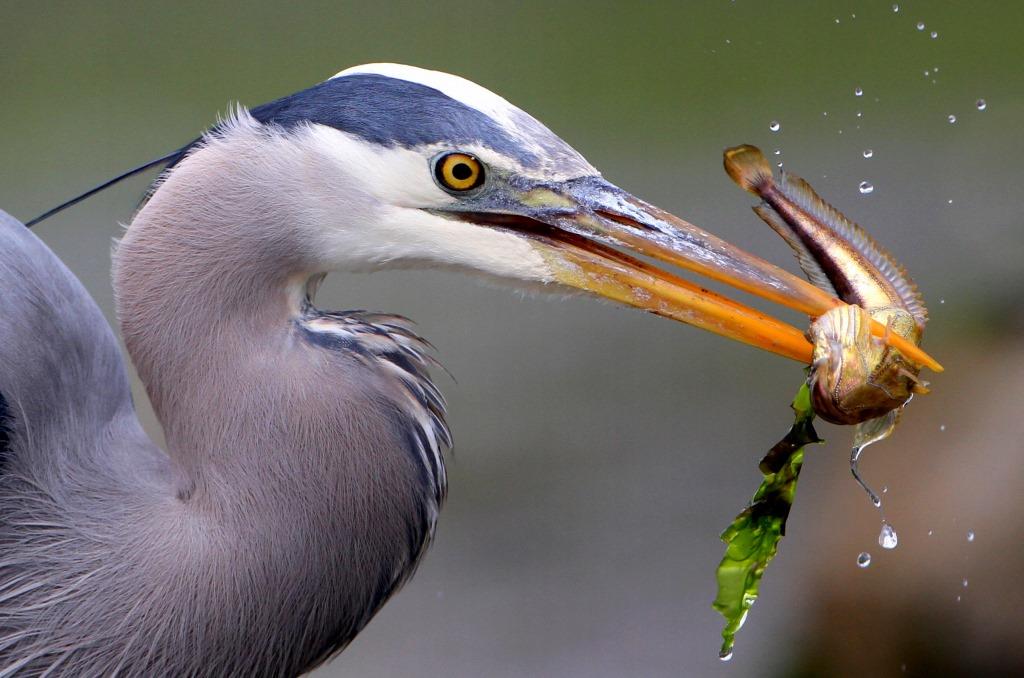
Yet do not imagine that the great blue heron is an erratic hothead that has no self-control, because its self-restraint, when seeking a meal at the shoreline of a pond, is so self-contained that the heron resembles a statue, for many minutes if necessary. Then, zap!  The statue suddenly fast-forwards his sharp beak toward a hapless fish or frog,   —  and instantly the heron is gulping down his dinner!

Great Blue Heron with fish ©© winnu on Flickr

This ability to strike like lightning, yet the choice to withhold doing so (unless the time for doing so is obvious), reminds us of the New Testament directive:  “be ye angry, and sin not” (Ephesians 4:26).

Also, in spiritual matters (Ephesians 6:12), we are exhorted to “contend earnestly” for the Biblical faith (Jude 1:3), in ways that do not involve flesh-and-blood fighting.  Such spiritual conflicts require both the patience and promptness of a sniper (or an opportunistic great blue heron)!   Yes, there may even come a time for the use of physical force, when the stakes are high enough –  remember how the Lord Jesus cleansed the Temple with a whip!  —  but most of the time our anger should be suppressed, with heron-like patience, in order to achieve the most worthy goals in life.

><> JJSJ

See:

Orni-Theology
Ardeidae- Herons, Bitterns
Birds of the Bible –  Herons
Dr. James J. S. Johnson – Guest Writer

*


Sunday Inspiration – Sparrows II

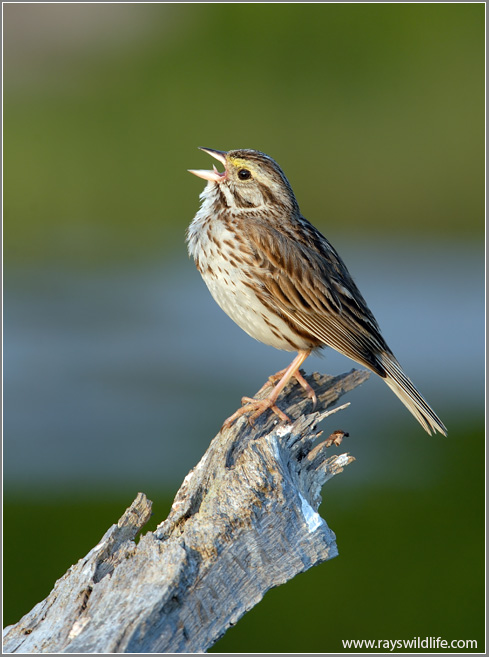
Savannah Sparrow singing by Ray

Savannah Sparrow singing by Raymond Barlow

Even the sparrow finds a home, and the swallow a nest for herself, where she may lay her young, at your altars, O LORD of hosts, my King and my God. Blessed are those who dwell in your house, ever singing your praise! Selah. (Psalms 84:3-4 ESV)

I know we used the Sparrows before with an orchestra playing “His Eye Is On The Sparrow, but this special by Kathy Lisby from Faith, is so good, I just have to share it.

*

This slideshow requires JavaScript.

*

“His Eye Is On The Sparrow ” – by Kathy Lisby

*

Fixed Daddy’s Bedtime Bird Stories

Daddys Bedtime Story Images (1)

Daddy’s Bedtime Bird Stories had some broken links because of a change in Gutenberg’s policy. They do not want links to their articles and photos. Long story short, I fixed them and now they should be okay. I also added photo links since I had to redo all of them. Here are the stories so far. I realized there are many stories yet to be told yet. Stay tuned!

(If you should find any broken links, please leave a comment on that story so it can be fixed. Thanks.)

These are the ones available for reading:

*

Links:

Painted Bunting (Passerina ciris) ©©Flickr


  Bird Tales


  Daddy’s Bedtime Bird Stories


Spanish Sparrow (Passer Hispaniolensis) female ©WikiC


  Wordless Birds


*

Wings To Paradise II

Then God said, “Let the waters abound with an abundance of living creatures, and let birds fly above the earth across the face of the firmament of the heavens.” (Genesis 1:20 NKJV

What a fantastic video – WOW! It is a bit long, but worth every minute of it. This is the 2nd one. See Part I  How can anyone watch these birds flying and not realize they have a fantastic Creator? This was produced by Wittydud on YouTube *

I know all the birds of the mountains, And the wild beasts of the field are Mine. (Psalms 50:11 NKJV)

*

Wordless Birds

*