And of every living thing of all flesh you shall bring two of every sort into the ark, to keep them alive with you; they shall be male and female. (Gen 6:19 NKJV)
After computer problems last week, we are back up and running. I reloaded my e-Sword on to a new SSD drive and decided to see how fast the searches would be. Zip! Searching for the word “bird” in the Reference Library, I came across these interesting thoughts from “Gleanings In Genesis” by Arthur W. Pink
Noah, as a Type of Christ, is being discussed in this section and the reference to caring for the birds and animals of course caught my “birdwatching eye.”
From Gleanings in Genesis, Chapter 12, Noah A Type of Christ (excerpt):
“9. The successful issue of Noah’s work, seen in “the saving of his house” (Hebrews_11:7) reminds us of the language of Hebrews_3:6, “But Christ as a son over his own house” (Hebrews_3:6). But the type goes further: Noah’s work brings blessing to all creation as is seen from the fact that the animals and birds were also preserved in the ark. Observe how beautifully this is brought out in Genesis_8:1 —”And God remembered Noah, and every living thing, and all the cattle that was with him in the ark.” So, too, the work of Christ shall yet bring blessing to the beasts of the field. At His return to the earth “the creation itself also shall be delivered from the bondage of corruption into the glorious liberty of the children of God” (Romans_8:21).
10. In Genesis_6:19 we have a hint of the animal creation being subject to Noah “And of every living thing of all flesh, two of every sort shalt thou bring into the ark, to keep them alive with thee.” We have a passing glimpse of the yet future fulfillment of this part of the type in Mark_1:13 —”And He was there in the wilderness forty days tempted of Satan; and was with the wild beasts.” Noah’s headship over all creatures comes out even more clearly in Genesis_9:2 —”And the fear of you and the dread of you shall be upon every beast of the earth, and upon every fowl of the air, upon all that moveth upon earth, and upon all the fishes of the sea; into your hand are they delivered.” How this reminds us of Psalm 8, which speaks of the future dominion of the Son of Man. “For Thou hast made Him a little lower than the angels, and hast crowned Him with glory and honor. For thou madest Him to have dominion over the works of Thy hands; Thou hast put all things under His feet (compare Hebrews_2:8), “But now we see not yet all things put under Him, all sheep and oxen, yea, and the beasts of the field; the fowl of the air and the fish of the sea!” This same thought is repeated in the Genesis narrative again and again as if with deliberate emphasis. When we read of the animals entering the Ark we are told “They went in unto Noah (not unto Noah and his family) into the Ark,” and then we are told “And the Lord shut him (not ‘them’) in” (Genesis_7:15-16). And again, on leaving the ark we read that God said unto Noah, “Every moving thing that liveth shall be meat for you; even as the green herb have I given you all things” (Genesis_9:3). So Christ is “the Heir of all things” (Hebrews_1:2).
Interesting House Finch at feeder
11. In Gen_6:21 we find Noah presented as the great food-provider: “And take thou unto thee of all food that is eaten, and thou shalt gather it to thee; and it shall be for food for thee, and for them.” We need hardly say that this finds its complement in Christ the Bread of Life. He is God’s Manna for our souls. He is the Shewbread which was eaten by Aaron and his sons (Leviticus_24:9). He is the Old Corn of the land (Joshua_5:11). In short, it is only as we feed upon Christ as He is presented unto us in the written Word that our spiritual life is quickened and nourished.
He does great things past finding out, Yes, wonders without number. (Job 9:10 NKJV)
We have a wonderful Creator, Sustainer and Saviour in the Lord Jesus Christ. Through the use of “Types,” like Noah, and illustrations with birds and other objects, it helps us better understand many things that are beyond our grasp or understanding at times.
(Gen 1:21) So God created great sea creatures and every living thing that moves, with which the waters abounded, according to their kind, and every winged bird according to its kind. And God saw that it was good.
I have just had the privilege of “screening” the “FLIGHT: The Genius of Birds” film. After being contacted by its director, Lad, I accepted the offer to watch this amazing film all about the bird’s intelligently designed ability to fly. It is FANTASTIC!
Illustra Media produced this film and I am including their Trailer and three segments; the Embryonic Development, the Skeletal system, and the Hummingbird tongue.
Enjoy watching these. And this is only a part of a tremendously amazing film!
Out of the ground the LORD God formed every beast of the field and every bird of the air, and brought them to Adam to see what he would call them. And whatever Adam called each living creature, that was its name. (Gen 2:19)
*
*
Skeletal system
*
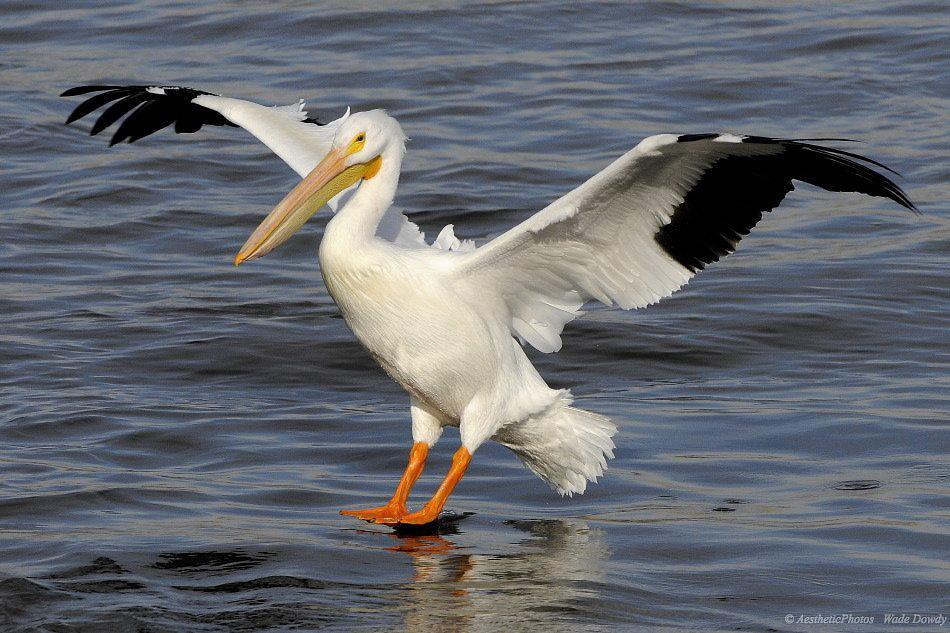
American White Pelican (Pelecanus erythrorhynchos) by AestheticPhotos
Many, O LORD my God, are thy wonderful works which thou hast done, and thy thoughts which are to us-ward: they cannot be reckoned up in order unto thee: if I would declare and speak of them, they are more than can be numbered. (Psa 40:5 KJV)
*
This clip tells about the skeletal makeup of the birds. They do a super job showing with their photography and illustrations. It helped me better understand how the bird’s bones and structure work together to enable birds to fly.
*
*
Hummingbird tongue
*
Rufous-tailed Hummingbird (Amazilia tzacatl) by Judd Patterson
Such knowledge is too wonderful for me; it is high, I cannot attain unto it. (Psa 139:6 KJV)
*
I never imagined this is how they get the nectar. Wow!
*
I do not sell things here on the blog. My goal is to help promote this very informative video about how an Intelligent designer is behind all of the ingenious aspects of birds and their Flight. We know that the Lord Jesus Christ is that “intelligent designer’ and that He deserves all the credit.
In the beginning was the Word, and the Word was with God, and the Word was God. He was in the beginning with God. All things were made through Him, and without Him nothing was made that was made. (Joh 1:1-3)
Taken from YouTube – TO ORDER DVDs: www.illustramedia.com / FLIGHT: THE GENIUS OF BIRDS is the first episode in Illustra Media’s new series THE DESIGN OF LIFE. This remarkable documentary explores the evidence for intelligent design as revealed through the biological systems and mechanisms that make avian flight possible. Photographed in North America, England, Peru, Greenland, and Antarctica FLIGHT celebrates birds and the miracle of life in the skies.
The DVD is available for purchase now – visit www.illustramedia.com for more information.
But you are to cling to the LORD your God, as you have done to this day. (Joshua 23:8 NASB)
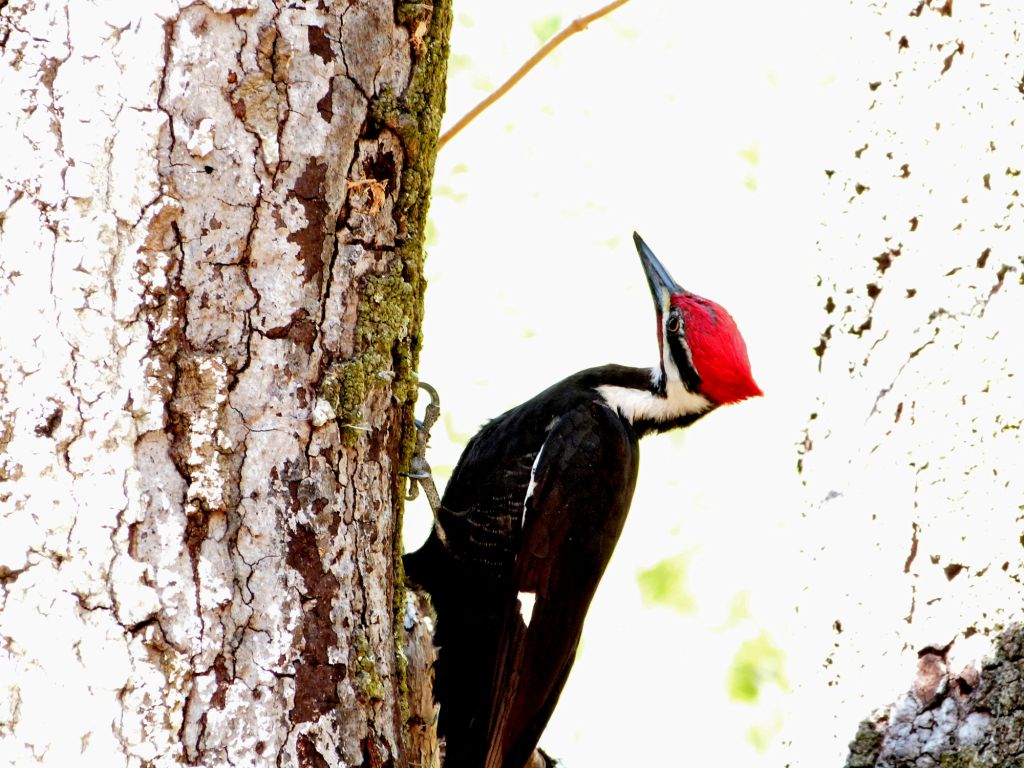
While finishing the last two chapters of Joshua, I came across the verse above. I immediately pictured a Woodpecker “clinging” to a tree. Then the following picture also came to mind. What can we learn about our “clinging birds” and us “clinging to the Lord”?
Brown-headed Barbet (Megalaima zeylanica) by Nikhil Devasar
Woodpeckers were created with an ability to cling to trees with the help of the way the toes are arranged on their feet. They also use their stiffened tail feathers to keep them on the tree.”Woodpeckers, piculets and wrynecks all possess zygodactyl feet. Zygodactyl feet consist of four toes, the first (hallux) and the fourth facing backward and the second and third facing forward. This foot arrangement is good for grasping the limbs and trunks of trees. Members of this family can walk vertically up a tree trunk, which is beneficial for activities such as foraging for food or nest excavation. In addition to the strong claws and feet, woodpeckers have short strong legs. This is typical of birds that regularly forage on trunks. The tails of all woodpeckers except the piculets and wrynecks are stiffened, and when the bird perches on vertical surfaces, the tail and feet work together to support it.” (Wikipedia)
The following video from explorationfilm has information about the feet and tail of Woodpeckers at the beginning. The rest of the video is very interesting also.
*
*
Other birds also, like the Barbets can do some clinging also. “Nine families of largely arboreal birds make up the order Piciformes, the best-known of them being the Picidae, which includes the woodpeckers and close relatives. The Piciformes contain about 67 living genera with a little over 400 species, of which the Picidae (woodpeckers and relatives) make up about half.
In general, the Piciformes are insectivorous, although the barbets and toucans mostly eat fruit and the honeyguides are unique among birds in being able to digest beeswax (although insects make up the bulk of their diet). Nearly all Piciformes have parrot-like zygodactyl feet—two toes forward and two back, an arrangement that has obvious advantages for birds that spend much of their time on tree trunks. An exception are a few species of three-toed woodpeckers. The jacamars aside, Piciformes do not have down feathers at any age, only true feathers. They range in size from the Rufous Piculet at 8 centimetres in length, and weighing 7 grams, to the Toco Toucan, at 63 centimetres long, and weighing 680 grams. All nest in cavities and have altricial young.” (Wikipedia)
Another group of birds that “cling” are the Tree Creepers. Treecreepers measure from 12 to 18 centimetres in length. Their bills are gently down-curved and rather long, used for probing bark for insects and spiders. They often climb up tree trunks in a helical path, hopping with their feet together; their toes are long and tipped with strongly curved claws for gripping. The longer tails of the Certhia treecreepers are stiffened to use as a prop while climbing, but those of the Spotted Creeper are shorter and not stiffened. Their songs and calls are thin and high-pitched.
Most species of treecreeper occur in the Palearctic and Indomalaya ecozones, from Western Europe to Japan and India. One species occurs in North America from Alaska to Nicaragua and another has a discontinuous distribution in sub-Saharan Africa and India. All species of treecreeper are found in forest and woodland habitats. The more northerly species are partly migratory, and those found in warmer climates are thought to be resident, although information is lacking for many species.
One more well-known bird that clings to trees is the Nuthatch. Not only does he cling, but goes up and down the trees head first. Nuthatches are compact birds with short legs, compressed wings, and square 12-feathered tails. They have long, sturdy, pointed bills and strong toes with long claws.
We know birds can cling, how about us? When I searched the KJV on my e-Sword, the word “cling” did not show up in any verses. Switching to the NASB, which I had been reading, “cling” was found in fourteen (14) verses. Here are some of them:
You shall fear the LORD your God; you shall serve Him and cling to Him, and you shall swear by His name. “He is your praise and He is your God, who has done these great and awesome things for you which your eyes have seen. (Deuteronomy 10:20-21 NASB)
You shall follow the LORD your God and fear Him; and you shall keep His commandments, listen to His voice, serve Him, and cling to Him. (Deuteronomy 13:4 NASB)
I have chosen the faithful way; I have placed Your ordinances before me. I cling to Your testimonies; O LORD, do not put me to shame! I shall run the way of Your commandments, For You will enlarge my heart. (Psalms 119:30-32 NASB)
Let love be without hypocrisy. Abhor what is evil; cling to what is good. Be devoted to one another in brotherly love; give preference to one another in honor;
(Romans 12:9-10 NASB)
These are all great ways we can CLING to the Lord.
The word cling is translated several ways in our original verse:
But you are to cling to the LORD your God, as you have done to this day. (Joshua 23:8 NASB)
KJV – But cleave unto the LORD your God
AKJV – But hold to the LORD your God
BBE – But be true to the Lord your God
Bishops – But sticke fast vnto the Lorde your God,
CEV – Be as faithful to the LORD
ERV – You must continue to follow the LORD your God
GW – But you must be loyal to the LORD your God
MSG – Hold tight to GOD, your God
NET – But you must be loyal to the LORD your God
KJV+ – But cleave H1692
H1692
דּבק
dâbaq
daw-bak’
A primitive root; properly to impinge, that is, cling or adhere; figuratively to catch by pursuit: – abide, fast, cleave (fast together), follow close (hard, after), be joined (together), keep (fast), overtake, pursue hard, stick, take.
They are all good words and may we learn to “cling” to our Lord, just as the birds “cling” to the trees.
“But ask the animals — they will teach you — and the birds in the air — they will tell you; (Job 12:7 CJB)
O taste and see that the LORD is good: blessed is the man that trusteth in him. (Psalms 34:8 KJV)
To the rock flies the cony, the stork to her nest,
When tempests are gathering and black is the west;
So swift, by life’s trials o’erwhelmed and oppressed,
I fly to my refuge, Jehovah, my rest!
The nest, whither speedeth the storm beaten bird,
Aloft, on the fir top by tempests is stirred;
But the nest of my refuge no storm wind can smite;
’Tis the breast of Jehovah; I’m safe from afright.
The rock where the cony securely may hide
Is set in the mountain’s cold, pitiless side;
But the rock of my safety, the home of my quest,
’Tis the heart of my Savior: How warm and how blest!
Then blow, thou wild tempest, I fear not thy might,
Tho’ blackly thou lowerest, my prospect is bright;
Jehovah, my Savior, I fly to Thy breast;
Dear rock of my refuge! Dear sheltering nest!
Storks Shadowing Baby in Lakeland by Dan
In God is my salvation and my glory: the rock of my strength, and my refuge, is in God. (Psalms 62:7 KJV)
He that dwelleth in the secret place of the most High shall abide under the shadow of the Almighty. I will say of the LORD, He is my refuge and my fortress: my God; in him will I trust. (Psalms 91:1-2 KJV)
Alice Boise Wood (?-1919) was the daughter of Professor James R. Boise, Wood was the first woman to graduate from Chicago University. She went on to teach Greek there, and was known as a poet.
The Birdwatching Page was updated to add this video and links to photos of the birds shown. Here is the video and the photo links are on the Birdwatching Page.
And out of the ground the Lord God formed every [wild] beast and living creature of the field and every bird of the air and brought them to Adam to see what he would call them; and whatever Adam called every living creature, that was its name. (Genesis 2:19 AMP)
Just finished the Bible Birds – Owls page. A Photo gallery and some Fun Facts were added.
This slideshow requires JavaScript.
Bible Birds are the Birds of the Bible Birds written with to Younger Folks and those who are “Young at Heart”. As other pages are updated, a post will announce them also.
How Did Birds Get To Be So Smart: Are They “Feathered Apes”?
This is one of the latest articles from Answers in Genesis:
News to Know
by Dr. Elizabeth Mitchell
July 27, 2013
*
“The Term Bird Brain Is Evolving
Some birds—crows, parrots, and jays—possess problem-solving skills that rival those of mammals. Crows demonstrate impressive memory for details, even remembering for years the faces of people who annoy them. Does this represent true cognitive ability? Some birds can improvise tools—by bending a piece of wire, for instance—to get the food they want. Are they actually reasoning or just associating each step with coming closer to the goal? Are birds able to get a picture in their minds of what they want to accomplish and then reason out the steps, or are simpler stepwise “associative learning” processes involved?” … that is the beginning of the article.
Common Ostrich (Struthio camelus) Foot front at Riverbanks Zoo SC by Lee
The ostrich leaves her eggs on the ground and warms them in the dust, Forgetting that a foot may crush them or that the wild beast may trample them. She is hardened against her young ones, as though they were not hers; her labor is in vain because she has no sense of danger [for her unborn brood], For God has deprived her of wisdom, neither has He imparted to her understanding. (Job 39:14-17 AMP)
Here is one more excerpt from the ending of the article which is very interesting and worth reading:
A Better Explanation
God provides in His Word the historical account of the origin of birds, man, and all things. Furthermore, the Bible informs us that God is the one who supplies or deprives an animal of its intelligence. In particular, God takes the credit for the lack of bird-smarts in the ostrich, telling Job, “God deprived her of wisdom, and did not endow her with understanding” (Job 39:17). God also points out that He is the source of wisdom for the hawk and eagle (Job 39:26–27). Learning what makes a bird tick offers a fascinating bit of insight into the creatures our Creator designed and how their brains work.
and the red kite, the falcon, and the kite in their kinds, (Deuteronomy 14:13 NASB)
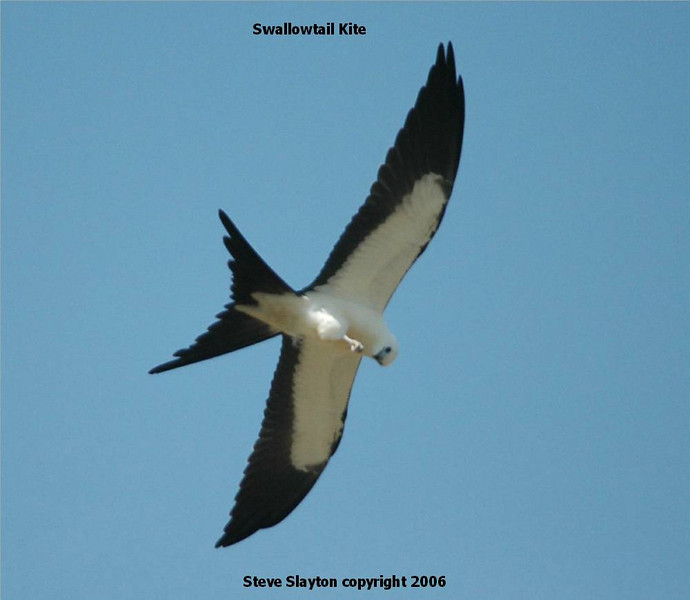
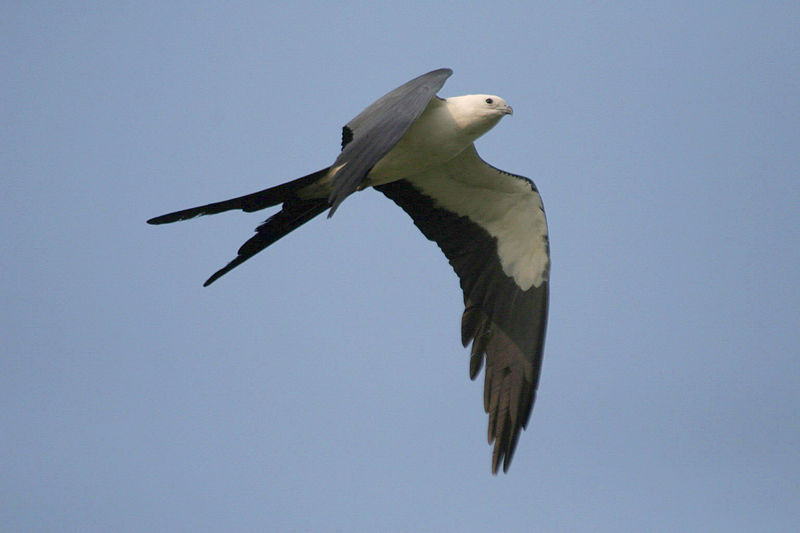
In the Birds of the Bible – Hidden Covenant Part 3, I mistakenly placed this photo of a Swallow-tailed Kite instead of a Swallow. I have since fixed my mistake. A J was talking about the Swallows observing the time of their coming and he used Jeremiah 8:7.
Even the stork in the heavens Knows her appointed times; And the turtledove, the swift, and the swallow Observe the time of their coming. But My people do not know the judgment of the LORD. (Jeremiah 8:7 NKJV)
The reason I mixed them up is because right now, in this area, the Swallow-tailed Kites are being spotted. I have seen a single one three times and just the other day, Dan and I had two of them skim over the top of trees, right in front of us. They have been in the area for a month or so, and soon they will move on again. They “Observe the time of their coming.” Thus the mistake on my part.
They may be one of the Birds of Prey, but they were beautifully created by the Lord. They are so graceful and enjoyable to watch. I am always amazed at the Creator’s use of such variety in the birds and in all the other neat things around us.
Who is like You, O LORD, among the gods? Who is like You, glorious in holiness, Fearful in praises, doing wonders? (Exodus 15:11 NKJV)
According to the Audubon WatchList, “Two subspecies found in the Americas. Northern subspecies (Elanoides forficatus forficatus) breeds in small sections of seven southeastern U.S. states and in southern Mexico. Members of this group migrate to South America in the late summer. Southern subspecies (Elanoides forficatus yetapa) found through much of South America. The estimated U.S. population of approximately 10,000 birds now breeds in fragmented populations from South Carolina south to Florida and west to Louisiana/Texas border with largest known populations in northern Florida. Formerly bred north to Minnesota and west through Texas to Mexico. Significant populations remain in Florida and along the Pascagoula River in Mississippi.”
I really enjoy seeing these Kites because you just have to be looking in the right direction at the right time. Every time they have been spotted by us, they just sort of “appear” over the tops of the trees. They skim so low, that when they come over you, you either see them or you don’t.
Kites are of course one of our Birds of the Bible – (Glede and Kites). They are mentioned twice in Scripture in the list of “unclean” birds in Leviticus 11:14 and Deuteronomy 14:13. Each time “after its kind” is given. So, our Swallow-tailed Kite is one of those kinds and would like to introduce you to this amazing bird that is so neat to watch flying. When they spread that tail of theirs, it is just super neat.
The Swallow-tailed Kite is a member of the Accipitridae Family (Kites, Hawks & Eagles) Family in the Order Accipitriformes. They are considered Abundance Common according the Thayer Birding software.
They are 24 inches (60 cm) with a very long black forked tail, white head, chest, belly and leading portion of underwing. Their flight feathers are black and their back is also black.
They are a medium-sized, graceful, long-winged, long-tailed hawk with pointed wings, a short, dark, hooked bill. The males and females are similar.
Adults have a long, deeply forked tail. white head, neck, chest, underwing coverts, belly, and undertail coverts, a slate gray back and upperwings, black tail and flight feathers. Whereas the immature is duller than adult with fine streaks on head and breast and has a shorter, less deeply-forked tail than adult.
Thayer also says of their habitat and behavior – ” Wet open woodlands, bottomlands, wooded river swamps, marshes, wetlands, and along rivers, ponds and lakes. Agile and graceful in flight. Eats in flight by bending head and neck under body to eat prey held in talon. Will drink in flight, much like a swallow. Gregarious. Will sweep low over open fields and grasslands to catch food or soar very high for flying insects.”
Swallow-tailed Kite (Elanoides forficatus) by Africaddict
The Swallow-tails like to breed in “Lowland forest, especially swampy areas extending into open woodland. 1 brood. Mating system is monogamous. Displays are In flight: easy sailing, curving chase often over water. On perch: mutual approach on horizontal limb, face-off, female quickly turns or backs under limb. They also do courtship feeding.
The nest is usually in treetop concealed by thick foliage and they place it on a foundation of preceding year’s nest. It consist of sticks, twigs, moss, pine needles, leaves, lichen. Lined with fine materials, few feathers. Both sexes help with nest construction.
The eggs are white, marked with browns, occasionally lavender, often concentrated at end. 1.8” (47 mm). Both sexes incubate. with Incubation taking 28 days. Development is semialtricial (immobile, downy, eyes open, fed). Young are able to fly after 36-42 days. Both sexes tend young.
The spend their winters from Colombia and Venezuela S. Marsh drainage, deforestation, and shooting are responsible for reduction in population and range.
Miscellaneous notes; Occasionally nest in loose colonies of a few pairs. Bathe and drink by skimming water surface like swallow. Occasionally soar at great heights. Up to 200 pieces used in nest, carried individually, may require up to 800 miles of flight. Formerly known as American Swallow-tailed Kite; changed by AOU in 1996.
From Thayer Birding Software, The Birder’s Handbook, Wikipedia, and other internet sources.
Hosea 2:14 says, “Therefore, behold, I will allure her, and bring her into the wilderness, and speak comfortably unto her” Did He not allure us and bring us from the wilderness of sin? He has been so kind to us that He still comforts us with His words, songs and above all with His presence and peace that passeth all understanding. What does this verse got to with the covenant? Hosea 2:16 has the answer to it. “And I will give her vineyards from there, and the valley of Achor for a door of hope: and she shall sing there, as in the days of her youth,and as in the day when she came up out of the land of Egypt.”
So? Does it not mean that we need to sing as in the days of our youth and as we sang when we came out of Egypt? Do we sing and worship the way we used to when we first met Jesus? Who would forget the day of salvation! The day when our hearts overflowed with the joy and peace that had never been experienced ever before! Do we have the same joy over the years?
Life has not been too kind for most of us. Battered and bruised we still are trying to come to terms with living a life that is pleasing unto God. During times of trouble, murmuring and self-pity takes our priority above singing and worshipping God. Look at the fowls of the air. Rain or shine they still keep singing like preset robots. No matter what kind of weather it is, the birds never stop their concert. Is God expecting this bird-kind of worship from us? Some of us may not know this bird-kinda worship. Here is how the birds sing.
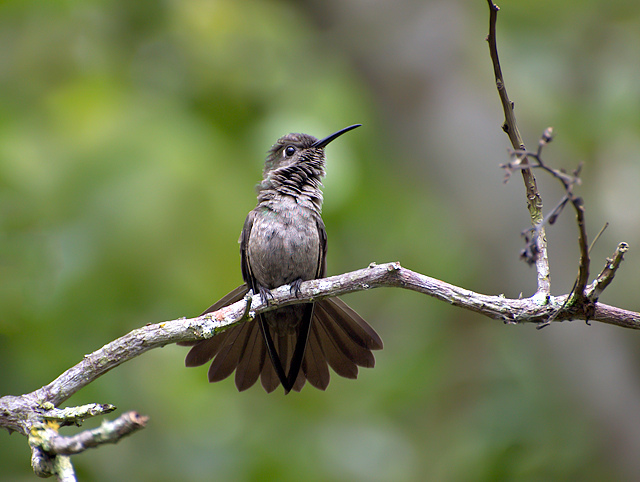
Sombre Hummingbird (Aphantochroa cirrochloris) By Dario Sanches
“Early Singer”
Dawn Chorus is part of every bird’s daily routine. They never venture out in search of food before they finish their dawn chorus. Do we dawn chorus everyday or just the morn-chorus every Sunday? Do we know why birds dawn chorus?
Since they use most of their energy in singing and flying, birds have to eat once in every ten minutes like the hummingbirds, to once in couple of hours like raptors, depending upon the species,. How much energy do we use in singing for God is another question which we may have to ponder a little late! Coming back to where we left, birds do not eat from dusk to dawn, which can be called as an everyday hibernation period. If birds don’t eat well the previous evening, the chances of staying alive to deliver the dawn chorus the next morn is very minimal. So they need to eat well to stay fit to render their dawn chorus so as to advertise that they are still alive.We boast that we worship Jesus – The Life, the way and the truth. But, do we advertise every dawn that we are still alive? God says, “I love those who love me; And those who seek me early shall find me” Proverbs 8:17.
“Those who seek me early shall find me”, which means those who don’t seek early shall not find isn’t it? How early do we seek Him? The Israelites had to collect the dew wrapped manna before sunrise, else manna would melt and they may have to starve for the day. “In the beginning was the Word, and the Word was with God, and the Word was God…… And the Word was made flesh, and dwelt among us, full of grace and truth.” John 1:1 & 14. The word of God is our daily manna. In other words, Jesus is our manna. Well, how many of us collect our daily manna before sunrise? Most of us are starving in spirit, is it because we seek God when the sun is over our heads? “Seek ye the LORD while he may be found, call ye upon him while he is near:” Isaiah 55:6
God expects a dawn chorus from us and not a morn chorus. Each new morn would be a great blessing, when we kneel before God before our feet touches the ground. And it would be even more blessing when we open our mouth wide to praise and worship our eternal Father before we actually utter the first word for the day. Light is better seen in the dark. Remember, that Jesus is the Light. He expects us to seek Him early and not yearly. May be God will make a covenant with us if we too start singing not just the Sunday morn chorus but the dawn chorus like birds,.
“Awake, psaltery and harp: I myself will awake early.” Psalm 108:2
Spectacled Spiderhunter (Arachnothera flavigaster) by Peter Ericsson
“High voltage Singer”
Coming back to the question, “How much energy do we use in singing for God?” posted in the previous paragraph; it isn’t fair, yet, there is no other choice but to compare our singing with the singing of the birds. The song of a 5-gram Black-bellied Sunbird or that of a 45-gram Spectacled Spiderhunter can be heard as far as 300 to 400 meters. If they are as big as the Homo sapiens, their songs can be heard as far as 3 to 4 kilometers. If at all we sing, how loud do we sing for God? Paul and Silas sang and the earth shook inside the jail. But, these days, the singing inside a church doesn’t seem to even reach the roof of the church.
The secret lies in the noise that we make for God. All those who shouted for the Lord found immense favour from the Him. The noise of Joshua and his men tore down the walls of Jericho. We should know the size of the walls of this mighty for, to comprehend the real power of praise. The Archeologists who excavated the burnt city, explain the walls of Jericho like this,
The fortifications of Jericho were massive.
These walls were structured on a three-tiered plan. The walls started with an earthen rampart, or embankment, which ran from ground level, upwards on an incline to a stone retaining wall. The stone retaining wall stood 12 to 15 feet in height (4-5m).
On top of the stone wall, stood another wall made of mud-bricks, 6 feet (2m) thick, and 20 to 26 feet (6-8m) high. Together, these two walls combined to form a fortification 32 to 41 feet high.
To put this into perspective, envision a 4 story tall building. Such was the height of the walls of Jericho.
On the other side of the double wall, the embankment continued to climb upwards. At the summit of the embankment, another mud-brick wall stood.
At their base, the walls of Jericho stood 46 feet (14m) above ground level outside the retaining wall. To the Israelites below, Jericho seemed impenetrable.
The illusion created by the two walls on the bottom, and the large wall at the crest of the embankment, seemed to stand nearly 10 stories in height from ground level! From this height, the Israelites must have seemed like ants, and surely were deemed no threat whatsoever.”
None of us would have faced an enemy as big as this fort of Jericho in all our life. In other words, our trials and tribulations would look much smaller compared to the walls of Jericho. If a mighty fort can buckle under the power of praise, will not our shouts of praise melt away our miseries and misfortunes? Sadly we don’t seem to use it to good effect: but birds do it with what little energy they have and that maybe the reason God chose to make covenant with them,
Maybe God will make a covenant with us if we too start singing loud like these little avian singers.
Shout to the Lord, all the earth. Psalm 100:1
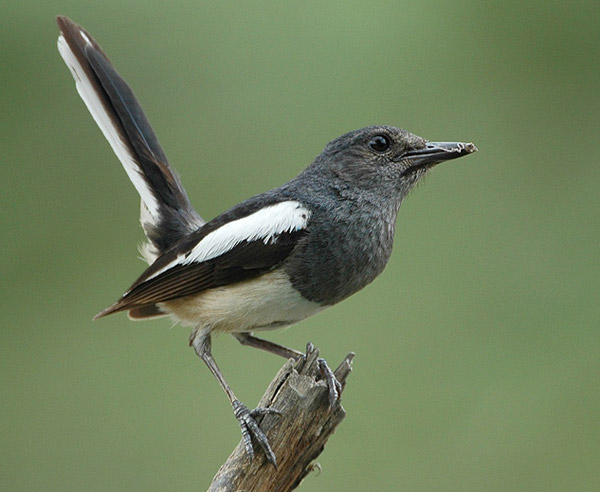
Oriental Magpie-Robin (Copsychus saularis) by Nikhil Devasar
“LP (Long Play) Singer”
There are birds that sing for long durations. Birds like grasshopper warbler’s solo may last for over two minutes, nightjars may “chur” nonstop for eight minutes, a skylark may belt an unbroken heartfelt song for 18 minutes and an Oriental Magpie Robins would practice singing for more than half an hour to woo a potential female. To establish territories and to court females there is a bird called Dickcissels that would spend about 70 percent of the day singing while establishing territories and courting females. How long do we sing and worship every day to woo God’s presence. For God loves to dwell among our praises and the Bible says it too.
But thou art holy, O thou that inhabitest the praises of Israel. Psalm22:3
From dawn to dusk to summer to winter, every little movement of the planets and the billions of stars, the blooming of the flowers and the fruiting of the trees, every tiny creation under the sky are set in perfect motion each following different rhythmic patterns ensuing perfect harmony. There can be no better musician that God Himself. He orchestrates the whole universe like only He alone can. And that is the reason God assigned Moses to do something which he has never done before.
Before bidding goodbye for the last time to the people whom he led from Egypt through the wilderness, Moses was entrusted the job of teaching a song to the Israelites that God had personally composed.
Now therefore write ye this song for you, and teach it the children of Israel: put it in their mouths, that this song may be a witness for me against the children of Israel.
For when I shall have brought them into the land which I swore unto their fathers, that floweth with milk and honey; and they shall have eaten and filled themselves, and waxen fat; then will they turn unto other gods, and serve them, and provoke me, and break my covenant.
And it shall come to pass, when many evils and troubles are befallen them, that this song shall testify against them as a witness; for it shall not be forgotten out of the mouths of their seed: for I know their imagination which they go about, even now, before I have brought them into the land which I swore.
Moses therefore wrote this song the same day, and taught it the children of Israel. Deuteronomy 31:19-22
Moses did teach God’s real big song immediately to his people and that can be found in Deuteronomy 32. How would our church respond if our pastor taught us that same big song? Faces frown when worship session extends beyond the stipulated time by a few minutes and if still continues for another few more minutes, worship turn to murmur. That is ‘cause most people find themselves so restless when it comes to spending that extra few minutes in the presence of God. We measure our praise and worship but we want immeasurable blessings from God.
Maybe God wants us to sing for longer durations like our flying friends so as to make a covenant with us…
“I will bless the Lord at all times: his praise shall continually be in my mouth.”Psalm 34:1
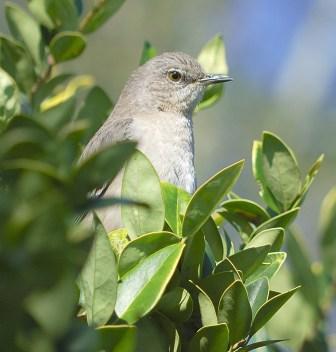
Northern Mockingbird (Mimus polyglottos) by Dan
“All Season Singer”
“Above it stood the seraphims: each one had six wings; with twain he covered his face, and with twain he covered his feet, and with twain he did fly.
And one cried unto another, and said, Holy, holy, holy, is the LORD of hosts: the whole earth is full of his glory” Isaiah 6:2-3
Since creation the Cherubs and Seraphs had been singing Holy, Holy, Holy, non-stop 24×7. I wonder how they don’t get bored singing the same song for thousands of years. Most birds sing the same family song generation after generation after generation. The Northern Mocking birds sing all through the day and many a time can be heard even during the night. These slender birds never seem to get bored with singing. They also continue to add new sounds to their repertoires all through their lives. Don’t be surprised if someone says that a male Northern Mocking bird would learn more than 200 songs in its lifetime. That is their lifestyle, singing new songs all through the day and even during nights. A single male would sing longer than a male that has a family.
We prefer to worship only when life is on a rollercoaster. Do we sing and praise God at all times, during dark times in particular? May be that is the reason why God had not made a covenant with us yet is it? The Catholic Bible says that Shadrach, Meshach and Abednego worshipped right inside the fiery furnace that was set to heat seven times more than normal. And our God who loves to dwell among praises descended down and took the three young men for a stroll right in the middle of the furnace. Wear on the garment of Praise and worship, for it is fire-proof you know! Think of Paul and Silas, who were battered and bruised for no fault and was thrown into the prison. Undeterred, they preferred to sing and praise God at the darkest hour. That’s when God shook the foundation of the prison, broke their bondage and also of the other inmates of the prison. Wear the garment of Praise and Worship and you will find that no chain can bind you or jail you…Hundreds of years passed between these two significant incidents. Sandwiched between those two incidents is another great worshipper is King David, who knew the secret of Praise and Worship and that is the reason he says, “I will bless the Lord at all times: his praise shall continually be in my mouth.” Psalm 34:1
Maybe God is waiting to hear us sing at all times to make a covenant with us..
“In every thing give thanks: for this is the will of God in Christ Jesus concerning you.” 1 Thessalonians 5:18
Brown Thrasher (Toxostoma rufum) By Dan’sPix
“New Song Singer”
Some birds sing just one song all through their lives. But there are birds that have vast repertoires of over thousands songs too… Brown thrasher can sing 2,000 songs while an Red-eyed Vireo had been recorded to have sung 20.000 songs in a day. Northern mocking birds often learn new songs. Sometimes it may end up learning about 200 new songs every year, during adulthood the male needs to improvise its singing capabilities by practicing for hours together to impress upon its probable mate. The male that sings the most complex songs are in demand among the eligible females. Most female prefer to mate with the male which sings the most complex songs since, she thinks that the male that sings the most complex songs is best suited to raise and look after the family.
Male Black-throated blue warblers that had bred and reproduced successfully would sing to its offspring to influence their vocal development. If young birds fail to learn songs from their fathers, they would starve to death. Bird vocalization is absolutely necessary for the young birds to grow into a successful adult.
How many parents take time to teach new songs to their children? How many parents feel that children should go to Sunday school regularly? Raising a child is not about feeding clothing and sheltering alone . It is about teaching them survival traits which would help them rise into a successful parent in future. Those survival traits include worship, prayer, tithing, knowledge in the word of God and so on. Do we teach them to sing for God? If we as parents fail to teach them the power of worship and how it can change any bad situation, who else would? We don’t have to be musically trained to teach them new songs. The least could be family prayer both at dawn and dusk. Wherein we have the habit of singing hymns and choruses that would help parents expose their children to new songs. If a father smokes in front of his children, he is sure to see one of them smoke in the near future. And if a mother gossips in front of her child, she would surely end up seeing her child gossip too. Do we want to define machismo and femininity by smoking and gossiping? What we are is what our children are going to be. The ones who learn to worship God singing new songs even in times of trouble are the ones who are capable of overcoming any situation, bad or worse.
God doesn’t expect us to sing the same song over and over again; we have a better choice to sing new songs every day. Our God says, “Behold, I will do a new thing; now it shall spring forth; shall ye not know it? I will even make a way in the wilderness, and rivers in the desert.” Isaiah 43:19. David knew the secret of touching God’s heart. Maybe that is the reason he made it a point to sing new songs for God. We may not sing thousands of song, do but do we have the habit of singing a few new songs for God? Is that the reason why God chose to make a covenant with birds instead?
“O sing unto the Lord a new song: sing unto the Lord, all the earth.” Psalm 96:1
Birds neither have a worship leader nor a worship team to lead them in singing. They know God’s plan in their lives. They also know that God had created them to sing and so they sing. No matter what, rain or shine, they never cease to sing. They sing on time, the time that God had set for each one of them. They do not overlap their singing instead they share space even in their singing. Homo Sapiens love to talk, talk and talk 24×7. We talk about our family and finance, sports and corruption, love and sex, marriage and divorce. At the end of the day most of all that we spoke through the day is found to be just rubbish. But birds always talk about global warming, climate change and natural disaster.
Duetting among birds not only help them stay close to each other but also to locate each other in dense foliage. Initially this behavior was thought be a battle of sexes, where duetting behavior reflects the struggle between bonding pair. But recent studies show that duetting is not about singing romantic duets but it is all about aggressive audio warfare, where it bonds a potential pair in defending territorial invasion by other bonding pairs.
Jesus said, “For where two or three are gathered together in my name, there am I in the midst of them” Mathew 18:20. When two are three gather in His name do they fill the air with “gossip” or “worship?”
This people have I formed for myself; they shall shew forth my praise.” Isaiah 43:21
God created man to just worship. But, we do every other thing except worshipping. Worse still, man’s priorities shifted from worshipping the One to be worshipped to worshipping the worship or the worship leader or the choir or the musician. Most churches feel that it’s the talent of the worship leader or the worship team or the selection of songs that is crucial in pulling off a successful worship session. It is time for us to switch on the search lights and check on how we worship God. Do we worship God in truth and in spirit? Don’t we prefer this worship leader than that worship leader? Don’t we feel that this worship team is better than the other worship team? Did we not say that the presence of God is mightier when that guy sings or plays the keyboard? Are we spiritual Christians or emotional Christians? Most believers treat church as a concert hall rather than a place of worship. That must be the reason why they prefer to listen to worship rather than to participate in worship. The reason they give, “I don’t have a good voice” God doesn’t look for a good voice but for a joyful noise.
“Make a joyful noise unto the LORD, all the earth: make a loud noise, and rejoice, and sing praise.” Psalm 98:4
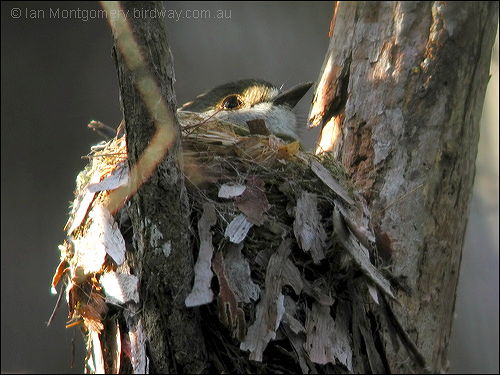
Pale-yellow Robin (Tregellasia capito) in nest by Ian
“Silent Singer”
Most birds do not sing all through the day. As told earlier, they have a set time for their everyday concert, what researchers call as “Bird clock”. They know when to sing and when to stay silent. Do we know when to stay still and when to worship? The Bible calls us as the “Royal Priesthood”. Bible explains the robe of the Royal Priest like this.
“Make the robe of the ephod entirely of blue cloth,
with an opening for the head in its center. There shall be a woven edge like a collararound this opening, so that it will not tear.
Make pomegranatesof blue, purple and scarlet yarn around the hem of the robe, with gold bells between them.
The gold bells and the pomegranates are to alternate around the hem of the robe.” Exodus 28:31-34
The gold bells and the pomegranates that alternate around the hem of the robe show us how to live the life of a true worshipper. Bells make noise and pomegranates stay quite. In other words the alternate arrangement of gold bells and pomegranates seems to say that we need to know when to make a joyful noise and when to keep quite. Music is also an amalgamation of notes and pause. In other words music is not complete without pause. The birds know it well and help them sync so well with the bird clock. A royal priest also ought to know when to make noise and when to give a pause.
“And it shall be upon Aaron to minister: and his sound shall be heard when he goeth in unto the holy place before the Lord, and when he cometh out, that he die not.” Exodus 28:35
The sound of the bell should keep ringing while the priest is inside the holy place before the Lord. The sounds of the bells would die only if God slays the priest only after having found him to have sinned. This only substantiates the fact that we, the so-called royal priesthood need to make a joyful noise in His presence and if we don’t, it sounds like we are dead. We need to remember that, “The dead praise not the LORD, neither any that go down into silence.” Psalm 115:17.
Of all the languages, silence is the most powerful language on the face of the earth. Now that we know when to make noise, we also need to know when to pause too. The life of Jesus itself shows us importance of being still in silence. On more than one occasion Jesus did show us what silence can do. Jesus echoed the language of silence in the most profound mode on the cross of Calvary. If not for His silence, we would still be waiting for redemption. It was His silence that broke the shackles of sin to set us free from the clutches of satan. How silent are we in His presence? Do we take time to listen to Him or just go blah-blah in His presence?
Birds know when to sing their mating songs and when not to. They have a specific season for mating; unlike human beings whose birthday fall on every single day from January through December and that includes February 29th, the leap day too. Romancing for birds is seasonal, purposeful and decisive: whereas for Homo sapiens, it is more of lust than of commitment, a commitment to God’s eternal plans, per se. There is a season for everything. Do we adhere to God’s timing? In His time He makes all things beautiful and not in our time. Birds must be intrinsic to God’s time. That must be the reason for God to make a covenant with these feathered singers isn’t it?
“a time to tear and a time to mend, a time to be silent and a time to speak,” Ecclesiastes 3:7
*
Birds of the Bible – The Hidden Covenant ~ by AJ Mithra
(Written by A J – layout, photos, and sounds added by Lee)
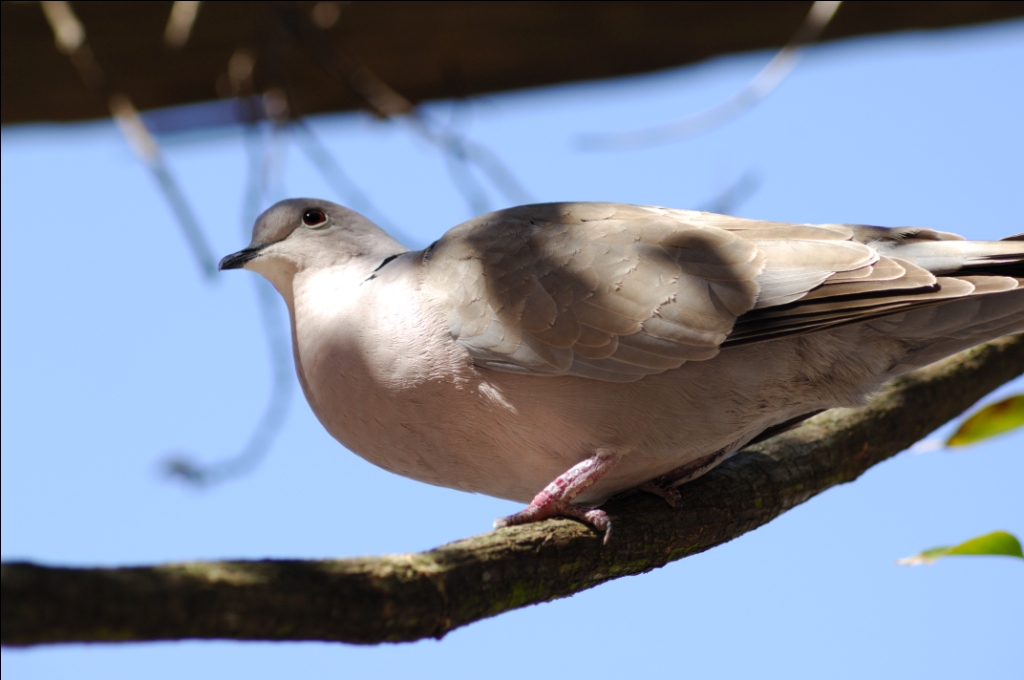
Eurasian Collared Dove (Streptopelia decaocto) by Dan
(The first of a three part article.)
The Hidden Covenant
“Berith” the Hebrew word for covenant means “a coming together” in English, appears 280 times in the Bible. Covenants may include a treaty, agreement, mutual understanding, pact, deal, alliance, pledge, promise and so on. Marriage is a covenant between two individuals. Treaty is a covenant between two states or nations. The Last will that is written by an ailing individual to pass on his /her property to his surviving spouse or children is also a covenant. We are bound by so many covenants in our everyday life. Housing and vehicle loans, debit and credit cards, driving license are all covenants.
Though each one of us is bound by a direct or an indirect covenant with an individual, an organization or a government, we long for God to make a covenant with us. Bible shows us so many covenants between individuals, kings and between leaders of a group of men; but the covenants that God made with individuals and a group of individuals are the ones which were widely meditated, preached and written about.
Somewhere down the line, over centuries after centuries after centuries, there is one covenant that was either unintentionally hopped or deliberately overlooked. This covenant may look irrelevant and immaterial, trivial and trifling; but an in-depth study of this covenant would unveil a big secret that God has for the peace and tranquility of the whole universe.
That “Berith – Covenant” is as follows…
“And in that day will I make a covenant for them with the beasts of the field, and with the fowls of heaven, and with the creeping things of the ground: and I will break the bow and the sword and the battle out of the earth, and will make them to lie down safely.” Hosea 2:18
When does God make a covenant with them?
Why would God want to make a covenant with the beasts of the field, with the fowls of the air and with the creeping things of the ground?
How could a covenant with wildlife break the bow and the sword and the battle out of the earth?
Is it possible for a covenant with wildlife, help us lie down safely?
These were the queries that rose from my mind when I read the above verse from Hosea. While I was pondering over this attention-grabbing episode of God, He slowly unraveled the crucial presence of wildlife, not just for food and clothing but for the survival of mankind as a whole.
Sitting on the balcony one morning, trying hard to gulp those recent unpleasant happenings along with her morning coffee, watching a squirrel jump from a coconut tree to a custard apple tree like a seasoned pro, my wife probed, “God could have created us like these animals. Why should we suffer like this? See how they enjoy life” Just as she was lamenting, I felt God say, “They are sinless, whereas man was born of sin”
I thought this conversation not only opened avenues of thought but also made sense on this new covenant that God uncovered a few days back. Ever since God clothed Adam and Eve with animal skin and accepted the sacrifice of Abel. God did express how imperative animals and birds are in His creation. Abel knew that there is no redemption without shedding blood. So he chose from the best among wildlife and sacrificed. And we all know how God accepted his sacrifice and rejected the sacrifice of Cain.
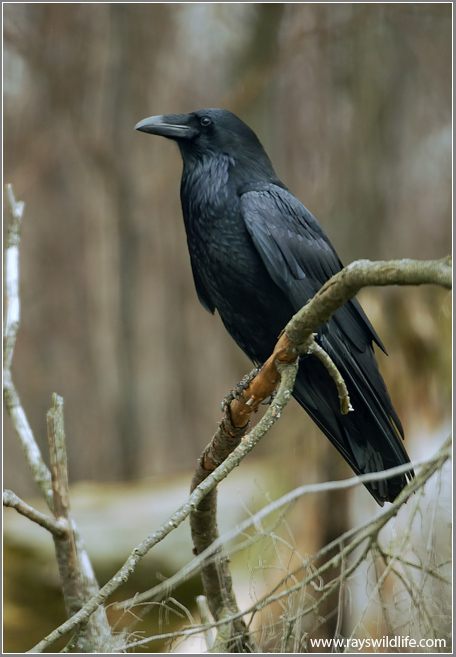
Northern Raven (Corvus corax) by Ray
Noah also had to seek the help of birds to get the weather report after the flood isn’t it? And God made a covenant with Noah but not before he sacrificed from every clean beast and from every clean animal. Remember, if not for the beasts and birds God wouldn’t have placed the beautiful rainbow in the sky. If not for rainbow, we wouldn’t have studied prism in school.
God also taught Moses and Aaron, His appointed servants. about how to sacrifice, when to sacrifice and what to sacrifice. God gave them a list of clean animals and birds for sacrifice. In fact birds were sacrificed when Jesus was brought to the temple of Jerusalem after the days of purification.
“And when eight days were accomplished for the circumcising of the child, his name was called Jesus, which was so named of the angel before he was conceived in the womb.
And when the days of her purification according to the law of Moses were accomplished, they brought him to Jerusalem, to present him to the Lord;
(As it is written in the law of theLord, Every male that openeth the womb shall be called holy to the Lord;)
And to offer a sacrifice according to that which is said in the law of the Lord, A pair of turtledoves, or two young pigeons.” Luke 2:21-24
The birds seem to have handed over the entry ticket for the Creator when He entered the temple of Jerusalem for the first time is His life on earth.
So? Does it mean that only clean beasts and birds are sinless? I thought. If it is so, why should God send an unclean raven to feed Prophet Elijah? I wondered. Anyway, there should be a strong central theme for God to make a covenant with the beasts and the birds instead of man, whom He created in His own image.
Birds of the Bible – The Hidden Covenant ~ by A J Mithra
Today, Dan and I are celebrating our 50th Wedding Anniversary or our Golden Anniversary. It is hard to believe that is was 50 years ago that we began our journey through life together. On July 26, 1963 we said our “I do”s and now here we are on July 26, 2013 enjoying this day together. Praise the Lord for His grace and guidance over the years.
Our pastor asked Dan yesterday how it feels to be married fifty years? Dan told him, “My grandfather told me while going through the reception line at our wedding, ‘Son, your first 50 years will be the hardest. The rest is easy’.”
We were both Christians when we got married and have tried to keep the Lord at the head over the years. He has blessed us beyond measure even though at times He slipped from the Number One position because of our attitudes. If you were to ask how do you stay married and in love for these many years, then the Lord is the answer.
On our 25th Anniversary, my sister sent a poem to us, that I would like to share:
Marriage Takes 3
I once
thought marriage
took just two to make a
go but now I am convinced
it takes the Lord also. And
not one marriage fails where
Christ is asked to enter as
lovers come together with Jesus
at the center. But marriage seldom thrives
and homes are incomplete till He
is welcomed there to help avoid
defeat. In homes where God
is first it’s obvious to see
those unions really work
For marriage still
takes three.
(Perry Tanksley)
*
And he answered and said unto them, Have ye not read, that he which made them at the beginning made them male and female, And said, For this cause shall a man leave father and mother, and shall cleave to his wife: and they twain shall be one flesh? Wherefore they are no more twain, but one flesh. What therefore God hath joined together, let not man put asunder. (Matthew 19:4-6 KJV)
We have always had many common interest. Number one, our faith in the Lord Jesus Christ. Our current other interest is our birdwatching activities which readers of this blog are familiar with. Dan is the photographer, who takes the good pictures, and I attempt to write about our adventures.
Lee – Taken 6/27/13
Praise the Lord for 50 years with my two best friends, the Lord and Dan.
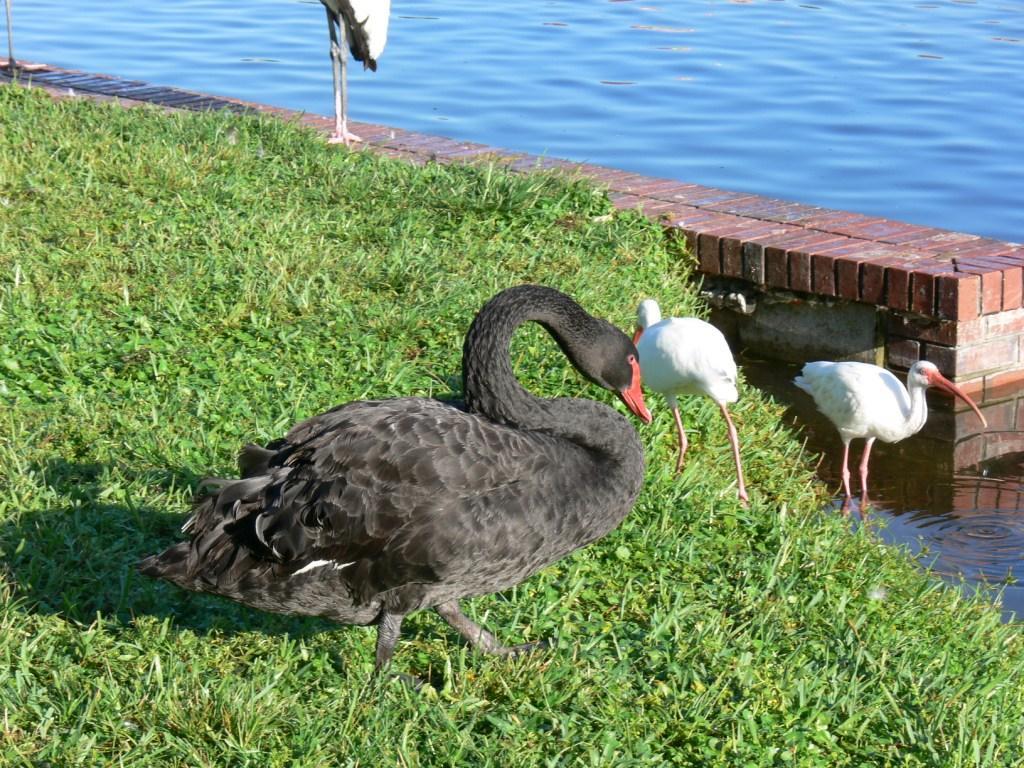
Bellamoon sent a link to some of his videos. The one below of the Black Swans and their family is super. He previously gave me permission to use his music for videos I put together, but this is better than anything I could ever do.
Several verses came to mind about “under his wings” while watching this:
Keep me as the apple of the eye, hide me under the shadow of thy wings, (Psalms 17:8 KJV)
How excellent is thy lovingkindness, O God! therefore the children of men put their trust under the shadow of thy wings. (Psalms 36:7 KJV)
He shall cover thee with his feathers, and under his wings shalt thou trust: his truth shall be thy shield and buckler. (Psalms 91:4 KJV)
He shall cover thee with his feathers, and under his wings shalt thou trust: his truth shall be thy shield and buckler. (Psalms 91:4 KJV)
O Jerusalem, Jerusalem, which killest the prophets, and stonest them that are sent unto thee; how often would I have gathered thy children together, as a hen doth gather her brood under her wings, and ye would not! (Luke 13:34 KJV)
There are verses that help us think about how kind these swans are to their young:
For thy lovingkindness is before mine eyes: and I have walked in thy truth. (Psalms 26:3 KJV)
Withhold not thou thy tender mercies from me, O LORD: let thy lovingkindness and thy truth continually preserve me. (Psalms 40:11 KJV)
Whoso is wise, and will observe these things, even they shall understand the lovingkindness of the LORD. (Psalms 107:43 KJV)












 Lee's Birdwatching Adventures Plus