Avian And Attributes – Pearl

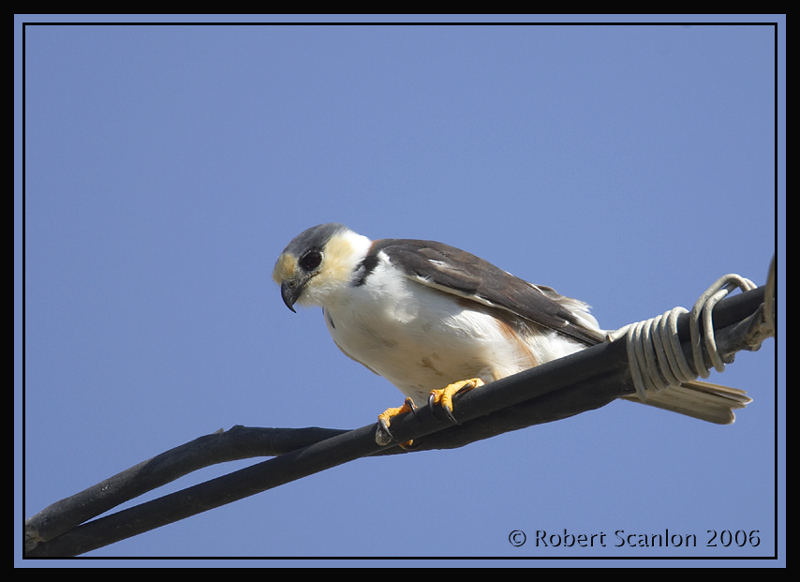
Pearl Kite (Gampsonyx swainsonii) by Robert Scanlon

Pearl Kite (Gampsonyx swainsonii) by Robert Scanlon

“And the twelve gates were twelve pearls; every several gate was of one pearl: and the street of the city was pure gold, as it were transparent glass. And I saw no temple therein: for the Lord God Almighty and the Lamb are the temple of it.” (Revelation 21:21-22 KJV)


Avian and Attributes – Pearl

PEARL, n. perl.
1. A white, hard, smooth, shining body, usually roundish, found in a testaceous fish of the oyster kind. The pearl-shell is called matrix perlarum, mother of pearl, and the pearl is found only in the softer part of the animal. It is found in the Persian seas and in many parts of the ocean which washes the shores of Arabia and the continent and isles of Asia, and is taken by divers. Pearls are of different sizes and colors; the larger ones approach to the figure of a pear; some have been found more than an inch in length. They are valued according to their size, their roundness, and their luster or purity, which appears in a silvery brightness.
2. Poetically, something round and clear, as a drop of water or dew.
3. A white speck of film growing on the eye.
PEARL,v.t. perl. To set or adorn with pearls.
PEARL, v.i. perl. To resemble pearls.

“Again, the kingdom of heaven is like unto a merchant man, seeking goodly pearls: Who, when he had found one pearl of great price, went and sold all that he had, and bought it.” (Matthew 13:45-46 KJV)
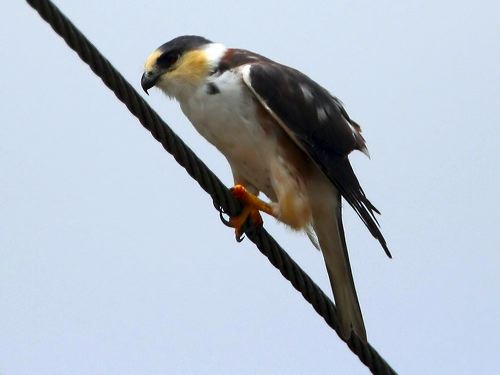

Pearl Kite (Gampsonyx swainsonii) by Ian

Pearl Kite

The Pearl Kite (Gampsonyx swainsonii) is a very small raptor found in open savanna habitat adjacent to deciduous woodland. It is the only member of the genus Gampsonyx. The scientific name commemorates the English naturalist William Swainson.

The type specimen was collected from Brazil by English naturalist William Swainson, and described by Nicholas Aylward Vigors in 1825.  Vigors noted the similarity to both hawks and falcons, but placed Gampsonyx within the “Accipitrine subfamily” because it lacks the notched beak of the falcons. He also noted its striking resemblance to the coloration of the falconets.

Later, the pearl kite was classified with the falcons. For example, Peters placed it with the forest falcons in subfamily Polyhieracinae. In the mid-20th century it was found to be related to Elanus based on morphology and its molt schedule.

This tiny kite breeds from Panama, Colombia and Venezuela south to Bolivia and northern Argentina, with an isolated sedentary population in Nicaragua. It is expanding its range and was proved to breed on Trinidad in 1970. It was first reported in Costa Rica in the mid-1990s, and now is fairly common along Pacific slope, to 1000m.
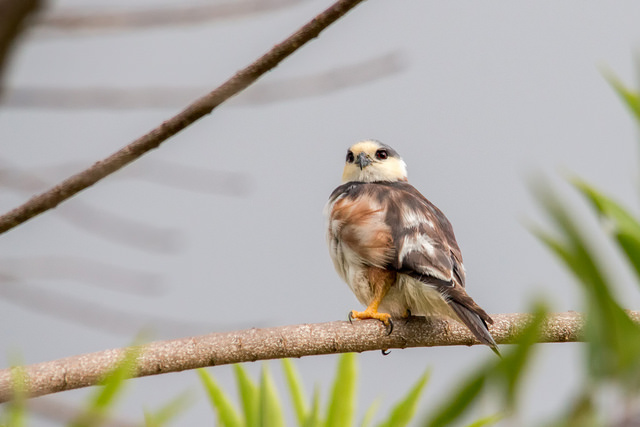
Pearl Kite (Gampsonyx swainsonii) ©Flickr Fernando Flores

The pearl kite is 20.3–23 cm (8.0–9.1 in) in length and weighs 80–95 g (2.8–3.4 oz). It is the smallest raptor in the Americas and one of the two smallest accipitrids in the world (besides the little sparrowhawk). The tiny hawk, another neotropical species, attains a slightly higher weight than the pearl kite. The adult has a black crown, upperparts, wing and tail, a rufous edged white collar, yellow forehead and cheeks, mainly white underparts, and yellow legs. Immature birds are similar to the adults but have white and chestnut tips to the back and wing feathers, a buff collar and some buff on the white underparts. In flight this species looks mainly black above and white below. The northern form G. s. leonae differs from the nominate G. s. swainsonii in that it has rufous flanks.

The nest is a deep cup of sticks built high in a tree. The clutch is 2-4 brown-marked white eggs, incubated mainly by the female for 34–35 days to hatching, with a further 5 weeks to fledging. There may be two broods in a season.

The pearl kite feeds mainly on lizards, especially Anolis, but also takes small birds and insects; it usually sits on a high open perch from which it swoops on its prey. The call is a high musical pip-pip-pip-pip or kitty-kitty-kitty.


More Avian and Attributes

Birds whose first name starts with “P”

What will you do with Jesus?

*
[Definitions from Webster’s Dictionary of American English (1828), unless noted. Bird info from Wikipedia plus.]
Avian And Attributes – Paradise

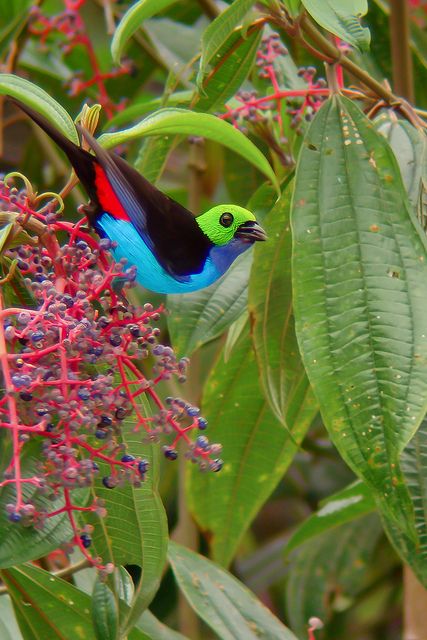
Paradise Tanager (Tangara chilensis) by Juan D Ramirez Rpo on Flickr From Pinterest

“And he said unto Jesus, Lord, remember me when thou comest into thy kingdom. And Jesus said unto him, Verily I say unto thee, To day shalt thou be with me in paradise.” (Luke 23:42-43 KJV)


Avian and Attributes – Paradise

PAR’ADISE, n. [Gr.] The garden of Eden, in which Adam and Eve were placed immediately after their creation.
1. A place of bliss; a region of supreme felicity or delight.
The earth
Shall all be paradise–
2. Heaven, the blissful seat of sanctified souls after death.
This day shalt thou be with me in paradise. Luke 23.
3. Primarily, in Persia, a pleasure-garden with parks and other appendages.

“He that hath an ear, let him hear what the Spirit saith unto the churches; To him that overcometh will I give to eat of the tree of life, which is in the midst of the paradise of God.” (Revelation 2:7 KJV)


Paradise Birds

Paradise Drongo 

Paradise Drongo Photo

The paradise drongo or ribbon-tailed drongo (Dicrurus megarhynchus) is a species of bird in the family Dicruridae. It is endemic to New Ireland in the Bismarck Archipelago, Papua New Guinea.

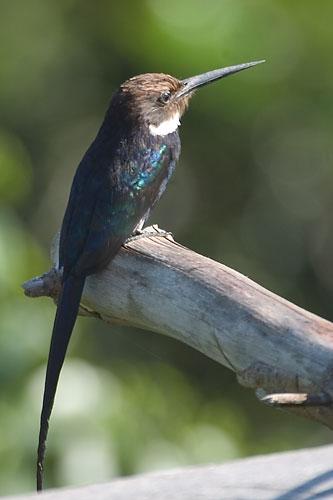
Paradise Jacamar

Paradise Jacamar (Galbula dea) ©Arthur Grosset

The Paradise Jacamar (Galbula dea) distributed throughout tropical rainforests and savanna of Bolivia, Brazil, Colombia, Ecuador, Peru and the Guyanas. Its range encompasses nearly the entire Amazon Basin, except in the northwest basin in parts of Colombia and Venezuela, (the northeast is the three countries of the Guyanas, which drain to the Atlantic-Caribbean). The diet consists mainly of butterflies and other flying insects.

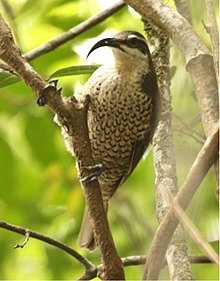
Paradise Riflebird

Paradise Riflebird-Australia-Birdway

Paradise Riflebird (Ptiloris paradiseus) is medium-sized, up to 30 cm long. The male is black with an iridescent greenish blue crown, throat and central tail feathers. It has a black curved bill, black feet, dark brown iris and yellow mouth. The female is an olive brown bird with barred blackish below with a long white brow above her eye. The species is Endemic to eastern Australia, where it occurs in the rainforests of New South Wales and central Queensland.

Paradise Riflebird (Ptiloris paradiseus) Female ©WikiC

Paradise Shelduck

Paradise Shelduck (Tadorna variegata) by Ian 2

Paradise Shelduck (Tadorna variegata) by Ian 2

The Paradise Shelduck (Tadorna variegata) is a large goose-like duck endemic to New Zealand. It is a shelduck, a group of large goose-like birds which are part of the bird family Anatidae. The genus name Tadorna comes from Celtic roots and means “pied waterfowl”. Known to the Māori as pūtangitangi, but now commonly referred to as the “paradise duck”, it is a prized game bird. Both the male and female have striking plumage: the male has a black head and barred black body, the female a white head with a chestnut body. The paradise shelducks usually live as pairs, grazing on grass and weeds, and will raid crops, particularly when molting.

Paradise Tanager

Paradise Tanager (Tangara_chilensis) -DenverZoo-WikiC

Paradise Tanager (Tangara chilensis) -DenverZoo-WikiC

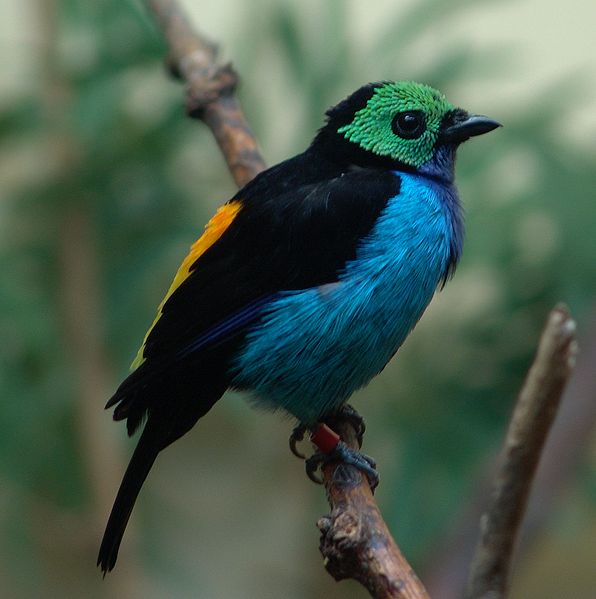
The Paradise Tanager (Tangara chilensis) is a brilliantly multicolored, medium-sized songbird whose length varies between 13.5 and 15 cm. It has a light green head, sky blue underparts and black upper body plumage. Depending on subspecies, the rump is yellow and red or all red. The beak is black and the legs are grey.

Found in humid tropical and subtropical forests in the western and northern Amazon Basin in South America, it occurs in Venezuela, Peru, Colombia, Ecuador, Bolivia, Brazil and the Guianas. Despite its scientific name, it is not found in Chile.

Paradise-crow

Paradise-crow (Lycocorax pyrrhopterus) ©©Flickr

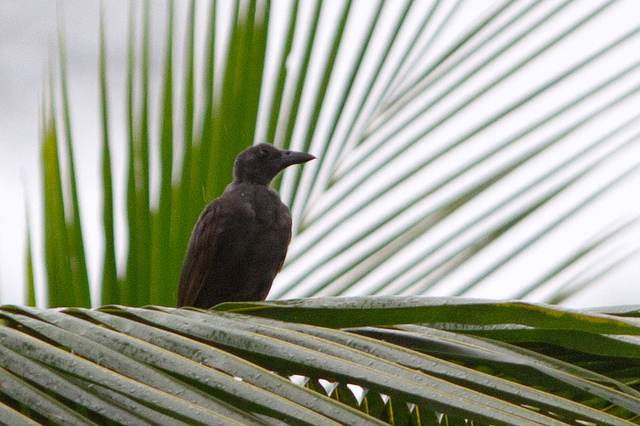
The Paradise-crow (Lycocorax pyrrhopterus) also known as the silky crow, is a medium-sized crow-like bird-of-paradise. One of the few monogamous birds-of-paradise, the paradise-crow is endemic to lowland forests of North Maluku in Indonesia. The diet consists mainly of fruits and arthropods.


More Avian and Attributes

Birds whose first name starts with “P”

Good News

*
[Definitions from Webster’s Dictionary of American English (1828), unless noted. Bird info from Wikipedia plus.]

Avian And Attributes – Palm

Palm Tanager (Thraupis palmarum) 2 by Kent Nickell

Palm Tanager (Thraupis palmarum) by Kent Nickell

“Then did they spit in his face, and buffeted him; and others smote him with the palms of their hands,” (Matthew 26:67 KJV)

“Took branches of palm trees, and went forth to meet him, and cried, Hosanna: Blessed is the King of Israel that cometh in the name of the Lord.” (John 12:13 KJV)


Avian and Attributes – Palm

PALM, n. p`am.. [L. palma.]
1. The inner part of the hand.
2. A hand or hand’s breadth; a lineal measure of three inches.
4. The name of many species of plants, but particularly of the date-tree or great palm, a native of Asia and Africa.
The palms constitute a natural order of monocotyledonous plants,with a simple cylindric stem, terminating in a crown of leaves or fronds, within which rises a tuft of flowers and fruits; all natives of warm climates. They vary in size from 2 to more than 100 feet in height.
5. Branches of the palm being worn in token of victory, hence the word signifies superiority, victory, triumph. The palm was adopted as an emblem of victory, it is said, because the tree is so elastic as when pressed, to rise and recover its correct position.
Namur subdued is England’s palm alone.

“Took branches of palm trees, and went forth to meet him, and cried, Hosanna: Blessed is the King of Israel that cometh in the name of the Lord.” (John 12:13 KJV)


Palm Cockatoo (Probosciger aterrimus) ©Wikipedia

Palm Birds

Palm Cockatoo (Probosciger aterrimus), also known as the goliath cockatoo or great black cockatoo, is a large smoky-grey or black parrot of the cockatoo family native to New Guinea, Aru Islands, and Cape York Peninsula. It has a very large black beak and prominent red cheek patches.

Palm Lorikeet (Charmosyna palmarum) ©Drawing WikiC

The Palm Lorikeet (Charmosyna palmarum) is a species of parrot in the family Psittaculidae. It is found in Solomon Islands and Vanuatu. Its natural habitats are subtropical or tropical moist lowland forest, subtropical or tropical moist montane forest and plantations.

Palm Tanager (Thraupis palmarum) ©Arthur Grosset

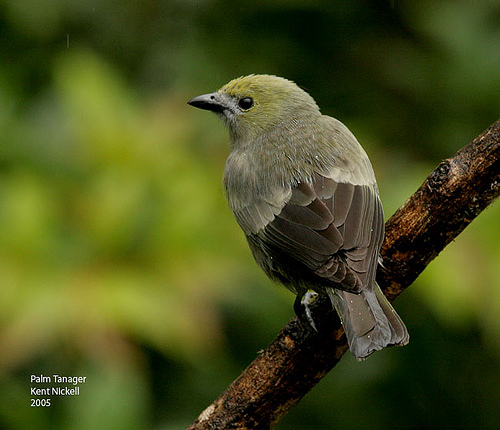
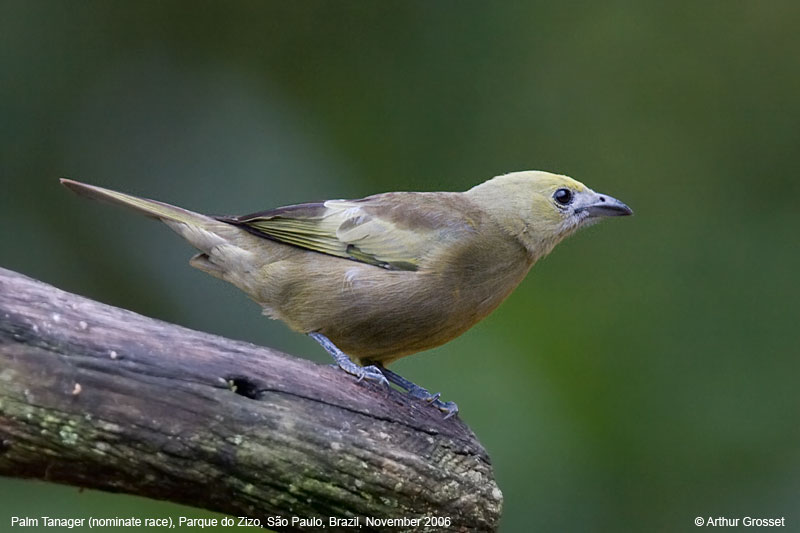
The Palm Tanager (Thraupis palmarum) is a medium-sized passerine bird. This tanager is a resident breeder from Nicaragua south to Bolivia, Paraguay and southern Brazil. It also breeds on Trinidad and, since 1962, on Tobago. In Trinidad and Tobago, it is known by colloquial names such as the “palmiste” and the “green jean”.

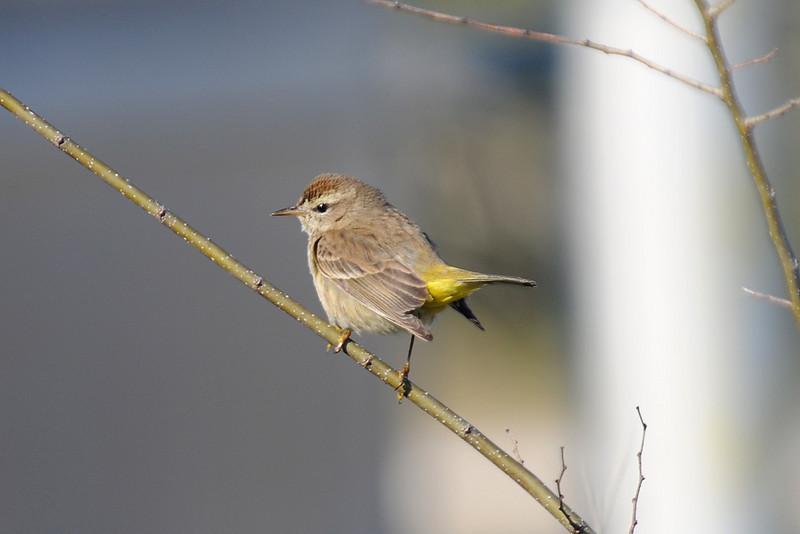
Palm Warbler (Setophaga palmarum) by Bob-Nan

The Palm Warbler (Setophaga palmarum) is a small songbird of the New World warbler family. The species comprises two distinct subspecies that may merit specific status.

“Yellow palm warbler” or “eastern palm warbler” (S. p. hypochrysea) of the eastern third of the breeding range has brownish-olive upper parts and thoroughly yellow underparts with bold rufous breast and flank streaking. It migrates later in the fall than its western counterpart.

“Brown palm warbler” or “western palm warbler” (S. p. palmarum) inhabits the remaining western two-thirds of the breeding range. It has much less yellow below, with less colorful streaking, and cold grayish-brown upper parts.

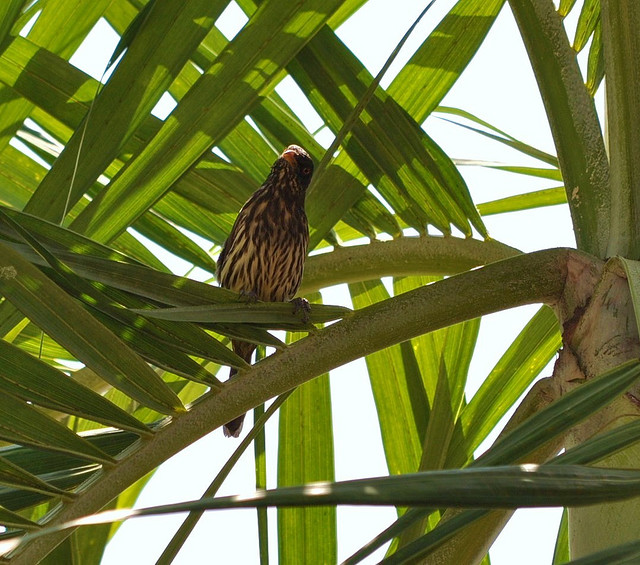
Palmchat (Dulus dominicus) ©SevenSeas of Rhye

Palmchat (Dulus dominicus) ©SevenSeas of Rhye

The Palmchat (Dulus dominicus) is a small, long-tailed passerine bird, the only species in the genus Dulus and the family Dulidae. It is thought to be related to the waxwings, family Bombycillidae, and is sometimes classified with that group. The name reflects its strong association with palms for feeding, roosting and nesting. The palmchat is the national bird of the Dominican Republic.


More Avian and Attributes

Birds whose first name starts with “P”

Gideon

*
[Definitions from Webster’s Dictionary of American English (1828), unless noted. Bird info from Wikipedia plus.]
Avian And Attributes – Noble

Noble Snipe (Gallinago nobilis) ©WikiC

“These were more noble than those in Thessalonica, in that they received the word with all readiness of mind, and searched the scriptures daily, whether those things were so.” (Acts 17:11 KJV)


Avian and Attributes – Noble

NO’BLE, a.
1. Great; elevated; dignified; being above every thing that can dishonor reputation; as a nobel mind; a noble courage; noble deeds of valor.
2. Exalted; elevated; sublime.
3. Magnificent; stately; splendid; as a noble parade; a noble edifice.
4. Of an ancient and splendid family; as nobel by descent.
5. Distinguished from commoners by rank and title; as a noble personage.
8. Ingenuous; candid; of an excellent disposition; ready to receive truth. Acts 17.
9. Of the best kind; choice; excellent; as a noble vine. Jer 2.
NO’BLE, n.
1. A person of rank above a commoner; a nobleman; a peer; as a duke, marquis, earl, viscount or baron.
2. In Scripture, a person of honorable family or distinguished by station. Exo 24. Neh 6.


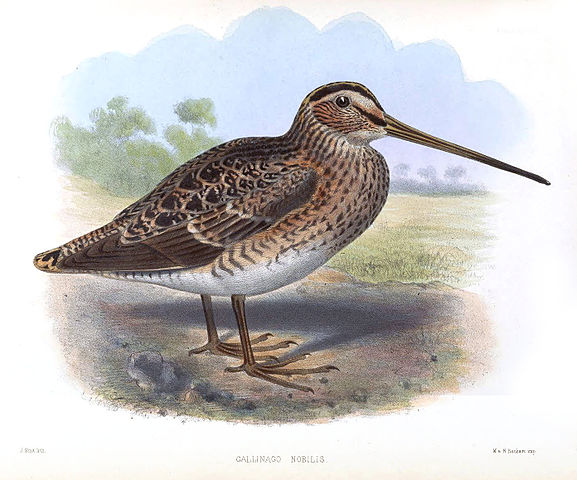
Noble Snipe (Gallinago nobilis) ©Drawing WikiC

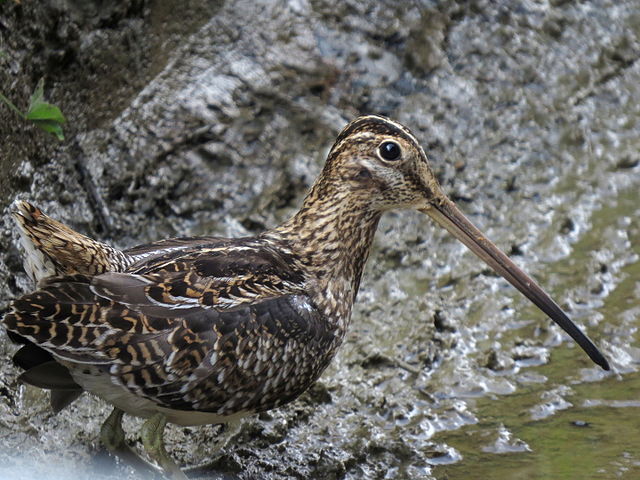
Noble Snipe (Gallinago nobilis) is a small stocky wader. It breeds in the Andes of Colombia, Ecuador, Peru and Venezuela above or just below the treeline. It is entirely sedentary.

This 30–32.5 cm long snipe has a stocky body and relatively short legs for a wader. Its upperparts, head and neck are streaked and patterned with dark brown and buff, and gold edges to the feathers form distinct lines down its back. The belly is white with brown barring on the flanks. The horn-coloured bill is very long and straight. The legs and feet are greyish-green. The sexes are similar, but females are longer billed; immature birds differ only in showing pale fringes on the wing coverts. The noble snipe has a clear melodious call.

The noble snipe is found high altitude wet grassland marshes and swamps from 2,700 – 4,200 m.

Little is known of its biology, but it has an aerial display, which involves flying high in circles, followed by a powerful stoop during which the bird makes a drumming sound, caused by vibrations of modified outer tail feathers, lower pitched than that of common snipe. It breeds from March to July.

The noble snipe is usually alone or in pairs, but is difficult to observe on the ground. It forages by pushing its long bill deep into the mud seeking insects and worms. Its cryptic plumage provides effective camouflage when the bird stands motionless amongst marsh vegetation.


More Avian and Attributes

Birds whose first name starts with “N”

Sharing The Gospel

*
[Definitions from Webster’s Dictionary of American English (1828) edited, unless noted. Bird info from Wikipedia plus.]

Empty!!

THE EMPTY CROSS

Arriving at Golgotha that evening, I was overcome with a sense of emptiness. The area was completely deserted, but three blood-stained crosses at the top of the hill served as solemn reminders of the events of the day.

Less than a week earlier, Jesus of Nazareth entered the city with His disciples and many others proclaiming Him as Messiah, our long-awaited Savior. We were full of hope, because He was clearly a teacher sent by God with the power to work miracles—healing, feeding, and even raising people from the grave!

But then, the one who we thought would bring salvation was dead. It all happened so quickly; one day He was teaching His followers, and the next He was on trial and condemned to death by crucifixion. Even the execution was rushed, as the soldiers used a spear to ensure that He was dead before the day was over.

The empty cross, and the emptiness in my heart, both testified to one fact—Jesus died.

THE EMPTY TOMB

Three days later, some of His followers went to the tomb, found it empty, and returned with amazing news—He was alive! For the next forty days, He continued to teach and encourage His disciples, appearing first to one, then two, then eleven—and eventually more than five hundred of us at once!

Jesus had predicted that He would suffer, die, and rise again, but we just couldn’t comprehend the beauty of God’s divine plan to redeem our souls. When He said, “I lay down My life, that I might take it again,” we didn’t realize what He meant at the time.

But now, looking back on these events, I see how the empty cross testifies of His love, and the empty tomb declares His mighty power. God’s Word says:

• “Hereby perceive we the love of God, because He laid down His life for us” (1 John 3:16).

• “[Jesus was] declared to be the Son of God with power … by the resurrection from the dead” (Romans 1:4).

This narrative was compiled using Biblical testimony found in Matthew, Mark, Luke, John, Acts, and 1 Corinthians.

YOUR RESPONSE?

Jesus took our sins upon Himself—suffered and died in our place—so we can be forgiven. There on the cross, He cried out, “It is finished” (John 19:30). The empty cross tells us that the work is done, the price has been paid, and the door to Heaven stands open.

The empty tomb demonstrates that Jesus won the victory over sin and death. Listen to His words: “I am the resurrection, and the life: he that believeth in Me, though he were dead, yet shall he live” (John 11:25).

Jesus now offers salvation to all mankind. If we reject Him, we must stand before God and be judged for our sins—“cast into the lake of fire” (Revelation 20:15).

But if we admit that we are sinners, turn to God, and put our trust in Jesus Christ, we will find forgiveness and eternal life.

“If thou shalt confess with thy mouth the Lord Jesus, and shalt believe in thine heart that God hath raised Him from the dead, thou shalt be saved … For whosoever shall call upon the name of the Lord shall be saved” (Romans 10:9,13).

Happy Resurrection Day!

He Is Risen Indeed!

The Gospel Message

*

With Permission from Moments With The Book

Avian And Attributes – Night

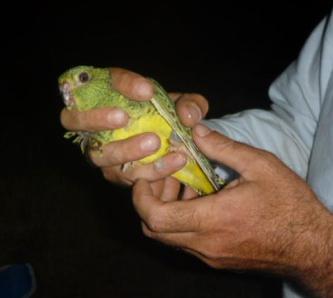
Night Parrot (Pezoporus occidentalis) ©WikiC by ornithologist Steve Murphy

“Then saith Jesus unto them, All ye shall be offended because of me this night: for it is written, I will smite the shepherd, and the sheep of the flock shall be scattered abroad. But after I am risen again, I will go before you into Galilee. Peter answered and said unto him, Though all men shall be offended because of thee, yet will I never be offended. Jesus said unto him, Verily I say unto thee, That this night, before the cock crow, thou shalt deny me thrice.” (Matthew 26:31-34 KJV)


Avian and Attributes – Night

NIGHT, n. [The sense may be dark, black, or it may be the decline of the day, from declining, departing.]
1. That part of the natural day when the sun is beneath the horizon, or the time from sunset to sunrise.
2. The time after the close of life; death. John 9.
She closed her eyes in everlasting night.
3. A state of ignorance; intellectual and moral darkness; heathenish ignorance. Rom 13.
4. Adversity; a state of affliction and distress. Isa 21.
5. Obscurity; a state of concealment from the eye or the mind; unintelligibleness.
Nature and natures works lay hid in night.
In the night, suddenly; unexpectedly. Luke 12.
To-night, in this night. To-night the moon will be eclipsed.


Night Parrot (Pezoporus occidentalis) Drawing WikiC

Night Parrot (Pezoporus occidentalis) Drawing WikiC

Night Parrot (Pezoporus occidentalis) is a small parrot endemic to the continent of Australia. It is well known as being one of the most elusive and mysterious birds in the world, with no confirmed sightings of the bird between 1912 and 1979, leading to speculation that it was extinct. Sightings since 1979 have been extremely rare and the bird’s population size is unknown, though based on the paucity of records it is thought to number between 50 and 249 mature individuals. The first photographic and video evidence of a live individual was publicly confirmed in July 2013.

A relatively small and short-tailed parrot, the species’ colour is predominantly a yellowish green, mottled with dark brown, blacks and yellows. Both sexes have this coloration. It is distinguished from the two superficially similar ground parrot species by its shorter tail and different range and habitat. Predominantly terrestrial, taking to the air only when panicked or in search of water, the night parrot has furtive, nocturnal habits and—even when it was abundant—was apparently a highly secretive species. Its natural habitat appears to be the spinifex grass which still dominates much of the dry, dusty Australian interior; other early reports also indicate that it never strayed far from water. It may also inhabit chenopod shrublands, eucalyptus woodlands, and mallee shrublands. One of the vocalisations of the night parrot has been described as a croak and identified as a contact call. Other calls, mostly short ‘ding-ding’ whistles, and a more drawn out whistle, have been recorded from Queensland and Western Australia.


More Avian and Attributes

Birds whose first name starts with “N”

Good News

*
[Definitions from Webster’s Dictionary of American English (1828), unless noted. Bird info from Wikipedia plus.]

Lee’s Six Words – But If You Bite And Devour

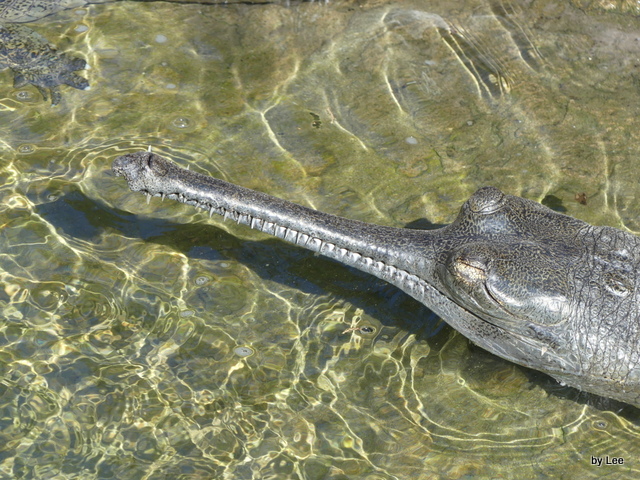
Crocodile at Lowry Park Zoo by Lee 3-27-18

Crocodile at Lowry Park Zoo by Lee 3-27-18

“For, brethren, ye have been called unto liberty; only use not liberty for an occasion to the flesh, but by love serve one another. For all the law is fulfilled in one word, even in this; Thou shalt love thy neighbour as thyself. But if ye bite and devour one another, take heed that ye be not consumed one of another.” (Galatians 5:13-15 KJV)

Crocodile at Lowry Park Zoo by Lee 3-27-18

Crocodile at Lowry Park Zoo by Lee 3-27-18

*

[African Gharial or Long Nose crocodile]

Daily Devotionals

*

Birds of the Bible – Yellow-billed Storks at Zoo Tampa

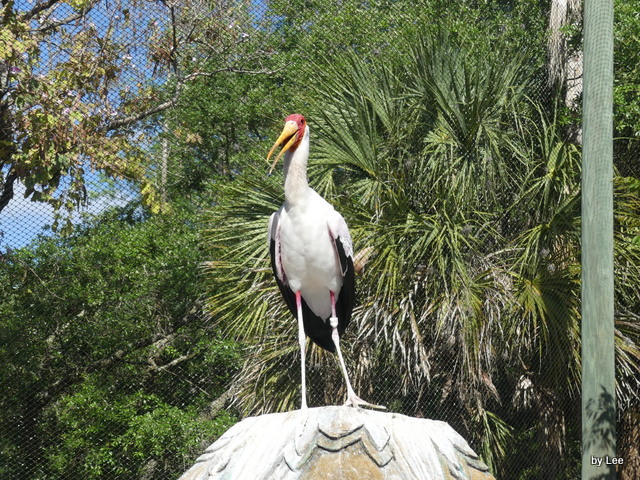
Yellow-billed Stork (Mycteria ibis) ZTLP by Lee 032718

“And the stork, and the heron after her kind, and the lapwing, and the bat.” (Deuteronomy 14:18 KJV)

We were at Lowry Park Zoo, now called Zoo Tampa at Lowry Park, and saw the Yellow-billed Storks in the Sulawesi aviary. This was the first time we have seen them in there. It gave a great opportunity to watch them up-close. Really, up-close! It was great!

Storks are mentioned in the Bible in five verses in the KJV. Leviticus 11:19, Deuteronomy 14:18, Psalm 104:18, Jeremiah 8:7, and Zechariah 5:9. The first two verses have to do with the “Do Not Eat” list, the next two with nesting and migration, and the last with a prophecy.

Yellow-billed Stork (Mycteria ibis) ZTLP by Lee 032718

The Yellow-billed stork (Mycteria ibis), sometimes also called the wood stork or wood ibis, is a large African wading stork species in the family Ciconiidae. It is widespread in regions south of the Sahara and also occurs in Madagascar.

The yellow-billed stork is closely related to 3 other species in the Mycteria genus: the American woodstork (Mycteria americana), the milky stork (Mycteria cinerea) and the painted stork (Mycteria leucocephala). It is classified as belonging to one clade with these 3 other species because they all display remarkable homologies in behavior and morphology. In one analytical study of feeding and courtship behaviours of the wood-stork family, M.P. Kahl attributed the same general ethology to all members of the Mycteria genus, with few species-specific variations. [Probably only one of that genus was onboard the Ark] These four species are collectively referred to as the wood-storks, which should not be confused with one alternative common name (wood-stork) for the yellow-billed stork.

Yellow-billed Stork (Mycteria ibis) ZTLP by Lee

Before it was established that the yellow-billed stork was closely related to the American woodstork, the former was classified as belonging to the genus Ibis, together with the milky stork and painted stork. However, the yellow-billed stork has actually long been recognised as a true stork and along with the other 3 related stork species, it should not strictly be called an ibis.

Yellow-billed Stork (Mycteria ibis) ZTLP by Lee 032718

It is a medium-sized stork standing 90–105 cm (35–41 in) tall. The body is white with a short black tail that is glossed green and purple when freshly moulted. The bill is deep yellow, slightly decurved at the end and has a rounder cross-section than in other stork species outside the Mycteria. Feathers extend onto the head and neck just behind the eyes, with the face and forehead being covered by deep red skin. Both sexes are similar in appearance, but the male is larger and has a slightly longer heavier bill. Males and females weigh approximately 2.3 kg (5.1 lb) and 1.9 kg (4.2 lb) respectively.

Yellow-billed Stork (Mycteria ibis) ZTLP by Lee

Colouration becomes more vivid during the breeding season. In the breeding season, the plumage is coloured pink on the upperwings and back; the ordinarily brown legs also turn bright pink; the bill becomes a deeper yellow and the face becomes a deeper red.

Their diet comprises mainly small, freshwater fish of about 60-100mm length and maximally 150g, which they swallow whole. They also feed on crustaceans, worms, aquatic insects, frogs and occasionally small mammals and birds.

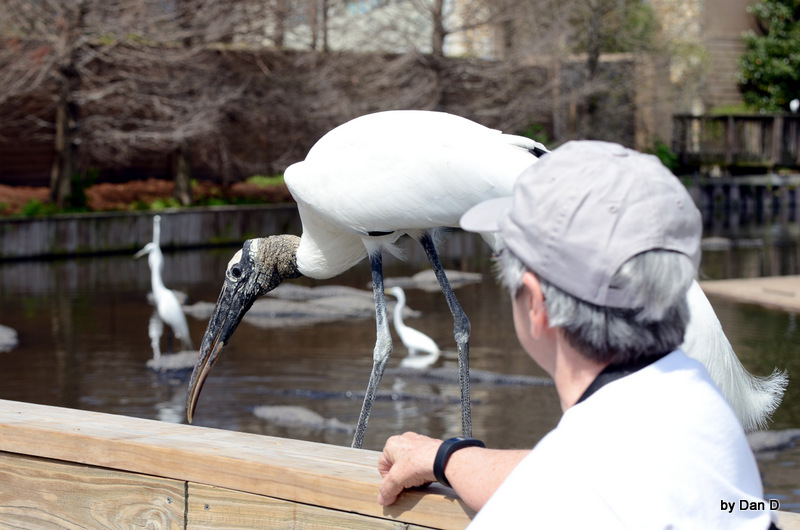
This species appears to rely mainly on sense of touch to detect and capture prey, rather than by vision. They feed patiently by walking through the water with partially open bills and probe the water for prey. Contact of the bill with a prey item is followed by a rapid snap-bill reflex, whereby the bird snaps shut its mandibles, raises its head and swallows the prey whole.[3] The speed of this reflex in the closely related American woodstork (Mycteria americana) has been recorded as 25 milliseconds[15] and although the corresponding reflex in the yellow-billed stork has not been quantitatively measured, the yellow-billed stork’s feeding mechanism appears to be at least qualitatively identical to that of the American woodstork.

Wood Stork at Gatorland Walking Past Me

In addition to the snap-bill reflex, the yellow-billed stork also uses a systematic foot stirring technique to sound out evasive prey. It prods and churns up the bottom of the water as part of a “herding mechanism” to force prey out of the bottom vegetation and into the bird’s bill. The bird does this several times with one foot before bringing it forwards and repeating with the other foot. Although they are normally active predators, they have also been observed to scavenge fish regurgitated by cormorants.

[Information from Wikipedia with editing]

Timmy and the Stork

*

Save The Parrots

Blue-throated Macaw (Ara glaucogularis) by Lee

“Ten years ago I traveled to the Amazon Rainforest in Peru. That experience changed my life forever. Never will I forget the first time seeing a family of macaws flying high up in the sky above the canopy. It never dawned on me what people have done to destroy the rainforest and its wildlife until I got back. One day while passing by a pet store, I recognized a sound I had heard in Peru. It was the macaw, like the beautiful parrot I saw in Peru. It was confined to a cage with barely enough space to spread its wings fully open. Upon closer examination, I saw that its wings were clipped. This macaw was born in captivity, truly in bondage, because it would never have the freedom of the birds I saw in Peru.

One might say “Ignorance is bliss” and I would agree that the macaw has no clue what it is missing, but because it was meant to be free, and not captive, I believe there is a void and a longing to fly as birds are supposed to. Occasionally, the macaw in the store would try to pry open the cage, attempting to free itself, but it could not.

Dear Reader, we all are born in captivity like the macaw at the pet store. That captivity is sin. “For all have sinned, and come short of the glory of God;” (Romans 3:23). How are we captive by sin? Sin separates us from the freedom that God offers to all of us. There is only one way to be set free, and that is through Jesus Christ, God’s Son. “For there is one God, and one mediator between God and men, the man Christ Jesus; Who gave himself a ransom for all, to be testified in due time.” (1 Timothy 2:5-6 KJV)

Blue-throated Macaw (Ara glaucogularis) Houston Zoo by Lee

Dear Friend, if you don’t have Jesus in your life, you are like that macaw, captive to sin, whether you realize it or not. Jesus Christ died on the cross to purchase you and set you free. “For God so loved the world, that he gave his only begotten Son, that whosoever believeth in him should not perish, but have everlasting life. For God sent not his Son into the world to condemn the world; but that the world through him might be saved.” (John 3:16-17 KJV) He’ll set you free if you let Him, but just like caged birds are afraid to leave their cage, we are fooled that life is better in the cage. If you stay in sin, you’ll find out that sin only brings death, eternal destruction. “But I will forewarn you whom ye shall fear: Fear him, which after he hath killed hath power to cast into hell; yea, I say unto you, Fear him.” (Luke 12:5). That is the truth for those who refuse to let Jesus become their righteousness.

Jesus is the ONLY way to be saved and go to Heaven. “God alone made it possible for you to be in Christ Jesus. For our benefit God made Christ to be wisdom itself. He is the one who made us acceptable to God. He made us pure and holy, and He gave Himself to purchase our freedom” (1 Corinthians 1:30 NLT). God doesn’t want you to die in your sin, because He wants you to go to Heaven and not Hell. “Even so it is not the will of your Father which is in heaven, that one of these little ones should perish.” (Matthew 18:14 KJV) God is holy and sin cannot dwell in His presence, that is why we all will be judged one day. Those who trust Jesus will be saved; those who refuse Him are still captive, and will go to eternal destruction. So how can you receive this forgiveness and have a relationship with Jesus Christ? You must realize you are captive to sin and confess and repent. “But if we confess our sins to Him, He is faithful and just to forgive us and to cleanse us from every wrong” (1 John 1:9). “Repent ye therefore, and be converted, that your sins may be blotted out,… (Acts 3:19a KJV). Finally, believe, “For if you confess with your mouth that Jesus is Lord and believe in your heart that God raised Him from the dead, you will be saved” (Romans 10:9). I know from experience this to be absolute truth. I know that if you make this decision, it will change your life forever, and it will be something you never regret. Please make this decision now, without delay. “Indeed, God is ready to help you right now. Today is the day of salvation” (2 Corinthians 6:2 NLT).”

Used by permission of Tyndale House Publishers, Inc., Wheaton, Illinois 60189, and Moments With The Book

*

More Good News Messages

Lee’s Seven Words – Faithful Are The Wounds Of A Friend

***

FAITHFUL ARE THE WOUNDS

OF A FRIEND

***


Faithful are the wounds of a friend, But the kisses of an enemy are deceitful.” (Proverbs 27:6 NKJV)

This video was taken at Gatorland on a cold morning. They were trying to share body heat. Every time they settled down, one decided to move and then the whole pile rearranged themselves again. Not birds, but thought you might enjoy this.

*

More Daily Devotionals

*

Bible Birds – Sea Gulls Introduction

Bible Birds – Sea Gulls Introduction

Silver Gull (Chroicocephalus novaehollandiae) by Ian

Bible Birds – Sea Gulls

“the ostrich, the short-eared owl, the sea gull, and the hawk after its kind;” (Leviticus 11:16 NKJV)

“and the ostrich, and the night-hawk, and the sea-mew, and the hawk after its kinds;” (Leviticus 11:16 JPS)

The Sea Gull or Sea-mew is mentioned in many versions of the Bible. It is unclear if this is the correct bird, but many believe so. This bird is listed with others on the “Do Not Eat” list. The Jewish people were reminded not to eat some birds.

Leviticus chapter 11 and Deuteronomy chapter 14 have those lists. The LORD was protecting His people from becoming sick. Also, some birds were not to be eaten because “God said not to”. Have your parents ever told you not to eat something because it would make you sick. Did you do it anyway? That is disobedience. These people were to be obedient, just as you and I are supposed to obey.

Silver Gull (Chroicocephalus novaehollandiae) by Ian

Silver Gull (Chroicocephalus novaehollandiae) by Ian

The Gulls or Seagulls are seabirds in the Laridae family. They are closely related to the terns and only distantly related to auks, skimmers, and more distantly to the waders. An older name for gulls is mews, cognate with German Möwe, Danish måge, Dutch meeuw, and French mouette; this term can still be found in certain regional dialects.

Gulls are typically medium to large birds, usually grey or white, often with black markings on the head or wings. They typically have harsh wailing or squawking calls; stout, longish bills; and webbed feet. Most gulls are ground-nesting carnivores which take live food or scavenge. Live food often includes crabs and small fish. Gulls have unhinging jaws which allow them to consume large prey. Gulls are typically coastal or inland species, rarely going far out to sea, except for the kittiwakes.

The large species take up to four years to attain full adult plumage, but two years is typical for small gulls. Large white-headed gulls live long, with a maximum age of 49 years recorded for the herring gull.

Iceland Gull (Larus glaucoides) chick-egg nest ©USFWS

Iceland Gull (Larus glaucoides) chick-egg nest ©USFWS

Gulls nest in large, densely packed, noisy colonies. They lay two or three speckled eggs in nests composed of vegetation. The young are relatively mature from the moment of birth, born with dark mottled down and mobile upon hatching.

Laughing Gull landing on Brown Pelican

Laughing Gull landing on Brown Pelican by Lee

Gulls are resourceful, inquisitive, and intelligent, the larger species in particular. For example, many gull colonies display mobbing behavior, attacking and harassing predators and other intruders. Certain species have exhibited tool-use behavior, such as the herring gull, using pieces of bread as bait with which to catch goldfish, for example.

More Information:

Story of the Wordless Book

Avian And Attributes – Naked

Naked-faced Spiderhunter (Arachnothera clarae) ©WikiC

“I was a stranger, and ye took me not in: naked, and ye clothed me not: sick, and in prison, and ye visited me not. Then shall they also answer him, saying, Lord, when saw we thee an hungred, or athirst, or a stranger, or naked, or sick, or in prison, and did not minister unto thee? Then shall he answer them, saying, Verily I say unto you, Inasmuch as ye did it not to one of the least of these, ye did it not to me.” (Matthew 25:43-45 KJV)


Avian and Attributes – Naked

NAKED, a. Open, discovered, to strip.
1. Not covered; bare; having no clothes on; as a naked body or a naked limb.
2. Unarmed; defenseless; open; exposed; having no means of defense or protection against an enemys attack, or against other injury.
3. Open to view; not concealed; manifest. Hebrews 4.
4. Destitute of worldly goods. Job 1.
5. Exposed to shame and disgrace. Exodus 32.
6. Guilty and exposed to divine wrath. Revelations 3.
7. Plain; evident; undisguised; as the naked truth.
8. Mere; bare; simple; wanting the necessary additions. God requires of man something besides the naked belief of his being and his word.
9. Not inclosed in a pod or case; as naked seeds of a plant.
10. Without leaves, fulcres or arms; as a naked stem or trunk.
11. Not assisted by glasses; as the naked eye.


Naked-faced Barbet (Gymnobucco calvus) ©WikiC

The Naked-faced Barbet (Gymnobucco calvus) is a bird species in the family Lybiidae (the African barbets). It used to be placed in the family Bucconidae (puffbirds), which has been split up; alternatively, it may be included in a vastly expanded Ramphastidae (toucans).

It is found in Angola, Benin, Cameroon, Republic of the Congo, Democratic Republic of the Congo, Ivory Coast, Equatorial Guinea, Gabon, Ghana, Guinea, Liberia, Nigeria, Sierra Leone, and Togo.

The Naked-faced Spiderhunter (Arachnothera clarae) is a species of bird in the Nectariniidae family. It is endemic to the Philippines.

Its natural habitat is subtropical or tropical moist lowland forests.


More Avian and Attributes

Birds whose first name starts with “N”

Wordless Toucan

*
[Definitions from Webster’s Dictionary of American English (1828), unless noted. Bird info from Wikipedia plus.]