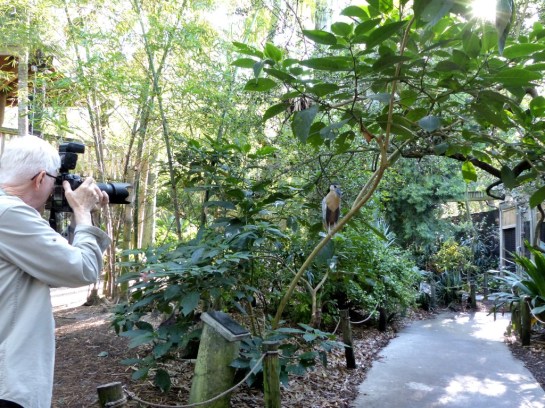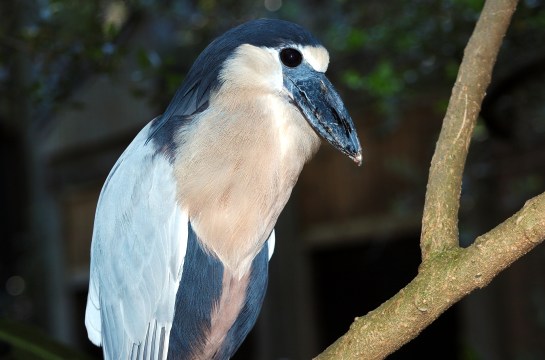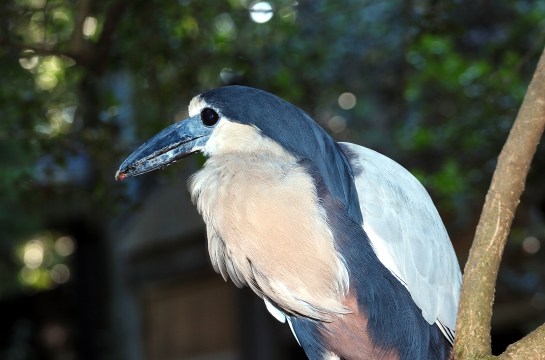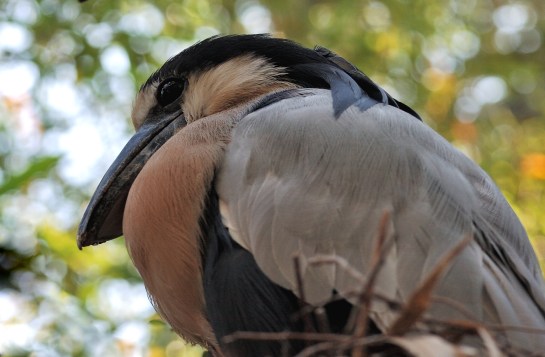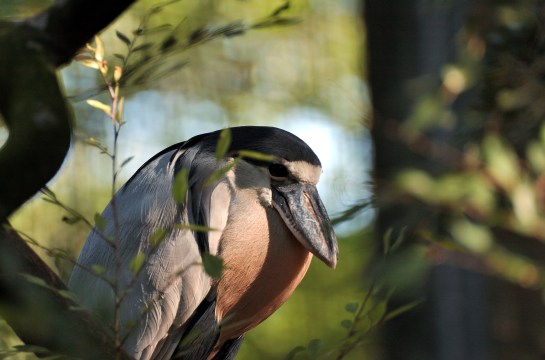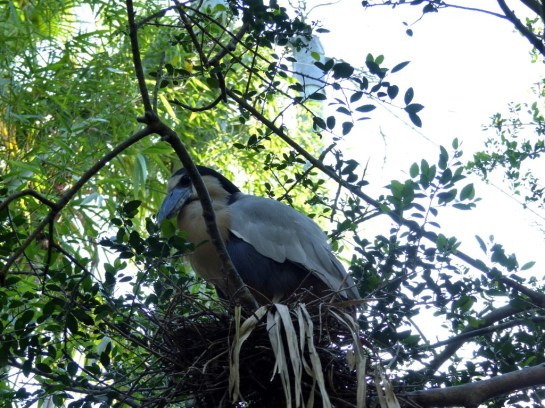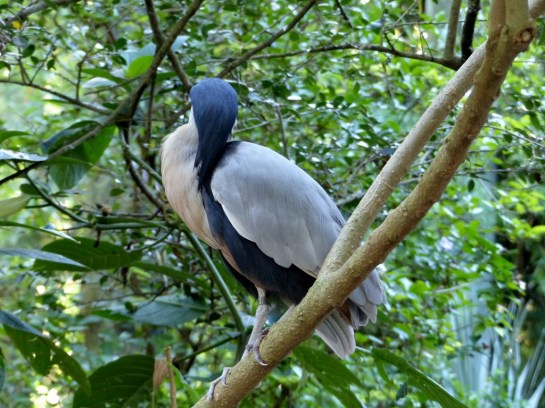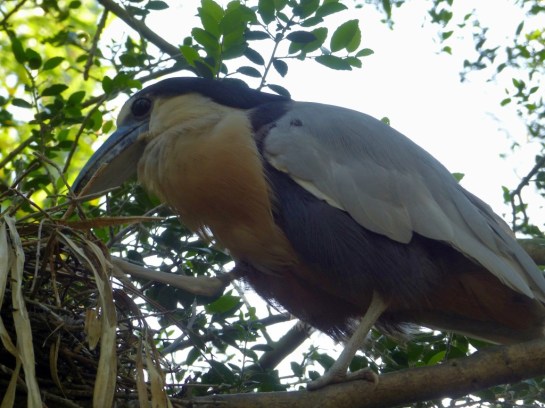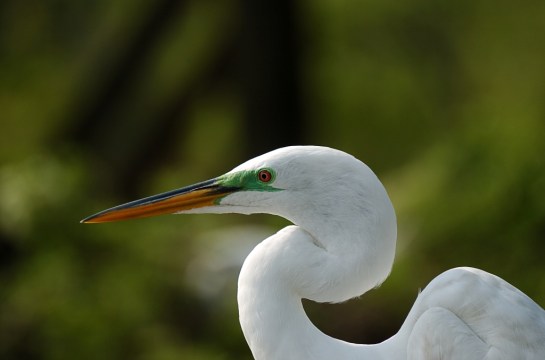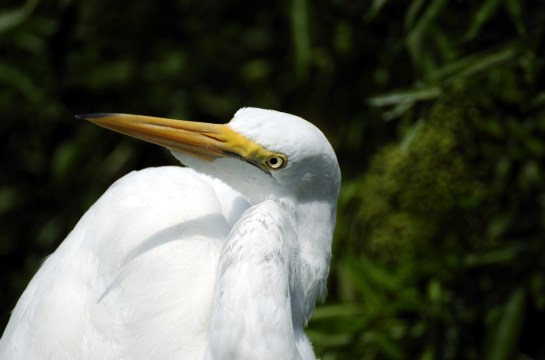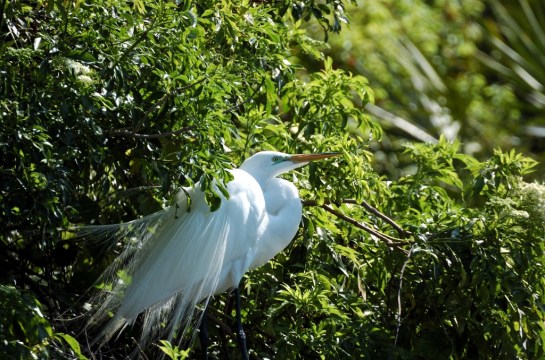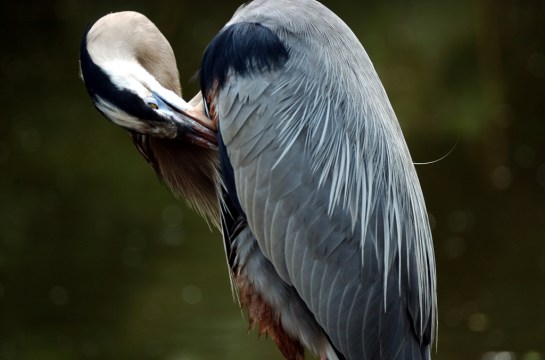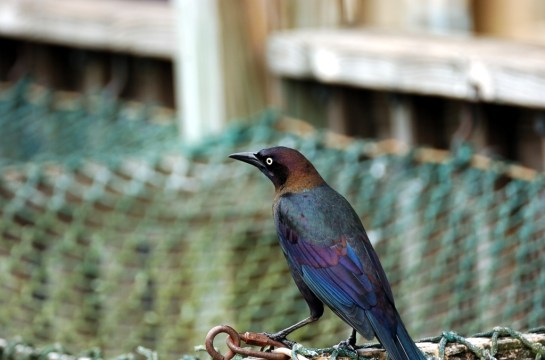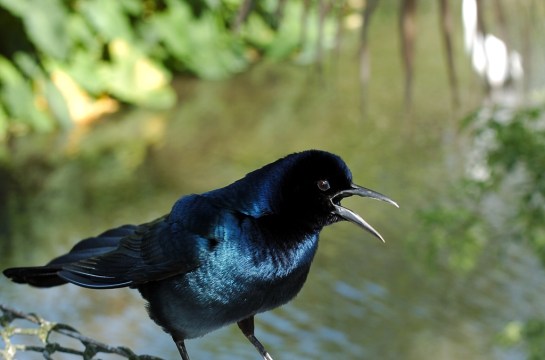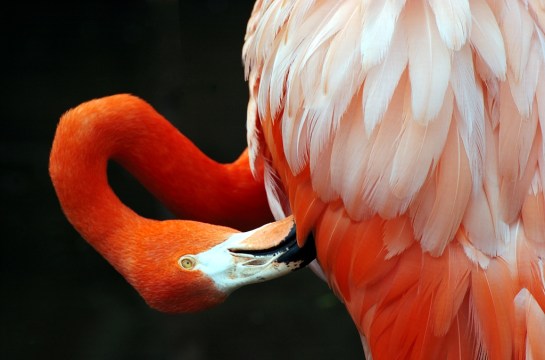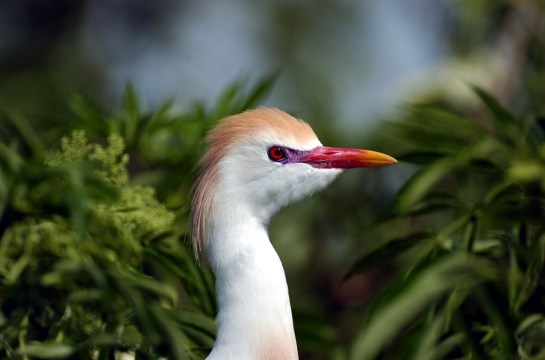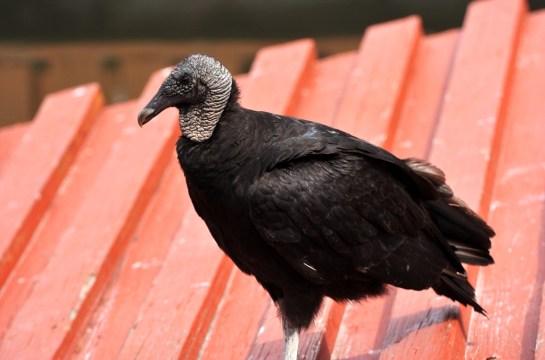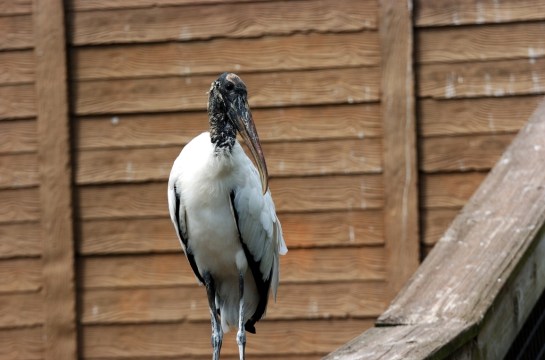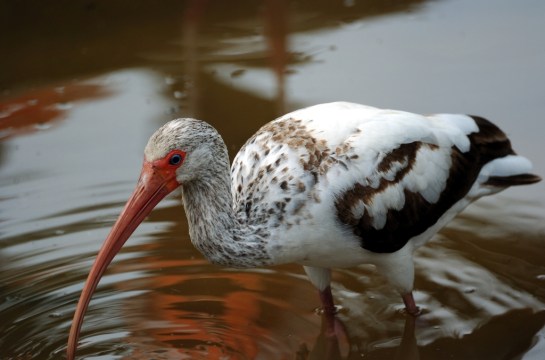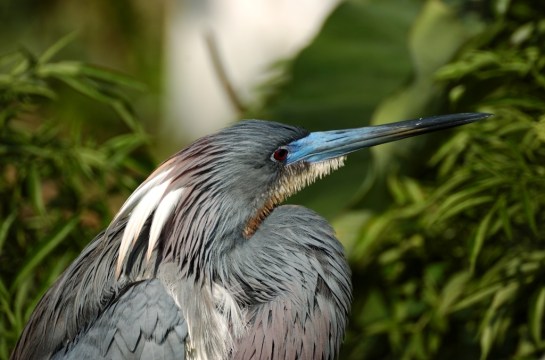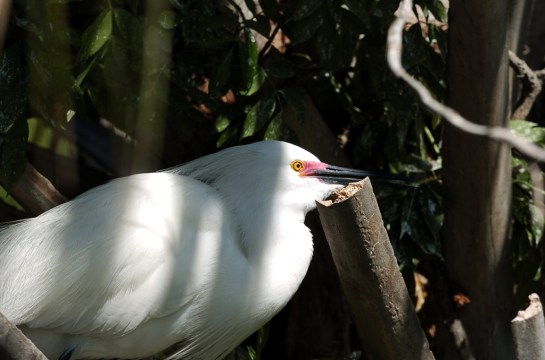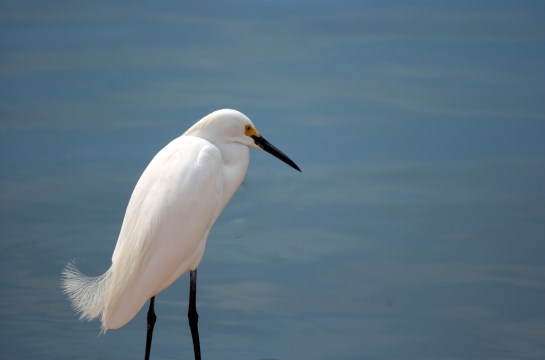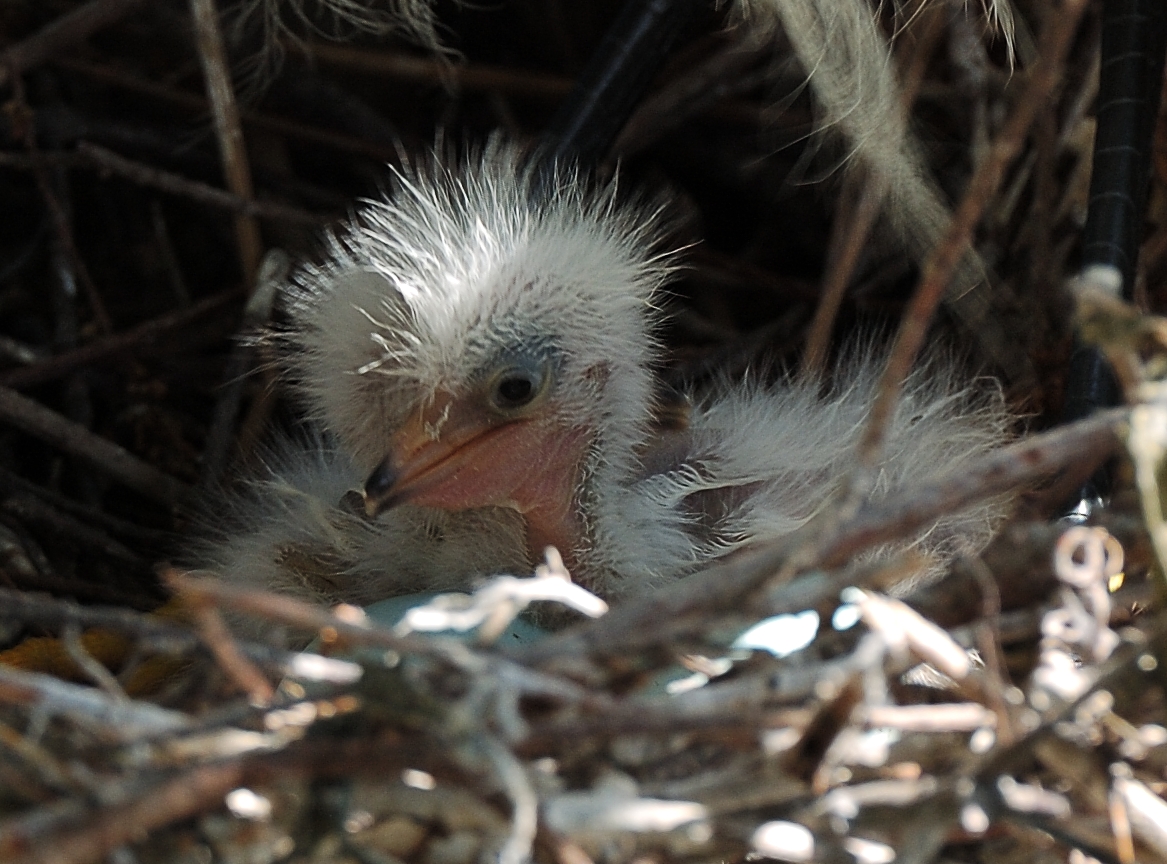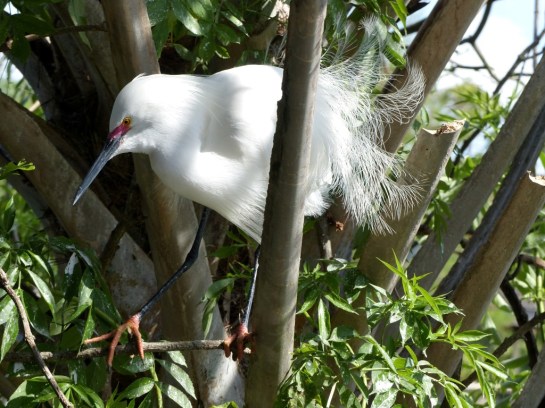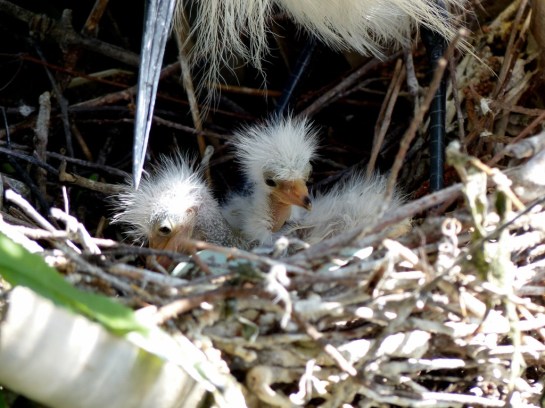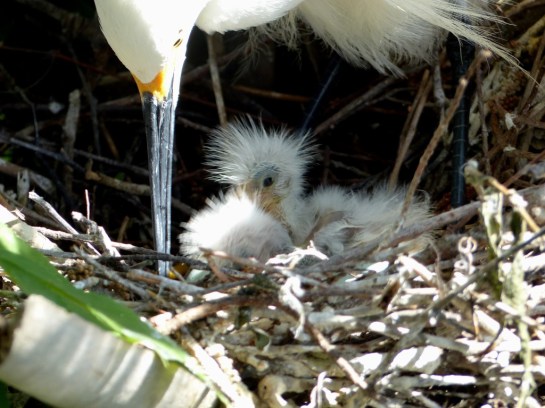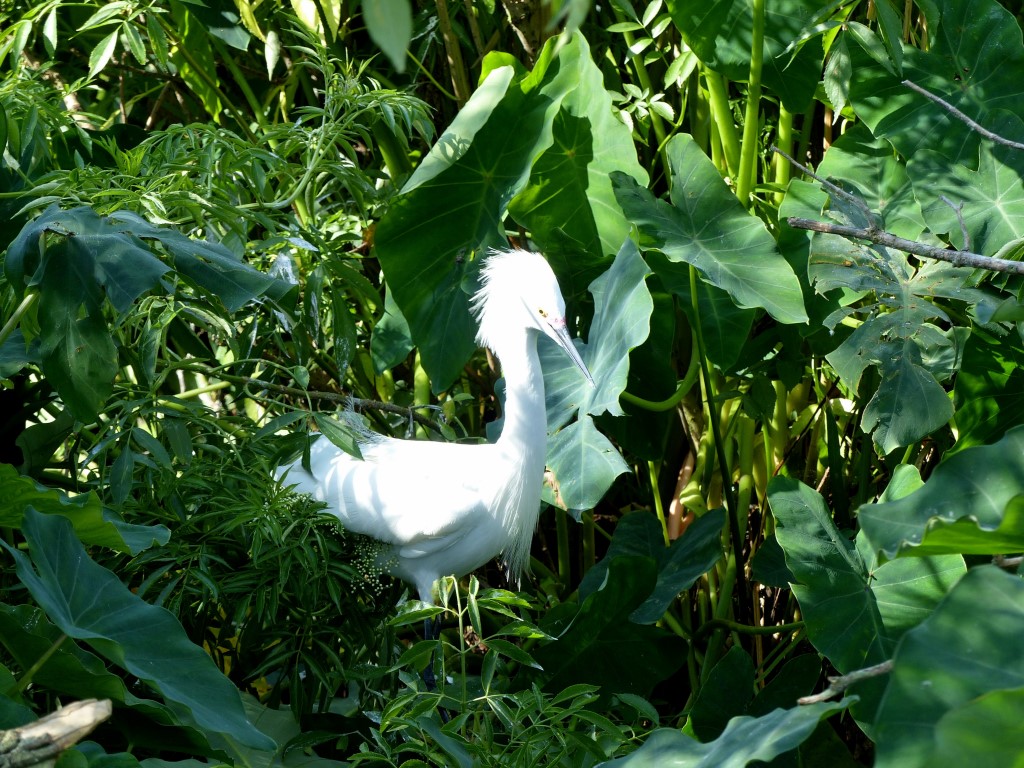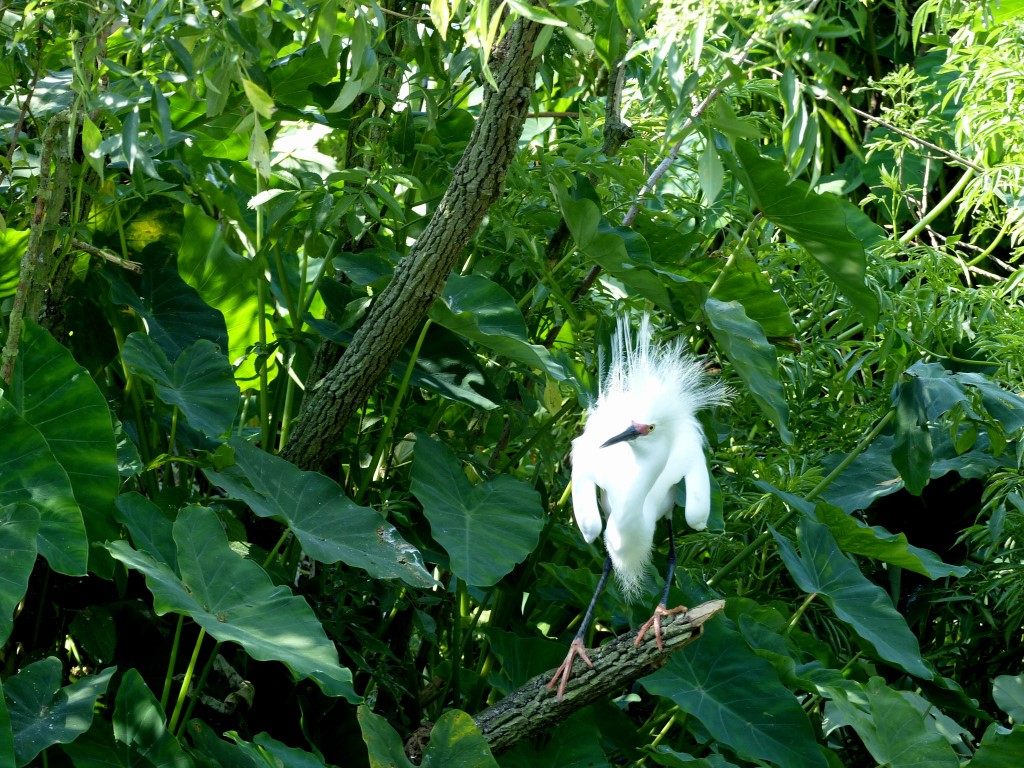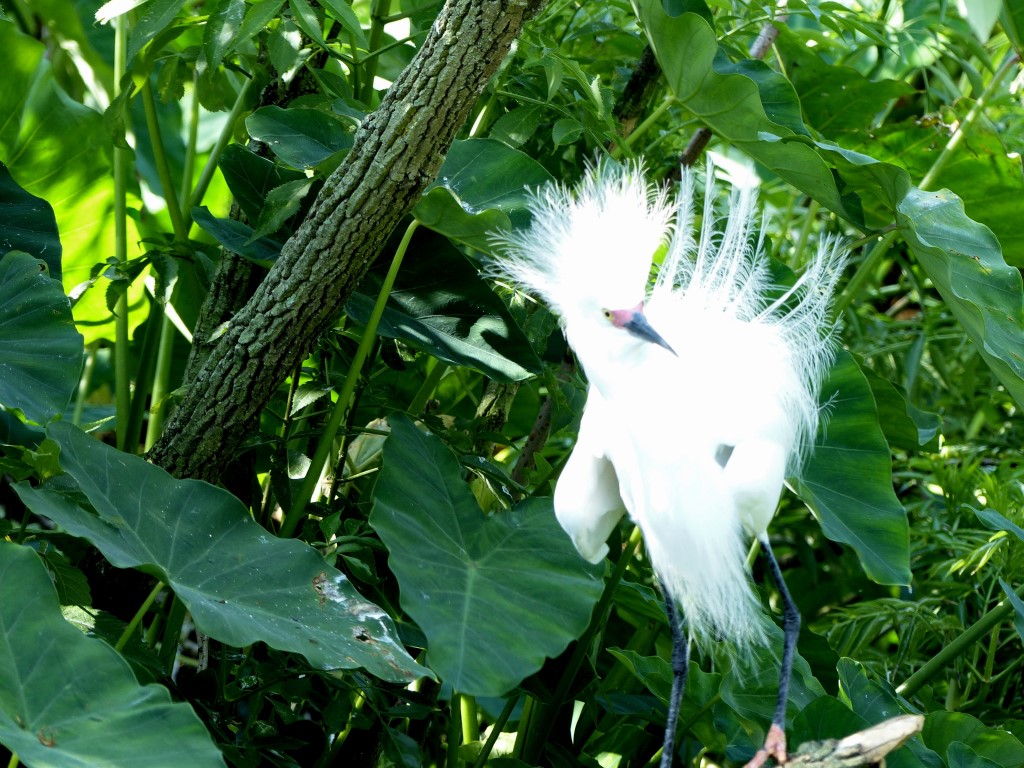
Boat-billed Heron at Lowry Park Zoo

Boat-billed Heron Lowry Park Zoo by Dan

Boat-billed Heron Lowry Park Zoo by Dan

For every beast of the forest is Mine, and the cattle upon a thousand hills or upon the mountains where thousands are. I know and am acquainted with all the birds of the mountains, and the wild animals of the field are Mine and are with Me, in My mind. (Psalms 50:10-11 AMP)

We went to Lowry Park Zoo recently because they opened up early for a special event for the kids. We headed to the aviary to get there while they were feeding the birds. Usually, that happens before the zoo opens. Besides that, most people were at the event and we had the aviary to us and the birds. Yeah!

One of my favorite birds in there is the Boat-billed Heron. I think they are just cute. Two of them like to sit just above or to the side of the walkway. (In fact, one of them managed to plaster Dan and his camera on a previous visit. Yuk!) This time they behaved and was able to shoot a video right up under one of my avian friends. They are adorable, to me.

Here is the video I took of our friendly Boat-bill Heron (of course my mouth was running in amazement) :

We have had other articles on this bird, but just had to share this latest Birdwatching Adventure.

Who Paints The Leaves?

*

Tickle Me Tuesday – Squirrels and Bird Feeders

Squirrel at a park in Daytona

Squirrel at a park in Daytona by Lee

Not sure how many have heard of the “Squirrel Proof” bird feeders, but Droll Yankees make a line of them. I am not selling them, but just want you to enjoy some of the antics of squirrels trying to feed from them. Also, there is a video of someone who put Vaseline on a pole and how a determined squirrel tries to get up the pole to the feed.

The Lord sure gave the squirrels a determined spirit. Enjoy and get “tickled”!

A time to weep, and a time to laugh; … (Ecclesiastes 3:4a KJV)

Let me hear joy and gladness;… (Psalms 51:8a ESV)

From Droll Yankee:

Mr Squirrel’s Wild Ride:

Squirrel taking a spin on a Yankee Flipper:

*
Other Tickle Me Tuesday’s I

Wordless Birds


*
“Flag That Bird!” (Part 2)

“Flag those birds!”  (Part 2)

And Moses built an altar and called the name of it Jehovah-nissi [i.e., the LORD is my banner]. (Exodus 17:15)

Luzon Bleeding-heart by Dan

Orni-Theology

In Flag that Bird! (Part 1)”, we considered 4 “banner birds”  –  besides globally popular eagles  –  that appear on national flags:  Belgium’s Wallonian Chicken (Gallus gallus domesticus); Portugal’s Northern Goshawk (Accipiter gentilis); Burma’s Green Peafowl (Pavo muticus); and Dominica’s Sisserou Parrot (Amazona imperialis).

As promised, this mini-series will continue with more “flagged birds”, namely, British Antarctic Territory (penguin);  Saint Helena, British crown colony in the southeastern Atlantic Ocean (Saint Helena Plover, a/k/a “wirebird”);  Kiribati (frigatebird);  Papua New Guinea (bird of paradise);  Fiji, as well as the royal standard of Tonga (dove);  Australian state of Western Australia (black swan);  Australian state of South Australia (iping shrike);  Bolivia (condor);  and Uganda (crested crane).

In this particular installment, 2 more (of those just listed) will be introduced.

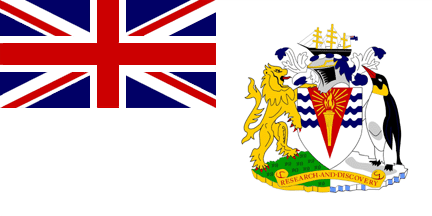
So now, consider the penguin – avian icon of the British Antarctic Territory.

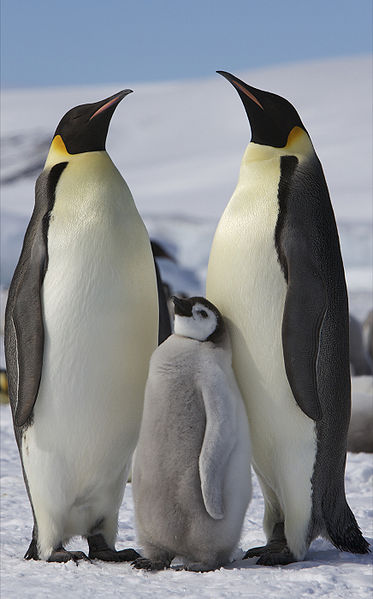
Emperor Penguin (Aptenodytes forsteri) ©WikiC


Emperor Penguin (Aptenodytes forsteri).  There are a variety of penguins that live in the Antarctic regions, yet it is the Emperor Penguin featured on the official coat-of-arms of the British Antarctic Territory, and that coat-of-arms is what appears on the territory’s official flag, next to the Union Jack (on a white background).

British Antarctic Territory - Union Jack with Emperor Penguin ©PD

British Antarctic Territory – Union Jack with Emperor Penguin ©PD

The British explorers of the Antarctic regions include Captain Robert Falcon Scott and Ernest Shackleton, who led an expedition using their research ship RRS Discovery (AD1901-AD1904), a symbol of which ship appears on the heraldic crest of that territory’s coat-of-arms.

Captain Scott’s second expedition (using the Terra Nova, AD1910-AD1913), to explore Antarctica, was disappointing for two reasons: (1) Roald Amundsen’s Norwegian exploration party had just “beat” the Brits to the South Pole, on 14 December of AD1911; and (2) Scott’s expedition party died in the wild weather of Antarctica near the end of March that year, on the Ross Ice Shelf, about 150 miles from their base camp.

Of interest to Biblical creationists, Captain Scott collected about 35 pounds of plant fossils in Antarctica, proving that Antarctica was previously forested (obviously under milder climate conditions!).  Regarding the importance of forests in Antarctica, see Buddy Davis’s article “Forest in Antarctica After the Flood?”, citing National Science Foundation Press Release (8-4-2008), “Antarctic Fossils Paint a Picture of a Much Warmer Continent”.

Ironically, the Discovery and Terra Nova research ventures were both intended to support Darwin’s theory of evolution, but the evidence refused to cooperate!  This surprise (to the evolutionists) is summarized by a BBC reporter, Megan Lane (in BBC News magazine, 2 November, 2011), as follows: “Of the 2,000 specimens of animals collected by Scott and his team – 400 of which were newly discovered – the jewel in the crown was a trio of Emperor penguin eggs.  It was hoped [by Darwinism supporters] that these would provide long-awaited proof of Darwin’s theory of evolution.  At the time, it was thought [by evolutionists that] an embryo passed through all [“phylogenetic”] stages of its species’ evolution as it developed.  And as the [British evolutionists] assumed the flightless Emperor penguin to be the world’s most primitive bird, they hoped the embryos in these eggs would show the link between dinosaurs and birds.  The birds had been seen before, but never with their eggs.  ‘It was the greatest [sic] biological quest of its day,’ says polar historian David Wilson, whose great-uncle, Edward Wilson, was Scott’s naturalist. ‘Then they collected the eggs, and all the theories turned out to be wrong’.”  [Quoting BBC’s Megan Lane.]  Amazingly, the “dinosaur-morphs-into-modern-birds” fairy tale is still being fabricated today, through science fiction movies (like Jurassic Park) and via dinosaur DNA evidence spoliation.  [Regarding how dinosaur DNA evidence is being censored, in academic/research circles, to avoid spoiling evolutionist mythology, see the multi-authored ICR article posted at www.icr.org/article/4947 .]

The next bird on this list is the Saint Helena Plover, locally nicknamed the “wirebird” (due to its wiry-thin legs).

St. Helena Plover (Charadrius sanctaehelenae) ©WikiC

St. Helena Plover (Charadrius sanctaehelenae) ©WikiC

Saint Helena Plover (Charadrius sanctaehelenae).

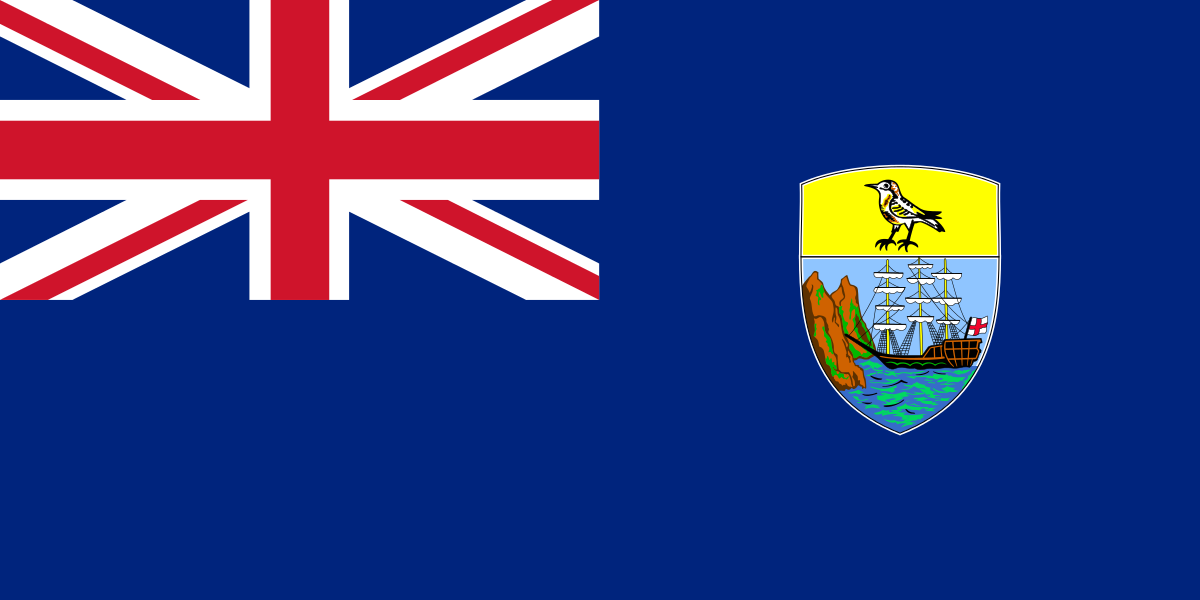
The Saint Helena Plover appears on the flag of Saint Helena, as well as on that small nation’s official coat-of-arms.  The plover is Saint Helena’s national bird as well.  Saint Helena is an island territory  —   in the South Atlantic Ocean (about midway between South America’s Brazil and Africa’s Angola) — administered by the United Kingdom, having been formally claimed by Great Britain when Oliver Cromwell (in AD1657) granted a charter to the East India Company, to settle the South Atlantic island.  Politically speaking, Saint Helena is grouped with Ascension and Tristan da Cunha, as a British overseas territory (formerly known as “Saint Helena and Dependencies”).

Flag of Saint Helena with Saint Henea Plover ©PD

Flag of Saint Helena with Saint Henea Plover ©PD

This little plover is a year-round resident, endemic to this island (although it is similar to other plovers).  This endemic invertebrate-consuming landbird is a small “wader”’, i.e., a shorebird capable of wading in coastal tidewaters, yet it mostly habituates other open areas of the island, such as pasture-like grasslands.  Its eggs are mostly light-brown in color, with dark-speckled mottling.  Its populations are declining, according to monitoring (which includes motion-sensor ultraviolet cameras positioned near nesting grounds), apparently due to predation (by rodents or feral cats) or due to other kinds of nest disturbances (such as sheep that step on plover nests). Conservation efforts are underway, in hopes of restoring the population growth of this island’s humble symbol.

Stay tuned!  God willing, the next installment in this mini-series will cover more of these “banner birds”, now that a penguin and a plover – both of which birds live only in the Southern Hemisphere, are properly “flagged” and accounted for.

*
“Flag That Bird!”  (Part 1)

More Articles by James J. S. Johnson

Orni-Theology

*

Sunday Inspiration – Variety II

We have come to some Passerine Families that only have a few members in them. You will get to see quite a few families in order to have enough birds to make a slideshow. As you know, the Lord loves variety and He gives us each different talents to use for His service. Sometimes many can do the same thing, but there are times when only a few can do a certain task. So it is with our Avian Friends today. They each have their niches to fill.

 Australian Logrunner (Orthonyx temminckii) by Tom Tarrant

Australian Logrunner (Orthonyx temminckii) by Tom Tarrant

Orthonychidae – Logrunners – The logrunners (Orthonyx) are a clade of birds which comprises three species of passerine birds endemic to Australia and New Guinea. Some authorities consider the Australian family Cinclosomatidae to be part of the Orthonychidae. The three species use their stiffened tails to brace themselves when feeding.

Crested Satinbird ©Jerry Oldenettel

Crested Satinbird ©Jerry Oldenettel

Cnemophilidae – Satinbirds – The satinbirds or Cnemophilines, Cnemophilidae are a group of passerine birds which consists of three species found in the mountain forests of New Guinea. They were originally thought to be part of the birds of paradise family Paradisaeidae until genetic research suggested that the birds are not closely related to birds of paradise at all and are perhaps closer to Melanocharitidae. The current evidence suggests that their closest relatives may be the cuckoo-shrikes [Campephagidae

Obscure Berrypecker (Melanocharis arfakiana) CC maholyoak

Obscure Berrypecker (Melanocharis arfakiana) CC maholyoak

Melanocharitidae – Berrypeckers, longbills The Melanocharitidae, the berrypeckers and longbills, is a small bird family restricted to the forests of New Guinea. The family contains ten species in four (sometimes three) genera. They are small songbirds with generally dull plumage but a range of body shapes.

Crested Berrypecker (Paramythia montium) ©WikiC

Crested Berrypecker (Paramythia montium) ©WikiC

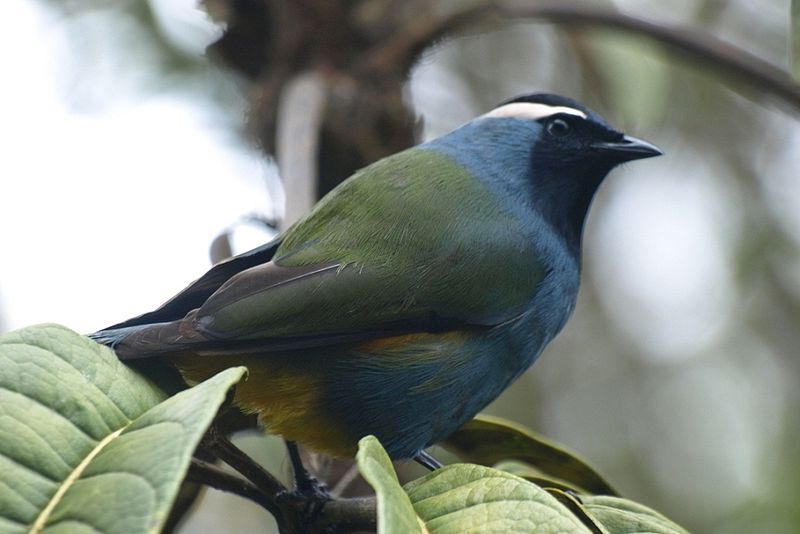
Paramythiidae – Painted Berrypeckers – The painted berrypeckers, Paramythiidae, are a very small bird family restricted to the mountain forests of New Guinea. The family comprises two species in two genera: the Tit Berrypecker (Oreocharis arfaki) and the Crested Berrypecker (Paramythia montium).

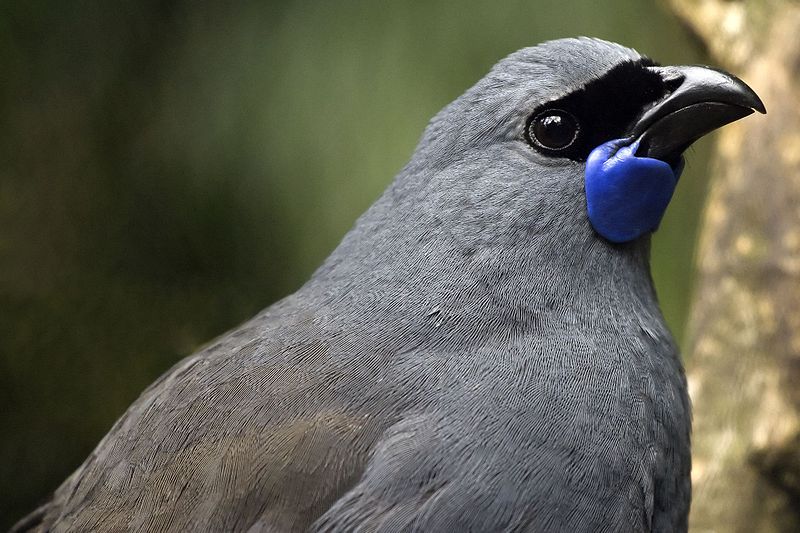
South Island Kokako (Callaeas cinereus) ©Wiki

South Island Kokako (Callaeas cinereus) ©Wiki

Callaeidae – New Zealand Wattlebirds – The small bird family Callaeidae (also named in some sources as Callaeatidae) is endemic to New Zealand. It contains three monotypic genera; of the three species in the family, only two survive and both of them, the Kokako and the Saddleback, are endangered species, threatened primarily by the predations of introduced mammalian species such as rats, mustelids and possums. A third, the Huia became extinct early in the 20th century.

Stitchbird (Notiomystis cincta) by Tom Tarrant

Stitchbird (Notiomystis cincta) by Tom Tarrant

Notiomystidae – Stitchbird – The Stitchbird or Hihi (Notiomystis cincta) is a rare honeyeater-like bird endemic to the North Island and adjacent offshore islands of New Zealand. It became extirpated everywhere except Little Barrier Island but has been reintroduced to three other island sanctuaries and two locations on the North Island mainland. Their relationships have long puzzled ornithologists, but it is now classed as the only member of its own family, the Notiomystidae.

(Family notes from Wikipedia, with editing)
.

This slideshow requires JavaScript.

“Just A Little Talk With Jesus” – Vegter Six – Together for Vi’s 90th Birthday (This was sung by some of Vi’s children and grandchildren. They had 11 children and lots and lots of grandchildren and greats, almost all of them active in church.)

Now it came to pass, as He was praying in a certain place, when He ceased, that one of His disciples said to Him, “Lord, teach us to pray, as John also taught his disciples.” (Luke 11:1 NKJV)

For the eyes of the Lord are over the righteous, and his ears are open unto their prayers: but the face of the Lord is against them that do evil.
(1 Peter 3:12 KJV)

*

(Personal note – As many of you know I spent a week in the hospital recently, for which I am thankful for your prayers for me. On that Sunday afternoon, after Dan had left, I used my Kindle or Ipad to go to my blog. I brought up the page for the all the Sunday Inspirations. I started going through them watching the bird slideshows while listening to the music. Oh, what a blessing I had watching the Lord’s Creations and listening to music about Him. I never knew when those were put together, that they in turn would be such a blessing and peaceful to me. My prayer is that when you are in need of some encouragement or just a blessing, that those blogs will bless you as much as they did me. Our Lord loves to give us peace in the midst of our problems.)

*

Sunday Inspirations

Birds of the World

Good News

*

Videos From Gatorland

Great Egret by Dan at Gatorland (3)Below is a combination of ten short videos from Gatorland. There are several of the Great Egrets on the nest, and one Great Egret displaying. There were three Snowy Egrets youngsters in a nest and other happenings along the boardwalk.

There is also a video of the Flamingo and Parrot areas. Then you will see two gators that I was watching that kept trying to get into position to see each other “eye to eye.” They seem to be sweet on each other. (my interpretation)

You alone are the LORD; You have made heaven, The heaven of heavens, with all their host, The earth and everything on it, The seas and all that is in them, And You preserve them all. The host of heaven worships You. (Nehemiah 9:6 NKJV)

Here are also some of the photos taken by Dan that Day:

We trust you enjoy the photos and video. This is just a few of the photos taken.

See:

Wordless Birds

*

Baby Snowy Egrets at Gatorland

Snowy Egret in Nest by Lee

Snowy Egret in Nest by Lee

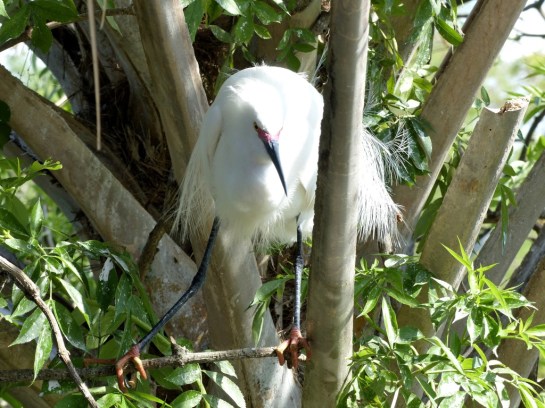
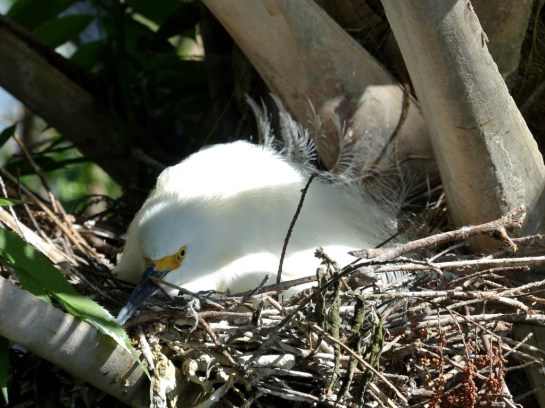
While walking around the rookery at Gatorland, we were able to view some Snowy Egrets at their nest. Dad was watching from above while mom was tending to the two baby “Snowies”.

Snowy Egret Dat at Nest by Lee

Snowy Egret Dat at Nest by Lee

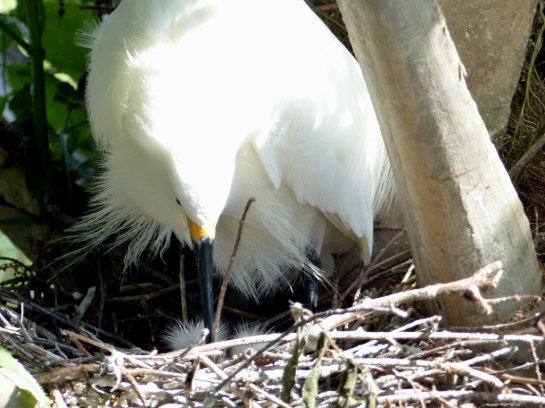
Mom was keeping an eye on the little ones. (This is from my perspective – I could just see the tops of their heads)

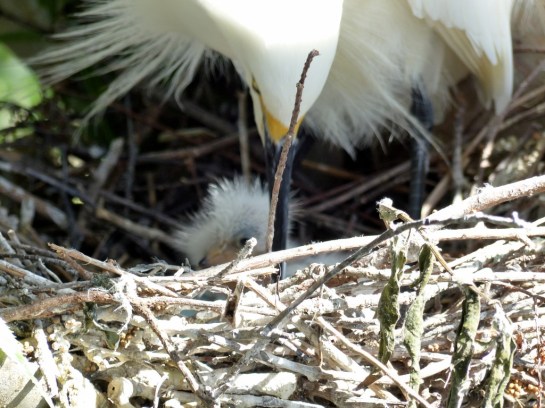
Snowy Egret in Nest with babies by Lee

Snowy Egret in Nest with babies by Lee

Dan came along and I handed him my camera (to get a better view-he’s taller) Here is one of the babies on his camera:

Snowy Egret Baby by Dan

Snowy Egret Baby by Dan

and these are the ones we took with my camera and those with his:

As you view the chicks you will notice there is still an egg in there. That makes me think that these little “snowies” are maybe one or two days old at maximum.

Snowy Egrets are Birds of the Bible in the Heron family Ardeidae – Herons, Bitterns  and are on the “do not eat” list. Who would want to eat these cuties?

the stork, the heron after its kind, the hoopoe, and the bat. (Leviticus 11:19 NKJV)

the stork, the heron after its kind, and the hoopoe and the bat. (Deuteronomy 14:18 NKJV)

We also shot some video to share with you. The first part is by me and a photographer was beside me shooting in “burst” mode. Then Dan shot the second part and you can see in the nest better. – I’m short :)

*

Ardeidae – Herons, Bitterns

Birds of the Bible – Herons

Gatorland, FL

Sharing The Gospel

*

Tickle Me Tuesday Bonus- 4/7/15

Another video caught my funny bone. Did not want to wait until next Tuesday.

Finally, brethren, whatsoever things are true, whatsoever things are honest, whatsoever things are just, whatsoever things are pure, whatsoever things are lovely, whatsoever things are of good report; if there be any virtue, and if there be any praise, think on these things. (Philippians 4:8 KJV)

Today’s regular “Tickle”
Tickle Me Tuesday – American Woodcock

All The Tickle Me Tuesdays

*

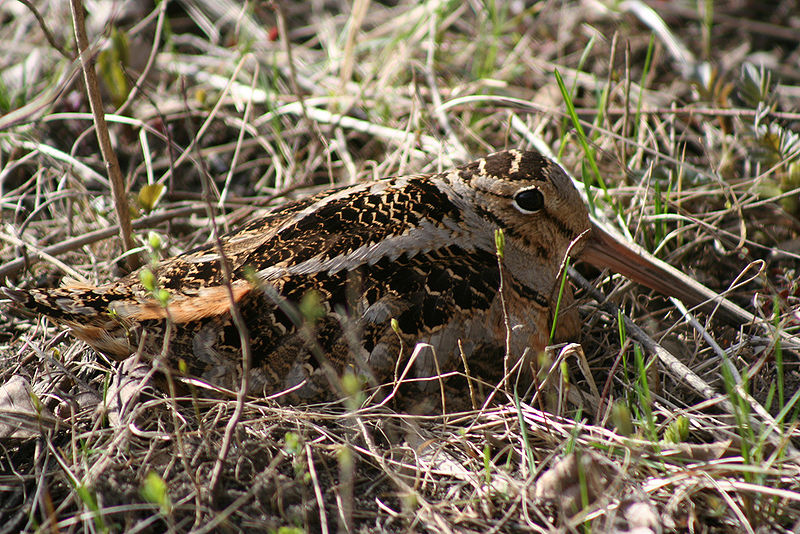
Tickle Me Tuesday – American Woodcock

American Woodcock (Scolopax minor) ©WikiC

American Woodcock (Scolopax minor) ©WikiC

From my friend on Facebook:

“Ok Lee, help me out on this one, is this for real? Is there a bird that really walks like that?
The music they put to this video is perfect, but it’s distracting because I can’t decide if there’s a bird that really does this or not!
Either way, This is a very cute video!”

The answer is Yes! That is an American Woodcock They do that to help make worms move around so they can probe with their beak to find them.

*

Here’s another video of a Woodcock Display using a sound they make:

*

And yet two more videos of one doing the dance minus the music.

So, what is an American Woodcock? They are members of the Scolopacidae – Sandpipers, Snipes Family.

An interesting fact from All About Birds – “The American Woodcock probes the soil with its bill to search for earthworms, using its flexible bill tip to capture prey. The bird walks slowly and sometimes rocks its body back and forth, stepping heavily with its front foot. This action may make worms move around in the soil, increasing their detectablity.

A very wise creator gave these birds good coloration, courtship displays and a very practical “heavy-footed” walk.

Look at the birds of the air, for they neither sow nor reap nor gather into barns; yet your heavenly Father feeds them. Are you not of more value than they? (Matthew 6:26 NKJV)

*

All About Birds – American Woodcock

American Woodcock – Wikipedia

Scolopacidae – Sandpipers, Snipes Family

Articles here about the American Woodcock:

Tickle Me Tuesday – Nesting Falcon

All The Tickle Me Tuesdays

Wordless Birds

*

Bad Hair (Feather) Day at Gatorland

Gatorland 4-2-15 by Lee

Snowy Egret – Gatorland 4-2-15 by Lee

We went over to Gatorland on Thursday last week to see what was happening in the rookery section. We have been trying all year to get there. I was able to take over 300 photos, but haven’t had the energy to work on them. After my stay in the hospital, I do things and then wear down quickly. So, I just keep doing and draining, and collecting photos.

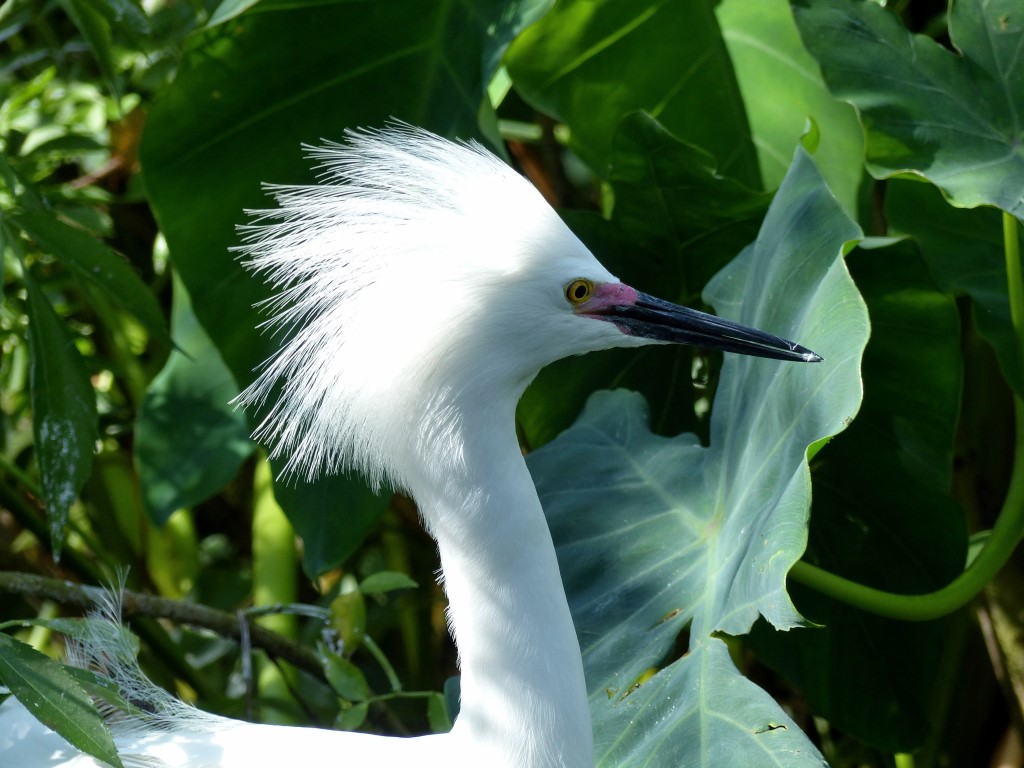
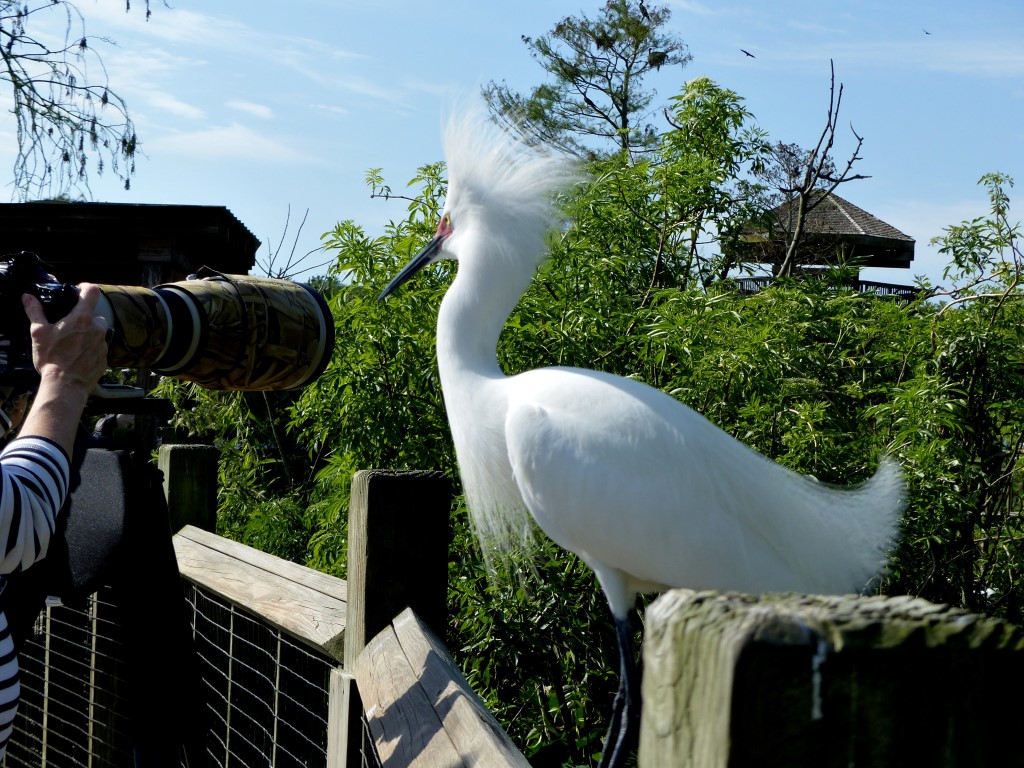
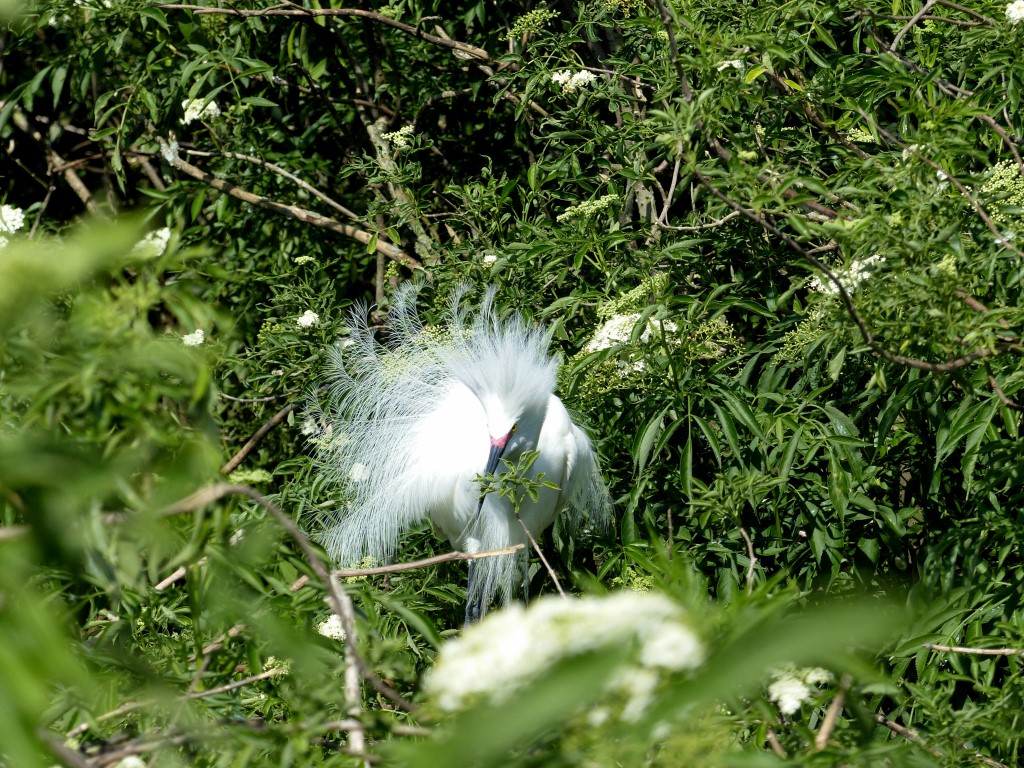
Anyway, just wanted to get something up and share some Snowy Egrets in breeding plumage that look like they are having a bad hair day. The photographers were all around and I had a Snowy land on the rail between me and a photographer.

Snowy Egret on Rail at Gatorland by Lee

Snowy Egret on Rail at Gatorland by Lee

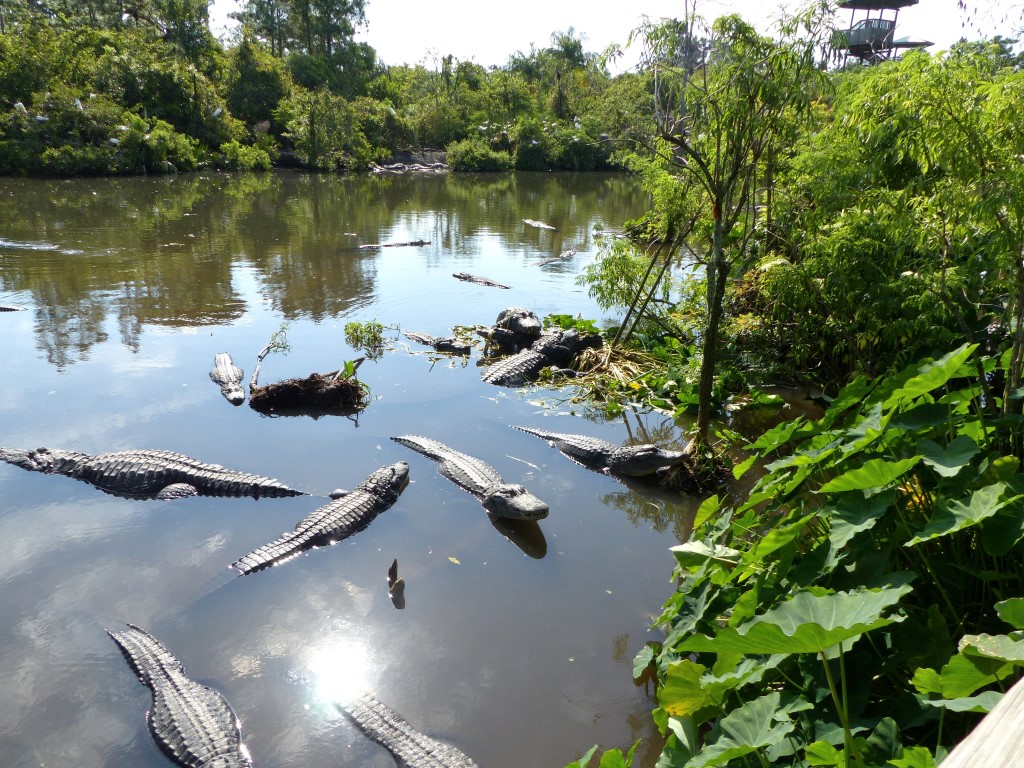
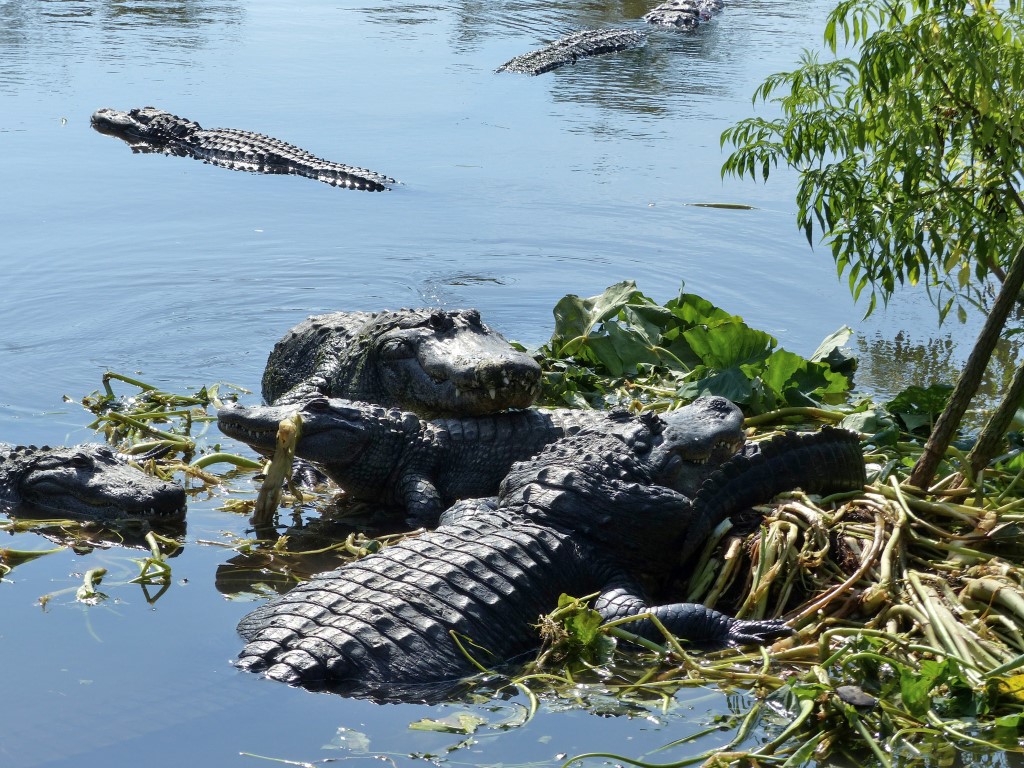
Here is a slideshow of just entering Gatorland and then where you start the boardwalk along the rookery. Actually, the Alligators are the main attraction of course, but they patrol those ponds. That gives protection to the birds to make nest and raise their babies, because land critters choose not to deal with the Gators. Unfortunately, an occasional chick falls and the gators get a “small” snack. I have plenty more photos to share, but that will be later. Even have video of two, 1 or 2 day old, Snowy Egrets.

It was a great visit getting to see more of the Lord’s Creation up close and doing what they were told to do. Reproduce.

Bring out with you every living thing of all flesh that is with you: birds and cattle and every creeping thing that creeps on the earth, so that they may abound on the earth, and be fruitful and multiply on the earth.” (Genesis 8:17 NKJV)

*

Other Birdwatching Trips to Gatorland

Gatorland – March 2014 ~ I
Gatorland’s Snowy Egrets
Tricolored Herons at Gatorland
Gatorland, FL
Gatorland II – Great Egrets at the Nest>
Gatorland II – Great Egret Chick
Wood Storks at Gatorland

Gideon


Tickle Me Tuesday – Nesting Falcon

Barred Forest Falcon (Micrastur ruficollis) ©WikiC

Barred Forest Falcon (Micrastur ruficollis) ©WikiC

That path no bird knows, Nor has the falcon’s eye seen it. (Job 28:7 NKJV)

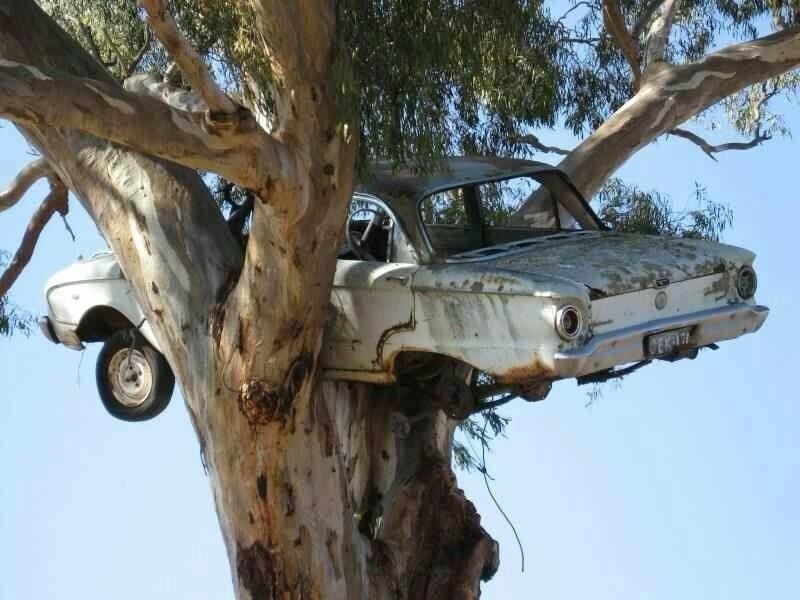
My brother-in-law sent me this photo recently. Had seen it before, but thought I would share it for a “tickle”.

For those of you who may not be familiar with our automobiles, the Falcon was quite popular, in its time.

Nesting Falcon

 Let the field be joyful, and all that is in it. Then all the trees of the woods will rejoice before the LORD. (Psalms 96:12 NKJV)

Other Tickle Me Tuesday’s

Finches at Feeder This Morning

Goldfinches at Feeder

Goldfinches at Feeder

The blessing of the LORD, it maketh rich, and he addeth no sorrow with it. (Proverbs 10:22 KJV)

What a great surprise and blessing when I looked out the kitchen window this morning. Spotted an American Goldfinch at my feeder. Haven’t seen any in months. So it was neat to watch them. They kept coming and before long there were at least six. Went to get the camera when the first one showed up and recorded them as they kept coming in.

These photos are through the screen, so forgive the quality, but just wanted to share them with you. I have been battling another round of bronchitis, third one this winter, hence not many birdwatching adventures to report lately. They almost put me in hospital yesterday with possible pneumonia, because of a low oxygen reading. Because of this, I have not been to many of your sites lately to stop by. Your prayers are again appreciated and always welcome.

Goldfinches at Feeder - avoiding the crowd

Goldfinches at Feeder – avoiding the crowd

Wordless Birds

*

Tickle Me Tuesday – Burrowing Owls

Burrowing Owl from Dusky's Wonders

Burrowing Owl from Dusky’s Wonders


One was posted several years back, but it is worth seeing again and getting a “tickle.”

The LORD opens the eyes of the blind; The LORD raises up those who are bowed down; The LORD loves the righteous; (Psalms 146:8 NASB)

The burrowing owl (Athene cunicularia) is another of the Lord’s creation, It is a small, long-legged owl found throughout open landscapes of North and South America. Burrowing owls can be found in grasslands, rangelands, agricultural areas, deserts, or any other open dry area with low vegetation. They nest and roost in burrows, such as those excavated by prairie dogs (Cynomys spp.). Unlike most owls, Burrowing Owls are often active during the day, although they tend to avoid the midday heat. But like many other kinds of owls, burrowing owls do most of their hunting from dusk until dawn, when they can use their night vision and hearing to their advantage

Burrowing owls have bright eyes; their beaks can be dark yellow or gray depending on the subspecies. They lack ear tufts and have a flattened facial disc. The owls have prominent white eyebrows and a white “chin” patch which they expand and display during certain behaviors, such as a bobbing of the head when agitated.

Adults have brown heads and wings with white spotting. The chest and abdomen are white with variable brown spotting or barring, also depending on the subspecies. Juvenile owls are similar in appearance, but they lack most of the white spotting above and brown barring below. The juveniles have a buff bar across the upper wing and their breast may be buff-colored rather than white. Burrowing owls of all ages have grayish legs longer than other owls.

Bonus:

If I say, “My foot slips,” Your mercy, O LORD, will hold me up. (Psalms 94:18 NKJV)

Duck slipping on Ice from the Telegraph

Duck slipping on Ice from the Telegraph

Kind of goes with the Tickle Me Tuesday – Birds and Ice

*

Tickle Me Tuesday –

Gideon

*