Scripture Alphabet of Animals: The Dog

Sleeping Pubs ©WikiC

Scripture Alphabet of Animals: The Dog

By Harriet N. Cook (1814-1843)

There are many dogs in the countries where the Bible was written, but the people do not like them as well as we do, and do not let them live about their yards and houses. So the dogs go wandering about without any master, and live on whatever they can find in the streets or around the markets. In the fifty-ninth Psalm you will find the verse:

They return at evening; they make a noise like a dog, and go round about the city,

-and a little farther on you will see,

Let them wander up and down for meat, and grudge if they be not satisfied.

Military Dog©WikiC

Military Dog©WikiC

These verses show that the dogs wandered about in those days just as they do now. Sometimes when they do not find enough to eat, they become very fierce and cruel, so that you would be afraid to meet one of them.

There is a sad story in some of the chapters of the two books of Kings, in which you will find these dogs mentioned. There was a very proud and wicked queen, named Jezebel, and she tried to make her husband, king Ahab, do all the evil she could. Once Ahab wanted a piece of ground that was near his palace, so that he might have it made into a garden, and he asked the owner of it, whose name was Naboth, to sell it to him. But Naboth was not willing, because he used it for his vineyard, and because his father had given it to him before he died. Then Ahab was very angry about it, and acted just as I have seen some foolish children do when they were not pleased. He went into his great splendid house, and laid himself down on the bed; then he turned his face towards the wall, and when it was dinner time he would not get up or eat any thing. So his wife Jezebel asked him what was the matter; and when she found out, she told him that he need not be troubled, for she could get that vineyard for him. Then she contrived to have Naboth killed by stoning, and when he was dead king Ahab took the vineyard.

Now you may be sure God was displeased with such wickedness as this, and you will think it was very right that he should punish the cruel Jezebel. Do you think her husband Ahab ought to be punished too? I do; because he knew that his wife was going to kill Naboth, and yet he did not try to keep her from doing it. I think he was as wicked as she. After Ahab had taken the vineyard, God sent to him the prophet Elijah to say to him these words,

Thus saith the Lord, In the place where dogs licked the blood of Naboth, shall dogs lick thy blood, even thine.” And of Jezebel he said, “The dogs shall eat Jezebel by the wall of Jezreel.

Now see how the word of God was fulfilled, just as he had said. Pretty soon after this, king Ahab went out to fight with his enemies, and as he was riding along in his carriage a man drew his great, strong bow, and shot an arrow which pierced the king and almost killed him. He lived a few hours, until nearly night, and then he died. The blood had run down from his wound into the carriage, and after the king was dead they took it to the pool of Samaria to wash it: there the dogs came and licked up the blood of Ahab.
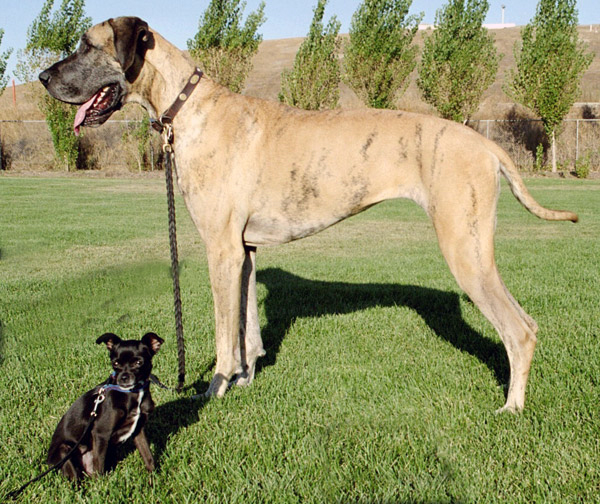
Mutt and Jeff ©WikiC

Mutt and Jeff ©WikiC

The wicked Jezebel lived some years after this, and one of her sons became king; but God raised up another king, named Jehu, who slew this son, and then went to Jezreel, the city where Jezebel lived. She heard he was coming, and feared that he meant to put her to death; but she determined that, instead of begging him to spare her life, she would act as though she was still a queen, and then perhaps he would not dare to injure her. So she put ornaments on her head, and painted her face, and then sat down by an upper window in all the splendor of a queen. When Jehu came near, she called out to him in great anger and scorn, to reproach him for having put her son to death. When Jehu heard her voice and saw her sitting at the window, he cried out,

Who is on my side?

and two or three of the queen’s officers looked out at the windows. Then he said to them,

Throw her down.

They were very glad to get rid of the proud and cruel queen, and so they threw her down, as he had said. It was so far to the ground that she was killed immediately, and her blood was sprinkled upon the walls. But Jehu did not care for this; he went into the house to eat and drink. After he had taken his dinner, he thought of Jezebel, and told some of his servants that they must go and bury her: but in the mean time a terrible thing had happened. The dogs had seized and devoured the body, and nothing was left of it but the feet, and the palms of the hands, and part of the bones of the head. So God’s word came to pass,

The dogs shall eat Jezebel.

___

See:

Harriet Newell Cook – Scripture Alphabet of Animals

Nave’s Topical Bible – Dog

Torrey’s Topical Textbook – Dog

(Photos ©WikiC)

*

Scripture Alphabet of Animals: The Camel

Camel Side Head Neck

Camel Side Head Neck

Scripture Alphabet of Animals: The Camel

By Harriet N. Cook (1814-1843)

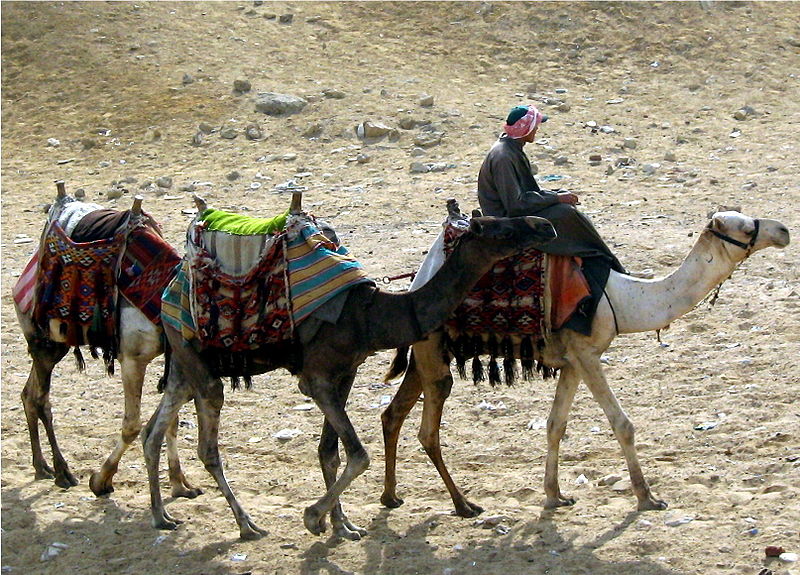
There are two or three varieties of the camel, but they do not differ from each other much more than our horses, some of which, the stout and strong, we use to draw heavy loads; others, more slender and graceful, we use for riding. The swift camel is called a Dromedary; it will carry its rider a hundred miles a day. Dromedaries are mentioned in the book of Esther, where messages were to be sent in haste to all parts of a vast kingdom; the messengers rode

on mules, and camels, and young dromedaries.

Camels at Giza

Camels at Giza

This is a very large animal and is mentioned a great many times in the Bible. I think you will like to find all these places, and see what is said about the camel. It seems as though God made it to live in just such countries as it does, for it can go a great many days without drinking any water; and if it were not for this, it would die of thirst, because the wells and springs are so far apart. If the people of those countries had not the camel they could not travel; so you see how kind God is to them.

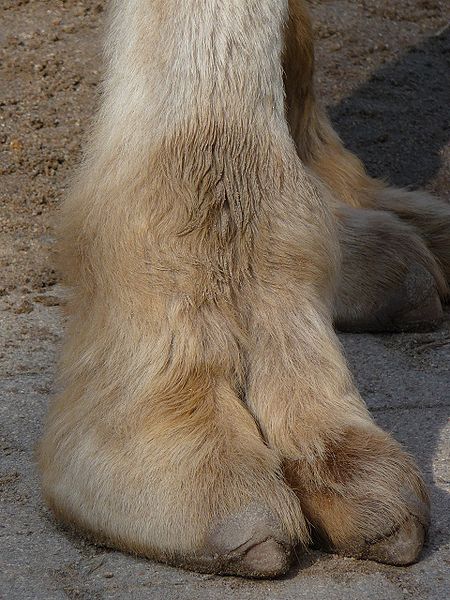
Camel - Foot

Camel – Foot

The foot of the camel is curious. It is very broad, having two divisions with a horny tip at the end of each; and underneath is a sort of elastic cushion, like a sponge, on which the animal treads. It is very strange to see a dozen or twenty large and heavy camels pass along almost without any noise; so still that you would hardly know they were coming if you did not look up.

There is a very beautiful story in the twenty-fourth chapter of Genesis, in which there is something about camels. I will tell you part of it. In the country where it happened a man does not generally choose a wife for himself, but his father or some other friend chooses for him. You have heard about Abraham, and know that he was a good man and a friend of God. When his son Isaac was forty years old, Abraham wished to find a wife for him, but he was not willing to take one from among the people where he lived, because they were very wicked. So he called a good old servant that he had-a gray-headed man-and told him that he wished him to go to a distant country and bring a wife for Isaac from there. Then Eliezer, the servant, took several other servants, and ten of his master’s camels, and many presents, and started on his journey. After they had travelled a great many days, they came near to the city where Abraham had told them to go. It was just before night, and that was the time when the young women used to go out of the city to draw water. I have told you that there are not many wells in that country, so that a great many persons draw water at one place. It is the custom for females to go for it, and they usually carry it in pitchers on their heads.

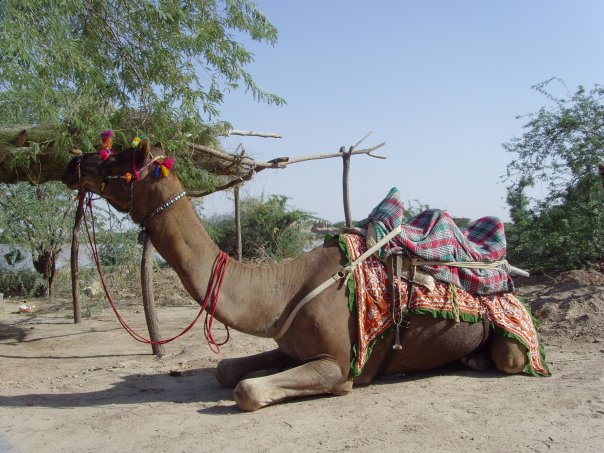
Camel Resting in the Cholistan Desert

Camel Resting in the Cholistan Desert

Eliezer made his camels lie down by this well, because they had come to the end of their journey and were very tired. But how was he to know who would be a good wife for Isaac, among all the women of this large city? He did not know; but he was a good man, and he prayed to God to choose one for him, and let him know which she was. And he asked God to let him know in this way which I will tell you. When the young women came out to the well, he was going to ask them for some water, and he prayed that the one who answered him kindly, and gave him drink, might be the right one for Isaac’s wife. Pretty soon he saw a young woman coming with her pitcher on her head, and she was very fair and handsome; but this alone did not satisfy Eliezer. He waited till she had drawn some water and placed it upon her head. Then he said to her,

I pray thee let me drink a little water from they pitcher;”-and she took it down and resting it on her hand, answered very pleasantly and kindly, “Drink, my lord.”

While he was drinking, she saw that he looked like a stranger, and that his camels seemed tired with the journey, and she was sorry from them. So she said,

I will draw water for the camels too;

– and she did draw enough for all the ten camels, though she must have been pretty tired when it was done, for these animals drink a great deal. From all these circumstances Eliezer felt sure that God had heard his prayer; and it gave him pleasure to think that if this young woman was willing to take so much trouble for a traveller whom she did not know, she would be a very kind and good wife.

I cannot tell you all; but Eliezer found that the young woman, whose name was Rebekah, was willing to go with him to be Isaac’s wife. When all was ready for the journey she was seated upon one of the ten camels, and her nurse upon another, and some of her female servants upon others. After they had been riding some days, they came, just at evening, near the place where Isaac lived, and saw him walking in the field. He came to meet Rebekah, and was very glad to see her, and when she became his wife he loved her very much.
___

See:

Harriet Newell Cook – Scripture Alphabet of Animals

Nave’s Topical Bible – Camel

Torrey’s Topical Textbook – Camel

(Photos ©WikiC)

*
Scripture Alphabet of Animals: The Bee

Bee - Apoidea on Trifolium

Bee – Apoidea on Trifolium

Scripture Alphabet of Animals: The Bee

By Harriet N. Cook (1814-1843)

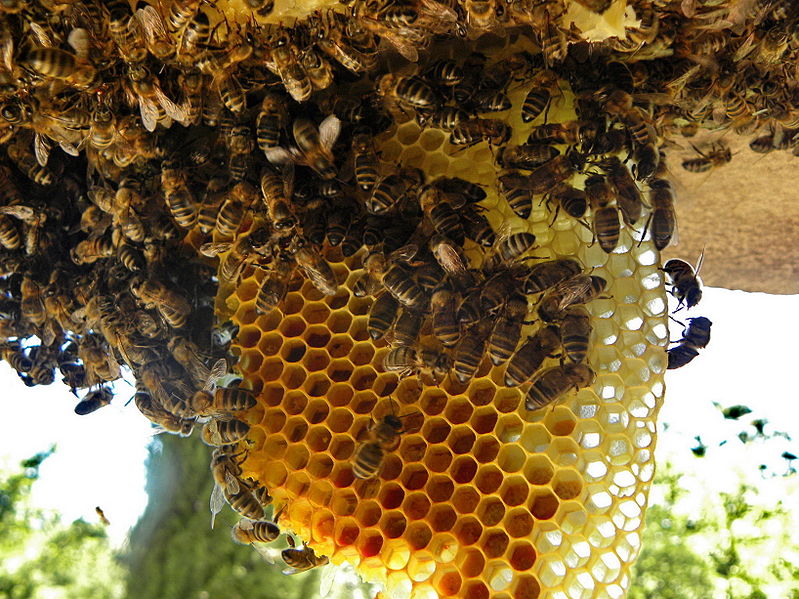
Although the bee is so small an animal, it is very well known; and many learned men have spent a great deal of time in observing it, and have written many very curious things about it. They tell us that there is in every hive a queen, larger than the rest, whom they all follow and obey; and that if she dies or is carried away, they all leave their work and unless the queen is restored or another one provided, they refuse to eat, and soon die. Only one queen is allowed in a hive at a time. She does not go out to gather honey, but those who attend upon her bring to her cell as much as she wants.

Bees on Comb©WikiC

Bees on Comb©WikiC

It is very pleasant to watch the bees at their work, for they are quite as busy as the ants, and as they are so much larger, it is more easy to see what they are doing. Every thing about them seems curious and beautiful; their waxen cells, their manner of gathering honey and storing it up, their neatness and order, all are admirable. They are perfectly harmless when left to themselves; but if they are attacked, they fly around the person who disturbs them, in great numbers, and sometimes sting him very severely. David once said of his enemies,

They compassed me about like bees.

Honey is often spoken of in the Bible. When Jacob wished his sons to go down into Egypt a second time to buy food, he said to them,

Take of the best fruits of the land in your vessels, and carry down the man (Joseph) a present; a little balm and a little honey, spices and myrrh, nuts and almonds.

God told the children of Israel that he would give them

a land flowing with milk and honey,

meaning one that was beautiful and fertile, producing abundantly every thing that would be needed for their comfort. When David had been obliged to flee from Jerusalem to escape his wicked son Absalom, he was in great want of provisions for himself and his followers. After a long and fatiguing march he reached a certain city; and there three rich men who were friendly to him, sent

wheat, and barley, and flour, and parched corn, and beans, and honey, and butter, and sheep, and cheese,”besides beds for them to rest on; “for they said, The people is hungry, and wary, and thirsty in the wilderness.”

Perhaps no man ever loved the commandments of God more truly than king David. He says in the Psalms,

How sweet are thy words unto my taste! yea, sweeter than honey to my mouth!

and again he says of God’s judgments,

More are they to be desired than gold, yea, than much fine gold; sweeter also than honey and the honey-comb.

Bees cluster©WikiC

Bee cluster©WikiC

Besides the bees that live in hives, there are many called wild bees, which live in the woods, and put their honey in the clefts of rocks, or in old trees and other similar places. In the fourteenth chapter of Judges you will find this story: There was a very strong man named Samson, and once when he was travelling by himself in a lonely place, a young lion came roaring along in the very path where he was going. Would you not have been afraid? I suppose Samson was, at first, for the lion was very strong and very hungry, and Samson had nothing in his hand to kill him with. But God gave him strength, and when the lion came up, Samson caught hold of him and tore him in pieces, as you would tear a piece of cloth. Then he left him dead on the ground. Sometime after he came back the same way, and thought he would look after the lion that he had killed. He soon found the skeleton, that is, the dry bones without any flesh on them; and when he looked at the parts of the dead lion he found that a swarm of bees had been there, and laid up a great plenty of honey. So he took some of it in his hands to eat as he went along.

You can learn of the little bee to try to be useful, and to resolve in the words of the hymn which I dare say you have learned:

“In works of labor or of skill
“I would be busy too;
“For Satan finds some mischief still
“For idle hands to do.

“In books, or work, or healthful play,
“Let my first years be past;
“That I may give for every day
“Some good account at last.”
___

See:

Harriet Newell Cook – Scripture Alphabet of Animals

Nave’s Topical Bible – Bee

Nave’s Topical Bible – Honey

Torrey’s Topical Textbook – Honey

(Photos ©WikiC)

Scripture Alphabet of Animals: The Bear

Brown Bear ©WikiC

Scripture Alphabet of Animals: The Bear

By Harriet N. Cook (1814-1843)

Did you ever hear children say, “He is as cross as a bear? I hope it will never be said of you, for nobody loves a child who is selfish and unkind, or who speaks cross and angry words. The bear is certainly a very cross animal; the name that was given to it in Bible times means a grumbler or growler. It does not even like other bears, excepting its own young ones, but chooses to live by itself in the gloomiest woods- often in a dark cave, or in the hollow part of some great old tree. When winter begins, it lies down to sleep, and does not wake up till warm weather comes again; then it creeps out of its retreat, lean and hungry enough-and cross enough, too. It is not a handsome animal; its hair is rough and almost as close as wool, and its limbs are thick and clumsy. It eats nuts, juicy leaves, and such fruits and berries as grow in the woods; it is fond of honey, and will climb the highest trees to reach it; and when it is very hungry, it will kill any animal that comes in its way and is not too strong for it to conquer.

Bear Mom and two Cubs by Bob-Nan

Bear Mom and two Cubs by Bob-Nan

The bear loves its young ones more than almost any other animal does, as this little story will show you. A bear with two cubs or young ones once came over the ice near to a ship where the sailors had just killed a large animal. The bears were very hungry, and the sailors threw over some pieces of flesh for them; the old bear would tear them up, giving most of the meat to the cubs, and keeping but little for herself. Presently some one in the ship cruelly shot both the young ones-then their mother was full of sorrow. She had been hurt herself by the guns, but she crawled along to her cubs, put her paw upon them, and tried to have them get up; and when she found that they did not move, she went a few steps off, and then looked back with a sad, moaning noise, as though she expected them to get up and follow her. When she saw that all her efforts were useless, she walked around them several times, turned towards the vessel with a terrible growl-for she was angry enough to tear in pieces the men who had killed her young-and then lay down between her cubs and died. Does not his help you to understand this verse in the 17th chapter of 2d Samuel?

For thou knowest thy father and his men, that they are mighty men, and they are chafed in their minds, as a bear robbed of her whelps (or cubs) in the field;

-and this also, Hosea 13:8,

I will meet them as a bear bereaved of her whelps.

Such verses as these show that the writers of the Bible were acquainted with the habits of different animals: we never find any mistakes in what they say about them. Solomon says in his Proverbs,

As a roaring lion and a ranging bear, so is a wicked ruler over the poor people.

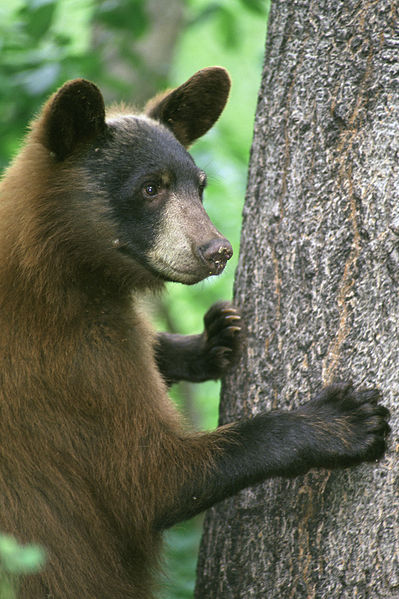
American Black Bear, Ursus americanus ©WikiC

American Black Bear, Ursus americanus ©WikiC

You have often read or heard the sad story in the 2d of Kings, how forty -two children were killed at one time by two bears out of the wood. Do you understand why God allowed this? Elijah, a holy servant of God, had just been taken up to heaven in a bright chariot with horses of fire; and these rude and wicked children called out to Elisha,

Go up, thou bald head!”-that is, “Go up, as Elijah did, to heaven.

This mockery would have been very wrong, even if Elisha had not been a holy prophet, for God has said,

Thou shalt rise up before the hoary head, and Honour the face of the old man

but the children were really dishonoring God in their treatment of his servant, and it was for this reason that He was so displeased with them.

Do you remember what David said when he was trying to persuade king Saul to let him go and fight with the great giant Goliath? Saul thought he was too young, and by no means strong enough; but David said,

Thy servant was keeping his father’s sheep, and there came a lion and a bear, and took a lamb out of the flock, and thy servant slew both the lion and the bear.” He said also, “The Lord that delivered me out of the paw of the lion and out of the paw of the bear, he will deliver me out of the hand of this Philistine

You see why David was not afraid to meet the giant. It was not because he felt strong of himself, but he believed that God would be near to help him; and it was the same feeling that led him to say afterwards,

Though I walk through the valley of the shadow of death, I will fear no evil; for Thou art with me.

Happy will it be for you, dear child, if you can say the same words, with peace in your heart, when you lie down to die.

Harriet Newell Cook – Scripture Alphabet of Animals

Nave’s Topical Bible – Bear

Torrey’s Topical Textbook – Bear

Scripture Alphabet of Animals: The Ass (Donkey)

Scripture Alphabet of Animals: The Ass (Donkey)

By Harriet N. Cook (1814-1843)

Perhaps you may have seen the ass, though it is not very common in this country. It has some resemblance to a horse, but is not as large, and generally seems rather sleepy and dull. In some countries, such as those where the Bible was written, it is a fine large animal, and the people use it for riding. Some persons mentioned in the Bible owned a great many asses. Abraham had sheep, and oxen, and asses and camels; and Job had at one time five hundred asses, and afterwards he had a thousand. A great many years ago, long before Christ came into the world, the rich men and the judges used to ride upon asses: so we read in the 10th verse of the 5th chapter of Judges,

Speak, ye that ride upon white asses, ye that sit in judgment.

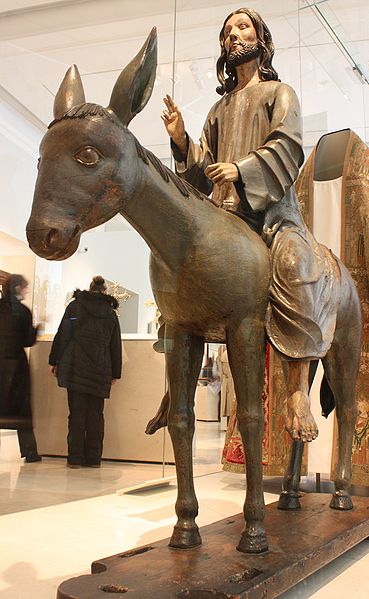
Statue of Christ Riding on the Ass at Victoria and Albert Museum©WikiC

Statue of Christ Riding on the Ass at Victoria and Albert Museum©WikiC

After this time many fine horses were brought into those countries, and the kings and great men liked them for riding: so the ass was used by the poorer people who could not buy a horse. You remember that when our blessed Savior was entering Jerusalem a few days before his death, he rode upon an ass; thus showing his meekness and humility, even while the multitude were shouting his praises, and spreading their garments in the way to do him honor. How shall we be like our Savior, if we let pride stay in our hearts?

The ass is very gentle and patient, and does not seem angry even when he has a very heavy load to carry. I should be very sorry to have him treated unkindly. Though he seems so dull, he loves his master, and will sometimes find him out and run to him even when he is in a crowd of men. God says, in the Bible,

The ox knoweth his owner, and the ass his master’s crib; but Israel doth not know, my people doth not consider.

Is it not a sad thing that the dull ass should be more grateful than we are?

Baudet Donkey - Shaky and Brown

Baudet Donkey – Shaky and Brown

Would it not seem to you very wonderful to hear a dog or a horse speak, so that you could understand what he said? It would be a strange thing indeed-a miracle; but you will find in the 22d chapter of Numbers that an ass once spoke to his master. The master’s name was Balaam. He was a wicked man, and he was riding on an ass to a place where he knew God did not wish him to go. As they were journeying an angel with a drawn sword in his hand stood in the way, but Balaam did not see him. The ass saw him, and was so afraid that she turned aside out of the road, and went into a field; then Balaam was angry and tried to drive her back into the way. They had now come to a path of the vineyards, having a wall on each side, and there the ass saw the bright angel again. In trying to avoid the angel, the ass crushed Balaam’s foot against the wall; and he was more angry and struck her again. Then the angel went forward a little distance, and stood where the path was so narrow that it was impossible to pass him. The ass was now so much frightened that she would go no farther, and fell down in the road; and Balaam beat her in a great passion. Then the ass spoke to Balaam and said,

What have I done to thee that thou hast smitten me these three times?” And when Balaam exclaimed, “I wish there were a sword in my hand, for now would I kill thee,” she only replied, “Am I not thine ass upon which thou hast ridden ever since I was thine unto this day? Was I ever wont to do so unto thee?”

Can we not learn, even from the ass, a lesson of meekness and patience?

The wild ass is often mentioned in the Bible, as in Psalm 104:11.

They (the springs) give drink to every beast of the field; the wild asses quench their thirst.

They live in desert places, and go about in great companies with one for their leader. You will find these words about them in the 39th chapter of Job:

Who hath sent out the wild ass free ? or who hath loosed the bands of the wild ass? Whose house I have made the wilderness, and the barren land his dwellings. He scorneth the multitude of the city, neither regardeth he the crying of the driver. The range of the mountains is his pasture, and he searcheth after every green thing.

Travellers who have seen great herds of wild asses say that the beautiful animal agrees exactly with this fine description, written so many years ago.

Harriet Newell Cook -Scripture Alphabet of Animals

See Also:

Torrey’s Topical Textbook – Ass, the Domestic

Torrey’s Topical Textbook – Ass, the Wild

Donkey – Wikipedia

Scripture Alphabet of Animals: The Ant

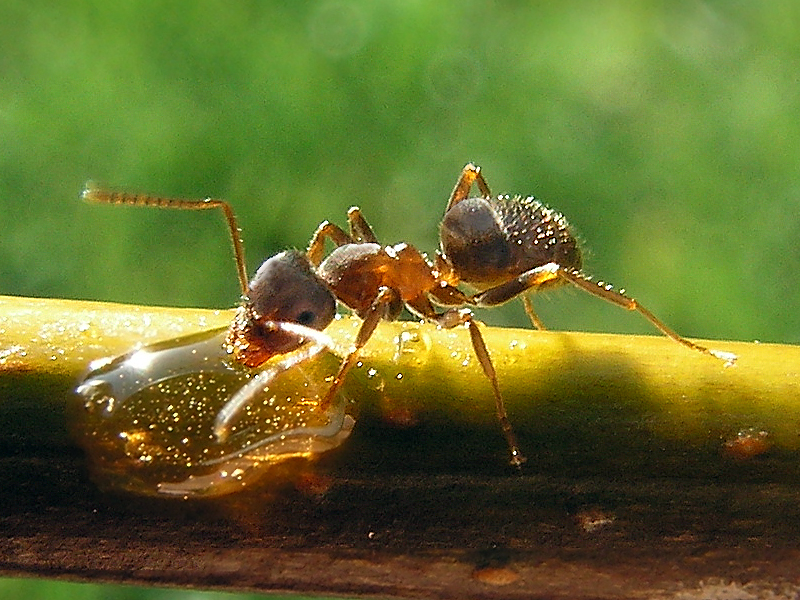
Lasius Niger ©WikiC

Scripture Alphabet of Animals: The Ant

By Harriet N. Cook (1814-1843)

If you look at the sixth verse of the sixth chapter of Proverbs, you will read,

Go to the ant, thou sluggard; consider her ways, and be wise.

A sluggard, you know, is a man, or woman, or child, who does not love to read or to do any kind of work, but likes to sleep or be idle all the day long. Do you think you were ever acquainted with one?

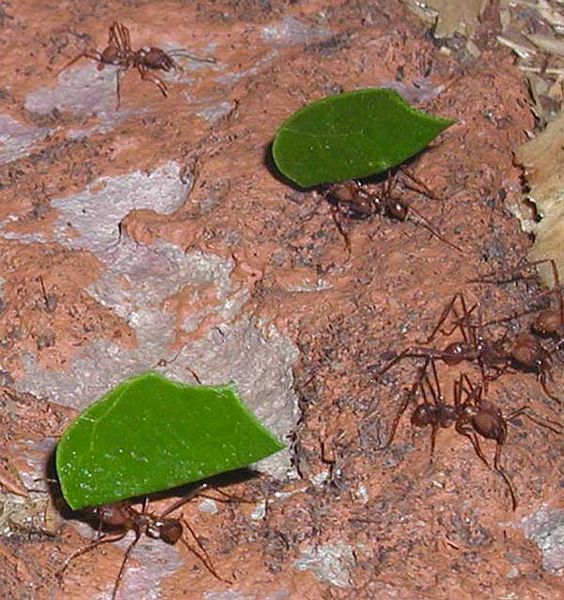
Leaf Cutting Ant©WikiC

Leaf Cutting Ant©WikiC

Now see what the Bible tells the sluggard to do. It bids him go to the little ant, and “consider her ways,” that is, look on and see what she does. Have you ever watched the ants when they were busy at work? It will give you very pleasant employment for half an hour on a summer’s day. In some places you may see small ant-hills scattered about, so close together that you can hardly step without treading on them; and you may find other places where there are not so many, but where the hills are much larger. I have seen them so large that you could hardly step over one of them without touching it with your foot and breaking some part of it. And then how busy the little creatures are! Just kneel down on the grass beside them, and notice how they work! You will see one little fellow creeping along as fast as he can go, with a grain of sand in his mouth, perhaps as large as his head. He does not stop to rest, but when he has carried his grain to help build the hill, away he goes for another. You may watch them all day and never see them idle at all.

Ant Hill in Germany ©WikiC

Ant Hill in Germany ©WikiC

You see why God tells the sluggard to go and look at the little ants: it is that when he sees them so busy, he may be ashamed of himself for being idle, and learn to be “wise,” or diligent in whatever he undertakes. I should not think he could help going to work, after he had looked at them a little while. The ants seem to be very happy, and I think it is because they are so busy. God has put nobody in this world to be idle: even children have something to do. The inside of an ant-hill is very curious, but it is not easy to examine it without destroying all the work that the little insects have taken so much pains to finish. There is a kind of ant in warm climates that builds for itself hills as high as a man. They are not made of sand, but of a kind of clay; and have a great many cells or apartments, and many winding passages leading from one part to another. All this is done, as the Bible says, without “guide, overseer or ruler;” that is, they have no one to direct them how to do it. God gives them skill just as he does to the honey-bees in building the beautiful cells which you have so often admired; all His works are wonderful.

Harriet Newell Cook -Scripture Alphabet of Animals

See also:

Naves Topical Bible – Ant

Ant – Wikipedia

Lack of Birds To Watch

Staying in as much as we have lately, the birds were at least coming by for a visit. Now that fall has arrived, we were expecting the birds to return. BUT!

Northern Mockingbird on Hook 2
Northern Mockingbird on Hook, last spring.
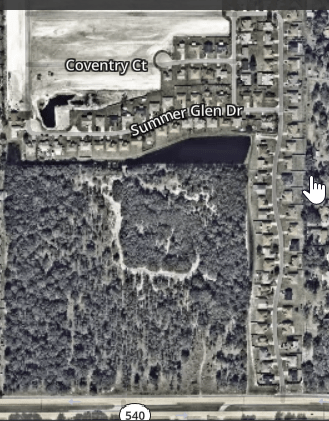
The trees beyond those houses are the beginning of the forest.

The feeders are filled, yet the birds are not returning. Could it be because they are destroying a huge area of trees right here by us???

Here is a picture, from the weather radar zoomed in on this area. It is a satellite view. The bare spot at the top is where the new houses were put in last year. (Of course, the view is the newest that they have released.)

Before they started clearing

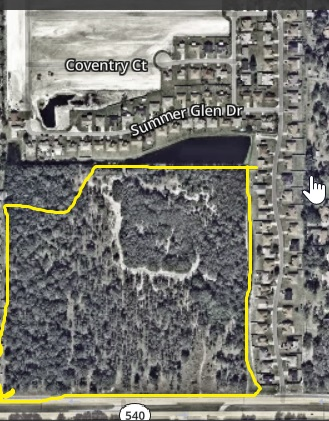
The dark spot in front is a huge forest. When I have shown photos of the birds, those trees have been visible over the houses. That strip of trees is about all that is left of all of those woods. They are clearing it all out for another housing addition. I am expecting any day for those trees to disappear. When they do, I’ll update and show a photo with the trees gone.

The Trees already gone as of today.

The yellow outlines the area that has already been cleared. When that little section is cleared, who knows if many birds will come back this winter. With our area being new, there are few trees that have been planted, and the ones that have been, are only a few feet tall.

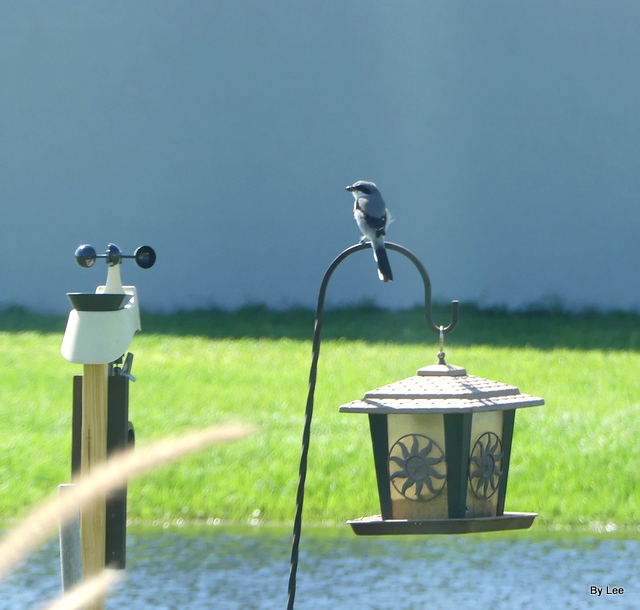
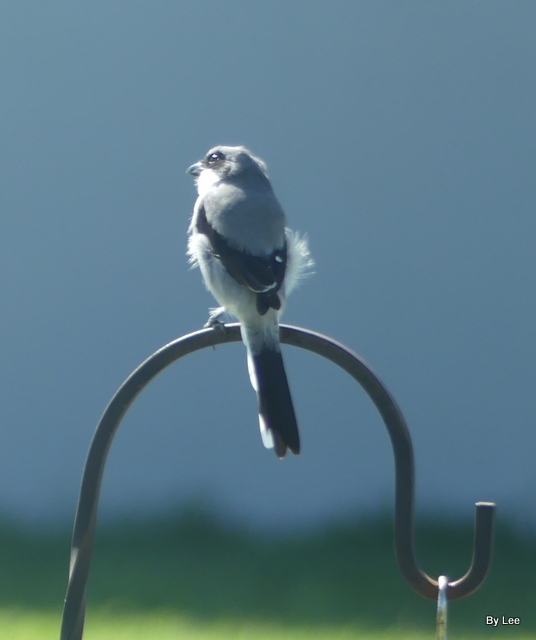
Yet! There is always hope for the strange finds now and then. We were visited by a new bird about a week ago. One we have not seen that often. First time we saw one was in Louisiana years ago.

Loggerhead Shrike on Oct 1, 2020

What a surprise!! This Shrike is a first for our yard, and a first in a long time since we spotted the last one.

Loggerhead Shrike 1 Oct 2020-2
Loggerhead Shrike 1 Oct 2020

Stay tuned to see what might show up this winter. I am hoping that we have as many as last winter, but we shall see. Thankfully, we still have the water birds walking by now and then. Oh! Another gator has shown up and ate a Muscovy Duck recently. But that is another post.

Let the field exult, and all that is in it. Then all the trees of the forest will sing for joy Before the LORD, for He is coming; For He is coming to judge the earth. He will judge the world in righteousness, And the peoples in His faithfulness. (Psalms 96:12-13) [Unfortunately, these trees will not be in that chorus

Who Paints The Leaves?

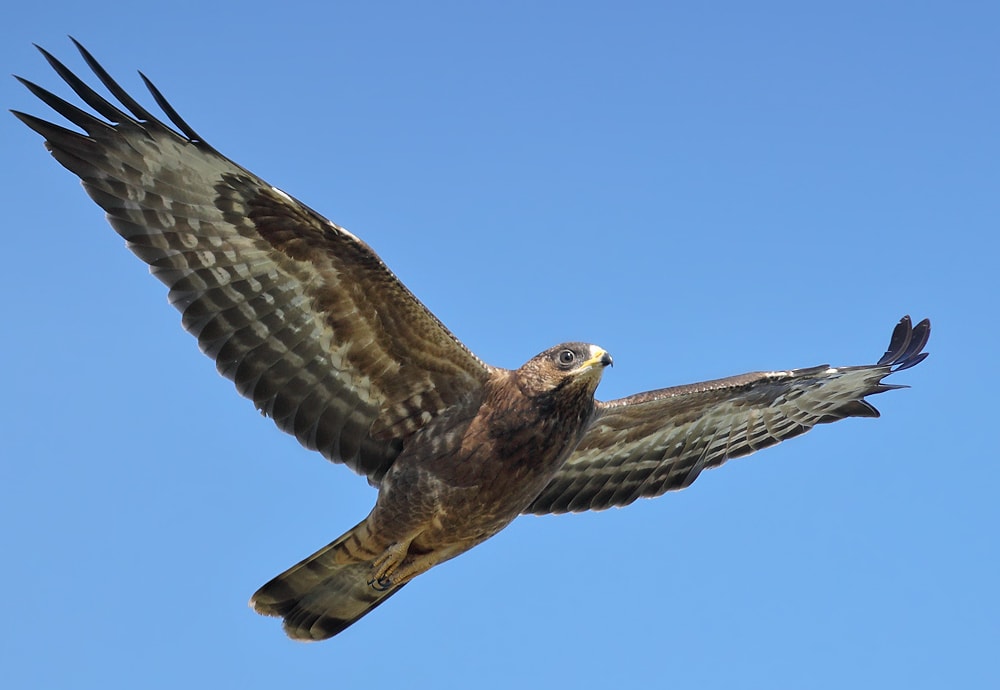
Spectacular Journey to Africa by Honey Buzzard

What an amazing story!! This is from the BirdGuides.Com

…..

A young European Honey Buzzard, satellite tagged by the Roy Dennis Foundation at a nest near Forres, Scotland, in mid-August, has already reached the African continent – albeit via a remarkably risky route that included two long sea crossings.

The bird, ‘620’, was tagged on 11 August and remained in the vicinity of her natal woodland until early September. Her first significant flight came on 11 September, when she moved 50 km to the east, aided by a stiff breeze.

“Doth the hawk (or buzzard) fly by thy wisdom, and stretch her wings toward the south?” (Job 39:26 KJV)

Young European Honey Buzzards, such as this one, often end up taking more convoluted migrations south in their first autumn than the more experienced adults (Per Schans Christensen).

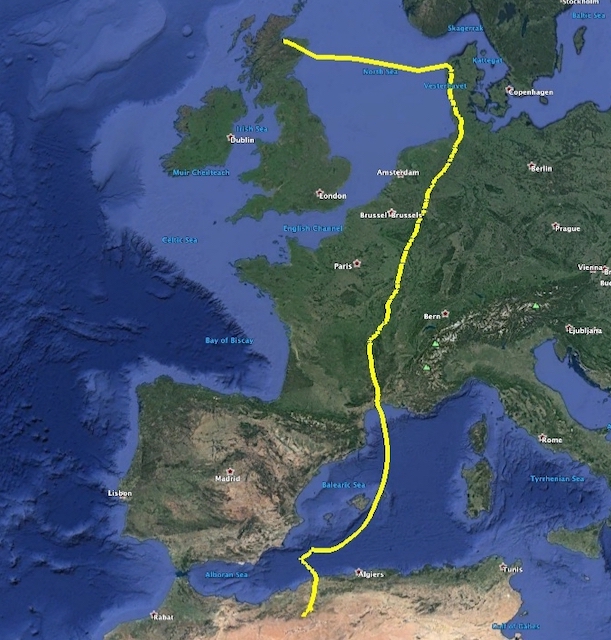
However, this could have given no clues for the extraordinary events that took place on 12-13 September. Clear skies and a brisk westerly wind on the morning of 12th encouraged the young honey buzzard to continue her eastward journey, although the Aberdeenshire coast seemingly provided no deterrant – she continued out to sea just north of Aberdeen at around 11.20 am, with the next GPS position logging her at an altitude of 477 m some 57 km out to sea, south-east of the Scottish city.

She continued on an easterly trajectory and, as darkness fell, she was only half-way across the North Sea. Flying through the night, the next tag fix at 2.34 am placed her a further 282 km east of the previous evening’s reading. By 6.30 am, she reached the Danish coast safely, having made a 640-km sea crossing in a non-stop 19-hour flight, largely during the hours of darkness – hugely impressive given it was the bird’s first long-distance movement since fledging the nest.

After a couple of days’ recuperation, her southward journey recommenced as she gradually made her way through Denmark, reaching Germany by the evening of 17th. She continued on a south-westerly route, skirting the western border of Germany and entering south-east Belgium on 20th, roosting in the country that evening. The south-westerly trajectory continued over the following five days, and ‘620’ had reached Clermont-Ferrand, France, by the evening of 25th.


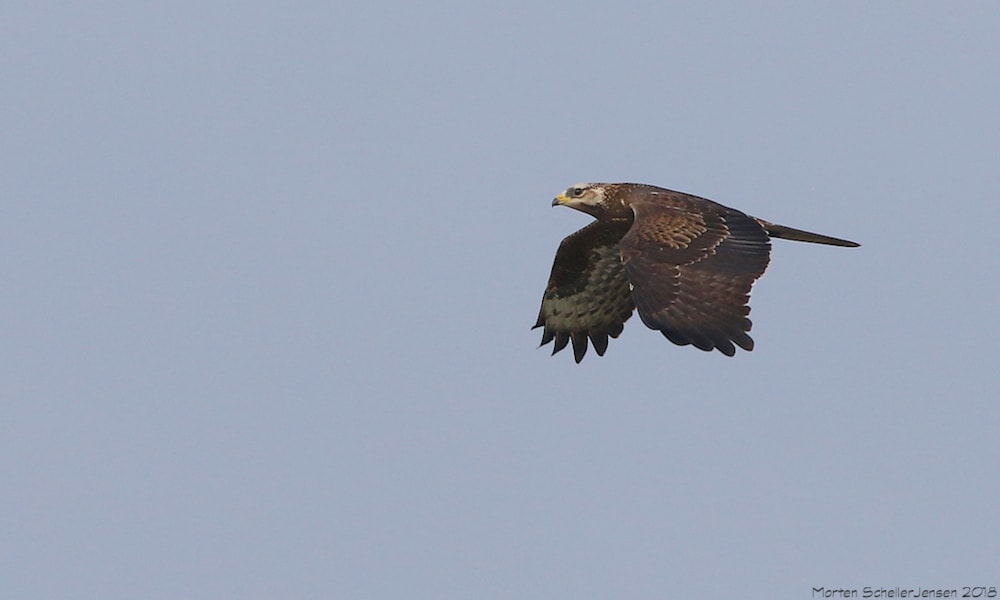
Juvenile European Honey Buzzard photographed on migration in Denmark – a route used by many youngsters of this species, including ‘620’ (Morten Scheller Jensen).

At this point, it seemed as if the south-westerly route would continue, taking the bird into Iberia and, most likely, across the Strait of Gibraltar, which is a well-practised spring and autumn migration route for adult European Honey Buzzards. However, ‘620’ had other ideas.

After two days near Clermont-Ferrand, she flew due south to a wood near Montpellier on the afternoon of 27th. Her migration recommenced the next morning and by 8.40 am she was at the coast. But, instead of following this south-west into Spain, strong north-westerly winds encouraged her to fly directly out to sea.

As she moved south over the Mediterranean Sea the wind veered to a north-easterly and, with a brisk tailwind, her flying speed reached 87 km/h as she flew at altitudes of up to 750 m. By 1 pm she had reached Menorca – but did not land there, instead continuing southwards. By 8.30 pm, the wind had dropped and she was flying due west, having travelled almost 750 km over open sea in 12 hours of continuous flight.

Satellite data suggests she rested on a boat for a couple of hours in the middle of the night, before recommencing her journey south. Finally, by 12.50 pm the following day, she reached the Algerian coast, completing a 1,000-km migration over open sea in just over 28 hours – an astonishing feat for such a young bird tackling its first migration. Not done there though, the young honey buzzard continued inland for a further 160 km, roosting in mountains on the northern edge of the Sahara. It then made a further 60-km movement south and roosted in one of the last patches of woodland on the north side of the Sahara on the evening of 29th.


The movements of young European Honey Buzzard ‘620’ between 11 and 29 September, from Scotland to Algeria via Denmark, Germany and France (Roy Dennis Foundation).

This amazing journey shows just how treacherous life can be for migrant birds, especially youngsters in their first autumn, yet also exhibits the impressive feats that they are capable of. But the journey isn’t done there, with the world’s largest desert still left to negotiate. As the Roy Dennis Foundation wrote on its blog on 30 September: “After two very long sea crossings, the young honey buzzard now faces another daunting challenge – her first flight across the Sahara.”

Following 620’s exploits at www.roydennis.org/category/honey-buzzard-620.

“Was it through your know how that the hawk learned to fly, soaring effortlessly on thermal updrafts? Did you command the eagle’s flight, and teach her to build her nest in the heights,” (Job 39:26-27 MSG) [I don’t use this version normally, but I liked these verses, in respect to this story.]

What A Creator!!

Birds of the Bible – Buzzard

Wordless Birds

Isaiah’s Eagle – A Promise For Us

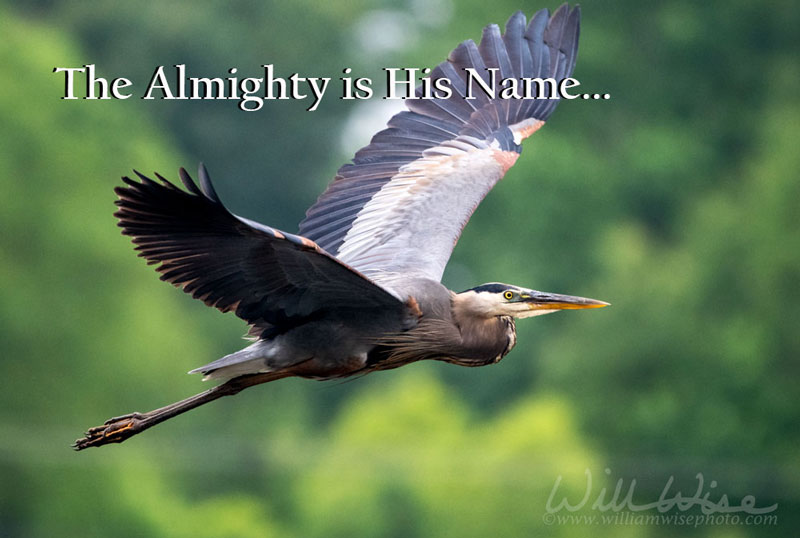
Great Blue Heron; Walton County, Georgia birding photogaphy blog by williamwisephoto.com

Last week, William Wise posted his great photo and post, Almighty Is His Name. And all week, I desired to post the scripture verses in Isaiah 40, that we read the next day. Somehow lately, time seems to get away from me. Not going birding, or having but few birds visiting the back yard, . . . . . .

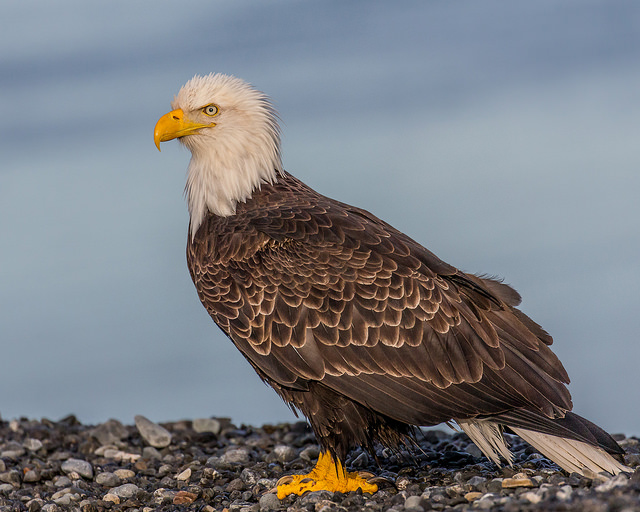
Bald Eagle (Haliaeetus leucocephalus) Resting ©Flickr Andy Morffew

“Have you not known? Have you not heard?”

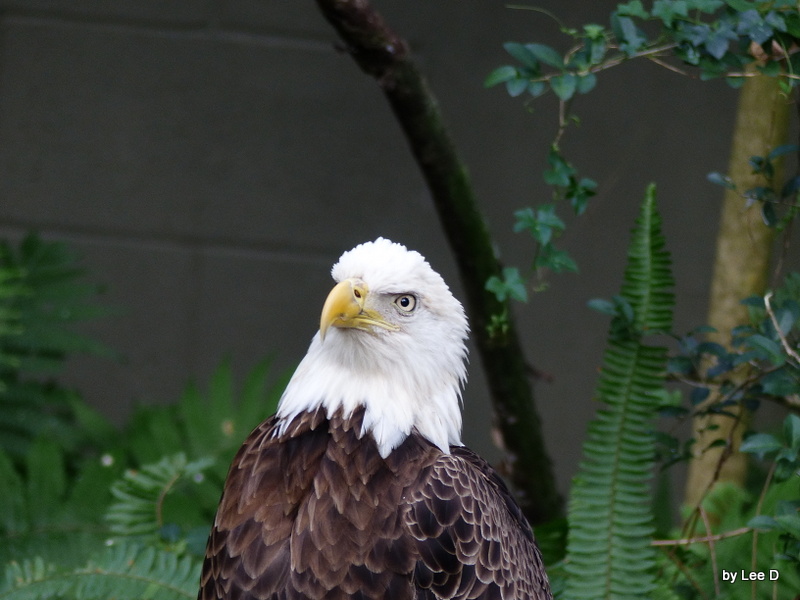
Bald Eagle Lowry Park Zoo 12-31-15 by Lee

The everlasting God, the LORD, The Creator of the ends of the earth, Neither faints nor is weary. His understanding is unsearchable.

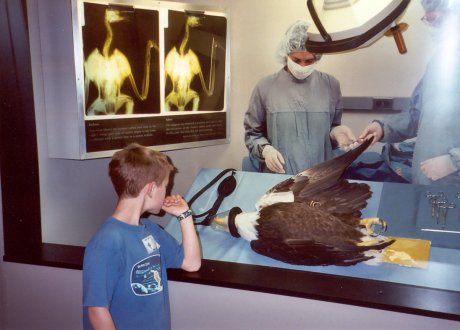
Eye Surgery on an Eagle ©phillipdthomas

He gives power to the weak, And to those who have no might He increases strength.

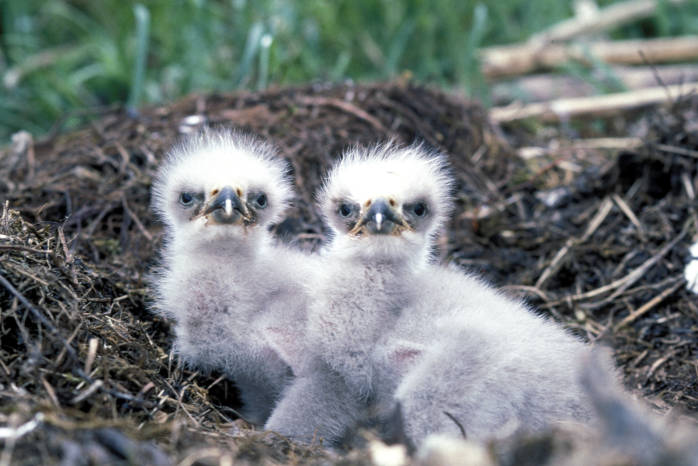
Bald Eagle (Haliaeetus leucocephalus) chicks ©USFWS

Even the youths shall faint and be weary, And the young men shall utterly fall,”

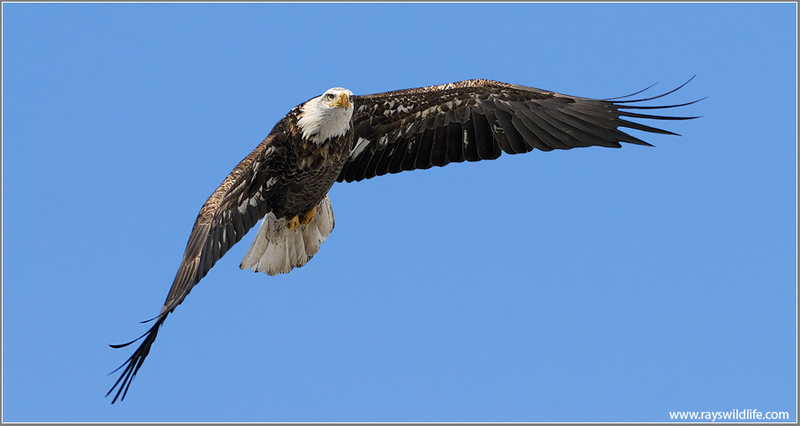
Bald Eagle (Haliaeetus leucocephalus) by Ray

Bald Eagle (Haliaeetus leucocephalus) by Ray

But those who wait on the LORD Shall renew their strength; They shall mount up with wings like eagles, They shall run and not be weary, They shall walk and not faint.” (Isaiah 40:28-31 NKJV)

Sparrow Frozen To A Fence – DoDo

Another interesting video from “the dodo” channel.

“Bird Frozen To Metal Fence Rescued by Kind Man | This little bird landed on a fence that was so cold, his feet froze to it and he couldn’t fly away. But luckily the nicest guy came along and knew exactly what to do.”

Not sure if this bird prayed like this, but it would apply to us if we were in such a predicament as this.

“Be pleased, O LORD, to deliver me: O LORD, make haste to help me.” (Psalms 40:13 KJV)

P.S. This wouldn’t happen here in Central Florida. :)

See more from “the dodo” channel.

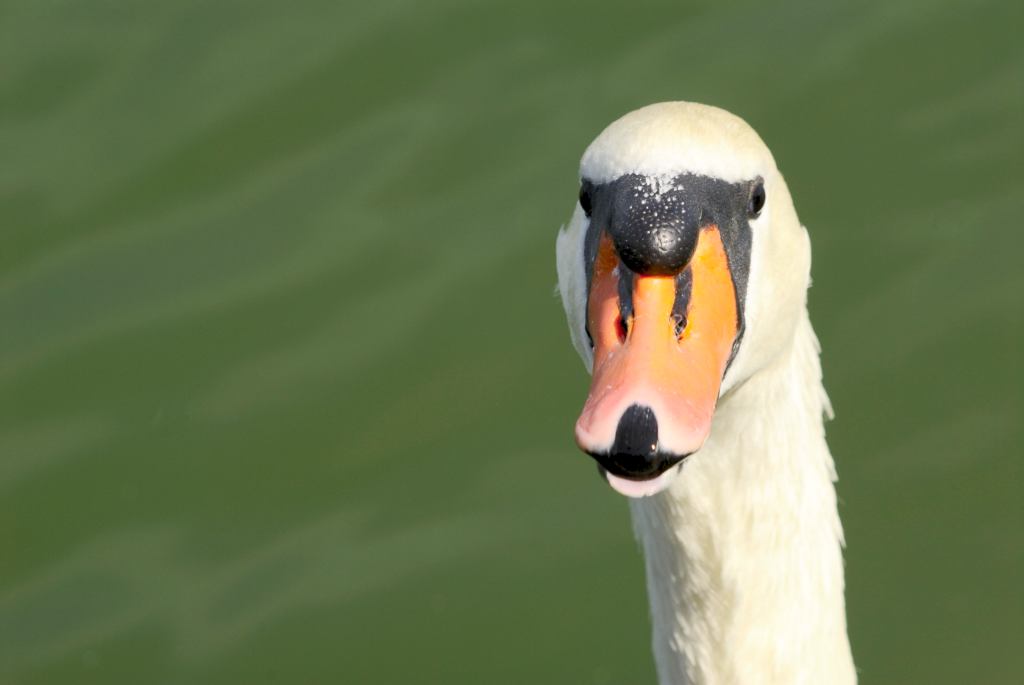
Mute Swans – From AviBirds

Mark, from AviBirds, has given us the privledge of viewing the various videos that they produce. Here is the one about the Mute Swan (Cygnus Olor).

We are fortunate to see the Mute on several of the Lakes over in Lakeland, Florida. Plus, other places around here, but we have birded Lake Morton and Lake Hollingsworth many times over the years. Here are a few of those sightings:

Why you looking at my foot – Mute Swan at Lake Morton

Mute Swan (Cygnus olor) (close up) at Lake Morton, Lakeland, FL By Dan’sPix

Mute Swan on Nest at Lake Morton

Mute Swan on Nest at Lake Morton by Dan

“And the swan, and the pelican, and the gier eagle,” (Leviticus 11:18 KJV) From the “Do Not Eat List”

Stop by AviBirds for all of their videos, or stay tuned for more postings here.

Birds of the Bible – Swans

Good News

Ducks “Social Distancing”

Black-bellied Whistling Ducks by Lee 3-15-20

Recently we were visited by a small flock of Black-bellied Whistling Ducks. Not sure who told them to “Social Distance,” but they seem to be doing it.

A few years ago, we were at the shore where these birds were not practicing this. Then again, who had ever heard of “Social Distancing” until recently?

Crowded Shore at MacDill by Lee

These shorebirds definitely are NOT “Social Distanced.” We are trusting and praying that you are staying safe and finding things to do while staying home. Check the links along the sides of this page. There are many things and birds you can read about.

Remember that the Lord never wants us to “Social distance” from Him.

“But it is good for me to draw near to God; I have put my trust in the Lord GOD, That I may declare all Your works.” (Psalms 73:28 NKJV)

Spend some of your time at home checking out these topics:

Indecisive Black-bellied Whistling-Ducks

Bible Birds – Whistling Ducks

Bible Birds

Scriptural Alphabet

Watching Birds

Golden Eagle

Bird Tales

Orni-Theology

Wordless Birds