Ian’s Bird of the Week – Princess Parrot – Reworked

Ian’s Bird of the Week – Princess Parrot ~ by Ian Montgomery
Newsletter ~ 10/1/15

Lee’s Update:  Not sure what happened because I was seeing it okay on PC and smartphone. Anyway, it is now back to the way I normally add the photos back in.

A late bird of the week I regret, but I’ve been planning and designing a major overhaul to the website to the exclusion of almost everything else. The website is showing its age as I designed it in a pre-smart phone and pre-tablet era – seems like a long time ago now – for fixed, landscape screens. About 30% of the birdway website traffic comes from such devices now, so it’s an issue I can no longer ignore. Anyway, I’ll say a bit more about that later and provide an example of the new layout.

The other revision taking place is that until now I’ve only included my own photos, so Birdway has been synonymous with Ian Montgomery. The rationale was that it was a showcase for my work – some would say a monument to my ego, smile. Maybe I’m satisfied at having reached 1500 species globally and 700 Australian ones so it’s time to change. Birdway will now aim to provide the best range of publishable quality bird photos. Initially the emphasis will be on Australian ones, but later I may extend this to Australasian one. For manageability, I’m starting by invitation only but feel free to register your interest by email ian@birdway.com.au.

So, here is a landmark bird of the week: these lovely photos of the gorgeous and elusive Princess Parrot were taken by my friend Jenny Spry, a birder and photographer well-known in Australian birding circles. She leaves no stone unturned and no bush or remote island unchecked in a passionate search for the unusual and has one of the longest Australian life lists (aiming for 800!).Princess Parrot (Polytelis alexandrae) by Jenny Spry The Princess Parrot is elusive for at least two reason. The first is that it’s a bird of very remote parts of arid Australia accessible only with considerable difficulty, e.g. the Canning Stock Route. The other is that its population and range varies greatly with rainfall. In poor seasons it is almost impossible to find, but in good season the population irrupts and it can appear in more accessible locations, perhaps I should say slightly less inaccessible ones, in inland eastern Western Australia, the southwestern Northern Territory and northwestern South Australia. The core breeding range is thought to be around Tobin Lake and in the Great Victoria Desert, both in eastern Western Australia.
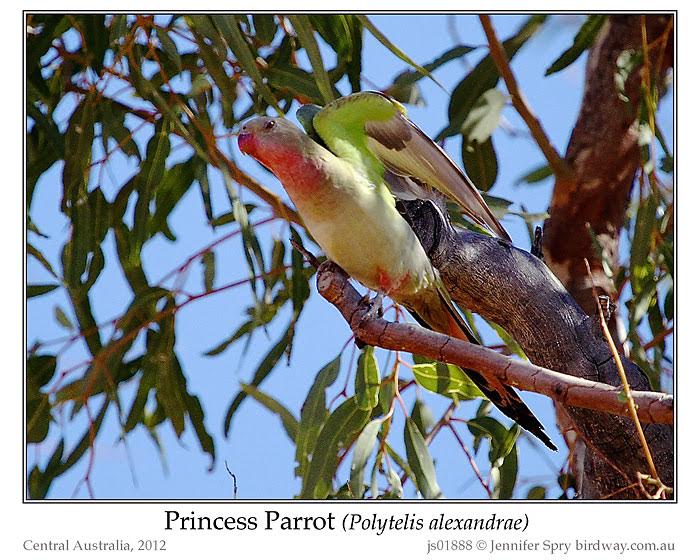
Princess Parrot (Polytelis alexandrae) by Jenny Spry It is one of three beautiful, long-tailed, medium sized (length 34-46cm/13-18in) parrots belonging to the endemic Australian genus. Polytelis. The others are the Superb Parrot of New South Wales and northern Victoria and the Regent Parrot  which occurs in two separate populations, one in southwestern New South Wales, northeastern Victoria and eastern South Australia and the other in southern Western Australia. All three species are uncommon: the Princess is classed as Near-Threatenedand the Superb as Vulnerable, while the Regent is uncommon in the east and declining in the west. Male Princess Parrots, first two photos, have longer tails and brighter colours than females (third photo).

Princess Parrot (Polytelis alexandrae) © Jenny Spry

Princess Parrot (Polytelis alexandrae) © Jenny Spry

Returning to the subject of website design in a mobile world, I’ve used the Princess Parrot as the first species in the new design and it was posted to the birdway website this morning. The changes will be more obvious on smart phones and tablets, but on computers you’ll notice that the thumbnails have moved from a vertical column on the left to a horizontal row on the bottom and the information about the photo has moved from left to right. You’ll also see a button at top right which reveals – and hides – the main navigation menu as vertical column which slides the rest of the page to the right. Previous, this menu didn’t appear on the pages of individual species, only – as a row of horizontal buttons at the top – on the family pages and the ten main topic pages to which these button link.
Princess Parrot (Polytelis alexandrae) by IanThe fourth and fifth images are screen shots from my iPhone. The fourth shows a page in landscape orientation. The image shrinks to fit the screen width and you can see the rest of the page by scrolling up and down. Note that the photo information is still on the left. The fifth, shows the page in vertical orientation with the navigation menu showing as a grey column on the left. The photo information has dropped below the image and both the menu column and the main window are scrollable independently.
Princess Parrot (Polytelis alexandrae) by Ian
These pages are, of course, still prototypes and there will be more changes before I apply it more generally. I’ve tested it only using the Apple browser Safari on a Mac, an iPad and an iPhone. I’d be very grateful if you could try it out on different platforms (Windows and Android particularly) and in different browsers (Safari, Windows Explorer, Chrome, Opera, Firefox and Mozilla are the most important) and report back to me with any problems: http://birdway.com.au/psittacidae/princess_parrot/index.htm.

I’ve needed to use JavaScript to show and hide the side menu, so you won’t be able to see if yet if JavaScript isn’t available. If it isn’t you’ll get a message in orange instead of the script generated ian@birdway.com.au email address to tell you that and to write to ‘ian’ (at symbol) ‘birdway.com.au’ instead. I will be adding code so that the side menu is permanently visible if JavaScript isn’t enabled, but it is something of an internet standard these day and I want to be able to hide it to make more space available on small screens.

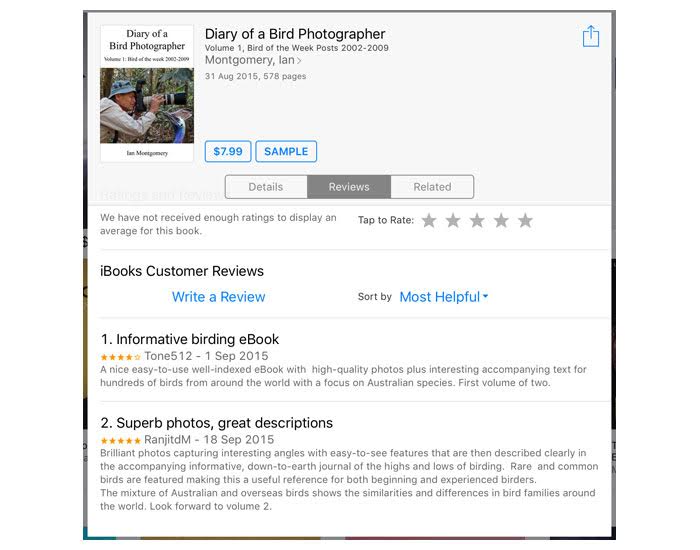
On the subject of books, the Diary of a Bird Photographer has sold about 50 copies in the first month, and review are beginning to appear (below on the Apple store) I’m hugely grateful to those who have done reviews and would love it if some of you would. I think there were problems posting review to the Apple store, but these seem to have been fixed. If that is your experience let me know ian@birdway.com.au and if your very patient, try again. Thank you.
Princess Parrot (Polytelis alexandrae) by Ian
These images should link to the relevant pages on the Birdway site.
Ian's Book

Ian’s Book

Where To Find Birds - Ian

Greetings
Ian
**************************************************

Ian Montgomery, Birdway Pty Ltd,
454 Forestry Road, Bluewater, Qld 4818
Tel 0411 602 737 ian@birdway.com.au
Bird Photos http://www.birdway.com.au/
Where to Find Birds in Northern Queensland: iTunes; Google Play Kobo Books
Recorder Society http://www.nqrs.org.au
*******************************


Lee’s Addition:

And he said unto them, Come ye yourselves apart into a desert place, and rest a while: for there were many coming and going, and they had no leisure so much as to eat. (Mark 6:31 KJV)

Very interesting Parrot and apparently quite a change to Ian’s Site at Birdway. I’ll be checking on permission for further usage of his guest photographer. For now, I trust using this latest newsletter of his is under his permission to use.

What a beauty this parrot reveals. Subtle in colors, but very attractive.

See:

Ian’s Bird of the Week
Ian’s Birdway Website
His Parrot Family
Psittacidae – African and New World Parrots
Psittaculidae – Old World Parrots

*
Birds of the Bible – Lazuli Birds

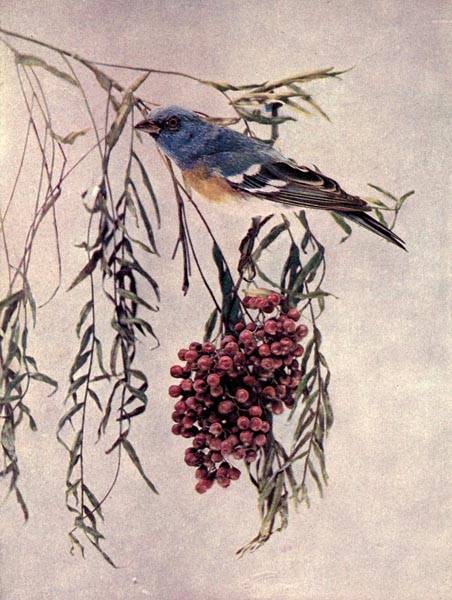
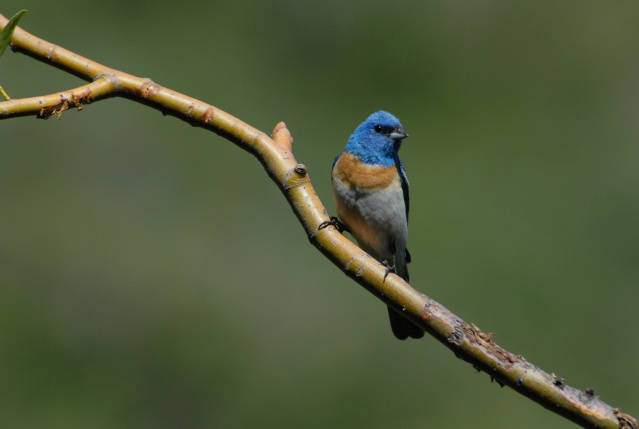
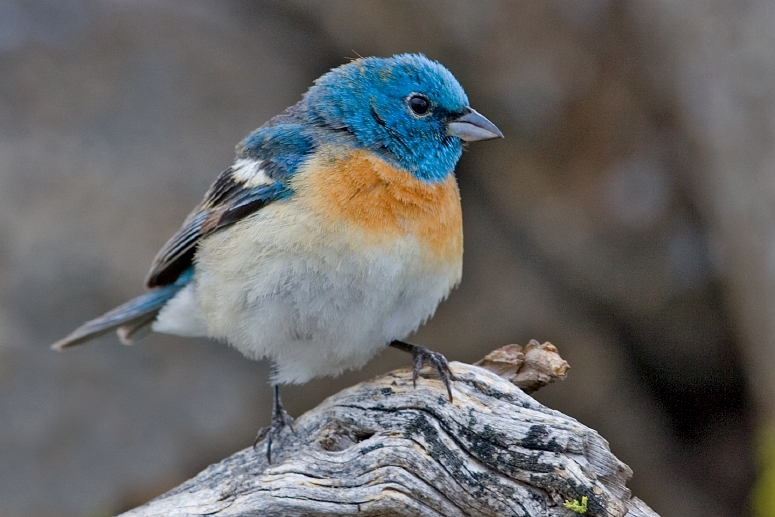
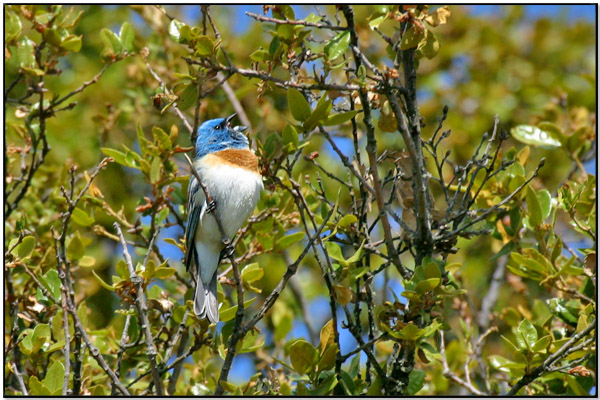
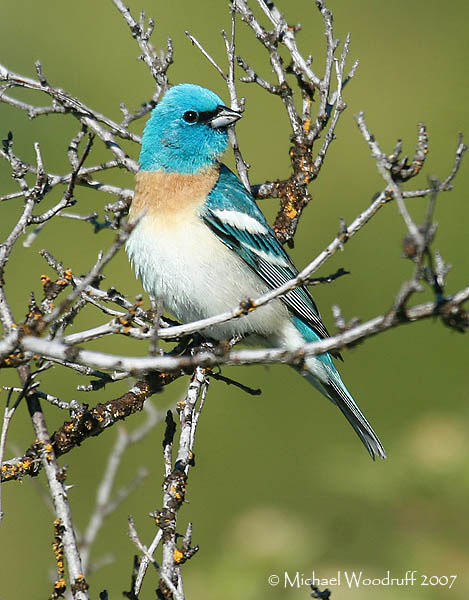
Lazuli Bunting (Passerina amoena) by Michael Woodruff

Lazuli Bunting (Passerina amoena) by Michael Woodruff

While reading through Lamentations, I came across this verse:

Her consecrated ones were purer than snow, They were whiter than milk; They were more ruddy in body than corals, Their polishing was like lapis lazuli. (Lamentations 4:7 NASB)

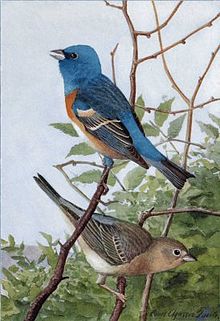
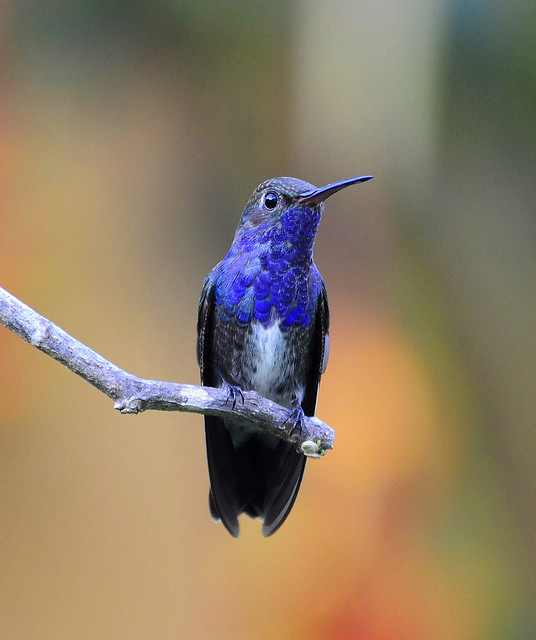
I immediately thought of the bird above – the Lazuli Bunting. Working with the Birds of the World, the name “Lazuli” has been seen before, so this is an attempt to find out what it really means and which birds have that color. Let’s dig around and see what we can find out.

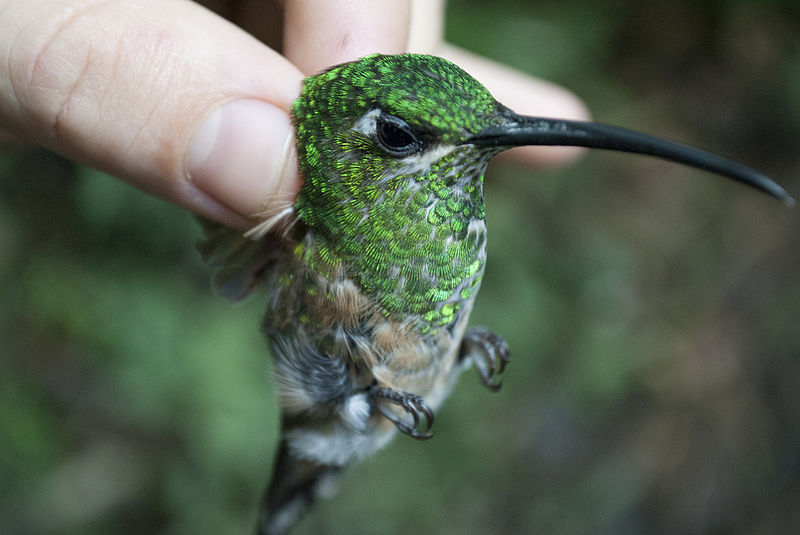
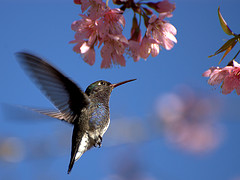
Lazuline Sabrewing (Campylopterus falcatus) ©WikiC

Lazuline Sabrewing (Campylopterus falcatus) ©WikiC

The NASB has two more verses that use “lazuli”: Ezekial 1:26 and 28:13. All three use lapis with the lazuli. Checking with my eSword program in the compare mode most of the translations use “Sapphire.” and some use the lapis lazuli. They all refer to a very well polished and cut stone of the sapphire or lazuli color.

Polished Block of Lapis Lazuli from Afghanistan ©WikiC

Polished Block of Lapis Lazuli from Afghanistan ©WikiC

Lazuli
Lazuline Sabrewing (Campylopterus falcatus)
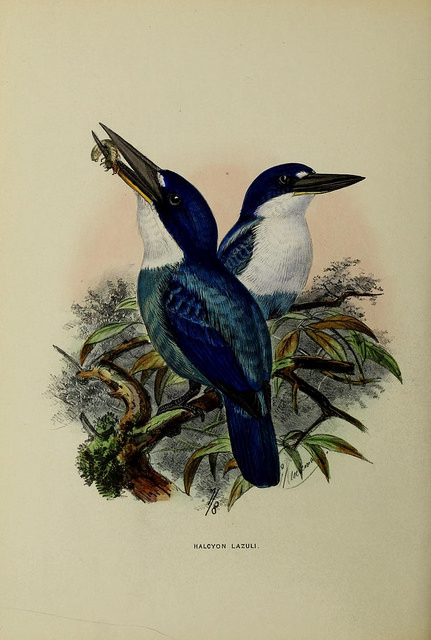
Lazuli Kingfisher (Todiramphus lazuli)
Lazuli Bunting (Passerina amoena)

Sapphire Gem ©WikiC

Sapphire Gem ©WikiC

Sapphire
Blue-chinned Sapphire (Chlorestes notata)
Sapphire-throated Hummingbird (Lepidopyga coeruleogularis)
Sapphire-bellied Hummingbird (Lepidopyga lilliae)
Blue-throated Sapphire (Hylocharis eliciae)
Rufous-throated Sapphire (Hylocharis sapphirina)
White-chinned Sapphire (Hylocharis cyanus)
Gilded Sapphire (Hylocharis chrysura)
Blue-headed Sapphire (Hylocharis grayi)
Humboldt’s Sapphire (Hylocharis humboldtii)
Golden-tailed Sapphire (Chrysuronia oenone)
Sapphire-spangled Emerald (Amazilia lactea)
Great Sapphirewing (Pterophanes cyanopterus)
Sapphire-vented Puffleg (Eriocnemis luciani)
Sapphire-rumped Parrotlet (Touit purpuratus)
Sapphire Flycatcher (Ficedula sapphira)
Sapphire Quail-Dove (Geotrygon saphirina)

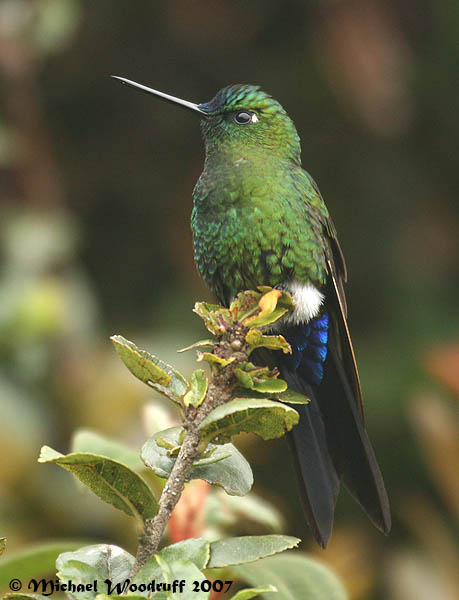
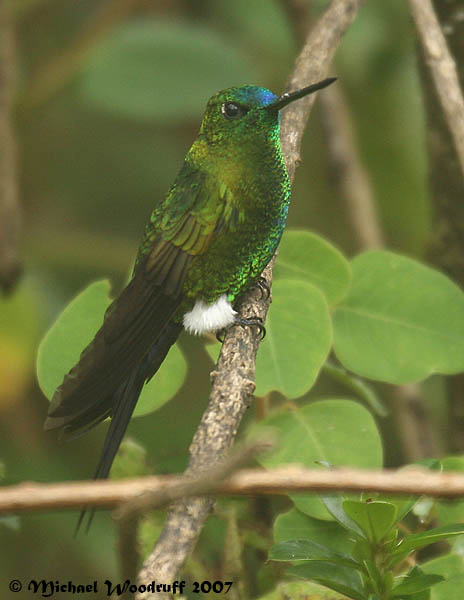
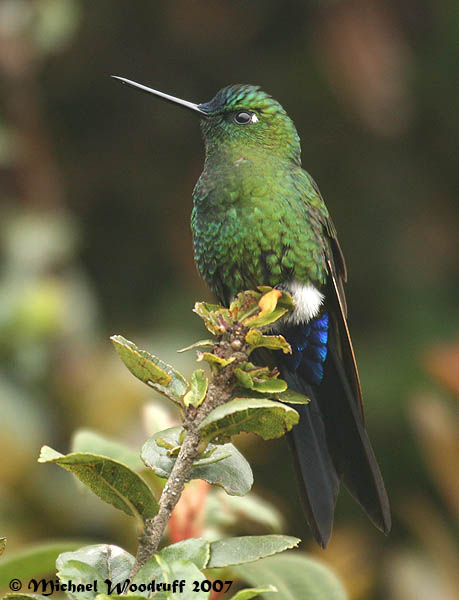
Sapphire-vented Puffleg (Eriocnemis luciani) by Michael Woodruff

Sapphire-vented Puffleg (Eriocnemis luciani) by Michael Woodruff

What an amazing colection of birds with a beautiful color that the Lord has given us. Not only did we get that fantastic color in stones from the Creator, but He used that color for His avian beauties also.


*

Hope you enjoy seeing these beautiful birds. The Bibles verses didn’t really have anything to do with birds. The verse is actually about the destruction of Jerusalem and how those that had been so well dressed in various colors were now appearing blacker than soot (Lam 4:8) because of their sin which had caused the destruction. Jeremiah, the weeping prophet, was describing what had been and what they were seeing now.

We also will face judgment one day, for either rejection of the Lord Jesus Christ, at the Great White Throne judgment or for those that have accepted Him as Lord and Savior at the Judgment Seat of Christ.

“For God so loved the world, that He gave His only begotten Son, that whoever believes in Him shall not perish, but have eternal life. “For God did not send the Son into the world to judge the world, but that the world might be saved through Him. “He who believes in Him is not judged; he who does not believe has been judged already, because he has not believed in the name of the only begotten Son of God. “This is the judgment, that the Light has come into the world, and men loved the darkness rather than the Light, for their deeds were evil. “For everyone who does evil hates the Light, and does not come to the Light for fear that his deeds will be exposed. “But he who practices the truth comes to the Light, so that his deeds may be manifested as having been wrought in God.” (John 3:16-21 NASB)

Birds of the Bible

Torrey’s Topical Textbook – Precious Stones

The Gospel

*

Sunday Inspiration – Worthy The Lamb

Chestnut-backed Scimitar Babbler (Pomatorhinus montanus) ©WikiC

Chestnut-backed Scimitar Babbler (Pomatorhinus montanus) ©WikiC

Wherefore, holy brethren, partakers of the heavenly calling, consider the Apostle and High Priest of our profession, Christ Jesus; Who was faithful to him that appointed him, as also Moses was faithful in all his house. For this man was counted worthy of more glory than Moses, inasmuch as he who hath builded the house hath more honour than the house. For every house is builded by some man; but he that built all things is God. (Hebrews 3:1-4 KJV)

Looks like this week you’ll be introduced to three families of avian wonders. I am skipping over the Cisticolidae – Cisticolas and allies until next week, because it is quite large. This week the Black-capped Donacobius (Donacobiidae), only bird in family; the Malagasy Warblers (Bernienidae) with 11 species; and the Babblers, Scimitar Barbler’s of the Timaliidae Family of 55 should give us enough birds for a slideshow.

Black-capped Donacobius (Donacobius atricapilla) ©©

Black-capped Donacobius (Donacobius atricapilla) ©©

The Black-capped Donacobius (Donacobius atricapilla) is a conspicuous, vocal South American bird. It is found in tropical swamps and wetlands in Argentina, Bolivia, Brazil, Colombia, Ecuador, French Guiana, Guyana, Paraguay, Peru, Suriname, and Venezuela; also Panama of Central America. They are common in a wide range of Amazonian wetlands, including oxbow lakes, riparian zones, and other areas with tall dense aquatic or semi-aquatic vegetation.

Mating for life, pairs of Black-capped Donacobiuses can be seen frequently and throughout the day atop thickets of dense lakeside or streamside vegetation. They often will engage in antiphonic dueting. Adult offspring will remain with their parents and help raise siblings from subsequent nesting periods in a system of cooperative breeding. (Wikipedia)

Long-billed Bernieria (Bernieria madagascariensis) WikiC

Long-billed Bernieria (Bernieria madagascariensis) WikiC

The Malagasy warblers are a newly validated clade of songbirds. They were formally named Bernieridae in 2010. The family consists of 11 species of small forest birds and is endemic to Madagascar. (Wikipedia)

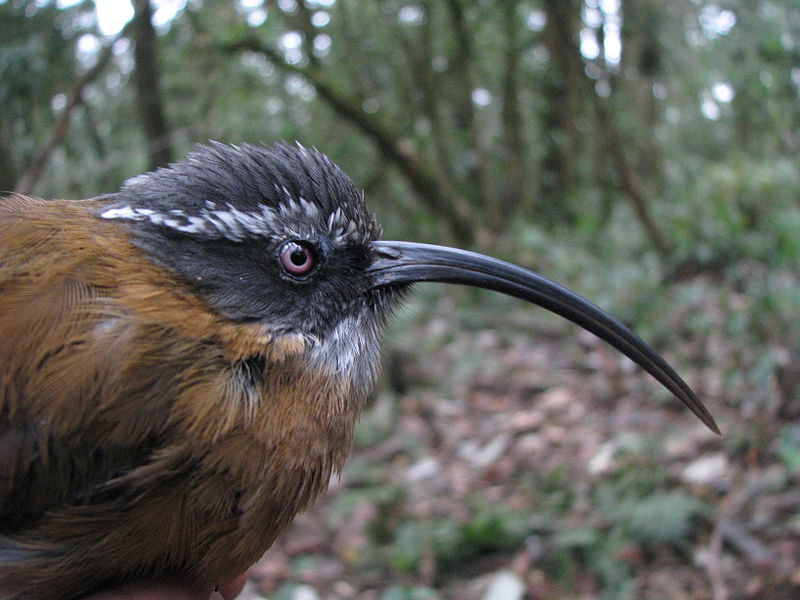
Slender-billed Scimitar Babbler (Pomatorhinus superciliaris) ©WikiC

Slender-billed Scimitar Babbler (Pomatorhinus superciliaris) ©WikiC

Our last family has Scimitar Babblers and some of the various Babblers.

The genus Pomatorhinus of scimitar babblers are jungle birds with long downcurved bills. These are birds of tropical Asia, with the greatest number of species occurring in hills of the Himalayas. They are medium-sized, floppy-tailed landbirds with soft plumage. They are typically long-tailed, dark brown above, and white or orange-brown below. Many have striking head patterns, with a broad black band through the eye, bordered with white above and below.

Spelaeorni genus the typical wren-babblers, is a bird genus in the family Timaliidae. Among this group, the typical wren-babblers are quite closely related to the type species, the chestnut-capped babbler (Timalia pileata). Typical babblers live in communities of around a dozen birds, jointly defending a territory. Many even breed communally, with a dominant pair building a nest, and the remainder helping to defend and rear their young. Young males remain with the group, while females move away to find a new group, and thus avoid inbreeding. They make nests from twigs, and hide them in dense vegetation. (Info from Wikipedia)

This slideshow requires JavaScript.

Saying with a loud voice, Worthy is the Lamb that was slain to receive power, and riches, and wisdom, and strength, and honour, and glory, and blessing. (Revelation 5:12 KJV)

“Worthy The Lamb” ~ Choir at Faith Baptist Church

*

More Sunday Inspirations

Donacobiidae – Black-capped Donacobius

Bernieridae – Malagasy Warblers

Timaliidae – Babblers, Scimitar Babblers

Gospel Presentation

*

“SUPERB,” “SPLENDID” AND “LOVELY” – Re-post Plus

“SUPERB,” “SPLENDID” AND “LOVELY”

“I know all the fowls of the mountains: and the wild beasts of the field are mine.” Psalm 50:11

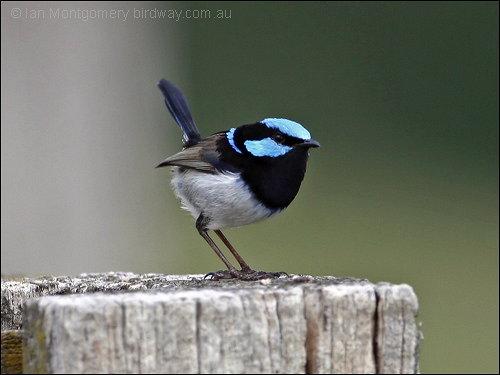
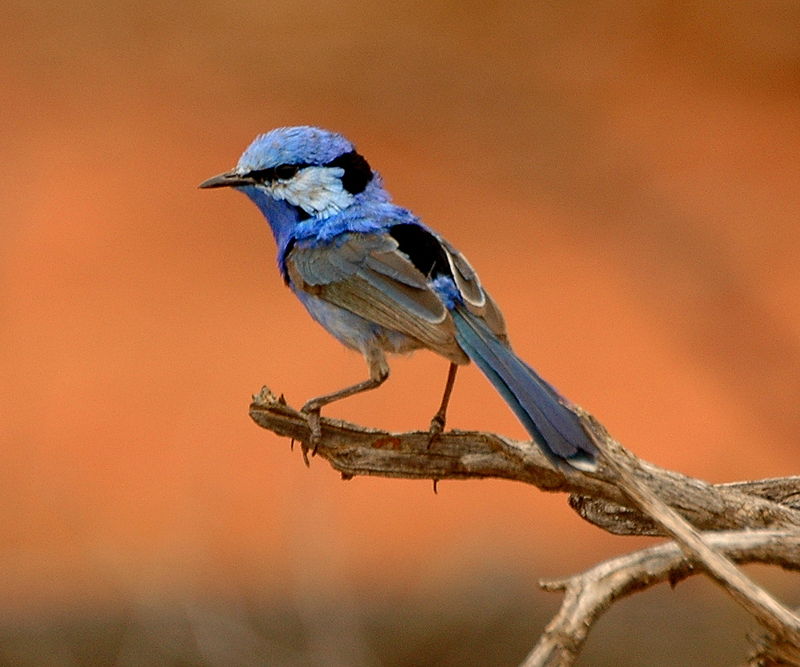
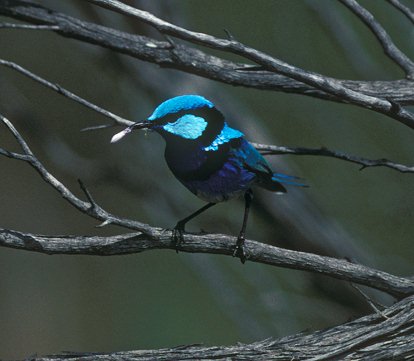
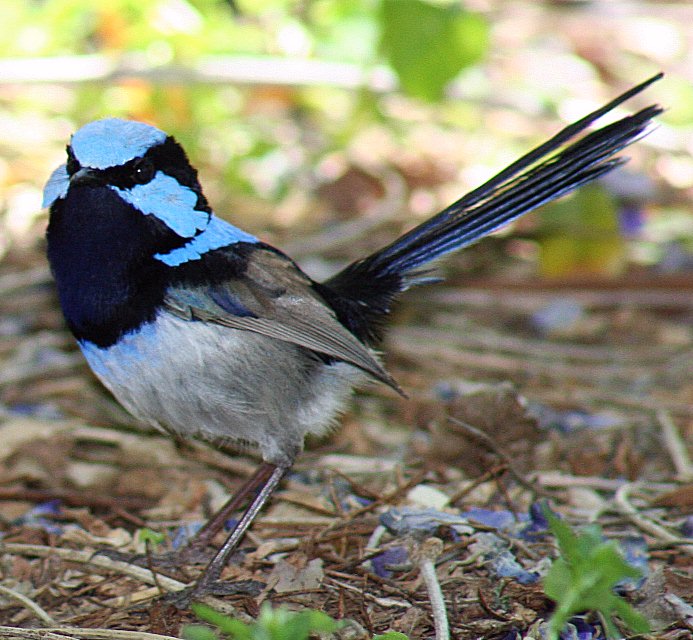
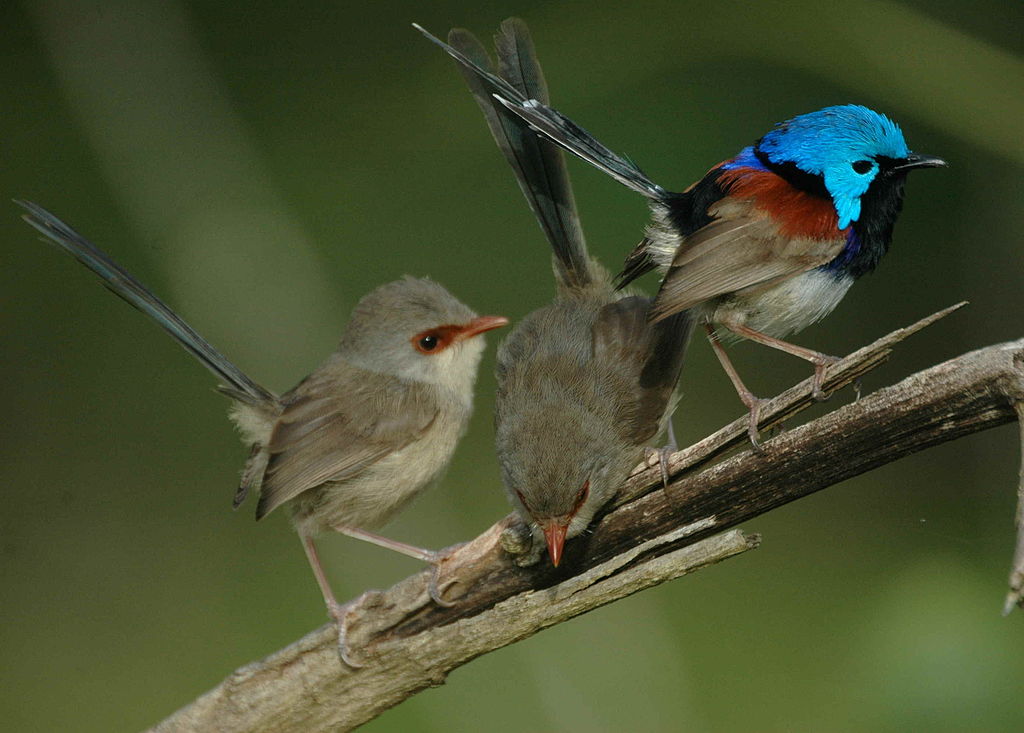
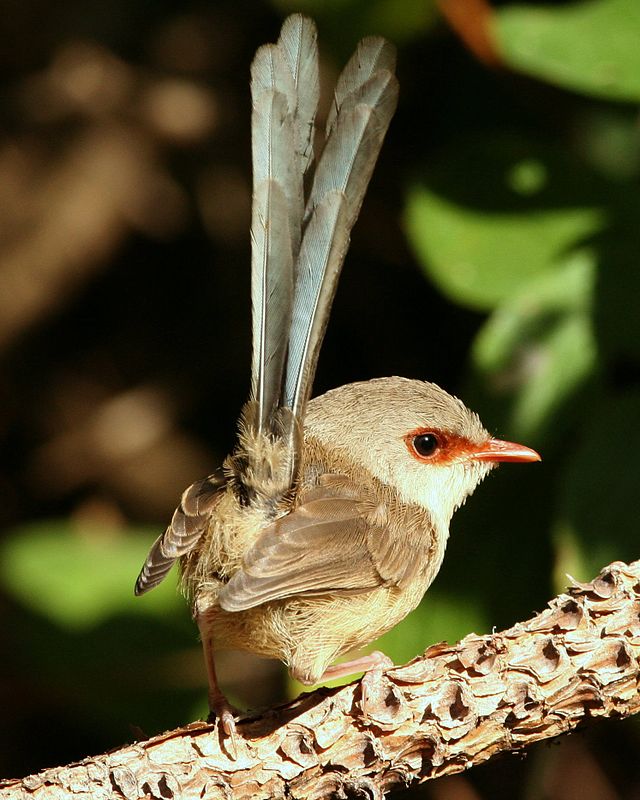
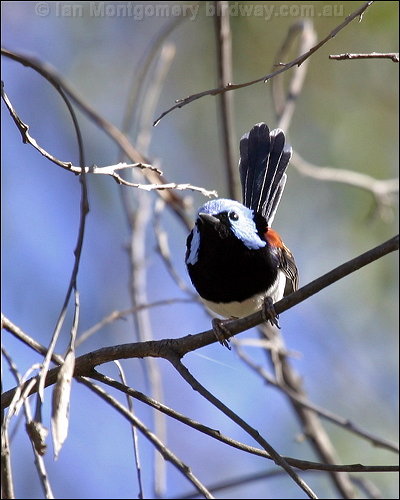
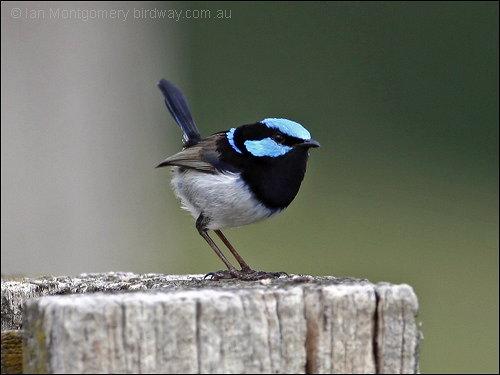
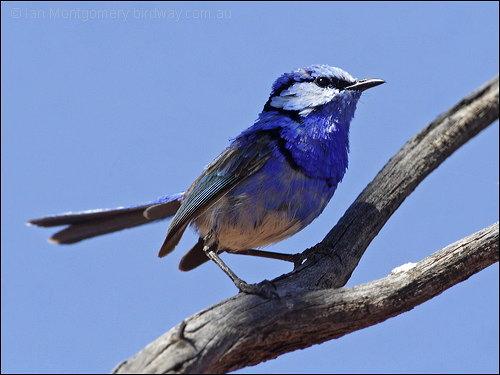
There are 13 species of a brightly plumed little songbird known as the fairy wren. The birds are found in Australia and New Guinea. So colorful are their feathers that the various species go by names like “superb,” “splendid” and “lovely.” However, even more noteworthy is the birds’ unusual behavior.

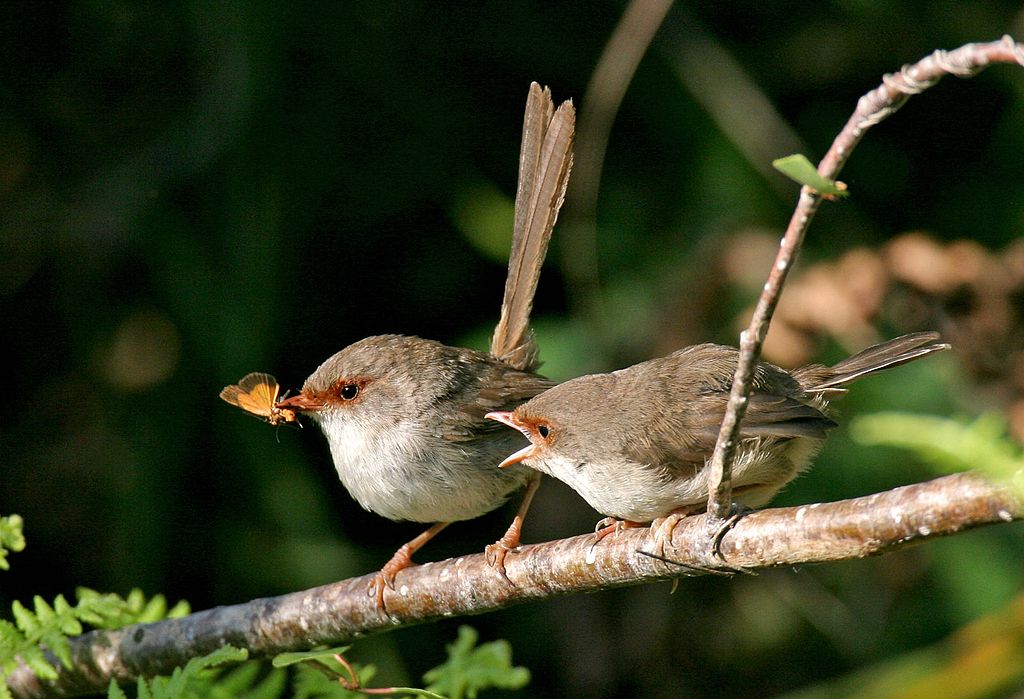
Superb Fairy-wren (Malurus cyaneus) by Ian

Superb Fairywren (Malurus cyaneus) by Ian

A male courting a female will bring her a flower petal. The petal usually matches his color or is a deeply contrasting color. Normally a perky little bird with an upright tail, when courting he lowers his tail and creeps around close to the ground. As he twists his body back and forth, he puffs out his cheek feathers. If the female accepts his courting, she builds their nest alone, lining it with bright parrot feathers. While they mate for life, they are not known for fidelity to their mates.

Superb Fairy-wren (Malurus cyaneus) Juvenile and Female ©WikiC

Superb Fairywren (Malurus cyaneus) Juvenile and Female ©WikiC

When mature, females will go off on their own, but males may stay with their parents for a year or more. Their main duty is to guard the family nest. If danger approaches the nest, the guard will puff up his wings, lower his tail and scuttle through dry grass, pretending to be a mouse. The idea is to lure the predator away from the nest.

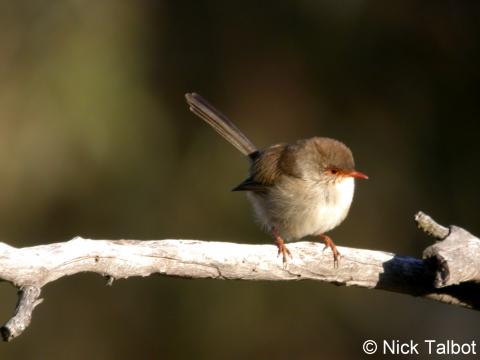
Superb Fairy-wren (Malurus cyaneus) Female by Nick Talbot

Superb Fairywren (Malurus cyaneus) Female by Nick Talbot

The beauty and unusual behavior of these little birds testifies to more than God’s creativity and love for beauty. They remind us of the beauty that was lost to God’s creation when it was tainted by man’s sin. Thankfully, some of that beauty that was lost can return to our lives through the forgiveness of sins that is found in Jesus Christ.

Prayer:
Dear Father, I thank You for the beauty of Your creation and for giving me the forgiveness of sins in Jesus Christ. Amen.

Notes:
Natural History, 11/94, pp. 56 62, “Faithful Philanderers.” Photo: Superb blue fairy-wren. Courtesy of Benjamint444. (CC-BY-SA 3.0)
©Creation Moments 2015 used with Permission


Lee’s Addition:
Here are some more photos of the Fairywrens from their Creator:


*
Creation Moments
“Superb, Splendid and Lovely”
Interesting Things
Fairywren Family
Wordless Birds
*
Sunday Inspiration – Grassbirds And Allies

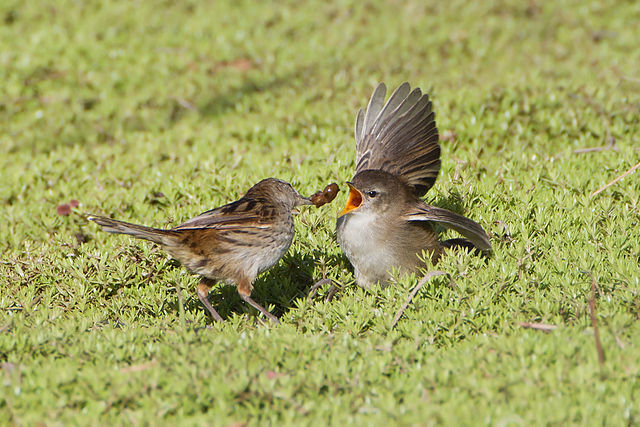
Little Grassbird (Megalurus gramineus) Adult Feeding Juvenile©WikiC

Little Grassbird (Megalurus gramineus) Adult Feeding Juvenile ©WikiC

The grass withers, the flower fades, but the word of our God will stand forever. (Isaiah 40:8 ESV)

The Lord Jesus Christ created another neat group (family) of birds that includes Grassbirds, Bush Warblers, Thicketbirds and other various warbler sized birds. There is even an Emutail.

Grey Emutail (Amphilais seebohmi) ©WikiC

Grey Emutail (Amphilais seebohmi) ©WikiC

Locustellidae is a newly recognized family of small insectivorous songbirds (“warblers”), formerly placed in the Old World warbler “wastebin” family. It contains the grass warblers, grassbirds, and the Bradypterus “bush warblers”. These birds occur mainly in Eurasia, Africa, and the Australian region. The family name is sometimes given as Megaluridae, but Locustellidae has priority.

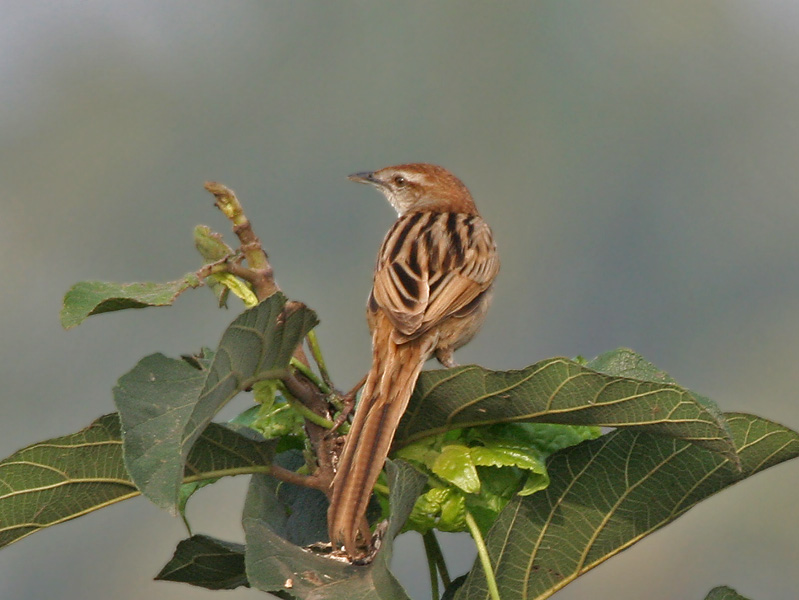
Striated Grassbird (Megalurus palustris) ©WikiC

Striated Grassbird (Megalurus palustris) ©WikiC

The species are smallish birds with tails that are usually long and pointed; the scientific name of the genus Megalurus in fact means “the large-tailed one” in plain English. They are less wren-like than the typical shrub-warblers (Cettia) but like these drab brownish or buffy all over. They tend to be larger and slimmer than Cettia though, and many have bold dark streaks on wings and/or underside. Most live in scrubland and frequently hunt food by clambering through thick tangled growth or pursuing it on the ground; they are perhaps the most terrestrial of the “warblers”. Very unusual for Passeriformes, some are becoming flightless in some taxa.

Among the “warbler and babbler” superfamily Sylvioidea, the Locustellidae are closest to the Malagasy warblers, another newly recognized (and hitherto unnamed) family; the black-capped donacobius (Donacobius atricapillus) is an American relative derived from the same ancestral stock and not a wren as was long believed. (Wikipedia with editing)

Then God said, “Let the earth bring forth grass, the herb that yields seed, and the fruit tree that yields fruit according to its kind, whose seed is in itself, on the earth”; and it was so. And the earth brought forth grass, the herb that yields seed according to its kind, and the tree that yields fruit, whose seed is in itself according to its kind. And God saw that it was good. (Genesis 1:11-12 NKJV)

You can see most of the Family as you listen to the music below the slideshow.

This slideshow requires JavaScript.

“The Church’s One Foundation” ~ Megan Fee, Cody Hancock & Dakota Hancock ~ at Faith Baptist

For we are labourers together with God: ye are God’s husbandry, ye are God’s building. According to the grace of God which is given unto me, as a wise masterbuilder, I have laid the foundation, and another buildeth thereon. But let every man take heed how he buildeth thereupon. For other foundation can no man lay than that is laid, which is Jesus Christ. (1 Corinthians 3:9-11 KJV)

*
Locustellidae – Grassbirds and Allies Family

Locustellidae – Wikipedia

Gospel Message

*

The Autobiography of a Duck

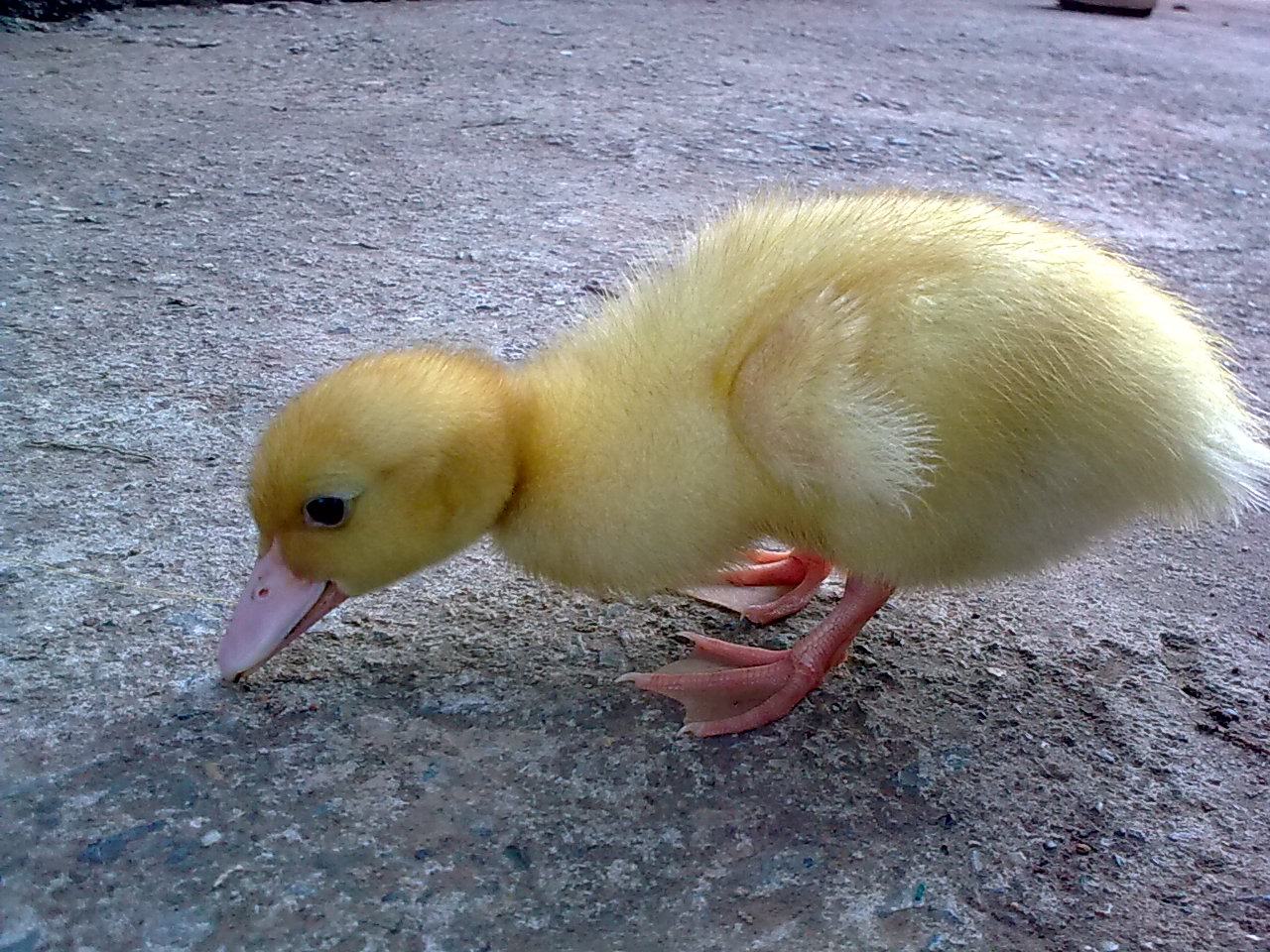
Pecking duckling ©WikiC

Pecking duckling ©WikiC

THE AUTOBIOGRAPHY OF A DUCK.
FOUNDED UPON FACT.

“How queer, my child! what a long, broad mouth you have, and what peculiar feet!”

It was my mother, a big brown hen, who spoke. I had stepped from my egg, only a short while before, and as I was the only one hatched out of the whole thirteen, my poor mother was greatly disappointed.

Now, to add to her troubles, there seemed to be something very peculiar about my appearance.

“Yes,” she went on still watching me critically, “I have raised many families, but never a chick like you. Well! well! don’t cry about it. Your yellow dress is very pretty. It doesn’t pay to be too sensitive, as you will find, I am afraid, when you have lived with these chickens. Some of them are dreadfully trying. Dear! dear! how stiff I am! This setting is tiresome work.”

“I wonder what sort of home we are going to have.”

Our home, into which we moved a few hours later, proved to be an upturned soap box. Seven little chickens were there before us.

“The same old story,” said my mother with a knowing air. “People imagine we hens have no sense. I did not hatch those chickens, but I am expected to care for them, as though I did. Some mothers would peck them so they would be glad to stay away.”

She had too good a heart for this, however, and I was very glad to have these brothers and sisters.

Chick ©PD

Chick ©PD

They were different from me, though, in many ways, principally, in their dislike for water. They hated even to get their feet wet, while I dearly loved to get in the pond, and swim around on its surface, or even dive down to the bottom, where such nice fat worms lived.

My poor mother never could understand my tastes. The first time she saw me on the water, she came rushing towards me, screaming and beating her wings.

“Oh, my child! my child!” she cried, with tears in her eyes. “You will drown! You will drown!”

I loved her, and so could not bear to see her distress. It was hard to be different from all the others.

I had a little yellow sister who was a great comfort to me at these times. I could never persuade her to try the water,—but she always sat upon the edge of the pond while I had my swim. We shared everything with each other; even our troubles.

About this time, my voice began to change. It had been a soft little “peep,” but now it grew so harsh, that some of the old hens made unpleasant remarks about it, and my mother was worried.

“It isn’t talking. It’s quacking,” said an old, brown-headed hen who was always complaining of her nerves.

She was very cross and spent most of her time standing on one leg in a corner and pecking any poor chicken that came in her reach.

“Don’t you know why it’s quacking?” asked a stately Buff Cochin who was a stranger in the yard; having arrived only that morning. “That child isn’t a chicken. She’s a duck.”

“What you giving us?” said a dandified Cock, who was busy pluming his feathers. “Whoever heard of a duck?”

“Not you, I daresay,” answered the Buff with a contemptuous sniff. “It’s easy to see you have never been away from this yard. I have traveled, I would have you understand, and I know a duck, too.”

“Well, I don’t care what you call her,” snapped the cross one. “I only hope she’ll keep her voice out of my hearing. The sound of it gives me nervous prostration.”

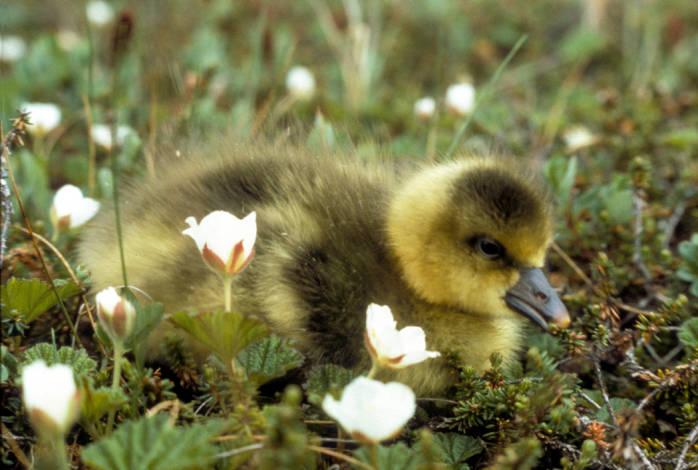
Greater White-fronted Goose (Anser albifrons) chick ©USFWS

Greater White-fronted Goose (Anser albifrons) chick ©USFWS

As for poor me,—I stole quietly away, and went up into a corner of the chicken house to cry. I was a duck, alas! and different from all about me. No wonder I was lonely.

My mother asked the cause of my trouble, and when I told her she looked sad and puzzled. “I don’t know what a duck is,” she sighed, “things have been strangely mixed. But cheer up. Whatever comes you are still my child.”

That was indeed a comfort to me. For never had chicken or duck a better mother.

There was consolation also, in what the kind old Buff Cochin told me.

I had nothing to be ashamed of, she said, for ducks were much esteemed by those who knew them.

From her this had more weight, for we all regarded the Buff Cochin as very superior. They were well born, and well bred, and had seen life in many places. Their husband, too, was a thorough gentleman.

However, he also was having his troubles now. He was losing his old feathers, and his new ones were long in coming. Consequently, his appearance was shabby, and he staid away from the hens.

Duck Drawing ©PD

Duck Drawing ©PD

Poor fellow, he looked quite forlorn, leaning up against a sunny corner of the barn, trying to keep warm. I believe he felt the loss of his tail feathers most for the young roosters who strutted by in their fine new coats, made sneering remarks about it.

I was very sorry for him, but my own troubles were getting to be as much as I could bear; for just when I needed a sympathetic mother she was taken from me and her place filled by a big, bare-headed hen as high tempered as she was homely.

“Raising a duck,” she said with a contemptuous sniff at me. “I never supposed I’d come to that. Well, I’ll keep you, but understand one thing, don’t go quacking around me, and don’t bring your wet and mud into the house. I’m not your other mother. My children don’t rule me. I won’t have that Mrs. Redbreast saying my house is dirty. There’s no standing that hen anyhow. I’ll give her my opinion if she puts on her airs around me. There’s too much mixture here. One can’t tell where breed begins or ends.”

It was not many days later, before my mother and Mrs. Redbreast came to words and then blows. The cause was only a worm, but it was enough. Mrs. Redbreast insisted that it was hers. My mother thought otherwise, and with a screech of defiance rushed upon her enemy. Dust and feathers flew. We children withdrew to a safe distance, and with necks stretched watched in fear and trembling.

The fight, though fierce, was short. Our mother was victorious, but she had lost the tail feathers of which she had been so proud, and I am sure she never forgave Mrs. Redbreast.

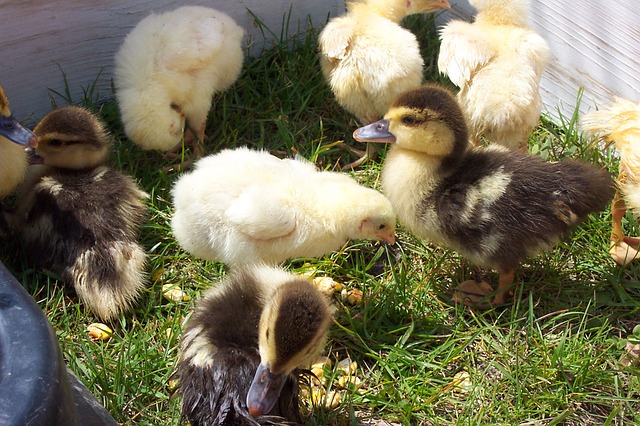
Chicks and Ducklings ©PD

Chicks and Ducklings ©PD

Like children, chickens and ducks grow older and bigger with the passing days.

In time we were taken from our mothers and put to roost with the older hens and cocks. I was not made to roost so I spent my nights alone in a corner of the chicken house.

It was quieter down there—for up above the chickens all fought for best place, and their cackling and fluttering was disturbing.

The old gentleman was very heavy. Not only was it hard for him to fly up to the roost, but equally hard for him to hold on when once there. Yet I could never persuade him to rest on the floor with me. Like his kind, he preferred the discomfort of sleeping on a pole—a taste I cannot understand.

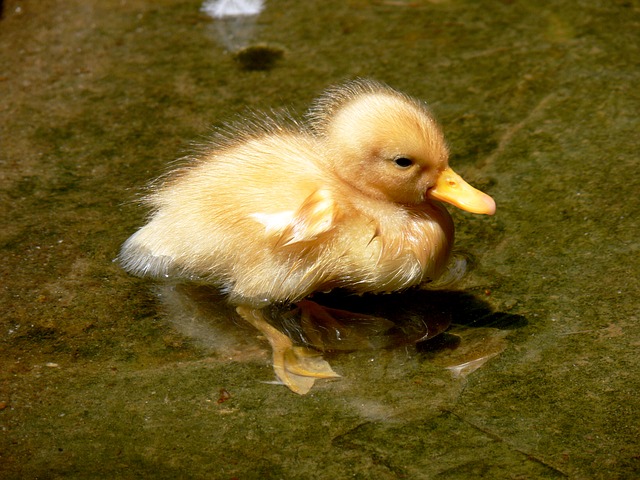
Three Ducklings ©WikiC

Three Ducklings ©WikiC

I was four months old before I saw one of my own kind. Then, one day three ducks were brought into the yard. They did not seem to mind being stared at, but fell to eating corn and talking among themselves.

“Horribly greedy,” said Mrs. Redbreast. “I for one don’t care to associate with them.”

“Now you know what you look like, old quacker,” snapped the cross hen, with a peck at me. “My poor nerves will suffer sadly now.”

These unkind remarks scarcely disturbed me, however. There was a new feeling stirring in my heart. I am afraid you will have to be a duck, and live a long time without other ducks, to understand it. Here were companions, whose natures and tastes were like mine, and I was content.

Louise Jamison.


Lee’s Addition:

A man that hath friends must shew himself friendly: and there is a friend that sticketh closer than a brother. (Proverbs 18:24 KJV)

Trust you enjoyed this delightful bird tale about a duck. This was written by Louise Jamison in the Birds and Nature Vol. X, No. 3, Octorber 1901.

Near the end, when our duckling met up with some of her own and made this remark: “Here were companions, whose natures and tastes were like mine, and I was content.” I couldn’t but think of how we as Christian feel a certain bond when we are around like believers.

God is faithful, by whom ye were called unto the fellowship of his Son Jesus Christ our Lord. (1 Corinthians 1:9 KJV)

that which we have seen and heard we proclaim also to you, so that you too may have fellowship with us; and indeed our fellowship is with the Father and with his Son Jesus Christ. (1 John 1:3 ESV)

This is from Gutenberg’s ebooks.

Kid’s Section

Bird Tales

*
*
In The Hollow Of His Hand

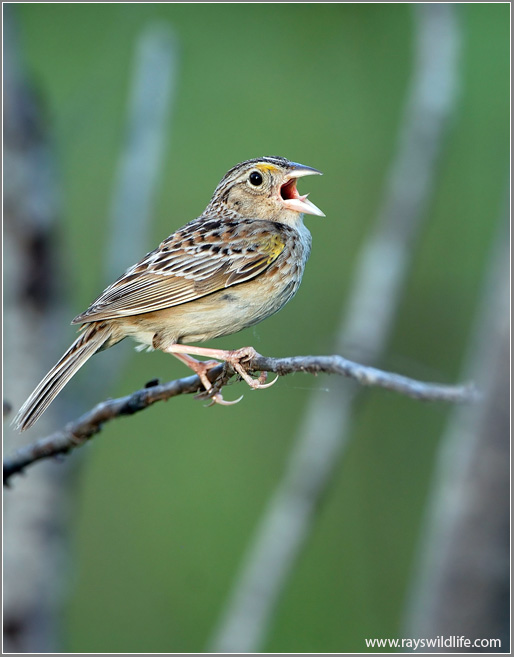
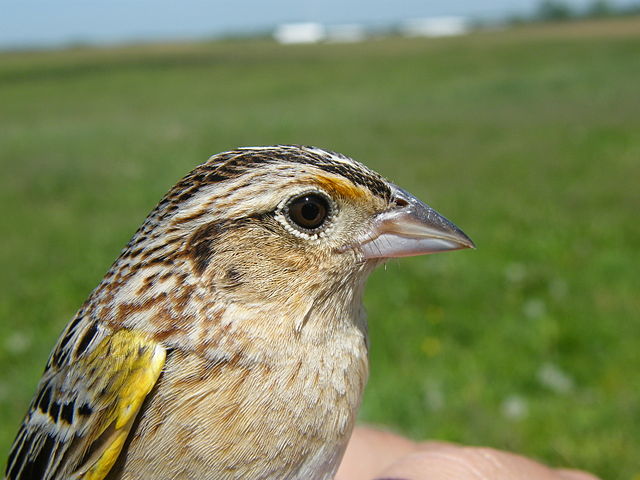
Grasshopper Sparrow (Ammodramus savannarum) by Rat Kirkfield

Grasshopper Sparrow (Ammodramus savannarum) by Rat Kirkfield

Are not two little sparrows sold for a penny? And yet not one of them will fall to the ground without your Father’s leave (consent) and notice. But even the very hairs of your head are all numbered. Fear not, then; you are of more value than many sparrows. (Matthew 10:29-31 AMP)

IN THE HOLLOW OF HIS HAND.
(From an Ornithologist’s Year Book.)

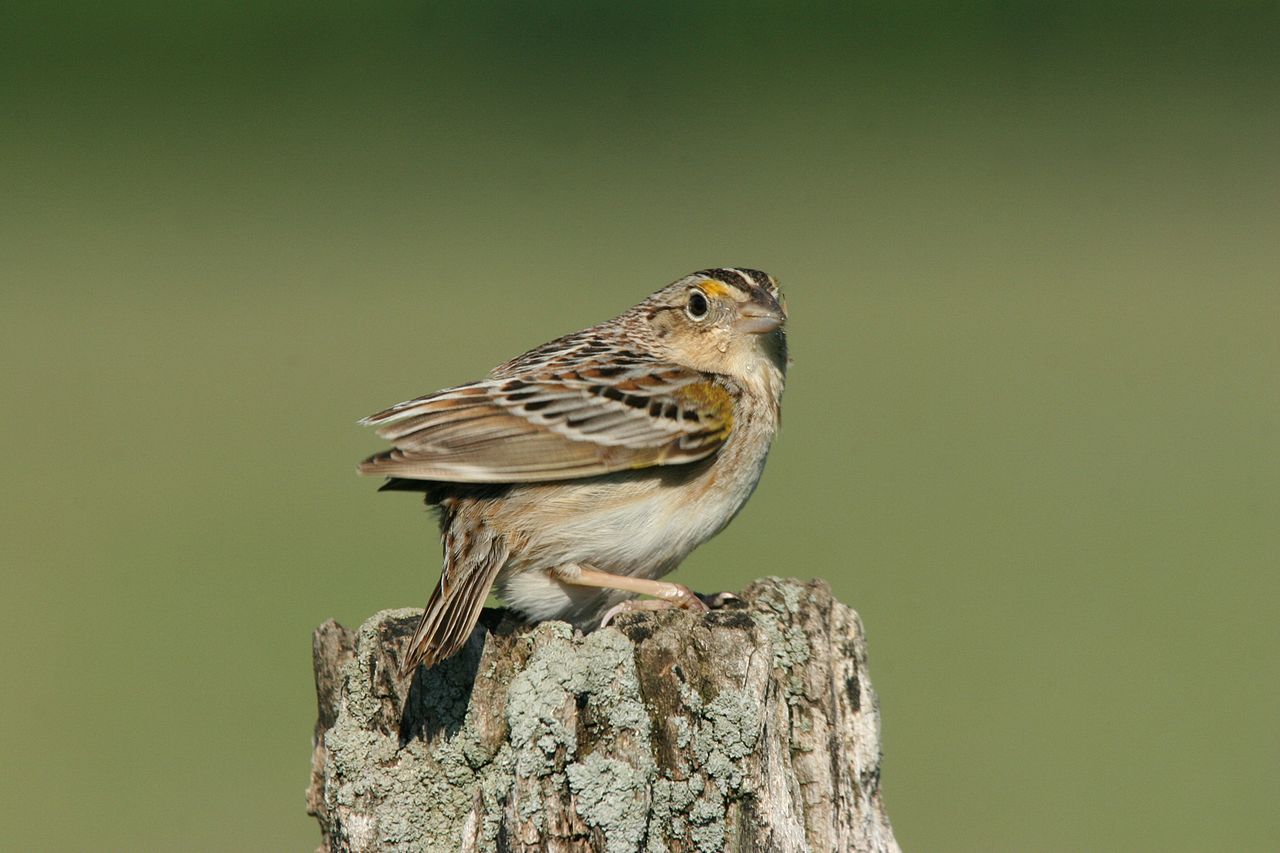
So tiny that a child’s small palm can cover its whole body, inaudible at a few paces’ distance, invisible till it rises at your very feet, such is our yellow-winged sparrow. Yet he is a marvel; his plumage shows an exquisite mimicry of the earth tints, “the upper parts mixed black, rufous-brown, ashy and cream-buff,” with a touch of “yellowish olive-green” for the herbage, and here and there an orange or yellow shade, and a dusky whiteness beneath, to give the effect of light. What could be more perfect? No wonder the wee householders, with a nest of fine-woven grasses, low upon the ground, sits unseen on her “clutch” of wee speckled eggs within reach of your fingers. She knows this well, and will not rise until you are almost upon her retreat. Nor will she fly far. A fence post, a low shrub will serve as her watchtower until danger is over.

Grasshopper Sparrow (Ammodramus savannarum) ©WikiC

Grasshopper Sparrow (Ammodramus savannarum) ©WikiC

Our yellow-tinted sparrow has another name, the “Grasshopper Sparrow,” from its insect-like tremolo and chirp. Its song is a chord or two and a long trill on the insect letter, z. It is sung, to the eye, with a hearty abandon of joy, the head thrown back and mouth open, in a fine pose of ecstasy; yet, unless all around is still, and you listen with attention, not a sound will you hear, so small and fine are the vibrating tones. It is said, in a story of the Highlands, that on certain nights, if a man will but lay a couchant ear close to the breast of the earth, he may hear the fine, fine piping of the fairy tunes played in the underworld. Our bird’s song is one of these faint, sweet voices of the earth, like the music that breathes from every clod or leaf when the old world lies dreaming and dozing in a bit of holiday after work is done on a warm, sunny afternoon in autumn, a musical, tremulous, sweet piping everywhere.

Grasshopper Sparrow (Ammodramus savannarum) ©WikiC

Grasshopper Sparrow (Ammodramus savannarum) ©WikiC

Yet not one of these small creatures is forgotten before its Father. When the frost is in the air, and winter is near, the Divine impulse stirs in its breast, and its little wings will bear it far, far away in the long, mysterious journey over sea to the warm islands of the Atlantic. There it will sing for joy with its fellows in the sun, but when April returns, look well. Is there not a stir in the short grass? And listen. The faint, dream-like thrill throbs again in the throat of the sparrow, and our ground-dweller has returned. It is a parable of God’s care for His little ones.

Ella F. Mosby.

“Are not five sparrows sold for two copper coins? And not one of them is forgotten before God. But the very hairs of your head are all numbered. Do not fear therefore; you are of more value than many sparrows. (Luke 12:6-7 NKJV)

*

This is from Gutenberg’s eBooks.

BIRDS AND NATURE. Vol. X  NOVEMBER, 1901. No. 4

I just found another wealth of great birds tales and information to write about. These are all in the Public Domain.

*

Project Gutenberg eBooks

Grasshopper Sparrow – Wikipedia

Grasshopper Sparrow – All About Birds

Wordless Birds

*

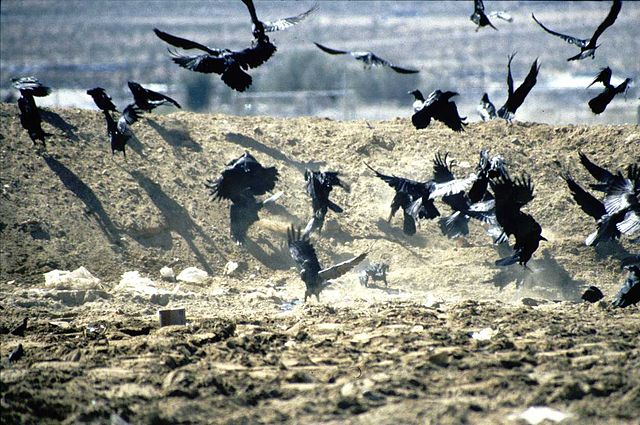
A Diet of Jackdaws and Ravens

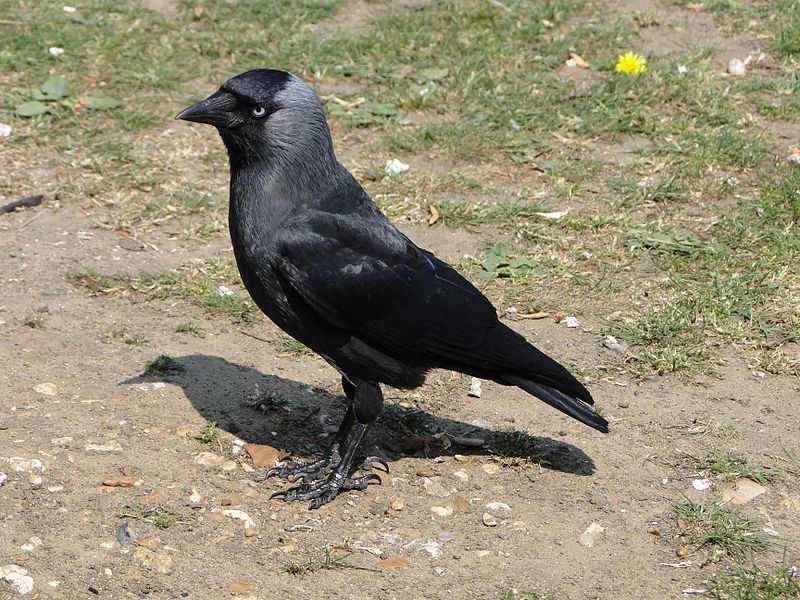
Western Jackdaw (Coloeus monedula) ©WikiC

Western Jackdaw (Coloeus monedula) ©WikiC

A Diet of Jackdaws and Ravens

by James J. S. Johnson

God is our refuge and strength, a very present help in trouble. … The Lord of hosts is with us; the God of Jacob is our refuge. Selah.  (Psalm 46:1 & 46:11)

Looking at ravens, recently, I was reminded of the 46th Psalm and a hymn that majestically paraphrases its doxological theology.  Also I was reminded of the Jackdaw (Corvus monedula), which is cousin to the Raven (Corvus corax), both of which corvids range in Germany.

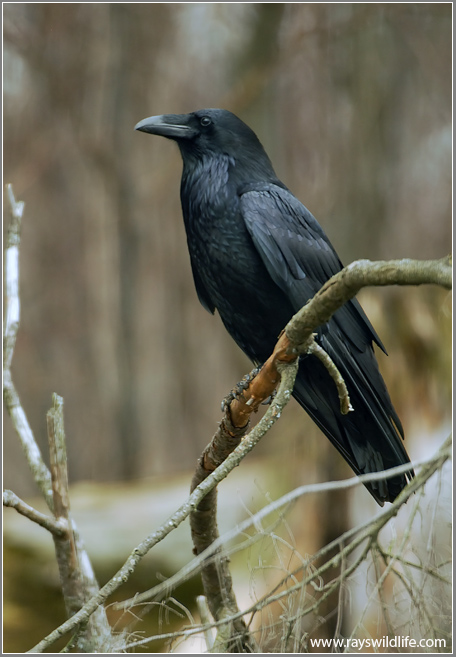
Northern Raven (Corvus corax) by Ray

Northern Raven (Corvus corax) by Ray

But how are these – Psalm 46, a hymn, ravens, and jackdaws — connected?

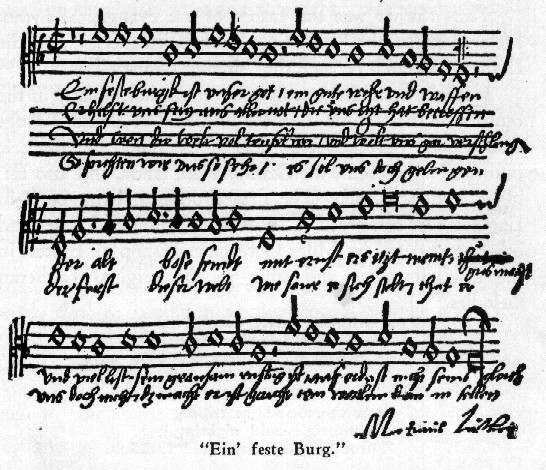
Let’s begin with a famous hymn that paraphrases, in lyrical dignity, from the content of the 46th Psalm. Surely you recognize these lyrics:

Luther's Ein Feste Burg

Luther’s Ein Feste Burg

Of course, the lyrics are penned by a Saxon theologian of the AD1500s, in German, so maybe an English translation (of that hymn’s lyrics) would be more helpful.  This German hymn (“Ein feste Burg ist unser Gott”) was translated into English, as early as AD1539, by Bible translator Miles Coverdale, with the title “Oure God is a defence and towre” [notice obsolete spellings of “our”, “defense”, and “tower”].  The hymn’s composition (AD1529), as well as its original melody and meter, comes to us thanks to Dr. Martin Luther, the great Reformer.

But the most familiar English translation of this heroic hymn, by Frederick Hedge (AD1853), is “A mighty fortress is our God, a bulwark never failing”, which begins:

  1. A mighty fortress is our God, a bulwark never failing;
    our helper he amid the flood of mortal ills prevailing.
    For still our ancient foe doth seek to work us woe;
    his craft and power are great, and armed with cruel hate,
    on earth is not his equal.
  2. Did we in our own strength confide, our striving would be losing,
    were not the right man on our side, the man of God’s own choosing.
    Dost ask who that may be? Christ Jesus, it is he;
    Lord Sabaoth, his name, from age to age the same,
    and he must win the battle.
  3. And though this world, with devils filled, should threaten to undo us,
    we will not fear, for God hath willed his truth to triumph through us.
    The Prince of Darkness grim, we tremble not for him;
    his rage we can endure, for lo, his doom is sure;
    one little word shall fell him.
  4. That word above all earthly powers, no thanks to them, abideth;
    the Spirit and the gifts are ours, thru him who with us sideth.
    Let goods and kindred go, this mortal life also;
    the body they may kill; God’s truth abideth still;
    his kingdom is forever.

Of course, Lutheran choirs and organists know this hymn well!

Yet how does this hymn, and its music-loving author (Dr. Martin Luther), relate to a “diet of jackdaws and ravens”?

In the year AD1530 an ecclesiastical confrontation was scheduled to occur at Augsburg (a city in Bavaria, Germany), but Dr. Luther was persuaded to stay behind – mostly for his personal safety’s sake – in Coburg (a town of Bavaria, near Augsburg) because Luther was declared an “outlaw” at the Diet of Worms, so he was an unprotected target).  So Luther staid there, writing to his friend Philip Melanchthon (and others), as Luther waited for the next important event to occur in Germany’s (and Europe’s) Reformation.  But Luther was not one who would contently wait while others battled – and the controversy would have reminded Luther of prior confrontations that he had personally experienced, in defense and promotion of Luther’s Bible-based faith.

Martin Luther by Cranach restoration ©WikiC

Martin Luther by Cranach restoration ©WikiC

While in Coburg, therefore, Luther’s imagination could picture the clutter and cawing of agenda-driven clergymen (and bustling government officials) who were gathering, in Augsburg, to cluck about theological controversies, at what would be a hotly contested “diet” (conference of representative delegates).  Luther could easily imagine the conspiring conversations of the corrupt clergymen who would soon be attending and arguing at the Augsburg “diet”, seeking to ensnare Melanchthon and Luther’s other Protestant allies.

In Barnas Seares’ biography of Dr. Luther, titled THE LIFE OF LUTHER, WITH SPECIAL REFERENCE TO ITS EARLIER PERIODS AND THE OPENING SCENES OF THE REFORMATION (American Sunday-School Press, 1850; 2010 reprint by Attic Books), he describes how Luther’s birdwatching provoked memories of prior confrontational conferences:

A mind like Luther’s could not remain inactive, and, for want of other employment, he suffered his fancy to picture to itself a diet of birds, as he saw them congregate before his window, much as he saw persecuting bishops in the huntsmen and hounds while engaged in the chase at Wartburg [where Luther was sequestered, hidden from his persecutors, during the time Luther translated the Bible in German].  The reader will easily recognize the satire.  The sportive letter [written by Luther] was addressed to his table companions at Wittenberg, and reads thus:

Common Ravens Feeding ©WikiC

Common Ravens Feeding ©WikiC

‘Grace and peace in Christ, dear friends.  … [Luther then explains that he and two other men] do not go to the Augsburg diet, though we are attending another one in this place.  There is, directly before my window, a grove where the jackdaws and ravens have appointed a diet; and there is such a coming and going, and such a hubbub, day and night, that you would think them all tipsy.  Old and young keep up such a cackling, that I wonder how their breath holds out so long.  I should like to know if there are any of these nobles and knights with you, for it seemeth to me that all in the world are gathered together here.  I have not yet seen their emperor, but the nobles and great ones are all the time moving and frisking before us; not gayly attired, but of one uniform colour, all black and all gray-eyed.  They all sing the same song, though with the pleasing diversity of young and old, great and small.  They pay no regard to the great palace and hall, for their hall hath the high blue heavens for its ceiling, the ground for its floor, the beautiful green branches for its paneling, and the ends of the world for its walls.  They don’t trouble themselves about horses and wagons, for they have winged wheels wherewith to escape from fire-arms.  They are great and mighty lords; but what decisions they come [to] I know not.  But, so far as I can learn through an interpreter, they meditate a mighty crusade against wheat, barley, oats, malt, and all kinds of corn and grain, and there is here many a hero, who will perform great deeds. … I consider all these nothing but the sophists and papists, with their preachers and secretaries, and must have them all before me thus at once, that I may hear their lovely voices and their preaching, and see how useful a class they are, to devour all that the earth bringeth forth, and cackle for it a while.’” [Quoting Luther, as quoted within Sears, at pages 449-451, with emphasis added.]

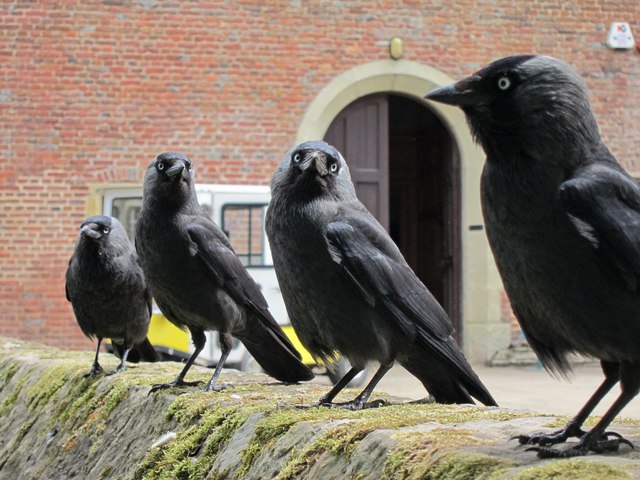
Jackdaws at Herstmonceux Castle

Jackdaws at Herstmonceux Castle

Somehow the busy yacking and cawing of the jackdaws and ravens, in Coburg, reminded Dr. Luther of the conspiring ecclesiastical kleptocrats whom he observed (and contended with), those crooked racketeers famous for grabbing (but not for giving) —  just as jackdaws and ravens are famous for shamelessly raiding the crop-fields that others work long and hard to produce food from.  (See 1st Peter 5:2-3; some things don’t change much!)

Quite a “diet”, pardon the pun.

*

James J. S. Johnson’s Articles

Orni-Theology

Jackdaw and Raven Corvidae Family

*

Golden Eagle’s Adventure Continues… Welcome Boys and Girls!

Golden Eagle (Aquila chrysaetos) Flying ©WikiC

Golden Eagle (Aquila chrysaetos) Flying ©WikiC

Golden Eagle ©PD

Golden Eagle ©PD

Hi everybody! This is Golden Eagle and I am very excited today! I got up this morning and flew around one of the beautiful lakes in my home state of Florida! The Bible says that God sends the rain and the sunshine on the good people and the bad people. God treats us all with GRACE and kindnesses!

Genesis 6:8 says that “Noah found grace in the eyes of the Lord.” That’s the first time the Bible mentions grace and the last time? It’s in the last verse of the Bible: “The grace of our Lord Jesus Christ be with you all. Amen.” (Rev 22:21)

This ADVENTURE all started in the mind of our Creator God (the Lord Jesus Christ). Hey young people, ponder the lakes, the streams, and the rivers. Ponder the rocks, the minerals, and oh yes, the gold and silver. Ponder the butterflies, the animals, and the insects. Ponder the planets, the Earth, the stars, and the sun. Ponder the Milky Way Galaxy and our beautiful Solar System. Ponder mankind, life, and all that it means. Ponder God and His created Universe.

Hubble Ultra Deep Field with Scale Comparison ©©

Hubble Ultra Deep Field with Scale Comparison ©©

ALL OF THIS AND SO MUCH MORE CAME FROM THE MIND OF GOD. The Universe shows us what was in the mind of God in eternity past!

God has a PLAN for this Universe, for our Solar System, and for our Planet, Earth. He has a PLAN for your life and for my life. We are going to get to live FOREVER with God if we are saved! Are you saved? The answer is either yes or no.

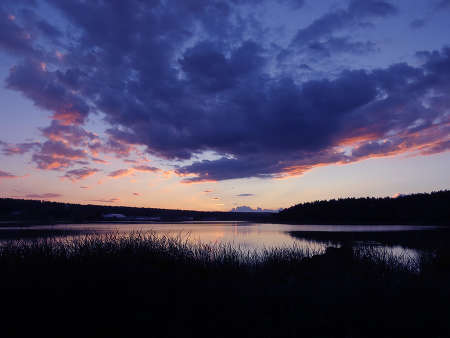
Sunrise over Lake

This morning as I flew around my hometown lake I saw the sunrise in beautiful colors of splendor. I saw the sky turn different shades of red and pink. I saw the colors reflected in the glass like mirror of the still and smooth lake surface. I saw the birds fly in a V-shape formation. The white ibises were just beautiful. I flew around the lake for a number of minutes and the minutes turned into an hour.

Circle B Bar White Pelicans

Circle B Bar White Pelicans

Every moment we get closer to God. “Then shall the dust return to the earth as it was: and the spirit shall return unto God who gave it.” (Ecclesiastes 12:7) We have come from God and we are going back to God.

This ADVENTURE that God has planned for us is truly exiting. We will get to reign with Jesus for a thousand years on this very Earth. Some of you will be in charge of two or five or ten cities! Now is the time to prepare for what God has in store for us! It all starts with you admitting that you are a sinner and excepting what Jesus has done for us on the cross. He shed His precious blood to wash away our sins. Accept Jesus Christ as your personal Saviour and Lord and you will have entered this amazing journey that God has planned for us, all because of His GRACE.

Kids keep in touch and the Golden Eagle will fly in with exciting new developments in this adventurous journey. A journey that will lead to the God of the Universe and His amazing Heaven!!!

(Re-post of Bibleworld Adventure’s The Adventure Continues… Welcome Boys and Girls!)

Bibleworld Adventures is the new home of Golden Eagle and other interesting articles about Christian different topics.

*

Golden Eagle Articles Here

*

Sunday Inspiration – Reed Warblers

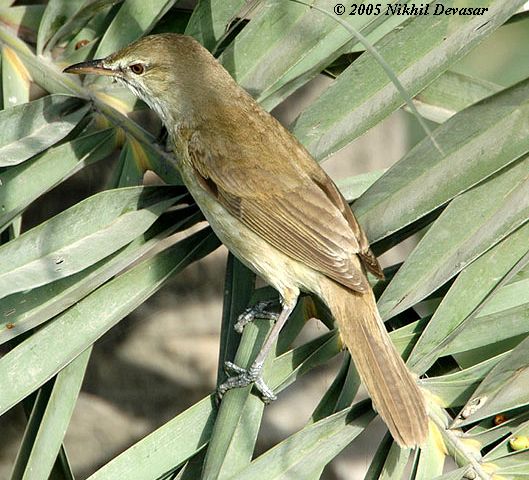
Clamorous Reed Warbler (Acrocephalus stentoreus) by Nikhil

Clamorous Reed Warbler (Acrocephalus stentoreus) by Nikhil

“Can the papyrus grow up without a marsh? Can the reeds flourish without water? (Job 8:11 NKJV)

This week we introduce you to just one family, the Acrocephalidae Family of Reed Warblers, Marsh- and Tree-warblers, and Acrocephalid warblers. The Lord has created this family of birds to blend in rather well with their surroundings. Another act of love and concern from the Creator.

The species in this family are usually rather large “warblers”. Most are rather plain olivaceous brown above with much yellow to beige below. They are usually found in open woodland, reedbeds or tall grass. The family occurs mostly in southern to western Eurasia and surroundings, but also ranging far into Pacific, with some species in Africa.

There are five genus in this family;

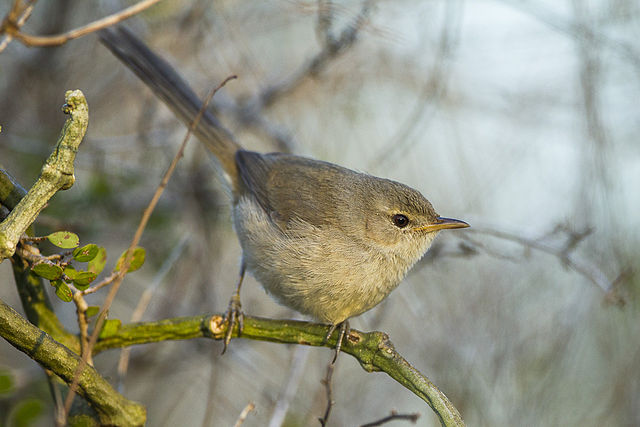
Subdesert Brush Warbler (Nesillas lantzii) ©WikiC

Subdesert Brush Warbler (Nesillas lantzii) ©WikiC

Nesillas – Brush Warblers; found in Comoros and Madagascar. Its natural habitats are subtropical or tropical dry forests, subtropical or tropical moist lowland forests, and subtropical or tropical moist shrubland.

Sedge Warbler (Acrocephalus schoenobaenus) by Robert Scanlon

Sedge Warbler (Acrocephalus schoenobaenus) by Robert Scanlon

Acrocephalus warblers are small, insectivorous passerine birds. Formerly in the Old World warbler assemblage, they are now separated as the namesake of the marsh and tree warbler family Acrocephalidae. They are sometimes called marsh warblers or reed warblers. These are rather drab brownish warblers usually associated with marshes or other wetlands. Some are streaked, others plain. Many species are migratory. Many species have a flat head profile, which gives rise to the group’s scientific name;

African Yellow Warbler (Iduna natalensis) ©WikiC

African Yellow Warbler (Iduna natalensis) ©WikiC

Iduna is a genus of tree warbler in the Acrocephalidae family. It is sometimes lumped together in the genus Hippolais.

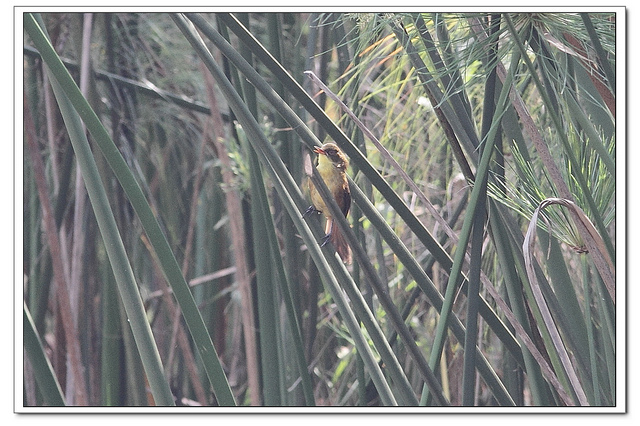
Papyrus Yellow Warbler (Calamonastides gracilirostris) ©©Flickr Ross Tsal

Papyrus Yellow Warbler (Calamonastides gracilirostris) ©©Flickr Ross Tsal

(Calamonastides gracilirostris) Papyrus Yellow Warbler is a species of tree warbler; formerly placed in the “Old World warblers”. It is monotypic in its genus. It is found in Burundi, Democratic Republic of the Congo, Kenya, Rwanda, Tanzania, Uganda, and Zambia. Its natural habitat is swamps. It is threatened by habitat loss. Compared with the dull browns and greys typical of swamp-dwelling warblers, this warbler is brightly coloured. It shows an underbelly of rich yellow and olive-brown upper parts. Its song consists of melodious liquid warbling:

Icterine Warbler (Hippolais icterina) ©WikiC

Icterine Warbler (Hippolais icterina) ©WikiC

Hippolais is a genus of tree warbler in the Acrocephalidae family. It is sometimes lumped together with the genus Iduna.

(Info from Wikipedia with editing)

Acrocephalidae – Reed Warblers and allies:

This slideshow requires JavaScript.

As they departed, Jesus began to say to the multitudes concerning John: “What did you go out into the wilderness to see? A reed shaken by the wind? (Matthew 11:7 NKJV)

“When I Survey The Wondrous Cross” ~ by Miss Anna Pletcher (12 years old at Faith Baptist) on piano

I love the last verse of this hymn:

Were the whole realm of nature mine,
That were a present far too small;
Love so amazing, so divine,
Demands my soul, my life, my all.

 *

Sunday Inspiration

Acrocephalidae Family of Reed Warblers and Allies

Reed Warblers and Allies – Montereybay

Acrocephalidae Family – Wikipedia

Gideon

*

Sad Clowns of the Sea

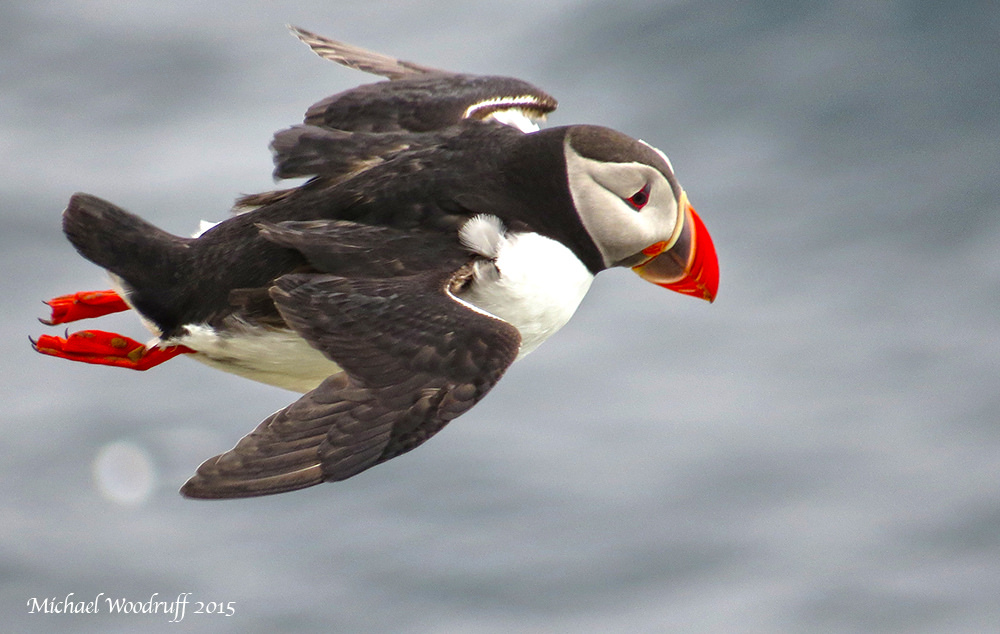
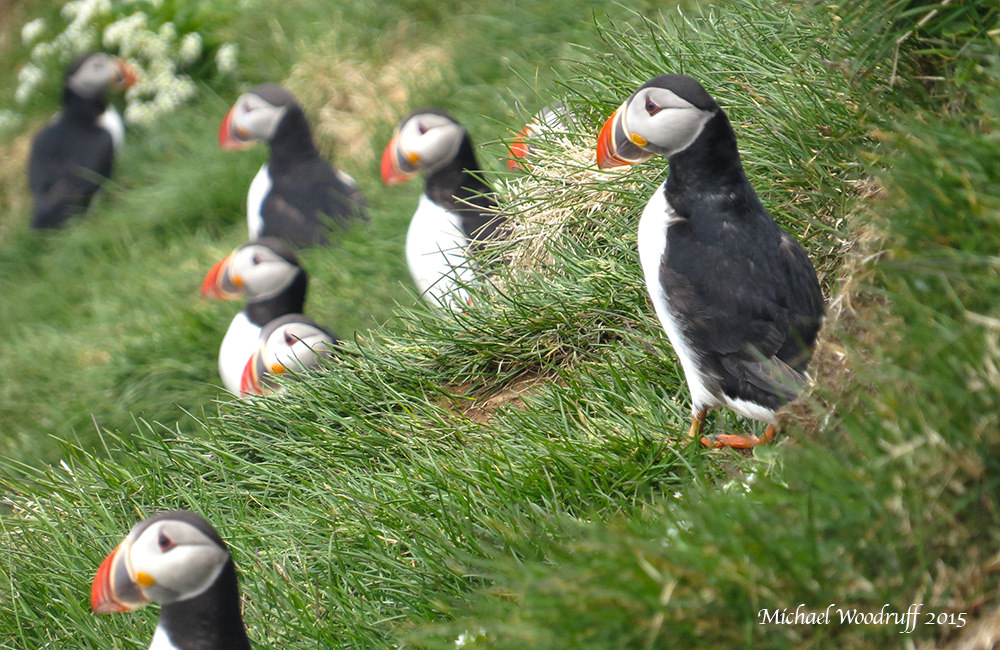
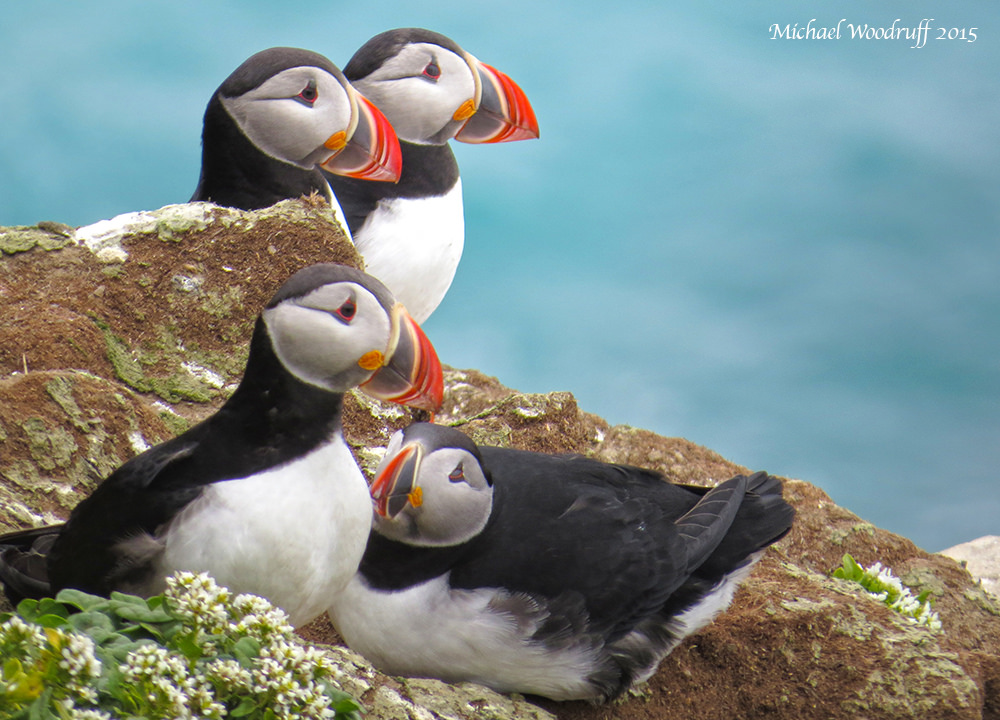
Atlantic Puffin (Fratercula arctica) by Michael Woodruff

Atlantic Puffin (Fratercula arctica) by Michael Woodruff

Why am I discouraged? Why am I restless? I trust you! And I will praise you again because you help me, and you are my God. (Psalms 43:5 CEV)

Recently I decided to check back through the photographers who have given me permission to use their photos. There are links to them down the right menu in the Photography section.

Atlantic Puffin (Fratercula arctica) by Michael Woodruff

Atlantic Puffin (Fratercula arctica) by Michael Woodruff

While looking through Michael Woodruff’s Flickr photos, I spotted these recent Puffins. Michael is one of the first photographers to allow me to use his beautiful photos on this blog and Michael is also a Christian. Apparently he made a trip to Grimsey Island, Iceland on 29 June 2015.  So these are some of his latest photos.

Atlantic Puffin (Fratercula arctica) by Michael Woodruff

Atlantic Puffin (Fratercula arctica) by Michael Woodruff

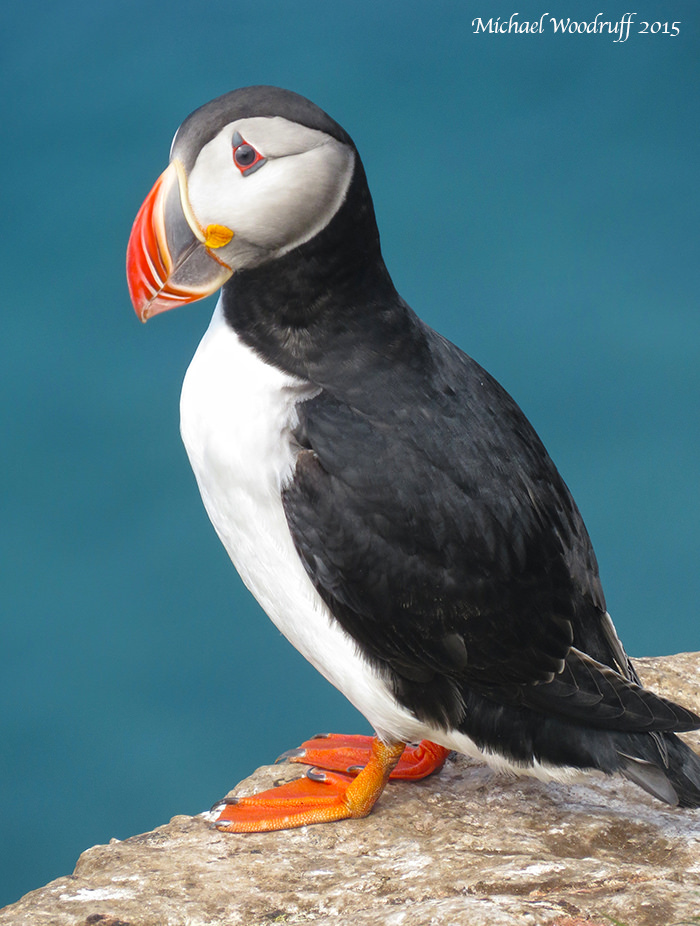
The Atlantic Puffins have been called the “Clowns of the Sea” because of their colorful marking that the Lord their Creator gave them. They are also sometimes called “Sea Parrots.” However you think of them, they are beautiful birds and I was surprised they are so small. On land it stands about 20 cm (8 in) high. The Atlantic puffin is sturdily built with a thick-set neck and short wings and tail. It is 28 to 30 centimetres (11 to 12 in) in length from the tip of its stout bill to its blunt-ended tail. Its wingspan is 47 to 63 centimetres (19 to 25 in). Males are slightly larger than the female, but both are marked the same. They mate for life.

Atlantic Puffin (Fratercula arctica) by Michael Woodruff

Atlantic Puffin (Fratercula arctica) by Michael Woodruff

Sorrow is better than laughter: for by the sadness of the countenance the heart is made better. (Ecclesiastes 7:3 KJV)

The beak is very distinctive. From the side the beak is broad and triangular but viewed from above it is narrow. The half nearest the tip is orange-red and the half nearest to the head is slate grey. There is a yellow chevron-shaped ridge separating the two parts and a yellow, fleshy strip at the base of the bill. At the joint of the two mandibles there is a yellow, wrinkled rosette. The exact proportions of the beak vary with the age of the bird. In an immature individual, the beak has reached its full length but it is not as broad as that of an adult. With time the bill deepens, the upper edge curves and a kink develops at its base. As the bird ages, one or more grooves may form on the red portion. The bird has a powerful bite.

Atlantic Puffin (Fratercula arctica) by Michael Woodruff

Atlantic Puffin (Fratercula arctica) by Michael Woodruff

Share the happiness of those who are happy, the sorrow of those who are sad. (Romans 12:15 Phillips)

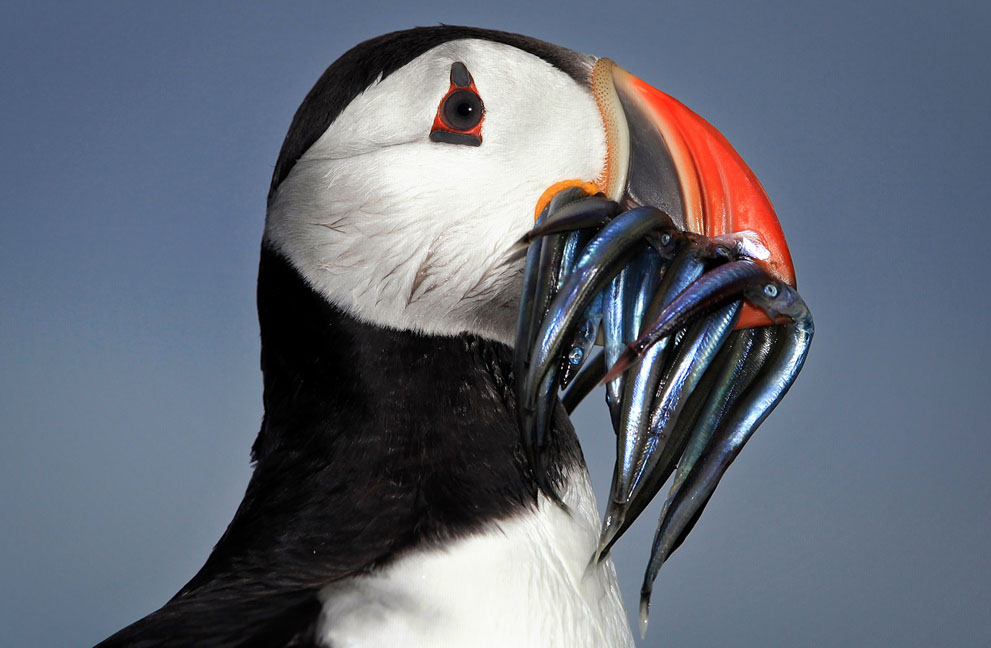
They are known for collecting multiple fish in that beautiful beak. It was designed very distinctly. It fishes by sight and can swallow small fish while submerged, but larger specimens are brought to the surface. It can catch several small fish in one dive, holding the first ones in place in its beak with its muscular, grooved tongue while it catches others. The two mandibles are hinged in such a way that they can be held parallel to hold a row of fish in place and these are also retained by inward-facing serrations on the edges of the beak. It copes with the excess salt that it swallows partly through its kidneys and partly by excretion through specialized salt glands in its nostrils. Now that is wisdom from the Creator.

Puffin with Sand Eels

Puffin with Sand Eels ©WikiC (not Michael’s, but shows the mouth full of eels)

You can read more about the Puffins from the links below, but I just wanted to share some of these photos from Michael.

Atlantic Puffin (Fratercula arctica) by Michael Woodruff

Atlantic Puffin (Fratercula arctica) by Michael Woodruff

Photos by Michael Woodruff. Atlantic Puffins by God.

*

*

EGGS-ELLENT EXAMPLES OF DESIGN

“And thou shalt be secure, because there is hope; yea, thou shalt dig about thee, and thou shalt take thy rest in safety.” (Job 11:18)

Over the years, Creation Moments has brought you countless examples of plants and animals that appear to have been designed because they really were designed! Nowhere is this easier to see than in the design of bird eggs.

African jacana chickAs we mentioned on an earlier program, the shape and coloring of bird eggs are no accident. God designed them that way for a specific purpose. Today we’re going to mention two other design features seen in some bird eggs.

SmileyCentral.com

Interesting Things from Smiley Central
The first are the eggs of the African jacana. These long-legged shorebirds build a flimsy nest that floats on water. When the male jacana lands in the nest to incubate the eggs, the whole nest sinks into the water. It’s a good thing, then, that God created the eggs to be waterproof. This is a design feature the eggs must have had from the very beginning.

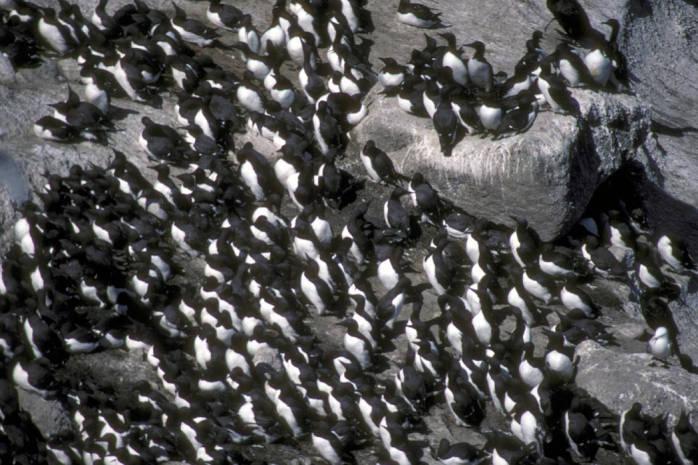
Common Murre (Uria aalge) colony ©USFWS

Common Murre (Uria aalge) colony ©USFWS

Or take the eggs of the common murre. According to BBC Earth, “The eggshells have cone-like structures that make the eggs ‘self-cleaning’.” This is useful, they say, because murre colonies are tightly packed and the eggs get showered in bird droppings. “When water lands on an egg, its water-repelling shell causes the water to gather into spherical drops” which then roll off the egg and clean it.

We could mention many other design features of bird eggs, and we will share these with you in the future. But we close today’s program with praise to the God of creation who cares for all of His creatures – especially you and me!

Prayer:

Lord Jesus, my heart overflows with praise when I look at Your creation and think about what You accomplished in just six days! You are awesome in every way! Amen.

Notes:”The 13 birds with the most amazing eggs,” BBC Earth. http://www.bbc.com/earth/story/20150319-the-birds-with-super-powered-eggs. Photo: African jacana chick. Courtesy of Magnus Manske. (CCA 2.0 Generic)

Used with permission of Creation Moments ©2015

*

African Jacana (Actophilornis africanus) by Lee

African Jacana (Actophilornis africanus) by Lee

*