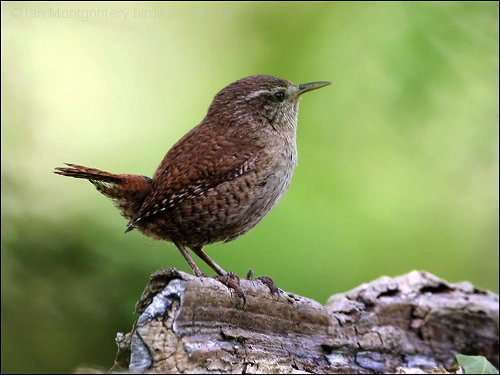
Peter’s Female Blackbird

Common Blackbird (Turdus merula) by Ian

Common Blackbird (Turdus merula) by Ian

I don’t suppose that, what happened some years ago, will ever happen again.

My Dutch wife and I were living in a little town called March and we made sure that various birds were fed every day from a large feeding tray in our garden. Winter was upon us, but very sadly, my wife had an accident and died about a week later in hospital.

There was a particular female blackbird who came for food, every morning, and allowed me to speak to her while only a couple of feet away. Coinciding with losing my wife, this same bird lost her mate and by the state of
his body I think a sparrow hawk got him. Unfortunately, my female blackbird refused to go to a special piece of ground which I had dug and loaded it with worms, purchased from the local fishing tackle shop. Even after I removed the dead mutilated blackbird, his female mate would go nowhere near that little plot of dug soil because her mate had sadly met his end quite nearby. I believe this precious bird knew that my wife was missing also and she seemed to stay longer, and be near me every morning.

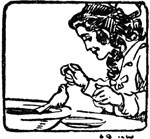
To my great joy, one morning, this loving bird hopped behind me as I walked toward the back entrance of my bungalow. I entered my kitchen and she waited outside. Would she come in I wondered ? She knew my voice and hopped into my kitchen and waited patiently. ( I have a photo of her waiting in front of my ‘fridge.) Then I opened the ‘fridge door and gave her a few pieces of seed cake.

Every morning thereafter my bird came to my back door and came into my kitchen at my invitation. To me, it was a wonder to see a “wild” blackbird patiently waiting in front of my ‘fridge knowing about the seed cake behind that big white door, just for her.

Jesus said that ‘ unless we become like children we cannot enter the kingdom of heaven ‘ That bird sure did have a childlike faith. It taught me that once we begin to put food out for wild birds in the winter we must continue daily. Thinking of the various types of birds which visited my garden in the winter, I surmised that some had come many miles. How very sad if, some wintry day, they came only to find the table was bare ?

I moved home, some months later, and still wonder what happened to this blackbird who, I’m sure, shared the sorrow of her loss with this poor guy.

By Peter England, UK

*

*
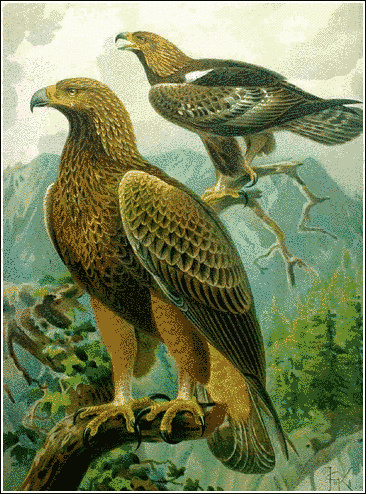
Golden Eagle Takes A Name

Golden Eagle Takes A Name

by Golden Eagle

*

Golden Eagle ©PD

Golden Eagle ©PD

Boys and girls, it’s me again! I have taken on a name: the GOLDEN EAGLE. So, if you send us messages you can simply call me the Golden Eagle. My very best friend, Jesus once said;”

Behold the fowls (birds) of the air: for they sow not, neither do they reap, nor gather into barns; yet your heavenly Father feedeth them. Are ye not much better than they? (Matthew 6:26 KJV)

Hey, as you go through your day watch the birds! It really doesn’t look like they work to hard! Jesus is saying that His Father feeds and takes care of the birds each and every day! Now here’s a thought. I don’t know what part of the world you live in? The cool thing is that God feeds the birds every day! ALL the birds in the entire WORLD. If He takes care of the birds, He will surely take care of you in whatever situations you find yourself in. I know some things are hard to deal with, even as kids. But God is up to the task and really everything is easy for Him! So TRUST HIM! Blessed are all they that put their trust in Him (Jesus). Psalm 2:12

Boys and girls, Jesus also said in our Bible verse that you are better than birds. Now birds are neat! I am a birder, a rather new birder, I have been at this a few months. You see evolution teaches that we have evolved from a rock, an explosion, a single celled creature, etc. It teaches that we are all animals. But Jesus said you are better than the birds. The truth is that you and I were created just a little bit under the angels! And do you know that angels can fly? They fly very swiftly the Bible says! Daniel 9:21 Oh that verse is talking about the angel Gabriel coming to visit the prophet Daniel.

Remember, your Heavenly Father will take care of each of you today! You also each have a guardian angel that watches over you! Maybe we have more than one guardian angel. Eventually, we will fly like the angels! Gravity doesn’t affect them you know.

Hey, have you started your journal yet? You can write down all kinds of things. Don’t forget to send us your really cool bird stories. Have a great day and if possible attend a good church on Sunday, or any day for that matter! Until next time, this is the Golden Eagle saying Shalom!

*

Read more of Golden Eagle’s articles

*

The Rescue of the Canary Bird

Yellow Canary (Crithagra flaviventris) Male ©WikiC

Yellow Canary (Crithagra flaviventris) Male ©WikiC

THE RESCUE OF THE CANARY BIRD

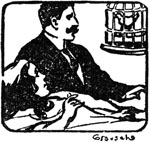
She Watched the Little Bird.

She Watched the Little Bird.

“I am going to tell you a really true story,” said daddy, “something which happened to-day. I was walking along a rather poor part of the city when I saw a number of children gathered in a group in a little side yard of a tenement house. The children were screaming to one boy: ‘Oh, catch him! Don’t let the awful cat get him!'”

“Oh, was it a bird?” asked Jack eagerly.

“Yes,” replied daddy; “it was a bird, but not just the usual kind of bird that is seen around city streets, for only the sparrows like the noise of a city. Most birds like the woods and the country, where they can have homes in the trees and can sing all day long.

“But this was a tame yellow canary who had flown out of an open window to pick up some goodies he saw on the ground, and a cat was after him.”

“Did they get him from the cat?” asked Evelyn eagerly, for she was devoted to animals and perhaps especially to birds.

“Yes,” answered daddy; “the little boy succeeded in rescuing him, but the poor canary had been so frightened that his little heart was beating, oh, so fast, and the children were afraid he was not going to live.

“They all followed the little boy who had caught the canary just in time into the tenement house. The cat had knocked several feathers from the bird’s tail.

“Another child told me the canary belonged to a little girl who lived in the tenement. He asked me to follow, too, for he said that the little girl had trouble with her back and had to lie flat all the time. She loved visitors, for so much of the time she was lonely. Her mother was poor and out all day sewing, so the little girl’s only companion was the canary, who would sing for hours and hours. He seemed to know he must keep her cheered up.

“So along I went too. We climbed some stairs until we came to a dingy room where on a cot by the window lay a little girl about eight years old. She had big dark eyes, and when I saw her her cheeks were bright red from all the excitement.

“All her friends had gathered around, each giving her a special description of how the bird had been rescued. She was smiling with joy and watching the bird, who was now busily engaged nibbling at a little piece of apple which had been given him. Before long he began to sing, oh, so joyously, for he knew he was once more back in his happy home, where he would take good care to stay in the future.

“I told the little girl of my Jack and Evelyn, and she said she wanted to see you both. Shall we all go to see her and her little bird some day?”

“We’d love to!” cried Jack and Evelyn delightedly.


Lee’s Addition:

The LORD is my rock and my fortress and my deliverer; My God, my strength, in whom I will trust; My shield and the horn of my salvation, my stronghold. (Psalms 18:2)

Another delightful story from Daddy’s book.

The Yellow Canary (Serinus flaviventris) is a small passerine bird in the finch family. It is a resident breeder in much of the western and central regions of southern Africa and has been introduced to Ascension and St Helena islands. They have been kept for pets for many years. They belong to the Fringillidae – Finches Family.

Its habitat is karoo and coastal or mountain valley scrub. It builds a compact cup nest in a scrub.

The Yellow Canary is typically 13 cm in length. The adult male color ranges from almost uniform yellow in the northwest of its range to streaked, olive backed birds in the southeast. The underparts, rump and tail sides are yellow. The female has grey-brown upperparts, black wings with yellow flight feathers, and a pale supercilium. The underparts are white with brown streaking. The juvenile resembles the female, but has heavier streaking.

The Yellow Canary is a common and gregarious seedeater. Its call is chissick or cheree, and the song is a warbled zee-zeree-chereeo.

Another Bird Tales

From

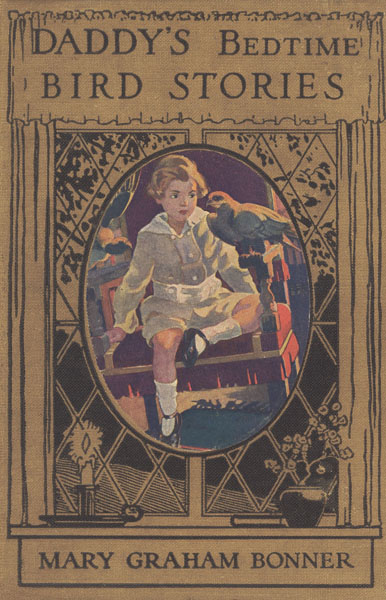
Daddy’s Bedtime Bird Stories – Gutenberg ebooks

By

Mary Graham Bonner

With four illustrations in color by
Florence Choate and Elizabeth Curtis

Daddys Bedtime Story Images


These stories first appeared in the American Press Association Service and the Western Newspaper Union.


Many of the sketches in this volume are the work of Rebecca McCann, creator of the “Cheerful Cherub,” etc.

Daddy's Bedtime Bird Stories by Mary Graham Bonner - 1917

*
Daddy’s Bedtime Bird Stories by Mary Graham Bonner – 1917

*

Links:

Painted Bunting (Passerina ciris) ©©Flickr


  Bird Tales


  Daddy’s Bedtime Bird Stories


Spanish Sparrow (Passer Hispaniolensis) female ©WikiC


  Wordless Birds


*


 Fringillidae – Finches Family


*

The Naughty Little Sick Snowbird

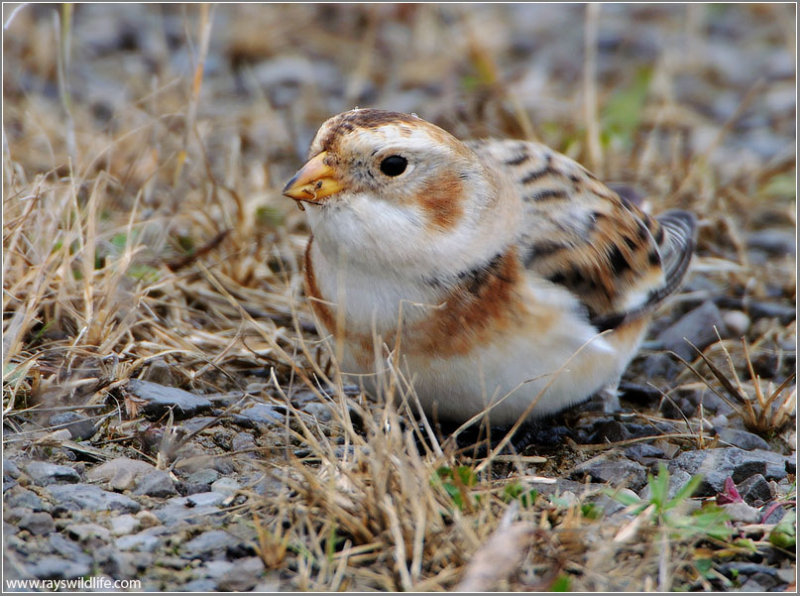
Snow Bunting (Plectrophenax nivalis) by Ray

Snow Bunting (Plectrophenax nivalis) by Ray

THE NAUGHTY LITTLE SICK SNOWBIRD

The Bird Began to Recover.

The Bird Began to Recover.


Daddy had been encouraging Jack and Evelyn to feed the little birds that came outside the window. So one evening when it was time for their story he told them about the Christmas a little snowbird had had the year before.

“He was a very self-willed little fellow,” commenced daddy, “and he thought no one knew so much about life as he did. During the autumn he had become very chummy with the sparrows. His daddy and mother didn’t like that much, as they were afraid he would become as rude and noisy as the sparrows were.

“When the cold weather came the snowbirds decided to leave, but the little wilful snowbird was nowhere to be found. ‘Where could he have gone?’ asked Mother Snowbird, and daddy said, ‘Oh, probably he left this morning with the robins and wrens, for I saw him playing with them!’ That eased Mother Snowbird’s fears, and off they started.

“When the little snowbird saw that his family had flown away he came out from his hiding-place. He really felt a little homesick and was sorry he hadn’t gone, too; but, of course, he didn’t dare admit it, for the sparrows had told him only stupid children were obedient. They admired his naughty disobedience and thought it was a great joke to worry his family.

“A few weeks went by, and the days became colder and colder. One night he felt so cold and so unhappy that he flew away from the sparrows, expecting to die any moment.

“The next morning he was found, half dead, by a little girl. She took him in her house, warmed his frozen feet and fed him bits of crumbs and drops of water. Slowly he began to recover.

“It was the day before Christmas, and he was perched on the window-sill in the sun, when, to his huge joy, he saw Daddy and Mother Snowbird outside the window. He flew against the window-glass. The little girl came rushing into the room to see what the trouble was. She was sure from his joyous actions that the other two snowbirds were his daddy and mother, so she opened the window, and the little bird flew out.

“‘Oh, dear, we’ve been so frightened!’ said Mother Snowbird.

“‘Yes,’ said Daddy Snowbird; ‘we’ve been on ever so many trips looking for you, but now we’ll hurry down home and fly fast, so as not to get cold, and then we’ll be there in time for Christmas day. All the little birds will be there waiting for the Christmas party.’

“You may be quite sure the little snowbird never had a happier Christmas, and he realized that the older birds knew what was best for him.”


Snow Bunting (Plectrophenax nivalis) by J Fenton

It might have been a Snow Bunting by J Fenton

Lee’s Addition:

Children, obey your parents in all things, for this is well pleasing to the Lord. (Colossians 3:20 NKJV)

*

Another Bird Tales

From

Daddy’s Bedtime Bird Stories – Gutenberg ebooks

By

Mary Graham Bonner

With four illustrations in color by
Florence Choate and Elizabeth Curtis

Daddys Bedtime Story Images


These stories first appeared in the American Press Association Service and the Western Newspaper Union.


Many of the sketches in this volume are the work of Rebecca McCann, creator of the “Cheerful Cherub,” etc.

Daddy's Bedtime Bird Stories by Mary Graham Bonner - 1917

*
Daddy’s Bedtime Bird Stories by Mary Graham Bonner – 1917

*

Links:

Painted Bunting (Passerina ciris) ©©Flickr


  Bird Tales


  Daddy’s Bedtime Bird Stories


Spanish Sparrow (Passer Hispaniolensis) female ©WikiC


  Wordless Birds


Snow Bunting (Plectrophenax nivalis) by J Fenton


 Calcariidae – Longspurs, Snow Buntings – Family


*

Bible Birds Scrambled Puzzle

Western Barn Owl (Tyto alba) by SSlayton

Western Barn Owl (Tyto alba) by SSlayton

Creation Moments has Scrambled Scriptures Puzzles each week that you can subscribe to. Click here to see all of them.

This is one that has the Birds of the Bible scrambled. By clicking the link below, you can download it. Then it can be printed. Enjoy!

L T R L N A G T U R T L E D O V E T
W Q T N E T E B C A O K R O T S U Q
O C N O V G G S L I A U Q E G E E G
R B A C A S A N P Y E R P S O N A L
F H R L R N R R I A M V C F O A Y E
Y J O A E O F R E G R Z T V K R Z D
H T M F S R I U T R H R U Y C C Z E
D H R C F E S Y I K U T O C U B P K
V C O S C H S W K Y J D H W C I O C
P I C G D H O O E A G L E A G O U O
V R D E G D I R T R A P O E W Y G C
U T N H V U U C U Z Y Q O P C K N A
L S N O N E D B K K B N W F P L I E
T O W O O U T D M E M K L B H Y W P
U U Z P G C O C H L N C W W P V P F
R T R O Q V W O L L A W S A T K A B
E X E E E U B I T T E R N X H L L C
R H E A W G N A C I L E P N A W S X  ©Creation Moments
*
BITTERN
CHICKEN
CORMORANT
CRANE
CROW
CUCKOO
DOVE
EAGLE
FALCON
GLEDE
HAWK
HERON
HOOPOE
KITE
LAPWING
NIGHTHAWK
OSPREY
OSSIFRAGE
OSTRICH
OWL
PARTRIDGE
PEACOCK
PELICAN
PIGEON
QUAIL
RAVEN
SPARROW
STORK
SWALLOW
SWAN
TURTLEDOVE
VULTURE

Bible Birds Puzzle

*

*

Birds of the World – Blue-cheeked Bee-eater

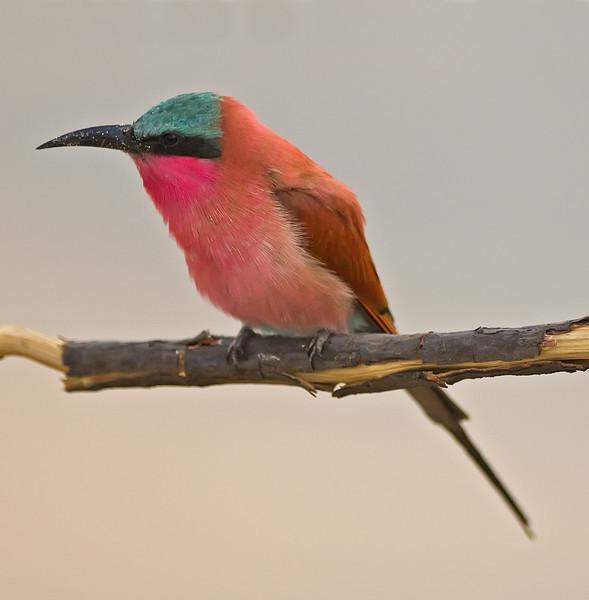
Southern Carmine Bee-eater (Merops nubicus) by Marc at Africaddict

Southern Carmine Bee-eater (Merops nubicus) by Marc at Africaddict

What a neat video of the Blue-cheeked Bee-eater. I have seen photos of them, but seeing birds in action is always special. There are some birds that just hit my fancy as I admire the Lord’s Handiwork. The Bee-eaters are one of those.

By Igor Byshnev

Matthew 6:25-34 NKJV
(25) “Therefore I say to you, do not worry about your life, what you will eat or what you will drink; nor about your body, what you will put on. Is not life more than food and the body more than clothing?
(26) Look at the birds of the air, for they neither sow nor reap nor gather into barns; yet your heavenly Father feeds them. Are you not of more value than they?
(27) Which of you by worrying can add one cubit to his stature?
(28) “So why do you worry about clothing? Consider the lilies of the field, how they grow: they neither toil nor spin;
(29) and yet I say to you that even Solomon in all his glory was not arrayed like one of these.
(30) Now if God so clothes the grass of the field, which today is, and tomorrow is thrown into the oven, will He not much more clothe you, O you of little faith?
(31) “Therefore do not worry, saying, ‘What shall we eat?’ or ‘What shall we drink?’ or ‘What shall we wear?’
(32) For after all these things the Gentiles seek. For your heavenly Father knows that you need all these things.
(33) But seek first the kingdom of God and His righteousness, and all these things shall be added to you.
(34) Therefore do not worry about tomorrow, for tomorrow will worry about its own things. Sufficient for the day is its own trouble.

Bee-eaters belong to the Meropidae – Bee-eaters Family which has 27 species.

As the name suggests, bee-eaters predominantly eat flying insects, especially bees and wasps, which are caught in the air by sallies from an open perch. While they pursue any type of flying insect, honey bees predominate in their diet. Hymenoptera (ants, bees and wasps) comprise from 20% to 96% of all insects eaten, with honey bees comprising approximately one-third of the Hymenoptera. (Wikipedia with editing)

Articles Mentioning Birds From This Family:

Other Websites that have photos of this Family:

Wordless Birds

*

Bible Birds – Crane’s Introduction

Crane’s Introduction

Sandhill Cranes and Babies in yard by Lee

Sandhill Cranes and Babies in yard

Even the stork in the heavens knows her times, and the turtledove, swallow, and crane keep the time of their coming, but my people know not the rules of the LORD. (Jeremiah 8:7 ESV)

Cranes are in the Gruidae Family of the Gruiformes Order. At present there are 15 species or members of that family. All of them are called Cranes, except for one member. That is the Brolga which is found in New Guinea and Australia. Cranes are another of the Lord’s creation that I enjoy watching. We are fortunate to be able to see Sandhill Cranes almost daily. Just spotted 18 today across from my backyard and will post an article about it soon.

Brolga(Grusrubicunda) by Ian

Brolga(Grusrubicunda) by Ian

Cranes bear a general resemblance to Herons in that they are long-legged, long-necked birds, but when on the wing, they carry the neck fully extended, a habit which will readily distinguish them from the curved neck Herons. Cranes are less aquatic than Herons and are often found feeding on the prairies or pine-barrens where worms, grasshoppers, lizards, roots, etc., form their fare. They nest on the ground laying two buffy eggs thickly marked with brown. The young, unlike the nearly naked, helpless young of Herons, are born covered with down and can soon follow their parents. The Cranes have loud sonorous voices; the Herons raucous croaks.

Sandhill Crane from Color Key to North American Birds, by Frank M. Chapman

Sandhill Crane from Color Key to North American Birds, by Frank M. Chapman

They have the hind-toe elevated, that is, leaving the foot at a higher level than the front toes; tail short; legs usually long. All fly with the neck extended, a fact by which Cranes in flight may be known from Herons. (Color Key to North American Birds, by Frank M. Chapman)

Cranes are a Bible Bird and appear in two verses, the one above (Jeremiah 8:7) and in the following verse:

Like a crane or a swallow, so did I chatter: I did mourn as a dove: mine eyes fail with looking upward: O LORD, I am oppressed; undertake for me. (Isaiah 38:14 KJV)

A Sandhill Crane call. Does it sound like a chatter?

(From xeno.canto)

Cranes construct platform nests in shallow water, and typically lay two eggs at a time. Both parents help to rear the young, which remain with them until the next breeding season.

Cranes migrate (travel to a warmer climate in winter) as mention in Jeremiah 8:7. Here is a photo of Common Cranes in Israel gathered together.

Common Cranes in Israel. Many species of crane gather in large groups during migration and on their wintering grounds ©WikiC

Common Cranes in Israel. Many species of crane gather in large groups during migration and on their wintering grounds ©WikiC

Cranes are one of the tallest flying birds, but more on that in another Bible Birds article.

See:

*
Wordless Birds
*

Greetings From …?

Greetings From …?

by Golden Eagle

Golden Eagle ©PubDom

Golden Eagle ©PD

Oh, I know you don’t know them all, neither do I! But that is how we learn about God’s Creation. We use the five senses that Jesus created us with. Hey, can you let us know what the five senses are?

Also, in your very own journal, write down interesting bird stories. We all have one I am sure.

Let’s start this amazing journey together. If you stay with me, at the end of your life, you will also fly like a bird all the way to a place called Heaven, if you are saved!

The first book of the Bible is a book of beginnings! It is called Genesis for good reason, it means beginning. On day number five the Bible says in Genesis1:20

And God said, Let the waters bring forth abundantly the moving creature that hath life, and fowl (birds) that may fly above the earth in the open firmament of heaven. And God created great whales, and every living creature that moveth, which the waters brought forth abundantly, after their kind, and every winged fowl after his kind: and God saw that it was good.

So boys and girls, birds have been with us since day number five! A long time, not millions of years, but thousands of years! Another interesting bit of knowledge: The great whales are actually the sea monsters that maybe you have heard about, yes that’s right, the dinosaurs of past ages. Also, the land animals and land dinosaurs were created the day after the birds. You know evolution teaches us that birds have evolved from the dinosaurs! However, the Bible says that God made dinosaurs and birds at the same time!

Well, I must fly away for now, I have other things that I must do today! Bye until next time!

Oh, thanks for joining us on this amazing journey into the world of birds and the Word of God!

Golden Eagle

See Ya!

*

Read more of Golden Eagle’s articles

*

Golden Eagle’s Greeting (Relocated)


Bible Birds – Wood Storks

Wood Stork (Mycteria americana) by Lee

Wood Stork (Mycteria americana) by Lee

While we were on the same birdwatching trip to Circle B (American Bittern), we encountered a Wood Stork. There are five verses in the Bible that mention the Stork:

And the stork, the heron after her kind, and the lapwing, and the bat. (Leviticus 11:19 KJV)

And the stork, and the heron after her kind, and the lapwing, and the bat. (Deuteronomy 14:18 KJV)

Where the birds make their nests: as for the stork, the fir trees are her house. (Psalms 104:17 KJV)

Yea, the stork in the heaven knoweth her appointed times; and the turtle and the crane and the swallow observe the time of their coming; but my people know not the judgment of the LORD. (Jeremiah 8:7 KJV)

Then lifted I up mine eyes, and looked, and, behold, there came out two women, and the wind was in their wings; for they had wings like the wings of a stork: and they lifted up the ephah between the earth and the heaven. (Zechariah 5:9 KJV)

Wood Stork (Mycteria americana) by Lee Landing

Wood Stork (Mycteria americana) by Lee Landing

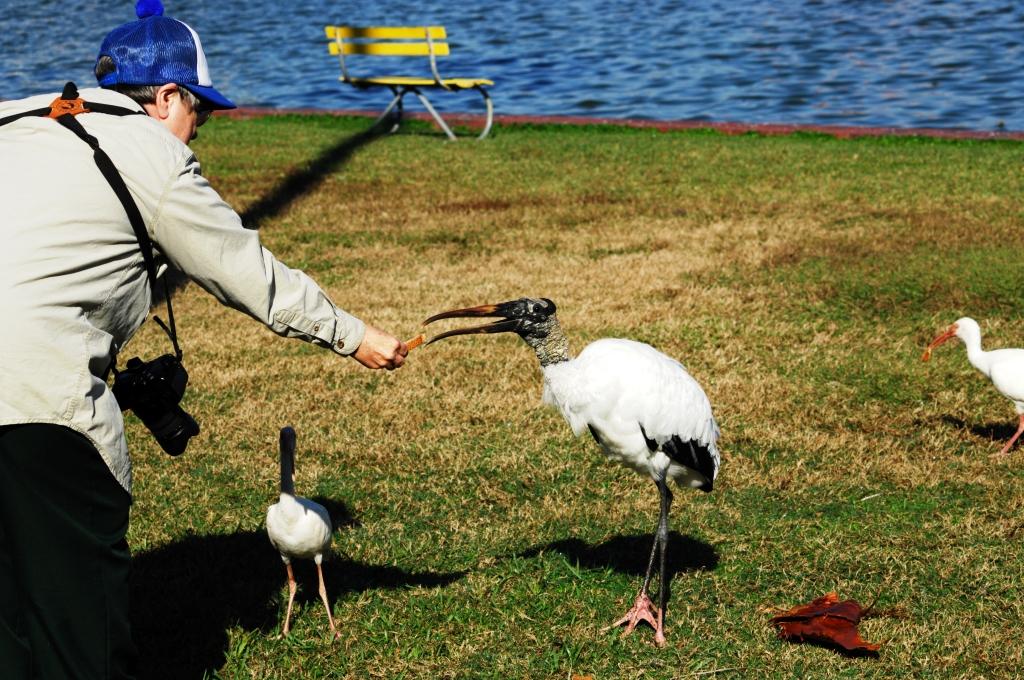
While we were birdwatching at Circle B just before Christmas, a Wood Stork flew over and landed in a tree a good way from us. Thanks to the zoom on my camera, I was able to capture its picture. They amaze me that they are “ugly” up close, but when they fly, they are so beautiful and graceful to watch. We see them quite often here and I have been known to feed them at Lake Morton. They also fly over our house and land in our community pond.

Lee feeding Wood Stork at Lake Morton by Dan

Lee feeding Wood Stork at Lake Morton by Dan 2011

As mentioned above, Storks are birds in the Bible and are members of the Ciconiidae – Storks Family. Currently there are 19 Storks in this family. The Bible does not tell which one is being mentioned, but most like one of the Storks that lived in Israel.

Our Wood Stork here is a broad-winged soaring bird that flies with its neck outstretched and legs extended. It forages usually where lowering water levels concentrate fish in open wetlands; it also frequents paddy fields. Walking slowly and steadily in shallow water up to its belly, it seeks prey, which, like that of most of its relatives, consists of fish, frogs and large insects. It catches fish by holding its bill open in the water until a fish is detected. (Wikipedia)

“Tall and long-legged, the wood stork is the largest wading bird native to America. It is white with black flight feathers, distinctive because of its dark, featherless head (down to the upper neck) and thick, down-curved bill. Wood storks fly with neck and legs extended, interrupting strong wing beats with brief glides; their wingspan is 5 1/2 feet.” (FL FWCC) Their length is 33.5–45.3 in (85–115 cm) and weigh between72.3 to 93.1 oz (2050–2640 g). (NatGeo)

*

This slideshow requires JavaScript.

*

*

Taming the Dragon of Calvert Kingdom (Re-blog)

Here is a great story by Sandra Conner at In Love With Words!

Taming the Dragon of Calvert Kingdom.

TAMING THE DRAGON OF CALVERT KINGDOM

DRAGON FOR BLOG STORYIn the year 2013, in a kingdom called Calvert, there lived four cousins. They were all named Calvert, and it was their great-grandparents Rachel and Cecil Calvert who had established this kingdom many years before. The four cousins felt it was their job to help keep the kingdom safe and to care for all of the inhabitants. …

(for the rest of the story) via Taming the Dragon of Calvert Kingdom.

**

Bible Birds – American Bittern

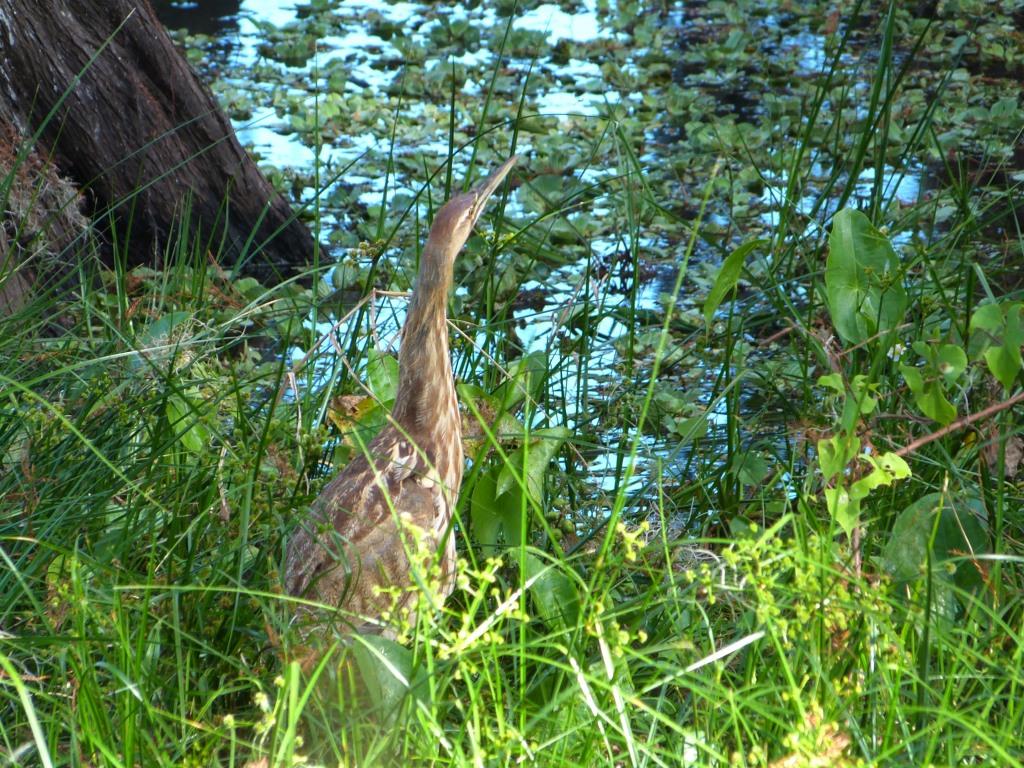
American Bittern (Botaurus lentiginosus) by Lee

The Bittern is found in the KJV in three verses of Scripture. Some versions translate it differently. But for the sake of this article, here are those verses:

I will also make it a possession for the bittern, and pools of water: and I will sweep it with the besom of destruction, saith the LORD of hosts. (Isaiah 14:23 KJV)

But the cormorant and the bittern shall possess it; the owl also and the raven shall dwell in it: and he shall stretch out upon it the line of confusion, and the stones of emptiness. (Isaiah 34:11 KJV)

And flocks shall lie down in the midst of her, all the beasts of the nations: both the cormorant and the bittern shall lodge in the upper lintels of it; their voice shall sing in the windows; desolation shall be in the thresholds: for he shall uncover the cedar work. (Zephaniah 2:14 KJV)

We were out at Circle B Bar Reserve just before Christmas and spotted an American Bittern. They are quite evasive and not spotted often, at least by me. That protection reminds me of several verses:

Keep me as the apple of the eye, hide me under the shadow of thy wings, (Psalms 17:8 KJV)

Deliver me, O LORD, from mine enemies: I flee unto thee to hide me. (Psalms 143:9 KJV)

This slideshow requires JavaScript.

Bitterns are members of the Ardeidae – Herons, Bitterns Family.”Although common in much of its range, the American Bittern is usually well-hidden in bogs, marshes and wet meadows. Usually solitary, it walks stealthily among cattails or bulrushes. If it senses that it has been seen, the American Bittern becomes motionless, with its bill pointed upward, causing it to blend into the reeds. It is most active at dusk. More often heard than seen, this bittern has a call that resembles a congested pump.

Like other members of the heron family, the American Bittern feeds in marshes and shallow ponds, dining on amphibians, fish, insects and reptiles.

This bittern winters in the southern United States and Central America. It summers throughout Canada and much of the United States. As a long-distance migrant, it is a very rare vagrant in Europe, including Great Britain and Ireland. This bird nests in isolated places with the female building the nest and the male guarding it. Two or three eggs are incubated by the female for 29 days, and the chicks leave after 6–7 weeks.” (From Wikipedia)

Identification Tips: (USGS)

  • Length: 23 inches Wingspan: 45 inches
  • Medium-sized wading bird
  • Dark brown upperparts
  • Underparts streaked brown and white
  • Black malar streak
  • Yellow bill with dark culmen
  • Black primaries and secondaries
  • Sometimes “freezes” with neck held upwards
  • Immatures similar to adults but lack the malar streak

American Bittern sounds from Cornell

*

*

The Winter Wrens’ Dew-drop Baths

Winter Wren (Troglodytes troglodytes) by Ian

Winter Wren (Troglodytes troglodytes) by Ian

THE WINTER WRENS’ DEW-DROP BATHS

“The winter wren is really with us during the summer too,” said daddy. “But he is too shy to be near us. We can only hear him sing sometimes. When winter comes, though, he goes to people for protection and picks up the crumbs they give him.

“Yesterday he was sitting on a snow-berry bush with a tiny companion. The snow-berry bushes are full and leafy, and in the spring and summer are covered with very tiny pink blossoms. In the autumn and winter they are covered with little berries which look as if they had been made out of snow.

“‘Oh, how I dread the winter!’ said the tiny wren. ‘Just imagine how dreadful it would be if no one put any bread crumbs out for us, or no dog left us some of his dinner on a back porch.’

“‘Now,’ said Mr. Brown Wren, ‘you mustn’t think of such sad thoughts. You always [p.11]do! Someone will look after us. And maybe we’ll find a few spiders now and then in the cracks, and then well have a regular feast.’

“The next day they were back again on the snow-berry bush, and the day was much warmer. Now the wrens love to bathe above all things! Even in the winter they will go through a little sheet of ice and get into the cold, cold water underneath. For they must get their baths! And in the spring, when the tiny wrens are brought forth from their mossy nests, the first lesson they have is of bathing in some nearby brook.

“But this day it was early in the morning, the snow-berry bush was covered with dew-drops and the wrens were delighted.

“‘The sun will drive them away soon. Let’s take them while we get the chance,’ whispered Mr. Brown Wren.

“‘Yes, yes,’ said his small companion. ‘We will soon have to bathe when it is so cold. Let us have a good warm bath first.’

“And then those two little brown wrens took the dew-drops in their beaks, and dropped each one in turn on their feathers. [p.12]Then they got under some leaves full of dew-drops and shook them down over their little feathered bodies.

“After they were well covered with the dew-drops they began to shake all over just as every bird does when he takes a bath. And back they went to take another bath when this one was over. For they seemed to enjoy their last warm bath so much!

“Finally they had bathed enough, and the sun appeared strong as could be, and shining very hard. They perched still on the branches of the snow-berry bush and bathed now in the hot sun. Soon their little feathers were quite dry and they began to sing.

“And truly I think their song was one of gladness because of their dew-drop baths!”


Winter Wren (Troglodytes troglodytes) by Ian

Winter Wren (Troglodytes troglodytes) by Ian

Lee’s Addition:

My message shall drop as the rain, my speech shall distil as the dew, as the light rain upon the tender grass, and as the showers upon the herb. (Deuteronomy 32:2 AMP)

By His knowledge the depths were broken up, And clouds drop down the dew. (Proverbs 3:20 NKJV)

And who do you think is the father of rain and dew, (Job 38:28 MSG)

Another Bird Tales

From

Daddy’s Bedtime Bird Stories – Gutenberg ebooks

By

Mary Graham Bonner

With four illustrations in color by
Florence Choate and Elizabeth Curtis

Daddys Bedtime Story Images


These stories first appeared in the American Press Association Service and the Western Newspaper Union.


Many of the sketches in this volume are the work of Rebecca McCann, creator of the “Cheerful Cherub,” etc.

Daddy's Bedtime Bird Stories by Mary Graham Bonner - 1917

*
Daddy’s Bedtime Bird Stories by Mary Graham Bonner – 1917

*

Links:

Painted Bunting (Passerina ciris) ©©Flickr


  Bird Tales


  Daddy’s Bedtime Bird Stories


Spanish Sparrow (Passer Hispaniolensis) female ©WikiC


  Wordless Birds


Winter Wren (Troglodytes troglodytes) by Ian


  Troglodytidae – Wrens Family


*