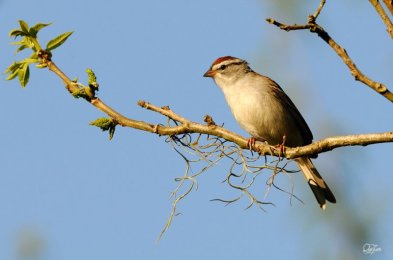
Avian and Attributes – Sun

Sunbittern (Eurypyga helias) by Lee at Lowry Park Zoo

Sunbittern (Eurypyga helias) by Lee at Lowry Park Zoo

To Him who made great lights, For His mercy endures forever— The sun to rule by day, For His mercy endures forever; The moon and stars to rule by night, For His mercy endures forever.” (Psalms 136:7-9 NKJV)

SUN, n.
1. The splendid orb or luminary which, being in or near the center of our system of worlds, gives light and heat to all the planets. The light of the sun constitutes the day, and the darkness which proceeds form its absence, or the shade of the earth, constitutes the night. Psalm 136.
2. In popular usage, a sunny place; a place where the beams of the sun fall; as, to stand in the sun, that is, to stand where the direct rays of the sun fall.
3. Any thing eminently splendid or luminous; that which is the chief source of light or honor. The natives of America complain that the sun of their glory is set.
I will never consent to put out the sun of sovereignty to posterity.
4. In Scripture, Christ is called the sun of righteousness, as the source of light, animation and comfort to his disciples.
5. The luminary or orb which constitutes the center of any system of worlds. The fixed stars are supposed to be suns in their respective systems.
Under the sun, in the world; on earth; a proverbial expression.
There is no new thing under the sun. Ecclesiastes  1.

“That which has been is what will be, That which is done is what will be done, And there is nothing new under the sun.” (Ecclesiastes 1:9 NKJV)”

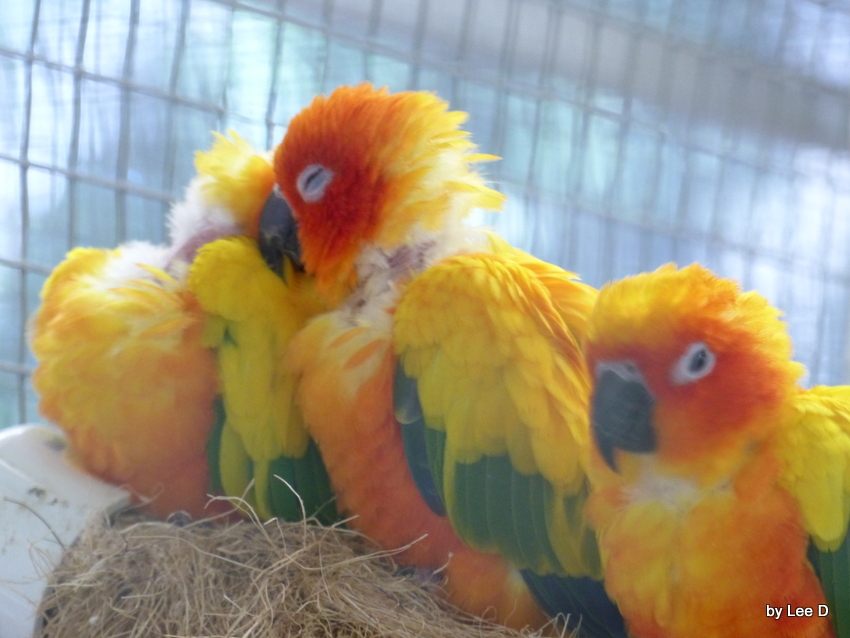
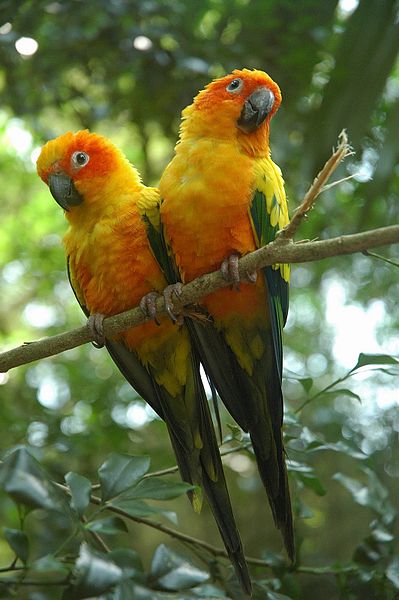
Sun Parakeet (Aratinga solstitialis) at Parrot Mtn by Lee

SUN, v.t. To expose to the sun’s rays; to warm or dry in the light of the sun; to insolate; as, to sun cloth; to sun grain.
–Then to sun thyself in open air.

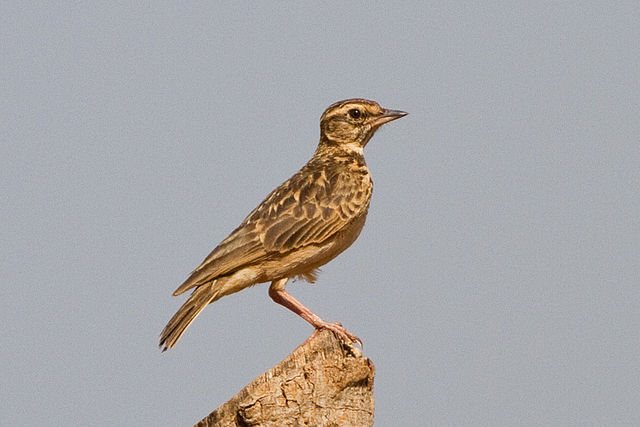
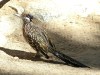
Sun Lark (Galerida modesta)

Sun Lark (Galerida modesta)

The Sun Lark (Galerida modesta) or Nigerian Sun Lark is a species of lark in the family Alaudidae. It inhabits a broad horizontal area south of the Sahel, ranging from Guinea to South Sudan. Its natural habitats are dry savannah and subtropical or tropical dry lowland grassland. (Wikipedia)

Sun Parakeet (Aratinga solstitialis) ©WikiC

The Sun Parakeet (Aratinga solstitialis), also known in aviculture as the Sun Conure, is a medium-sized, vibrantly colored parrot native to northeastern South America. The adult male and female are similar in appearance, with predominantly golden-yellow plumage and orange-flushed underparts and face. Sun parakeets are very social birds, typically living in flocks. They form monogamous pairs for reproduction, and nest in palm cavities in the tropics. Sun parakeets mainly feed on fruits, flowers, berries, blossoms, seeds, nuts, and insects. (Wikipedia)

More Avian and Attributes

Birds whose first name starts with “S”

Good News

*
[Definitions from Webster’s Dictionary of American English (1828), unless noted. Bird info from Wikipedia plus.]


Birds and Forest Fires

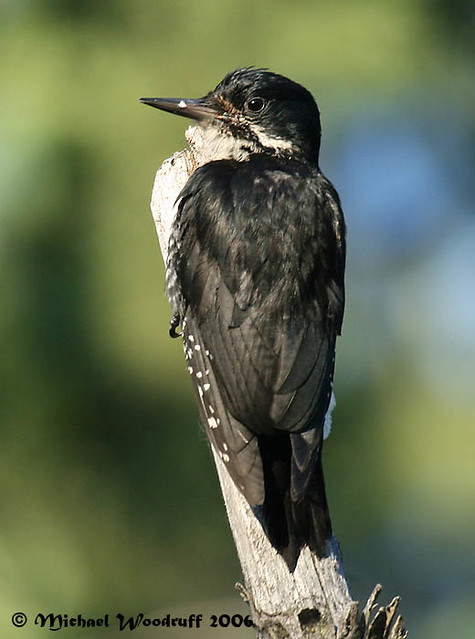
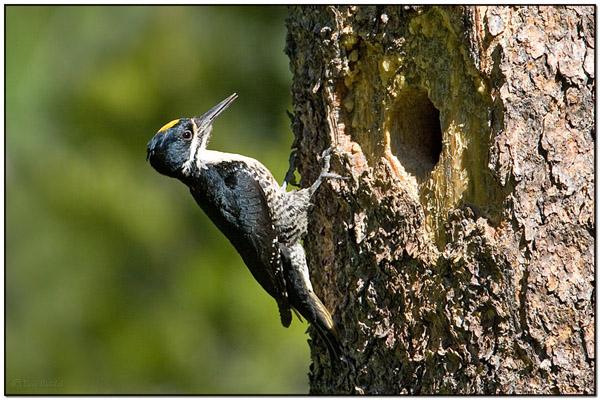
Black-backed Woodpecker ©Flicker Michael Woodruff

Black-backed Woodpecker ©Flicker Michael Woodruff

All About Birds re-published an article about how Forest Fires affect wildlife and people from Living Bird magazine.

I found it to be very interest how so abundantly birds, wildlife and plants revive after a forest fire. This article was about the Rice Ridge Fire burn in the Swan Mountains of Montana. They show many of the birds that are now coming back and abounding.

“You send forth Your Spirit, they are created; And You renew the face of the earth. May the glory of the LORD endure forever; May the LORD rejoice in His works. He looks on the earth, and it trembles; He touches the hills, and they smoke.” (Psalms 104:30-32 NKJV)

One avian wonder especially pointed out is the Black-backed Woodpecker.

Black-backed Woodpecker (Picoides arcticus) by Daves BirdingPix

“The black-backed woodpecker (Picoides arcticus) also known as the Arctic three-toed woodpecker is a medium-sized woodpecker (23 cm (9.1 in) long) inhabiting the forests of North America.

Their breeding range is boreal forest across Canada, Alaska, the north-western United States, as well as northern Wisconsin, Minnesota, and Upper Michigan. In particular the species is a burnt-forest specialist, feeding on the outbreaks of wood-boring beetles that feed on recently burnt trees. The most important wood boring beetles taken are in the families Cerambycidae and Buprestidae, along with engraver beetles and Mountain pine beetle. Most food is obtained by pecking, a smaller proportion is obtained by gleaning off branches. Black-backed woodpeckers are generally non-migratory but historically have undertaken intermittent irruptions.

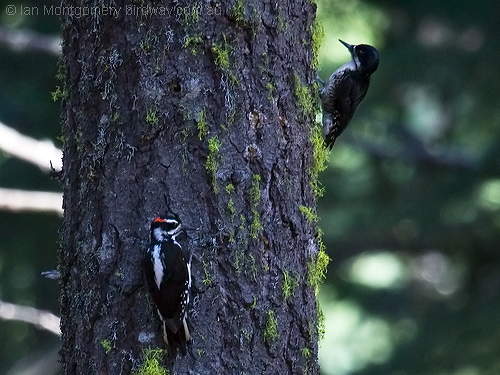
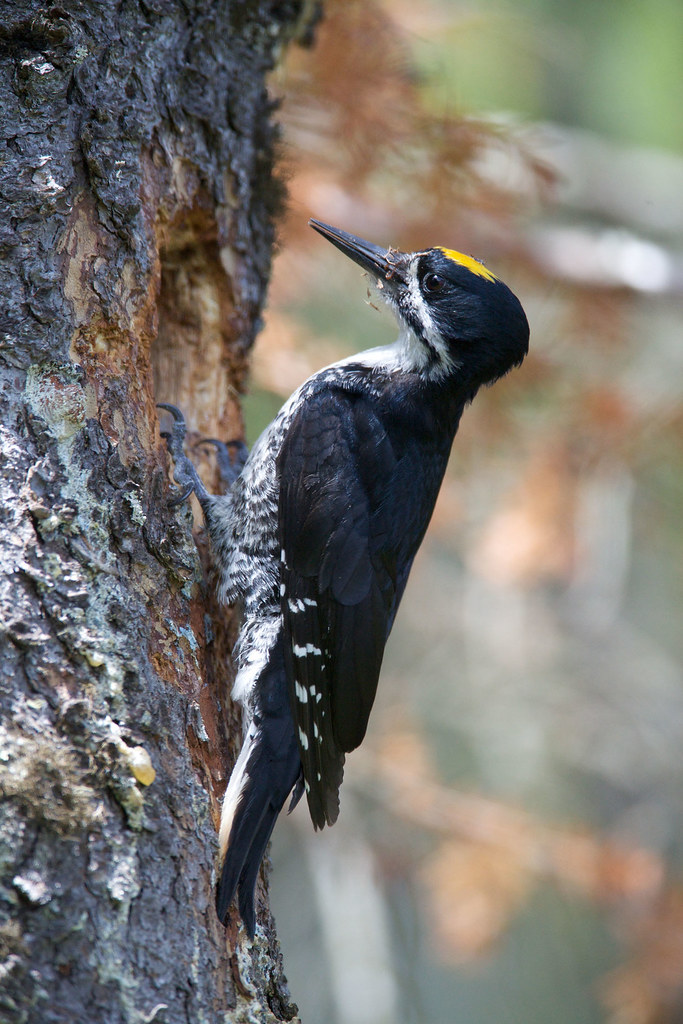
Black-backed Woodpecker (Picoides arcticus) by Ian

Nest excavation occurs in April and May; a fresh nest is drilled each year into the sapwood of dead trees. Abandoned nests are used by other species of bird to nest in. The female lays three or four eggs, and incubation duties are shared between both parents, although the male alone incubates during the night. Upon hatching the altricial chicks are brooded until the nestling phase. Both parents feed the chicks, which take about 24 days to fledge.

Nest excavation occurs in April and May; a fresh nest is drilled each year into the sapwood of dead trees. Abandoned nests are used by other species of bird to nest in. The female lays three or four eggs, and incubation duties are shared between both parents, although the male alone incubates during the night. Upon hatching the altricial chicks are brooded until the nestling phase. Both parents feed the chicks, which take about 24 days to fledge.

Black-backed Woodpecker (Picoides arcticus) by Ian

Black Backed Woodpecker

There are times when it is good to have things “renewed.”

“But those who wait on the LORD Shall renew their strength; They shall mount up with wings like eagles, They shall run and not be weary, They shall walk and not faint.” (Isaiah 40:31 NKJV)

Information about  the Black-backed Woodpecker from [Wikipedia]

Old Flames: The Tangled History of Forest Fires, Wildfire, and People

All About Birds – Black-backed Woodpecker

Wordless Woodpeckers

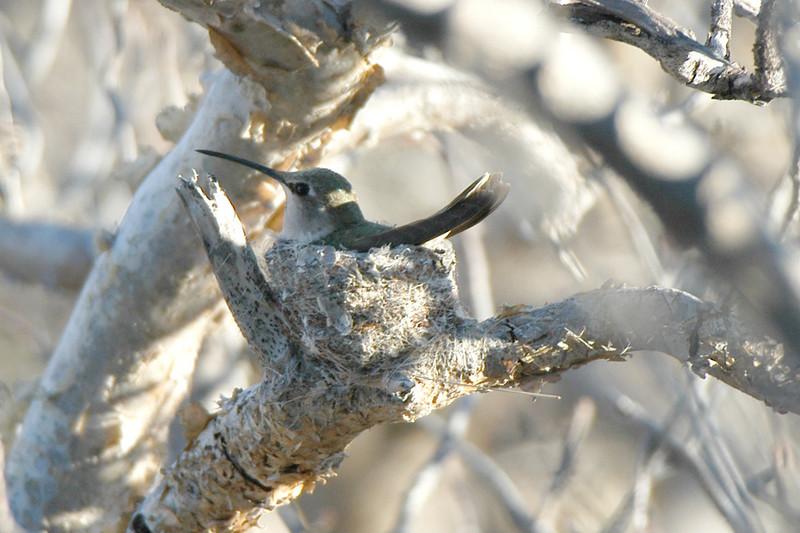
Creation Moments – Double Life of the Hummingbird

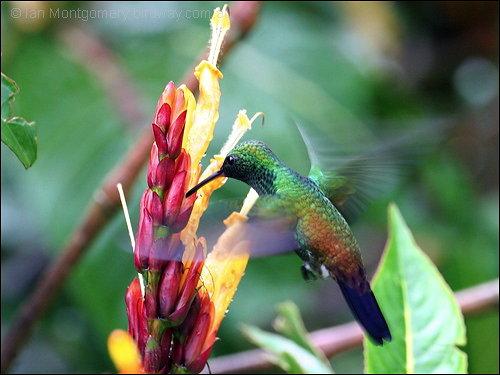
Copper-rumped Hummingbird (Amazilia tobaci) by Ian

Copper-rumped Hummingbird (Amazilia tobaci) by Ian

Learn more about one of
God’s most unusual creatures by watching our video
“Double Life of the Hummingbird”

 Who doesn’t love the beautiful hummingbird? You’ll love them even more after viewing our “Double Life of the Hummingbird” video! That’s because you’ll about the unique abilities their Designer has given them. Truly, hummingbirds bear evidence of God’s creative hand!           

This Week’s Creation Action Moment

1. Watch our “Double Life of the Hummingbird” video by clicking on the picture above.

2. Then check out our Moments with God’s Creation 3-DVD set to add this video and more than 70 others like it to your home DVD collection. Your whole family will enjoy watching videos like these:

  • God’s Agriculture and the Stink Bug
  • The Venus Flytrap
  • Birds Who Build Pyramids
  • Reptilian Fuzzy Feet
  • The Double Life of the Hummingbird

When you order Moments with God’s Creation 3-DVD set at our online bookstore, you will also be helping Creation Moments stay on the air!


Click to learn about the easiest way to make
our ministry your ministry!

“I will both lay me down in peace, and sleep: for thou, LORD, only makest me dwell in safety.” (Psalms 4:8 KJV)

Costa’s Hummingbird (Calypte costae) by Bob-Nan

Wordless Birds – With Hummingbirds

Seagulls and Family Circus

Today’s Family Circus caught my attention and decided to see what could be found to go with it. This video from Cornell Lab of Ornithology tells about how the gulls signal each other over territory. If you ignore a few references to evolution, it is quite interesting.

“How can aggressive, predatory, and cannibalistic birds coexist in crowded breeding colonies? Explore the lives and territorial interactions of Herring and Great Black-backed gulls in a breeding colony on Maine’s Appledore Island.” [From the video page]

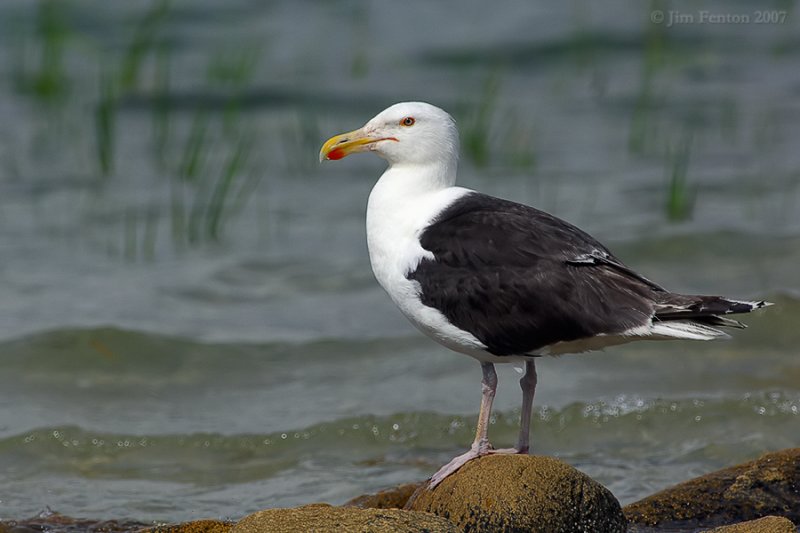
Great Black-backed Gull (Larus marinus) by J Fenton

Great Black-backed Gull (Larus marinus) by J Fenton

They seem to have quite a communication system. Reminds us of a few verses:

“But let your communication be, Yea, yea; Nay, nay: for whatsoever is more than these cometh of evil.” (Matthew 5:37 KJV)

“But above all things, my brethren, swear not, neither by heaven, neither by the earth, neither by any other oath: but let your yea be yea; and your nay, nay; lest ye fall into condemnation.” (James 5:12 KJV)


A few days ago, I posted this on the Bird of the Bible for Kids. Am in need of some feedback as to whether this might be a series. The McGuffey’s Readers were used in our schools to teach reading. There are quite a few good stories that mention birds. A few of those were posted.

My question: Would you look at them and possibly leave a comment? Yea or Nea.

I’m looking for “communications” on how to proceed. Thanks, Lee

World’s Fastest Seagull

Lesser Black-backed Gull (Larus fuscus) ©

Lesser Black-backed Gull (Larus fuscus) ©

‘World’s fastest seagull’ stuns experts

Jul. 30, 2019 – 1:26 – A lesser black-backed seagull, is stunning experts with its apparent speed, traveling more than 500 miles in just seven days. The seagull which was ringed on Burhou in the Channel islands on July 17, was later found at Ares Beach in A Coruna Spain, on July 24. Alderney Bird Observatory warden John Horton said that the distance traveled by the bird in such a short period of time was unusual.

Here is a link attached to this clip:

https://video.foxnews.com/v/6065781298001/#sp=show-clips

Lesser Black-backed Gull (Larus fuscus) (Heuglin's)

Lesser Black-backed Gull (Larus fuscus) (Heuglin’s)

The lesser black-backed gull was one of the many species originally described by Linnaeus in his 18th-century work, Systema Naturae, and it still bears its original name of Larus fuscus. The scientific name is from Latin. Larus appears to have referred to a gull or other large seabird, and fuscus meant black or brown.

“Will you set your eyes upon wealth, when [suddenly] it is gone? For riches certainly make themselves wings, like an eagle [ or Lesser-Black-backed Gull] that flies toward the heavens.” (Proverbs 23:5 AMP)

Lesser Black-backed Gull – All About Birds

Lesser Black-backed Gull – eBird

Lesser Black-backed Gull – Wikipedia

Avian and Attributes – Strong

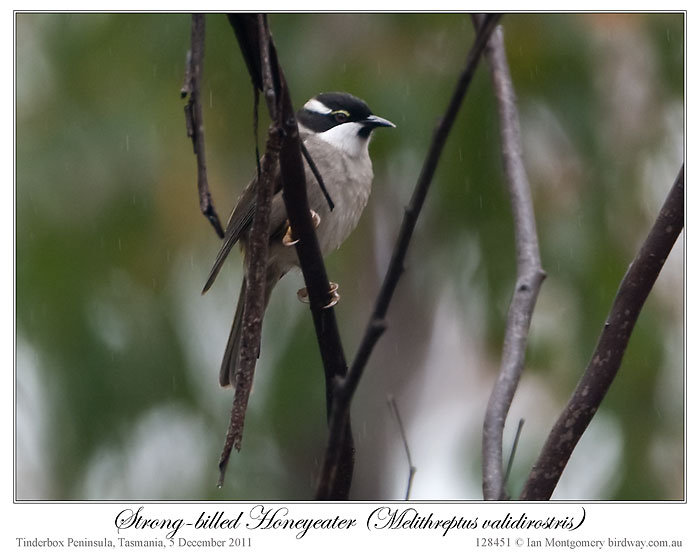
Strong-billed Honeyeater (Melithreptus validirostris) by Ian 2

Strong-billed Honeyeater (Melithreptus validirostris) by Ian

“Lift up your heads, O ye gates; and be ye lift up, ye everlasting doors; and the King of glory shall come in. Who is this King of glory? The LORD strong and mighty, the LORD mighty in battle.” (Psalms 24:7-8 KJV)

STRONG
Strong, a. [G., L. The sense of the radical word is to stretch, strain, draw, and probably from the root of stretch and reach.]

Having physical active power, or great physical power; having the power of exerting great bodily force; vigorous. A patient is recovering from sickness, but is not yet strong enough to walk. A strong man will lift twice his own weight.
That our oxen may be strong to labor. Psa 144.
Having physical passive power; having ability to bear or endure; firm; solid; as a constitution strong enough to bear the fatigues of a campaign.
Well fortified; able to sustain attacks;
Having great wealth, means or resources;

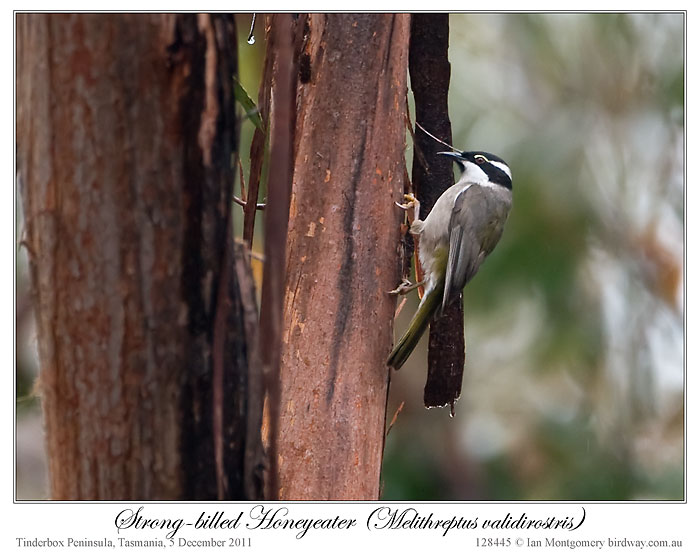
Strong-billed Honeyeater (Melithreptus validirostris) by Ian 1

Strong-billed Honeyeater (Melithreptus validirostris) by Ian 1

Moving with rapidity; violent; forcible; impetuous; as a strong current of water or wind; the wind was strong from the northeast; we had a strong tide against us.
Hale; sound; robust; as a strong constitution.
Powerful; forcible; cogent; adapted to make a deep or effectual impression on the mind or imagination; as a strong argument; strong reasons; strong evidence; a strong example or instance. – He used strong language.

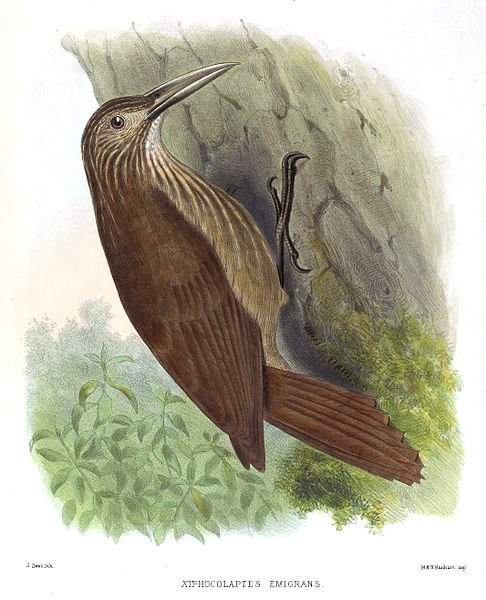
Strong-billed Woodcreeper (Xiphocolaptes promeropirhynchus) ©WikiC

Ardent; eager; zealous; earnestly engaged;
Affecting the sight forcibly; as strong colors.
Affecting the taste forcibly; as the strong flavor of onions.
Affecting the smell powerfully; as a strong scent.
Not of easy digestion; solid; as strong meat. Heb 5.
Well established; firm; not easily overthrown or altered;
Violent; vehement; earnest. – Who in the day of his flesh, when he offered up prayers with strong crying and tears– Heb 5.
Able; furnished with abilities. – I was stronger in prophecy than in criticism.
Having great force of mind, of intellect or of any faculty; as a man of strong powers of mind; a man of a strong mind or intellect; a man of strong memory, judgment or imagination.
Bright; glaring; vivid; as a strong light.
Powerful to the extent of force named; as an army ten thousand strong.

Strong-billed Woodcreeper (Xiphocolaptes promeropirhynchus) ©Drawingi WikiC

Strong-billed Woodcreeper (Xiphocolaptes promeropirhynchus) ©Drawingi WikiC

“Bow down thine ear to me; deliver me speedily: be thou my strong rock, for an house of defence to save me. For thou art my rock and my fortress; therefore for thy name’s sake lead me, and guide me.” (Psalms 31:2-3 KJV)

“The name of the LORD is a strong tower: the righteous runneth into it, and is safe.” (Proverbs 18:10 KJV)


More Avian and Attributes

Birds whose first or last name starts with “S”

Good News

*
[Definitions from Webster’s Dictionary of American English (1828), unless noted. Bird info from Wikipedia plus.]

Avian and Attributes – Stripes

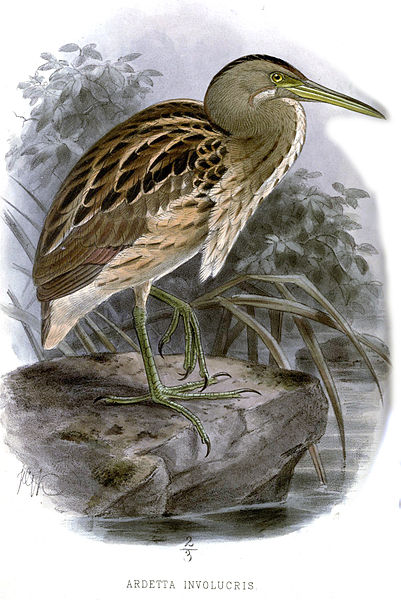
Stripe-backed Bittern (Ixobrychus involucris) ©Drawing WikiC

Stripe-backed Bittern (Ixobrychus involucris) ©Drawing WikiC

“But he was wounded for our transgressions, he was bruised for our iniquities: the chastisement of our peace was upon him; and with his stripes we are healed.” (Isaiah 53:5 KJV)

Stripe
STRIPE, n.
1. A line or long narrow division of any thing, of a different color from the ground as a stripe of red on a green ground; hence, any linear variation of color.
2. A strip or long narrow piece attached to something of a different color; as a long stripe sewed upon a garment.
3. The weal or long narrow mark discolored by a lash or rod.
4. A stroke made with a lash, whip, rod, strap or scourge.
Forty stripes may he give him, and not exceed. Deu 25.
[A blow with a club is not a stripe.]
5. Affliction; punishment; sufferings.
By his stripes are we healed. Isa 53.
STRIPE, v.t.
1. To make stripes; to form with lines of different colors; to variegate with stripes.
2. To stripe; to lash. [Little used.]

There are quite a few birds that have the word Stripe in their name. The first three birds below are called Stripe-backed, as that is what the Lord’s back must have looked like after He was beaten.

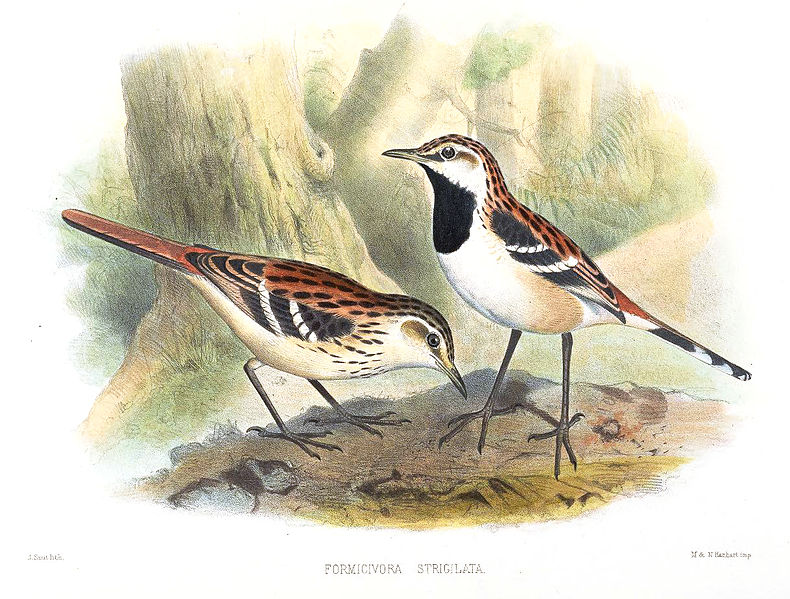
Stripe-backed Antbird (Myrmorchilus strigilatus)

Stripe-backed Antbird (Myrmorchilus strigilatus) ©Drawing WikiC

Stripe-backed Antbird (Myrmorchilus strigilatus) ©Drawing WikiC

Stripe-backed Bittern (Ixobrychus involucris) (Shown above)
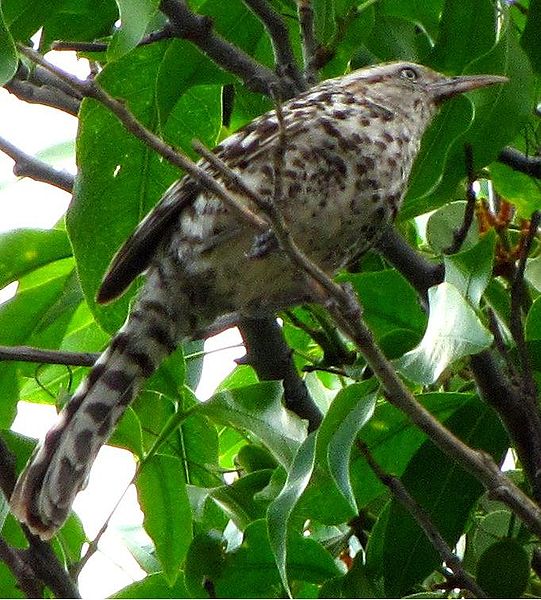
Stripe-backed Wren (Campylorhynchus nuchalis)

Stripe-backed Wren (Campylorhynchus nuchalis) ©WikiC

Stripe-backed Wren (Campylorhynchus nuchalis) ©WikiC

Other birds with Striped in their name:
Striped Crake (Aenigmatolimnas marginalis)
Striped Cuckoo (Tapera naevia)
Striped Flowerpecker (Dicaeum aeruginosum)
Striped Flufftail (Sarothrura affinis)
Striped Honeyeater (Plectorhyncha lanceolata)
Striped Kingfisher (Halcyon chelicuti)
Striped Laughingthrush (Trochalopteron virgatum)

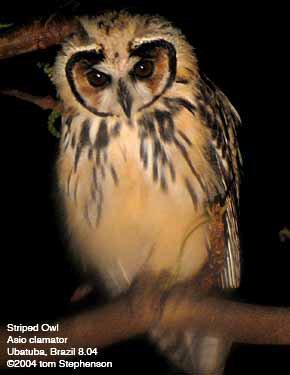
Striped Owl (Pseudoscops clamator)
Striped Pipit (Anthus lineiventris)
Striped Sparrow (Oriturus superciliosus)
Striped Treehunter (Thripadectes holostictus)
Striped Woodcreeper (Xiphorhynchus obsoletus)
Striped Woodpecker (Veniliornis lignarius)
Striped Wren-Babbler (Kenopia striata)

“For even hereunto were ye called: because Christ also suffered for us, leaving us an example, that ye should follow his steps: Who did no sin, neither was guile found in his mouth: Who, when he was reviled, reviled not again; when he suffered, he threatened not; but committed himself to him that judgeth righteously: Who his own self bare our sins in his own body on the tree, that we, being dead to sins, should live unto righteousness: by whose stripes ye were healed. For ye were as sheep going astray; but are now returned unto the Shepherd and Bishop of your souls.” (1 Peter 2:21-25 KJV)


More Avian and Attributes

Birds whose first or last name starts with “S”

Good News

*
[Definitions from Webster’s Dictionary of American English (1828), unless noted. Bird info from Wikipedia plus.]

Meet Another New Photographer – William Wise

Eastern Screech Owl (Megascops asio) ©williamwisephoto.com

Eastern Screech Owl (Megascops asio) ©williamwisephoto.com

Thankfully, we have another new photographer who has given permission to use his photos. William Wise has been taking photos of quite a variety of topics for some time. And he also is a Christian.

You can check out the main page at William Wise Photography. He has five sections to view his various subjects:

Home

“O LORD, how manifold are your works! In wisdom have you made them all; the earth is full of your creatures.”  Psalm 104:24 

Shelter Photography

Shelter Puppy ©WilliamWisePhoto.com

Nature Photography

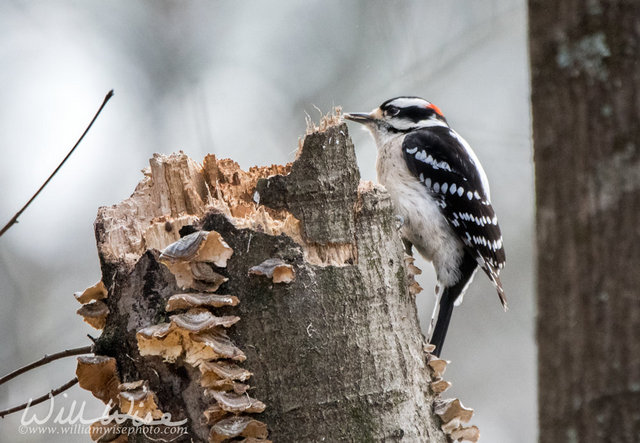
Downy Woodpeckerr ©WilliamWise.com

Creation Speaks

Canada Goose (Branta canadensis) ©WilliamWisePhotography.com

Canada Goose (Branta canadensis) ©WilliamWisePhotography.com

CREATION SPEAKS
Creation Speaks is a Biblical creation teaching ministry that uses writing and photography to teach the truth of our origin and other spiritual truths from the Bible. The lessons from God’s creation are also taught in multi-media presentations designed for Christian schools, youth and adult groups, and church Sunday School groups utilizing slideshows, videos, mounted and live animals.

Blogs

Like you, I will be busy looking through these many photos and articles for ideas for this blog. His theme in the Creation Speaks section is similar to what we try to do here. This is from his Creation Speaks section:

Here is a photo from one of his blogs: Fighting The Reflection…

Tufted Titmouse Picture

“For if you listen to the word and don’t obey, it is like glancing at your face in a mirror. You see yourself, walk away, and forget what you look like.” James 1:23-24 New Living Translation

Thank you William for this new permission. Lord’s Blessing on on your do. Keep up the good photography, I might need them here. :)


Who Provides For The Sawfly?

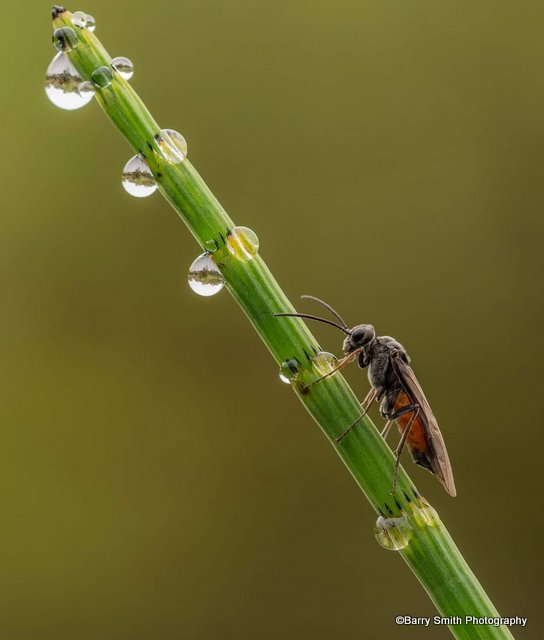
Sawfly on Horsetail drinking dew Cornwall UK Drinking Dew ©Photography of B Smith

“Who hath divided a watercourse for the overflowing of waters, or a way for the lightning of thunder; To cause it to rain on the earth, where no man is; on the wilderness, wherein there is no man; To satisfy the desolate and waste ground; and to cause the bud of the tender herb to spring forth? Hath the rain a father? or who hath begotten the drops of dew?” (Job 38:25-28 KJV)

When I saw this photo today, I asked permission from Barry Smith to use it. Thankfully, he has given permission and also for the usage of others on his Facebook site. Thanks, Barry.

Many species of sawfly have retained their ancestral attributes throughout time, specifically their plant-eating habits, wing veins and the unmodified abdomen, where the first two segments appear like the succeeding segments. The absence of the narrow wasp waist distinguishes sawflies from other members of hymenoptera, although some are Batesian mimics with coloration similar to wasps and bees, and the ovipositor can be mistaken for a stinger. Most sawflies are stubby and soft-bodied, and fly weakly. Sawflies vary in length: Urocerus gigas, which can be mistaken as a wasp due to its black-and-yellow striped body, can grow up to 20 millimetres (0.8 in) in length, but among the largest sawflies ever discovered was Hoplitolyda duolunica from the Mesozoic, with a body length of 55 millimetres (2.2 in) and a wingspan of 92 millimetres (3.6 in). The smaller species only reach lengths of 2.5 millimetres (0.1 in).

Sawfly Larvae Damage by their Larvae ©Pests.org

Predators include birds, insects and small animals. The larvae of some species have anti-predator adaptations such as regurgitating irritating liquid and clustering together for safety in numbers. Sawflies are hosts to many parasitoids, most of which are Hymenoptera, the rest being Diptera.

Adult sawflies are short-lived, with a life expectancy of 7–9 days, though the larval stage can last from months to years, depending on the species.

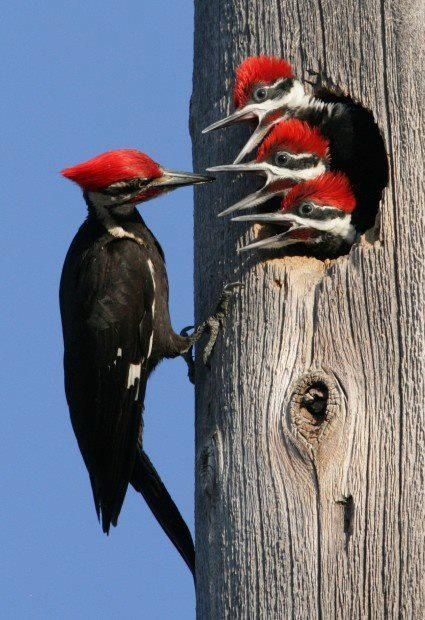
Woodpeckar Feeding Chicks From Pinterest

They are a pest for humans

Sawflies are major economic pests of forestry. For example, species in the Diprionidae, such as the pine sawflies, Diprion pini and Neodiprion sertifer, cause serious damage to pines in regions such as Scandinavia. D. pini larvae defoliated 500,000 hectares (1,200,000 acres) in the largest outbreak in Finland, between 1998 and 2001. Up to 75% of the trees may die after such outbreaks, as D. pini can remove all the leaves late in the growing season, leaving the trees too weak to survive the winter. Little damage to trees only occurs when the tree is large or when there is minimal presence of larvae. Eucalyptus trees can regenerate quickly from damage inflicted by the larvae; however, they can be substantially damaged from outbreaks, especially if they are young. The trees can be defoliated completely and may cause “dieback”, stunting or even death.

Sawflies are serious pests in horticulture. Different species prefer different host plants, often being specific to a family or genus of hosts. For example, Iris sawfly larvae, emerging in summer, can quickly defoliate species of Iris including the yellow flag and other freshwater species. Similarly the rose sawflies, Arge pagana and A. ochropus, defoliate rose bushes.

They are a pest for humans, yet the Lord, their Creator, cares enough for them to provide dew to drink.

“The LORD by wisdom hath founded the earth; by understanding hath he established the heavens. By his knowledge the depths are broken up, and the clouds drop down the dew.” (Proverbs 3:19-20 KJV)

Do we not sometimes misbehave, yet the Lord continues to provide water, sun, air to breathe, and other benefits for us? Critters are provided for, but we, humans, have even a greater blessing available to us. Salvation through the Lord Jesus Christ.

Photograghy of B Smith

Sawfly Wikipedia

Who Paints The Leaves?

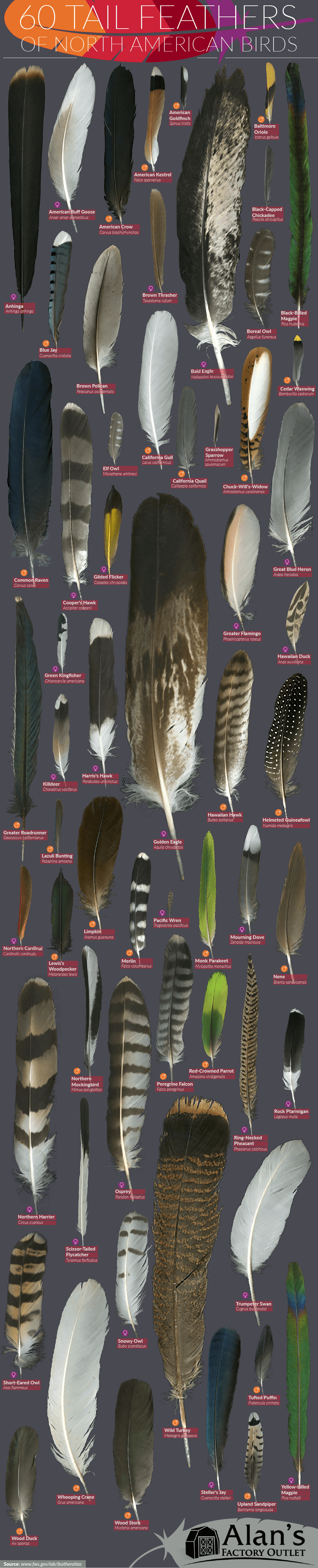
Tail Feathers of North American Birds

Bald Eagle with Tail spread out

I’m thankful for an email from a Boy Scouts of America leader. He suggested placing links to this information about Tail Feathers in the Birdwatching section. [Which are now there, plus on two other pages.] It is part of a badge they are working on.

These feathers are interesting and would love to see each of these species in the field. Isn’t it amazing how the Creator of these Avian Wonders goes into such details in tail feather design. Along with the rest of the feathers attached to the birds. :)

60 Tail Feathers of North American Birds - AlansFactoryOutlet.com - Infographic
By AlansFactoryOutlet.com

“Of the birds after their kind, of animals after their kind, and of every creeping thing of the earth after its kind, two of every kind will come to you to keep them alive.” (Genesis 6:20 NKJV) [In to the Ark]

“Bring out with you every living thing of all flesh that is with you: birds and cattle and every creeping thing that creeps on the earth, so that they may abound on the earth, and be fruitful and multiply on the earth.
(Genesis 8:17 NKJV) [Out of the Ark]

Here are most of the birds that these feathers would be attached to:

Wordless Birds

McGuffey’s 6th Grade Reader – The Morning Oratorio

Chipping Sparrow (Spizella passerina) by Quy Tran

Chipping Sparrow (Spizella passerina) by Quy Tran

“He sends forth springs in the valleys; They flow between the mountains; They give drink to every beast of the field; The wild donkeys quench their thirst. Beside them the birds of the heavens dwell; They lift up their voices among the branches.” (Psalms 104:10-12 NASB)

McGuffey Readers were a series of graded primers for grade levels 1-6. They were widely used as textbooks in American schools from the mid-19th century to the mid-20th century, and are still used today in some private schools and in homeschooling.

Here is a story of The Oratorio from the Sixth Grade Reader. (From Gutenberg) Pictures are current photos.

hairbird

Noun (plural hairbirds) – birdSpizella passerina, the chipping sparrow. [from Your Dictionary]

XI. THE MORNING ORATORIO. (90)

Wilson Flagg, 1806-1884, was born in Beverly, Mass. He pursued his academical course in Andover, at Phillips Academy, and entered Harvard College, but did not graduate. His chief Works are: “Studies in the Field and Forest,” “The Woods and Byways of New England,” and “The Birds and Seasons of New England.”

Nature, for the delight of waking eyes, has arrayed the morning heavens in the loveliest hues of beauty. Fearing to dazzle by an excess of delight, she first announces day by a faint and glimmering twilight, then sheds a purple tint over the brows of the rising morn, and infuses a transparent ruddiness throughout the atmosphere. As daylight widens, successive groups of mottled and rosy-bosomed clouds assemble on the gilded sphere, and, crowned with wreaths of fickle rainbows, spread a mirrored flush over hill, grove, and lake, and every village spire is burnished with their splendor.

At length, through crimsoned vapors, we behold the sun’s broad disk, rising with a countenance so serene that every eye may view him ere he arrays himself in his meridian brightness. Not many people who live in towns are aware of the pleasure attending a ramble near the woods and orchards at daybreak in the early part of summer. The drowsiness we feel on rising from our beds is gradually dispelled by the clear and healthful breezes of early day, and we soon experience an unusual amount of vigor and elasticity.

During the night, the stillness of all things is the circumstance that most powerfully attracts our notice, rendering us peculiarly sensitive to every accidental sound that meets the ear. In the morning, at this time of year, on the contrary, we are overpowered by the vocal and multitudinous chorus of the feathered tribe. If you would hear the commencement of this grand anthem of nature, you must rise at the very first appearance of dawn, before the twilight has formed a complete semicircle above the eastern porch of heaven.

Chipping Sparrow (Spizella passerina) by Daves BirdingPix

The first note that proceeds from the little warbling host, is the shrill chirp of the hairbird,—occasionally vocal at an hours on a warm summer night. This strain, which is a continued trilling sound, is repeated with diminishing intervals, until it becomes almost incessant. But ere the hairbird has uttered many notes, a single robin begins to warble from a neighboring orchard, soon followed by others, increasing in numbers until, by the time the eastern sky is flushed with crimson, every male, robin in the country round is singing with fervor.

It would be difficult to note the exact order in which the different birds successively begin their parts in this performance; but the bluebird, whose song is only a short, mellow warble, is heard nearly at the same time with the robin, and the song sparrow joins them soon after with his brief but finely modulated strain. The different species follow rapidly, one after another, in the chorus, until the whole welkin rings with their matin hymn of gladness.

I have often wondered that the almost simultaneous utterance of so many different notes should produce no discords, and that they should result in such complete harmony. In this multitudinous confusion of voices, no two notes are confounded, and none has sufficient duration to grate harshly with a dissimilar sound. Though each performer sings only a few strains and then makes a pause, the whole multitude succeed one another with such rapidity that we hear an uninterrupted flow of music until the broad light of day invites them to other employments.

When there is just light enough to distinguish the birds, we may observe, here and there, a single swallow perched on the roof of a barn or shed, repeating two twittering notes incessantly, with a quick turn and a hop at every note he utters. It would seem to be the design of the bird to attract the attention of his mate, and this motion seems to be made to assist her in discovering his position. As soon as the light has tempted him to fly abroad, this twittering strain is uttered more like a continued song, as he flits rapidly through the air.

Purple Martin (Progne subis) ©WikiC

But at this later moment the purple martins have commenced their more melodious chattering, so loud as to attract for a while the most of our attention. There is not a sound in nature so cheering and animating as the song of the purple martin, and none so well calculated to drive away melancholy. Though not one of the earliest voices to be heard, the chorus is perceptibly more loud and effective when this bird has united with the choir.

American Robin (Turdus migratorius) eating by Jim Fenton

American Robin (Turdus migratorius) eating by Jim Fenton

When the flush of the morning has brightened into vermilion, and the place from which the sun is soon to emerge has attained a dazzling brilliancy, the robins are already less tuneful. They are now becoming busy in collecting food for their morning repast, and one by one they leave the trees, and may be seen hopping upon the tilled ground, in quest of the worms and insects that, have crept out during the night from their subterranean retreats.

Bobolink (Dolichonyx oryzivorus) by J Fenton

But as the robins grow silent, the bobolinks begin their vocal revelries; and to a fanciful mind it might seem that the robins had gradually resigned their part in the performance to the bobolinks, not one of which is heard until some of the former have concluded their songs. The little hairbird still continues his almost incessant chirping, the first to begin and the last to quit the performance. Though the voice of this bird is not very sweetly modulated, it blends harmoniously with the notes of other birds, and greatly increases the charming effect of the combination.

Eastern Wood Pewee (Contopus virens) by Raymond Barlow

Eastern Wood Pewee (Contopus virens) by Raymond Barlow

It would be tedious to name all the birds that take part in this chorus; but we must not omit the pewee, with his melancholy ditty, occasionally heard like a short minor strain in an oratorio; nor the oriole, who is really one of the chief performers, and who, as his bright plumage flashes upon the sight, warbles forth a few notes so clear and mellow as to be beard above every other sound. Adding a pleasing variety to all this harmony, the lisping notes of the meadowlark, uttered in a shrill tone, and with a peculiar pensive modulation, are plainly audible, with short rests between each repetition.

Western Meadowlark (Sturnella neglecta)©USFWS

Western Meadowlark (Sturnella neglecta)©USFWS

There is a little brown sparrow, resembling the hairbird, save a general tint of russet in his plumage, that may be heard distinctly among the warbling host. He is rarely seen in cultivated grounds, but frequents the wild pastures, and is the bird that warbles so sweetly at midsummer, when the whortleberries are ripe, and the fields are beautifully spangled with red lilies.

There is no confusion in the notes of his song, which consists of one syllable rapidly repeated, but increasing in rapidity and rising to a higher key towards the conclusion. He sometimes prolongs his strain, when his notes are observed to rise and fall in succession. These plaintive and expressive notes are very loud and constantly uttered, during the hour that precedes the rising of the sun. A dozen warblers of this species, singing in concert, and distributed in different parts of the field, form, perhaps, the most delightful part of the woodland oratorio to which we have listened.

Carolina Wren (Thryothorus ludovicianus) by Quy Tran

Carolina Wren (Thryothorus ludovicianus) by Quy Tran

At sunrise hardly a robin can be beard in the whole neighborhood, and the character of the performance has completely changed during the last half hour. The first part was more melodious and tranquilizing, the last is more brilliant and animating. The grass finches, the vireos, the wrens, and the linnets have joined their voices to the chorus, and the bobolinks are loudest in their song. But the notes of the birds in general are not so incessant as before sunrise. One by one they discontinue their lays, until at high noon the bobolink and the warbling flycatcher are almost the only vocalists to be heard in the fields.


Title: McGuffey’s Sixth Grade Eclectic Reader, Author: William Holmes McGuffey
Release Date: September 26, 2005 [EBook #16751], Language: English

McGuffey’s Sixth Grade Reader

Wordless Birds
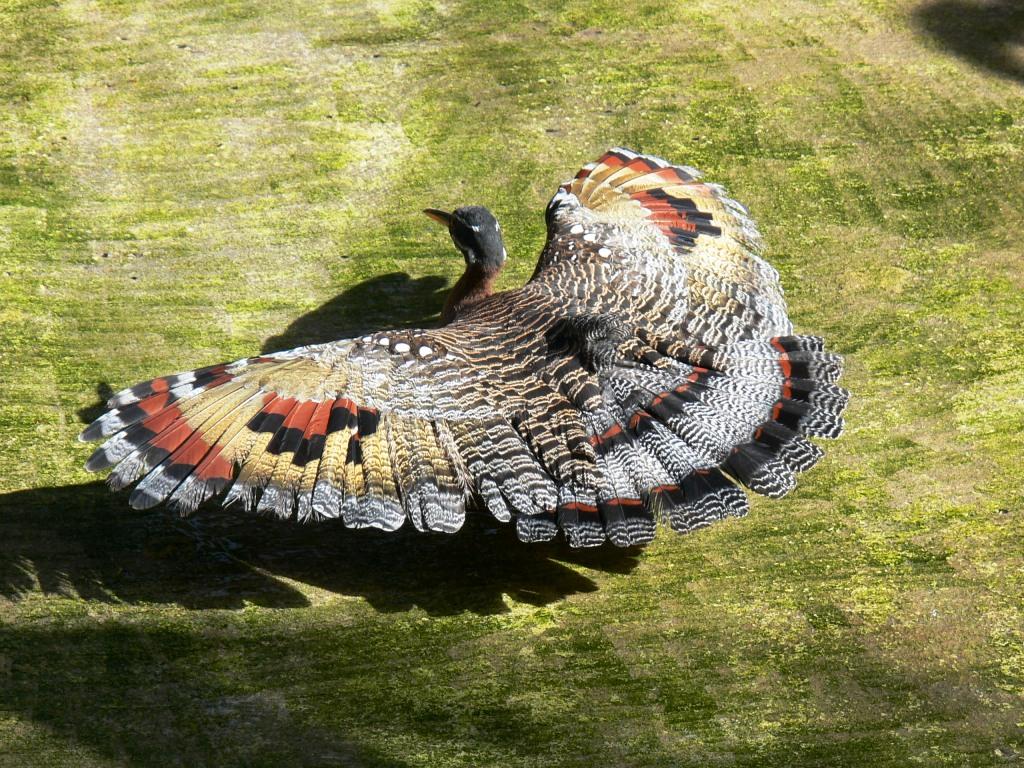
Avian And Attributes – Stone

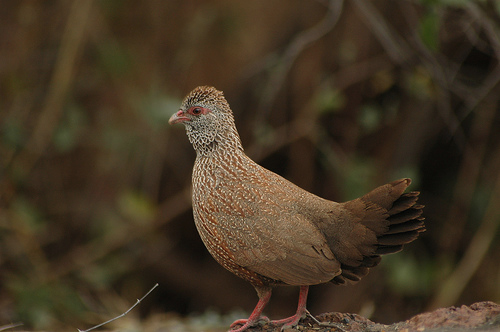
Stone Partridge (Ptilopachus petrosus) ©WikiC

Stone Partridge (Ptilopachus petrosus) ©WikiC

“Jesus saith unto them, Did ye never read in the scriptures, The stone which the builders rejected, the same is become the head of the corner: this is the Lord’s doing, and it is marvellous in our eyes?” (Matthew 21:42 KJV)


Avian and Attributes – Stone

STONE, n. [Gr.]
2. A gem; a precious stone.
Inestimable stones, unvalued jewels.
3. Any thing made of stone; a mirror.
8. A monument erected to preserve the memory of the dead.
Should some relentless eye glance on the stone where our cold relics lie–
9. It is used to express torpidness and insensibility; as a heart of stone.
I have not yet forgot myself to stone.
10. Stone is prefixed to some words to qualify their signification. Thus stone-dead, is perfectly dead, as lifeless as a stone; stone-still, still as a stone, perfectly still; stone-blind, blind as a stone, perfectly blind.
To leave no stone unturned, a proverbial expression which signifies to do every thing that can be done; to use all practicable means to effect an object.
STONE, a. Made of stone, or like stone; as a stone jug.
STONE, v.t.
1. To pelt, beat or kill with stones.
And they stoned Stephen calling on God and saying, Lord Jesus, receive my spirit. Acts 7.


Stone Partridge (Ptilopachus petrosus) ©Flickr Jean

The Stone Partridge (Ptilopachus petrosus) is a bird of the new world quail family. This largely brown bird, which commonly holds its tail raised, is found in scrubland and lightly wooded habitats, often near rocks, from Kenya and Ethiopia to Gambia (a large part if its range is in the Sudanian Savanna). As traditionally defined, it is the only member of Ptilopachus, but based on genetic evidence this genus also includes the Nahan’s “francolin”

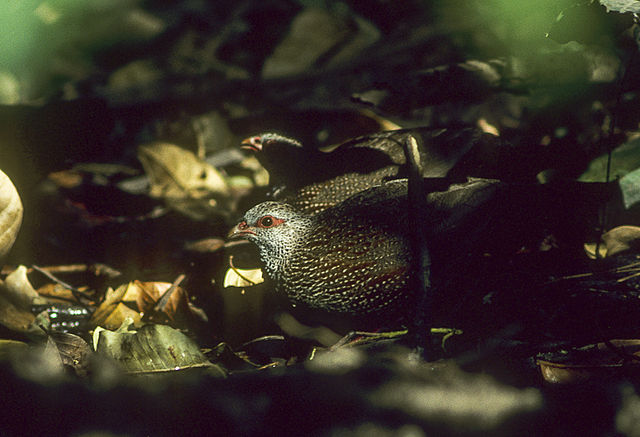
Stone Partridge (Ptilopachus petrosus) ©WikiC

The Stone Partridge is exceptional among gamebirds in that the female, to human eyes, is showier than the male. Both sexes are predominantly earthy chocolate brown above, with sparse pale cream-grey spotting. The head, neck and chest are paler brown and have broad cream edging to the feathers that gives the bird a scaled appearance. In males the lower chest and belly are orange-cream; in females, very pale cream. Both sexes raise their crown feathers to form a rudimentary crest but the feathers of females are somewhat longer and hence more obvious when raised.

Eggs are pale pink, fading to cream, juveniles are dark chocolate-brown throughout, moulting into adult plumage at several weeks old. In captivity at least, the male plays a major role in both incubation and rearing of the young, offering young small items of food by picking them up, dropping them and calling to the chicks.


“But ye believe not, because ye are not of my sheep, as I said unto you. My sheep hear my voice, and I know them, and they follow me: And I give unto them eternal life; and they shall never perish, neither shall any man pluck them out of my hand. My Father, which gave them me, is greater than all; and no man is able to pluck them out of my Father’s hand. I and my Father are one. Then the Jews took up stones again to stone him. Jesus answered them, Many good works have I shewed you from my Father; for which of those works do ye stone me?” (John 10:26-32 KJV)

More Avian and Attributes

Birds whose first or last name starts with “S”
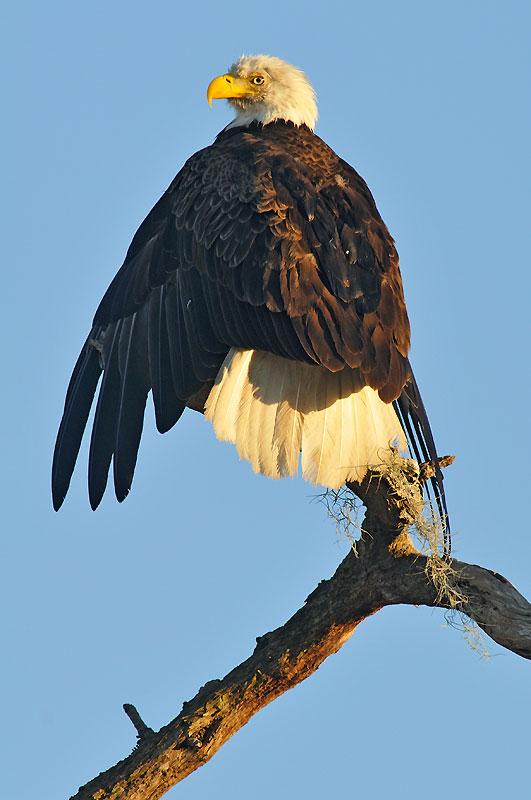
Good News

*
[Definitions from Webster’s Dictionary of American English (1828), unless noted. Bird info from Wikipedia plus.]