***

PROVIDENCE
***
“You have granted me life and favor, and Your providence has preserved my spirit.” (Job 10:12 AMP)
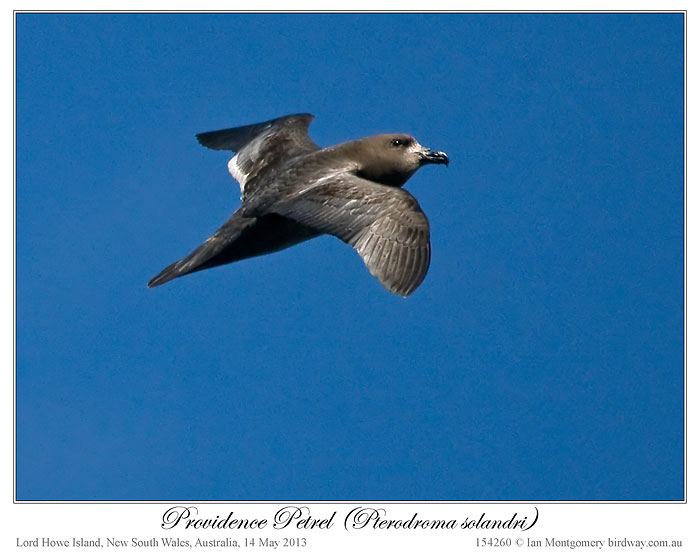
Providence Petrel (Pterodroma solandri) by Ian
*
“You have granted me life and favor, and Your providence has preserved my spirit.” (Job 10:12 AMP)
Providence Petrel (Pterodroma solandri) by Ian
*

“And my people shall dwell in a peaceable habitation, and in sure dwellings, and in quiet resting places;” (Isaiah 32:18 KJV)
Black-winged Petrel (Pterodroma nigripennis) by Ian Montgomery
*
“Praise the LORD from the earth, ye dragons, and all deeps: Fire, and hail; snow, and vapour; stormy wind fulfilling his word: Mountains, and all hills; fruitful trees, and all cedars: Beasts, and all cattle; creeping things, and flying fowl:” (Psalms 148:7-10 KJV)
The Petrels in the Pterodroma genus has enough species to present them in their own post. Ian Montgomery, (Bird of the Week/Moment), has quite a few photos of this family on his Birdway Site.
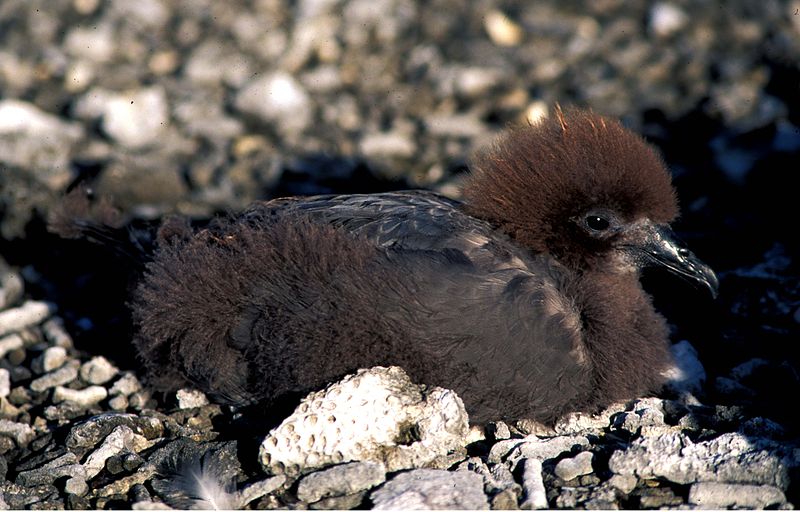
Murphy’s Petrel (Pterodroma ultima) ©WikiC
“The gadfly petrels are seabirds in the bird order Procellariiformes. The gadfly petrels are named for their speedy weaving flight as if evading horseflies. The flight action is also reflected in the genus name Pterodroma, from Ancient Greek pteron, “wing” and dromos, “runner”.
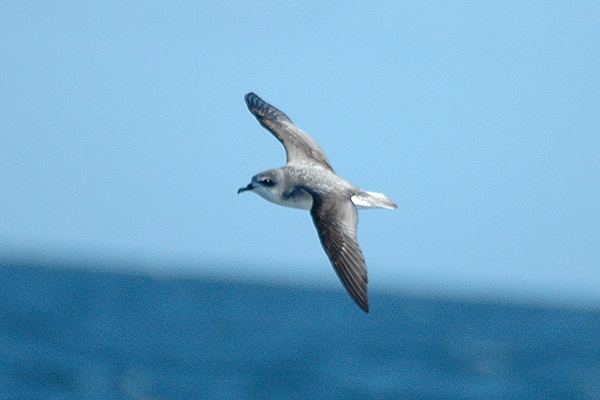
Cook’s Petrel (Pterodroma cookii) ©WikiC
“These medium to large petrels feed on food items picked from the ocean surface.”
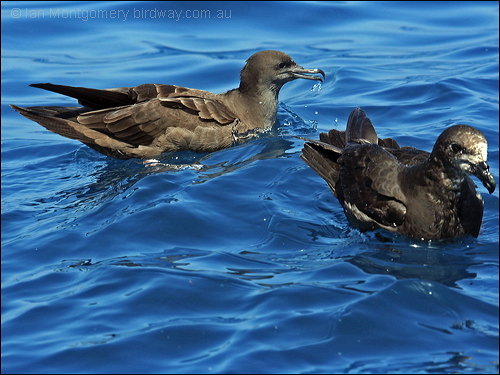
Great-winged Petrel (Pterodroma macroptera) by Ian
“The short, sturdy bills of the Pterodroma species in this group, about 35 altogether, are adapted for soft prey taken at the surface; they have twisted intestines for digesting marine animals which have unusual biochemistries.”
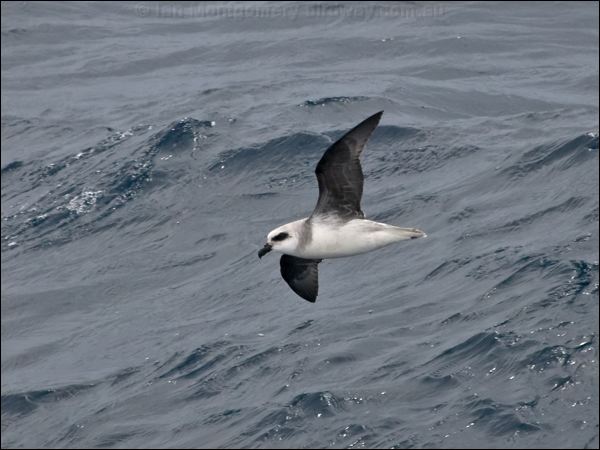
White-headed Petrel (Pterodroma lessonii) by Ian
“Their complex wing and face marking are probably for interspecific recognition.”
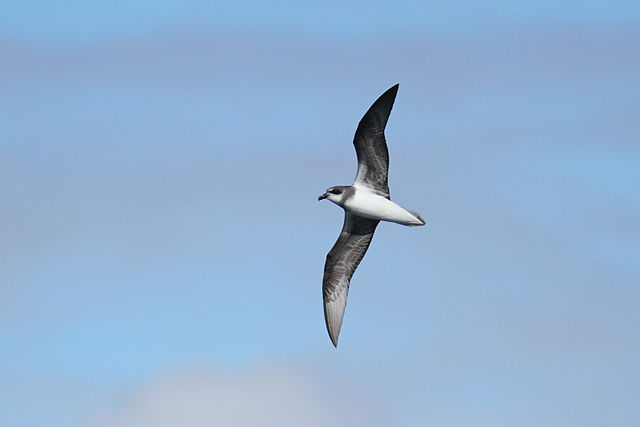
Soft-plumaged Petrel (Pterodroma mollis) ©WikiC
“These birds nest in colonies on islands and are pelagic when not breeding. One white egg is laid usually in a burrow or on open ground. They are nocturnal at the breeding colonies.”
“While generally wide-ranging, most Pterodroma species are confined to a single ocean basin (e.g. Atlantic), and vagrancy is not as common amongst Pterodromas as it is in some other seabird species (c.f. the Storm-Petrels Hydrobatidae).” (Information from Wikipedia)
*
“Praise ye the LORD. Praise God in his sanctuary: praise him in the firmament of his power. Praise him for his mighty acts: praise him according to his excellent greatness. Praise him with the sound of the trumpet: praise him with the psaltery and harp. Praise him with the timbrel and dance: praise him with stringed instruments and organs. Praise him upon the loud cymbals: praise him upon the high sounding cymbals. Let every thing that hath breath praise the LORD. Praise ye the LORD.” (Psalms 150:1-6 KJV)
“Jesus What a Mighty Name” ~ Pastor Smith with Choir and Orchestra.
*
More Sunday Inspirations
Procellariidae – Petrels, Shearwaters
Sunday Inspiration – Procellariidae Family – Petrel, Fulmar and Prion

“Bless the LORD, all his works in all places of his dominion: bless the LORD, O my soul.” (Psalms 103:22 KJV)
Mixed Flock Scattering at Tampa Bay shore by Lee
*
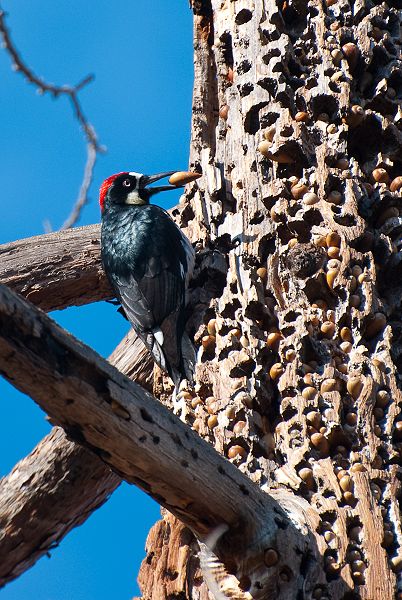
“So shall your storage places be filled with plenty,” (Proverbs 3:10a AMP)
Acorn Woodpecker (Melanerpes formicivorus) with Hoard or Grainary WikiC
*
“And the fear of you and the dread of you shall be on every beast of the earth, on every bird of the air, on all that move on the earth, and on all the fish of the sea. They are given into your hand.” (Genesis 9:2 NKJV)
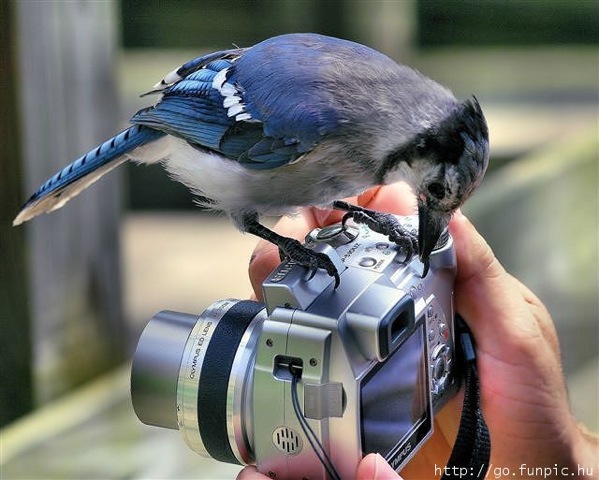
Blue Jay on Camera ©Funpic
[This Blue Jay forgot to be afraid.]
*
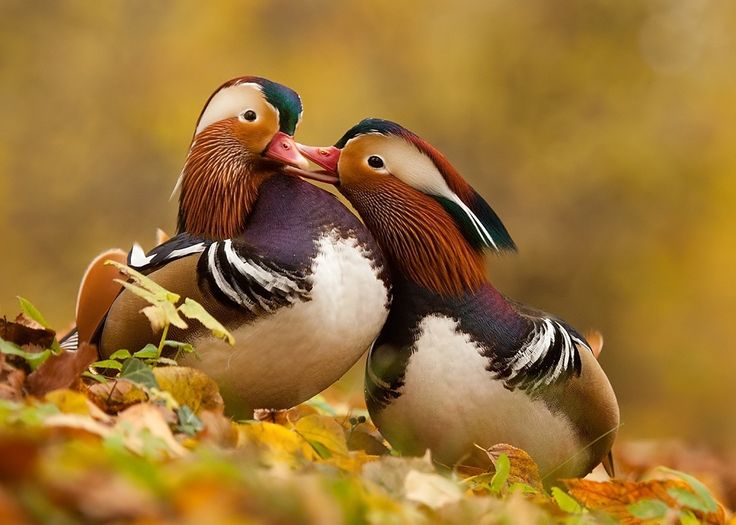
“So shall he sprinkle many nations; the kings shall shut their mouths at him: for that which had not been told them shall they see; and that which they had not heard shall they consider.” (Isaiah 52:15)
Wood Duck (Aix sponsa) Shuting Mouth ©S-Media-Cache
*

“Enter ye in at the strait gate: for wide is the gate, and broad is the way, that leadeth to destruction, and many there be which go in thereat: Because strait is the gate, and narrow is the way, which leadeth unto life, and few there be that find it.” (Matthew 7:13-14 KJV)
Broad-billed Prion (Pachyptila vittata) ©www.TeAra.govt.nz
*
No Words Needed! Received from a friend.

When you need a smile
Send this to 3 friends and you will make 3 friends smile. No, you won’t GET SOMETHING. Sorry, but that’s the truth. |

“I am the LORD thy God, which brought thee out of the land of Egypt: open thy mouth wide, and I will fill it.” (Psalms 81:10 KJV)
Northern Giant Petrel (Macronectes halli) by Dave’s BirdingPix
*

“And Ruth said, entreat me not to leave thee, or to return from following after thee; for where you go, I will go; and where you lodge, I will lodge: thy people shall be my people, and thy God my God. (Ruth 1:16)
Name and Credit for Bird Photo
*
Broad-billed Prion (Pachyptila vittata) ©www.TeAra.govt.nz
“So God created great sea creatures and every living thing that moves, with which the waters abounded, according to their kind, and every winged bird according to its kind. And God saw that it was good.” (Genesis 1:21 NKJV)
The Procellariidae – Petrels, Shearwaters Family contains more than those two species of birds. You will be introduced to Giant Petrels, Diving Petrels, Petrels, Fulmars, Prions, and Shearwaters. The previous Petrels families shown were Storm Petrels (Oceanitidae and Hydrobatidae), and the Albatross (Diomedeidae) family also was presented. These four families make up the Procellariiformes Order. This Procellariidae group, being the largest, will take several weeks to be able to cover.
From Wikipedia – “The family Procellariidae is a group of seabirds that comprises the fulmarine petrels, the gadfly petrels, the prions, and the shearwaters. This family is part of the bird order Procellariiformes (or tubenoses), which also includes the albatrosses, the storm petrels, and the diving petrels.
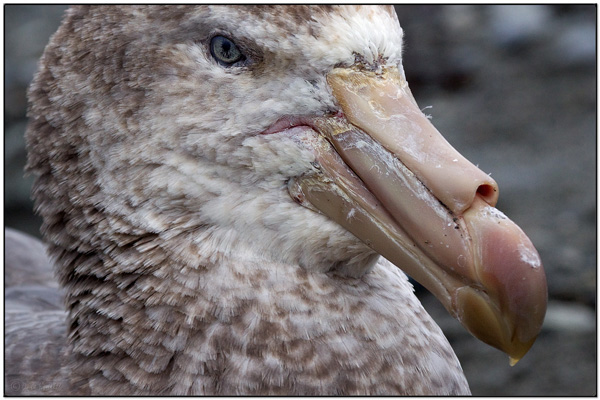
Northern Giant Petrel head close-up by Daves BirdingPix
The procellariids are the most numerous family of tubenoses, and the most diverse. They range in size from the giant petrels, which are almost as large as the albatrosses, to the prions, which are as small as the larger storm petrels. They feed on fish, squid and crustacea, with many also taking fisheries discards and carrion. All species are accomplished long-distance foragers, and many undertake long trans-equatorial migrations. They are colonial breeders, exhibiting long-term mate fidelity and site philopatry. In all species, each pair lays a single egg per breeding season. Their incubation times and chick-rearing periods are exceptionally long compared to other birds.
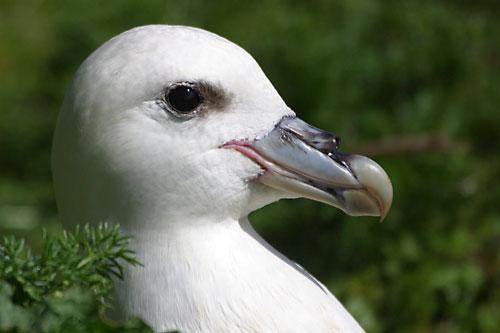
Northern Fulmar (Fulmarus glacialis) ©AGrosset
Many procellariids have breeding populations of over several million pairs; others number fewer than 200 birds. Humans have traditionally exploited several species of fulmar and shearwater (known as muttonbirds) for food, fuel, and bait, a practice that continues in a controlled fashion today. Several species are threatened by introduced species attacking adults and chicks in breeding colonies and by long-line fisheries.” (Wikipedia)
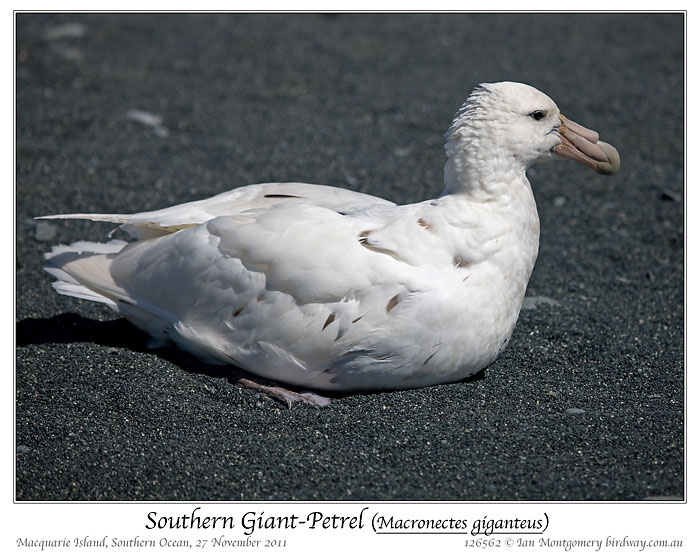
Southern Giant Petrel (Macronectes giganteus) by Ian
“Giant petrels form a genus, Macronectes, from the family Procellariidae, which consists of two species. They are the largest birds of this family. Both species are restricted to the Southern Hemisphere, and though their distributions overlap significantly, with both species breeding on the Prince Edward Islands, Crozet Islands, Kerguelen Islands, Macquarie Island and South Georgia, many southern giant petrels nest further south, with colonies as far south as Antarctica. Giant petrels are aggressive predators and scavengers, inspiring another common name, the stinker. South Sea whalers used to call them gluttons.”
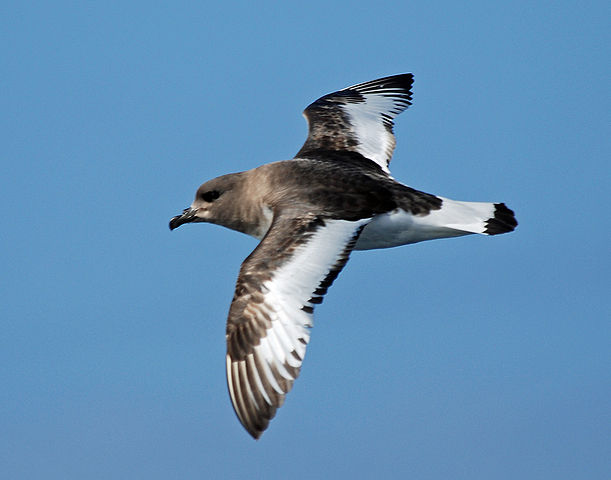
Antarctic Petrel (Thalassoica antarctica) ©WikiC
“The Antarctic petrel (Thalassoica antarctica) is a boldly marked dark brown and white petrel, found in Antarctica, most commonly in the Ross and Weddell seas. They eat Antarctic krill, fish, and small squid. They feed while swimming but can dive from both the surface and the air.”

Cape Petrel (Daption capense) by Ian
“The Cape petrel (Daption capense), also called the Cape pigeon, pintado petrel, or Cape fulmar is a common seabird of the Southern Ocean from the family Procellariidae. It is the only member of the genus Daption, and is allied to the fulmarine petrels, and the giant petrels. They are extremely common seabirds with an estimated population of around 2 million.”
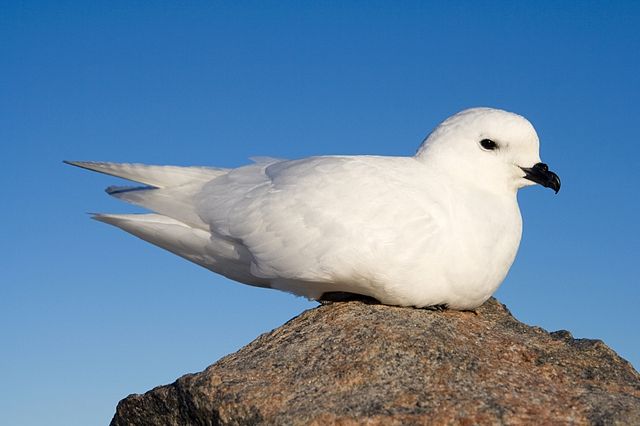
Snow Petrel (Pagodroma nivea) ©WikiC
“The snow petrel (Pagodroma nivea) is the only member of the genus Pagodroma. It is one of only three birds that breed exclusively in Antarctica and has been seen at the geographic South Pole. It has the most southerly breeding distribution of any bird.
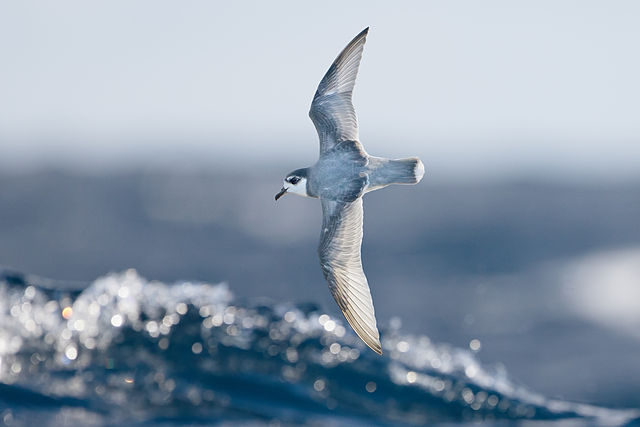
Blue Petrel (Halobaena caerulea) ©WikiC
“The blue petrel (Halobaena caerulea) is a small seabird in the shearwater and petrel family Procellariidae. This small petrel is the only member of the genus Halobaena, but is closely allied to the prions.”

Slender-billed Prion (Pachyptila belcheri) ©WikiC
“Pachyptila is a genus of seabirds in the family Procellariidae and the order Procellariiformes. The members of this genus and the blue petrel form a sub-group called prions. They range throughout the southern hemisphere, often in the much cooler higher latitudes. Three species, the Broad-billed Prion (Pachyptila vittata), the Antarctic Prion (Pachyptila desolata) and the Fairy Prion (Pachyptila turtur), range into the subtropics.”

Kermadec Petrel (Pterodroma neglecta) ©WikiC
“The Kerguelen petrel (Aphrodroma brevirostris) is a small (36 cm long) slate-grey seabird. Kerguelen petrels breed colonially on remote islands; colonies are present on Gough Island in the Atlantic Ocean, and Marion Island, Prince Edward Island, Crozet Islands and Kerguelen Island in the Indian Ocean. The species attends its colonies nocturnally, breeding in burrows in wet soil. The burrows usually face away from the prevailing wind. A single egg is laid per breeding season; the egg is unusually round for the family. The egg is incubated by both parents for 49 days. After hatching the chick fledges after 60 days.”
[Quotes are from Wikipedia, with editing.]
*
“He alone spreads out the heavens, And treads on the waves of the sea;” (Job 9:8 NKJV)
“You Were There” ~ Three Plus One Quartet – Solo Reagan Osborne
*
More Sunday Inspirations
Assurance: The Certainty of Salvation
*
















 Lee's Birdwatching Adventures Plus