Lord’s Avian Wonders – Sunbittern saying, “Where is It?”

At Lowry Park Zoo recently, we observed a Sunbittern rearranging the area. The bird keeper came by and put it all back in. He said, it is a normal occurrence.

To me, it reminds me of those of you who will be opening presents for Christmas. Invariably, some piece of a toy or something gets mixed in with all the discarded wrapping paper and the search begins. Merry Christmas.

“Or what woman, if she has ten silver coins and loses one coin, does not light a lamp and sweep the house and search carefully until she finds it? “When she has found it, she calls together her friends and neighbors, saying, ‘Rejoice with me, for I have found the coin which I had lost!’ “In the same way, I tell you, there is joy in the presence of the angels of God over one sinner who repents.” (Luke 15:8-10 NASB)

Bonus: A Bali Myna was singing away at the newly remodeled entry aviary. This is just as you enter the Main Aviary at Lowry.

I.O.C. Version 5.4 Updated on Blog

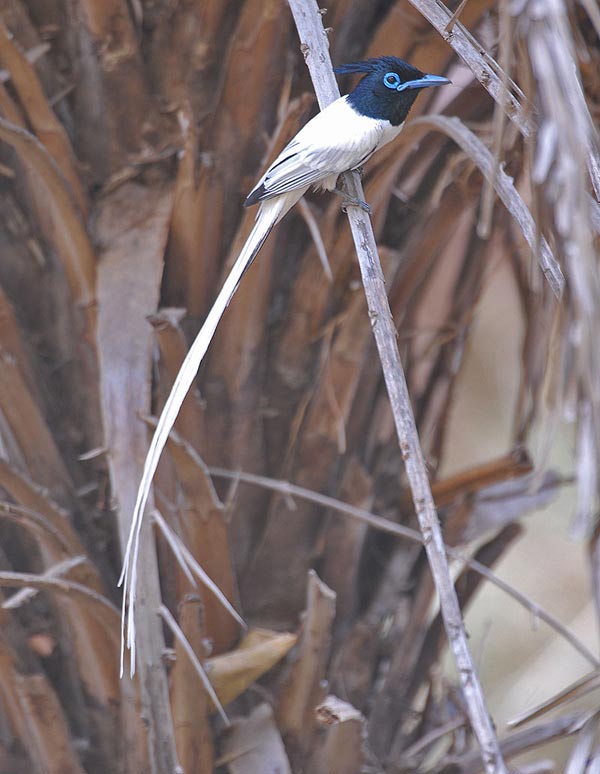
Amur Paradise Flycatcher (Terpsiphone incei) ©WikiC

Amur Paradise Flycatcher (Terpsiphone incei) ©WikiC

Out of the ground the LORD God formed every beast of the field and every bird of the air, and brought them to Adam to see what he would call them. And whatever Adam called each living creature, that was its name. So Adam gave names to all cattle, to the birds of the air, and to every beast of the field. But for Adam there was not found a helper comparable to him…. (Genesis 2:19-20 NKJV)

A couple of days ago this blog’s Birds of the World indexes were finally updated. With company, a memorial, travel, health, housework, etc., etc. it is finally up to date. In New Kingfisher Species, you were notified of the new 21 Kingfishers in the I.O.C. Version 5.4 update.

This Version now lists 10,612 extant species and 153 extinct species of birds of the world (Version 5.4), with subspecies (20,757) and annotations. There are 40 Orders, 239 Families (plus 2 Incertae sedis), 2282 Genera. The overall count was 33 new species added, including the 21 Kingfishers.

Here are the other 12 new Species added: (none were deleted this time)

Taiwan Bamboo Partridge (Bambusicola sonorivox) ©WikiC

Taiwan Bamboo Partridge (Bambusicola sonorivox) ©WikiC

“As a partridge that broods but does not hatch, So is he who gets riches, but not by right; It will leave him in the midst of his days, And at his end he will be a fool.” (Jeremiah 17:11 NKJV)

Taiwan Bamboo Partridge (Bambusicola sonorivox)
Subantarctic Shearwater (Puffinus elegans)
Desert Owl (Strix hadorami)
Roosevelt Stipple-throated Antwren (Epinecrophylla dentei)
Perija Tapaculo (Scytalopus perijanus)
Cryptic Treehunter (Cichlocolaptes mazarbarnetti)
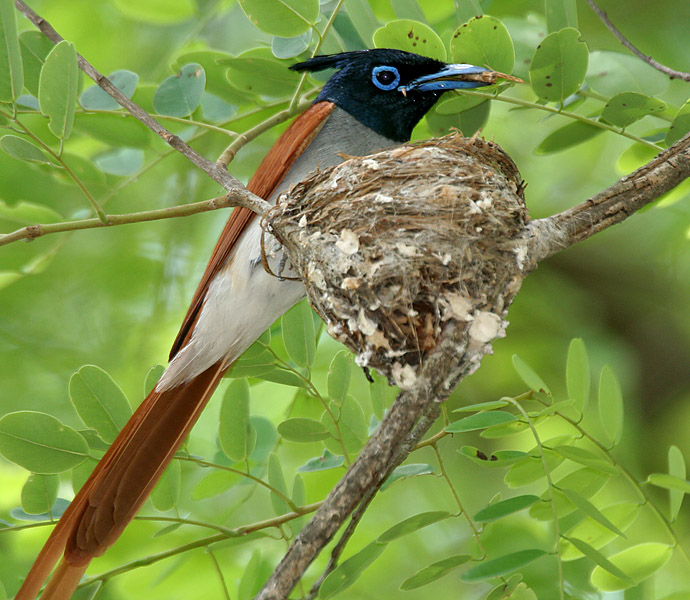
Amur Paradise Flycatcher (Terpsiphone incei)
‘Blyth’s/Oriental’ Paradise Flycatcher (Terpsiphone affinis)
Papuan Scrub Robin (Drymodes beccarii)
North Island Robin (Petroica longipes)
Norfolk Robin (Petroica multicolor)
Highland Rush Warbler (Bradypterus centralis)

They also changed the English names of these birds:

Indian Paradise Flycatcher (Terpsiphone paradisi) by Nikhil Devasar

Indian Paradise Flycatcher (Terpsiphone paradisi) by Nikhil Devasar

For the wisdom of this world is foolishness with God. For it is written, “HE CATCHES THE WISE IN THEIR OWN CRAFTINESS”; and again, “THE LORD KNOWS THE THOUGHTS OF THE WISE, THAT THEY ARE FUTILE.” (1 Corinthians 3:19-20 NKJV)

Rough-faced Shag (Leucocarbo carunculatus) – to – New Zealand King Shag
Bronze Shag (Leucocarbo chalconotus) – to – Stewart Shag
Paradise Parakeet (Psephotellus pulcherrimus) – to – Paradise Parrot
Hume’s Owl (Strix butleri) – to – Omani Owl
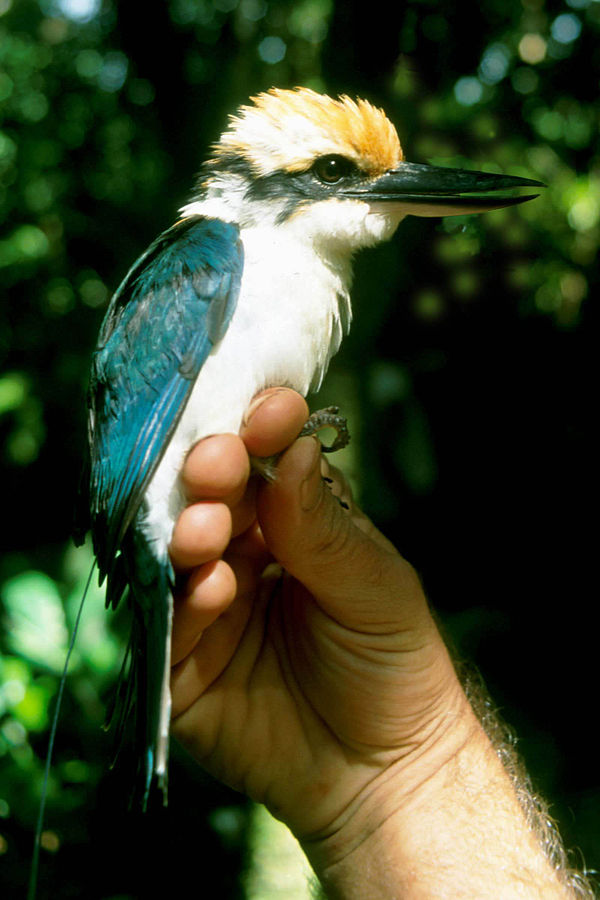
Tuamoto Kingfisher (Todiramphus gambieri) – to – Mangareva Kingfisher
Micronesian Kingfisher (Todiramphus cinnamominus) – to – Guam Kingfisher
Variable Dwarf Kingfisher (Ceyx lepidus) – to – Moluccan Dwarf Kingfisher
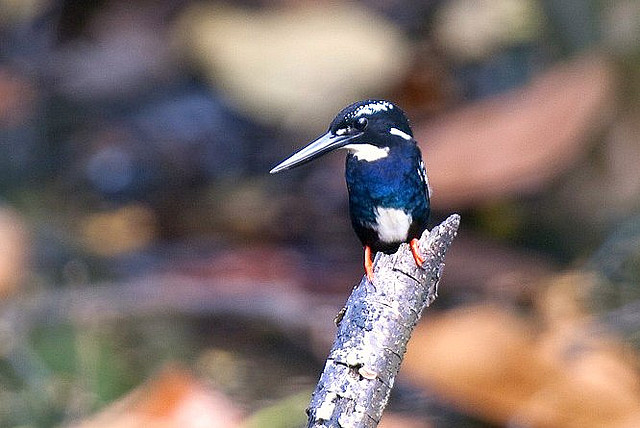
Silvery Kingfisher (Ceyx argentatus) – to – Southern Silvery Kingfisher
Asian Paradise Flycatcher (Terpsiphone paradisi) – to – Indian Paradise Flycatcher
New Zealand Robin (Petroica australis) – to – South Island Robin

They also made these species taxonomy changes:

Wedge-tailed Shearwater (Puffinus pacificus_Ardenna pacifica) by Ian

Wedge-tailed Shearwater (Puffinus pacificus to Ardenna pacifica) by Ian

“And God blessed them, saying, “Be fruitful and multiply, and fill the waters in the seas, and let birds multiply on the earth.” (Genesis 1:22 NKJV)

(Puffinus pacificus) to Wedge-tailed Shearwater (Ardenna pacifica)
(Puffinus bulleri) to Buller’s Shearwater (Ardenna bulleri)
(Puffinus griseus) to Sooty Shearwater (Ardenna grisea)
(Puffinus tenuirostris) to Short-tailed Shearwater (Ardenna tenuirostris)
(Puffinus creatopus) to Pink-footed Shearwater (Ardenna creatopus)
(Puffinus carneipes) to Flesh-footed Shearwater (Ardenna carneipes)
(Puffinus gravis) to Great Shearwater (Ardenna gravis)
(Petroica multicolor) to Pacific Robin (Petroica pusilla)
(Leucosticte sillemi) to Sillem’s Mountain Finch (Carpodacus sillemi)

*

Birds of the World

ORDERS

Families

Species Index

New Kingfisher Species – I.O.C. Version 5.4

I.O.C. Update 5.4 Version

Good News

*

Sunday Inspiration – Wrens

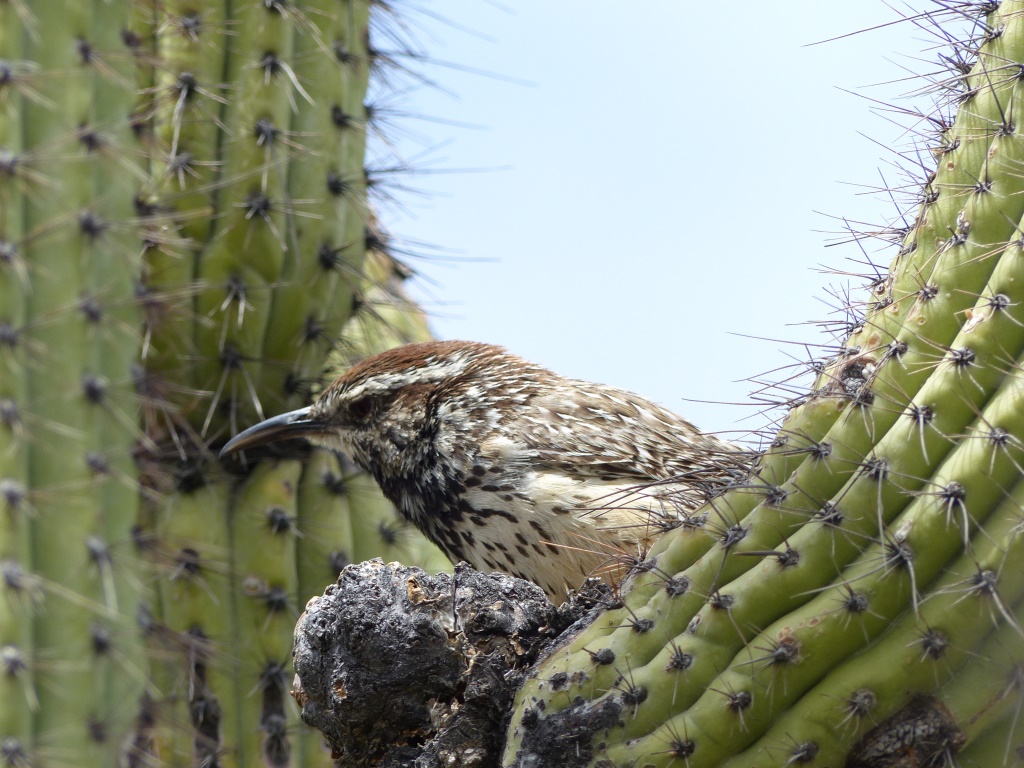
Cactus Wren (Campylorhynchus brunneicapillus) by Lee

God, who made the world and everything in it, since He is Lord of heaven and earth, does not dwell in temples made with hands. (Acts 17:24 NKJV)

The Troglodytidae – Wrens Family was the one skipped over in the Sunday Inspiration last week. There are 84 species in the family, so they deserve their own blog. The family name Troglodytidae is derived from troglodyte, which means “cave-dweller”, and the wrens get their scientific name from the tendency of some species to forage in dark crevices.

Rufous-naped Wren (Campylorhynchus rufinucha) by Raymond Barlow

Rufous-naped Wren (Campylorhynchus rufinucha) by Raymond Barlow

Wrens are medium-small to very small birds. The Eurasian wren is among the smallest birds in its range, while the smaller species from the Americas are among the smallest passerines in that part of the world. They range in size from the white-bellied wren, which averages under 10 cm (3.9 in) and 9 g (0.32 oz), to the giant wren, which averages about 22 cm (8.7 in) and weighs almost 50 g (1.8 oz). The dominating colors of their plumage are generally drab, composed of gray, brown, black, and white, and most species show some barring, especially to tail and/or wings. No sexual dimorphism is seen in the plumage of wrens, and little difference exists between young birds and adults. All have fairly long, straight to marginally decurved bills.

Bewick's Wren (Thryomanes bewickii) by Daves BirdingPix

Bewick’s Wren (Thryomanes bewickii) by Daves BirdingPix

Wrens have loud and often complex songs, sometimes given in duet by a pair. The song of members of the genera Cyphorhinus and Microcerculus have been considered especially pleasant to the human ear, leading to common names such as song wren, musician wren, flutist wren, and southern nightingale-wren.

Then God saw everything that He had made, and indeed it was very good. So the evening and the morning were the sixth day. (Genesis 1:31 NKJV)

This slideshow requires JavaScript.

“He is Everything To Me” – Men’s Ensemble – Faith Baptist

*

More Sunday Inspirations

Sermons From My Pastor


Birds of the World and Bible – Groove-billed Ani

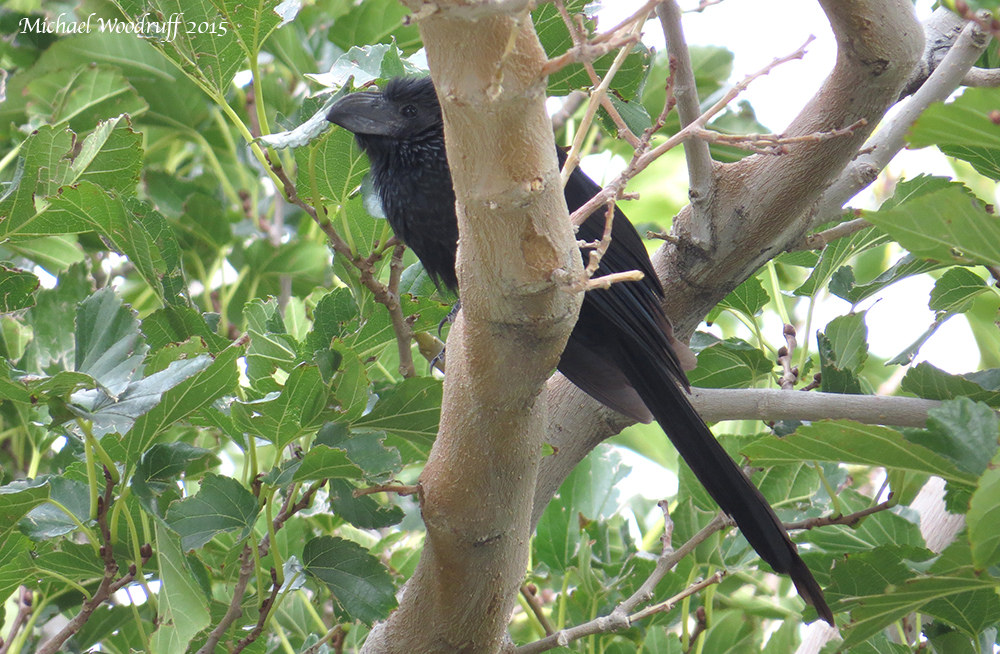
Groove-billed Ani (Crotophaga sulcirostris) by Michael Woodruff

Groove-billed Ani (Crotophaga sulcirostris) by Michael Woodruff

“every raven after its kind, and the owl, and the night-hawk, and the cuckoo, and the hawk after its kind,” (Leviticus 11:15-16 YLT)

While browsing through some of the latest photos from photographers I follow on Flickr, I came across these photos by Michael Woodruff of the Groove-billed Ani. Then I found more by two others I follow; barloventomagico and Ross Tsai.

Groove-billed Ani (Crotophaga sulcirostris) ©Flickr Ross Tsai

Groove-billed Ani (Crotophaga sulcirostris) ©Flickr Ross Tsai

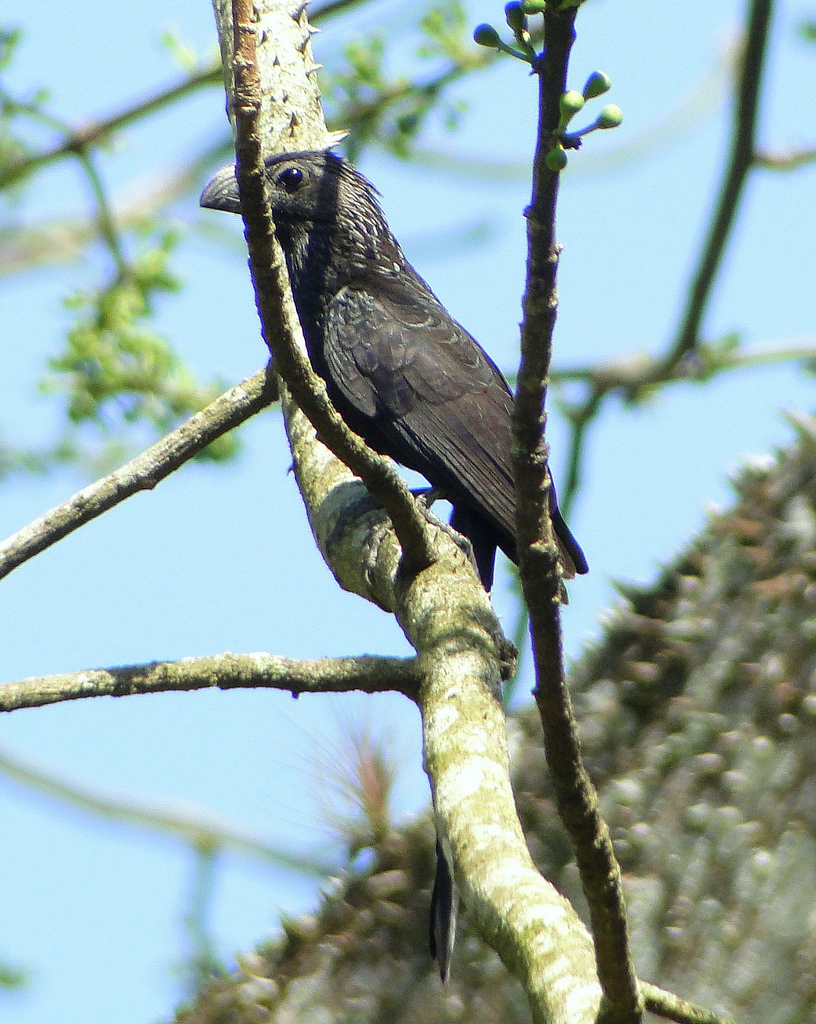
So what is a Groove-billed Ani anyway? The groove-billed ani (Crotophaga sulcirostris) is an odd-looking tropical bird in the Cuculidae – Cuckoos family with a long tail and a large, curved beak. It is a resident species throughout most of its range, from southern Texas, central Mexico and The Bahamas, through Central America, to northern Colombia and Venezuela, and coastal Ecuador and Peru. It only retreats from the northern limits of its range in Texas and northern Mexico during winter. Dan and I was able to see these birds in South Texas in 2001.

Groove-billed Ani (Crotophaga sulcirostris) by Michael Woodruff

Groove-billed Ani (Crotophaga sulcirostris) by Michael Woodruff

The groove-billed ani is about 34 cm (13 in) long, and weighs 70–90 g (2.5–3.2 oz). It is completely black, with a very long tail almost as long as its body. It has a huge bill with horizontal grooves along the length of the upper mandible. It is very similar to the smooth-billed ani, some of which have bills as small as the groove-billed and with grooves on the basal half. The two species are best distinguished by voice and range. In flight, the ani alternates between quick, choppy flaps and short glides.

Groove-billed Ani (Crotophaga sulcirostris) by Michael Woodruff

Groove-billed Ani (Crotophaga sulcirostris) by Michael Woodruff

Like other anis, the groove-billed is found in open and partly open country, such as pastures, savanna, and orchards. It feeds largely on a mixed diet of insects, seeds, and fruits.

Groove-billed Ani (Crotophaga sulcirostris) ©Flickr barloventomagico

Groove-billed Ani (Crotophaga sulcirostris) ©Flickr barloventomagico

The groove-billed ani lives in small groups of one to five breeding pairs. They defend a single territory and lay their eggs in one communal nest. All group members incubate the eggs and care for the young. (Wikipedia)

It’s a different kind of beak, but the Lord made the Ani like this so that he could eat the available food in its terrain. Bills are not an evolutionary after-thought, but the design of a Creator, that loves His critters and provides for them.

Groove-billed Ani (Crotophaga sulcirostris) ©Flickr barloventomagico

GBNA – Guide to Birds of North America eField Guide: Groove-billed Ani

  • Black overall with iridescent purple and green sheen
  • Long tail, very wide at end
  • Bulky bill with grooves (visible only at close range)
  • Bill does not extend above crown
  • Entirely black plumage
  • Sexes similar
  • Often found in small groups
  • Inhabits grassy, scrubby areas

Groove-billed Ani (Crotophaga sulcirostris) by Michael Woodruff

“and the owl, and the night-hawk, and the cuckoo, and the hawk after its kind;” (Deuteronomy 14:15 YLT)

The YLT  and two other versions of the Bible, list the “Cuckoo” in the list of birds not to be eaten by the Israelites. Other versions use the word, “Cuckow.” Therefore this family of birds have been listed as Birds of the Bible.

*

*

Sunday Inspiration – Seven Small Families

As we continue through our Passerines, we come to seven families that have very few members in them. Just because their numbers are few, their Creator has not failed to give each a niche to fill and the ability and design to do so. They are all small birds, like the song, “His Eye Is On The Sparrow,” these bird are no less ignored by the Lord.

Dapple-throat (Arcanator orostruthus) ©WikiC

Dapple-throat (Arcanator orostruthus) ©WikiC

I am weary with my crying; My throat is dry; My eyes fail while I wait for my God. (Psalms 69:3 NKJV)

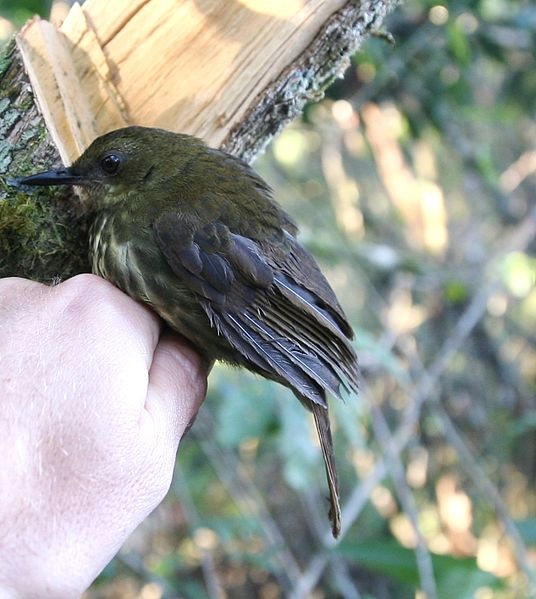
The Dapple-throat and allies – Modulatricidae  family only has three species; Spot-throat, Dapple-throat and the Grey-chested Babbler. Internet says they are from Africa and that its natural habitat is subtropical or tropical moist montane forests. That is about the only information given.

Cape Sugarbird (Promerops cafer) ©WikiC

Cape Sugarbird (Promerops cafer) ©WikiC

More to be desired are they than gold, Yea, than much fine gold; Sweeter also than honey and the honeycomb. (Psalms 19:10 NKJV)

The Sugarbirds make up a small family, Promeropidae, of passerine birds which are restricted to southern Africa. The two species of sugarbird make up one of only two bird families restricted entirely to southern Africa, the other being the rock-jumpers Chaetopidae. In general appearance as well as habits they resemble large long-tailed sunbirds, but are possibly more closely related to the Australian honeyeaters. They have brownish plumage, the long downcurved bill typical of passerine nectar feeders, and long tail feathers.

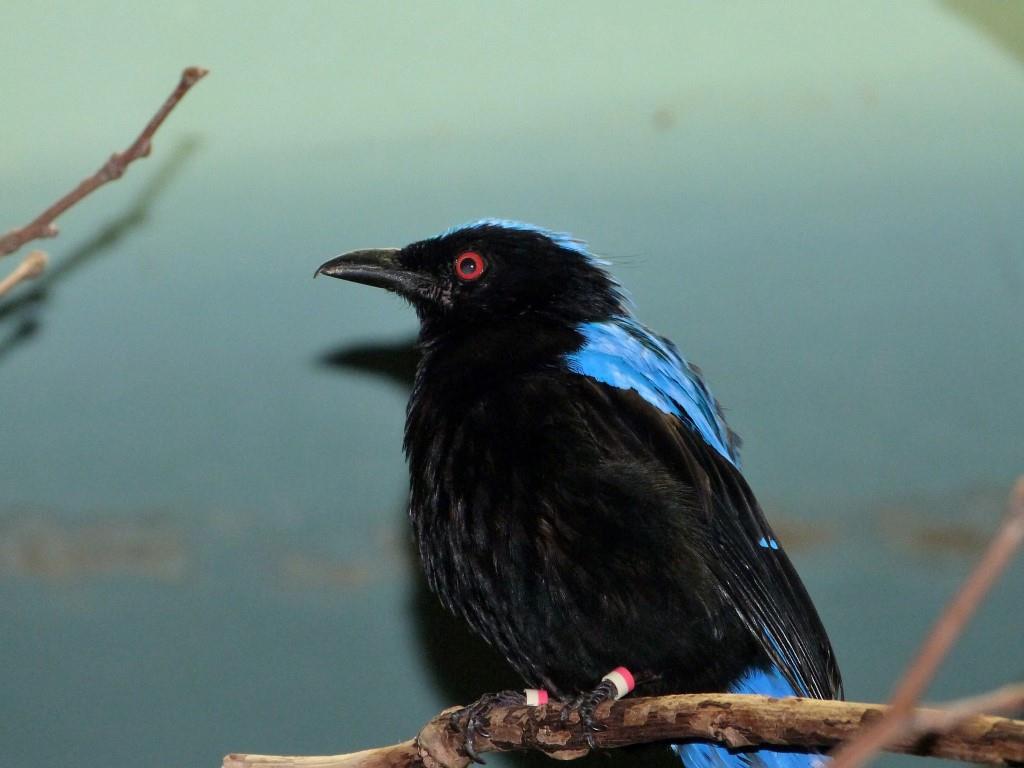
Asian Fairy-bluebird (Irena puella) at Cincinnati Zoo by Lee

Asian Fairy-bluebird (Irena puella) at Cincinnati Zoo by Lee

“You shall make the robe of the ephod all of blue.” (Exodus 28:31 NKJV)

The two Fairy-bluebirds are small passerine bird species found in forests and plantations in tropical southern Asia and the Philippines. They are the sole members of the genus Irena and family Irenidae, and are related to the ioras and leafbirds.

These are bulbul-like birds of open forest or thorn scrub, but whereas that group tends to be drab in colouration, fairy-bluebirds are sexually dimorphic, with the males being dark blue in plumage, and the females duller green.
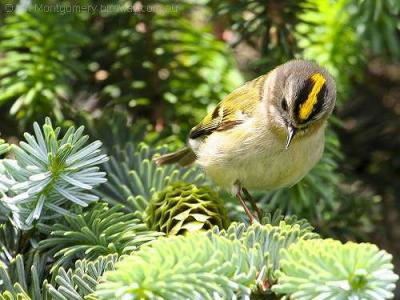
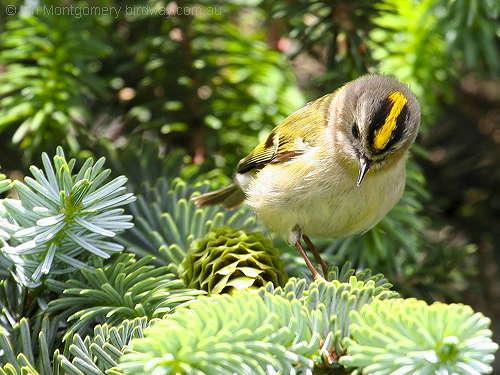
Goldcrest (Regulus regulus) by Ian

Goldcrest (Regulus regulus) by Ian

And thou shalt overlay it with pure gold, and make thereto a crown of gold round about. (Exodus 25:24 KJV)

Regulidae – Goldcrests, kinglets family has only six members. The kinglets or crests are a small group of birds sometimes included in the Old World warblers, but are frequently given family status because they also resemble the titmice. The scientific name Regulidae is derived from the Latin word regulus for “petty king” or prince, and comes from the coloured crowns of adult birds. This family has representatives in North America and Eurasia.

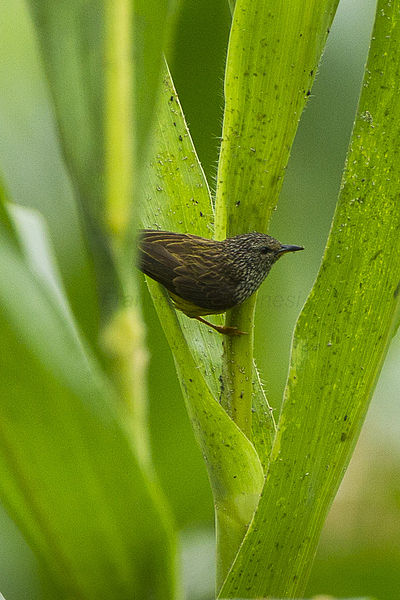
Spotted Elachura (Elachura formosa) ©Ramki Sreenivasan

Spotted Elachura (Elachura formosa) ©Ramki Sreenivasan

The Spotted Elachura (Elachura formosa (Elachuridae) is the only bird in its family they discovered recently through DNA studies. It is found in Bangladesh, Bhutan, China, India, Laos, Myanmar, Nepal, and Vietnam. Its natural habitat is subtropical or tropical moist montane forests. This species is found in undergrowth and dense thickets of this type of forest, with a preference for thick fern ground cover, mossy rocks and decaying trunks of fallen trees and brushwood (often near stream or creek) long grass and scrub.

Violet-baked Hyliota (Hyliota violacea) ©WikiC

Violet-baked Hyliota (Hyliota violacea) ©WikiC

Hyliotidae – Hyliota found in Angola, Cameroon, Democratic Republic of the Congo, Kenya, Malawi, Mozambique, South Africa, Tanzania, Uganda, Zambia, and Zimbabwe. Its natural habitats are subtropical or tropical moist lowland forests, subtropical or tropical moist montane forests, and plantations. It is threatened by habitat loss.
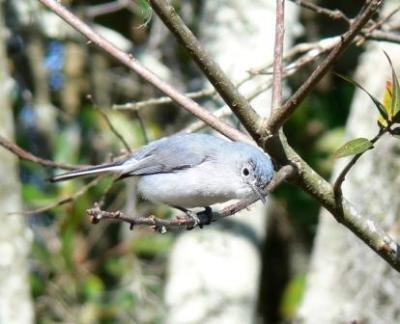
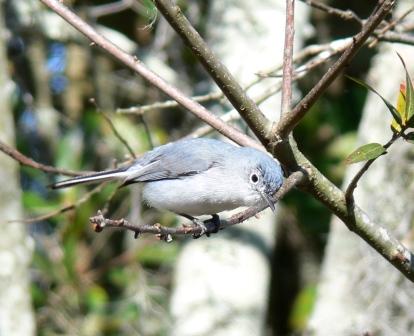
Blue-Gray Gnatcatcher at Circle B Reserve by Lee

Blue-Gray Gnatcatcher at Circle B Reserve by Lee

Lift up your eyes to the heavens, and look upon the earth beneath; for the heavens shall be dissolved and vanish away like smoke, and the earth shall wax old like a garment, and they that dwell therein shall die in like manner [like gnats]. But My salvation shall be forever, and My rightness and justice [and faithfully fulfilled promise] shall not be abolished. [Matt. 24:35; Heb. 1:11; II Pet. 3:10.] (Isaiah 51:6 AMP)

(Wrens skipped until next week ) Our last group of very small birds are from the Polioptilidae – Gnatcatchers. The 18 species of small passerine birds in the gnatcatcher family occur in North and South America (except far south and high Andean regions). Most species of this mainly tropical and subtropical group are resident, but the Blue-gray Gnatcatcher of the USA and southern Canada migrates south in winter. They are close relatives of the wrens. (Wikipedia)


This slideshow requires JavaScript.

*

*

*
New Kingfisher Species – I.O.C. Version 5.4

White-collared Kingfisher by Dan - Dan's Pix

White-collared Kingfisher by Dan – (Dan’s Pix)

Simon Peter saith unto them, I go a fishing. They say unto him, We also go with thee. They went forth, and entered into a ship immediately; and that night they caught nothing. (John 21:3 KJV)

Hang on to your fish, here comes a whole new bunch of Kingfishers. With the I.O.C. Version 5.4 that came out a week or so ago, 21 new Kingfishers were added to the Alcedinidae – Kingfishers Family. Plus they renamed a few. No, they didn’t appear out of thin air, they split and raised some of the subspecies up into their own species. Kingfishers have been one of my favorite birds from our Creator.

These are from the Collard Kingfisher (Todiramphus chloris):

  • Torresian Kingfisher (Todiramphus sordidus)
  • Islet Kingfisher (Todiramphus colonus)
  • Mariana Kingfisher (Todiramphus albicilla)
  • Melanesian Kingfisher (Todiramphus tristrami)
  • Pacific Kingfisher (Todiramphus sacer)
Micronesian Kingfisher (Todiramphus cinnamominus) Houston Zoo 5-6-15 by Lee

Micronesian Kingfisher (Todiramphus cinnamominus) Houston Zoo 5-6-15 by Lee

The Micronesian Kingfisher (Todiramphus cinnamominus) is now the Guam Kingfisher

Pohnpei Kingfisher (Todiramphus reichenbachii) ©WikiC

Pohnpei Kingfisher (Todiramphus reichenbachii) ©WikiC

The Tuamotu Kingfisher (Todiramphus gambieri) is now named the Niau Kingfisher and the split off the:

  • Niau Kingfisher (Todiramphus gertrudae)
Buru Dwarf Kingfisher (Ceyx lepidus) ©Drawing WikiC

Buru Dwarf Kingfisher (Ceyx lepidus) ©Drawing WikiC

The Variable Dwarf Kingfisher (Ceyx lepidus) was renamed the Moluccan Dwarf Kingfisher and these were split off:

  • Dimorphic Dwarf Kingfisher (Ceyx margarethae)
  • Sula Dwarf Kingfisher (Ceyx wallacii)
  • Buru Dwarf Kingfisher (Ceyx cajeli)
  • Papuan Dwarf Kingfisher (Ceyx solitarius)
  • Manus Dwarf Kingfisher (Ceyx dispar)
  • New Ireland Dwarf Kingfisher (Ceyx mulcatus)
  • New Britain Dwarf Kingfisher (Ceyx sacerdotis)
  • North Solomons Dwarf Kingfisher (Ceyx meeki)
  • New Georgia Dwarf Kingfisher (Ceyx collectoris)
  • Malaita Dwarf Kingfisher (Ceyx malaitae)
  • Guadalcanal Dwarf Kingfisher (Ceyx nigromaxilla)
  • Makira Dwarf Kingfisher (Ceyx gentianus)
Silvery Kingfisher (Ceyx argentatus) ©©

Silvery Kingfisher (Ceyx argentatus) ©©

The  Silvery Kingfisher (Ceyx argentatus) is now the Southern Silvery Kingfisher and they added:

  • Northern Silvery Kingfisher (Ceyx flumenicola)

Needless to say, it will take a while to obtain photos for all these new kingfishers, so stay tuned.

There are more changes in the Version 5.4, but more about that later. They list 10,612 extant species and 154 extinct species of birds of the world (Version 5.4), with subspecies (20,757).

Now as he walked by the sea of Galilee, he saw Simon and Andrew his brother casting a net into the sea: for they were fishers. And Jesus said unto them, Come ye after me, and I will make you to become fishers of men. (Mark 1:16-17 KJV)

*

Alcedinidae – Kingfishers Family

I.O.C. Update 5.4 Version

Sharing The Gospel

*


Are You Missing Something?

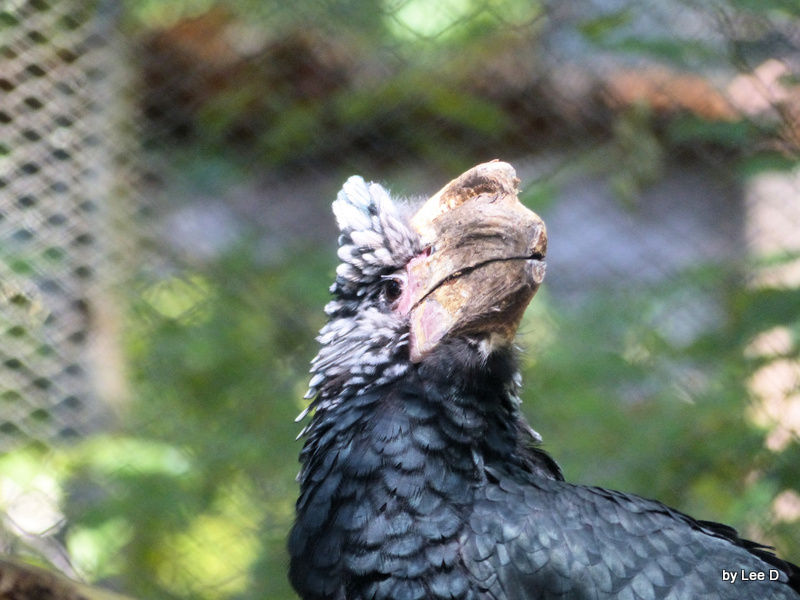
Silvery-cheeked Hornbill (Bycanistes brevis) Parrot Mtn

Silvery-cheeked Hornbill (Bycanistes brevis) Parrot Mtn

Wait on the LORD, And keep His way, And He shall exalt you to inherit the land; When the wicked are cut off, you shall see it. (Psalms 37:34 NKJV)

While at the Parrot Mountain last week, we saw this Silvery-cheeked Hornbill (Bycanistes brevis). As one of my friend said, after seeing these photos, “that is an ugly bird.” Well, almost, but is beauty in the eye of the beholder? I am sure that from the eyes of another Silvery-cheeked Hornbill, it may not be.

Silvery-cheeked Hornbill (Bycanistes brevis) Parrot Mtn

Silvery-cheeked Hornbill (Bycanistes brevis) Parrot Mtn

As the sign says,:

  • The Silvery-cheeked Hornbill can grow up to two and half feet long and weigh two and three quarter pounds.
  • Have an average life span of 50 years.
  • Silvery-cheeked Hornbills eat by plucking a piece of fruit and tipping its head back to swallow it whole. They will eat berries, figs, palmnuts, as well as a variety of insects.
  • The Hornbill is one of the few birds that have eyelashes to shield them from sun and dust.
Silvery-cheeked Hornbill (Bycanistes brevis) Parrot Mtn by Lee

Silvery-cheeked Hornbill (Bycanistes brevis) Parrot Mtn by Lee

Also the Silvery-cheeked Hornbill are residents of the tall evergreen forest of east Africa from Ethiopia to South Africa.

Well, maybe this bird is a little ugly:

Silvery-cheeked Hornbill (Bycanistes brevis) Parrot Mtn

Silvery-cheeked Hornbill (Bycanistes brevis) Parrot Mtn

Yet, in the Lord’s sight, this bird was created special and most likely fits right in with where it lives and what it does. What I haven’t shown you yet is that it is missing the tip of its beak. Most likely, that is why it is in captivity because it may not be able to obtain food in the wild.

Missing the tip of its beak

Missing the tip of its beak

Silvery-cheeked Hornbill with missing tip of beak.

Silvery-cheeked Hornbill with missing tip of beak.

I was surprised by how many verses that mention the words “cut off.” There are 200 verses in the NKJV. Even the verse where Peter cut off the ear of the servant, but Jesus healed him by putting back on. Only the Creator could have done that. Many mention enemies or sinners being cut off. Also, not being cut off if you are righteous and one of His saints.

For the LORD loves justice, And does not forsake His saints; They are preserved forever, But the descendants of the wicked shall be cut off. The righteous shall inherit the land, And dwell in it forever. The mouth of the righteous speaks wisdom, And his tongue talks of justice. The law of his God is in his heart; None of his steps shall slide. The wicked watches the righteous, And seeks to slay him. The LORD will not leave him in his hand, Nor condemn him when he is judged. Wait on the LORD, And keep His way, And He shall exalt you to inherit the land; When the wicked are cut off, you shall see it. (Psalms 37:28-34 NKJV)

Missing heaven and not spending eternity with the Lord Jesus Christ would be a terrible tragedy. I trust you will not be cut off with the wicked and that you know the Lord as your personal Savior. Accepting the Lord Jesus was the best decision I ever made in my life.

The Gospel Message and Gospel Presentation both explain how to not be cut off or missing out on eternity in heaven.

*

*

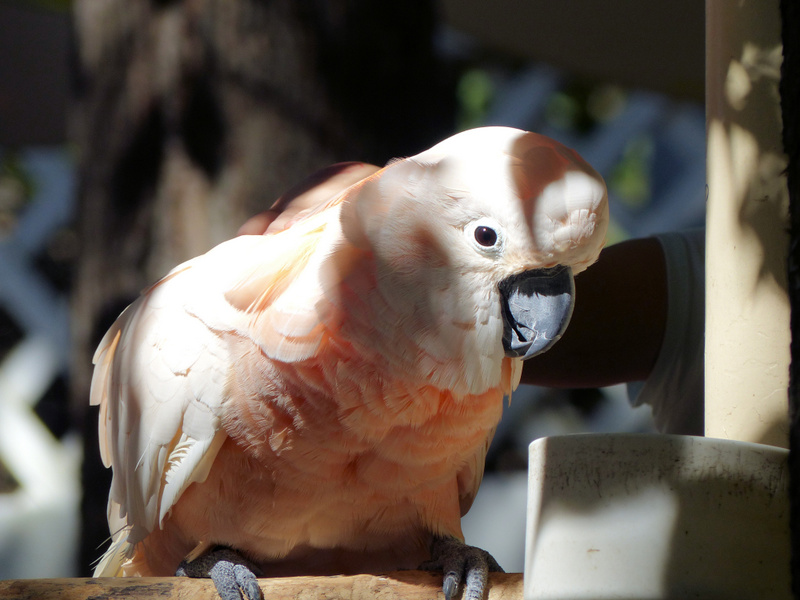
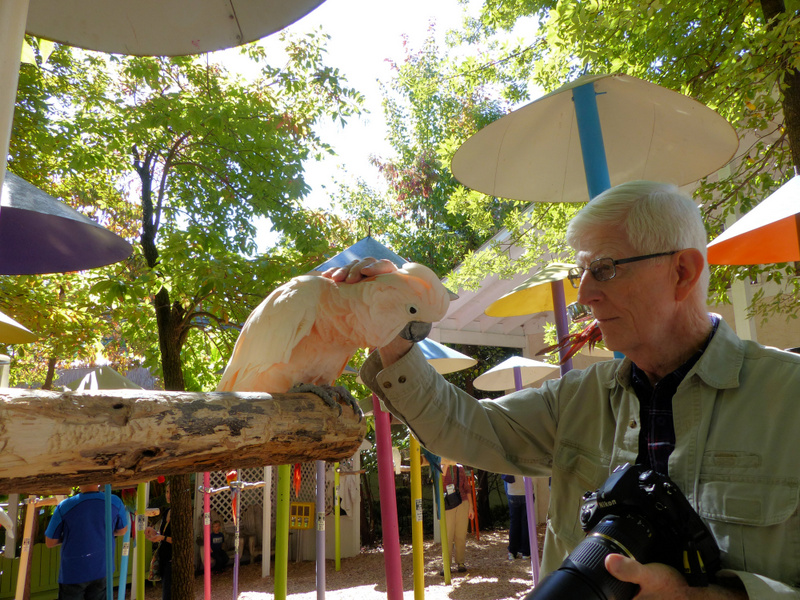
Salmon-crested (Moluccan) Cockatoo at Parrot Mountain

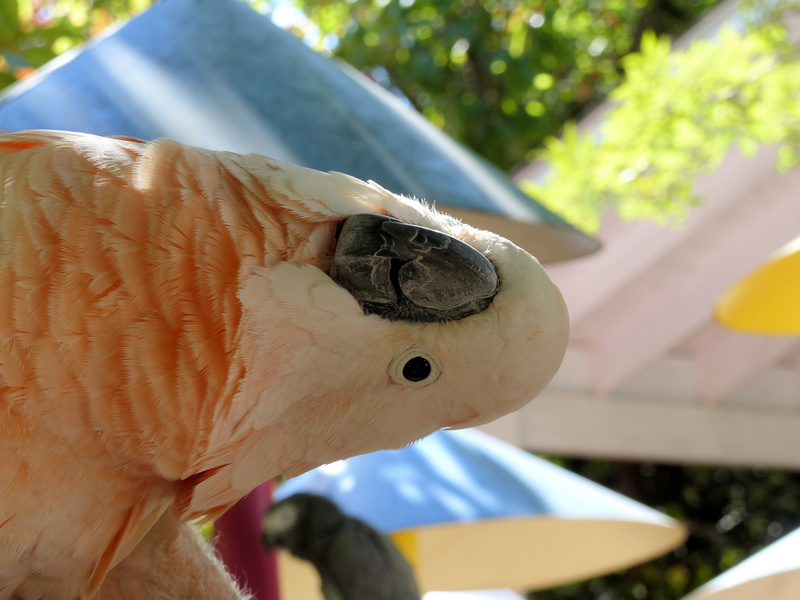
Salmon-crested Cockatoo (Cacatua moluccensis) at Parrot Mtn by Lee

Salmon-crested Cockatoo (Cacatua moluccensis) at Parrot Mtn by Lee

“So God created … every winged bird according to its kind. And God saw that it was good.” (Genesis 1:21 NKJV)

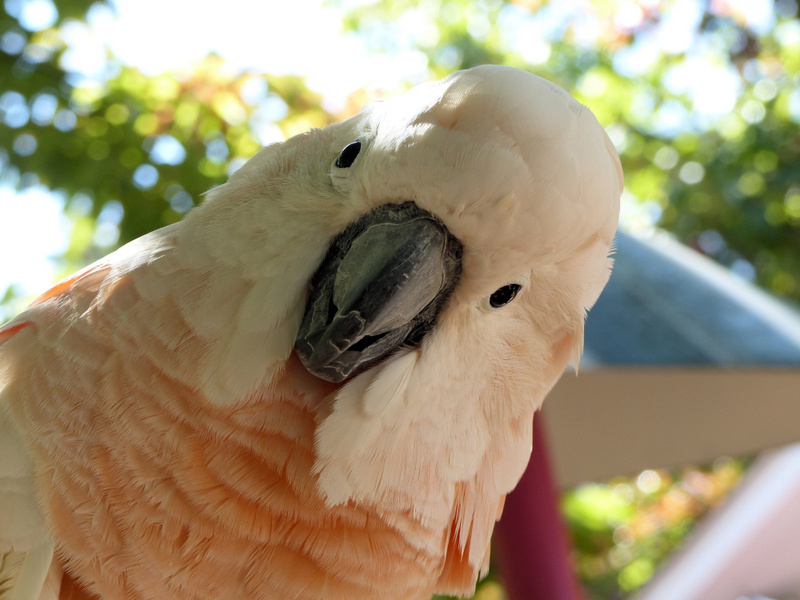
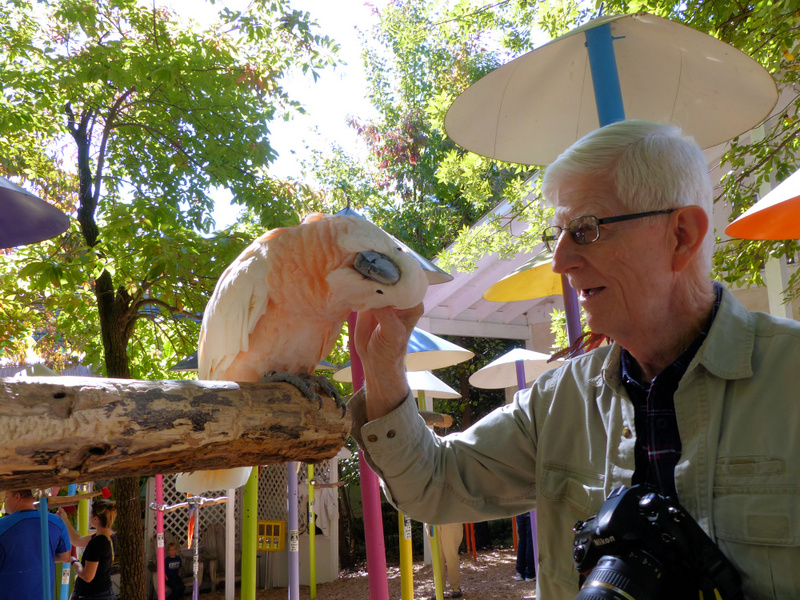
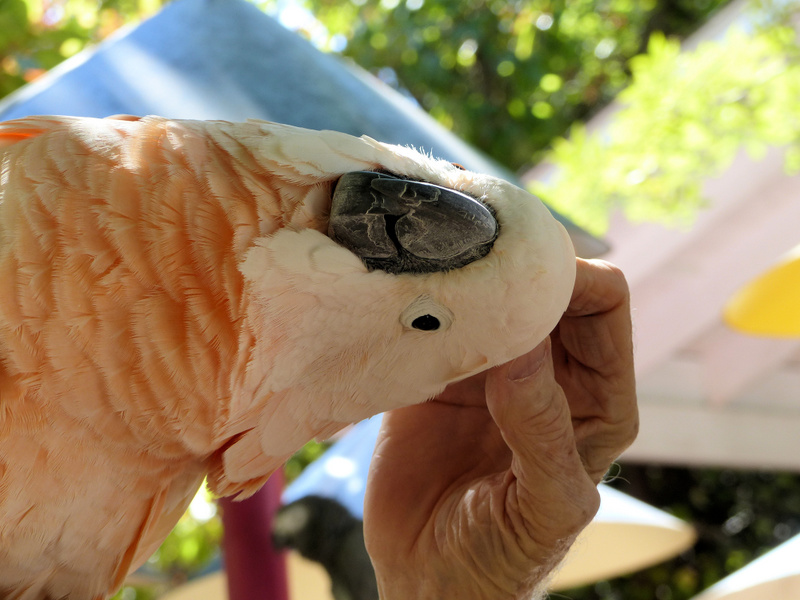
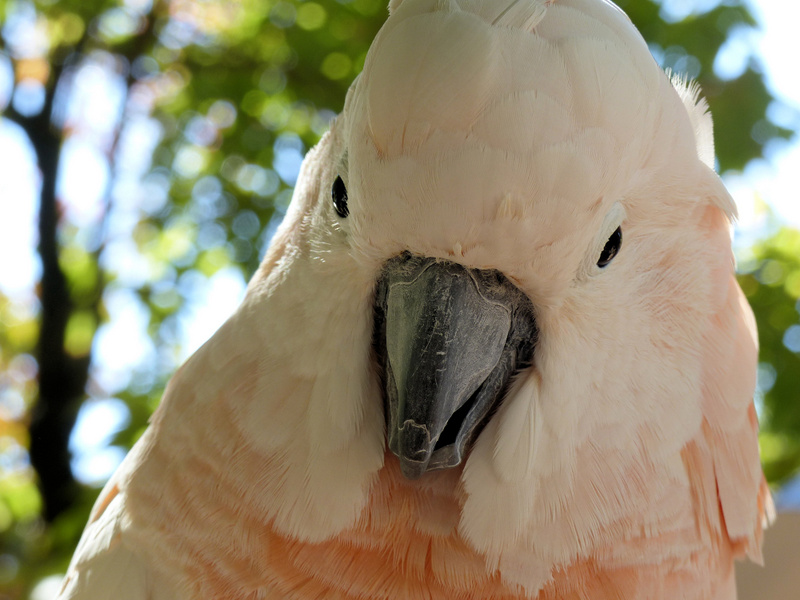
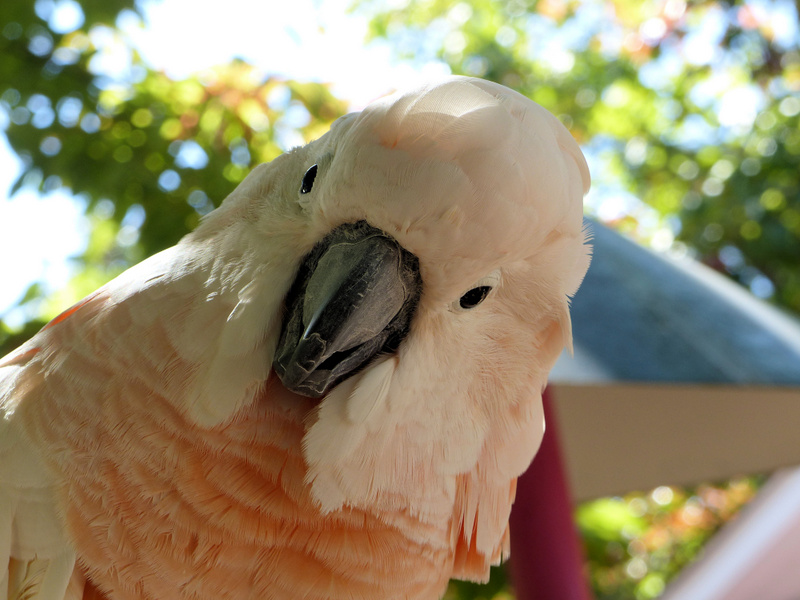
Here are a few photos of the Salmon-crested Cockatoo (Cacatua moluccensis) or Mouccan Cockatoo, as they call it, at the Parrot Mountain in Pigeon Forge, Tennessee. On their brochure they have “In the Beginning GOD Created All Things” and “Hundreds of Tropical Birds in a Garden of Eden Surrounding.” It is a very enjoyable place to visit. The landscaping is very pretty and colorful. More about that in another post. It is very much Christian oriented.

“The salmon-crested cockatoo (Cacatua moluccensis) also known as the Moluccan cockatoo, is a cockatoo endemic to the south Moluccas in eastern Indonesia. They are members of the Cacatuidae – Cockatoos Family. At a height of up to 46–52 cm and weight of up to 850 g, it is among the largest of the white cockatoos. The female is larger than the male on average. It has white-pink feathers with a definite peachy glow, a slight yellow on the underwing and underside of the tail feathers and a large retractable recumbent crest which it raises when threatened, revealing hitherto concealed bright red-orange plumes to frighten potential attackers. It may also be raised in excitement or in other ’emotional’ displays. Some describe the crest as “flamingo-colored.” It also has one of the louder calls in the parrot world and in captivity is a capable mimic.

Salmon-crested Cockatoo (Cacatua moluccensis) at Parrot Mtn by Lee

Salmon-crested Cockatoo (Cacatua moluccensis) at Parrot Mtn by Lee

In the wild the salmon-crested cockatoo inhabits lowland forests below 1000 m. The diet consists mainly of seeds, nuts and fruit, as well as coconuts, and also eats Meat. There is additional evidence that they eat insects off the ground, and pet Moluccan cockatoos have tested positive for anemia if their diet does not include enough protein.

Salmon-crested Cockatoo (Cacatua moluccensis) at Parrot Mtn by Le

Salmon-crested Cockatoo (Cacatua moluccensis) at Parrot Mtn by Lee

For every kind of beast and bird, of reptile and creature of the sea, is tamed and has been tamed by mankind. (James 3:7 NKJV)

The salmon-crested cockatoo can no longer be imported into the United States because it is listed on the Wild Bird Conservation Act. However, they are being bred in captivity. They are popular for their beauty and trainability (which makes them popular in trained bird shows). The salmon-crested cockatoo is widely considered to be one of the most demanding parrots to keep as a pet due to their high intelligence, large size, potential noise level, and need to chew. Moluccan cockatoos require a very large and very sturdy cage or aviary. Salmon-crested cockatoos are highly social and pets can be extremely cuddly, affectionate, and gentle birds.” (Wikipedia)

The photos are shown in the sequence taken. Dan was enjoying scratching its head.

*

Parrot Mountain in Pigeon Forge, Tennessee

Salmon-crested Cockatoo – Wikipedia

Cacatuidae – Cockatoos Family

Wordless Birds

*

Sad Clowns of the Sea

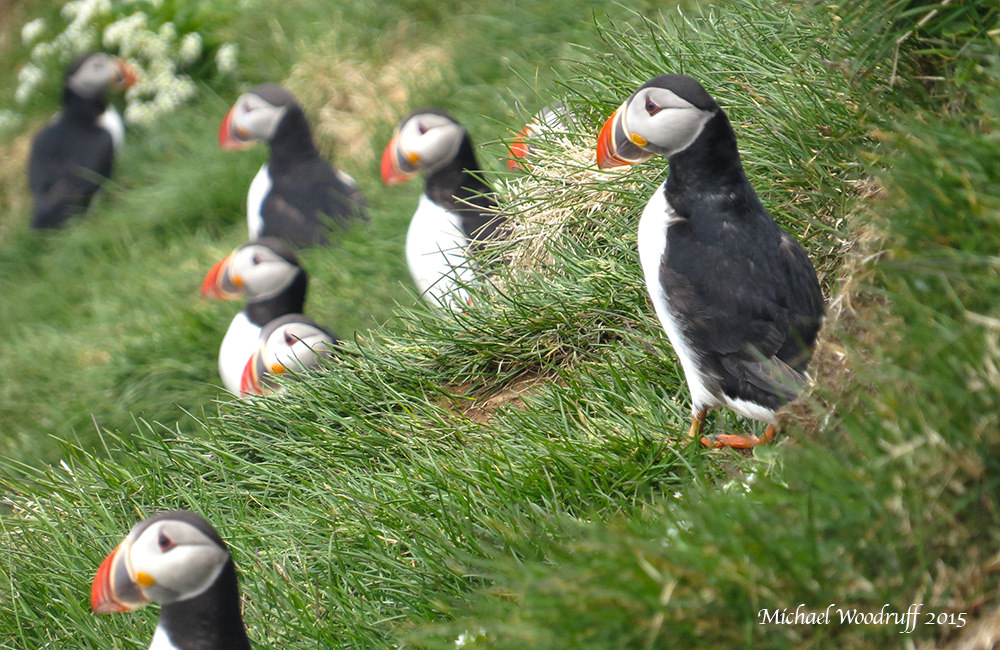
Atlantic Puffin (Fratercula arctica) by Michael Woodruff

Atlantic Puffin (Fratercula arctica) by Michael Woodruff

Why am I discouraged? Why am I restless? I trust you! And I will praise you again because you help me, and you are my God. (Psalms 43:5 CEV)

Recently I decided to check back through the photographers who have given me permission to use their photos. There are links to them down the right menu in the Photography section.

Atlantic Puffin (Fratercula arctica) by Michael Woodruff

Atlantic Puffin (Fratercula arctica) by Michael Woodruff

While looking through Michael Woodruff’s Flickr photos, I spotted these recent Puffins. Michael is one of the first photographers to allow me to use his beautiful photos on this blog and Michael is also a Christian. Apparently he made a trip to Grimsey Island, Iceland on 29 June 2015.  So these are some of his latest photos.

Atlantic Puffin (Fratercula arctica) by Michael Woodruff

Atlantic Puffin (Fratercula arctica) by Michael Woodruff

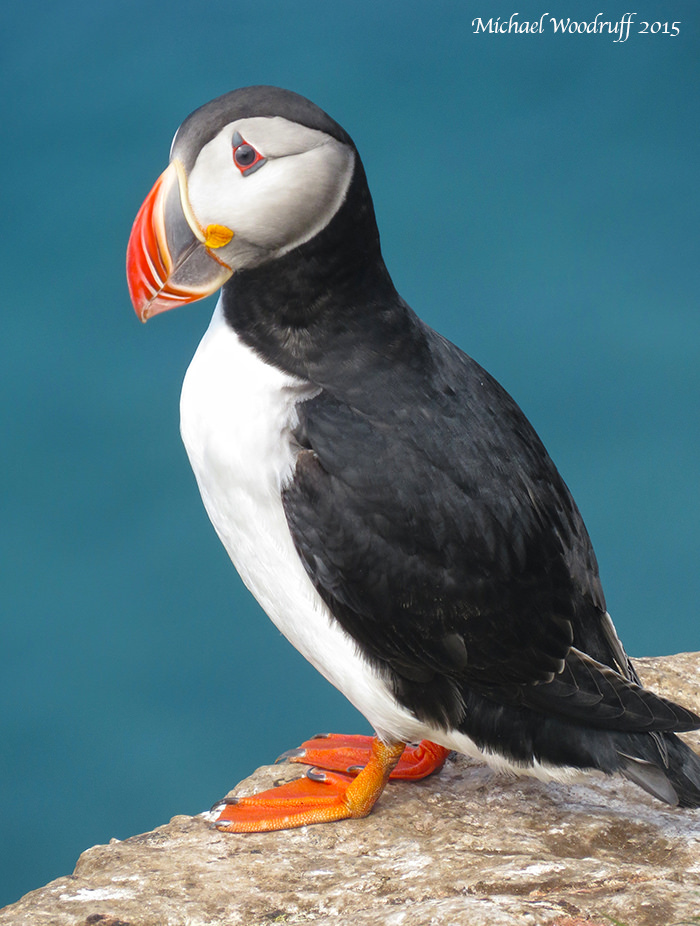
The Atlantic Puffins have been called the “Clowns of the Sea” because of their colorful marking that the Lord their Creator gave them. They are also sometimes called “Sea Parrots.” However you think of them, they are beautiful birds and I was surprised they are so small. On land it stands about 20 cm (8 in) high. The Atlantic puffin is sturdily built with a thick-set neck and short wings and tail. It is 28 to 30 centimetres (11 to 12 in) in length from the tip of its stout bill to its blunt-ended tail. Its wingspan is 47 to 63 centimetres (19 to 25 in). Males are slightly larger than the female, but both are marked the same. They mate for life.

Atlantic Puffin (Fratercula arctica) by Michael Woodruff

Atlantic Puffin (Fratercula arctica) by Michael Woodruff

Sorrow is better than laughter: for by the sadness of the countenance the heart is made better. (Ecclesiastes 7:3 KJV)

The beak is very distinctive. From the side the beak is broad and triangular but viewed from above it is narrow. The half nearest the tip is orange-red and the half nearest to the head is slate grey. There is a yellow chevron-shaped ridge separating the two parts and a yellow, fleshy strip at the base of the bill. At the joint of the two mandibles there is a yellow, wrinkled rosette. The exact proportions of the beak vary with the age of the bird. In an immature individual, the beak has reached its full length but it is not as broad as that of an adult. With time the bill deepens, the upper edge curves and a kink develops at its base. As the bird ages, one or more grooves may form on the red portion. The bird has a powerful bite.

Atlantic Puffin (Fratercula arctica) by Michael Woodruff

Atlantic Puffin (Fratercula arctica) by Michael Woodruff

Share the happiness of those who are happy, the sorrow of those who are sad. (Romans 12:15 Phillips)

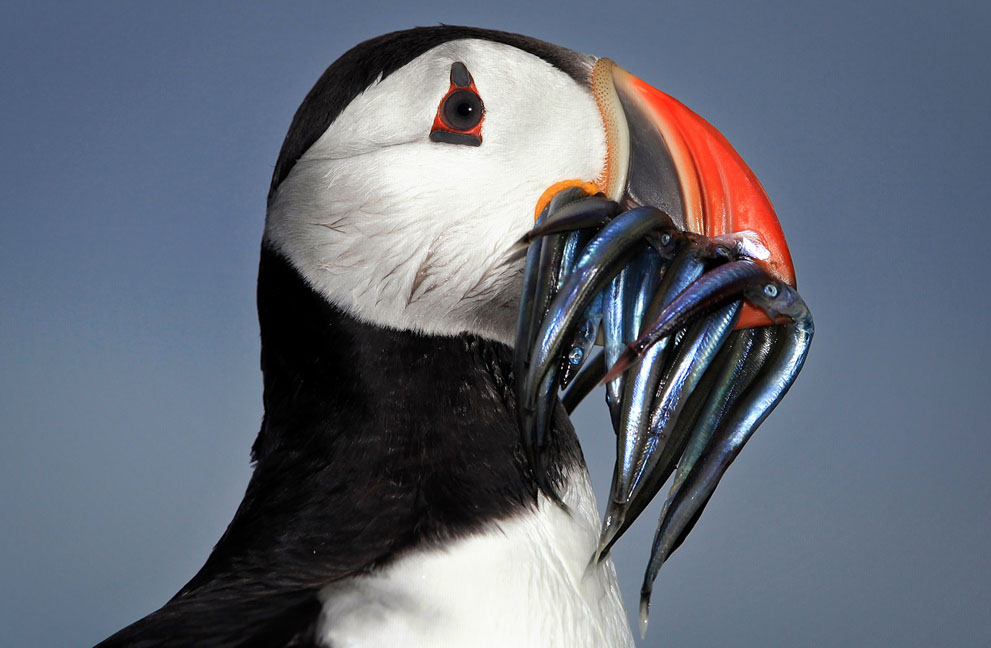
They are known for collecting multiple fish in that beautiful beak. It was designed very distinctly. It fishes by sight and can swallow small fish while submerged, but larger specimens are brought to the surface. It can catch several small fish in one dive, holding the first ones in place in its beak with its muscular, grooved tongue while it catches others. The two mandibles are hinged in such a way that they can be held parallel to hold a row of fish in place and these are also retained by inward-facing serrations on the edges of the beak. It copes with the excess salt that it swallows partly through its kidneys and partly by excretion through specialized salt glands in its nostrils. Now that is wisdom from the Creator.

Puffin with Sand Eels

Puffin with Sand Eels ©WikiC (not Michael’s, but shows the mouth full of eels)

You can read more about the Puffins from the links below, but I just wanted to share some of these photos from Michael.

Atlantic Puffin (Fratercula arctica) by Michael Woodruff

Atlantic Puffin (Fratercula arctica) by Michael Woodruff

Photos by Michael Woodruff. Atlantic Puffins by God.

*

*

Sunday Inspiration – Little Beauties From The Lord

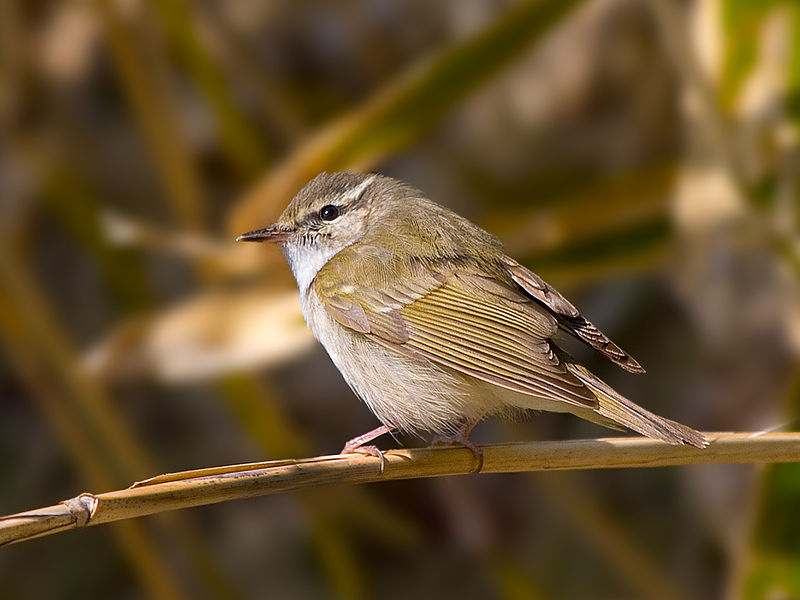
Sakhalin Leaf Warbler (Phylloscopus borealoides) ©WikiC

Sakhalin Leaf Warbler (Phylloscopus borealoides) ©WikiC

And Jesus saith unto him, The foxes have holes, and the birds of the air have nests; but the Son of man hath not where to lay his head. (Matthew 8:20 KJV)

We have another mixture of birds from our Creator found in several families, but most are Leaf Warblers from Phylloscopidae family. There are 77 in that family, but the families before them, taxonomically, have just a few species in them.

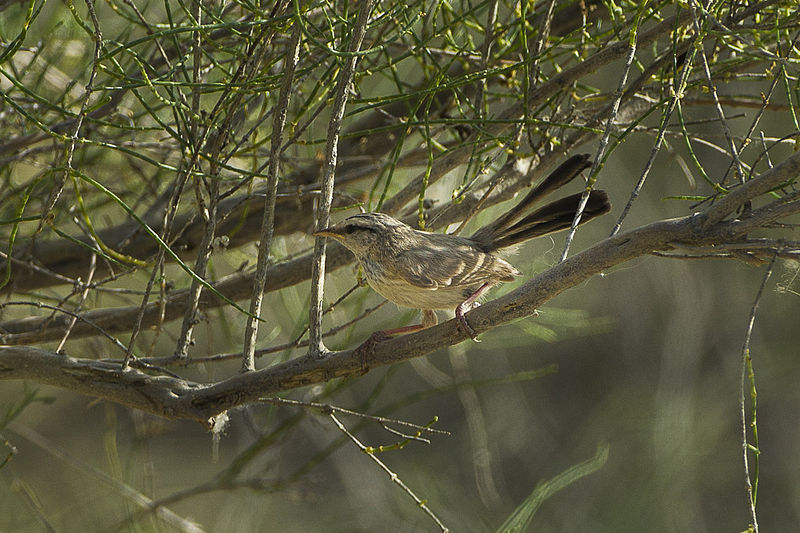
Streaked Scrub Warbler (Scotocerca inquieta) ©WikiC

Streaked Scrub Warbler (Scotocerca inquieta) ©WikiC

Streaked Scrub Warbler – Scotocercidae has only one bird – the Streaked Scrub Warbler (Scotocerca inquieta). It is found in Afghanistan, Algeria, Egypt, India, Iran, Israel, Jordan, Kazakhstan, Lebanon, Libya, Mauritania, Morocco, Oman, Pakistan, Palestine, Russia, Saudi Arabia, Syria, Tajikistan, Tunisia, Turkmenistan, United Arab Emirates, Uzbekistan,and Yemen. (Wikipedia)

Chestnut-capped Flycatcher (Erythrocercus mccallii) ©WikiC

Chestnut-capped Flycatcher (Erythrocercus mccallii) ©WikiC

Yellow Flycatchers – Erythrocercidae has 3 members; Little Yellow Flycatcher (Erythrocercus holochlorus), Chestnut-capped Flycatcher (Erythrocercus mccallii) and the Livingstone’s Flycatcher (Erythrocercus livingstonei). All three of these creations are found in Africa.

Tit Hylia (Pholidornis rushiae ussheri) ©WikiC

Tit Hylia (Pholidornis rushiae ussheri) ©WikiC

This next group of birds are assigned to an  Incertae Sedis family. That simply means they don’t which family to assign to them. They are the Grauer’s Warbler (Graueria vittata), Green Hylia (Hylia prasina) and Tit Hylia (Pholidornis rushiae). They get moved in and out of families, but the IOC Version 5.3 has them unassigned. They are all in Africa and are “basically” Old World Warblers.

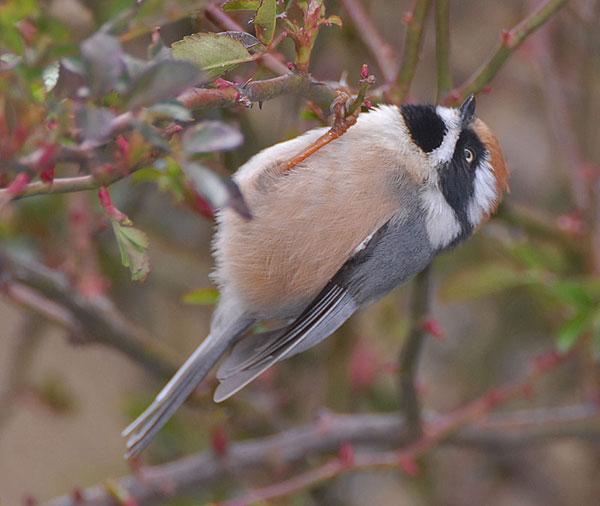
Black-throated Bushtit (Aegithalos concinnus) by Nikhil Devasar

Black-throated Bushtit (Aegithalos concinnus) by Nikhil Devasar

The Aegithalidae – Bushtits family has 13 members and are a family of small, drab passerine birds with moderately long tails. The family contains three genera, all but one of which are found in Eurasia. Bushtits are active birds, moving almost constantly while they forage for insects in shrubs and trees. During non-breeding season, birds live in flocks of up to 50 individuals. Several bushtit species display cooperative breeding behavior, also called helpers at the nest.

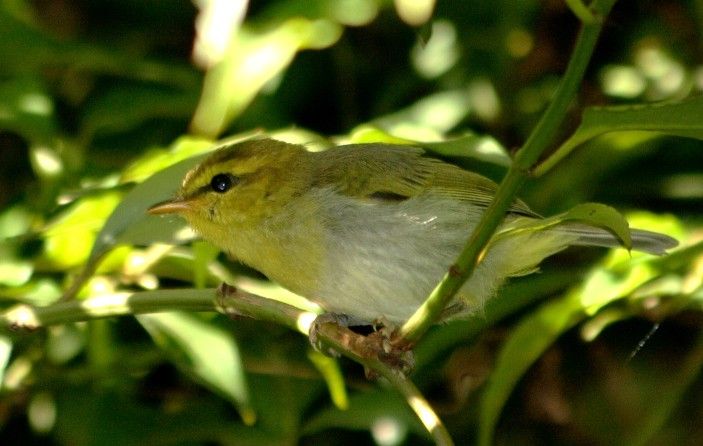
Yellow-throated Woodland Warbler (Phylloscopus ruficapilla) ©WikiC

Yellow-throated Woodland Warbler (Phylloscopus ruficapilla) ©WikiC

And our last family of avian wonders from the Lord is the Phylloscopidae – Leaf warblers and allies Family. This family of 77 species contains various Warblers and Chiffchaff. They were formerly included in the Old World warbler family but are now considered to belong to the Phylloscopidae, a family created in 2006. The genus is closely related to Seicercus and some species have been moved between the two genera in recent classification attempts. Leaf warblers are active, constantly moving, often flicking their wings as they glean the foliage for insects along the branches of trees and bushes. They forage at various levels within forests, from the top canopy to the understorey. Most of the species are markedly territorial both in their summer and winter quarters.

Most are greenish or brownish above and off-white or yellowish below. Compared to some other “warblers”, their songs are very simple.

Well, that’s our group of birds for this week. Trust you will enjoy seeing them as you listen to the music below. You have two options this week. You can listen or you can watch the Kid’s Choir as they sing. Figured little warblers needed young people singing as you view them.

But Jesus said, Suffer little children, and forbid them not, to come unto me: for of such is the kingdom of heaven. (Matthew 19:14 KJV)

*
This slideshow requires JavaScript.

*
Beautiful Savior (Fairest Lord Jesus) ~  by Kid’s Choir Faith Baptist

*

*

More Sunday Inspirations
Scotocercidae – Streaked Scrub Warbler
Erythrocercidae – Yellow Flycatchers
Incertae-Sedis1 – Family Uncertain-Warbler, Hylia
Aegithalidae – Bushtits
Phylloscopidae – Leaf Warblers and allies
Kids, You Are Special

*

White-faced Owl – Transformer

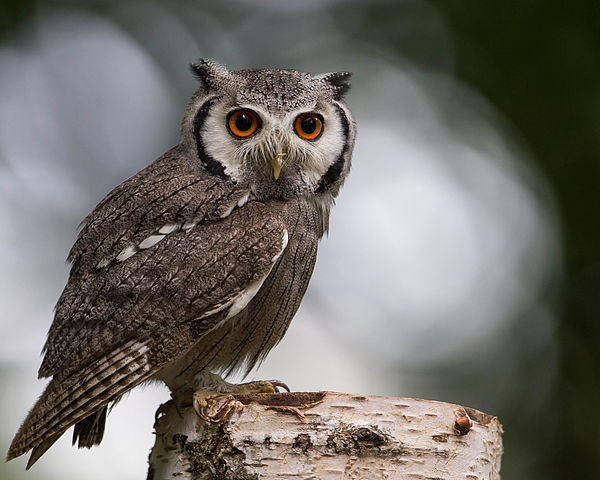
Southern White-faced Owl (Ptilopsis granti) ©PD

Southern White-faced Owl (Ptilopsis granti) ©PD

And be not conformed to this world: but be ye transformed by the renewing of your mind, that ye may prove what is that good, and acceptable, and perfect, will of God. (Romans 12:2 KJV)

Our contributing writer, James J. S. Johnson, sent me a really neat YouTube Video. It is called the Owl Transformer. After you watch this video, I will share the information I found about this cool owl.

There are two White-faced Owls. There is a Southern White-face Owl and a Northern White-faced Owl, but the one in the video is the Northern White-faced Owl. What a fantastic creation from the Creator.

Northern White-faced Owl (Ptilopsis leucotis) ©PD

Northern White-faced Owl (Ptilopsis leucotis) ©PD

These owls, both north and south, are from Africa. This northern one is from a band across Africa between the Sahara and the Equator. The southern owl appears in the southern part of Africa.

It is its “Fight-or-Flight” response that causes this defense mechanism. “When faced with another owl slightly larger than it, the bird flares its wings to appear larger. When faced with something much larger than itself, it pulls its feathers inwards, elongates its body, and narrows its eyes to thin slits. It is thought that it uses this ability to camouflage itself, and it shares the ability with relatives like the African scops owl.

In fact, many different types of owls have some ability to adopt a “concealing posture”, also known by the German word Tarnstellung, in which they squeeze and thin their body to look like a broken tree branch, and some types may also narrow their eyes to slits and fold a wing sideways across their chest in a Dracula-like manner to hide the lighter-colored feathers on their underparts. Such behavior has also been documented in eastern screech owls in a natural setting reacting to threats. (Wikipedia)

The Lord Jesus Christ gives these birds the ability to “transform” for their protection, just as he wants us to “transform” into His Image.

But we all, with open face beholding as in a glass the glory of the Lord, are changed into the same image from glory to glory, even as by the Spirit of the Lord. (2 Corinthians 3:18 KJV)

Here is another video found on YouTube:

*
Northern white-faced owl – Wikipedia

Southern white-faced owl – Wikipedia

Strigidae – Owls

Sharing The Gospel
*

Pileated Woodpeckers With a Chipmunk, One Singing, and One Eating

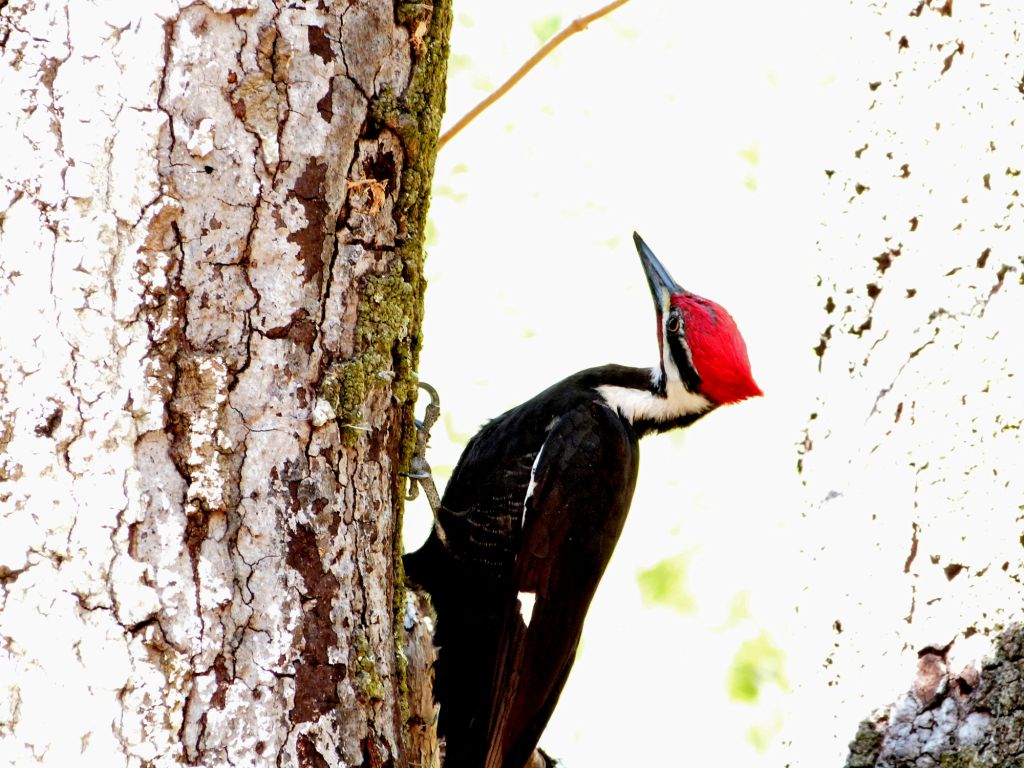
Pileated Woodpecker by Lee

Pileated Woodpecker by Lee

‘Ah, Lord GOD! Behold, You have made the heavens and the earth by Your great power and outstretched arm. There is nothing too hard for You. (Jeremiah 32:17 NKJV)

I always enjoy seeing Pileated Woodpeckers like this one at Circle B Bar Reserve here in the area. This was taken several years ago.

I found these videos on YouTube and they show the Pileated in a different way than we have observed them. Enjoy!

The first one is a YouTube by Dan & Joe. He discovers a chipmunk:

He has made the earth by His power; He has established the world by His wisdom, And stretched out the heaven by His understanding. (Jeremiah 51:15 NKJV)

Here’s another video of a Pileated Woodpecker Singing by Pureimaginationvideo:

This last one has a very good close-up of a Pileated digging for Grubs by Martyn Stewart:

But the LORD is the true God; He is the living God and the everlasting King. At His wrath the earth will tremble, And the nations will not be able to endure His indignation. Thus you shall say to them: “The gods that have not made the heavens and the earth shall perish from the earth and from under these heavens.” He has made the earth by His power, He has established the world by His wisdom, And has stretched out the heavens at His discretion. (Jeremiah 10:10-12 NKJV)

I have been reading through Jeremiah and these verse caught my attention.

*

Birds of the World

Picidae – Woodpeckers Family

Who Paints the Leaves?

*