New Project – Our Birdwatching Photos

Wood Duck - Lake Morton by Lee

Wood Duck – Lake Morton by Lee

O LORD, how manifold are thy works! in wisdom hast thou made them all: the earth is full of thy riches. (Psalms 104:24 KJV)

While working on Family pages, it dawned on me that very few of our photos have been used. We, Dan and I, do take quite a few photos while on our birdwatching adventures into the wild and at the zoos. Actually, I take about 4-5 more than he does on each adventure (more like 10-1). He spends his time trying to compose his shots and do all that sort of stuff. Me, I have a Program mode Panasonic Lumix that I shoot, shoot, shoot. Of course, his photos are always better and he knows how to prep them better, but I get more “action” photos. I have action of the bird moving (blurred), flying off (blurred), turning around (blurred), behind a fence (bird-blurred, fence-clear), in a tree (bird-blurred, branch with leaves-clear). Every once in a while I get a nice photo that isn’t too blurred that could be shared with you.

Another thing he has tried to teach me is the 1/3rd thing. Me, I want that bird right in the middle of my shot so that when I get home I can try to find it behind those clear fences and branches. To me, my photos are for “proof” that the bird was seen and also to try to figure out what it really was. You see, I am a “birdwatcher” and he is a “photographer.” There is a difference! You can blend the two, but there IS a different attitude at work here.

Yesterday the Our Birdwatching Photos page was created and a new tab was placed up at the top. Now, I am working on creating pages, by families, of our photos. Most will be mine, because I take more and he already has a website for his photos at Dan’s Pix. I will be copying some of his over here of course and maybe I can get some of his “unpublished” ones also.

Elegant Crested Tinamou (Eudromia elegans) Cloud Forest at Zoo Miami by Lee

Elegant Crested Tinamou (Eudromia elegans) at Zoo Miami by Lee

Don’t expect the greatest photos, because I am not a great photographer, but I enjoy “watching” the birds. The Lord has created so many birds that are just so beautiful and unique. The variety is amazing. The colors are  breathtaking at times. The birds are adorable, cute, ugly, big, little, tall, short, evasive, calm, fidgety, graceful, etc. They sing some of the most beautiful songs and some have terrible tunes, but don’t you just enjoy watching and listening to them?

O Lord, how many and varied are Your works! In wisdom have You made them all; the earth is full of Your riches and Your creatures. (Psalms 104:24 AMP)

O the depth of the riches both of the wisdom and knowledge of God! how unsearchable are his judgments, and his ways past finding out! (Romans 11:33 KJV)

Blurred, but isn't it cute?

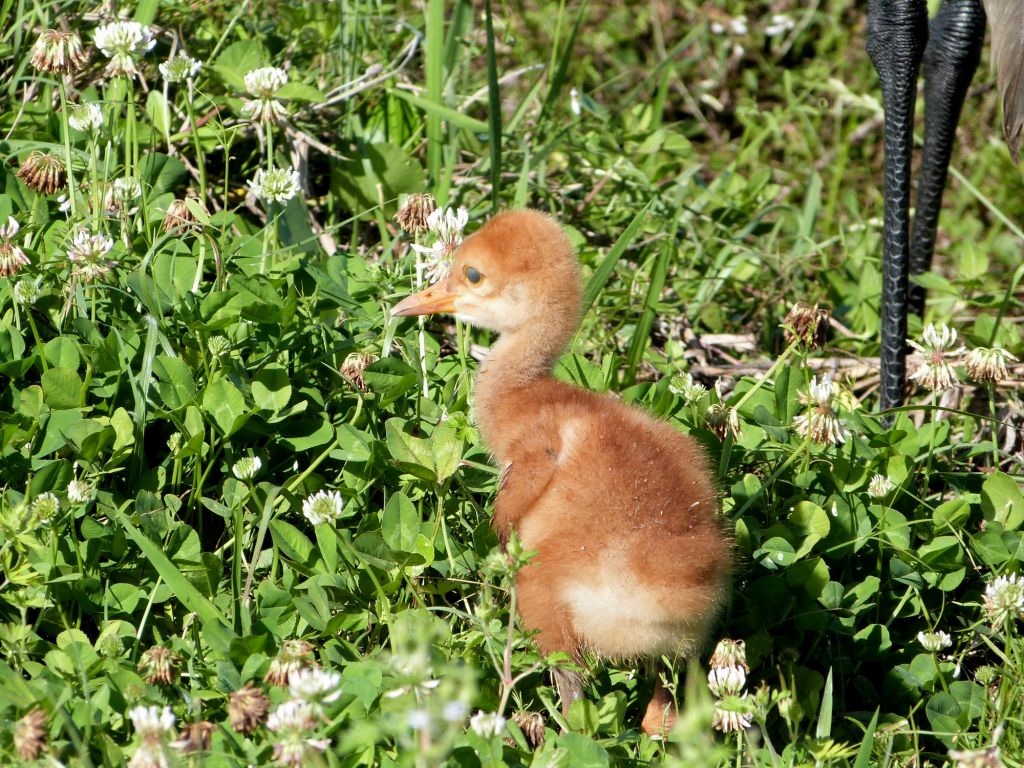
Sandhill Crane Chick at Circle B by Lee – Blurred, but isn’t it cute?

*

Our Birdwatching Photos

Dan’s Pix

*

Margaret Sloan – New Photographer

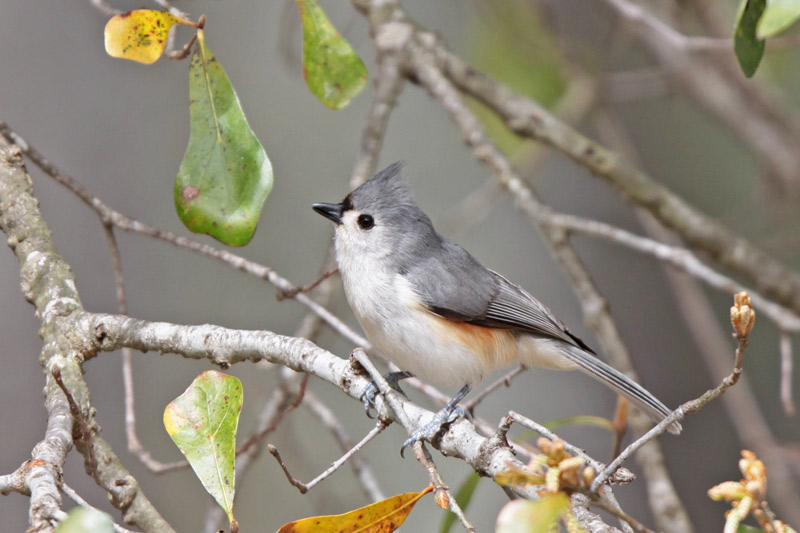
Tufted Titmouse (Baeolophus bicolor) by Margaret Sloan

Tufted Titmouse (Baeolophus bicolor) by Margaret Sloan

I would like to introduce our newest photographer to permit permission to use her photos. While searching for the Morningbird, which Margaret had one of the very few photos of the bird, I discovered her website. She has graciously given permission to use her photos.

Margaret Sloan has her photos on PBase at

http://www.pbase.com/laumakani

She is from Texas and has over 12,000 images online in over 1,100 galleries. Wow! It will take awhile to check it out, but what I have seen so far is very good. Please stop by her site and admire the photos of some amazing birds, plus places, spaces, and scenery. Lots to view and enjoy.

From her Birds of Costa Rica gallery:

Keel-billed Toucan (Ramphastos sulfuratus) by Margaret Sloan

Keel-billed Toucan (Ramphastos sulfuratus) by Margaret Sloan

From the Birds of Peru – Cotingas and Manakins gallery:

Andean Cock-of-the-rock (Rupicola peruvianus) by Margaret Sloan

Andean Cock-of-the-rock (Rupicola peruvianus) by Margaret Sloan

From the Birds of Southeast AsiaSunbirds, Flowerpeckers, Leafbirds:

Olive-backed Sunbird (Cinnyris jugularis) by Margaret Sloan

Olive-backed Sunbird (Cinnyris jugularis) by Margaret Sloan

Closer to home – Birds of North America:

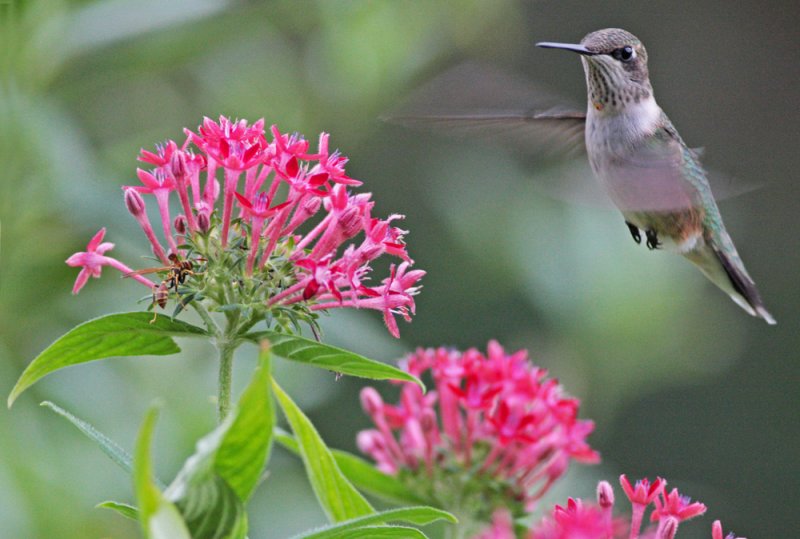
Hummingbird with Pentas by Margaret Sloan

Hummingbird with Pentas by Margaret Sloan

From her Nature Butterflies:

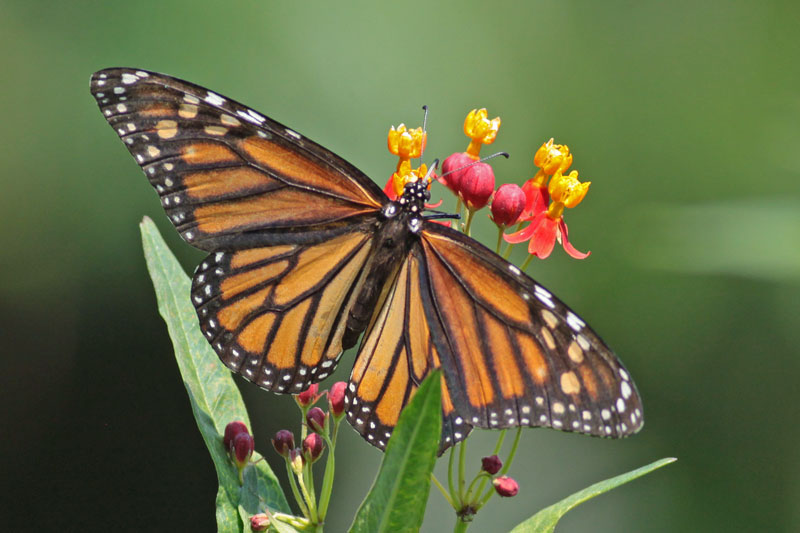
Monarch Butterfly (Danaus plexippus) by Margaret Sloan

Monarch Butterfly by Margaret Sloan

These are but a few of the numerous photos she has taken of the birds and beauty around her. Thank you, Margaret, for sharing with us what you have seen through your lens. May you find many more adventures that you can take photographs of and share with us.

Who is like You, O Lord, among the gods? Who is like You, glorious in holiness, awesome in splendor, doing wonders? (Exodus 15:11 AMP)

Many, O Lord my God, are the wonderful works which You have done, and Your thoughts toward us; no one can compare with You! If I should declare and speak of them, they are too many to be numbered. (Psalms 40:5 AMP)

*

Morningbird – A Voice In The Morning

Morningbird (Colluricincla tenebrosa) by Margaret Sloan

Morningbird (Colluricincla tenebrosa) by Margaret Sloan

My voice shalt thou hear in the morning, O LORD; in the morning will I direct my prayer unto thee, and will look up. (Psalms 5:3 KJV)

The Morningbird (Colluricincla tenebrosa) is a songbird species in the family Pachycephalidae. It is also known a “Brown Pitohui, Morning Bird, Morning Pitohui, Morningbird, Palau Morning Bird, Palau Morningbird, and Palau Pitohui” (Avibase) At the present time it is a bird of “Least Concern” but it is hard to find a photo of it. That is what caught my attention to it. I liked its name. A recording of the Morningbird by Todd Mark (xeno-canto) made a remark that it was the “first loud singer of dawn chorus.” That seems to be appropriate according to the name it has been given,

Evening, and morning, and at noon, will I pray, and cry aloud: and he shall hear my voice. (Psalms 55:17 KJV)

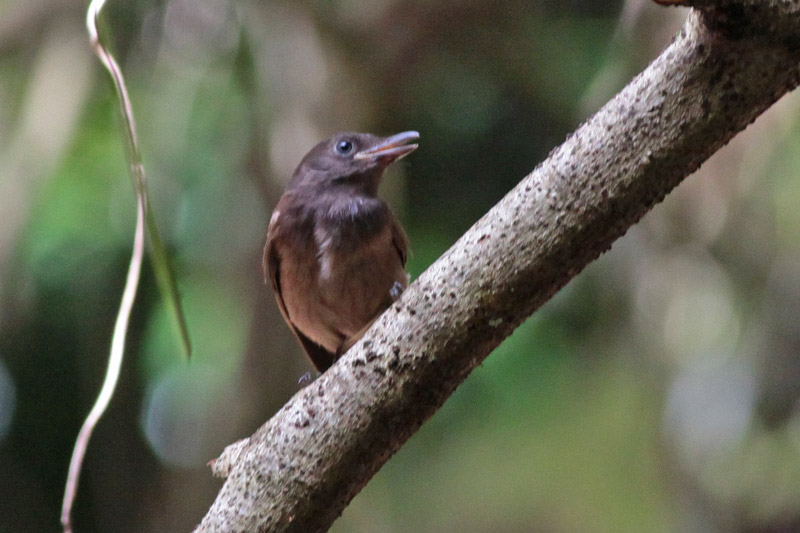
Morningbird (Colluricincla tenebrosa) by Margaret Sloan

Morningbird (Colluricincla tenebrosa) by Margaret Sloan

The Morningbird is endemic to the islands of Babelthuap, Koror, Garakayo, Peleliu and Ngabad in Palau. Its natural habitat is deep primary tropical moist lowland forests. The species is non-migratory. It is apparently commoner on the smaller islands in its range. The feed principally on insects, but also take snails, berries, fruit, and seeds. They feed on or around the ground. Checking the internet, there are many birds called by that name because they sing in the morning, but very few photos. (Margaret Sloan just gave permission to use her photos of this bird, thanks.)

There are videos of a Morningbird Song. Most probably do not know that there actually is a “Morningbird.” Here is one verse of that song:

You are the blood of me
The harvest of my dreams
There’s nowhere I can find peace
And the silence won’t cease

Sorry, but just because a Morning Bird flew away, our lives should not be like those words. We can have peace and knowing the Lord Jesus Christ as your personal Savior is the only real peace anyone really receives. He is the way to peace:

Let not your heart be troubled: ye believe in God, believe also in me. In my Father’s house are many mansions: if it were not so, I would have told you. I go to prepare a place for you. And if I go and prepare a place for you, I will come again, and receive you unto myself; that where I am, there ye may be also. And whither I go ye know, and the way ye know. Thomas saith unto him, Lord, we know not whither thou goest; and how can we know the way? Jesus saith unto him, I am the way, the truth, and the life: no man cometh unto the Father, but by me. (John 14:1-6 KJV)

Palau Morningbird Pitohui © Mandy Etpison

But to You I cry, O Lord; and in the morning shall my prayer come to meet You. (Psalms 88:13 AMP)

The Morningbird (Colluricincla tenebrosa) is a member of the Pachycephalidae – Whistlers and Allies Family. There are presently 58 species that are assigned to that family by the IOC. Others place it in the Colluricinclidae family according to Wikipedia, yet I can’t find much about that family. They are closely related to the Shrike-thrushes and some sources list it as a Pitohui

(Wikipedia and other internet sources)

Links:

Gospel Message

*

Bird Brains, Amazing Evidence of God’s Genius ~ James J. S. Johnson

Bird Brains, an Amazing Evidence of God’s Genius:

Sometimes the Logic of Bird Brains Puts Humans to Shame

by Dr. James J. S. Johnson

Bird Brains, an Amazing Evidence of God’s Genius: Sometimes the Logic of Bird Brains Puts Humans to Shame by Dr. James J. S. Johnson Bird brains, in scientific fact, are amazingly logical and capable of computing power well beyond the best super-computers invented by humans.¹ This is illustrated in the behavior of all birds, — but only mallards, dark-eyed juncos (what Audubon called “snowbirds”), and a blue jay will be noted here. What began as a simple sunflower “picnic” ended with a life lesson.

Years ago I scattered sunflower seeds in my backyard, hoping that local sparrows and wintering juncos would enjoy eating them (as I would enjoy watching from my patio).² The predictable occurred, a few sunflowers grew up, sunward, and eventually they provided a “plateful” of seeds for birds that like sunflower seeds to eat. So I scattered more sunflower seeds, in hopes of a bigger crop the next year. Juncos and sparrows scurried to eat these seeds.
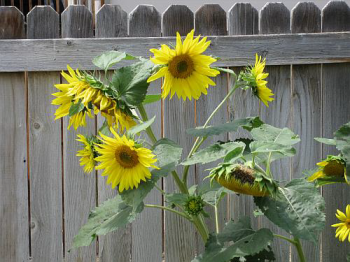
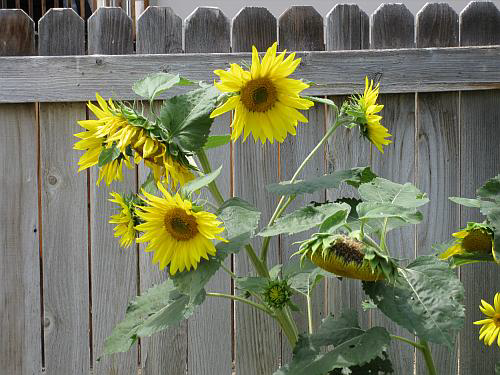
Sunflowers for Bird Brains article by Dr James J S Johnson

Sunflowers by J J S Johnson

But one day, to my disgust, a “bully” blue-jay invaded this happy picnic, attacking the littler birds, scaring them into hiding in nearby bushes (until the blue-jay finished gorging himself with sunflower seeds).³ What a disappointing interruption to the sunflower “picnic”!

The next day I was ready for the “bully”. When he attacked, and the little songbirds fled, I doused him with a geyser-like blast of water from my son’s “Super Soaker” — and the bully bird fled! The following day was a rerun: songbirds feast, blue-jay attacks, songbirds flee, blue-jay is sprayed by Super Soaker, it’s blue-jay’s turn to flee, then songbirds return to picnic.

Blue Jay (Cyanocitta cristata) by Daves BirdingPix

Blue Jay (Cyanocitta cristata) by Daves BirdingPix

But it was the next day that I will never forget.

The sunflower seed picnic began, as before, then the “bully” blue-jay flew in to attack. This time the sparrows and juncos looked toward me (on the patio, brandishing the Super Soaker) — and they continued to eat, trustingly, obviously confident that I would blast their attacker with water! So I quickly did, praying for accuracy. (How could I let them down?)

How quickly the little songbirds recognized the human version of “providential” care, and they acted with logical confidence as they trusted that protective care. Yet God’s providential care for us is infinitely better, qualitatively and quantitatively, than the pressurized watery “doses” of protective care that those birds trusted. Bird brains are quick to learn.

Other examples could be given. At a nearby pond, Drew (my son) and I habitually fed bread-crumbs to the ducks (mallards year-round, plus scaups and widgeons during winter). One day we were behind schedule, so we drove past the pond, to our home a few blocks beyond the pond (with other houses blocking the line of sight from our house to the pond). When we arrived at our mailbox, our front yard was occupied: squawking mallards congregated on the front lawn, reminding us that we failed to feed them as usual! Even ducks recognize the sources of their needed resources. Bird brains can remember and react quickly to real problems!
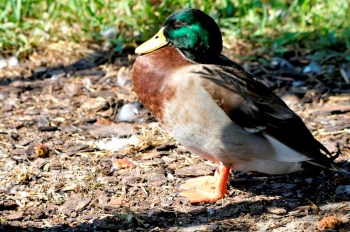
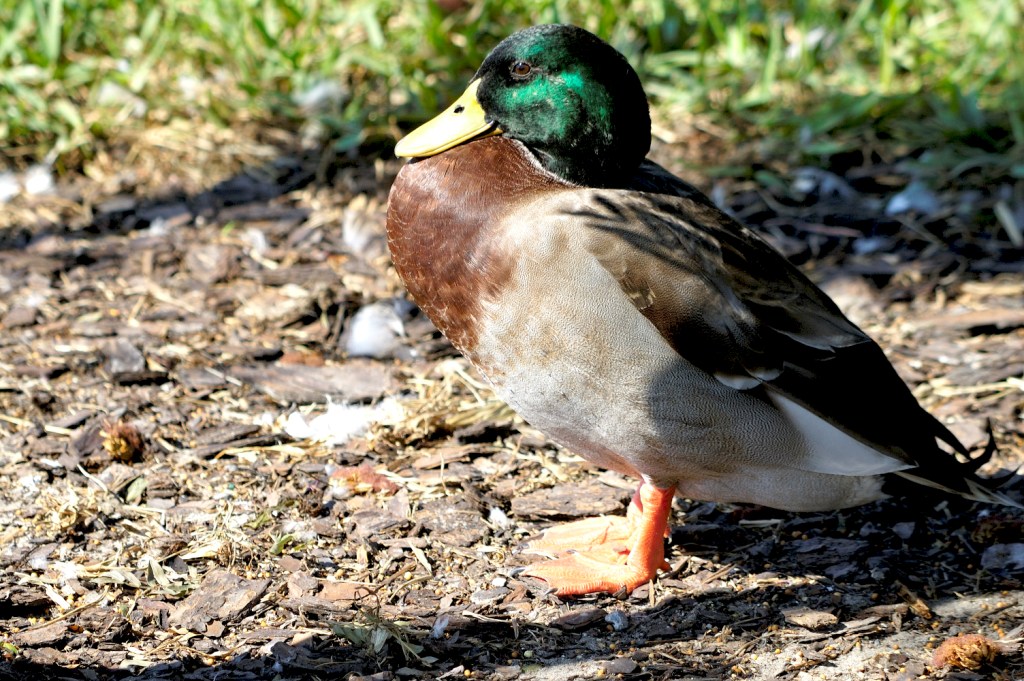
Mallard (Anas platyrhynchos) at Lake Parker By Dan'sPix

Mallard (Anas platyrhynchos) at Lake Parker By Dan’sPix

Worldwide, more amazing examples occur, in migration, bird family life activities, and in proven cases of avian learning. In short, bird brains, in a, innumerable multitude of contexts, display an entire “world” of intelligence (if not a veritable “galaxy”).

Contrastingly, human brains, although often capable of amazing intelligence, are all-too-often famous for corrupted reasoning. Tragically, corrupted reasoning in humans even displays in corruptions so extreme that the phrase “reprobate mind” snugly fits. But how can mankind, the creature with supposedly the highest level of intelligence, have such corrupted reason (and thus behave so stupidly4)? And why? It all starts with rejecting the basic truth that we are created by a holy Creator. When straining to avoid acknowledging our holy Creator, human brains display what the Bible calls a “reprobate mind”. Yet how does this happen, and why? When humans “choke” on the idea of acknowledging the providence of our Creator, they are “disapproving” the proof of God’s Creatorship. The consequence for this is severe: God gives such skeptics over to a “reprobate mind” (Romans 1:28). There is a logical connection between disapproving God’s Creatorship and being abandoned to a “reprobate mind”. That logical connection is rooted in a N.T. Greek verb, dokeô, because two words in Romans 1:28 derive from that verb:

And even as they did not like to retain [ouk edokimasan, literally “did not approve”] God in their knowledge, God gave them over to a reprobate [adokimon, literally “unapproving”] mind, to do those things which are not convenient.

The common root verb, dokeô, means “to approve”, i.e., to accept the proof of. In English we have the related words “prove”, “proof”, “probate”, “probative”, “approve”, “approbate”, etc., — to denote the two-step process of (1) considering the available evidence, and (2) accepting the truth of whatever the reliable evidence shows. These English words, like the Greek verb dokeô (and its related words), point to mankind’s mental ability to reasonably recognize and weigh evidence, using analytical logic, for arriving at sound evaluations. But this ability to reasonably evaluate can be damaged, and it is damaged whenever the proof of God’s Creatorship is irrationally disapproved. Thus, a “reprobate mind” is one that can’t discern what is right.

The tragic and even terrible reality is that being “given over” to a “reprobate mind” is a punishment for rejecting truth. It is not a punishment that follows death; it is a punishment in the here-and-now. This “mental leprosy” loses the ability to recognize true information, even to the point of self-destruction. The “reprobate mind” judgment involves losing the ability to analyze what is true and good, so truth is exchanged for a lie, good is exchanged for evil.
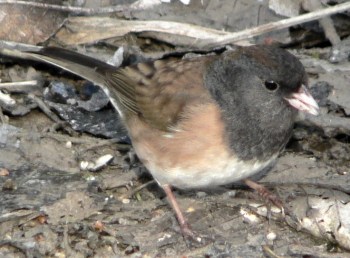
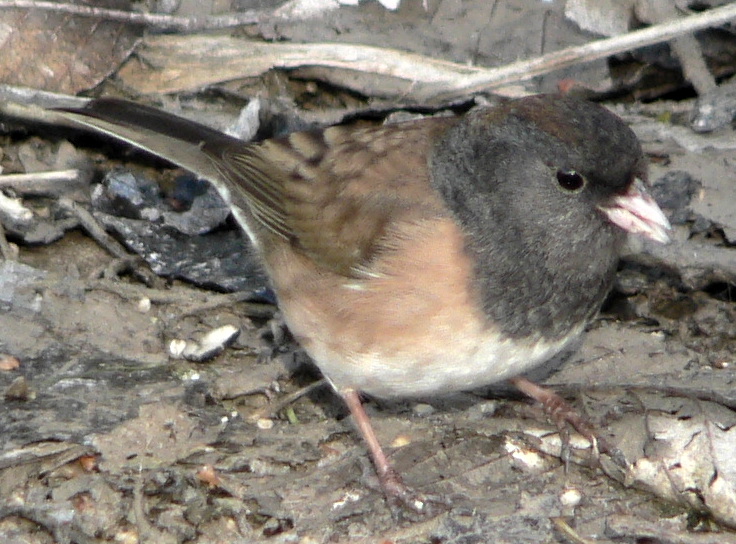
Dark-eyed Junco (Junco hyemalis oreganus) (one of the Oregon Juncos) ©WikiC

Dark-eyed Junco (Junco hyemalis oreganus) (one of the Oregon Juncos) ©WikiC

So, do the humans who reverence pond-scum, as our supposed “common ancestor”, have a right to belittle bird brains? Not at all!

When you think of God, take a lesson from the birds: recognize Who really cares for you, know Whom to trust, and be quick to take actions that demonstrate truly logical thinking. Sometimes bird brains simply put us humans to shame.5

*

¹ Werner Gitt & Karl-Heinz Vanheiden, If Animals Could Talk (Master Books, 2006); Bill Mehlert, “Birdbrains?”, Creation Ex Nihilo, 21(4):51 (September 1999); Jobe Martin, Evolution of A Creationist (BDM, 1996); Bill Cooper, ed., Paley’s Watchmaker (New Wine Press, 1997), page 42; James J. S. Johnson, “Providential Planting: The Pinyon Jay”, Creation Ex Nihilo, 19(3):24-25 (June 1997).

² Not all birders are worship-the-earth evolutionists. Mrs. Thelma Bumgardner, a public schoolteacher, taught me in 2nd grade that Biblical creation was true and evolution was a lie, as she gave me my first bird-book, which I still have. That initiation to creationist ornithology was revived, after years of evolutionist indoctrination, by a young-earth-creationist youth pastor, Bob Webel. This article thus shows another lesson: respecting God’s Creatorship is a proper use of reason, and it can be taught.

³ David Shaw, “The Good, the Bad, and the Jays”, Birds & Blooms (August/September 2009), page 35 (“Blue Jay … This species has a well-deserved reputation as a bully. They are notorious for chasing other birds from feeders and then gobbling as much as they can hold before moving off and allowing the other species to return”).

4 Steve Farrar, How to Ruin your Life by 40 (Moody, 2006), esp. at page 137.

5 James J. S. Johnson, “A Lesson from the Stork”, Days of Praise (8-22-2008). jjohnson@icr.org

(Dr. James J. S. Johnson offered this article as a guest author.  Jim is now both a follower and a contributing author this blog. Thanks, for letting us use this great information and inspiration.)

More by Dr. James J. S. Johnson:

*

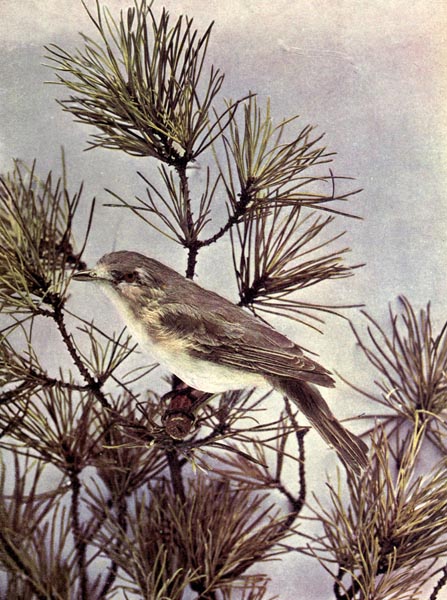
Vol. 2, No. 4 – The Wood Pewee

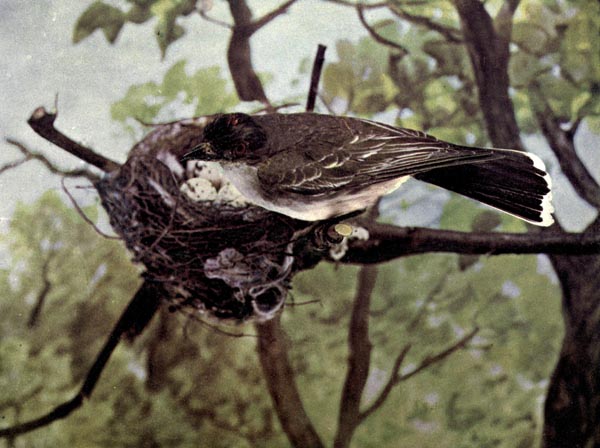
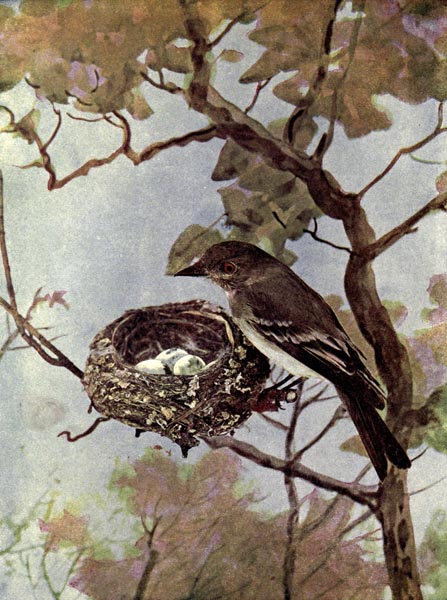
Wood Pewee of Birds Illustrated by Color Photography, 1897

Wood Pewee of Birds Illustrated by Color Photography, 1897

Eastern Pewee’s Twilight Song (Though this bird sings throughout the day, listen for its ballads before dawn’s light and well after sunset when this activity peaks. WhatBird) by Todd Wilson – xeno-canto

From col. Chi. Acad. Sciences. Copyrighted by
Nature Study Pub. Co., 1897, Chicago.

THE WOOD PEWEE.

(RELOCATED – CLICK HERE)

“A Cardinal Sits With Me” ~ by Sandra Conner

“A Cardinal Sits With Me” by Sandra Conner (Re-post)

This is a delightful poem by Sandra.

*

A Cardinal Sits With Me

CARDINAL - HOLLINGSWORTH - BFPA Cardinal sits with me at end of day.
It is a bleak, unhappy time,
And I have lost my way.

He seems content to stay a while and rest,
And my front porch is cool with shade,
Sun moving to the west.

To read the rest of A Cardinal Sits With Me.

Fifth Blog Anniversary

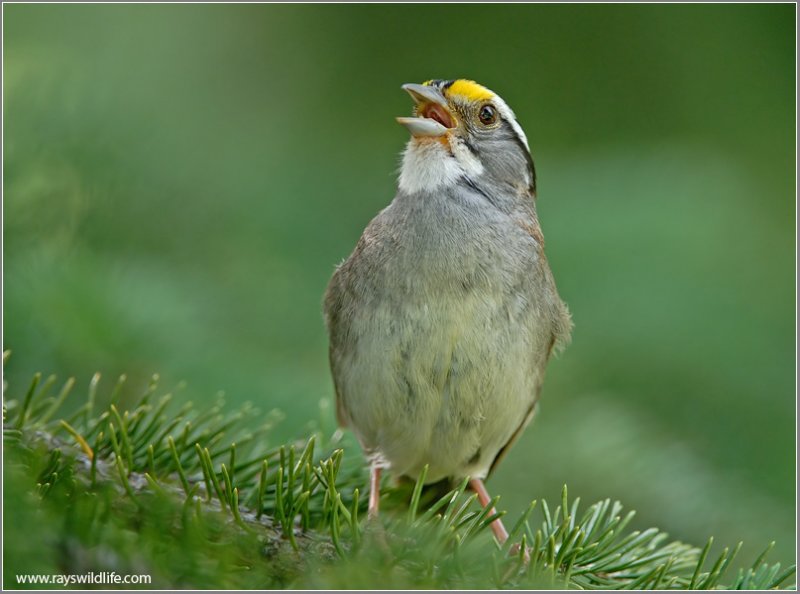
White-throated Sparrow by Ray

White-throated Sparrow by Ray Barlow

“Are not five sparrows sold for two copper coins? And not one of them is forgotten before God. (Luke 12:6 NKJV)

I just realized that this blog, Lee’s Birdwatching Adventures Plus, is now 5 years old. On February 15, 2008 I posted the first article on our church blog, The Fountain. At that time I began my own blog on Blogspot and then moved everything over here to WordPress and have been here since then. It was named Lee’s Birdwatching Adventures (original site) and later added the Plus as more articles about other topics were added.

The Fountain was a printed newsletter produced at church and it eventually became only an online version. It has developed over the years, just as this blog has. Stephen, our Assistant to the Pastor, is the reason that this blog exists. He invited me to write there and the rest is history.

When I brought the blog here, I moved all the originals also and this is that First article, Birds of the Bible Introduction. The One Year AnniversarySecond Anniversary of Blog,

In July of 2009, Ian Montgomery gave permission to reproduce his newsletters and also to use his photos. That started the Ian’s Bird of the Week series. In March of 2010, A J Mithra started doing articles for the blog. Ian is Australian and A J is Indian. We have other guest writers who add articles for the blog also.

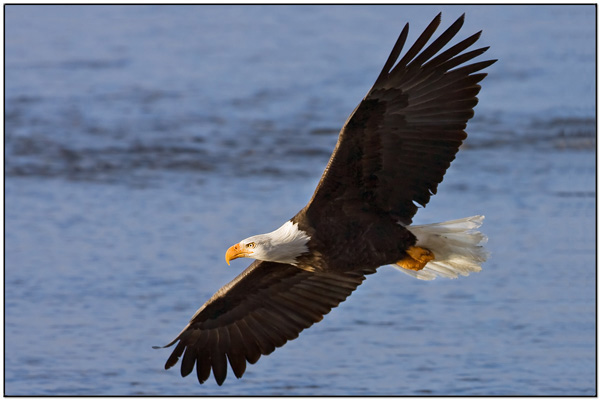
Bald Eagle flying by Dave's BirdingPix

Bald Eagle flying by Dave’s BirdingPix

Is it at your command that the eagle mounts up and makes his nest on high? (Job 39:27 ESV)

The other off-shoot blog:

The Birds of the Bible For Kids was begun in July of 2012 and is still developing. It has already had almost 5,800 views. My hearts desire is to get busy on this and show young people God’s Creative Hand though the Birds of the Bible, but written more to their level. (Update 10/3/14 – Move to Kid’s Section)

The Lord has blessed these sites way beyond what I ever imagined or prayed about when it began. The main site right now has had 868,500 views since moving it in July of 2008. All three of them added together is over a million views. Wow! Praise the Lord!

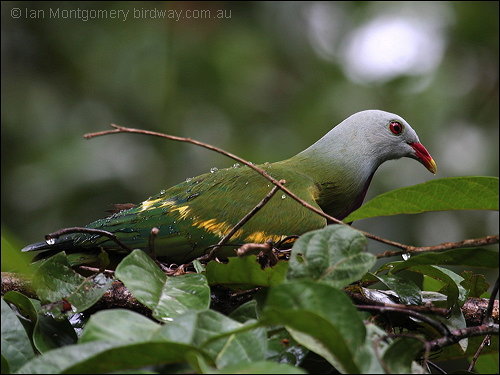
Wompoo Fruit-Dove (Ptilinopus magnificus) by Ian

Wompoo Fruit-Dove (Ptilinopus magnificus) by Ian

Though you lie down among the sheepfolds, You will be like the wings of a dove covered with silver, And her feathers with yellow gold. (Psalms 68:13 NKJV)

What about the future? Lord willing, I hope to keep finding neat things about the birds in the Bible and in the world to write about. Maybe some more writers will contribute to this adventure. Maybe more photographers and videographers will give their permission to use their images of these fantastic birds. (Of course, I really love one of my photographers, my husband, Dan) Only the Lord know the end from the beginning.

Without all of you, who stop by to read these articles and see the amazing birds, it would be useless. Thank you from the bottom of heart and may you receive a blessing from something you see and read.

I am so thankful that He has enabled me to write about His beautiful and delightful avian wonders.

give thanks in all circumstances; for this is the will of God in Christ Jesus for you. (1 Thessalonians 5:18 ESV)

Bible Birds – Swallow Introduction

Red-rumped Swallow (Cecropis daurica) by Nikhil Devasar

Red-rumped Swallow (Cecropis daurica) by Nikhil Devasar

Even the stork in the heavens Knows her appointed times; And the turtledove, the swift, and the swallow Observe the time of their coming. But My people do not know the judgment of the LORD. (Jeremiah 8:7 NKJV)

Previously, we introduced the Thrush and used the above verse. Today, we will look at that same verse, but from a different version of Scripture that translates the bird as a Swallow. Here is the same little Greek study for you: The Greek word (the OT was written mostly in Greek) gives the word (H5693) עגוּר -or – ‛âgûr (aw-goor’) An unused root meaning to twitter; probably the swallow: – swallow. Translations using the word Swallow, have more than one verse that refers to the bird. The New King James Version has these other verses:

Even the sparrow has found a home, And the swallow a nest for herself, Where she may lay her young— Even Your altars, O LORD of hosts, My King and my God. (Psalms 84:3 NKJV) Like a flitting sparrow, like a flying swallow, So a curse without cause shall not alight. (Proverbs 26:2 NKJV) Like a crane or a swallow, so I chattered; I mourned like a dove; My eyes fail from looking upward. O LORD, I am oppressed; Undertake for me! (Isaiah 38:14 NKJV)

So there are at least four verses with the Swallow listed. The Swallows belong to the Hirundinidae – Swallows, martins Family. There are 88 members in the family at present. Many times in the Bible they mention a bird‘s name and then say “after its kind.” For now, let’s just same that it means all of those species in that family. The Swallows also have Saw-wings and Martins in the family. They live on all the continents except Antarctica.

This family is known for their aerial feeding. taking flying insects on the wing. Swallows hunt insects on the wing because they were designed with a slender, streamlined body and long pointed wings, which allow great maneuverability and endurance, as well as frequent periods of gliding. Their body shape allows for very efficient flight, which costs 50-75% less for swallows than equivalent passerines of the same size. Swallows usually forage at around 18.6-25 mph (30–40 km/h), although they are capable of reaching speeds of between 31-40 mph (50–65 km/h) when traveling.

The legs are short, and their feet were created for perching rather than walking, as the front toes are partially joined at the base. Swallows are capable of walking and even running, but they do so with a shuffling, waddling gait. The leg muscles of the river martins (Pseudochelidon) are stronger and more robust than those of other swallows.

The most common plumage is glossy dark blue or green above and plain or streaked underparts, often white or rufous. Species which burrow or live in dry or mountainous areas are often matte brown above (e.g. Sand Martin and Crag Martin). The typical song of swallows is a simple, sometimes musical twittering.

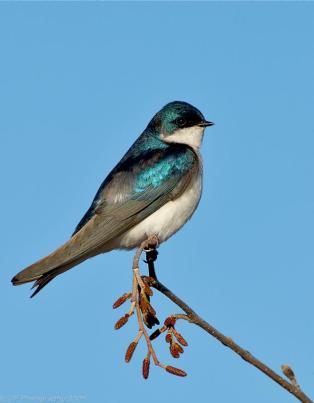
Tree Swallow (Tachycineta bicolor) by J Fenton

Tree Swallow (Tachycineta bicolor) by J Fenton

Our verse above mentions the birds and how they KNOW when it is time to migrate, but what about the end of the verse? The Lord uses birds and other critters as an example, BUT He is mainly trying to teach us something.

Let’s see what some of the different versions say about what we are supposed to learn from these birds.

(HCSB)  ”are aware of their migration, but My people do not know the requirements of the LORD.”

(MSG) …know when it’s time to move south for winter… know when it’s time to come back again. But my people? My people know nothing, not the first thing of GOD and his rule.

(NET) …knows when it is time to move on…recognize the normal times for their migration. But my people pay no attention to what I, the LORD, require of them.

Do you know what the Lord wants you to do? Do you know Him as your Savior? If you do, are you doing what the Bible tells us we should do? Are you obeying your parents? And doing what the Lord wants you to do?.

The Lord loves us, just as your parents do. When you obey them you are happier and blessed. When you do not obey, are you happy or sad? The same is true with obeying the Word that the Lord has given us through His Word, the Bible.

See:

*