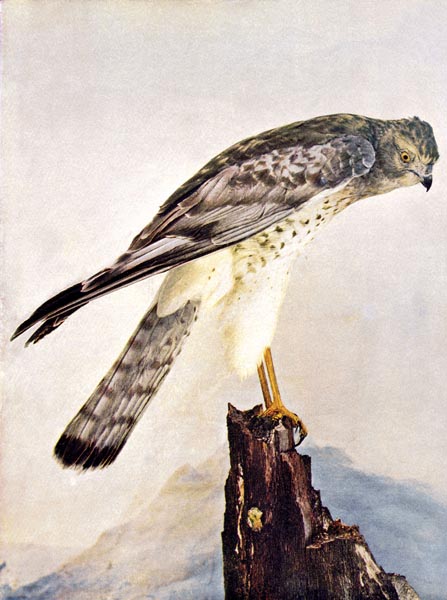
Birds Vol 1 #5 – Marsh Hawk

Marsh Hawk for Birds Illustrated by Color Photography, 1897

Marsh Hawk for Birds Illustrated by Color Photography, 1897

Birds Illustrated by Color Photography – Revisited

Vol 1. May, 1897 No. 5

*

THE MARSH HAWK.

imgo

NE of the most widely distributed birds of North America is the Marsh Hawk, according to Wilson, breeding from the fur regions around Hudson’s Bay to Texas, and from Nova Scotia to Oregon and California. Excepting in the Southern portion of the United States, it is abundant everywhere. It makes its appearance in the fur countries about the opening of the rivers, and leaves about the beginning of November. Small birds, mice, fish, worms, and even snakes, constitute its food, without much discrimination. It is very expert in catching small green lizards, animals that can easily evade the quickest vision.

It is very slow on the wing, flies very low, and in a manner different from all others of the hawk family. Flying near the surface of the water, just above the weeds and canes, the Marsh Hawk rounds its untiring circles hour after hour, darting after small birds as they rise from cover. Their never ending flight, graceful as it is, becomes monotonous to the watcher. Pressed by hunger, they attack even wild ducks.

In New Jersey, Pennsylvania, and Delaware, where it sweeps over the low lands, sailing near the earth, in search of a kind of mouse very common in such situations, it is chiefly known as the Mouse Hawk. In the southern rice fields it is useful in preventing to some extent the ravages of the swarms of Bobolinks. It has been stated that one Marsh Hawk was considered by planters equal to several negroes for alarming the rice birds. This Hawk when feeding is readily approached.

The birds nest in low lands near the sea shore, in the barrens, and on the clear table-lands of the Alleghanies, and once a nest was found in a high covered pine barrens of Florida.

The Marsh Hawks always keep together after pairing, working jointly in building the nest, in sitting upon the eggs, and in feeding the young. The nest is clumsily made of hay, occasionally lined with feathers, pine needles, and small twigs. It is built on the ground, and contains from three to five eggs of a bluish white color, usually more or less marked with purplish brown blotches. Early May is their breeding time.

It will be observed that even the Hawk, rapacious as he undoubtedly is, is a useful bird. Sent for the purpose of keeping the small birds in bounds, he performs his task well, though it may seem to man harsh and tyranical. The Marsh Hawk is an ornament to our rural scenery, and a pleasing sight as he darts silently past in the shadows of falling night.

Hen (Northern) Harrier (Circus cyaneus) by J Fenton

Hen (Northern) Harrier (Circus cyaneus) by J Fenton


Lee’s Addition:

Is it by your wisdom [Job] that the hawk soars and stretches her wings toward the south [as winter approaches]? (Job 39:26 AMP)

“Hawks are one of our Birds of the Bible and belongs to the Kites, Hawk & Eagles – Accipitridae Family. The Marsh Hawk today is know as the Hen Harrier (Circus cyaneus). Most know it as the Northern Harrier or Marsh Hawk. It migrates to more southerly areas in winter. Eurasian birds move to southern Europe and southern temperate Asia, and American breeders to the southernmost USA, Mexico, and Central America. In the mildest regions, such as France, Great Britain, and the southern US, Hen Harriers may be present all year, but the higher ground is largely deserted in winter.

C. c. hudsonius (Linnaeus, 1766), the Northern Harrier, breeds in North America and is sometimes considered a distinct species C. hudsonius. The male’s plumage is darker grey than that of C. c. cyaneus and the female is also darker and more rufous in colour.” (Wikipedia places it with the Hen Harrier)(*Update*) The IOC 3.1 shows the Hen and Northern Harriers re-split. The Northern Harrier is now Circus hudsonius. Are you confused? So am I.

The Hen Harrier is 43–52 cm (17–20 in) long with a 97–118 cm (38–46 in) wingspan. It resembles other harriers in having distinct male and female plumages. The sexes also differ in weight, with males weighing an average of 350 grams (12 oz) and females an average of 530 grams (19 oz).

Northern Harrier (Circus hudsonius) ©WikiC

Northern Harrier (Circus hudsonius) ©WikiC

*
Birds Illustrated by Color Photograhy Vol 1 May, 1897 No 5 - Cover

Birds Illustrated by Color Photograhy Vol 1 May, 1897 No 5 – Cover

Birds Illustrated by Color Photography – Revisited – Introduction

The above article is the first article in the monthly serial that was started in January 1897 “designed to promote Knowledge of Bird-Live.” These include Color Photography, as they call them, today they are drawings. There are at least three Volumes that have been digitized by Project Gutenberg.

To see the whole series of – Birds Illustrated by Color Photography – Revisited

*

(Information from Wikipedia and other internet sources)

Next Article – The Black-Capped Chickadee

Previous Article – The Orchard Oriole

Links:

Northern Harrier – All About Birds

Hen Harrier – Wikipedia

*
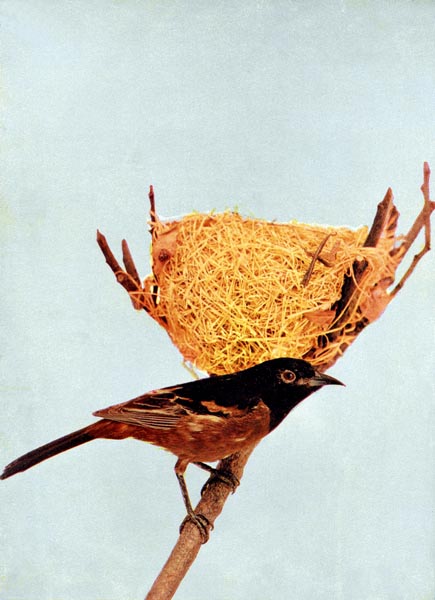
 

Birds Vol 1 #5 – Orchard Oriole

Orchard Oriole by Birds Illustrated by Color Photography, 1897

Orchard Oriole by Birds Illustrated by Color Photography, 1897

Birds Illustrated by Color Photography – Revisited

Vol 1. May, 1897 No. 5

*

THE ORCHARD ORIOLE

The Orchard Oriole is here.
Why has he come? To cheer, to cheer—C. C. M.

imgt

HE Orchard Oriole has a general range throughout the United States, spending the winter in Central America. It breeds only in the eastern and central parts of the United States. In Florida it is a summer resident, and is found in greatest abundance in the states bordering the Mississippi Valley. This Oriole appears on our southern border about the first of April, moving leisurely northward to its breeding grounds for a month or six weeks, according to the season, the males preceding the females several days.

Though a fine bird, and attractive in his manners and attire, he is not so interesting or brilliant as his cousin, the Baltimore Oriole. He is restless and impulsive, but of a pleasant disposition, on good terms with his neighbors, and somewhat shy and difficult to observe closely, as he conceals himself in the densest foliage while at rest, or flies quickly about from twig to twig in search of insects, which, during the summer months, are his exclusive diet.

The favorite haunts of this very agreeable songster, as his name implies, are orchards, and when the apple and pear trees are in bloom, and the trees begin to put out their leaves, his notes have an ecstatic character quite the reverse of the mournful lament of the Baltimore species. Some writers speak of his song as confused, but others say this attribute does not apply to his tones, the musician detecting anything but confusion in the rapidity and distinctness of his gushing notes. These may be too quick for the listener to follow, but there is harmony in them.

In the Central States hardly an orchard or a garden of any size can be found without these birds. They prefer to build their nests in apple trees. The nest is different, but quite as curiously made as that of the Baltimore. It is suspended from a small twig, often at the very extremity of the branches. The outer part of the nest is usually formed of long, tough grass, woven through with as much neatness and in as intricate a manner as if sewed with a needle. The nests are round, open at the top, about four inches broad and three deep.

It is admitted that few birds do more good and less harm than our Orchard Oriole, especially to the fruit grower. Most of his food consists of small beetles, plant lice, flies, hairless caterpillars, cabbage worms, grasshoppers, rose bugs, and larvæ of all kinds, while the few berries it may help itself to during the short time they last are many times paid for by the great number of insect pests destroyed, making it worthy the fullest protection.

The Orchard Oriole is very social, especially with the king bird. Most of his time is spent in trees. His flight is easy, swift, and graceful. The female lays from four to six eggs, one each day. She alone sits on the eggs, the male feeding her at intervals. Both parents are devoted to their young.

The fall migration begins in the latter part of July or the beginning of August, comparatively few remaining till September.

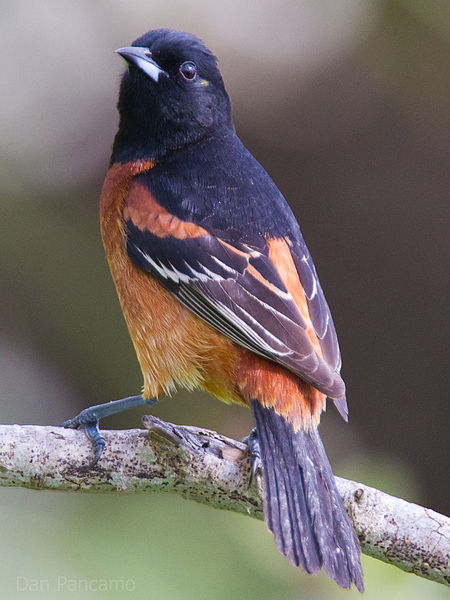
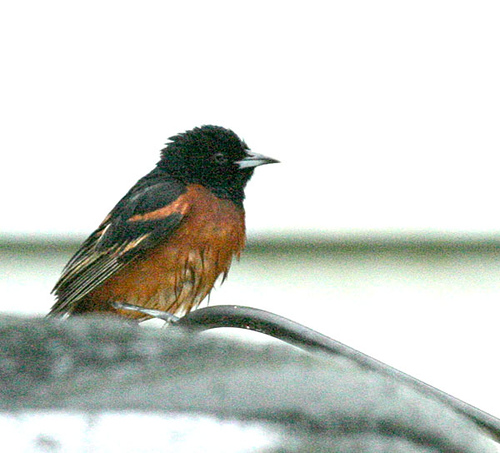
Orchard Oriole (Icterus spurius) ©WikiC

Orchard Oriole (Icterus spurius) ©WikiC


Lee’s Addition:

Its leaves were fair and its fruit abundant, and in it was food for all. The living creatures of the field found shade under it, and the birds of the sky dwelt in its branches; and all flesh was fed from it. (Daniel 4:12 AMP)

The Orchard Oriole is in the Icteridae – Oropendolas, Orioles & Blackbirds Family. It  is the smallest North American species of icterid blackbird. The subspecies of the Caribbean coast of Mexico, I. s. fuertesi, is sometimes considered a separate species, the Ochre Oriole.

This species is 6.3 inches (16 cm) long and weighs 20 g. The bill is pointed and black with some blue-gray at the base of the lower mandible (Howell and Webb 1995). The adult male of the nominate subspecies has chestnut on the underparts, shoulder, and rump, with the rest of the plumage black. In the subspecies I. s. fuertesi, the chestnut is replaced with ochre (Howell and Webb 1995). The adult female and the juvenile of both subspecies have olive-green on the upper parts and yellowish on the breast and belly. All adults have pointed bills and white wing bars. (Orchard Orioles are considered to be adults after their second year.) One-year-old males are yellow-greenish with a black bib.

Orchard Oriole (Icterus spurius) m by Kent Nickell

Orchard Oriole (Icterus spurius) m by Kent Nickell

Orchard Oriole sound from xeno-canto.org

Birds Illustrated by Color Photograhy Vol 1 May, 1897 No 5 - Cover

Birds Illustrated by Color Photograhy Vol 1 May, 1897 No 5 – Cover

Birds Illustrated by Color Photography – Revisited – Introduction

The above article is the first article in the monthly serial that was started in January 1897 “designed to promote Knowledge of Bird-Live.” These include Color Photography, as they call them, today they are drawings. There are at least three Volumes that have been digitized by Project Gutenberg.

To see the whole series of – Birds Illustrated by Color Photography – Revisited

*
(Information from Wikipedia and other internet sources)

Next Article – The Marsh Hawk

Previous Article – The Screech Owl

Sharing The Gospel

Links:

Icteridae – Oropendolas, Orioles & Blackbirds Family

Orchard Oriole – All About Birds

Orchard Oriole – Wikipedia

Orchard Oriole – National Geographic

*


Feedback: Dinosaurs Living with People—The Biblical Worldview – Answers in Genesis

Dinosaur Fossil from OCR.org

I love this statement that they started their answer with in the excerpt they had in their Answers Weekly Newsletter.

Since the Bible is the Word of God, and since God cannot lie, then the Bible is trustworthy. That is our starting point.

That is exactly how I feel about what is written by me here on this blog. I start with knowing that God’s Word is truth and that all these birds that were created for our enjoyment, were Created By God, Not Made in China or Made in the USA, but Made By God.

Anyway, the following article excerpt came from Feedback. It has to do with Dinosaurs living with humans.

Q: Why do we believe dinosaurs lived with people?

A: Since the Bible is the Word of God, and since God cannot lie, then the Bible is trustworthy. That is our starting point. We are told that land animals were created on Day Six, and this would include dinosaurs. Since Day Six is also when man was created, we certainly believe dinosaurs lived at the same time as man.

How do you explain the various petroglyphs of dinosaurs found around the world? How do you explain the fact that so many dragon legends from around the world describe creatures that match what we know about dinosaurs from their fossils? How do you explain the biblical account that seems to describe something like a brachiosaurus, called behemoth in Job 40:15–24?

Feedback: Dinosaurs Living with People—The Biblical Worldview – Answers in Genesis.

To read the whole article CLICK HERE

*

Birds Vol 1 #5 – Screech Owl

Screech Owl for Birds Illustrated by Color Photography, 1897

Screech Owl for Birds Illustrated by Color Photography, 1897

Birds Illustrated by Color Photography – Revisited

Vol 1. May, 1897 No. 5

*

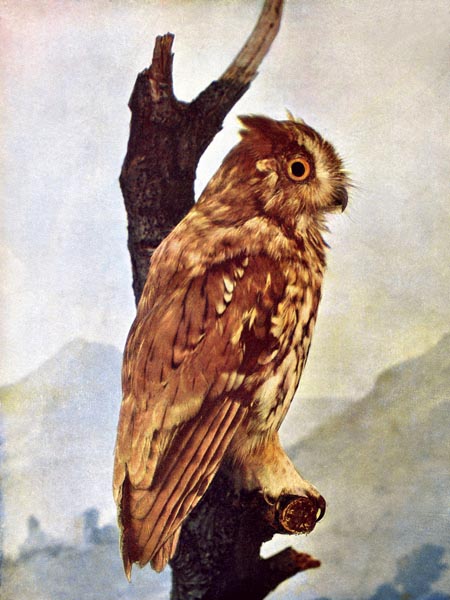
THE MOTTLED OR “SCREECH” OWL.

imgn

IGHT WANDERER,” as this species of Owl has been appropriately called, appears to be peculiar to America. They are quite scarce in the south, but above the Falls of the Ohio they increase in number, and are numerous in Virginia, Maryland, and all the eastern districts. Its flight, like that of all the owl family, is smooth and noiseless. He may be sometimes seen above the topmost branches of the highest trees in pursuit of large beetles, and at other times he sails low and swiftly over the fields or through the woods, in search of small birds, field mice, moles, or wood rats, on which he chiefly subsists.

The Screech Owl’s nest is built in the bottom of a hollow trunk of a tree, from six to forty feet from the ground. A few grasses and feathers are put together and four or five eggs are laid, of nearly globular form and pure white color. This species is a native of the northern regions, arriving here about the beginning of cold weather and frequenting the uplands and mountain districts in preference to the lower parts of the country.

In the daytime the Screech Owl sits with his eyelids half closed, or slowly and alternately opening and shutting, as if suffering from the glare of day; but no sooner is the sun set than his whole appearance changes; he becomes lively and animated, his full and globular eyes shine like those of a cat, and he often lowers his head like a cock when preparing to fight, moving it from side to side, and also vertically, as if watching you sharply. In flying, it shifts from place to place “with the silence of a spirit,” the plumage of its wings being so extremely fine and soft as to occasion little or no vibration of the air.

The Owl swallows its food hastily, in large mouthfuls. When the retreat of a Screech Owl, generally a hollow tree or an evergreen in a retired situation, is discovered by the Blue Jay and some other birds, an alarm is instantly raised, and the feathered neighbors soon collect and by insults and noisy demonstration compel his owlship to seek a lodging elsewhere. It is surmised that this may account for the circumstance of sometimes finding them abroad during the day on fences and other exposed places.

Both red and gray young are often found in the same nest, while the parents may be both red or both gray, the male red and the female gray, or vice versa.

The vast numbers of mice, beetles, and vermin which they destroy render the owl a public benefactor, much as he has been spoken against for gratifying his appetite for small birds. It would be as reasonable to criticise men for indulging in the finer foods provided for us by the Creator. They have been everywhere hunted down without mercy or justice.

During the night the Screech Owl utters a very peculiar wailing cry, not unlike the whining of a puppy, intermingled with gutteral notes. The doleful sounds are in great contrast with the lively and excited air of the bird as he utters them. The hooting sound, so fruitful of “shudders” in childhood, haunts the memory of many an adult whose earlier years, like those of the writer, were passed amidst rural scenery.

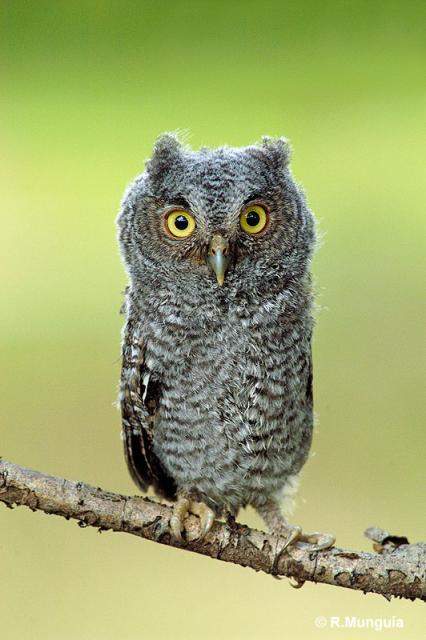
Eastern Screech Owl (Megascops asio) baby Reinier Munguia

Eastern Screech Owl (Megascops asio) baby Reinier Munguia


THE SCREECH OWL.

I wouldn’t let them put my picture last in the book as they did my cousin’s picture in March “Birds.” I told them I would screech if they did.

You don’t see me as often as you do the Blue-bird, Robin, Thrush and most other birds, but it is because you don’t look for me. Like all other owls I keep quiet during the day, but when night comes on, then my day begins. I would just as soon do as the other birds—be busy during the day and sleep during the night—but really I can’t. The sun is too bright for my eyes and at night I can see very well. You must have your folks tell you why this is.

I like to make my nest in a hollow orchard tree, or in a thick evergreen. Sometimes I make it in a hay loft. Boys and girls who live in the country know what a hay loft is.

People who know me like to have me around, for I catch a good many mice, and rats that kill small chickens. All night long I fly about so quietly that you could not hear me. I search woods, fields, meadows, orchards, and even around houses and barns to get food for my baby owls and their mamma. Baby owls are queer children. They never get enough to eat, it seems. They are quiet all day, but just as soon as the sun sets and twilight gathers, you should see what a wide awake family a nest full of hungry little screech owls can be.

Did you ever hear your mamma say when she couldn’t get baby to sleep at night, that he is like a little owl? You know now what she means. I think I hear my little folks calling for me so I’ll be off. Good night to you, and good morning for me.

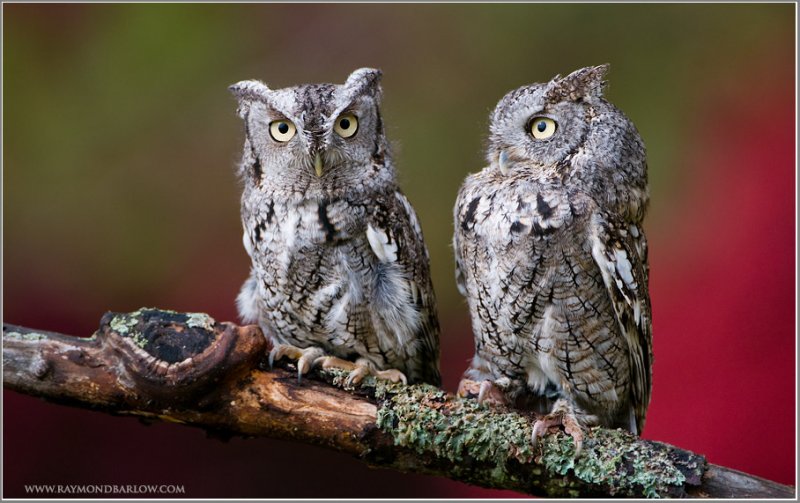
Eastern Screech Owl (Megascops asio) (captive) by Raymond Barlow

Eastern Screech Owl (Megascops asio) (captive) by Raymond Barlow


Lee’s Addition:

Owls belong to the Strigidae – Owls Family which has 207 members. Like most Owls, the females are larger than the males and both are small and agile. They stand about 7-10 in. tall and wings are 18-24 inches across. “They have prominent, wide-set feather tufts with bright yellow eyes. They have different brownish hues with whitish, patterned underside. This coloration helps them get camouflage against the tree bark. They have well-developed raptorial claws and curved bill. They use them as a tool to tear their prey into pieces that are small enough for them to swallow. They tend to carry their prey to the nest and then eat it.”

The Lord has wonderfully created them for just the roll they play, as mentioned above. He has given them special feathers on the fronts of their wings, like most owls, that give them their stealthy quite approach. They are a Bible Bird, as Scripture says, have helped teach man. Our Stealth bombers, I understand, used some of these ideas to help keep the planes “stealthy.”

But now ask the beasts, and they will teach you; And the birds of the air, and they will tell you; Or speak to the earth, and it will teach you; And the fish of the sea will explain to you. Who among all these does not know That the hand of the LORD has done this, In whose hand is the life of every living thing, And the breath of all mankind? (Job 12:7-10 NKJV)

Thought you might enjoy hearing the sound of a Screech Owl

There actually 25 Owls in the Megascops genera, 25 of them named Screech Owls. This article is leaned toward the Eastern Screech Owl.
Eastern Screech Owl (Megascops asio)
Western Screech Owl (Megascops kennicottii)
Balsas Screech Owl (Megascops seductus)
Pacific Screech Owl (Megascops cooperi)
Whiskered Screech Owl (Megascops trichopsis)
Tropical Screech Owl (Megascops choliba)
West Peruvian Screech Owl (Megascops roboratus)
Koepcke’s Screech Owl (Megascops koepckeae)
Bare-shanked Screech Owl (Megascops clarkii)
Bearded Screech Owl (Megascops barbarus)
Rufescent Screech Owl (Megascops ingens)
Colombian Screech Owl (Megascops colombianus)
Cinnamon Screech Owl (Megascops petersoni)
Cloud-forest Screech Owl (Megascops marshalli)
Tawny-bellied Screech Owl (Megascops watsonii)
Middle American Screech Owl (Megascops guatemalae)
Vermiculated Screech Owl (Megascops vermiculatus)
Roraiman Screech Owl (Megascops roraimae)
Napo Screech Owl (Megascops napensis)
Choco Screech Owl (Megascops centralis)
Yungas Screech Owl (Megascops hoyi)
Black-capped Screech Owl (Megascops atricapilla)
Long-tufted Screech Owl (Megascops sanctaecatarinae)
Puerto Rican Screech Owl (Megascops nudipes)
White-throated Screech Owl (Megascops albogularis)
Palau Owl (Pyrroglaux podargina)
Bare-legged Owl (Margarobyas lawrencii)

Birds Illustrated by Color Photograhy Vol 1 May, 1897 No 5 - Cover

Birds Illustrated by Color Photograhy Vol 1 May, 1897 No 5 – Cover

Birds Illustrated by Color Photography – Revisited – Introduction

The above article is the first article in the monthly serial that was started in January 1897 “designed to promote Knowledge of Bird-Live.” These include Color Photography, as they call them, today they are drawings. There are at least three Volumes that have been digitized by Project Gutenberg.

To see the whole series of – Birds Illustrated by Color Photography – Revisited

*

(Information from Wikipedia and other internet sources)

Next Article – The Orchard Oriole

Previous Article – National Council of Women

ABC’s Of The Gospel

Links:

Eastern Screech Owl All About Birds

Western Screech Owl – All About Birds

*


Start Birdwatching Today: What is that Sound?

Birds are very vocal at times and they give us a great clue as to what bird it is. Eventually as you become better in your birdwatching adventures, it will help to learn some of their sounds and noises.

As you are observing birds that are singing or calling, you can learn to associate that sound to that bird. That is the beginning and it is almost automatic. When you hear a bird, but do not see it, then you will either recall one you have seen and be able to ID it, or you can start studying the sounds so the next time you can know what the unseen bird is.

There are several methods that birders use. Audio CDs and computer programs have Bird sounds along with photos of the bird to assist your learning.

The Internet has places like the WhatBird, All About Birds, Birding by Ear Basics,

Here is an interesting video about blind people birding by ear. Very interesting.

Here are some of the birds you may already know. These are local birds here, but also seen around other parts of the country. Also a very nice verse to remember while “birding by sound.” I used this verse when taking my General Amateur License test that was all Morse Code. It helped calm my heart even though it refers to the Lord hearing us, but it helped me to hear those dots and dashes. (Only 8 of 115 of us passed the test that day.)

LORD, thou hast heard the desire of the humble: thou wilt prepare their heart, thou wilt cause thine ear to hear: (Psalms 10:17 KJV)

All of these sounds are coming from the Xeno-canto.org website.

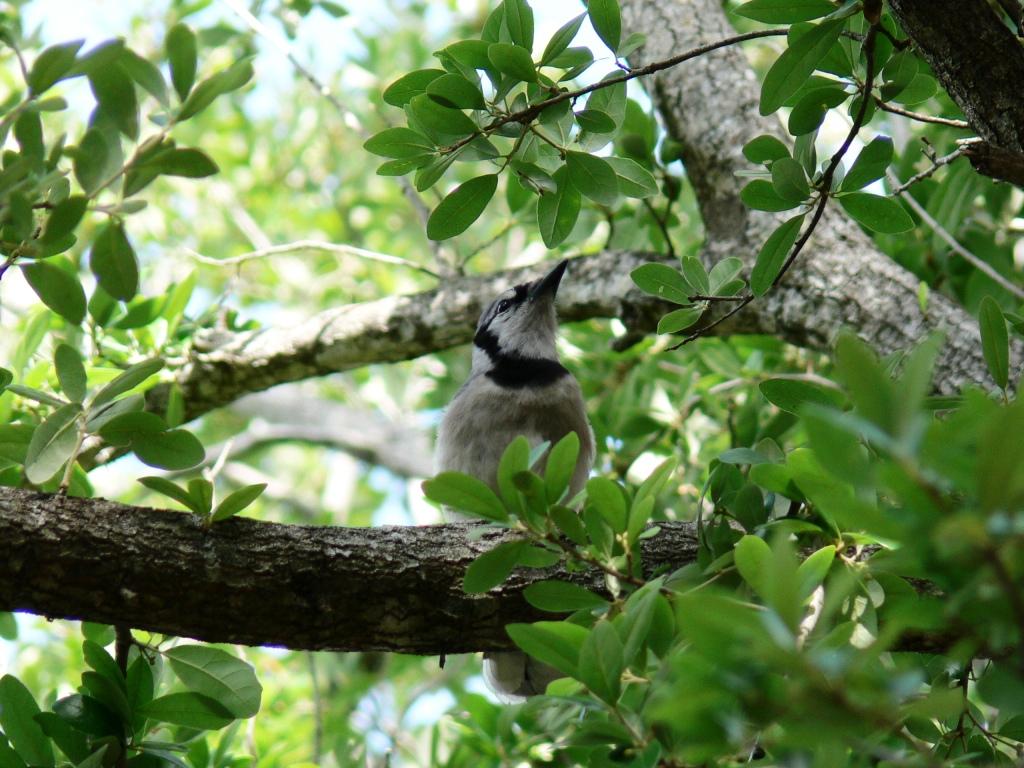
Blue Jay in tree at Hampton Pines

Blue Jay in tree at Hampton Pines

Blue Jay

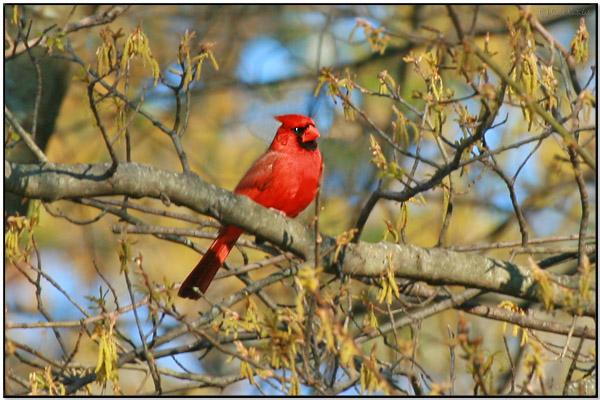
Northern Cardinal (Cardinalis cardinalis) by Daves BirdingPix

Northern Cardinal

Boat-tailed Grackle (Quiscalus major) at Lake Howard, Winter Haven, Florida By Dan’sPix

Boat-tailed Grackle

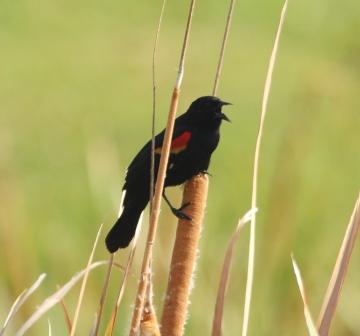
Red-winged Blackbird at Bok Sanctuary

Red-winged Blackbird at Bok Sanctuary

Red-winged Blackbird

Whip-poor-will (Caprimulgus vociferus) by BirdsInFocus

Whip-poor-will (Caprimulgus vociferus) by BirdsInFocus

Eastern Whip-poor-will

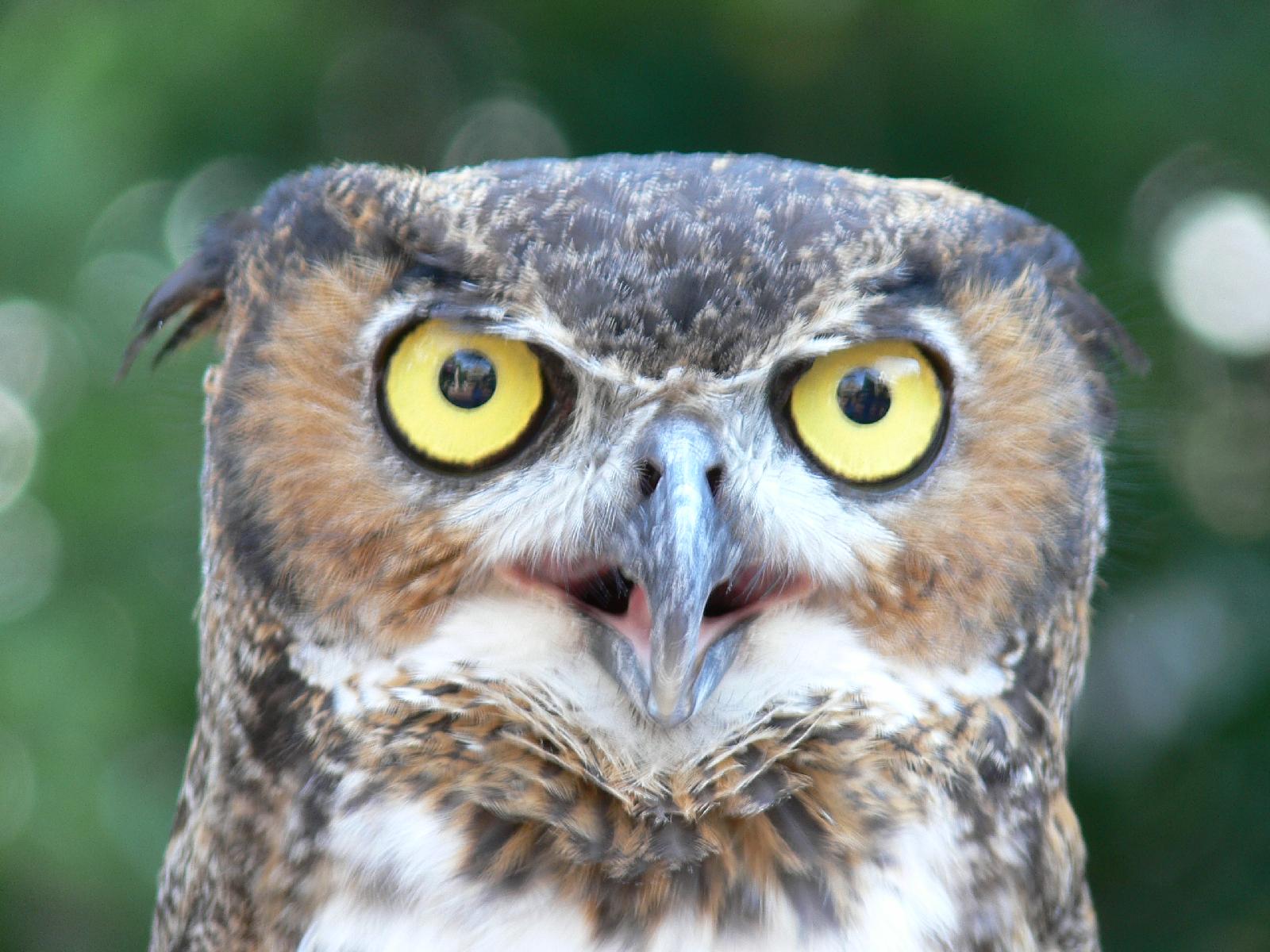
Great Horned Owl – Lowry Pk Zoo by Lee

Great Horned Owl

How many did you all ready know?

Some like to put words to their sounds like these from Birding By Ear — Bird Song Identification

Listen here to a few bird songs and calls that have good mnemonic phrases:
Eastern Towhee — “Drink your tea-ea-ea”
Whip-poor-will — The name says it all.
Black-capped chickadee — Some music and talk first, then the “Chick-a-dee-dee-dee”
White throated sparrow — “Poor Sam Peabody, Peabody, Peabody”
Black-throated green warbler — “Zee zee zee zoo zee”
Barred Owl — “Who cooks for you, who cooks for you all”

Links:
WhatBird
All About Birds
Birding by Ear Basics
*

Start Birdwatching Today Series

*

Birds Vol 1 #5 – National Council of Women

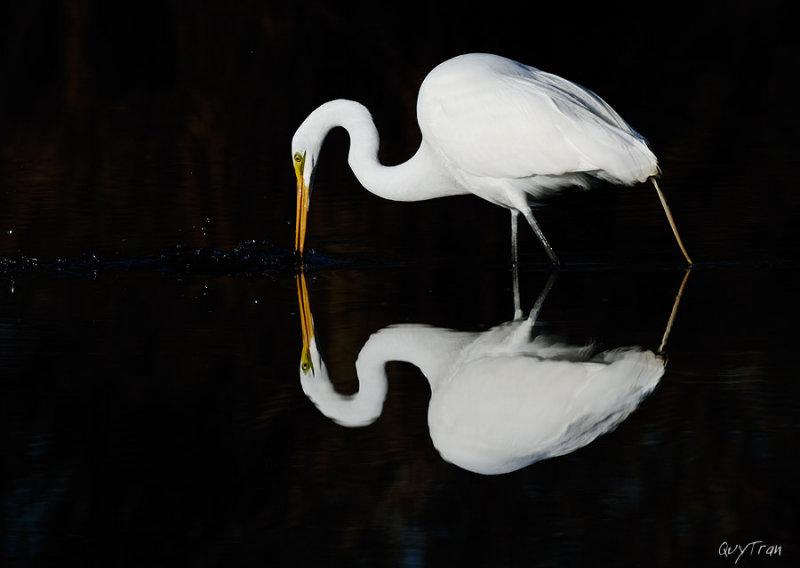
Western Great Egret (Ardea alba) by Quy Tran

Western Great Egret (Ardea alba) by Quy Tran

Birds Illustrated by Color Photography – Revisited

Vol 1. May, 1897 No. 5

*

NATIONAL COUNCIL OF WOMEN.

Extract from the report of the committee on dress, by its chairman, Mrs. Frank Johnson.

Birds, Wings and Feathers Employed as Garniture.

From the school-room there should certainly emanate a sentiment which would discourage forever the slaughter of birds for ornament.

The use of birds and their plumage is as inartistic as it is cruel and barbarous.

The Halo.

“One London dealer in birds received, when the fashion was at its height, a single consignment of thirty-two thousand dead humming birds, and another received at one time, thirty thousand aquatic birds and three hundred thousand pairs of wings.”

Think what a price to pay,
Faces so bright and gay,
Just for a hat!
Flowers unvisited, mornings unsung,
Sea-ranges bare of the wings that o’erswung—
Bared just for that!

Think of the others, too,
Others and mothers, too,
Bright-Eyes in hat!
Hear you no mother-groan floating in air,
Hear you no little moan—birdling’s despair—
Somewhere for that?

Caught ’mid some mother-work,
Torn by a hunter Turk,
Just for your hat!
Plenty of mother-heart yet in the world:
All the more wings to tear, carefully twirled!
Women want that?

Oh, but the shame of it,
Oh, but the blame of it,
Price of a hat!
Just for a jauntiness brightening the street!
This is your halo—O faces so sweet—
Death, and for that!—W. C. Gannett.


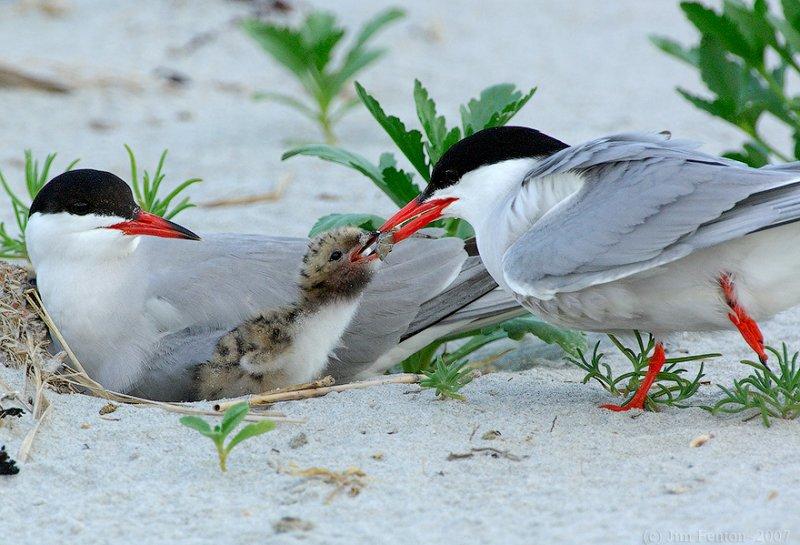
Common Tern (Sterna hirundo) by J Fenton

Common Tern (Sterna hirundo) by J Fenton

Lee’s Addition:

I am so glad this campaign was started way back then. Wow! Do you realize how many birds were killed just so the ladies could be ” in style”? Here is a quote from the Feather Trade article. “On two days in 1886, ornithologist Frank Chapman walked the streets of New York City and recorded the types of birds he saw on ladies hats. On his walks he counted the wings, feathers, heads, and entire bodies of 174 birds representing 40 different species decorating the hats of ladies, including 21 hats decorated with parts of the common tern. Frank Chapman went on to start the annual Christmas Bird Count in 1890!”

If these were the feathers from chickens or turkeys I might understand part of it, but that above quote is terrible. And that is just 2 days. Another quote, this time from the National Parks article, “The long, white plumes of egrets had become more valuable than gold. To satisfy the demands of this latest fashion trend, more than 5 million birds a year were being slaughtered; nearly 95 percent of Florida’s shore birds had been killed by plume hunters.”

We are given a dominion mandate over the birds and critters to help maintain them. Yes, we are allowed to eat some, but to slaughter just for fashion or to hang a trophy bird or animal on a wall, there is a difference.

And God blessed them. And God said to them, “Be fruitful and multiply and fill the earth and subdue it, and have dominion over the fish of the sea and over the birds of the heavens and over every living thing that moves on the earth.” (Genesis 1:28 ESV)

Here are some articles about this issue:

The Feather Trade

The Call for a Featherless Hat – National Parks

Birds Illustrated by Color Photograhy Vol 1 May, 1897 No 5 - Cover

Birds Illustrated by Color Photograhy Vol 1 May, 1897 No 5 – Cover

Birds Illustrated by Color Photography – Revisited – Introduction

The above article is the first article in the monthly serial that was started in January 1897 “designed to promote Knowledge of Bird-Live.” These include Color Photography, as they call them, today they are drawings. There are at least three Volumes that have been digitized by Project Gutenberg.

To see the whole series of – Birds Illustrated by Color Photography – Revisited

*

(Information from Wikipedia and other internet sources)

Next Article – The Screech Owl

Previous Article – Nesting Time

Gospel Message

Ad for Birds Illustrated by Color Photography, 1897

Ad for Birds Illustrated by Color Photography, 1897

Birdwatching at MacDill AFB, May 2012

Dan and Black Skimmers

Dan and Black Skimmers

Today, Dan and I had to run over to Tampa for a couple of errands. We stopped by the MacDill AF Base to see how the birds were faring out on their beach on Tampa Bay. When we were there a month or so ago, there were lots of shorebirds. Since there have been many of reports lately from the Listing Service of migrants passing through the state, we thought we would take a look. Tampa is about 45 miles to the west of us and closer to the Gulf of Mexico. We didn’t have the time to go on over to the gulf.

Yellow-crowned Night Heron

Yellow-crowned Night Heron

Our biggest surprise, and the only one, was a pair of Yellow-crowned Night Herons along one of the canals. Down at the beach, we only found the usual Skimmers, Laughing and Ring-billed Gulls, two kinds of Terns; Royal and Sandwich, Turnstones, Willet, White Ibises, and the proverbial Brown Pelicans flying by in formation. A little disappointing, but enjoyable none the less. Even when I only see one bird, I enjoy my birdwatching adventures. I assume most of the birds have already passed by or they were not in much of a beach mood today.

Ruddy Turnstone

Ruddy Turnstone

Even though few species seen today, aren’t they all amazing to watch? I am always amazed at the variety of birds that we get the pleasures of watching.

Which doeth great things past finding out; yea, and wonders without number. (Job 9:10 KJV)

White Ibis

White Ibis

And

Some of the birds at the beach

Some of the birds at the beach Laughing Gulls, Royal Terns and Black Skimmers

I also shot a video of some of the birds at the shore. There are Black Skimmers, which I think are cute walking around, Royal Terns, Sandwich Tern and Laughing Gulls relaxing together.

*

*

One other bird spotted out my back window a few days ago was this House Finch. All winter the normal House Finches and some orange variant ones visited the feeders. This one seems to have combined the two together. Thought it was rather different and wanted to share it. It was shot through the window and screen, so not the best shot.

Interesting House Finch at feeder

Interesting House Finch at feeder

*

Genuine Blogger Award Given To This Blog

Genuine Blogger Award

Genuine Blogger Award

Sandra Conner has nominated me for the “Genuine Blogger” Award. What an honor and a very nice compliment from Sandra. Here is the e-mail I received from her.

Hi, Lee.  I am writing to let you know that I have nominated you for the “Genuine Blogger” Award.  You may have already received it, but I did not see it posted on your site.  Assuming I am not mistaken, you will find the details on my site at this link: http://sandraconner.wordpress.com/2012/04/25/genuine-blogger-award/

This nomination is most “genuine” (no pun intended), because you are one of the most sincere and genuine bloggers that I’ve met on here.
I received this award myself on April 17, and I am only now getting other people nominated.  Hopefully, with my awkward computer’s cooperation, I will be able to get to nominations for the “Versatile Blogger”Award tomorrow. (Which I nominated her for.)
Blessings.  Sandra

Wow! I am overwhelmed. This is the second award received in the last few weeks. Sandra Conner is a very talented Christian Writer and produces the Sandra Conner … By The Book blog. She is looking at life from behind the pen of a Christian writer and doing a very fine job of it. She also produces her first blog “Hangin’ Out With God,” which is a site devoted exclusively to things about the Lord Jesus Christ and ministry. Her second, “Happy Patriot,” is a blog on which she feel free to comment on any number of subjects, but mostly on patriotic and political issues. Her third blog, Sandra Conner … By The Book, is where this award came from. I have enough problems keeping up with this blog and she is doing three of them. Please stop by her sites for a visit and you will be blessed.

By humility and the fear of the LORD Are riches and honor and life. (Proverbs 22:4 NKJV)

The rules for accepting this award require me to tell my readers 7 random things about myself and then, of course, pay the honor forward by nominating 7 other bloggers for the Genuine Blogger Award as well.  So many of my blogging friends already have so many awards, I will try to be sure I choose from those who do not already have this one.

Seven Random Things About Me:

  1. I am a born again Christian who accepted the Lord as my personal Savior in 1960.
  2. Dan and I are coming up on our 49th Anniversary in July.
  3. It took 16 years to finish my degree from Bob Jones University. (Slow learner)
  4. I love going birdwatching and writing for this blog.
  5. My favorite color is blue.
  6. I am the last of nine children. (and the shortest)
  7. I enjoy serving the Lord even though I grumble now and then. :0)

Now for my nominations for the Genuine Blogger Award.  All of these bloggers are people whom I consider sincere people who appreciate their opportunity to blog and be a part of the WordPress blogging community — as I do.  I’m listing them in no particular order.  There are so many that it is going to be hard to only pick seven. All of them are great, and I encourage my readers to check them out.

My Nominations for the Genuine Blogger Award:

  1. Christian Nature – See the glory of God’s nature!
  2. ajmithra21 – Combines Birds and Music – very talented Christian
  3. The Birding Bunch – Amateur ornithologists with a Christian worldview
  4. Morningjoy’s Weblog – Thoughts and photos to share with you
  5. Bill of the Birds – Editor of Bird Watcher’s Digest, but also a great blogger
  6. Ivman’s Blague – “one French and German teacher’s humorous and serious perspectives on life…”
  7. Evidence of Design – “Creation Evidence in the World of Nature”

The rules for accepting the award are pretty simple:

Post an article stating that you have been nominated and include the name and link to the blogger who nominated you.

You should also include the logo of the award on your post, and in your sidebar (or on a permanent page) so that everyone who visits your site will know that you have won the award.

Tell your readers seven random things about yourself.

Pass the honor forward by nominating seven other bloggers that you feel deserve the award. Include links to their blogs in your post.

Notify those seven bloggers that you have nominated them.

There is no time limit for passing on the award. So if you don’t know very many bloggers yet, just go ahead and post the award on your site and nominate the few that you feel fit that category.  You can always add more later after you get to know them.

Let the word of Christ dwell in you richly, teaching and admonishing one another in all wisdom, singing psalms and hymns and spiritual songs, with thankfulness in your hearts to God. (Colossians 3:16 ESV)

*

Birds Vol 1 #5 – Nesting Time

Mute Swan on Nest at Lake Morton

Mute Swan on Nest at Lake Morton

Birds Illustrated by Color Photography – Revisited

Vol 1. May, 1897 No. 5

*

NESTING TIME

“There swims no goose so gray, but soon or late, She takes some honest gander for a mate;” There live no birds, however bright or plain, But rear a brood to take their place again. —C. C. M.

imgq

UITE the jolliest season of the year, with the birds, is when they begin to require a home, either as a shelter from the weather, a defence against their enemies, or a place to rear and protect their young. May is not the only month in which they build their nests, some of our favorites, indeed, waiting till June, and even July; but as it is the time of the year when a general awakening to life and activity is felt in all nature, and the early migrants have come back, not to re-visit, but to re-establish their temporarily deserted homes, we naturally fix upon the first real spring month as the one in which their little hearts are filled with titillations of joy and anticipation. In May, when the trees have put on their fullest dress of green, and the little nests are hidden from all curious eyes, if we could look quite through the waving branches and rustling leaves, we should behold the little mothers sitting upon their tiny eggs in patient happiness, or feeding their young broods, not yet able to flutter away; while in the leafy month of June, when Nature is perfect in mature beauty, the young may everywhere be seen gracefully imitating the parent birds, whose sole purpose in life seems to be the fulfillment of the admonition to care well for one’s own.

Iceland Gull (Larus glaucoides) chick-egg nest ©USFWS

Iceland Gull (Larus glaucoides) chick-egg nest ©USFWS

There can hardly be a higher pleasure than to watch the nest-building of birds. See the Wren looking for a convenient cavity in ivy-covered walls, under eaves, or among the thickly growing branches of fir trees, the tiny creature singing with cheerful voice all day long. Observe the Woodpecker tunneling his nest in the limb of a lofty tree, his pickax-like beak finding no difficulty in making its way through the decayed wood, the sound of his pounding, however, accompanied by his shrill whistle, echoing through the grove. But the nest of the Jay: Who can find it? Although a constant prowler about the nests of other birds, he is so wary and secretive that his little home is usually found only by accident. And the Swallow: “He is the bird of return,” Michelet prettily says of him. If you will only treat him kindly, says Ruskin, year after year, he comes back to the same niche, and to the same hearth, for his nest. To the same niche! Think of this a little, as if you heard of it for the first time. But nesting-time with the birds is one of sentiment as well as of industry The amount of affectation in lovemaking they are capable of is simply ludicrous.

The British Sparrow which, like the poor, we have with us always, is a much more interesting bird in this and other respects than we commonly give him credit for. It is because we see him every day, at the back door, under the eaves, in the street, in the parks, that we are indifferent to him. Were he of brighter plumage, brilliant as the Bobolink or the Oriole, he would be a welcome, though a perpetual, guest, and we would not, perhaps, seek legislative action for his extermination. If he did not drive away Bluebirds, whose nesting-time and nesting-place are quite the same as his own, we might not discourage his nesting proclivity, although we cannot help recognizing his cheerful chirp with generous crumbs when the snow has covered all the earth and left him desolate. C. C. Marble.

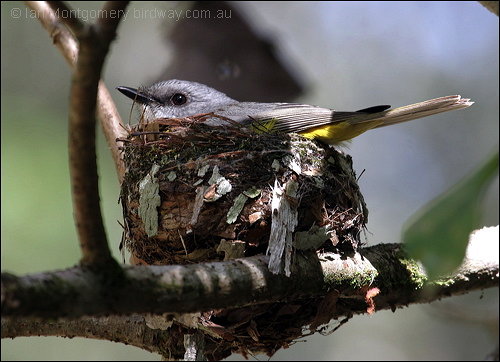
Eastern Yellow Robin (Eopsaltria australis) on nest by Ian

Eastern Yellow Robin (Eopsaltria australis) on nest by Ian


Lee’s Addition:

I think I will just let the Scriptures tell about the nests.

If a bird’s nest happens to be before you along the way, in any tree or on the ground, with young ones or eggs, with the mother sitting on the young or on the eggs, you shall not take the mother with the young; you shall surely let the mother go, and take the young for yourself, that it may be well with you and that you may prolong your days. (Deuteronomy 22:6-7 NKJV)

All the birds of the heavens made their nests in its boughs; Under its branches all the beasts of the field brought forth their young; And in its shadow all great nations made their home. (Ezekiel 31:6 NKJV)

Even the sparrow has found a home, And the swallow a nest for herself, Where she may lay her young— Even Your altars, O LORD of hosts, My King and my God. Blessed are those who dwell in Your house; They will still be praising You. Selah (Psalms 84:3-4 NKJV)

As an eagle stirs up its nest, Hovers over its young, Spreading out its wings, taking them up, Carrying them on its wings, (Deuteronomy 32:11 NKJV)

You who dwell in Moab, Leave the cities and dwell in the rock, And be like the dove which makes her nest In the sides of the cave’s mouth. (Jeremiah 48:28 NKJV)

Another parable He put forth to them, saying: “The kingdom of heaven is like a mustard seed, which a man took and sowed in his field, which indeed is the least of all the seeds; but when it is grown it is greater than the herbs and becomes a tree, so that the birds of the air come and nest in its branches.” (Matthew 13:31-32 NKJV)

Where the birds make their nests; The stork has her home in the fir trees. (Psalms 104:17 NKJV)

And Jesus said to him, “Foxes have holes and birds of the air have nests, but the Son of Man has nowhere to lay His head.” (Luke 9:58 NKJV)

See also – Birds of the Bible – Bird Egg Facts

Birds Illustrated by Color Photograhy Vol 1 May, 1897 No 5 - Cover

Birds Illustrated by Color Photograhy Vol 1 May, 1897 No 5 – Cover

Birds Illustrated by Color Photography – Revisited – Introduction

The above article is the first article in the monthly serial that was started in January 1897 “designed to promote Knowledge of Bird-Live.” These include Color Photography, as they call them, today they are drawings. There are at least three Volumes that have been digitized by Project Gutenberg.

To see the whole series of – Birds Illustrated by Color Photography – Revisited

*

(Information from Wikipedia and other internet sources)

Next Article – National Council of Women

Previous Article – Amateur Photography

*

Ad for Birds Illustrated by Color Photography, 1897

Ad for Birds Illustrated by Color Photography, 1897

Start Birdwatching Today: When Should I Go?

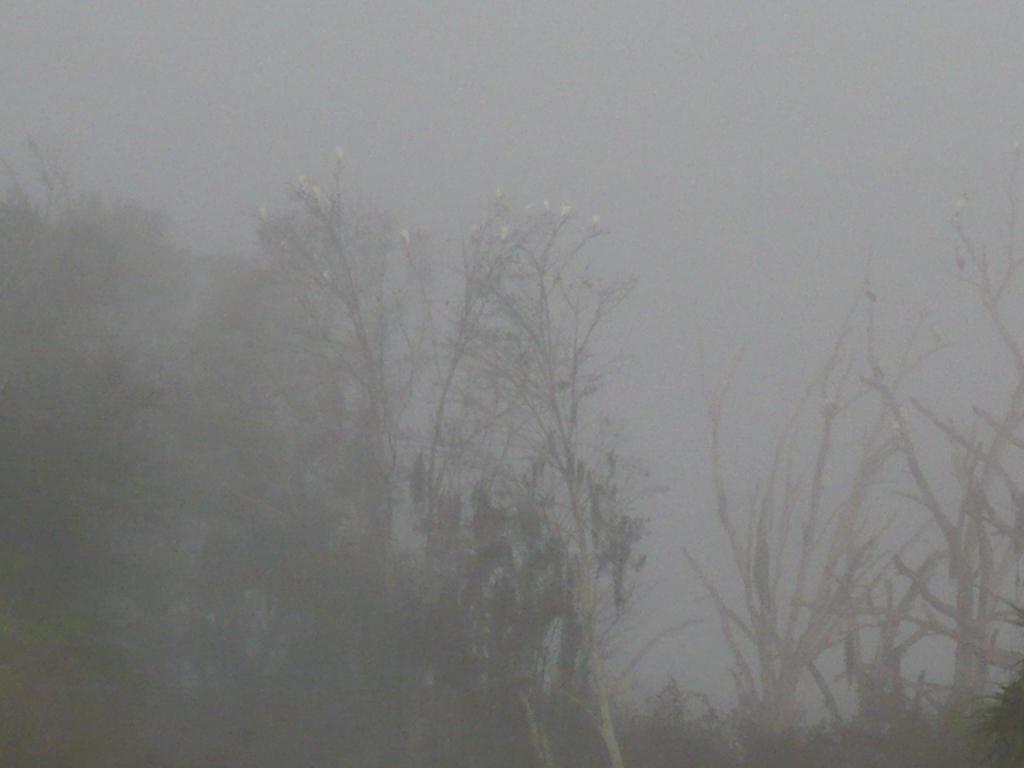
Wood Storks in Trees in Fog at Circle B

Wood Storks in Trees in Fog at Circle B

Start Birdwatching Today: When Should I Go?

You can go birdwatching anytime, but you may or may not find many birds. There are benefits of finding out when the birds you are looking for is out and about. In the beginning stages of birding, you just want to find birds, right?

The flowers appear on the earth; The time of singing has come, And the voice of the turtledove Is heard in our land. (Song of Solomon 2:12 NKJV)

To start, most birds are active in the morning. Many around sunrise are getting up and are hungry from resting all night. Just like us, they need some “breakfast.” They start stretching, singing, searching for a meal. Give or take around 11:00 am they are resting or starting to settle down for most of the afternoon. Then around 3 or 4, depending on the time of the year, they start looking for a snack or meal before they again settle in for the night.

If you have feeders in your yard, the same is true. The morning and for a few hours before dark will be your most active times to see the birds.

Birds that roost together as a flock start heading to their night-time hangout. For instance, locally at Circle B Bar Reserve, the Herons, Egrets, Wood Storks, Ibises and White Pelicans (during winter) come back in to rest for the night. One of my neatest experiences was when the White Pelicans started arriving at Circle B around 4:45 pm for the night. (Ignore my crazy talk, I was just flabbergasted!)

*

*

If you like to see Owls, Nighthawks, Whip-poor-wills, and the other night birds, then, they are quiet in the daytime, but come out to “hoot” and “holler” right around dark and throughout the night. They start settling down around dawn.

Weather is a big factor also in when to go. Fog makes it hard. Windy days will cause the many birds to stay low. It is as if they are “grounded.” Rain of course makes it rough on you to go out and watch and they are seeking shelter which can make them harder to observe. They are out there and they still get hungry. Also, down here in the winter, we get lots of visiting birds and that is a good time of the year to watch our feathered friends.

Mom and Baby at Lake Hollingsworth

Mom and Baby at Lake Hollingsworth

“Many birdwatchers occupy themselves with observing local species (birding in their “local patch”, but may also make specific trips to observe birds in other locales. The most active times of the year for birding in temperate zones are during the spring or fall migrations when the greatest variety of birds may be seen. On these occasions, large numbers of birds travel north or south to wintering or nesting locations. Early mornings are typically better as the birds are more active and vocal making them easier to spot.

Weather plays an important role in the occurrence of rare birds. In Britain, suitable wind conditions may lead to drift migration, and an influx of birds from the east. In North America, birds caught in the tail-end of a hurricane may be blown inland.” (Wikipedia)

This is not an in-depth study, just some of my tips to get you started in your birdwatching adventure. Trust you are enjoying our series, Start Birdwatching Today.

*

Links:


Best time of day to watch birds ? – Bird Forum

Bird Watching Tips – All About Birds


*

Birds Vol 1 #4 – Amateur Photography

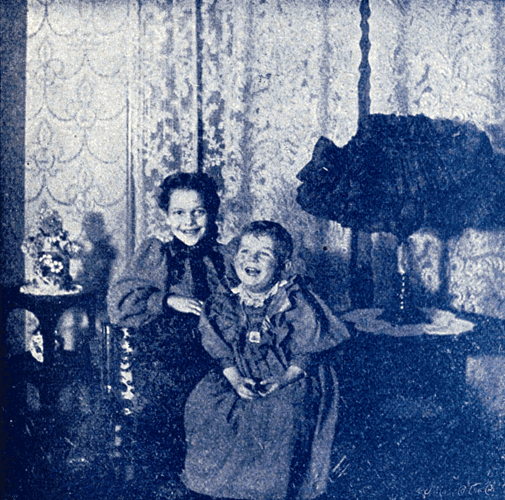
Flash Light Picture made with “Dexter” Camera

Flash Light Picture made with “Dexter” Camera

Birds Illustrated by Color Photography – Revisited

Vol 1. April, 1897 No. 4

*

Amateur Photography.


imga1
MATEUR PHOTOGRAPHY is the most delightful pastime one can indulge in. Aside from the pleasure and amusement derived, it cultivates the artistic taste, the love of nature, is a source of instruction, and may be made to serve many useful purposes. The “Dexter” is small, neat and compact. Makes pictures 312×312inches square and will produce portraits, landscapes, groups, interiors or flashlights equally as well as many higher priced cameras. Will carry three double plate holders with a capacity of six dry plates. Each camera is covered with black morocco grain leather, also provided with a brilliant finder for snap shot work. Has a Bausch & Lomb single acromatic lens of wonderful depth and definition and a compound time and instantaneous shutter which is a marvel of ingenuity. A separate button is provided for time and instantaneous work so that a twist of a button or pulling of a lever is not necessary as in most cameras. A tripod socket is also provided so that it can be used for hand or tripod work as desired. All complicated adjustments have been dispensed with so that the instrument can be manipulated with ease by the youngest amateur. Full and explicit instructions are sent with each camera. Send 5c stamps for sample picture and descriptive circulars.

Dexter Camera

Dexter Camera, 1897


Lee’s Addition:

Look how far we have come since 1897! What a difference between the Dexter and our Digital Cameras of today. I have added some links that give some of this history.

Dexter Camera – Historic Camera – History Librarium

Ted’s Photographics about old cameras

Could we not get the same reaction as the verse below if we look at a photo of ourselves and then put it away?

But be ye doers of the word, and not hearers only, deceiving your own selves. For if any be a hearer of the word, and not a doer, he is like unto a man beholding his natural face in a glass: For he beholdeth himself, and goeth his way, and straightway forgetteth what manner of man he was. (James 1:22-24 KJV)


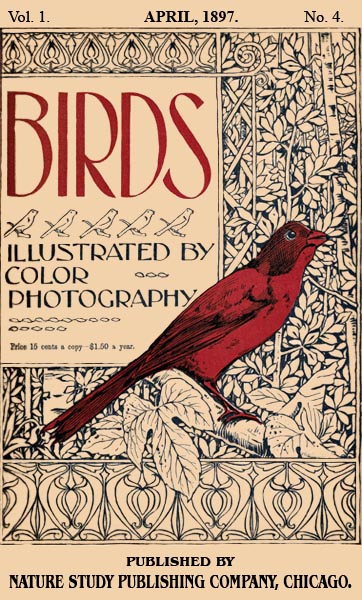
Birds Illustrated by Color Photograhy Vol 1 April 1897 No 4 – Cover

Birds Illustrated by Color Photography – Revisited – Introduction

The above article is the first article in the monthly serial for February 1897 “designed to promote Knowledge of Bird-Live.” These include Color Photography, as they call them, today they are drawings. There are at least three Volumes that have been digitized by Project Gutenberg.

To see the whole series of – Birds Illustrated by Color Photography – Revisited

*

(Information from Wikipedia and other internet sources)

Next Article – Nesting Time

Previous Article – The Arizona Green Jay

Wordless Birds

Links:

Dexter Camera – Historic Camera – History Librarium

Ted’s Photographics about old cameras


Ad for Birds Illustrated by Color Photography

Ad for Birds Illustrated by Color Photography

*

Birds Vol 1 #4 – The Arizona Green Jay

Arizona Jay -Chicago Colortype Co - For Birds Illustrated by Color Photography, 1897 (Green Jay)

Arizona Jay -Chicago Colortype Co – For Birds Illustrated by Color Photography, 1897 (Green Jay)

Birds Illustrated by Color Photography – Revisited

Vol 1. April, 1897 No. 4

*

THE ARIZONA GREEN JAY.

imgt

HE geographical range of the Arizona Jay is in southern New Mexico and Arizona and south into Sonora and Chihuahua, Mexico. It is a common resident throughout the oak belt which generally fringes the foothills of the mountains and ranges well up among the pines. In suitable localities it is very abundant. It is rarely seen at any distance out of the arid plains; but after the breeding season is over, small flocks are sometimes met with among the shrubbery of the few water courses, several miles away from their regular habitat. They are seen in the early Spring, evidently on a raid for eggs and the young of smaller birds. On such occasions they are very silent, and their presence is only betrayed by the scoldings they receive from other birds. On their own heath they are as noisy as any of our Jays, and apparently far more sociable, a number of pairs frequently nesting close to each other in a small oak grove. They move about in small family parties of from half a dozen to twenty or thirty, being rarely seen alone. They are restless, constantly on the move, prying into this or that, spending a good portion of their time on the ground, now hopping on a low limb, and the next minute down again, twitching their tails almost constantly. Their call notes are harsh and far reaching, and are somewhat similar to those of the California Jay.

The voices of animals have a family character not easily mistaken, and this similarity is especially observable in birds. As Agassiz says, “Compare all the sweet warbles of the songster family—the nightingales, the thrushes, the mocking birds, the robins; they differ in the greater or lesser perfection of their note, but the same kind of voice runs through the whole group. Does not every member of the Crow family caw, whether it be a Jackdaw, the Jay, or the Magpie, the Rook in some green rookery of the Old World, or the Crow of our woods, with its long melancholy caw that seems to make the silence and solitude deeper?”

The habits of the Arizona Jay are similar to those of its brethren. Its food consists of grasshoppers, insects, animal matter, wild fruits, seeds, and especially acorns. It flies by partly closing its wings, darting suddenly down, then up again, and repeating these movements for some time. It mates about the end of February. The nest, composed of dry rootlets laid very closely in rings, is usually found in an oak sapling about ten feet from the ground. The inside diameter is five inches, and depth one and three-fourths inches. It is like a deep saucer.

The Arizona Jay is considered a foothill bird, not going far into the pines and not appearing on the plains. But one brood appears to be raised in a season, and nesting lasts about sixteen days. The eggs vary from four to seven, and differ from all the known eggs of this family found within the United States, being unspotted. They are glaucous green in color, and the majority are much more glossy than Jays’ eggs generally are. In one hundred and thirty-six specimens examined, all were perfectly immaculate.

Green Jay (Cyanocorax luxuosus) by Daves BirdingPix

Green Jay (Cyanocorax luxuosus) by Daves BirdingPix


Lee’s Addition:

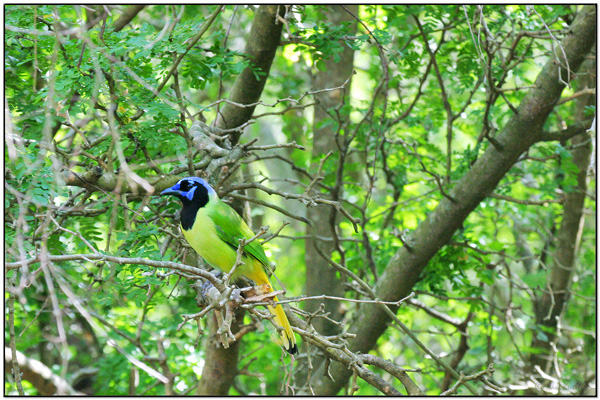
The articles calls this bird the Arizona Jay. There is no bird by that name and the copiers of these articles added the Green. According to the “Color Photograph” this is a Green Jay (Cyanocorax luxuosus) which belongs to the Crows, Jays – Corvidae family. Not sure if this is the bird intended, because Wikipedia and others do not show the Green Jay in Arizona these days.

Assuming that it is the Green Jay, we were able to see them “down in the valley” of Texas. We saw them at the Santa Ana NWR and around the valley.

Green Jay at Santa Ana NWR

Green Jay at Santa Ana NWR

Its area stretches from southern Texas south into Mexico and Central America, with a break before the species reappears in a broad sweep across the highlands (primarily the Andes) of South America in Colombia, Venezuela, Ecuador, Peru, and Bolivia. It has been suggested that the North American taxa should be considered separate species, Cyanocorax luxuosus. If following this taxonomy, the northern species retains the common name Green Jay, while the South American population, which retains the scientific name C. yncas, is renamed the Inca Jay. Northern Greens are smaller than there southern family and some of the color varies between the two groups.

“Green Jays feed on a wide range of insects and other invertebrates and various cereal grains. They take ebony (Ebenopsis spp.) seeds where these occur, and also any oak species’ acorns, which they will cache. Meat and human scraps add to the diet when opportunity arises. Green Jays have been observed using sticks as tools to extract insects from tree bark. Their basic diet consists of arthropods, vertebrates, seeds, and fruit.

Green Jays usually build a nest in a tree or in a thorny bush or thicket, and the female lays three to five eggs. Only the female incubates, but both parents take care of the young. In Colombia, the Green Jay is recorded as retaining offspring for several years, and those young help the parents raise more chicks.

As with most of the typical jays, this species has a very extensive voice repertoire. The bird’s most common call makes a rassh-rassh-rassh sound, but many other unusual notes also occur. One of the most distinctive calls sounds like an alarm bell.” (Wikipedia)

The Lord has created another beautiful bird for us to enjoy and learn about.

Give instruction to a wise man, and he will be still wiser; teach a righteous man, and he will increase in learning. The fear of the LORD is the beginning of wisdom, and the knowledge of the Holy One is insight. (Proverbs 9:9-10 ESV)

*

Birds Illustrated by Color Photograhy Vol 1 April 1897 No 4 – Cover

Birds Illustrated by Color Photography – Revisited – Introduction

The above article is the first article in the monthly serial for February 1897 “designed to promote Knowledge of Bird-Live.” These include Color Photography, as they call them, today they are drawings. There are at least three Volumes that have been digitized by Project Gutenberg.

To see the whole series of – Birds Illustrated by Color Photography – Revisited

*

(Information from Wikipedia and other internet sources)

Next Article – Amateur Photography

Previous Article – The Marsh Wren

ABC’s Of The Gospel

Links:

Green Jay – Wikipedia

Crows, Jays – Corvidae Family

Green Jays – IBC

*