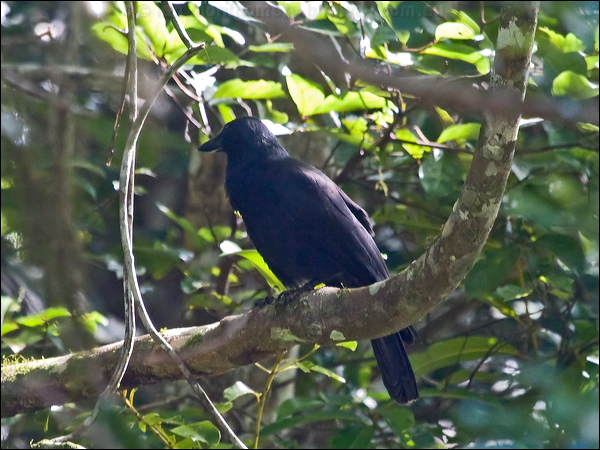
Bee-eaters – Creation Moments

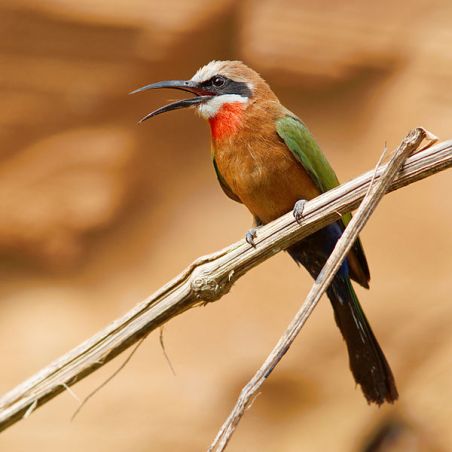
White-fronted Bee-eater (Merops bullockoides) ©WikiC

White-fronted Bee-eater (Merops bullockoides) ©WikiC

Here is another interesting video from Creation Moments about the habit of Bee-eaters of eating bees loaded with poison.

 Watch our video about
one of God’s most amazing
creatures – birds that eat bees!


Bee-eaters make their living catching and eating bees and wasps with stingers. The poison in many of these stinging insects is powerful enough to kill bee-eaters, but the birds are not only skilled at avoiding stings, they know how to remove the poison from the bee when they eat it! And they have one other important skill, which you’ll learn about when you watch our “Birds Who Build Pyramids” video.

Click here to watch or click the photo above.

From Creation Moments ©2020

“I know every bird of the mountains, And everything that moves in the field is Mine.” (Psalms 50:11 NASB)

Interesting Things

Test Yourself!

Whether it be for school, employment, or medical treatment, testing is a fact of life. But the Bible tells us of a more important test…

Psalm 26:2 “Test me, O LORD, and try me, examine my heart and my mind;”

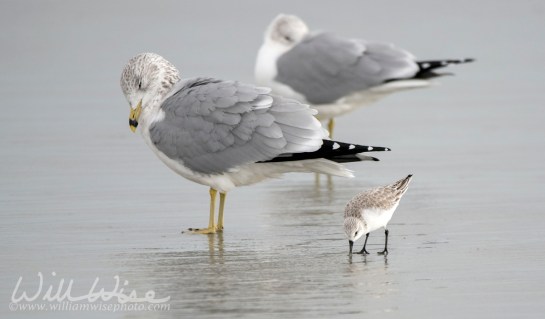
With such a wide variety of “flavors”, shorebirds like peeps and gulls can be a test of a birder’s identification skills. Sanderling and Ring-billed Gull; Hilton Head Island, South Carolina. December, 2019. ©www.williamwisephoto.com.

For months now we’ve heard about coronavirus testing, testing, testing. So when I came home from work last month and saw my 15-year-old daughter laid out on the couch with a runny nose, headache and sore throat, I knew what had to be done. And when her COVID-19 test came back positive, we knew what we had to do: re-enter that dismal bunker of self-isolation. (Thankfully all her symptoms were fairly minor and she had a quick recovery, other than loss of taste and smell.)

Two weeks of Quarantine. What now? While my older daughter lamented about the devastating impact upon her social life, I decided to test myself! No, I’m not speaking of a homemade COVID-19 test, but brushing up my skills on some of those hard to identify shorebirds. I found my old stack of 3 x 5 index cards that I made long before I had a smartphone, each with a bird photo taped to front, and began to test myself.

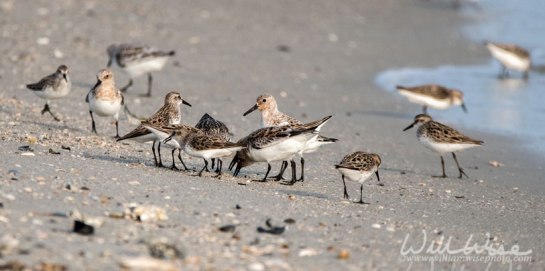
Semipalmated Sandpipers and Sanderlings on Port Royal Sound, Hilton Head Island, South Carolina. May, 2019. ©www.williamwisephoto.com.

But I wasn’t halfway through the first day of isolation when God began to challenge me. What about your prayer life? How is your Bible reading lately? Like Job’s inquisition from the Almighty, my only answer could be, “Touché, God!”

“Search me, O God, and know my heart; test me and know my anxious thoughts. See if there is any offensive way in me, and lead me in the way everlasting.” – Psalm 139:23-24

Following God‘s cue, I continued to test myself. Where did I put that prayer list of friends, family, and coworkers? How long has it been since I’ve written a full-length sermon? How about getting the Greek New Testament off the shelf to read a chapter a day? Instead of binge-watching internet videos, I challenged myself to pray morning, noon, night (which proved harder than I thought!).

God tests us to prove us and bring us closer to Him; not to frustrate us, see us fail, or wallow in a puddle of self-condemnation. We may not always enjoy testing, but if we will self-test ourselves now, we will be spared that “Final Examination” coming to those that miss the Rapture!

“Since you have kept my command to endure patiently, I will also keep you from the hour of trial that is going to come on the whole world to test the inhabitants of the earth.” Revelation 3:10


Hi, I’m wildlife photographer and nature writer William Wise. I was saved under a campus ministry while studying wildlife biology at the University of Georgia. My love of the outdoors quickly turned into a love for the Creator and His works. I’m currently an animal shelter director and live in Athens, Georgia with my wife and two teenage daughters, who are all also actively involved in ministry. Creation Speaks is my teaching ministry that glorifies our Creator and teaches the truth of creation.  — “What a wildly wonderful world, God! You made it all, with Wisdom at Your side, made earth overflow with your wonderful creations.” Psalms 104, The Message.

Denny and Charles’s Museum by Emma Foster

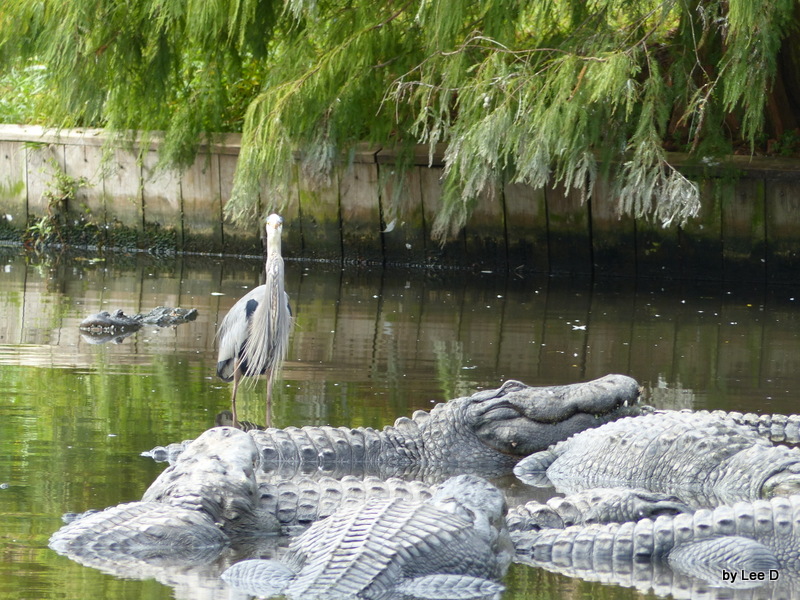
G. Blue Heron on Gator’s back at Gatorland, by Lee

Denny and Charles’s Museum

Emma Foster

Denny the blue heron was the smallest out of all the blue herons that lived in the Florida reserve, but no one ever made fun of him for it because his best friend was the largest alligator in the reserve, Charles. Denny and Charles spent most of their time crossing the various swamps, with Charles slinking through the mud and weeds and Denny sitting on his back.

Usually, whenever Denny and Charles set out together, they would follow the trails marked in the reserve, so that they were always near the banks. The people who visited the reserve enjoyed seeing them wander down the swamp trails, especially since Denny sat on Charles’s back while Charles swam through the weeds.

One day, while Denny and Charles were traveling through the water, Denny spotted something unusual in the water. It was bright red, and it shone brightly when the sun reflected on it. Denny stuck his beak inside it to pick it up. He lifted the can and placed it onto Charles’s back. Denny wasn’t quite sure what it was, and Charles couldn’t see it because it was on his back. Denny decided to keep it.

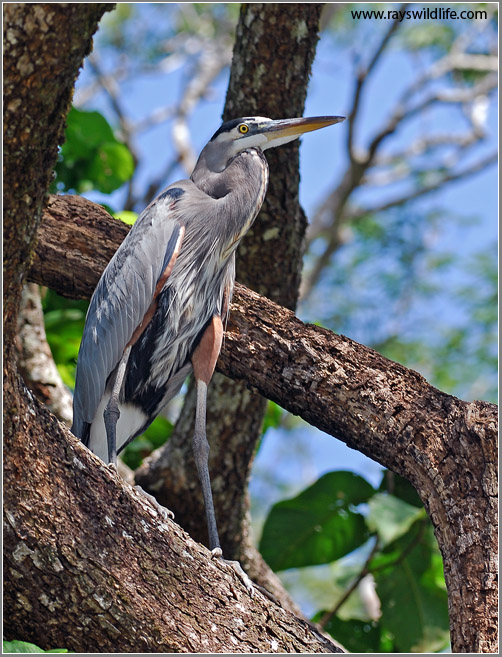
Great Blue Heron (Ardea herodias) by Raymond Barlow

Farther along down the reserve trail, Denny spotted another interesting object. He wasn’t sure what this was either, but it was bright yellow and small. Denny added it to his growing collection.

Eventually, Denny had several small objects piled on Charles’s back. He placed everything he had found on the bank so Charles could have a look at it. They both thought about what to do with what Denny found. After thinking for a long time, Denny proposed an idea. He thought it would be a great idea to set all of the objects they found in an area where all the other animals in the swamp could see them.

Denny promptly flew off to find a large open area for them to place their things. Charles slowly nudged the objects into his mouth and followed Denny to where he was calling. Charles dumped the objects onto the grass, glad to be of help.

Every day, Denny and Charles added more to their collection. They found two old water bottles, a small pipe, and several pieces of different materials that were several different colors like pink, red, blue, and yellow. Denny kept the can placed in a special spot for everyone to see, since he had found it first.

The birds, insects, and other animals enjoyed seeing all the things Denny and Charles had put out. Some of them thought it was odd that they collected that stuff, since it seemed to serve no purpose.

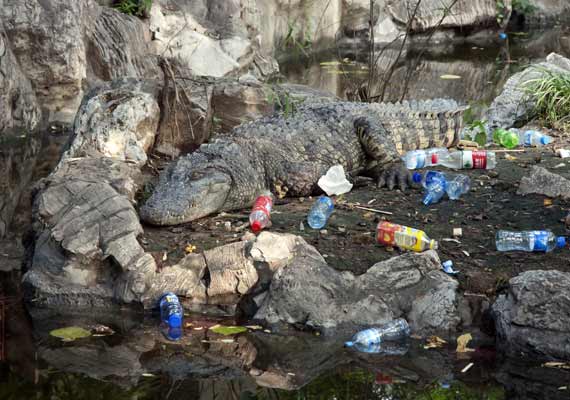
Gator and Litter @indiatvnews

As summer drew near, it began raining more and more. Most of the animals had a comfortable place to spend every night. Charles was happy to sit in the swamp in the rain, and Denny sat in the trees, keeping a close eye on his collection. However, as he was watching it one evening he saw a little gray mouse pass him nearby. It was so small it could dodge the raindrops, but it still looked very wet and cold. It hid under the leaves in the bushes, but it couldn’t seem to find a warm, dry place for the night. Denny suddenly thought of the things he had found, but he couldn’t think of anything that would make a good house. Then he thought of the can.

Denny called Charles over. He told him about giving the can to the mouse, though he was reluctant to give it away. Charles thought it was a great idea, and he immediately crashed through the bushes to put the can in his mouth. Denny flew after the mouse, told her his name, and explained what they wanted to give her. At that moment, Charles waddled through the bushes and dropped the can beside the mouse. The mouse, Charlotte, was very grateful for what they had done. She rolled the can under the leaves, turned it to the side, and carefully squeezed through the opening to sit down inside.

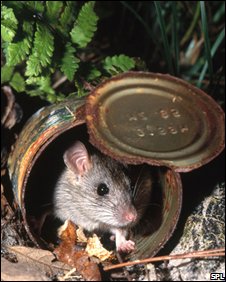
Mouse in Can (BBC)

Denny and Charles continued growing their collection. The other animals in the reserve enjoyed seeing what they added to the museum, and they sometimes even brought some of their own things that they had found. Charlotte the mouse stayed in her little can house, beside Denny and Charles’s museum, and told them every day how happy she was in her new home.


“A man that hath friends must shew himself friendly: and there is a friend that sticketh closer than a brother.” (Proverbs 18:24 KJV)

Lee’s Addition:

What an interesting story. Birds riding on gator’s backs isn’t as far-fetched as it might seem.

Thanks, Emma, for another delightful adventure. You continue to find heart-felt stories for us to enjoy. We will be looking forward your next one.

“Nevertheless, you have done well to share with me in my affliction.” (Philippians 4:14 NASB)

See more of Emma’s Stories

No Fear!

As creationists, the pressure from the “scientific community” might make us feel ashamed of our beliefs. But instead of running and hiding, let us hear what Creation Speaks:

“In the Lord put I my trust: how say ye to my soul, Flee as a bird to your mountain?” Psalms 11:1

Have you been frustrated in your attempts to photograph a reclusive bird? Have you chased a “nemesis bird” only to come up empty handed every time? Birders and photographers know all too well the wariness of some species. This caution is something that has been programed in them by their Creator.

The somewhat elusive Yellow-billed Cuckoo managed to stay hidden from my camera for quite some time! . Walton County, Georgia. August 7, 2018. ©www.williamwisephoto.com.

After the Fall, no doubt the cruelty of man toward beast began to rise. And after the Flood, God allowed animals to be food for man. But in His grace toward His animal creation, God put a flight instinct within animals to keep them from being exterminated. Genesis 9:2 says, “And the fear of you and the dread of you shall be upon every beast of the earth, and upon every bird of the air.”

So fear of man is a God-given instinct within animals, but let it not be so with the Christian, especially when it comes to making a stand for the Word of God. I am sometimes criticized and mocked on other nature-related platforms for my belief in a young earth and literal, six-day creation. The instinct to “flee as a bird” might rise up within me when challenged by the “scientific community,” but I take an example – and courage – from a few bold birds that don’t flee because of the fear of man.

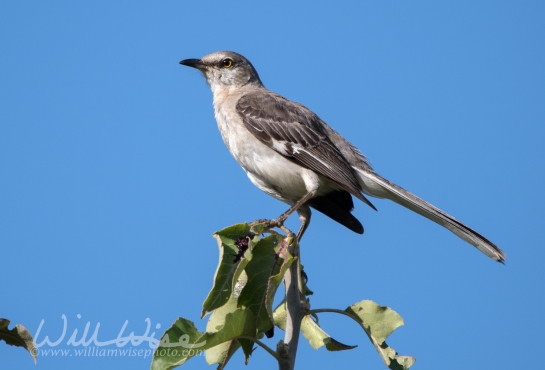
A bold Northern Mockingbird perched on a tree top; Georgia. July 17, 2019. ©www.williamwisephoto.com.

It seems when all other critters keep themselves hidden, the Mockingbirds are ever visible. Although though the “dread of man” may affect their feathered friends, they are always bold and out front, letting their voices be heard. So when the fear of man comes upon me; when I want to hide my creationist views, or flee from an evolutionist’s mockery, I remember those intrepid avians and make my stand. Why should I flee like a bird to the mountains? My trust is in the Lord!

“O Timothy, keep that which is committed to thy trust, avoiding profane and vain babblings, and oppositions of science falsely so called:” 1 Timothy 6:20


Hi, I’m wildlife photographer and nature writer William Wise. I was saved under a campus ministry while studying wildlife biology at the University of Georgia. My love of the outdoors quickly turned into a love for the Creator and His works. I’m currently an animal shelter director and live in Athens, Georgia with my wife and two teenage daughters, who are all also actively involved in ministry. Creation Speaks is my teaching ministry that glorifies our Creator and teaches the truth of creation.  — “What a wildly wonderful world, God! You made it all, with Wisdom at Your side, made earth overflow with your wonderful creations.” Psalms 104, The Message.

How Much Are You Being Monitored? A Hummingbird Lesson

How Much Are You Being Monitored? A Hummingbird Lesson

Dr. James J. S. Johnson

Ye are the light of the world. A city that is set on an hill cannot be hid.  Neither do men light a candle, and put it under a bushel, but on a candlestick; and it giveth light unto all that are in the house.  Let your light so shine before men, that they may see your good works, and glorify your Father which is in heaven.  (Matthew 5:14-16)

hummingbird-trumpetvine.HaroldADavis

Hummingbird at Trumpet Vine blossom (Harold A. Davis photo)

Beware! – you are being watched, more than you know!

In some neighborhoods surveillance is all around—neighbors watching neighbors, using cell-phones to document questionable (“non-essential”) activities, to see if pet dogs are on leashes, and to see if people are six feet apart when talking to others who are out and about. Neighbors are calling the local police on neighbors, to enforce social distancing, travel restrictions, and other disaster protocols.(1)

In short, if you are outside, you are being monitored! But is this really new?

Actually, we are being watched all the time, by neighbors, by family members, by co-workers, at the grocery store, at church, and in many other places.(2)

A birdwatching friend’s recent email reminded me of that fact, when he (Thomas Lane) reported on his home’s avian visitors.

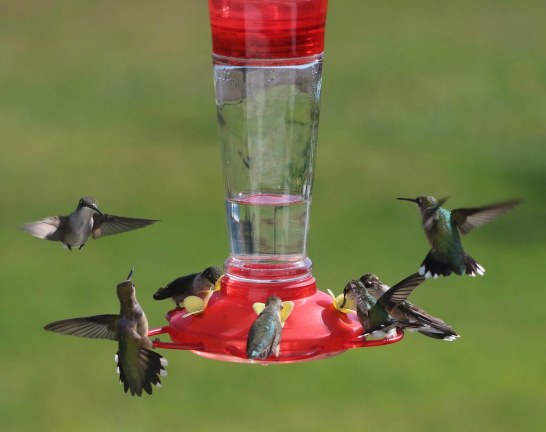
Good to hear from you.  I am working from home … I’m also enjoying watching the bluebirds in the backyard – they are raising young and busy gathering food for them.  We built several bluebird boxes a few years ago and always have at least one couple nesting here.  We also have a couple of hummingbirds that have returned to the feeder, and we are waiting for the rest.  We typically have 5 feeders out in various places.(3)
Hummingbirds-at-feeder.Flickr

Hummingbirds at feeder (Flickr photo)

As spring blossoms into April (and May), the nectar pantries of bright-hued flowers are “open for business”, ready to feed the voracious appetites of neighborhood hummingbirds  —  those petite, iridescence-sparkled, blurry-winged wonders with super-sized metabolic fuel needs.  Floral nectar is a sweet resource!

Yet, as flowers bloom in spring, such fly-by “fast-food” opportunities cannot be taken for granted, especially if one is an energy-craving hummingbird.

Hummingbirds are famous for their (males’) jewel-like throats, their hovering and multi-directional flying, and their ability to change directions   —  stop, go, up, down, left, right, backward, forward, — using high-speed wings that whip figure-eight patterns faster than human eyes can follow, producing a humming sound (that explains their name) that almost sounds like a contented cat purring.

Hummingbirds, due to their speedy, darting movements, and their iridescent green colors, attract the eye.  So you see them  –  zip!  –  then you don’t.  Zip!  –  then you see them again.

Spring always flows into summer.(4) The summer range of hummingbirds (such as the Ruby-throated Hummingbird, Archilochus colubris) is broad enough that most of us have seen hummingbirds. But, as time goes by, there is no time for hummingbirds to relax  —  their needle-like bills must sip up nectar wherever and whenever it is available! The business of a hummingbird’s life is so intense, so metabolically demanding, that slurping up available nectar is a lifestyle priority, requiring dietary focus and persistence:  “Get nectar, get more nectar, get even more nectar!  Hurry, hurry, hurry!”  Sugar substitutes are unacceptable for hummingbirds – they must have real sugar to thrive.(5)

What an enormous appetite for such a miniature bird!  The calories consumed and burned by hummingbirds, on a boy weight ratio, are comparable to a human eating more than a 1000 hamburgers every day, as body fuel needed for a day’s normal activities!(6) That is high-maintenance metabolism!

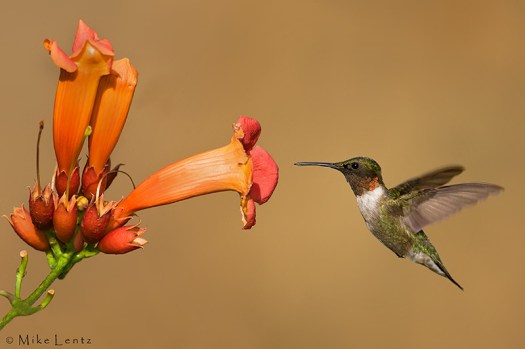
Reading my friend’s email (quoted above) reminded me of when I saw, in my own backyard, a hungry hummingbird hovering by brilliant vermillion flowers, as he (or she) slurped up nectar from one flower, then another flower, then another, — without any (apparent) concern for my physical presence or proximity, only a few steps from him (or her).
Hummingbird-at-TrumpetVine-MikeLentz

Hummingbird at Trumpet Vine blossom (Mike Lentz photo)

Why was the buzzing hummer oblivious of me, the birdwatcher so close by?

The hungry hummer was too preoccupied with the pressing business of life, to notice me, a quiet spectator.  What a privilege it was, to watch – for a long time, actually – this sparkling-in-the-sunlight hummingbird, darting among the bright flowers.

Yet are not our own lives, at least somewhat, like that busy hummingbird?

Are we not – day by day, hour by hour, minute by minute, moment by moment – preoccupied with the ever-pressing business of life (especially when daily routines are altered by changed circumstances—such as pandemic disaster restrictions), darting here-and-there, from this task to the next one, such that we often ignore the spectators, those watching eyes who observe and appreciate our lives – those who (hopefully) see God’s beauty and wisdom imaged in our own attitudes and actions?

Yes, we have audiences we should not be oblivious of.  As we live the moments of our fast-paced lives we should not forget three audiences, who watch us much more than we consciously realize.

First, there are many curious humans who watch our busy lives, especially those who are younger than us.  What kind of role-models are we?  Hopefully our Christian lives are like the Thessalonian believers whom Paul commended as examples to all of the believers in Macedonia and Greece.(7)

Who is monitoring us? Who is listening?  Who is evaluating the message(s) of our lives, comparing our “walk” to our “talk”?  Do our lives “shine” as God’s testifying “lights”, such that our good deeds prompt spectators to glorify God our Heavenly Father?(8)

Second, there are non-human spectators surveilling our lives:  angels!   Angels learn from watching the “spectacle” of human lives.(9) Indeed, the effect of God’s gospel of grace, in the earthly lives of redeemed humans, is something that angels can only learn about as spectators, since redemption is never experienced by angels.(10)

Yet the most important audience we have, always, is the Lord Himself  (Jehovah-jireh, the God Who is and sees), our omniscient and omnipresent Creator-God.  It is our wonderful Maker Who watches every sparrow’s (and every hummingbird’s) avian lifespan, and we are of much greater value to God than the lives of many sparrows.(11)

As the Lord Jesus Christ’s vicarious death and resurrection has peremptorily proved, for all time and eternity, we humans are God’s favorite creatures.  God is caringly concerned with every detail of our busy lives (from creation to ultimate redemption), so let us not be oblivious to our most important Audience.

Do we live our earthly lives as ingrates, ignoring Him and His Word?  Or do we live life appreciative of Him and His Word, grateful that He created us and provided us with redemption in Christ?

Accordingly, with these three audiences in mind, as spectators of our busy lives, let us consider the prophet Ezekiel’s serious question: “How should we then live?”(12)

Let your light so shine before men, that they may see your good works and glorify your Father in heaven.(8)
Hummingbird-TrumpetVine-HaroldADavis

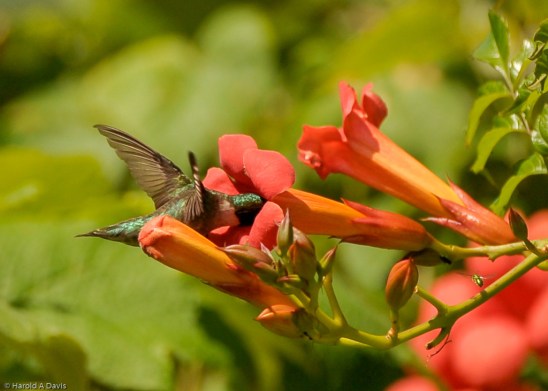
Hummingbird getting nectar at Trumpet Vine (Harold A. Davis photo)

REFERENCES

(1) Declarations of “disaster”, from Wuhan (China) spreading to South Korea, then to dozens of European nations, plus many parts of America and other nations (excluding Singapore), have led to many government-promulgated “stay-at-home” mandates, being enforced by a combination of government and private sector actions. Johnson, James J. S. 2020. Turtles, Birdwatching, and Living through Tough Times. ICR News: Creation Science Update (March 30, 2020), posted at https://www.icr.org/article/turtles-birdwatching-living-through-tough-times . See also Johnson, James J. S. 2020. “Getting Crabby Over Labor Shortage”. ICR News: Creation Science Update  (March 24, 2020), posted at https://www.icr.org/article/getting-crabby-over-labor-shortages .

(2) 2nd Corinthians 3:2-3 (“living epistles”).

(3) Email correspondence from Thomas Lane, April 1, 2020.

(4) Genesis 8:22.

(5) Mitchell, Elizabeth. 2014. Our Creator’s Sweet Design for Hummingbird Taste (Answers in Genesis: News to Know, September 6, 2014), posted https://answersingenesis.org/birds/our-creators-sweet-design-hummingbird-taste/ (with a link, in Footnote #1, to video footage of hummingbird sugar consumption). See also Sherwin, F. 2006. Hummingbirds at ICR. Acts & Facts. 35(9), posted at https://www.icr.org/article/hummingbirds-at-icr/ .

(6) Dreves, Denis. 1991. H Creation Ex Nihilo Technical Journal. 14(1):10-12.

(7) 1st Thessalonians 1:7.

(8) Matthew 5:16.

(9) 1st Corinthians 4:9(Paul is referring to the apostles, yet the indirect implication is that the righteous angels learn from observing the lives of ordinary Christians.)

(10) 1st Peter 1:12.

(11) Matthew 10:29-31; Luke 12:7.

(12) Ezekiel 33:10.
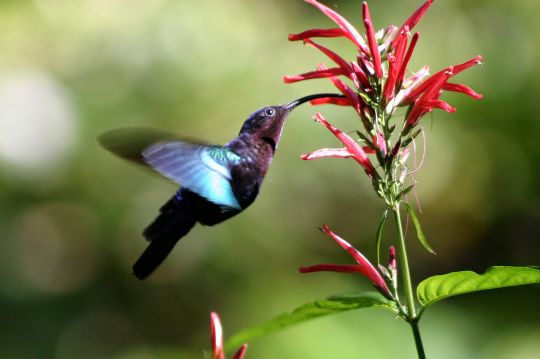
Hummingbird.Purple-throated-Carib-Wikipedia

Purple-throated Hummingbird of the Caribbean (Wikipedia photo)
Wild Glory

What a gift the Creator has given us! The world and all its psychologists wring their hands looking for relief from distress and anxiety. They drown their fears in medications. But the child of God need not do so. For a simple walk out the door to behold the “Wild Glory” of the Lord brings comfort and peace.

“They looked toward the wilderness, and, behold, the glory of the LORD appeared.” Exodus 16:10

Great Egret; birding photography in Walton County, Georgia. ©www.williamwisephoto.com.

In his autobiography, W. Phillip Keller, author of the popular A Shepherd Looks at Psalms 23, describes a troublesome period in his youth when he is separated from his family, his home, and even his God. Yet it was brief escapes into the wild that renewed his faith. He writes, “In the outdoor world my heavenly Father had supplied a sweet solace for a struggling soul like mine. There was healing for my inner hurts in the quietness of the woods and fields. There was a consolation for my spirit in the wild glory of grass and birds.”

Great Egret fishing behind my office in Walton County, Georgia. ©www.williamwisephoto.com.

When the phone rings off the hook and workplace stress builds, I too need some “wild glory.” And thankfully, the Creator sends it! Each year in late July, a Great Egret returns to the pond behind my office in Georgia. And right on schedule, I saw him out there fishing this week. Standing still and erect, his head cocked to peer into the shimmering water under his long legs, he slowly coils his long neck to finally unleash a quick thrust for a small minnow or larger bream. His appearance isn’t just on schedule with the calendar, but on schedule with my need for some calming from this hectic life.

What soothing; what peace; what intimacy with the Savior can be achieved just by beholding the creation of God! The psychologists can keep their prescriptions. I’ll dose myself with Wild Glory!


Hi, I’m wildlife photographer and nature writer William Wise. I was saved under a campus ministry while studying wildlife biology at the University of Georgia. My love of the outdoors quickly turned into a love for the Creator and His works. I’m currently an animal shelter director and live in Athens, Georgia with my wife and two teenage daughters, who are all also actively involved in ministry. Creation Speaks is my teaching ministry that glorifies our Creator and teaches the truth of creation.  — “What a wildly wonderful world, God! You made it all, with Wisdom at Your side, made earth overflow with your wonderful creations.” Psalms 104, The Message.

From The Breakfast Table – 7/24/20

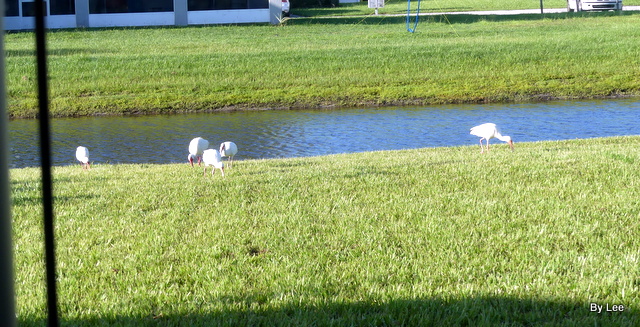
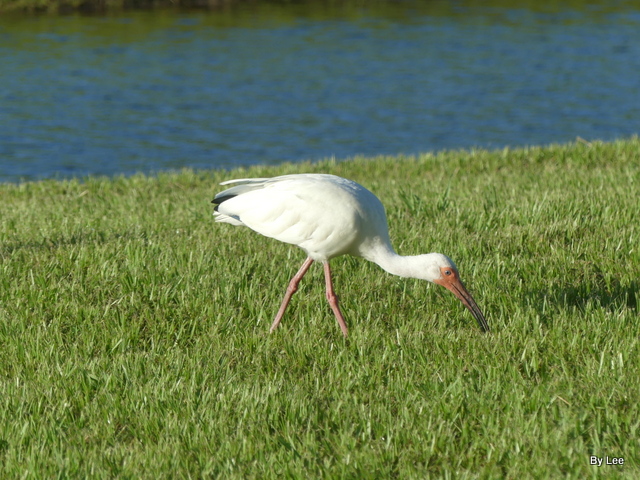
White Ibis checking out our yard.

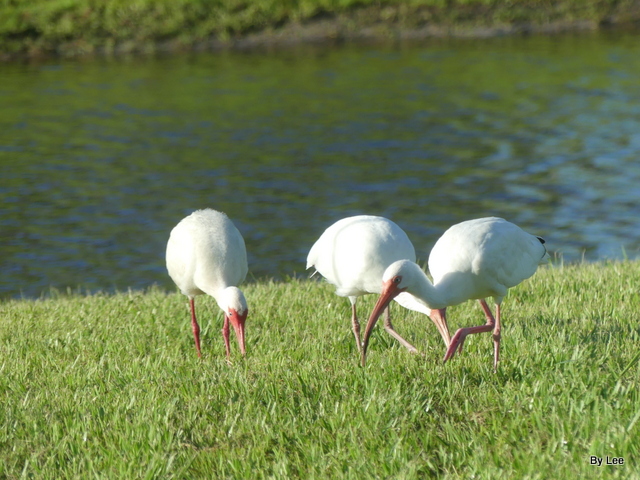
White Ibises checking out our yard.

Well, while eating our breakfast today, we had another birdwatching adventure. Since I have been staying in more again because of this Covid-19 pandemic, there have been no trips to watch birds. No birds, no posts. Thankfully, Dr. Johnson (JJSJ) and William Wise have been adding post here.

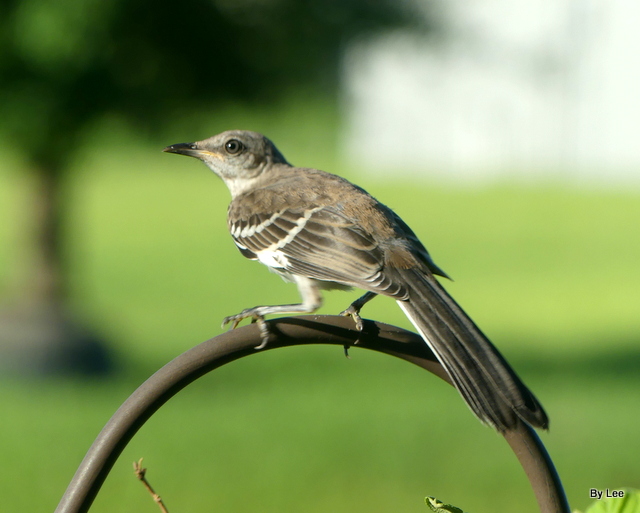
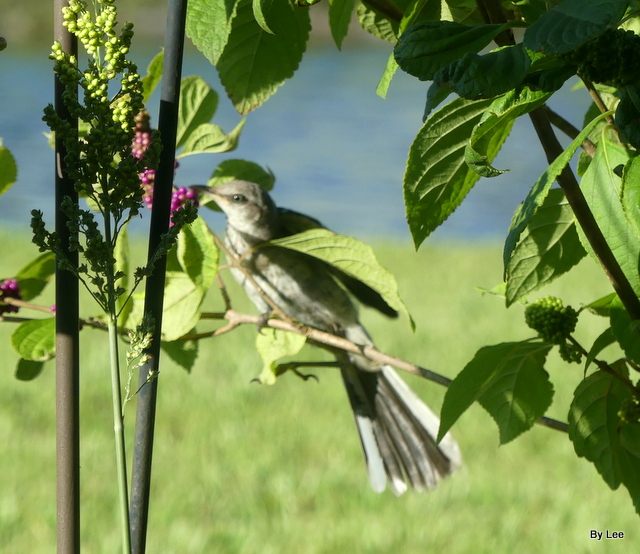
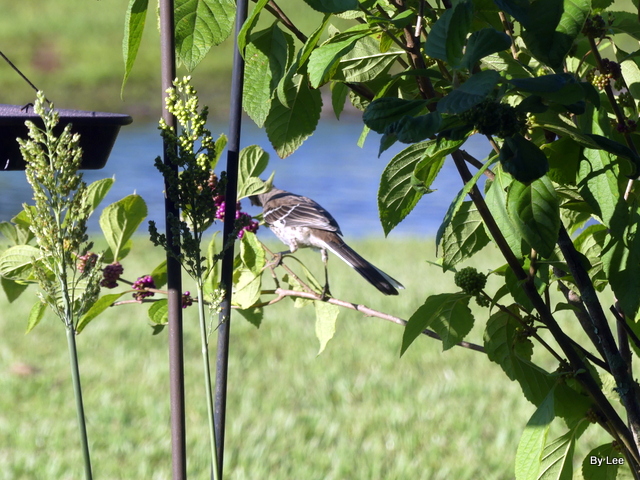
With the heat of summer, the birds are less frequent this time of year. Many migrate north, but they will return this fall. Also thankfully, there are those who are resident birds and hang around. Today was a show of Northern Mockingbirds. When we moved here recently, I brought a Beautyberry shrub with me. My neighbor helped me prune it, and it is the best it has ever been. I have been watching the little berries develop, and now, some of them are ripening up.

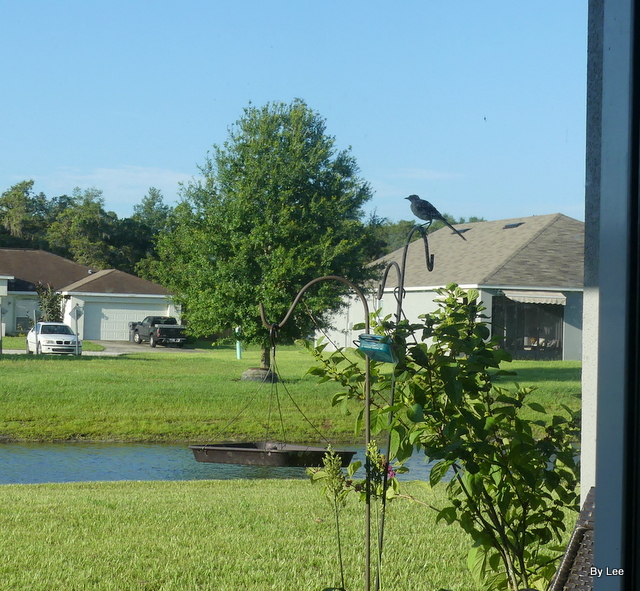
Northern Mockingbird on Hook 2

Northern Mockingbird on Hook

“For at the window of my house I looked out through my lattice,” [double sliding door] (Proverbs 7:6 NASB)

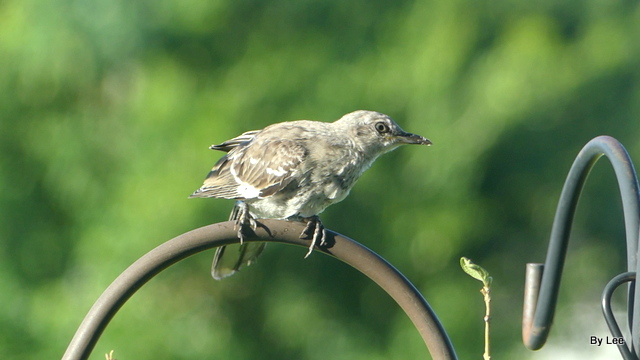
First a few White Ibises walked through the yard, and then the Mockingbirds started to appear. I have only seen one most of the time. Must be something about those berries that brought the whole family in. Before breakfast was over, five had come in at once. Three of them seem like juveniles or almost mature, the other two, I assume are the adults.

Here are some of the photos I took while sitting at the breakfast table:

American White Ibises checking for whatever:

White Ibis checking out our yard.

White Ibis checking out our yard.

Northern Mockingbirds on the hook and the Beautyberry plant:

Northern Mockingbird on Hook

2 Northern Mockingbirds on Hook

Young Northern Mockingbird on Hook

Eating berries

“Look at the birds of the air, that they do not sow, nor reap nor gather into barns, and yet your heavenly Father feeds them. Are you not worth much more than they?” (Matthew 6:26 NASB)

All these visitors made for an entertaining and blessed start to our day. Here is a video of some of this activity. All from my chair at breakfast.

Video of Mockingbirds:

And video of Juvenile Mockingbird

Good News

Watch Out! We Need Sentinels in Perilous Times

Watch Out! We Need Sentinels in Perilous Times

Dr. James J. S. Johnson

“This know also, that in the last days perilous times shall come.” (2nd Timothy 3:1)

Southern-Pied-Babbler.TheFlacks

Southern Pied Babbler (The Flacks)

Watch out! Dangers lurk everywhere—these are surely perilous times.(1)

One of the apologetics-exhorting themes in Jude’s epistle is the need to beware of—and to forewarn others about—irreverent scoffers who try to distort and resist God’s truth, as we contend earnestly for the truth that God has given.(2)

Yet, even bird populations must watch out for lurking hazards and airborne threats in their nesting neighborhoods and while visiting migratory stopovers—predators on foot, like wolves, or in air, like hawks!(3),(4)

One habit that prey populations often exhibit, to careful observers, is the practice of appointing a “sentinel”—a “watchman on the wall”, so to speak.(5),(6)

One bird—sometimes more—of the flock is assigned the role of warning (called “alarming”) the others who are foraging (i.e., eating) or otherwise occupied with nest-building or other activities. In some groups sentinel duty is rotated—taking turns at “guard duty”—while in other groups the responsibility is sorted as a division-of-labor assignment, such as male birds more often serving as sentinels.(6),(7),(8)

This is quite puzzling to evolutionists, who assume that, ultimately, there needs to be a selfish advantage for every activity, as opposed to some creatures behaving altruistically, because that is what they do (or are programmed to do).(7),(8)

Sentinel behaviour, where individuals take turns to watch for danger and give alarm calls to approaching predators, has been observed in a number of animal societies. However, the evolutionary causes of this behaviour remain unclear. There are two main, competing hypotheses regarding the evolution of sentinel behaviour. The first hypothesis is that it is a cooperative behaviour, where group members benefit from the detection of danger but share the workload of acting as a sentinel. The second is that it is a safe, selfish behaviour. Under the second hypothesis, once an individual is satiated, being a sentinel is safer because sentinels can detect threats more readily and can therefore escape from predators faster. (7)

But what are the observable facts about sentinels? Is their service somehow a selfish benefit to themselves, when they serve as their group’s watchmen?

Or, are some sentinel creatures actually behaving in altruistic ways, protecting the group they belong to, at greater risk (or other cost) to themselves?

We examined whether sentinels are safer than foragers in a wild, free-living cooperative bird (the pied babbler, Turdoides bicolor) with a well-described sentinel system. We found that sentinel behaviour was costly because (a) sentinels were targeted by predators more often, (b) they were further from cover than foragers, and (c) they took longer to reach the safety of cover following a predator alarm.(7)

In fact, animals exhibit some behaviors that—if practiced by humans—would be called “selfish” and “cruel”, as well as other behaviors that we call “altruistic” and “self-sacrificing”.

These results suggest that individuals do not become sentinels because it is safer. This is the first study to demonstrate that sentinels are at greater risk of predator attack than foraging group members and suggests sentinel activity may have evolved [sic] as a form of cooperative behaviour.(7)

However, moral accountability is unique to human behavior, because only we humans—being uniquely made in God’s image—are Earth-dwelling creatures that have true moral accountability for our activities.(9)

It is important to sound the alarm, early, when doing so can prevent—or at least mitigate—an approaching disaster. Sometimes the messenger of bad news pays a price (for delivering an unwelcome message), but it’s better to sound the alarm early—hopefully early enough to prevent harm—than to delay a warning that leads to damage-control problems that grow costlier with time.(1),(2),(5),(6)

Of course, caringly sharing the Gospel of redemption in Christ is the best warning of all, even if it involves costly risks.(5)

SouthernPiedBabbler.SoesNature-n-Art

Southern Pied Babbler (Soes Nature & Art)

References

  1. Matthew 8:28; 2nd Timothy 3:1.
  2. Jude 1:3-4. See also Psalm 119, Acts 20:28-31, and 2nd Peter 2:12-19. See also Footnote 6 within Johnson, J. J. S. 2020. Maple Syrup, Gold Nanoparticles, and Gratitude. Creation Science Update (May 25, 2020), posted at https://www.icr.org/article/maple-syrup-gold-nanoparticles-and-gratitude.
  3. Johnson, J. J. S. 2017. Securing Nests and Nestlings from Parasites and Predators, in Norway and Beyond. Nordic Legacy Series (Norwegian Society of Texas, Fort Worth, Texas, November 26, 2017), 9 pages.
  4. Prey-predator relationships can be both complicated and detailed. See Sherwin, F. 2016. Smart and Stealthy Cuttlefish. Creation Science Update (January 11, 2016), at https://www.icr.org/article/smart-stealthy-cuttlefish . See also Sherwin, F. 2005. All Out War in the Cornfield. Acts & Facts. 34(8), posted at https://www.icr.org/article/all-out-war-cornfield . For one of the most unusual illustrations of defense against predators, listen to Frank Sherwin’s podcast titled “Bombardier Beetle” (July 17, 2017), posted at https://www.icr.org/article/bombardier-beetle .
  5. Ezekiel 33:2-10, especially 33:7. Compare also 2 Corinthians 2:14-17 with John 3:14-21.
  6. Johnson, J. J. S. 2020. Jackdaws Identify ‘Dangerous’ from ‘Safe’ Humans. Creation Science Update (May 4, 2020), posted at https://www.icr.org/article/jackdaws-identify-dangerous-from-safe-humans .
  7. Ridley, A. R., M. J. Nelson-Flower, et al. 2013. Is Sentinel Behaviour Safe? An Experimental Investigation. Animal Behaviour. 85(1):137-142, posted at https://www.sciencedirect.com/science/article/abs/pii/S0003347212004770 .
  8. Wright, J., E. Berg, et al. 2001. Safe Selfish Sentinels in a Cooperative Bird. Journal of Animal Ecology. 70:1070-1079.
  9. Genesis 1:26-27. See also Acts 20:35 and Philippians 2:5-11.


Hope Kindled by God’s Creation

“The land is as the garden of Eden before them,  and behind them a desolate wilderness; yea, and nothing shall escape them.”  Joel 2:3

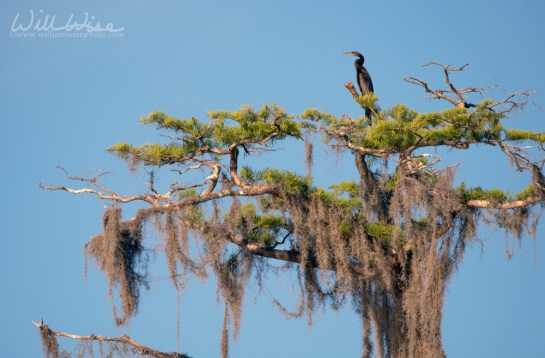
As we look about, it can seem all is being laid waste in our society. A virus cancelling church services, political rivalries, racial unrest, lawlessness… all so troubling. But while paddling through the swamp during the coronavirus quarantine, suddenly the Holy Spirit caused hope to spring up in my heart as I watched an Anhinga perched upon a young cypress tree. God’s creation – and God’s Word – restored hope in my heart!

Anhinga bird perched atop a cypress tree with Spanish Moss; Okefenokee Swamp National Wildlife Refuge in Georgia, USA. ©www.williamwisephoto.com.

The naturalists of old write of towering cypress – some as high as 120 feet – standing guard for centuries in the Okefenokee Swamp. But all that changed in the early 20th century. All were laid low. It began in 1909: the pristine Okefenokee began to bustle with cacophony of industry as logging skidders, sawmills and railroad tracks invaded the Swamp. The trees – and the birds! – were gone.

C.T. Trowell wrote, “Systematically, the Hebards extended their logging operations across the Okefenokee. Extending south from Hopkins to Cravens Island in 1912, they reached Pine Island and Mixons Hammock by 1915. Within a year they were cutting the timber between Mixons Hammock and Minnies Island and the railroad was extended across Jones Island to Billys Island. Between 1922 and 1926, they logged the cypress around Floyds Island.”

A young Cypress Tree reaches toward the sky in the Okefenokee National Wildlife Refuge, Georgia. ©www.williamwisephoto.com.

Would the Okefenokee ever recover? Cypress trees grow very slowly. At a reported growth rate of only about a foot per year in their early stages, it could take 300 to 500 years for the Cypresses of the Okefenokee to once again tower over the habitat as they did prior to 1909. But with the establishment of the Okefenokee as a National Wildlife Refuge in 1937, the healing has begun.Today, there are already some scenic waterways through the Okefenokee – tall cypresses mirrored in the tanin-darkened waters – that hint at these former days.

“But fear not, O land; be glad and rejoice: for the Lord will do great things. Be not afraid, ye beasts of the field: for the pastures of the wilderness do spring, for the tree beareth her fruit, the fig tree and the vine do yield their strength. And I will restore to you the years that the locust hath eaten the cankerworm, and the caterpiller, and the palmerworm.”  Joel 2:21-25

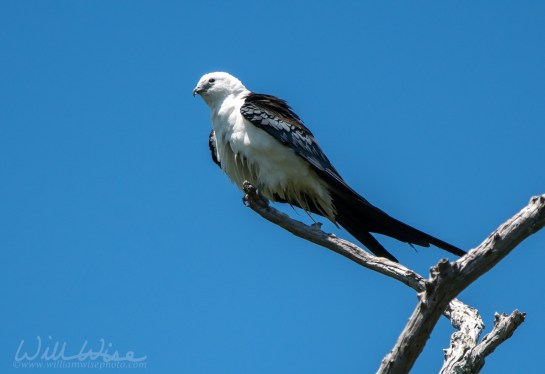
The birds have returned! Swallow-tailed Kite; Okefenokee National Wildlife Refuge, Georgia. May, 2020. ©www.williamwisephoto.com.

So if there is hope of restoration kindled in the heart upon looking at a young Cypress tree, how much more for our society upon looking at God’s Word! There is a hope that things laid bare can one day live again and be renewed to their former glory. If not in this lifetime, certainly in the next.

As Christians, we cease not to pray for our nations, nor forget the restoration that awaits in the New Earth for those who trust and hope in Jesus Christ!


Hi, I’m wildlife photographer and nature writer William Wise. I was saved under a campus ministry while studying wildlife biology at the University of Georgia. My love of the outdoors quickly turned into a love for the Creator and His works. I’m currently an animal shelter director and live in Athens, Georgia with my wife and two teenage daughters, who are all also actively involved in ministry. Creation Speaks is my teaching ministry that glorifies our Creator and teaches the truth of creation.  — “What a wildly wonderful world, God! You made it all, with Wisdom at Your side, made earth overflow with your wonderful creations.” Psalms 104, The Message.

Alaskans Alcids, Designed by God for Flowing through Both ‘Oceans’

Alaskan Alcids:  Efficiently Designed by God for Flowing through Both ‘Oceans’

Dr. James J. S. Johnson

CommonMurre-aloft-Alaska.TomIngram-photo

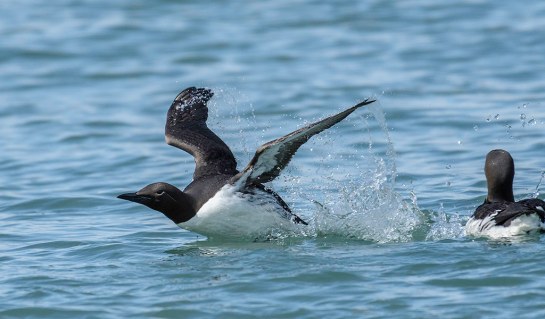
COMMON MURRE Tom Ingram photo

And God said, Let the waters bring forth abundantly the moving creature that hath life, and fowl that may fly above the earth in the open firmament of heaven.  And God created great whales, and every living creature that moveth, which the waters brought forth abundantly, after their kind, and every winged fowl after his kind: and God saw that it was good.  And God blessed them, saying, Be fruitful, and multiply, and fill the waters in the seas, and let fowl multiply in the earth.  (Genesis 1:20-22)

About a year ago (specifically, July 19th AD2019), this writer saw–for the first time–Atlantic puffins in the wild.  These cute clown-faced alcids were flying near (and sometimes resting upon) the cliff-dominated isle of Staffa, often plunging into coastal waters for fish.  That privileged birdwatching experience is reported on this blogsite at  “Birdwatching at Staffa, Near Iona:  Puffins, Shags, and Herring Gulls” [posted at https://leesbird.com/2019/07/22/birdwatching-at-staffa-puffins-shags-more/ ].

In this blogpost, however, it is alcids near the coastal waters of Alaska (and thus the northern Pacific Ocean) that are the subject of our attention.

Recent research, on the flying behavior of Alaskan alcids—auk-like birds (such as murres, guillemots, and puffins)—shows how Earth has two kinds of fluid-filled “oceans”, the liquid ocean of sea-water and the gaseous “ocean” of air.(1),(2),(3)

The study reveals that these birds, from the Alcidae family which includes puffins, murres and their relatives, produce efficient propulsive wakes while flying and swimming. This means that the animals likely spend relatively low amounts of metabolic energy when creating the force [that] they need to move in both air and water.(1)

Common-Murre-raft-Alaska.TikiJoe-photo

COMMON MURRE Tiki Joe photo

Maybe you don’t think of Earth’s atmosphere as an “ocean” of air, but a creation science pioneer, Matthew Maury, did. In fact, Maury is famous for his scientific breakthroughs in oceanography, which analyzes ocean sea-water dynamics—and also in meteorology, which analyzes atmospheric dynamics.(3)

The two oceans of air and water. Our planet is invested with two great oceans; one visible, the other invisible; one underfoot, the other overhead; one entirely envelopes it, the other covers about two-thirds of its surface. All the water of the one weighs about 400 times as much as all the air of the other.(3)

It’s all about fluid mechanics, including avian applications for efficient motions inside both “oceans”. The study included videographic documentation of flying, diving, and swimming by murres, guillemots, and puffins.

Puffin-sailing-aloft-Alaska.PeterStahl-photo

PUFFIN catching wind like a sailboat (Peter Stahl photo)

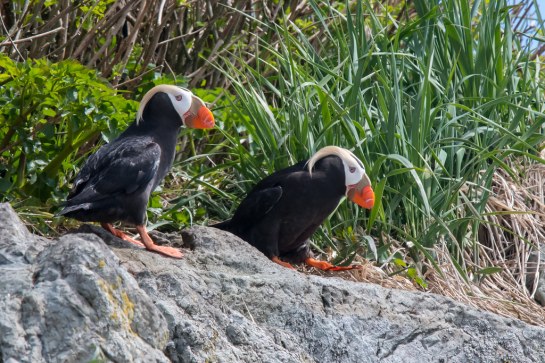
Study animals were common murres (Uria aalge, Pontoppidan 1763), pigeon guillemots (Cepphus Columba, Pallas 1811), horned puffins (Fratercula corniculata, Naumann 1821), and tufted puffins (Fratercula corniculate, Pallas 1769). Filming of aquatic flight was performed at the Alaska SeaLife Center in Seward, Alaska. … At the time of this study, the exhibit contained 12 horned puffins, 10 tufted puffins, 4 pigeon guillemots, and 6 common murres. Individuals of each species of alcid regularly swam past the viewing window. … Given the clear contrasts between these two behaviors, we differentiate between horizontal (trajectory <10 deg) and descending aquatic flight (trajectory >20 deg). The birds swam on their own volition and selected their own swimming speeds and descent angles. Videos of aquatic flight of all four species were taken ….(2)

But would evolution predict that alcids are fitted for such efficiency?

Birds that use their wings for ‘flight’ in both air and water are expected to fly poorly in each fluid relative to single-fluid specialists; that is, these jacks-of-all-trades should be the masters of none.(2)

But the evolutionists guessed wrong when they suspected that these Alsakan alcids would be inefficient when moving in both fluid “oceans”.

Alcids exhibit exceptional dive performance while retaining aerial flight. We hypothesized that alcids maintain efficient Strouhal numbers and stroke velocities across air and water, allowing them to mitigate the costs of their ‘fluid generalism’. We show that alcids cruise at Strouhal numbers between 0.10 and 0.40 – on par with single-fluid specialists – in both air and water but flap their wings ~ 50% slower in water. Thus, these species either contract their muscles at inefficient velocities or maintain a two-geared muscle system, highlighting a clear cost to using the same morphology for locomotion in two fluids. Additionally, alcids varied stroke-plane angle between air and water and chord angle during aquatic flight, expanding their performance envelope.(2)

Tufted-Puffins-Alaska.TimMelling-photo

TUFTED PUFFINS Tim Melling photo

Thus, because God designed alcids to move in both fluids—liquid sea-water and gaseous air currents—God brilliantly programmed how they move in those two fluid environments.(4)

This mobile efficiency surprises evolutionists, but not Biblical creationists.

Interestingly, birds in the family Alcidae (puffins, murres, and their relatives) seem to contradict the notion of a trade-off between aerial and aquatic flight performance.(2)

Biomechanics is the field of biology that studies the action of internal and external forces on the living body, especially the skeletal system. Also called bioengineering, this fascinating area analyzes biological design and the physical forces associated with humans and animals. If ever there was evidence for creation on a macroscopic scale (Romans 1:20), it would be the vast array of creatures all over the world marvelously designed to move in and fill their environments based on these amazing design features.(8)

In fact, long ago, the Scriptures mentioned the magnificent ability of birds to fly, taking advantage of flowing air currents according to their availability.(5)

It should never surprise Christians to learn that God has carefully and caringly designed and bioengineered birds (including cute little alcids like puffins, murres, adn guillemots!)—all over the world—to fit and to fill their respective habitats, even in this fallen world.

Also it should not surprise Christians when evolutionists fail to give God credit for His handiwork—because not having “eyes to see” God’s Creatorship, evolutionists routinely imagine optimized biological behaviors (like alcids swimming, diving, and flying) as accidental products of “evolution”—as if merely using the word “evolution” somehow justifies believing that blind mindless luck did it all.(6),(7)

Common-Murre-liftoff-from-sea.TkiJoe-photo

COMMON MURRE liftoff form sea (Tiki Joe photo)
References

  1. Staff writer. 2020. Scientists Shed New Light on How Seabirds Cruise through Air and Water. Science Daily (June 30, 2020), posted at https://www.sciencedaily.com/releases/2020/06/200630193211.htm .
  2. Lapsansky, A., D. Zatz, and B. W. Tobalske. 2020. Alcids ‘Fly’ at Efficient Strouhal Numbers in Both Air and Water, But Vary Stroke Velocity and Angle. Posted on eLife (June 30, 2020), posted https://elifesciences.org/articles/55774 .
  3. Maury, M. F. 1855. The Physical Geography of the Sea and its Meteorology. Mineola, NY: Dover Publications, Inc. (2003 reprint of Harvard University Press’s Belknap Press 1963 edition, including some revisions from Maury’s 8th edition published in 1861), 23-37, with quotations from page 23.
  4. Enticott, J., and D. Tipling. 1997. Seabirds of the World. Mechanicsburg, PA: Stackpole Books, 213-227, especially pages 214-217 (murres and guillemots) & 226-227 (puffins). See also Kikuchi, D. M., Y. Watanuki, N. Sato, et al. 2015. Strouhal Number in Flying and Swimming in Rhinocerous Auklets Cerorhinca monocerata. Journal of Avian Biology. 46:406-411. Penguins, like alcids, “fly” underwater. Watanuki, Y., S. Wanless, M. Harris, et al. 2006. Swim Speeds and Stroke Patterns in Wing-propelled Divers: A Comparison among Alcids and Penguins. Journal of Experimental Biology. 209:12117-1230.
  5. The Hebrew verb paras used in Job 39:26, for the hawk’s wind-harnessing flight, is also used in Isaiah 33:23, to describe wind-harnessing of boat-sails in sea-water. See Johnson, J. J. S. 2018. Hawks and Eagles Launching Skyward. Acts & Facts. 47(4):21, posted at https://www.icr.org/article/hawks-eagles-launching-skyward , especially at Footnote # 5. Eagles can fly, like dive-bombing airplanes, at great speeds (see 2 Samuel 1:23 and Lamentations 4:19). See also Johnson, J. J. S. 2008. Alaska’s Coastal Rainforests and Two of its Rangers, the Bald Eagle and the Alaska Moose. (Dallas: NWD Press/RCCL’s Radiance of the Seas), pages 10-11.
  6. 1 Timothy 6:
  7. Johnson, J. S. 2010. Survival of the Fitted: God’s Providential Programming. Acts & Facts. 39(10):17-18, posted at https://www.icr.org/article/survival-fitted-gods-providential-programming .
  8. Sherwin, F. 2017. Architecture and Engineering in Created Creatures. Acts & Facts. 46(10):10-12, posted at https://www.icr.org/article/architecture-engineering-created-creatures .

Scotland-jjsj.Signet-LawLibrary

Pyrrhuloxia-Cardinal Hybrid’s Plumage Matches 4th of July’s Fireworks Theme

Pyrrhuloxia-Cardinal Hybrid’s Plumage Matches 4th of July’s Fireworks Theme

Dr. James J. S. Johnson

And if it seem evil unto you to serve the LORD, choose you this day whom ye will serve; whether the gods which your fathers served that were on the other side of the flood, or the gods of the Amorites, in whose land ye dwell: but as for me and my house, we will serve the LORD. (Joshua 24:15)

The Star Spangled Banner has been celebrated for many generations as America’s national anthem. Especially on the 4th of July we expect to sing (or hear) the Star-Spangled Banner, the lyrics of which were penned by a godly Christian lawyer, Francis Scott Key, while he was detained aboard a British ship during the bombardment of Fort McHenry, during the War of 1812.

StarSpangled-Banner.singing-PresidentTrump

So, it seems fitting that red, the color of military fireworks (i.e., “the rockets red glare”), and black, the color of the night sky (i.e., “gave proof through the night”) would be associated with the 4th of July. And, in a birdwatching-associated way, black and red did help me to appreciate America’s independence, last weekend, when I watched a special bird eating seeds from a birdfeeder.

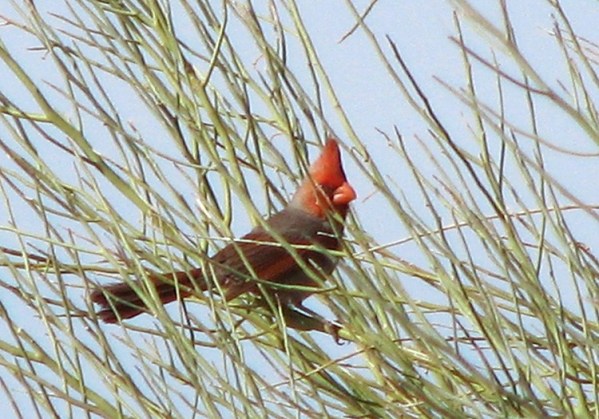
Pyrrhuloxia-Cardinal-hybrid.TroyCorman-photo

Cardinal X Pyrrhuloxia hybrid

Photo credit: Troy Corman AD2012 (Maricopa County, Arizona)

With a black facemask, it looked like a cardinal—yet it had a lot of black and grey, like a Pyrrhuloxia (a/k/a “Black Cardinal” or “Desert Cardinal”). Yet this bird’s plumage was highlighted with cardinal scarlet, plus it had a mostly orange-hued beak, not the yellow beak of a Pyrrhuloxia. It was not a female cardinal—female cardinals have tannish-brown plumage, sometimes with yellowish tones, highlighted by scarlet accenting. In other words, what I saw was a HYBRID, offspring of a Northern Cardinal (Cardinalis cardinalis) and a Pyrrhuloxia (Cardinalis sinuatus). Such hybrids have been seen before in Arizona, Texas (including one visiting ICR’s Dallas campus), and apparently also in Oklahoma.

Pyrrhuloxia-Cardinal-hybrid.JanetJohnson-BrenhamTX

Pyrrhuloxia-Cardinal Hybrid photo credit: Janet Johnson (Brenham, TX) / Cornell Lab

For example, the Cornell Lab posts the following report by Janet Johnson (of Brenham, Texas), with a photograph of a hybrid that looks very much like what I saw last weekend (except what I saw was more blackish and less light-grey):

“I believe this bird is a Cardinal/Pyrrhuloxia hybrid. He is a beautiful, clear gray color like the Pyrrhuloxia with red on his tail, wings, and crest, but with a black mask like the Northern Cardinal. His bill is more like the Cardinal, being more orange than yellow. He also has red mottling down his breast like the Pyrrhuloxia.”

What a beautiful, fireworks-feathered, patriotic, dignified, crested seed-eater!

This patriotic post now concludes with a link to a video clip providing a 2nd Amendment-oriented variation of the Star-Spangled Banner, by the Black Rifle Coffee Company (which employs U.S. veterans, and makes several varieties of bold, strong coffee!):

https://www.youtube.com/watch?v=DHLlwiLebkc

(Make sure the audio volume is up enow.)

FortMcHenry-aerial-photo.MDgovernor's-office

Fort McHenry (public domain; aerial photo)


Creation Moment’s – Tool Users That Are Something To Crow About

New Caledonian Crow (Corvus moneduloides) by Ian Montgomery

Genesis 4:22

And Zillah, she also bare Tubal-cain, an instructor of every artificer in brass and iron: and the sister of Tubal-cain was Naamah.”

Many creatures have been found that use sticks, leaves and other items as tools. Chimpanzee parents teach their youngsters to poke sticks in termite holes to get termites. However, no animal has shown an instinctive tendency to make and use tools, until now.

Caledonian crows are among the known tool-users. A pair of captive New Caledonian crows were having trouble incubating their four eggs. So researchers decided to incubate and raise the young crows themselves. Upon hatching, the young crows were separated into two pairs. One pair received lessons on how to use twigs to poke food out of slots. The other pair received no lessons, nor were they allowed to see their siblings using tools. When they were given sticks and leaves, they spontaneously began using the twigs to poke food out of a slot. One of them also tore a leaf into a food poker. After evaluating all the behavioral data, researchers concluded that while crows have a natural tendency to make and use tools, they also learn how to make improved tools from their elders.

Tool making is not what separates man from animals, although we can make tools far superior to those made by animals. The Bible tells us that the earliest man was made in the image of God and that the earliest generations of man were already making iron tools.

Prayer: Father, thank You for making me for a relationship with You and making a relationship possible through Christ. Amen.

Author: Paul A. Bartz

Ref: Science News, 1/15/05, p. 38, S. Milius, “Crow Tools.” Image: New Caledonian crow (PD)

© 2020 Creation Moments. (Used with permission)


Lee’s Addition:

We have had several previous articles about the tool usage of birds:

Birds of the Bible – Uniquely Created Tools

Interesting Things – Fleas, Birds and Tools

The Best Toolmakers in the World by Emma Foster

The Crow and the Screwdriver – by Emma Foster

*

Hope for Hard Times