***
FREE INDEED
***
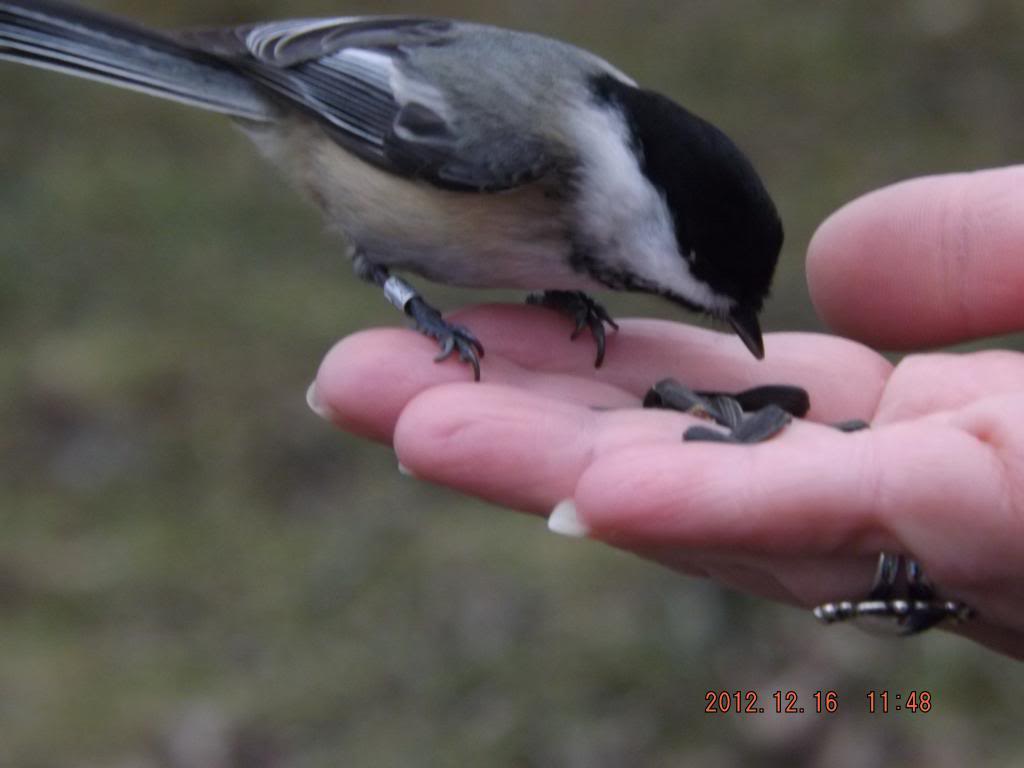
“If the Son therefore shall make you free, ye shall be free indeed.” (John 8:36 KJV)
Black-capped Chickadee Eating Freely from Hand
*
“If the Son therefore shall make you free, ye shall be free indeed.” (John 8:36 KJV)
Black-capped Chickadee Eating Freely from Hand
*

“You have granted me life and favor, and Your providence has preserved my spirit.” (Job 10:12 AMP)
Providence Petrel (Pterodroma solandri) by Ian
*

“And my people shall dwell in a peaceable habitation, and in sure dwellings, and in quiet resting places;” (Isaiah 32:18 KJV)
Black-winged Petrel (Pterodroma nigripennis) by Ian Montgomery
*
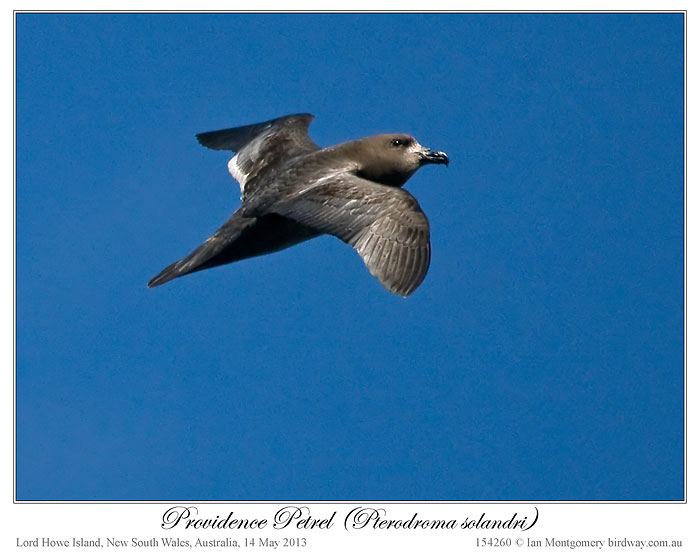
“Praise the LORD from the earth, ye dragons, and all deeps: Fire, and hail; snow, and vapour; stormy wind fulfilling his word: Mountains, and all hills; fruitful trees, and all cedars: Beasts, and all cattle; creeping things, and flying fowl:” (Psalms 148:7-10 KJV)
The Petrels in the Pterodroma genus has enough species to present them in their own post. Ian Montgomery, (Bird of the Week/Moment), has quite a few photos of this family on his Birdway Site.
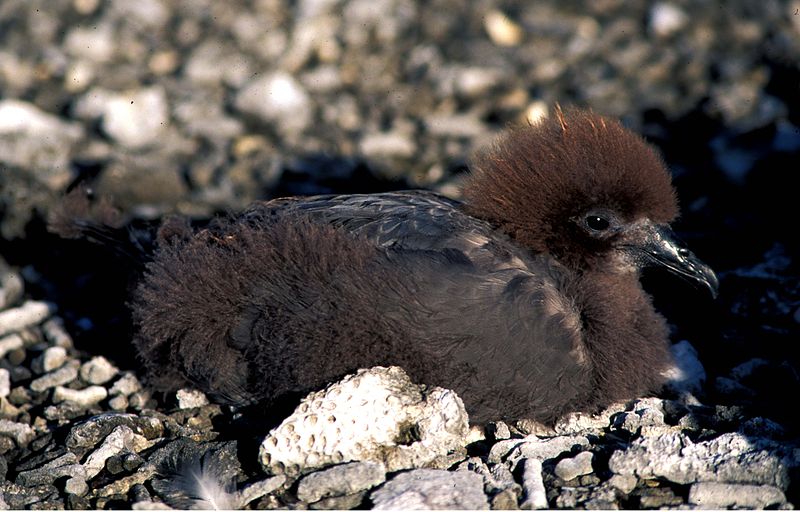
Murphy’s Petrel (Pterodroma ultima) ©WikiC
“The gadfly petrels are seabirds in the bird order Procellariiformes. The gadfly petrels are named for their speedy weaving flight as if evading horseflies. The flight action is also reflected in the genus name Pterodroma, from Ancient Greek pteron, “wing” and dromos, “runner”.
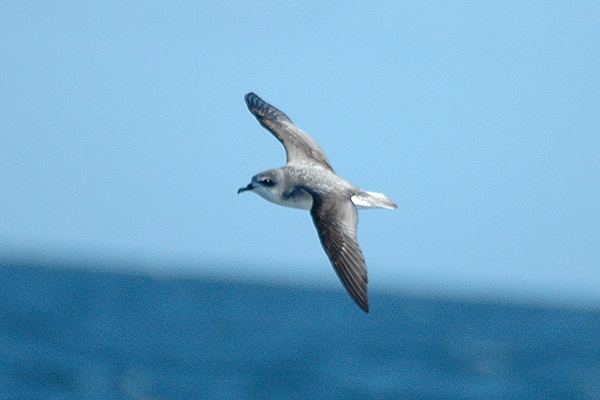
Cook’s Petrel (Pterodroma cookii) ©WikiC
“These medium to large petrels feed on food items picked from the ocean surface.”
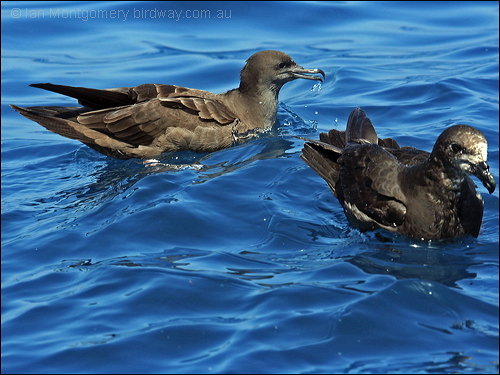
Great-winged Petrel (Pterodroma macroptera) by Ian
“The short, sturdy bills of the Pterodroma species in this group, about 35 altogether, are adapted for soft prey taken at the surface; they have twisted intestines for digesting marine animals which have unusual biochemistries.”
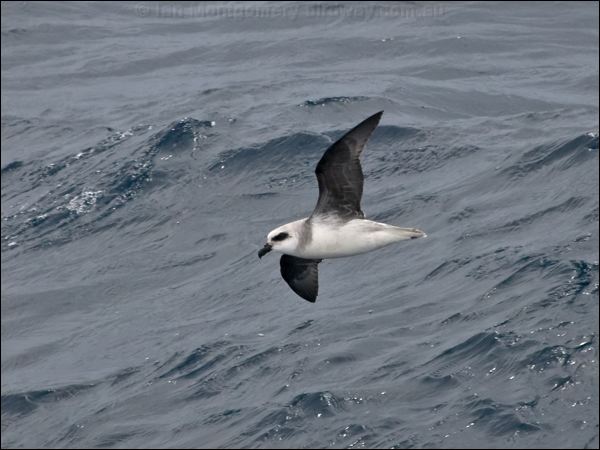
White-headed Petrel (Pterodroma lessonii) by Ian
“Their complex wing and face marking are probably for interspecific recognition.”
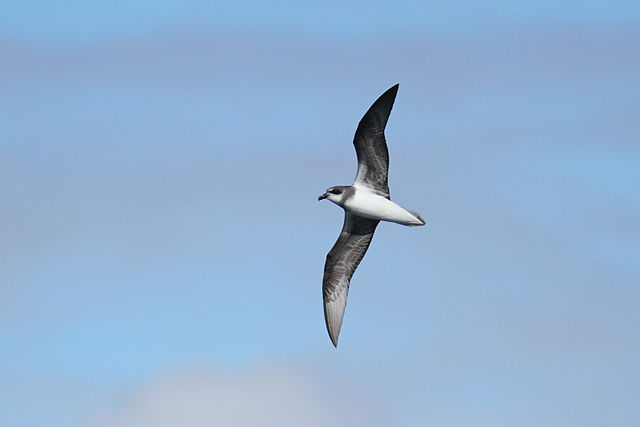
Soft-plumaged Petrel (Pterodroma mollis) ©WikiC
“These birds nest in colonies on islands and are pelagic when not breeding. One white egg is laid usually in a burrow or on open ground. They are nocturnal at the breeding colonies.”
“While generally wide-ranging, most Pterodroma species are confined to a single ocean basin (e.g. Atlantic), and vagrancy is not as common amongst Pterodromas as it is in some other seabird species (c.f. the Storm-Petrels Hydrobatidae).” (Information from Wikipedia)
*
“Praise ye the LORD. Praise God in his sanctuary: praise him in the firmament of his power. Praise him for his mighty acts: praise him according to his excellent greatness. Praise him with the sound of the trumpet: praise him with the psaltery and harp. Praise him with the timbrel and dance: praise him with stringed instruments and organs. Praise him upon the loud cymbals: praise him upon the high sounding cymbals. Let every thing that hath breath praise the LORD. Praise ye the LORD.” (Psalms 150:1-6 KJV)
“Jesus What a Mighty Name” ~ Pastor Smith with Choir and Orchestra.
*
More Sunday Inspirations
Procellariidae – Petrels, Shearwaters
Sunday Inspiration – Procellariidae Family – Petrel, Fulmar and Prion

“Bless the LORD, all his works in all places of his dominion: bless the LORD, O my soul.” (Psalms 103:22 KJV)
Mixed Flock Scattering at Tampa Bay shore by Lee
*
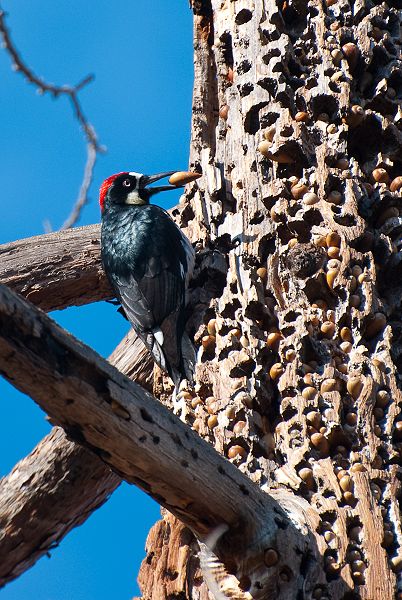
“So shall your storage places be filled with plenty,” (Proverbs 3:10a AMP)
Acorn Woodpecker (Melanerpes formicivorus) with Hoard or Grainary WikiC
*
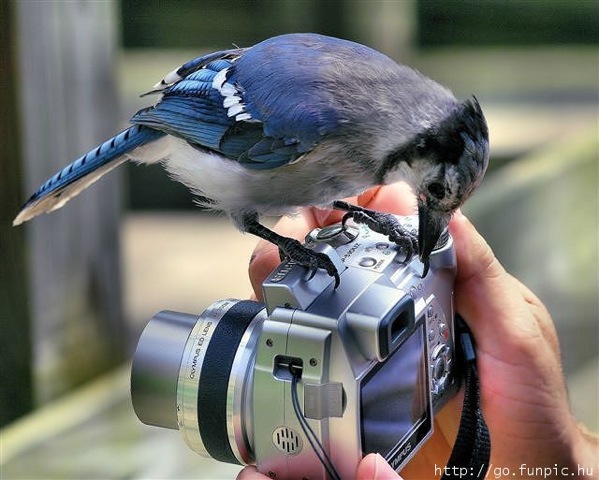
“And the fear of you and the dread of you shall be on every beast of the earth, on every bird of the air, on all that move on the earth, and on all the fish of the sea. They are given into your hand.” (Genesis 9:2 NKJV)
Blue Jay on Camera ©Funpic
[This Blue Jay forgot to be afraid.]
*
HOME, HOME ON THE SAGE: NOTHING TO GROUSE ABOUT!
Dr. James J. S. Johnson
And it came to pass, that at even the quails came up, and covered the camp: and in the morning the dew lay round about the host. (Exodus 16:13)
Among ground-fowl birds there are some galliforms – called Phasianidae – that resemble one another enough that they are often grouped together, taxonomically, as if they are all super-family “cousins”: quails, pheasants, partridges, ptarmigans, chickens, peafowl, and grouse-fowl. One of these Phasianid galliforms, almost the size of a turkey, will now be considered: the Greater Sage Grouse. Since one of the bird’s favorite foods is sagebrush leaves, it is no wonder than the quail-like fowl is often found nesting or foraging in sagebrush-dominated terrain. Sage grouse eat other leaves as well, if and when accessible, as well as buds, forbs, flowers and bugs. Insects often eaten by sage grouse include grasshoppers, beetles, and ants.

Greater Sage Grouse (Centrocercus urophasianus), photo credit: Wikipedia
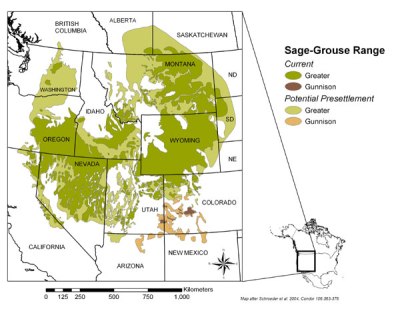
The GREATER SAGE GROUSE routinely inhabits the Great Basin Desert, thriving in xeric shrublands, a dry steppe-like blend of desert and scrub-grasslands, as well as other sagebrush-dominated lands east of the Great Basin [see Fort Collins Science Center range map, for America’s Sage Grouse]. To appreciate the Greater Sage Grouse’s scrubland habitat, a quick review of the Great Basin Desert is worthwhile.
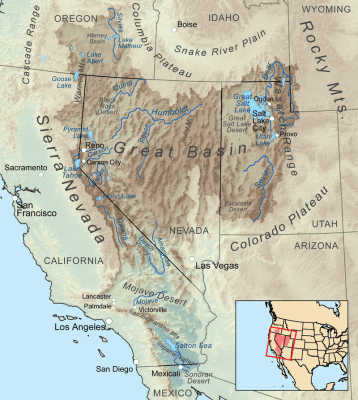
The “Great Basin” Desert is not the typical “desert” of hot, hot, dry, dry mostly-barren land, studded with cactus and sagebrush vegetation. Rather the Great Basin Desert is a “cold” scrubland desert, meaning that it is dry most of the year, but its temperatures are not hot year-round – in fact, it usually gets more annual precipitation via snowfall than by rainfall. In other words, the Great Basin is dry enough to qualify as a “desert” (and thus it is not “covered” by forests or grasslands, and typically hot during summer, yet it get quite cold in the winter, with snow winters as the norm. In this respect the Great Basin is in a class by itself, in North America, unlike America’s other 3 major deserts (the Sonoran, Chihuahuan, and Mojave deserts) which hare truly “hot deserts”. [See map of the Great Basin Desert, below, compliments of Wikipedia.]
Ecologicallly speaking, the Great Basin includes a mix of rocky soils and scrublands, many dominated by sagebrush, greasewood, saltbush and salty-soil areas, mudflats, and sand dunes, as well as pinyon-juniper woodlands in higher elevations. Geographically speaking, the Great Basin covers almost all of Nevada, plus western Utah, a bit of southern Idaho, and part of the south-central part of Oregon. [See map, below, compliments of the U.S. Geological Survey, a bureau of the U.S. Department of the Interior.]
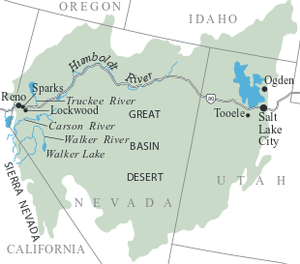
Great Basin Desert, USGS map [public domain]
Since the Great Basin Desert is not hot year-round, but routinely experiences snowy winters, its inhabitants must apply climate-response strategies that successfully resolve temperature extremes, such as how to deal with hot and dry summers, plus cool-to-cold winters. Some Great Basin animals migrate, seasonally, while other hibernate, to avoid the inconveniences of snowfall and frigidity. But how do Greater Sage Grouse deal with the seasonal “climate change” challenges of the Great Basin?

Sagebrush-dominated terrain (photo credit: Scott Smith / Defenders of Wildlife Blog)
In short, the sage grouse stay put, for the most part, throughout all or most of the year. [See Roger Tory Peterson, A FIELD GUIDE TO WESTERN BIRDS (Peterson Field Guides / Houghton Mifflin, 1990), pages 158-159 & Map 96.] If need be, however, they “micro-migrate” to other nearby areas, although usually only for relatively short distances, so they are not true “migrants”, phenologically speaking. In other words, depending upon the severity of winter weather, sage grouse may undertake short-distance migrations, to find user-friendly winter habitat, going as far as 100 miles if necessary, although less than 20 miles is more typical.

Sage Grouse, with Pronghorn, in sagebrush (photo credit” Defenders of Wildlife Blog)
Consider the following facts, summarized by the U.S. Fish & Wildlife Service, about the Greater Sage Grouse:
Greater sage-grouse (Centrocercus urophasianus) are members of the Phasianidae family. They are one of two species; the other species in the genus is the Gunnison sage-grouse (Centrocercus minimus). The Greater sage-grouse is the largest North American grouse species. Adult male greater sage-grouse range in length from 26 to 30 inches and weigh between 4 and 7 pounds. Adult females are smaller, ranging in length from 19 to 23 inches and weighing between 2 and 4 pounds. During the spring breeding season, male sage-grouse gather together to perform courtship displays on areas called leks. Areas of bare soil, short-grass steppe, windswept ridges, exposed knolls, or other relatively open sites typically serve as leks, which are often surrounded by denser shrub-steppe cover, which is used for escape, thermal and feeding cover. The proximity, configuration, and abundance of nesting habitat are key factors influencing lek location. Leks can be formed opportunistically at any appropriate site within or adjacent to nesting habitat. Therefore, lek habitat availability is not considered to be a limiting factor for sage-grouse. Leks are indicative of nesting habitat. Productive nesting areas are typically characterized by sagebrush with an understory of native grasses and forbs, with horizontal and vertical structural diversity that provides an insect prey base, herbaceous forage for pre-laying and nesting hens, and cover for the hen while she is incubating. Shrub canopy and grass cover provide concealment for sage-grouse nests and young, and are critical for reproductive success. The average distance between a female’s nest and the lek on which she was first observed ranged from 2.1 mi to 4.8 mi in five studies examining 301 nest locations, but actual distances can be highly variable. Male sage-grouse do not participate in nesting or rearing of the chicks. …
During the spring and summer sage-grouse will primarily eat insects and forbs, but they rarely stray from the edge of sagebrush, which provides cover year round. In the fall, sage-grouse shift their diet entirely to sagebrush, depending on the shrub for both food and cover. Sage-grouse obtain their water from the food they eat. However, they will drink water if available. … Currently, greater sage-grouse occur in 11 States (Washington, Oregon, California, Nevada, Idaho, Montana, Wyoming, Colorado, Utah, South Dakota, and North Dakota), and 2 Canadian provinces (Alberta and Saskatchewan), occupying approximately 56 percent of their historical range. Approximately 2 percent of the total range of the greater sage-grouse occurs in Canada, with the remainder in the United States. Sage-grouse have been extirpated from Nebraska, British Columbia, and possibly Arizona. Current distribution of the greater sage-grouse is estimated at 258,075 mi2. Changes in distribution are the result of sagebrush alteration and degradation [because sage grouse depend heavily upon sagebrush for their habitat needs]. …
[Quoting from USFWS, “Beginner’s Guide to Greater Sage-Grouse”.]
So there you have it, Sage Grouse like to live around — and eat — desert scrub sagebrush, so expect to find them living in the sagebrush-dominated areas of the Great Basin Desert.. Perhaps they also have a “dry” sense of humor!
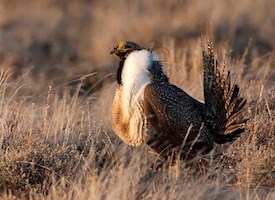
Featured image photo credit: Stephen Parsons / Cornell
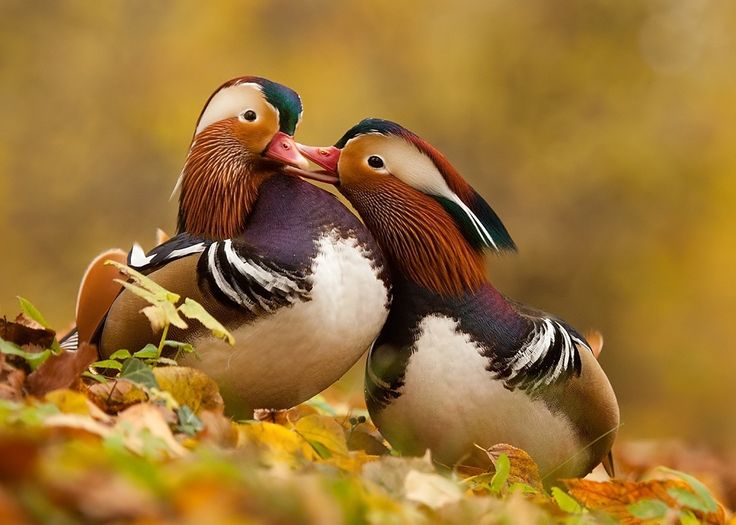
“So shall he sprinkle many nations; the kings shall shut their mouths at him: for that which had not been told them shall they see; and that which they had not heard shall they consider.” (Isaiah 52:15)
Wood Duck (Aix sponsa) Shuting Mouth ©S-Media-Cache
*

“Enter ye in at the strait gate: for wide is the gate, and broad is the way, that leadeth to destruction, and many there be which go in thereat: Because strait is the gate, and narrow is the way, which leadeth unto life, and few there be that find it.” (Matthew 7:13-14 KJV)
Broad-billed Prion (Pachyptila vittata) ©www.TeAra.govt.nz
*
No Words Needed! Received from a friend.

When you need a smile
Send this to 3 friends and you will make 3 friends smile. No, you won’t GET SOMETHING. Sorry, but that’s the truth. |

“I am the LORD thy God, which brought thee out of the land of Egypt: open thy mouth wide, and I will fill it.” (Psalms 81:10 KJV)
Northern Giant Petrel (Macronectes halli) by Dave’s BirdingPix
*