Then God said, “Let the waters abound with an abundance of living creatures, and let birds fly above the earth across the face of the firmament of the heavens.” (Genesis 1:20 NKJV
What a fantastic video – WOW! It is a bit long, but worth every minute of it.
How can anyone watch these birds flying and not realize they have a fantastic Creator?
So I said, “Oh, that I had wings like a dove! I would fly away and be at rest. (Psalms 55:6 NKJV)
(Just published this on the other site “Birds of the Bible For Kids” and thought you might also enjoy reading these stories. Maybe you have children or grandchildren that would enjoy you reading to them.)
Now that school is out for most students, it’s time for reading. Why not check out some of the stories about birds. Here are some that you may have missed while you were busy studying during the school year.
Western Screech Owl (Megascops kennicottii)(captive) by Raymond Barlow
And He said, “My Presence wiIl go with you, and I will give you rest.” (Exodus 33:14 NKJV)
Grace be unto you, and peace, from God our Father, and from the Lord Jesus Christ. (1 Corinthians 1:3 KJV)
Today’s is more about the song that Sean is playing. “I’d Rather Have Jesus Than Anything.” These photos are of birds and places we have had the privilege of visiting to watch the marvelous avian wonders that the Lord Jesus Christ Created. The Lord gives us a peace as we live for Him that is hard to put into words. Maybe as you watch these photos (Lord knows, I’m no photographer, just a birdwatcher who carries a camera) that you can sense the peace I have as I go birdwatching. Also, the Lord has given me a great husband that enjoys seeing these birds as well as I do and he IS a good photographer.
You can know this peace also, when you accept the Lord as your personal Savior.
For God so loved the world, that he gave his only begotten Son, that whosoever believeth in him should not perish, but have everlasting life. (John 3:16 KJV)
And the peace of God, which passeth all understanding, shall keep your hearts and minds through Christ Jesus. (Philippians 4:7 KJV)
This slideshow requires JavaScript.
*
“I’d Rather Have Jesus” by Sean Fielder (from Faith Baptist Church)
*
The photos in this slideshow and the ones on the other site are not quite the same.
Thought you might enjoy a video of the birds that make Spain their home. Paul wanted to journey to Spain. These type of birds would have greeted him. Also, my good friends, Tim and Pam, are missionaries there.
whenever I journey to Spain, I shall come to you. For I hope to see you on my journey, and to be helped on my way there by you, if first I may enjoy your company for a while…. Therefore, when I have performed this and have sealed to them this fruit, I shall go by way of you to Spain. (Romans 15:24,28 NKJV)
who teaches us more than the beasts of the earth and makes us wiser than the birds of the heavens?’ (Job 35:11 ESV)
Orni-Theology
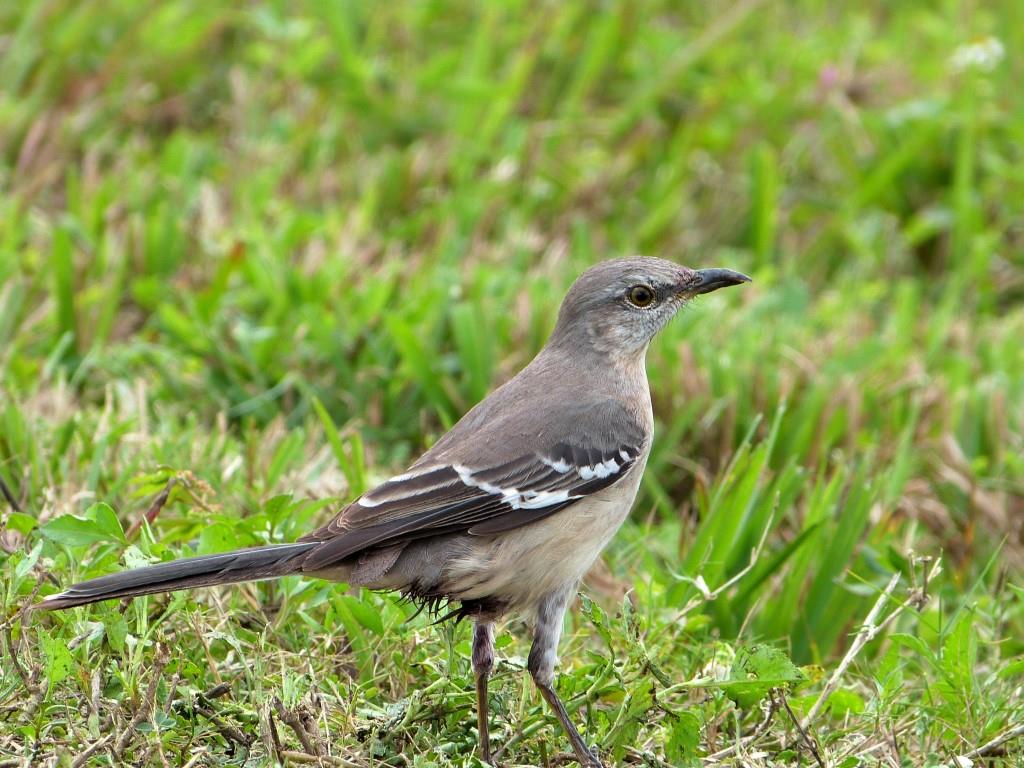
Recently.a friend was telling me about a bird that has been singing every night. He said that it begins around 3 AM and continues for hours. He was frustrated by the bird’s behavior. After discussing it, we came to the conclusion that it is a Northern Mockingbird. They have one with a nest in their yard.
We used to have one that had a nest in the bush outside our bedroom window when we lived in south Florida. Whenever the babies were born, our Mockingbird started its “songs in the night.” The songs are pleasant, but in the middle of the night, the urge to throw a pillow out the window sounds tempting.
Northern Mockingbirds are members of the Mimidae – Mockingbirds, Thrashers Family. They are the only Mockingbird in North America and are the state bird in Arkansas, Florida, Mississippi, Tennessee and Texas, and formerly the state bird of South Carolina. They are omnivore, meaning it eats fruits and insects.
The Northern Mockingbird is a medium-sized mimid that has long legs and tail. Both males and females look alike. Its upper parts are colored gray, while its underparts have a white or whitish-gray color. It has parallel wing bars on the half of the wings connected near the white patch giving it a distinctive appearance in flight. The iris is usually a light green-yellow or a yellow, but there have been instances of an orange color. The bill is black with a brownish black appearance at the base. The juvenile appearance is marked by its streaks on its back, distinguished spots and streaks on its chest, and a gray or grayish-green iris. Northern Mockingbirds measure from 8.1 to 11.0 in (20.5 to 28 cm) including a tail almost as long as its body.
Although many species of bird imitate the vocalizations of other birds, the Northern Mockingbird is the best known in North America for doing so. It imitates not only birds, but also other animals and mechanical sounds such as car alarms. As convincing as these imitations may be to humans, they often fail to fool other birds. (Wikipedia with editing)
Northern Mockingbird Viera Wetlands by Lee
What is interesting about the Bible verse above is that the verse has been used many times before, but I have not used the previous verse. Here are the two verses together.
But no one says, ‘Where is God my Maker, Who gives songs in the night, Who teaches us more than the beasts of the earth, And makes us wiser than the birds of heaven?’ (Job 35:10-11 NKJV)
God our Maker and the Lord our Savior gives us songs in the night when all is well. Apparently, the Mockingbird is happy or joyful as he sings his songs in the night. We can learn from the songster of the night.
Looking at other verses, what can cause us to not have songs in the night?
The LORD will command His lovingkindness in the daytime, And in the night His song shall be with me— A prayer to the God of my life. (Psalms 42:8 NKJV)
Are we praying and staying in communication with the Lord? When sin creeps in, the songs stop ringing out.
You shall have a song as in the night when a holy feast is kept, and gladness of heart, as when one sets out to the sound of the flute to go to the mountain of the LORD, to the Rock of Israel. (Isaiah 30:29 ESV)
When we have Communion, our pastor always asks us to make sure our fellowship with the Lord and others is clear. When all is straightened out, then we can have our “feast” (communion) with a clear forgiven spirit.
About midnight Paul and Silas were praying and singing hymns to God, and the prisoners were listening to them, (Acts 16:25 ESV)
Even when circumstances are not what we would like are we still “praying and singing hymns to God”?
Why we should sing night or day:
speaking to one another in psalms and hymns and spiritual songs, singing and making melody in your heart to the Lord, (Ephesians 5:19 NKJV)
Let the word of Christ dwell in you richly in all wisdom, teaching and admonishing one another in psalms and hymns and spiritual songs, singing with grace in your hearts to the Lord. And whatever you do in word or deed, do all in the name of the Lord Jesus, giving thanks to God the Father through Him. (Colossians 3:16-17 NKJV)
In the last blog, the term “Orni-Theology” was introduced. (Orni-theology ~ The Master Carpenter) Since then, an Orni-Theology page has been established. There will be links there to the various articles that will feature some bird or bird characteristics with an application and challenge to principles from the Bible, with verses, that we should be applying to our lives.
Orni-Theology
Also, each article that is of an Orni-Theology category will have this thumbnail attached. (Clicking the thumbnail will take you to the Orni-Theology page)
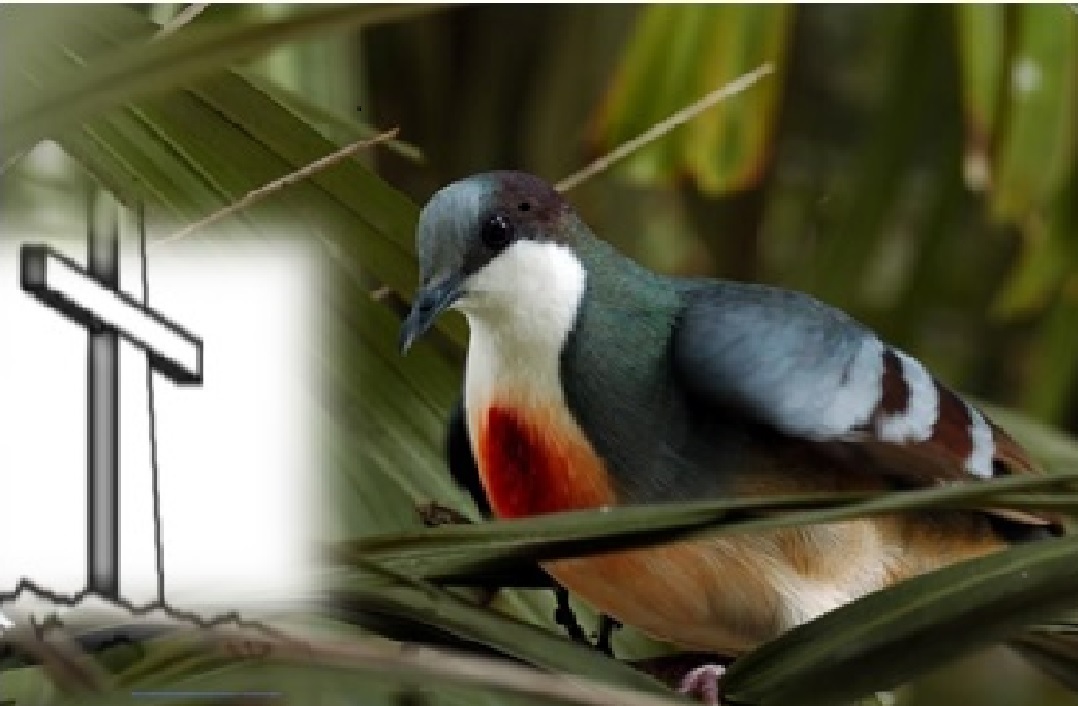
The Luzan Bleeding-heart above was chosen as our theme bird and I blended a cross with the photo. I can think of many illustrations just using that bird.
Wikipedia says, the Luzon Bleeding-heart (Gallicolumba luzonica) is one of a number of species of ground dove in the genus Gallicolumba that are called “bleeding-hearts”. They get this name from a splash of vivid red colour at the centre of their white breasts. The Luzon Bleeding-heart is the species in which this feature is most pronounced, and on first sight it is hard to believe that the bird has not recently been wounded. A reddish hue that extends down the belly furthers the illusion of blood having run down the bird’s front.
The species is endemic to the island of Luzon, Philippines. They eat seeds, berries and grubs. They are shy and secretive, and very quiet, and rarely leave the ground except when nesting. Unlike the other bleeding-hearts, they usually lay two eggs in each clutch.
The article below by Landry mentions that when the birds display, that the male rushes toward the female, stops, lowers his tail and then “throws his breast upwards so that the vivid blood mark is fully presented frontally.” He then bows and coos.
The application this time has to do with its appearance and behavior. Oh, my, where should I begin?
when your heart is lifted up, and you forget the LORD your God who brought you out of the land of Egypt, from the house of bondage; (Deuteronomy 8:14 NKJV)
That verse could indicate that pride was in control and not the Lord. We know that is not good.
These verses could indicate subjection to the Lord. We look to the Lord with our hearts lifted up, but bow in honor to Him.
My defense is of God, Who saves the upright in heart. (Psalms 7:10 NKJV)
The sacrifices of God are a broken spirit, A broken and a contrite heart— These, O God, You will not despise. (Psalms 51:17 NKJV)
I am sure you could come up with many applications also and Luzan Bleeding-heart will most likely be revisited again.
(This is an idea of how these articles will try to honor our Lord’s Fantastically Created birds and challenge us with our own relationship to Him.)
Whether you’re a bird person or not, this is stunning!!!
Not to detract from the sheer magic of it, but in practical terms.
How MANY trips would a bird have to make with that tiny little quantity of mud/clay it could carry? (and how far from the nest is the source?) Look at the pictures keeping this in mind.
This slideshow requires JavaScript.
If you take the construction of a circular bowl in your stride as instinctive, how does the bird come up with the windbreak/entrance design that shields the eggs/chicks from the elements, and at what point in fashioning the bowl do they start to construct it?
Even if you think you could build this…try it without using your hands!
And now…stop to consider this:
Where did the knowledge to do this come from?
TRULY THERE HAS TO BE A “MASTER CARPENTER”.
Orni-Theology
*
This was received in an email again today from friends at I.C.R. It has been sent to me many times, but this makes a good article to start a new section of this blog. “Orni-theology”
In John Stott’s The Birds Our Teachers, Stott says, “So over the years I have been trying to develop a new branch of science, which a friend and I have jocularly called “orni-theology’, or the theology of birds. It is founded on an important biblical principle namely that in the beginning God made man, male and female, in his own image and gave us dominion of the earth and its creation.” (pg 10)
Then God said, “Let the earth bring forth the living creature according to its kind: cattle and creeping thing and beast of the earth, each according to its kind”; and it was so. And God made the beast of the earth according to its kind, cattle according to its kind, and everything that creeps on the earth according to its kind. And God saw that it was good. Then God said, “Let Us make man in Our image, according to Our likeness; let them have dominion over the fish of the sea, over the birds of the air, and over the cattle, over all the earth and over every creeping thing that creeps on the earth.” So God created man in His own image; in the image of God He created him; male and female He created them. Then God blessed them, and God said to them, “Be fruitful and multiply; fill the earth and subdue it; have dominion over the fish of the sea, over the birds of the air, and over every living thing that moves on the earth.” (Genesis 1:24-28 NKJV)
As far as I know, the term “Orni-Theology” is not copyrighted. We have been doing “Orni-Theology” blogs from the beginning, but this is the perfect name for those articles. The Birds of the Bible articles are about specific birds named in Scripture, where as Orni-Theology articles have a principle of a bird’s behavior applied in relation to Scripture.
A J Mithra’s articles have been great examples of “Orni-Theology. He introduced us to a bird and it’s behavior and challenged us with God’s Word to behave that way.
Give a few days as a new page is developed and added to the tabs at the top.
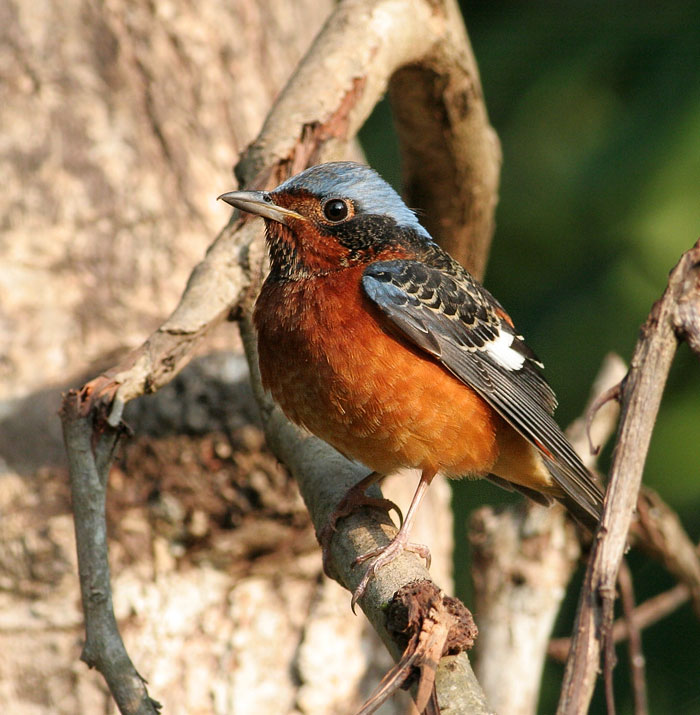
White-throated Rock Thrush (Monticola gularis) by Peter Ericsson
He is the Rock, his work is perfect: for all his ways are judgment: a God of truth and without iniquity, just and right is he. (Deuteronomy 32:4 KJV)
This week we will look at the different “Rock” birds. Many articles have been written about them, but today we get to see their photos.
Of the Rock that begat thee thou art unmindful, and hast forgotten God that formed thee. (Deuteronomy 32:18 KJV)
Our Savior is Our Rock and sure foundation. Scripture mentions numerous purposes of rocks: safety, foundations, hiding places, shadow and other references.
Therefore thus saith the Lord GOD, Behold, I lay in Zion for a foundation a stone, a tried stone, a precious corner stone, a sure foundation: he that believeth shall not make haste. (Isaiah 28:16 KJV)
Nevertheless the foundation of God standeth sure, having this seal, The Lord knoweth them that are his. And, Let every one that nameth the name of Christ depart from iniquity. (2 Timothy 2:19 KJV)
And did all drink the same spiritual drink: for they drank of that spiritual Rock that followed them: and that Rock was Christ. (1 Corinthians 10:4 KJV)
This slideshow requires JavaScript.
*
*
“Hiding in the Shadow of the Rock” ~ Sung by Dr. Richard Gregory (Used with permission)
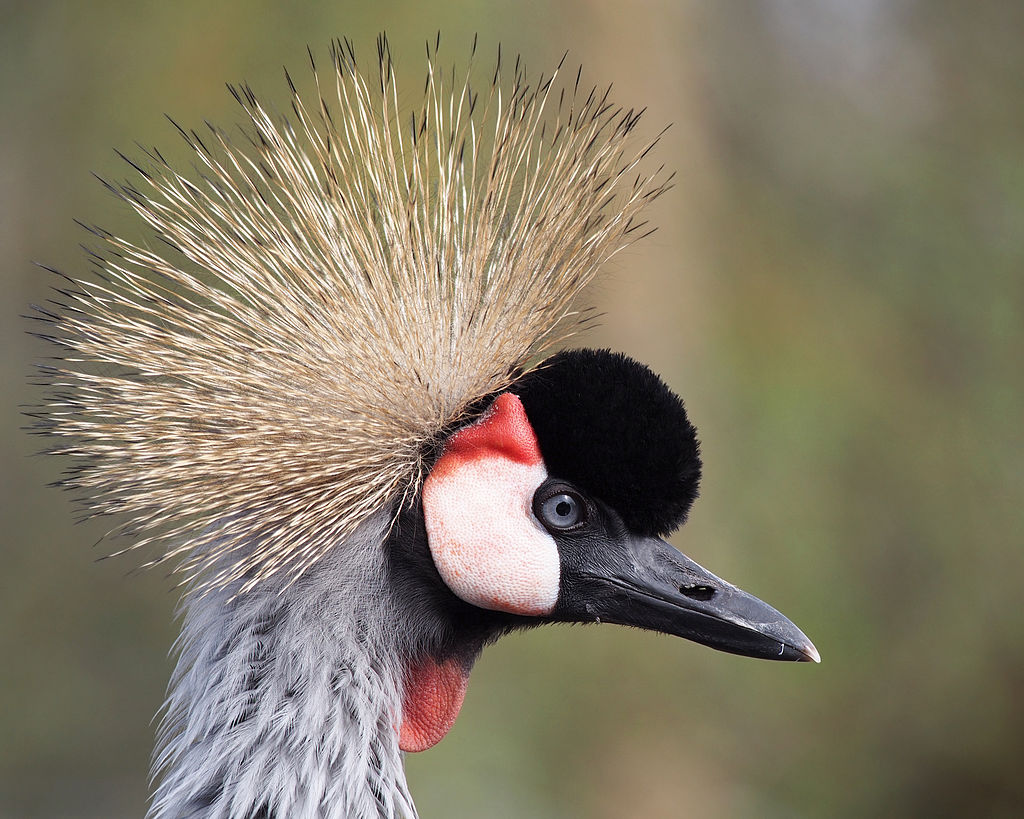
Grey Crowned Crane (Balearica regulorum gibbericeps) Jax Zoo by Lee
Like a crane or a swallow, so did I chatter: I did mourn as a dove: mine eyes fail with looking upward: O LORD, I am oppressed; undertake for me. (Isaiah 38:14 KJV)
Originally this was going to be about the Grey Crowned Crane at Jacksonville Zoo and other zoos, but the bird genus Balearica (also called the crowned cranes) consists of two living species in the crane family Gruidae: the Black Crowned Crane (B. pavonina) and the Grey Crowned Crane (B. regulorum). The species today occur only in Africa, south of the Sahara Desert, and are the only cranes that can nest in trees. This habitat is one reason why the relatively small Balearica cranes are believed to closely resemble the ancestral members of the Gruidae. Like all cranes, they eat insects, reptiles, and small mammals.
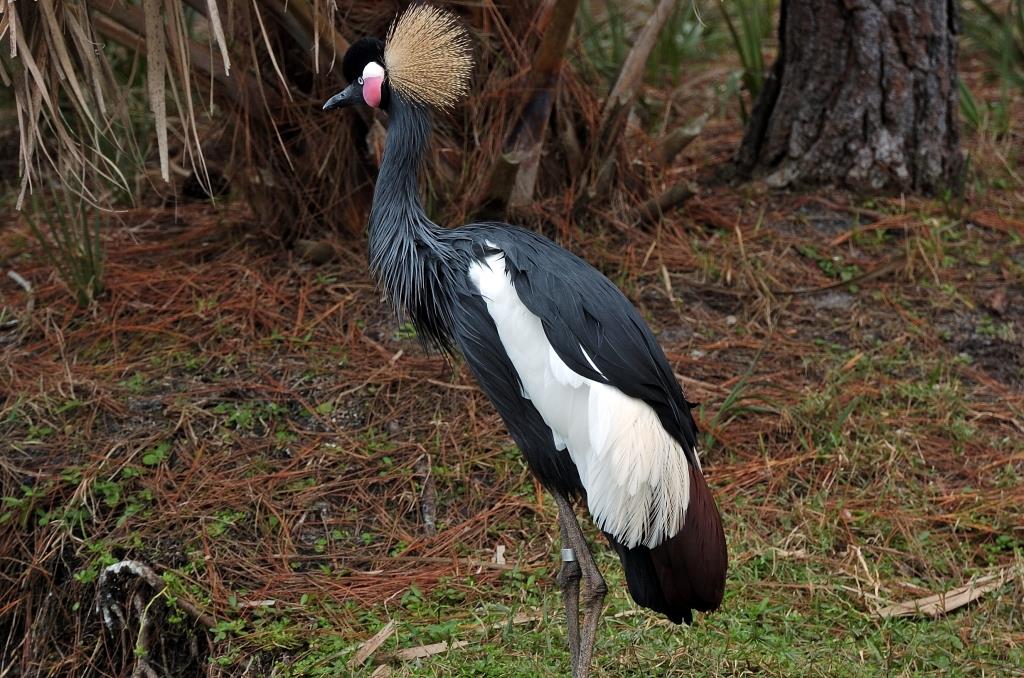
While looking for information, I realized my first impression was incorrect. The Grey Crowned has a grey crown, so while searching our photos the Black Crowned also had the same color crown. At first, I thought I had mislabeled them. Searching Wikipedia, I found these two super photos and decided to share them. You can see that the face is unique in each.
The Black has the red or pink at the bottom of that cheek.
Also, one has a grey neck and the other a black neck. Ahah! That’s where the name comes from. Man names the birds, but God created them and I think it is neat that He helps us identify them. My opinion is that the Lord should have hung name tags on the birds, so that when we have them in our binoculars or scoped we could just read the sign. But God:
Which doeth great things past finding out; yea, and wonders without number. (Job 9:10 KJV)
O the depth of the riches both of the wisdom and knowledge of God! how unsearchable are his judgments, and his ways past finding out! (Romans 11:33 KJV)
There are other things about them, but this was interesting for me. For me, I will have to keep observing and learning. May none of us every get “bored” watching the Lord’s Creations.
Black Crowned Crane (Balearica pavonina pavonina) (West African) by Dan at Brevard Zoo
*
Yea, the stork in the heaven knoweth her appointed times; and the turtle and the crane and the swallow observe the time of their coming; but my people know not the judgment of the LORD. (Jeremiah 8:7 KJV)
Southern Screamer (Chauna torquata) Jax Zoo by Lee
It came about at noon, that Elijah mocked them and said, “Call out with a loud voice, for he is a god; either he is occupied or gone aside, or is on a journey, or perhaps he is asleep and needs to be awakened.” (1 Kings 18:27 NASB)
Here is an introduction to another of the Lord’s neat creations. This one can be quite noisy at times. Not sure if that qualifies as a “joyful noise.” We have seen them at the Jacksonville Zoo and the Cincinnati Zoo.
The southern screamer (Chauna torquata), also known as the crested screamer, belongs to the order Anserformes. In the Anhimidae – Screamers Family. It is found in southeastern Peru, northern Bolivia, Paraguay, southern Brazil, Uruguay and northern Argentina. Its diet consists of plants stems, seeds, leaves, and, rarely, small animals.
Based on DNA analysis they are probably most closely related to the Australian magpie goose. (National Zoo)
Southern Screamer (Chauna torquata) Jax Zoo by Lee
The southern screamer averages 32–37 in (81–95 cm) long and weighs 6.6–11.0 lb (3–5 kg). They are the heaviest, although not necessarily the longest, of the three screamers. The wingspan is around 67 in (170 cm). Among standard measurements, the wing chord measures 21 in (54 cm), the tail 9.1 in (23.2 cm), It lives in tropical and sub-tropical swamps, estuaries and watersides.
The southern screamer is a good swimmer, having partially webbed feet, but prefers to move on the ground. The bony spurs on its wings are used for protection against rival screamers and other enemies. Although it is non-migratory, it is an excellent flier. It lives in large flocks, feeding on the ground in grasslands and cultivated fields until nesting season, when birds pair off.
Southern Screamer (Chauna torquata) Jax Zoo by Lee
The southern screamer establishes monogamous relationships that last its lifetime, estimated to be 15 years. Courtship involves loud calling by both sexes, which can be heard up to two miles away. “Highly vocal, they are named for their distinctive , far-carrying calls, easily carrying for several miles.”(NZ) The Southern Screamer is the most gregarious of the 3 screamer species and the most numerous. For the nest the couple makes a big platform of reeds, straws, and other aquatic plants in an inaccessible place near water. The female lays between two and seven white eggs. The couple share incubation, which takes 43 to 46 days. Chicks leave the nest as soon as they hatch, but the parents care for them for several weeks. The fledging period takes 8 to 14 weeks. (Wikipedia and other internet sources)
And the stork, the heron after her kind, and the lapwing, and the bat. (Leviticus 11:19 KJV)
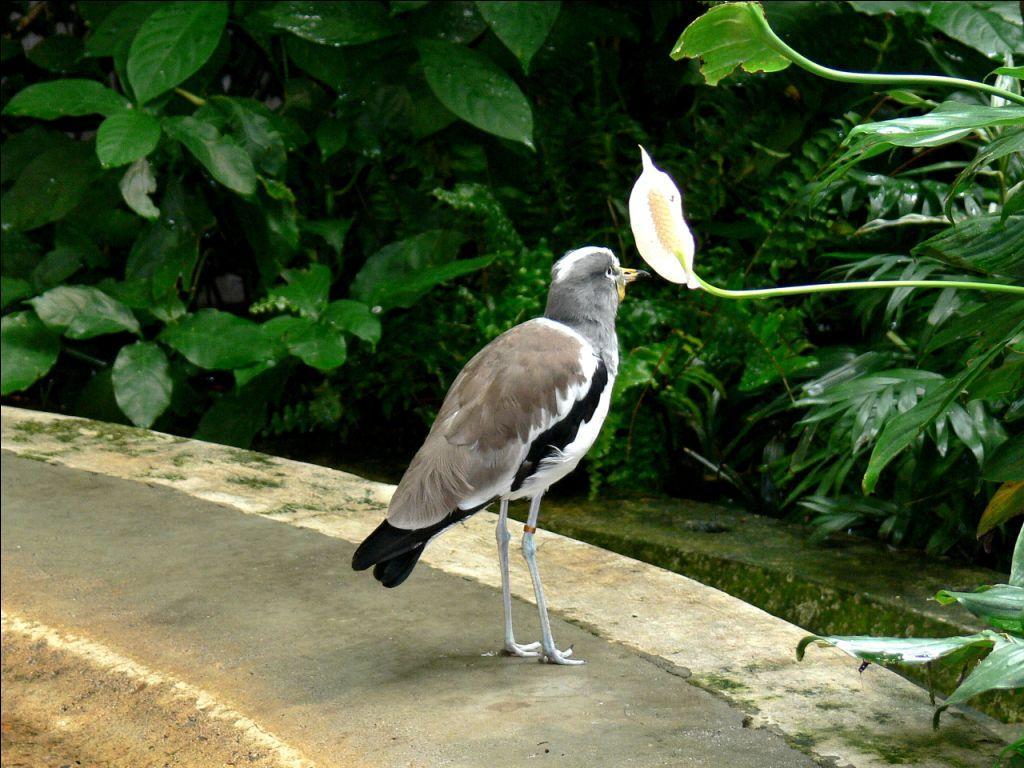
The White-crowned Lapwing above was my first Lapwing encountered. They were at the National Aviary in Pittsburg, PA. They are from the tropical regions of Africa and have a diet of insects and other small invertebrates. (Fun Fact from Aviary) ~ White-headed Wattled Lapwings will bravely defend their territories against all comers, even hippos!
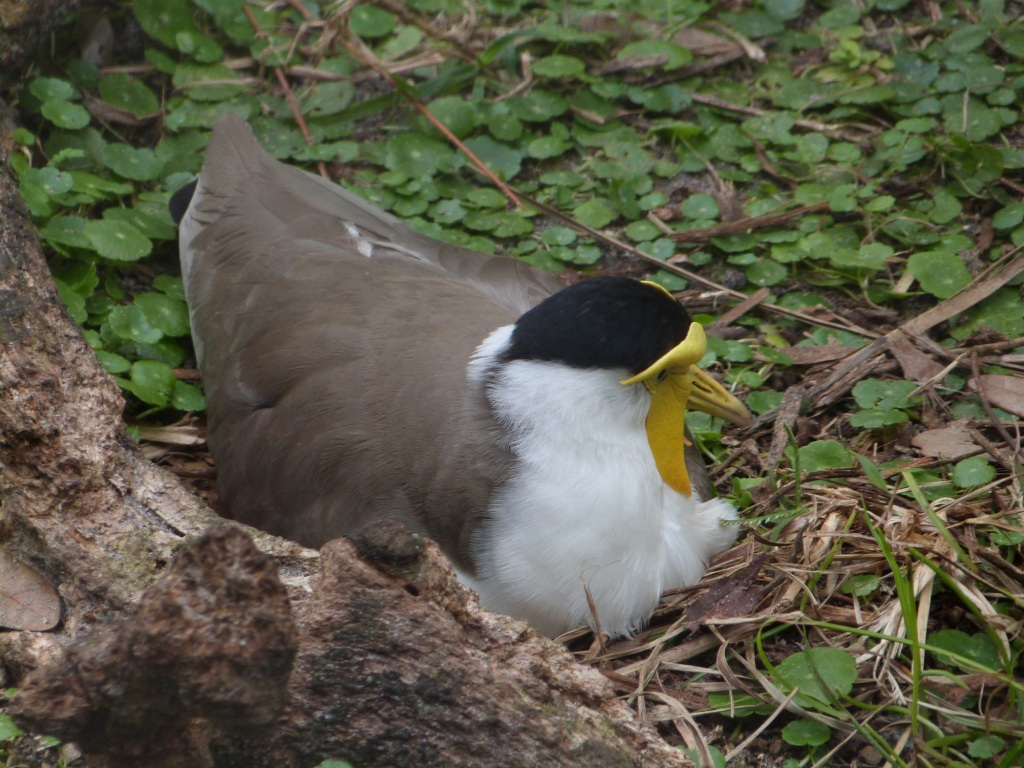
Now almost every zoo we visit has at least one species of Lapwing present. We see the Masked Lapwing most frequently. The reason Lapwings are mentioned in the Bible is because it is on the “Do Not Eat” list.
Masked Lapwing (Vanellus miles) Brevard Zoo by Lee
And the stork, and the heron after her kind, and the lapwing, and the bat. (Deuteronomy 14:18 KJV)
The Masked Lapwings are interesting to watch as they walk around on their long legs and as the “wattle” wiggles.
Vanellinae are any of various crested plovers, family Charadriidae, noted for its slow, irregular wingbeat in flight and a shrill, wailing cry. Its length is 10-16 inches. They are a subfamily of medium-sized wading birds which also includes the plovers and dotterels. The Vanellinae are collectively called lapwings but also contain the ancient Red-kneed Dotterel. A lapwing can be thought of as a larger plover.
The traditional terms “plover”, “lapwing” and “dotterel” were coined long before modern understandings of the relationships between different groups of birds emerged: in consequence, several of the Vanellinae are still often called “plovers”, and the reverse also applies, albeit more rarely, to some Charadriinae (the “true” plovers and dotterels).
In Europe, “lapwing” often refers specifically to the Northern Lapwing, the only member of this group to occur in most of the continent. (Wikipedia)
*
Here are some photos of Lapwings in the Vanellinae genera.
And the stork, the heron after her kind, and the lapwing, and the bat. (Leviticus 11:19 KJV)
The White-crowned Lapwing above was my first Lapwing encountered. They were at the National Aviary in Pittsburg, PA. They are from the tropical regions of Africa and have a diet of insects and other small invertebrates. (Fun Fact from Aviary) ~ White-headed Wattled Lapwings will bravely defend their territories against all comers, even hippos!
Now almost every zoo we visit has at least one species of Lapwing present. We see the Masked Lapwing most frequently. The reason Lapwings are mentioned in the Bible is because it is on the “Do Not Eat” list.
Masked Lapwing (Vanellus miles) Brevard Zoo by Lee
And the stork, and the heron after her kind, and the lapwing, and the bat. (Deuteronomy 14:18 KJV)
The Masked Lapwings are interesting to watch as they walk around on their long legs and as the “wattle” wiggles.
Vanellinae are any of various crested plovers, family Charadriidae, noted for its slow, irregular wingbeat in flight and a shrill, wailing cry. Its length is 10-16 inches. They are a subfamily of medium-sized wading birds which also includes the plovers and dotterels. The Vanellinae are collectively called lapwings but also contain the ancient Red-kneed Dotterel. A lapwing can be thought of as a larger plover.
The traditional terms “plover”, “lapwing” and “dotterel” were coined long before modern understandings of the relationships between different groups of birds emerged: in consequence, several of the Vanellinae are still often called “plovers”, and the reverse also applies, albeit more rarely, to some Charadriinae (the “true” plovers and dotterels).
In Europe, “lapwing” often refers specifically to the Northern Lapwing, the only member of this group to occur in most of the continent. (Wikipedia)
*
Here are some photos of Lapwings in the Vanellinae genera.










 Lee's Birdwatching Adventures Plus