Jesus and Birds – Introduction

Doves in Israel

Doves in Israel ©©

The Birds of the Bible was the original reason this blog came into being. That is what started this journey, to introduce you to the birds that are listed in the Bible. Many, if not most of those birds have been written about various times. We still continue to add to those articles.

Humm! A question hit me, How many times are there when Jesus and a bird or birds were mentioned in the Gospels, at the same time? Maybe you can think of a few of those occasions. Or can you? Do I remember all those times? I am going to use a book that tells about Jesus’ life here on earth. It uses the first four books of the New Testament which is called the Gospel. Many time Matthew, Mark, Luke, and John tell about the same event, but just a bit different. It’s the same story, but one may point out something the other disciples do not. The book is called a Harmony of the Gospels, or a parallel telling of an event.

Here is an example of a Harmony of the Gospel. This is telling about Jesus feeding the 5,000 people.

But Jesus said unto them, They need not depart; give ye them to eat. And they say unto him, We have here but five loaves, and two fishes. (Matthew 14:16-17 KJV)

He answered and said unto them, Give ye them to eat. And they say unto him, Shall we go and buy two hundred pennyworth of bread, and give them to eat? He saith unto them, How many loaves have ye? go and see. And when they knew, they say, Five, and two fishes. (Mark 6:37-38 KJV)

When the day began to wear away, the twelve came and said to Him, “Send the multitude away, that they may go into the surrounding towns and country, and lodge and get provisions; for we are in a deserted place here.” But He said to them, “You give them something to eat.” And they said, “We have no more than five loaves and two fish, unless we go and buy food for all these people.” (Luke 9:12-13 NKJV)

One of His disciples, Andrew, Simon Peter’s brother, said to Him, “There is a lad here who has five barley loaves and two small fish, but what are they among so many?” (John 6:8-9 NKJV)

Questions:

  • How many loaves of bread and fish were available?
  • Who had the food?
  • Are the four different disciples telling the same story?

After doing a search, not exhaustive, there were at least 16 incidents where Jesus and a bird/birds were mentioned at the same event. Stay tuned and come along as I work these into post for us to learn more about the Creator of Our Avian Wonders. Yes, He was that Creator come to earth to pay the price of His Sacrifice on the Cross for our salvation.

In the beginning was the Word, and the Word was with God, and the Word was God. The same was in the beginning with God. All things were made by him; and without him was not any thing made that was made.” (John 1:1-3 KJV)
Birds of the Bible

Bible Birds (Younger Readers)

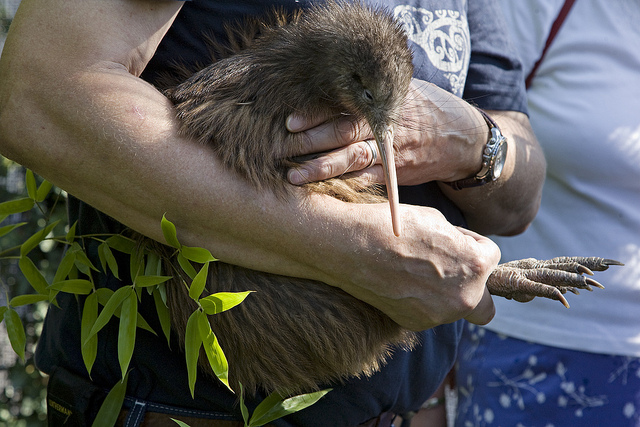
Strange Kiwis from Creation Moments

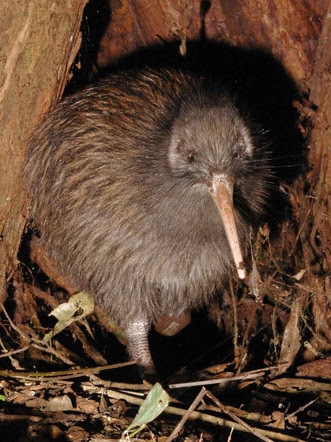
North Island Brown Kiwi (Apteryx mantelli) ©Smithsonian Natl Zoo

“For by him were all things created, that are in heaven, and that are in earth, visible and invisible, whether they be thrones, or dominions, or principalities, or powers: all things were created by him, and for him:” Colossians 1:16

As a youngster, I remember once hearing that the England cricket team was getting ready to play a series of matches (a test series) against the Kiwis. Now, I had seen a kiwi in a zoo, so I was puzzled as to how this small, chicken-sized bird could play a ball game against grown men. Of course, in that context, the word kiwi was being used as a demonym for New Zealand people. This is because the five extant species of kiwi all live in New Zealand.
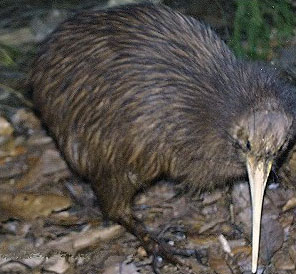
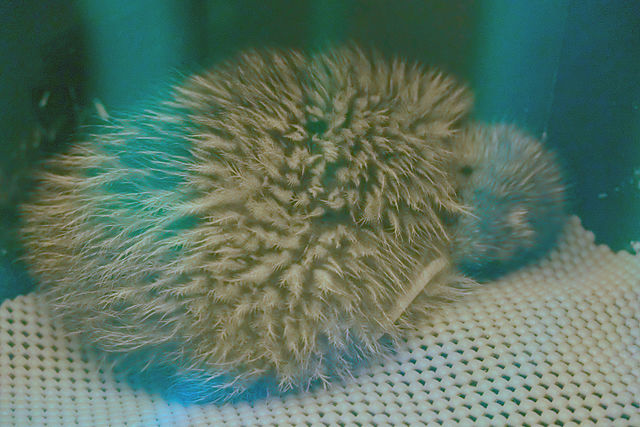
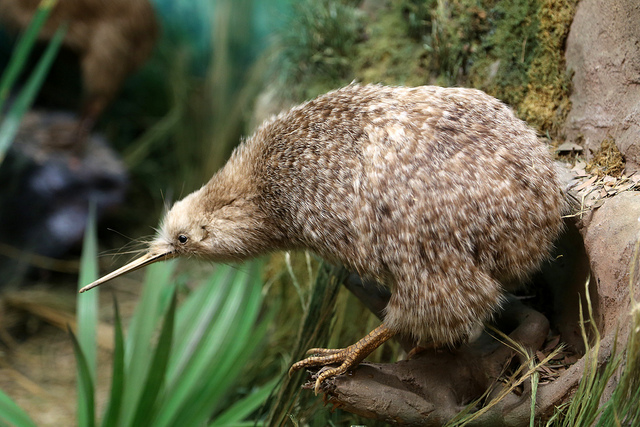
What a remarkable creature the kiwi is! At first sight, it appears to have no wings. Its tiny wings are so short, that they do not appear through the plumage. The kiwi has a long beak – except that it doesn’t, by official beak measurements! Birds’ beaks are usually measured from the nostrils to the tip, and the kiwi’s nostrils are, unusually, near the tip instead of being near the head, as with most birds. Although the kiwi is the size of a chicken, its eggs are six times as big as a chicken’s! In fact, the kiwi’s egg is the largest, in proportion to body size, of any bird in the world.

Why does the kiwi have so many odd behaviors? We cannot know for sure – maybe it had something to do with living in a place that had no mammals. But it looks like it was designed to behave exactly the way that it does by the God who made everything so well.

Prayer: Thank You, Father, for the wide variety of Your creation. Thank You that the world around us truly displays Your creative power. Amen. 

Author: Paul F. Taylor

Ref:  Flightless Birds, accessed 2/28/2019. Image: Public Domain.

© 2020 Creation Moments All rights reserved.


The article mentioned that there are five Kiwi species. Here are photos of them:

Southern Brown Kiwi (Apteryx australis) ©WikiC

Southern Brown Kiwi (Apteryx australis)

North Island Brown Kiwi (Apteryx mantelli) ©Smithsonian Natl Zoo

North Island Brown Kiwi (Apteryx mantelli)

Okarito Kiwi (Apteryx rowi) Chick ©West_Coast_Wildlife_Centre

Okarito Kiwi (Apteryx rowi)

Little Spotted Kiwi (Apteryx owenii) ©Flickr Jim the Photo

Little Spotted Kiwi (Apteryx owenii)

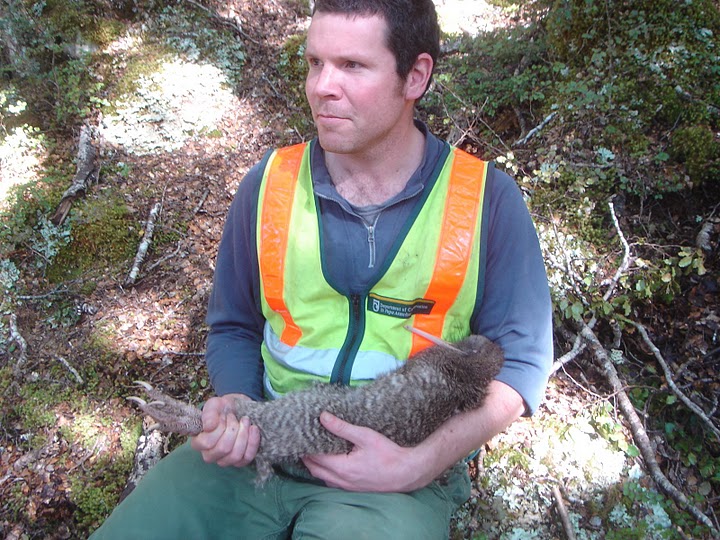
Great Spotted Kiwi (Apteryx haastii) by Jeff©©

Great Spotted Kiwi (Apteryx haastii)

To find out more, see:

Apterygidae – Kiwis

Sunday Inspiration – Ostrich, Rhea, Cassowary, Emu & Kiwi

Birds That Can’t Fly – Creation Moments

Birds Are Wonderful: J, K, and L !


Ian’s Bird of the Moment – Greater Rhea

Back to South America this time for a flightless Ratite, the Greater Rhea (Birdway: Greater Rhea), a species I was very keen to photograph. Later we’ll consider the other southern continents in the context of the eclectic collection of species that make up the other (mostly) flightless Ratites such as the Ostrich and the Emu.

greater_rhea_203433_pp.jpg
The Greater Rhea, the largest and most widespread of the three Rhea species in South America, wasn’t numerous in the Pantanal and seemed to be confined mainly to the drier parts of the northern part. However, they weren’t hard to see and we usually saw them in pairs. They were much bigger than I’d expected, like smallish Emus. I’d seen a photo long ago of Rheas running through the pampas of Argentine at speed and appearing, I though then, closer to the size of bustards. Greater Rheas are 127-140cm/50-58in in length and weight 20-25kg/44-55lb, compared with Emus at 150-190cm and 30-55kg, and Australian Bustards at 90-120cm and 3-8kg.
greater_rhea_203432_pp.jpg
Considering they’re not closely related, I was surprised at how like Emus they looked, though with more delicate features and larger fluffier feathers, more like feather boas than the shaggy, old sheep fleece look of Emus (see the fourth photo). The Greater Rhea is quite widespread through central South America east of the Andes with a range comprising Brazil south of the Amazon Basin, eastern Bolivia, Paraguay, Uruguay and a big chunk of northern and eastern Argentina.
greater_rhea_202081_pp.jpg
There are two or three species of Rhea. In southern Argentina and neighbouring areas of eastern Chile, the Greater Rhea is replaced by the Lesser Rhea (Rhea pennata) 90-100cm and 15-25kg. Maybe the photo that I had seen long ago was, on second thoughts, of members of this species. The third candidate, the Puna Rhea (Rhea pennata tarapacensis or Rhea tarapacensis), is similar to the Lesser Rhea, also 90-100cm and 15-25kg, perhaps conspecific. It replaces the Lesser and Greater Rheas in northwestern Argentina, northeastern Chile, southwestern Bolivia and a small area of southeastern Peru. Both the Lesser and Puna Rheas have brown feathers on the back with white edges which give them an attractive scalloped appearance.
emu_151698_pp.jpg
Back in Australia, the Emu (Birdway: Emu) has a widespread distribution through mainly on the mainland. Only the mainland race survives, other forms, usually now considered races rather than full species, having been hunted to extinction since European settlement in Tasmania, King and Kangaroos Island. The mainland race has been successfully introduced to both Kangaroo Island and Maria Island off the east coast of Tasmania.
emu_158127_pp.jpg
Australia and New Guinea have three species of the rather different but related and also flightless Cassowary, with the Southern Cassowary (Birdway: Southern Cassowary) being the only one occurring in Australia.The Cassowary photo shows a watchful father taking his confident child for a walk along the beach as a change from the usual habitat of tropical rainforest in northern and northeastern Queensland. Interestingly in most species of Ratite, the males alone incubate the eggs and take care of the young, with the only exceptions being the Ostriches and some species of Kiwi, where the sexes share parental duties.
southern_cassowary_155630_pp.jpg
The largest surviving Ratites are the Ostriches, Common and Somali, widespread throughout Africa and formerly also in Arabia, Syria and Iraq. The larger males can reach 2.75m/9ft in length and a hefty 156kg/344lb in weight. Common Ostriches are bred widely for their meat and plumage, and feral populations exist in South Australia and beyond their original range in southern Africa.
common_ostrich_165277_pp.jpg
Early theories of the evolution of these fairly similar species is that they evolved from a small flying ancestor on Gondwanaland that survived the Cretacious-Paleogene mass extinction about 66 million years ago and took advantage of the space left by the extinction of herbivorous dinosaurs by becoming large and flightless before the evolution of large mammalian predators. Parrots, incidentally, share a similar mainly southern distribution and appear to have originated in Gondwanaland, though their subsequent radiation through continental drift was naturally aided by being able to fly.
common_ostrich_s6114_pp.jpg
Needless to say, the story is more complicated than that. Extinct giant members of the group included the Elephant bird of Madagascar and the Moas of New Zealand and there are early ratite-like fossils from the Northern Hemisphere. Existing members include the fowl-like Tinamous of Central and South America which can fly, if reluctantly. The name Ratite comes from the Latin ratis, meaning raft, referring to the flat, keel-less sternum of the flightless species but Tinamous have a keeled sternum. They were formerly excluded from the Ratites but recent genetic studies have confirmed their membership. A better skeletal feature is the unusual, perhaps primitive, palate shared by all of them, which gives the name Palaeognathae, or paleognaths meaning ‘old jaw’ in Greek to distinguish them from the other clade the Neognathae, ‘new jaw’, comprising all other extant species of birds.
paleognath_cladogram.png
This “cladogram” shows the current understanding of the evolution of the Palaeognathae. The apparent close relationship between the Tinamous of South America and the Moas of New Zealand and the Kiwis of New Zealand and the Elephant birds of Madagascar is truly a biogeographers worst nightmare, worse than the unresolved mystery of the related flightless Kagu of New Caledonia (Birdway: Kagu) and the Sunbittern of South America (Birdway: Sunbittern), which we’ve considered before (Bird of the Moment #591). Other complications are the two- rather than three-toed feet of Ostriches and the dagger-like inside toe of Cassowaries.
One solution is to propose that flightlessness evolved in parallel perhaps five times in different parts of the world as this is easier to contemplate that the independent re-development of flight in Tinamous from a flightless ancestor. Loss of flight has occurred fairly readily in other groups such as the Dodo and flightless rails, particularly on islands without mammalian predators. Fossils of early flying paleognaths in North America and flightless ratites in Europe and the lack of early fossils in the southern hemisphere support a Laurian rather than Gondwanaland origin of the group. This would be similar to the Marsupials which reached Gondwanaland and thence Australia via South America leaving the American Marsupials such as the Opossums in their wake.
So, I’ll leave it with you. If you wish to pursue it, I suggest you study these excellent Wikipedia articles: Palaeognathae and Ratites, from which I got much of information here including the cladogram. I like the idea of unsolved mysteries offered by the natural world to put the all-seeing and all-knowing Homo sapiens in its place, maybe a subtle Gaia’s revenge.
Greetings
Ian


Ian Montgomery,
454 Forestry Road, Bluewater, Qld 4818
Phone: 0411 602 737 +61-411 602 737
Preferred Email: ian@birdway.com.au

Recorder Society http://www.nqrs.org.au

Lee’s Addition:

I enclosed all of Ian’s newsletter, BUT!! As my readers know, this blog is written from a Christian Perspective, and we include articles about birds from various authors. I am a Creationist and do not believe in evolution.
“In the beginning God created the heavens and the earth.” (Genesis 1:1 NKJV)
“Then God said, “Let the waters abound with an abundance of living creatures, and let birds fly above the earth across the face of the firmament of the heavens.” So God created great sea creatures and every living thing that moves, with which the waters abounded, according to their kind, and every winged bird according to its kind. And God saw that it was good. And God blessed them, saying, “Be fruitful and multiply, and fill the waters in the seas, and let birds multiply on the earth.” So the evening and the morning were the fifth day.” (Genesis 1:20-23 NKJV)
So, these Ratites most likely developed along the lines that Ian described, which is why I am posting this. Yet, I disagree with the timeline. Most likely the flood greatly affected those first members of the families.
“Then God spoke to Noah, saying, “Go out of the ark, you and your wife, and your sons and your sons’ wives with you. Bring out with you every living thing of all flesh that is with you: birds and cattle and every creeping thing that creeps on the earth, so that they may abound on the earth, and be fruitful and multiply on the earth.” So Noah went out, and his sons and his wife and his sons’ wives with him. Every animal, every creeping thing, every bird, and whatever creeps on the earth, according to their families, went out of the ark.” (Genesis 8:15-19 NKJV)
Let the Word speak for itself, and realize that these birds did branch out as described, but minus the lengthy timeline. Ian did a great job of explaining all of the very interesting ratites.

Reginald the Turkey Commander: The Spring Party

Turkey by the River ©(Photo Kelly Preheim) FWS-GOV

Turkey by the River ©(Photo Kelly Preheim) FWS-GOV

Reginald the Turkey Commander: The Spring Party

by Emma Foster

   It was nearly springtime, and the turkeys were able to leave their fortresses in the woods to search for food without worrying about hunters or too much snow. There hadn’t been a lot of snow that year, which meant that the closest river to the turkeys wasn’t usually covered in ice.

One day, when it was almost March and the air was cool, the turkeys decided that it would be a good idea to head to the closest lake to celebrate another winter soon over. Reginald, the leader of the turkeys, decided that it would be best to build boats out of the bark of the wood from the trees in order to float down the river to the nearest lake.

The turkeys set to work, finding different trees around the forest where they could easily peel off the bark or branches to make boats and rafts for the river. Oliver followed Reginald around as Reginald looked for something he could use. Reginald found some trees where the bark had been torn off from a storm. He gave several pieces to Oliver to take back to the camp, though Oliver had a difficult time carrying all of them at once. He started kicking a few pieces ahead until Reginald picked up the last pieces and helped him back to the camp.

Some of the smaller turkeys floated on the large pieces of bark they had found, while Reginald and a few others tied the thinner pieces together with moss. When all the boats were finished, Reginald and the turkeys cast off down the river. Reginald knew where the closest lake was, and he knew that the river would split off in two different directions at one point. He knew that the turkeys needed to head east.

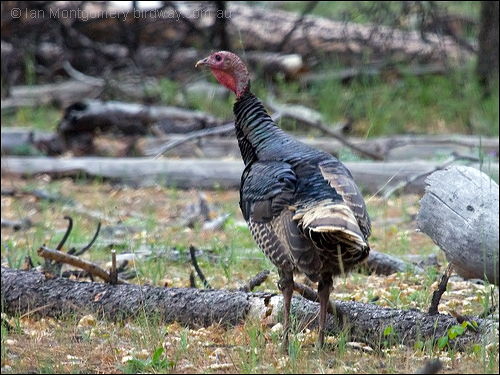
Wild Turkey (Meleagris gallopavo) by Ian

Reginald, Oliver, and the other turkeys started floating down the lake, steering and rowing with branches. The sun was shining through the trees, and the water was cool and shallow. Reginald made sure that Oliver didn’t float to far away or that he was steering too far ahead.

But when they came to the place where the river went in two different directions, Oliver got caught up in the rapids and drifted the other way, toward the west. Reginald changed course and followed, letting the other turkeys go ahead to the lake.

The water seemed rougher on the side Oliver and Reginald were on. Oliver looked behind him as Reginald tried to catch up and flapped his wings violently. Because he wasn’t paying attention, his boat hit a rock and started to break apart. When Reginald got close enough, Oliver panicked and jumped onto Reginald’s boat. Reginald did his best to keep Oliver from sinking his boat by paddling to the side of the river. He pulled Oliver out of the boat and made his way back to the other river so they could follow it down to the lake.

After walking for what felt like hours, Reginald figured that they were lost and started following the direction of the sun because he knew that the lake had to be north. Oliver trailed after him the entire time, completely forgetting where they were even going. Reginald just shook his head and kept walking.

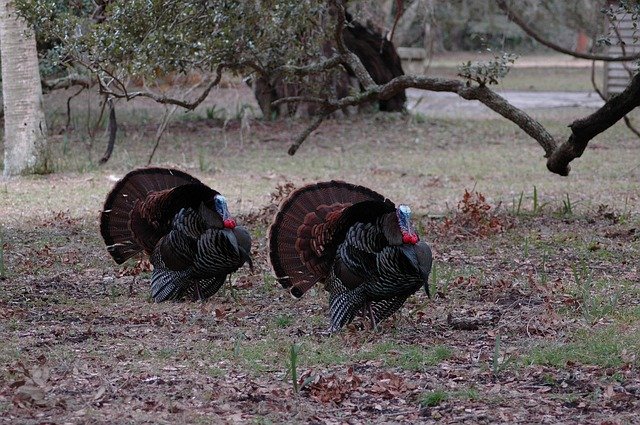
Turkeys ©Pixabay

Reginald eventually realized that they had been going around in circles. He decided to go straight ahead, and eventually he and Oliver came through the bushes and found the other half of the river. They followed it down stream for a long time before they came to a tree trunk that had fallen across the river. The turkeys had left the boats there because it was too low for them to row under it. Reginald guessed they had walked the rest of the way, which shouldn’t be that far.

Oliver immediately hopped onto the tree, took a few steps to cross the river, and fell in, flapping his wings in terror. Reginald ran after him, urging Oliver to keep his head above water. Suddenly, Oliver disappeared. Reginald reached the edge and realized Oliver had fallen down a small waterfall and had landed in the lake all the other turkeys had reached. Many of the turkeys sat by the side of the lake, enjoying the sun, and they were not surprised to see Oliver flailing about in the water. Reginald finally decided to just jump in after Oliver, leaving his army helmet by the shore. The rest of the day, Reginald, Oliver and the other turkeys sat by the lake in the sun, happy that winter was slowly fading and that they had another year to spend where it was warm before they needed to go back to the fortresses.


Lee’s Addition:

They are abundantly satisfied with the fullness of Your house, And You give them drink from the river of Your pleasures.” (Psalms 36:8 NKJV)

I will seek what was lost and bring back what was driven away, bind up the broken and strengthen what was sick; but I will destroy the fat and the strong, and feed them in judgment.” (Ezekiel 34:16 NKJV)
“that the saying might be fulfilled which He spoke, “Of those whom You gave Me I have lost none.” (John 18:9 NKJV)

These verses seem to me to sort of apply. Jesus applies these to us, but the turkey definitely enjoyed the time at the river. Our hero, Reginald, made sure all the turkeys arrived safely. Our Lord wants to make sure that we all arrive safely in Heaven with Him.

Another great story, Emma. Thanks for keeping us up to date on the latest adventures of Reginald and this flock.

See More of Emma’s Tales of Reginald and others at:

Emma’s Stories

This is My Name Forever

Lee’s last post, World Bird Name Changes, updated us on the recent changes published by the IOC. These changes are often a simplification of obscure Latin or Greek-based words, which many birders tend to dismiss anyway. But it got me pondering, what’s in a name?

Exodus 3:15 And God said moreover unto Moses… this is my name for ever, and this is my memorial unto all generations.

Spotted Sandpiper

Spotted Sandpiper; Walton County, GA. May, 2018. A quick study of its scientific name reveals it is the “spotted” (macularia) “coast-dweller” (actitus). ©www.williamwisephoto.com

“It’s all Greek to me!”

In the book, Latin for Bird Lovers, Roger Lederer and Carol Burr write, “Bird enthusiasts don’t often pay much attention to scientific names, but… the genus and species name may describe the birds’ color, pattern, size, or parts of the body; the name of an ornithologist; where it is found; its behavior; or some characteristic.” It only takes a few minutes of study to find out why a certain bird was given a “hard” name. And that short study can help fix that bird’s name and character in your mind forever!

For example, in the recent IOC changes, the Greek-based Melidectes became “Honeyeaters”. But isn’t this just an unnecessary dumbing-down? Only a few minutes’ research and one finds that meli means “honey”, and dectes means “beggar”. From this short word study, we find that Melidectes not only eats honey, but that he’s got an addiction for honey that keeps him begging! Now, after the simplification, he just simply “eats honey”.

“This is My Name”

So what’s my point? While this simplification of bird names may not have huge ramifications in life, what happens when this same laziness is brought to the Bible? Just like the Latin and Greek-based names for birds, the Hebrew names of God are hugely descriptive. They describe an aspect of His character, actions or personality.

When we simplify Elohim to “God”, we miss the nuance that this personal name for the One True God is actually plural in form! With that simple truth revealed, the trinity in Genesis 1:26 is further elucidated: “And God (Elohim, the plural God) said, Let us make man in our image, after our likeness”.

Instead of just knowing that our God is a healer, how about making a short study of Jehovah-Repheka? Take a few minutes to study why He’s called Jehovah-Jireh and forever know that you won’t fall short of needs in God. Let study reveal to you that Jehovah-Nissi will lift your weary arms and raise a victory banner over your enemies! There are so many more character-revealing names for God throughout Scripture if you’ll take the time to study.

So, maybe it is no big deal that the descriptive Melidectes is now a simple Honeyeater. But what do we miss when we dumb things down and Jehovah becomes “Lord”, and Adoni becomes “Lord”, and Elohim becomes “God”, and El Shaddai becomes “God”. What message are we sending about thought, research and education when we simplify bird names? And what powerful aspects of our Creator’s character are we missing when we simplify the divine names for the purpose of “clarity”?


Hi, I’m wildlife photographer and nature writer William Wise. I was saved under a campus ministry while studying wildlife biology at the University of Georgia. My love of the outdoors quickly turned into a love for the Creator and His works. I’m currently an animal shelter director and live in Athens, Georgia with my wife and two teenage daughters, who are all also actively involved in ministry. Creation Speaks is my teaching ministry that glorifies our Creator and teaches the truth of creation. William Wise Nature Notes is my wildlife and birding photo blog documenting the beauty, design and wonder of God’s creation. I am also a guest author at Lee’s Birdwatching Adventures and The Creation Club. — “What a wildly wonderful world, God! You made it all, with Wisdom at Your side, made earth overflow with your wonderful creations.” Psalms 104, The Message.

World Bird Names Changes Version 10.1

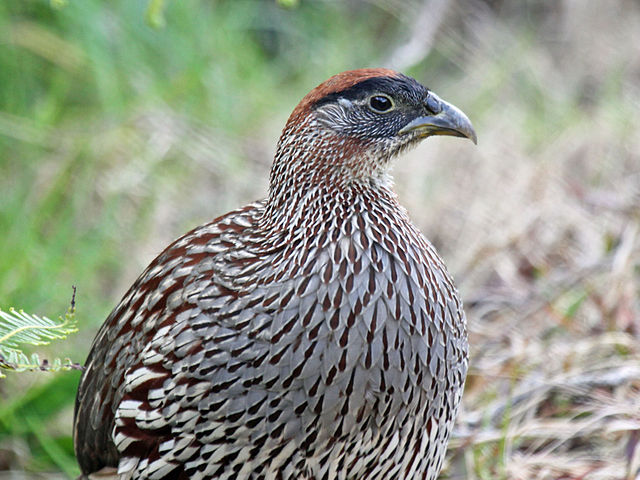
Erckel’s Francolin (Pternistis erckelii) Now – Erckel’s Spurfowl ©WikiC

The I.O.C. updated their World Bird List to the 10.1 version and here are some of those changes. First are the Name changes:

One of the big English name updates seems to be the Francolins changing to Spurfowls.
PREVIOUS IOC LISTS SCIENTIFIC NAME – New IOC LIST V10.1
Mount Cameroon Francolin Pternistis camerunensis Now – Mount Cameroon Spurfowl
Handsome Francolin Pternistis nobilis Now – Handsome Spurfowl
Swierstra’s Francolin Pternistis swierstrai Now – Swierstra’s Spurfowl
Erckel’s Francolin Pternistis erckelii Now – Erckel’s Spurfowl
Djibouti Francolin Pternistis ochropectus Now – Djibouti Spurfowl
Chestnut-naped Francolin Pternistis castaneicollis Now – Chestnut-naped Spurfowl
Black-fronted Francolin Pternistis atrifrons Now – Black-fronted Spurfowl
Jackson’s Francolin Pternistis jacksoni Now – Jackson’s Spurfowl
Scaly Francolin Pternistis squamatus Now – Scaly Spurfowl
Ahanta Francolin Pternistis ahantensis Now – Ahanta Spurfowl
Grey-striped Francolin Pternistis griseostriatus Now – Grey-striped Spurfowl
Hildebrandt’s Francolin Pternistis hildebrandti Now – Hildebrandt’s Spurfowl
Heuglin’s Francolin Pternistis icterorhynchus Now – Heuglin’s Spurfowl
Double-spurred Francolin Pternistis bicalcaratus Now – Double-spurred Spurfowl
Harwood’s Francolin Pternistis harwoodi Now – Harwood’s Spurfowl
Clapperton’s Francolin Pternistis clappertoni Now – Clapperton’s Spurfowl

Whimbrel Numenius phaeopus Now – Eurasian Whimbrel

Another change is with Melidectes becoming Honeyeaters.
Sooty Melidectes Melidectes fuscus Now – Sooty Honeyeater
Long-bearded Melidectes Melidectes princeps Now – Long-bearded Honeyeater
Short-bearded Melidectes Melidectes nouhuysi Now – Short-bearded Honeyeater
Gilliard’s Melidectes Melidectes whitemanensis Now – Gilliard’s Honeyeater

The rest of these changes:
Striated Prinia Prinia crinigera Now – Himalayan Prinia
Brown Prinia Prinia polychroa Now – Deignan’s Prinia
Red-winged Warbler Prinia erythroptera Now – Red-winged Prinia
Red-fronted Warbler Prinia rufifrons Now – Red-fronted Prinia
Black-eared Wheatear Oenanthe hispanica Now – Western Black-eared Wheatear


The group here are the  New Species that were added. The birds that have ADD AFTER were subspecies that were raised to species levels. The ADD NEW were new splits from the bird listed. There is one DELETE

ENGLISH NAME  SCIENTIFIC NAME CHANGE  CODE  LIST AFTER SPECIES

Hudsonian Whimbrel Numenius hudsonicus ADD AFTER (Eurasian) Whimbrel
West African Crested Tern Thalasseus albididorsalis – Split from Royal Tern, T. maximus. – ADD AFTER Lesser Crested Tern
Sunda Owlet Glaucidium sylvaticum – Split from Collared Owlet – ADD AFTER Collared Owlet
Maghreb Owl Strix mauritanica  – Split from and ADD AFTER Tawny Owl
Butterfly Coquette Lophornis verreauxii ADD AFTER Festive Coquette
Alor Myzomela Myzomela prawiradilagae ADD NEW  After Crimson-hooded Myzomela
Cryptic Honeyeater Microptilotis imitatrix ADD AFTER Graceful Honeyeater
Spectacled Flowerpecker Dicaeum dayakorum ADD NEW Scarlet-breasted Flowerpecker
Swinhoe’s Prinia Prinia striata ADD AFTER Himalayan [Striated] Prinia
Burmese Prinia Prinia cooki ADD AFTER Deignan’s [Brown] Prinia
Annam Prinia Prinia rocki ADD AFTER Burmese Prinia
Numfor Leaf Warbler Phylloscopus maforensis ADD AFTER Island Leaf Warbler
Biak Leaf Warbler Phylloscopus misoriensis ADD AFTER Numfor Leaf Warbler
Deignan’s Babbler Stachyridopsis rodolphei  DELETE
Eastern Black-eared Wheatear Oenanthe melanoleuca ADD AFTER [Western] Black-eared Wheatear

Black-eared Wheatear (Oenanthe hispanica) ©WikiC


There is one more set of changes which I’ll cover in a later post. These are enough for you to have to change your picture names, if you do that. I’ve tried to do that over the years, but have missed a few here and there. :)

There are now:

  • 10,770 extant species and 158 extinct species of birds of the world (Version 10.1), with subspecies (20,005) and annotations.
  • Classification of 40 Orders, 250 Families, 2322 Genera

Thankfully, the Lord never changes:

“But He is unique, and who can make Him change? And whatever His soul desires, that He does. For He performs what is appointed for me, And many such things are with Him.
(Job 23:13-14 NKJV)

These were from the last IOC Update – Version 9.2

Who Paints The Leaves?

Stressed? Pray and Go Birding!

1 Peter 5:7 “Casting all your care upon Him; for He cares for you.” ​

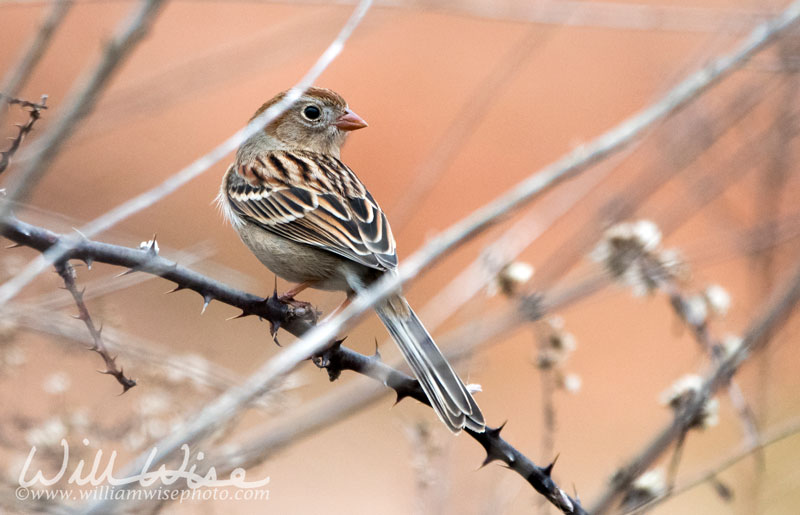
Field Sparrow

Field Sparrow; Walton County, Georgia. February, 2019 http://www.williamwisephoto.com

What do you do when life has you down? Pray and go birding! When your job is stretching your stamina to the breaking point? Pray and go birding! When you need to relax and shake off the nerves? Pray and go birding! When the next little thing will tip your headache to a migraine? Pray and go birding!

There is no need for a scientific study to tell me that getting outdoors is a way to reduce stress. There is no need to write a paper about how getting away from a ringing phone will calm my nerves; how unplugging from email and social media will lower my blood pressure; how fresh air will clear my lungs and refresh my mind. I don’t need a scientific study because I know first-hand!

There isn’t a need for the Mayo Clinic to tell me the supernatural benefits of prayer. There is no need for them to post a blog telling me that having a purpose in life reduces depression; that prayer and meditation produces actual physical benefits to my brain; that focusing outside myself can alleviate worry and fear. I don’t need that blog because I know first-hand!

Try it sometime. Stop reading this blog, close your browser, push back the chair and walk out the door. Talk to God; cast your concerns at His feet; enjoy this world that He created. You just might get addicted. I know because I go there every day. So, pray and go birding!


Hi, I’m wildlife photographer and nature writer William Wise. I was saved under a campus ministry while studying wildlife biology at the University of Georgia. My love of the outdoors quickly turned into a love for the Creator and His works. I’m currently an animal shelter director and live in Athens, Georgia with my wife and two teenage daughters, who are all also actively involved in ministry. Creation Speaks is my teaching ministry that glorifies our Creator and teaches the truth of creation. William Wise Nature Notes is my wildlife and birding photo blog documenting the beauty, design and wonder of God’s creation. I am also a guest author at Lee’s Birdwatching Adventures and The Creation Club. — “What a wildly wonderful world, God! You made it all, with Wisdom at Your side, made earth overflow with your wonderful creations.” Psalms 104, The Message.

Anniversary Number 12

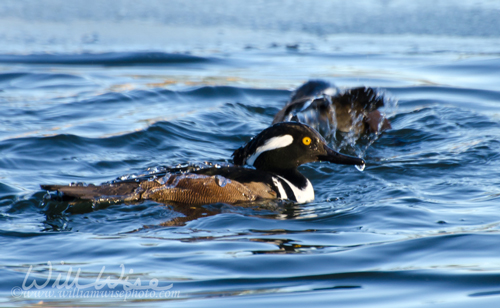
Hooded Merganser Diving Duck, Georgia, by William Wise

Here we go again with another anniversary of the blog. Around February 13th or so, was the 12 anniversary of Lee’s Birdwatching Adventures Plus. During this year, we hit the two million visitor mark. Wow!

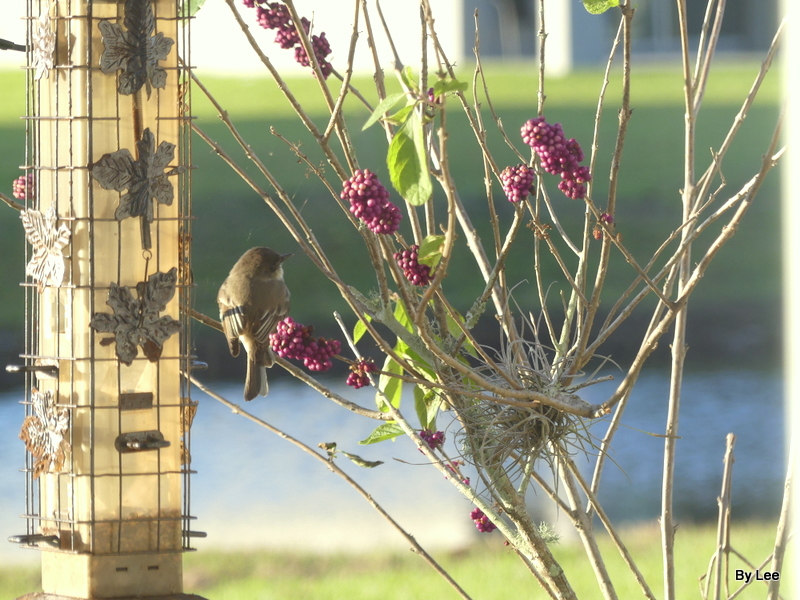
Eastern Phoebe on Beautyberry

Eastern Phoebe on Beautyberry 12-19-19

Looking at all the articles written about the 11th anniversary, I’ll let this one be simple. I just reread all the comments and encouragement that you sent last year. Those were and are again so appreciated. Now, the blog has slowed down some, but we are still blogging. Because of health and our new house, most of my birding adventures seem to be out my back door. I love the avian visitors!

This year, William Wise has joined us with some very interesting articles and photos. Welcome Aboard, William!! Dr. Jim has continued to contribute articles, which are always enjoyable. Ian Montgomery is still sending posts, and Emma Forster continues to enlighten us with her stories. Me, I’ve written less, but we are still at it.

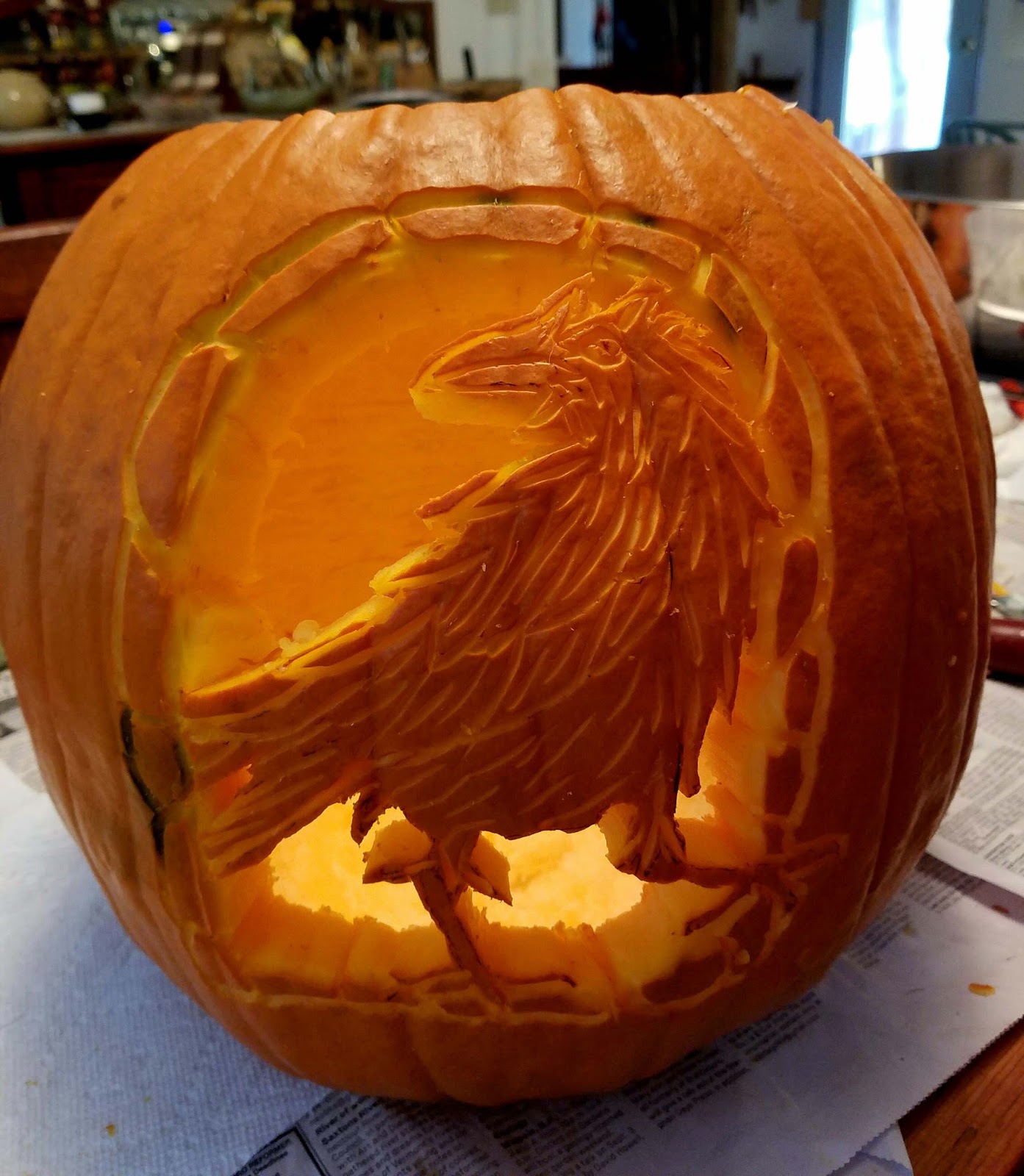
Raven in Pumpkin by Linda Marcille

The Lord is always faithful and keeps us interested in His Creation.

Stay tuned to see what this new year of blogging will discover about our Avian Wonders from the Lord.

(9)  For you know the grace of our Lord Jesus Christ, that though He was rich, yet for your sakes He became poor, that you through His poverty might become rich.
(10)  And in this I give advice: It is to your advantage not only to be doing what you began and were desiring to do a year ago;
(11)  but now you also must complete the doing of it; that as there was a readiness to desire it, so there also may be a completion out of what you have.
(12)  For if there is first a willing mind, it is accepted according to what one has, and not according to what he does not have. (2 Corinthians 8:9-12 NKJV)

Voices that Carry

Joshua 6:20 “…and the people shouted with a great shout, that the wall fell down flat, and they took the city.”

It is political season in the United States. From now until November all the media outlets will be saturated with political ads as every advocate for every cause will be projecting their voices in an effort to be heard. Some days, I just have to pull away from all those voices and go for a birding walk. But as a Christian, should I pull away? Should I remain silent?

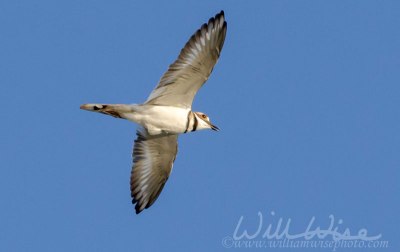
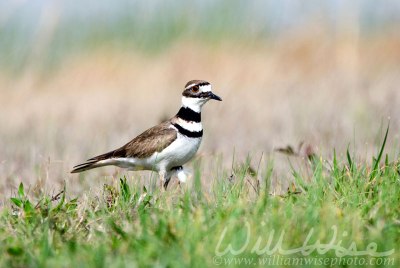
As I stepped outdoors to get away, my attention was immediately drawn to a noisy bird circling overhead; his loud voice was carrying on the wind. One of the Killdeer birds that is normally darting around in our parking lot was flying through the air and shouting its name: Kill-deah! Kill-deah!!! The voices of the other plovers are more pleasantly described as ‘a plaintive or musical whistle.’ But not the Killdeer, of which Peterson’s Field Guide gives a one-word description: “noisy”.

Killdeer plover bird flying

Killdeer; Walton County, Georgia. www.williamwisephoto.com

So, just like the political activists, the Killdeer too wanted his voice to be heard! And perhaps I should take a lesson from the Killdeer. As Christians, in the interest of peace and harmony, do we remain quiet as the special interest groups shout aloud in support of their own, often unrighteous, causes? Do we let their voices carry louder than ours? The last time that happened, the outcome wasn’t so good. “And they were instant with loud voices, requiring that he might be crucified. And the voices of them and of the chief priests prevailed” (Luke 23:23).

This Killdeer was exemplifying his boisterous description, and simultaneously living up to his species name: Charadrius vociferous. Vociferous is from the Latin, meaning “to shout, yell.” If you break it down, vox means “voice”, and ferre, meaning “to carry”; therefore, vociferous describes ‘voices that carry’. Aptly describing my little plover flying overhead!

Killdeer plover bird

Killdeer; Walton County, Georgia. www.williamwisephoto.com

As the other voices carry along on the winds of social media, radio and television, our Christian voices in support of righteousness should also be heard! What if William Wilberforce and Abraham Lincoln had remained silent? Instead, they let their voices carry on the wind, like the vociferous Killdeer, and changed our society!

Joshua 6:20 “So the people shouted when the priests blew with the trumpets: and it came to pass, when the people heard the sound of the trumpet, and the people shouted with a great shout, that the wall fell down flat, so that the people went up into the city, every man straight before him, and they took the city.”


Hi, I’m wildlife photographer and nature writer William Wise. I was saved under a campus ministry while studying wildlife biology at the University of Georgia. My love of the outdoors quickly turned into a love for the Creator and His works. I’m currently an animal shelter director and live in Athens, Georgia with my wife and two teenage daughters, who are all also actively involved in ministry. Creation Speaks is my teaching ministry that glorifies our Creator and teaches the truth of creation. William Wise Nature Notes is my wildlife and birding photo blog documenting the beauty, design and wonder of God’s creation. I am also a guest author at Lee’s Birdwatching Adventures and The Creation Club. — “What a wildly wonderful world, God! You made it all, with Wisdom at Your side, made earth overflow with your wonderful creations.” Psalms 104, The Message.

Preparing a Place

Thank God it’s Sunday! Finally, an opportunity between morning and evening church service for an afternoon of backyard birding! I have prepared my spot on the patio for an afternoon of relaxation: coffee, binoculars, camera, more coffee, eBird app, notebook and pen, and fill the feeders. I can relax in this beautiful scene my Creator has designed for me… and also meditate upon the future home He is currently preparing for me!

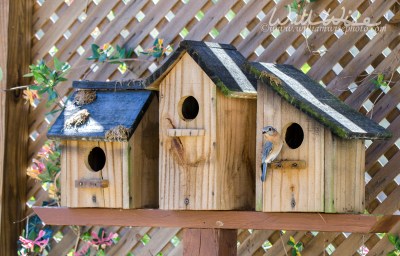
Eastern Bluebird Nest Boxes

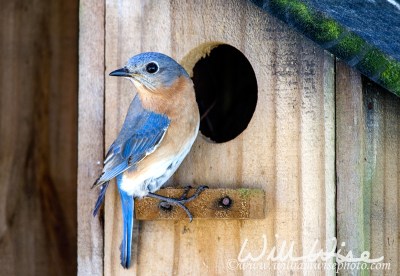
Eastern Bluebird at nest box; Clarke County, Georgia. April, 2017.

After noting the different bird species in the flurry of activity at the freshly filled feeders, my eyes were drawn to the pair of Eastern Bluebirds. The male and female repeatedly crisscrossed the yard, alighting here and there upon the nest boxes, spending a moment in thought, and then moving to the next. Although it is still only February, they are preparing for spring.

When my family moved into our current home in Georgia, after we were comfortably settled, it was time to prepare a backyard bird sanctuary. In addition to the small pond, feeders, fruiting shrubs and honeysuckle vines, I wanted to prepare a home for the Bluebirds and built three nest boxes. To my surprise, the very first season, the bluebirds began preparing a home for their young and have had two clutches per season every year!

Eastern Bluebird at Nest Box

Eastern Bluebird nest box; Clarke County, Georgia. April 2017.

But my joy is not only in preparing a home for the bluebirds, and in watching them prepare a nest for their young, but also in knowing a glorious home is currently being prepared for me! And the home He is preparing is no quickly built bluebird nest box! Our Savior has been preparing for 2,000 years now… what a glorious home it will be!

“In my Father’s house are many mansions: …I go to prepare a place for you.” -John 14:2

And since He so graciously has been preparing a home, we should be preparing our hearts! Luke 12:43-47 “Blessed is that servant, whom his lord when he cometh shall find so doing… And that servant, which knew his lord’s will, and prepared not himself, neither did according to his will, shall be beaten with many stripes.”


Hi, I’m wildlife photographer and nature writer William Wise. I was saved under a campus ministry while studying wildlife biology at the University of Georgia. My love of the outdoors quickly turned into a love for the Creator and His works. I’m currently an animal shelter director and live in Athens, Georgia with my wife and two teenage daughters, who are all also actively involved in ministry. Creation Speaks is my teaching ministry that glorifies our Creator and teaches the truth of creation. I am also a guest author at Lee’s Birdwatching Adventures  and The Creation Club. — “What a wildly wonderful world, God! You made it all, with Wisdom at Your side, made the earth overflow with Your wonderful creations.” Psalms 104, The Message.

Who Won?

via Begegnung

A photographer, Alois Absenger, who lives in Southeast Styria, Germany, is one I have been following for quite a few years. He has great photos of many different topics, but captures critters often. This one caught my interest. Visit his site for splendid captures with his camera. Alois Absenger

PT8H0005-Absenger A

These verses help illustrate this:

Blessed be the LORD, Who has not given us as prey to their teeth. Our soul has escaped as a bird from the snare of the fowlers (fox); The snare is broken, and we have escaped. Our help is in the name of the LORD, Who made heaven and earth.
(Psalms 124:6-8 NKJV)

“The eyes of the LORD are in every place, Keeping watch on the evil and the good.” (Proverbs 15:3 NKJV)

Watch and pray, lest you enter into temptation. The spirit indeed is willing, but the flesh is weak.” (Mark 14:38 NKJV)

Watch, stand fast in the faith, be brave, be strong.” (1 Corinthians 16:13 NKJV)

“Therefore let us not sleep, as others do, but let us watch and be sober.” (1 Thessalonians 5:6 NKJV)

“Remember therefore how you have received and heard; hold fast and repent. Therefore if you will not watch, I will come upon you as a thief, and you will not know what hour I will come upon you.” (Revelation 3:3 NKJV)

Thanks, Alois, for allowing me to use your photos occasionally.

Alois Absenger

The King’s Fisher

Have you ever observed the superb skills of a Kingfisher making a headlong dive from an overhanging branch into a pond? The true origin of the Kingfisher’s name isn’t certain. But if you have seen him come up with a large fish, you must agree he is aptly named the king fisher!

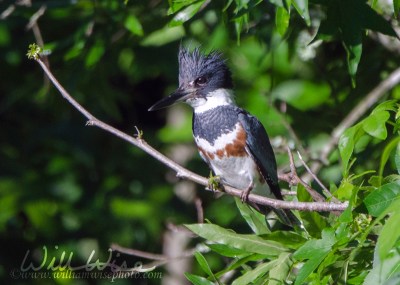
Belted Kingfisher; Walton County Georgia

However, since many other birds are also quite good at catching fish, he may not have obtained that name by simply being the best at fishing. Another theory is that some monarch – a king with an affinity for the bird – gave him the name: thus, the King’s Fisher. In fact, the Oxford English Dictionary states the name was originally written as The King’s Fisher (“kyngys fischare” in Middle English). I can’t help but think of King Solomon’s “three thousand proverbs which spoke of trees, beasts, birds, creeping things, and fishes.”

The King of Kingfishers

During his earthly ministry of discipling young fishermen to become apostles, Jesus stated, “Follow me, and I will make you fishers of men” (Matthew 4:19).  The Lord’s desire is for His people to be the best fishermen they can be; to “launch out into the deep and let down the nets for a catch” of lost souls (Luke 5:4). If it is truly our Lord’s desire for us to be such fishers of men, we should strive to be the best fishermen possible! We can learn a few fishing tips from the Kingfisher.

Be Vocal!

Kingfishers are quite vocal and their loud, rattling call is often heard long before they are seen. The Cornell Lab of Ornithology states, “Male and female Belted Kingfishers give strident, mechanical rattles in response to the slightest disturbance.” I can always hear a Kingfisher from my office if there is one on the retention pond. As Christians hoping to win souls for our King, we should be just as vocal about the saving grace of Jesus everywhere we go. Our presence and evangelistic desire should never be hidden.  As Paul said, “If our gospel is hid, it is hid to them that are lost” (2 Corinthians 4:3).

Dive In!

The Kingfisher’s mode of catching fish is also an inspiration. They plunge headfirst directly from a perch, or, by hovering over the water bill downward, dive in after a fish they’ve spotted. Oh how many more souls we might win if we were to dive headfirst into every situation declaring the Gospel! A “pool” of souls on a city bus?  Dive in head first and preach! A “school” of fish? Take a plunge and declare the word of God no matter what the teachers might say!

So take an evangelistic tip from the Kingfisher: dive in and be vocal! After all, we are the King of Kings’ Fishers!


Hi, I’m wildlife photographer and nature writer William Wise. I was saved under a campus ministry while studying wildlife biology at the University of Georgia. My love of the outdoors quickly turned into a love for the Creator and His works. I’m currently an animal shelter director and live in Athens, Georgia with my wife and two teenage daughters, who are all also actively involved in ministry. Creation Speaks is my teaching ministry that glorifies our Creator and teaches the truth of creation. William Wise Nature Notes is my wildlife and birding photo blog documenting the beauty, design and wonder of God’s creation. I am also a guest author at Lee’s Birdwatching Adventures  and The Creation Club. — “What a wildly wonderful world, God! You made it all, with Wisdom at Your side, made the earth overflow with Your wonderful creations.” Psalms 104, The Message.