Avian And Attributes – Sacred

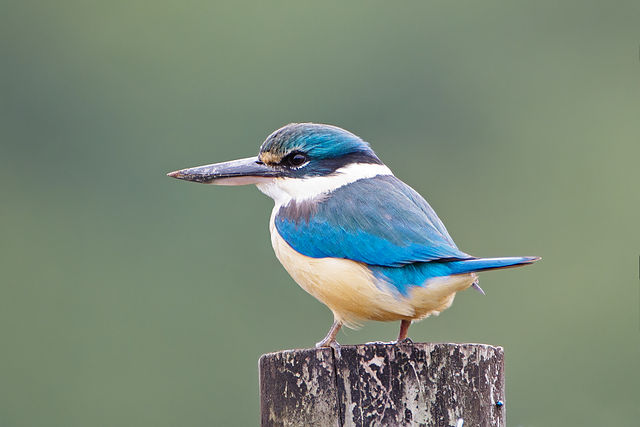
Sacred Kingfisher (Todiramphus sanctus) by Ian

“Consecrate a fast, Call a sacred assembly; Gather the elders And all the inhabitants of the land Into the house of the LORD your God, And cry out to the LORD.” (Joel 1:14 NKJV)


Avian and Attributes – Sacred

SA’CRED, a. [L. sacer, sacred, holy, cursed, damnable. We here see the connection between sacredness and secrecy. The sense is removed or separated from that which is common, vulgar, polluted, or open, public; and accursed is separated from society or the privileges of citizens, rejected, banished.]
1. Holy; pertaining to God or to his worship; separated from common secular uses and consecrated to God and his service; as a sacred place; a sacred day; a sacred feast; sacred service; sacred orders.
2. Proceeding from God and containing religious precepts; as the sacred books of the Old and New Testament.
3. Narrating or writing facts respecting God and holy things; as a sacred historian.
4. Relating to religion or the worship of God; used for religious purposes; as sacred songs; sacred music; sacred history.
5. Consecrated; dedicated; devoted; with to.
A temple sacred to the queen of love.
6. Entitled to reverence; venerable.
Poet and saint to thee alone were given, the two most sacred names of earth and heav’n.
7. Inviolable, as if appropriated to a superior being; as sacred honor or promise.
Secrets of marriage still are sacred held.
Sacred majesty. In this title, sacred has no definite meaning, or it is blasphemy.
Sacred place, in the civil law, is that where a deceased person is buried.

“and that from childhood you have known the sacred writings which are able to give you the wisdom that leads to salvation through faith which is in Christ Jesus. All Scripture is inspired by God and profitable for teaching, for reproof, for correction, for training in righteousness; so that the man of God may be adequate, equipped for every good work.” (2 Timothy 3:15-17 NASB)


Sacred Kingfisher (Todiramphus sanctus) ©WikiC

The Sacred Kingfisher (Todiramphus sanctus) is a medium-sized woodland kingfisher that occurs in mangroves, woodlands, forests, and river valleys in Australia, New Zealand, and other parts of the western Pacific. In New Zealand the species is also known by its Māori name kōtare.

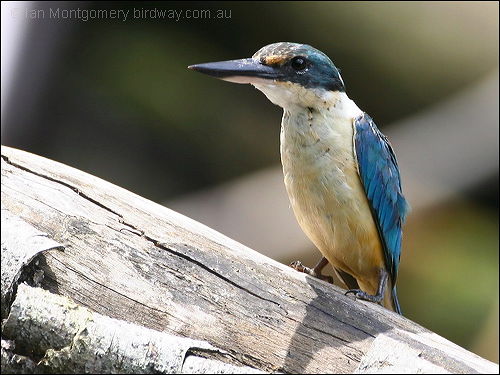
The sacred kingfisher is a medium-sized kingfisher. They are mostly turquoise, with white underparts and collar feathers. Both sexes are similar, but females are usually more dull-colored. Juveniles have rusty-brown edges on the collar and underparts.

It is called “sacred” for it was said to be a holy bird for Polynesians, who believed it to have control over the waves. Likewise, the local subspecies of collared kingfisher and other kingfishers in the southwestern Pacific were ascribed venerable power over the ocean.

Sacred Kingfisher (Todiramphus sanctus) by Ian


More Avian and Attributes

Birds whose first name starts with “S”

Sharing The Gospel

*
[Definitions from Webster’s Dictionary of American English (1828), unless noted. Bird info from Wikipedia plus.]

Bible Birds – Ibis Introduction

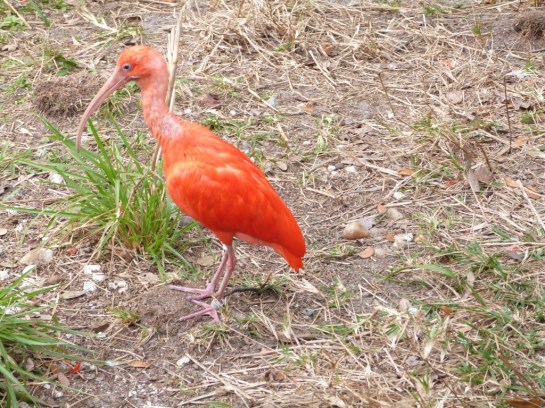
Scarlet Ibis (Eudocimus ruber) Brevard Zoo by Lee

“and for a long time birds and hedgehogs, and ibises and ravens shall dwell in it: and the measuring line of desolation shall be cast over it, and satyrs shall dwell in it.” (Isaiah 34:11 Brenton)

Many of the birds in the Bible are listed differently in some versions. The Ibises is only listed in this verse in the Brenton, DRB, and the ABP versions. Most of the different versions list Pelicans, Cormorants, Bitterns, Heron, and Storks. The Pelicans, Cormorants, Bitterns, and Heron are all found in thePELECANIFORMES Order of birds. The Storks are in the close CICONIIFORMES Order.

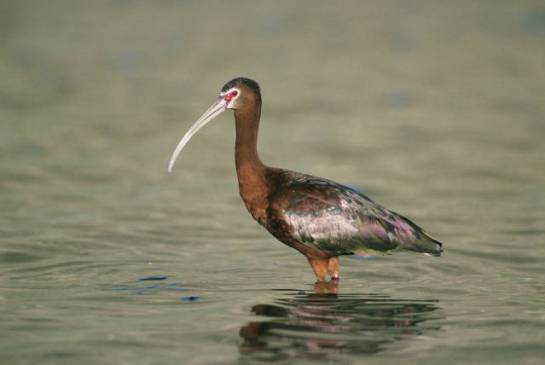
White-faced Ibis (Plegadis chihi) ©USFWS

All of these birds enjoy similar surroundings and the Ibises and Spoonbills make up the Threskiornithidae Family.
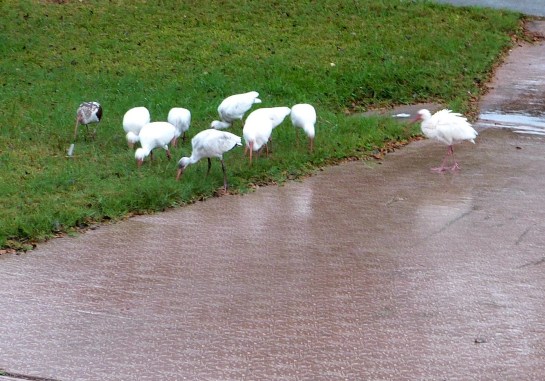
The ibises (collective plural ibis; classical plurals ibides and ibes) are a group of long-legged wading birds, that inhabit wetlands, forests and plains. “Ibis” derives from the Latin and Ancient Greek word for this group of birds. It also occurs in the scientific name of the cattle egret, (Bubulcus ibis), mistakenly identified in 1757 as being the sacred ibis.

American White Ibis (Eudocimus albus) 1st Birds of 2014 by Lee cropped

Ibises all have long, down-curved bills, and usually feed as a group, probing mud for food items, usually crustaceans. They are monogamous and highly territorial while nesting and feeding. Most nest in trees, often with spoonbills or herons. The word ibis comes from Latin ibis from Greek ἶβις ibis from Egyptian hb, hīb.

Bible Birds – Ibis

Bible Birds

Birds of the Bible – Ibises

Threskiornithidae Family

The Marvelous Flight of Birds — BIRDS AND BEES HIDEOUT

Bird feathers, though they appear fragile, are actually one of the strongest structures in the animal kingdom. They have allowed birds to become the masters of the air, flying with both speed and grace. As ground dwelling creatures, we’ve admired birds, modeling airplanes after their ingenious design. < Tree sparrows can fly up to 45 […]

via The Marvelous Flight of Birds — BIRDS AND BEES HIDEOUT

“He shall cover thee with his feathers, and under his wings shalt thou trust: his truth shall be thy shield and buckler.” (Psalms 91:4 KJV)

Enjoy!

Avian And Attributes – Ruby

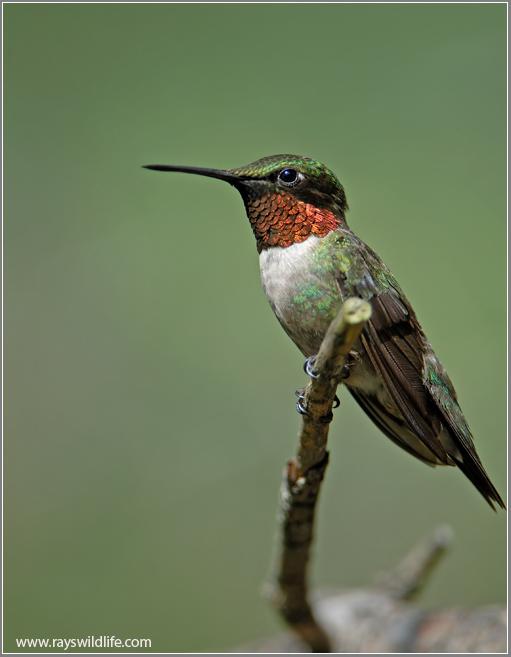
Ruby Throated Hummingbird by Africaddict

“For wisdom is better than rubies; and all the things that may be desired are not to be compared to it.” (Proverbs 8:11 KJV)

“If any of you lack wisdom, let him ask of God, that giveth to all men liberally, and upbraideth not; and it shall be given him.” (James 1:5 KJV)


Avian and Attributes – Ruby

RU’BY, n. [L. rubeo, to be red.]
1. A precious stone; a mineral of a carmine red color, sometimes verging to violet, or intermediate between carmine and hyacinth red; but its parts vary in color, and hence it is called sapphire ruby or orange red, and by some vermeille or rubicel.
There are two kinds of ruby, the oriental or corundum, and the spinelle. The latter is distinguishable from the former by its color and crystallization.
The ruby is next in hardness and value to the diamond, and highly esteemed in jewelry.
2. Redness; red color.
3. Any thing red.
4. A blain; a blotch; a carbuncle. [The ruby is said to be the stone called by Pliny a carbuncle.]
Ruby of arsenic or sulphur, is the realgar, or red combination of arsenic and sulphur.
Ruby of zink, is the red blend.
Rock ruby, the amethystizontes of the ancients, is the most value species of garnet.
RU’BY, v.t. To make red.
RU’BY, a. Of the color of the ruby; red; as ruby lips.


Ruby- Birds

Ruby-cheeked Sunbird (Chalcoparia singalensis) by Ian

Ruby-cheeked Sunbird – It is found in Bangladesh, Bhutan, Brunei, Cambodia, China, India, Indonesia, Laos, Malaysia, Myanmar, Nepal, Thailand, and Vietnam.

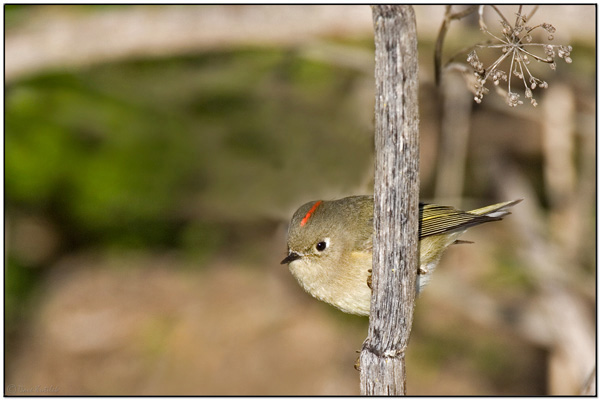
Ruby-crowned Kinglet (Regulus calendula) by BirdingPix

Ruby-crowned Kinglet (Regulus calendula) by BirdingPix

Ruby-crowned Kinglet – It is found throughout North America.

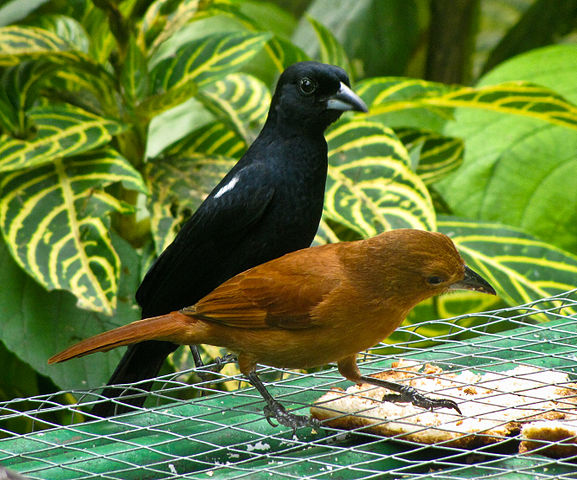
Ruby-crowned Tanager (Tachyphonus coronatus) M-black F-ruby ©WikiC

Ruby-crowned Tanager – It is found in the southern areas of Brazil and the Atlantic Forest.

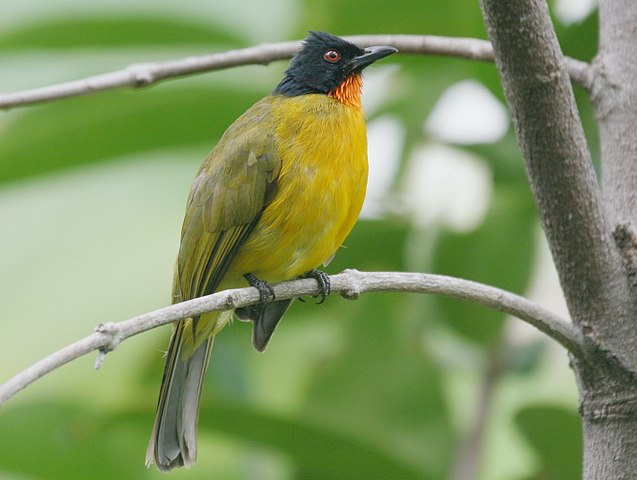
Ruby-throated Bulbul (Pycnonotus dispar) ©WikiC

Ruby-throated Bulbul –  It is found on Sumatra, Java, and Bali.

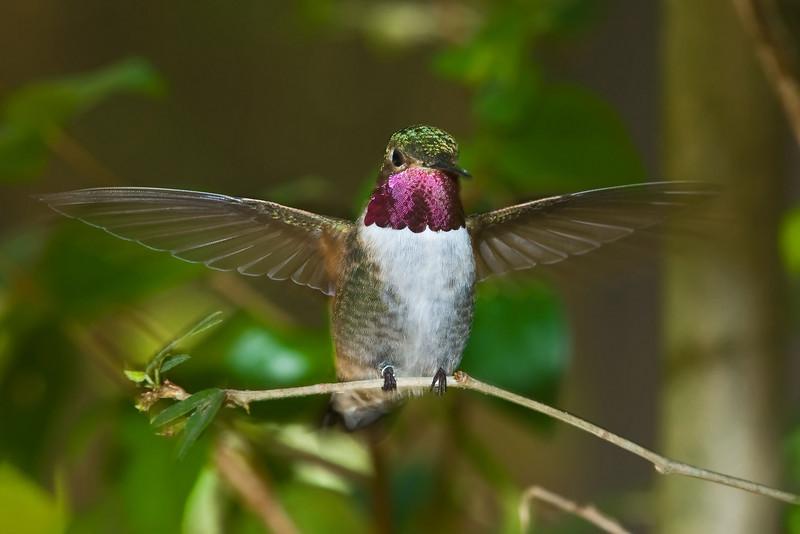
Ruby-throated Hummingbird by Ray’s Wildlfie

Ruby-throated Hummingbird – It spends the winter in Central America, Mexico, and Florida, and migrates to Eastern North America for the summer to breed. It is by far the most common hummingbird seen east of the Mississippi River in North America.

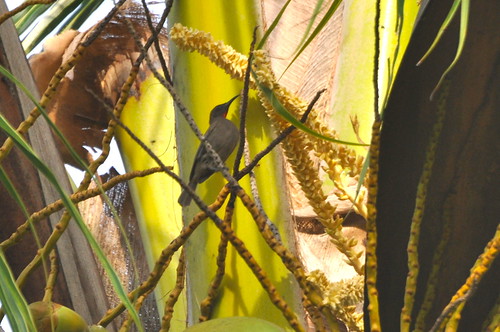
ruby-throated myzomela/red-throated myzomela

Ruby-throated Myzomela [from Flickr] –  It is found in New Guinea

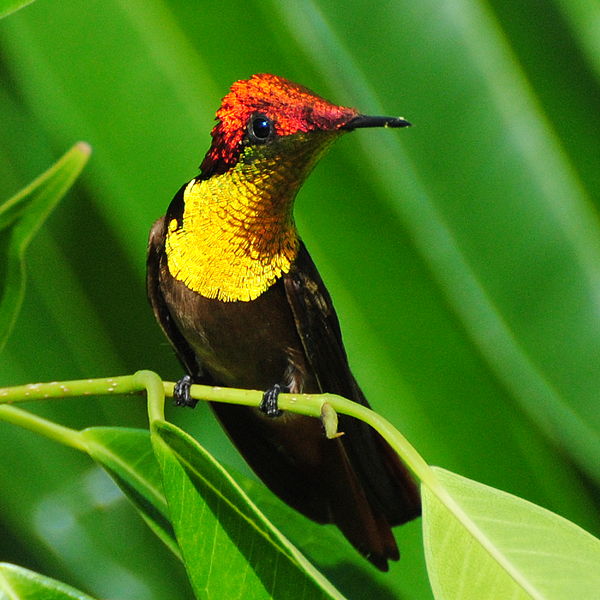
Ruby-topaz Hummingbird (Chrysolampis mosquitus) ©WikiC

Ruby-topaz Hummingbird – It  breeds in the Lesser Antilles and tropical northern South America from Colombia, Venezuela and the Guyanas, south to central Brazil and northern Bolivia; also from Colombia into southern Panama.


More Avian and Attributes

Birds whose first name starts with “R”

Good News

*
[Definitions from Webster’s Dictionary of American English (1828), unless noted. Bird info from Wikipedia plus.]

Avian and Attributes – Royal

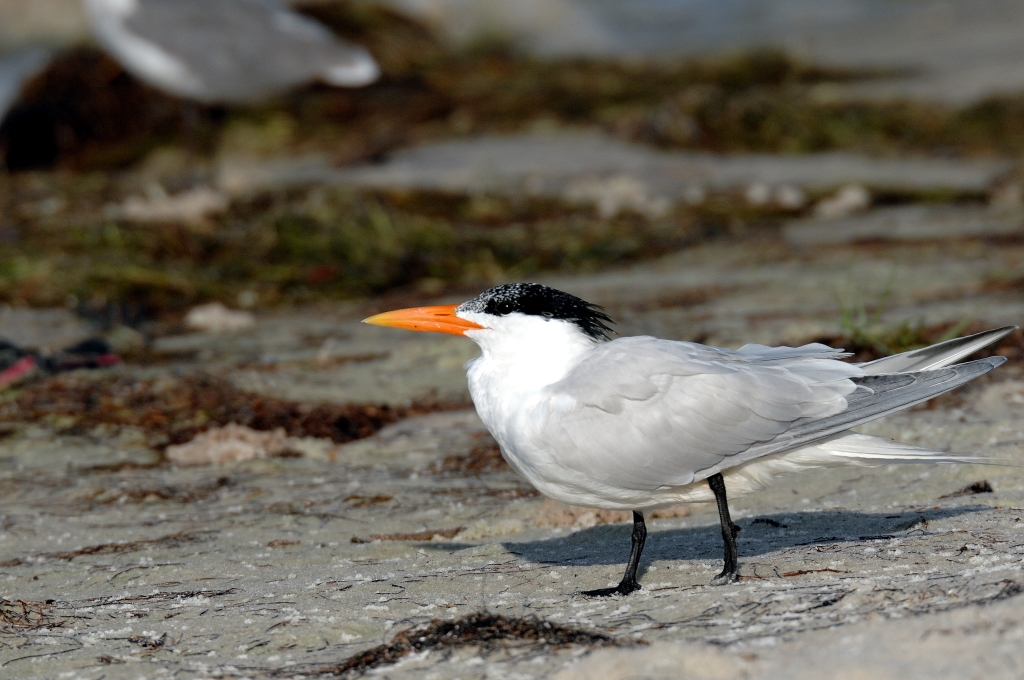
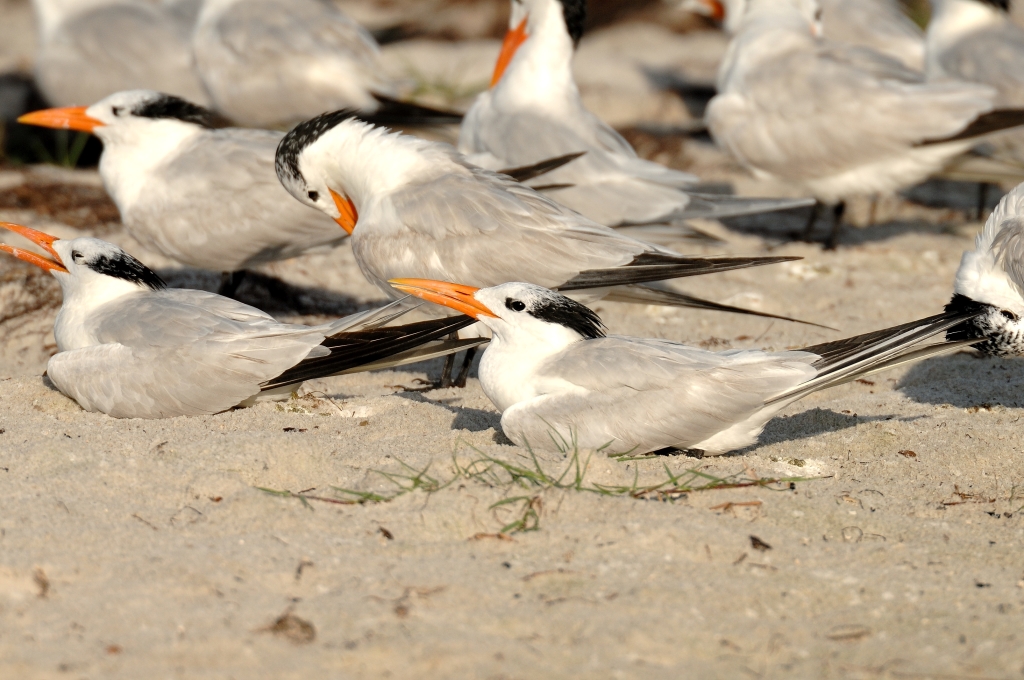
Royal Terns by Dan MacDill Shore

“But ye are a chosen generation, a royal priesthood, an holy nation, a peculiar people; that ye should shew forth the praises of him who hath called you out of darkness into his marvellous light:” (1 Peter 2:9 KJV)


Avian and Attributes – Royal

ROY’AL, a. [L. regalis, from rex, king.]
1. Kingly; pertaining to a king; regal; as royal power or prerogative; a royal garden; royal domains; the royal family.
2. Becoming a king; magnificent; as royal state.
3. Noble; illustrious.
How doth that royal merchant, good Antonio?
ROY’AL, n.
1. A large kind of paper. It is used as a noun or an adjective.
2. Among seamen, a small sail spread immediately above the top-gallant-sail; sometimes termed the top-gallant-royal.
3. One of the shoots of a stag’s head.
4. In artillery, a small mortar.
5. In England, one of the soldiers of the first regiment of foot, called the royals, and supposed to be the oldest regular corps in Europe.

“If ye fulfil the royal law according to the scripture, Thou shalt love thy neighbour as thyself, ye do well:” (James 2:8 KJV)


Royal Birds

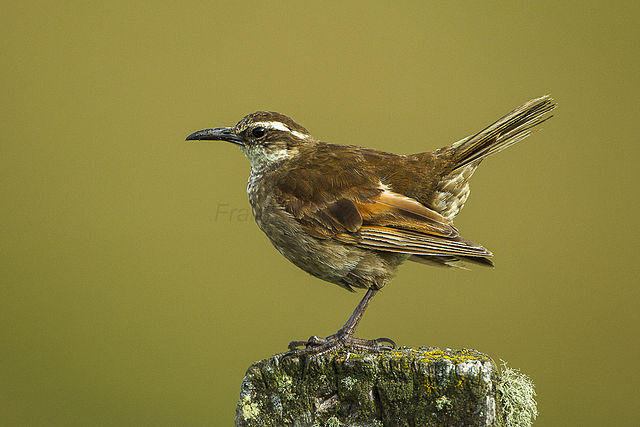
Stout-billed Cinclodes (Cinclodes aricomae) ©WikiC

Royal Cinclodes (Cinclodes aricomae) is a passerine bird which breeds in the Andes of south-east Peru and adjacent Bolivia. It was formerly considered to be a subspecies of the stout-billed cinclodes C. excelsior. It is 20 cm long and weighs 50 g with a heavy bill and dark chocolate-brown on the body, face and crown with whitish mottling and streaking on the breast.

This bird has a population of less than 250, and is classified as Critically Endangered. It is confined to tiny, humid patches of Polylepis woodland and montane scrub, and the major threat to its survival is the use of fire and heavy grazing which restrict the regeneration of Polylepis.

Royal Parrotfinch ©Arkive

Royal Parrotfinch (Erythrura regia) is a species of estrildid finch endemic to Vanuatu in the South Pacific Ocean. It is found commonly at mid-altitudes on the larger islands such as Espiritu Santo, above 300 m., but it also can be found at small sea-level islands in fruiting figs in forest edge in Emae and Tongoa. This species is usually found in singles, pairs or small groups feeding on figs in the forest canopy.

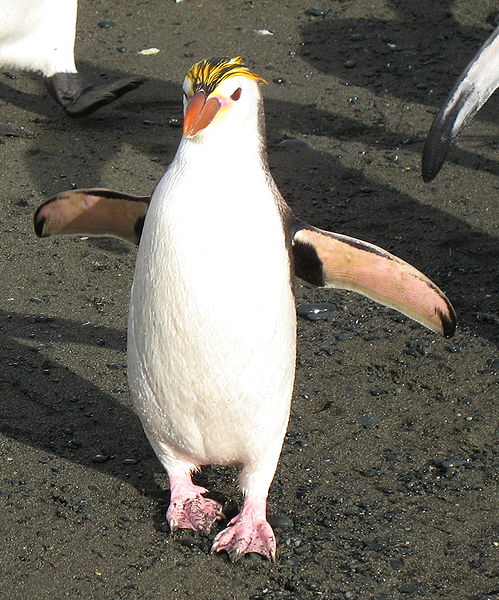
Royal Penguin (Eudyptes schlegeli) ©WikiC

Royal Penguin (Eudyptes schlegeli) ©WikiC

Royal Penguin (Eudyptes schlegeli) is a species of penguin, which can be found on the sub-Antarctic Macquarie Island and adjacent islands. The scientific name commemorates the German zoologist Hermann Schlegel.

They inhabit the waters surrounding Antarctica. Royals look very much like macaroni penguins, but have a white face and chin instead of the macaronis’ black visage. Males are larger than females. Royal penguins breed only on Macquarie Island and, like other penguins, spend much of their time at sea, where they are assumed to be pelagic.

Royal Spoonbill (Platalea regia) ©WikiC

Royal Spoonbill (Platalea regia) also known as the black-billed spoonbill, occurs in intertidal flats and shallows of fresh and saltwater wetlands in Australia, New Zealand, Indonesia, Papua New Guinea, and the Solomon Islands. It has also been recorded as a vagrant in New Caledonia. The royal spoonbill lives in wetlands and feeds on crustaceans, fish and small insects by sweeping its bill from side to side. It always flies with its head extended.

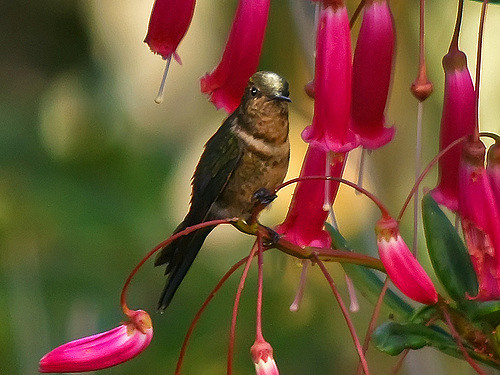
Royal Sunangel (Heliangelus regalis)©Flickr DCook

Royal Sunangel (Heliangelus regalis) is a species of hummingbird. It is endemic to subtropical elfin forests and shrubs in the Andes of northern Peru and adjacent south-eastern Ecuador. It is endangered due to habitat loss. It is strongly sexually dichromatic, and while females resemble other female sunangels, males are unique with their iridescent dark blue plumage.

Royal Terns by Dan MacDill AFB Shore

Royal Tern (Thalasseus maximus) is a tern in the family Laridae. The genus name is from Ancient Greek Thalasseus, “fisherman”, from thalassa, “sea”. The specific maximus is Latin for ‘”greatest”.

This bird has two distinctive subspecies: T. m. maximus which lives on the Atlantic and Pacific coasts of the North and South America, and the slightly smaller T. m. albididorsalis lives on the coast of West Africa. The royal tern has a red-orange bill and a black cap during the breeding season, but in the winter the cap becomes patchy. The royal tern is found in Europe, Africa, the Americas, and the Caribbean islands. The royal tern lives on the coast and is only found near salt water. They tend to feed near the shore, close to the beach or in backwater bays.


More Avian and Attributes

Birds whose first name starts with “R”

Good News

*
[Definitions from Webster’s Dictionary of American English (1828), unless noted. Bird info from Wikipedia plus.]

Survey – God’s Recipe

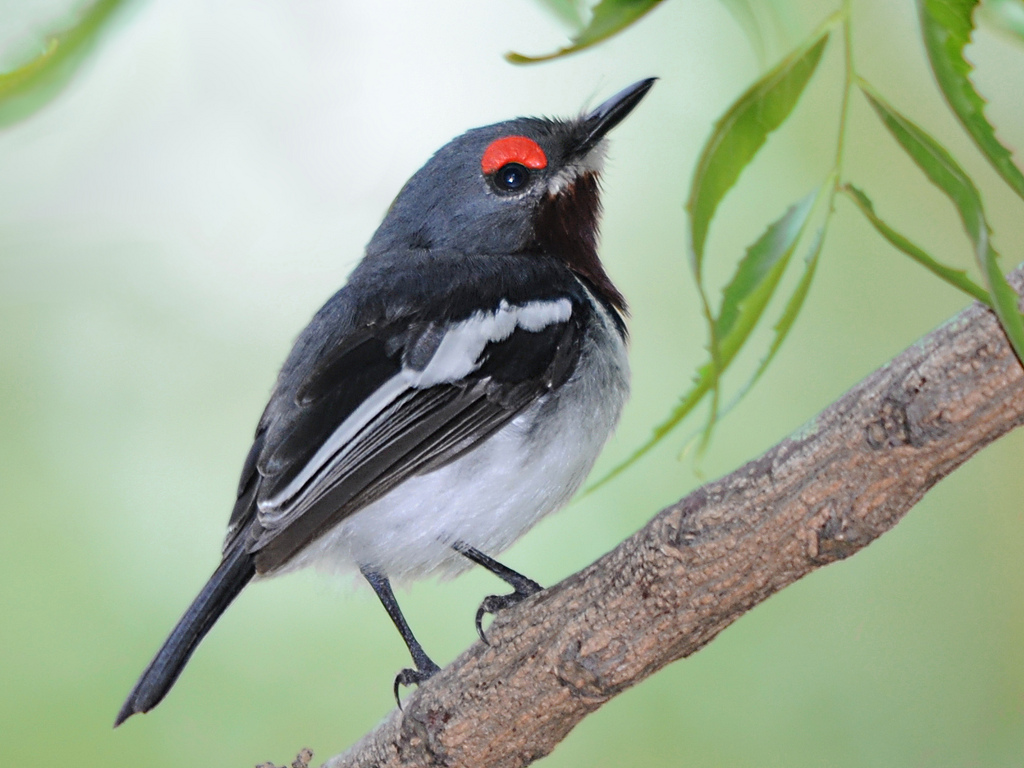
Brown-throated Wattle-eye (Platysteira cyanea) Male ©Flickr Isidro Vila Verde

“To know wisdom and instruction; to perceive the words of understanding;” (Proverbs 1:2 KJV)

Would this make a good series for the Birds of the Bible for Kids blog or even this blog?

God’s Recipe for the Brown-throated Wattle Eye

Looking for some comments. Either here or over on the other blog.


Ian’s Bird of the Moment – Night Birds

If you can remember that far back, the last bird of the moment was Eastern Grass Owl. [http://www.birdway.com.au/botw/botw_584.php] found during a spot-lighting trip to the Townsville Town Common led by local night-bird expert and pillar of BirdLife Townsville Ian Boyd.
At the time, Ian Boyd was refusing to be discouraged by pancreatic cancer, an attitude that we all admired until his death on 23rd of February. Typically undaunted he gave a presentation on his favourite topic, Night Birds at the BirdLife Townsville AGM on the 10th of February although he had less than a couple of weeks to live. Isolated by flood waters in Bluewater, I couldn’t attend the funeral on 1st March so here is a photographic tribute to him instead.
I got to know him well during his last year or and am left with some precious memories of searching for night birds with him. So let’s go birding together while I share three special occasions with you.
The first was when a birding friend and photographer from Mt Isa was visiting Townsville and wanted to photograph a Rufous Owl. I contacted Ian Boyd and he took us to an active nesting site on a hot afternoon at the end of October. There he showed us the two adults which we photographed (one of them is in the first photo) and our visitor from Mt Isa returned to the site later and got a photo of a fledgling peering out of the tree hollow.
The second was the occasion when we found the female Eastern Grass Owl at the Townsville Town Common which featured as the last Bird of the Moment. At the time our goal was to search for Spotted Nightjars which are supposed to occur occasionally along the Freshwater Track that goes across the grassy, saltbush flats between Bald Rock and the Freshwater hide (see this map: https://www.npsr.qld.gov.au/parks/townsville/pdf/townsville-town-common-map.pdf). We drove across the Town Common arriving at Shelley Beach on the northern side at sunset and then drove slowly back in darkness checking for night birds as we went along.
The first stretch of riverine forest on the Shelley Beach Trail produced a remarkable five Owlet Nightjars (second photo) and a single male Tawny Frogmouth (third photo). Male Tawny Frogmouths have silvery grey, strongly marbled plumage. We had only just started along the Freshwater Track when the cry went up ‘Barn Owl’ but we quickly realised that the Tyto Owl beside the track was a female Eastern Grass Owl (fourth photo).
There was no sign of any Spotted Nightjars – we suspect that they are more like to be found in the dry winter months – but at the start of the Freshwater Lagoon Road south of the Freshwater hide, we found a Large-tailed Nightjar (fifth photo). This species is the commonest Nightjar around Townsville and is well known for its persistent, loud ‘chop chop’ call that gives it the colloquial name of Carpenter or Axe Bird.
Finally, along the track between Payet’s Tower and the Forest Walk, a Barking Owl (sixth photo) represented the only remaining Australian night bird family for the evening – Aegothelidae (Owlet NIghtjars), Podargidae (Frogmouths), Tytonidae (Barn Owls), Caprimulgidae (Nightjars) and Strigidae (Hawk Owls). I’m following the IOC and BirdLife International in lumping the Nightjars and Eared-Nightjars into a single family.
We repeated the spotlighting at the Town Common a week later. This time we found one or two Owlet Nightjars along the Shelley Beach Trail, but Tawny Frogmouths were out in force. The seventh photo shows a female; females are often rufous like this one but always have plainer less marked plumage than the males. The eight photo shows a remarkably approachable male Tawny Frogmouth.
This time there was no sign of the Eastern Grass Owl (or Spotted NIghtjars) and the surprise of the night was a Barn Owl perched in a tree along the stretch where we’d found the Barking Owl the previous week (ninth photo). This bird seemed unbothered by our spot- and flash-lights and when it did leave it did so to plunge into the undergrowth after some prey.
That was the last time I went birding with Ian Boyd. He is greatly missed by his wife Robyn, the rest of his family and all us bird watchers who appreciated his generosity, warmth, leadership and enthusiasm. I’ll treasure these great memories of birding with him during his last few months with us. Thank you, Ian Boyd.
Ian Montgomery

Lee’s Addition:

“And the owl, and the night hawk, and the cuckow, and the hawk after his kind,” (Leviticus 11:16 KJV)

Fantastic photos of Night Birds. Also, sorry to hear about the death of Ian’s friend, Ian Boyd.

We have missed Ian’s newsletters. We have gone from Ian’s Bird of the Week, to Ian’s Bird of the Month, to Ian’s Bird of the Moment [whenever he can find time]. I think many of us have reasons why our previously vigorously produced posts slow down. I believe Ian has been dealing with some eye issues. Not good for a photographer. I can relate, as my back issues have slowed our birdwatching adventures down to a trickle.

At any rate, these are some very great photos. Enjoy!

*

Ian’s Bird of the Week

Ian’s Bird of the Moment – Eastern Grass Owl

Good News

Viking Pillows were Stuffed for Comfort: Thanks to Ducks, Geese, Eagle-Owls, Cormorants, Seagulls, and Crows!

Viking Pillows were Stuffed for Comfort: Thanks to Ducks, Geese, Eagle-Owls, Cormorants, Seagulls, and Crows!

Dr. James J. S. Johnson

And he [i.e., Jacob] lighted upon a certain place, and tarried there all night, because the sun was set; and he took of the stones of that place, and put them for his pillows, and lay down in that place to sleep. (Genesis 28:11)

Pillows, if they are good soft-yet-somewhat-firm head supports, facilitate restful sleeping – this is a fact repeatedly emphasized by MyPillow.com (manufacturer of really good pillows!). Besides serving as head-rests for sleeping upon, pillows can also be used as cushions on chairs or sofas, for soft-yet-somewhat-firm back support. Pillows can be used decoratively, too, to provide visual motifs or color coordination, so pillows can provide both physical comfort and visual décor. But, mostly, for centuries, pillows have been used to give comfortable head-rest.  Don’t you, like me, like to relax your weary head on a good pillow?
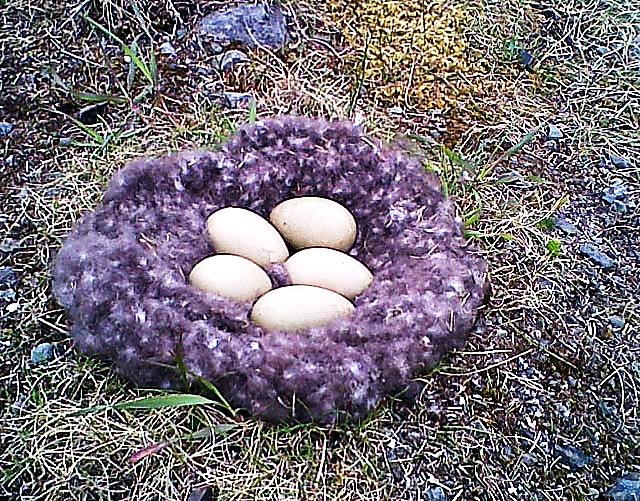
Eider-down-nest-with-eggs-Iceland.IceIceBaby

Eider Down Nest (in Iceland) with Eggs / photo credit: Ice Ice Baby

For softness pillows are stuffed, with a variety of materials — feather, foam, down, etc.  During Viking times pillows were often stuffed with down and/or feathers of sea-ducks, such as eiders.  However, feathers (and/or down) from other birds were also used, often, such as form geese, seagulls, cormorants, owls (including the largest owl of Scandinavia, the Eagle-Owl), and even crows!  In other words, the Vikings stuffed their pillows with whatever was available!

MyPillow.com-MikeLindell-ad

MyPillow.com / Mike Lindell

“When I invented MyPillow®, my dream was to help as many people get a good night’s sleep as possible. I personally guarantee MyPillow® will be the most comfortable pillow you’ll ever own.” [Mike Lindell, Inventor of MyPillow®]

In fact, pillows have been mentioned as having been involved in some very important events reported in the Holy Bible, with the first mention of the word “pillow” appearing in Genesis 29:11 (and soon thereafter in Genesis 28:18).

In Genesis 28:11, “pillow” is used to describe how the patriarch Jacob used a stone under his head, as a support for resting his head (like a supportive “pillar”) while sleeping, during a scary night when Jacob, in deadly danger, was fleeing north, from Beersheba (in southern Israel) toward Haran (in Turkey, near the Syrian border – in earlier times Haran, n/k/a Harran, was part of Syria/”Aram”).

And he [i.e., Jacob] lighted upon a certain place, and tarried there all night, because the sun was set; and he took of the stones of that place, and put them for his pillows, and lay down in that place to sleep.   And he dreamed, and behold a ladder set up on the earth, and the top of it reached to heaven: and behold the angels of God ascending and descending on it. [NOTE: according to John 1:1:51, that vision of the heavenly ladder was a prophetic foreshadowing of the Lord Jesus Christ, Who Himself is, as 1st Timothy 2:5 notes, the only Mediator between God and mankind.] And, behold, the Lord stood above it, and said, I am the Lord God of Abraham thy father, and the God of Isaac: the land whereon thou liest, to thee will I give it, and to thy seed;  And thy seed shall be as the dust of the earth, and thou shalt spread abroad to the west, and to the east, and to the north, and to the south: and in thee and in thy seed shall all the families of the earth be blessed.  And, behold, I am with thee, and will keep thee in all places whither thou goest, and will bring thee again into this land; for I will not leave thee, until I have done that which I have spoken to thee of.  And Jacob awaked out of his sleep, and he said, Surely the Lord is in this place; and I knew it not. And he was afraid, and said, How dreadful [i.e., scary-awesome] is this place! This is none other but the house of God, and this is the gate of heaven.  And Jacob rose up early in the morning, and took the stone that he had put for his pillows, and set it up for a pillar, and poured oil upon the top of it.   And he called the name of that place Bethel [i.e., “house of God”]; but the name of that city was called Luz at the first. And Jacob vowed a vow, saying, If God will be with me, and [if God] will keep me in this way that I go, and [if God] will give me bread to eat and raiment to put on,  so that I come again to my father’s house in peace, then shall the Lord be my God;  and this stone, which I have set for a pillar, shall be God’s house: and of all that Thou shalt give me I will surely give the tenth unto Thee.   (Genesis 29:11-22)
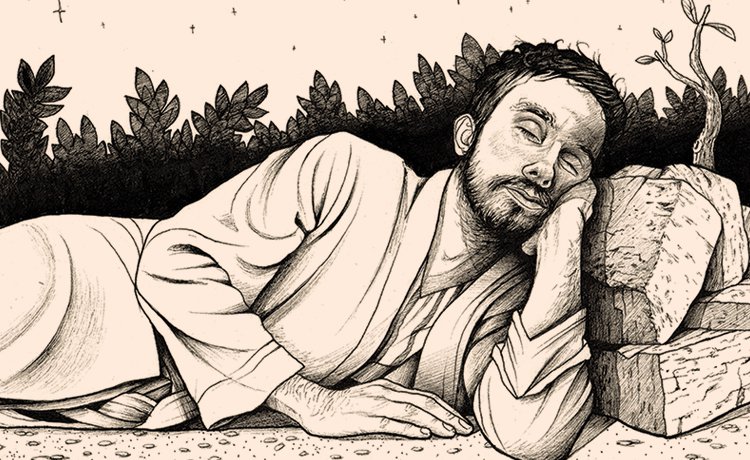
Jacob-resting-head-on-stone-pillow.InTouchMinistires

Jacob using stone for pillow (In Touch Ministries image)

Interestingly, the Bible’s first use of the verb “anoint” (mâshach, the root verb of the Hebrew noun mâshîach = “Messiah”/“Christ”/“Anointed one”; see Psalm 2:2) occurs in Genesis 31:13 (where the English verb “anoint” translates for the Hebrew verb mâshach), recalling when Jacob poured oil on his stone “pillow”.   Specifically, Genesis 31:13 refers back to the events of Genesis chapter 28, especially Genesis 28:18, which reports that Jacob “poured oil” on the stone (or stones) that Jacob’s head used for a pillow during that scary-awesome night.

The next reference to a “pillow”, in Scripture, appears in 1st Samuel chapter 19, where Israel’s future king David, in deadly danger, put “a pillow of goats’ hair” (1st Samuel 19:13 & 19:16) in his bed, as a decoy, in order to fake that his body was in bed, sick or sleeping.  When Saul ordered that David be seized from his “sickbed” – so that Saul could kill David – Saul’s men discovered that David had duped them, having already fled (with Michal’s help) out of his room’s window.

The greatest moment for pillows, in world history, is reported in Mark 4:38, which records how the Lord Jesus Christ Himself, while in a boat sailing across the Sea of Galilee,  used a “pillow” (proskephalaion = “for/before [the] head”) while sleeping through a furious storm that threatened the safety of the ship and its occupants.

Christ-in-the-Storm-on-the-Sea-of-Galilee.Rembrandt-PublicDomain

Rembrandt, Christ in the Storm on the Sea of Galilee (public domain)

And there arose a great storm of wind, and the waves beat into the ship, so that it was now full. And He [i.e., the Lord Jesus]  was in the hinder part of the ship, asleep on a pillow [proskephalaio]; and they awake Him, and say unto Him, Master, carest Thou not that we perish?  And He arose, and He rebuked the wind, and He said unto the sea, Peace, be still. And the wind ceased, and there was a great calm. And He said unto them, Why are ye so fearful? How is it that ye have no faith?  And they feared exceedingly, and said one to another, What manner of man is this, that even the wind and the sea obey Him?   (Mark 4:37-41)

So pillows have sometimes provided rest during events of historic importance!

Mostly, however, pillows serve in less historic contexts. But to all of us when our weary heads need rest, a good pillow (or combination of pillows) is helpful for a night’s sleep – or just a nap.

And the same was true for Vikings – they used pillows stuffed with feathers.  Archaeologists have studied Viking pillows, and it seems that Vikings were characteristically resourceful; for stuffing pillows Vikings used whatever down or feathers were available, including feathers from Eagle-Owls (see photograph below), ducks, cormorants, sea gulls, geese, or even crows!
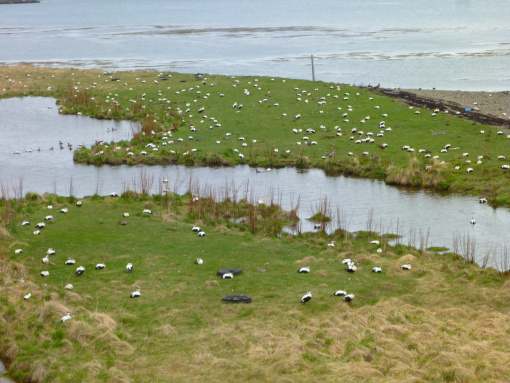
Eider-nests-in-Iceland-coast.IceIceBaby

Eider nests by Iceland coastline / Ice Ice Baby

For technical studies on Viking pillows, especially identification of feathers and down used therein, see Carla J. Dove & Stephen Wickler, “Identification of Bird Species Used to Make a Viking Feather Pillow”, ARCTIC, 69(1):29-36 (March 2016). Dove & Wickler report:

“Given the apparent exclusive use of bird feathers from sea-dwelling birds in the Øksnes pillow stuffing, a brief review of the important role played by these birds in the Iron Age is useful.  Gull and other seabird population densities are known to be among the largest in the world in Norway because of productive waters and adequate nesting sites (Barrett et al., 2006). Large-scale bird distributions are known to have been similar through recent historical times, so it is expected that bird densities were at least the same during the Viking Age as in modern times, making it fairly easy to obtain gull species for human use.  Given the vast population densities of gulls and other seabirds in northern Norway, it may not seem unusual that gull and Great Cormorant feathers were used in the making of this pillow; until now, however, these feathers have never been reported or documented as species used in Viking Age pillow making.  Thirteenth-century Norse sagas report the collecting of eider duck and goose down as a profitable trade item from Greenland and other North Atlantic regions.  The Norse “cultivated” down for clothing and duvets by constructing small bird-sized boxes with upright rock slabs. Eiders preferred these cozy shelters to wind-blown boulders and lined them with fluffy down plucked from their breasts, making it possible to reap several “harvests” from each nest during the laying season. Traditional exploitation of seabirds for food and feathers is well documented in the islands of the North Atlantic and coastal Norway (Shrubb, 2013). Feathers were traditionally regarded as more valuable than meat for some seabird species, such as puffins, fulmars, and gannets, in the North Atlantic (Shrubb, 2013).  The right to collect feathers, down, and eggs on so-called bird islands (fuglevær) in northern Norway has been taxed since the Iron Age, and feathers and down were commonly used for tax payments. The earliest known record of this practice is the AD 890 account to King Alfred of England by the northern Norwegian Viking chieftain Ohthere, who reported payment of taxes by the Sámi with feathers and down (Bately and Englert, 2007).  Seabirds were important in Viking life for both fresh and preserved food, and feathers and down were used for bedding and clothing.  . . .  The most frequently occurring species are European Shag, eiders, Great Black-backed Gull, Great Auk (now extinct), puffins, and guillemots. Cormorant species are particularly abundant in a number of the faunal assemblages.  In an Iron Age settlement mound not far from Øksnes, at Bleik on the island of Andøya, with occupation from ca. AD 200 to 900, birds represented 30% of the identifiable bone midden (Jørgensen, 1984). Sea-dwelling birds accounted for nearly all of the 25 bird species identified, with gulls and the Northern Fulmar (Fulmarus glacialis) being the most common.   Five of the eight gull species within the genus Larus that occur in northern Norway were represented (Jørgensen, 1984). . . . .   In contrast to the documented occurrence of feathers and down in high-status graves, the pillow with feather stuffing from Øksnes is more suggestive of an everyday item, potentially owned by the deceased, that had been used for some time before being placed in the grave. The use of a common, coarsely woven wool textile for a pillow cover, and pillow fill in which gull feathers were predominant, along with a lesser quantity of Great Cormorant and sea duck feathers, may be indicators of a mundane domestic context rather than the luxury goods typical of a high-status grave.”

Quoting from Carla J. Dove & Stephen Wickler, “Identification of Bird Species Used to Make a Viking Feather Pillow”, ARCTIC, 69(1):29-36 (March 2016).

[ See also Norwegian University of Science & Technology (institutionally co-authored), “What Vikings Really Put in Their Pillows”, PHYS-ORG (February 27, 2018), posted at https://phys.org/news/2018-02-vikings-pillows.html#jCp  —  as well as Birds of a Feather — A Story of Vikings and Pillows”, ZME Science Newsletter, 28 February AD2018, by Mihai Andrei, posted at https://www.zmescience.com/science/bird-viking-feathers-28022018/  ]

So, what’s in your pillow?


Eagles and the Family Circus

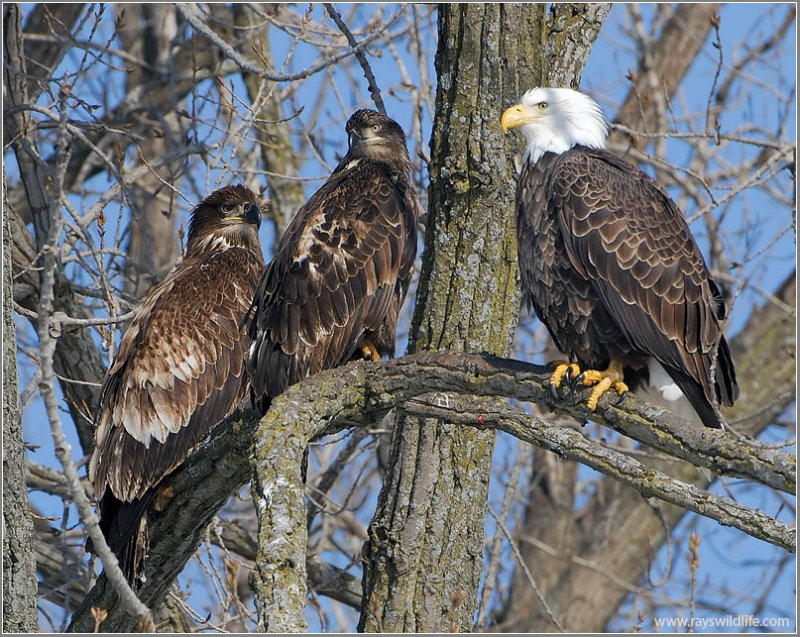
Bald Eagle (Haliaeetus leucocephalus) with youngsters by Raymond Barlow

I wonder if this adult Eagle is having problems teaching its young lessons for their future.

“But they that wait upon the LORD shall renew their strength; they shall mount up with wings as eagles; they shall run, and not be weary; and they shall walk, and not faint.” (Isaiah 40:31 KJV)

Family Circle with Eagles

This is just for your enjoyment. We all need a chuckle.


Avian And Attributes – River

Riverbank Warbler (Myiothlypis rivularis) ©WikiC

Thou visitest the earth, and waterest it: thou greatly enrichest it with the river of God, which is full of water: thou preparest them corn, when thou hast so provided for it. Thou waterest the ridges thereof abundantly: thou settlest the furrows thereof: thou makest it soft with showers: thou blessest the springing thereof.” (Psalms 65:9-10 KJV)

He shall have dominion also from sea to sea, and from the river unto the ends of the earth.” (Psalms 72:8 KJV)

“And he shewed me a pure river of water of life, clear as crystal, proceeding out of the throne of God and of the Lamb. In the midst of the street of it, and on either side of the river, was there the tree of life, which bare twelve manner of fruits, and yielded her fruit every month: and the leaves of the tree were for the healing of the nations.” (Revelation 22:1-2 KJV)


Avian and Attributes – River

RIV’ER, n. [L. rivus, rivulus, rips.]
1. A large stream of water flowing in a channel on land towards the ocean, a lake or another river. It is larger than a rivulet or brook; but is applied to any stream from the size of a mill-stream to that of the Danube, Maranon and Mississippi. We give this name to large streams which admit the tide and mingle salt water with fresh, as the rivers Hudson, Delaware and St. Lawrence.
2. A large stream; copious flow; abundance; as rivers of blood; rivers of oil
RI’VER, n. One who rives or splits.


River Birds

River Lapwing (Vanellus duvaucelii) ©WikiC

River Lapwing (Vanellus duvaucelii) is a lapwing species which breeds from the Indian Subcontinent eastwards to Southeast Asia. Its range includes much of northern and northeastern India, stretching towards Bangladesh, Myanmar, to Cambodia, Thailand and Vietnam. It appears to be entirely sedentary

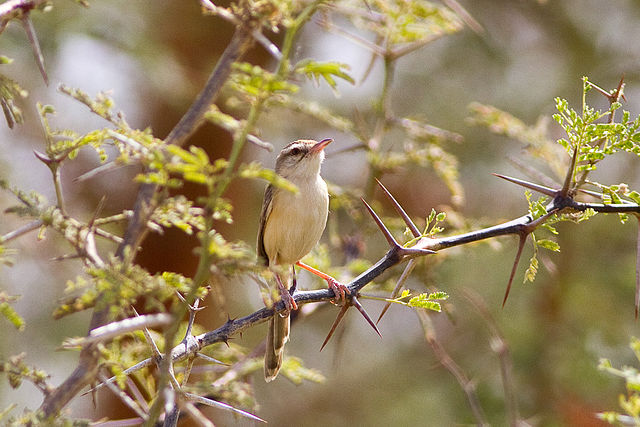
River Prinia (Prinia fluviatilis) ©WikiC

River Prinia (Prinia fluviatilis) is a species of bird in the Cisticolidae family. It is found in northwestern Senegal, along the Niger River (near the border between Mali and Niger) in the Lake Chad region and nonwestern Kenya. Its natural habitats are subtropical or tropical moist shrubland and swamps.

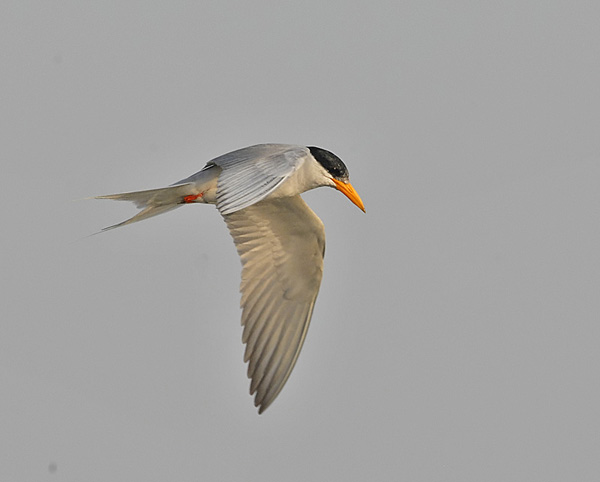
River Tern (Sterna aurantia) by Nikhil Devasar

River Tern (Sterna aurantia) is a tern in the family Laridae. It is a resident breeder along inland rivers from Iran east into the Indian Subcontinent and further to Myanmar to Thailand, where it is uncommon. Unlike most Sterna terns, it is almost exclusively found on freshwater, rarely venturing even to tidal creeks.

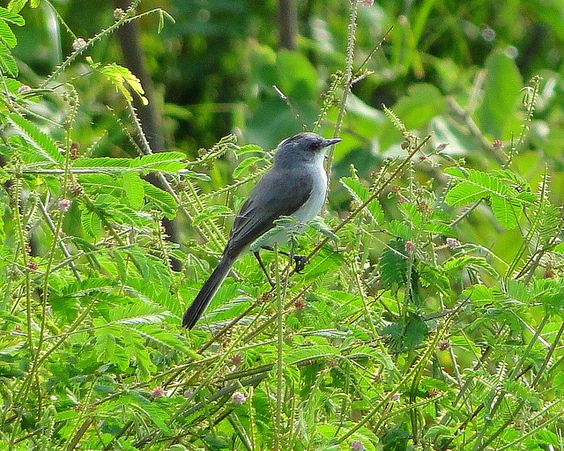
River Tyrannulet (Serpophaga hypoleuca) ©Pinterest

River Tyrannulet (Serpophaga hypoleuca) is a species of bird in the family Tyrannidae, the tyrant flycatchers. It is found in Peru, Venezuela and Brazil; also river extensions into Ecuador, Colombia-(border) and Bolivia.

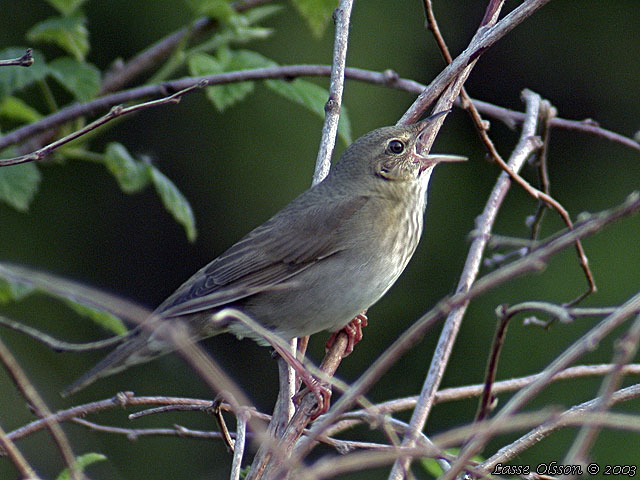
River Warbler (Locustella fluviatilis) ©WikiC

River Warbler (Locustella fluviatilis) is an Old World warbler in the grass warbler genus Locustella. It breeds in east and central Europe into western Asia. It is migratory, wintering in east Africa. The genus name Locustella is from Latin and is a diminutive of locusta, “grasshopper”. This refers to the song of the common grasshopper warbler and some others in this genus. The specific fluviatilis is Latin for “of a river”.

Riverbank Warbler (Myiothlypis rivularis) ©WikiC

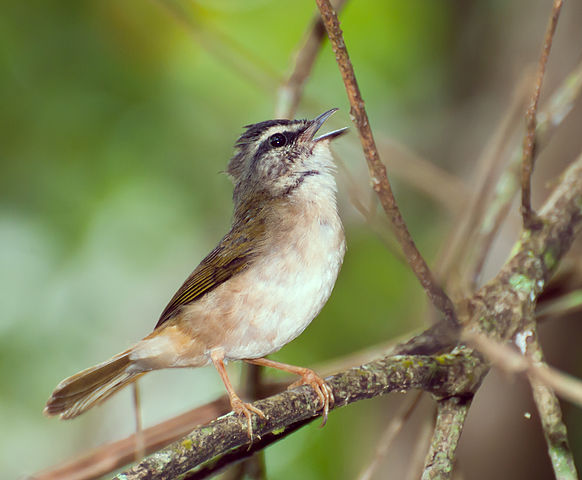
Riverbank Warbler (Myiothlypis rivularis), sometimes known as the Neotropical river warbler or just river warbler (leading to confusion with Locustella fluviatilis), is a species of bird in the Parulidae family.

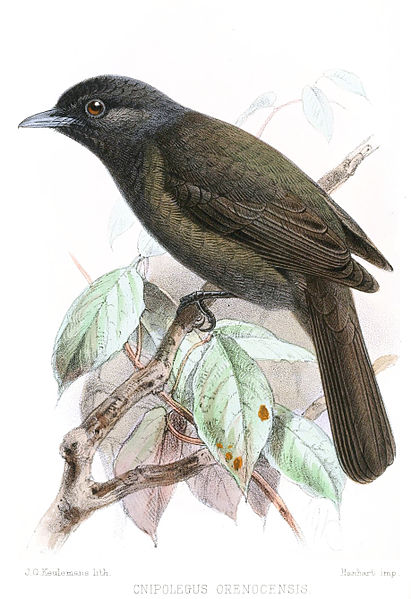
Riverside Tyrant (Knipolegus orenocensis) ©Drawing WikiC

Riverside Tyrant (Knipolegus orenocensis) is a species of bird in the family Tyrannidae. It is found in Brazil, Colombia, Ecuador, Peru, and Venezuela. Its natural habitat is subtropical or tropical moist shrubland.

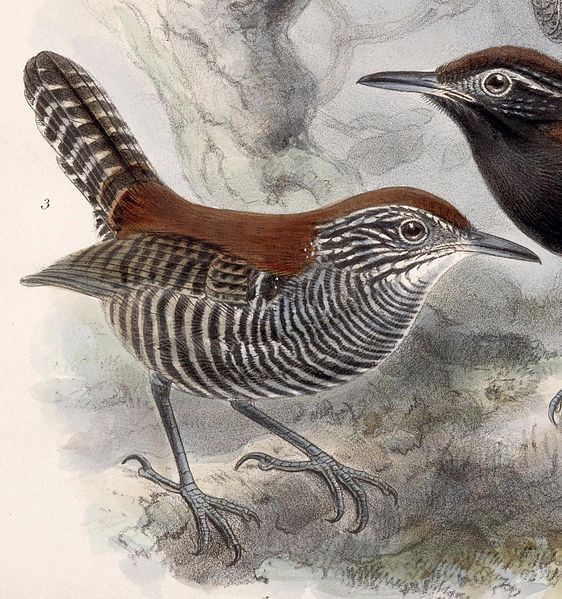
Riverside Wren (Cantorchilus semibadius) ©Drawing WikiC

Riverside Wren (Cantorchilus semibadius) is a species of bird in the Troglodytidae family. It is found in Costa Rica and Panama. Its natural habitat is subtropical or tropical moist lowland forests.


More Avian and Attributes

Birds whose first name starts with “R”

Good News

*
[Definitions from Webster’s Dictionary of American English (1828), unless noted. Bird info from Wikipedia plus.]

Bible Birds – Swift Introduction

Bible Birds – Swift Introduction

Alpine Swift (Tachymarptis melba) ©WikiC

“Even the stork in the sky Knows her seasons; And the turtledove and the swift and the thrush Observe the time of their migration; But My people do not know The ordinance of the LORD.” (Jeremiah 8:7 NASB)

The different versions of the Bible, translate this verse with different birds named. Many use either the Swift or the Swallow. They are similar but are in different bird families. The Swifts are in the Apodidae family and Swallows are in the Hirundinidae Family. Mainly, the verse is saying that the birds have more wisdom than some people.

Resemblances between swifts and swallows are similar because of their lifestyles based on catching insects in flight. They were both created with that ability. Both of them migrate or fly to other areas during the seasons. They need warmer weather to have an abundance of flying insects to feast on. [eat]

Glossy Swiftlet (Collocalia esculenta) by Nikhil Devasar

The family name, Apodidae, is derived from the Greek ἄπους (ápous), meaning “footless”, a reference to the small, weak legs of these most aerial of birds. The tradition of depicting swifts without feet continued into the Middle Ages, as seen in the heraldic martlet.

Some species of swifts are among the fastest animals on the planet, with some of the fastest measured flight speeds of any bird. “Swifts are the fastest of birds. Larger species are amongst the fastest fliers in the animal kingdom, with the white-throated needletail having been reported flying at up to 169 km/h (105 mph). Even the common swift can cruise at a maximum speed of 31 metres per second (112 km/h; 70 mph). In a single year the common swift can cover at least 200,000 km.” [Wikipedia]

See Swift – Creationwiki

Bible Birds – Swift

Bible Birds

Avian And Attributes – Ring

Ring Ouzel (Turdus torquatus) ©WikiC

“But the father said to his servants, Bring forth the best robe, and put it on him; and put a ring on his hand, and shoes on his feet: And bring hither the fatted calf, and kill it; and let us eat, and be merry: For this my son was dead, and is alive again; he was lost, and is found. And they began to be merry.” ” It was meet that we should make merry, and be glad: for this thy brother was dead, and is alive again; and was lost, and is found.” (Luke 15:22-24, 32 KJV) [Refers to salvation]


Avian and Attributes – Ring

RING, n.
1. A circle, or a circular line, or any thing in the form of a circular line or hoop. Thus we say of men, they formed themselves into a ring, to see a wrestling match. Rings of gold were made for the ark. Exodus 25. Rings of gold or other material are worn on the fingers and sometimes in the ears, as ornaments.
2. A circular course.
RING, n. [from the verb.]
1. A sound; particularly, the sound of metals; as the ring of a bell.
2. Any loud sound, or the sounds of numerous voices; or sound continued, repeated or reverberated; as the ring of acclamations.
3. A chime, or set of bells harmonically tuned.
RING, v.t. [from the noun.
1. To encircle.
2. To fit with rings, as the fingers, or as a swine’s snout.


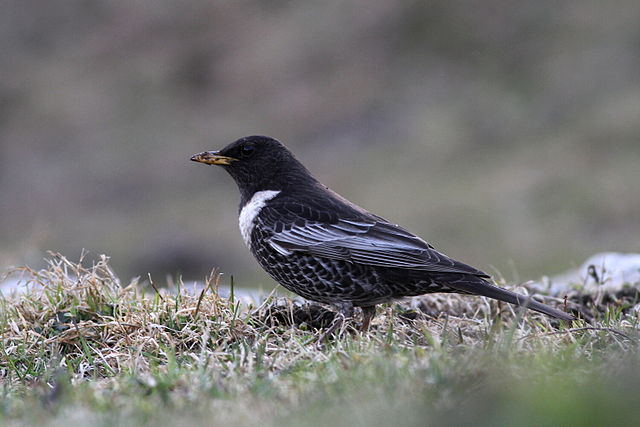
Ring Ouzel (Turdus torquatus) ©WikiC

The Ring Ouzel (Turdus torquatus) is a European member of the thrush family, Turdidae. It is the mountain equivalent of the closely related common blackbird, and breeds in gullies, rocky areas or scree slopes.

“Ouzel” (or “ousel”) is an old name for common blackbird from Old English osle. “Ouzel” may also be applied to a group of superficially similar but unrelated birds, the dippers, the European representative of which is sometimes known as the water ouzel.

As with the English name, the scientific name also refers to the male’s obvious white neck crescent, being derived from the Latin words turdus, “thrush”, and torquatus, “collared”.

The adult male is all black except for a white crescent on the breast and a yellowish bill. The wings have a silvery appearance due to white feather edgings. The male sings its loud and mournful song from trees or rocks.

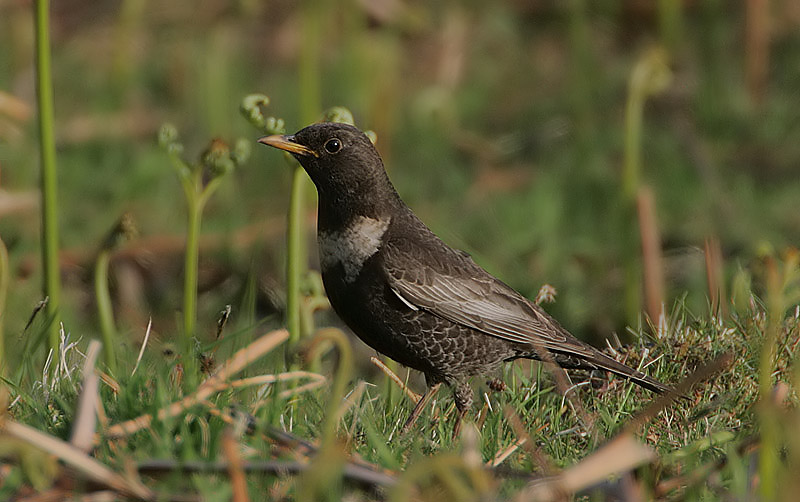
Ring Ouzel (Turdus torquatus) Femaile ©WikiC Rainbirder

The female is similar but duller, and younger birds often lack the breast crescent. The juvenile has brown plumage.

This species was first described by Linnaeus in his Systema naturae in 1758 under its current scientific name.

It breeds in the higher regions of western and central Europe and also in the Caucasus and in the Scandinavian mountains. Most populations are migratory, wintering in the Mediterranean region. It is declining in parts of its range, particularly in Ireland.

It is territorial and normally seen alone or in pairs, although loose flocks may form on migration. When not breeding, several birds may also be loosely associated in good feeding areas, such as a fruiting tree, often with other thrushes.

There are other “Ring” named birds, but not just plain “Ring”:

Ring-billed Gull
Ringed Antpipit
Ringed Kingfisher
Ringed Teal
Ringed Warbling Finch
Ringed Woodpecker
Ring-necked Dove
Ring-necked Duck
Ring-necked Francolin
Ring-tailed Pigeon


More Avian and Attributes

Birds whose first name starts with “R”

Good News

*
[Definitions from Webster’s Dictionary of American English (1828), unless noted. Bird info from Wikipedia plus. With Editing]