Viking Pillows were Stuffed for Comfort: Thanks to Ducks, Geese, Eagle-Owls, Cormorants, Seagulls, and Crows!

Viking Pillows were Stuffed for Comfort: Thanks to Ducks, Geese, Eagle-Owls, Cormorants, Seagulls, and Crows!

Dr. James J. S. Johnson

And he [i.e., Jacob] lighted upon a certain place, and tarried there all night, because the sun was set; and he took of the stones of that place, and put them for his pillows, and lay down in that place to sleep. (Genesis 28:11)

Pillows, if they are good soft-yet-somewhat-firm head supports, facilitate restful sleeping – this is a fact repeatedly emphasized by MyPillow.com (manufacturer of really good pillows!). Besides serving as head-rests for sleeping upon, pillows can also be used as cushions on chairs or sofas, for soft-yet-somewhat-firm back support. Pillows can be used decoratively, too, to provide visual motifs or color coordination, so pillows can provide both physical comfort and visual décor. But, mostly, for centuries, pillows have been used to give comfortable head-rest.  Don’t you, like me, like to relax your weary head on a good pillow?
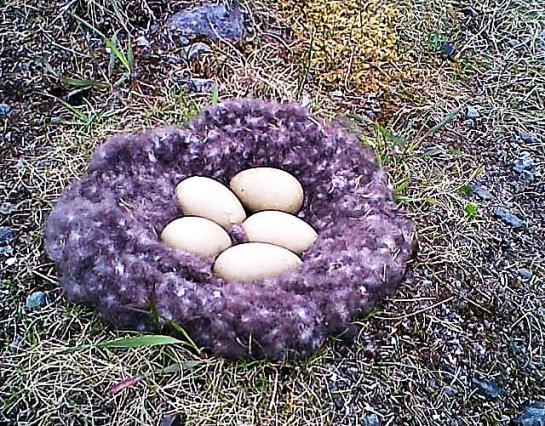
Eider-down-nest-with-eggs-Iceland.IceIceBaby

Eider Down Nest (in Iceland) with Eggs / photo credit: Ice Ice Baby

For softness pillows are stuffed, with a variety of materials — feather, foam, down, etc.  During Viking times pillows were often stuffed with down and/or feathers of sea-ducks, such as eiders.  However, feathers (and/or down) from other birds were also used, often, such as form geese, seagulls, cormorants, owls (including the largest owl of Scandinavia, the Eagle-Owl), and even crows!  In other words, the Vikings stuffed their pillows with whatever was available!

MyPillow.com-MikeLindell-ad

MyPillow.com / Mike Lindell

“When I invented MyPillow®, my dream was to help as many people get a good night’s sleep as possible. I personally guarantee MyPillow® will be the most comfortable pillow you’ll ever own.” [Mike Lindell, Inventor of MyPillow®]

In fact, pillows have been mentioned as having been involved in some very important events reported in the Holy Bible, with the first mention of the word “pillow” appearing in Genesis 29:11 (and soon thereafter in Genesis 28:18).

In Genesis 28:11, “pillow” is used to describe how the patriarch Jacob used a stone under his head, as a support for resting his head (like a supportive “pillar”) while sleeping, during a scary night when Jacob, in deadly danger, was fleeing north, from Beersheba (in southern Israel) toward Haran (in Turkey, near the Syrian border – in earlier times Haran, n/k/a Harran, was part of Syria/”Aram”).

And he [i.e., Jacob] lighted upon a certain place, and tarried there all night, because the sun was set; and he took of the stones of that place, and put them for his pillows, and lay down in that place to sleep.   And he dreamed, and behold a ladder set up on the earth, and the top of it reached to heaven: and behold the angels of God ascending and descending on it. [NOTE: according to John 1:1:51, that vision of the heavenly ladder was a prophetic foreshadowing of the Lord Jesus Christ, Who Himself is, as 1st Timothy 2:5 notes, the only Mediator between God and mankind.] And, behold, the Lord stood above it, and said, I am the Lord God of Abraham thy father, and the God of Isaac: the land whereon thou liest, to thee will I give it, and to thy seed;  And thy seed shall be as the dust of the earth, and thou shalt spread abroad to the west, and to the east, and to the north, and to the south: and in thee and in thy seed shall all the families of the earth be blessed.  And, behold, I am with thee, and will keep thee in all places whither thou goest, and will bring thee again into this land; for I will not leave thee, until I have done that which I have spoken to thee of.  And Jacob awaked out of his sleep, and he said, Surely the Lord is in this place; and I knew it not. And he was afraid, and said, How dreadful [i.e., scary-awesome] is this place! This is none other but the house of God, and this is the gate of heaven.  And Jacob rose up early in the morning, and took the stone that he had put for his pillows, and set it up for a pillar, and poured oil upon the top of it.   And he called the name of that place Bethel [i.e., “house of God”]; but the name of that city was called Luz at the first. And Jacob vowed a vow, saying, If God will be with me, and [if God] will keep me in this way that I go, and [if God] will give me bread to eat and raiment to put on,  so that I come again to my father’s house in peace, then shall the Lord be my God;  and this stone, which I have set for a pillar, shall be God’s house: and of all that Thou shalt give me I will surely give the tenth unto Thee.   (Genesis 29:11-22)

Jacob-resting-head-on-stone-pillow.InTouchMinistires

Jacob using stone for pillow (In Touch Ministries image)

Interestingly, the Bible’s first use of the verb “anoint” (mâshach, the root verb of the Hebrew noun mâshîach = “Messiah”/“Christ”/“Anointed one”; see Psalm 2:2) occurs in Genesis 31:13 (where the English verb “anoint” translates for the Hebrew verb mâshach), recalling when Jacob poured oil on his stone “pillow”.   Specifically, Genesis 31:13 refers back to the events of Genesis chapter 28, especially Genesis 28:18, which reports that Jacob “poured oil” on the stone (or stones) that Jacob’s head used for a pillow during that scary-awesome night.

The next reference to a “pillow”, in Scripture, appears in 1st Samuel chapter 19, where Israel’s future king David, in deadly danger, put “a pillow of goats’ hair” (1st Samuel 19:13 & 19:16) in his bed, as a decoy, in order to fake that his body was in bed, sick or sleeping.  When Saul ordered that David be seized from his “sickbed” – so that Saul could kill David – Saul’s men discovered that David had duped them, having already fled (with Michal’s help) out of his room’s window.

The greatest moment for pillows, in world history, is reported in Mark 4:38, which records how the Lord Jesus Christ Himself, while in a boat sailing across the Sea of Galilee,  used a “pillow” (proskephalaion = “for/before [the] head”) while sleeping through a furious storm that threatened the safety of the ship and its occupants.

Christ-in-the-Storm-on-the-Sea-of-Galilee.Rembrandt-PublicDomain

Rembrandt, Christ in the Storm on the Sea of Galilee (public domain)

And there arose a great storm of wind, and the waves beat into the ship, so that it was now full. And He [i.e., the Lord Jesus]  was in the hinder part of the ship, asleep on a pillow [proskephalaio]; and they awake Him, and say unto Him, Master, carest Thou not that we perish?  And He arose, and He rebuked the wind, and He said unto the sea, Peace, be still. And the wind ceased, and there was a great calm. And He said unto them, Why are ye so fearful? How is it that ye have no faith?  And they feared exceedingly, and said one to another, What manner of man is this, that even the wind and the sea obey Him?   (Mark 4:37-41)

So pillows have sometimes provided rest during events of historic importance!

Mostly, however, pillows serve in less historic contexts. But to all of us when our weary heads need rest, a good pillow (or combination of pillows) is helpful for a night’s sleep – or just a nap.

And the same was true for Vikings – they used pillows stuffed with feathers.  Archaeologists have studied Viking pillows, and it seems that Vikings were characteristically resourceful; for stuffing pillows Vikings used whatever down or feathers were available, including feathers from Eagle-Owls (see photograph below), ducks, cormorants, sea gulls, geese, or even crows!
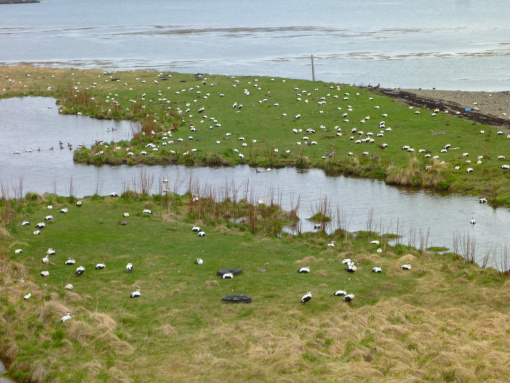
Eider-nests-in-Iceland-coast.IceIceBaby

Eider nests by Iceland coastline / Ice Ice Baby

For technical studies on Viking pillows, especially identification of feathers and down used therein, see Carla J. Dove & Stephen Wickler, “Identification of Bird Species Used to Make a Viking Feather Pillow”, ARCTIC, 69(1):29-36 (March 2016). Dove & Wickler report:

“Given the apparent exclusive use of bird feathers from sea-dwelling birds in the Øksnes pillow stuffing, a brief review of the important role played by these birds in the Iron Age is useful.  Gull and other seabird population densities are known to be among the largest in the world in Norway because of productive waters and adequate nesting sites (Barrett et al., 2006). Large-scale bird distributions are known to have been similar through recent historical times, so it is expected that bird densities were at least the same during the Viking Age as in modern times, making it fairly easy to obtain gull species for human use.  Given the vast population densities of gulls and other seabirds in northern Norway, it may not seem unusual that gull and Great Cormorant feathers were used in the making of this pillow; until now, however, these feathers have never been reported or documented as species used in Viking Age pillow making.  Thirteenth-century Norse sagas report the collecting of eider duck and goose down as a profitable trade item from Greenland and other North Atlantic regions.  The Norse “cultivated” down for clothing and duvets by constructing small bird-sized boxes with upright rock slabs. Eiders preferred these cozy shelters to wind-blown boulders and lined them with fluffy down plucked from their breasts, making it possible to reap several “harvests” from each nest during the laying season. Traditional exploitation of seabirds for food and feathers is well documented in the islands of the North Atlantic and coastal Norway (Shrubb, 2013). Feathers were traditionally regarded as more valuable than meat for some seabird species, such as puffins, fulmars, and gannets, in the North Atlantic (Shrubb, 2013).  The right to collect feathers, down, and eggs on so-called bird islands (fuglevær) in northern Norway has been taxed since the Iron Age, and feathers and down were commonly used for tax payments. The earliest known record of this practice is the AD 890 account to King Alfred of England by the northern Norwegian Viking chieftain Ohthere, who reported payment of taxes by the Sámi with feathers and down (Bately and Englert, 2007).  Seabirds were important in Viking life for both fresh and preserved food, and feathers and down were used for bedding and clothing.  . . .  The most frequently occurring species are European Shag, eiders, Great Black-backed Gull, Great Auk (now extinct), puffins, and guillemots. Cormorant species are particularly abundant in a number of the faunal assemblages.  In an Iron Age settlement mound not far from Øksnes, at Bleik on the island of Andøya, with occupation from ca. AD 200 to 900, birds represented 30% of the identifiable bone midden (Jørgensen, 1984). Sea-dwelling birds accounted for nearly all of the 25 bird species identified, with gulls and the Northern Fulmar (Fulmarus glacialis) being the most common.   Five of the eight gull species within the genus Larus that occur in northern Norway were represented (Jørgensen, 1984). . . . .   In contrast to the documented occurrence of feathers and down in high-status graves, the pillow with feather stuffing from Øksnes is more suggestive of an everyday item, potentially owned by the deceased, that had been used for some time before being placed in the grave. The use of a common, coarsely woven wool textile for a pillow cover, and pillow fill in which gull feathers were predominant, along with a lesser quantity of Great Cormorant and sea duck feathers, may be indicators of a mundane domestic context rather than the luxury goods typical of a high-status grave.”

Quoting from Carla J. Dove & Stephen Wickler, “Identification of Bird Species Used to Make a Viking Feather Pillow”, ARCTIC, 69(1):29-36 (March 2016).

[ See also Norwegian University of Science & Technology (institutionally co-authored), “What Vikings Really Put in Their Pillows”, PHYS-ORG (February 27, 2018), posted at https://phys.org/news/2018-02-vikings-pillows.html#jCp  —  as well as “Birds of a Feather — A Story of Vikings and Pillows”, ZME Science Newsletter, 28 February AD2018, by Mihai Andrei, posted at https://www.zmescience.com/science/bird-viking-feathers-28022018/  ]

So, what’s in your pillow?
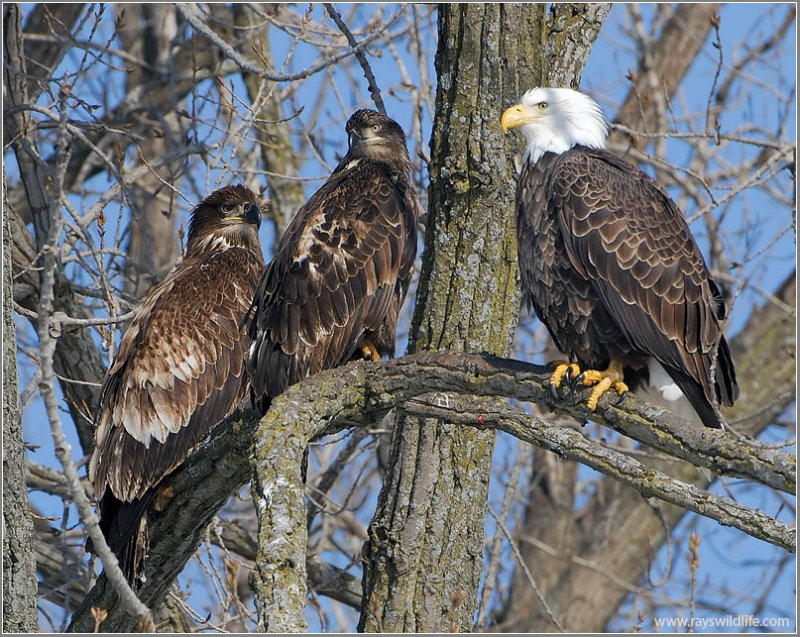


Eagles and the Family Circus

Bald Eagle (Haliaeetus leucocephalus) with youngsters by Raymond Barlow

I wonder if this adult Eagle is having problems teaching its young lessons for their future.

“But they that wait upon the LORD shall renew their strength; they shall mount up with wings as eagles; they shall run, and not be weary; and they shall walk, and not faint.” (Isaiah 40:31 KJV)

Family Circle with Eagles

This is just for your enjoyment. We all need a chuckle.


Avian And Attributes – River

Riverbank Warbler (Myiothlypis rivularis) ©WikiC

“Thou visitest the earth, and waterest it: thou greatly enrichest it with the river of God, which is full of water: thou preparest them corn, when thou hast so provided for it. Thou waterest the ridges thereof abundantly: thou settlest the furrows thereof: thou makest it soft with showers: thou blessest the springing thereof.” (Psalms 65:9-10 KJV)

“He shall have dominion also from sea to sea, and from the river unto the ends of the earth.” (Psalms 72:8 KJV)

“And he shewed me a pure river of water of life, clear as crystal, proceeding out of the throne of God and of the Lamb. In the midst of the street of it, and on either side of the river, was there the tree of life, which bare twelve manner of fruits, and yielded her fruit every month: and the leaves of the tree were for the healing of the nations.” (Revelation 22:1-2 KJV)


Avian and Attributes – River

RIV’ER, n. [L. rivus, rivulus, rips.]
1. A large stream of water flowing in a channel on land towards the ocean, a lake or another river. It is larger than a rivulet or brook; but is applied to any stream from the size of a mill-stream to that of the Danube, Maranon and Mississippi. We give this name to large streams which admit the tide and mingle salt water with fresh, as the rivers Hudson, Delaware and St. Lawrence.
2. A large stream; copious flow; abundance; as rivers of blood; rivers of oil
RI’VER, n. One who rives or splits.


River Birds

River Lapwing (Vanellus duvaucelii) ©WikiC

River Lapwing (Vanellus duvaucelii) is a lapwing species which breeds from the Indian Subcontinent eastwards to Southeast Asia. Its range includes much of northern and northeastern India, stretching towards Bangladesh, Myanmar, to Cambodia, Thailand and Vietnam. It appears to be entirely sedentary

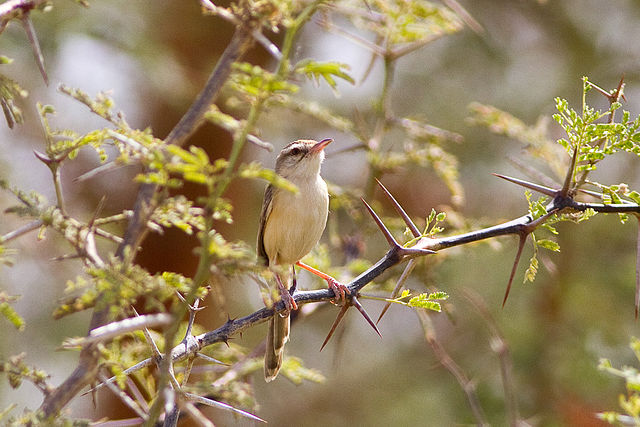
River Prinia (Prinia fluviatilis) ©WikiC

River Prinia (Prinia fluviatilis) is a species of bird in the Cisticolidae family. It is found in northwestern Senegal, along the Niger River (near the border between Mali and Niger) in the Lake Chad region and nonwestern Kenya. Its natural habitats are subtropical or tropical moist shrubland and swamps.

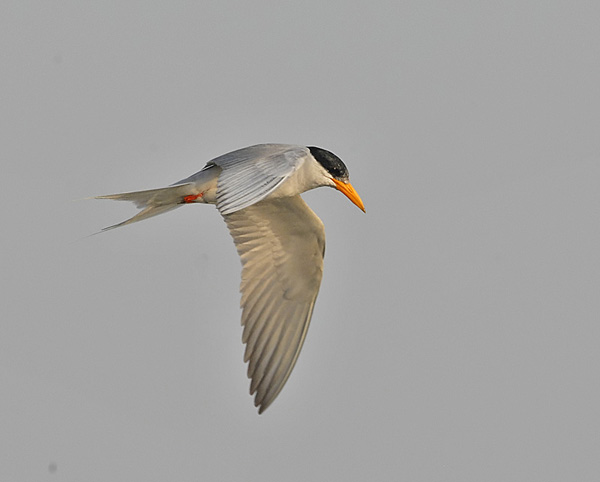
River Tern (Sterna aurantia) by Nikhil Devasar

River Tern (Sterna aurantia) is a tern in the family Laridae. It is a resident breeder along inland rivers from Iran east into the Indian Subcontinent and further to Myanmar to Thailand, where it is uncommon. Unlike most Sterna terns, it is almost exclusively found on freshwater, rarely venturing even to tidal creeks.

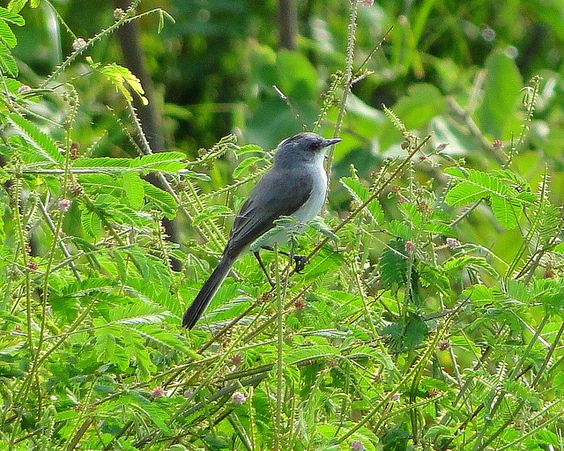
River Tyrannulet (Serpophaga hypoleuca) ©Pinterest

River Tyrannulet (Serpophaga hypoleuca) is a species of bird in the family Tyrannidae, the tyrant flycatchers. It is found in Peru, Venezuela and Brazil; also river extensions into Ecuador, Colombia-(border) and Bolivia.

River Warbler (Locustella fluviatilis) ©WikiC

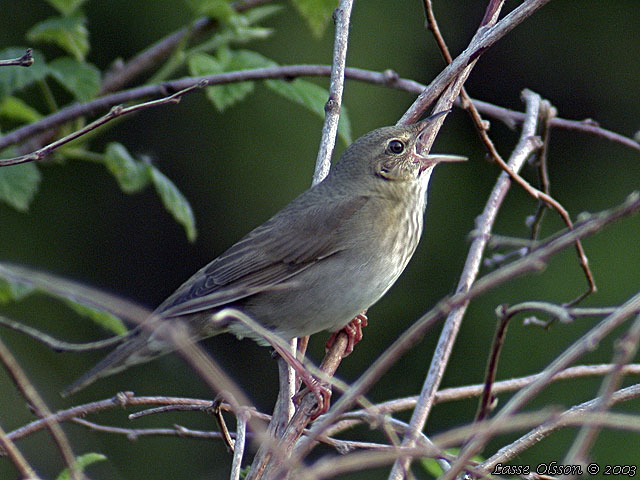
River Warbler (Locustella fluviatilis) is an Old World warbler in the grass warbler genus Locustella. It breeds in east and central Europe into western Asia. It is migratory, wintering in east Africa. The genus name Locustella is from Latin and is a diminutive of locusta, “grasshopper”. This refers to the song of the common grasshopper warbler and some others in this genus. The specific fluviatilis is Latin for “of a river”.

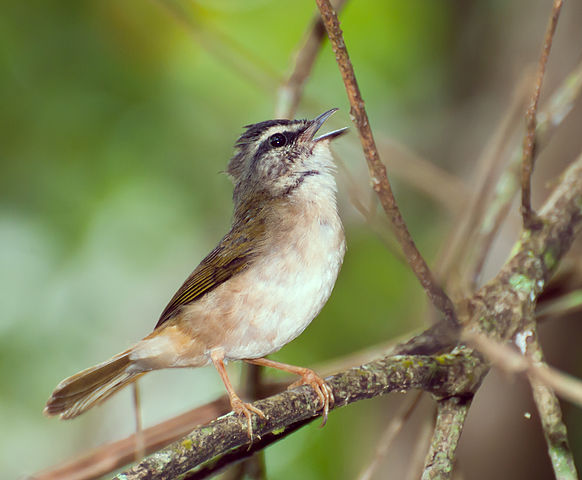
Riverbank Warbler (Myiothlypis rivularis) ©WikiC

Riverbank Warbler (Myiothlypis rivularis), sometimes known as the Neotropical river warbler or just river warbler (leading to confusion with Locustella fluviatilis), is a species of bird in the Parulidae family.

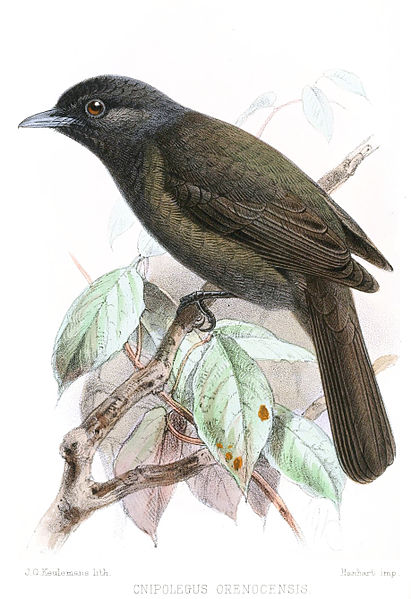
Riverside Tyrant (Knipolegus orenocensis) ©Drawing WikiC

Riverside Tyrant (Knipolegus orenocensis) is a species of bird in the family Tyrannidae. It is found in Brazil, Colombia, Ecuador, Peru, and Venezuela. Its natural habitat is subtropical or tropical moist shrubland.

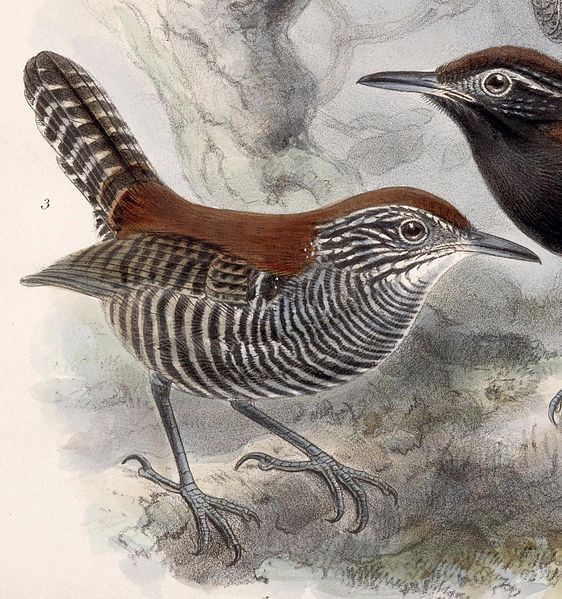
Riverside Wren (Cantorchilus semibadius) ©Drawing WikiC

Riverside Wren (Cantorchilus semibadius) is a species of bird in the Troglodytidae family. It is found in Costa Rica and Panama. Its natural habitat is subtropical or tropical moist lowland forests.


More Avian and Attributes

Birds whose first name starts with “R”

Good News

*
[Definitions from Webster’s Dictionary of American English (1828), unless noted. Bird info from Wikipedia plus.]

Bible Birds – Swift Introduction

Bible Birds – Swift Introduction

Alpine Swift (Tachymarptis melba) ©WikiC

“Even the stork in the sky Knows her seasons; And the turtledove and the swift and the thrush Observe the time of their migration; But My people do not know The ordinance of the LORD.” (Jeremiah 8:7 NASB)

The different versions of the Bible, translate this verse with different birds named. Many use either the Swift or the Swallow. They are similar but are in different bird families. The Swifts are in the Apodidae family and Swallows are in the Hirundinidae Family. Mainly, the verse is saying that the birds have more wisdom than some people.

Resemblances between swifts and swallows are similar because of their lifestyles based on catching insects in flight. They were both created with that ability. Both of them migrate or fly to other areas during the seasons. They need warmer weather to have an abundance of flying insects to feast on. [eat]

Glossy Swiftlet (Collocalia esculenta) by Nikhil Devasar

The family name, Apodidae, is derived from the Greek ἄπους (ápous), meaning “footless”, a reference to the small, weak legs of these most aerial of birds. The tradition of depicting swifts without feet continued into the Middle Ages, as seen in the heraldic martlet.

Some species of swifts are among the fastest animals on the planet, with some of the fastest measured flight speeds of any bird. “Swifts are the fastest of birds. Larger species are amongst the fastest fliers in the animal kingdom, with the white-throated needletail having been reported flying at up to 169 km/h (105 mph). Even the common swift can cruise at a maximum speed of 31 metres per second (112 km/h; 70 mph). In a single year the common swift can cover at least 200,000 km.” [Wikipedia]

See Swift – Creationwiki

Bible Birds – Swift

Bible Birds

Avian And Attributes – Ring

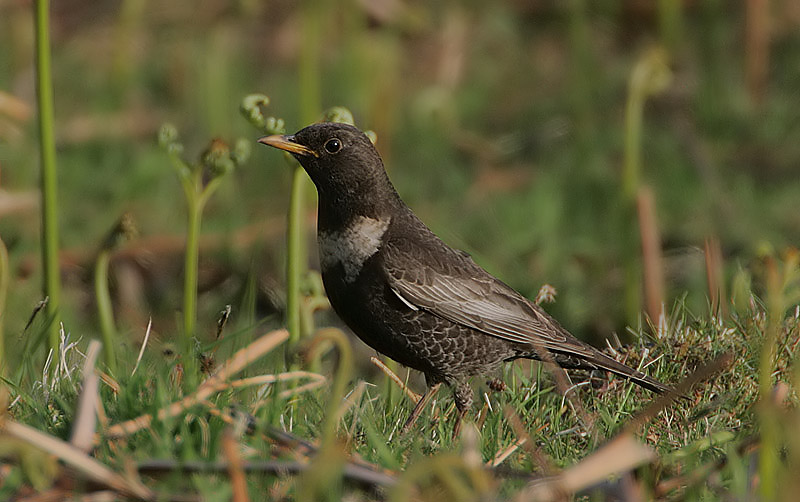
Ring Ouzel (Turdus torquatus) ©WikiC

“But the father said to his servants, Bring forth the best robe, and put it on him; and put a ring on his hand, and shoes on his feet: And bring hither the fatted calf, and kill it; and let us eat, and be merry: For this my son was dead, and is alive again; he was lost, and is found. And they began to be merry.” ” It was meet that we should make merry, and be glad: for this thy brother was dead, and is alive again; and was lost, and is found.” (Luke 15:22-24, 32 KJV) [Refers to salvation]


Avian and Attributes – Ring

RING, n.
1. A circle, or a circular line, or any thing in the form of a circular line or hoop. Thus we say of men, they formed themselves into a ring, to see a wrestling match. Rings of gold were made for the ark. Exodus 25. Rings of gold or other material are worn on the fingers and sometimes in the ears, as ornaments.
2. A circular course.
RING, n. [from the verb.]
1. A sound; particularly, the sound of metals; as the ring of a bell.
2. Any loud sound, or the sounds of numerous voices; or sound continued, repeated or reverberated; as the ring of acclamations.
3. A chime, or set of bells harmonically tuned.
RING, v.t. [from the noun.
1. To encircle.
2. To fit with rings, as the fingers, or as a swine’s snout.


Ring Ouzel (Turdus torquatus) ©WikiC

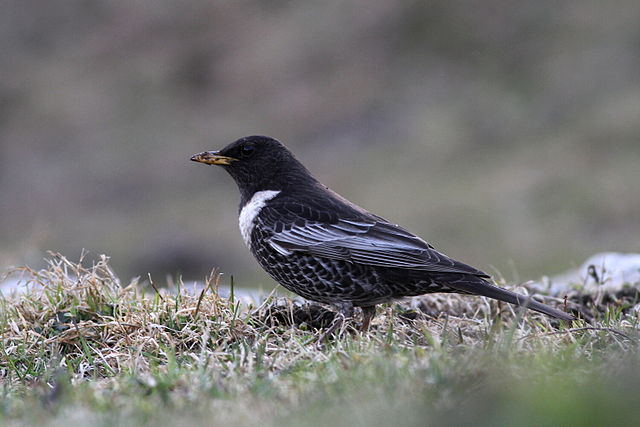
The Ring Ouzel (Turdus torquatus) is a European member of the thrush family, Turdidae. It is the mountain equivalent of the closely related common blackbird, and breeds in gullies, rocky areas or scree slopes.

“Ouzel” (or “ousel”) is an old name for common blackbird from Old English osle. “Ouzel” may also be applied to a group of superficially similar but unrelated birds, the dippers, the European representative of which is sometimes known as the water ouzel.

As with the English name, the scientific name also refers to the male’s obvious white neck crescent, being derived from the Latin words turdus, “thrush”, and torquatus, “collared”.

The adult male is all black except for a white crescent on the breast and a yellowish bill. The wings have a silvery appearance due to white feather edgings. The male sings its loud and mournful song from trees or rocks.

Ring Ouzel (Turdus torquatus) Femaile ©WikiC Rainbirder

The female is similar but duller, and younger birds often lack the breast crescent. The juvenile has brown plumage.

This species was first described by Linnaeus in his Systema naturae in 1758 under its current scientific name.

It breeds in the higher regions of western and central Europe and also in the Caucasus and in the Scandinavian mountains. Most populations are migratory, wintering in the Mediterranean region. It is declining in parts of its range, particularly in Ireland.

It is territorial and normally seen alone or in pairs, although loose flocks may form on migration. When not breeding, several birds may also be loosely associated in good feeding areas, such as a fruiting tree, often with other thrushes.

There are other “Ring” named birds, but not just plain “Ring”:

Ring-billed Gull
Ringed Antpipit
Ringed Kingfisher
Ringed Teal
Ringed Warbling Finch
Ringed Woodpecker
Ring-necked Dove
Ring-necked Duck
Ring-necked Francolin
Ring-tailed Pigeon


More Avian and Attributes

Birds whose first name starts with “R”

Good News

*
[Definitions from Webster’s Dictionary of American English (1828), unless noted. Bird info from Wikipedia plus. With Editing]

Where Are You From?

Wood Stork (Mycteria americana) by Lee

Wood Stork Tree at Circle B by Lee

When I work on the updates to the I.O.C. every so often, it is because the ornithologist have been asking questions about the birds. Where are they from? Where did they migrate? What is the latest DNA discoveries? And so they split and lump the birds again and again.

Genetic guide to birds – ©Scientific Am

The researchers with Answers in Genesis and at the Institute for Creation ask questions also about the birds and critters. Where did they come from? How many different kinds were on the Ark? They check DNA also. Birds in A Family Tree, and Creationism, And Evolution and Hybrid Animals

Baltimore Oriole (Icterus galbula) Chicks in nest ©WikiC

I am no different from them, except I am not a scientist, just curious. My interest of late has been split between birds and working on the genealogy of my ancestors. They both have similarities. Where did they come from?

This verse in Nehemiah sort of explains how some birds get removed from families. When the ornithologist analyzes the DNA, they find out that that bird wasn’t even related.

“These sought their register among those that were reckoned by genealogy, but it was not found: therefore were they, as polluted, put from the priesthood.” (Nehemiah 7:64 KJV) [In other words, they didn’t belong with that group.]

We know without any doubt that the Lord God created the birds as well as my ancestors and myself as well. That is a given!

As the birds spread from the Ark, they have been able to live in some areas more than others. They made their homes there. Others stayed, but couldn’t survive. They died off and became extinct, like so many of those Reunion birds.

Dan and I sitting way out front.

Like the birds, my brother and I just made the decision to have our DNA tested. We shall find out if we really are who we think we are. Trust they don’t throw us out of the Boles/Bushnell family.

On Thursday, instead of writing blogs, I was working on my genealogy and made a FANTASTIC discovery!!! We weren’t traced back to the Ark, but, we do relate back to the Rogers family that came over on the MAYFLOWER! [For our foreign readers that may not know the American history, that ship brought the first settlers to America here in 1620 AD.]

Replica of Mayflower in Plymouth, Massachusetts ©WikiC

This post has two main purposes:

1) The posts haven’t been produced as often lately, because of working on my ancestry.

2) Are any of my readers also interested in tracing your family tree? Just because we love birds doesn’t mean we do not have other interest. If you would leave a comment about your other interests besides birds, they would be appreciated.

Have a great day and stay tuned!

Avian And Attributes – Reunion

Reunion Stonechat (Saxicola tectes) ©WikiC

Reunion Stonechat (Saxicola tectes) ©WikiC

“You can start looking forward to a great reunion when I come visit you again. We’ll be praising Christ, enjoying each other.
(Philippians 1:26 MSG)

“Oh, we’ll be walking on air! And then there will be one huge family reunion with the Master. So reassure one another with these words.” (1 Thessalonians 4:18 MSG)

“Then we which are alive and remain shall be caught up together with them in the clouds, to meet the Lord in the air: and so shall we ever be with the Lord. Wherefore comfort one another with these words.” (1 Thessalonians 4:17-18 KJV)


Avian and Attributes – Reunion

REUN’ION, n.
1. A second union; union formed anew after separation or discord; as a reunion of parts or particles of matter; a reunion of parties or sects.
2. In medicine, union of parts separated by wounds or accidents.


Reunion Birds

Reunion Harrier (Circus maillardi) ©WikiC

The Réunion harrier or Réunion marsh harrier (Circus maillardi) is a bird of prey belonging to the marsh harrier group of harriers. It is now found only on the Indian Ocean island of Réunion, although fossil material from Mauritius has been referred to this species. It is known locally as the papangue or pied jaune. The Malagasy harrier(C. macrosceles) of Madagascar and the Comoro Islands was previously treated as a subspecies of this bird but is increasingly regarded as a separate species. The Réunion harrier appears to be declining in numbers and it is classed as an endangered species.

Reunion Ibis (Threskiornis solitarius) Extinct ©Drawing WikiC

The Réunion Ibis or Réunion Sacred Ibis (Threskiornis solitarius) is an extinct species of ibis that was endemic to the volcanic island of Réunion in the Indian Ocean. The first subfossil remains were found in 1974, and the ibis was first scientifically described in 1987. Its closest relatives are the Malagasy sacred ibis, the African sacred ibis, and the straw-necked ibis.

Reunion Kestrel (Falco duboisi) ©Drawing WikiC

The Réunion Kestrel (Falco duboisi) is an extinct bird of prey which belongs to the falcon family. It inhabited the Mascarene island of Réunion and was part of the Western Indian Ocean radiation of kestrels.

Reunion Night Heron

No Photo available with permission. Can see it HERE

The Réunion Night Hheron (Nycticorax duboisi) is an extinct species of heron formerly occurring on the Mascarene island of Réunion.

It was for a long time only known from a single description, that of Dubois published in 1674. He stated:

Bitterns or Great Egrets, large as capons, but very fat and good. They have grey plumage, each feather spotted with white, the neck and beak like a Heron, and the feet green, made like the feet of Poullets d’Inde (Porphyrio, W.R.). This bird lives on fish.[2]

Reunion Olive White-eye (Zosterops olivaceus) ©WikiC

Reunion Olive White-eye (Zosterops olivaceus) ©WikiC

The Réunion Olive White-eye (Zosterops olivaceus) is a species of bird in the family Zosteropidae. It is found on Réunion. Its natural habitats are boreal forests and subtropical or tropical high-altitude grassland.

Reunion Owl (Mascarenotus grucheti) ©Pinterest

The Réunion Owl (Mascarenotus grucheti) was a small owl that occurred on the Mascarene island of Réunion, but became extinct before living birds could be described; it is only known from subfossil bones. It belongs to the Mascarene owls of the genus Mascarenotus, and most likely was similar to a long-eared owl in size and appearance, but with nearly naked legs. The Mascarene owls were, however, more closely related to the genus Ninox. Compared to the Mauritius owl and the Rodrigues owl, it was the most terrestrial species of the genus, with long legs and possibly somewhat reduced flight capability; more probably though it was simply smaller than the Mauritius bird – between that species and the one from Rodrigues in size – but had equally long legs: the only suitable food available in quantity on Réunion were small birds.

[No photo available]
The Réunion Rail (Dryolimnas augusti) also known as Dubois’s wood-rail is an extinct rail species which was endemic to the Mascarenes island of Réunion. The scientific name commemorates French poet Auguste de Villèle (1858-1943) whose interest in the history of Réunion and hospitality made it possible for numerous naturalists to discover and explore the caves of Réunion.

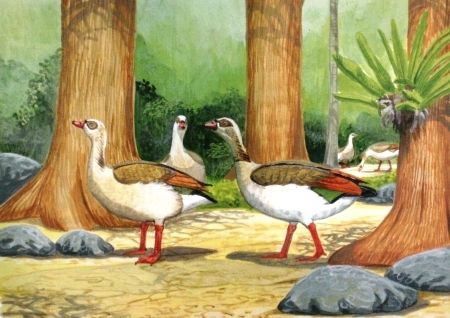
Reunion Sheldgoose (Alopochen kervazoi) ©Pinterest

The Réunion Shelduck or Kervazo’s Egyptian goose (Alopochen kervazoi) is an extinct species of goose from Réunion. It was a close relative of the Egyptian goose and was about the same size. There is only one description remaining, that of Dubois made in 1674. He merely mentions that they were similar to European geese but smaller, with the bill and feet being red. Apart from that, the species is only known from brief reports and subfossil bones.

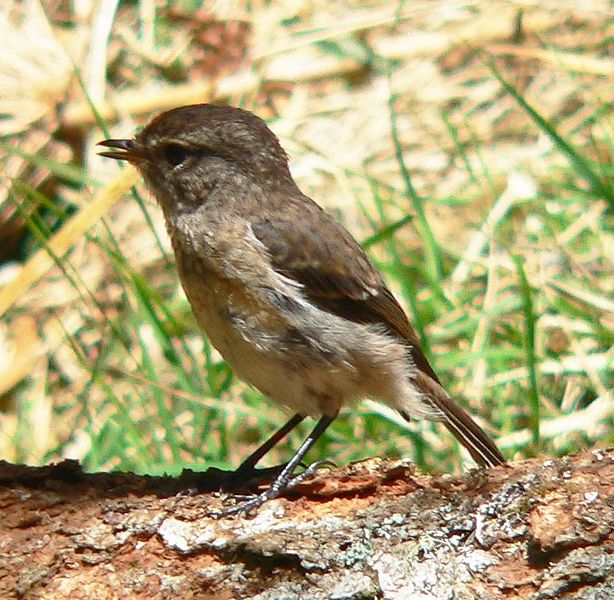
Reunion Stonechat (Saxicola tectes) Female ©WikiC

Réunion Stonechat (Saxicola tectes) Female ©WikiC

The Réunion Stonechat (Saxicola tectes) is a species of stonechat, endemic to the island of Réunion. This small passerine bird is common in clearings and open mountain bushlands there.

** As I was putting this together, the extinction of so many of these birds reminds us of the verses used. When we get caught for the “Reunion in the Air” we will be extinct down here on earth. Just make sure you have your reservation completed.  Gideon **


More Avian and Attributes

Birds whose first name starts with “R”

Good News

*
[Definitions from Webster’s Dictionary of American English (1828), unless noted. Bird info from Wikipedia plus.]

Eagles Protecting Their Young – YouTube

“To the Chief Musician. Set to “Do Not Destroy.” a Michtam of David When He Fled from Saul into the Cave. Be merciful to me, O God, be merciful to me! For my soul trusts in You; And in the shadow of Your wings I will make my refuge, Until these calamities have passed by. I will cry out to God Most High, To God who performs all things for me.” (Psalms 57:1-2 NKJV)

“He shall cover you with His feathers, And under His wings you shall take refuge; His truth shall be your shield and buckler. ” (Psalms 91:4 NKJV)

Shared from the Decorah Eagles YouTube Page

“DECORAH EAGLES & EAGLETS IOWA USA 🐣🐣🐣 After spending days enduring severe, horrendous weather conditions, protecting their three precious eaglets from the gale force winds, wet and freezing cold, Mom and Dad Eagle warm our hearts with this beautiful moment… a family moment of love, care, protection and devotion in the wild ♥ amazing nature!”

Trust you enjoy this as much as I did!

Birds of the Bible – Eagles

Avian And Attributes – Reed

Reed Parrotbill (Paradoxornis heudei) ©Drawing WikiC

“When they had twisted a crown of thorns, they put it on His head, and a reed in His right hand. And they bowed the knee before Him and mocked Him, saying, “Hail, King of the Jews!” Then they spat on Him, and took the reed and struck Him on the head.” (Matthew 27:29-30 NKJV)


Avian and Attributes – Reed

REED, n.
1. The common name of many aquatic plants; most of them large grasses, with hollow jointed stems, such as the common reed of the genus Arundo, the bamboo, &c. The bur-reed is of the genus Sparganium; the Indian Flowering reed of the genus Canna.
2. A musical pipe; reeds being anciently used for instruments of music.
3. A little tube through which a hautboy, bassoon or clarinet is blown.
4. An arrow, as made of a reed headed.
5. Thatch.


Reed Cormorant

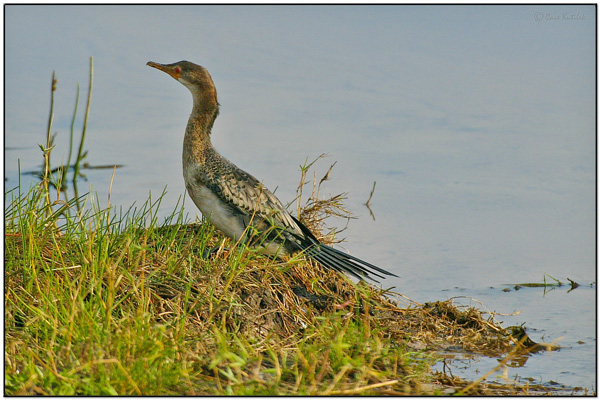
Reed Cormorant (Microcarbo africanus) by Daves BirdingPix

TheReed Cormorant (Microcarbo africanus), also known as the long-tailed cormorant, is a bird in the cormorant family Phalacrocoracidae. It breeds in much of Africa south of the Sahara, and Madagascar. It is resident but undertakes some seasonal movements.

The Reed Cormorant can dive to considerable depths, but usually feeds in shallow water. It frequently brings prey to the surface. It takes a wide variety of fish. It prefers small slow-moving fish, and those with long and tapering shapes, such as mormyrids, catfishes, and cichlids. It will less frequently eat soles (which can be important in its diet locally), frogs, aquatic invertebrates, and small birds.

Two to four eggs are laid in a nest in a tree or on the ground, normally hidden from view by long grass.

Reed Parrotbill

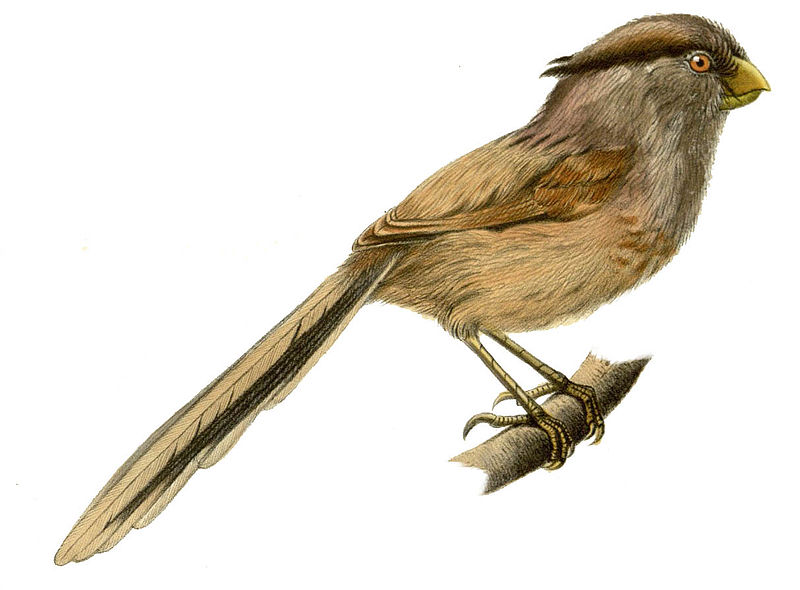
Reed Parrotbill (Paradoxornis heudei) ©Drawing WikiC

The Reed Parrotbill (Paradoxornis heudei) is a species of bird in the Sylviidae family. It is found in Manchuria and eastern China. It is threatened by habitat loss.

The northern subspecies P. h. polivanovi is sometimes regarded as a separate species, the northern parrotbill.

See Parrotbill article Good photos


More Avian and Attributes

Birds whose first name starts with “R”

Good News

*
[Definitions from Webster’s Dictionary of American English (1828), unless noted. Bird info from Wikipedia plus.]

Avian And Attributes – Rainbow

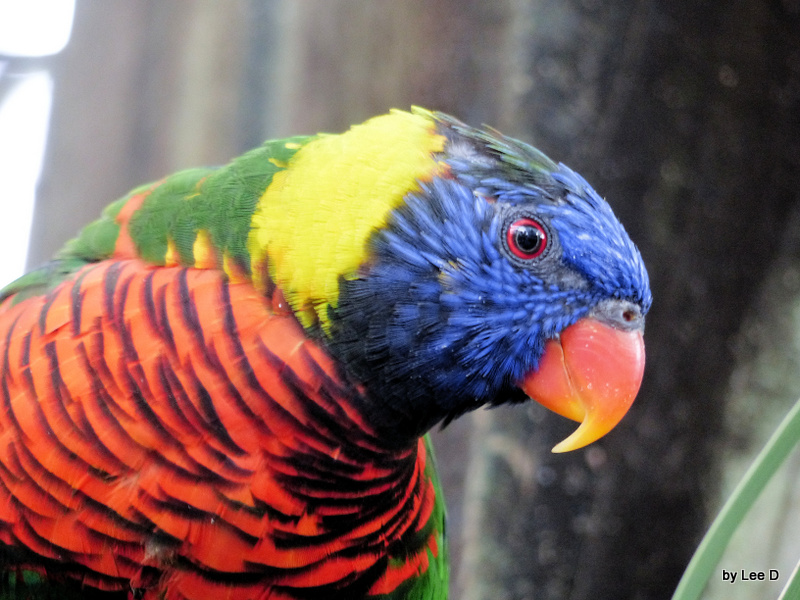
Rainbow Lorikeet Lowry Park Zoo 12-31-15 by Lee

“Like the appearance of a rainbow in a cloud on a rainy day, so was the appearance of the brightness all around it. This was the appearance of the likeness of the glory of the LORD. So when I saw it, I fell on my face, and I heard a voice of One speaking.
(Ezekiel 1:28 NKJV)


Avian and Attributes – Rainbow

RA’INBOW, n. A bow, or an arch of a circle, consisting of all the colors formed by the refraction and reflection of rays of light from drops of rain or vapor, appearing in the part of the hemisphere opposite to the sun. When the sun is at the horizon, the rainbow is a semicircle. The rainbow is called also iris.
The moon sometimes forms a bow or arch of light, more faint than that formed by the sun, and called lunar rainbow. Similar bows at sea are called marine rainbows or sea bows.


Rainbow Bee-eater

Rainbow Bee-eater (Merops ornatus) by Ian

Rainbow Lorikeet

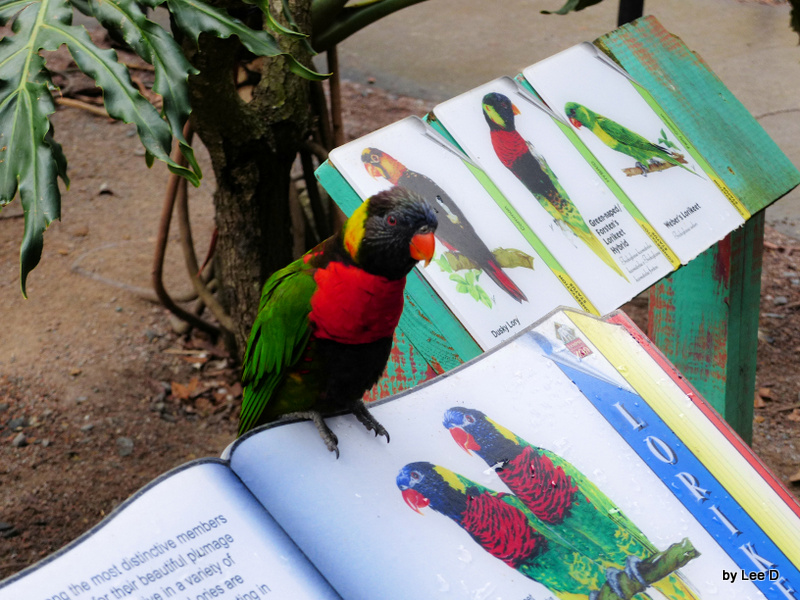
Rainbow Lorikeet by Lee at Zoo Tampa

Rainbow Pitta

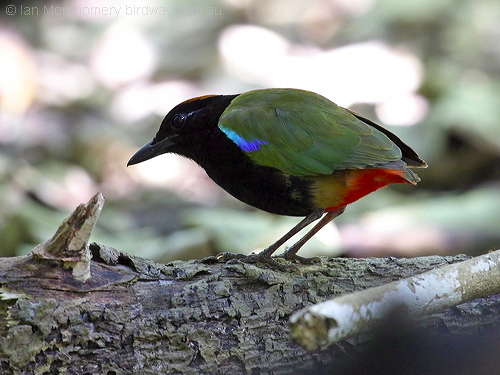
Rainbow Pitta-Australia-Birdway

Rainbow Starfrontlet

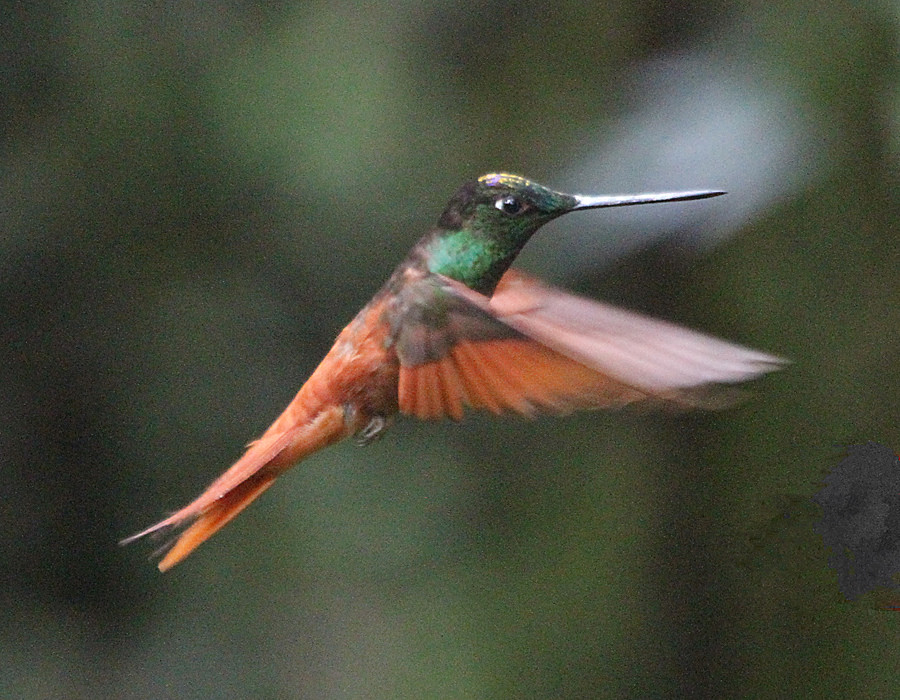
Rainbow Starfrontlet ©Brendan Ryan Flickr

Rainbow-bearded Thornbill

Rainbow-bearded Thornbill (Chalcostigma herrani) ©Flickr Jei Pov


More Avian and Attributes

Birds whose first or last name starts with “R”

Good News

*
[Definitions from Webster’s Dictionary of American English (1828), unless noted. Bird info from Wikipedia plus.]

Avian And Attributes – Purple

Purple-crowned Fairywren From Pinterest

“And they clothed him with purple, and platted a crown of thorns, and put it about his head, And began to salute him, Hail, King of the Jews! And they smote him on the head with a reed, and did spit upon him, and bowing their knees worshipped him. And when they had mocked him, they took off the purple from him, and put his own clothes on him, and led him out to crucify him.
(Mark 15:17-20 KJV)


Avian and Attributes – Purple

PUR’PLE, a. [L. purpureus; purpura, a shell from which the color was obtained.]
1. Designating a color composed of red and blue blended, much admired, and formerly the roman emperors wore robes of this color.
2. In poetry, red or livid; dyed with blood.
PUR’PLE, n. A purple color or dress; hence, imperial government in the Roman empire, as a purple robe was the distinguishing dress of the emperors.
1. A cardinalate.
PUR’PLE, v.t. [L. purpuro.] To make purple, or to dye of a red color; as hands purpled with blood.


Purple-throated Woodstar (Calliphlox mitchellii) ©WikiC

Purple Birds

There are many birds that have “Purple” as the first word of their names (14). Plus there are 34 “Purple-” birds and 5 “Purplish” birds. So that you can see many of them, below is a slideshow with a good many of them. These are all the real purple birds and not the phoney colored ones seen on Pinterest and other “photoshoped” places. These are shown the way their Creative Creator colored them.

This slideshow requires JavaScript.


More Avian and Attributes

Birds whose first name starts with “P”

Good News

*
[Definitions from Webster’s Dictionary of American English (1828), unless noted. Bird info from Wikipedia plus.]

Avian And Attributes – Pilot

Pilotbird (Pycnoptilus floccosus) by Ian

“But the centurion was more persuaded by the pilot and the captain of the ship than by what was being said by Paul.” (Acts 27:11 NASB)

“Look at the ships also, though they are so great and are driven by strong winds, are still directed by a very small rudder wherever the inclination of the pilot desires.” (James 3:4 NASB


Avian and Attributes – Pilot

PI’LOT, n.
1. One who steers a ship in a dangerous navigation, or rather one whose office or occupation is to steer ships, particularly along a coast, or into and out of a harbor, bay or river, where navigation is dangerous.
2. A guide; a director of the course of another person. [In colloquial use.]
PI’LOT, v.t. To direct the course of a ship in any place where navigation is dangerous.


Pilotbird (Pycnoptilus floccosus) by AGrosset

Pilotbird (Pycnoptilus floccosus) by AGrosset

Pilotbird

The Pilotbird (Pycnoptilus floccosus) is a species of bird in the family Acanthizidae. It is monotypic within the genus Pycnoptilus. The species is endemic to south-east New South Wales and eastern Victoria in Australia. Its natural habitat is temperate wet sclerophyll forests and occasionally temperate rainforest. There are two subspecies Pycnoptilus floccosus floccosus lives in alpine areas of New South Wales such as the Snowy Mountains and Pycnoptilus floccosus sandfordi lives in lowland forest from Newcastle to Melbourne.

The pilotbird is a large, plump species of acanthizid, measuring around 18 centimetres (7.1 in) in length and weighing 27 grams (0.95 oz). It has a large head and a short bill. The plumage is mostly brown with scalloping on the chest and an orangeish throat. The species is highly terrestrial. The name of the species comes from its supposed habit of following lyrebirds, taking prey that they flush. This habit is well known but seldom observed.

“The steps of a good man are ordered by the LORD: and he delighteth in his way.” (Psalms 37:23 KJV)

One of the my favorite songs about being piloted is “I Will Pilot Thee.” Who else should be directing our steps?

Fear thou not for I’ll be with thee
I will still thy Pilot be
Never mind the tossing billows
Take My hand and trust in Me

*** I really stretched it this time. We haven’t been birdwatching much lately. ***


More Avian and Attributes

Birds whose first name starts with “P”

Good News

*
[Definitions from Webster’s Dictionary of American English (1828), unless noted. Bird info from Wikipedia plus.]