“The LORD is my rock, and my fortress, and my deliverer; my God, my strength, in whom I will trust; my buckler, and the horn of my salvation, and my high tower.” (Psalms 18:2 KJV)
“I will say of the LORD, He is my refuge and my fortress: my God; in him will I trust.” (Psalms 91:2 KJV)
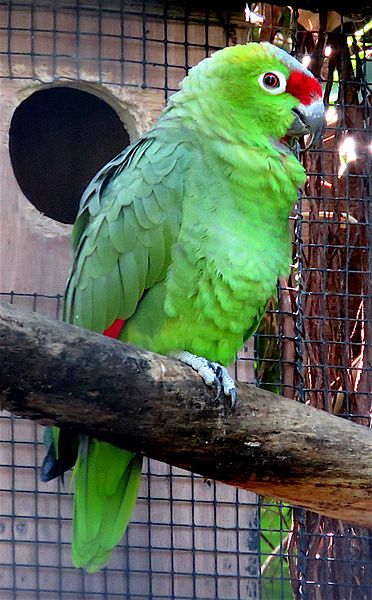
Avian and Attributes – Fortress
FOR’TRESS, n.
1. Any fortified place; a fort; a castle; a strong hold; a place of defense or security. The English have a strong fortress on the rock of Gibraltar, or that rock is a fortress.
2. Defense; safety; security;
The Lord is my rock, and my fortress. Psa 18.
FOR’TRESS, v.t. To furnish with fortresses; to guard; to fortify.
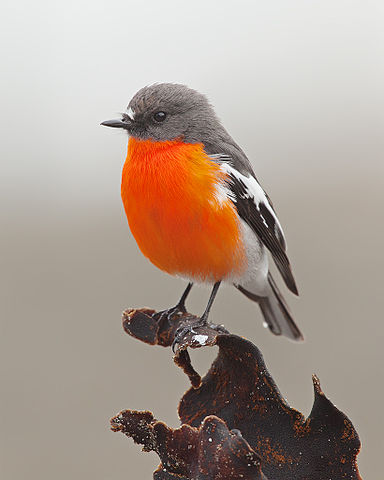
“His eyes were as a flame of fire, and on his head were many crowns; and he had a name written, that no man knew, but he himself.” (Revelation 19:12 KJV)
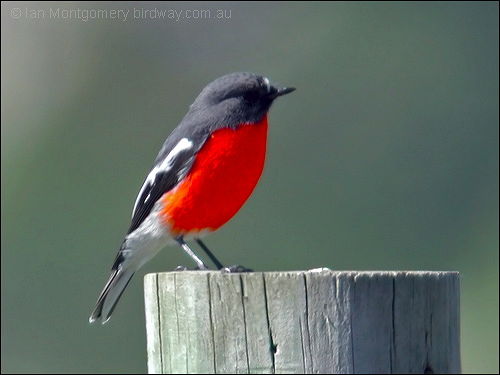
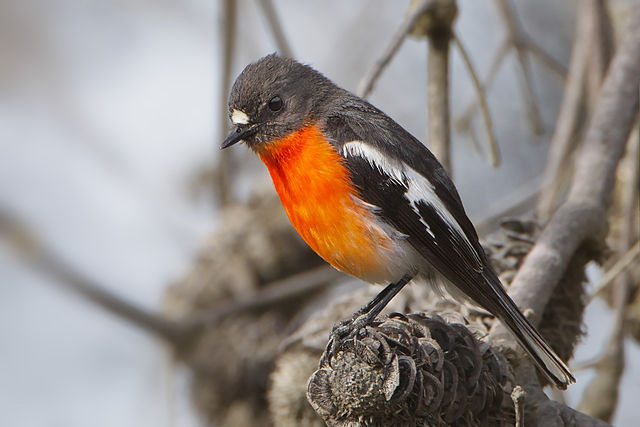
The Fflame Robin (Petroica phoenicea) is a small passerine bird native to Australia. It is a moderately common resident of the coolest parts of south-eastern Australia, including Tasmania. Like the other two red-breasted Petroica robins—the scarlet robin and the red-capped robin—it is often simply called the robin redbreast. Like many brightly coloured robins of the Petroicidae Family. Measuring 12–14 cm (4.7–5.5 in) long, the flame robin has dark brown eyes and a small thin black bill. The male has a brilliant orange-red chest and throat, and a white patch on the forehead above the bill. Its upper parts are iron-grey with white bars, and its tail black with white tips. The female is a nondescript grey-brown. Its song has been described as the most musical of its genus. (Petroicidae – Australian Robin Family)
“And he will lift up an ensign to the nations from far, and will hiss unto them from the end of the earth: and, behold, they shall come with speed swiftly:” (Isaiah 5:26 KJV)
“One thousand shall flee at the rebuke of one; at the rebuke of five shall ye flee: till ye be left as a beacon upon the top of a mountain, and as an ensign on an hill.” (Isaiah 30:17 KJV)
Ensign
EN’SIGN, n. en’sine. [L. insigne, insignia, from signum, a mark impressed, a sign.]
1. The flag or banner of a military band; a banner of colors; a standard; a figured cloth or piece of silk, attached to a staff, and usually with figures, colors or arms thereon, borne by an officer at the head of a company, troop or other band.
2. Any signal to assemble or to give notice.
He will lift up an ensign to the nations. Isa 5. Ye shall be left as an ensign on a hill. Isa 30.
3. A badge; a mark of distinction, rank or office; as ensigns of power or virtue.
4. The officer who carries the flag or colors, being the lowest commissioned officer in a company of infantry.
5. Naval ensign, is a large banner hoisted on a staff and carried over the poop or stern of a ship; used to distinguish ships of different nations, or to characterize different equadrons of the same navy.
The Emperor Bird-of-paradise (Paradisaea guilielmi), also known as Emperor of Germany’s bird-of-paradise is a species of bird-of-paradise.
The Emperor bird-of-paradise is endemic to Papua New Guinea. It is distributed in hill forests of the Huon Peninsula. The diet consists mainly of fruits, figs and arthropods.
The name commemorates the last German Emperor and King of Prussia, Wilhelm II of Germany. In January 1888, the emperor bird-of-paradise was the last bird-of-paradise discovered by Carl Hunstein, who also found the blue bird-of-paradise on his journeys. These two species, along with the red bird-of-paradise, are the only Paradisaea that perform inverted display. (Paradisaeidae – Birds-of-paradise Family)
“In that day shall the LORD of hosts be for a crown of glory, and for a diadem of beauty, unto the residue of his people,” (Isaiah 28:5 KJV)
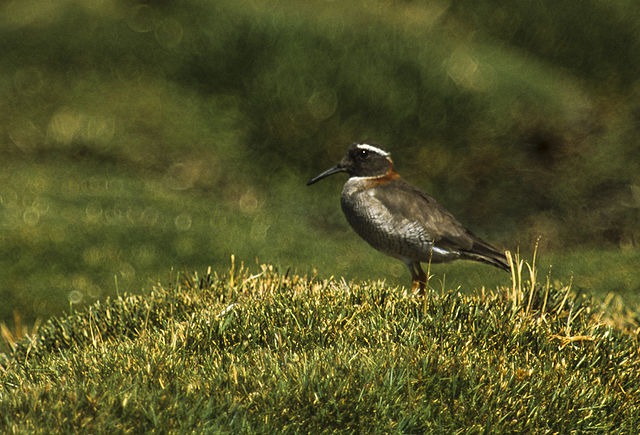
Avian and Attributes – Diadem
DIADEM, n. [Gr., to gird; to bind. L.]
1. Anciently, a head-band or fillet worn by kings as a badge or royalty. It was made of silk, linen or wool, and tied round the temples and forehead, the ends being tied behind and let fall on the neck. It was usually white and plain; sometimes embroidered with gold, or set with pearls and precious stones.
2. In modern usage, the mark or badge of royalty, worn on the head; a crown; and figuratively, empire; supreme power.
Stephanophorus is a monotypic genus of tanager, containing only the Diademed Tanager, Stephanophorus diadematus .
It is purple-blue with a white crown characterised by a small red patch, and it is found mostly in open areas in southern Brazil, northeast Argentina, and Uruguay. (Thraupidae – Tanagers and Allies Family)
There are actually four birds named Diademed. Here are links to their families.
“For it became him, for whom are all things, and by whom are all things, in bringing many sons unto glory, to make the captain of their salvation perfect through sufferings.” (Hebrews 2:10 KJV)
“Neither is there salvation in any other: for there is none other name under heaven given among men, whereby we must be saved.” (Acts 4:12 KJV)
Avian and Attributes – Captain
“We meet this title in one passage of the word of God, and but one, as far as my memory chargeth me, applied to the Lord Jesus Christ; and that is in the second chapter of Hebrews, and the tenth verse. And very sweetly and eminently so, must we consider the name in reference to him. For he it was, most probably, that Joshua saw in vision, long before his incarnation, before the walls of Jericho, as captain of the Lord’s host, and before whom Joshua fell on his face. (Joshua 5:13-15) It is very blessed to see and know the Lord Jesus under this character, and to fight under his banner.” (Poor Man’s Concordance – Robert Hawker)
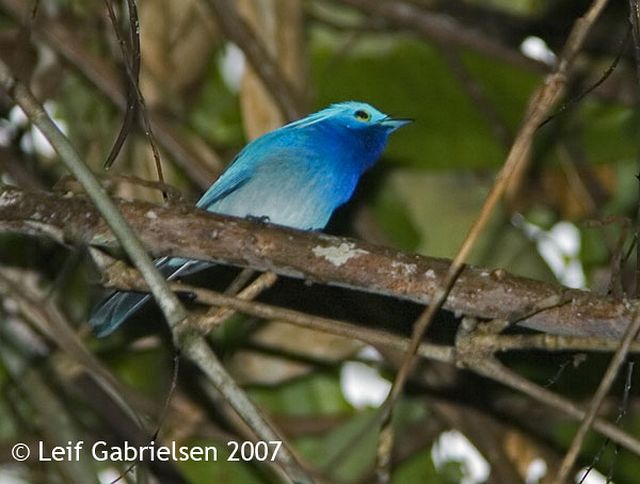
The Celestial Monarch (Hypothymis coelestis) is a species of bird in the family Monarchidae, and one of the most attractive of all the monarch flycatchers, with its spectacular blue crest and large yellow eye-ring (neither of which are illustrated in the facing painting). It is endemic to the Philippines. (Wikipedia)
“This striking inhabitant of the forest is unmistakable with its electric-blue plumage. Males are even more arresting in appearance due to the presence of a crest of long, slender feathers on top of the head, which generally droop down and are raised only in excitement. The back, throat and breast are bright cobalt-blue, while the lower back, tail and upperwing are a lighter blue, and the belly is white, washed with light blue . Female celestial monarchs differ slightly in appearance, being generally slightly smaller and slightly duller than males and having a shorter crest. The dark brown eyes are surrounded by a little circle of greenish-yellow skin, and the vivid blue beak is tipped with black (2). Celestial monarchs call with a loud, high-pitched ‘pwee pwee pwee’ ” (ARKive) (Monarchidae – Monarchs Family)
“The east wind carrieth him away, and he departeth: and as a storm hurleth him out of his place.” (Job 27:21 KJV)
“But the men marvelled, saying, What manner of man is this, that even the winds and the sea obey him!” (Matthew 8:27 KJV)
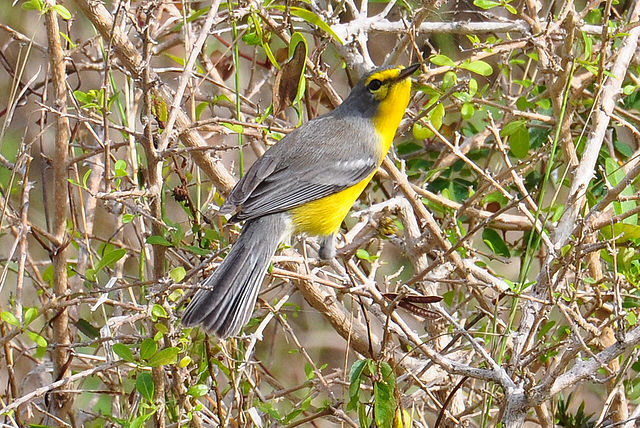
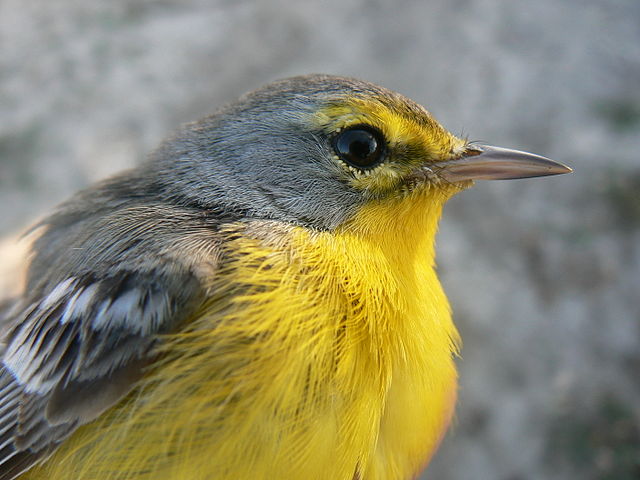
While working on the last Attributes and Avian article, – Bounty/Bountiful, I was using the “B – First Name of Birds” list to find a bird to use. The Barbuda Warbler (Setophaga subita) caught my attention. Also, one of our readers wrote a comment, wondering what happened to the birds during a hurricane.
The tiny island of Barbuda took a direct hit by Hurricane Irma and basically destroyed at least 95% of all structures. They have now evacuated all residents off of the island. [inhabited for the last 300 years] (BoingBoing article Not One Single Human Left on the Island) “With 95% of the island’s structures completely destroyed, all 1,800 residents have evacuated to nearby Antigua, and now live in shelters or with relatives. The only living creatures left on Barbuda are pets and livestock, which the non-profit group World Animal Protection are trying to feed and rescue.” So, what about the birds?
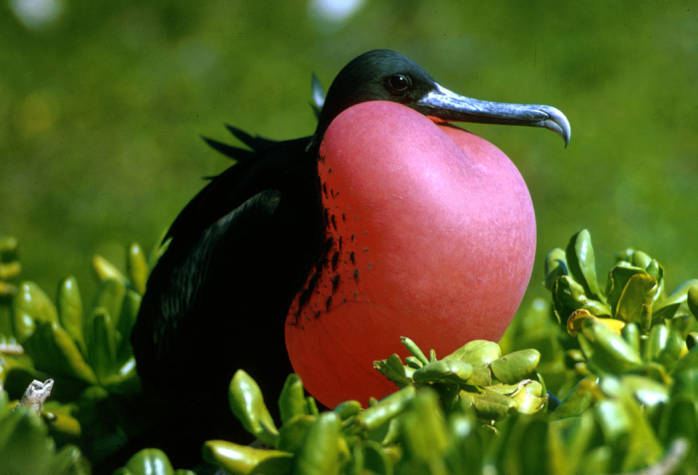
The Barbuda Warbler is endemic to Barbuda. “In addition to the catastrophic impact on Barbuda’s human residents, concern turned to the storm’s effects on the island’s wildlife. The island’s only endemic bird, the near-threatened Barbuda warbler, numbered less than 2,000 individuals prior to the hurricane. It is unknown if the warbler survived the hurricane or its aftermath. Barbuda’s Codrington Lagoon, home to the largest colony of magnificent frigatebirds in the Caribbean, with an estimated 2,500 nesting pairs, was also inundated by the storm surge.” From Hurricane Irma article on Wikipedia. Also, from Wikipedia, “The Barbuda warbler (Setophaga subita) is a species of bird in the Parulidae family. It is endemic to the island of Barbuda in Antigua and Barbuda. Its natural habitat is tropical dry shrubland near wetland areas. It is threatened by habitat loss. It once was considered a subspecies of the Adelaide’s Warbler.”
Searching the internet, I couldn’t find out too much about the Barbuda Warbler, but here are a few articles about other bird species that you will find interesting.
“Irma left the island of Barbuda in ruins; about 95 percent of structures were destroyed or damaged, and nearly all residents were evacuated last week as Hurricane Jose threatened to hit. The fate of Barbuda Warbler, an endemic species that likely numbered less than 2,000 birds before Irma, is unknown.
Jeremy Ross, a scientist with the University of Oklahoma, wonders if Irma was an extinction-level event for the warbler.
Barbuda’s Codrington Lagoon, a RAMSAR-designated wetland and national park, was home to the largest colony of Magnificent Frigatebirds in the region (around 2,500 pairs). According to BirdsCaribbean, the lagoon “was breached during the storm and the sea has flowed in.”
“Thousands of birds must have perished,” said Andrew Dobson, president of BirdsCaribbean, in an article posted on Bernews.com.
Our prayers go out to those who have had to be evacuated from Barbuda, but, also, to all those who have been visited by the Hurricanes this year.
” And I say unto you my friends, Be not afraid of them that kill the body, and after that have no more that they can do. But I will forewarn you whom ye shall fear: Fear him, which after he hath killed hath power to cast into hell; yea, I say unto you, Fear him. Are not five sparrows sold for two farthings, and not one of them is forgotten before God? But even the very hairs of your head are all numbered. Fear not therefore: ye are of more value than many sparrows.” (Luke 12:4-7 KJV)
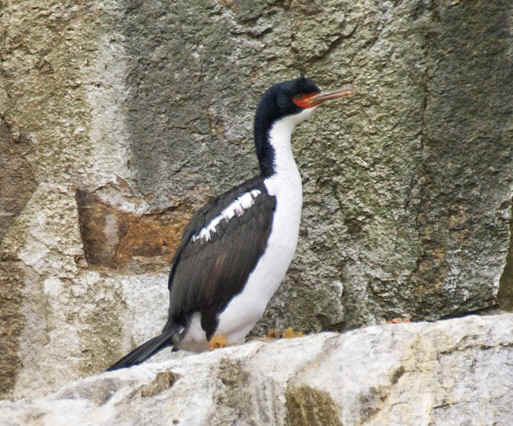
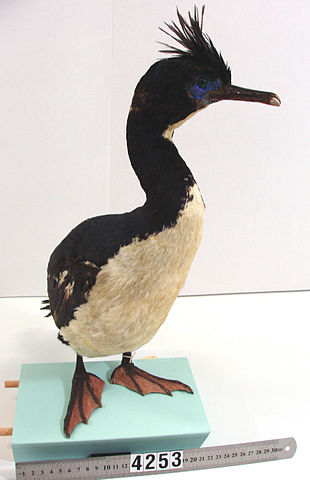
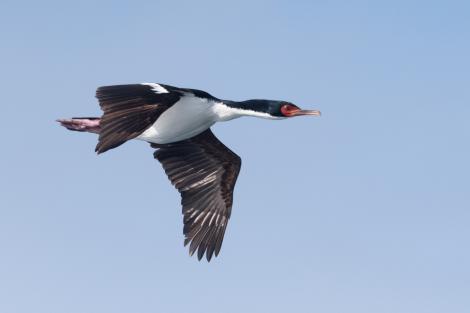
The Bounty Shag (Leucocarbo ranfurlyi), also known as the Bounty Island shag, is a species of cormorant of the Phalacrocoracidae family. They are found only on the tiny and remote Subantarctic Bounty Islands, 670 km south east of New Zealand. Its natural habitats are open seas and rocky shores. In 2005 618 individuals were counted (with roughly 410 mature ones) and the population seems to have remained stable since.
Some taxonomic authorities, including the International Ornithologists’ Union, place this species in the genus Leucocarbo. Others place it in the genus Phalacrocorax.
Size; 71 cm. Large, black-and-white cormorant. Black head, hind neck, lower back, rump, uppertail-coverts, all with metallic blue sheen. White underparts. Pink feet. White patches on wings appear as bar when folded. Caruncles absent. Voice: Male makes call during displays only.
This species as Vulnerable because its very small population and breeding range renders it susceptible to stochastic events and human impacts. The Bounty Islands are a nature reserve and are free of introduced predators. The islands are uninhabited and are seldom visited, so human interference is minimal. (Cormorants, shags – Phalacrocoracidae Family)
American Bittern (Botaurus lentiginosus) by Ian Montgomery
“Let your conversation be without covetousness; and be content with such things as ye have: for he hath said, I will never leave thee, nor forsake thee.” (Hebrews 13:5 KJV)
Avian and Attributes – Always There (Omnipresent)
OMNIPRES’ENT, a. Present in all places at the same time; ubiquitary; as the omnipresent Jehovah.
What a great promise. The Lord definitely was with all of us here in Florida as we rode out Hurricane Irma. We have friends and family around the state and around our area, yet the Lord was right there with each of us during the storm. As I begin the Avian and Attributes series back up, this time coming through using the First Name of birds to match the Attributes, the American Bittern was chosen because they are all over our state. Haven’t seen any yet, but then we haven’t been birdwatching, needless to say.
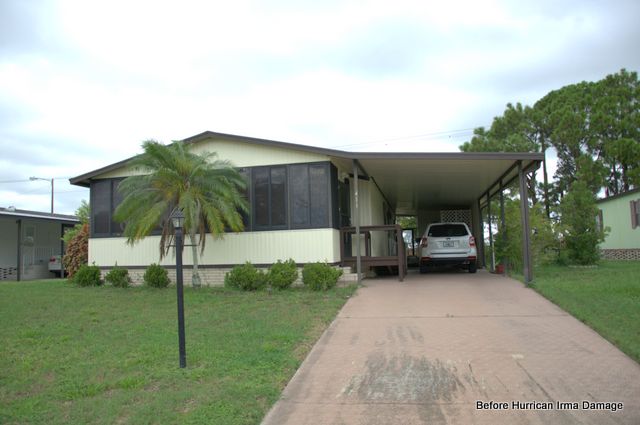
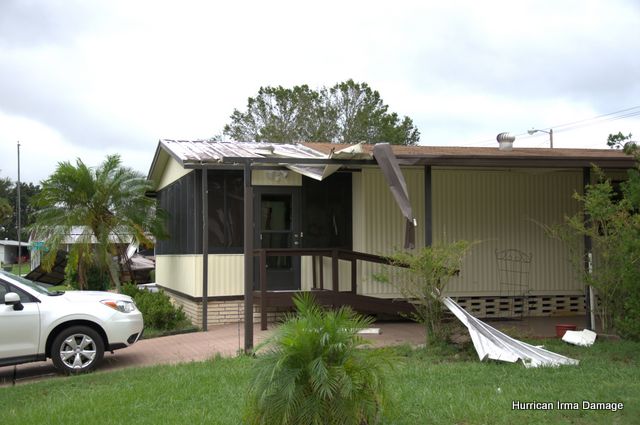
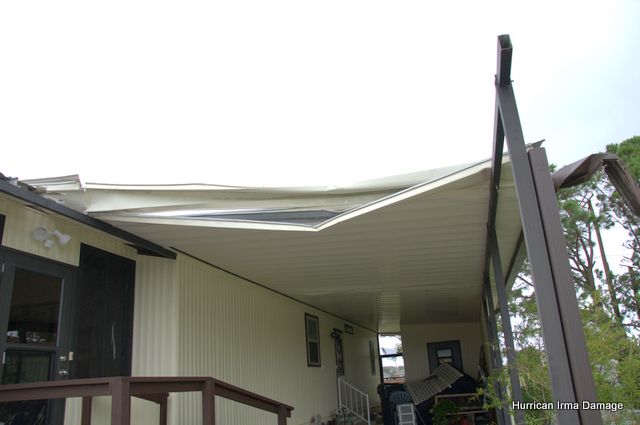
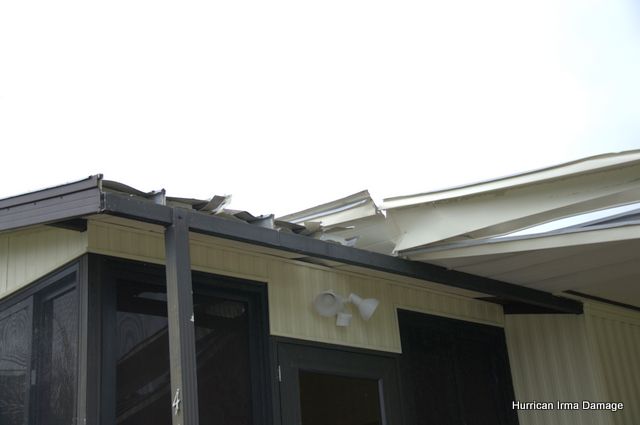
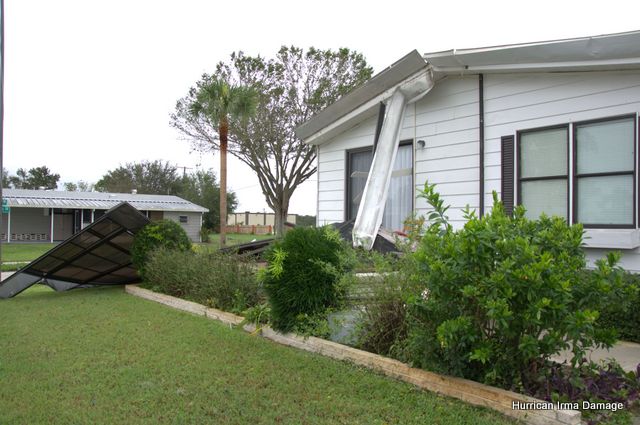
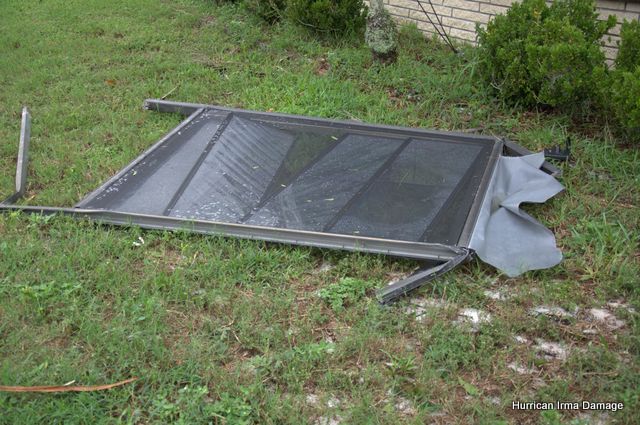
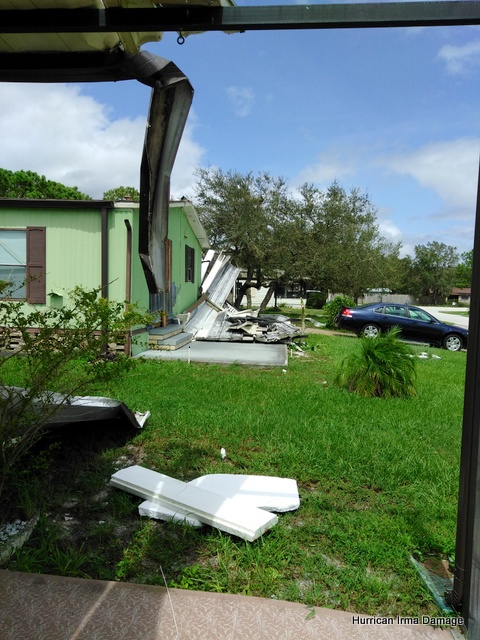
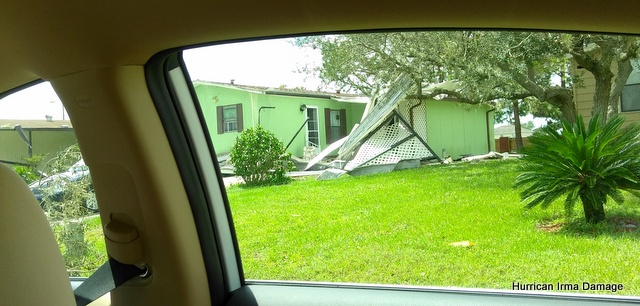
The eye of the storm went right over Winter Haven and it was a bit of a scary night with the winds howling on Sunday morning August 10. Had gust at least 88 mph, but thankfully we were staying with friends in a house (which never lost power.) We live in a manufactured house (mobile home) and we were all told to evacuate. Monday we came back to survey our place, and praise the Lord, we had minimal damage. We came back Tuesday to stay. I am including photos we took. Our electric came back on yesterday (Thursday 14th), and now we have air conditioning and the internet back up. Yeah!! Lost everything in the refrigerator and freezer, but that is replaceable. We have insurance and it should cover our damage. Again, the Lord is with us through all of this.
Our House before the storm
Our House after Irma – Carport minimal damage
Our church, Faith Baptist came through okay. Baron Brown, who writes on here as Golden Eagle, lost power, but no damage. Emma Foster’s parent’s house had no damage, nor lost electric. God is Good, All the Time!!!
P.S. The Sandhill Cranes in our neighborhood have visited us since the storm and the Doves. Haven’t seen any of the Finches yet. Trust they made it through the storm. The feeders are up and re-stocked.
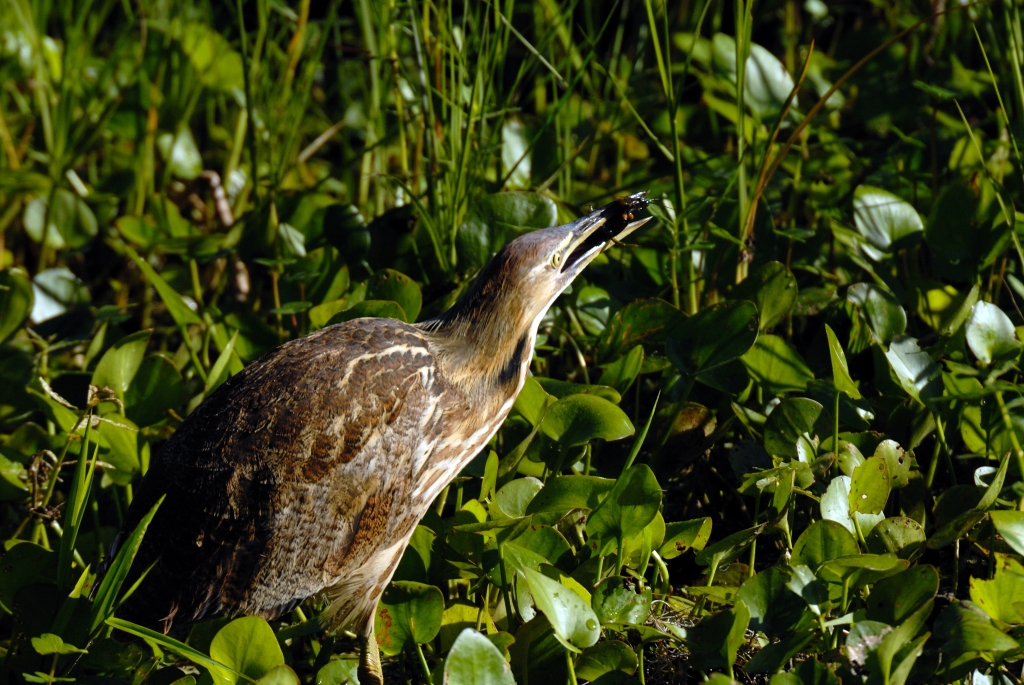
American Bittern (Botaurus lentiginosus) by Dan
American Bittern
The American Bittern (Botaurus lentiginosus) is a species of wading bird in the heron family of the Pelican order of bird. It has a Nearctic distribution, breeding in Canada and the northern and central parts of the United States, and wintering in the U.S. Gulf Coast states, all of Florida into the Everglades, the Caribbean islands and parts of Central America.
It is a well-camouflaged, solitary brown bird that unobtrusively inhabits marshes and the coarse vegetation at the edge of lakes and ponds. In the breeding season, it is chiefly noticeable by the loud, booming call of the male. Ardeidae – Herons, Bitterns Family
Click photos to see full size.
Our House before the storm
Our Hurricane meal at our friend”s house during the storm.
“For unto us a child is born, unto us a son is given: and the government shall be upon his shoulder: and his name shall be called Wonderful, Counsellor, The mighty God, The everlasting Father, The Prince of Peace. Of the increase of his government and peace there shall be no end, upon the throne of David, and upon his kingdom, to order it, and to establish it with judgment and with justice from henceforth even for ever. The zeal of the LORD of hosts will perform this.” (Isaiah 9:6-7 KJV)
Look down from heaven, and behold from the habitation of thy holiness and of thy glory: where is thy zeal and thy strength, the sounding of thy bowels and of thy mercies toward me? are they restrained?” (Isaiah 63:15 KJV)
“For I bear them record that they have a zeal of God, but not according to knowledge.” (Romans 10:2 KJV)
Avian and Attributes – Zeal
ZEAL, n. [Gr., L.] Passionate ardor in the pursuit of any thing. In general, zeal is an eagerness of desire to accomplish or obtain some object, and it may be manifested either in favor of any person or thing, or in opposition to it, and in a good or bad cause.
They have a zeal of God, but not according to knowledge. Rom 10.
A zeal for liberty is sometimes an eagerness to subvert, with little care what shall be established.Z
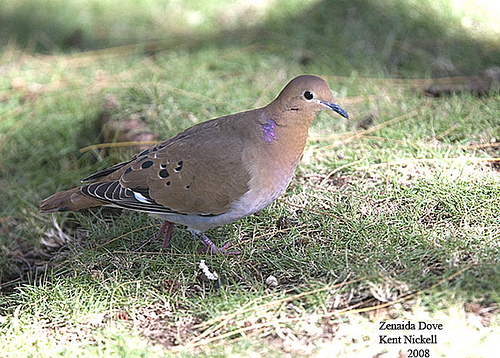
Zenaida Dove – [No bird’s last name begins with “Z”]
The Zenaida Dove (Zenaida aurita) is a member of the bird family Columbidae, which includes doves and pigeons. It is the national bird of Anguilla, where it is commonly (but erroneously) referred to as a turtle dove. It lays two white eggs on a flimsy platform built on a tree or shrub. It also nests in rock crevices and on grassy vegetation if no predators are present. It has been recorded that some birds have up to 4 broods per year. Eggs take approximately two weeks to hatch, and the young chicks typically fledge after only two weeks in the nest. Parents feed the young pigeon’s milk, a nutrient rich substance regurgitated from its crop.
The bird is resident and abundant over much of its range. The Zenaida Dove is approximately 28–30 cm (11–12 in) in length. It looks very similar to the mourning dove, but is smaller in size, has a shorter, more rounded tail, and is a bit more darkly colored. It is also distinguished from the mourning dove by showing white on the trailing edge of its wings in while in flight. The mourning dove does not have the white trailing edge. (Columbidae – Pigeons, Doves Family)
*** This ends my challenge to Name an Attribute of God, and also show a bird whose last name began with the first letter of the attribute. I had to make a few adjustment, like this Zenaida Dove and X-Exalted. I have decided to go through more Attributes of God alphabetically. This time, the First name of a bird will be used. *** [Trust you enjoyed the first round.] ***
*** Due to Hurricane Irma, we are going to a shelter to hunker down. I may wait to begin the next part of the series when things settle down. Please keep all us in your prayers. ***
“I appeared to Abraham, to Isaac, and to Jacob as God Almighty [El-Shaddai], but by My name the Lord [Yahweh–the redemptive name of God] I did not make Myself known to them [in acts and great miracles].”[Gen. 17:1.] (Exodus 6:3 AMP)
“And I appeared unto Abraham, unto Isaac, and unto Jacob, by the name of God Almighty, but by my name JEHOVAH was I not known to them.” (Exodus 6:3 KJV)
Avian and Attributes – Yahweh
YAHWEH (YHWH)
Yahweh is the most holy name for God in Old Testament usually translated LORD (iLumina Encyclopedia)
Yahweh, or Jehovah, was the personal name of God by which the Israelites knew him as their God – and their God was the one and only true God (Exo_4:22; 32:27; Deu_6:4; 1Sa_17:45). When they wanted to name a place after some special event where they had seen God at work, they often formed the name by combining God’s name with a suitable Hebrew word (Gen_22:8,14; Exo_17:15; Jdg_6:24; Eze_48:35). They also combined shortened forms of Yahweh (Jehovah) with other words to form names for people (2Ki_11:1-2,4,21).
Usage in Hebrew
The word ‘Jehovah’ probably never existed in the Hebrew language. Originally Hebrew was written with consonants only, the readers supplying the vowels as they read. The word from which ‘Jehovah’ comes consists of the consonants YHWH, and was probably pronounced ‘Yahweh’. Transliterations of the word in other languages support this as the likely pronunciation. (Bridgeway Bible Dictionary)
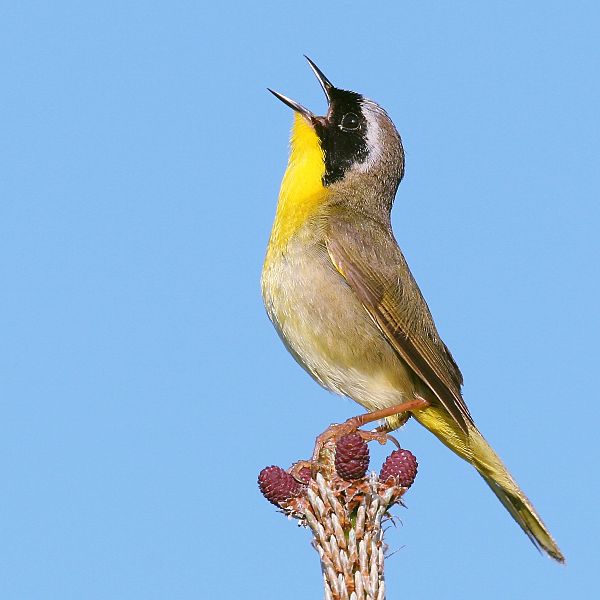
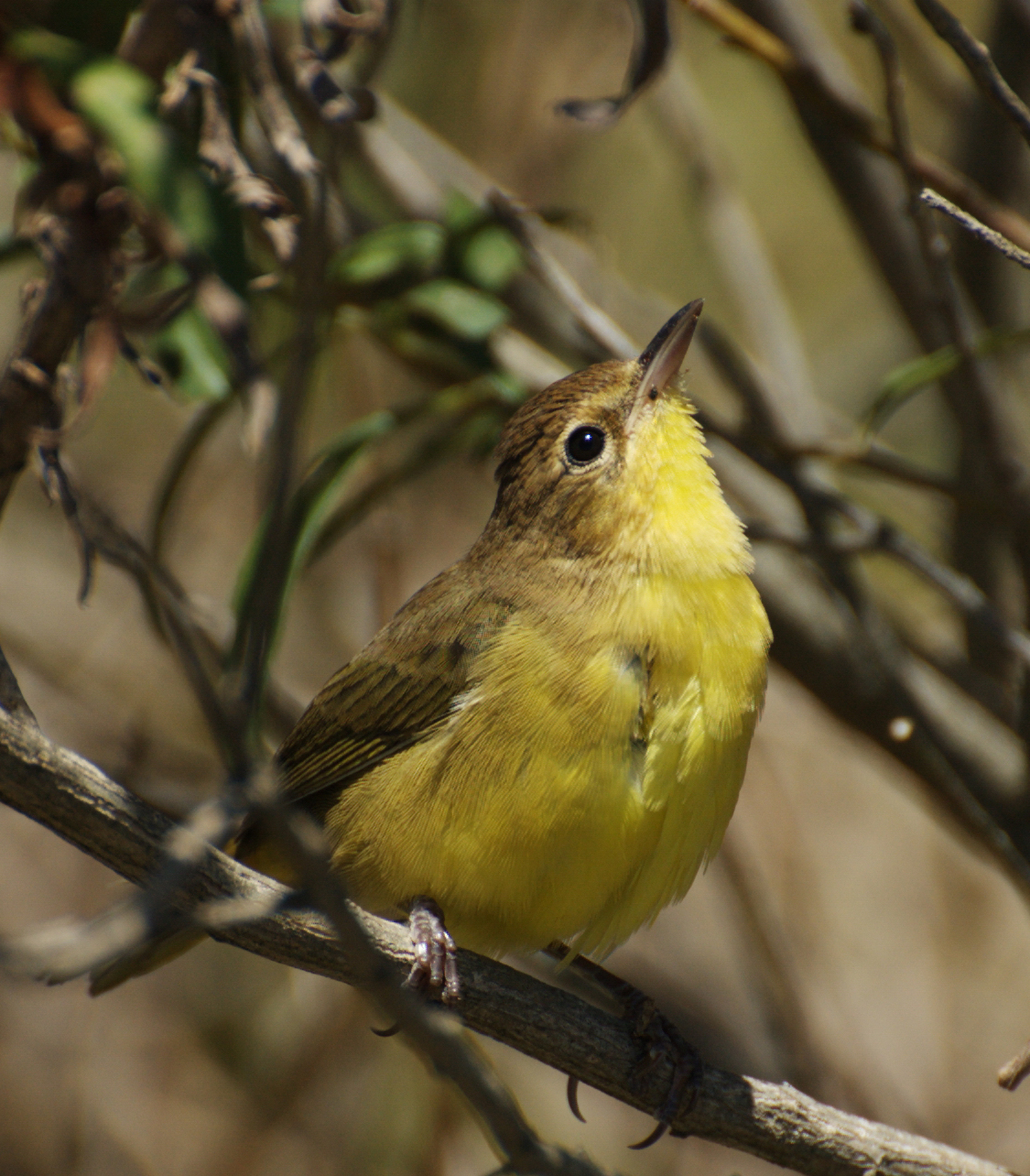
Common Yellowthroat at Circle B by Lee
Yellowthroats
The Yellowthroats are New World warblers in the genus Geothlypis. Most members of the group have localized ranges in Mexico and Central America, but the masked Yellowthroat has an extensive South American distribution, and common yellowthroat, the only migratory species in the group, breeds over much of North America.
All the yellowthroats have similar plumage, with yellow-green upperparts, yellow breast, and a mainly black bill. The adult male has a black facemask of variable extent, usually bordered above with a grey band. The female is similar, but lacks the black mask, and may be duller in plumage.
The breeding habitat of these warblers is typically marshes and other wet areas with dense low vegetation. The eggs, two in most species, but up to five for common yellowthroat, are laid in a lined cup nest low in grass or rank vegetation. (Parulidae – New World Warblers Family)
Greater Yellownape (Chrysophlegma flavinucha) female Zoo Miami by Dan
“And there arose a great storm of wind, and the waves beat into the ship, so that it was now full. And he was in the hinder part of the ship, asleep on a pillow: and they awake him, and say unto him, Master, carest thou not that we perish? And he arose, and rebuked the wind, and said unto the sea, Peace, be still. And the wind ceased, and there was a great calm. And he said unto them, Why are ye so fearful? how is it that ye have no faith? And they feared exceedingly, and said one to another, What manner of man is this, that even the wind and the sea obey him?” (Mark 4:37-41 KJV)
We here in Florida are preparing for Hurricane Irma to impact our state in the next few days. Dan and I have put in our supplies, and our just waiting to make a final decision to stay or go to a shelter. When we lived in Fort Lauderdale years ago, we went through the fringe of Hurricane Andrew. As you know, we like to visit zoos, especially Zoo Miami. During Andrew, the then Miami Metro Zoo was devastated. Thankfully, it was rebuilt and renamed Zoo Miami.
Thought I would check to see what is being done around the state at some of our favorite Zoos. What I found was more of what they did in previous hurricanes to protect the animals.
Victoria Crowned Pigeon (Goura victoria) by Lee at Zoo Miami
Zoo Miami is right in the path of a direct hit from Irma. The Wings of Asia aviary was built to new strong hurricane strengths, and we trust it can stand up to this new threat. Here are some links to what preparations are happening.
“Zoo Miami’s flamingos won’t be riding out Hurricane Irma in a bathroom like they were 25 years ago when Hurricane Andrew devastated the park.
Instead, the park’s majestic birds will be inside their steel and concrete enclosure—an upgrade from the iconic photo that shows the birds huddled in a hay-filled bathroom.
“It’s one of the things we learned from Andrew,” said Ron Magill a spokesman for Zoo Miami. “They will be safe.” CLICK THE LINK TO READ THE REST.
Here are two clips from the Hurricane Andrew damage.
*
**
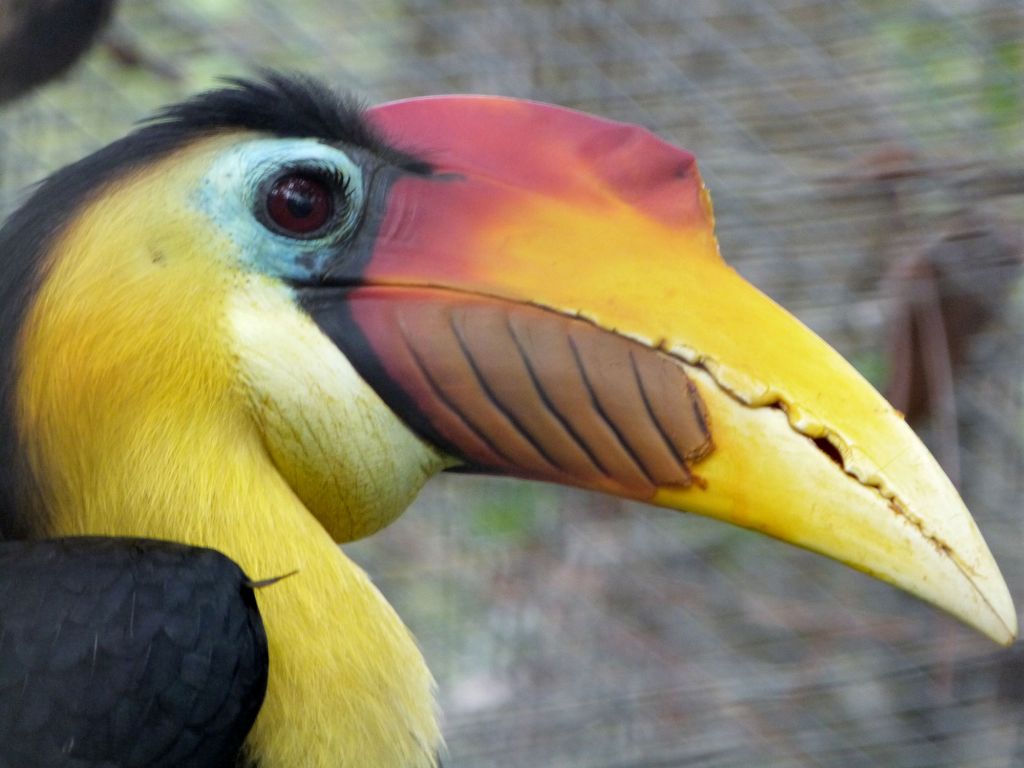
Wrinkled Hornbill (Aceros corrugatus) Brevard Zoo by Lee
“VIERA — Officials at Brevard Zoo, like a lot of people, are keeping a careful eye on Hurricane Irma.
But as of now it’s business as usual for the zoo staff and the 800 animals there.
Elliot Zirulnik, the communications manager at the zoo, said the zoo has a hurricane plan in place, which includes two-week stockpiles of food for the animals.
If a hurricane warning is issued for the area, then zoo staff will work on securing the animals.
The 800 animals at the zoo consist of 165 species.
“It’s a lot of work but it’s something our team is prepared for,” Zirulnik said.
The zoo is located in Viera, off Wickham Road, near Interstate 95.”
**
Black-crowned Night Heron (Nycticorax nycticorax) Jax Zoo by Lee
Jacksonville Zoo
Couldn’t find where they have written about the current hurricane approaching, but here is an interesting article about last year when Hurrican Matthew came through.
I did not list Lowry Park Zoo in Tampa because it appears the hurricane is going to go up the east coast of Florida. They will prepare in Tampa, but also “wait and see.”
Inca Tern at Lowry Park Zoo by Lee
The Lord is in control of this storm and already knows where it will go, what and who will be affected by Hurricane Andrew. Your prayers for our residents of Florida; both we humans and the critters.
“The LORD is good, a strong hold in the day of trouble; and he knoweth them that trust in him.” (Nahum 1:7 KJV)
“Be still, and know that I am God: I will be exalted among the heathen, I will be exalted in the earth.” (Psalms 46:10 KJV)
“For thou, LORD, art high above all the earth: thou art exalted far above all gods.” (Psalms 97:9 KJV)
“Wherefore God also hath highly exalted him, and given him a name which is above every name:
(Philippians 2:9 KJV)”
Avian and Attributes – X – Exalted
EXALT’ED, pp. Raised to a lofty height; elevated; honored with office or rank; extolled; magnified; refined; dignified; sublime.
Time never fails to bring every exalted reputation to a strict scrutiny.
Xenops is a genus in the bird family Furnariidae, the ovenbirds. They are found in Mexico, Central America and South America and tropical rain forest.
They are small birds with a longish tail, a laterally flattened bill with an upturned tip (except in the Slender-billed Xenops), brown back and buff or rufous wing stripe. They forage for insects on bark, rotting stumps or bare twigs, moving mechanically in all directions on the trunk like a woodcreeper, but without using the tail as a prop. (Furnariidae – Ovenbird Family)
Black-capped White-eye Zosterops atricapilla by Peter Ericsson
“Jesus saith unto him, I am the way, the truth, and the life: no man cometh unto the Father, but by me. If ye had known me, ye should have known my Father also: and from henceforth ye know him, and have seen him.” (John 14:6-7 KJV)
“Having therefore, brethren, boldness to enter into the holiest by the blood of Jesus, By a new and living way, which he hath consecrated for us, through the veil, that is to say, his flesh;” (Hebrews 10:19-20 KJV)
“I will instruct thee and teach thee in the way which thou shalt go: I will guide thee with mine eye.” (Psalms 32:8 KJV)
“I have taught thee in the way of wisdom; I have led thee in right paths.” (Proverbs 4:11 KJV)
Avian and Attributes – Way
WAY, n. [G., L.]
1. Literally, a passing; hence, a passage; the place of passing; hence, a road of any kind; a highway; a private road; a lane; a street; any place for the passing of men; cattle or other animals; a word of very comprehensive signification.
2. Length of space; as a great way; a little way.
3. Course; direction of motion or travel. What way did he take? Which way shall I go? Keep in the way of truth and knowledge.
In Scripture, the ways of God, are his providential government, or his works. Rom 11. Job 11.
The white-eyes are small passerine birds native to tropical, subtropical and temperate Sub-Saharan Africa, southern and eastern Asia, and Australasia. White-eyes inhabit most tropical islands in the Indian Ocean, the western Pacific Ocean, and the Gulf of Guinea. Discounting some widespread members of the genus Zosterops, most species are endemic to single islands or archipelagos. The Silvereye, Zosterops lateralis, naturally colonised New Zealand, where it is known as the “Wax-eye” or Tauhau (“stranger”), from 1855. The Silvereye has also been introduced to the Society Islands in French Polynesia, while the Japanese White-eye has been introduced to Hawaii.
Japanese White-eye (Zosterops japonicus) by Margaret Sloan
White-eyes are mostly of undistinguished appearance, the plumage being generally greenish olive above, and pale grey below. Some species have a white or bright yellow throat, breast or lower parts, and several have buff flanks. As their common name implies, many species have a conspicuous ring of tiny white feathers around their eyes. The scientific name of the group also reflects this latter feature, being derived from the Ancient Greek for “girdle-eye”. They have rounded wings and strong legs. Like many other nectarivorous birds, they have slender, pointed bills, and brush-tipped tongues. The size ranges up to 15 cm (6 inches) in length. (Zosteropidae – White-eyes Family)