Birds of the World – Blue-cheeked Bee-eater

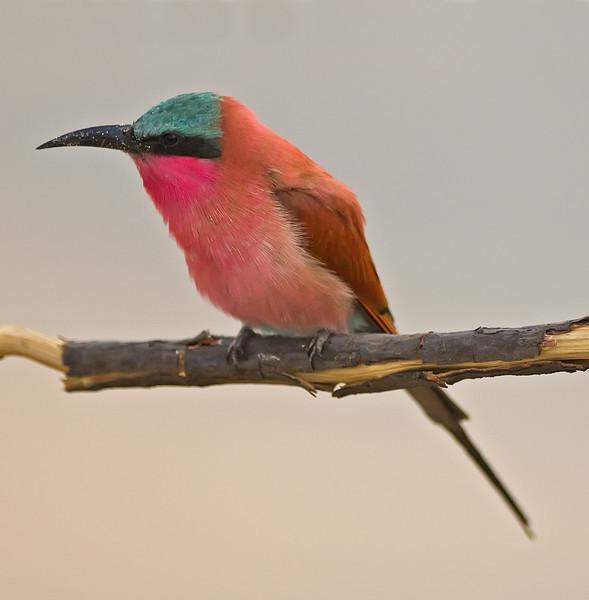
Southern Carmine Bee-eater (Merops nubicus) by Marc at Africaddict

Southern Carmine Bee-eater (Merops nubicus) by Marc at Africaddict

What a neat video of the Blue-cheeked Bee-eater. I have seen photos of them, but seeing birds in action is always special. There are some birds that just hit my fancy as I admire the Lord’s Handiwork. The Bee-eaters are one of those.

By Igor Byshnev

Matthew 6:25-34 NKJV
(25) “Therefore I say to you, do not worry about your life, what you will eat or what you will drink; nor about your body, what you will put on. Is not life more than food and the body more than clothing?
(26) Look at the birds of the air, for they neither sow nor reap nor gather into barns; yet your heavenly Father feeds them. Are you not of more value than they?
(27) Which of you by worrying can add one cubit to his stature?
(28) “So why do you worry about clothing? Consider the lilies of the field, how they grow: they neither toil nor spin;
(29) and yet I say to you that even Solomon in all his glory was not arrayed like one of these.
(30) Now if God so clothes the grass of the field, which today is, and tomorrow is thrown into the oven, will He not much more clothe you, O you of little faith?
(31) “Therefore do not worry, saying, ‘What shall we eat?’ or ‘What shall we drink?’ or ‘What shall we wear?’
(32) For after all these things the Gentiles seek. For your heavenly Father knows that you need all these things.
(33) But seek first the kingdom of God and His righteousness, and all these things shall be added to you.
(34) Therefore do not worry about tomorrow, for tomorrow will worry about its own things. Sufficient for the day is its own trouble.

Bee-eaters belong to the Meropidae – Bee-eaters Family which has 27 species.

As the name suggests, bee-eaters predominantly eat flying insects, especially bees and wasps, which are caught in the air by sallies from an open perch. While they pursue any type of flying insect, honey bees predominate in their diet. Hymenoptera (ants, bees and wasps) comprise from 20% to 96% of all insects eaten, with honey bees comprising approximately one-third of the Hymenoptera. (Wikipedia with editing)

Articles Mentioning Birds From This Family:

Other Websites that have photos of this Family:

Wordless Birds

*

Interesting Things – Dragonfly

Thinking

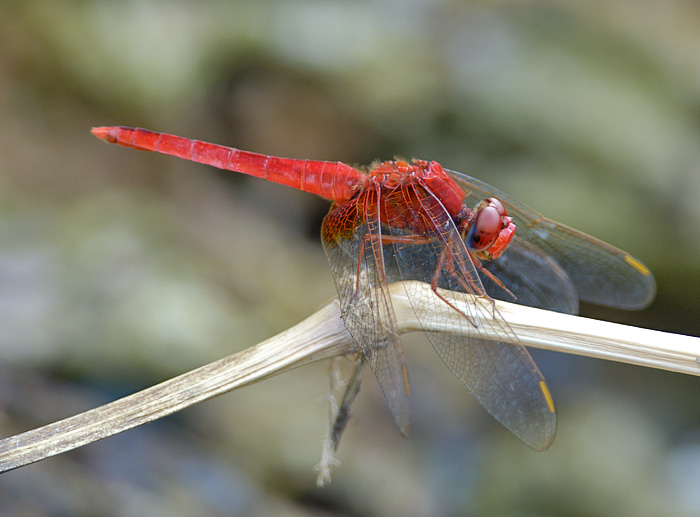
Here is an interesting video fromYouTube.com – Exploration Films about the Dragonflies. It is very interesting.

Dragonfly by Phil Kwong

Dragonfly by Phil Kwong

Learning from the Dragonfly by Creation Moments

“Scientists studying the dragonfly are learning even more secrets of flight. Our best high-performance aircraft can barely lift themselves off the ground. However, the dragonfly can lift 15 times his own weight into the air.”

The Amazing Mosquito Hawk by Creation Moments

But ask now the beasts, and they shall teach thee; and the fowls of the air, and they shall tell thee: Or speak to the earth, and it shall teach thee: and the fishes of the sea shall declare unto thee. Who knoweth not in all these that the hand of the LORD hath wrought this?
(Job 12:7-9 KJV)

More articles from Creation Moments:

100 Foot Ferns “dragonflies had wingspans of six feet”

The Pre-Flood Atmosphere “dragonflies were the size of hawks”

From Creation Ministries International:

“Dragonflies

Dragonflies are probably the most beautiful of the flying insects. There are about 4,500 different varieties. They begin their life in water, where eggs hatch into rather ugly brown nymphs. The time spent living in water varies from a few weeks to several years, but for all the varieties the day comes when the nymph suddenly has the urge to climb out of the water. It sits for a while at the top of a piece of grass until its skin splits open and out comes a dragonfly! After waiting for its wings to become firm and dry, the dragonfly flies away, its lovely colours glinting in the sunshine.

Although they are very small, dragonflies are wonderfully designed for flying. Their two pairs of wings are very light, but strengthened by a network of tiny veins, which not only carry blood fluid to keep the wings stiff, but also nerves and oxygen. Some dragonflies beat their wings 40 times in one second! Dragonflies are like tiny helicopters—they can even fly backwards! In fact, Igor Sikorsky, who first designed helicopters, for the idea from watching dragonflies.

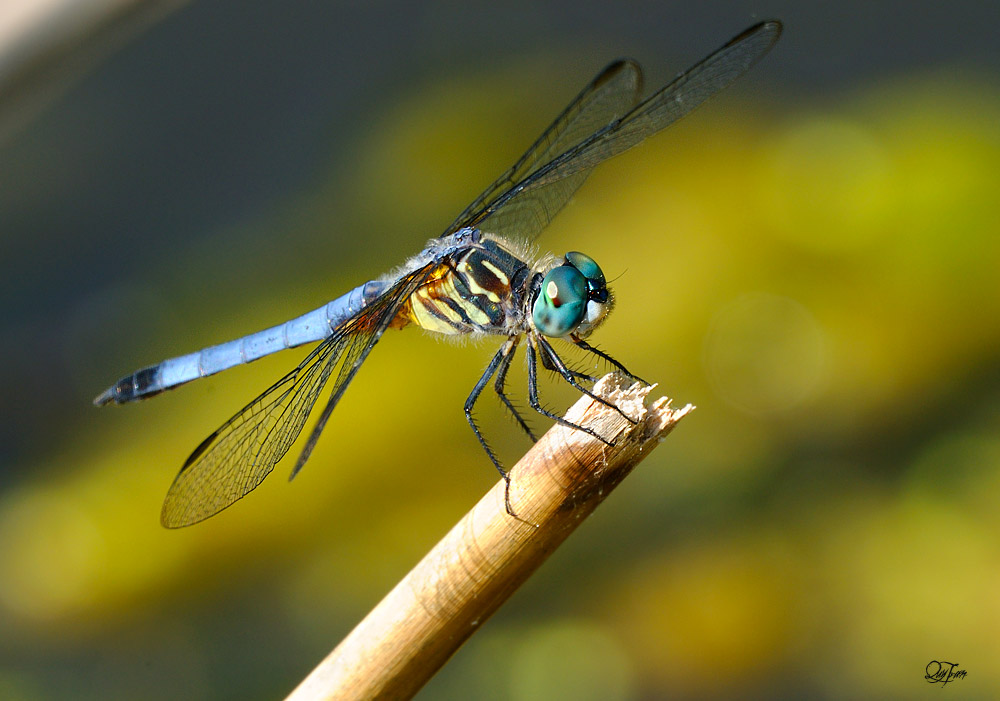
Dragonfly by QuyTran

Dragonfly by QuyTran

Another wonderful thing about dragonflies is their eyes. Each pair of eyes is actually made up of as many as 30,000 separate eyes, each with its own lens! This enables the insect to see what is happening over a wide area, and spot every tiny movement without moving its head.

The supposedly oldest fossil dragonflies are just like dragonflies are now, except that they were much larger—75 centimeters (2.5 feet) from wing-tip to wing-tip! So there is no evidence that they evolved from ancestors without wings. And surely those amazing eyes did not evolve? Dragonflies are another of the many wonders of God’s creation!” From Our World (Answers for Kids.)

Astonishing acrobatics – dragonflies – by Johathan Sarfati

(Updated 4/29/09)

Dragonflies and fighter pilots – what can we learn? by Ken Ham

*

Originally posted in 2009 – this is a duplicate.

More Interesting Things:

Interesting Things – Dragonflies II

*

*

Bible Birds – Crane’s Introduction

Crane’s Introduction

Sandhill Cranes and Babies in yard by Lee

Sandhill Cranes and Babies in yard

Even the stork in the heavens knows her times, and the turtledove, swallow, and crane keep the time of their coming, but my people know not the rules of the LORD. (Jeremiah 8:7 ESV)

Cranes are in the Gruidae Family of the Gruiformes Order. At present there are 15 species or members of that family. All of them are called Cranes, except for one member. That is the Brolga which is found in New Guinea and Australia. Cranes are another of the Lord’s creation that I enjoy watching. We are fortunate to be able to see Sandhill Cranes almost daily. Just spotted 18 today across from my backyard and will post an article about it soon.

Brolga(Grusrubicunda) by Ian

Brolga(Grusrubicunda) by Ian

Cranes bear a general resemblance to Herons in that they are long-legged, long-necked birds, but when on the wing, they carry the neck fully extended, a habit which will readily distinguish them from the curved neck Herons. Cranes are less aquatic than Herons and are often found feeding on the prairies or pine-barrens where worms, grasshoppers, lizards, roots, etc., form their fare. They nest on the ground laying two buffy eggs thickly marked with brown. The young, unlike the nearly naked, helpless young of Herons, are born covered with down and can soon follow their parents. The Cranes have loud sonorous voices; the Herons raucous croaks.

Sandhill Crane from Color Key to North American Birds, by Frank M. Chapman

Sandhill Crane from Color Key to North American Birds, by Frank M. Chapman

They have the hind-toe elevated, that is, leaving the foot at a higher level than the front toes; tail short; legs usually long. All fly with the neck extended, a fact by which Cranes in flight may be known from Herons. (Color Key to North American Birds, by Frank M. Chapman)

Cranes are a Bible Bird and appear in two verses, the one above (Jeremiah 8:7) and in the following verse:

Like a crane or a swallow, so did I chatter: I did mourn as a dove: mine eyes fail with looking upward: O LORD, I am oppressed; undertake for me. (Isaiah 38:14 KJV)

A Sandhill Crane call. Does it sound like a chatter?

(From xeno.canto)

Cranes construct platform nests in shallow water, and typically lay two eggs at a time. Both parents help to rear the young, which remain with them until the next breeding season.

Cranes migrate (travel to a warmer climate in winter) as mention in Jeremiah 8:7. Here is a photo of Common Cranes in Israel gathered together.

Common Cranes in Israel. Many species of crane gather in large groups during migration and on their wintering grounds ©WikiC

Common Cranes in Israel. Many species of crane gather in large groups during migration and on their wintering grounds ©WikiC

Cranes are one of the tallest flying birds, but more on that in another Bible Birds article.

See:

*
Wordless Birds
*

Bible Birds – Wood Storks

Wood Stork (Mycteria americana) by Lee

Wood Stork (Mycteria americana) by Lee

While we were on the same birdwatching trip to Circle B (American Bittern), we encountered a Wood Stork. There are five verses in the Bible that mention the Stork:

And the stork, the heron after her kind, and the lapwing, and the bat. (Leviticus 11:19 KJV)

And the stork, and the heron after her kind, and the lapwing, and the bat. (Deuteronomy 14:18 KJV)

Where the birds make their nests: as for the stork, the fir trees are her house. (Psalms 104:17 KJV)

Yea, the stork in the heaven knoweth her appointed times; and the turtle and the crane and the swallow observe the time of their coming; but my people know not the judgment of the LORD. (Jeremiah 8:7 KJV)

Then lifted I up mine eyes, and looked, and, behold, there came out two women, and the wind was in their wings; for they had wings like the wings of a stork: and they lifted up the ephah between the earth and the heaven. (Zechariah 5:9 KJV)

Wood Stork (Mycteria americana) by Lee Landing

Wood Stork (Mycteria americana) by Lee Landing

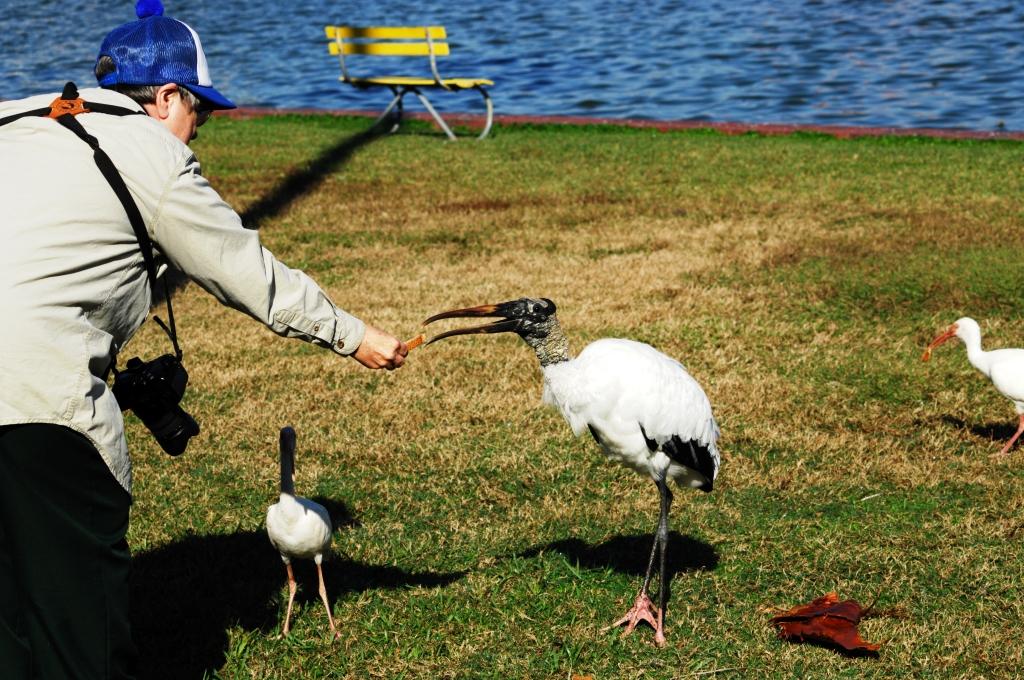
While we were birdwatching at Circle B just before Christmas, a Wood Stork flew over and landed in a tree a good way from us. Thanks to the zoom on my camera, I was able to capture its picture. They amaze me that they are “ugly” up close, but when they fly, they are so beautiful and graceful to watch. We see them quite often here and I have been known to feed them at Lake Morton. They also fly over our house and land in our community pond.

Lee feeding Wood Stork at Lake Morton by Dan

Lee feeding Wood Stork at Lake Morton by Dan 2011

As mentioned above, Storks are birds in the Bible and are members of the Ciconiidae – Storks Family. Currently there are 19 Storks in this family. The Bible does not tell which one is being mentioned, but most like one of the Storks that lived in Israel.

Our Wood Stork here is a broad-winged soaring bird that flies with its neck outstretched and legs extended. It forages usually where lowering water levels concentrate fish in open wetlands; it also frequents paddy fields. Walking slowly and steadily in shallow water up to its belly, it seeks prey, which, like that of most of its relatives, consists of fish, frogs and large insects. It catches fish by holding its bill open in the water until a fish is detected. (Wikipedia)

“Tall and long-legged, the wood stork is the largest wading bird native to America. It is white with black flight feathers, distinctive because of its dark, featherless head (down to the upper neck) and thick, down-curved bill. Wood storks fly with neck and legs extended, interrupting strong wing beats with brief glides; their wingspan is 5 1/2 feet.” (FL FWCC) Their length is 33.5–45.3 in (85–115 cm) and weigh between72.3 to 93.1 oz (2050–2640 g). (NatGeo)

*

This slideshow requires JavaScript.

*

*

Taming the Dragon of Calvert Kingdom (Re-blog)

Here is a great story by Sandra Conner at In Love With Words!

Taming the Dragon of Calvert Kingdom.

TAMING THE DRAGON OF CALVERT KINGDOM

DRAGON FOR BLOG STORYIn the year 2013, in a kingdom called Calvert, there lived four cousins. They were all named Calvert, and it was their great-grandparents Rachel and Cecil Calvert who had established this kingdom many years before. The four cousins felt it was their job to help keep the kingdom safe and to care for all of the inhabitants. …

(for the rest of the story) via Taming the Dragon of Calvert Kingdom.

**

Bible Birds – American Bittern

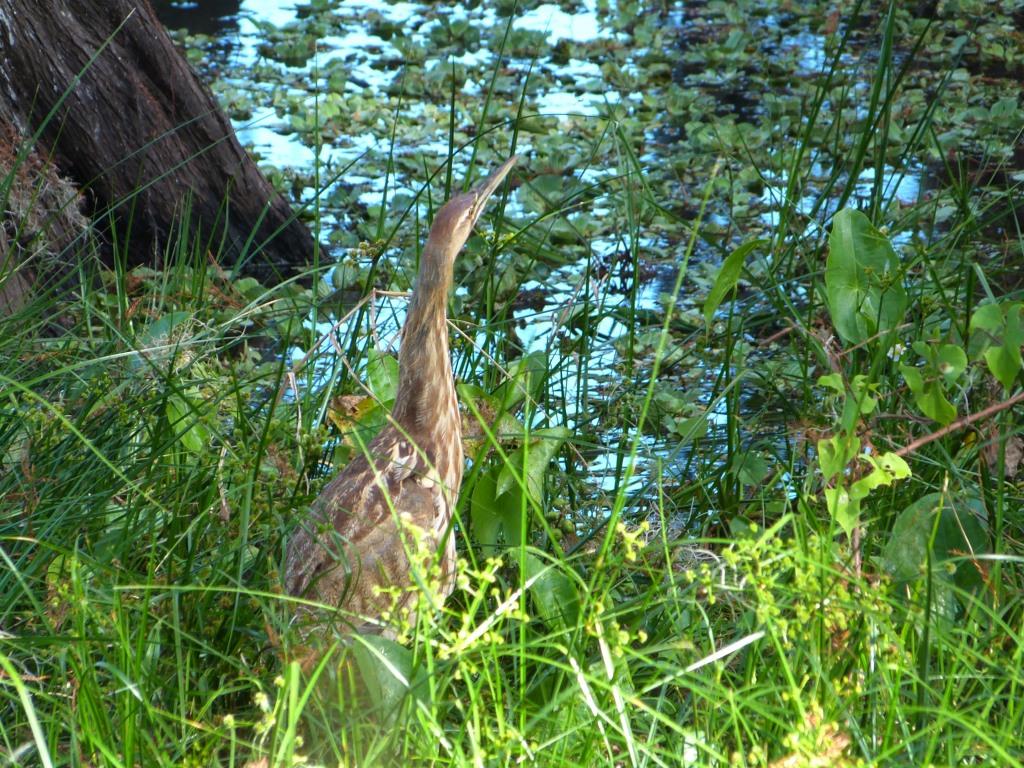
American Bittern (Botaurus lentiginosus) by Lee

The Bittern is found in the KJV in three verses of Scripture. Some versions translate it differently. But for the sake of this article, here are those verses:

I will also make it a possession for the bittern, and pools of water: and I will sweep it with the besom of destruction, saith the LORD of hosts. (Isaiah 14:23 KJV)

But the cormorant and the bittern shall possess it; the owl also and the raven shall dwell in it: and he shall stretch out upon it the line of confusion, and the stones of emptiness. (Isaiah 34:11 KJV)

And flocks shall lie down in the midst of her, all the beasts of the nations: both the cormorant and the bittern shall lodge in the upper lintels of it; their voice shall sing in the windows; desolation shall be in the thresholds: for he shall uncover the cedar work. (Zephaniah 2:14 KJV)

We were out at Circle B Bar Reserve just before Christmas and spotted an American Bittern. They are quite evasive and not spotted often, at least by me. That protection reminds me of several verses:

Keep me as the apple of the eye, hide me under the shadow of thy wings, (Psalms 17:8 KJV)

Deliver me, O LORD, from mine enemies: I flee unto thee to hide me. (Psalms 143:9 KJV)

This slideshow requires JavaScript.

Bitterns are members of the Ardeidae – Herons, Bitterns Family.”Although common in much of its range, the American Bittern is usually well-hidden in bogs, marshes and wet meadows. Usually solitary, it walks stealthily among cattails or bulrushes. If it senses that it has been seen, the American Bittern becomes motionless, with its bill pointed upward, causing it to blend into the reeds. It is most active at dusk. More often heard than seen, this bittern has a call that resembles a congested pump.

Like other members of the heron family, the American Bittern feeds in marshes and shallow ponds, dining on amphibians, fish, insects and reptiles.

This bittern winters in the southern United States and Central America. It summers throughout Canada and much of the United States. As a long-distance migrant, it is a very rare vagrant in Europe, including Great Britain and Ireland. This bird nests in isolated places with the female building the nest and the male guarding it. Two or three eggs are incubated by the female for 29 days, and the chicks leave after 6–7 weeks.” (From Wikipedia)

Identification Tips: (USGS)

  • Length: 23 inches Wingspan: 45 inches
  • Medium-sized wading bird
  • Dark brown upperparts
  • Underparts streaked brown and white
  • Black malar streak
  • Yellow bill with dark culmen
  • Black primaries and secondaries
  • Sometimes “freezes” with neck held upwards
  • Immatures similar to adults but lack the malar streak

American Bittern sounds from Cornell

*

*

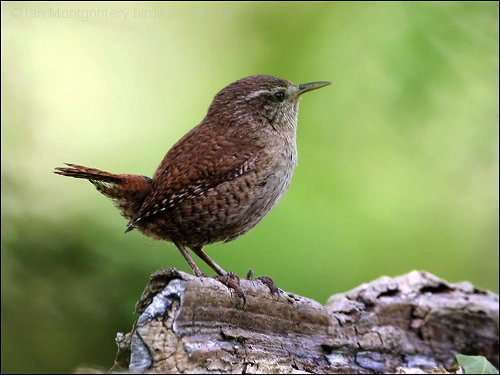
The Winter Wrens’ Dew-drop Baths

Winter Wren (Troglodytes troglodytes) by Ian

Winter Wren (Troglodytes troglodytes) by Ian

THE WINTER WRENS’ DEW-DROP BATHS

“The winter wren is really with us during the summer too,” said daddy. “But he is too shy to be near us. We can only hear him sing sometimes. When winter comes, though, he goes to people for protection and picks up the crumbs they give him.

“Yesterday he was sitting on a snow-berry bush with a tiny companion. The snow-berry bushes are full and leafy, and in the spring and summer are covered with very tiny pink blossoms. In the autumn and winter they are covered with little berries which look as if they had been made out of snow.

“‘Oh, how I dread the winter!’ said the tiny wren. ‘Just imagine how dreadful it would be if no one put any bread crumbs out for us, or no dog left us some of his dinner on a back porch.’

“‘Now,’ said Mr. Brown Wren, ‘you mustn’t think of such sad thoughts. You always [p.11]do! Someone will look after us. And maybe we’ll find a few spiders now and then in the cracks, and then well have a regular feast.’

“The next day they were back again on the snow-berry bush, and the day was much warmer. Now the wrens love to bathe above all things! Even in the winter they will go through a little sheet of ice and get into the cold, cold water underneath. For they must get their baths! And in the spring, when the tiny wrens are brought forth from their mossy nests, the first lesson they have is of bathing in some nearby brook.

“But this day it was early in the morning, the snow-berry bush was covered with dew-drops and the wrens were delighted.

“‘The sun will drive them away soon. Let’s take them while we get the chance,’ whispered Mr. Brown Wren.

“‘Yes, yes,’ said his small companion. ‘We will soon have to bathe when it is so cold. Let us have a good warm bath first.’

“And then those two little brown wrens took the dew-drops in their beaks, and dropped each one in turn on their feathers. [p.12]Then they got under some leaves full of dew-drops and shook them down over their little feathered bodies.

“After they were well covered with the dew-drops they began to shake all over just as every bird does when he takes a bath. And back they went to take another bath when this one was over. For they seemed to enjoy their last warm bath so much!

“Finally they had bathed enough, and the sun appeared strong as could be, and shining very hard. They perched still on the branches of the snow-berry bush and bathed now in the hot sun. Soon their little feathers were quite dry and they began to sing.

“And truly I think their song was one of gladness because of their dew-drop baths!”


Winter Wren (Troglodytes troglodytes) by Ian

Winter Wren (Troglodytes troglodytes) by Ian

Lee’s Addition:

My message shall drop as the rain, my speech shall distil as the dew, as the light rain upon the tender grass, and as the showers upon the herb. (Deuteronomy 32:2 AMP)

By His knowledge the depths were broken up, And clouds drop down the dew. (Proverbs 3:20 NKJV)

And who do you think is the father of rain and dew, (Job 38:28 MSG)

Another Bird Tales

From

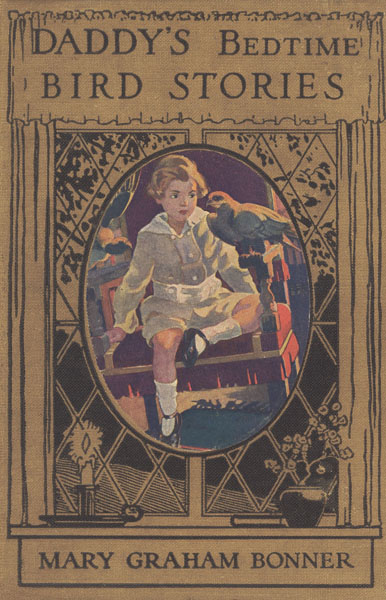
Daddy’s Bedtime Bird Stories – Gutenberg ebooks

By

Mary Graham Bonner

With four illustrations in color by
Florence Choate and Elizabeth Curtis

Daddys Bedtime Story Images


These stories first appeared in the American Press Association Service and the Western Newspaper Union.


Many of the sketches in this volume are the work of Rebecca McCann, creator of the “Cheerful Cherub,” etc.

Daddy's Bedtime Bird Stories by Mary Graham Bonner - 1917

*
Daddy’s Bedtime Bird Stories by Mary Graham Bonner – 1917

*

Links:

Painted Bunting (Passerina ciris) ©©Flickr


  Bird Tales


  Daddy’s Bedtime Bird Stories


Spanish Sparrow (Passer Hispaniolensis) female ©WikiC


  Wordless Birds


Winter Wren (Troglodytes troglodytes) by Ian


  Troglodytidae – Wrens Family


*

The Brave Brown Sparrows In Winter

Sparrow on Branch ©©Bing

Sparrow on Branch ©©Bing

THE BRAVE BROWN SPARROWS IN WINTER

One Bird Seemed to be the Leader.

One Bird Seemed to be the Leader.

“You know,” said daddy, “I saw such a strange thing to-day in the city.”

“Tell us about it,” said Jack.

“What was it?” asked Evelyn, who was always interested in whatever daddy had to say.

“Well,” continued daddy, “in a tree in the park lots and lots of little sparrows were roosting. It was, of course, a perfectly bare tree without a leaf on it, and they were huddled together, keeping each other warm.

“I watched them for quite a time. There was one sparrow who looked the leader. He did most of the chirping and was apparently telling all the others what they must do and giving all sorts of directions. He chirped almost constantly for ten minutes, and then he flew down from the tree and hopped along the ground. He picked up crumb after crumb, and then when he had as many as he could carry in his beak he flew up in the tree again and left them on a branch where there was a kind of hole in which to put them. He was evidently showing all the other birds just what to do, for in a minute or two any number of them flew down to the ground and began to pick up crumbs.

“It was wonderful to see how many they could find, for I myself could hardly see any, and all the time he kept chirping to the others and telling them what to do.

“This kept up for some time, for the birds would fly back and forth, just picking up goodies and then putting them up in the tree. Meantime a lot of other birds who had stayed up in the tree were fixing them on the branch and dividing them all evenly.”

“Didn’t they eat any of them?” asked Evelyn.

“Yes. After quite awhile they all flew back to the tree again, and once more they huddled together and had the most marvelous meal. You see, it was their dinner time, and they all had it together at the same time to make it more sociable. From all the cries of joy and the noise I fancy they were having a pretty good time of it and enjoying themselves immensely. In fact, I think they almost forgot how cold it was.”

“I think it’s wonderful,” said Evelyn, “how well the birds can look after themselves, for it must be pretty hard sometimes, especially in the winter.”

“Yes,” said daddy, “it is, but these birds seemed so happy together and to be having such a good time. After dinner was over they all chased each other from one tree to another in the park and played tag and had a beautiful time. So I think really birds and animals are smart and brave to be able to look after themselves and their little ones so well.”


Sparrows in snow ©©Bing

Sparrows in snow ©©Bing


Lee’s Addition:

We enjoyed being together, and we went with others to your house, our God. (Psalms 55:14 CEV)

But do not forget to do good and to share, for with such sacrifices God is well pleased. (Hebrews 13:16 NKJV)

*

Another Bird Tales

From

Daddy’s Bedtime Bird Stories – Gutenberg ebooks

By

Mary Graham Bonner

With four illustrations in color by
Florence Choate and Elizabeth Curtis

Daddys Bedtime Story Images


These stories first appeared in the American Press Association Service and the Western Newspaper Union.


Many of the sketches in this volume are the work of Rebecca McCann, creator of the “Cheerful Cherub,” etc.

Daddy's Bedtime Bird Stories by Mary Graham Bonner - 1917

*
Daddy’s Bedtime Bird Stories by Mary Graham Bonner – 1917

*

Links:

Painted Bunting (Passerina ciris) ©©Flickr


  Bird Tales


  Daddy’s Bedtime Bird Stories


Spanish Sparrow (Passer Hispaniolensis) female ©WikiC


  Wordless Birds


*

House Sparrow (Passer domesticus)
  Emberizidae – Buntings, New World Sparrows & Allies


*

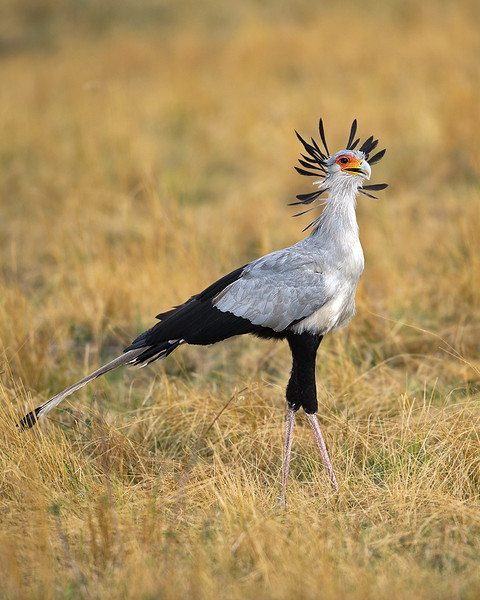
The Race Between The Secretary Birds

Secretarybird (Sagittarius serpentarius) by Africaddict

Secretarybird (Sagittarius serpentarius) by Africaddict

THE RACE BETWEEN THE SECRETARY BIRDS

Mongo Got Quite a Bit Ahead.

Mongo Got Quite a Bit Ahead.


“The secretary birds had planned to have some field races,” began daddy, “and the afternoon of the races had come. You know, the secretary birds have very, very long thin legs. Their legs are so thin that you can hardly see how it is they can support such big bodies, for the secretary birds have really fat bodies.

“Well, on the afternoon of the races they all entered, and you never saw such running in all your life! They simply went like the wind, but the chief race of all was between one bird named Sandy and one named Mongo. They were considered the fastest runners of all. They had raced often and often before and had always come in a tie. But this time Mongo had been practising [p.29]very hard and had been very careful not to eat anything to hurt his wind. Sandy had been practising every day, too, but he thought it was absurd to give up things to eat. However, Mongo had always heard that all athletes were very careful of their eating, and, as he had never been able to beat Sandy yet, he was bound he would try everything he could so as to win.

“The prize was to be a fine, great, big snake which had been captured and killed a few days before the races were to take place.”

“Do secretary birds eat snakes?” asked Evelyn.

“Yes,” said daddy; “they practically live on them.”

“I shouldn’t think that would be nice food,” added Evelyn.

“No, we don’t think so,” answered daddy, “but you know we eat bacon and like it, so probably the secretary birds think it is as funny for us to eat pigs as we do to hear of their eating snakes.”

“No,” said Evelyn thoughtfully, “I suppose not. They sound so horrid, though.”

[p.30]At that moment Jack, who was growing very impatient, not caring what the secretary birds ate, chimed in: “Daddy, please hurry and tell us who won the race. I can hardly wait to hear. I am sure Mongo did, though.”

“No,” said Evelyn; “I think Sandy did because he wasn’t such an old fuss as Mongo.”

“Well,” continued daddy, “during the race all the secretary birds shrieked in their cackling voices: ‘Go it; go it! Win, Mongo! Win, Sandy!’

“For a few moments Mongo got quite a bit ahead, but Sandy succeeded in catching up with him, and they passed by the goal side by side.

“It was a splendid race, but it showed that Mongo and Sandy were really absolutely evenly matched, so they gave a funny cackle, which meant a laugh, and each, taking an end of the prize, said, ‘We’ll all have a taste of the prize, as neither of us can win it.’

“So they all sat down to a very jolly supper party.”

Secretarybird (Sagittarius serpentarius) by Lee

Secretarybird (Sagittarius serpentarius) by Lee

*

Another Bird Tales

From

Daddy’s Bedtime Bird Stories – Gutenberg ebooks

By

Mary Graham Bonner

With four illustrations in color by
Florence Choate and Elizabeth Curtis

Daddys Bedtime Story Images


These stories first appeared in the American Press Association Service and the Western Newspaper Union.


Many of the sketches in this volume are the work of Rebecca McCann, creator of the “Cheerful Cherub,” etc.

Daddy's Bedtime Bird Stories by Mary Graham Bonner - 1917

*
Daddy’s Bedtime Bird Stories by Mary Graham Bonner – 1917

*

Links:

Painted Bunting (Passerina ciris) ©©Flickr


  Bird Tales


  Daddy’s Bedtime Bird Stories


Spanish Sparrow (Passer Hispaniolensis) female ©WikiC


  Wordless Birds


Secretarybird (Sagittarius serpentarius) with open beak©WikiC


  Sagittariidae – Secretarybird Family
*

The Cardinal Bird And The Robin

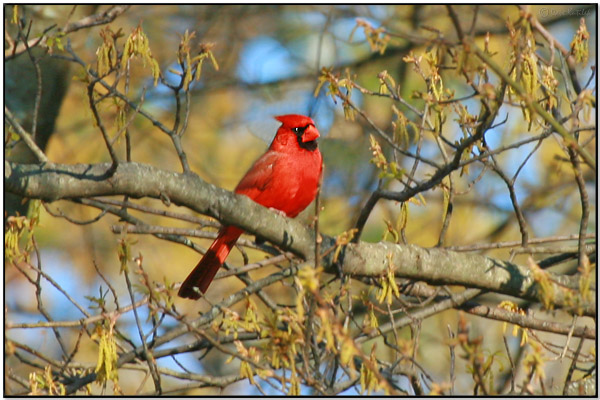
Northern Cardinal (Cardinalis cardinalis) by Daves BirdingPix

Northern Cardinal (Cardinalis cardinalis) by Daves BirdingPix

THE CARDINAL BIRD AND THE ROBIN

“The cardinal bird,” said daddy, “is a very superior bird and will not come down to the ground. The lowest he will come is to a bush, but he never hops along the woods or lawns, no, not he!

“One day Robin Redbreast was walking on a green lawn. He stopped several times to pick up a worm from the ground, swallow it whole and then walk along. In a tree nearby he spied the cardinal bird.

“‘Hello,’ he said cheerily. ‘Won’t you come and have a worm with me? There are a number in this lawn, and the good rain we had last night has made the ground so nice and soft. Do join me,’ he ended with a bright chirp.

“‘No, thank you,’ said the cardinal bird. ‘I wouldn’t soil my feet on that ground. I hate the ground, absolutely hate it.’ And the cardinal bird looked very haughty and proud.

“‘Come now,’ said Robin Redbreast, ‘you won’t get your feet dirty. And if you do,’ he whispered knowingly, ‘I can lead you to the nicest brook where you can wash them off with fresh rain water. Do come!’

“‘I cannot,’ said the cardinal bird. ‘I do not like the earth. I want to be flying in the air, or sitting on the branches of trees. Sometimes I will perch for a little while on a laurel bush—but come any lower? Dear me, no, I couldn’t.’

“‘It’s a great shame,’ said Robin Redbreast. ‘Of course there is no accounting for taste.’

“‘Thank you for inviting me,’ added the cardinal bird politely. For he prided himself on his good manners.

“Pretty soon some people came along. At once they noticed the beautiful cardinal bird. He wore his best red suit which he wears all the time—except in the winter, when he adds gray to his wings. His collar and tie were of black and his feathers stuck up on top of his head so as to make him look very stylish and fine.

“‘Oh, what a wonderful bird!’ said the people. Mr. Cardinal Bird knew they were admiring him, of course—and so did Robin Redbreast. No one had noticed him, but he didn’t care, for he knew Mr. Cardinal Bird was by far the more beautiful, and a robin hasn’t a mean disposition.

“Well, when the cardinal bird heard the praise he began to sing—a glorious high voice he had, and he sounded his clear notes over and over again. Then suddenly he stopped, cocked his head on one side, as though to say,

“‘And what do you think of me now?’

“From down on the ground Robin Redbreast had been listening. ‘Oh, that was wonderful, wonderful!’ he trilled.

“‘Listen to that dear little robin,’ said one of the people. ‘I must get him some bread crumbs.’

“When the bread crumbs were scattered over the ground, Robin Redbreast invited the cardinal bird down again thinking they were for him! But the beautiful, proud bird would not come down, and the people were saying, ‘After all there is nothing quite so nice as a dear little robin.'”

American Robin (Turdus migratorius) by Ian

American Robin (Turdus migratorius) by Ian


Lee’s Addition:

When pride comes, then comes shame; But with the humble is wisdom. (Proverbs 11:2 NKJV)

Our foolish pride comes from this world, and so do our selfish desires and our desire to have everything we see. None of this comes from the Father. (1 John 2:16 CEV)

I think our Cardinal friend in this story was just a little bit too proud. Our friendly Robin was trying hard to offer the Cardinal a good meal and to encourage our Red bird. Do we act more like the Cardinal or the Robin?

(Also: Cardinals in real life do not show false pride.)

*

Another Bird Tales

From

Daddy’s Bedtime Bird Stories – Gutenberg ebooks

By

Mary Graham Bonner

With four illustrations in color by
Florence Choate and Elizabeth Curtis

Daddys Bedtime Story Images


These stories first appeared in the American Press Association Service and the Western Newspaper Union.


Many of the sketches in this volume are the work of Rebecca McCann, creator of the “Cheerful Cherub,” etc.

Daddy's Bedtime Bird Stories by Mary Graham Bonner - 1917

*
Daddy’s Bedtime Bird Stories by Mary Graham Bonner – 1917

*

Links:

Painted Bunting (Passerina ciris) ©©Flickr


  Bird Tales


  Daddy’s Bedtime Bird Stories


Spanish Sparrow (Passer Hispaniolensis) female ©WikiC


  Wordless Birds


Northern Cardinal (Cardinalis cardinalis) - ©WikiC


  Cardinalidae – Grosbeaks, Saltators & Allies Family


American Robin (Turdus migratorius) eating by Jim Fenton


Turdidae – Thrushes Family

*

Bible Birds – Hasting’s Sparrow Poem

Grasshopper Sparrow (Ammodramus savannarum) by Ray

Grasshopper Sparrow (Ammodramus savannarum) by Ray

So do not fear; you are more valuable than many sparrows. (Matthew 10:31 NASB)

Some years ago King Edward the Seventh visited Norwich. The school children were drawn up in a line to meet him, and when he passed along they cheered just as loud as ever they could, and they sang “God save the king” with all their heart and soul. But after the monarch had passed by one little girl was found in floods of tears. The teacher, trying to comfort her, asked, “Didn’t you see the king?” “Ye—es,” sobbed the girl, “but he did—didn’t see me!”

An earthly king, no matter how kind and willing he may be, cannot see everybody, but the great King of kings sees and knows and loves each one of us as though that one were the only person in the world. He knows you far more intimately than your father or mother does. He is never too busy looking after the world to forget one of you. It doesn’t matter how plain you are, or how poor, or how little thought of, God cares for you. He cares for the plain, despised sparrow, and He cares far, far more for you.

Eurasian Tree Sparrow (Passer montanus) by Nikhil Devasar

Eurasian Tree Sparrow (Passer montanus) by Nikhil Devasar

I’m only a little sparrow,
A bird of low degree;
My life is of little value,
But the dear Lord cares for me.

White-browed Sparrow-Weaver (Plocepasser mahali) ©WikiC

White-browed Sparrow-Weaver (Plocepasser mahali) ©WikiC

I know there are many sparrows;
All over the world they are found;
But our Heavenly Father knoweth
When one falls to the ground.

Sind Sparrow (Passer pyrrhonotus) by Nikhil Devasar

Sind Sparrow (Passer pyrrhonotus) by Nikhil Devasar

I fly through the thickest forest,
I alight on many a spray;
I have no chart or compass,
But I never lose my way.

Fox Sparrow (Passerella iliaca) ©USFWS

Fox Sparrow (Passerella iliaca) ©USFWS

I just fold my wings at nightfall
Wherever I happen to be;
For the Father is always watchings
No harm can happen to me.

Savannah Sparrow Fifty Point-Canada by Ray Barlow

Savannah Sparrow Fifty Point-Canada by Ray Barlow

I am only a little sparrow,
A bird of low degree,
But I know that the Father loves me.
Dost thou know His love for thee?

***

The thoughts and poem are from The Children’s Great Text of the Bible by James Hastings. Part of the commentary on Matthew 10:31.

See:

*

Bird Tales – The Woodpeckers Bird Band

Hairy Woodpecker (Picoides villosus) by Daves BirdingPix

Hairy Woodpecker (Picoides villosus) by Daves BirdingPix


The Woodpeckers Bird Band

The Woodpecker family were around on various trees drumming, drumming on the bark. Mr. Hairy Woodpecker, Mr. Downy Woodpecker, and Mr. Red-Headed Woodpecker were hard at work.

Downy Woodpecker (Picoides pubescens) by Raymond Barlow

Downy Woodpecker (Picoides pubescens) by Raymond Barlow

“Let’s start a band,” suggested Mr. Hairy Woodpecker.

Red-headed Woodpecker (Melanerpes erythrocephalus) ©USFWS

Red-headed Woodpecker (Melanerpes erythrocephalus) ©USFWS

“What’s that you say?” asked Mr. Red-Headed Woodpecker, who had been so busy at work that he had not heard what Mr. Hairy Woodpecker had been suggesting. “A band,” repeated Mr. Hairy Woodpecker. “What sort of a band?” asked Mr. Red-Headed Woodpecker. “In the first place,” continued Mr. Hairy Woodpecker, “our bills are not only fine tools for the work we have to do getting the insects from the trees, and burrowing for our nests, but they would be splendid to use in beating the drums in a band.” “Where would we get the drums?” asked Mr. Red-Headed Woodpecker. “The trees, of course, you silly!” said Mr. Hairy Woodpecker. “Oh yes, yes,” agreed Mr. Red-Headed Woodpecker. And Mr. Downy Woodpecker said, “Of course, of course. The trees will be our drums.”

American Goldfinch (Carduelis tristis) on Thistle by Fenton

American Goldfinch (Carduelis tristis) on Thistle by Fenton

“We’ll get the other birds,” said Mr. Hairy Woodpecker, “to help us. We need something in a band besides the drums. We will ask the goldfinches, the mocking-birds, the bobolinks, the phœbe and chickadee families, all of the warbler and vireo families, and the robins of course. Then I think we’ll ask the orioles, the whippoorwills, the thrush family, and the song sparrows.”

Carolina Chickadee (Poecile carolinensis) by Daves BirdingPix

Carolina Chickadee (Poecile carolinensis) by Daves BirdingPix

“Oh,” said Mr. Downy Woodpecker, “that will make a perfect band. We’d better get started right away.” And the woodpeckers began to practise. They made such a noise that the birds came from far and near to see what they were doing. Mr. Sapsucker, Mr. Crested Woodpecker, and Mr. Flicker Woodpecker had all joined in beating the drums too!

Yellow-bellied Sapsucker (Sphyrapicus varius) by Raymond Barlow

Yellow-bellied Sapsucker (Sphyrapicus varius) by Raymond Barlow

“Why are you making so much noise?” asked the birds as they flew around to the nearby trees to talk to the woodpeckers. “Oh,” said Mr. Hairy Woodpecker, “we were just going to ask you all to join our band. We will beat the drums.”

American Robin (Turdus migratorius) by Daves BirdingPix

American Robin (Turdus migratorius) by Daves BirdingPix

“And just what do you want us to do?” asked Mr. Robin Redbreast, who was always eager to help. “You must all sing.”

Song Sparrow (Melospiza melodia) by J Fenton

Song Sparrow (Melospiza melodia) by J Fenton

“But we all sing differently,” chirped a song sparrow. “We know different tunes and different songs.” “Oh,” said Mr. Hairy Woodpecker, “I never thought about that. But never mind, you can have little parts to sing alone, and other choruses where you will all sing together. I’m sure it will be a very fine band after we have practised.” And they began pounding the drums again. “Well,” said Mr. Robin Redbreast, “if the bird band isn’t to be the finest in the land, at least we’ll make a cheerful noise!”

Bobolink (Dolichonyx oryzivorus) by J Fenton

Bobolink (Dolichonyx oryzivorus) by J Fenton

* Another Bird Tale From

Daddy’s Bedtime Bird Stories – Gutenberg ebooks

By

Mary Graham Bonner

With four illustrations in color by Florence Choate and Elizabeth Curtis

Daddys Bedtime Story Images

These stories first appeared in the American Press Association Service and the Western Newspaper Union.


Many of the sketches in this volume are the work of Rebecca McCann, creator of the “Cheerful Cherub,” etc.

Daddy's Bedtime Bird Stories by Mary Graham Bonner - 1917

Daddy’s Bedtime Bird Stories by Mary Graham Bonner – 1917


Lee’s Addition:

Psalms 98:4-8 KJV (4) Make a joyful noise unto the LORD, all the earth: make a loud noise, and rejoice, and sing praise. (5) Sing unto the LORD with the harp; with the harp, and the voice of a psalm. (6) With trumpets and sound of cornet make a joyful noise before the LORD, the King. (7) Let the sea roar, and the fulness thereof; the world, and they that dwell therein. (8) Let the floods clap their hands: let the hills be joyful together

Meet the whole band: (a few missed the photo session)

This slideshow requires JavaScript.


*

*