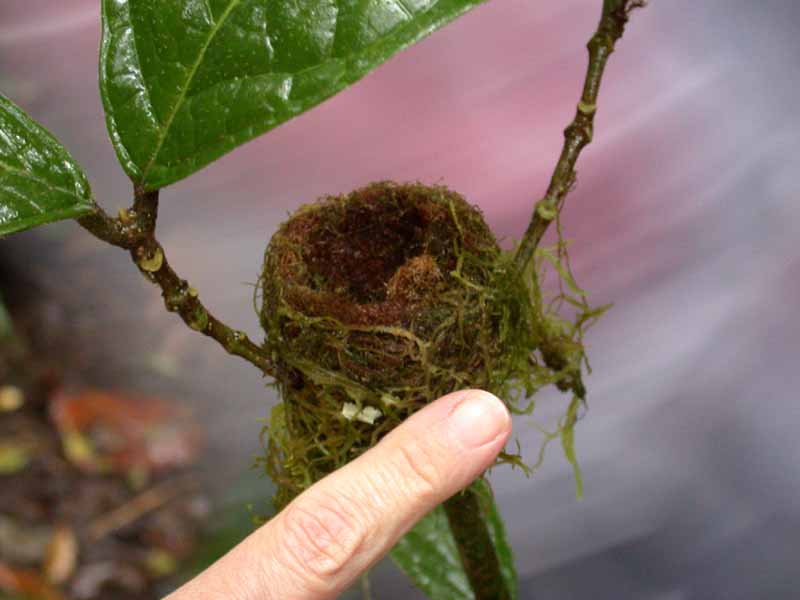
Birds Vol 1 #1 – The Yellow Throated or (Black-mandibled) Toucan

Black-mandibled Toucan (Ramphastos ambiguus) for the Birds Illustrated article

Yellow Throated Toucan for the Birds Illustrated article

Birds Illustrated by Color Photography – Revisited

Vol 1. January, 1897 No. 1

*

THE YELLOW THROATED TOUCAN

(Ramphastos ambiguus) or Black-mandibled) Toucan

.

I am a Toucan and I live in a very warm country.

See my handsome black coat and my yellow vest.

My toes are like a parrot’s, two in front and two behind.

They help me to hold to the limbs.

Look at my large beak. It looks heavy but it is not, as it is filled with air cells. These make it very light. Do you like my blue eyes?

My nest is very hard to find. If I tell you where it is, you will not take the eggs, will you? It is in a hollow limb of a very high tree.

I am very fond of fruit, and for this reason the people on the plantations do not like me very well.

I can fly very fast, but I cannot get along so well on the ground. I keep my feet far apart and hop.

I like to sit in the top of the tallest trees. Then I am not afraid. Nothing can reach me there but a rifle ball.

I do not like the owl, he is so ugly. When we find an owl we get in a circle around him and snap our great beaks, and jerk our tails up and down and scream. He is very much afraid of us.

The people where I live like our yellow breasts. They wear them on their heads, and also put them on the ends of their bows.

We sometimes sit together in a tree and snap our beaks and shout. This is why we have been called “Preacher Birds.”

We can scream so loud that we may be heard a mile away. Our song is “Tucano! Tucano!”

I think it is a pretty song, but the people do not like it very much.

Chestnut-mandibled Toucan (Ramphastos swainsonii) by Ian

Chestnut-mandibled Toucan (Ramphastos swainsonii) by Ian


THE YELLOW THROATED TOUCAN.

imgt

HE Toucans are a numerous race of South American birds, at once recognizable by the prodigious size of their beaks and by the richness of their plumage. “These birds are very common,” says Prince Von Wied, “in all parts of the extensive forests of the Brazils and are killed for the table in large numbers during the cool seasons. Their eggs are deposited in the hollow limbs and holes of the colossal trees, so common in the tropical forests, but their nests are very difficult to find. The egg is said to be white. They are very fond of fruit, oranges, guavas and plantains, and when these fruits are ripe make sad havoc among the neighboring plantations. In return for these depredations the planter eats their flesh, which is very delicate.”

The flight of these birds is easy and graceful, sweeping with facility over the loftiest trees of their native forests, their strangely developed bills being no encumbrance to them, replete as they are with a tissue of air-filled cells rendering them very light and even buoyant.

On the ground they get along with a rather awkward hopping movement, their legs being kept widely apart. In ascending a tree they do not climb but mount from one branch to another with a series of jumps, ascending to the tops of the very loftiest trees, safe from every missile except a rifle ball. They have a habit of sitting on the branches in flocks, lifting their bills, clattering them together, and shouting hoarsely all the while, from which custom the natives call them Preacher-birds. Sometimes the whole party, including the sentinel, set up a simultaneous yell so deafeningly loud that it can be heard a mile. They are very loquacious birds and are often discovered through their perpetual chattering. Their cry resembles the word “Tucano,” which has given origin to the peculiar name.

When settling itself to sleep, the Toucan packs itself up in a very systematic manner, supporting its huge beak by resting it on its back, and tucking it completely among the feathers, while it doubles its tail across its back just as if it moved on hinges. So completely is the large bill hidden among the feathers, that hardly a trace of it is visible in spite of its great size and bright color, so that the bird when sleeping looks like a great ball of loose feathers.

Sir R. Owen concludes that the large beak is of service in masticating food compensating for the absence of any grinding structures in the intestinal tract.

Says a naturalist: “We turned into a gloomy forest and for some time saw nothing but a huge brown moth, which looked almost like a bat on the wing. Suddenly we heard high upon the trees a short shrieking sort of noise ending in a hiss, and our guide became excited and said, “Toucan!” The birds were very wary and made off. They are much in quest and often shot at. At last we caught sight of a pair, but they were at the top of such a high tree that they were out of range. Presently, when I had about lost hope, I heard loud calls, and three birds came and settled in a low bush in the middle of the path.”

(Edited)

Gracie the retired Chestnut-mandibled Toucan (Ramphastos swainsonii)

Gracie the retired Chestnut-mandibled Toucan (Ramphastos swainsonii)


Lee’s Addition:

Today the Yellow Throated Toucan is also referred to as the Black-mandibled Toucan, at least by the IOC list of World Birds and the Internet Bird Collection. Actually, there are several Toucans that have a yellow throat and hope this is the one referred to in the 1897 article. The way they keep changing the names and splitting the species, the Chestnut-mandibled is also in that species.

What a fantastic bird and such an amazing creation from the Lord. Such a beautiful beak and yet so light.

All things were made through Him, and without Him nothing was made that was made. (John 1:3 NKJV)

All of these Toucans have Yellow Throats:
Chestnut-mandibled Toucan (Ramphastos swainsonii) Lee petting at National Aviary
Rainbow-billed Toucan (Ramphastos sulfuratus) IBC
Choco Toucan (Ramphastos brevis) IBC
Channel-billed Toucan (Ramphastos vitellinus) IBC
Black-mandibled Toucan (Ramphastos ambiguus) IBC

Toucans are members of the family Ramphastidae of near passerine birds from the Neotropics. The Ramphastidae family is most closely related to the American barbets. They are brightly marked and have large, often colorful bills. The family includes five genera and about forty different species. The name of this bird group is derived from the Tupi word tukana, via Portuguese.

Toucans range in size from the Lettered Aracari (Pteroglossus inscriptus), at 130 g (4.6 oz) and 29 cm (11.5 inches), to the Toco Toucan (Ramphastos toco), at 680 g (1.5 lb) and 63 cm (29 inches). Their bodies are short (of comparable size to a crow’s) and compact. The tail is rounded and varies in length, from half the length to the whole length of the body. The neck is short and thick. The wings are small, as they are forest-dwelling birds who only need to travel short distances, and are often of about the same span as the bill-tip-to-tail-tip measurements of the bird.

The colourful and large bill, which in some large species measures more than half the length of the body, is the hallmark of toucans. Despite its size, the toucan is very light, being composed of bone struts filled with spongy tissue of keratin between them. The bill has forward-facing serrations resembling teeth, which historically led naturalists to believe that toucans captured fish and were primarily carnivorous; today it is known that they eat mostly fruit. Researchers have discovered that the large bill of the toucan is a highly efficient thermoregulation system, though its size may still be advantageous in other ways. It does aid in their feeding behavior (as they sit in one spot and reach for all fruit in range, thereby reducing energy expenditure), and it has also been theorized that the bill may intimidate smaller birds, so that the toucan may plunder nests undisturbed. Also, the beak allows the bird to reach deep into tree-holes to access food unavailable to other birds, and also to ransack suspended nests built by smaller birds. However, as there is no sexual dimorphism in coloration it is unlikely to be a sexual signal.
A toucan’s tongue is long (up to 14–15 cm, or 6 inches), narrow, grey, and singularly frayed on each side, adding to its sensitivity as an organ of taste.

A structural complex probably unique to toucans involves the modification of several tail vertebrae. The rear three vertebrae are fused and attached to the spine by a ball and socket joint. Because of this, toucans may snap their tail forwards until it touches the head. This is the posture in which they sleep, often appearing simply as a ball of feathers, with the tip of the tail sticking out over the head.

Toucans are primarily frugivorous (fruit eating), but are opportunistically omnivorous and will take prey such as insects and small lizards. Captive toucans have been reported to actively hunt insects in their cages, and it is possible to keep toucans on an insect-only diet. They also plunder nests of smaller birds, taking eggs and nestlings. This probably provides a crucial addition of protein to their diet. However, in their range, toucans are the dominant frugivores, and as such play an extremely important ecological role as vectors for seed dispersal of fruiting trees. Often when eating small fruits, toucans will throw their heads back and allow the fruit to roll into their throats before swallowing.

*
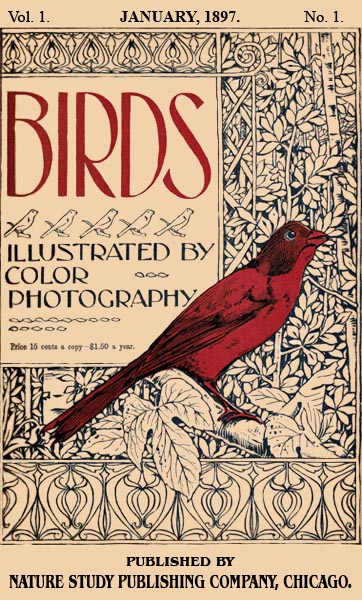
Birds Illustrated by Color Photograhy Vol 1 January 1897 No 1 - Cover

Birds Illustrated by Color Photography – Revisited – Introduction

The above article is the second article in the monthly serial that was started in January 1897 “designed to promote Knowledge of Bird-Live.” These include Color Photography, as they call them, today they are drawings. There are at least three Volumes that have been digitized by Project Gutenberg.

To see the whole series of – Birds Illustrated by Color Photography – Revisited

*

(Information from Wikipedia and other internet sources)

Next Article – The Red-Rumped Tanager

Previous Article – The Red Bird Of Paradise

Wordless Toucan

*

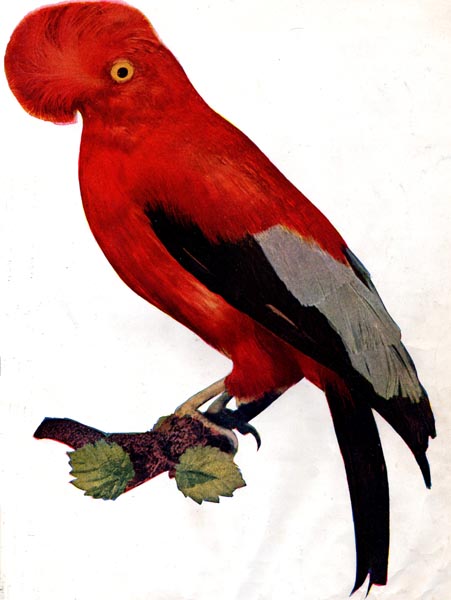
Birds Vol 1 #1 – The Cock-Of-The-Rock

Birds Illustrated by Color Photography – Revisited

Vol 1. January, 1897 No. 1

*

Cock-of-th-Rock

Cock-of-th-Rock


THE COCK-OF-THE-ROCK.

imgtHE Cock-of-the-Rock lives in Guiana. Its nest is found among the rocks. T. K. Salmon says: “I once went to see the breeding place of the Cock-of-the-Rock; and a darker or wilder place I have never been in. Following up a mountain stream the gorge became gradually more enclosed and more rocky, till I arrived at the mouth of a cave with high rock on each side, and overshadowed by high trees, into which the sun never penetrated. All was wet and dark, and the only sound heard was the rushing of the water over the rocks. We had hardly become accustomed to the gloom when a nest was found, a dark bird stealing away from what seemed to be a lump of mud upon the face of the rock. This was a nest of the Cock-of-the-Rock, containing two eggs; it was built upon a projecting piece, the body being made of mud or clay, then a few sticks, and on the top lined with green moss. It was about five feet from the water. I did not see the male bird, and, indeed, I have rarely ever seen the male and female birds together, though I have seen both sexes in separate flocks.”

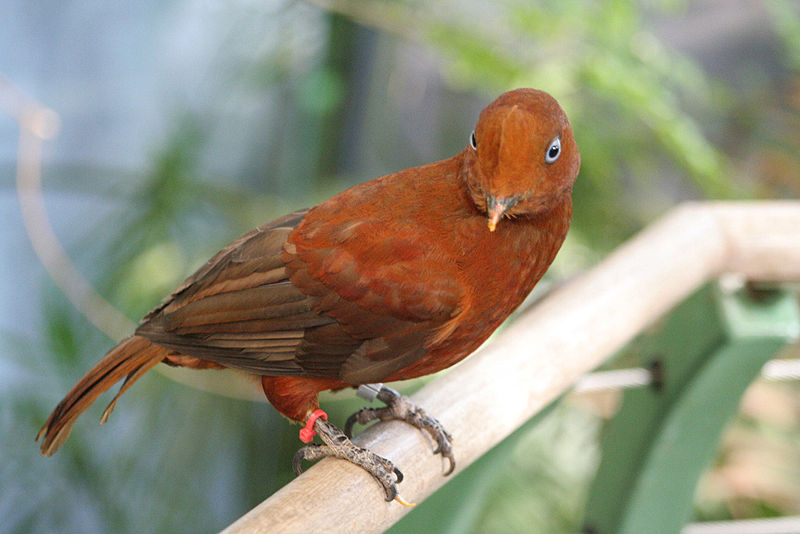
The eggs are described as pale buff with various sized spots of shades from red-brown to pale lilac.

It is a solitary and wary bird, feeding before sunrise and after sunset and hiding through the day in sombre ravines.

Robert Schomburgh describes its dance as follows:

“While traversing the mountains of Western Guiana we fell in with a pack of these splendid birds, which gave me the opportunity of being an eye witness of their dancing, an accomplishment which I had hitherto regarded as a fable. We cautiously approached their ballet ground and place of meeting, which lay some little distance from the road. The stage, if we may so call it, measured from four to five feet in diameter; every blade of grass had been removed and the ground was as smooth as if leveled by human hands. On this space we saw one of the birds dance and jump about, while the others evidently played the part of admiring spectators. At one moment it expanded its wings, threw its head in the air, or spread out its tail like a peacock scratching the ground with its foot; all this took place with a sort of hopping gait, until tired, when on emitting a peculiar note, its place was immediately filled by another performer. In this manner the different birds went through their terpsichorean exercises, each retiring to its place among the spectators, who had settled on the low bushes near the theatre of operations. We counted ten males and two females in the flock. The noise of a breaking stick unfortunately raised an alarm, when the whole company of dancers immediately flew off.”

The Cock-Of-The-Rock video by IBirdCollection


Guianan Cock-of-the-rock (Rupicola rupicola) ©©lolodoc

Guianan Cock-of-the-rock (Rupicola rupicola) ©©lolodoc

Lee’s Addition:

I removed one paragraph that talked about natives killing some of them. The Cock-of the-Rock is an interesting bird. Just their appearance tickles me. They don’t seem to have a beak. There are two Cock-of-the-rocks; the Guianan and the Andean which is the National Bird of Peru.

“The Cock-of-the-rock, which compose the genus Rupicola, are South American cotingid birds. They are found in tropical and subtropical rainforests close to rocky areas, where they build their nests. Like some other cotingids, they have a complex court behaviour, performing impressive lek displays.

Andean Cock-of-the-rock (Rupicola peruvianus) by ©Wiki Closeup

Andean Cock-of-the-rock (Rupicola peruvianus) by ©Wiki Closeup

The males are magnificent birds, not only because of their bright orange or red colors, but also because of their very prominent fan-shaped crests. The far duller females are overall brownish. They are wary animals and primarily feed on fruits and berries.” (Wikipedia)
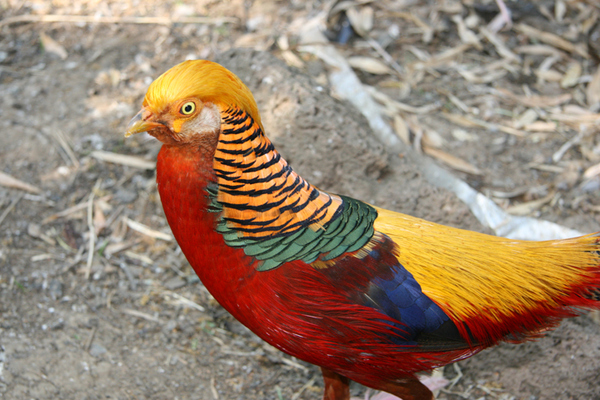
Andean Cock-of-the-rock (Rupicola peruvianus) female by SanDiegoZoo

Andean Cock-of-the-rock (Rupicola peruvianus) female by SanDiegoZoo

The Cotingidae – Cotingas Family is where you will find the Cock-of-the-Rocks. “The cotingas are a large family of passerine bird species found in Central America and tropical South America. Cotingas are birds of forests or forest edges, which mostly eat fruit or insects and fruit. Comparatively little is known about this diverse group, although all have broad bills with hooked tips, rounded wings, and strong legs. They may be the most diverse passerine family in body size, ranging from the 8-cm Kinglet Calyptura to the 50-cm male Amazonian Umbrellabird, although the smaller bird may not be a true cotinga.

The males of many species, such as the cock-of-the-rocks, are brightly coloured, or decorated with plumes or wattles, like the umbrellabirds, with their umbrella-like crest and long throat wattles. Some, like the bellbirds and the Screaming Piha, have distinctive and far-carrying calls. The females of most species are duller than the males.

Most species are polygynous, and only the females care for the eggs and young. Both brilliant male colors and loud vocalizations are the result of sexual selection. Many have striking courtship displays, often grouped together in leks. In such canopy-dwelling genera as Carpodectes, Cotinga, and Xipholena, males gather high in a single tree or in adjacent trees, but male cocks-of-the-rock, as befits their more terrestrial lives, give their elaborate displays in leks on the ground.

On the other hand, the Purple-throated Fruitcrow lives in mixed groups in which one female lays an egg and the others help provide insects to the chick.

Nests differ greatly. Many species lay a single egg in a nest so flimsy that the egg can be seen from underneath. This may make the nests hard for predators to find. Fruiteaters build more solid cup nests, and the cocks-of-the-rock attach their mud nests to cliffs.”
Birds Illustrated by Color Photograhy Vol 1 January 1897 No 1 - Cover

Birds Illustrated by Color Photography – Revisited  – Introduction

The above article is the sixth article in the monthly serial that was started in January 1897 “designed to promote Knowledge of Bird-Live.” These include Color Photography, as they call them, today they are drawings. There are at least three Volumes that have been digitized by Project Gutenberg.
To see the whole series of – Birds Illustrated by Color Photography – Revisited 

*

(Information from Wikipedia and other internet sources)

Next Article – The Red Bird Of Paradise

Previous Article – The Australian Grass Parrakeet

*

ABC’s Of The Gospel

Links:

Cotingidae – Cotingas Family

Cock-of-the-rock – Wikipedia

Cotinga – Wikipedia

*


Birds Vol 1 #1 – The Australian Grass Parrakeet(Parakeet)

Elegant Parrot (Neophema petrophila) aka Australian Grass Parakeet

Elegant Parrot (Neophema petrophila) aka Australian Grass Parakeet

Birds Illustrated by Color Photography – Revisited

Vol 1. January, 1897 No. 1

*

THE AUSTRALIAN GRASS PARRAKEET (Parakeet)

I am a Parrakeet. I belong to the Parrot family. A man bought me and brought me here. It is not warm here, as it was where I came from. I almost froze coming over here. I am not kept in a cage. I stay in the house and go about as I please. There is a Kitty Cat in the house. Sometimes I ride on her back. I like that. I used to live in the grass lands. It was very warm there. I ran among the thick grass blades, and sat on the stems and ate seeds. I had a wife then. Her feathers were almost like mine. We never made nests. When we wanted a nest, we found a hole in a gum tree. I used to sing to my wife while she sat on the nest. I can mock other birds. Sometimes I warble and chirp at the same time. Then it sounds like two birds singing. My tongue is short and thick, and this helps me to talk. But I have been talking too much. My tongue is getting tired. I think I’ll have a ride on Kitty’s back. Good bye.


Elegant Parrot (Neophema elegans) WikiC

Elegant Parrot (Neophema elegans) WikiC

imgp

ARRAKEETS have a great fondness for the grass lands, where they may be seen in great numbers, running amid the thick grass blades, clinging to their stems, or feeding on their seeds. Grass seed is their constant food in their native country. In captivity they take well to canary seed, and what is remarkable, never pick food with their feet, as do other species of parrots, but always use their beaks. “They do not build a nest, but must be given a piece of wood with a rough hole in the middle, which they will fill to their liking, rejecting all soft lining of wool or cotton that you may furnish them.” Only the male sings, warbling nearly all day long, pushing his beak at times into his mate’s ear as though to give her the full benefit of his song. The lady, however, does not seem to appreciate his efforts, but generally pecks him sharply in return. A gentleman who brought a Parrakeet from Australia to England, says it suffered greatly from the cold and change of climate and was kept alive by a kind-hearted weather-beaten sailor, who kept it warm and comfortable in his bosom. It was not kept in a cage, but roamed at will about the room, enjoying greatly at times, a ride on the cat’s back. At meals he perched upon his master’s shoulder, picking the bits he liked from a plate set before him. If the weather was cold or chilly, he would pull himself up by his master’s whiskers and warm his feet by standing on his bald head. He always announced his master’s coming by a shrill call, and no matter what the hour of night, never failed to utter a note of welcome, although apparently asleep with his head tucked under his wing.


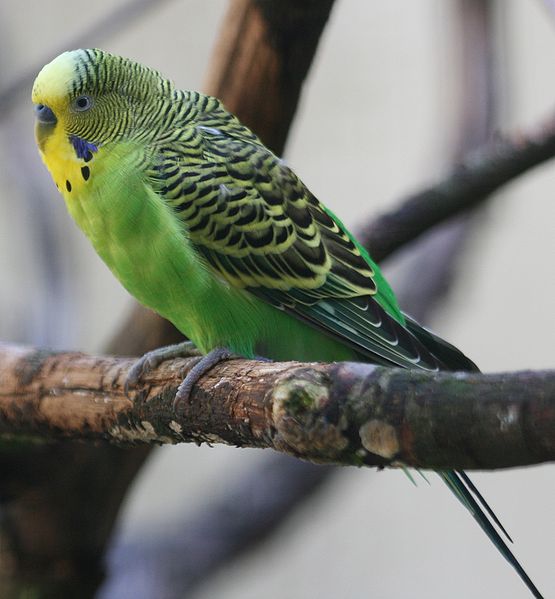
Budgerigar (Melopsittacus undulatus) by Lee LPZ

Budgerigar (Melopsittacus undulatus) by Lee LPZ


Lee’s Addition:

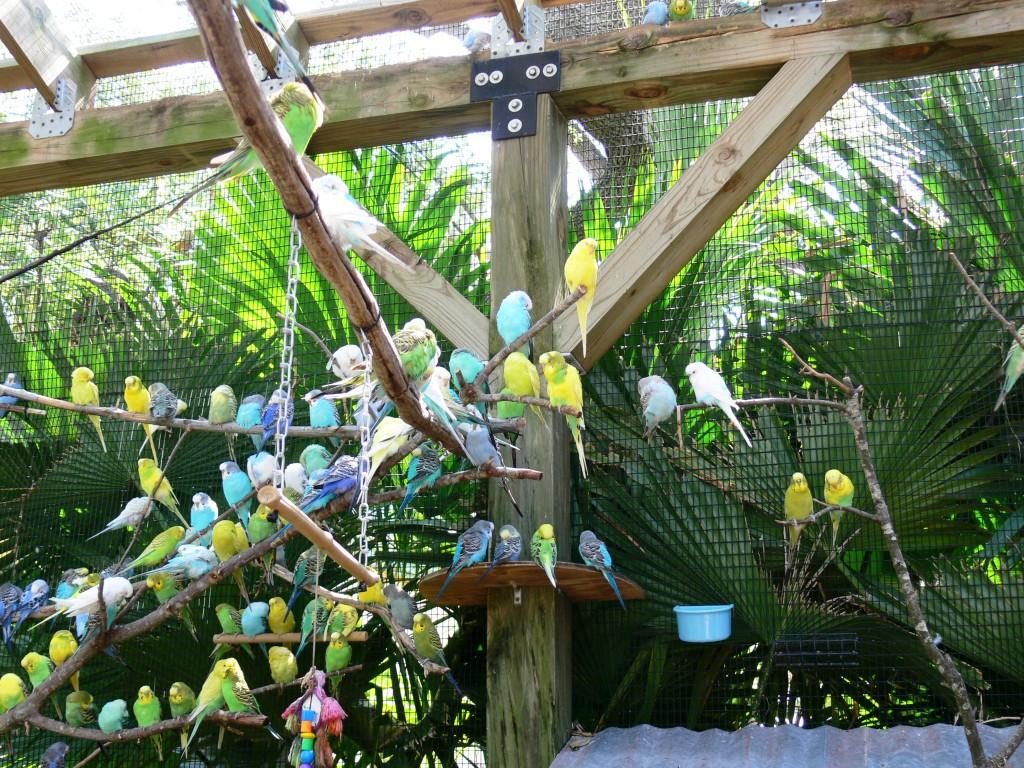
I am not really sure which Parakeet they are referring to in this article. Today their is not really an Australian Grass Parakeet, but the Elegant Parakeet favors the photo-drawing, but also Budgerigars also favor that drawing. At any rate, they are neat little birds and both can talk as mentioned.

Wikipedia says this about Grass Parakeets:  “Its common name is Elegant Parrot, but has also been called Elegant Parakeet, Elegant Grass Parakeet, and Grass Parrot in the past. The Elegant Parrot is 23 cm (9 in) long and predominantly golden olive in colour with a dark blue frontal band line above with lighter blue. while abdomen and vent are yellow. The female is a duller shade of olive all over and has a narrower blue frontal band. The wings are predominantly olive with outer flight feathers dark blue. The yellow edged tail has shades of olive and blue. The bill and legs are grey and the eyes dark brown. Juveniles are duller and lack the frontal bands.”

“The Budgerigar (Melopsittacus undulatus), also known as common pet parakeet or shell parakeet informally nicknamed the budgie, is a small, long-tailed, seed-eating parrot, and the only species in the Australian genus Melopsittacus. Wild budgerigars are found throughout the drier parts of Australia, where the species has survived harsh inland conditions. Naturally green and yellow with black, scalloped markings on the nape, back, and wings, breeders have created a rainbow of blues, whites, and yellows, greys, and even forms with small crests. Budgerigars are popular pets around the world due to their small size, low cost, ability to mimic human speech and playful nature.
The budgerigar is closely related to the lories and the fig parrots. Although budgerigars are often, especially in American English, called “parakeets“, this term refers to any of a number of small parrots with long, flat tails.

Alternative common names include shell parrot, warbling grass parakeet, canary parrot, zebra parrot, flight bird, scallop parrot and the alternate spellings budgerygah and betcherrygah.” (Wikipedia)

Budgerigar (Melopsittacus undulatus) WikiC

Budgerigar (Melopsittacus undulatus) WikiC

Both the Elegant Parrot (Neophema elegans) and the Budgerigar (Melopsittacus undulatus) are in the Psittacidae – Parrots Family. I lean toward the Budgerigar, but take your choice. Whatever, they are very colorful and a delight to watch and observe. The Lord put lots of color potential in the parakeet family.

Which doeth great things past finding out; yea, and wonders without number. (Job 9:10 KJV)

Birds Illustrated by Color Photograhy Vol 1 January 1897 No 1 - Cover

Birds Illustrated by Color Photography – Revisited – Introduction The above article is the fifth article in the monthly serial that was started in January 1897 “designed to promote Knowledge of Bird-Live.” These include Color Photography, as they call them, today they are drawings. There are at least three Volumes that have been digitized by Project Gutenberg.

To see the whole series of – Birds Illustrated by Color Photography – Revisited* (Information from Wikipedia and other internet sources)

Next Article – The Cock-Of-The-Rock

Previous Article – The Golden Pheasant

*

Gospel Presentation

*

Birds Of The Bible – Gull With A Broken Wing

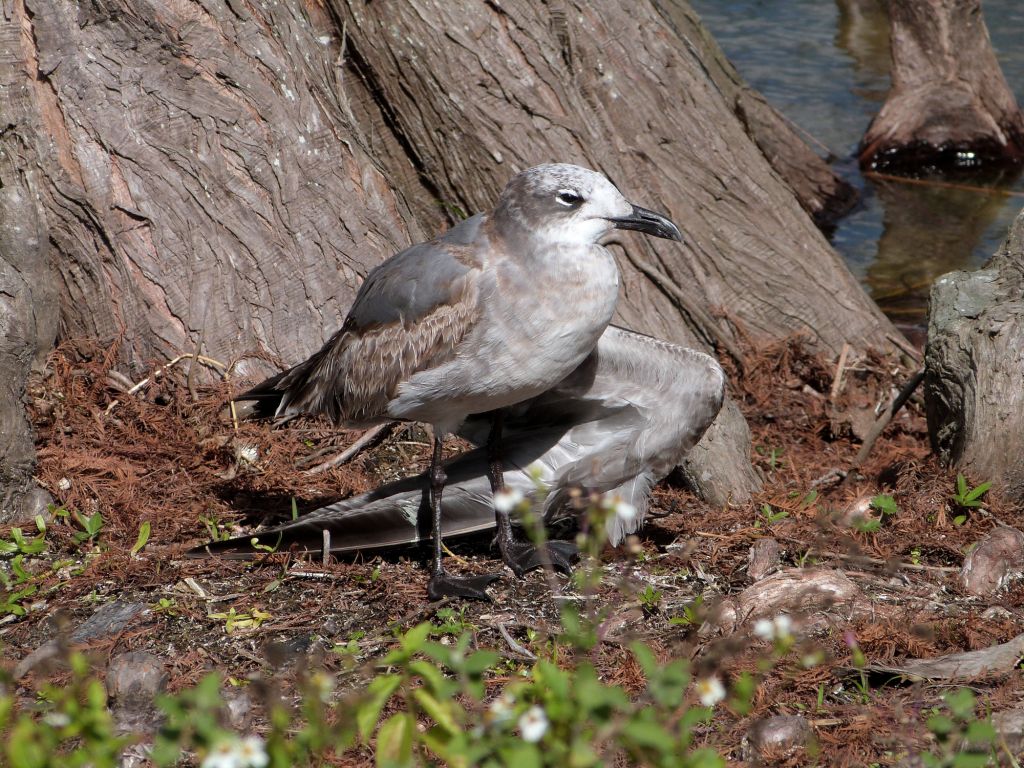
Laughing Gull Imm injured wing

Laughing Gull Imm injured wing

Are not two sparrows sold for a farthing? and one of them shall not fall on the ground without your Father. (Matthew 10:29 KJV)

Yesterday, Dan and I went to Lake Hollingsworth in Lakeland, FL for a little birdwatching and to just enjoy the day. It was around 77 degrees and a few clouds were hanging out. Just another beautiful day from the Lord. After walking as far as I could, we turned around and retraced our steps back along the southern shore of the lake.

My legs are doing much better, praise the Lord, but I still have issues. I stopped to rest a minute and spotted a Laughing Gull along the shore. Something in its appearance didn’t seem right, so I got up to investigate. (They have benchs along the way.) What I found was that the Gull had a wing hanging down and I assume it was broken. It appears to be an immature Laughing.

Laughing Gull Imm injured wing

Laughing Gull Imm injured wing

The bird walked up by the tree and kept dragging it’s wing as you can see in the third photo.

Laughing Gull Imm injured wing

Laughing Gull Imm injured wing

I know that verse has been many used times here with the Birds of the Bible articles, but it still applies so well. That verse popped into my thoughts while observing the Gull’s situation. The verse mentions the Sparrow, but all birds were created by the Lord and it applies to them as well. I do not believe that He is only aware of just Sparrows that fall. God is ever-present, all-knowing, and all-powerful, so how could God NOT KNOW?

We know that verse was used to encourage those being persecuted (v.23) to not fear, knowing that the Father is aware of what they were experiencing. They did not need to worry about someone who could destroy their soul. (v.28) The passage goes on to reassure them that they are more valuable than sparrows or birds.

Fear ye not therefore, ye are of more value than many sparrows. (Matthew 10:31 KJV)

Not sure if Gulls “worry.” but that immature bird was in a very precarious situation. Without that wing he (or she) was very vulnerable to what could happen to it. There was a Red-shouldered Hawk flying by and I believe that that might be the tree it landed in when we went by the first time. I was trying to get its photo, but it flew off. I didn’t notice the Gull then. When we noticed the bird on the way back, the Hawk was still flying in the area.

The Bible Knowledge Commentary says this about verse 31: “for their (the persecuted) Father was truly concerned for them and aware of their circumstances. He is aware of the death of a sparrow which is worth so little. Two sparrows were sold for a mere penny (assarion, a Gr. copper coin worth about 1/16 of a Roman denarius, a day’s wages). God the Father also knows the number of hairs on a person’s head (Mat_10:30). The apostles were instructed not to fear for they, being far more valuable to God than sparrows, were seen and known by Him. ”

Believer’s Bible Commentary: “10:30, 31 The same God who takes a personal interest in the tiny sparrow keeps an accurate count of the hairs of the head of each of His children. A strand of hair is of considerably less value than a sparrow. This shows that His people are of more value to Him than many sparrows, so why should they fear?”

Whosoever therefore shall confess me before men, him will I confess also before my Father which is in heaven. But whosoever shall deny me before men, him will I also deny before my Father which is in heaven. (Matthew 10:32-33 KJV)

We should not be afraid to tell others about the Saving Grace of the Lord Jesus Christ, nor that we believe that God is the Self-Existent, All-Knowing, All-Powerful, Ever-Present, Loving (He gave His Son to die for our sins.), Creator of the world and all these birds, critters, and us.

What will be the fate of the Laughing Gull? I have no clue, but God already knows all about its situation, but better yet, He knows all out us and our situations and circumstances. He cares and wants us to put our trust in Him.

Sharing The Gospel

And wisdom and knowledge shall be the stability of thy times, and strength of salvation: the fear of the LORD is his treasure. (Isaiah 33:6 KJV)

See more Birds of the Bible

*

Ian’s Bird of the Week – Kea

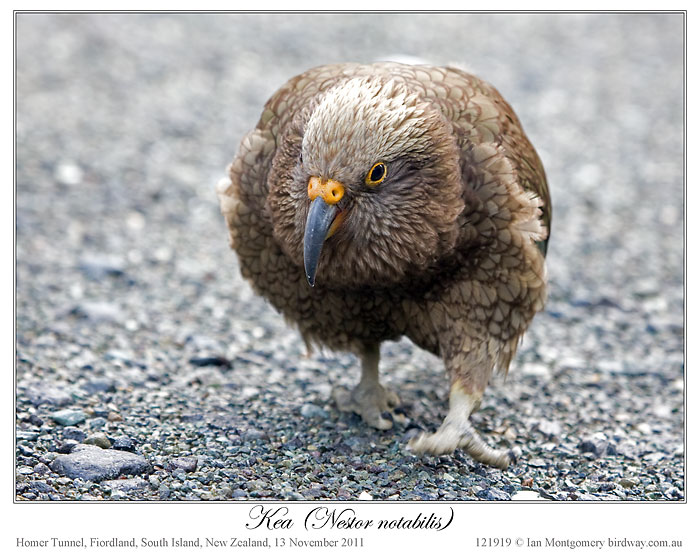
Kea (Nestor notabilis) by Ian #1

Kea (Nestor notabilis) by Ian #1

Ian’s Bird of the Week – Kea ~ by Ian Montgomery

Newsletter ~ 1/26/12

If you park near the entrance to the Homer Tunnel on the way to Milford Sound in Fiordland on the South Island of New Zealand, you are likely to be approached by one of these interesting-looking parrots.

‘Friendly-looking chap’, you might think, ‘I wonder what he’s after? Just saying Hello? Some food maybe?’. Wrong. This one, the Kea, has a one-track mind, and is only interested in destruction, or more specifically dismantling your vehicle.
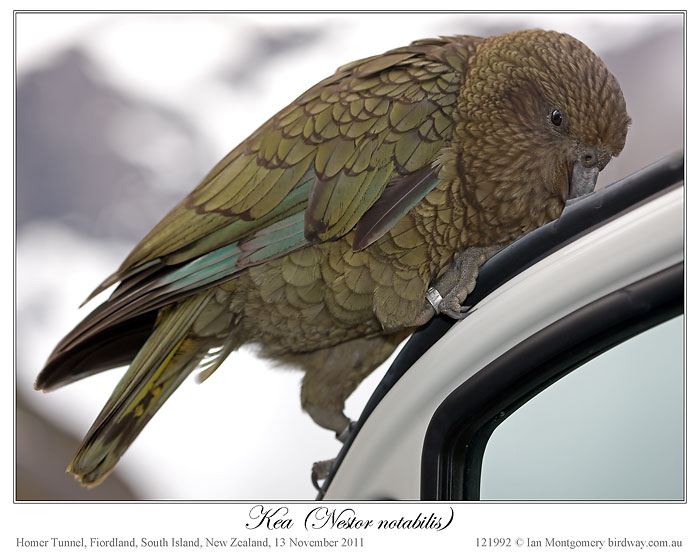
Kea (Nestor notabilis) by Ian #2

Kea (Nestor notabilis) by Ian #2

Quick as a flash, it and his pals will check it out for weak spots and set to work – this one with yellow cere, lower mandible and eye-ring is a juvenile delinquent (yes, that’s snow in the background, these are tough birds). Let’s see if we can rip the roof off.

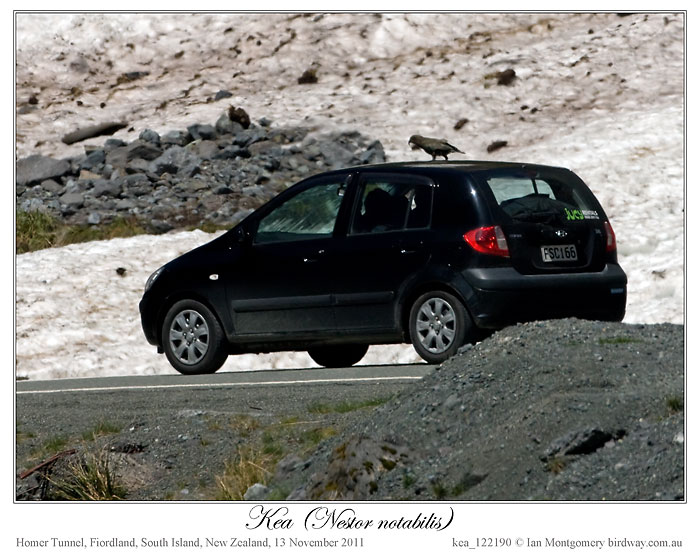
Kea (Nestor notabilis) by Ian #3

Kea (Nestor notabilis) by Ian #3

Oh well, the roof was stronger than it looked. How about the braking light above the back door, this has some promising cracks.

Kea (Nestor notabilis) by Ian #4

Kea (Nestor notabilis) by Ian #4

Meanwhile, this hardened criminal (this is an adult bird) has learnt that the rubber is more vulnerable and attacks the lining of the front door.
Kea (Nestor notabilis) by Ian #5

Kea (Nestor notabilis) by Ian #5

And don’t think you can get rid of us by just driving off. We’ll hang on grimly until we get blown off by the breeze.

Kea (Nestor notabilis) by Ian #6

Kea (Nestor notabilis) by Ian #6

Keas have the reputation of being playful, but the intensity and obsessiveness of their attacks looked anything like a game to me and more like a compulsion. In fact, their attacks did no noticeable damage even though I parked the camper there for some time so that I could look for the Rock Wrens (Bird of the Week #438). According to my field guide ‘the worst offending birds are caught and transferred to distant sites or taken into captivity’. Sounds familiar.

At one time, Keas were supposed to kill sheep, and the resulting bounty led to their persecution and decline. They have been fully protected since 1986 and the population is recovering.
Keas are quite large birds, 46cm/18in in length and weighting up to 1Kg/2.2lbs. They and their relatives the Kaka and the Kakapo comprise a taxonomically distinct lineage of New Zealand parrots not closely related to any others and usually placed either in their own family (IOC) or sub-family (Birdlife International). While the flightless Kakapo is critically endangered and the subject of an intensive rescue mission http://www.kakaporecovery.org.nz/ , the Kea is quite common in Alpine areas of the South Island and the Kaka occurs in the forests of both islands, though I failed to find it on this trip. It’s good to leave something for the next visit.
Best wishes
Ian

Ian Montgomery, Birdway Pty Ltd,
454 Forestry Road, Bluewater, Qld 4818
Phone: 0411 602 737 +61-411 602 737
Preferred Email: ian@birdway.com.au
Website: http://birdway.com.au


Lee’s Addition:

Sounds like you might want to keep an eye on your personal property around those birds! It is amazing how much the birds vary in their habits and diets. Every time Ian writes about his encounters with the various birds, it’s always different and interesting. Keep up the great birding, Ian, we enjoy your encounters with our avian friends around the world.

I know all the birds of the mountains, And the wild beasts of the field are Mine. (Psalms 50:11 NKJV)

See Ian’s Cockatoos & Allies and his Parrots & Allies, which are part of the Strigopidae Family. Those parrots along with the Cockatoos – Cacatuidae and Parrots – Psittacidae Families make up the Psittaciformes Order.

*

Redhead at Lake Morton – 1-20-12

*

Saturday we headed over to Lakeland for some errands and took the cameras along. We stopped by Lake Morton to see who was there. Turned out to be quite a few interesting birds and got our third “Life Bird” of the year. This time I even was able to video it. There was a couple feeding the birds cracked corn and bread. They had quite a menagerie around them. They came from all over the Lake and we just stood there and photographed away. In amongst the Ring-necked Ducks was this Redhead. We searched all the birds, but he was the only Redhead to be found.

“The Redhead (Aythya americana) is a medium-sized diving duck, 14.5 in (37 cm) long with an 33 in (84 cm) wingspan.
The adult male has a blue bill, a red head and neck, a black breast, yellow eyes and a grey back. The adult female has a brown head and body and a darker bluish bill with a black tip.

The breeding habitat is marshes and prairie potholes in western North America. Loss of nesting habitat has led to sharply declining populations.

Females regularly lay eggs in the nests of other Redheads or other ducks, especially Canvasbacks. Redheads usually take new mates each year, starting to pair in late winter.

Following the breeding season, males go through a molt which leaves them flightless for almost a month. Before this happens, they leave their mates and move to large bodies of water, usually flying further north.

They overwinter in the southern and north-eastern United States, the Great Lakes region, northern Mexico and the Caribbean.

These birds feed mainly by diving or dabbling. They mainly eat aquatic plants” (Wikipedia)

For every kind of beast and bird, of reptile and creature of the sea, is tamed and has been tamed by mankind. (James 3:7 NKJV)

The people feeding these birds were practically proving this verse. Even the Great Blue Heron has come out to feed in the past.

Here is a list of all the birds I listed with eBird.org for 1-20-2012 at Lake Morton.

My Lake Morton List

Mute Swan 20 (Not even counting ones on north side of lake)
Black Swan 1
Muscovy Duck (Domestic type) 5
Mallard (Domestic type) 30 (Also at least 7 White Pekin type ducks)
Redhead 1

Ring-necked Duck 15


Ruddy Duck 1


American White Pelican 3
Great Blue Heron 1
Great Egret 2
White Ibis 18
Turkey Vulture 1
Bald Eagle 1


American Coot 40
Limpkin 2
Ring-billed Gull 10
Rock Pigeon 5
Tree Swallow 10
Boat-tailed Grackle 11

See also:

The whole Lake Morton Album

Redhead (duck) – Wikipedia

Sharing The Gospel

*

Birdwatching Adventure – Circle B Bar Reserve – 1/16/12

Sora (Porzana carolina) by Lee at Circle B

Sora (Porzana carolina) by Lee at Circle B

Dan and I went over to Circle B Bar Reserve on Monday, January 16th. We had a great time birding and we got to view a “Life Bird.” (This one is for real.) See the photo above. “Life Birds” are what you call a bird species the first time you see one. We now have 3 life birds this year. The Sora seen here is the second one for the year. The first one was a Hooded Grebe on Saturday. and I spotted a third one today, a Redhead, at Lake Morton.

The Sora is a bird in the Rails, Crakes & Coots – Rallidae Family. They are 7.9-9.8 in (20-25 cm) and weigh about 1.4-4 oz (49-112 g). So they are not a large bird. I found it among the Common Gallinule and that is what help me realize that it was different and smaller. Been looking for a Sora for months out at Circle B. Knew they were there, just never found one.

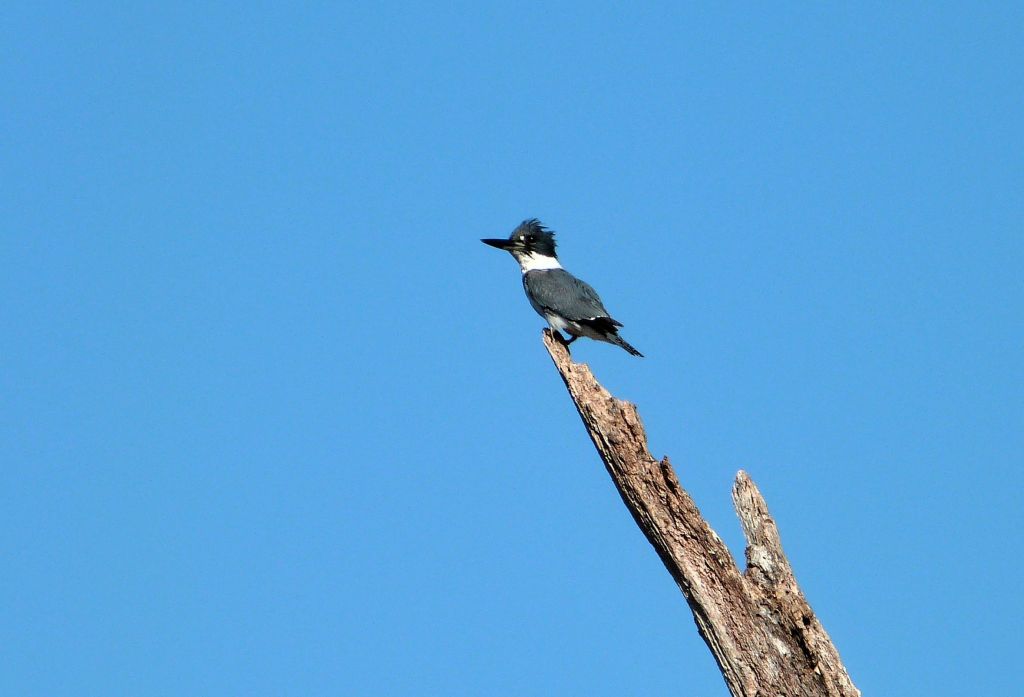
Belted Kingfisher (Megaceryle alcyon) by Lee Circle B

Belted Kingfisher (Megaceryle alcyon) by Lee Circle B

Another highlight of our trip was finding 2 Belted Kingfishers, close-up and personal. They are hard to photograph, but this time they were showing off right in front of us. They were hovering and then diving for their food. Was great to watch them. They are in the Kingfisher – Alcedinidae Family. They are medium sized, actually we both were surprised they are as large as they are. They always appear to have a very short squatty neck. They are 11–13.8 in (28–35 cm), weigh 4.9–6 oz (140–170 g) and have a 19-22 in (48-58cm) wingspan.

Belted Kingfisher (Megaceryle alcyon) by Lee Circle B

Belted Kingfisher (Megaceryle alcyon) by Lee Circle B

Let all those who seek You rejoice and be glad in You; And let those who love Your salvation say continually, “Let God be magnified!” (Psalms 70:4 NKJV)

We also spotted several Alligators.

Here is the list that I turned in to eBird.org:

37 species total

Black-bellied Whistling-Duck 20
Mottled Duck 2
Ruddy Duck 2
Double-crested Cormorant 2
Anhinga 1
Great Blue Heron 2
Great Egret 3
Little Blue Heron 2
Cattle Egret 15
Turkey Vulture 50
Osprey 1
Northern Harrier 1
Common Gallinule 10
American Coot 20
Sandhill Crane 6
Killdeer 1
Mourning Dove 5
Tree Swallow 30
Northern Mockingbird 1
Palm Warbler 3
Yellow-rumped Warbler 1
Boat-tailed Grackle 5

Wordless Birds

*

Ian’s Bird of the Week – Paradise Shelduck

Paradise Shelduck (Tadorna variegata) by Ian 1

Paradise Shelduck (Tadorna variegata) by Ian 1

Ian’s Bird of the Week – Paradise Shelduck ~ by Ian Montgomery

Newsletter – 1/16/12

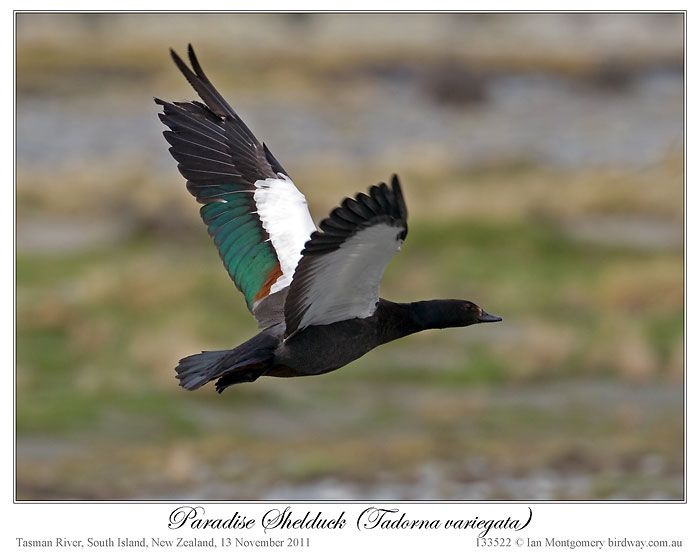
Shelducks are all rather splendid, so this one has to be particularly fine to earn the moniker ‘Paradise’. Interestingly, it is the white-headed female that is, I think, the more striking as in the first photo of a female having a drink (of salt water!) at Milford Sound.

Paradise Shelduck (Tadorna variegata) by Ian 2

Paradise Shelduck (Tadorna variegata) by Ian 2

The second photo shows the same bird stretching her wing to show us the gorgeous emerald green secondary flight feathers. Like all Shelducks, these are large ducks, averaging 63cm/25in in length and the males, averaging 1,700g/3.7lbs, are larger than the females, 1,400g/3.1lbs.
Paradise Shelduck (Tadorna variegata) by Ian 3

Paradise Shelduck (Tadorna variegata) by Ian 3

Meanwhile her mate, who has a dark brown head and finely patterned wing coverts, decides it’s time to go for a swim.
The males have the same black, emerald green and white wing pattern as the female as shown by this male flying along a river in the Waitaki Valley.
Paradise Shelduck (Tadorna variegata) by Ian 4

Paradise Shelduck (Tadorna variegata) by Ian 4

Unlike most other avian species where the female is more colourful, such as Buttonquails and Cassowaries, here there is no switching of gender roles: the female incubates the eggs while the male vigorously defends the territory from predators. Paradise Shelducks maintain pair bonds from one year to the next returning to the same territory. They are partial to both high country riverbeds and farmland and the population has benefitted from the clearing of land for pasture since European settlement.
The Paradise Shelduck is a New Zealand endemic, though a flock of 5 spent arrived on Lord Howe Island in March 1950 and remained for over a month so it is included in the official Australian list.
Best wishes
Ian

Ian Montgomery, Birdway Pty Ltd,
454 Forestry Road, Bluewater, Qld 4818
Phone: 0411 602 737 +61-411 602 737
Preferred Email: ian@birdway.com.au
Website: http://birdway.com.au


Lee’s Addition:

What a neat looking bird. Both the male and the female have such a clean look about them. Shelducks are part of the Anatidae – Ducks, Geese, and Swans Family. They are all in the Tadorna Genus which includes 6 Shelducks. We do not have Shelducks established here in the U.S.

And God blessed them, saying, “Be fruitful and multiply and fill the waters in the seas, and let birds multiply on the earth.” (Genesis 1:22 ESV)

See Ian’s Shelducks on his Birdway website.

Australian Shelduck

Paradise Shelduck

Common Shelduck

Radjah/Raja Shelduck

*

Birdwatching Adventure for January 7, 2012

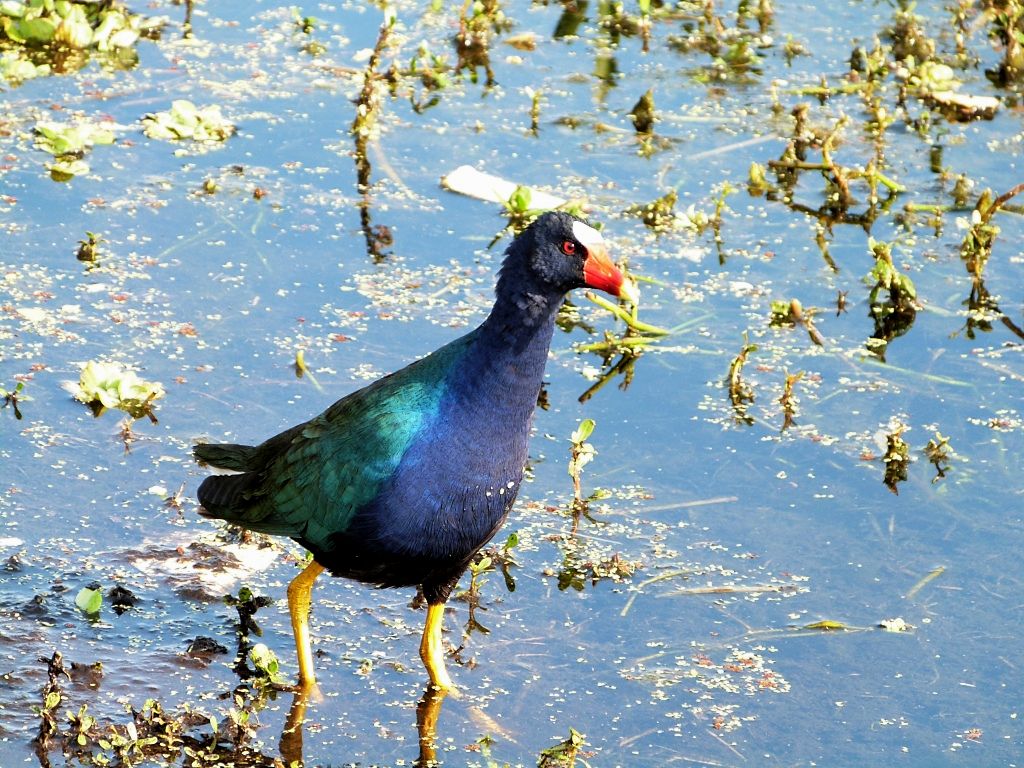
Purple Gallinule by Lee at Lake Parker 1-7-12

Purple Gallinule by Lee at Lake Parker 1-7-12

In the last 10 days, Dan and I have finally been able to go birdwatching. We have had three birding trips right here in Polk County.

Twice we went up to Lake Parker Park in Lakeland. We went on the 7th and again on the 14th of January. The 7th was our 1st adventure of 2012. Here is a list of what I turned in to ebird.org which is a listing service that was launched in 2002 by the Cornell Lab of Ornithology and National Audubon Society to track birds. Here is the list for the January 7, 2012:

Comments: Along shore on way to park and in park
26 species (+1 other taxa)
Mallard (Domestic type) 8
Ring-necked Duck 3
Pied-billed Grebe 4
Double-crested Cormorant – Immature 4
Anhinga 5
Great Blue Heron 2
Great Egret 2
Snowy Egret 3
Cattle Egret 1
White Ibis 10
Glossy Ibis 4
Roseate Spoonbill 1
Turkey Vulture 1
Osprey 4
Red-shouldered Hawk 1
Purple Gallinule 3
Common Gallinule 5
American Coot 7
Ring-billed Gull 20
Caspian Tern 1
Belted Kingfisher 1
Downy Woodpecker 1
Blue-gray Gnatcatcher 5
Palm Warbler 1
Pine Warbler 3
Yellow-rumped Warbler 2
Boat-tailed Grackle 20
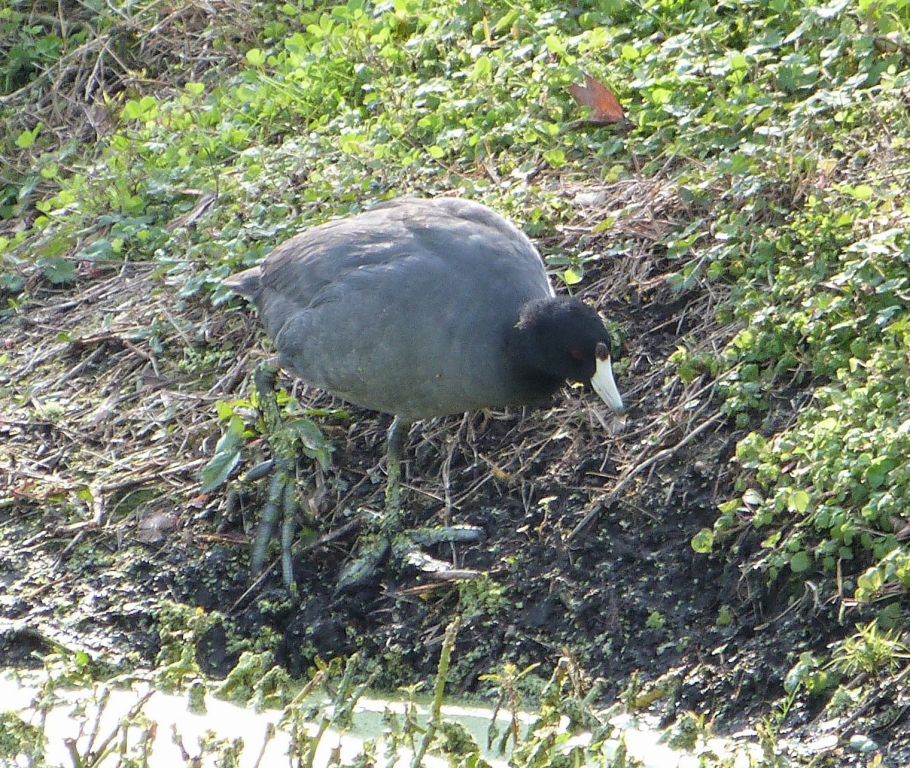
American Coot showing feet by Lee LPkr

American Coot showing feet by Lee LPkr

American Coots have an amazing foot structure. It’s not what you would expect but has lobed toes rather than webbed feet. Photos of foot on Google Search

Which doeth great things past finding out; yea, and wonders without number. (Job 9:10 KJV)

I also turned in the birds I saw coming and going to the park, which is 10 miles from our house:
9 species
Black Vulture 5
Turkey Vulture 10
Sandhill Crane 3
Rock Pigeon 4
Eurasian Collared-Dove 10
Mourning Dove 1
Fish Crow 50
Boat-tailed Grackle 5
House Finch 2
Palm Warbler cropped by Lee LPP

Palm Warbler (Mistaken Pipit) by Lee LPP

All in all, it was a great birding day. The highlight was getting a new bird for my life list of birds seen. (Update This Pipit turned out to be a Palm Warbler, NOT a life bird: We spotted an American Pipit along the shore before we arrived at the park.) We stopped because Dan had spotted a Roseate Spoonbill. The county had a fair sized alligator pinned up right there also.

Last year I saw 2 “life birds” but it took all year to find them. I am writing this on the 17th and I already have 2  to tell you about, but I will save those for the next articles.
*

Birds of the Bible – Robbing The Nest

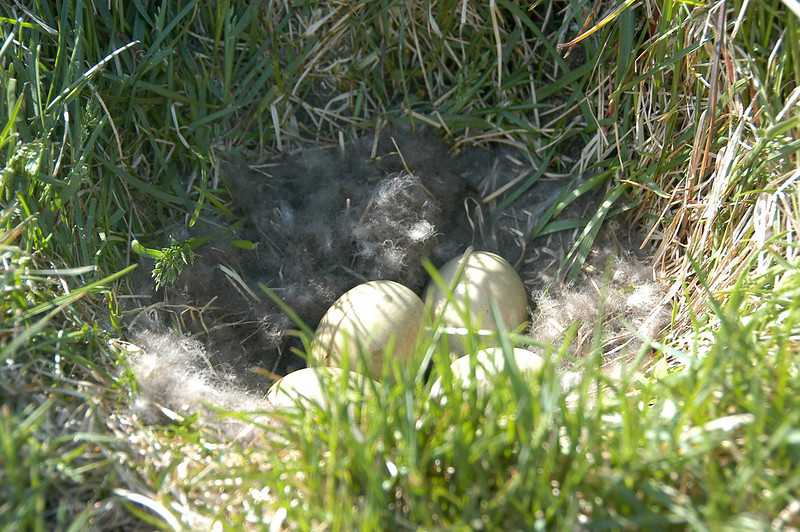
Common Eider (Somateria mollissima) nest by Bob-Nan

Common Eider (Somateria mollissima) nest by Bob-Nan

My hand has found like a nest the wealth of the peoples; and as one gathers eggs that have been forsaken, so I have gathered all the earth; and there was none that moved a wing or opened the mouth or chirped.” (Isaiah 10:14 ESV)

Now here is an interesting passage in Scripture. Came across it the other day in my reading. Hadn’t found it in my Bible searches with my e-Sword because no actual bird is mentioned.

Chapter 10 of Isaiah tells, by way of prophesy, how God was punishing Israel for their sins by using Assyria’s wrath as a tool.

Ah, Assyria, the rod of my anger; the staff in their hands is my fury! Against a godless nation I send him, and against the people of my wrath I command him, to take spoil and seize plunder, and to tread them down like the mire of the streets. (Isaiah 10:5-6 ESV)

Also stated “Are not my commanders all kings?” in verse 8 and “As my hand has reached to the kingdoms of the idols, whose carved images were greater than those of Jerusalem and Samaria, shall I not do to Jerusalem and her idols as I have done to Samaria and her images?” in 10 and 11.

Hummingbird nest by Bob-Nan

So the Lord uses Assyria to punish Jerusalem, but the King becomes boastful and full of pride. He, the king of Assyria, states that he has done it, by his strength, and his wisdom, and plunders their treasures. (Isaiah 10-12-13)

Then the king makes the remark about robbing the nest of it’s eggs (the wealth and riches of the captured people) as easy as from a nest where the bird is not there to protect it.

“and there was none that moved a wing” is referring to how normally a bird would defend its nest and be flying about attacking the egg thief.

“opened the mouth or chirped.” Under normal conditions, the birds would be quite vocal if their nest was being robbed.

And I have put my hands on the wealth of the peoples, as on the place where a bird has put her eggs; and as a man may take the eggs from which a bird has gone, so I have taken all the earth for myself: and not a wing was moved, and not a mouth gave out a sound. (Isaiah 10:14 BBE)

Those two phrases would be like today if a country was attacked and no army came out to defend or the news media and governmental officials were not there making a vocal condemnation or complaints.

But the chapter goes on to state that the king, country, servant, or whomever, should not think they are the one doing the work, but realize they are being used by some power greater than their self.

Will the axe say high-sounding words against him who is using it, or the blade be full of pride against him who is cutting with it? As if a rod had the power of shaking him who is using it, or as if a stick might take up him who is not wood. (Isaiah 10:15 BBE)

The LORD had to punish the people of Jerusalem because if He didn’t get rid of the sin and idolatry, then the whole nation would have to be destroyed. Thankfully, there was a remnant that was to be saved. That remnant would eventually bring forth the Lord Jesus Christ, through the Davidic line when He came in bodily form.

Horned Lark (Eremophila alpestris) nest w eggs by Nikhil Devasar

Horned Lark (Eremophila alpestris) nest w eggs by Nikhil Devasar

What’s to be learned? Birds shouldn’t desert their nest? I think it goes deeper than that.

We should be careful of pride, arrogance, thinking more highly of our self than we should, etc. What we have and are comes from God. When things in our current history are not going the way we think it should, we have to realize that God is in control. Sometimes He uses bad things and people to accomplish His Will.

*

Pardon The Dust

King Penguin (Aptenodytes patagonicus) 6 by Ian

King Penguin (Aptenodytes patagonicus) 6 by Ian

Update 1/14/12 I am releasing the “sticky” part and letting this flow with the rest of the blog. Looks like they got most of it fixed and the great people at WordPress are working to keep their host up and running.

Update 1/13/12 WordPress just put a fix on the site tonight. I will leave this up until tomorrow to see if it stays fixed or I find any other problems.

Lee

Please forgive the posts at the present. I just became aware of a change they made at WordPress.com, which is where this site is hosted. They made a revision to their software and it has knocked many of the photos here out of whack!

I knew I was seeing something weird for the last week or so when I went back to view older posts. Some of my pictures are not centered but off to the right, have letters flowing through them, are hugh, etc. They have been notified, and I have been making changes as I discover them. I am having to change them manually. The problem is that there are over 1,000 pages and over 1,000 posts on this site. Most with more than one photo. Many, many posters on WordPress are being affected. Especially those of us using photos.

To make improvements, sometimes things happen that they didn’t plan on. Be patient, they and I am working on correcting this.

I am not at ease, nor am I quiet; I have no rest, for trouble comes.” (Job 3:26 NKJV)

“Man who is born of woman Is of few days and full of trouble. (Job 14:1 NKJV)

The LORD also will be a refuge for the oppressed, A refuge in times of trouble. (Psalms 9:9 NKJV)

Then they cried out to the LORD in their trouble, And He delivered them out of their distresses. (Psalms 107:6 NKJV)

King Penguin (Aptenodytes patagonicus) 7 by Ian

King Penguin (Aptenodytes patagonicus) 7 by Ian

From – Ian’s Bird of the Week – King Penguin

PS If anyone finds a post with photo problems, please leave a comment on that post. It will help me get this problem fixed.

*

Birds Vol 1 #1 – The Golden Pheasant

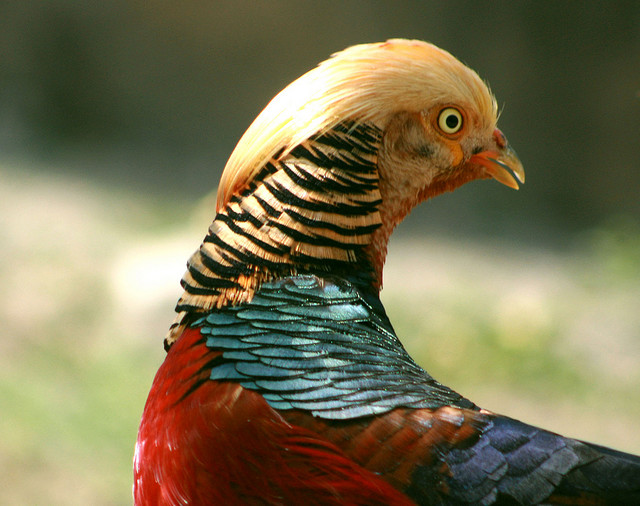
Golden Pheasant (Chrysolophus pictus)

Golden Pheasant (Chrysolophus pictus)

Birds Illustrated by Color Photography – Revisited

Vol 1. January, 1897 No. 1

*

THE GOLDEN PHEASANT

They call me the Golden Pheasant, because I have a golden crest. It is like a king’s crown. Don’t you think my dress is beautiful enough for a king?

See the large ruff around my neck. I can raise and lower it as I please.

I am a very large bird. I am fourteen inches tall and twenty-eight inches long. I can step right over your little robins and meadow larks and blue jays and not touch them.

Sometimes people get some of our eggs and put them under an old hen. By and by little pheasants hatch out, and the hen is very good to them. She watches over them and feeds them, but they do not wish to stay with her; they like their wild life. If they are not well fed they will fly away.

I have a wife. Her feathers are beginning to grow like mine. In a few years she will look as I do. We like to have our nests by a fallen tree.

Golden Pheasant (Chrysolophus pictus) WikiC

Golden Pheasant (Chrysolophus pictus) WikiC


imgt

HE well-known Chinese Pheasant, which we have named the Golden Pheasant, as well as its more sober-colored cousin, the Silver Pheasant, has its home in Eastern Asia.

China is pre-eminently the land of Pheasants; for, besides those just mentioned, several other species of the same family are found there. Japan comes next to China as a pheasant country and there are some in India.

In China the Golden Pheasant is a great favorite, not only for its splendid plumage and elegant form, but for the excellence of its flesh, which is said to surpass even that of the common pheasant. It has been introduced into Europe, but is fitted only for the aviary.

For purposes of the table it is not likely to come into general use, as there are great difficulties in the way of breeding it in sufficient numbers, and one feels a natural repugnance to the killing of so beautiful a bird for the sake of eating it. The magnificent colors belong only to the male, the female being reddish brown, spotted and marked with a darker hue. The tail of the female is short. The statement is made, however, that some hens kept for six years by Lady Essex gradually assumed an attire like that of the males.

Fly-fishers highly esteem the crest and feathers on the back of the neck of the male, as many of the artificial baits owe their chief beauty to the Golden Pheasant.

According to Latham, it is called by the Chinese Keuki, or Keukee, a word which means gold flower fowl.

Golden Pheasant (Chrysolophus pictus) Male ©© NotMicroButSoft

Golden Pheasant (Chrysolophus pictus) Male ©© NotMicroButSoft


“A merry welcome to thee, glittering bird!
Lover of summer flowers and sunny things!
A night hath passed since my young buds have heard
The music of thy rainbow-colored wings—
Wings that flash spangles out where’er they quiver,
Like sunlight rushing o’er a river.”


Lee’s Addition:

What a beautiful bird. I am glad in 2012 that birds are not used for their feathers as much as they were back in the 1800’s. I’ve noticed in the first articles how the birds mentioned are either caged, captive, eaten or their feathers used for hats and other uses. Man was given dominion over the animals and are allowed to eat them, but I still like to see them out and about freely flying.

For You meet him with the blessings of goodness; You set a crown of pure gold upon his head. (Psalms 21:3 NKJV)

Now when He had taken the scroll, the four living creatures and the twenty-four elders fell down before the Lamb, each having a harp, and golden bowls full of incense, which are the prayers of the saints. (Revelation 5:8 NKJV)

The Golden Pheasant or “Chinese Pheasant”, (Chrysolophus pictus) is a gamebird of the order Galliformes (gallinaceous birds) and the family Phasianidae. It is native to forests in mountainous areas of western China but feral populations have been established in the United Kingdom and elsewhere.

The adult male is 35.4-41.3 in (90–105 cm) in length, its tail accounting for two-thirds of the total length. It is unmistakable with its golden crest and rump and bright red body. The deep orange “cape” can be spread in display, appearing as an alternating black and orange fan that covers all of the face except its bright yellow eye, with a pinpoint black pupil.

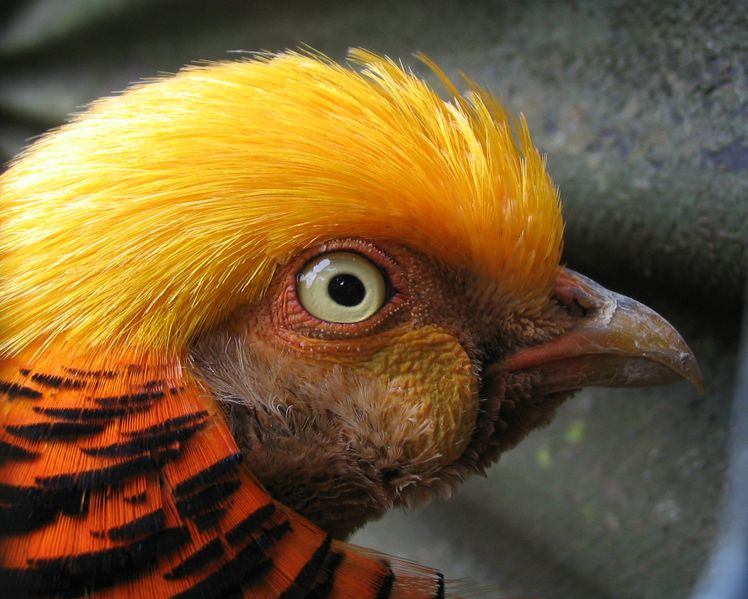
Golden Pheasant (Chrysolophus pictus) ©WikiC

Golden Pheasant (Chrysolophus pictus) ©WikiC

Males have a golden-yellow crest with a hint of red at the tip. The face, throat, chin, and the sides of neck are rusty tan. The wattles and orbital skin are both yellow in colour, and the ruff or cape is light orange. The upper back is green and the rest of the back and rump are golden-yellow in colour. The tertiaries are blue whereas the scapulars are dark red. Another characteristic of the male plumage is the central tail feathers which are black spotted with cinnamon as well as the tip of the tail being a cinnamon buff. The upper tail coverts are the same colour as the central tail feathers. Males also have a scarlet breast, and scarlet and light chestnut flanks and underparts. Lower legs and feet are a dull yellow.

The female (hen) is much less showy, with a duller mottled brown plumage similar to that of the female Common Pheasant. She is darker and more slender than the hen of that species, with a proportionately longer tail (half her 60–80 cm length). The female’s breast and sides are barred buff and blackish brown, and the abdomen is plain buff. She has a buff face and throat. Some abnormal females may later in their lifetime get some male plumage. Lower legs and feet are a dull yellow.

Both males and females have yellow legs and yellow bills.

Despite the male’s showy appearance, these hardy birds are very difficult to see in their natural habitat, which is dense, dark young conifer forests with sparse undergrowth. Consequently, little is known of their behaviour in the wild.

They feed on the ground on grain, leaves and invertebrates, but roost in trees at night. While they can fly, they prefer to run: but if startled they can suddenly burst upwards at great speed, with a distinctive wing sound.

The Golden Pheasant is commonly found in zoos and aviaries, but often as impure specimens that have the similar Lady Amherst’s Pheasant in their lineage. (Wikipedia)

Birds Illustrated by Color Photograhy Vol 1 January 1897 No 1 - Cover

Birds Illustrated by Color Photography – Revisited  – Introduction

The above article is the third article in the monthly serial that was started in January 1897 “designed to promote Knowledge of Bird-Live.” These include Color Photography, as they call them, today they are drawings. There are at least three Volumes that have been digitized by Project Gutenberg.

To see the whole series of – Birds Illustrated by Color Photography – Revisited 

*

(Information from Wikipedia and other internet sources)

Next Article – The Australian Grass Parrakeet

Previous Article – Mandarin Duck

Links:

Phasianidae – Pheasants, Fowl & Allies
Galliformes Order
Golden Pheasant – Wikipedia
Golden Pheasant – ARKive

Gospel Presentation

*