Missing Bird Photos Desired – “Birdographers” Needed

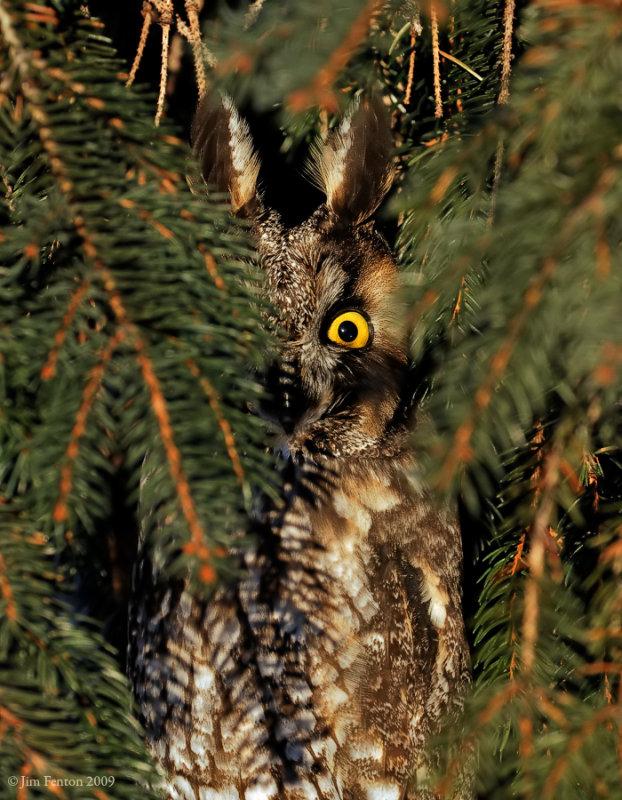
Long-eared Owl (Asio otus) by J Fenton

Long-eared Owl (Asio otus) by J Fenton

On Saturday, I concluded my search for the Birds of the World list of birds. Out of 10,615 (or 10,625) there are 74 birds who seem to have stayed hidden from the view of all the “Birdographers.” That is my name for those who are photographers, videographers, artists and stamp makers. All the major Ornithology and Birding websites are in need of them also.

I am thankful for every photo, drawing, video, specimen and sound recording of the birds that have links to them. They represent dedicated birdwatchers who have been on adventures that have taken them to places many of us would not go. Jungles, swamps, mountains, deserted islands, mudholes, etc have been traipsed so that these images could be recorded. Thank you, thank you, thank you!

When I started listing the Birds of the World several years back, I never envisioned ever seeing the images of as many as I have seen now. According to the IOC Version 3.3 list, I have seen over 10,500 species of the Lord’s fantastically created birds. That does not rate in any counting system used by birders, but it sure has been an unexpected enjoyment for me even though it represents hours of searching and updating the pages here. I have been exposed to birds that are so unique, beautiful, ugly, colorful, dull, loud, quite, etc. that I never knew even existed. Wow!

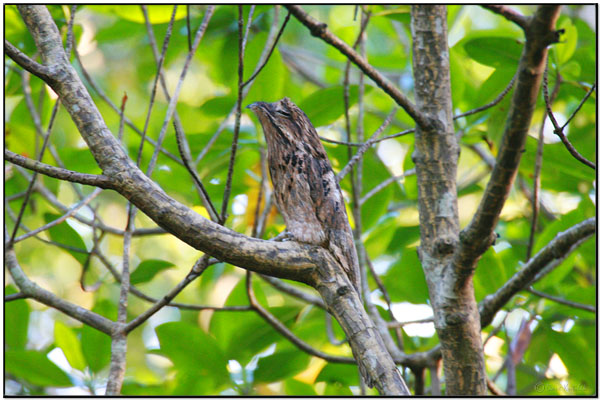
Common Potoo (Nyctibius griseus) by Daves BirdingPix

Do you see me?

Now for the plea. I made a page that list all the missing species, Missing Birds Needed. If anyone who has a photo, video, drawing, or whatever of those birds, or knows where a link can be found to them, please leave a comment or send me an email at:

Lee@Leesbird.com

Yes, there are sites out there that show photos for the listed birds, but they are of another bird in the family or genus. Here, and I am sure there are some mistakes, I would rather have a blank instead of misleading someone to think that is the real bird. Most leave the photo blank, but a few don’t. I fell for that a few times until I learned, now I am trying to find those misleading photos.

One of the biggest problems finding the birds is that the species have had name changes and several names at the same time. They also keep splitting the subspecies off into a new species. Toward the end of my searching, I felt like a detective trying to figure out a bird’s name and its past names just to be able to find it.

And further, my son, be admonished by these. Of making many books there is no end, and much study is wearisome to the flesh. (Ecclesiastes 12:12 NKJV)

Again, if you can help, check out the Missing Birds Needed page and see if you could supply an image or link to one. Let’s see if we can reduce that number down. I haven’t quit my search, just resting until the IOC updates their list next month and I get to start searching again.

Also, if you would like to become one of our photographers, leave a note.

*

Either what woman having ten pieces of silver, if she lose one piece, doth not light a candle, and sweep the house, and seek diligently till she find it? And when she hath found it, she calleth her friends and her neighbours together, saying, Rejoice with me; for I have found the piece which I had lost. Likewise, I say unto you, there is joy in the presence of the angels of God over one sinner that repenteth. (Luke 15:8-10 KJV)

*

Wordless Birds

*

Nuggets Plus – Prairie Dogs and Deer

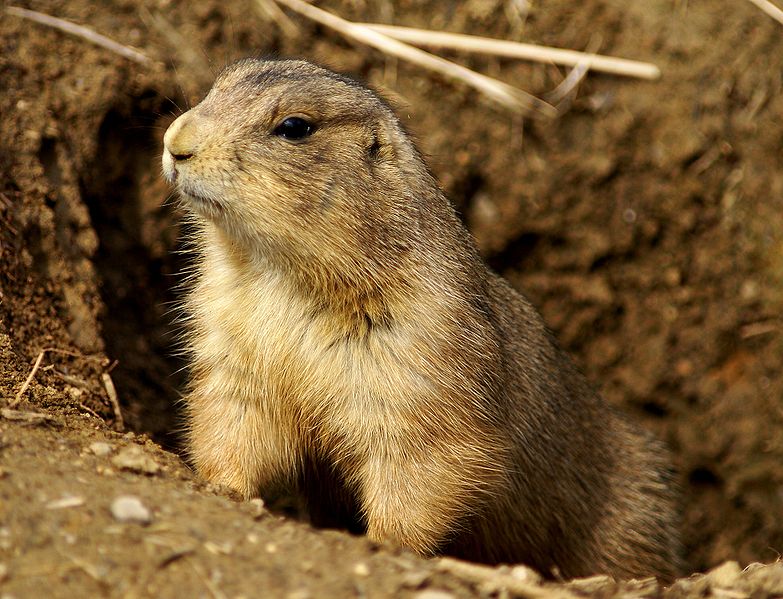
Praire Dog - National Zoo ©WikiC

Praire Dog – National Zoo ©WikiC

Nuggets Plus – Prairie Dogs and Deer by A J Mithra

*

Nuggets Plus

Nuggets Plus

Prairie Dogs – Squirrel like rodents build listening room in its underground tunnel to listen for danger before going outskirts…

Do we have the habit of listening to God’s voice and direction before we go out?

Cause me to hear thy lovingkindness in the morning; for in thee do I trust: cause me to know the way wherein I should walk; for I lift up my soul unto thee. (Psalms 143:8 KJV)

Thy word is a lamp unto my feet, and a light unto my path. (Psalms 119:105 KJV)

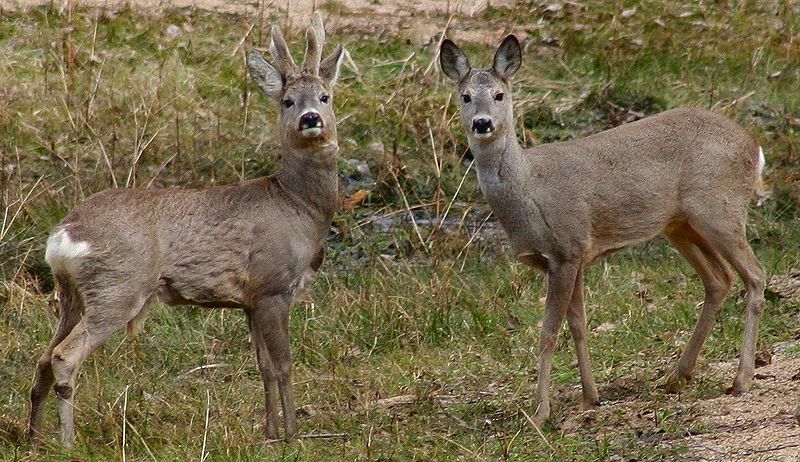
Roe Deer (Capreolus capreolus) ©WikiC

Roe Deer (Capreolus capreolus) ©WikiC

Deer prefer to live in its established territory for life and even prefers to starve than to leave its territory!

God promised to give us feet of deer and place us high above the rock ..

But do we live in His territory?

He made my feet like the feet of a deer and set me secure on the heights. (2 Samuel 22:34 ESV)

*

(Thoughts by a j mithra, layout by Lee and verses by God)

*

Nuggets Plus

AJMithra

*

Birds of the Bible – Details

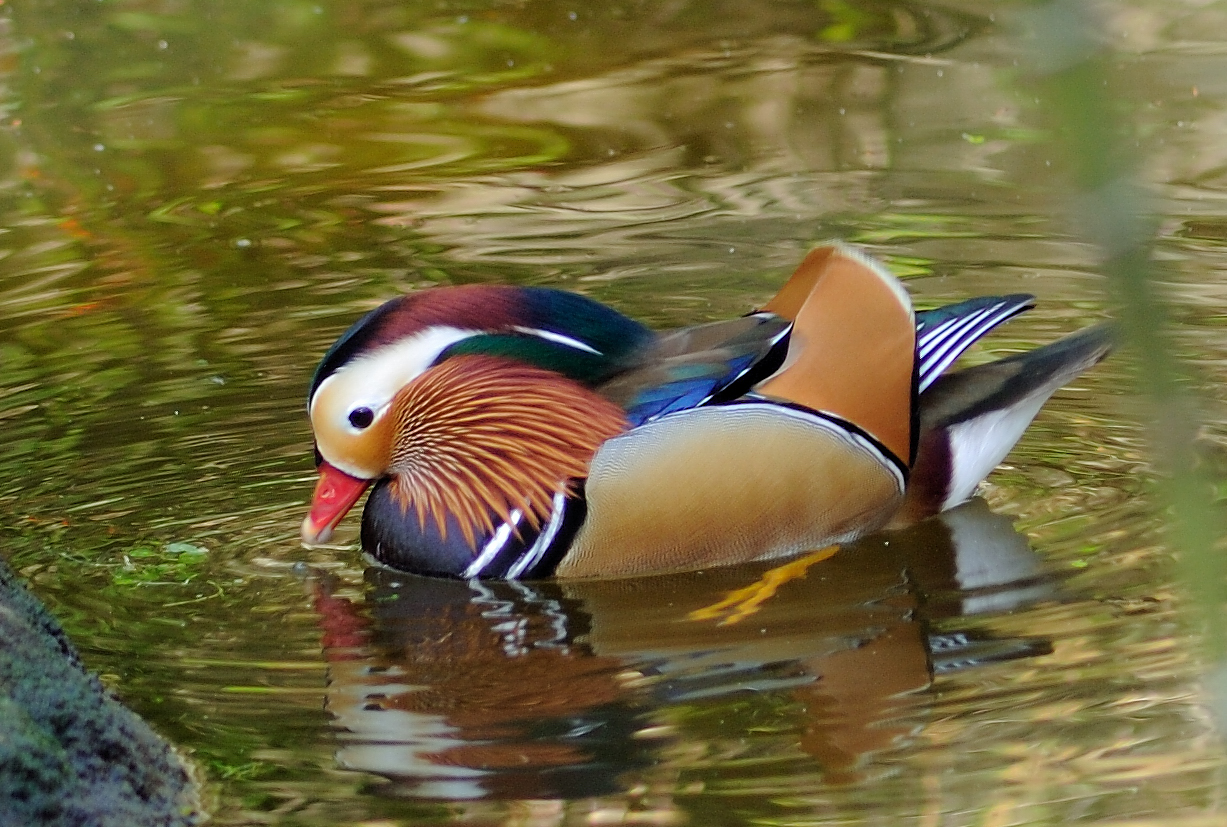
Mandarin Duck (Aix galericulata) by Dan

Mandarin Duck (Aix galericulata) by Dan

Currently, I am reading through Leviticus. When I cam to the Tabernacle, my first thoughts were, “Here we go again” with all the details about how to make it. The LORD gave Moses the details and then he shared those details with all the workers and skilled craftsmen as to how it was supposed to be prepared. It includes down to the number of rings to hold the curtains, like 50 on this side and 50 on that side, etc. The colors Gold, Blue, Purple and Scarlet are constantly mentioned.

Details, details, details. I stopped grumbling when I thought about how the LORD in His creative acts was so, “detailed.” Much of the Bible gives us details about God, the Lord, and the Holy Spirit.It is one of God’s attributes that He is so omnipotent, omniscient, understanding, etc. because He does know all the “details.”

For since the creation of the world His invisible attributes are clearly seen, being understood by the things that are made, even His eternal power and Godhead, so that they are without excuse, (Romans 1:20 NKJV)

We are told to look around us to observe creation and we can see His attributes. Think of just the birds. Are they not each different and made with so much detail. So, here is my attempt to share with you some of the neatly “detailed” birds in a slideshow. My first thoughts were of the Mandarin Duck with its lines and marks. Looks like a paintbrush was used by the Hand of our Creator. I have been trying to think of a bird that is gold, blue, purple and scarlet, but so far, it allude me. (The Mandarin Duck is close)

This slideshow is only featuring the colors and feather designs, but how about all the bills, feet, and other aspects of the birds? Enjoy these beautiful birds. (Thanks to all those who took the photos also.)

This slideshow requires JavaScript.

*

(I hardly got to the Passerines. Sorry)

See:

Birds of the Bible

Falling Plates

*

Subject: Modern Day Noah

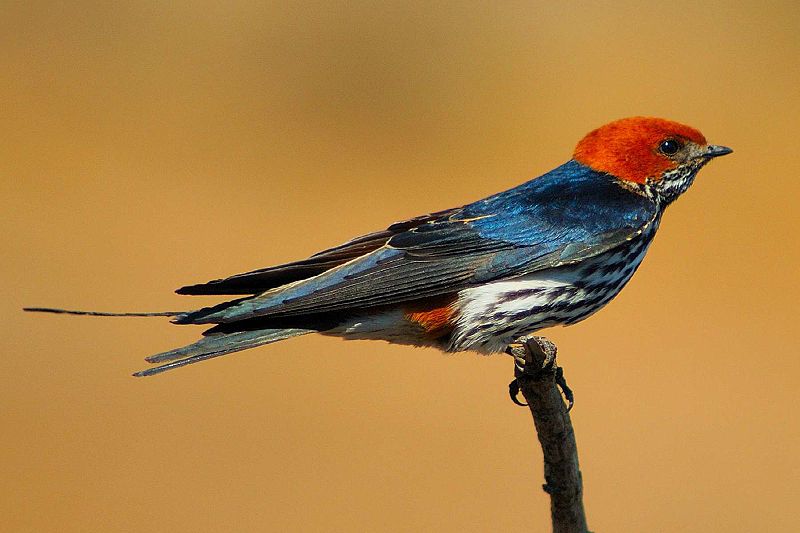
Lesser Striped Swallow (Cecropis abyssinica) ©WikiC

Lesser Striped Swallow (Cecropis abyssinica) ©WikiC

Received this as an email and thought you might enjoy a smile or a groan. (I’m still working behind the scenes on the Birds of the World. (Swallows at the moment.)

A merry heart makes a cheerful countenance, But by sorrow of the heart the spirit is broken. (Proverbs 15:13 NKJV)

Noah's Ark ©©Flickr elmada

Noah’s Ark ©©Flickr elmada

And God said unto Noah, The end of all flesh is come before me; for the earth is filled with violence through them; and, behold, I will destroy them with the earth. Make thee an ark of gopher wood; rooms shalt thou make in the ark, and shalt pitch it within and without with pitch. (Genesis 6:13-14 KJV)

Subject: Modern Day Noah

In the year 2005, the Lord came unto Noah, who was now living in the United States, and said, “Once again, the earth has become wicked and over-populated, and I see the end of all flesh before me. Build another Ark and save 2 of every living thing along with a few good humans.” He gave Noah the blueprints, saying, “You have 6 months to build the Ark before I will start the unending rain for 40 days and 40 nights.”

Six months later, the Lord looked down and saw Noah weeping in his yard, but no Ark. “Noah!” He roared, “I’m about to start the rain! Where is the Ark?”

“Forgive me, Lord,” begged Noah, “but things have changed. I needed a building permit. I’ve been arguing with the inspector about the need for a sprinkler system. My neighbors claim that I’ve violated the neighborhood zoning laws by building the Ark in my yard and exceeding the height limitations. We had to go to the Development Appeal Board for a decision. Then the Department of Transportation demanded a bond be posted for the future costs of moving power lines and other overhead obstructions, to clear the passage for the Ark’s move to the sea. I told them that the sea would be coming to us, but they would hear nothing of it. Getting the wood was another problem. There’s a ban on cutting local trees in order to save the spotted owl. I tried to convince the environmentalists that I needed the wood to save the owls – but no go! When I started gathering the animals, an animal rights group sued me. They insisted that I was confining wild animals against their will. They argued the accommodation was too restrictive, and it was cruel and inhumane to put so many animals in a confined space. Then the EPA ruled that I couldn’t build the Ark until they’d conducted an environmental impact study on your proposed flood. I’m still trying to resolve a complaint with the Human Rights Commission on how many minorities I’m supposed to hire for my building crew. Immigration and Naturalization is checking the green-card status of most of the people who want to work. The trades unions say I can’t use my sons. They insist I have to hire only Union workers with Ark-building experience. To make matters worse, the IRS seized all my assets, claiming I’m trying to leave the country illegally with endangered species. So, forgive me, Lord, but it would take at least 10 years for me to finish this Ark.”
Suddenly the skies cleared, the sun began to shine, and a rainbow stretched across the sky.

Noah looked up in wonder and asked, “You mean you’re not going to destroy the world?”

“No,” said the Lord. “The government beat me to it.”

*

The Rock Ptarmigan – The Crown

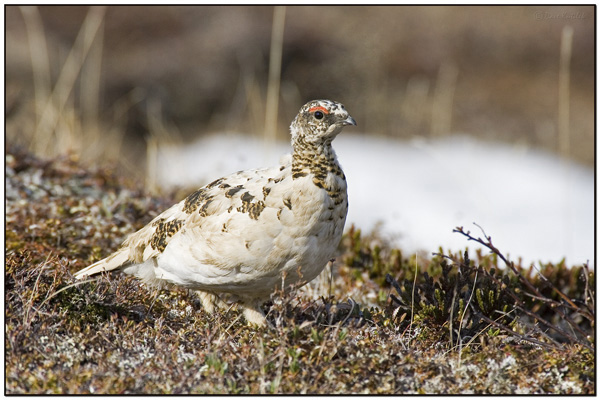
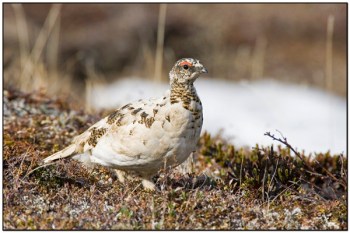
Rock Ptarmigan (Lagopus muta) by Daves BirdingPix

Rock Ptarmigan (Lagopus muta) by Daves BirdingPix

The Rock Ptarmigan – The Crown ~ by a j mithra

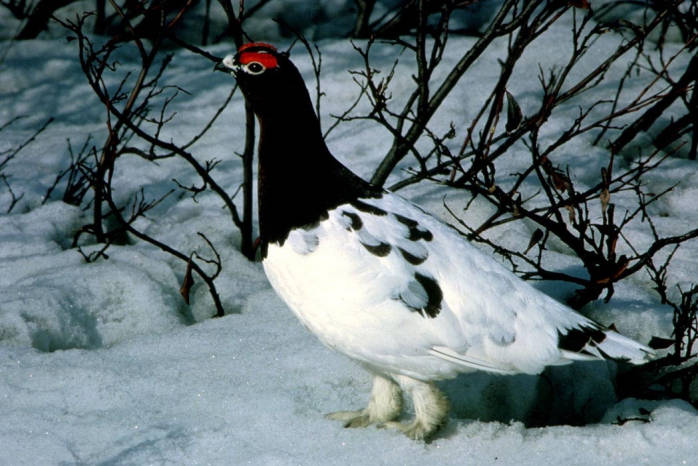
The Rock Ptarmigan is seasonally camouflaged; its feathers moult from white in winter to brown in spring or summer. The breeding male has greyish upper parts with white wings and under parts. In winter, its plumage becomes completely white except for the black tail. It can be distinguished from the winter Willow Ptarmigan (Willow Ptarmigan in North America) by habitat—the Rock Ptarmigan prefers higher elevations and more barren habitat; it is also smaller with a more delicate bill.
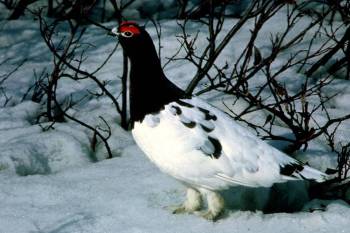
Willow Ptarmigan (Lagopus lagopus) ©USFWS

Willow Ptarmigan (Lagopus lagopus) ©USFWS

A bird that is smaller and with more delicate bill prefers higher elevation…

Interesting isn’t it?

It is when we become smaller, subdued and humble that God takes us to higher elevation.

He brought me up also out of a horrible pit, out of the miry clay, and set my feet upon a rock, and established my goings. (Psalm 40:2)

The higher elevation maybe more barren and it may have delicate bills but still this bird prefers higher elevation…

Most of us judge ourselves by what we have, failing to understand that in our weakness

“And he said unto me, My grace is sufficient for thee: for my strength is made perfect in weakness. Most gladly therefore will I rather glory in my infirmities, that the power of Christ may rest upon me.” (2 Corinthians 12:9)

His strength is complete and that is the reason He chooses the weak.
So that His name shall be glorified

  • Not in strength but in weakness’
  • Not in abundance but in want..
  • Not through the wise but through the fools.

But God has chosen the foolish things of the world to confound the wise; and God has chosen the weak things of the world to confound the things which are mighty; (1 Corinthians 1:27)

Rock Ptarmigan (Lagopus Muta) in winter plumage ©WikiC

Rock Ptarmigan (Lagopus Muta) in winter plumage ©WikiC

The small population living on Franz Josef Land in the Russian High Arctic, overwinter during the polar night, and survives by feeding on rich vegetation on and underneath high cliffs where seabird colonies are located in summer. The Rock Ptarmigan feeds primarily on birch and willow buds and catkins when available. It will also eat various seeds, leaves, flowers and berries of other plant species. Insects are eaten by the developing young.

Apart from the comb, the male Rock Ptarmigan has no ornaments or displays that are typical for grouses in temperate regions. Studies on other grouses have shown that much variation in comb size and colour exists
between the species, and that the comb is used in courtship display and aggressive interactions between males.

This reminds us of how the colorful garment of Jesus was stripped, torn into twelve pieces and shared among the soldiers right under the cross, even as the Rock was grieving in pain for our sins..

Jesus did not have any ornaments or displays on the cross except the crown of thorns.

He bore not the crown of thorns but bore the brunt of mockery to give us the crown of eternal life isn’t it?

And after twisting together a crown of thorns, they put it on His head, and a reed in His right hand; and they knelt down before Him and mocked Him, saying, “Hail, King of the Jews!” (Matthew 27:29)
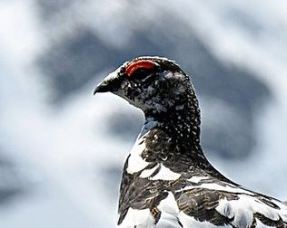
Rock Ptarmigan (Lagopus Muta) ©Wiki

Rock Ptarmigan (Lagopus Muta) ©Wiki

Many studies have shown that there is a strong correlation between the comb size and the level of testosterone in males; one report from 1981 showed that the amount of testosterone is correlated to aggressiveness against other males. The male’s comb has been the focus of studies regarding sexual selection. Studies of a population of male Rock Ptarmigans in Scarpa Lake, Nunavut, have shown that during the first year, mating success among males was influenced by comb size and condition, and bigamous males had larger combs than monogamous males. The correlation to size disappeared after the first year, but the correlation to comb
condition remained.

This is consistent with another study of the same population of L. muta that showed that mating success overall is correlated to comb condition. Exceptions were first-time breeders, in which the size of the comb influenced mating success. The mating success is correlated to comb condition..

There is a strong correlation between the life we live for Christ and the crown that God has kept for us.

  • We need to receive a crown not just to show off but to live eternally with the King..
  • Our King wore a crown of thorns so that His Queen, the Church shall wear the Crown of Life and reign with Him forever and ever.

What kind of a crown would God give us?

Here are a those five crowns that God had kept for us..

God has got an “IMPERISHABLE CROWN” for those who run a faithful, unselfish race, crucifying all their earthly desires and focusing on just the cross.

Did Jesus asked us to carry our cross for this?

Know ye not that they which run in a race run all, but one receiveth the prize? So run, that ye may obtain. And every man that striveth for the mastery is temperate in all things. Now they do it to obtain a corruptible crown; but we an incorruptible. (1 Corinthians 9:24-25)

“THE CROWN OF JOY” is there for those who bring souls into His kingdom. Working towards standing as a living testimony for others to follow Christ through our selfless Christ-like lifestyle…

Are we working selflessly to bring souls to His kingdom?

For what is our hope, or joy, or crown of rejoicing? Are not even ye in the presence of our Lord Jesus Christ at his coming? For ye are our glory and joy. (1 Thessalonians 2:19-20)

Here is another crown that awaits us, that is the “THE CROWN OF RIGHTEOUSNESS”

Are you waiting anxiously for the Lord? In that case you will surely receive this crown, when Jesus, the King returns.

  • How are we waiting?
  • Patiently?
  • Diligently?
  • Anxiously?

Henceforth there is laid up for me a crown of righteousness, which the Lord, the righteous judge, shall give me at that day: and not to me only, but unto all them also that love his appearing. (2 Timothy 4:8)

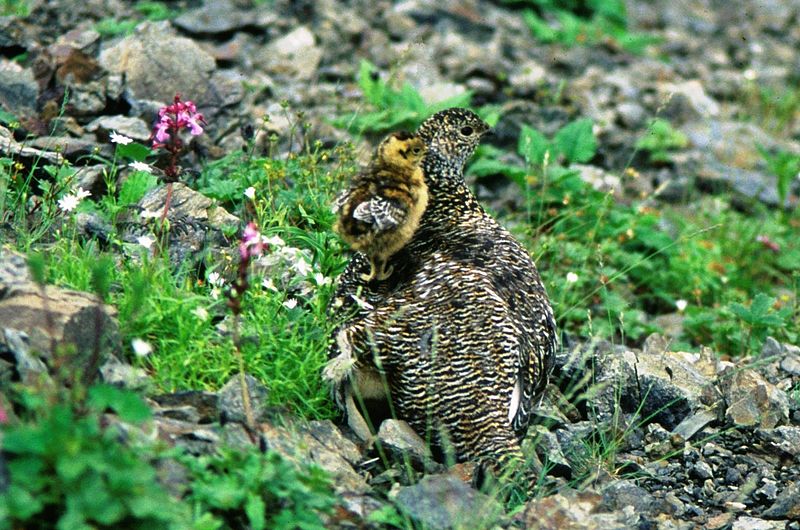
Rock Ptarmigan (Lagopus Muta) ©WikiC mother and chick

Rock Ptarmigan (Lagopus Muta) ©WikiC mother and chick

There is another crown for us, “THE CROWN OF LIFE”.

It is for those who endure temptations, trials, pain and agony for the sake of the Lord.

  • People around you may live a life of luxury and abundance.
  • But we are called to overcome earthly desires.
  • Do we deserve this crown?

Blessed is the man that endureth temptation: for when he is tried, he shall receive the crown of life, which the Lord hath promised to them that love him. (James 1:12)

This crown, “THR CROWN OF GLORY” has a long price tag.

Pay and receive. Here is the bill..

The elders which are among you I exhort, who am also an elder, and a witness of the sufferings of Christ, and also a partaker of the glory that shall be revealed:
Feed the flock of God which is among you, taking the oversight thereof, not by constraint, but willingly; not for filthy lucre, but of a ready mind;
Neither as being lords over God’s heritage, but being examples to the flock.
And when the chief Shepherd shall appear, ye shall receive a crown of glory that fadeth not away. (1 Peter 5:1-4)

Now, it’s time for us to switch on our search lights to see what kind of crown do we deserve..

Have a blessed day!
Yours in YESHUA,
a j mithra

Please visit us at:
CrossTree

ajmithra21
Birds of the Bible – Coat of Many Colors II

Sunset Lorikeet (Trichoglossus forsteni) ©WikiC

Sunset Lorikeet (Trichoglossus forsteni) ©WikiC

Now Israel loved Joseph more than all his children, because he was the son of his old age: and he made him a coat of many colours. (Genesis 37:3 KJV)

After I finished the Birds of the World – Kingfishers, Australasian Warblers, White-Eyes and Doves article last week, I decided to finish up the Psittacidae – Parrots Family. I still needed 150 photos or drawings to complete the 363 species needed. Well, last night, it was finished and at 100% for images.

Looking at all those Parrots and others in the family, they definitely have “Coats of Many Colors” also. Just wanted to share their beautifully created plumage also. Most of us are familiar with parrots and parakeets. Many have them as pets or have seen them in the wild. So you are sort of familiar with them, but I am sure as you view the slideshow, you will see many that you haven’t seen before.

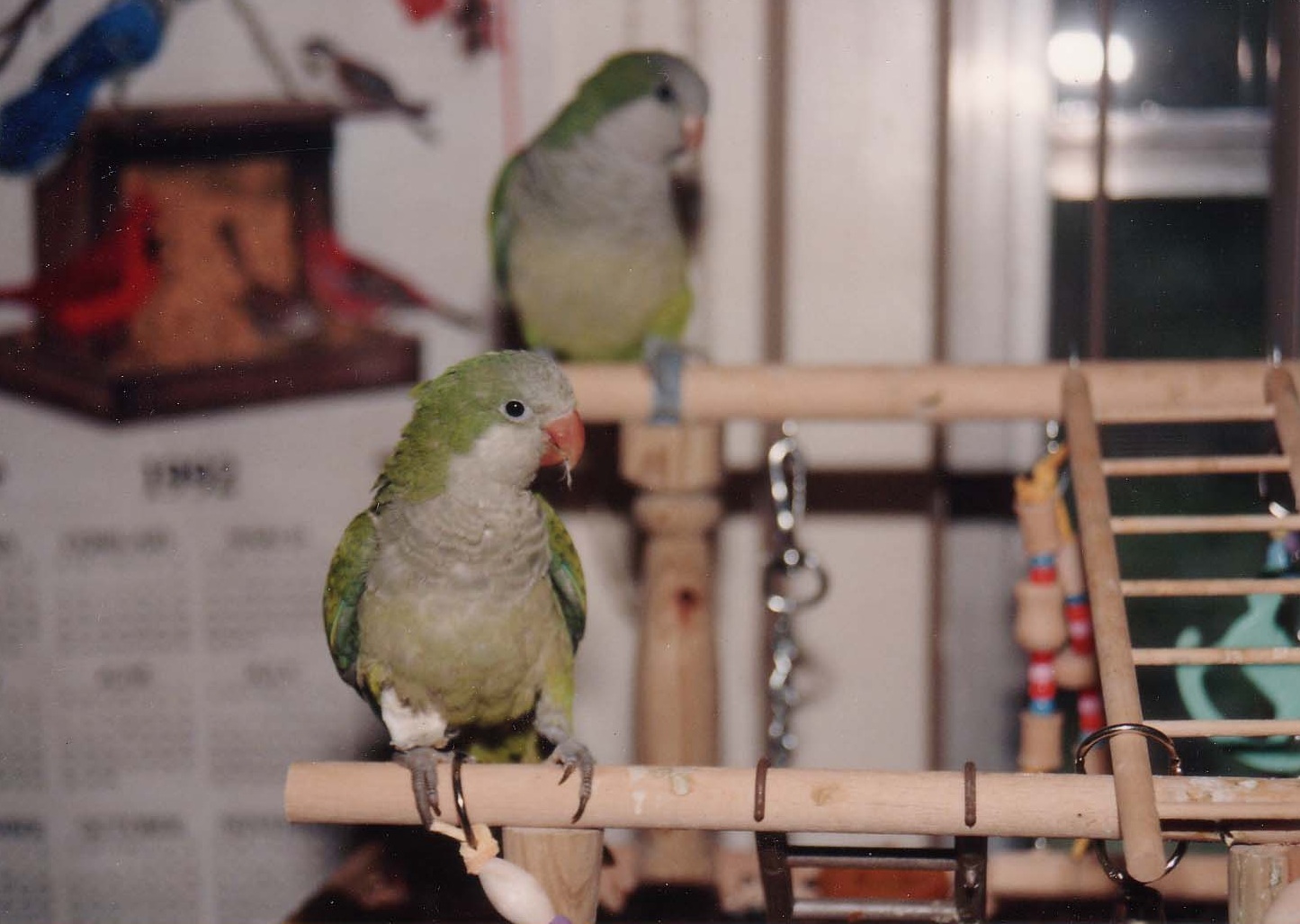
I also want to share the only birds I had personally. My preference is that the birds roam free, or are being kept from extinction in zoos or other similar situation. There is nothing wrong with having a pet, but I am just stating my preference. We ended up with two Monk Parakeets when we lived in south Florida. They are wild down there (up here also), but one day the neighbor boys came to my door and told me about an injured Monk Parakeet. A teenager had shot it out of a tree and the smaller boys found it. They said, “You love birds and you will know what to do.” That began the adventure with my bird. I had never kept a bird in my life, but knew that my veterinarian was also a bird vet. Long story short, I ended up with a one-winged bird that could never go back to the wild. My “free bird” ended up costing over $200 for vet bills. (This was over 20 years ago). Dan wanted to call it “One-armed Bandit” because it cost me so much, but I took the “t” off of “Bandit” and it became “Bandi.” I think it was a “she” because she was so sweet.

Well a year later, my friend bought two Monks and told me there was one more, but it had a deformed leg. Another long story short, I bought “Hoppy” for $25 and ended up spending another $200 getting a broken leg repaired. It was an amazing surgery the vet performed. “Hoppy” had to be a male, because he could be mischievous at times, but he learned to talk and was quite enjoyable (most of the time). The picture shows “Hoppy” with the bandage in front and “Bandi” in the background.

Monk Parakeet (Myiopsitta monachus) Hoppy & Bandi

Hoppy in front, Bandi in back – Monk Parakeet (Myiopsitta monachus)

The only two verses in Scripture, that I know of, that would apply to this would be:

For every kind of beasts, and of birds, and of serpents, and of things in the sea, is tamed, and hath been tamed of mankind: (James 3:7 KJV)

As a cage is full of birds, so are their houses full of deceit: therefore they are become great, and waxen rich. (Jeremiah 5:27 KJV)

Back to the Coats of Many Colors, below is a slideshow showing some of our beautiful and personable members of the Psittacidae – Parrots Family.

*

This slideshow requires JavaScript.

See Also:

Psittacidae – Parrots Family

Birds of the Bible – Coat of Many Colors I

Birds of the Bible 

Birds of the World

*

Birds of the World – Kingfishers, Australasian Warblers, White-Eyes and Doves

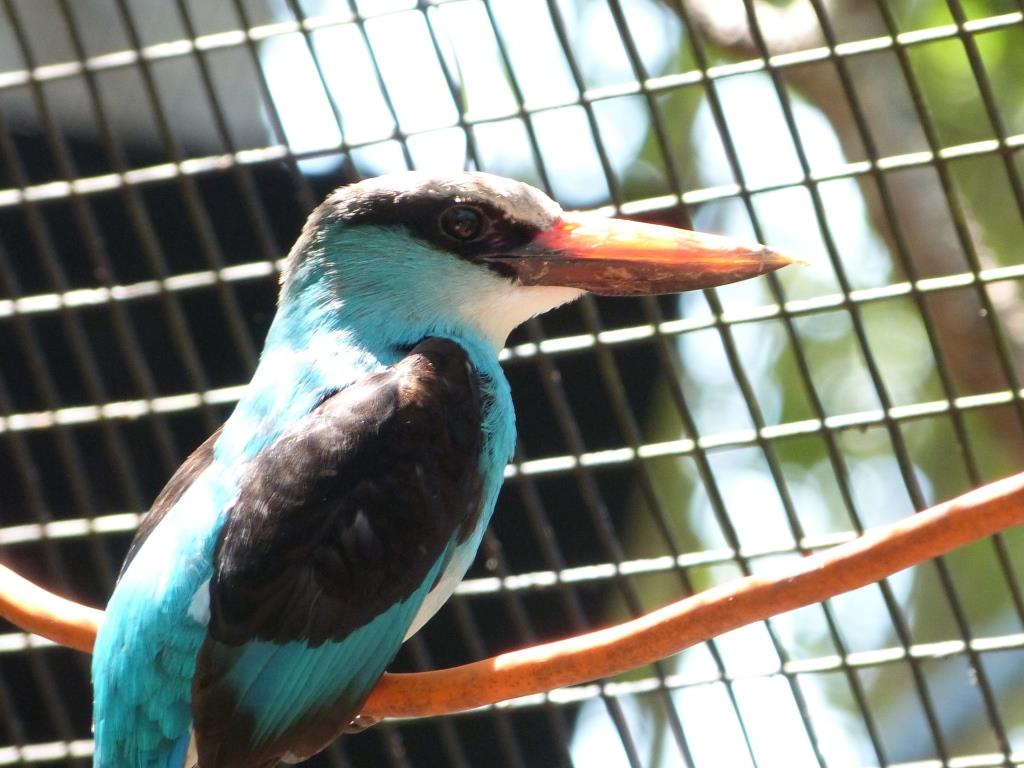
Blue-breasted Kingfisher (Halcyon malimbica) at LPZ by Lee

Blue-breasted Kingfisher (Halcyon malimbica) at LPZ by Lee – taken last week

Many, O LORD my God, are thy wonderful works which thou hast done, and thy thoughts which are to us-ward: they cannot be reckoned up in order unto thee: if I would declare and speak of them, they are more than can be numbered. (Psalms 40:5 KJV)

I have been working away on the different families of the Birds of the World. In the last few days, I was able to complete three more families at 100% and have one that needs five more images. Three of them have at least a photo or drawing of each of them. 100% done. That is a nice feeling. What beautiful birds are in those families. When the Lord created the birds, He used much variety in sizes, behaviors and colors. Even though it takes lots of time, it is enjoyable to be able to view so many of them. I am keeping an Excel spreadsheet of the families that shows each family, the number of species, how many are needed, and number seen so far. There are “10,476 extant species and 149 extinct species classified in 40 Orders,  231 Families (plus 6 Incertae Sedis) and 2268 Genera.” (IOC 3.3 Version) according to the IOC statement. Yet, when you add up the number of species of each family, they add up to 10,615. (10476+149=10,625) Somewhere there are 10 miscounted birds. Either way (10615 or 10,625), thats a lot of birds that are flying around the world for all of us to enjoy watching.

100 Percent of Images

Alcedinidae – Kingfishers – 95 Species

Acanthizidae – Australasian Warblers – 65 Species

Zosteropidae – White-eyes – 128 Species

The Pigeon and Doves have five photos that need to be found. After extensive search, they are still avoiding all the great photographers and artists out there. If any know of a source for these evaders, please leave a comment as to where to find a link to them. At least looking through these inspired the Birds of the Bible – Coat of Many Colors article.

Columbidae – Pigeons, Doves – 335 Species

** Need Photo **

  • Ryukyu Wood Pigeon (Columba jouyi †) Extinct
  • Rodrigues Pigeon (Nesoenas rodericana †) Extinct
  • Sulu Bleeding-heart (Gallicolumba menagei)
  • Mindanao Brown Dove (Phapitreron brunneiceps) 
  • Comoros Green Pigeon (Treron griveaudi)

Below are a few of the birds from each family.

This slideshow requires JavaScript.

*

Click on any of the Families to see the complete list of the species.

Alcedinidae – Kingfishers 

Acanthizidae – Australasian Warblers 

Zosteropidae – White-eyes

Columbidae – Pigeons, Doves

*

Wordless Birds

*

Birds of the Bible – Coat of Many Colors

Many-colored Fruit Dove (Ptilinopus perousii) ©WikiC

Many-colored Fruit Dove (Ptilinopus perousii) ©WikiC

While working on the Columbidae – Pigeons, Doves Family, I was enjoying the Fruit Doves and their beautiful colors. Of course the verse about Joseph’s Coat of Many Colors kept crossing my mind. Then I actually found the Many-colored Fruit Dove.

Now Israel loved Joseph more than all his children, because he was the son of his old age: and he made him a coat of many colours. (Genesis 37:3 KJV)

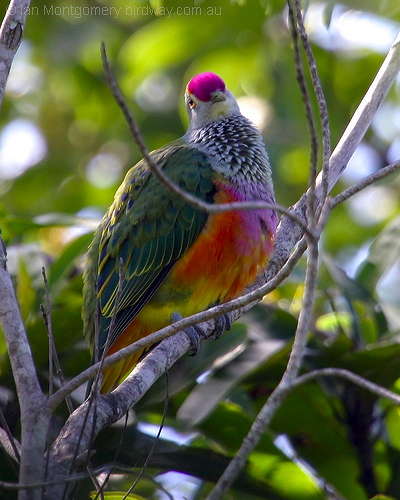
The Fruit Doves belong to the Ptilinopus genus. There are 53 Fruit Doves at present (I.O.C. 3.3) They eat fruit mostly and they may help enhance their colours, at least that is one opinion. “These small- to medium-sized doves generally have short, fan-shaped tails, and are remarkable for their colorful and often glossy plumage, as evidenced in the aptly named Orange Fruit Dove, Flame-breasted Fruit Dove, and Pink-headed Fruit Dove. Males and females of many fruit dove species look very different. For example, the female Many-coloured Fruit Dove shares the male’s crimson crown and deep pink undertail feathers, but is otherwise green, whereas the male has a crimson on the upper back and has areas of yellow, olive, cinnamon, and grey.

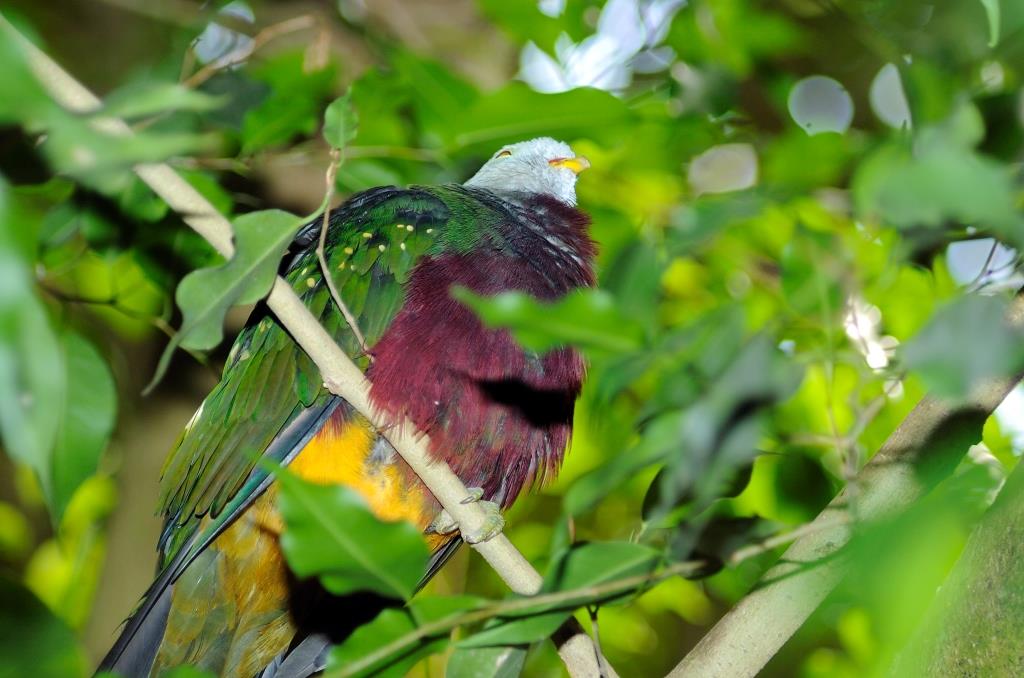
Wompoo Fruit Dove (Ptilinopus magnificus) by Dan at National Aviary

Wompoo Fruit Dove (Ptilinopus magnificus) by Dan at National Aviary

This is a large genus, most diverse in and around the island of New Guinea, in the Philippines, and in the biogeographical region of Wallacea. Some species have ranges as far west as the Sunda Islands, others north to Taiwan, south to Australia, and east into Polynesia.

Fruit doves, as their name implies, eat fruit — ficus is especially important — and live in various kinds of forest or woodland. Some species are restricted to primary forest, such as lowland rainforest, montane forest, or monsoon forest, while others prefer secondary forest or disturbed areas. Some species specialize in particular habitats, from lowland coastal forest to the cloud forest or moss forest of high altitudes. Some species of fruit doves are only found in habitats dominated by particular plants, such as mangrove, eucalyptus, or pandanus. Only a few species can commonly be seen around human habitation, these include the Knob-billed Fruit Dove, Makatea Fruit Dove, and Black-naped Fruit Dove, which are known to visit gardens and such.

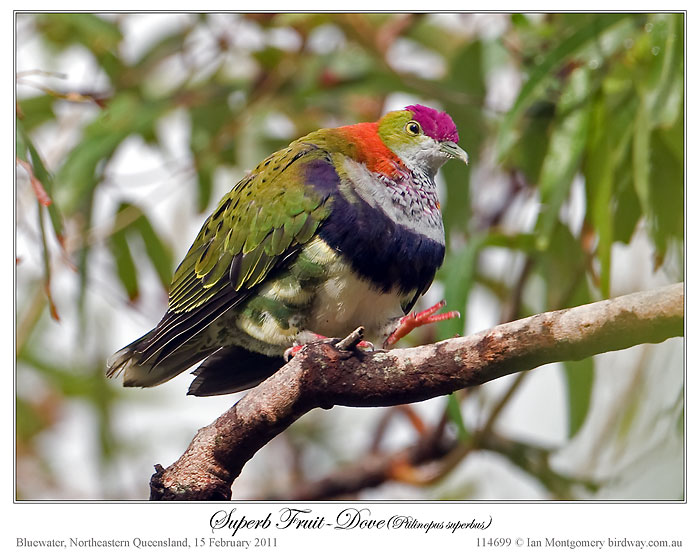
Superb Fruit Dove (Ptilinopus superbus) by Ian

Superb Fruit Dove (Ptilinopus superbus) by Ian

Much is still to be learned about fruit doves. Many species are shy and difficult to observe in their natural habitat. For example, there are several species in the Philippines, and for most of them, little or nothing is known of their breeding or nesting behavior.” (Wikipedia with editing)

We have had the privilege of seeing several of the Fruit Doves at the Zoos we have visited. They are so beautiful and colorful. Isn’t the Lord great in His providing them the ability to show off all their “coats of many colors?” I trust you will enjoy looking at the slideshow below and seeing them. These are the ones that I have permission to show. I am putting the whole list of them from the Family pages so that you can view the others.

Rose-crowned Fruit Dove (Ptilinopus regina) by Ian

Rose-crowned Fruit Dove (Ptilinopus regina) by Ian

Divers colours is only associated with one bird in Scripture and that is with an eagle:

And say, Thus saith the Lord GOD; A great eagle with great wings, longwinged, full of feathers, which had divers colours, came unto Lebanon, and took the highest branch of the cedar: (Ezekiel 17:3 KJV)

“Divers colours” is used 6 times in the King James Version, others translate that phrase as; various colors, beautiful feathers, long, colorful feathers , full of varicolored feathers, of variety,  feathers covered with spots, rich in plumage of many colors, full of plumage of embroidery, having different colors to him, multi-colored plumage, or in full plumage and bright colors.

I think those descriptions can well describe our feather colors  the Creator placed on these Fruit Doves. Doves are mentioned many times in the Bible. See the Birds of the Bible – Dove and Pigeon page.

This slideshow requires JavaScript.

****

Columbidae – Pigeons, Doves Family

Birds of the Bible – Dove and Pigeon

*

P.S. I’ll be adding more of our as I find them.

*

Seeing Pink at Circle B Bar Reserve

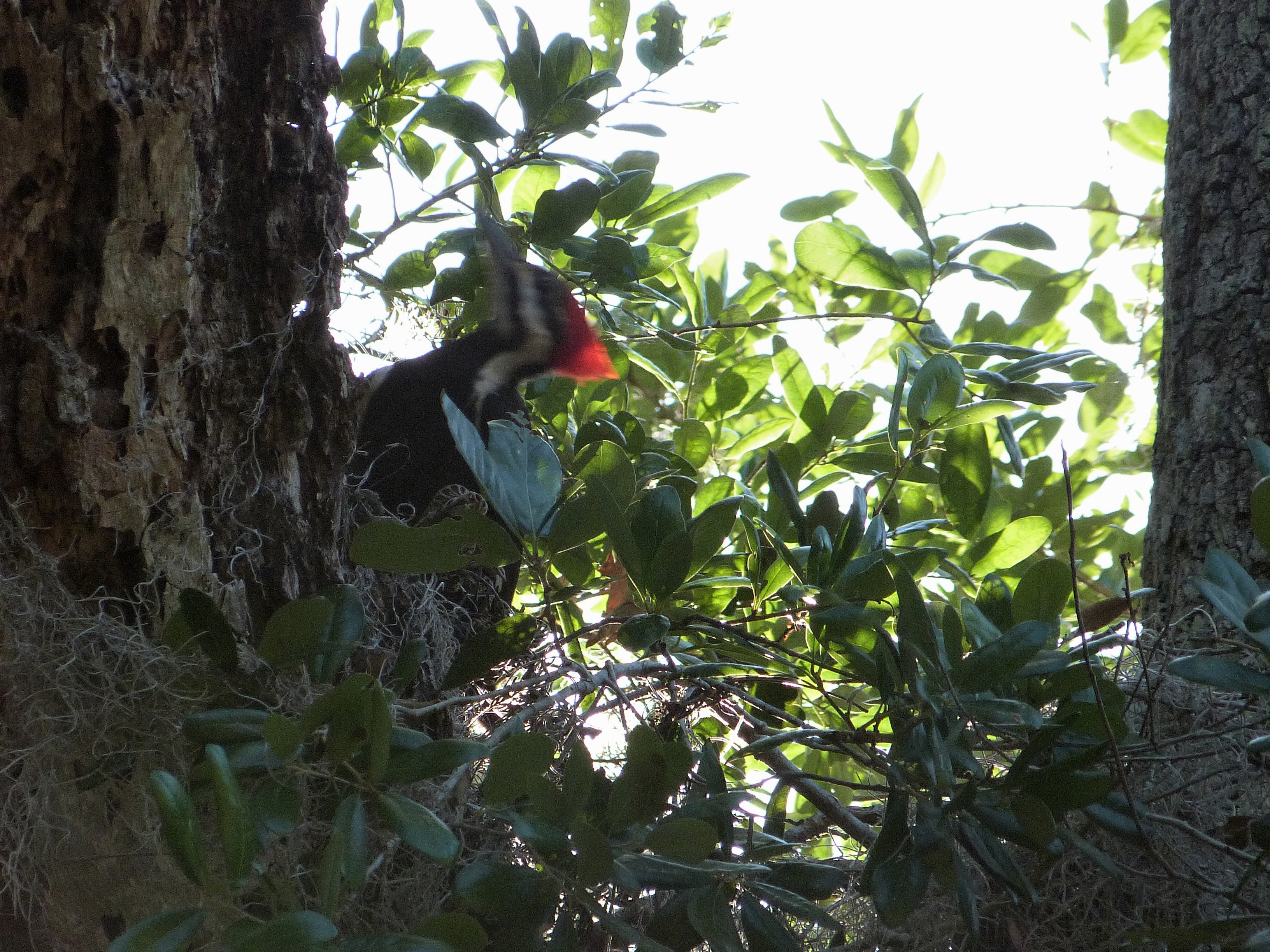
Pileated Woodpecker by Lee at Circle B

Pileated Woodpecker by Lee at Circle B 4-9-2013

Then God said, “Let the waters abound with an abundance of living creatures, and let birds fly above the earth across the face of the firmament of the heavens.” So God created great sea creatures and every living thing that moves, with which the waters abounded, according to their kind, and every winged bird according to its kind. And God saw that it was good. And God blessed them, saying, “Be fruitful and multiply, and fill the waters in the seas, and let birds multiply on the earth.” (Genesis 1:20-22 NKJV)

We spent  a short time at Circle B Bar Reserve today and thought it would be the same old-same old. Well, it wasn’t. A lady we ran into said the same thing I was thinking, “I wasn’t expecting much today.”

When we got out of the car, I spotted a bird landing in the tree nearby which turned out to be a Pileated Woodpecker. That got me excited  right away.

As soon as we turned the corner to head to the marsh, which is extremely dry because there has not had much rain all winter, I saw “Pink.”

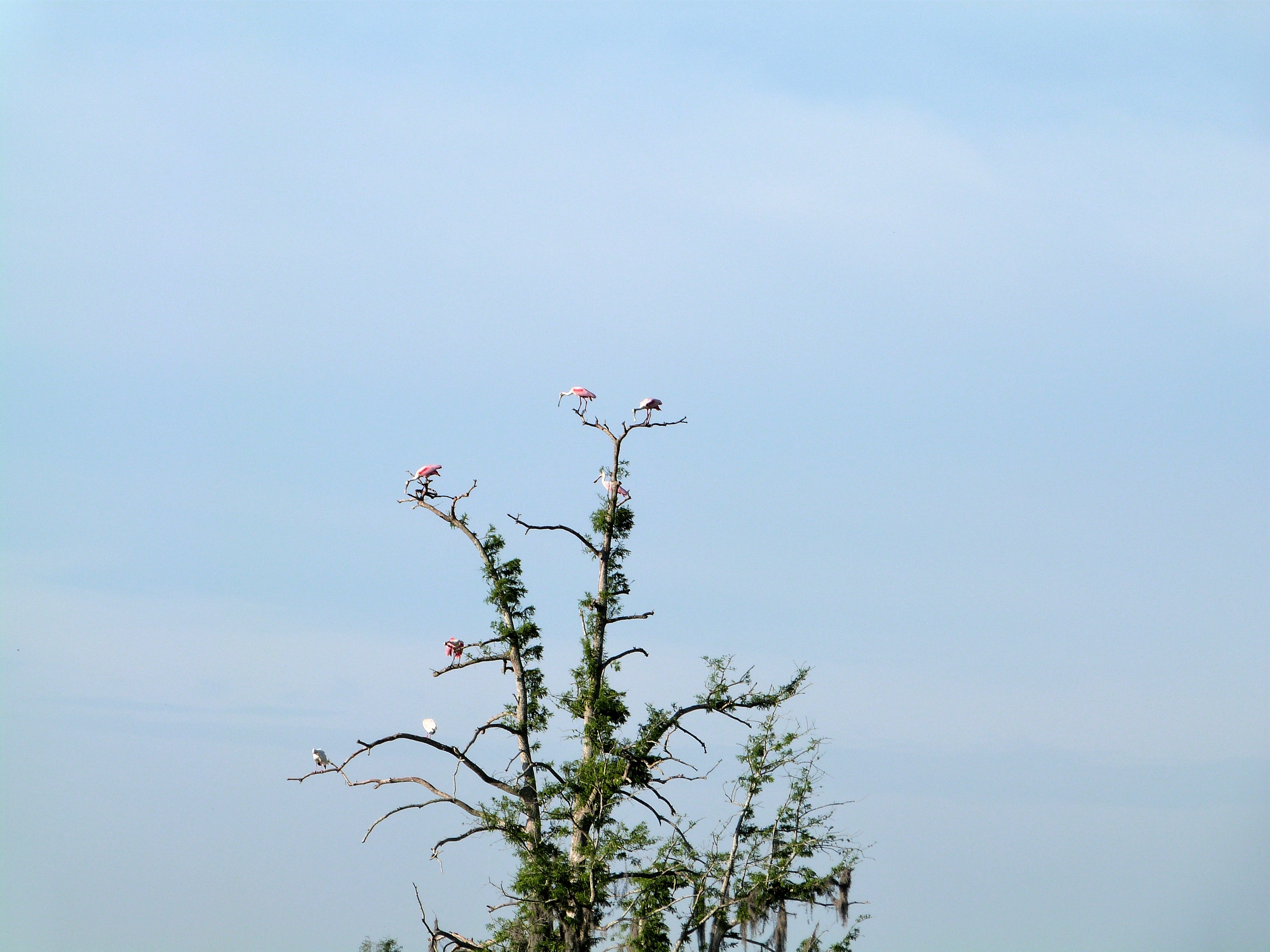
Roseate Spoonbill Tree

Roseate Spoonbill Tree

I am putting a Slideshow here so you can see why I got so excited. It turned out to be a fantastic birdwatching adventure today. Ignore some of the blurred photos, but were inserted to help tell the story of this adventure. The Roseate Spoonbills are spotted out there, but I have never seen so many and so close as today. They kept landing on that tree as you will see and it built up until there were 15 of them in that tree.

Not only did we see the Pileated Woodpecker and the Roseate Spoonbills, but we saw quite a few others also. They are included in the slideshow also. Enjoy!

This slideshow requires JavaScript.

To See these photos in a Gallery – Click Here

Other Birdwatching Trips

*

The Scaled Quail – The Cover Seeker

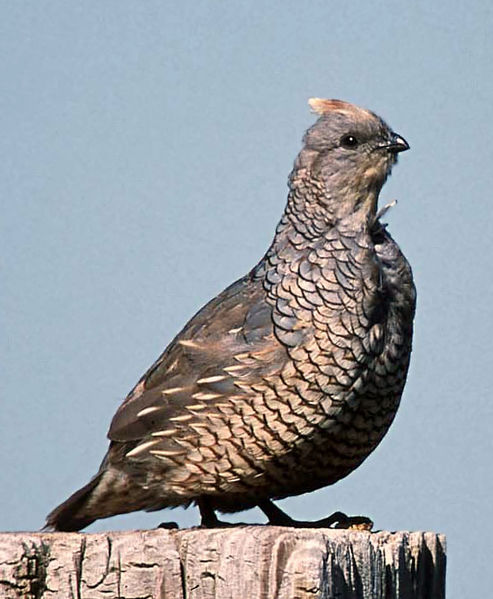
Scaled Quail (Callipepla squamata) ©WikiC

Scaled Quail (Callipepla squamata) ©WikiC

The Scaled Quail – The Cover Seeker ~ by ajmithra

The Scaled Quail (Callipepla squamata), also commonly called Blue Quail or Cottontop, is a species of the New World quail family. It is a bluish gray bird found in the arid regions of the Southwestern United States
to Central Mexico.

These birds seek for four different covers. They are as follows :

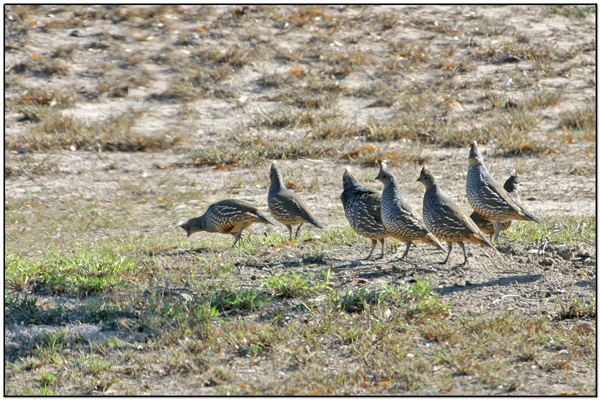
Feeding cover: Scaled Quail use grass clumps and shrubs for cover while feeding. In one study they were frequently seen crossing 82 to 165 feet (25–50 m) of bare ground. When disturbed, Scaled Quail hid in snakeweed (Gutierrezia spp.) or in grass clumps. In June and July foraging occurs on open grasslands which are not used at other times.

We have Jesus, our Good Shepherd, who makes us lie down beside still waters. But, times are fast approaching where the church may be stopped from feeding on the word of God and the church may have to hide during the times of tribulation..

Behold, the days come, saith the Lord GOD, that I will send a famine in the land, not a famine of bread, nor a thirst for water, but of hearing the words of the LORD. Amos 8:11

Scaled Quail (Callipepla squamata) by DavesBirdingPix

Scaled Quail (Callipepla squamata) by DavesBirdingPix

Loafing cover: Scaled Quail coveys occupy loafing or resting cover after early morning feeding periods. Scaled Quail occupy desert grassland or desert scrub with a minimum of one loafing covert per approximately 70 acres (28 ha). In northwestern Texas, loafing coverts were characterized by:

  1. overhead woody cover,
  2. lateral screening cover,
  3. a central area with bare soil, and
  4. one or more paths through the lateral cover.

Covert heights ranged from 1.6 to 5.9 feet (0.5–1.8 m) and 2.6 to 6.9 feet (0.8–2.1 m) in diameter. Cholla formed all or part of the overhead cover of 85% of coverts, even though they were dominant
at only 12% of the study locations. In areas where Scaled Quail occur without cholla, woody species such as wolfberry (Lycium spp.) and mesquite are important for overhead cover.

In Oklahoma pinyon-juniper habitats, Scaled Quail use the shade of tree cholla (Cylindropuntia imbricata) and human-made structures. In Arizona, Scaled Quail occupied wolfberry and mesquite 1.7 to 5 feet (0.5–1.5 m) tall for loafing cover. This overhead cover provides midday shade, but is open at the base to allow easy escape from predators. In Oklahoma, winter home ranges always contained skunkbush sumac, tree cholla, or human-made structures providing overhead cover.

The highlight during the migration of millions of Israelites across the wilderness for forty years is the overhead cover that God gave them in the form of Pillar of clouds during the day and Pillar of fire during the night. Our God is the same yesterday, today and forever. There is protection for everyone for all seasons..

And there shall be a tabernacle for a shadow in the daytime from the heat, and for a place of refuge, and for a covert from storm and from rain. Isaiah 4:6

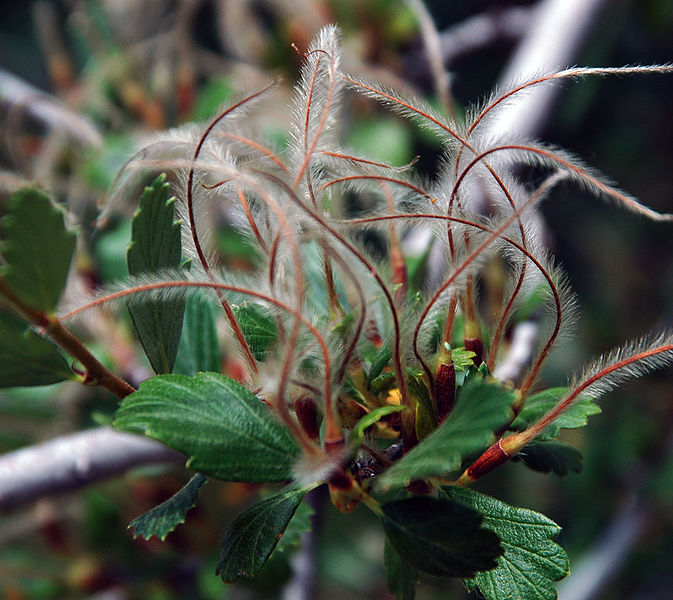
Mountain-Mahogany (Cercocarpus montanus) Cover for Scaled Quail ©WikiC

Mountain-Mahogany (Cercocarpus montanus) Cover for Scaled Quail ©WikiC

Night-roosting cover: Scaled Quail roosts were observed in yucca (Yucca angustifolia), tree cholla, and true mountain-mahogany (Cercocarpus montanus) – yucca-fragrant sumac (Rhus aromatica) vegetation types. The height of vegetation used for night roosts was less than 1.6 feet (0.5 m).

No matter wherever you are and whatever situation you are in, just remember what king David said..,

If I ascend up into heaven, thou art there: if I make my bed in hell, behold, thou art there. If I take the wings of the morning, and dwell in the uttermost parts of the sea; Even there shall thy hand lead me, and thy right hand shall hold me. Psalm 139: 8-10

Even during the darkest hour, as we stumble, confused and seeking direction, His protection and direction never seizes. He not only keeps His eyes on us, but also keeps us as the apple of His eyes. His light shall shine upon us to direct our path.

If I say, Surely the darkness shall cover me; even the night shall be light about me. Yea, the darkness hideth not from thee; but the night shineth as the day: the darkness and the light are both alike to thee.” Psalm 139:11-12

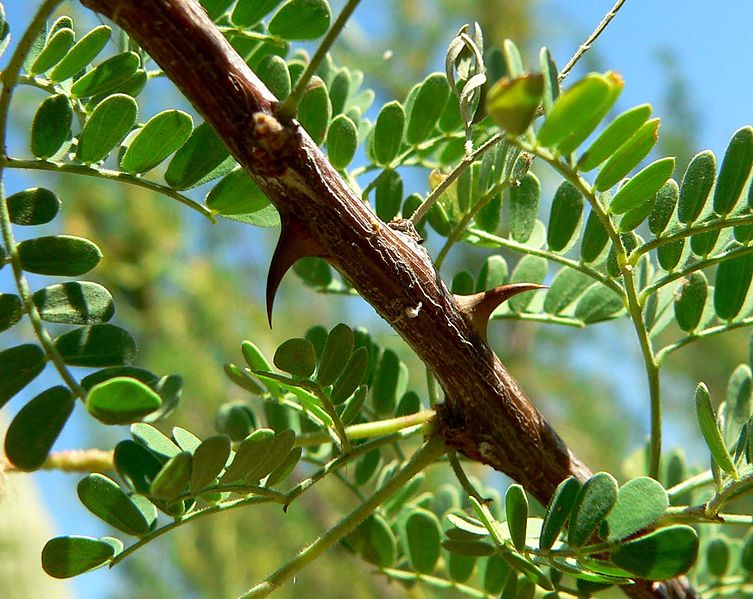
Catclaw Acacia (Acacia greggii) Cover for Scaled Quail ©WikiC

Catclaw Acacia (Acacia greggii) Cover for Scaled Quail ©WikiC

Nesting cover: In March or April winter coveys spread out into areas with less cover. This use of areas with less cover coincides with a seasonal decrease in the number of raptors in the same area.

Scaled Quail nests are constructed under tufts of grasses, and are sheltered by sagebrush (Artemisia spp.), creosotebush (Larrea tridentata), mesquite, catclaw acacia (Acacia greggii), cactus, or yucca; under
dead Russian-thistle (Salsola kali), mixed forbs, or soapweed yucca; or sheltered in old machinery or other human-made debris.

In Oklahoma, 66% of nests were in one of four situations:

  1. dead Russian-thistle,
  2. machinery and junk,
  3. mixed forbs, and
  4. soapweed yucca.

In New Mexico, ordination of breeding birds and vegetative microhabitats indicated that Scaled Quail were associated with increased levels of patchiness and increased cover of mesquite and cactus.

Birds build nests in different places, sometimes in the most unusual place. But still, the chicks prefer the protection under the wings of its parents.

Where do we seek for protection?

As an eagle stirreth up her nest, fluttereth over her young, spreadeth abroad her wings, taketh them, beareth them on her wings: Deuteronomy 32:11

He shall cover thee with his feathers, and under his wings shalt thou trust: his truth shall be thy shield and buckler. Psalm 91:4

The most secure cover for our lives does not come from our million dollars life insurance policies but from assurance that God has gave us through His bloodshed, suffering and death on the cross of Calvary.

Is your Life insured in Christ?

Have a blessed day!

Yours in YESHUA,
a j mithra

Please visit us at:

*

Check out his articles here at  A J Mithra and his Nuggets Pluss

*

Birds of the World – Asian and African Barbets

Fire-tufted Barbet (Psilopogon pyrolophus) by Dan at WA

Fire-tufted Barbet (Psilopogon pyrolophus) by Dan at Wings of Asia

Its leaves were beautiful, its fruit was abundant, and on it was food for all. Wild animals found shelter under it, the birds of the air lived in its branches, and every creature was fed from it. (Daniel 4:12 HCSB)

The Barbets used to be mainly in one big family, but they are being divided up in several families. The Internet Bird Collection and some other still have them in one family, but IOC, whose list is used here, breaks them into Asian Barbets (Megalaimidae Family) with 30 species and the African Barbets (Lybiidae Family) with 42 species. There is another family of Barbets here in the New World called New World Barbets (Capitonidae Family) that has 15 members. There are two Barbets, the Prong-billed and Toucan Barbet, that are by themselves in the Semnornithidae Family. Barbets are in the Piciformes Order which also has the Toucan,  JacamarPuffbirdHoneyguide and Woodpecker families.

I finished working on the Asian Barbet and African Barbet Family pages and decided to share some of them with you. They are a colorful bunch. The Lord put designs and color in their creation and yet in their natural habitats, they blend in well (camouflage). Some are beautiful and some are almost “gaudy” and have…started to put personality, but they are not humans, so maybe “birdality” might be a better term. Like this Brown-headed Barbet (Megalaima zeylanica) by Nikhil Devasar. My caption would be “hanging on by a nail.”

Brown-headed Barbet (Megalaima zeylanica) by Nikhil Devasar

Brown-headed Barbet (Megalaima zeylanica) by Nikhil Devasar

Here are some of their photos in a slideshow. (They are from all four families)

This slideshow requires JavaScript.

*

I am working on Our Birdwatching Photos of these families and will ready soon.  (Update – Just Finished Them)

Interesting Articles:

Coppersmith Barbet – The Fruit-giver ~ by ajmithra

Formed By Him – Bearded Barbet

Birds of the Bible – Names of Birds

Dan’s Pix Fire-tufted Barbet – Fire-tufted II

Africa’s Barbets by 10,000 Birds

*

Birds of the Bible – Goldfinches Are On The Way

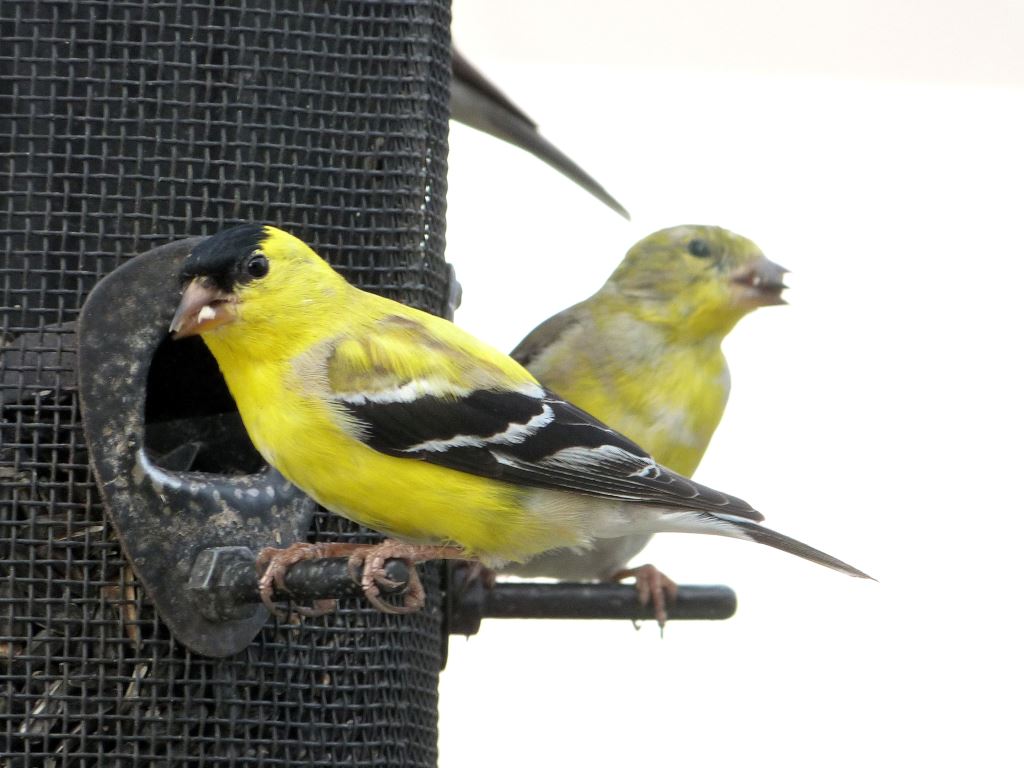
Goldfinches 4-1-13 No screen clean window (7)

Even the stork in the sky knows her seasons. The turtledove, swallow, and crane are aware of their migration, but My people do not know the requirements of the LORD. (Jeremiah 8:7 HCSB)

We have been having American Goldfinches at the feeders for the last few weeks. Don’t see them often, so was enjoying their presence. They kept building in numbers from 6 at first, then 12 about a week ago, then Easter Sunday there were at least 20 of them. It even motivated me to wash the window and take out the screen on Monday to get better photos of them.

Yesterday morning, Wednesday, I checked out the window to see how many there were now. Not a one! So throughout the morning I kept checking, NONE! When we went out, there was no singing in the trees that we have been hearing lately. Needless to say, I was a little disappointed, but it didn’t take long to figure out where they were. GONE!!!

Keep your eyes open up north, the Goldfinches are on the way. This is a spring occurrence down here. The birds fold up their lounge chairs, pack the bellies full of my sunflower seed and head back home. They have territories to claim, nest to build, broods to raise and give you now the pleasure of viewing them and listening to their songs. ENJOY!

It’s your turn to enjoy the Lord’s beautiful American Goldfinches as they migrate up to you. Treat them nice and when fall comes, send them back, please.

This slideshow requires JavaScript.

*
Birds of the Bible Articles

Bible Birds
*