Birds Vol 2 #1 – The Bald-headed Eagle

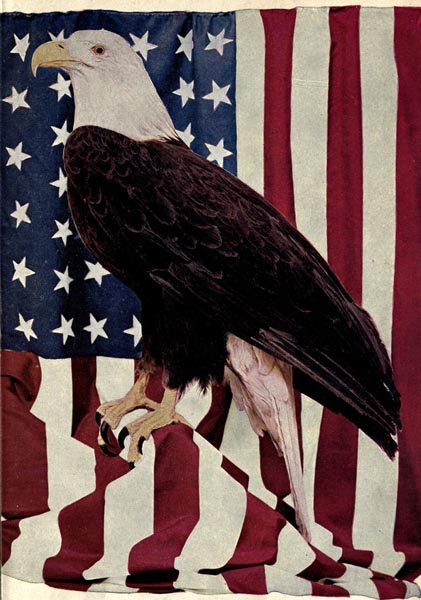
The Bald-headed Eagle (Bald Eagle) - Birds Illustrated by Color Photography, 1897

The Bald-headed Eagle (Bald Eagle) – Birds Illustrated by Color Photography, 1897

Birds Illustrated by Color Photography – Revisited

Vol 2. July, 1897 No. 1

THE BALD-HEADED EAGLE.

Dear Boys and Girls:

I had hoped to show you the picture of the eagle that went through the war with the soldiers. They called him “Old Abe.” You will find on page 35 a long story written about him. Ask some one to read it to you.

I could not get “Old Abe,” or you should now be looking at his picture. He is at present in Wisconsin, and his owner would not allow him to be taken from home.

I did the next best thing, and found one that was very much like him. They are as near alike as two children of a family. Old Abe’s feathers are not quite so smooth, though. Do you wonder, after having been through the war? He is a veteran, isn’t he?

The picture is that of a Bald-headed Eagle. He is known, also, by other names, such as White-headed Eagle, Bird of Washington, Sea Eagle.

You can easily see by the picture that he is not bald-headed. The name White-headed would seem a better name. It is because at a distance his head and neck appear as though they were covered with a white skin.

He is called “Sea Eagle” because his food is mostly fish. He takes the fish that are thrown upon the shores by the waves, and sometimes he robs the Fish Hawk of his food. (Not today – there is a Sea Eagle which is a different Eagle.)

This mighty bird usually places his large nest in some tall tree. He uses sticks three to five feet long, large pieces of sod, weeds, moss, and whatever he can find.

The nest is sometimes five or six feet through. Eagles use the same nest for years, adding to it each year.

Young eagles are queer looking birds. When hatched, they are covered with a soft down that looks like cotton.

Their parents feed them, and do not allow them to leave the nest until they are old enough to fly. When they are old enough, the mother bird pushes them out of the nest. She must be sure that they can fly, or she would not dare do this. Don’t you think so?
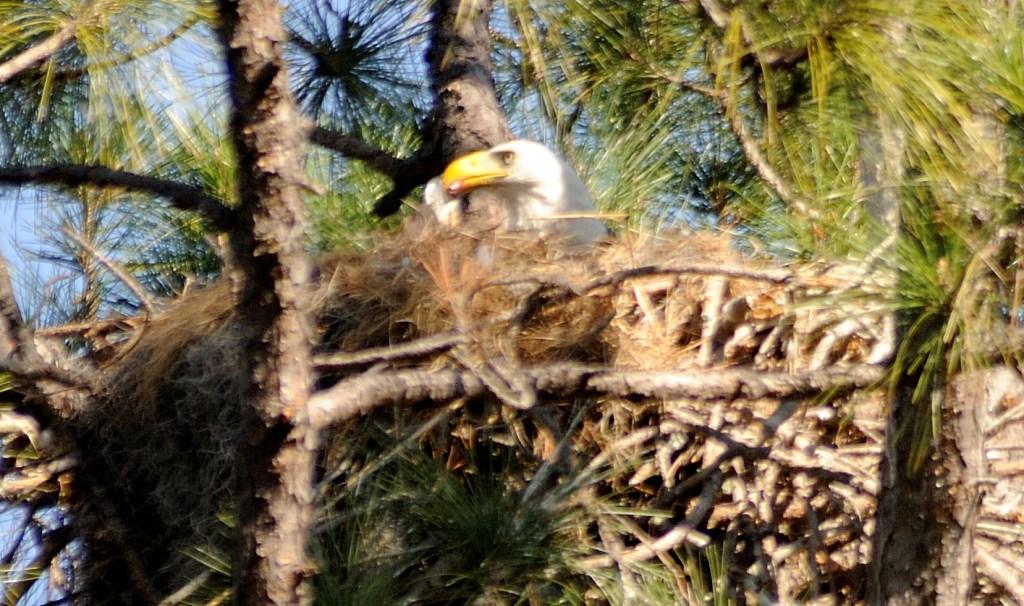
Eagle in nest feeding eaglets by Dan

Eagle in nest feeding eaglets-zoomed in by Dan

THE BALD-HEADED EAGLE.

THIS mighty bird of lofty flight is a native of the whole of North America, and may be seen haunting the greater portions of the sea coasts, as well as the mouths of large rivers. He is sometimes called the White-headed Eagle, the American Sea Eagle, the Bird of Washington, the Washington Eagle, and the Sea Eagle. On account of the snowy white of his head and neck, the name Bald Eagle has been applied to him more generally than any other.

Sea-faring men are partial to young Eagles as pets, there being a well established superstition among them that the ship that carries the “King of Birds” can never go down. The old Romans, in selecting the Eagle as an emblem for their imperial standard, showed this superstitious belief, regarding him as the favorite messenger of Jupiter, holding communion with heaven. The Orientals, too, believed that the feathers of the Eagle’s tail rendered their arrows invincible. The Indian mountain tribes east of Tennessee venerated the Eagle as their bird of war, and placed a high value on his feathers, which they used for headdresses and to decorate their pipes of peace.

The United States seems to have an abiding faith in the great bird, as our minted dollars show.

The nest of the Bald Eagle is usually placed upon the top of a giant tree, standing far up on the side of a mountain, among myriads of twining vines, or on the summit of a high inaccessible rock. The nest in the course of years, becomes of great size as the Eagle lays her eggs year after year in the same nest, and at each nesting season adds new material to the old nest. It is strongly and comfortably built with large sticks and branches, nearly flat, and bound together with twining vines. The spacious interior is lined with hair and moss, so minutely woven together as to exclude the wind. The female lays two eggs of a brownish red color, with many dots and spots, the long end of the egg tapering to a point. The parents are affectionate, attend to their young as long as they are helpless and unfledged, and will not forsake them even though the tree on which they rest be enveloped in flames. When the Eaglets are ready to fly, however, the parents push them from the perch and trust them to the high atmospheric currents. They turn them out, so to speak, to shift for themselves.

The Bald Eagle has an accommodating appetite, eating almost anything that has ever had life. He is fond of fish, without being a great fisher, preferring to rob the Fish-hawk of the fruits of his skillful labor. Sitting upon the side of a mountain his keen vision surveys the plain or valley, and detects a sheep, a young goat, a fat turkey or rooster, a pig, a rabbit or a large bird, and almost within an eye-twinkle he descends upon his victim. A mighty grasp, a twist of his talons, and the quarry is dead long before the Eagle lays it down for a repast. The impetuosity and skill with which he pursues, overtakes and robs the Fish-hawk, and the swiftness with which the Bald Eagle darts down upon and seizes the booty, which the Hawk has been compelled to let go, is not the least wonderful part of this striking performance.

The longevity of the Eagle is very great, from 80 to 160 years.

Summary

BALD EAGLE.Haliæetus leucocephalus. Other names: “White-headed Eagle,” “Bird of Washington,” “Gray Eagle,” “Sea Eagle.” Dark brown. Head, tail, and tail coverts white. Tarsus, naked. Young with little or no white.

Range—North America, breeding throughout its range.

Nest—Generally in tall trees.

Eggs—Two or three, dull white.

*
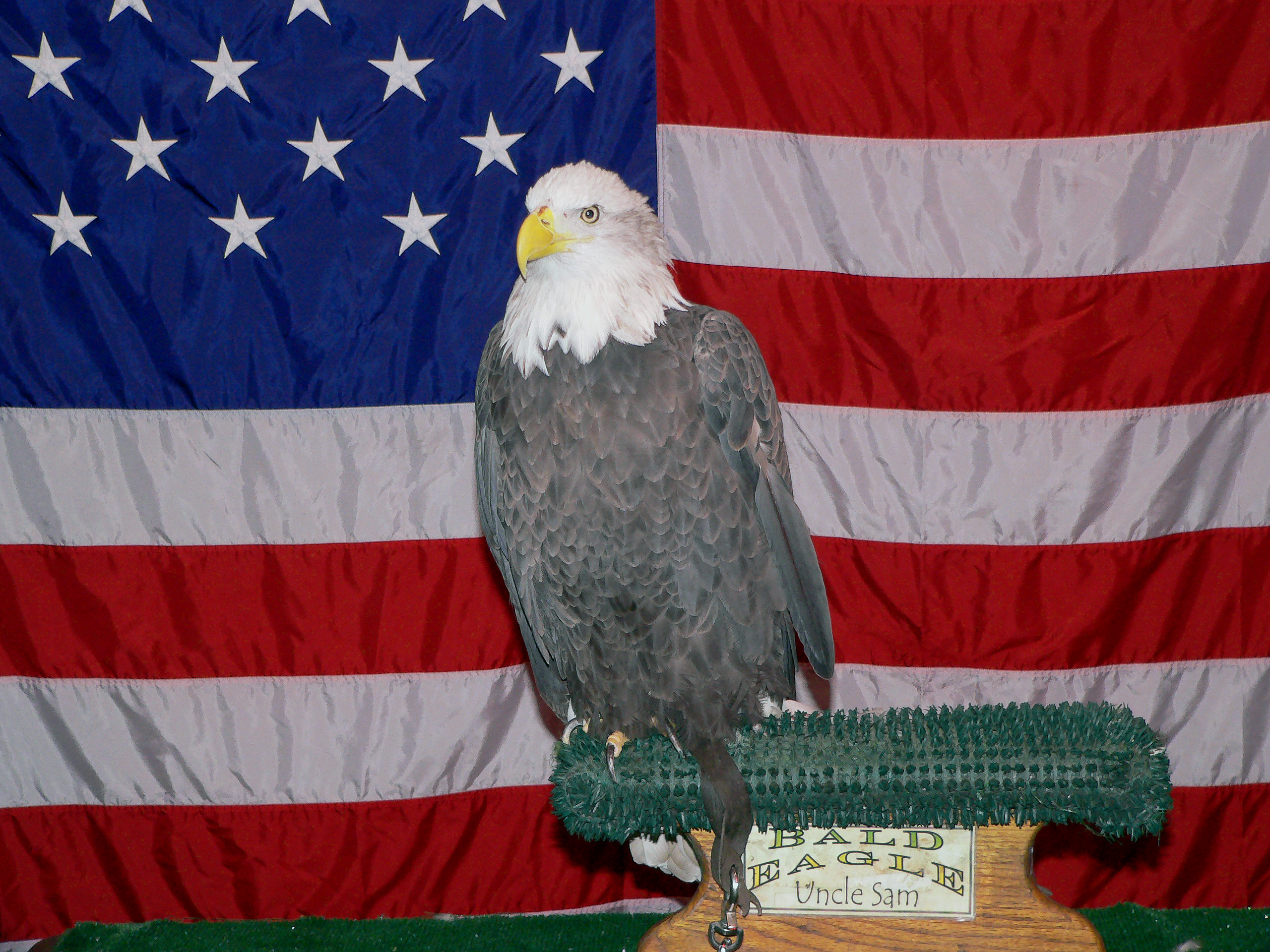

Uncle Sam – Bald Eagle taken at Titusville Birding Festival

Lee’s Addition:

Today the Bald-headed Eagle is just the Bald Eagle. The Sea Eagle is a different Eagle, much larger than the Bald. Also, not so sure about 160 year life span. Will have to check that out.

We are fortunate here in Polk County and in Central Florida. We get to see Bald Eagles quite often in the winter. That picture of the nest was taken at South Lake Howard Nature Park where the Eagles return to have young each year. At Circle B Bar Reserve, which we write about, they have several active Bald Eagle nests. Right by our Publix supermarket, the eagles sit on the high electrical posts and scan the area for dinner. I used to have to travel far to see them, but now, we live right where they hang out.

I have to admit that when I see a Bald Eagle fly by or just sitting, I stop in my tracks. There is something about the Bald Eagle’s appearance that appeals to me. Also, the Eagle is a Bible Birds and is mentioned in 34 times in the King James Version, 32 in NKJV, 31 in NASB and 29 times in ESV. It varies in the other versions also. Still it is mentioned about 30 times or so. Most are great verses that tell of their strenght and mighty wings. What a magnificent creation.

Ye have seen what I did unto the Egyptians, and how I bare you on eagles’ wings, and brought you unto myself. (Exodus 19:4 KJV)

Doth the eagle mount up at thy command, and make her nest on high? (Job 39:27 KJV)

But they that wait upon the LORD shall renew their strength; they shall mount up with wings as eagles; they shall run, and not be weary; and they shall walk, and not faint. (Isaiah 40:31 KJV)

Make thee bald, and poll thee for thy delicate children; enlarge thy baldness as the eagle; for they are gone into captivity from thee. (Micah 1:16 KJV)


Birds Illustrated by Color Photography – Revisited – Introduction

The above article is the first article in the monthly serial that was started in January 1897 “designed to promote Knowledge of Bird-Live.” These include Color Photography, as they call them, today they are drawings. There are at least three Volumes that have been digitized by Project Gutenberg.

To see the whole series of – Birds Illustrated by Color Photography – Revisited

*

(Information from Wikipedia and other internet sources)

Next Article – The Semi-Palmated Ring Plover

Previous Article – Birds Vol 1 #6 – The Volume 1. – Index

Sharing The Gospel

Links:

Bible Birds – Eagles

Birds of the Bible – Eagles

Accipitridae – Family (Kites, Hawks & Eagles)

Amazing Free-Flying Bald Eagle “Challenger”

Bald Eagle – WhatBird

*

Birds Illustrated By Color Photography – Volume II Indroduction

BIRDS

A MONTHLY SERIAL

ILLUSTRATED BY COLOR PHOTOGRAPHY

DESIGNED TO PROMOTE

KNOWLEDGE OF BIRD-LIFE


VOLUME II.


CHICAGO  Nature Study Publishing Company


copyright, 1897 by

Nature Study Publishing Co.

chicago.


INTRODUCTION.

This is the second volume of a series intended to present, in accurate colored portraiture, and in popular and juvenile biographical text, a very considerable portion of the common birds of North America, and many of the more interesting and attractive specimens of other countries, in many respects superior to all other publications which have attempted the representation of birds, and at infinitely less expense. The appreciative reception by the public of Vol. I deserves our grateful acknowledgement. Appearing in monthly parts, it has been read and admired by thousands of people, who, through the life-like pictures presented, have made the acquaintance of many birds, and have since become enthusiastic observers of them. It has been introduced into the public schools, and is now in use as a text book by hundreds of teachers, who have expressed enthusiastic approval of the work and of its general extension. The faithfulness to nature of the pictures, in color and pose, have been commended by such ornithologists and authors as Dr. Elliott Coues, Mr. John Burroughs, Mr. J. W. Allen, editor of The Auk, Mr. Frank M. Chapman, Mr. J. W. Baskett, and others.

The general text of Birds—the biographies—has been conscientiously prepared from the best authorities by a careful observer of the feather-growing denizens of the field, the forest, and the shore, while the juvenile autobiographies have received the approval of the highest ornithological authority.

The publishers take pleasure in the announcement that the general excellence of Birds will be maintained in subsequent volumes. The subjects selected for the third and fourth volumes—many of them—will be of the rare beauty in which the great Audubon, the limner par excellence of birds, would have found “the joy of imitation.”

Nature Study Publishing Company.


BIRDS.

Illustrated by COLOR PHOTOGRAPHY.

Vol. II.   No. 1.   JULY, 1897.


Bald Eagle (Haliaeetus leucocephalus) by Lee

Bald Eagle (Haliaeetus leucocephalus) by Lee

Lee’s Addition:

This second volume does not have a cover photo for each month like Volume I did. They apparently changed their format. Also, there are no old time advertisements. These were reproduced through Gutenberg Project.

Will be posting the different birds soon. See Birds Illustrated by Color Photography – Revisted.

*

Birds of the Bible – Water-hen or Water hen

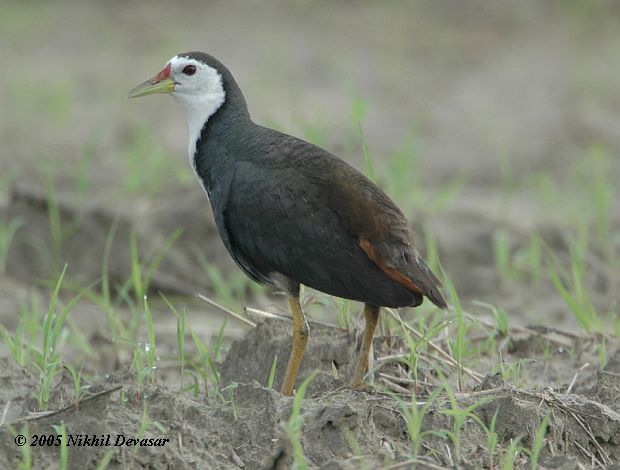
White-breasted Waterhen (Amaurornis phoenicurus) by Nikhil Devasar

White-breasted Waterhen (Amaurornis phoenicurus) by Nikhil Devasar

Leviticus 11:18
(BBE) And the water-hen and the pelican and the vulture;
(ERV) water hens, pelicans, carrion vultures,
(ISV) water-hen, pelican, carrion,
(MSG)  water hen, pelican, Egyptian vulture,
(NRSV) the water hen, the desert owl, the carrion vulture,

(ABP+) and the purple-legged stork, and pelican, and swan
CAB(i) 18 and the red-bill, and the pelican, and swan,
(Brenton) and the red-bill, and the pelican, and swan,
(Bishops) The Backe, the Pellicane, the Pye,

(Geneva) Also the redshanke and the pelicane, and the swanne:
(Vulgate) si ambulans per viam in arbore vel in terra nidum avis inveneris et matrem pullis vel ovis desuper incubantem non tenebis eam cum filiis
(KJV) And the swan, and the pelican, and the gier eagle,
Deuteronomy 14:16
(BBE) The little owl and the great owl and the water-hen;

(Bishops) The litle Owle, the great Owle, nor the Redshanke.
(Geneva) Neither the litle owle, nor the great owle, nor the redshanke,
(KJV)  The little owl, and the great owl,  and the swan,
(Vulgate) herodium et cycnum et ibin

Adam Clarke’s Commentary: “The swan – תנשמת tinshemeth. The Septuagint translate the word by πορφυριωνα, the porphyrion, purple or scarlet bird. Could we depend on this translation, we might suppose the flamingo or some such bird to be intended. Some suppose the goose to be meant, but this is by no means likely, as it cannot be classed either among ravenous or unclean fowls. Bochart thinks the owl is meant.”

Companion Bible Notes: “swan, not our swan: it is variously rendered “ibis”, “heron”, and “pelican”.

Gill: “Leviticus 11:18
And the swan,…. This is a bird well known to us, but it is a question whether it is intended by the word here used; for though it is so rendered in the Vulgate Latin, it is differently rendered by many others: the Targums of Jonathan and Jerusalem call it “otia”, which seems to be the same with the “otus” of Aristotle (n), who says it is like an owl, having a tuft of feathers about its ears (from whence it has its name); and some call it “nycticorax”, or the owl; and here, by Bochart (o), and others, the owl called “noctua” is thought to be meant; and with which agrees the account some Jewish writers give of it, as Aben Ezra and Baal Hatturim, who say it is a bird, which every one that sees is astonished at it, as other birds are at the owl, are frightened at the sight of it, and stupefied. But as the same word is used Lev_11:30 among the creeping things, for a mole, what Jarchi observes is worthy of consideration, that this is “calve (chauve) souris” (the French word for a bat), and is like unto a mouse, and flies in the night; and that which is spoken of among the creeping things is like unto it, which hath no eyes, and they call it “talpa”, a mole. The Septuagint version renders it by “porphyrion”, the redshank; and so Ainsworth; and is thought to be called by the Hebrew name in the text, from the blowing of its breath in drinking; for it drinks biting, as Aristotle says (p):”

Jamieson Fausset Brown: the swan — found in great numbers in all the countries of the Levant. It frequents marshy places – the vicinity of rivers and lakes. It was held sacred by the Egyptians, and kept tame within the precincts of heathen temples. It was probably on this account chiefly that its use as food was prohibited. Michaelis considers it the goose.
McGee:
Leviticus 11:13-19

CLEAN AND UNCLEAN FLYING CREATURES (IN THE AIR)
On the birds there are no visible markers like there are on the fish and the animals. But they seem to have in common that they are all unclean feeders. For the most part, they feed on dead carcasses of animals, fish, and other fowl.

A list of unclean birds of Palestine is given. This is another point that reveals that the Mosaic system was intended for the nation Israel and also for the particular land of Palestine. Some of these birds sound strange to us. They fall into the family of the eagles and the hawks, the vultures and the ravens, the owls and cormorants, and the swans and pelicans. They don’t even sound appetizing. They are the “dirty birdies” because of their feeding habits. Now remember, some people eat some of these birds today. I can’t say I would like any of them, but whether we eat them or don’t eat them makes no difference—meat will not commend us to God. The point is that it was teaching Israel to make a distinction. They had to make a decision about what was clean and unclean.

The lesson for us today is that we must make decisions about our conduct and our profession. We have to make the decision about whether to accept Christ or not, whether to study the Word of God or not, whether to walk in a way pleasing to God or not. That is the application for us today.

This section throws some light on the experience of Elijah. He was fed by the ravens—dirty birds. Elijah did not eat the ravens, but they fed him. This was a humbling experience for this man of God who obeyed God in every detail.

MHCC:
Leviticus 11:1-47

These laws seem to have been intended, 1. As a test of the people’s obedience, as Adam was forbidden to eat of the tree of knowledge; and to teach them self-denial, and the government of their appetites. 2. To keep the Israelites distinct from other nations. Many also of these forbidden animals were objects of superstition and idolatry to the heathen. 3. The people were taught to make distinctions between the holy and unholy in their companions and intimate connexions. 4. The law forbad, not only the eating of the unclean beasts, but the touching of them. Those who would be kept from any sin, must be careful to avoid all temptations to it, or coming near it. The exceptions are very minute, and all were designed to call forth constant care and exactness in their obedience; and to teach us to obey. Whilst we enjoy our Christian liberty, and are free from such burdensome observances, we must be careful not to abuse our liberty. For the Lord hath redeemed and called his people, that they may be holy, even as he is holy. We must come out, and be separate from the world; we must leave the company of the ungodly, and all needless connexions with those who are dead in sin; we must be zealous of good works devoted followers of God, and companions of his people.

***

Well, those are some of the remarks by the different commentaries. It seems there is no real set answer as to whether the Waterhen or Water-hen was the intended bird. The list of Unclean and Clean birds was for the Israelites and not us today. It is not even for them today. Why write about them, because it is interesting. To me, it comes down to a decision on their part and ours today whether we want to obey the Word of God.

….for the LORD your God is testing you to know whether you love the LORD your God with all your heart and with all your soul. You shall walk after the LORD your God and fear Him, and keep His commandments and obey His voice; you shall serve Him and hold fast to Him. (Deuteronomy 13:3-4 NKJV)

Most of the birds seem to have a diet that would cause eating that bird to make people sick or to die. Not all of them are in that category. It could be that they were not to eat a specific bird because they were few in number at that time and it could have caused them to go extinct. (That happens today.) It comes to obedience. That said, let’s see what a Water Hen really is.

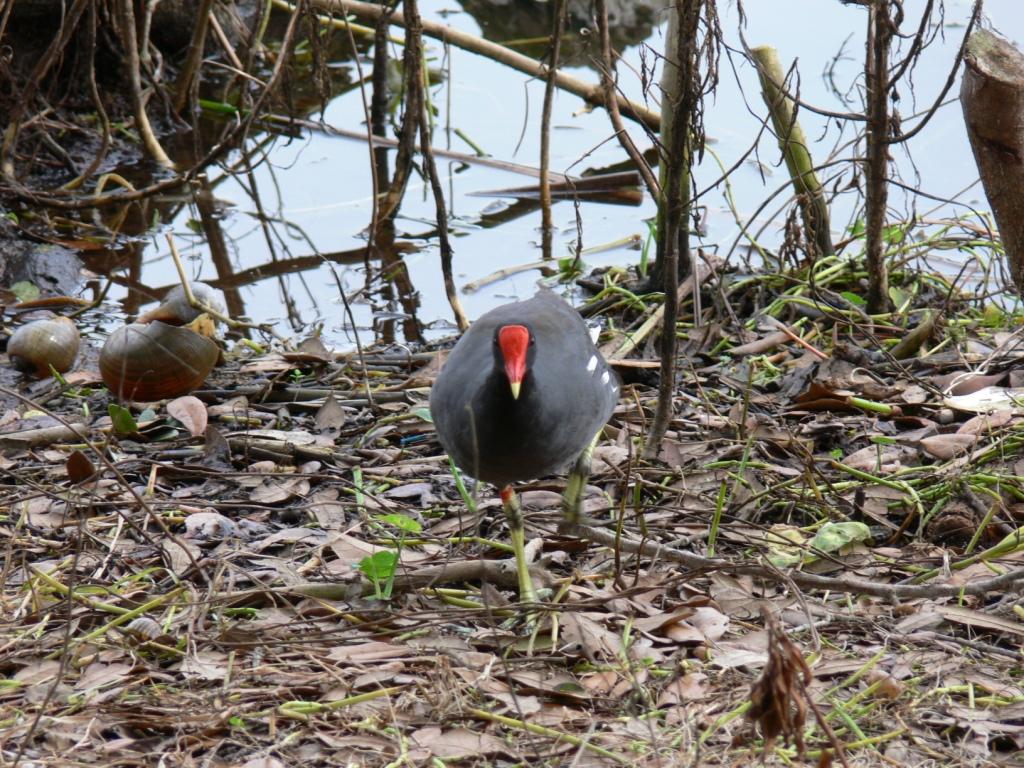
Common Moorhen (Gallinula chloropus) by Lee

Common Moorhen (Gallinula chloropus) by Lee

Water-hen or Waterhens are in the Rallidae – Rails, Crakes & Coots Family. According to Wikipedia’s article on the Waterhen:

Waterhen may refer to any of the following:

Black Crake (Amaurornis flavirostra) ©WikiC

Black Crake (Amaurornis flavirostra) ©WikiC

The adult Black Crake is 19–23 cm long with a short tail and long toes. As its name implies, the adult has mainly black plumage, with a brown olive tone on the wings and upperparts which is rarely detectable in the field. The eye is red, the bill is yellow, and the legs and feet are red, duller when not breeding.

The sexes are similar, but the male is slightly larger. Most males, but only 10% of females, have a hooked upper mandible. The immature bird has brown upperparts and a dark grey head and underparts. Its bill is greenish yellow, and its feet and legs are dull red. The downy chicks are black, as with all rails.

The Black Crake is extremely aggressive when breeding and will attack birds of many species, but especially other rails. It will attack and kill rails of species as large as itself.

The nest is a deep neat bowl made from wetland plants and built by both sexes in marsh vegetation or on the ground in a dry location. The nest is also sometimes constructed up to 3 m high in a bush.

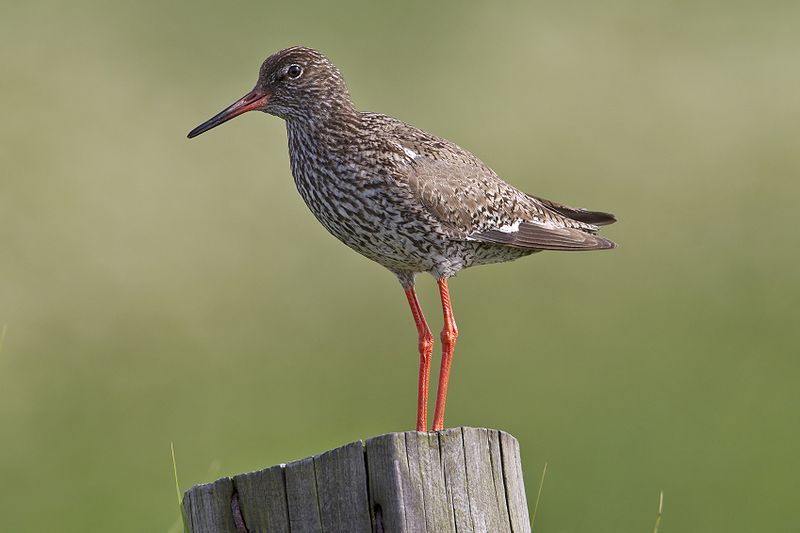
If it was a Redshank(e), then we have a completely different bird in a different family, the Scolopacidae – Sandpipers, Snipes. If so, that would mean I would have to make yet another “Bird of the Bible” category. Humm!

Common Redshank (Tringa totanus) ©WikiC

Common Redshank (Tringa totanus) ©WikiC

Of the three last bird pictures here, they do all have something red. The Moorhen has a red beak and the other two have red legs. You realize that these names are today’s name. They do change over the years. What ever bird this verse applies to, it has been enjoyable for me to investigate it. It has caused me to be in God’s Word, search the Commentaries, and check out the many birds the Lord created. And I trust you have benefited from it also and you might even dig around and find more about these verses.

And I get to add another Bird of the Bible page.

Birds of the Bible – Waterhen

All Birds of the Bible articles.

*

Bible Birds – Swan I

Bible Birds – Swan I

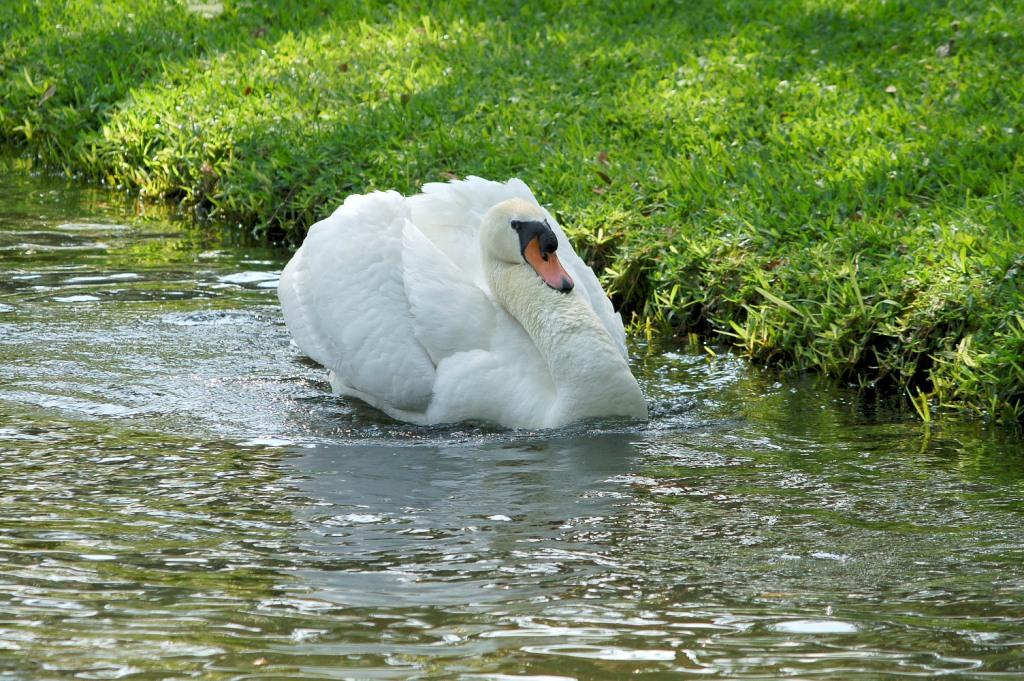
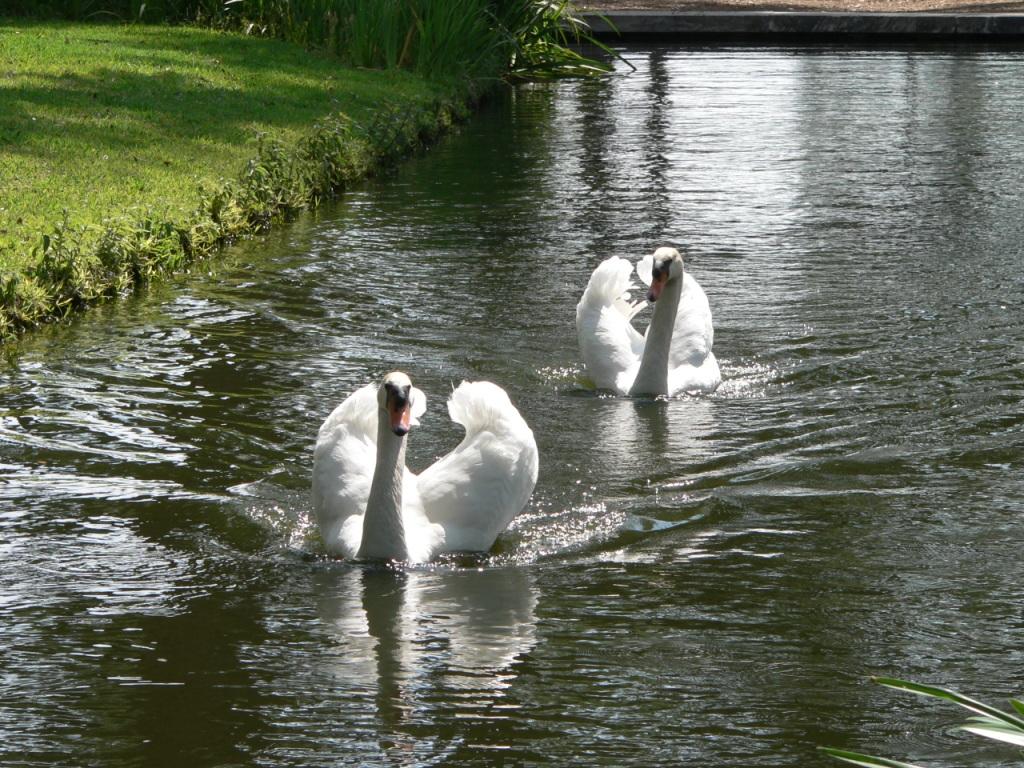
Mute Swan (Cygnus olor)II at Bok Tower By Dan'sPix

Mute Swan (Cygnus olor)II at Bok Tower By Dan’sPix

Swans are birds of the family Anatidae, which also includes geese and ducks. Swans usually mate for life. The number of eggs in each clutch ranges from three to eight.In North America we have at least four swans: Mute (60”), Trumpeter (60”), Tundra (52”), and Whooper (60”). There is also a Black Swan of Australia and a Black-necked Swan in South America. Swans are large, long-necked waterbirds that have a short duck-like bill and short legs. Many are seen on ponds, lakes, reservoirs and coastal bays. The Mute Swans are semi-domesticated. The Tundra Swan is sometime split into two species, Bewick’s and Whistling Swans.

Mute Swan (Cygnus olor) at Bok Sanctuary By Dan’sPix

The Swan is listed in Leviticus and Deuteronomy in the list of “unclean” birds.

And the swan, and the pelican, and the gier-eagle, (Leviticus 11:18 KJV)
The little owl, and the great owl, and the swan, (Deuteronomy 14:16 KJV)

Swans at BokTower

Swans at Bok Tower by Dan

Mute Swan pictures (click on for larger view) taken at Bok Sanctuary in Lake Wales. They were irritated because the worker was mowing the grass beside the water and they kept following him back and forth. They had their wings arched back in frustration, but we thought they were beautiful like what I think “angel’s wings” might look like.

*

More about the Swans:

Bible Birds – Swans

Birds of the Bible – Swans

*


Birdwatching at Lake Morton and S. Lake Howard

With all that has been going on lately, we have not had much time or chance to go visit the birds. When Tropical Storm Debby came by, she dropped quite a bit of rain in the area. Some “true” birdwatchers were out and about seeing some really neat birds that were blown off course. We played the “fair weather” birders and stayed indoor where it was dry. Some areas had 12-15 inches, but we had about 6 inches of rain here at the house.

On the 28th we stopped by Lake Morton, in Lakeland, on the way to an errand. We took the cameras and knew the local birds would be there. Not too many surprises other than I counted over 30 Mute Swans. This is even with all the eggs that were stolen from the nests. Also, I found several Wood Ducks swimming around, an immature Wood Stork, and three “Aflac” Mallard Ducks sitting in the shade of a park bench.

On the 2nd, last evening, we took our cameras with us and spent a few minutes taking photos of the flooding at South Lake Howard Nature Park. The water has receded some from earlier. At one point last week, the “island” was under water completely. We saw it then, but didn’t have a camera with us as we drove by.

Decided to share some of the photos of the two visits. We saw – Mute and Black Swans, Wood Ducks and Wood Storks, Mallards, Ospreys, Laughing Gulls, Great Egret, Anhingas, Red-winged and Boat-tailed Blackbirds, Mourning Doves, Rock Pigeons, White Ibises, Great Blue Heron, Limpkins, Muscovy Ducks, Common Gallinules, and heard Monk Parakeets and a Red-bellied Woodpecker. Not bad for about 30 minutes at Morton and 10 minutes at the Nature Park. Some of the photos are just of the water. Trees are standing in water that normally are on dry ground.

He is like a man which built an house, and digged deep, and laid the foundation on a rock: and when the flood arose, the stream beat vehemently upon that house, and could not shake it: for it was founded upon a rock. (Luke 6:48 KJV)

*

All photos are by me. Dan hasn’t showed me his yet. Bummer, his are always better. If you know what kind of Gull that is, leave a comment, please. I think they are young and I am not the best at IDing them.

This slideshow requires JavaScript.

*

Introduction to Birds of the Bible For Kids

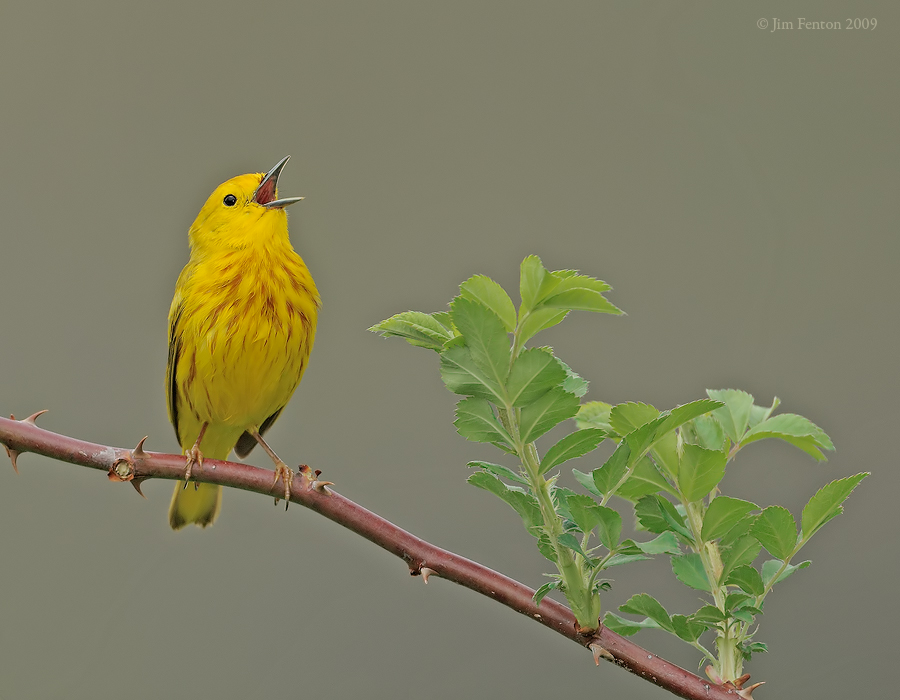
American Yellow Warbler (Dendroica aestiva) singing by J Fenton

American Yellow Warbler (Dendroica aestiva) singing by J Fenton

We just opened this site up today. It is in the beginning and we will be adding many things about the birds in the Bible and other birds that are not named in the Bible, but the Lord made all the birds.

On Day Five (5) of creation, the birds were created. They didn’t just happen. They were designed by God and each one is different. Each one was given just what it needs to live, eat, and make more birds.

Genesis 1:20-23 NKJV
(20) Then God said, “Let the waters abound with an abundance of living creatures, and let birds fly above the earth across the face of the firmament of the heavens.”
(21) So God created great sea creatures and every living thing that moves, with which the waters abounded, according to their kind, and every winged bird according to its kind. And God saw that it was good.
(22) And God blessed them, saying, “Be fruitful and multiply, and fill the waters in the seas, and let birds multiply on the earth.”
(23) So the evening and the morning were the fifth day.

I know there are some big words in those verses, but the bold letters help find important words.

Did you see the “let birds multiply”? That doesn’t mean they do math. It means that they were to have baby birds, then the baby could grow up and have more baby birds. Then there would be lots of birds.

We will be telling you more soon. Come back and find out about the many birds in the bible.

See:

Bible Birds

Wordless Birds

*

What you just read is the first Bible Birds article for the Birds of the Bible For Kids blog that I just released just a few minutes ago. I have wanted to have a “Kids” blog since day one of this one, but it just didn’t happen. I even reserved the site for it four years ago when Lee’s Birdwatching Adventures Plus was started here on WordPress. (It is now in the Kid’s Section of the main blog)

As the idea to add the Bible Birds articles grew. I even placed a page there for it, but then pulled it back. The children, kids, or young people need their own site with links for them.

After talking to many of our Sunday School teachers, school teachers, and kids workers (young and retired), I launched this new website. Some of those people have offered suggestions and some are actually going to write some articles for it. Mr. Baron (aka Golden Eagle) has agreed to help. He is a Christian school teacher and teaches the Bible and science. Enjoys teaching about creation and is a enthusiastic beginning birdwatcher. I will introduce more as they write their articles and stories.

All of this has been said so that you will know that the new site will have the same standard as this one does. It is Birdwatching From A Christian Perspective. We trust you will let your children and young people enjoy the new site knowing that we will not present anything contrary to Scripture. We believe God’s Word is the Final Authority in our lives and about our lives. Also, as parents or grand-parents, that you will stop by to find something to share with your “kids” or “grand-kids.”

Thank you to all who have been coming to this site. Your visits are appreciated and hope that we are giving you articles worth your time reading and thinking about. May you enjoy learning about and seeing many of the fantastically created birds that the Lord made.

And God saw every thing that he had made, and, behold, it was very good. And the evening and the morning were the sixth day. (Genesis 1:31 KJV)

*

(Updated – 10-5-14)

Birds Vol 1 #6 – The Black and White Creeping Warbler

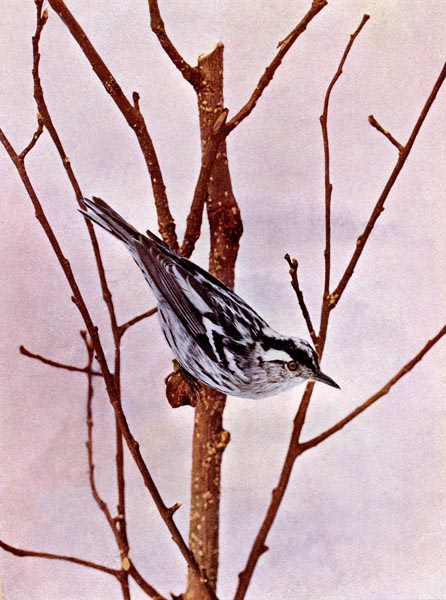
Black and white Creeping Warbler for Birds Illustrated by Color Photography, 1897

Black and white Creeping Warbler for Birds Illustrated by Color Photography, 1897

Birds Illustrated by Color Photography – Revisited

Vol 1. June, 1897 No. 6

*

THE BLACK AND WHITE CREEPING WARBLER.

HIS sprightly little bird is met with in various sections of the country. It occurs in all parts of New England and New York, and has been found in the interior as far north as Fort Simpson. It is common in the Bahamas and most of the West India Islands, generally as a migrant; in Texas, in the Indian Territory, in Mexico, and throughout eastern America.

Dr. Coues states that this warbler is a very common summer resident near Washington, the greater number going farther north to breed. They arrive there during the first week in April and are exceedingly numerous until May.

In its habits this bird seems to be more of a creeper than a Warbler. It is an expert and nimble climber, and rarely, if ever, perches on the branch of a tree or shrub. In the manner of the smaller Woodpecker, the Creepers, Nuthatches, and Titmice, it moves rapidly around the trunks and larger limbs of the trees of the forest in search of small insects and their larvae. It is graceful and rapid in movement, and is often so intent upon its hunt as to be unmindful of the near presence of man.

It is found chiefly in thickets, where its food is most easily obtained, and has been known to breed in the immediate vicinity of a dwelling.

The song of this Warbler is sweet and pleasing. It begins to sing from its first appearance in May and continues to repeat its brief refrain at intervals almost until its departure in August and September. At first it is a monotonous ditty, says Nuttall, uttered in a strong but shrill and filing tone. These notes, as the season advances, become more mellow and warbling.

The Warbler’s movements in search of food are very interesting to the observer. Keeping the feet together they move in a succession of short, rapid hops up the trunks of trees and along the limbs, passing again to the bottom by longer flights than in the ascent. They make but short flight from tree to tree, but are capable of flying far when they choose.

They build on the ground. One nest containing young about a week old was found on the surface of shelving rock. It was made of coarse strips of bark, soft decayed leaves, and dry grasses, and lined with a thin layer of black hair. The parents fed their young in the presence of the observer with affectionate attention, and showed no uneasiness, creeping head downward about the trunks of the neighboring trees, and carrying large smooth caterpillars to their young.

They search the crevices in the bark of the tree trunks and branches, look among the undergrowth, and hunt along the fences for bunches of eggs, the buried larvae of the insects, which when undisturbed, hatch out millions of creeping, crawling, and flying things that devastate garden and orchard and every crop of the field.


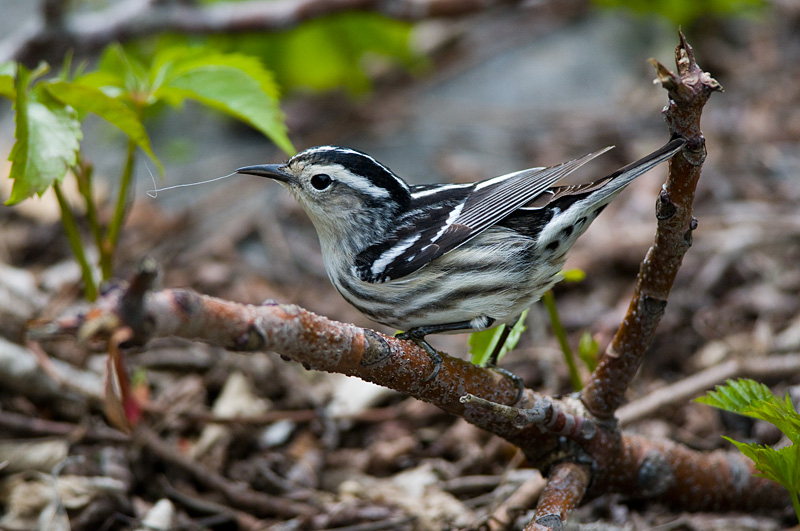
Black-and-white Warbler (Mniotilta varia) by Anthony 747

Black-and-white Warbler (Mniotilta varia) by Anthony 747

Lee’s Addition:

Look at the birds of the air, for they neither sow nor reap nor gather into barns; yet your heavenly Father feeds them. Are you not of more value than they? (Matthew 6:26 NKJV)

Today this birds is called the Black-and-white Warbler. But it still likes to climb around on the trees. It has a longer toe on the back of it foot that helps it cling to the tree as it checks for its meal. This bird feeds on insects and spiders, and unlike other warblers, forages like a nuthatch, moving up and down tree trunks and along branches.

Their measurements are: Length – 4.3–5.1 in (11–13 cm). Wingspan – 7.1–8.7 in (18–22 cm), Weight – 0.3–0.5 oz  (8–15 g).

The Black-and-white Warbler (Mniotilta varia) is a species of New World warbler, the only member of its genus, Mniotilta.[2] It breeds in northern and eastern North America from the Northwest Territory and Newfoundland and Labrador, Canada to Florida. This species is migratory, wintering in Florida, Central America and the West Indies down to Peru. This species is a very rare vagrant to western Europe.

Its song is a high see wee-see wee-see wee-see wee-see wee-see or weesa weesa weetee weetee weetee weet weet weet. It has two calls, a hard tick, and a soft, thin fsss.

The breeding habitat is broadleaved or mixed woodland, preferably in wetter areas. Black-and-white Warblers nest on the ground, laying 4–5 eggs in a cup nest.

The noise of a whip And the noise of rattling wheels, Of galloping horses, Of clattering chariots! (Nahum 3:2 NKJV)

Better yet, here is a youtube of a Black-and-white Warbler singing.

*

*

Birds Illustrated by Color Photograhy Vol 1 June, 1897 No 6 - Cover

Birds Illustrated by Color Photograhy Vol 1 June, 1897 No 6 – Cover

Birds Illustrated by Color Photography – Revisited – Introduction

The above article is the first article in the monthly serial that was started in January 1897 “designed to promote Knowledge of Bird-Live.” These include Color Photography, as they call them, today they are drawings. There are at least three Volumes that have been digitized by Project Gutenberg.

To see the whole series of – Birds Illustrated by Color Photography – Revisited

*

(Information from Wikipedia and other internet sources)

Next Article – VOLUME 1. JANUARY TO JUNE, 1897 – INDEX.

Previous Article – The Ruffed Grouse

Wordless Birds

Links:

Black and White Creeping Warbler – Audubon

*

Birds Vol 1 #6 – The Ruffed Grouse

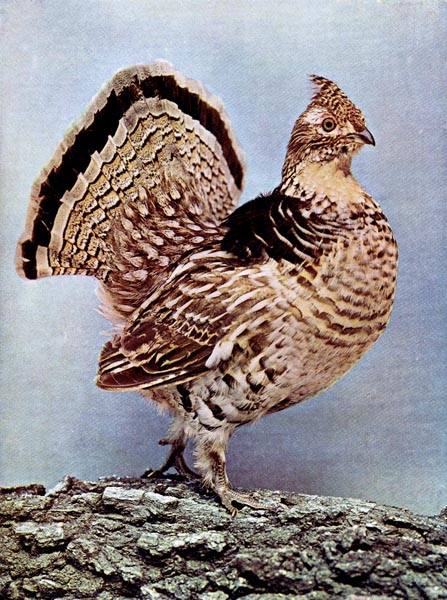
Ruffed Grous for Birds Illustrated by Color Photography, 1897

Ruffed Grous for Birds Illustrated by Color Photography, 1897, From col. F. M. Woodruff

Birds Illustrated by Color Photography – Revisited

Vol 1. June, 1897 No. 6

*

THE RUFFED GROUSE.

imgt

HE Ruffed Grouse, which is called Partridge in New England and Pheasant in the Middle and Southern States, is the true Grouse, while Bob White is the real Partridge. It is unfortunate that they continue to be confounded. The fine picture of his grouseship, however, which we here present should go far to make clear the difference between them.

The range of the Ruffed Grouse is eastern United States, south to North Carolina, Georgia, Mississippi, and Arkansas. They hatch in April, the young immediately leaving the nest with the mother. When they hear the mother’s warning note the little ones dive under leaves and bushes, while she leads the pursuer off in an opposite direction. Building the nest and sitting upon the eggs constitute the duties of the female, the males during this interesting season keeping separate, not rejoining their mates until the young are hatched, when they begin to roam as a family.

Like the Turkey, the Ruffed Grouse has a habit of pluming and strutting, and also makes the drumming noise which has caused so much discussion. This noise “is a hollow vibrating sound, beginning softly and increasing as if a small rubber ball were dropped slowly and then rapidly bounced on a drum.” While drumming the bird contrives to make himself invisible, and if seen it is difficult to get the slightest clue to the manner in which the sound is produced. And observers say that it beats with its wings on a log, that it raises its wings and strikes their edges above its back, that it claps them against its sides like a crowing rooster, and that it beats the air. The writer has seen a grouse drum, appearing to strike its wings together over its back. But there is much difference of opinion on the subject, and young observers may settle the question for themselves. When preparing to drum he seems fidgety and nervous and his sides are inflated. Letting his wings droop, he flaps them so fast that they make one continuous humming sound. In this peculiar way he calls his mate, and while he is still drumming, the hen bird may appear, coming slyly from the leaves.

The nest is on the ground, made by the female of dry leaves and a few feathers plucked from her own breast. In this slight structure she lays ten or twelve cream-colored eggs, specked with brown.

The eyes of the Grouse are of great depth and softness, with deep expanding pupils and golden brown iris.

Coming suddenly upon a young brood squatted with their mother near a roadside in the woods, an observer first knew of their presence by the old bird flying directly in his face, and then tumbling about at his feet with frantic signs of distress and lameness. In the meantime the little ones scattered in every direction and were not to be found. As soon as the parent was satisfied of their safety, she flew a short distance and he soon heard her clucking call to them to come to her again. It was surprising how quickly they reached her side, seeming to pop up as from holes in the ground.

THE RUFFED GROUSE.

At first sight most of you will think this is a turkey. Well, it does look very much like one. He spreads his tail feathers, puffs himself up, and struts about like a turkey. You know by this time what his name is and I think you can easily see why he is called Ruffed.

This proud bird and his mate live with us during the whole year. They are found usually in grassy lands and in woods.

Here they build their rude nest of dried grass, weeds and the like. You will generally find it at the foot of a tree, or along side of an old stump in or near swampy lands.

The Ruffed Grouse has a queer way of calling his mate. He stands on a log or stump, puffed up like a turkey—just as you see him in the picture. Then he struts about for a time just as you have seen a turkey gobbler do. Soon he begins to work his wings—slowly at first, but faster and faster, until it sounds like the beating of a drum.

His mate usually answers his call by coming. They set up housekeeping and build their rude nest which holds from eight to fourteen eggs. As soon as the young are hatched they can run about and find their own food. So you see they are not much bother to their parents. When they are a week old they can fly. The young usually stay with their parents until next Spring. Then they start out and find mates for themselves.

I said at the first that the Ruffed Grouse stay with us all the year. In the winter, when it is very cold, they burrow into a snowdrift to pass the night. During the summer they always roost all night.


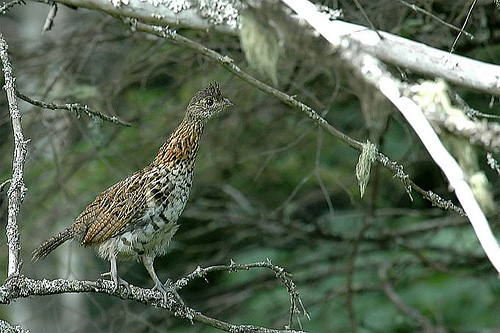
Ruffed Grouse (Bonasa umbellus) by Kent Nickel

Ruffed Grouse (Bonasa umbellus) by Kent Nickel

Lee’s Addition:

If a bird’s nest happens to be before you along the way, in any tree or on the ground, with young ones or eggs, with the mother sitting on the young or on the eggs, you shall not take the mother with the young; you shall surely let the mother go, and take the young for yourself, that it may be well with you and that you may prolong your days. (Deuteronomy 22:6-7 NKJV)

Here is another one of God’s neat birds. The Ruffed Grouse (Bonasa umbellus) is a medium-sized grouse occurring in forests from the Appalachian Mountains across Canada to Alaska. It is non-migratory. The Ruffed Grouse is frequently referred to as a “partridge”. This is technically wrong—partridges are unrelated phasianids, and in hunting may lead to confusion with the Grey Partridge, it is a bird of woodlands, not open areas. It is a very popular game bird.

The Ruffed Grouse is also the state bird of Pennsylvania.

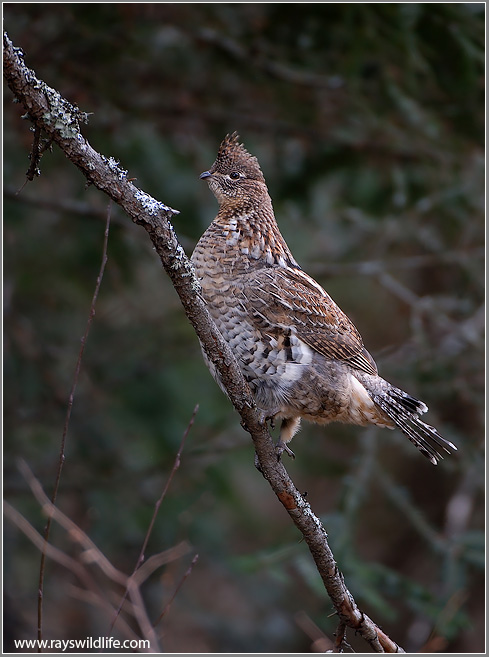
Ruffed Grouse (Bonasa umbellus) by Raymond Barlow

Ruffed Grouse (Bonasa umbellus) by Raymond Barlow

Ruffed Grouse look like chickens in appearance. They are medium to large with a thick body with a small crest on their head. When they fly their wings are rounded. Their coloration works very well to blend them with their habitat. The Lord has provided that protection for them. “One of the interesting ruffed grouse facts is that during winter, these birds develop a web-like structure that joins their toes, so that they can walk easily on snow.” Buzzle.com

The Ruffed Grouse is one of 182 members of the Phasianidae – Pheasants, Fowls and Allies Family. Other birds that are similar are found in the Galliformes Order.

Here is a video of a Ruffed Grouse drumming from YouTube from TheMusicofNature

*

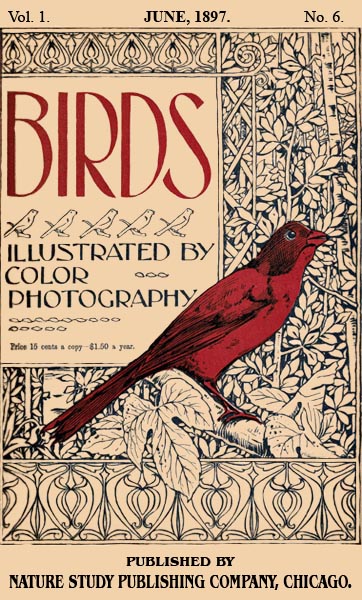
Birds Illustrated by Color Photograhy Vol 1 June, 1897 No 6 - Cover

Birds Illustrated by Color Photograhy Vol 1 June, 1897 No 6 – Cover

Birds Illustrated by Color Photography – Revisited – Introduction

The above article is the first article in the monthly serial that was started in January 1897 “designed to promote Knowledge of Bird-Live.” These include Color Photography, as they call them, today they are drawings. There are at least three Volumes that have been digitized by Project Gutenberg.

To see the whole series of – Birds Illustrated by Color Photography – Revisited

*

(Information from Wikipedia and other internet sources)

Next Article – The Black And White Creeping Warbler

Previous Article – The Scarlet Tanager

ABC’s Of The Gospel

Links:

Ruffed Grouse – All About Birds

Ruffed Grouse – Wikipedia

Grouse Facts

*


Vacation Bible School – 2012

In the beginning God created the heavens and the earth. (Genesis 1:1 NKJV)

The Fountain: Through the Eyes of the Volunteer (by Alona Hradec…:

Vacation Bible School are three words that I have not used, since I attended only once in the second grade.  But this past week has pro…

A very interesting article was placed on our church blog, The Fountain. Alona is an intern this summer and is learning many neat things and tasks. She described our VBS very well. Dan and I took photos throughout the week and thought I would share some of them here.

Thursday was “Bird day” and of course I got involved. I made a Powerpoint presentation about Beaks and Feet that worked in with their lesson. It was shown to two groups of the kids and then to the mothers in our MUMs class for the moms of children attending VBS.

I thought the material they used from Answers in Genesis was one of their best so far.

Here are a few of my photos

*

This slideshow requires JavaScript.

*

Birds Vol 1 #6 – The Scarlet Tanager

Scarlet Tanager for Birds Illustrated by Color Photography, 1897

Scarlet Tanager for Birds Illustrated by Color Photography, 1897, From col. F. M. Woodruff

Birds Illustrated by Color Photography – Revisited

Vol 1. June, 1897 No. 6

*

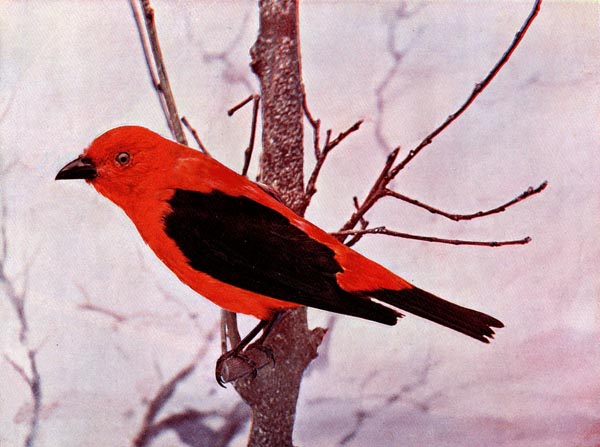
THE SCARLET TANAGER.

imgo

NE of the most brilliant and striking of all American birds is the Scarlet Tanager. From its black wings resembling pockets, it is frequently called the “Pocket Bird.” The French call it the “Cardinal.” The female is plain olive-green, and when seen together the pair present a curious example of the prodigality with which mother nature pours out her favors of beauty in the adornment of some of her creatures and seems niggardly in her treatment of others. Still it is only by contrast that we are enabled to appreciate the quality of beauty, which in this case is of the rarest sort. In the January number of Birds we presented the Red Rumped Tanager, a Costa Rica bird, which, however, is inferior in brilliancy to the Scarlet, whose range extends from eastern United States, north to southern Canada, west to the great plains, and south in winter to northern South America. It inhabits woodlands and swampy places. The nesting season begins in the latter part of May, the nest being built in low thick woods or on the skirting of tangled thickets; very often also, in an orchard, on the horizontal limb of a low tree or sapling. It is very flat and loosely made of twigs and fine bark strips and lined with rootlets and fibers of inner bark.

The eggs are from three to five in number, and of a greenish blue, speckled and blotted with brown, chiefly at the larger end.

The disposition of the Scarlet Tanager is retiring, in which respect he differs greatly from the Summer Tanager, which frequents open groves, and often visits towns and cities. A few may be seen in our parks, and now and then children have picked up the bright dead form from the green grass, and wondered what might be its name. Compare it with the Redbird, with which it is often confounded, and the contrast will be striking.

His call is a warble, broken by a pensive call note, sounding like the syllables chip-churr, and he is regarded as a superior musician.

From xeno-canto.org – Scarlet Tanager song:

“Passing through an orchard, and seeing one of these young birds that had but lately left the nest, I carried it with me for about half a mile to show it to a friend, and having procured a cage,” says Wilson, “hung it upon one of the large pine trees in the Botanic Garden, within a few feet of the nest of an Orchard Oriole, which also contained young, hoping that the charity and kindness of the Orioles would induce them to supply the cravings of the stranger. But charity with them as with too many of the human race, began and ended at home. The poor orphan was altogether neglected, and as it refused to be fed by me, I was about to return it to the place where I had found it, when, toward the afternoon, a Scarlet Tanager, no doubt its own parent, was seen fluttering around the cage, endeavoring to get in. Finding he could not, he flew off, and soon returned with food in his bill, and continued to feed it until after sunset, taking up his lodgings on the higher branches of the same tree. In the morning, as soon as day broke, he was again seen most actively engaged in the same manner, and, notwithstanding the insolence of the Orioles, he continued his benevolent offices the whole day, roosting at night as before. On the third or fourth day he seemed extremely solicitous for the liberation of his charge, using every expression of distressful anxiety, and every call and invitation that nature had put in his power, for him to come out. This was too much for the feelings of my friend. He procured a ladder, and mounting to the spot where the bird was suspended, opened the cage, took out his prisoner, and restored him to liberty and to his parent, who, with notes of great exultation, accompanied his flight to the woods.”


THE SCARLET TANAGER.

What could be more beautiful to see than this bird among the green leaves of a tree? It almost seems as though he would kindle the dry limb upon which he perches. This is his holiday dress. He wears it during the nesting season. After the young are reared and the summer months gone, he changes his coat. We then find him dressed in a dull yellowish green—the color of his mate the whole year.

Do you remember another bird family in which the father bird changes his dress each spring and autumn?

The Scarlet Tanager is a solitary bird. He likes the deep woods, and seeks the topmost branches. He likes, too, the thick evergreens. Here he sings through the summer days. We often pass him by for he is hidden by the green leaves above us.

He is sometimes called our “Bird of Paradise.”

Tanagers feed upon winged insects, caterpillars, seeds, and berries. To get these they do not need to be on the ground. For this reason it is seldom we see them there.

Both birds work in building the nest, and both share in caring for the little ones. The nest is not a very pretty one—not pretty enough for so beautiful a bird, I think. It is woven so loosely that if you were standing under it, you could see light through it.

Notice his strong, short beak. Now turn to the picture of the Rose-Breasted Grosbeaks in April Birds. Do you see how much alike they are? They are near relatives.

I hope that you may all have a chance to see a Scarlet Tanager dressed in his richest scarlet and most jetty black.


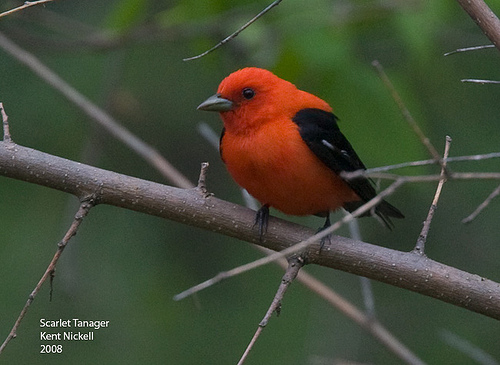
Scarlet Tanager (Piranga olivacea) by Kent Nickell

Scarlet Tanager (Piranga olivacea) by Kent Nickell

Lee’s Addition:

‘Come now, and let us reason together,” Says the LORD, “Though your sins are like scarlet, They shall be as white as snow; Though they are red like crimson, They shall be as wool. (Isaiah 1:18 NKJV)

Scarlet Tanagers (Piranga olivacea) find themselves assigned to the Cardinalidae – Grosbeaks, Saltators & Allies Family and not in the Thraupidae – Tanagers and Allies where I would have thought they might be.

The tanagers comprise the bird family Thraupidae, in the order Passeriformes. The family has an American distribution (Cardinalidae). Tanagers are small to medium-sized birds.

There were traditionally about 240 species of tanagers, but the taxonomic treatment of this family’s members is currently in a state of flux. As more of these birds are studied using modern molecular techniques it is expected that some genera may be relocated elsewhere. Already species in the genera Euphonia and Chlorophonia, which were once considered part of the tanager family, are now treated as members of Fringillidae, in their own subfamily (Euphoniinae). Likewise the genera Piranga (which includes the Scarlet Tanager, Summer Tanager, and Western Tanager), Chlorothraupis, and Habia appear to be members of the Cardinal family, and have been reassigned to that family by the AOU.

The Scarlet Tanager (Piranga olivacea) is a medium-sized American songbird. It and other members of its genus are now classified in the cardinal family (Cardinalidae). The specie’s plumage and vocalizations are similar to other members of the cardinal family.

Adults have pale stout smooth bills. Adult males are bright red with black wings and tail; females are yellowish on the underparts and olive on top, with olive-brown wings and tail. The adult male’s winter plumage is similar to the female’s, but the wings and tail remain darker. Young males briefly show a more complex variegated plumage intermediate between adult males and females. It apparently was such a specimen that was first scientifically described. Hence the older though somewhat confusing specific epithet olivacea (“the olive-colored one”) is used rather than erythromelas (“the red-and-black one”), as had been common throughout the 19th century.

Their breeding habitat is large forested areas, especially with oaks, across eastern North America. Scarlet Tanagers migrate to northwestern South America, passing through Central America around April, and again around October.

They begin arriving on the breeding grounds in numbers by about May and already start to move south again in mid-summer; by early October they are all on their way south.[3] The bird is an extremely rare vagrant to western Europe.
Scarlet Tanagers are often out of sight, foraging high in trees, sometimes flying out to catch insects in flight. They eat mainly insects and fruit.

These birds do best in the forest interior, where they are less exposed to predators and brood parasitism by the Brown-headed Cowbird. Their nests are typically built on horizontal tree branches. Specifically their numbers are declining in some areas due to habitat fragmentation, but on a global scale tanagers are a plentiful species.

*

Birds Illustrated by Color Photograhy Vol 1 June, 1897 No 6 - Cover

Birds Illustrated by Color Photograhy Vol 1 June, 1897 No 6 – Cover

Birds Illustrated by Color Photography – Revisited – Introduction

The above article is the first article in the monthly serial that was started in January 1897 “designed to promote Knowledge of Bird-Live.” These include Color Photography, as they call them, today they are drawings. There are at least three Volumes that have been digitized by Project Gutenberg.

To see the whole series of – Birds Illustrated by Color Photography – Revisited

*

(Information from Wikipedia and other internet sources)

Next Article – The Ruffed Grouse

Previous Article – June and the Birds and Farmers

Wordless Birds – With Hummingbirds

Links:

Scarlet Tanager – Wikipedia

Tanager – Wikipedia

Learning From The Birds – Overwhelmed

*

Birds Vol 1 #6 – June and The Birds and Farmers

Eastern Bluebird (Sialia sialis) by S Slayton

Eastern Bluebird (Sialia sialis) by S Slayton

Birds Illustrated by Color Photography – Revisited

Vol 1. June, 1897 No. 6

*

JUNE.

Frank-hearted hostess of the field and wood,
Gipsy, whose roof is every spreading tree,
June is the pearl of our New England year,
Still a surprisal, though expected long,
Her coming startles. Long she lies in wait,
Makes many a feint, peeps forth, draws coyly back,
Then, from some southern ambush in the sky,
With one great gush of blossoms storms the world.
A week ago the Sparrow was divine;
The Bluebird, shifting his light load of song
From post to post along the cheerless fence,
Was as a rhymer ere the poet came;
But now, O rapture! sunshine winged and voiced,
Pipe blown through by the warm, wild breath of the West,
Shepherding his soft droves of fleecy cloud,
Gladness of woods, skies, waters, all in one,
The Bobolink has come, and, like the soul
Of the sweet season vocal in a bird,
Gurgles in ecstasy we know not what
Save June! Dear June! Now God be praised for June.
—Lowell.

BIRDS AND FARMERS.

From the Forest and Stream.

imgt

HE advocates of protection for our small birds present two sets of reasons for preventing their killing; the one sentimental, and the other economic.
The sentimental reasons are the ones most often urged; they are also of a kind to appeal with especial force to those whose responsibility for the destruction of the birds is greatest. The women and girls, for whose adornment birds’ plumage is chiefly used, think little and know less about the services which birds perform for agriculture, and indeed it may be doubted whether the sight of a bunch of feathers or a stuffed bird’s skin suggests to them any thought of the life that those feathers once represented. But when the wearers are reminded that there was such a life; that it was cheery and beautiful, and that it was cut short merely that their apparel might be adorned, they are quick to recognize that bird destruction involves a wrong, and are ready to do their part toward ending it by refusing to wear plumage.

The small boy who pursues little birds from the standpoint of the hunter in quest of his game, feels only the ardor of pursuit. His whole mind is concentrated on that and the hunter’s selfishness, the desire of possession, fills his heart. Ignorance and thoughtlessness destroy the birds.

Every one knows in a general way that birds render most valuable service to the farmer, but although these services have long been recognized in the laws standing on the statute books of the various states, it is only within a few years that any systematic investigations have been undertaken to determine just what such services are, to measure them with some approach to accuracy, to weigh in the case of each species the good and the evil done, and so to strike a balance in favor of the bird or against it. The inquiries carried on by the Agricultural Department on a large scale and those made by various local experiment stations and by individual observers have given results which are very striking and which can no longer be ignored.

It is a difficult matter for any one to balance the good things that he reads and believes about any animal against the bad things that he actually sees. The man who witnesses the theft of his cherries by robin or catbird, or the killing of a quail by a marsh hawk, feels that here he has ocular proof of harm done by the birds, while as to the insects or the field mice destroyed, and the crops saved, he has only the testimony of some unknown and distant witness. It is only natural that the observer should trust the evidence of his senses, and yet his eyes tell him only a small part of the truth, and that small part a misleading one.

It is certain that without the services of these feathered laborers, whose work is unseen, though it lasts from daylight till dark through every day in the year, agriculture in this country would come to an immediate standstill, and if in the brief season of fruit each one of these workers levies on the farmer the tribute of a few berries, the price is surely a small one to pay for the great good done. Superficial persons imagine that the birds are here only during the summer, but this is a great mistake. It is true that in warm weather, when insect life is most abundant, birds are also most abundant. They wage an effective and unceasing war against the adult insects and their larvae, and check their active depredations; but in winter the birds carry on a campaign which is hardly less important in its results.


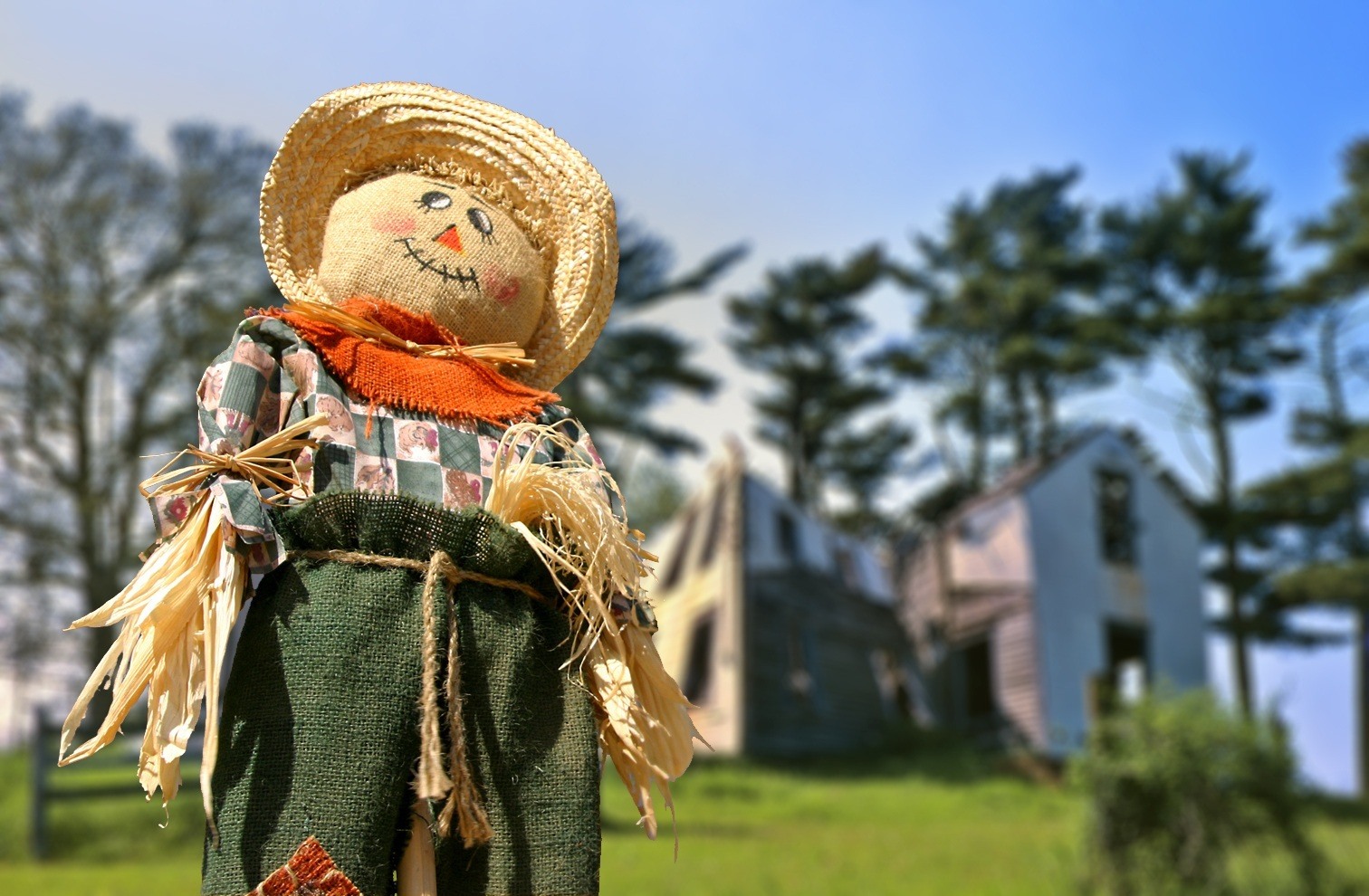
Scarecrow ©©

Scarecrow ©©

Lee’s Addition:

In 1897 it appears that ladies using feathers for hats, boys shooting birds and farmers using various practices were all responsible for the decline of many farmland birds. Fast-forward to today and farmers are still faced with decisions that affect bird welfare. I have placed some links at the end that show some of the present day challenges.

The California Rice farmers are making some strides to help migratory birds. “The hundreds of vast, flooded rice paddies that cover miles of interior northern California may seem like an unlikely safe haven for shorebirds, but changes occurring in the state’s rice country may help improve the outlook for dozens of species in decline in recent decades. So far, more than 165 rice farmers have signed up for an incentive program that will build a system of islands and other habitat improvements in their paddies, and provide birds like the avocet a place to rest, feed and breed throughout the year.”

“Most of the coffee sold in America today is literally killing the songbirds we love – and destroying a sustainable method of farming that supports rural communities in Latin America and keeps farm workers and their children away from toxic chemicals.” This is from the Birds and Beans web page which is trying to get coffee raised in a way that spares birds.

Another controversy today is the Wind Turbines to generate electricity. The debate is on as to whether there are excessive amounts of bird kill being caused by these. See some of the articles below.

England and the E.U. is not immune either. They have done much to cause the loss of birds by their practices. See The birds and the weeds: A farm conservation love story – UK, and Bird populations dropping in EU tied to farming policies

I am not really on either side of the issue as I have not studied it in depth. I know man has to live, but so does the wild life. So, where is the balance? I am sure I lean toward the birds being preserved because I enjoy watching them. Man was given dominion over the animals, but that does not mean that the birds are not to be preserved also. There is a balance there that needs to be met.

Then God blessed them, and God said to them, “Be fruitful and multiply; fill the earth and subdue it; have dominion over the fish of the sea, over the birds of the air, and over every living thing that moves on the earth. (Genesis 1:28 NKJV)

So God blessed Noah and his sons, and said to them: “Be fruitful and multiply, and fill the earth. And the fear of you and the dread of you shall be on every beast of the earth, on every bird of the air, on all that move on the earth, and on all the fish of the sea. They are given into your hand. Every moving thing that lives shall be food for you. I have given you all things, even as the green herbs. (Genesis 9:1-3 NKJV)

*

Birds Illustrated by Color Photograhy Vol 1 June, 1897 No 6 - Cover

Birds Illustrated by Color Photograhy Vol 1 June, 1897 No 6 – Cover

Birds Illustrated by Color Photography – Revisited – Introduction

The above article is the first article in the monthly serial that was started in January 1897 “designed to promote Knowledge of Bird-Live.” These include Color Photography, as they call them, today they are drawings. There are at least three Volumes that have been digitized by Project Gutenberg.

To see the whole series of – Birds Illustrated by Color Photography – Revisited

*

(Information from Wikipedia and other internet sources)

Next Article – The Scarlet Tanager

Previous Article – The Snowy Owl

Wordless Birds

Links:

The birds and the weeds: A farm conservation love story – UK
Bird populations dropping in EU tied to farming policies
Birds and Beans
Are Windmills Killing Ducks?

*

Birds Vol 1 #6 – The Snowy Owl

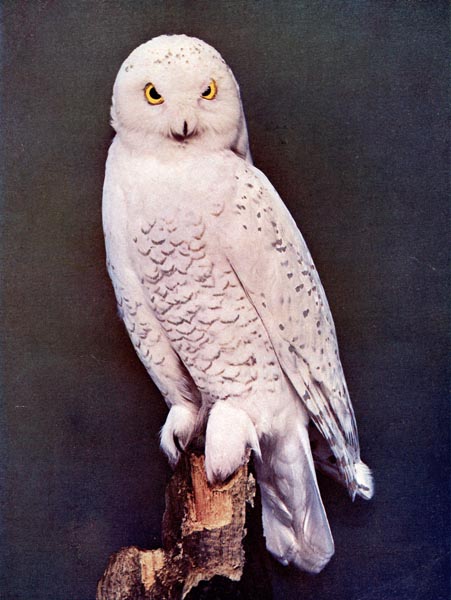
Snowy Owl for Birds Illustrated by Color Photography, 1897

Snowy Owl for Birds Illustrated by Color Photography, 1897

Birds Illustrated by Color Photography – Revisited

Vol 1. June, 1897 No. 6

*

THE SNOWY OWL.

F for Birds Illustrated by Color Photography

EW of all the groups of birds have such decided markings, such characteristic distinctions, as the Owl. There is a singular resemblance between the face of an Owl and that of a cat, which is the more notable, as both of these creatures have much the same habits, live on the same prey, and are evidently representatives of the same idea in their different classes. The Owl, in fact, is a winged cat, just as the cat is a furred owl.

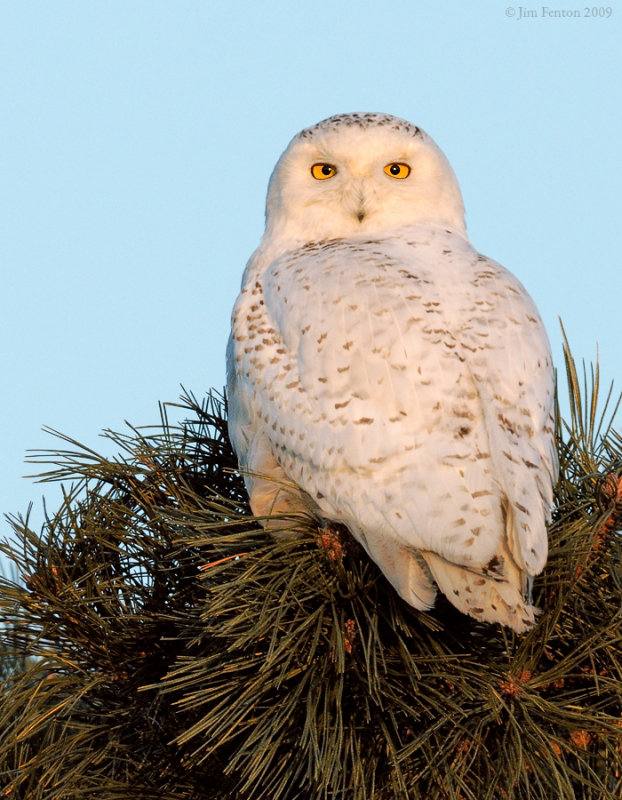
The Snowy Owl is one of the handsomest of this group, not so much on account of its size, which is considerable, as by reason of the beautiful white mantle which it wears, and the large orange eyeballs that shine with the lustre of a topaz set among the snowy plumage.

It is a native of the north of Europe and America, but is also found in the more northern parts of England, being seen, though rather a scarce bird, in the Shetland and Orkney Islands, where it builds its nest and rears its young. One will be more likely to find this owl near the shore, along the line of salt marshes and woody stubble, than further inland. The marshes do not freeze so easily or deep as the iron bound uplands, and field-mice are more plentiful in them. It is so fleet of wing that if its appetite is whetted, it can follow and capture a Snow Bunting or a Junco in its most rapid flight.

Like the Hawk Owl, it is a day-flying bird, and is a terrible foe to the smaller mammalia, and to various birds. Mr. Yarrell in his “History of the British Birds,” states that one wounded on the Isle of Balta disgorged a young rabbit whole, and that a young Sandpiper, with its plumage entire, was found in the stomach of another.

In proportion to its size the Snowy Owl is a mighty hunter, having been detected chasing the American hare, and carrying off wounded Grouse before the sportsman could secure his prey. It is also a good fisherman, posting itself on some convenient spot overhanging the water, and securing its finny prey with a lightning-like grasp of the claw as it passes beneath the white clad fisher. Sometimes it will sail over the surface of a stream, and snatch the fish as they rise for food. It is also a great lover of lemmings, and in the destruction of these quadruped pests does infinite service to the agriculturist.

The large round eyes of this owl are very beautiful. Even by daylight they are remarkable for their gem-like sheen, but in the evening they are even more attractive, glowing like balls of living fire.

From sheer fatigue these birds often seek a temporary resting place on passing ships. A solitary owl, after a long journey, settled on the rigging of a ship one night. A sailor who was ordered aloft, terrified by the two glowing eyes that suddenly opened upon his own, descended hurriedly to the deck, declaring to the crew that he had seen “Davy Jones a-sitting up there on the main yard.”


THE SNOWY OWL.

What do you think of this bird with his round, puffy head? You of course know it is an Owl. I want you to know him as the Snowy Owl.

Don’t you think his face is some like that of your cat? This fellow is not full grown, but only a child. If he were full grown he would be pure white. The dark color you see is only the tips of the feathers. You can’t see his beak very well for the soft feathers almost cover it.

His large soft eyes look very pretty out of the white feathers. What color would you call them? Most owls are quiet during the day and very busy all night. The Snowy Owl is not so quiet day times. He flies about considerably and gets most of his food in daylight.

A hunter who was resting under a tree, on the bank of a river, tells this of him:

“A Snowy Owl was perched on the branch of a dead tree that had fallen into the river. He sat there looking into the water and blinking his large eyes.

Suddenly he reached out and before I could see how he did it, a fish was in his claws.”

This certainly shows that he can see well in the day time. He can see best, however, in the twilight, in cloudy weather or moonlight. That is the way with your cat.

The wing feathers of the owl are different from those of most birds. They are as soft as down. This is why you cannot hear him when he flies. Owls while perching are almost always found in quiet places where they will not be disturbed.

Did you ever hear the voice of an owl in the night? If you never have, you cannot imagine how dreary it sounds. He surely is “The Bird of the Night.”


Snowy Owl (Bubo scandiacus) by J Fenton

Snowy Owl (Bubo scandiacus) by J Fenton

Lee’s Addition:

The Owl is mentioned 8 times in the NKJV of the Bible and it qualifies as a Bird of the Bible. These verses are from the “unclean” list:

the white owl, the jackdaw, and the carrion vulture; (Leviticus 11:18 NKJV)

the little owl, the screech owl, the white owl, (Deuteronomy 14:16 NKJV)

The Snowy Owl is in the Strigidae – Owls Family which currently has 211 species. There are two families that make up the Strigiformes Order, the Owls and the Barn Owls – Tytonidae Family.

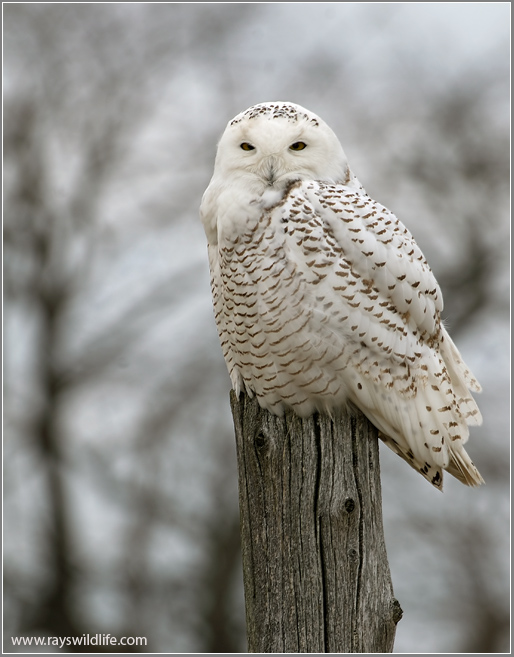
Because Snowy Owls live in cold weather often, they have feathers that cover most of their legs and feet. The Lord has provided extra protection for them this way. A lack of pigment leaves extra space in the feathers to help keep them warm and also is the reason they are so white. Also being white helps protect them from being seen so well in snow. Another interesting thing is that they hunt in the daytime more than regular owls. When you live way up north by the Arctic Circle, the sun never sets for periods of time. An owl could get might hungry waiting for darkness to go hunting.

*

Snowy Owl (Bubo scandiacus) by Raymond Barlow

Snowy Owl (Bubo scandiacus) by Raymond Barlow

*

From xeno-canto the call of a pair of Snowy Owls

The Snowy Owl is a large owl and is the official bird of Quebec. It goes by several names, such as, the Arctic OwlGreat White OwlIcelandic Snow Owl, or Harfang.

Snowy Owl (Bubo scandiacus) Leggings ©WikiC

Snowy Owl (Bubo scandiacus) Leggings ©WikiC

*

“Most of the owls’ hunting is done in the “sit and wait” style; prey may be captured on the ground, in the air or fish may be snatched off the surface of bodies of water using their sharp talons. Each bird must capture roughly 7 to 12 mice per day to meet its food requirement and can eat more than 1,600 lemmings per year.
Snowy Owls, like many other birds, swallow their small prey whole. Strong stomach juices digest the flesh, while the indigestible bones, teeth, fur, and feathers are compacted into oval pellets that the bird regurgitates 18 to 24 hours after feeding. Regurgitation often takes place at regular perches, where dozens of pellets may be found. Biologists frequently examine these pellets to determine the quantity and types of prey the birds have eaten. When large prey are eaten in small pieces, pellets will not be produced.

Though Snowy Owls have few predators, the adults are very watchful and are equipped to defend against any kind of threat towards them or their offspring. During the nesting season, the owls regularly defend their nests against arctic foxes, corvids and swift-flying jaegers; as well as dogs, gray wolves and avian predators. Males defend the nest by standing guard nearby while the female incubates the eggs and broods the young. Both sexes attack approaching predators, dive-bombing them and engaging in distraction displays to draw the predator away from a nest.” (Wikipedia)

*

Birds Illustrated by Color Photograhy Vol 1 June, 1897 No 6 - Cover

Birds Illustrated by Color Photograhy Vol 1 June, 1897 No 6 – Cover

Birds Illustrated by Color Photography – Revisited – Introduction

The above article is the first article in the monthly serial that was started in January 1897 “designed to promote Knowledge of Bird-Live.” These include Color Photography, as they call them, today they are drawings. There are at least three Volumes that have been digitized by Project Gutenberg.

To see the whole series of – Birds Illustrated by Color Photography – Revisited

*

(Information from Wikipedia and other internet sources)

Next Article –June, Birds And Farmers

Previous Article – The Baltimore Oriole

ABC’s Of The Gospel

Links:

*