Also he spoke of trees, from the cedar tree of Lebanon even to the hyssop that springs out of the wall; he spoke also of animals, of birds, of creeping things, and of fish. (1 Kings 4:33 NKJV)
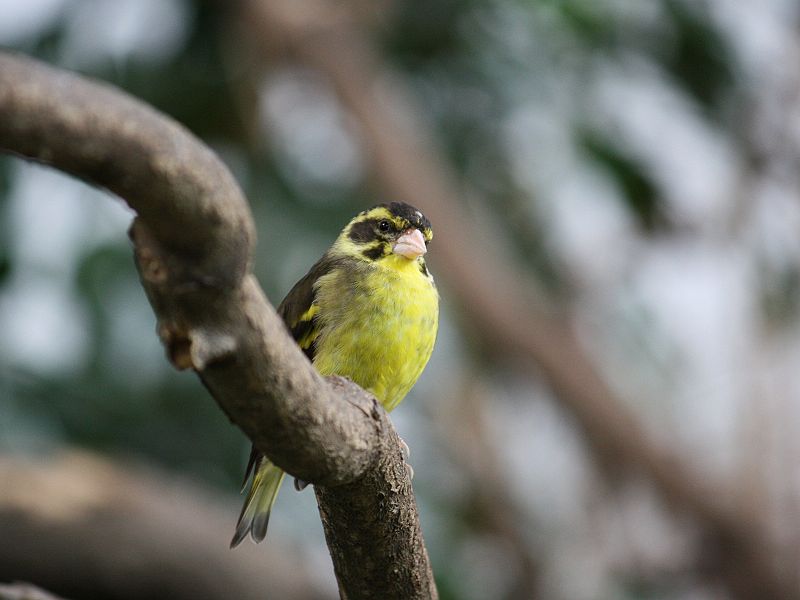
Well, we are still working our way through the large Fringillidae – Finches family. Today, Part III, we will begin with the genus Haemorhous (various shades of red are characteristic plumage colors of this group) which is more familiar to us in the U.S. Those are our Purple, Cassin’s, and House Finches.
After them the Greenfinches of the Chloris genus and the lone Desert Finch (Rhodospiza obsoleta), three Golden-winged Grosbeak (Rhynchostus) and an Oriole Finch (Linurgus olivaceus)
The next genus – Crithagra has 37 species which include Seedeaters, Citril, Canary, Serin, Siskin, and Grosbeak-Canary. With those, will end Finches III and save the rest of the family for Finches IV. Maybe with the DNA testing going on, some of this family may be split off to other families in the future and won’t be so large.
By them the birds of the heavens have their home; They sing among the branches. He waters the hills from His upper chambers; The earth is satisfied with the fruit of Your works. (Psalms 104:12-13 NKJV)
“Shout To The North and the South” ~ by Faith Baptist Church Choir
I’ll give you 2 seconds to get off me or I’m calling Mom.
Just thought you might need a smile for today. Received this link for the video in an e-mail. The Lord sure created some of the neatest critters. How can you not love these Pandas.
“For every kind of beast and bird, of reptile and creature of the sea, is tamed and has been tamed by mankind.” (James 3:7 NKJV)
The Implausibility of Evolution – from Creation Moments
“Be strong and of a good courage, fear not, nor be afraid of them: for the LORD thy God, he it is that doth go with thee; he will not fail thee, nor forsake thee.” (Deuteronomy 31:6)
If you’re a long-time listener, you know that Creation Moments does not discuss politics. That’s why today’s program focuses not on Ben Carson’s political involvements but on Dr. Carson’s courage as a scientist and world-renowned surgeon for sharing his politically incorrect views on Darwinian evolution.
Dr. Carson
In his book, Take the Risk, Dr. Carson makes it crystal clear that he rejects Darwinian evolution. Here is a portion of what he wrote:
“For me, the plausibility of evolution is … strained by Darwin’s assertion that within fifty to one hundred years of his time, scientists would become geologically sophisticated enough to find the fossil remains of the entire evolutionary tree in an unequivocal step-by-step progression of life from amoeba to man – including all of the intermediate species.”
Dr. Carson continues: “Of course, that was 150 years ago, and there is still no such evidence. It’s just not there. But when you bring that up to the proponents of Darwinism, the best explanation they can come up with is ‘Well … uh … it’s lost!’ Here again I find it requires too much faith for me to believe that explanation, given all the fossils we have found without any fossilized evidence of the direct, step-by-step evolutionary progression from simple to complex organisms or from one species to another species. Shrugging and saying, ‘Well, it was mysteriously lost, and we’ll probably never find it,’ doesn’t seem like a particularly satisfying, objective, or scientific response.”
Doctor Carson, we couldn’t agree more!
Prayer: Heavenly Father, thank You for scientists who take the risk of dissenting from Darwinism. I pray that You will embolden me to share the gospel and the truth of biblical creation with others. In Jesus’ Name. Amen.
“In the beginning was the Word, and the Word was with God, and the Word was God. He was in the beginning with God. All things were made through Him, and without Him nothing was made that was made. In Him was life, and the life was the light of men. And the light shines in the darkness, and the darkness did not comprehend it.” (John 1:1-5 NKJV)
Like Creation Moments, this is not political. It has to do with those of us who honor Our Lord Jesus Christ, The Creator.
“And when Pharaoh drew nigh, the children of Israel lifted up their eyes, and, behold, the Egyptians marched after them; and they were sore afraid: and the children of Israel cried out unto the Lord.” (Exodus 14:10)
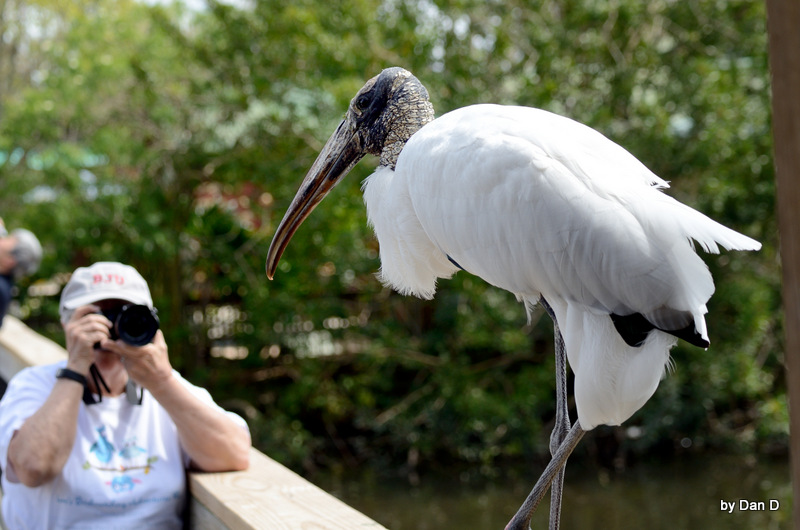
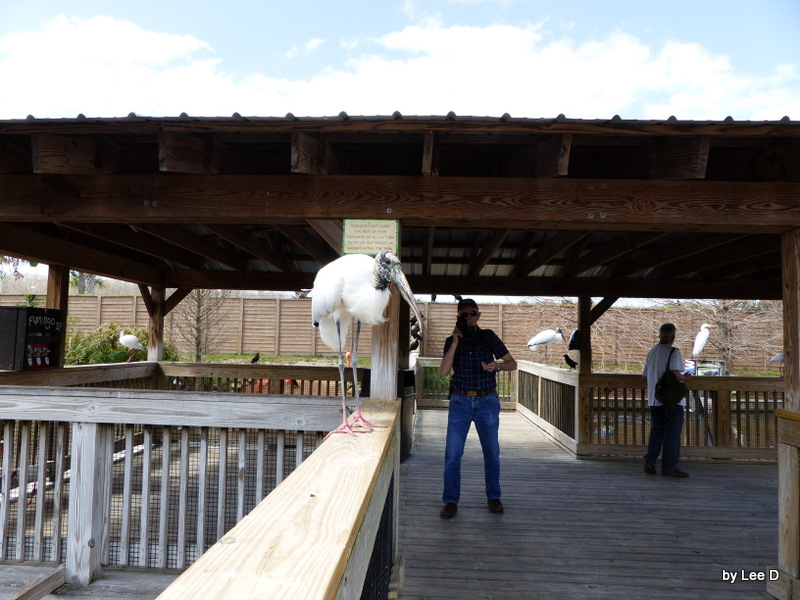
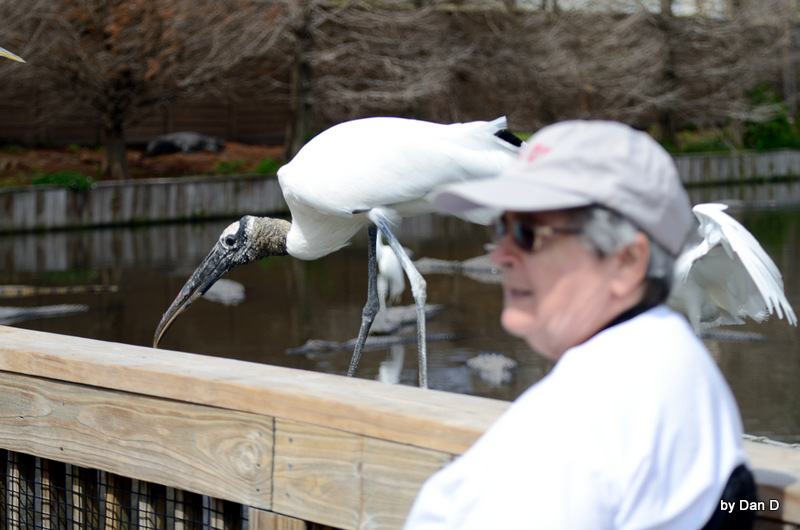
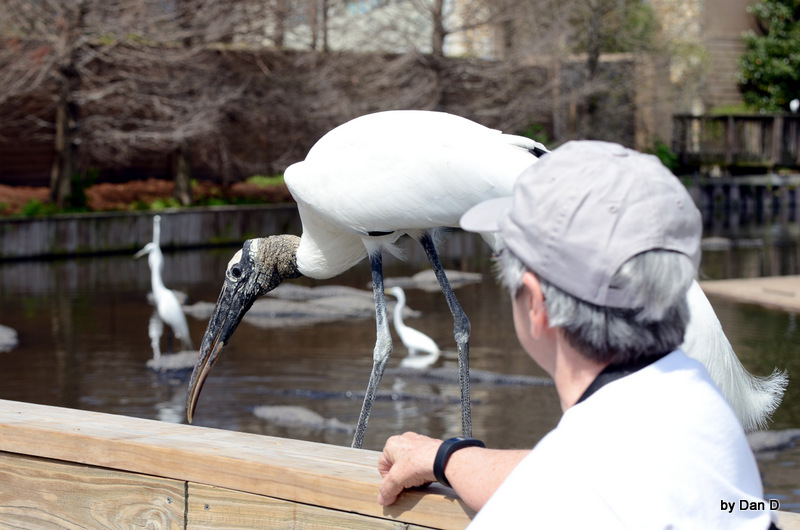
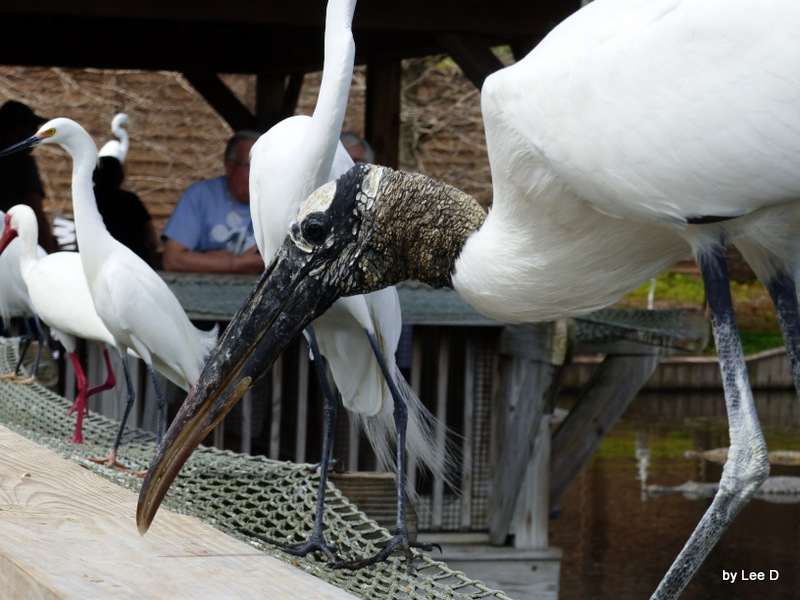
On our last trip to Gatorland a few weeks ago, one of the Wood Storks became almost a pest. Dan caught me leaning on the rail taking photos of the Wood Stork as he walked toward me.
Wood Stork at Gatorland Walking Toward Me by Dan
Apparently, I was in the way, because,
Wood Stork walking on rail toward me.
Coming closer. Now you can see Dan taking the top photo.
Wood Stork walking on rail Coming toward me.
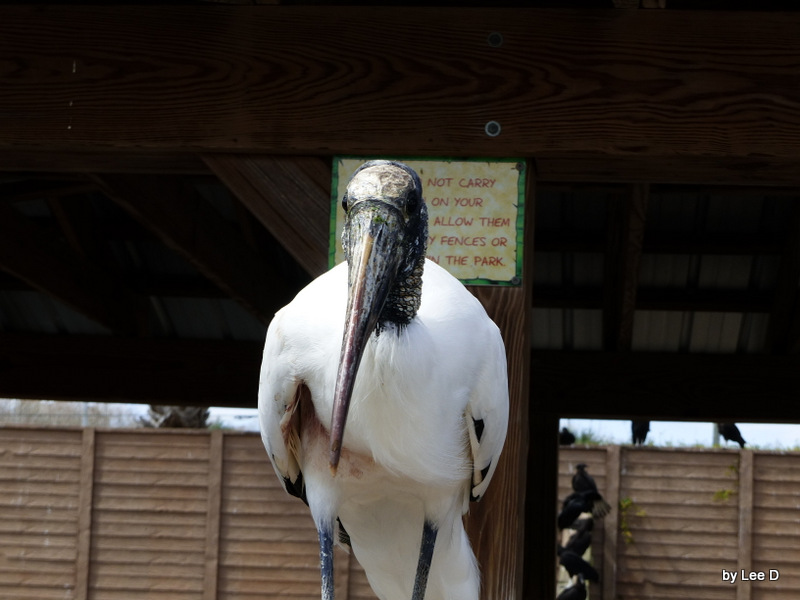
He is so close here, I could hardly focus on him. He then jumped-fly over my head. He almost knocked my cap off as I felt his feet on my cap.
Wood Stork walking on rail toward me.
He wanted on the other side and I WAS IN HIS WAY!!
Later, we came back past here, sure enough, our “over-friendly” Wood Stork was still hanging out for whatever hand out he might get.
Here are some more of Dan’s photos. Because of his long lens, either the Wood Stork or I was in focus.
Wood Stork at Gatorland Walking Past Me
*
Wood Stork at Gatorland Walking Past Me
*
Wood Stork at Gatorland Walking Past Me
*
Now You Know Why He Was Walking Past Me
For every kind of beasts, and of birds, and of serpents, and of things in the sea, is tamed, and hath been tamed of mankind: (James 3:7 KJV)
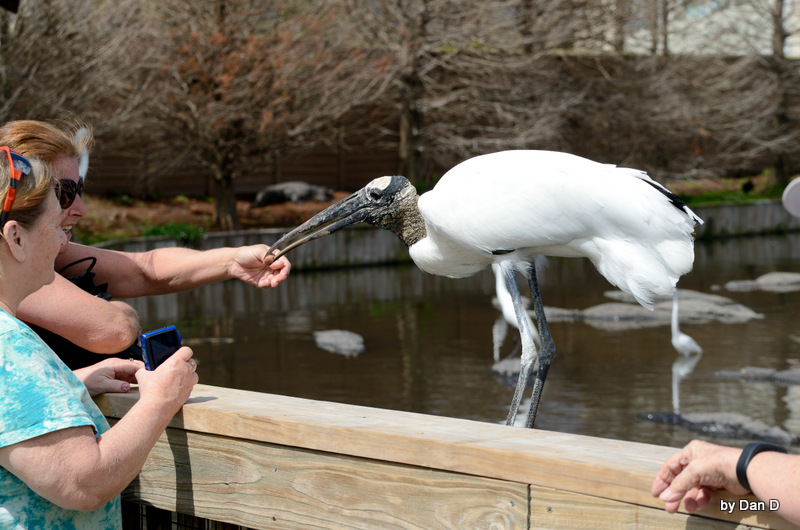
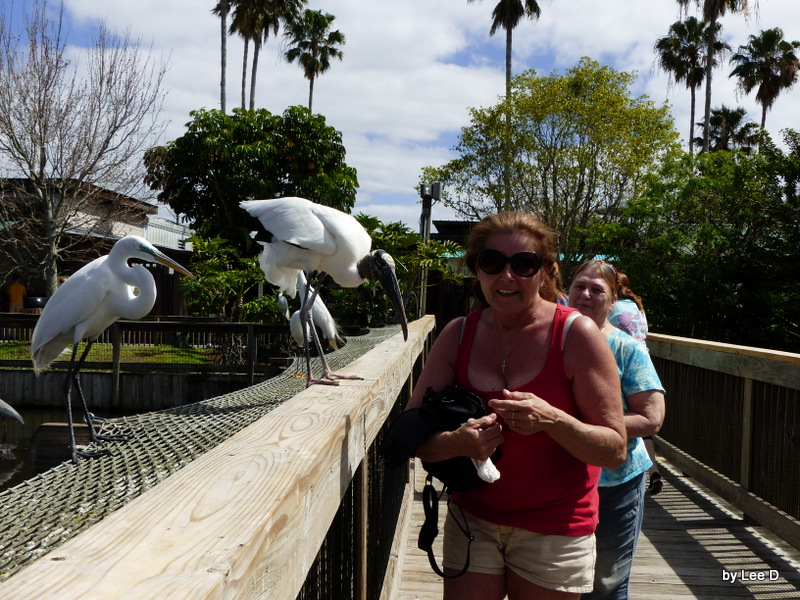
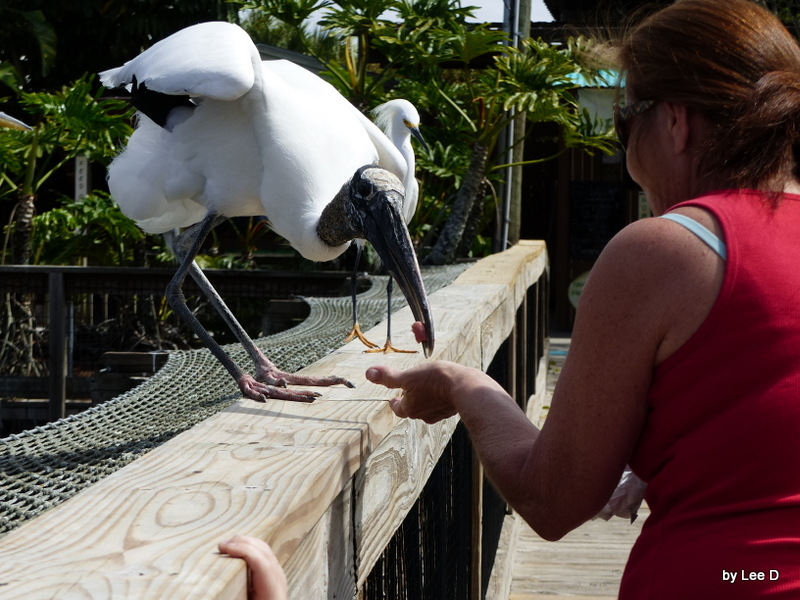
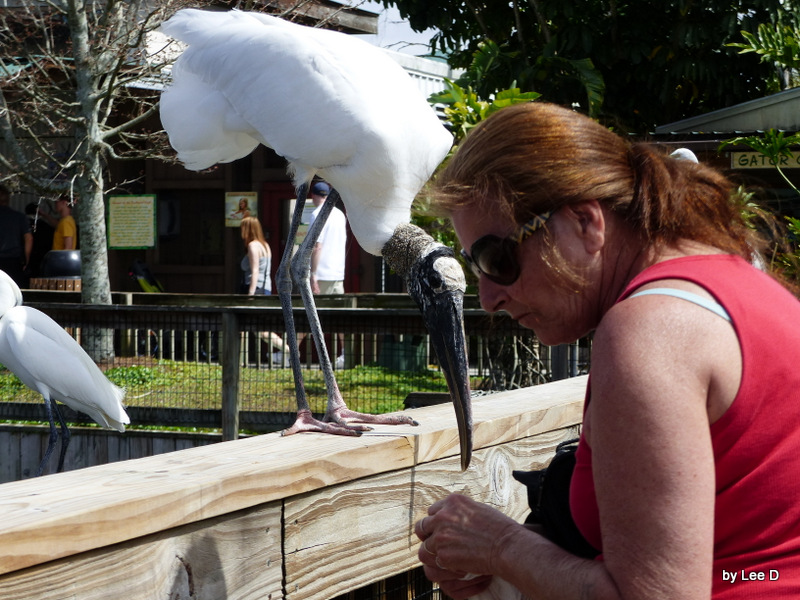
This bird was used to being around people and enjoyed being “hand-fed.”
Here are a few more of my photos of this “Close Encounter With the Over-Friendly Wood Stork.”
Wood Stork with a lady at Gatorland
Wood Stork with lady at Gatorland
Wood Stork with lady at Gatorland
Wood Stork with lady at Gatorland
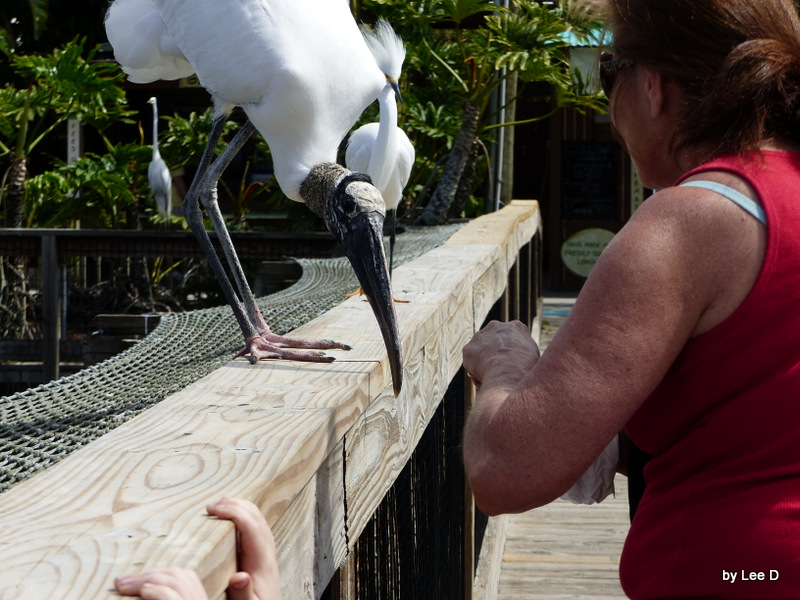
Wood Stork with lady at Gatorland
Wood Stork with lady at Gatorland
Wood Stork with lady at Gatorland
Wood Stork with lady at Gatorland9
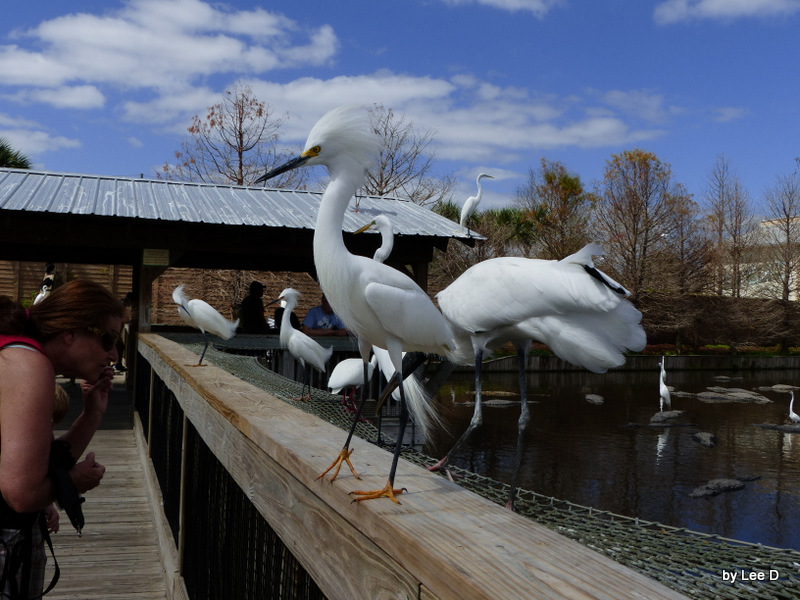
Snowy Egret Trying To Get In On the Treats
“The wings of the ostrich wave proudly, But are her wings and pinions like the kindly stork’s? (Job 39:13 NKJV)
One thousand shall flee at the rebuke of one; at the rebuke of five shall ye flee: till ye be left as a beacon upon the top of a mountain, and as an ensign on an hill. (Isaiah 30:17)
Ian’s Bird of the Week – Northern Lapwing ~ Ian Montgomery
Newsletter – 3/14/16
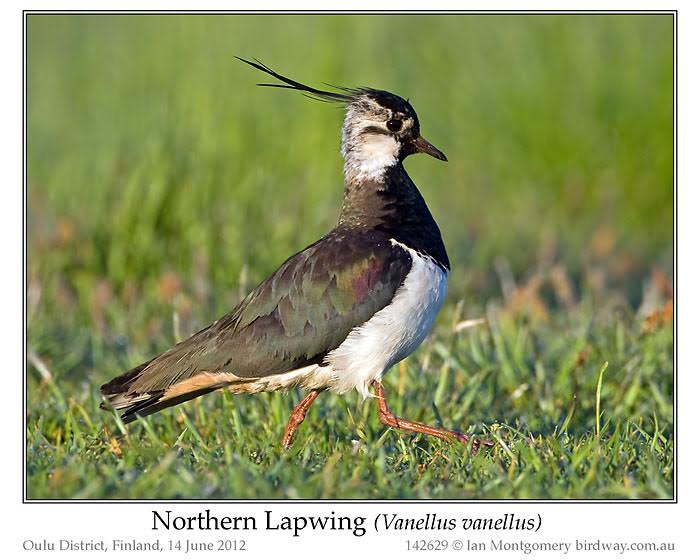
I’m wading through all the non-Australian galleries on the website making them ‘mobile-friendly’, and I came across what is for me an iconic species. It brought back memories of when I first saw Northern Lapwings in September 1961 on the way back from summer holidays in Co. Kerry. The Lapwings were gathered in large flocks with Golden Plover on the Curragh in Co. Kildare, a large grassy plain west of Dublin probably better known for its race track. I was very struck by the crests of the Lapwings – they seemed very exotic by Irish standards – and I was motivated to find out what they were.
I was 14 then and already interested in wildlife but birds hadn’t previously attracted my attention until several interesting sightings that year which included, in addition to the Lapwings, a good view of a Common Kingfisher and a mysterious sandpiper on a golf course in Co. Kerry, probably a Common Redshank Anyway, my parents responded to my interest and gave me, when we got home, a copy of the classic Peterson et al. Field Guide to the Birds of Britain and Europe. At Christmas 1961, a pair of binoculars came my way, and the rest, as they say, is history.
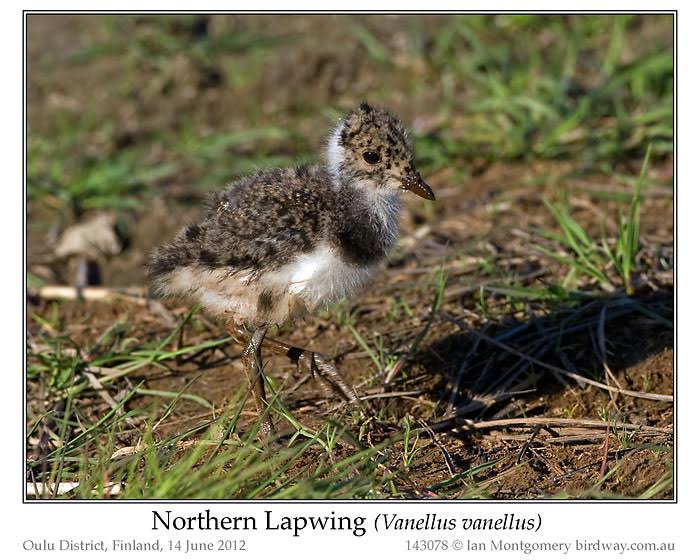
Northern Lapwings are a characteristic bird of farmland and marshes in Europe, occurring on both arable land and pasture. They breed throughout Britain and Ireland and their numbers are augment in winter by migrants from northern Europe. The bird in the first two photos is a male in breeding plumage. Breeding males have longer crests and more black on the face and throat than females. When I photographed these I was in a hide in Finland at the lek where Ruffs were displaying, but birds of other species came from time to time. The Lapwings were nesting and this young fledgling was wandering around the hide.
In non-breeding plumage, the crests are shorter, the throat is white and there are buffish fringes on the feathers covering the wings (fourth photo). This one is feeding in the estuary of the River Boyne downstream from Drogheda.
I’m making good progress with website. I’ve finished more than 1,100 galleries and have less than 400 to go. I hope to finish them off in a few weeks, and maybe you’ll get the bird of the week more regularly then!
“And the stork, the heron after her kind, and the lapwing, and the bat.” (Lev 11:19 KJV)
Ian, thanks for all your hard work on the website. It can be very time-consuming when working behind the scenes. (I know from experience.) When you finish, we will be here waiting on the great Bird of the Week articles you share with us. Lapwings have become one of my favorite birds to watch at the zoos. Though, I don’t think I have seen the Northern one.
Thou visitest the earth, and waterest it: thou greatly enrichest it with the river of God, which is full of water: thou preparest them corn, when thou hast so provided for it. (Psalms 65:9 KJV)
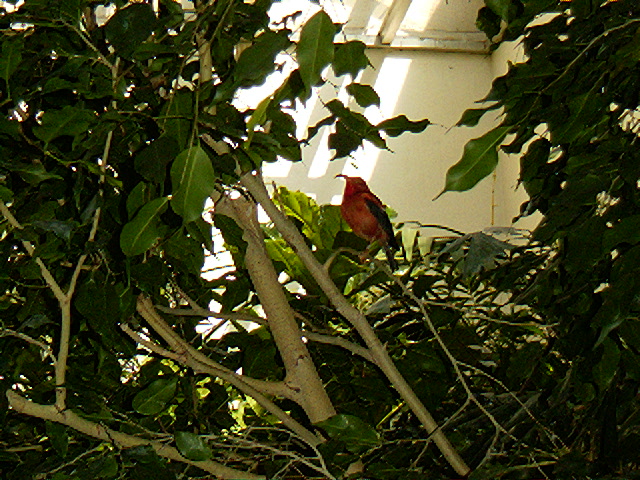
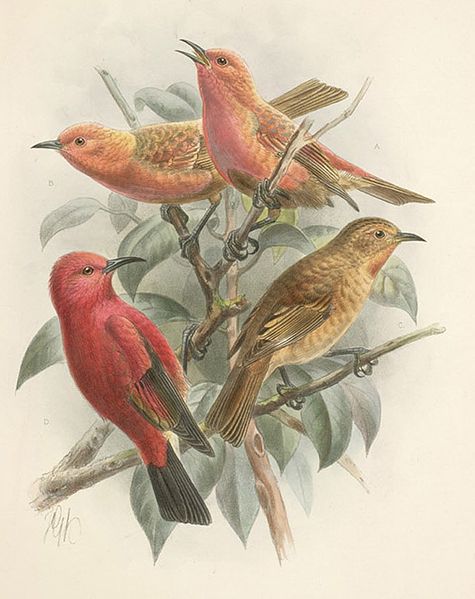
Last week, you were introduced to the Finch – Fringillidae Family part I. This week we will continue working our way through the 225 beautiful species of the family. I ended with the Carpodacus genus, because this weeks group has many Hawaiian birds with around fifteen of them now extinct.
The Poo-uli, Kakawahie,Lesser Koa Finch, Greater Koa Finch, Kona Grosbeak, Ou, Lanai Hookbill, Hawaii Mamo, Black Mamo, Ula-ai-hawane, Laysan Honeycreeper, Greater Amakihi, Lesser Akialoa, Oahu Akialoa, Kauai Akialoa, Maui-nui Akialoa, Oahu Nukupuu and Oahu Akepa are all listed as extinct. From that group only the Iiwi (Drepanis coccinea), Akohekohe (Palmeria dolei) and Apapane (Himatione sanguinea) are still living.
Finches II is only featuring these thirty-nine birds, mainly from Hawaii, with fifteen extinct. Why are they becoming extinct, let’s see if we can find out. Wikipedia has this to say, “Some 20 species (that number includes early extinctions not counted today) of Hawaiian honeycreeper have become extinct in the recent past, and many more in earlier times, between the arrival of the Polynesians who introduced the first rats, chickens, pigs, and dogs, and hunted and converted habitat for agriculture.
This whole group is referred to as Hawaiian honeycreepers are small, passerine birds endemic to Hawaiʻi. They are closely related to the rosefinches in the genus Carpodacus. Their great morphological diversity is the result of adaptive radiation in an insular environment. “Adaptive radiation is a rapid phenomenon because the variation is fully observable in many wild populations. Since macroevolutionary hypotheses of simple-to-complex evolutionary progress require vast eons, alterations produced by adaptive radiation occur quickly by comparison.” (by Brian Thomas, M.S. – ICR article)
The male Hawaiian honeycreepers are more brightly colored than the females in the Psittirostrini, but in the Hemignathini, they often look very similar. The flowers of the native ʻōhiʻa lehua (Metrosideros polymorpha) are favored by a number of nectarivorous honeycreepers. Many species of this subfamily have been noted to have a plumage odor that has been termed the “Drepanidine odor”, and is suspected to have a role in making the bird distasteful to predators. (Wikipedia with editing)
The wide range of bills in this group, from thick, finch-like bills to slender, downcurved bills for probing flowers have arisen through adaptive radiation. (Wikipedia with editing) The Lord graciously allowed these birds with beaks to meet their needs.
Which doeth great things past finding out; yea, and wonders without number. (Job 9:10 KJV)
“Of fowls after their kind, and of cattle after their kind, of every creeping thing of the earth after his kind, two of every sort shall come unto thee, to keep them alive.” Genesis 6:20
Most spiders use their silk to make webs to catch prey. But there’s one spider that spins its silk to make a virtually waterproof sack and fills it with air bubbles so it can survive underwater for hours at a time. In fact, the air-filled sack is so efficient, it allows this air-breathing spider to live virtually its whole life a few inches below the water’s surface.
The Spider That Thinks It’s a Scuba Diver
Scientists have known about the diving bell spider for a long time. But a few years ago they discovered that this silken sack is actually able to produce its own air supply. Acting much like a fish’s gills, the finely woven sack draws oxygen from the water while letting nitrogen exit the diving bell.
Evolutionists can’t explain how the spider learned how to scuba dive and produce silk that makes the diving bell virtually waterproof. Oh, they will say what they always say – natural selection and mutations over millions of years. But creationists have no need of such far-fetched explanations.
The Creator showed His fondness for this spider by giving it what it needs to avoid predators above the water while feeding upon underwater creatures. Now, think about how much more our Creator loves each one of us. He gave us the gift of His Son, who lived a sinless life and then died as a spotless sacrifice on our behalf so we would be found holy and blameless in God’s sight through faith in Christ.
Prayer:
Heavenly Father, thank You for providing such a great gift that cost You so much! I don’t deserve such a gift, but I humbly accept the love You poured out on me through Jesus Christ. Amen.