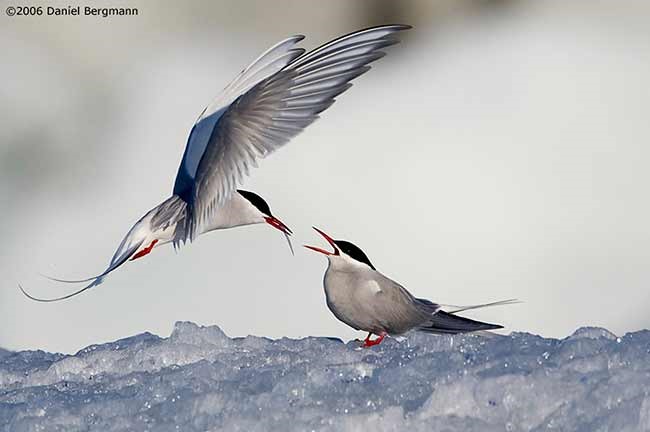
Arctic Terns Set Mileage Records As Frequent Fliers

Artic Terns 1
ARCTIC   TERNS   SET   MILEAGE   RECORDS   AS   FREQUENT   FLIERS

Dr. James J. S. Johnson

For  the  kingdom  of  heaven  is  as  a  man  travelling  into  a  far country… (Matthew  25:14a)

Arctic Terns (Sterna paradisaea), which weigh only about a quarter-pound,  are the ultimate example of global migrants, accomplishing the longest-known migrations, every year, from near  the top of the world to near the bottom, then vice versa.  In fact, some Arctic Terns fly >50,000 miles in their pole-to-pole-and-then-back-again migration!  (And, if an Artic Tern lives 30 years, as some do, that could mean about 1½ million miles on his or her lifetime “odometer”, which is comparable to 3 round trips to the moon (i.e., that’s like 3 times, to the moon and back again)!

Imagine how inconvenient it would be for a bird to arrive at the South Pole during May or June, when the weather is freezing cold and food is scarce. Or imagine a similar scenario at the North Pole during November or December, when the weather there is harshest. Thankfully, arctic terns follow the opposite schedule, synchronizing with temperature and seasonal food availability.

Why? These birds are purposefully preprogrammed to operate by these schedules; God fitted them to do so. This programming is critical for these migratory birds to travel over the Atlantic Ocean from the Arctic to the Antarctic, and vice versa, every year. At more than 40,000 miles round trip, they are the ultimate frequent fliers! A recent study pointed out:

The study of long-distance migration provides insights into the habits and performance of organisms at the limit of their physical abilities.

The Arctic tern Sterna paradisaea is the epitome of such behavior; despite its small size (<125 g), banding recoveries and at-sea surveys suggest that its annual migration from boreal and high Arctic breeding grounds to the Southern Ocean may be the longest seasonal movement of any animal. Our tracking of 11 Arctic terns fitted with miniature (1.4-g) geolocators revealed that these birds do indeed travel huge distances (more than 80,000 km [>50,000 miles] annually for some individuals).…

Arctic terns clearly target regions of high marine productivity both as stopover and wintering areas, and exploit prevailing global wind systems to reduce flight costs on long-distance commutes.

Ecologically speaking, it’s all a demonstration of “survival of the fitted”. Arctic terns, like all birds, survive because they are divinely fitted to survive all of the interactive factors in their diverse and geographically extensive environments.

Providentially, the arctic terns select season-synched flight times that repeatedly avoid the harsh winter months at both the North and South Poles. Likewise, the terns select flight plans that take advantage of global wind patterns and incorporate helpful stopovers for rest and refueling.

Timing factors are interactive throughout this cyclical migration: the seasonal weather cycle, wind patterns influenced by daily rotation of the earth, food availability influenced by annual seasons, and the reproductive cycle of the terns themselves.

In all of this, providential programming is both complicated and critical!

[Quoting James J. S. Johnson, “Survival of the Fitted: God’s Providential Programming”, Acts & Facts, 39 (10): 17-18 (October 2010), quoting Carsten Egevang, et al., “Tracking of Arctic terns Sterna paradisaea reveals longest animal migration”, in Proceedings of the National Academy of Sciences, 107(5): 2078-2081 (2010).  See also Greenland Institute of Natural Resources, “The Longest Animal Migration in the World Revealed” (press release, n.d.), quoting Carsten Egevang —  and “The Arctic Tern Migration Project” website — showing “the impressive journey of the Arctic tern from the breeding grounds in Greenland to Antarctica and back in this Google Earth Tour combining maps, animations and photos”.]
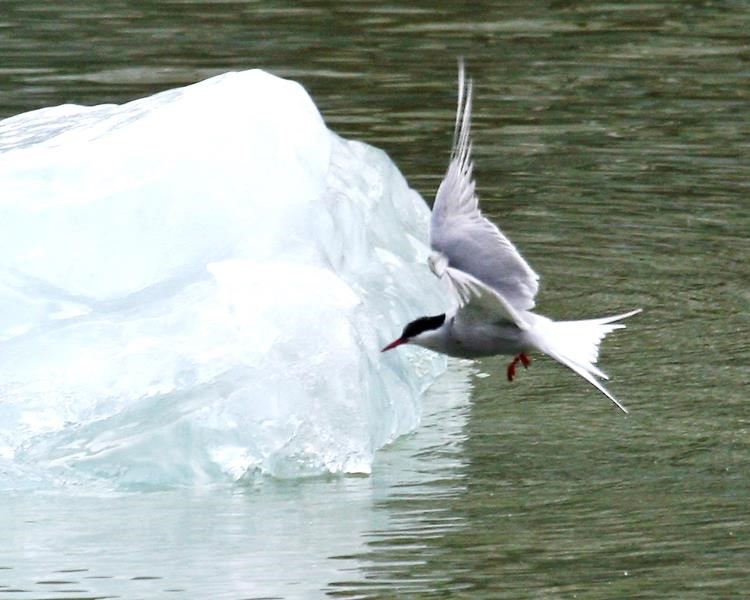
Artic Tern near Iceberg

Fair Use photo credit:

Arctic Terns are circumpolar, i.e., their range largely covers the polar regions.  Its “normal” turfs include its breeding grounds, spread variously over Arctic lands (like Iceland and Greenland), as well as the sub-Arctic parts of Eurasia (such as Schleswig-Holstein, Germany) and North America, —  plus its migratory “timeshare” stopover lodgings,  — plus its Antarctica wintering grounds (such as Wilkes Land), including “down under” islands near Antarctica, such as Weddell Sea islands or New Zealand’s South Island.

Thus, the historic fame of Thingvellir, Iceland not only derives from hosting the annual Althing events (ever since Viking times), but also from hosting the critical-habitat nesting activities of breeding Arctic Terns!

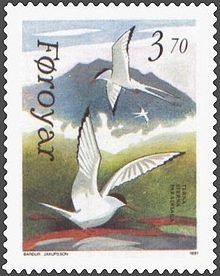
Unsurprisingly, these noble and courageous seabirds have been celebrated by postage artists and philatelists alike in Nordic countries (and quasi-autonomous jurisdictions), such as the Åland, the Færoe Islands, Finland, Iceland, Sweden   —   as well as in Canada  —  and in other countries (or quasi-countries, like the Isle of Man) that appreciate either the Arctic or Antarctic activities of this globe-flier.
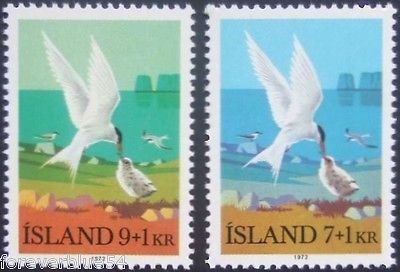

Stamp 1 Stamp 2 Stamp 3

Stamp 4 Stamp 5


Yet even the ever-traveling Arctic Terns have their share of enemies – such as predatory Arctic Foxes who are happy to raid Arctic Tern nests, if they can.  But, Arctic Terns won’t tolerate such predatory thefts without a fight – the Arctic Tern colony defenders will challenge (“mob”) such foxes!         ><> JJSJ


Picture1

Fair Use photo credit: 

Artic Fox and Artic Tern b©Arkive

Fair Use photo credit: 

*

Orni-theology

James J. S. Johnson

Arctic Tern Family – Laridae

*


Lee’s Two Word Tuesday – 3/29/16

***

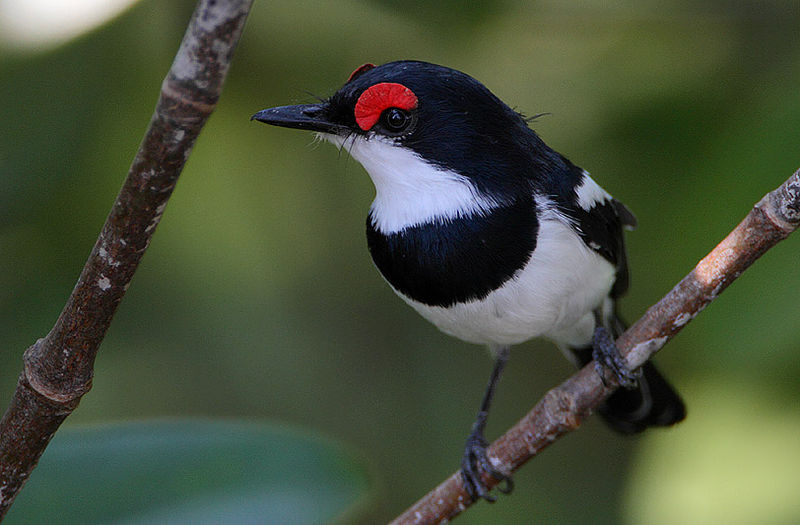
Brown-throated Wattle-eye (Platysteira cyanea) ©WikiC

TEACH THEE

***


I will instruct thee and teach thee in the way which thou shalt go: I will guide thee with mine eye. (Psalms 32:8 KJV)

Brown-throated Wattle-eye (Platysteira cyanea) Male ©WikiC

*

More Daily Devotionals

*

The Substitute Teacher by Emma Foster

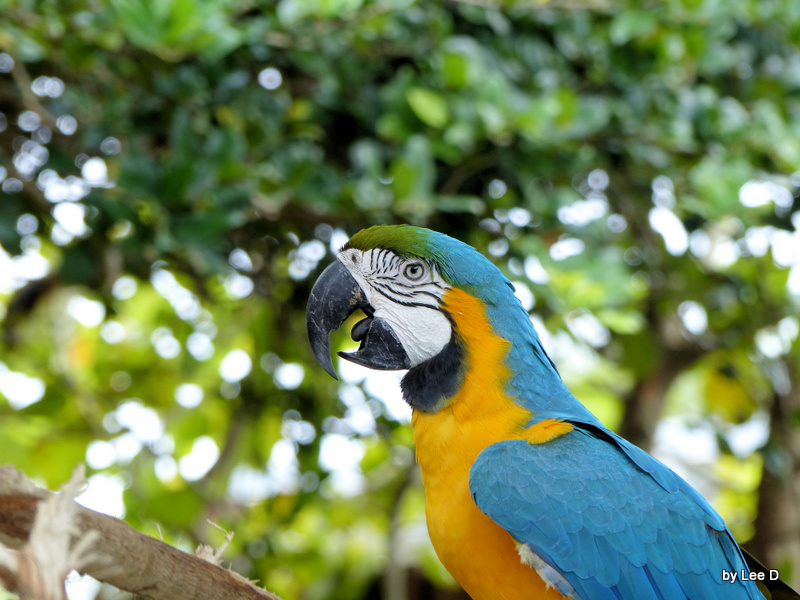
Blue-and-yellow Macaw (Ara ararauna)

Blue-and-yellow Macaw (Ara ararauna) by Lee at Gatorland

The Substitute Teacher

~ by Emma Foster

Once there was an elementary school in the middle of Florida. The third grade class of that school had a class pet parrot named Beatrice. Every day, Beatrice would sit and watch as the teacher, Miss Kendall, taught the class. During recess, however, Beatrice would sneak over to the teacher’s desk and read over all of the material. She wanted to not only know what was being taught, but also wanted to know how to teach it to the class.

Beatrice wanted to be sure that she knew everything for Thursday. This was because Miss Kendall was going to be gone on Thursday and Friday for jury duty, and Beatrice was chosen by the school board to teach the class because she was the only one who knew the material so well.

Blue-and-yellow Macaw (Ara ararauna) ©WikiC

Blue-and-yellow Macaw (Ara ararauna) ©WikiC

On Thursday, when all of the third grade class entered into the classroom, they were surprised to find that Miss Kendall wasn’t there. Instead, Beatrice was sitting on top of her desk. Each of the students sat down and waited as Beatrice called the role. After she finished, Beatrice had the class say the pledge of allegiance like they did every morning, and she whistled the “Star Spangled Banner” along with the class afterwards.

Because Beatrice was a parrot, she was able to explain to the class why she was substituting for the day, and moved onto the first subject of the day: reading. Beatrice had the entire class read a few pages in the book they were supposed to read for a book report. During that time, Beatrice read over all that she had to do that day. The next subject was penmanship. This was the tricky part because Beatrice had to use her talons. She was able to shakily write the first few letters of the alphabet on the board. The class did much better than she did.

Blue-and-yellow Macaw (Ara ararauna) ©WikiC

Blue-and-yellow Macaw (Ara ararauna) ©WikiC

Finally it was time for lunch. Beatrice made sure all of the class stayed in a line as they walked down to the cafeteria. She brought along the crackers Miss Kendall kept in her desk for her and ate them there. When lunch was over, Beatrice let all of the third grade class go outside to the playground. She climbed the monkey bars upside down; the class considered this the best part of the day so far.

Blue-and-yellow Macaw by Dan at Gatorland

Then Beatrice and the class came back inside for science. This week was Botany. Because Beatrice used to live in the Amazon before coming to America to become the class pet, she was able to tell them all about the different plants in the jungle.

The last subject of the day was math. This was the students’ least favorite subject. Fortunately, the best Beatrice could do when it came to math was count to five, so it was going to be difficult teaching the class anything. The students didn’t mind, however. Beatrice would have to explain to Miss Kendall that they didn’t get much done.

When the class was dismissed they all told their parents when their parents picked them up how much fun they had, and Beatrice believed she had done a good job. She had the feeling that when she taught tomorrow it would be even better than the first day. And when Miss Kendall returned, she was surprised when the entire class asked if she could repeat jury duty again next week.


Lee’s Addition:

Who teaches us more than the beasts of the earth, And makes us wiser than the birds of heaven?’ (Job 35:11 NKJV)

Thanks, Emma, for another delightful story. Birds are very capable of teaching us about their great Creator. Maybe not quite in a classroom like Beatrice, but still, they can be teachers to humans. Those who study birds and other animals, can see the Hand of God at work, if their eyes are open.

Give instruction to a wise man, and he will be yet wiser: teach a just man, and he will increase in learning. The fear of the LORD is the beginning of wisdom: and the knowledge of the holy is understanding. (Proverbs 9:9-10 KJV)

*

See more of Emma’s delightful stories

*

Wordless Toucan

*


Friendly and Welcome Visitors

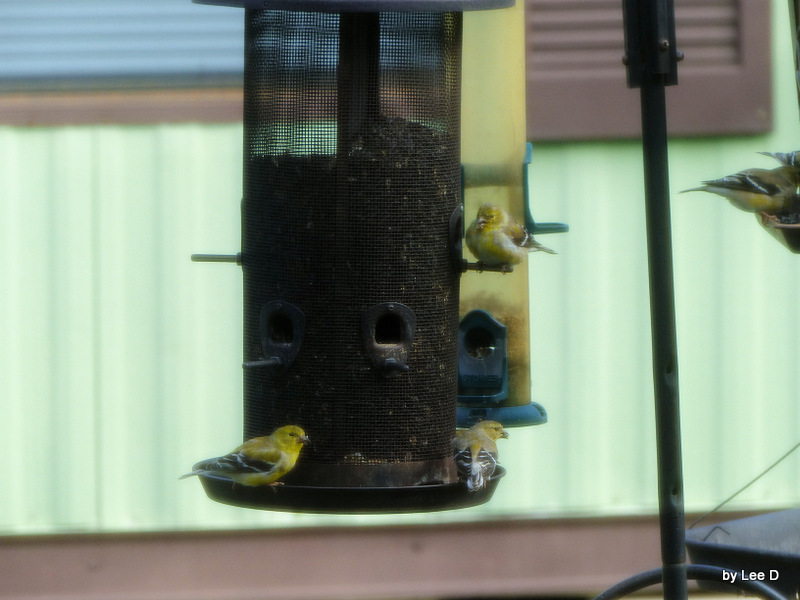
Goldfinches at feeders by Lee thru screen

Goldfinches at feeders by Lee thru screen

Oh, sing to the LORD a new song! Sing to the LORD, all the earth. Sing to the LORD, bless His name; Proclaim the good news of His salvation from day to day. Declare His glory among the nations, His wonders among all peoples. For the LORD is great and greatly to be praised; He is to be feared above all gods. (Psalms 96:1-4 NKJV)

For the last two weeks, I have had to stay close to home. First, the disc in my back slipped a little more, causing great pain and lack of mobility. (The biggest slip was back in August) Then, after making it almost through the winter without bronchitis, it caught up with me. The pollen was so heavy, that it was necessary to just stay home to get things back in control. So, this was all mentioned for several reasons. 1) Prayers are always accepted. 2) I was able to work on my online course from the School of Biblical Apologetics. 3) Best of all, the Lord kept sending Avian Wonders for me to watch and be reminded that He always cares for them and us.

“[Even the migratory birds are punctual to their seasons.] Yes, the stork [excelling in the great height of her flight] in the heavens knows her appointed times [of migration], and the turtledove, the swallow, and the crane observe the time of their return. But My people do not know the law of the Lord [which the lower animals instinctively recognize in so far as it applies to them].” (Jeremiah 8:7 AMP)

The most surprising was the American Goldfinches that started coming to my feeders. Very seldom do any come by to dine. Maybe one or two at most. Several times over a week or so, we saw as many as 14 at one time. We figured that they were probably a small flock making their way north for the summer, and with the Lord’s help, landed here to rest and “tank-up” for the rest of their journey. They seem to have now continued their migration. Haven’t seen but the one or two who come by occasionally for the last two days. (OOPS!!!) Just looked out the window while working on this article and now there are at least 10 of them out there feeding. YEAH!!

Here are some of the photos of them, unfortunately, photographed through a screened window.

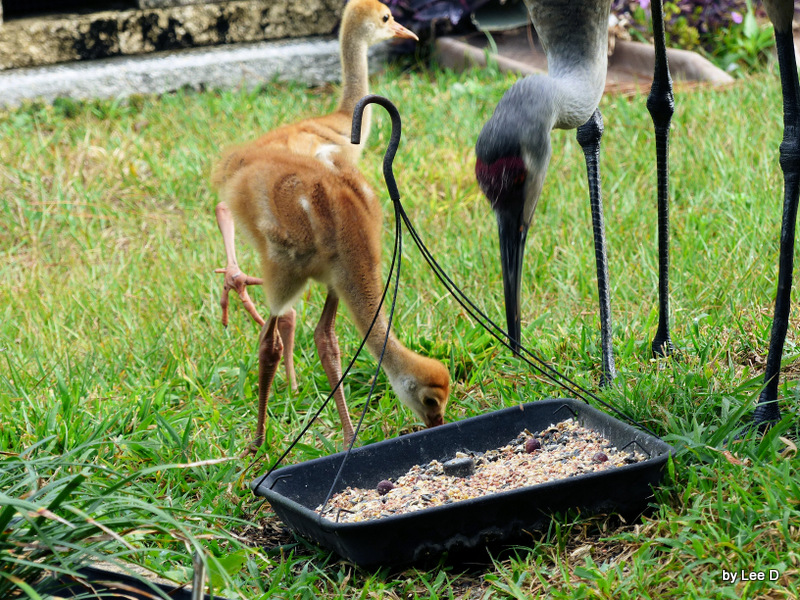
Sandhill Youngster in Yard 3-26-16

Sandhill Youngster in Yard 3-26-16

Then on Saturday, mom and pop Sandhill Crane came to the yard with their two new youngsters. This time, Dan was able to take the camera and get a few photos of them.

Yesterday, Easter, we drove over to Tampa to the Bayside Community Church to hear Dr. James J. S. Johnson from the Institute for Creation Research speak. On the way over, we had two Swallow tailed Kites fly right over us. They migrate through here this time of the year. They seem to stay for about 2-3 months and then head on north. They are so beautiful to watch.

Swallow-tailed Kite (same)

Swallow-tailed Kite

We always have the Lord’s Wonders to behold, if we just stay alert. He sends blessings to us, even when we may think we are “down.”

*


James J. S. Johnson

Institute for Creation Research

Lee’s One Word Monday – 3/28/16

***

Wood Duck by Dan at Lake Hollingsworth

Wood Duck by Dan at Lake Hollingsworth

Wood Duck (Aix sponsa) by Dan

Wood Duck (Aix sponsa) by Dan

NAME

***


Out of the ground the LORD God formed every beast of the field and every bird of the air, and brought them to Adam to see what he would call them. And whatever Adam called each living creature, that was its name. (Genesis 2:19 NKJV)

*

More Daily Devotionals

*

Lee’s Five Word Friday – 3/25/16

***

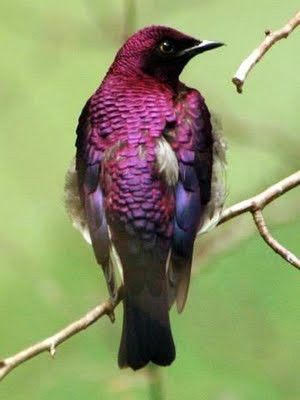
Purple Glossy Starling of Tanzania aka Purple Starling ©s-media-cashe.

THEY CLOTHED HIM WITH PURPLE

***


And they clothed Him with purple, and platted a crown of thorns, and put it about His head. (Mark 15:17)

Purple Glossy Starling of Tanzania aka Purple Starling ©s-media-cashe.

*

More Daily Devotionals

*

Lee’s Four Word Thursday – 3/24/16

***

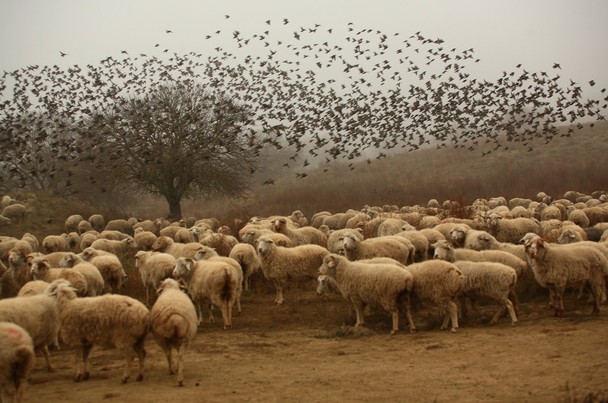
The Nat’l Geo photograph is identified as being from Vashlovani National Park in eastern Georgia (i.e., former Soviet Union “Georgia”, not the one that produces peaches in America!).

SHEEP OF THE FLOCK

***


Then saith Jesus unto them, All ye shall be offended because of Me this night: for it is written, I will smite the shepherd, and the sheep of the flock shall be scattered abroad. (Matthew 26:31)

The Nat’l Geo photograph is identified as being from Vashlovani National Park in eastern Georgia (i.e., former Soviet Union “Georgia”, not the one that produces peaches in America!).

*

More Daily Devotionals

*

Lee’s Three Word Wednesday – 3/23/16

***

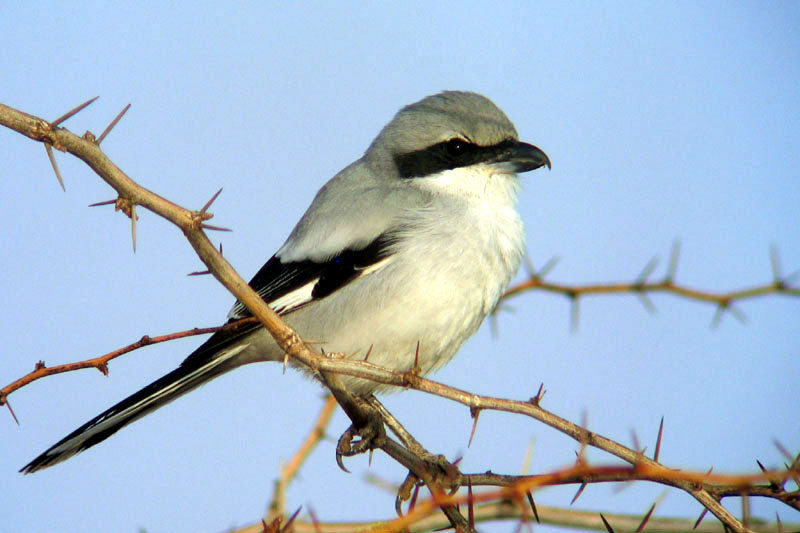
Southern Grey Shrike (Lanius meridionalis) ©WikiC

CROWN OF THORNS

***


And when they had platted a crown of thorns, they put it upon his head, and a reed in his right hand: and they bowed the knee before him, and mocked him, saying, Hail, King of the Jews! (Matthew 27:29 KJV)

Southern Grey Shrike (Lanius meridionalis) in thorns ©WikiC

The idea for using a bird in thorns came from Living In The Thorns

*

More Daily Devotionals

*

Living In The Thorns

Lee’s Two Word Tuesday – 3/22/16

***

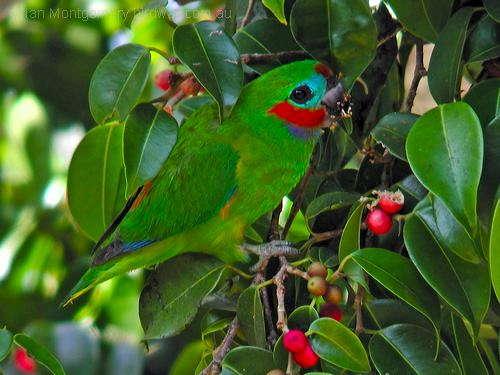
Double-eyed Fig Parrot (Cyclopsitta diophthalma) by Ian

FIG TREE

***


“And when the disciples saw it, they marvelled, saying, How soon is the fig tree withered away! Jesus answered and said unto them, Verily I say unto you, If ye have faith, and doubt not, ye shall not only do this which is done to the fig tree, but also if ye shall say unto this mountain, Be thou removed, and be thou cast into the sea; it shall be done. And all things, whatsoever ye shall ask in prayer, believing, ye shall receive.” (Matthew 21:20-22 KJV)

Double-eyed Fig Parrot (Cyclopsitta diophthalma) by Ian

*

More Daily Devotionals

*

Lee’s One Word Monday – 3/21/16

***

Red-billed Oxpecker on equid “neighbor” (zebra) “can you hear me now”

SECRET

***


The high priest then asked Jesus of his disciples, and of his doctrine. Jesus answered him, I spake openly to the world; I ever taught in the synagogue, and in the temple, whither the Jews always resort; and in secret have I said nothing. Why askest thou me? ask them which heard me, what I have said unto them: behold, they know what I said. (John 18:19-21 KJV)

Red-billed Oxpecker on equid “neighbor”

*

More Daily Devotionals

*

The Price Of Sparrows – from Institute For Creation Research

House Sparrows watching Parrot show at National Aviary by Lee

House Sparrows at National Aviary by Lee

“Are not two sparrows sold for a farthing? and one of them shall not fall on the ground without your Father.” (Matthew 10:29)

This fascinating bit of first-century pricing information, seemingly so trivial, provides a marvelous glimpse into the heart of the Creator. Of all the birds used for food by the people of those days, sparrows were the cheapest on the market, costing only a farthing for a pair of them. In fact, they cost even less in a larger quantity, for on another occasion Jesus said: “Are not five sparrows sold for two farthings, and not one of them is forgotten before God?” (Luke 12:6). The “farthing” was a tiny copper coin of very small value, so a sparrow was all but worthless in human terms.

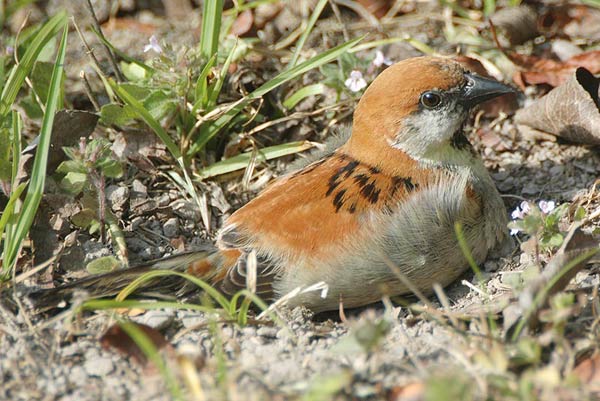
Russet Sparrow (Passer rutilans) by Nikhil Devasar

Russet Sparrow (Passer rutilans) by Nikhil Devasar

And yet the Lord Jesus said that God knows and cares about every single sparrow! God had a reason for everything He created; each kind of animal has its own unique design for its own intended purpose. Modern biologists continue to waste time and talent developing imaginary tales about how all these multitudes of different kinds of creatures might have evolved from some common ancestor. Even some evolutionists have started calling these whimsical tales “just so” stories. They would really be better scientists if they would seek to understand the creative purpose of each creature rather than speculating on its imaginary evolution.

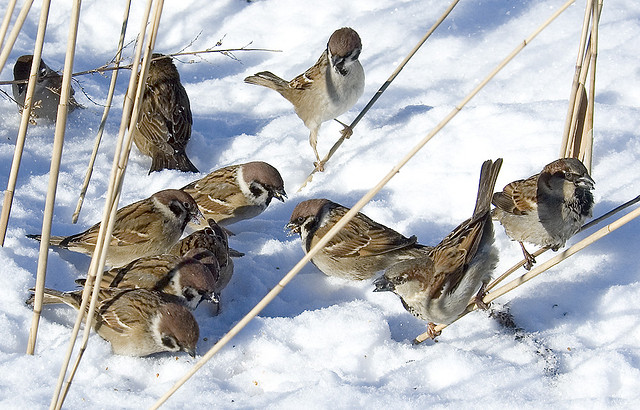
Sparrows in snow ©©Bing

Sparrows in snow ©©Bing

The better we comprehend the amazing complexity and purposive design of each creature, the better we realize the infinite wisdom and power of their Creator. Then, all the more wonderful it is to learn that their Creator is our Father! He has placed them all under our dominion, and we need to learn to see them through His eyes if we would be good stewards of the world He has committed to us. We can also thank our heavenly Father that we “are of more value than many sparrows” (Matthew 10:31). HMM

The Price Of Sparrows – ©Institute For Creation Research (March 20, 2016)


Lee’s Addition:

“For God so loved the world that He gave His only begotten Son, that whoever believes in Him should not perish but have everlasting life.” (John 3:16 NKJV)

I trust you enjoyed this article. Today, instead of the Seven Word Sunday, this devotional is being shared. Today, is my 56th Spiritual Birthday. On March 20, 1960, I accepted the Lord Jesus Christ as my Savior. What a day, the best day of my life; marrying Dan, the second.

Just like the Sparrows, my Father in Heaven, didn’t forget about me, but put those in my path to show me why I needed the Lord as my Savior. In my case, my sister and her husband had accepted Christ the month before. They started telling me about the Lord and invited me to church on the 20th of March. That morning I was shown the plan of salvation and after accepting the free gift of salvation, I left church a new creation.

“Therefore, if anyone is in Christ, he is a new creation; old things have passed away; behold, all things have become new.” (2 Corinthians 5:17 NKJV)

PRAISE THE LORD FOR HIS PLAN OF SALVATION

*

Gospel Message

*

Sunday Inspiration – Finches III

House Finch (Haemorhous mexicanus) by Ian

House Finch (Haemorhous mexicanus) by Ian

Also he spoke of trees, from the cedar tree of Lebanon even to the hyssop that springs out of the wall; he spoke also of animals, of birds, of creeping things, and of fish. (1 Kings 4:33 NKJV)

Well, we are still working our way through the large Fringillidae – Finches family. Today, Part III, we will begin with the genus Haemorhous (various shades of red are characteristic plumage colors of this group) which is more familiar to us in the U.S. Those are our Purple, Cassin’s, and House Finches.

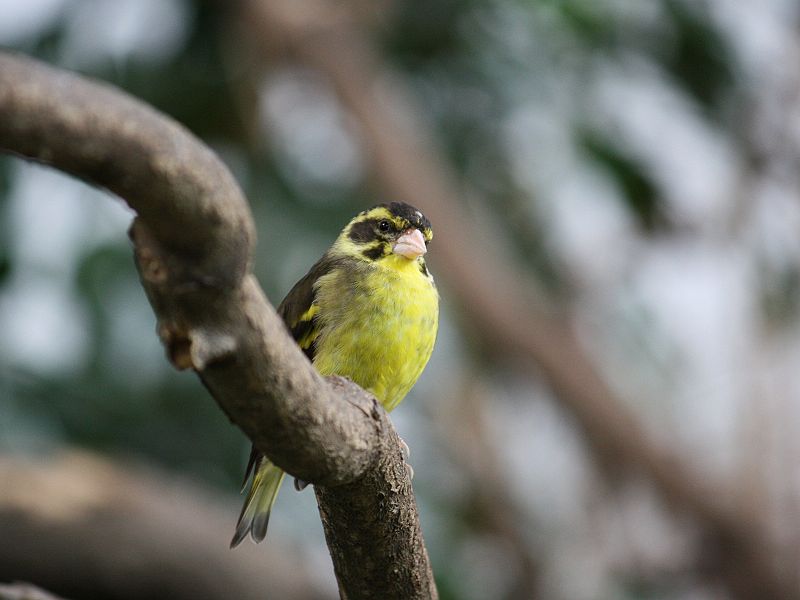
Yellow-breasted Greenfinch (Chloris spinoides) ©WikiC

Yellow-breasted Greenfinch (Chloris spinoides) ©WikiC

After them the Greenfinches of the Chloris genus and the lone Desert Finch (Rhodospiza obsoleta), three Golden-winged Grosbeak (Rhynchostus) and an Oriole Finch (Linurgus olivaceus)

Yellow Canary (Crithagra flaviventris) Male ©WikiC

Yellow Canary (Crithagra flaviventris) Male ©WikiC

The next genus – Crithagra has 37 species which include Seedeaters, Citril, Canary, Serin, Siskin, and Grosbeak-Canary. With those, will end Finches III and save the rest of the family for Finches IV. Maybe with the DNA testing going on, some of this family may be split off to other families in the future and won’t be so large.

In case you missed the first two parts, you can click these links. Sunday Inspiration – Finches I and Sunday Inspiration – Finches II

This slideshow requires JavaScript.

*

By them the birds of the heavens have their home; They sing among the branches. He waters the hills from His upper chambers; The earth is satisfied with the fruit of Your works. (Psalms 104:12-13 NKJV)

“Shout To The North and the South” ~ by Faith Baptist Church Choir

*

Sunday Inspiration – Finches I

Sunday Inspiration – Finches II

More Sunday Inspiration

Fringillidae – Finches

Fringillid Finches & Allies – Ian’s Birdway

Finch – Wikipedia

Sharing The Gospel

*